

2026 Wedding Hairstyles: 75 Looks and Expert Guide for Brides

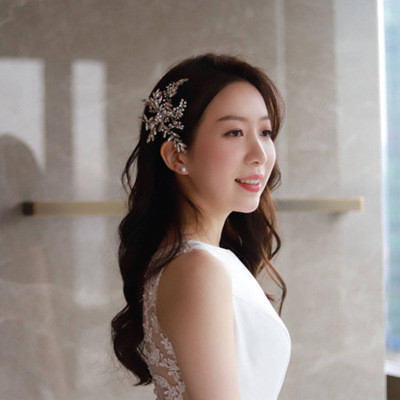
2026 Wedding Hairstyles: 75 Stunning Looks & Expert Guide for Every Bride
Your wedding hairstyle should feel like the most beautiful version of you, not a stranger. As celebrity stylist Marc Mena advises, “Choose a style that feels like you, not a version of you chasing a trend.”
For 2026, bridal hair is embracing “soft drama.” According to Pinterest, styles with movement, texture, and personality are taking center stage, moving away from ultra-sleek minimalism. Think “telenovela” volume, the “Pammy” chignon, and softly textured updos.
"Bridesmaids can find their perfect style here." / "Brides who love the half-up, half-down look can dive deeper into our dedicated guide." / "Mothers of the bride deserve an elegant style too — visit our exclusive page."
How to Choose Your Perfect Wedding Hairstyle: A 3-Step Guide
Step 1: Consider Your Dress Neckline
- **Strapless or Sweetheart** → Almost any style works. Show off your shoulders with an updo, or add romance with loose waves.
- **High Neckline or Illusion** → A polished updo or sleek bun keeps the focus on the intricate neckline.
- **Open Back or Low Back** → A low bun or swept-up style perfectly highlights this detail.
Step 2: Match Your Venue & Wedding Style
Formal Ballroom → Classic chignons, polished updos, glamorous Hollywood waves.
Garden or Outdoor → Romantic waves, textured buns, half-up styles, braided looks.
Beach or Destination → Loose, textured styles that handle humidity, like a polished ponytail or braided crown.
Step 3: Find Your Face Shape
Round → Add height at the crown with voluminous updos or high buns.
Oval → Lucky you—almost any style is flattering!
Square → Soft waves and side-swept styles soften angular jawlines.
Heart → Side-parted styles and volume at the bottom balance a wider forehead.
Let's drive in wedding hairstyles.
Updo Hairstyles
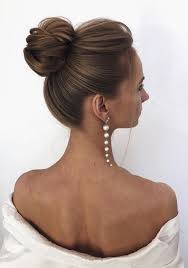
#1. Miracle Updo Wedding Hairstyle
Why We Love It: This beautiful, creative updo is easy to complete in just 12 minutes. It goes particularly well with one-shoulder dresses, as it showcases the neckline while adding height and elegance.
Stylist's Tip: For a modern 2026 twist, ask your stylist to keep the updo slightly loose rather than perfectly smooth. The "soft drama" texture is very on-trend.
Perfect for: One-shoulder gowns; formal ballroom weddings.
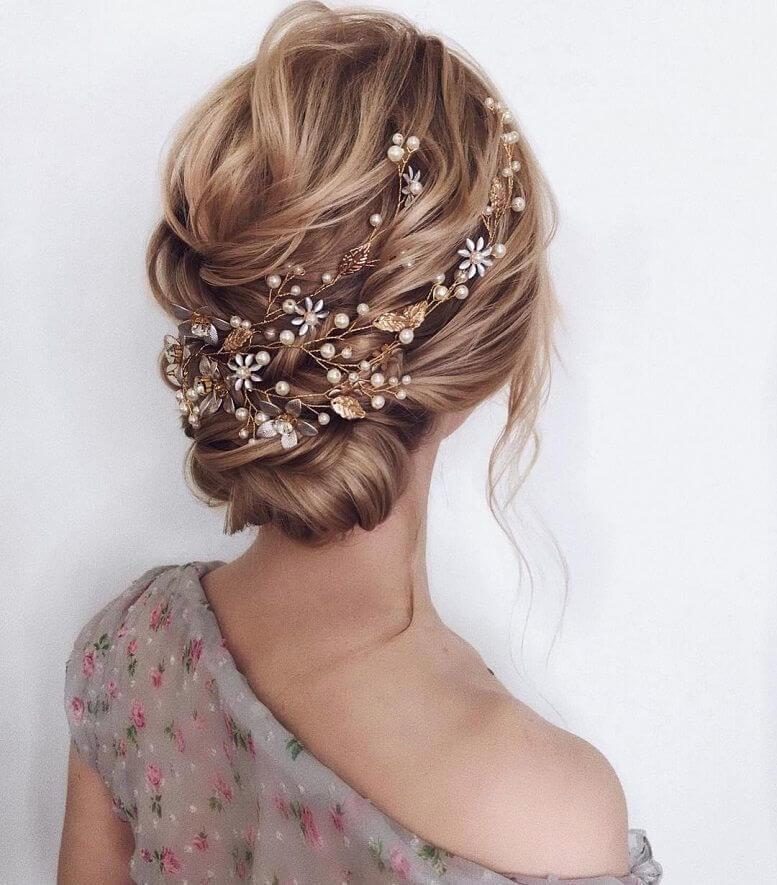
#2. Classic Updo With Headpiece
Why We Love It: Choose this classic updo hairstyle to look polished yet relaxed. The added wedding headpiece gives you an extra romantic touch on your wedding day.
Stylist's Tip: Position the headpiece slightly tilted rather than perfectly centered for a more modern, fashion-forward feel.
Perfect for: All face shapes; garden and formal weddings.
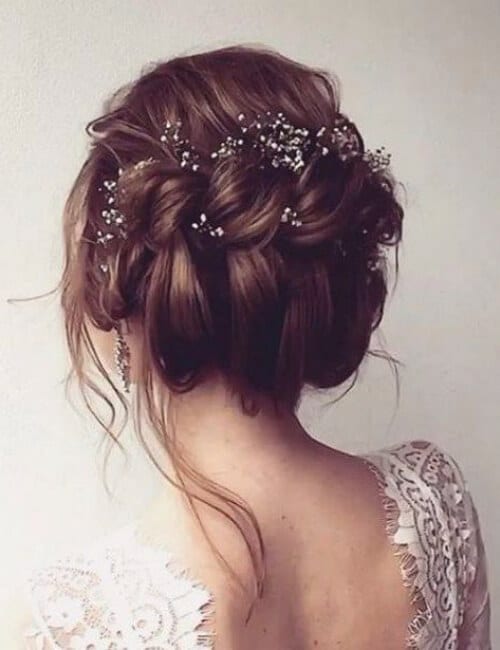
#3. Brilliant Updo Style
Why We Love It: This feminine updo plays up wispy bangs, adding softness and romance to an otherwise structured style. The wispy pieces frame the face beautifully.
Stylist's Tip: The wispy bangs should be soft and feathery — ask your stylist to curl them gently away from the face for a natural, romantic finish.
Perfect for: Heart-shaped faces; romantic and vintage weddings.
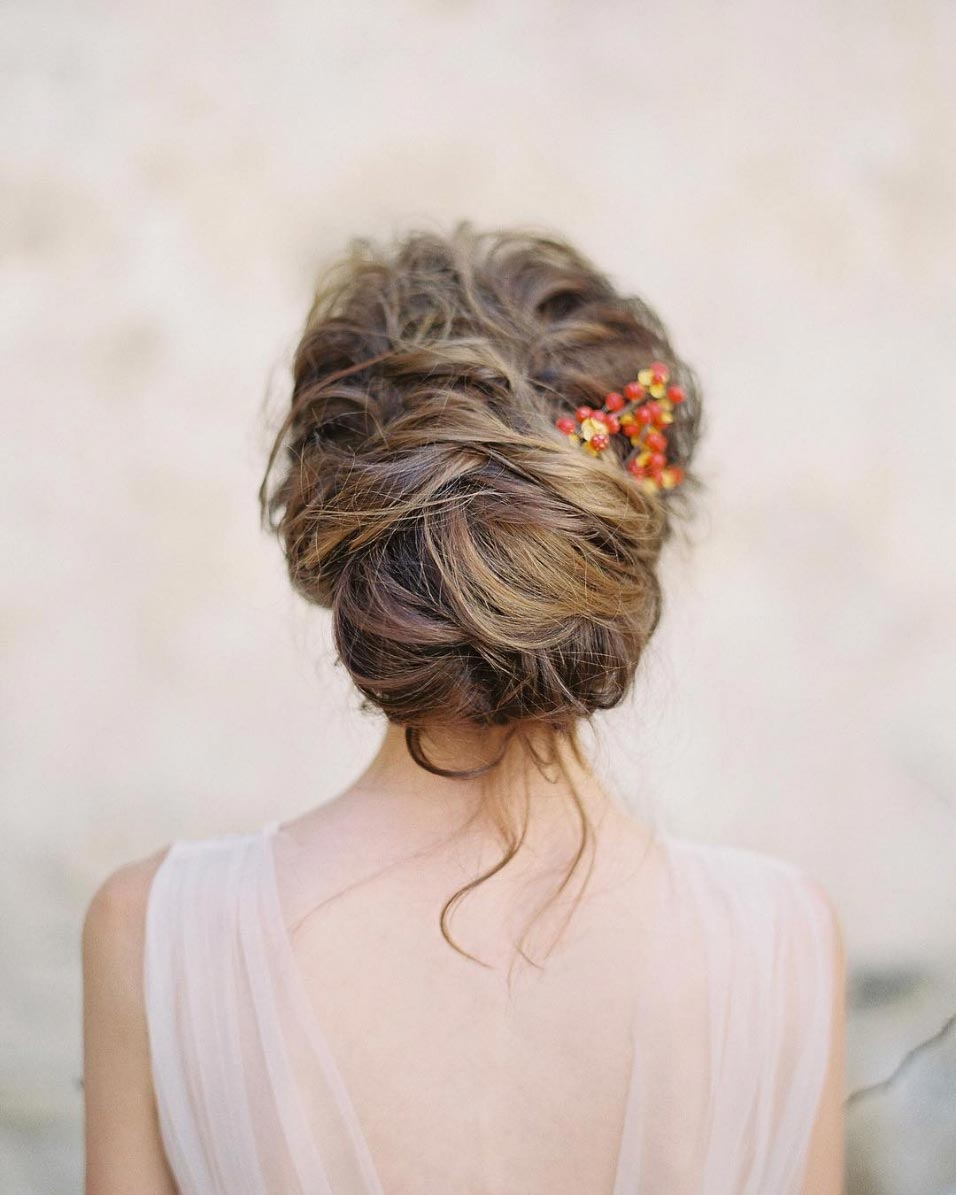
#4. Sparkling Updo Hairstyle
Why We Love It: Add a sparkling red headband to this simple updo for a gorgeous addition that will dazzle your guests. The pop of color adds personality and flair.
Stylist's Tip: Choose a headband that matches one of your wedding colors for a cohesive look. For a bolder statement, contrast with your dress color.
Perfect for: All face shapes; modern and glamorous weddings.
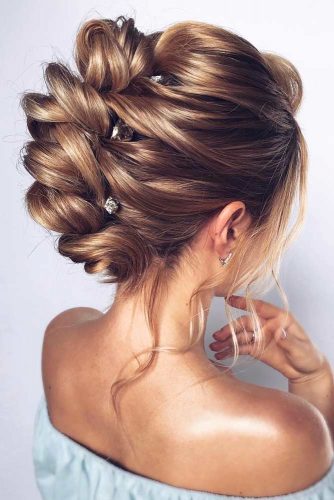
#5. Chignon Updo Hairstyle
Why We Love It: Transport yourself to paradise by adding an exquisite orchid to your updo. The flower adds natural beauty and a touch of tropical romance.
Stylist's Tip: Use fresh orchids that match your bouquet. Tuck them deeply into the chignon so they appear naturally nestled in the hair.
Perfect for: Oval and long faces; destination and tropical weddings.
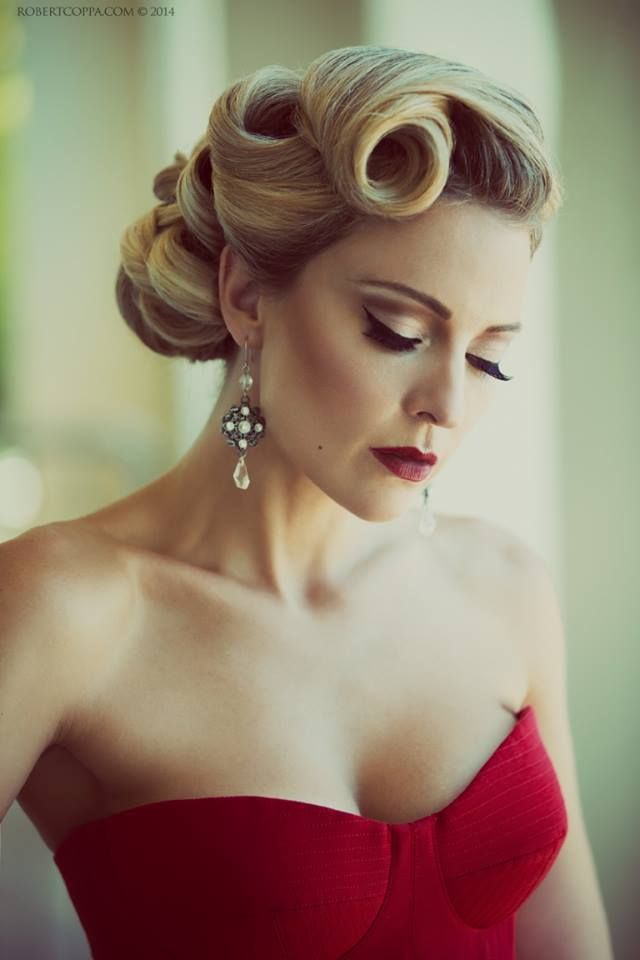
#6. Class-Glam Updo
Why We Love It: This classic updo looks French-inspired — twist your hair back and secure it at the front for a chic, sophisticated look that will captivate your guests.
Stylist's Tip: For a modern update, keep the front slightly voluminous rather than slicked flat. This creates that coveted "effortless French girl" texture.
Perfect for: Square and oval faces; black-tie and formal weddings.
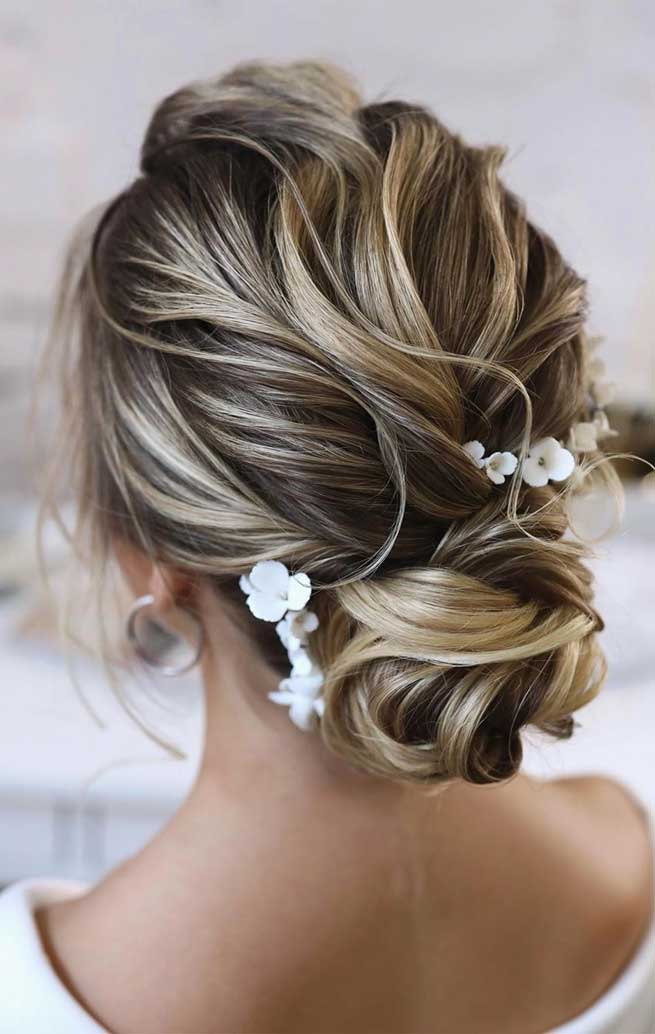
#7. Stunning Updo With Flower Hair Clip
Why We Love It: This wedding hairstyle features beautiful color and a sparkly flower hair clip, making the bridal look extra stunning. The accessory does the heavy lifting.
Stylist's Tip: Choose a hair clip that complements your other jewelry — gold with gold, silver with silver. This creates a cohesive, polished bridal aesthetic.
Perfect for: All face shapes; all wedding styles.
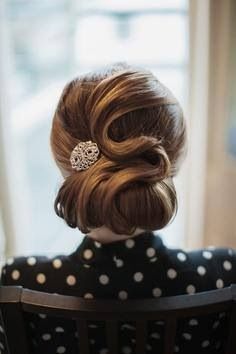
#8. Glorious Wedding Updo
Why We Love It: This style features layered curls in a messy bun — equal parts glorious, effortless, and elegant. It's a vintage-inspired look with modern texture.
Stylist's Tip: The "messy" texture is intentional. Use a texturizing spray before styling to create grip and that perfectly undone finish.
Perfect for: Round and oval faces; boho and garden weddings.
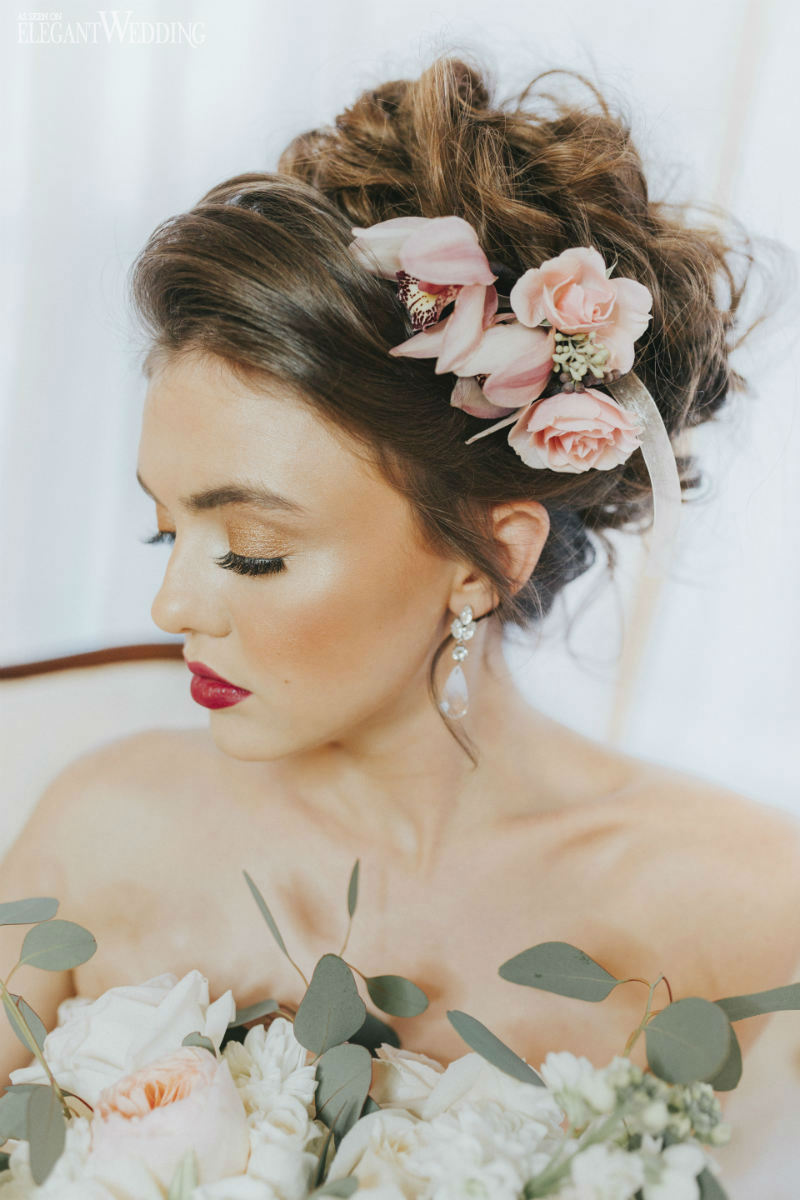
#9. Updo With Pink Flowers
Why We Love It: This bride studded her soft updo with pink flowers. Classic wedding natural hairstyles like this can be worn on any wedding day.
Stylist's Tip: For a more natural look, scatter the flowers throughout the updo rather than clustering them in one spot. This creates a "flower garden" effect.
Perfect for: All face shapes; garden and outdoor weddings.
.jpg)
#10. Smooth Classic Updo
Why We Love It: Smooth hair takes effort — let your hair dry naturally whenever possible for the same reason. This sleek, polished updo is the definition of understated elegance.
Stylist's Tip: Use a smoothing serum and a fine-tooth comb to eliminate flyaways. The key to a glossy finish is working with your hair's natural texture, not against it.
Perfect for: All face shapes; minimalist and modern weddings.
Down Wedding Hairstyles
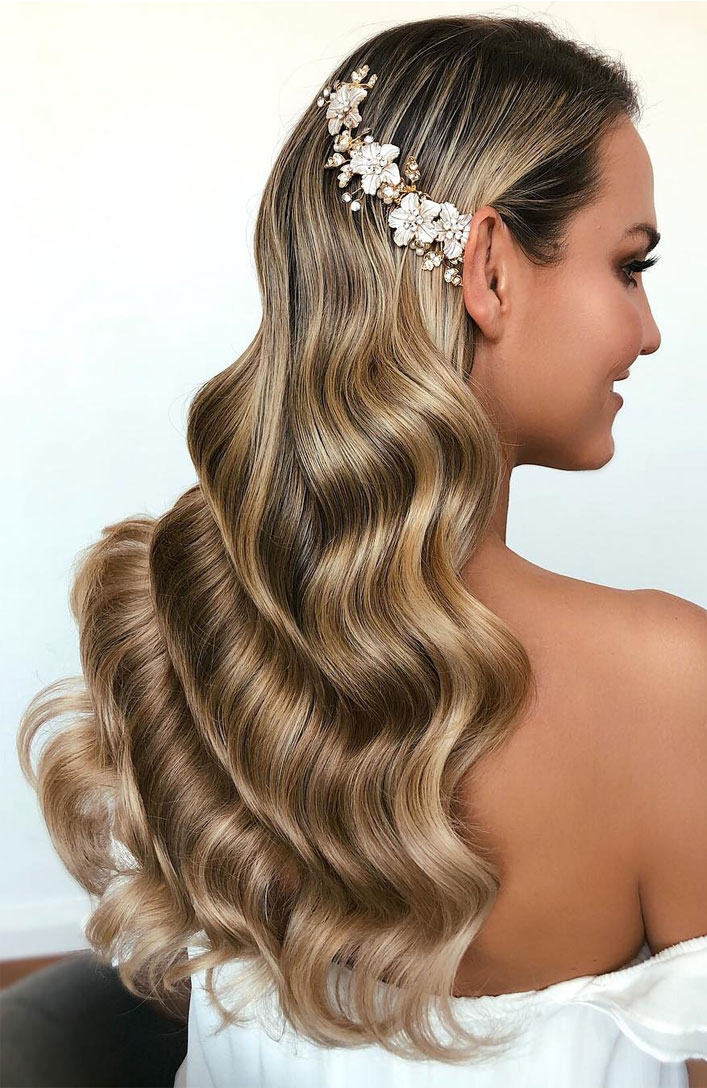
#11. Glassy Hairstyle
Why We Love It: Luscious curls with an up-down texture are all about that excellent gloss. Add a hair clip for a polished finishing touch.
Stylist's Tip: Use a shine spray or glossing serum to achieve the "glassy" effect. The high-shine finish creates a sophisticated, camera-ready look.
Perfect for: All face shapes; elegant evening weddings.
sources
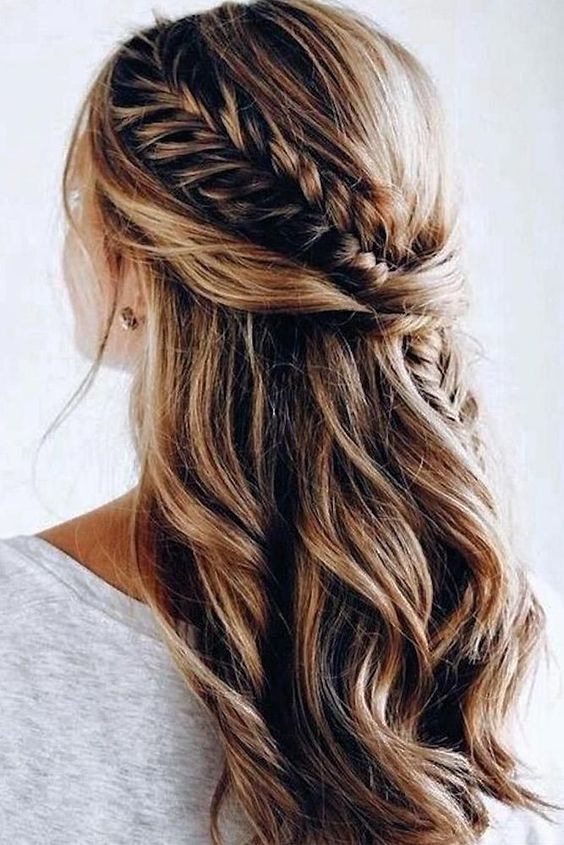
#12. Sweet Up-Down Braid
Why We Love It: This braided half-up style adds a touch of whimsy. Add floral pins loosely and let the hair flow for a sweet, romantic feel.
Stylist's Tip: Keep the braid slightly "pancaked" — gently tug at the edges after braiding for a wider, more textured look.
Perfect for: Oval and heart-shaped faces; garden and boho weddings.
#13. Pinned Curls Down
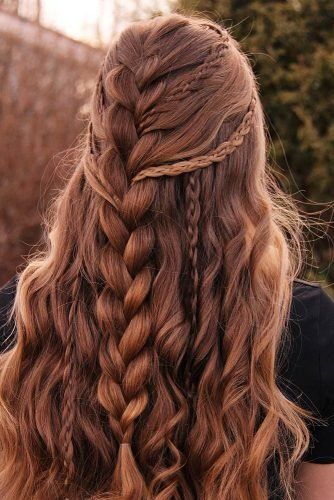
Why We Love It: Have your stylist give you a good hair braid, then dress it by pinning one side down with a sparkly barrette. This half-pinned style is both polished and playful.
Stylist's Tip: The sparkly barrette should be positioned at the temple or just behind the ear for the most flattering placement.
Perfect for: All face shapes; modern and trendy weddings.
sources
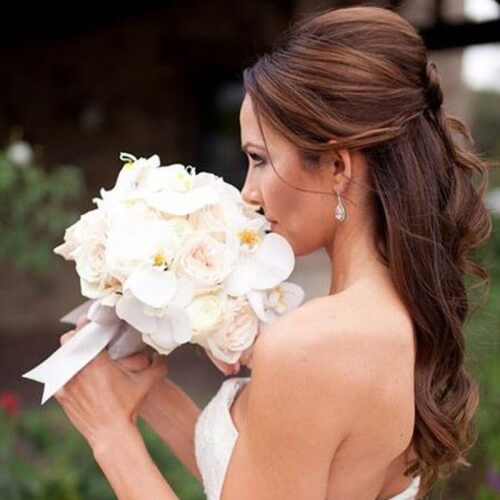
#14. Amazing Long Down
Why We Love It: Try this half-up style with mermaid waves and an elegant hairpiece for thick, long hair. The voluminous side adds drama and romance.
Stylist's Tip: For mermaid waves, use a large-barrel curling iron (1.5-2 inches) and brush through with a wide-tooth comb for soft, flowing waves.
Perfect for: Long faces; outdoor and beach weddings.

sources
#15. Gorgeous Down Hairstyle
Why We Love It: This gorgeous down hairstyle will keep your hair in place so you can enjoy your wedding day while looking elegant as you engage with your loved ones.
Stylist's Tip: Use a flexible-hold hairspray to keep the style in place without stiffness. This allows natural movement while maintaining the shape.
Perfect for: All face shapes; all wedding styles.
#16. Down Hairstyle With Comb
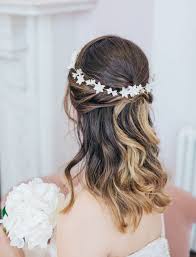
Why We Love It: Adding balayage color to your wedding day hair is a unique, modern touch. If your hair is longer than shoulder-length, add a hair comb on the side for charm.
Stylist's Tip: The hair comb works best when positioned at an angle — slightly tilted rather than straight horizontal.
Perfect for: Long hair; modern and contemporary weddings.
#17. Side Braid Down
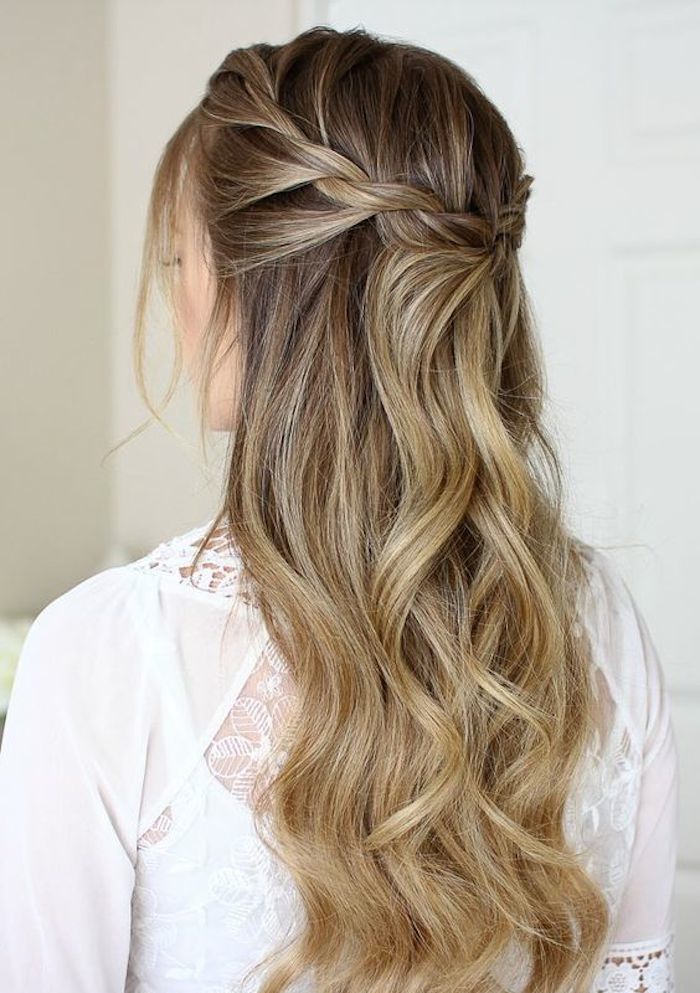
Why We Love It: This side braid twist adds color dimension to the overall look. A word of advice: talk to your stylist about removing it properly so you don't undo your gorgeous style.
Stylist's Tip: The side braid should be loose and textured, not tight. Pull small sections out gently after braiding for a more romantic feel.
Perfect for: Square and oval faces; boho and rustic weddings.

sources
#18. Flower Around Braid Down
Why We Love It: Have a unique, colorful flower hairpiece custom-made just for you. The flowers around the braid create a fairytale effect.
Stylist's Tip: For the most natural look, choose a mix of large and small flowers scattered throughout the braid rather than all in one cluster.
Perfect for: All face shapes; garden and outdoor weddings.
Wedding Bun Hairstyles
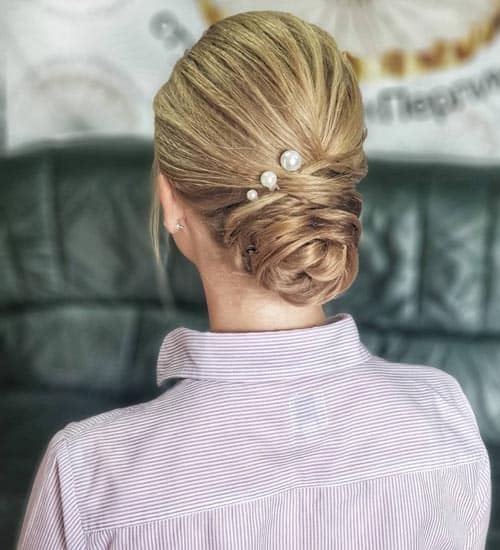
#19. Brighten Show Crown
Why We Love It: This brightened hairstyle is adorned with a single pin before transitioning into a woven bun, making the hairpiece look elegant and intentional.
Stylist's Tip: One statement pin is more impactful than several smaller ones. Choose a piece that catches the light and complements your jewelry.
Perfect for: All face shapes; formal and evening weddings.
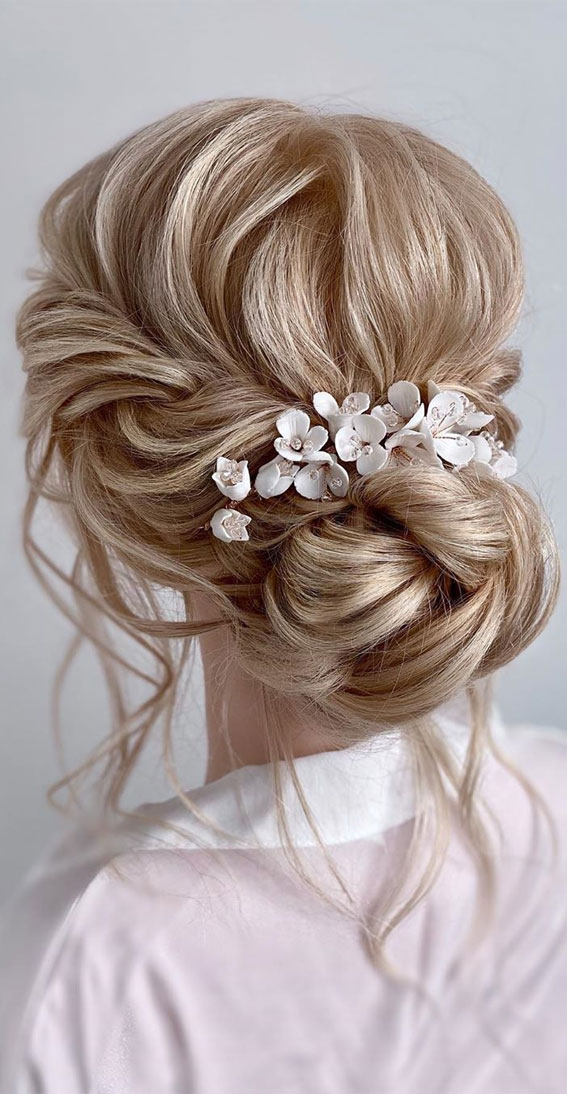
#20. Radiant Low Bun
Why We Love It: This bride adds sparkly wedding combs into her loosely plaited hair to inject whimsy into her vineyard wedding. The combs add sparkle without overwhelming the style.
Stylist's Tip: For a more dramatic effect, use multiple combs positioned at different angles throughout the bun.
Perfect for: Round and oval faces; vineyard and outdoor weddings.
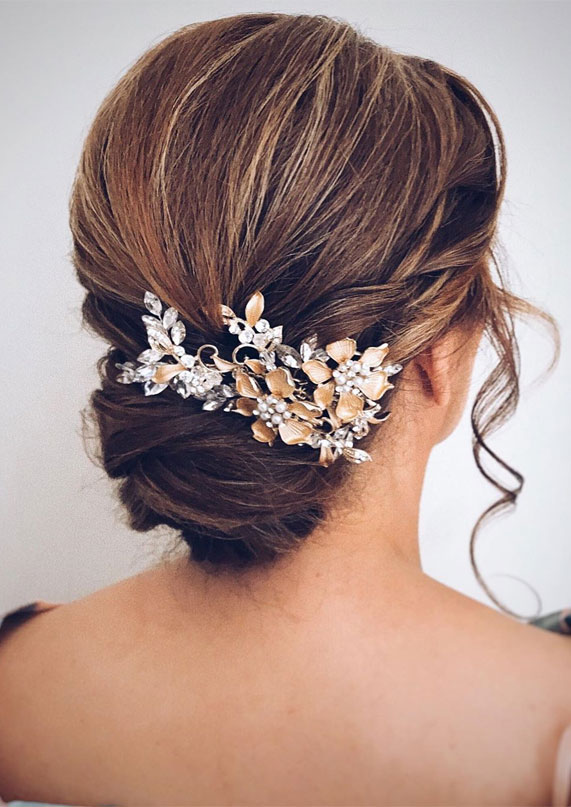
#21. Flower Bun Braid
Why We Love It: This elegant French braid bun is versatile enough to fit any nuptials. It's the perfect blend of structure and softness.
Stylist's Tip: For a 2026 update, keep the French braid slightly looser than traditional styles. Pull small sections gently apart after braiding for modern texture.
Perfect for: All face shapes; all wedding styles.

#22. Red Flower Loose Bun
Why We Love It: Accent this loose bun with exquisite flowers, as this bride did. The red flowers add a bold pop of color and romantic drama.
Stylist's Tip: Choose flowers that complement or contrast with your bouquet. For a bold look, match the red to one of your wedding colors.
Perfect for: Oval and heart-shaped faces; garden and outdoor weddings.
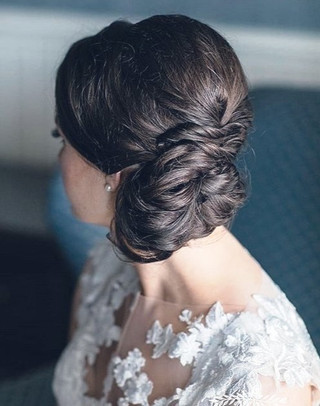
#23. Side Loose Bun
Why We Love It: A loose side bun is ideal for brides seeking an unconventional hairstyle that remains wedding-appropriate. It's asymmetrical, modern, and full of personality.
Stylist's Tip: Position the bun slightly lower than the ear for the most flattering side-swept silhouette.
Perfect for: Square and oval faces; modern and unconventional weddings.
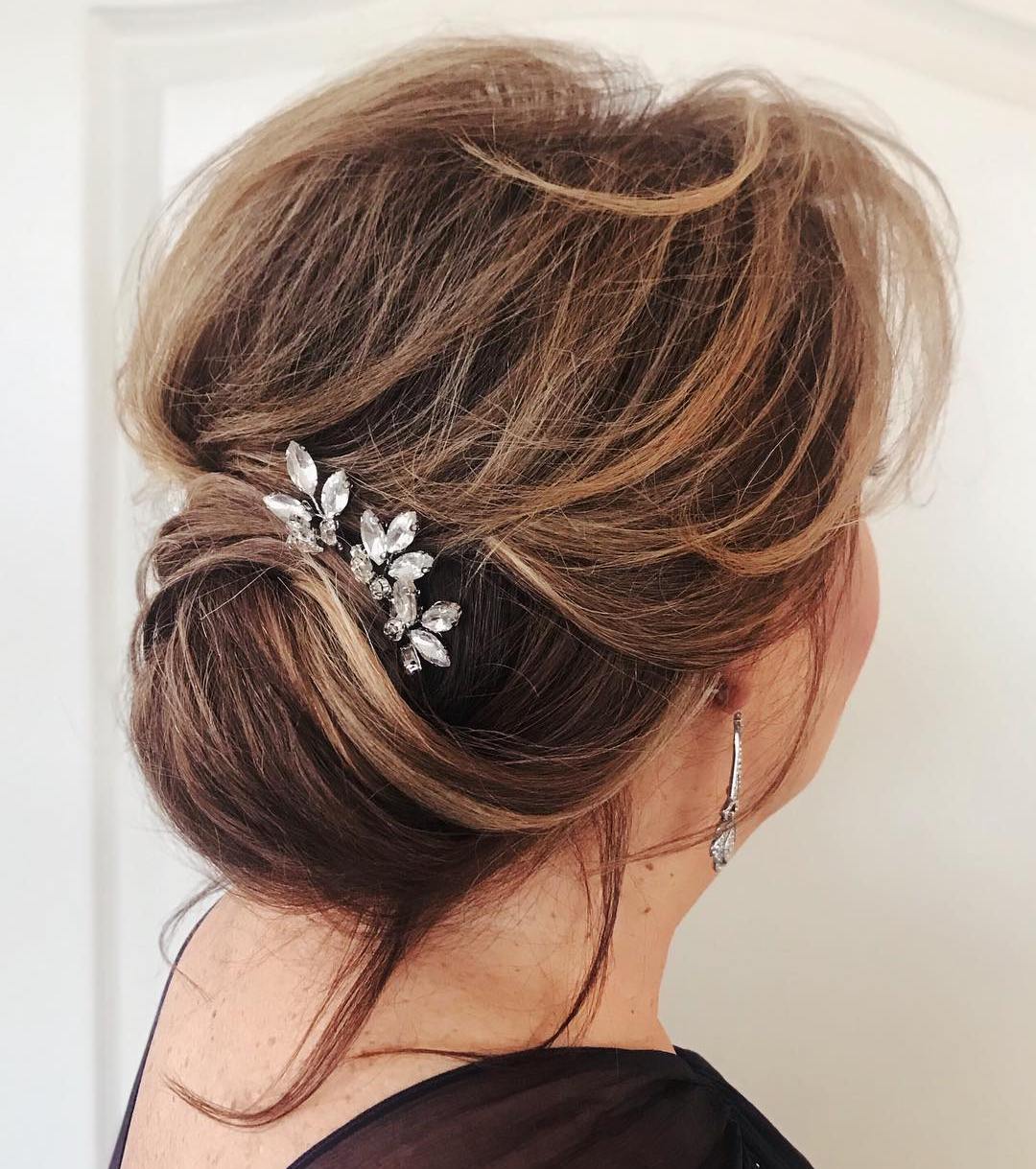
#24. Updo Bun With Side Tendrils
Why We Love It: This messy bun is more elegant with softly curled side tendrils. The trick to this style is to avoid perfection — the small imperfections make it beautiful.
Stylist's Tip: The side tendrils should curl gently away from the face. Use a small-barrel curling wand and curl in alternating directions for natural-looking texture.
Perfect for: All face shapes; boho and rustic weddings.
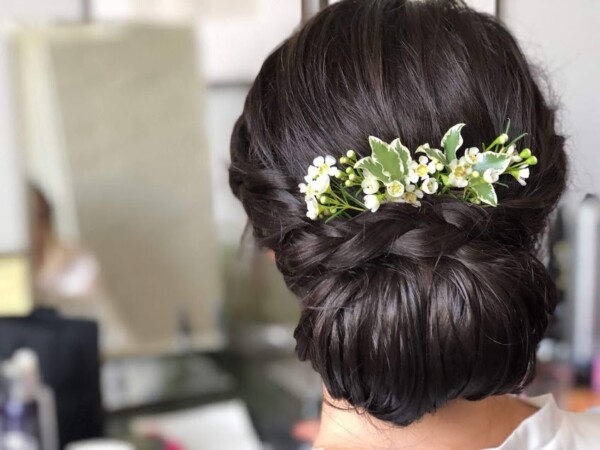
#25. Texture and Crown Braid
Why We Love It: Loose and oversized braids have been popular for quite some time, but the braid crown fits any style for weddings or long hair. It's romantic and regal.
Stylist's Tip: For a more dramatic crown, use a Dutch braid technique (braiding under instead of over) — it creates a raised, more visible braid.
Perfect for: Oval and heart-shaped faces; boho and destination weddings.
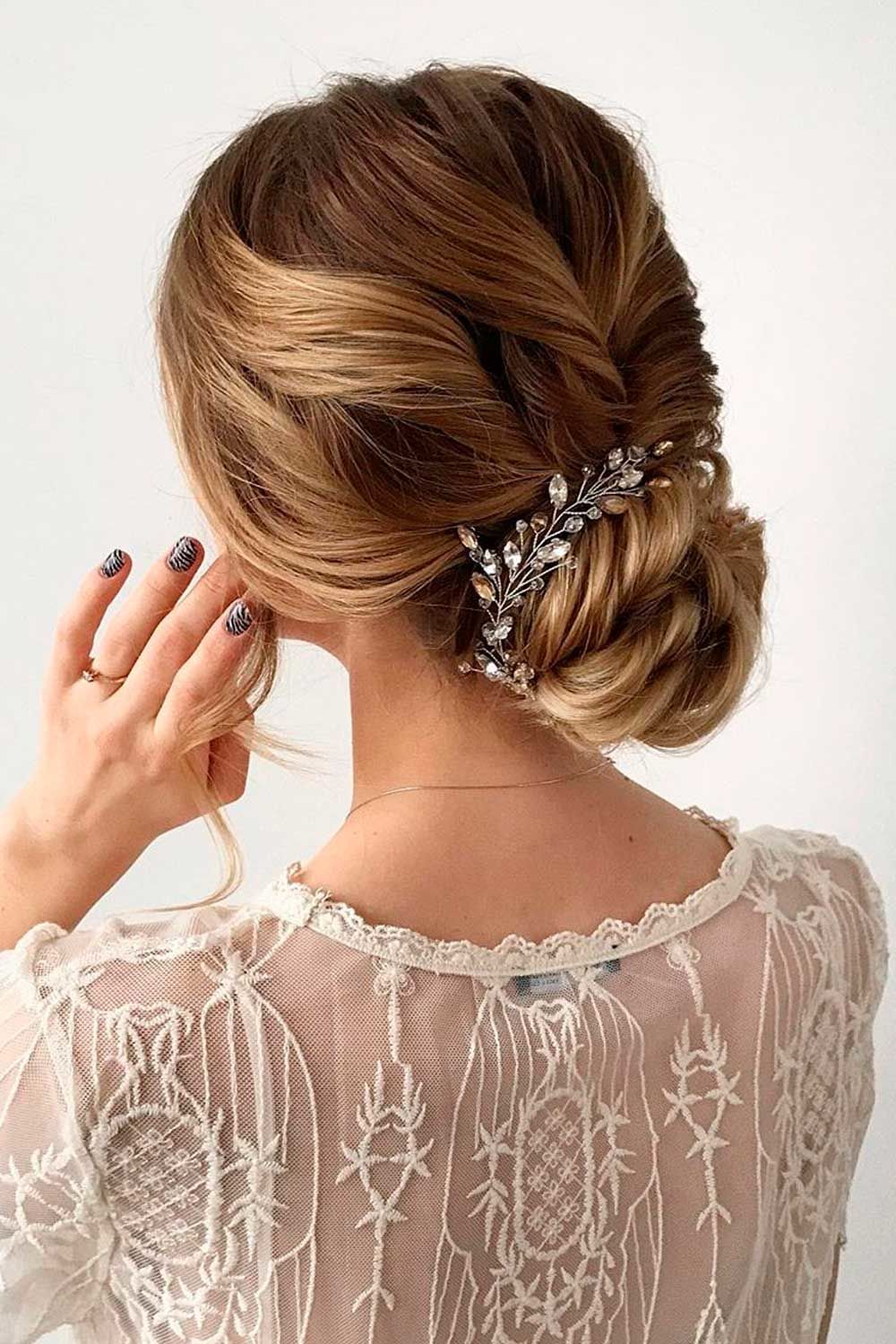
#26. Incredible Undone Bun
Why We Love It: This messy style bun is perfect for doing — it looks effortlessly chic and takes the pressure off achieving perfection. Just be yourself and let your beauty shine!
Stylist's Tip: This style actually looks better when it's slightly undone. Use a texturizing spray and don't stress about every strand being in place.
Perfect for: All face shapes; casual and relaxed weddings.
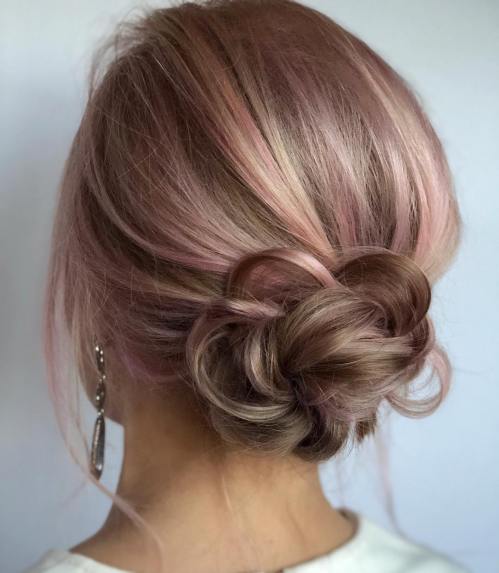
#27. Unstructured Bun Twist
Why We Love It: This classic style is dialed up with luxurious hair colors. The unstructured twist creates a modern, fashion-forward take on the traditional bun.
Stylist's Tip: The "unstructured" look comes from keeping the twists loose and airy. Use a light hairspray to hold the shape without making it stiff.
Perfect for: All face shapes; modern and contemporary weddings.
Classy Side-Swept Bridal Hairstyles
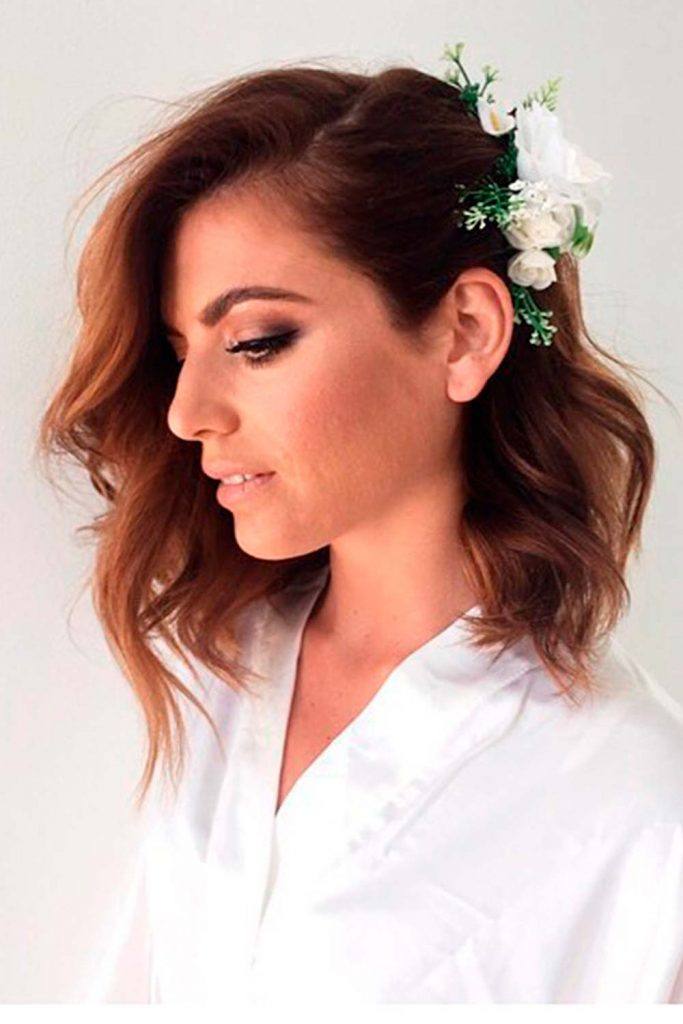
#28. Wondrous Side Flower
Why We Love It: This side-flower curly hairstyle is charming for your wedding day. The asymmetrical placement adds visual interest and romance.
Stylist's Tip: Choose a flower that either matches your bouquet or provides a beautiful contrast. Placement at the temple or just behind the ear is most flattering.
Perfect for: Oval and round faces; garden and outdoor weddings.
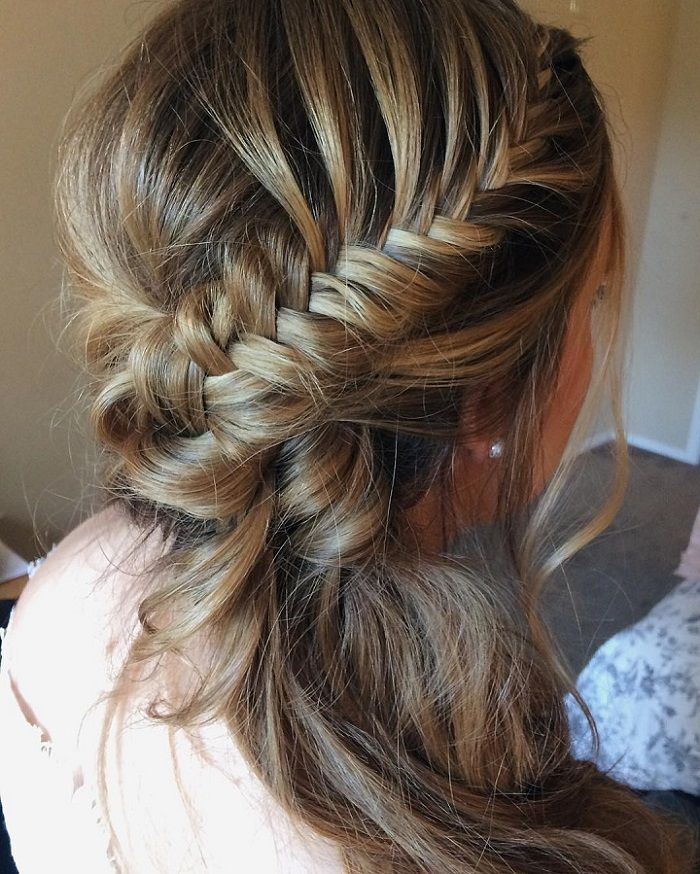
#29. Glorious Up Hairstyle
Why We Love It: Consider the entire ensemble when choosing this side braid hairstyle. It always looks best when long hair seamlessly flows along with the fabrics of the veil.
Stylist's Tip: Work with your stylist to ensure the braid and veil placement coordinate perfectly. The braid should be visible alongside the veil.
Perfect for: Long hair; traditional and formal weddings.
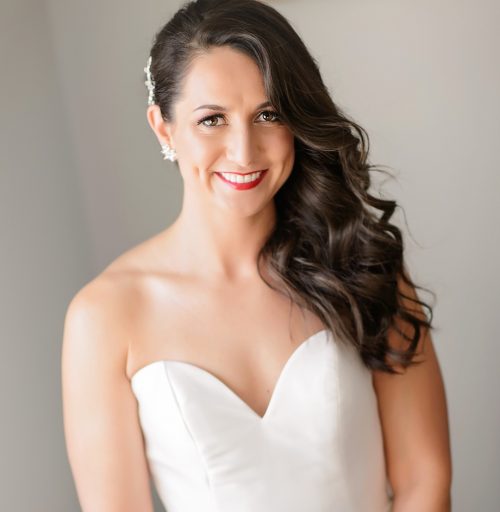
#30. Waterfall of Side Curls
Why We Love It: A beautiful hair clip on the side completes this look. The cascading curls create a waterfall effect that's romantic and eye-catching.
Stylist's Tip: Use a curling wand to create curls in varying directions — this creates a more natural, cascading effect than uniform curls.
Perfect for: All face shapes; vintage-inspired weddings.
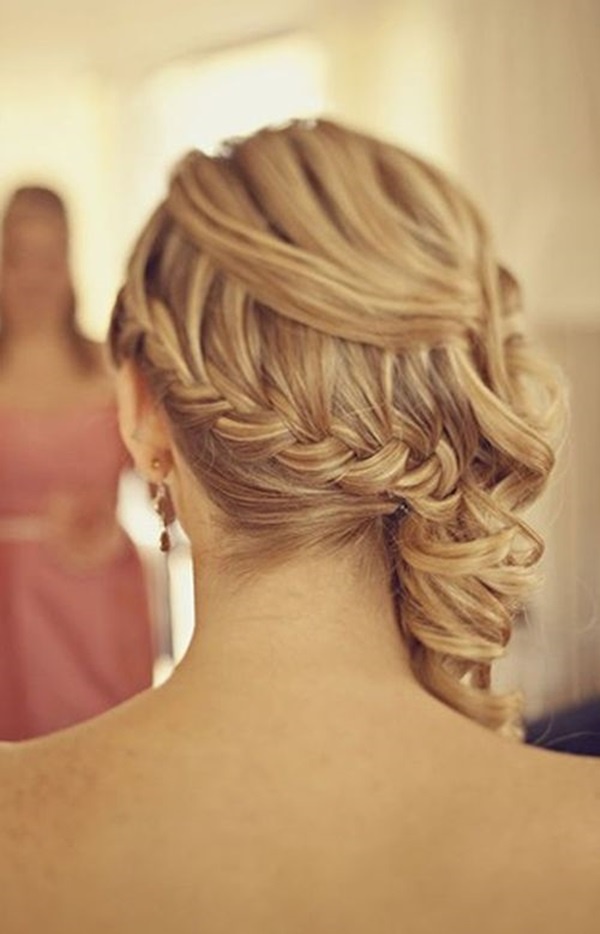
#31. Two-Layer Side Braid
Why We Love It: This style looks classy with its natural texture, needing no extra additions to shine. The two-layer braid adds depth and dimension.
Stylist's Tip: For the most beautiful texture, braid your hair when it's slightly dirty — second-day hair holds braid patterns much better.
Perfect for: Square and heart-shaped faces; rustic and outdoor weddings.
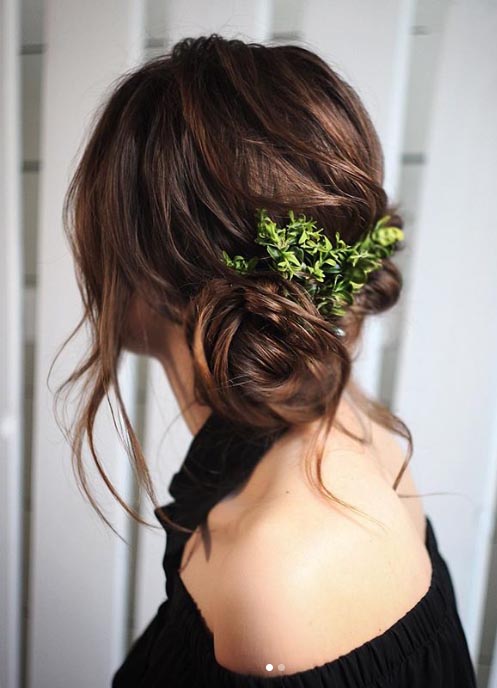
#32. Green Leaf Addition Side
Why We Love It: A small bun on the side with a loose design makes the bride look romantic in front of love. The green leaves add a natural, earthy touch.
Stylist's Tip: Use fresh or preserved leaves that match your floral arrangements. For a more lasting option, consider faux leaves with a natural finish.
Perfect for: All face shapes; boho and outdoor weddings.
Curly Hairstyles for a Wedding
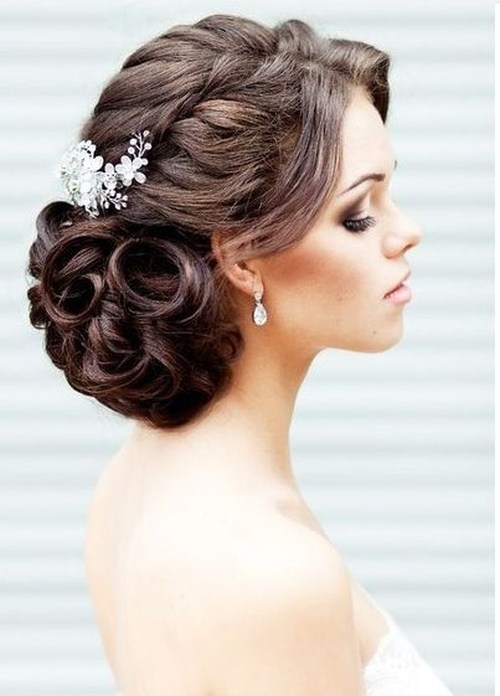
#33. Romantic Styles
Why We Love It: This side hairstyle will get you compliments from all your guests. The romantic curls frame the face beautifully while keeping hair off your face.
Stylist's Tip: For natural curls, use a curl-defining cream to enhance your pattern and reduce frizz. Air-dry for the most natural, voluminous texture.
Perfect for: Curly hair; all wedding styles.
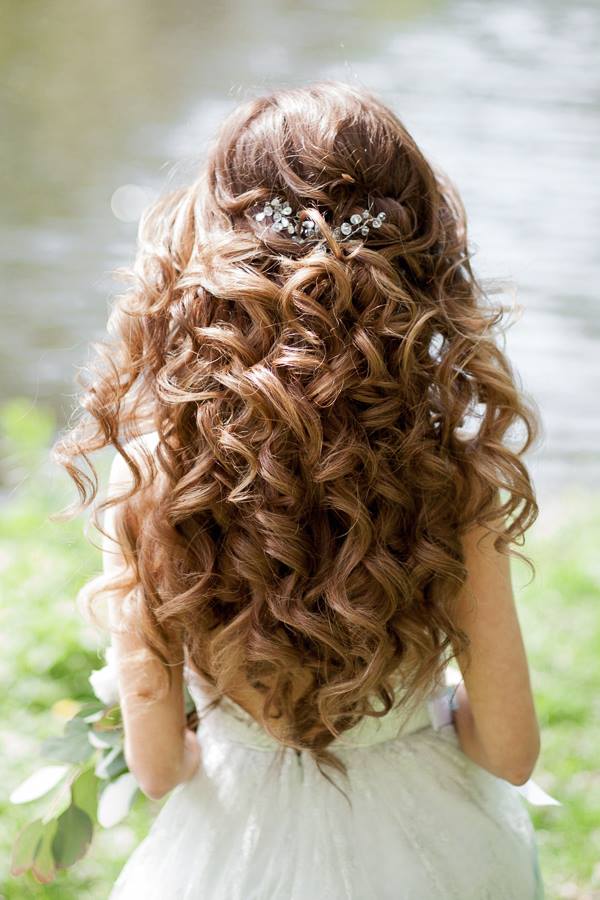
#34. Amazing Long Curly
Why We Love It: We love the incredible highlights, long texture, and long curly hairstyle. The layers add movement and dimension that photograph beautifully.
Stylist's Tip: For the most flattering curls, ask your stylist for layers that frame your face. The shortest layers should hit at cheekbone level.
Perfect for: Long curly hair; glamorous and outdoor weddings.
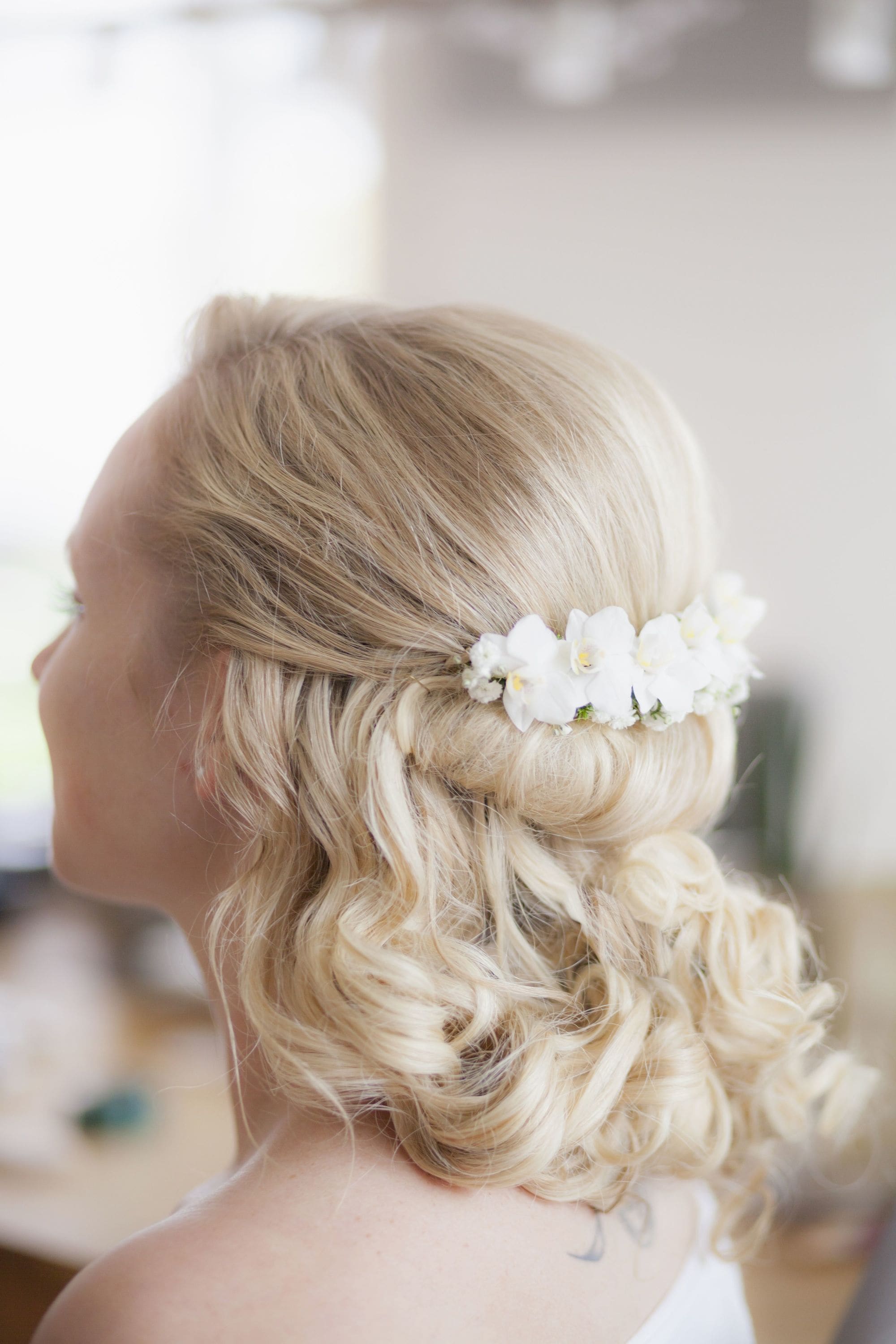
#35. Short Curly Hairstyle
Why We Love It: Curls and a center part were the perfect finishing touch. Adding romantic white flowers made this look stunning and unique.
Stylist's Tip: For short curls, use a diffuser attachment on your blow-dryer. This enhances natural curl patterns and creates volume without frizz.
Perfect for: Short curly hair; all wedding styles.
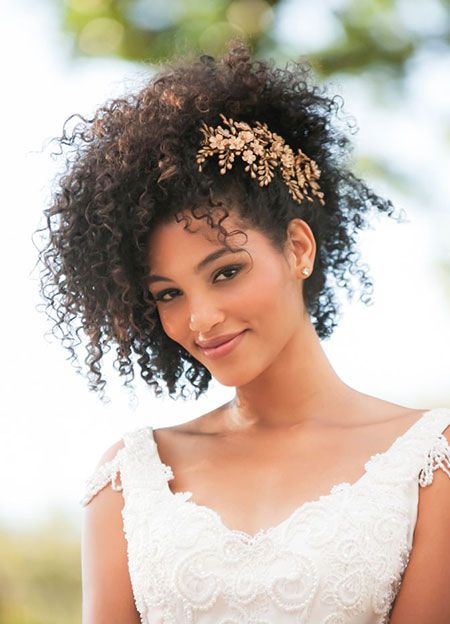
#36. Black Natural Curls With Sparkly Comb
Why We Love It: Pretty natural texture paired with a stunning comb — this style celebrates your natural curls while adding just the right amount of sparkle.
Stylist's Tip: For natural Black hair, focus on hydration. Use a curl cream and oil to define curls and keep them shiny all day.
Perfect for: Natural curls; all wedding styles.
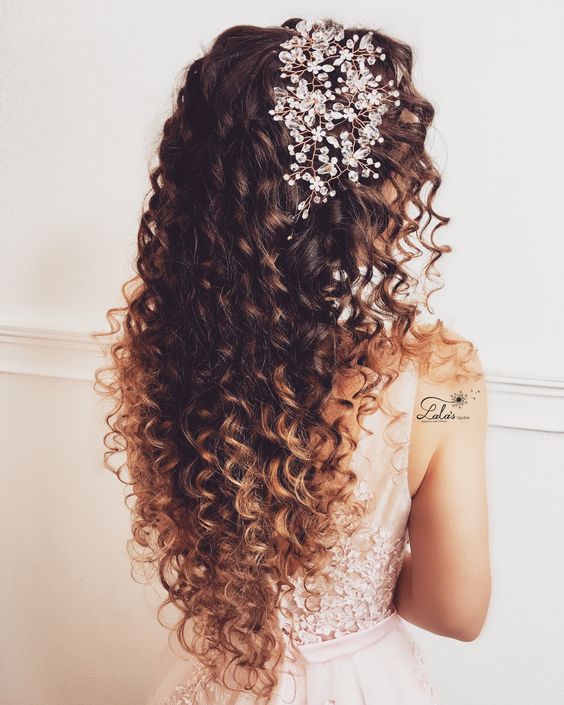
#37. Long Curly With Flower Hair Clip
Why We Love It: This curly style with a hair clip offers an effortlessly chic look. The accessory adds polish without overwhelming your natural texture.
Stylist's Tip: Position the flower hair clip at the side or just behind the ear. This placement is most visible in photos.
Perfect for: Long curly hair; garden and boho weddings.
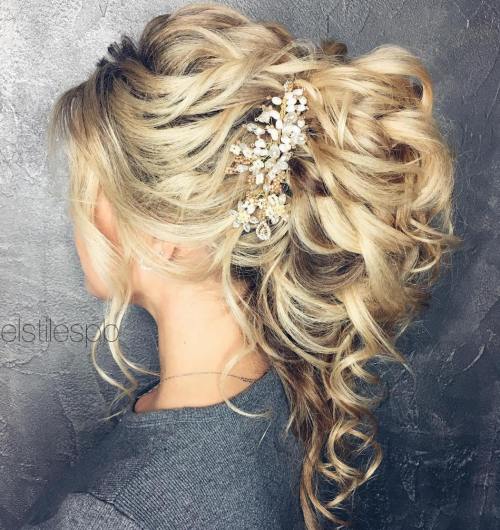
#38. Highlight Curly With Flower Hairpiece
Why We Love It: This style is high-maintenance, looking like high romance. The combination of highlights and floral pieces creates a truly stunning bridal look.
Stylist's Tip: Ask your stylist to place the flower hairpiece where you have the most volume or curl for maximum impact.
Perfect for: Curly hair, dramatic and glamorous weddings.
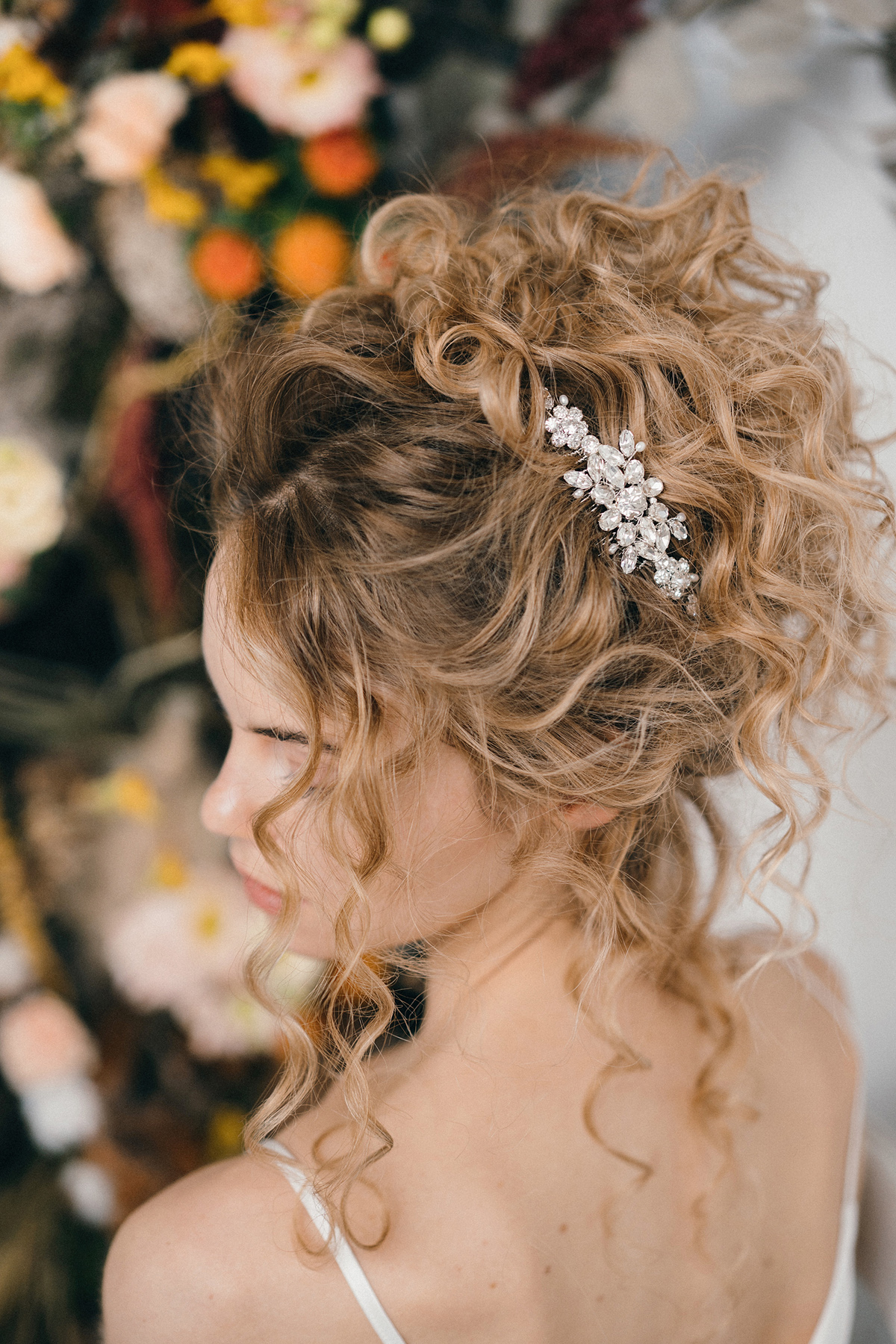
#39. Loose Curly Up
Why We Love It: This curly and wavy hairstyle is very impressive. The loose updo keeps curls contained while maintaining their beautiful texture.
Stylist's Tip: Don't pull the curls too tight — the beauty of this style is in the soft, voluminous shape. Use large bobby pins to secure gently.
Perfect for: Curly hair; all wedding styles.
sources
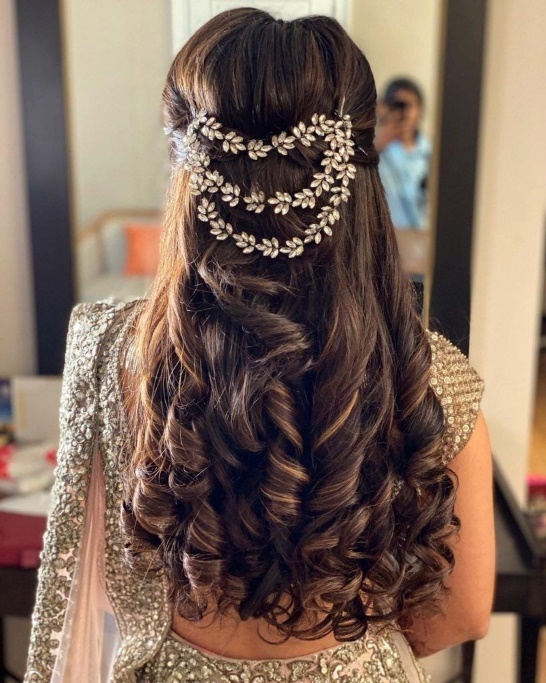
#40. Wave Long Loose With Hair Accessories
Why We Love It: Style your wedding hair in loose waves to keep the focus on your stunning hairpiece. The waves provide texture while the accessory shines.
Stylist's Tip: For the most stunning effect, choose a hairpiece with pearls or crystals that catch the light. The waves provide the perfect backdrop.
Perfect for: Long hair; elegant and glamorous weddings.
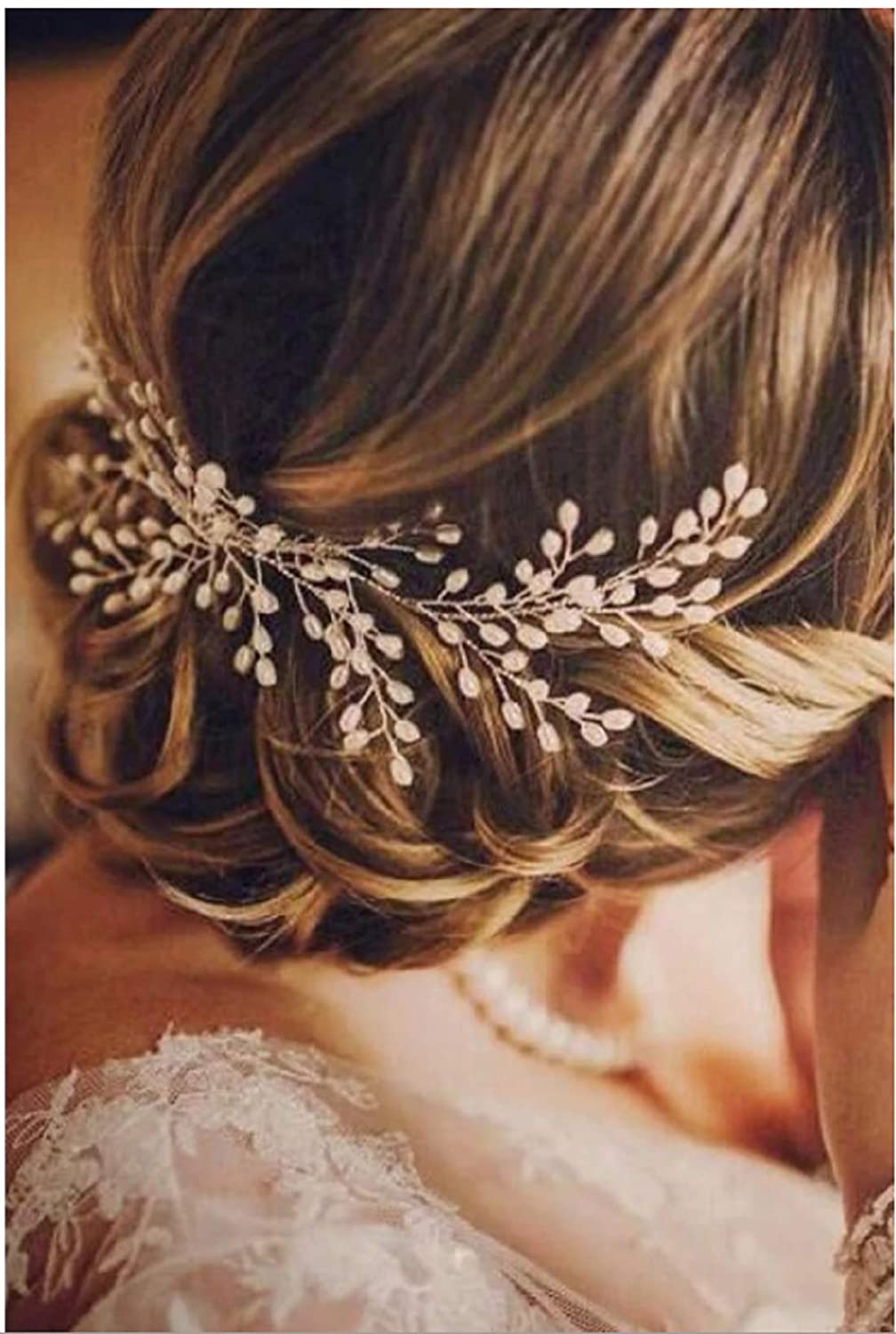
#41. Side Braid With Bun Style
Why We Love It: A hairpiece pinned in the hair is a beautiful touch to this side braid and bun combination. It's sophisticated and romantic.
Stylist's Tip: The hairpiece should be positioned at the center point where the braid meets the bun — this creates a seamless, polished look.
Perfect for: All face shapes; formal and semi-formal weddings.
Wedding Styles With Veil
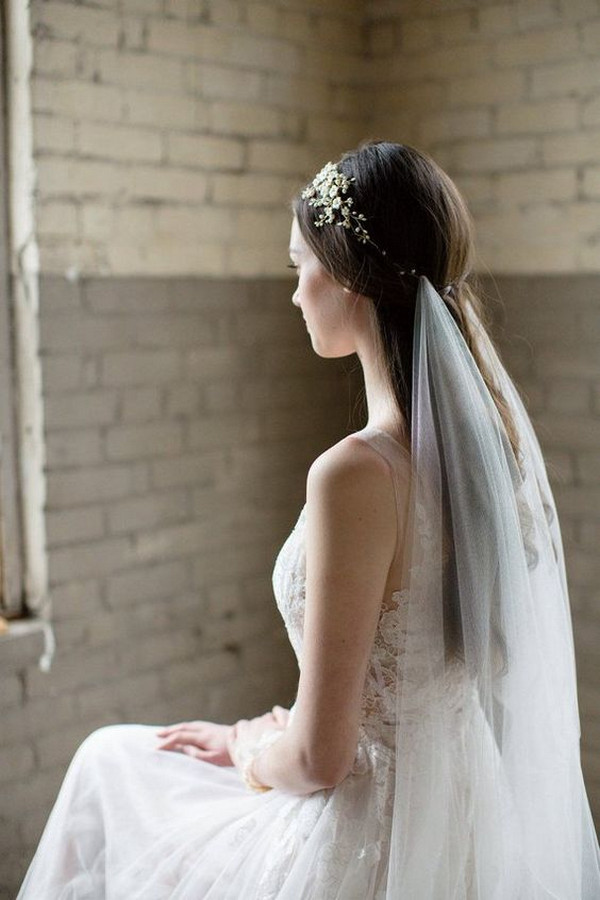
#42. Simple Wedding Hairstyle With Veil
Why We Love It: Half-up, half-down with a beautiful headband makes the bride look elegant. This simple style is the perfect canvas for a statement veil.
Stylist's Tip: The headband should match your veil's embellishments — pearls with pearls, crystals with crystals. This creates a cohesive, polished look.
Perfect for: All face shapes; traditional and formal weddings.
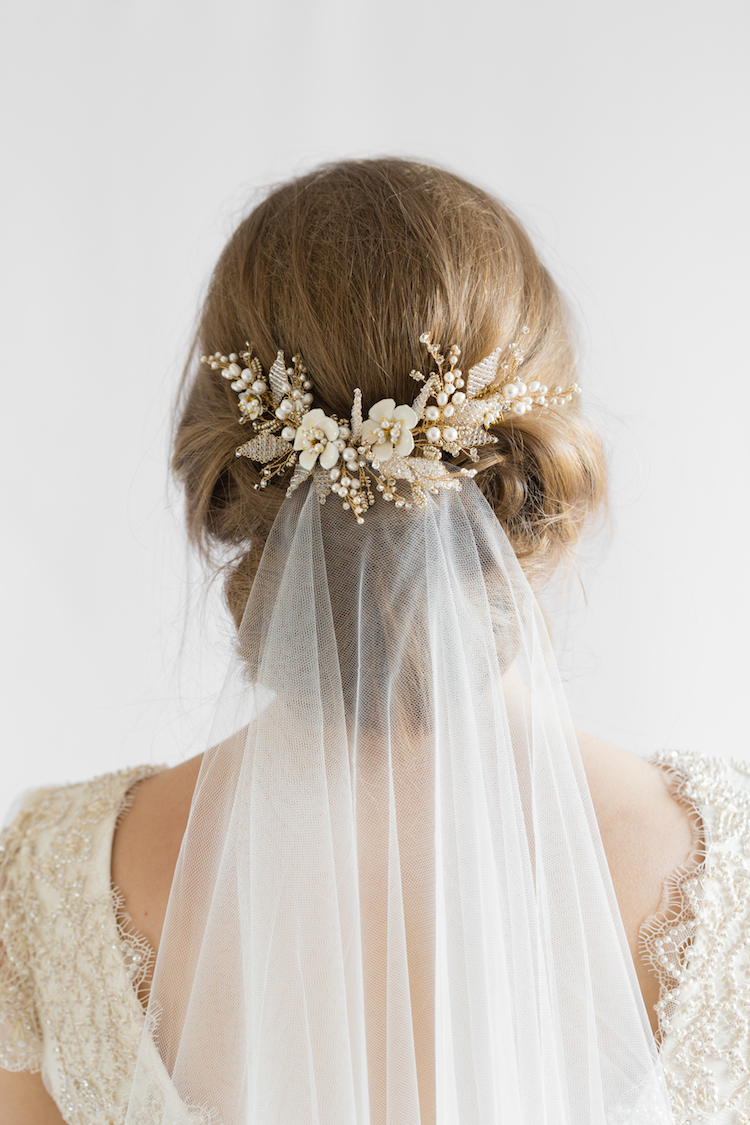
#43. Wreath Headpiece Veil
Why We Love It: An up-down hairstyle for a wedding makes the whole texture look simpler yet sleeker in a high bun. The wreath headpiece adds natural beauty.
Stylist's Tip: For a more dramatic effect, position the wreath slightly forward on the head so the veil falls from underneath.
Perfect for: Oval and heart-shaped faces; garden and outdoor weddings.
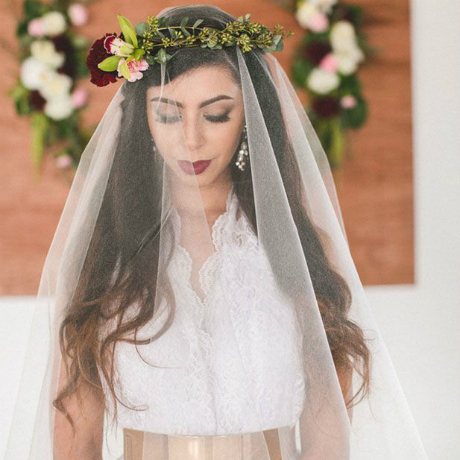
#44. Sock Loose Bun
Why We Love It: Dress up a sassy loose bun with a bejeweled accessory. This style adds personality and sparkle to a classic silhouette.
Stylist's Tip: Use a sock bun maker or donut for volume, then wrap your natural hair around it. The bejeweled accessory should cover the base.
Perfect for: Fine hair; glamorous and modern weddings.
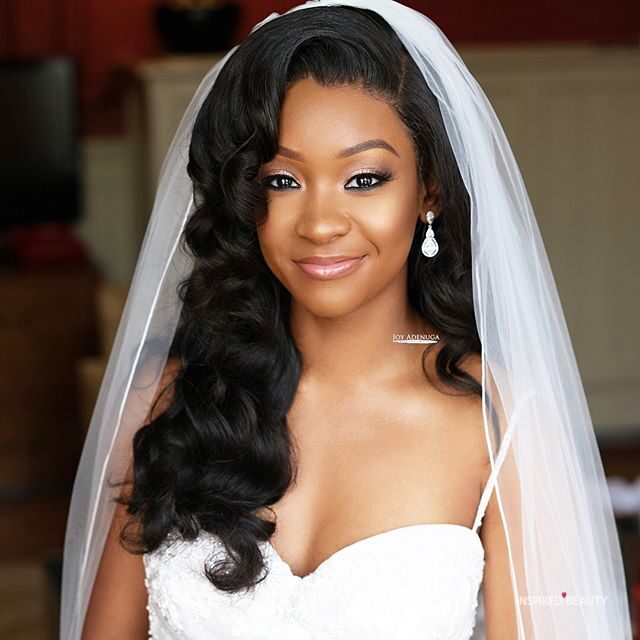
#45. Down Wave Hairstyle With Veil
Why We Love It: A fancy waist-long hairstyle looks best when paired with an equally fancy gown and earrings. The veil adds the bridal finishing touch.
Stylist's Tip: For the most stunning veil placement, ask your stylist to position it under the waves, not pulling hair from the top.
Perfect for: Long hair; formal and glamorous weddings.
sources
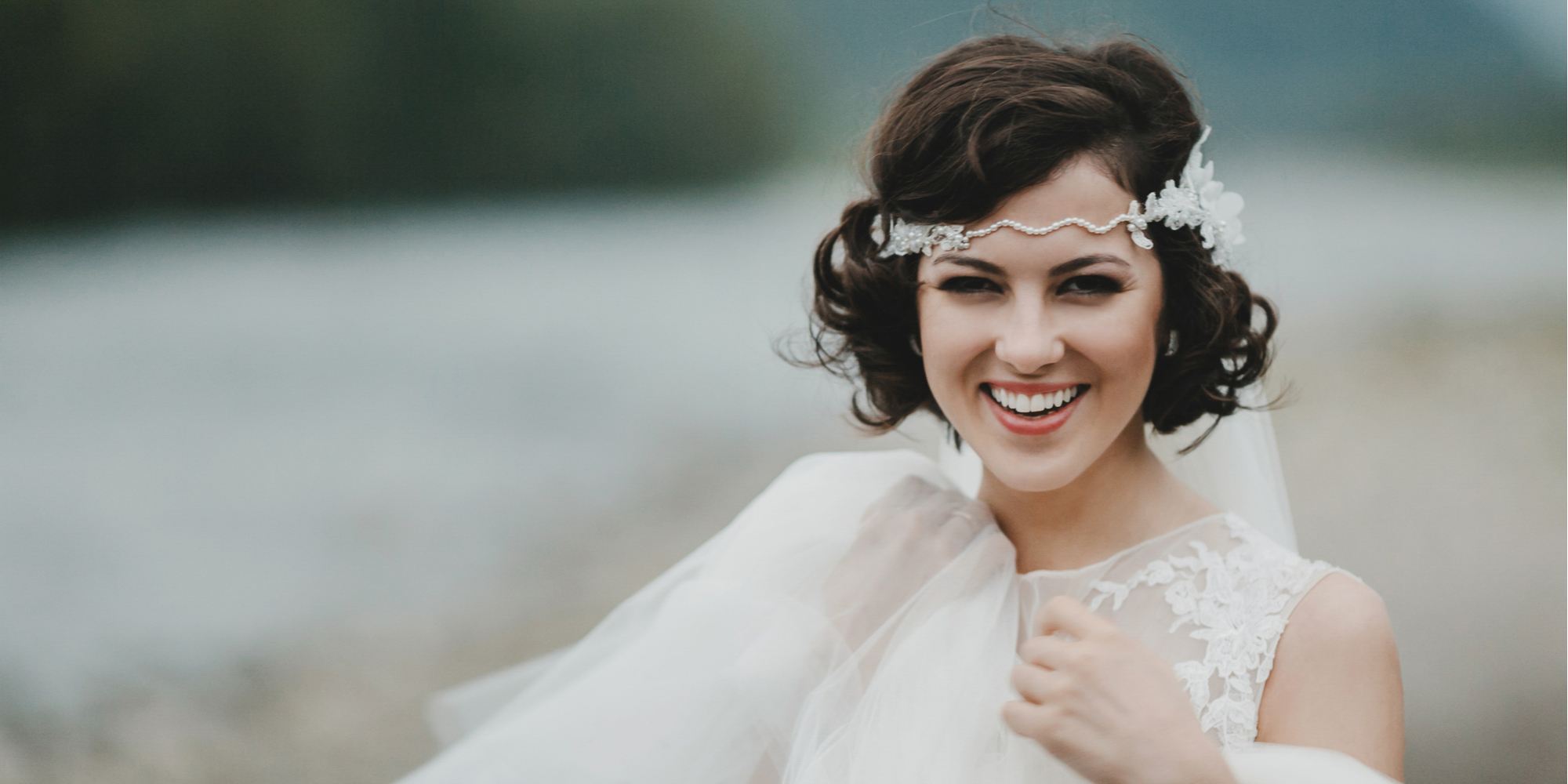
#46. Short Wave With Headband Veil
Why We Love It: You'll be the belle of the ball with this short wave style featuring a headband veil. It's modern, chic, and perfectly bridal.
Stylist's Tip: For short hair, choose a veil that falls to the shoulders or elbows — a longer veil can overwhelm a shorter hairstyle.
Perfect for: Short hair; modern and contemporary weddings.
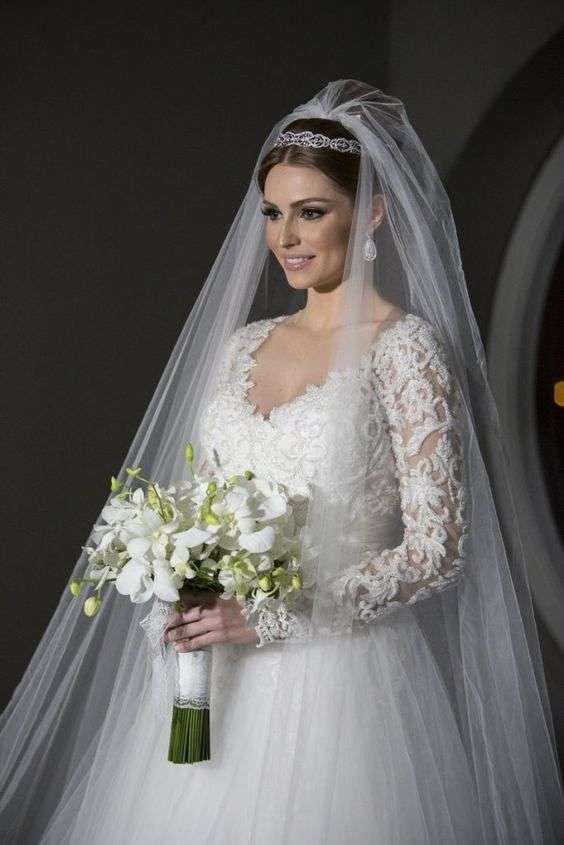
#47. High Bun With Tiara
Why We Love It: Make a high bun with a trendy tiara for a lovely day of 'do. The tiara adds a royal, glamorous touch to the classic updo.
Stylist's Tip: Position the tiara at least one inch behind the hairline for the most flattering placement — it should sit slightly back from the forehead.
Perfect for: Round and oval faces; princess and fairytale weddings.

#48. Down Hairstyle With Flower Crown and Veil
Why We Love It: To be more relaxed, try this pretty hairdo. Add loose waves to your hair, take a flower crown with a veil, and make the whole look stunning.
Stylist's Tip: The flower crown should complement your bouquet. Choose a mix of larger statement flowers and smaller filler blooms for visual interest.
Perfect for: All face shapes; boho and outdoor weddings.
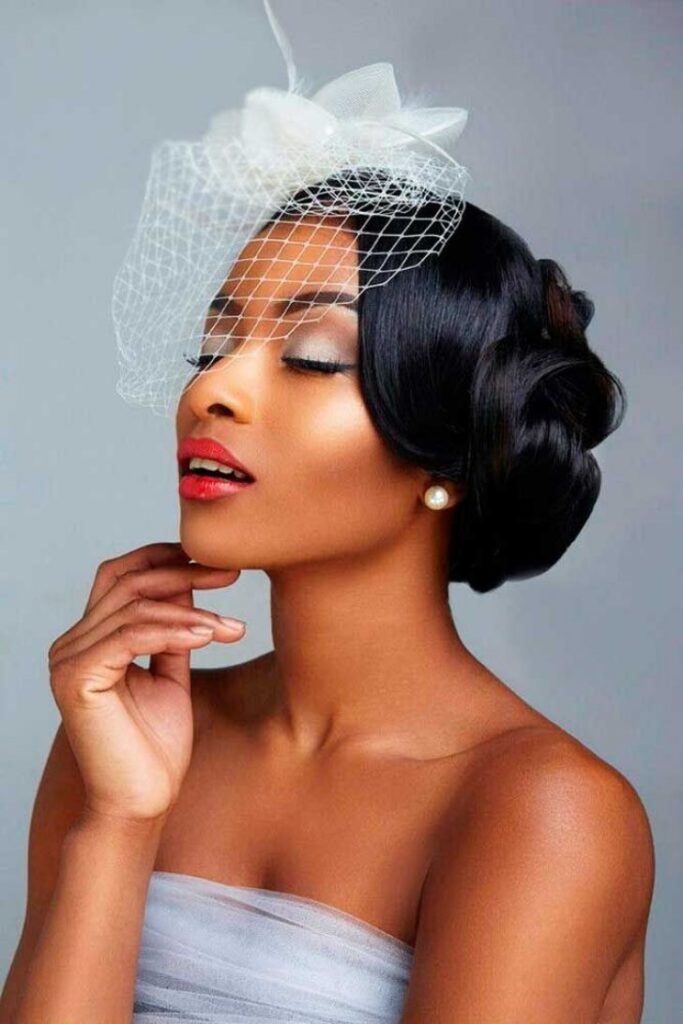
#49. Smooth Wave Bun With Hat Veil
Why We Love It: Wear your hat veil for an extra-dreamy hairstyle. The hat adds a vintage touch that's perfect for a retro-inspired wedding.
Stylist's Tip: For a truly vintage look, ask your stylist to create smooth waves framing the face before securing the hat veil.
Perfect for: Square and oval faces; vintage and retro weddings.
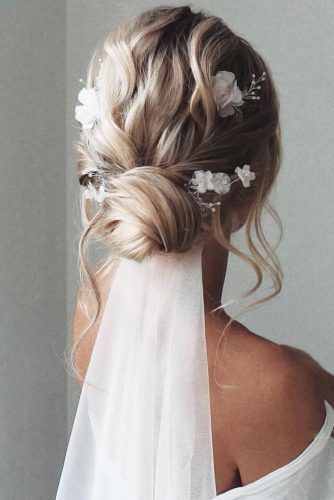
#50. Twist Loose Down Bun With Veil
Why We Love It: Consider twisting your hair back for a unique way to add texture. Add flower hair combs with a veil to make the whole hairstyle sparkle.
Stylist's Tip: The twist should be loose and airy, not tight. This creates a more modern, romantic texture.
Perfect for: All face shapes; garden and outdoor weddings.
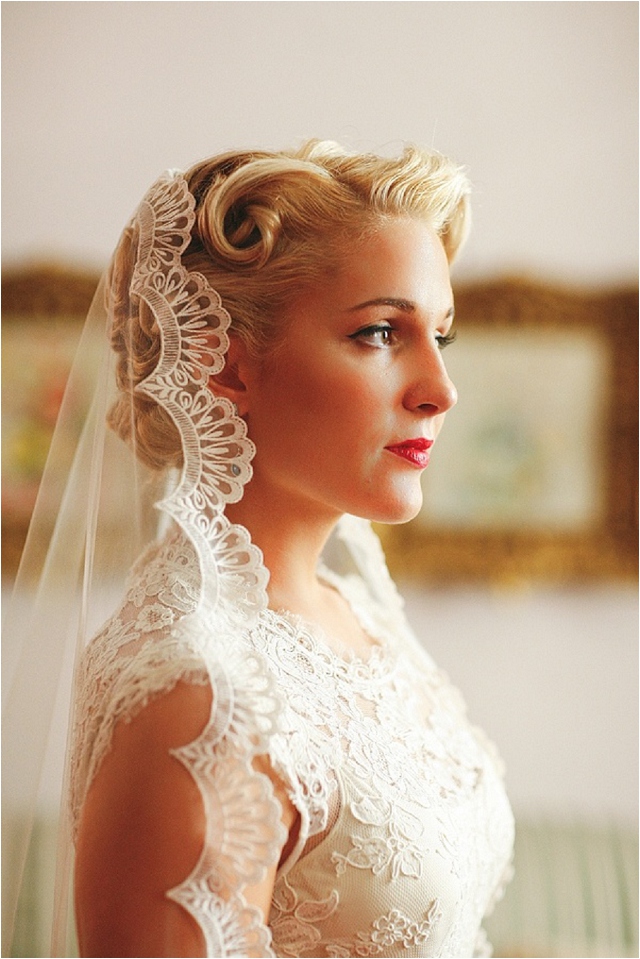
#51. French Texture Hairstyle With Veil
Why We Love It: Add this style of flower veil to a French wave hairstyle to make you look chic. The combination of texture and flowers is undeniably romantic.
Stylist's Tip: For a French wave, use a 1-inch curling iron to create vintage waves. The pattern should be consistent throughout.
Perfect for: Oval and heart-shaped faces; vintage and French-inspired weddings.
Elegant Hair Accessories For Brides
Here is a show from customer comments on popular hair accessories.
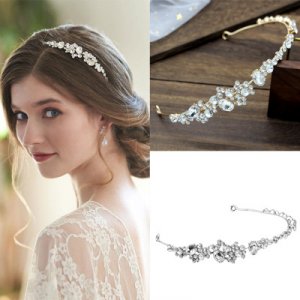
#52. Bridal Headbands Ivory-Wedding Headpieces
Customer Insight: "I had a small wedding and didn't have my hair done professionally. I threw some waves in my hair and put this on, which was perfect." — Bellbun.
Best for: Brides with simple, natural hairstyles who want an easy, elegant finishing touch.
Styling Tip: Headbands are perfect for short-term wear and can transform even the simplest hairstyle into a bridal look.
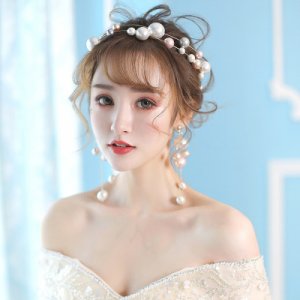
#53. Pearl Headband With Earring Set
Customer Insight: "This hairstyle was gorgeous; my head is too small. It's classy, elegant, and very sturdy." — Jesse Koehler.
Best for: Brides who want a coordinated, polished look with both headpiece and jewelry.
Styling Tip: A matching set ensures your accessories complement each other perfectly for a harmonious bridal aesthetic.
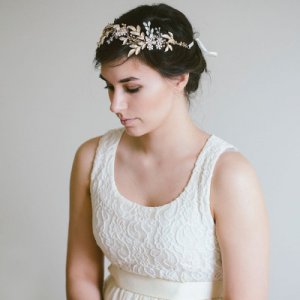
#54. Hair Bands, Jewelry Hair Accessories
Customer Insight: "I love the comfort and the look! Many compliments on this headpiece. I chose to wear it without the veil; it looked better on its own." — Jesse Koehle.r
Best for: Brides who want a statement piece that stands alone without a veil.
Styling Tip: If the headpiece is bold enough, skipping the veil can be a modern, fashion-forward choice.
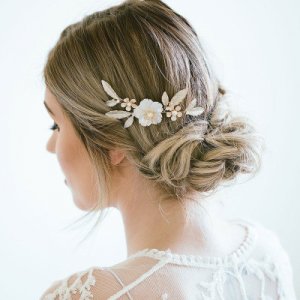
#55. Wedding Hair Accessories for Flower Girl Bridesmaids
Customer Insight: "La diadema es más bonita en físico, viene en una cajita acompañada de unos pasadores." — Angel
Best for: Flower girls and bridesmaids who want to coordinate with the bride's look.
Styling Tip: Choose accessories that complement but don't compete with the bride's main piece.
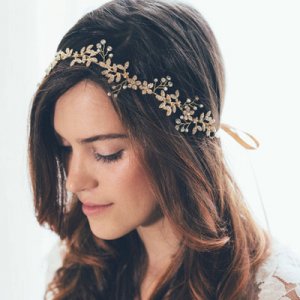
#56. Bridal Headband Crystal Wedding Headpieces
Customer Insight: "It made my day. Simple but elegant." — Cathy Hartz
Best for: Brides who want classic, understated elegance.
Styling Tip: Crystal headbands are versatile — they work equally well with updos and down hairstyles.
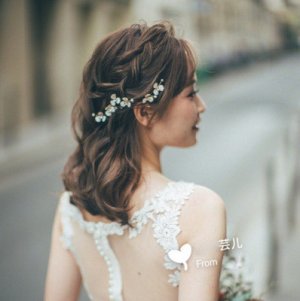
#57. Pearl Hair Vine Wedding Hair Accessories
Customer Insight: "I love how it contrasted with my simple dress and brought my overall look to the next level." — Juliet Van Wyk
Best for: Brides with simple gowns who want to add elegance and visual interest.
Styling Tip: Pearl hair vines weave beautifully through braids or cascade through loose waves.
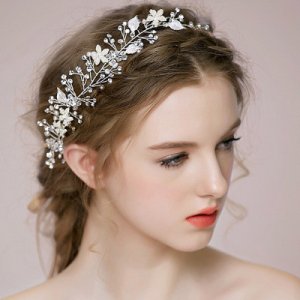
#58. Silver Rhinestone Wedding Headband Tiara
Customer Insight: "I love this headpiece; I wore it for my wedding vow renewal ceremony. It's flexible and molds perfectly to the head." — Linda L.
Best for: Vow renewals, formal weddings, and brides who want a flexible, comfortable tiara.
Styling Tip: The flexibility means it works with almost any hairstyle without pulling or discomfort.
sources
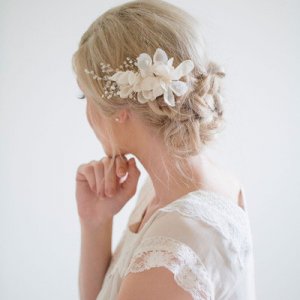
#59. Crystal Beads Bridal Hair Vine
Customer Insight: "I love this headpiece! I ordered it for my wedding day and could not have been more pleased. I cut off the longer 'twigs' with wire cutters, and it was perfect!" — Mitchell Pierce.
Best for: Brides who want customizability — you can adapt the length and shape to fit your hair.
Styling Tip: Hair vines can be cut to size, making them perfect for brides who want a unique, custom placement.
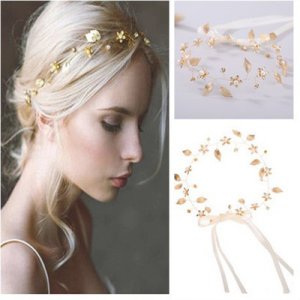
#60. Silver Hair Piece Crystal Headband
Customer Insight: "My hairdresser and colleagues commented on how different it looked and loved it! Everyone thought it was way more expensive than it was." — Wanting Liang.
Best for: Budget-conscious brides who want a high-end look without the high price tag.
Styling Tip: Quality headpieces can look like designer accessories without breaking the bank.

#61. Crystal Hair Accessories For Women
Customer Insight: "This hairpiece is so beautiful and perfect for any bride! I removed the ribbons and had bobby-pinned them to my hair, which was comfortable to wear." — Andie.
Best for: Brides who want the flexibility to adapt an accessory to their specific style.
Styling Tip: Many hairpieces can be worn in multiple ways — explore different positions for the best look.
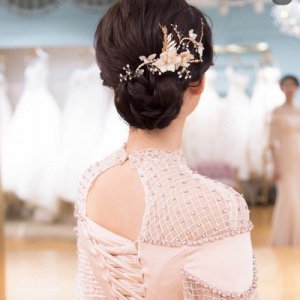
#62. Leaf Hair Accessories for Women and Girls
Customer Insight: "Beautiful hair decoration. It's light on your head and looks so perfect." — Daniel.
Best for: Boho and garden weddings where natural elements are the theme.
Styling Tip: Leaf accessories work best when scattered throughout the hair for a natural, organic look.
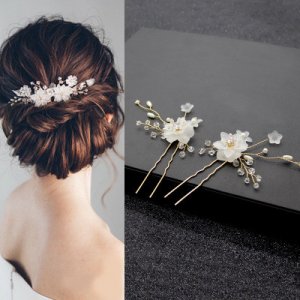
#63. Wedding Hair Vine Silver Pearl Bridal
Customer Insight: "Simple yet beautiful and elegant, the headband made my hair stunningly beautiful." — Cindy McKenzie
Best for: Brides who want classic elegance with a touch of sparkle.
Styling Tip: A simple pearl headband is timeless and photographs beautifully from every angle.
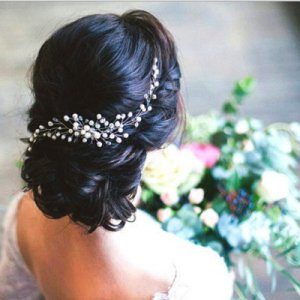
#64. Rhinestone Hair Piece Bridal Hair Accessories
Customer Insight: "It was a last-minute purchase, and it was great. It is super shiny and doesn't feel loose or uncomfortable." — Victoria Barret.t
Best for: Last-minute emergencies and brides who want reliable, comfortable accessories.
Styling Tip: Rhinestone pieces catch the light beautifully, making them perfect for evening and indoor weddings.
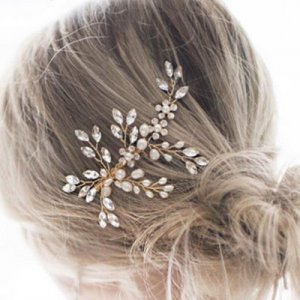
#65. Bride Wedding Crystal Hair Vine Silver
Customer Insight: "It was a beautiful piece to add to finish my look." — Karen
Best for: Brides who need a finishing touch to complete their bridal ensemble.
Styling Tip: A hair vine is perfect for finishing a look without overpowering it.
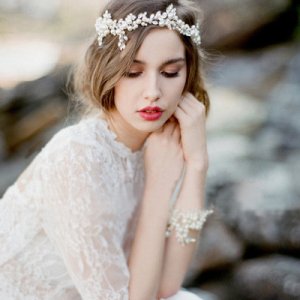
#66. Crystal Bridal Hair Accessories For Women
Customer Insight: "It has a beautiful design; it can be worn in different positions." — Helen B
Best for: Versatile brides who want options in how they wear their accessories.
Styling Tip: Experiment with different positions before the wedding to find your favorite.
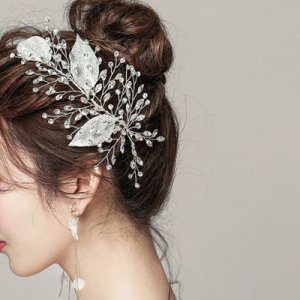
#67. Delivery Bridal Rose Gold and Gold Silver Extra Long Pearl
Customer Insight: "I loved it, and it matches my jewelry!" — Sheyla Menzie
Best for: Brides who want perfectly matched metals with their existing jewelry.
Styling Tip: Matching your hair accessories to your jewelry creates a cohesive, polished bridal look.
Wedding hairstyles braid
68/75. Big Side Blooms
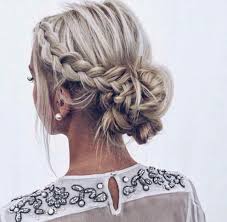
#68. Big Side Blooms
Why We Love It: Texture and braids add to this traditional style, making it feel fresh and modern. The big blooms add drama and romance.
Stylist's Tip: For the most impact, choose large flowers that contrast with your hair color. Position them near the braid for a cohesive look.
Perfect for: Oval and heart-shaped faces; boho and garden weddings.
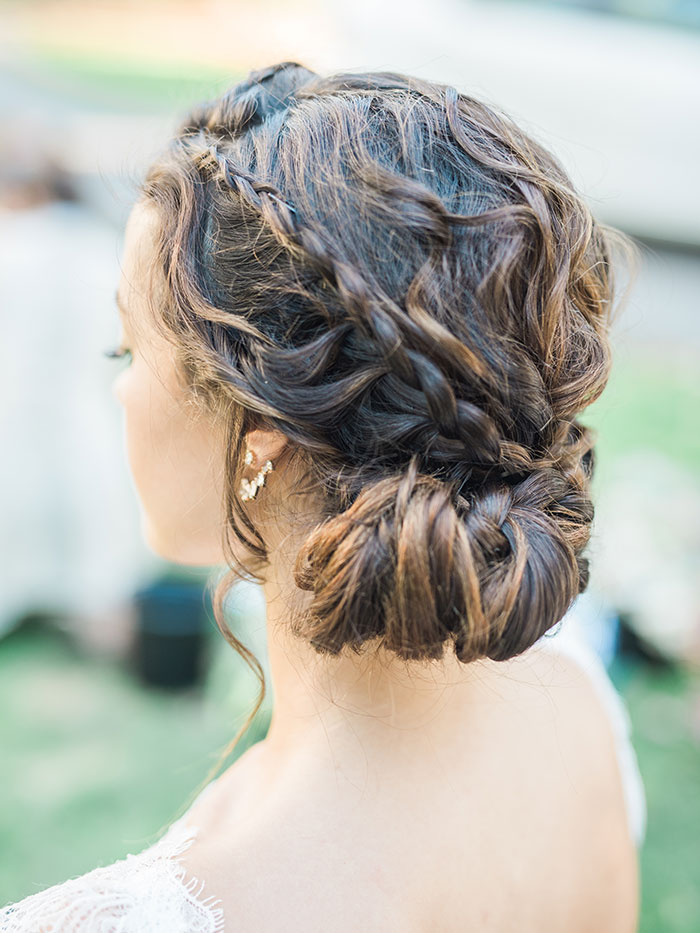
#69. Twist Braid Side Bun
Why We Love It: Textured waves and sun-kissed ends have her looking like a mermaid. The twist braid side bun adds elegance to the effortless waves.
Stylist's Tip: The "sun-kissed" look comes from subtle highlights. Add balayage or highlights before the wedding for the full effect.
Perfect for: Long hair; beach and destination weddings.
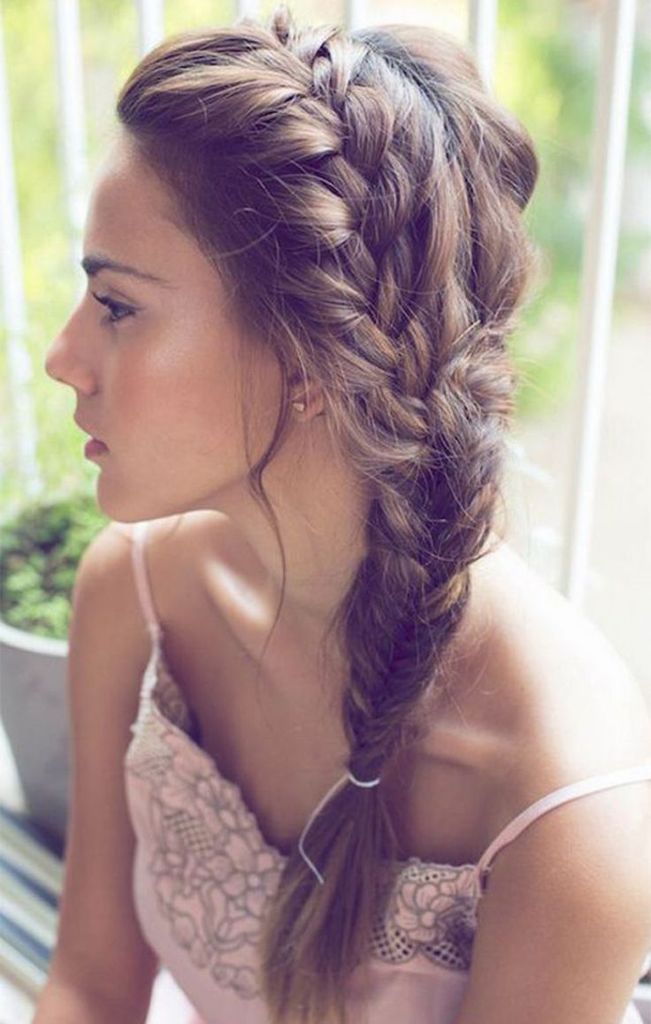
#70. Long Side French Braid
Why We Love It: If you prefer a French side braid, this look is elegant and trendy. The long, flowing braid adds texture without hiding your hair's length.
Stylist's Tip: For a more modern take, start the French braid lower on the head — this creates a more relaxed, effortless look.
Perfect for: Square and oval faces; boho and rustic weddings.
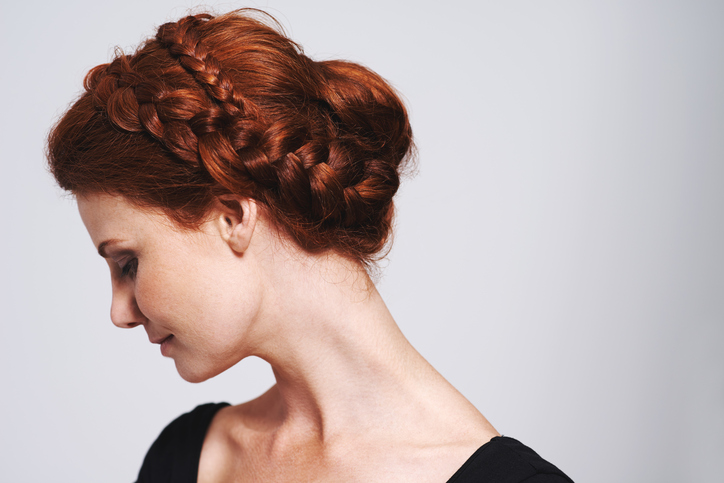
#71. Twist Braid Around
Why We Love It: Wedding hairstyles for long hair are simple for women who sport healthy, lengthy locks. This twist braid around style keeps hair off your face while showing off your hair.
Stylist's Tip: For long, thick hair, use large bobby pins and a strong-hold hairspray to keep the style secure.
Perfect for: Long hair; all wedding styles.
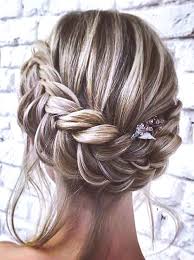
#72. Chignon Braid Hairstyle
Why We Love It: A side-swept bun is even prettier when it's accepted. This chignon braid combines the best of both styles — the romance of a braid and the elegance of a bun.
Stylist's Tip: For the most beautiful texture, braid your hair, then gently pancake (pull apart) the braid before forming the bun.
Perfect for: All face shapes; formal and elegant weddings.
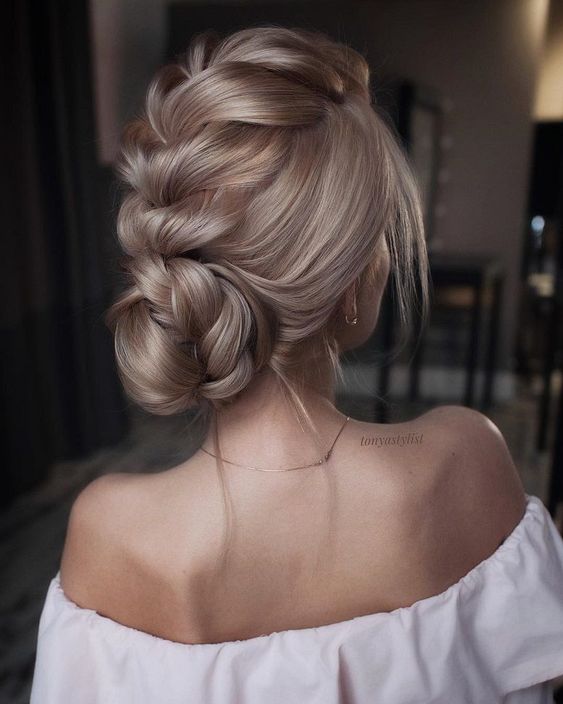
#73. Loose Chignon
Why We Love It: This voluminous style exudes sophistication. The loose chignon is the perfect balance of refined and relaxed — ideal for the modern bride.
Stylist's Tip: For volume, backcomb the crown section gently before creating the chignon. A little texture at the crown adds sophistication.
Perfect for: All face shapes; sophisticated and modern weddings.
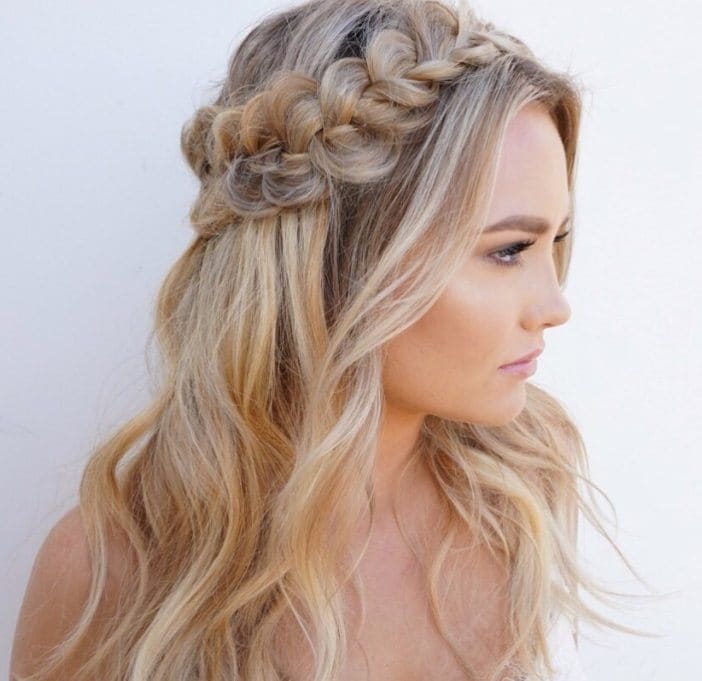
#74. Center-Parted Braid
Why We Love It: This bride is white-carpet ready after adding super-stylish twists to a knotted bun. The center part adds symmetry and elegance.
Stylist's Tip: For the most flattering center part, ensure it aligns perfectly with the center of your nose and chin.
Perfect for: Heart-shaped and oval faces; glamorous and red-carpet weddings.
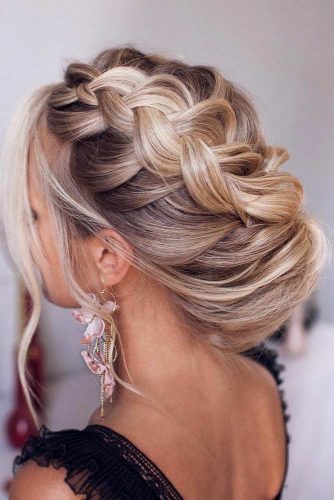
#75. Braid Crown
Why We Love It: We love the addition of the glittering hair clip to this adorable bride's chignon. The braid crown adds a fairy-tale, regal touch.
Stylist's Tip: The hair clip should be positioned where the braid crown meets the chignon. This draws the eye and creates a beautiful focal point.
Perfect for: All face shapes; princess and fairytale weddings.
Frequently Asked Questions About Wedding Hairstyles
What is the most popular wedding hairstyle for 2026?
Trends point toward styles with "soft drama" — think voluminous waves, textured buns, and polished ponytails that offer movement and a lived-in feel, moving away from an overly sleek look.
.
Should I wear my hair up or down for my wedding?
The best choice depends on your dress, venue, and personal comfort. Updos are classic and great for showing off dress details, while down or half-up styles feel more relaxed. Celebrity stylists advise staying true to what makes you feel most like yourself.
How do I choose a hairstyle for my face shape?
Generally, round faces benefit from height at the crown, square faces are softened by waves and side-swept styles, and heart-shaped faces are balanced by volume at the bottom or side parts. An oval face can pull off almost any look.
How far in advance should I do a hair trial?
Book your trial 4-6 weeks before the wedding. This gives you time to tweak the style and ensures your stylist remembers your look. Take photos from multiple angles during the trial.
Conclusion: Your bridal hairdo should complement your facial shape, wedding gown, wedding theme, and makeup. Every bride deserves to be the most beautiful on their BIG day, which goes for you, too! Choose a style that makes you feel like the most elevated, radiant version of yourself.


News for Wednesday 15 July, 2026
- 2026 Bridesmaid Hairstyles: 40 Gorgeous Ideas and Expert Style Guide
- The Ultimate Guide to Elegant Half-Up Half-Down Hairstyles for 2026 Brides
- 2026 Mother of the Bride Hairstyles: 40 Elegant Looks and Expert Tips
View all news for Wednesday 15 July, 2026 on one page
Recent News
- Monday 13 July, 2026
- Sunday 12 July, 2026
- Wednesday 08 July, 2026
- Wednesday 01 July, 2026
- Tuesday 16 June, 2026