

Unraveling The Symbolism: What A Heart Ring Represents In Love and Commitment
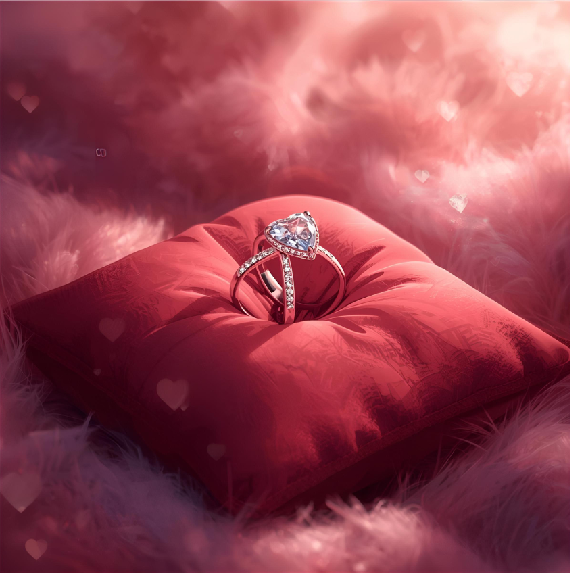
Unraveling the Symbolism: What A Heart Ring Represents in Love and Commitment
A heart ring typically symbolizes love, affection, and emotional connection, but its meaning can vary depending on the context, relationship, and culture.
“The heart shape as a symbol of love is only 500 years old. Before the 16th century, lovers exchanged rings shaped like ivy leaves (for fidelity) or clasped hands (for union). Then, in a French manuscript from the 1250s, an illustrator drew a man giving his heart to a woman — not a realistic heart, but a simplified shape we now recognize instantly. By the Victorian era, ‘sweetheart jewelry‘ had exploded: soldiers going to war gave their loves heart-shaped lockets, brooches, and rings. Today, when you wear a heart ring, you are not wearing a trend. You are wearing a 750-year-old conversation between two people — a shape that has no words, but says everything.”
The same shape that has meant ‘I love you‘ for 750 years now awaits your own story — whether romantic, familial, or a promise to yourself. Every heart ring in our collection is crafted to last, from sterling silver to solid gold.
[Button: Explore Heart Rings →]
Here are the contents;
What Does A Heart Ring represent In Love and Commitment?
What's The Right Way To Wear A Heart Ring?
How Long Does A Heart Ring Last?
What Does It Mean To Wear A Heart Ring Upside Down?
Is A Heart Ring A Promise Ring?
Which Finger To Wear A Heart Ring?
Here's a breakdown of common interpretations:
1. Romantic Love
Commitment: Often given as a promise ring, pre-engagement gift, or anniversary present.
Devotion: Represents deep affection between partners (e.g., couples' matching rings).
Valentine’s Day/Gifts: Common as a romantic gesture.
“In medieval Europe, knights departing for the Crusades gave their ladies ‘posy rings‘ — simple gold bands engraved with short poems. But the most intimate gesture was the ‘heart ring‘ worn on a chain, close to the chest. If the knight fell in battle, the ring was returned to his love — a broken heart in metal. During World War II, soldiers did the same: they bought heart-shaped sweetheart rings from catalogs, sent them home, and asked their girls to wear them ‘until I return.‘ The heart ring has always been a stone of absence and presence — worn when you are apart, to promise you will not be for long.”
2. Friendship or Familial Love
Best Friends: Matching heart rings can signify a "friendship bond" (e.g., split-heart designs where each friend wears half of the ring).
Family Ties: Parents/grandparents might gift heart rings to children as symbols of unconditional love.
3. Self-Love or Empowerment
Worn as a reminder of self-worth, resilience, or personal growth (e.g., after a difficult life event).
4. Fashion or Personal Style
Purely aesthetic—some wear heart rings for their playful, vintage, or trendy appeal without deeper meaning.
5. Cultural/Symbolic Nuances
Historical Context: In Victorian times, heart motifs ("Sweetheart Jewelry") symbolized loyalty.
Key Considerations:
The Giver/Gift Context: A heart ring from a romantic partner implies different sentiments than one from a friend or yourself.
Design Details:
Interlocking Hearts: Unity or partnership.
Heart with Crown: "Queen of my heart."
Infinity Heart: Eternal love.
Material Matters:
Gold/Silver/Diamonds: Often signifies serious commitment.
Costume Jewelry: May be lighthearted or fashion-focused.
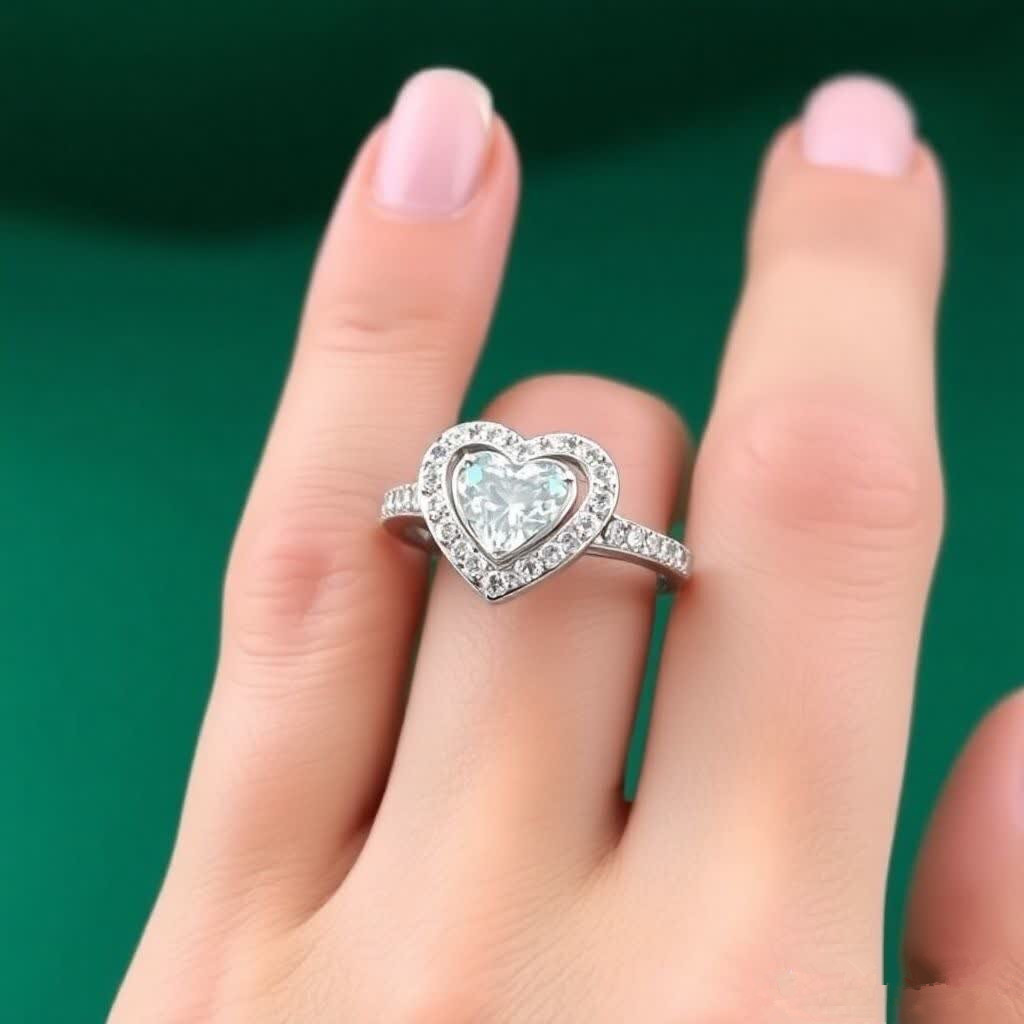
What's The Right Way To Wear A Heart Ring?
There's no single "right" way to wear a heart-shaped engagement ring—it's ultimately about personal style and comfort. However, traditions, symbolism, and practical tips can guide your choice. Here's a breakdown:
Symbolic & Traditional Guidelines
Direction of the Heart:
Pointing Toward You: Some believe this means "love is coming to you" or that you're open to receiving love.
Pointing Away: Symbolizes "love going out to the world" or sharing your love with others.
Note: This is poetic, not a strict rule—most wear it; however, it looks best!
Relationship Status (Optional):
In rare traditions, wearing it on the right hand might signal availability, while the left hand could imply commitment (like promise rings). Not widely followed today.
Practical & Styling Tips
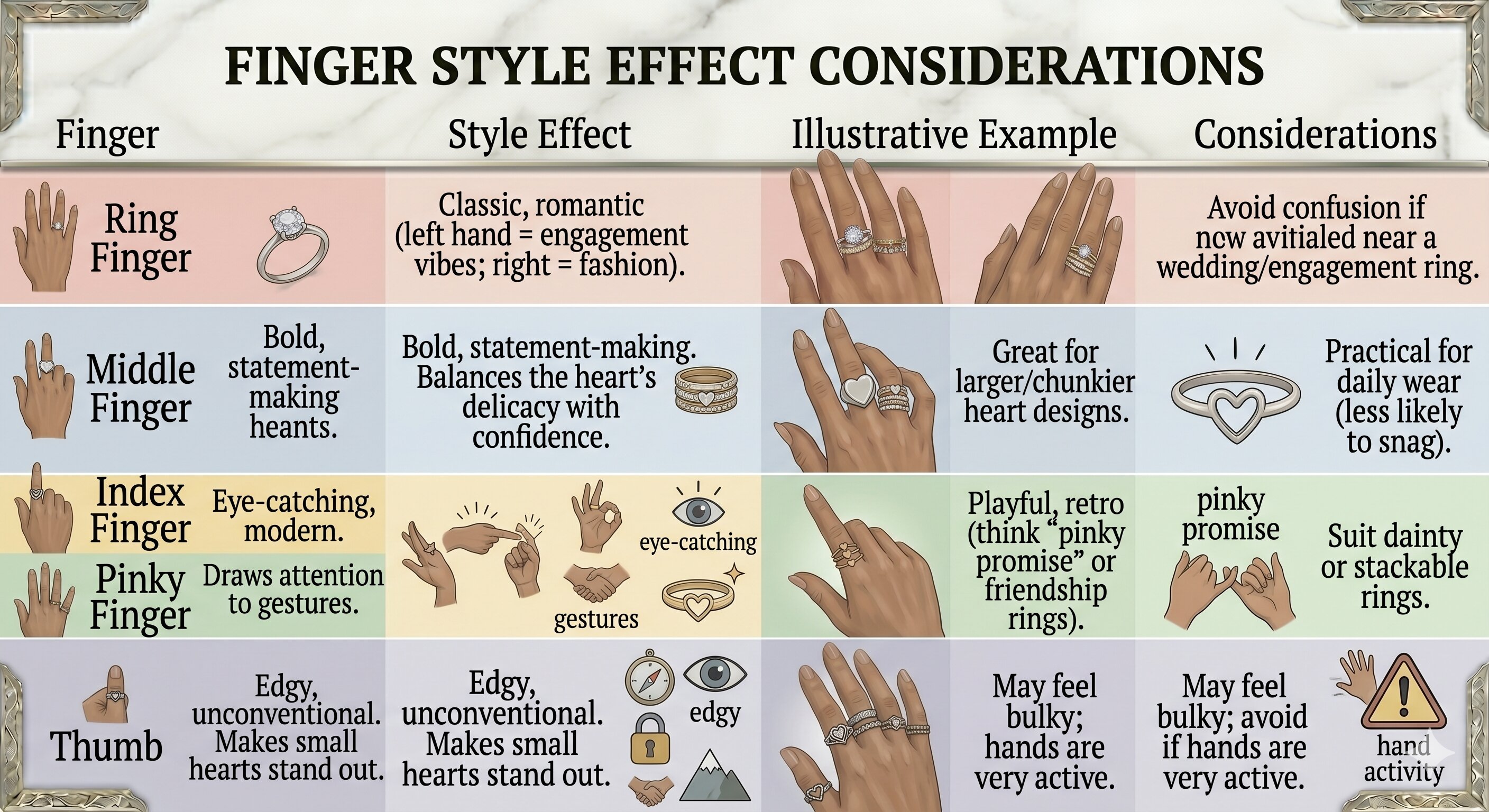
Key Factors to Consider
Comfort & Function:
Will it snag on clothes/hair? (e.g., prong-set hearts).
Avoid thumbs/index fingers for active work.
Ring Design:
Large hearts: Middle/thumb fingers balance proportions.
Delicate hearts: Ring/pinky fingers for elegance.
Asymmetric designs: Face the heart "upright" when your hand is relaxed.
Occasion:
Formal: Wear alone on the ring finger.
Casual: Stack with other rings (e.g., midi + index finger combo).
Pro Styling Tricks
Stacking: Pair a heart diamond ring with plain bands or birthstone rings on adjacent fingers.
Hand Balance: If wearing multiple rings, spread them out (e.g., heart on left ring finger + geometric ring on right index).
Nail Polish: Match metals to your polish (e.g., gold heart + warm neutrals).
What to Avoid
Wearing it too tightly (swelling can make it uncomfortable).
Combining with overly busy patterns on other jewelry.
Forcing symbolism if it feels unnatural—your confidence matters most!
Bottom Line: Wear it how you love it! Tradition is optional—style it for your comfort and aesthetic.
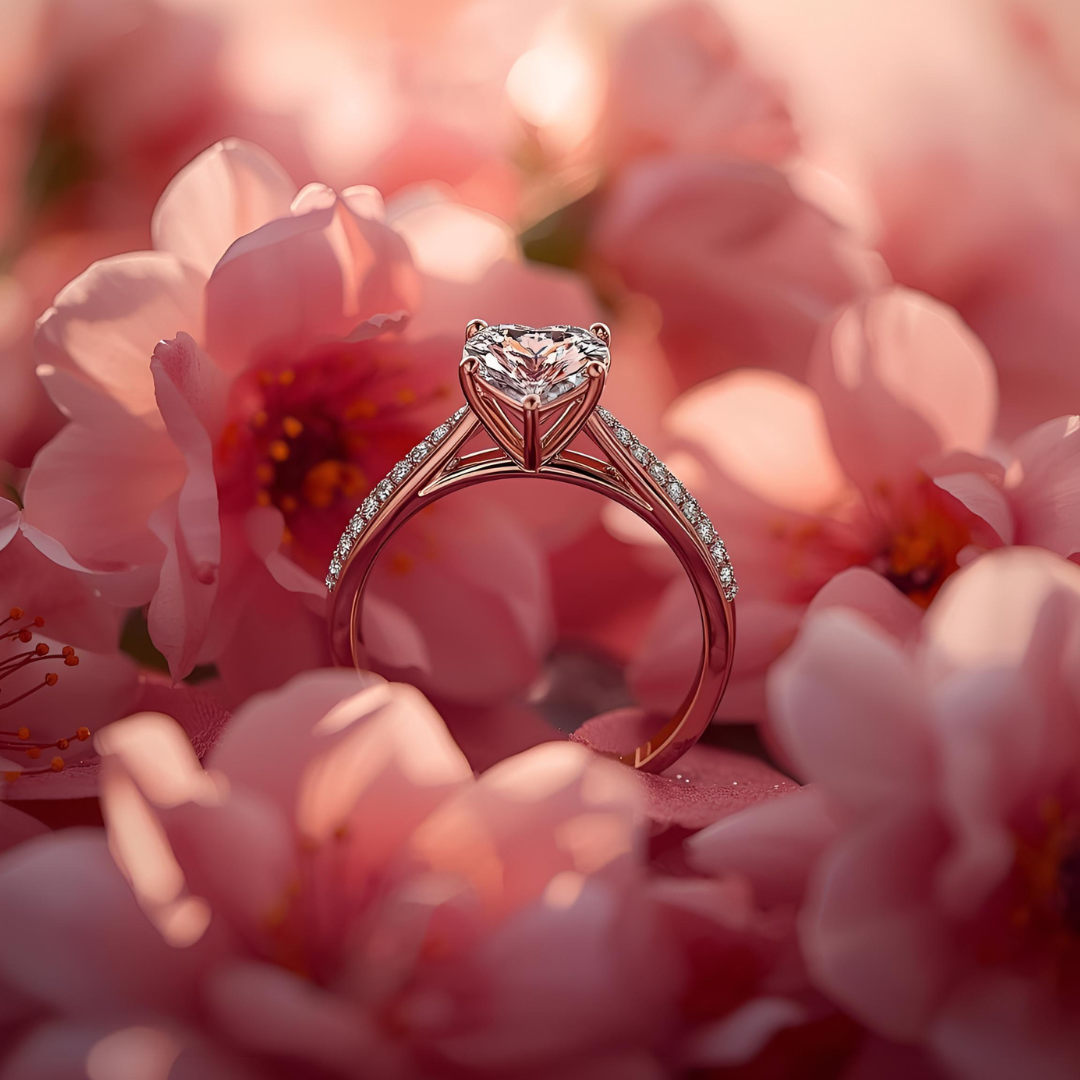
How Long Does A Heart Ring Last?
The lifespan of a heart-shaped ring depends on material quality, daily wear habits, maintenance, and design complexity. Here’s a detailed breakdown:
Estimated Lifespan by Material
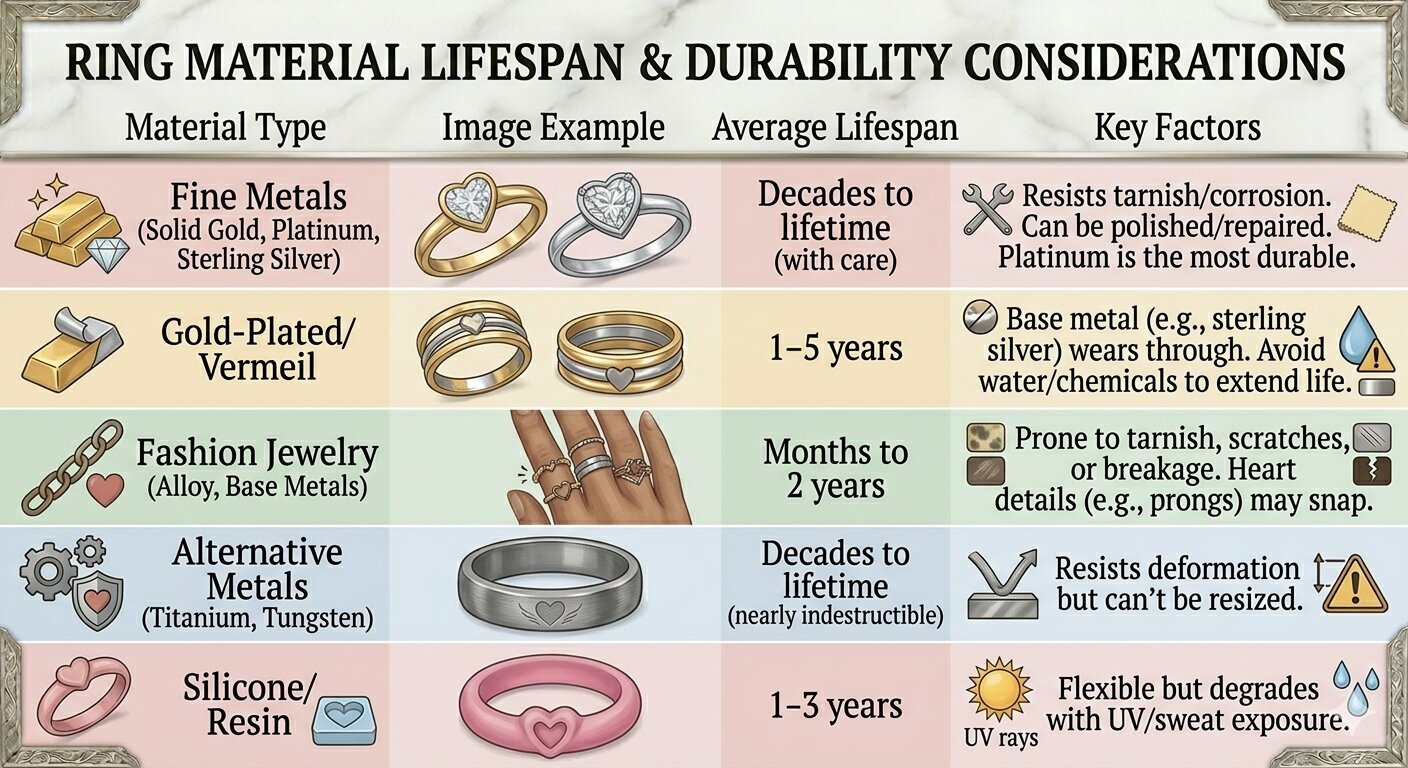
Key Factors Affecting Longevity
Daily Wear vs. Occasional Use:
Rings worn daily (especially on active hands) endure more stress.
Special-occasion pieces last significantly longer.
Design Vulnerabilities:
Raised hearts: Prongs/settings snag easily → stones loosen.
Hollow designs: Dents more readily than solid metal.
Thin bands: Bend or warp over time.
Maintenance Habits:
Clean regularly (soft cloth, mild soap) to prevent grime buildup.
Store properly (separate pouch/box) to avoid scratches.
Remove during high-impact activities (gym, cleaning, swimming).
Environmental Exposure:
Sweat, chlorine, lotions, and saltwater accelerate tarnishing/corrosion.
Extreme heat/cold can weaken adhesives or crack stones.
Extending Your Ring’s Life
Professional Checkups: For gemstone rings, inspect prongs/settings yearly.
Replating: Gold-plated rings can be professionally replated (~$30–$80).
Resizing: Avoid stretching/shrinking solid metals excessively.
Repairs: Broken shanks or lost stones can often be fixed by a jeweler.
Gemstone Considerations
Diamonds/Moissanite: Last forever (hardness = 9–10/10).
Sapphire/Ruby: Extremely durable (9/10).
Emerald/Opal: Softer (7.5–8/10) → chips/scratches more easily.
CZ/Crystal: Dull or scratched after 2–5 years.
Sentimental vs. Physical Longevity
Physical: Even fine jewelry shows wear over decades, but remains wearable.
Emotional: A heart ring’s symbolic meaning often outlives the ring itself!
Bottom Line
Investment Piece (e.g., solid gold): 20+ years with care.
Affordable Fashion Ring: 6 months–3 years (treated gently).
Heirloom Potential: Quality rings can be passed down if maintained.
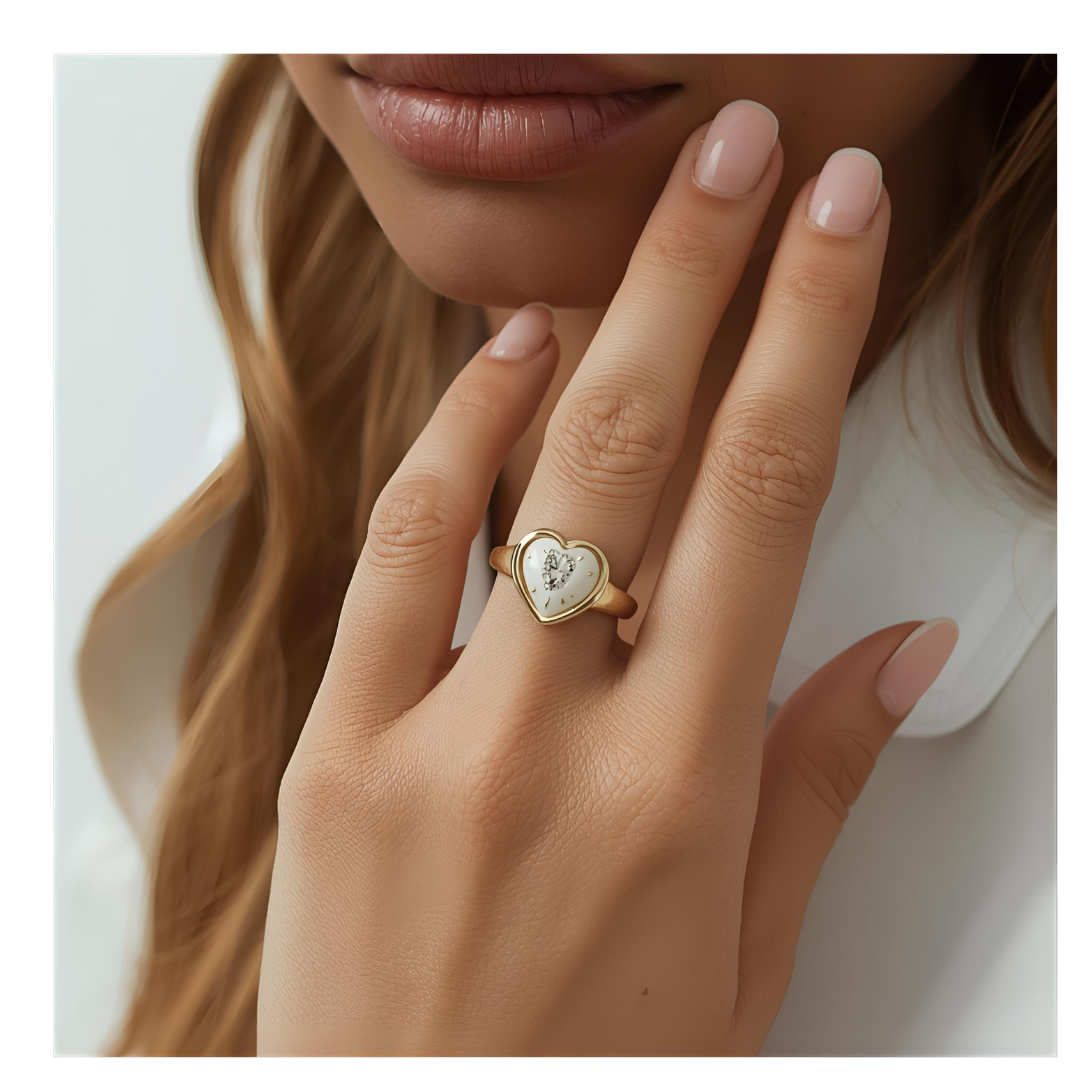
What Does It Mean To Wear A Heart Ring Upside Down?
Wearing a heart-shaped diamond "upside down" (with the heart point facing downward toward your fingertips) can carry different meanings depending on intention, culture, or personal style.
Here’s a breakdown of interpretations:
1. Symbolic Meanings
Protection or Self-Preservation:
In some traditions, an inverted heart symbolizes guarding your heart—keeping love close or protecting yourself emotionally.
Mourning/Loss:
Historically, inverted hearts (or broken hearts) represented grief, heartbreak, or the loss of a loved one.
Rebellion or Nonconformity:
Deliberately wearing it "wrong" can signal independence or rejection of romantic stereotypes.
2. Practical Reasons
Comfort: The heart’s point might dig into your finger if worn upright—flipping it avoids discomfort.
Accidental Rotation: Rings with top-heavy designs (e.g., large stone hearts) naturally spin downward.
Aesthetic Preference: Some prefer the look of a downward-pointing heart (e.g., edgier or abstract vibe).
3. Modern Fashion Statement
No hidden meaning—just styled for visual interest, asymmetry, or to stand out.
How to Interpret It
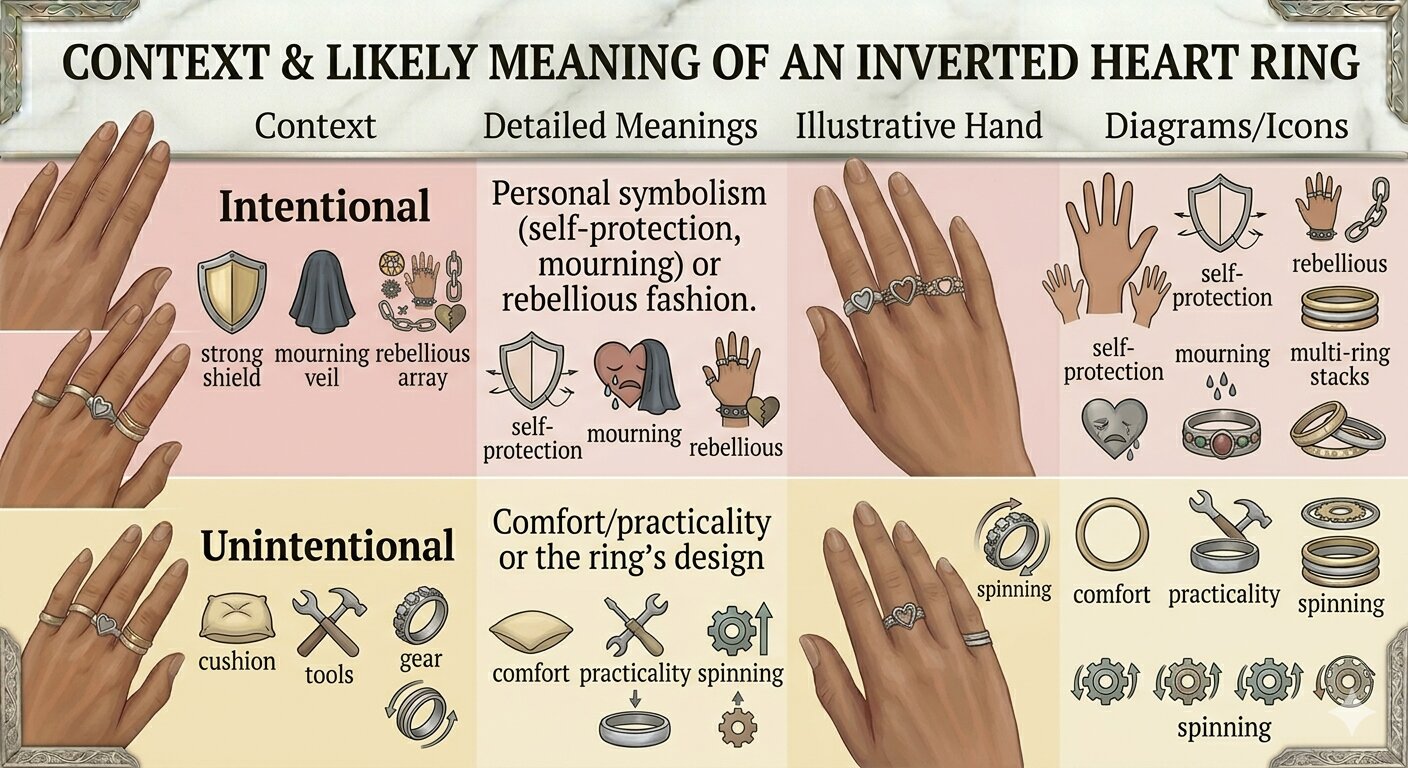
In Subcultures, Goth, punk, or alternative scenes may use inverted hearts for dark/romantic themes.
Tips if You Want to Avoid Rotation
Resizing: Ensure the ring fits snugly (but not tightly).
Ring Adjusters: Use silicone coils or sizing beads inside the band.
Design Choice: Opt for symmetrical heart shapes (e.g., flat designs) or bezel-set stones.
Is A Heart Ring A Promise Ring?
A heart ring can absolutely be a promise ring, but not all heart rings are promise rings. Whether it serves as a promise ring depends entirely on the giver's intention and how the couple defines it.
Here’s how to distinguish them:
When a Heart Ring IS a Promise Ring:
Explicit Commitment Symbol:
Given to represent a serious romantic promise (e.g., exclusivity, future engagement, or long-term devotion).
Often accompanied by a conversation about its meaning.
Placement Matters:
Traditionally worn on the left ring finger (like an engagement ring) or right ring finger as a placeholder.
Design Clues:
Higher-quality materials (solid gold, diamonds) signal seriousness.
Engravings (dates, initials) emphasize commitment.
When a Heart Ring is NOT a Promise Ring:
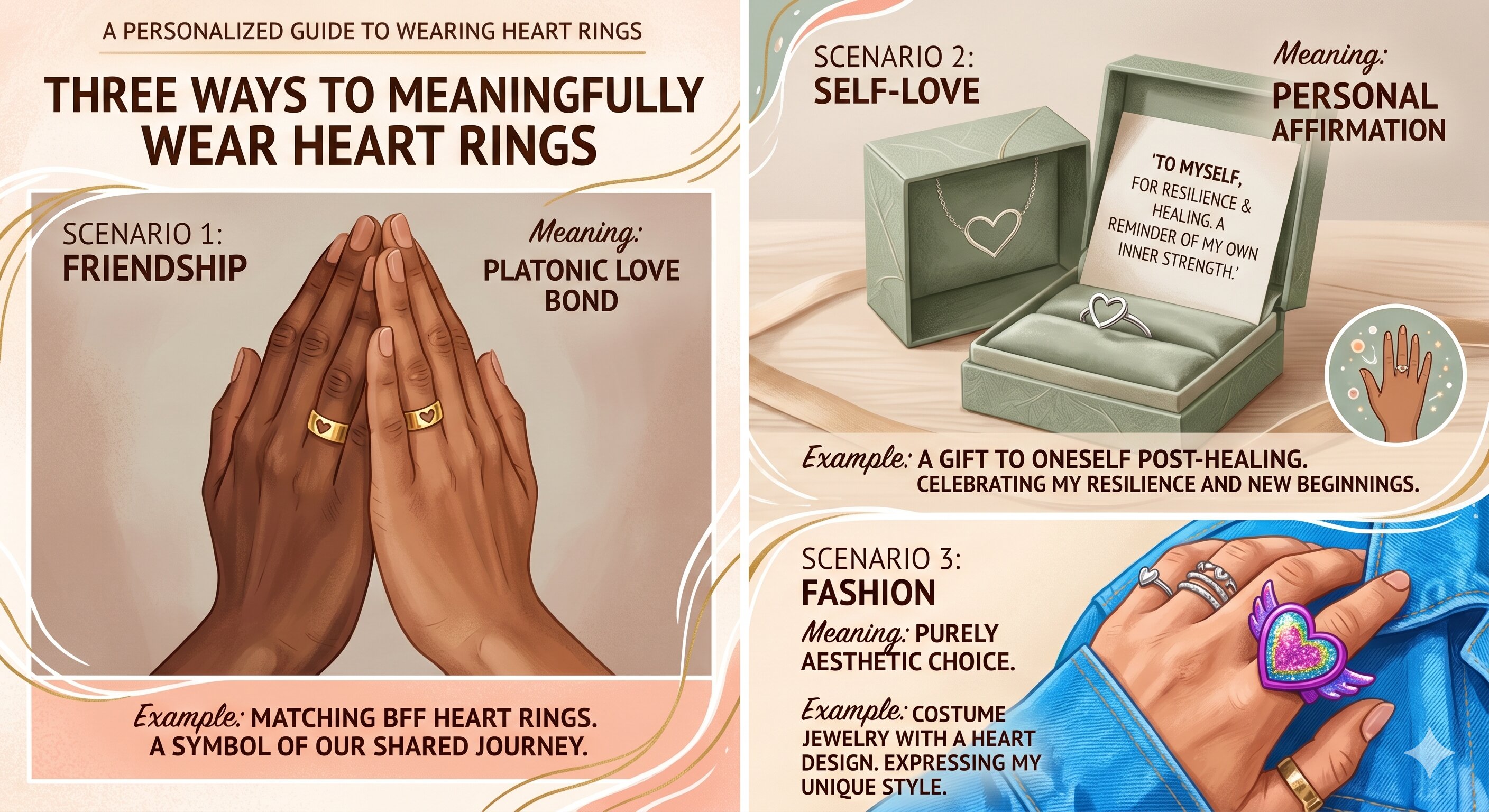
Family Gift: Parent/child bond. Mother’s ring to a daughter.
Key Differences: Promise Ring vs. General Heart Ring
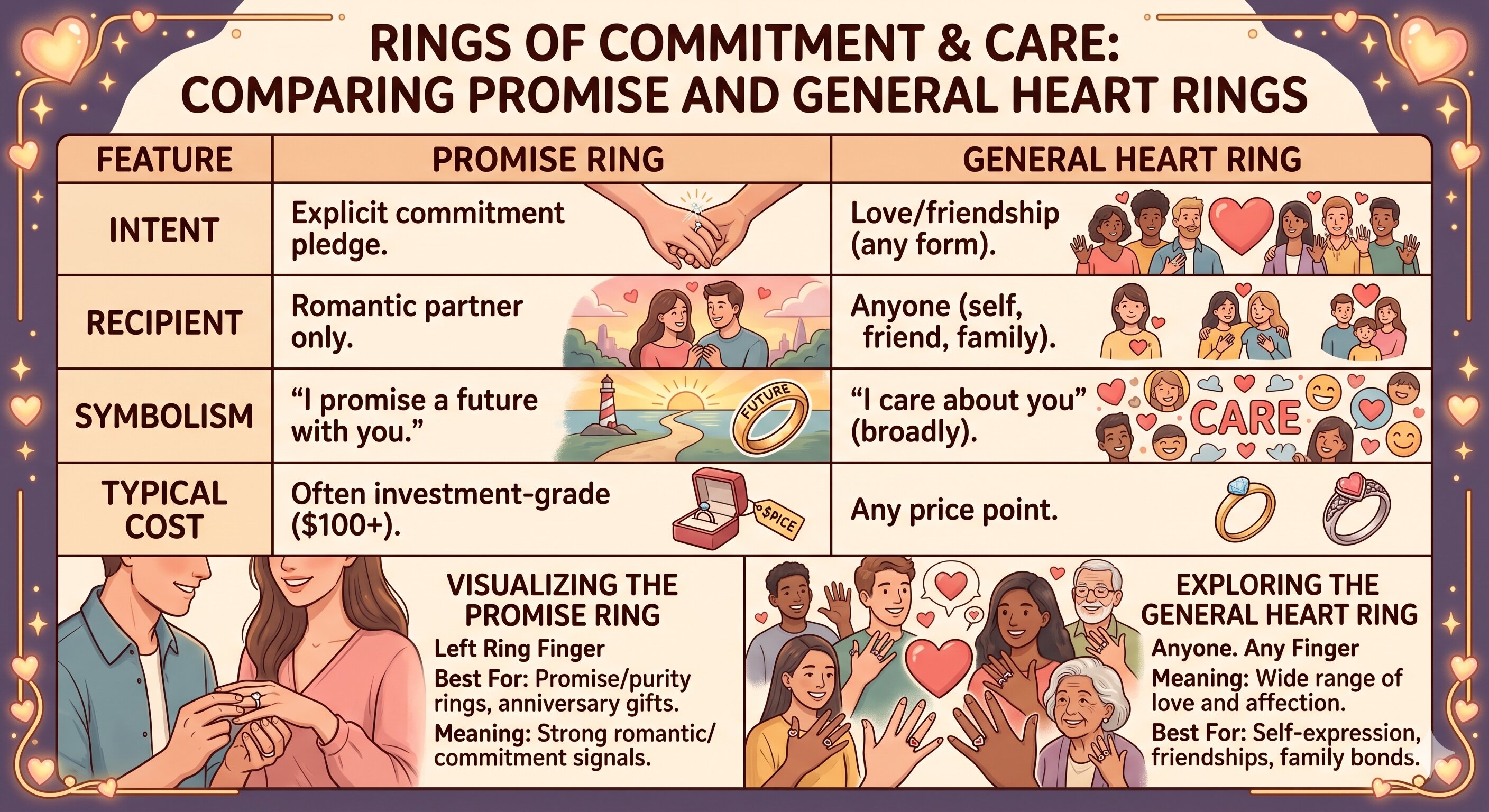
How to Confirm It’s a Promise Ring:
Discuss the meaning openly with the giver/receiver.
Note the context: Anniversary, Valentine’s Day, Relationship milestone.
Observe the presentation: Was it given ceremoniously?
Avoid Assumptions!
A heart ring from a friend ≠as a romantic promise.
A partner might gift a heart ring "just because" — not every heart ring implies a vow.
Which Finger To Wear A Heart Ring?
There's no single "correct" finger for a heart ring — it ultimately depends on your personal style, comfort, and intended meaning. However, cultural traditions and symbolic associations can guide your choice.
Here's a practical breakdown:
Finger Symbolism & Styling Guide
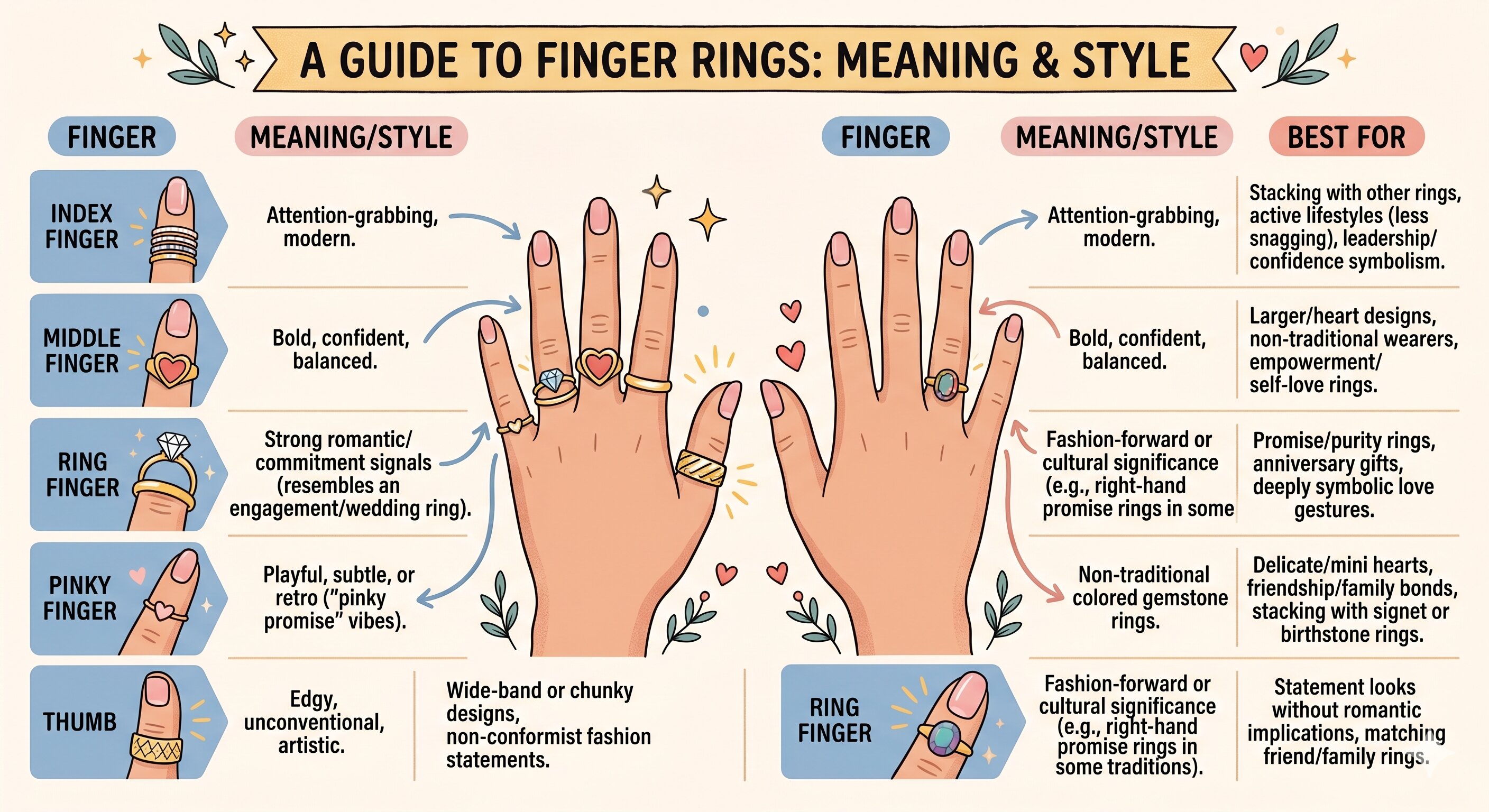
Key Considerations
Intent Matters:
Romance → Left ring finger (traditional) or right ring finger (modern).
Friendship/Self-love → Pinky, middle, or index finger.
Pure fashion→ Any finger!
Comfort & Practicality:
Avoid fingers prone to bumping objects (e.g., index/thumb for manual work).
Pointed hearts may dig into adjacent fingers — test wearability first.
Cultural Nuances:
In some cultures (e.g., Russia, India), right-hand ring finger = wedding band.
Heart motifs may carry religious meanings (e.g., Sacred Heart in Christianity).
Quick Recommendation
For self-love and a fashionable look: Right ring finger or middle finger.
For a romantic partner/marriage: Left ring finger.
To catch someone’s eye with a stylish, flirty detail: Right pinky or left pointer finger.
“You now know the symbolism, the wearing directions, the lifespan, the upside-down meanings, the promise ring connection, and the finger placements. The only question left: who will receive your heart?
Our current collection includes a curated selection of heart rings — from simple sterling silver bands to diamond heart rings and vintage-inspired sweetheart designs. When certain styles are gone, restocking takes time because each heart is hand-shaped, not machine-stamped.
This is not just jewelry. It is the knight‘s vow, the Victorian sweetheart‘s keepsake, the shape that has meant ‘I love you‘ for 750 years — a promise worn on your finger, close to your heart.”
[Button: Give Your Heart (Limited) →]


News for Friday 12 September, 2025
- Garnet Birthstone Guide: Meaning, Colors, Price And How To Tell Ruby
- Garnet Ring Meaning: Symbolism, How To Wear And Care Guide
View all news for Friday 12 September, 2025 on one page
Recent News
- Thursday 11 September, 2025
- Wednesday 10 September, 2025
- Tuesday 09 September, 2025
- Monday 08 September, 2025
- Sunday 31 August, 2025