

Considering an Emerald Cut Diamond? Here's What You Need to Know
What Does Emerald Cut Symbolize?
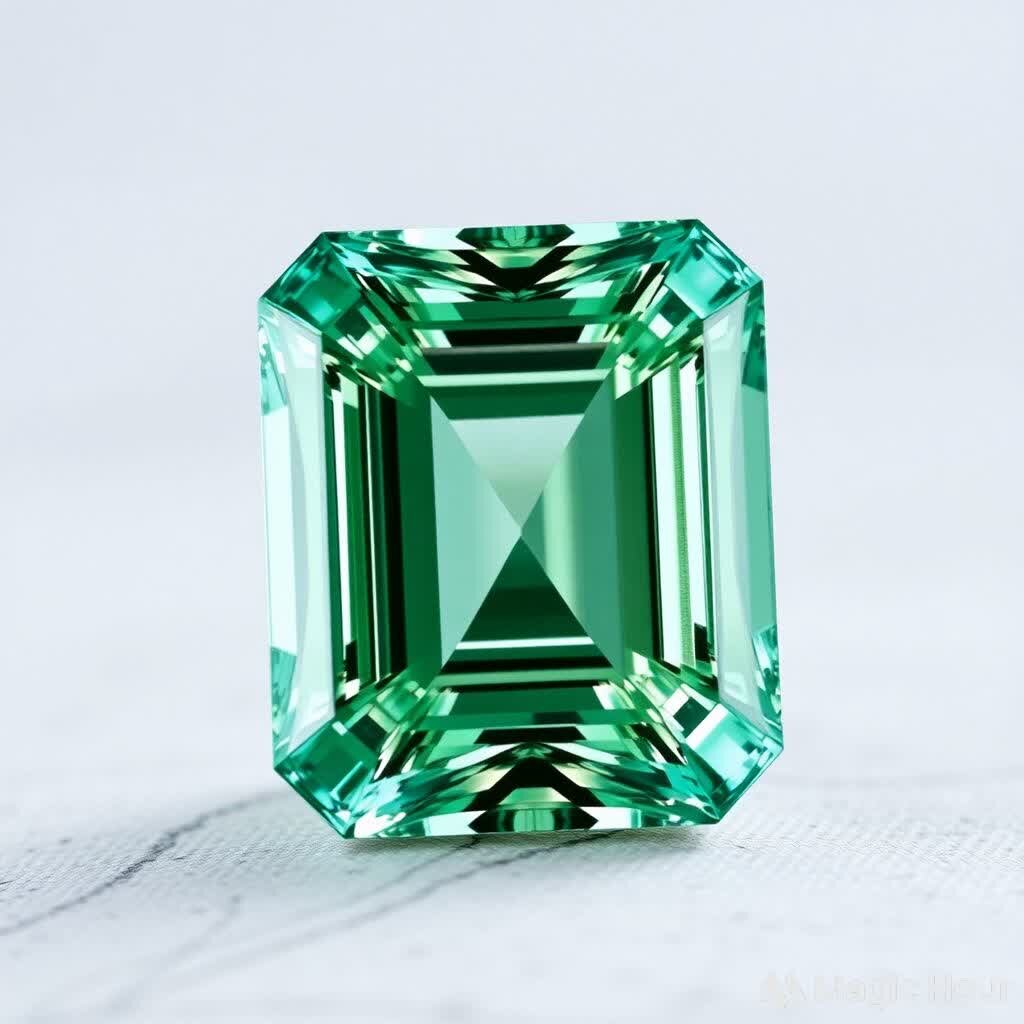
The emerald cut is a distinctive and elegant rectangular cut for gemstones, most famously diamonds, characterized by its stepped facets and large, open table.
“In the 1920s, the Art Deco movement changed everything. Designers rejected the fussy curves of the past — and the emerald cut was born. Its clean lines, stepped facets, and ‘hall of mirrors‘ effect captured the modern age: bold, geometric, unapologetically precise. When Grace Kelly wore an emerald-cut diamond engagement ring in 1956, she wasn‘t following tradition. She was declaring that elegance doesn‘t need to shout. It simply steps into the light.”
The same cut that graced Grace Kelly‘s finger now awaits your story. Every emerald cut diamond in our collection is hand-selected for clarity — because this cut has nowhere to hide.”
[Button: Explore Emerald Cut Diamonds →]
What Does Emerald Cut Symbolize?
What Are The Cons of Emerald Cut Diamonds?
How Much Is A 4 Carat Emerald-Cut Diamond Ring?
How Much Is A Real 2 Carat Emerald Cut Diamond?
How Much Is A 100 Carat Emerald Cut Diamond Worth?
Do Emerald Cut Diamonds Sparkle Less?
Why Do Celebrities Like Emerald Cut?
What Is The Best Color For An Emerald Cut Diamond?
Which Is Better? Emerald Cut Or Princess Cut?
Is Oval Or Emerald Cut More Expensive?
Let's drive in first.
What Does Emerald Cut Symbolize?
The Emerald Cut diamond carries rich symbolism, rooted in its history, geometric elegance, and unique visual properties. Here’s what it commonly represents:
“The emerald cut‘s open table is not a flaw — it is a statement. Most diamond cuts hide imperfections behind a curtain of sparkle. The emerald cut has no curtain. Its long, step-cut facets act as windows into the stone‘s very soul. This is why it became the symbol of honest love: what you see is what you get. No smoke, no mirrors. Just clarity, truth, and quiet confidence.”
- Timeless Elegance & Sophistication
Its clean lines, symmetrical steps, and understated sparkle evoke a sense of refined taste and classic luxury. Unlike flashy, brilliant cuts, it whispers elegance rather than shouting it—making it symbolic of quiet confidence and mature style.
- Clarity & Honesty
The large, open table and step facets act like "windows" into the diamond, revealing its interior with minimal distortion. This transparency has made it a metaphor for openness, truth, and integrity in relationships—particularly popular for engagement rings symbolizing a commitment built on honesty.
- Stability & Balance
Its elongated rectangular shape and precise parallel facets represent order, stability, and harmony. The strong linear geometry suggests reliability and enduring structure, making it a token of steadfast love or enduring values.
- Art Deco Heritage
Popularized during the 1920s–1930s Art Deco movement, the cut embodies that era’s values:
Modernity: Breaking from traditional round cuts.
Bold Geometry: Celebrating symmetry and industrial-inspired design.
Luxury: Favored by icons like Grace Kelly and Elizabeth Taylor, linking it to Old Hollywood glamour.
- Unique Individuality
Choosing an emerald cut often reflects a rejection of convention. Its lower sparkle (compared to round brilliants) appeals to those who value subtlety, depth, and uniqueness over mainstream trends—symbolizing independent taste.
- Protection (Historical Lore)
In ancient times, emeralds (the gemstone) were believed to ward off evil. Though emerald cut diamonds aren’t emeralds, the shared "emerald" name borrows this legacy of safeguarding and foresight.
- Intellectualism
The cut’s mathematical precision and emphasis on clarity (both literal and metaphorical) resonate with wisdom, insight, and rationality. It’s often chosen by those who appreciate logic and depth.

What Are The Cons of Emerald Cut Diamonds?
Emerald cut diamonds are prized for their elegant, sophisticated look and vintage appeal, but they do come with some significant drawbacks compared to other popular cuts like round brilliant or princess cut:
Less Sparkle and Brilliance (Fire):
Why: The emerald cut is a step cut, featuring long, parallel facets that create broad, flat planes and a "hall of mirrors" effect. This contrasts sharply with the brilliant cut (like round or oval), which has numerous small, angled facets specifically designed to maximize light return, sparkle (scintillation), and fire (flashes of color).
Result: Emerald cuts display larger, clearer flashes of light rather than intense, fiery sparkle. They have a more subdued, elegant, and sometimes icy brilliance. If maximum sparkle is your priority, this cut may disappoint.
Demand Higher Clarity:
Why: The large, open table (top surface) and long step facets act like windows, making inclusions (internal flaws) and blemishes (surface flaws) far more visible to the naked eye compared to brilliant cuts, where the complex facet pattern tends to hide imperfections.
Result: You typically need to choose a diamond with a higher clarity grade (VS2 or above is often recommended, sometimes even VVS) to avoid seeing obvious inclusions, which increases the cost.
Show Color More Readily:
Why: The open facets and lack of the light-dispersing complexity of brilliant cuts mean that the body color of the diamond is less masked. Yellow or brown tints in the diamond become more apparent.
Result: You often need to select a higher color grade (G or above is common, sometimes even D-F for larger stones or very discerning buyers) to achieve a colorless look, again adding to the cost.
Susceptible to the "Bow-Tie" Effect:
Why: Due to the elongated shape and facet pattern, poor light performance can manifest as a dark, bow-tie-shaped area stretching across the center of the stone when viewed face-up. This is caused by light leaking out of the sides or bottom instead of reflecting to the eye.
Result: A prominent bow-tie is considered undesirable and can significantly detract from the stone's beauty. Careful selection and viewing the stone in various lights are crucial to minimize this effect.
Shape Considerations:
Elongation: While the elongated shape can make fingers appear longer, it's a distinct look that might not appeal to everyone who prefers a more traditional, symmetrical round shape.
Corners: The sharp, stepped corners are more vulnerable to chipping compared to rounded corners. This necessitates protective settings (like V-prongs at the corners) and potentially more careful wear.
Perceived Value & Price Nuance:
Lower Price Per Carat? While often cheaper per carat than equivalent round brilliants, the need for higher clarity and color grades to achieve a desirable appearance can significantly narrow or even reverse this price gap.
Face-Up Size: Their large table and elongated shape mean an emerald cut diamond often looks larger face-up than a round brilliant of the same carat weight. However, the lower sparkle might make the perceived "value" feel different to some.

How Much Is A 4 Carat Emerald-Cut Diamond Ring?
The price of a 4-carat emerald cut diamond ring varies dramatically based on the diamond's quality (the "Four Cs"), the ring setting, and the retailer. Here's a breakdown of key factors and estimated price ranges:
- Diamond Cost (Biggest Factor):
Quality Range:
Low End: $20,000–$40,000+
*(Lower color/clarity, e.g., J-K color, SI1-SI2 clarity, strong fluorescence, fair cut)*
Mid-Range: $40,000–$80,000+
*(Good balance, e.g., G-H color, VS1-VS2 clarity, faint/no fluorescence, good cut)*
High End: $80,000–$200,000+
*(Top-tier, e.g., D-F color, VVS1-VVS2 clarity, excellent cut, no fluorescence)*
Why Such Variation?
Clarity is critical: Emerald cuts show flaws easily. VS1+ is recommended.
Color sensitivity: Near-colorless (G-H) or better is ideal.
Cut precision: Poor cuts worsen the "bow-tie effect."
Certification: GIA-graded diamonds cost more than non-certified or IGI/EGL.
- Setting Cost:
Simple Solitaire: $1,000–$3,000
(Side diamonds increase cost)
Custom Design: $5,000–$20,000+
(Complexity and designer markup)
- Estimated Total Ring Cost:
Diamond Tier Diamond Price + Setting Total Range
Entry-Level $20,000–$40,000 $1,000–$5,000 $21,000–$45,000
Mid-Quality $40,000–$80,000 $2,000–$10,000 $42,000–$90,000
Premium/Luxury $80,000–$200,000+ $5,000–$20,000 $85,000–$220,000+
Key Considerations:
Lab-Grown Alternative:
A 4ct lab emerald cut diamond costs $3,000–$8,000 (same quality as natural). Total ring: $4,000–$15,000.
Shape Illusion:
Emerald cuts face up larger than rounds (a 4ct emerald looks like a 4.5ct round), offering visual value.
Bow-Tie Effect:
Always inspect in person/video—poor light performance drops value 20–30%.
Smart Buying Tips:
Prioritize Certification: Only consider GIA or AGS-graded diamonds.
Balance Quality: Aim for G-H color and VS1-VS2 clarity to optimize value.
Compare Retailers: Online vendors often offer better prices than brick-and-mortar.
Consider Lab-Grown: Identical appearance at ~10% of natural cost.

How Much Is A Real 2 Carat Emerald Cut Diamond?
The price of a natural 2-carat emerald-cut diamond varies significantly based on the "Four Cs" (Cut, Color, Clarity), certification, and market factors. Here’s a detailed breakdown for natural diamonds (lab-grown prices follow below):
Natural 2-Carat Emerald-Cut Diamond Price Ranges
(Approximate retail prices as of 2025)
Quality Tier Color Clarity Price Range
Entry-Level I/J SI1-SI2 $8,000 – $12,000
Mid-Range G/H VS1-VS2 $12,000 – $20,000
Premium D/E/F VVS1-VVS2 $20,000 – $35,000
Luxury (Flawless) D/E IF/FL $35,000 – $60,000+
Key Factors Affecting Price:
Clarity Matters Most:
Emerald cuts reveal inclusions easily. VS1 or higher is recommended (SI2 may show visible flaws).
Avoid stones with inclusions near corners or under the table.
Color Sensitivity:
Warm tints (I/J and below) are noticeable. Aim for G/H or better for a "colorless" look.
D-F commands a 15–30% premium over G-H.
Cut Precision:
Ideal length-to-width ratio: 1.30–1.50 (e.g., 9x7mm for a 2ct). "Chubbier" squares (1.0–1.2) cost more.
Poor symmetry or windowing (transparent areas) reduces value.
Certification:
GIA-graded diamonds cost 10–15% more than non-certified or IGI/HRD stones but ensure accuracy.
Market Trends:
Prices fluctuate with diamond supply, demand, and global economics.
Savings Tips:
Compromise on color: An H-color emerald cut often looks identical to F/G in yellow gold settings.
Prioritize clarity over carat: A 1.90ct VS1 may cost less than a 2.00ct SI1 and look cleaner.
Lab-Grown 2-Carat Emerald-Cut Diamonds
*(Identical physically/optically, 60–80% cheaper)*
Price Range: $1,200 – $3,500
D-F color + VVS/VS clarity at the higher end.
No ethical/environmental mining concerns.
Watch Out For:
Fluorescence: Strong blue fluorescence can reduce the price by 5–15%, but may cause haziness.
Setting Costs: A solitaire setting adds $500–$2,000+ (platinum/vs gold).
Retailer Markups: Boutique brands charge 30–100% more than online vendors.
Real-World Examples (Natural):
2ct, H-color, VS2 clarity, GIA-certified: $14,500
2ct, F-color, VVS2 clarity, GIA-certified: $25,000
2ct, D-color, FL clarity, GIA-certified: $48,000

How Much Is A 100 Carat Emerald Cut Diamond Worth?
The value of a 100-carat emerald-cut diamond depends on several critical factors, including color, clarity, cut quality, and certification. However, given its extraordinary size and rarity, here’s a general estimate:
Estimated Value Range:
Low Quality (Included, Faint Color): $2 million – $10 million
High Quality (Flawless, D-F Color): $50 million – $200+ million
Key Factors Affecting Price:
Color (D-F is most valuable) – Near-colorless or fancy colors (like blue or pink) can drastically increase value.
Clarity (FL/IF-VS is ideal) – Fewer inclusions mean higher worth.
Cut (Precision matters) – Emerald cuts require perfect symmetry and polish.
Certification (GIA, AGS, etc.) – A top-tier lab report adds credibility.
Provenance – If historically significant, value could skyrocket (e.g., royal or celebrity-owned).
Notable Comparisons:
The 165-carat "The Art of de Grisogono" emerald-cut diamond sold privately for an estimated $50 million+ (though it was black, not white).
A 100-carat D-color flawless diamond could rival the $44 million paid for the "Perfect Pink" (a 14.83-carat pink diamond).
Final Thought:
A 100-carat emerald-cut diamond of top quality could easily set auction records, possibly exceeding $100 million if flawless and colorless. For an exact valuation, a Gemological Institute of America (GIA) report and expert appraisal would be necessary.

Do Emerald Cut Diamonds Sparkle Less?
Yes, emerald cut diamonds do sparkle less than brilliant-cut diamonds (like round, oval, or princess cuts) — but this is intentional and part of their unique appeal. Here's why and how they differ:
Why Emerald Cuts Have Less Sparkle:
Facet Structure:
Emerald cuts are step cuts with long, parallel facets (like stair steps).
Brilliant cuts (e.g., round) have small, triangular facets arranged to maximize light reflection.
Light Performance:
Emerald cuts: Create broad, mirror-like flashes ("hall of mirrors" effect) and subdued scintillation.
Brilliant cuts: Produce intense sparkle, fire (rainbow flashes), and rapid scintillation (pinpoint sparkles).
Prioritizes Clarity Over Sparkle:
The open table and clean lines highlight the diamond’s transparency and internal clarity, trading "fire" for elegant sophistication.
How Their "Sparkle" Compares:
Light Effect Emerald Cut Round Brilliant
Brilliance Softer, more subdued Bright, white-light return
Fire (Rainbows) Minimal High
Scintillation Broad, flashing glides Rapid, pinfire sparkles
Overall Impact Understated, vintage glamour Dynamic, eye-catching dazzle
Important Nuances:
The "Bow-Tie" Effect:
Poorly cut emerald diamonds can develop a dark, bow-tie-shaped area across the center (due to light leakage), further reducing perceived sparkle.
Quality Matters:
An excellent-cut emerald will still glow with a clean, icy radiance — it just won’t explode with rainbows like a brilliant cut.
Setting & Lighting:
Platinum/white gold settings enhance its cool brilliance. Halos or pavé bands can add supplemental sparkle.
Who Loves Emerald Cuts?
They’re perfect if you value:
Timeless elegance over flashy sparkle.
Vintage/Art Deco aesthetics.
A "quiet luxury" that emphasizes clarity and sophistication.

Why Do Celebrities Like Emerald Cut?
Celebrities are often drawn to emerald-cut diamonds for reasons that blend aesthetics, symbolism, and practical appeal—despite this cut not being the cheapest option. Here’s why it’s a red-carpet favorite:
Key Reasons for Celebrity Preference:
Timeless Elegance
Emerald cuts have a vintage, Old Hollywood glamour (think Grace Kelly or Elizabeth Taylor) that feels both classic and sophisticated.
The clean lines and understated sparkle convey "quiet luxury" over flashiness—perfect for high-profile events.
Elongating Effect
The rectangular shape lengthens the finger visually, making it flattering on hands (a big plus for cameras and close-ups).
Unique Sparkle Profile
Unlike brilliant cuts (e.g., round or princess), emerald cuts have step facets that create broad, mirror-like flashes of light ("hall-of-mirrors" effect) rather than scattered sparkle.
This gives a clearer, more subdued brilliance—ideal for those who prefer subtlety over maximalism.
Rarity and Exclusivity
Flawless emerald cuts are harder to find because their open table magnifies inclusions and color tints.
Celebrities often seek high-clarity (VVS/IF), colorless (D-F) stones—showcasing both taste and investment power.
Symbolism of Refinement
The cut is associated with intelligence, confidence, and timeless style—traits many stars want to project.
Its geometric precision feels modern yet ageless, aligning with a "less is more" philosophy.
Royal and Iconic Connections
Beyoncé, Amal Clooney, Kim Kardashian, and Meghan Markle all wear/wore emerald-cut engagement rings.
This cut has a royal pedigree (Princess Diana’s famous sapphire ring was emerald-cut inspired).
Practical Celebrity Perks:
Photographs Exceptionally Well: The large table and linear facets catch light cleanly under studio lights or paparazzi flashes.
Pairs with High Fashion: Its minimalist lines complement haute couture without competing for attention.
Distinction: In a sea of round brilliants, an emerald cut stands out as "unconventional but classic."
Trade-Offs (Why It’s Not for Everyone):
Demands Flawless Quality: Inclusions or poor color are easily visible.
Less "Fire": If you love rainbow sparkle, a radiant or oval cut might satisfy you more.
Higher Cost for Top Tiers: While rough retention is efficient, premium emerald cuts (large + flawless) command luxury pricing.
In short: Celebrities choose emerald cuts for their quiet confidence, vintage-meets-modern appeal, and association with refined taste—a statement that says, "I appreciate legacy, not just glitter."

What Is The Best Color For An Emerald Cut Diamond?
The "best" color grade for an emerald cut diamond balances visual appeal and value, prioritizing near-colorless grades (G, H, or I) for most buyers. Here’s why, with a quick-reference guide:
Color Recommendations by Priority
Color Grade Who It’s For Why
G or H 90% of buyers (ideal balance) Face-up "white" in any setting. No visible tint. Best value.
F Perfectionists or larger stones (3ct+) Truly colorless, but price jump over G/H often isn’t necessary.
D or E Rare budgets/uncompromising seekers of purity. Maximum premium for minimal visible difference over F/G.
I or J, Budget-focused buyers using a yellow/rose gold setting. Slight warmth may show in white gold/platinum, um but masked in gold.
Key Factors Influencing Color Choice
Setting Metal:
White Gold/Platinum: Reveals warmth. Stick to G-H.
Yellow/Rose Gold: Masks faint warmth. I-J can work.
Diamond Size:
< 2ct: H-I often looks white.
> 2ct: Color concentrates; opt for G-H (or F for 3ct+).
Fluorescence:
Medium Blue Fluorescence can mask faint yellow in I-J stones, making them appear whiter (but test in person!).
Why Emerald Cuts Demand Better Color
Large, Open Table: Acts like a window, making body color obvious.
Step Facets: Lack the sparkle of brilliant cuts to disguise tint.
Elongated Shape: Color concentrates along the length.
Pro Tip: View diamonds in natural daylight (near a window) to judge color accurately. Jewelry store lighting hides warmth!
Price Impact (1ct Emerald Cut Example)
Color Grade Avg. Price (VS1 Clarity)
D $7,500+
G $5,200 ← Best Value
I $4,000
*Lab-grown alternative: G color ≈ $800 (no visible difference).*
Colors to Avoid
K or Lower: Noticeable yellow/brown tint in white metal settings (only suitable for vintage yellow gold designs).
Mismatched Grades: An H-color diamond with poor cut/clarity may look worse than an I-color with excellent specs.
The Sweet Spot
For most buyers:
Choose a G or H color, VS1-VS2 clarity, in a GIA/AGS-certified diamond.
This combo delivers a bright, white appearance without overpaying for imperceptible upgrades. Pair it with white metal prongs for maximum impact!

Which Is Better? Emerald Cut Or Princess Cut?
The choice between an emerald cut and a princess cut diamond depends on your priorities—whether you value brilliance, elegance, durability, or uniqueness. Here’s a detailed comparison to help you decide:
- Brilliance & Sparkle
More sparkle (brilliance and fire) due to its faceted pavilion (like a round brilliant).
Best for those who love maximum shine and scintillation.
Emerald Cut:
Less sparkle, more "hall of mirrors" effect (broad flashes of light).
Emphasizes clarity and elegance over brilliance.
Winner for Sparkle: Princess Cut
- Elegance & Style
Emerald Cut:
Sophisticated, vintage, and timeless—favored by celebrities (Beyoncé, Amal Clooney).
Looks larger per carat due to its elongated shape.
Princess Cut:
Modern and geometric—great for a contemporary look.
More common in engagement rings.
Winner for Elegance: Emerald Cut
- Durability
Princess Cut:
More prone to chipping at the sharp corners (requires a protective setting).
Emerald Cut:
More durable because of its stepped facets and clipped corners.
Winner for Durability: Emerald Cut
- Price & Value
Princess Cut:
Typically less expensive per carat than emerald cuts (more supply).
Emerald Cut:
Higher per-carat cost for top-quality stones (due to rarity and demand).
Winner for Affordability: Princess Cut
- Finger Flattery
Emerald Cut:
Elongates fingers (great for slender hands).
Princess Cut:
Looks best in square or slightly rectangular ratios.
Winner for Flattery: Depends on hand shape (Emerald for length, Princess for balance).
Final Verdict:
Choose Princess Cut if: You want maximum sparkle, modern style, and better value.
Choose Emerald Cut if: You prefer timeless elegance, durability, and a unique, luxurious look.

Is Oval Or Emerald Cut More Expensive?
The price difference between oval and emerald cut diamonds depends on quality tiers, but here's the clear breakdown:
Price Comparison (1ct Natural Diamond, GIA-Certified)
Cut Avg. Price Range (G-H/VS1)
Oval Cut $4,500–$6,500
Emerald Cut $4,000–$5,500
Verdict:
Emerald cuts are typically 10–15% cheaper than ovals of the same specs.
Why the Price Difference?
Cutting Efficiency:
Emerald cuts (step cuts) retain more weight from rough diamonds → lower base cost.
Oval cuts (brilliant cuts) require more precise faceting to avoid bow-ties → higher labor cost.
Market Demand:
Ovals are currently more popular (especially for engagement rings), driving up prices.
Quality Trade-Offs:
Emeralds need higher clarity (VS1+) to hide inclusions → offsets some savings.
Ovals can hide flaws better in their sparkle → more flexibility with lower clarity.
Key Factors That Flip Costs
Top-Tier Ovals: An ideal-cut oval (no bow-tie, D color) can cost more than an emerald with similar specs.
Size Illusion: A 1.5ct emerald ($10K) may look larger than a 1.5ct oval ($12K), offering better visual value.
Lab-Grown: Both plummet in price (1ct ≈ $800–$1,200), narrowing the gap.
“You now know the symbolism, the cons, the prices, the celebrity favorites, and the color guide. The only question left: will you choose quiet confidence over flashy sparkle?
Our current collection includes a limited number of GIA-certified emerald cut diamonds — from classic white to rare fancy colors. When they‘re gone, sourcing stones with this clarity level takes months.
This is not just a diamond. It is a window into quality, into truth, and into a love that needs no curtain.”
[Button: Claim Your Emerald Cut (Limited) →]


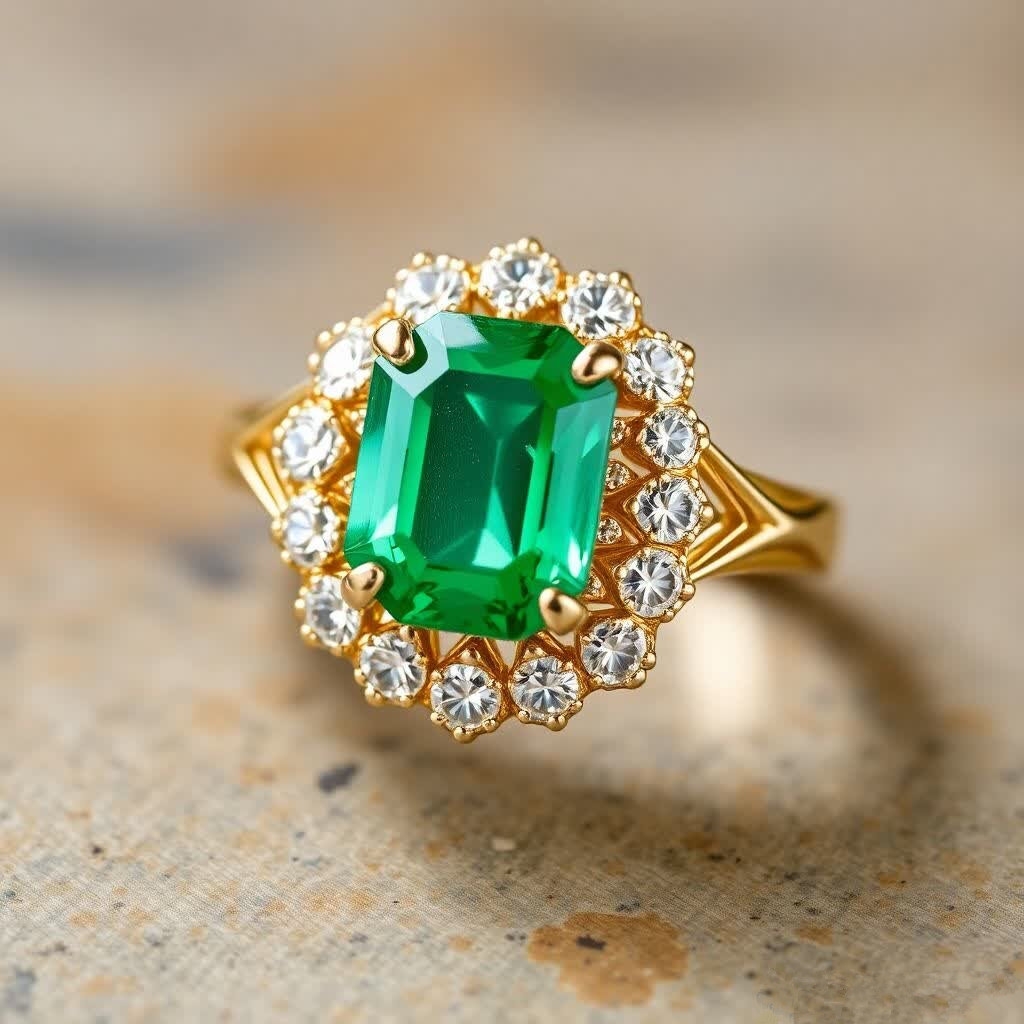
The Emerald Ring: A Symbol of Love and Good Fortune
The Emerald Ring: A Symbol of Love and Good Fortune
Of course. The term "Emerald Ring" can refer to several things, from a piece of jewelry to a specific location.
“Cleopatra, the last active pharaoh of Egypt, did not just love emeralds. She claimed them as her own. She wore them into battle, gifted them to foreign dignitaries, and legend says she even slept with emeralds pressed against her skin — believing the green stone held the secret to eternal youth and irresistible love. When Elizabeth Taylor’s Bulgari emerald pendant sold for $6.5 million in 2011, it wasn‘t just the stone they were bidding on. It was 2,000 years of the same obsession: to wear green and be unforgettable.”
The same stone that graced Cleopatra‘s hand now awaits yours. Each emerald in our collection is ethically sourced — because true beauty never costs the earth.
[Button: Explore Emerald Rings →]
Here is the table of contents.;
What Symbol Of the Emerald Ring?
What Are The Benefits Of Wearing An Emerald Ring?
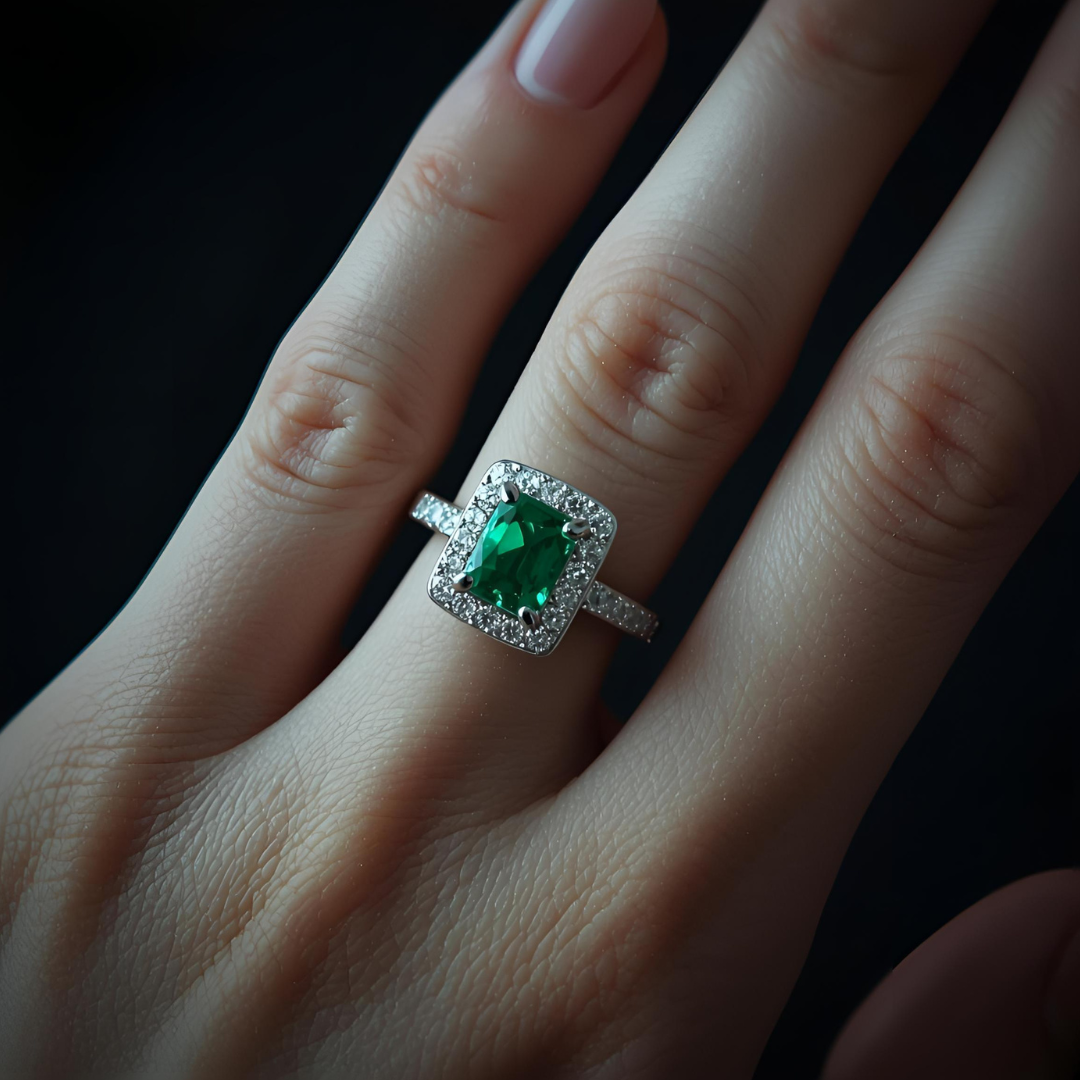
Which Finger Should An Emerald Engagement Rings Be Worn on?
Should Green Emerald Be Worn In Gold Or Silver?
How To Activate An Emerald Ring?
Can I Shower With An Emerald Ring?
What Is The Best Time To Wear an Emerald Ring?
How To Make An Emerald Shiny Again?
Should I Oil My Emerald Ring?
Do Emerald Rings Sparkle?
Here, let's first topic.
What Symbol does the Emerald Ring represent?
An emerald ring carries rich symbolism across cultures and history, primarily centered around these themes:
Love & Fidelity
Romance: Emeralds symbolize deep, enduring love – making them popular in engagement/wedding rings.
Rebirth: Associated with Venus (goddess of love), they represent renewal in relationships.
“Ancient Romans believed emerald was dedicated to Venus, goddess of love and beauty. But they didn‘t just wear it — they crushed it. Roman author Pliny the Elder wrote that emeralds relieved eyestrain and calmed the soul. Nero, the infamous emperor, reportedly watched gladiator fights through a polished emerald to soothe his eyes from the sun’s glare. From goddesses to emperors, the emerald has always been a stone of power wrapped in green silk.”
Wisdom & Truth
Ancient cultures (Egyptians, Greeks) linked emeralds to clarity, foresight, and eloquence. Roman scholar Pliny claimed they "relieved eyestrain" – metaphorically enhancing insight.
Growth & Harmony
Their vivid green connects to nature, symbolizing balance, fertility, and life force. In color psychology, green promotes calm and healing.
Wealth & Status
Historically worn by royalty (Cleopatra adored them), emeralds signify power, luxury, and success. Colombian emeralds remain among the world’s most valuable gems.
Protection & Spirituality
Folklore attributes protective qualities to emeralds, guarding against negativity. They’re also tied to heart chakra energy in Eastern traditions.
Eternal Hope
Known as the "Stone of Successful Love," they embody optimism and resilience. Their flaws ("jardin") are celebrated as symbols of natural beauty and uniqueness.
Modern Context:
Anniversary Gem: Traditional gift for 20th/35th/55th wedding anniversaries.
Birthstone: May’s birthstone, representing spring’s vitality.
Personal Empowerment: Often chosen to signify self-growth or recovery.
Fun fact: Elizabeth Taylor’s iconic Bulgari emerald pendant sold for $6.5 million in 2011! Whether gifted or self-purchased, an emerald eternity ring weaves together nature’s majesty with human emotion – making it timelessly meaningful.

What Are The Benefits Of Wearing An Emerald Ring?
Wearing an emerald cut engagement ring is associated with a blend of cultural, spiritual, emotional, and aesthetic benefits, though some claims are rooted in tradition rather than scientific evidence. Here’s a balanced overview:
- Emotional & Psychological Benefits
Calming Energy: Green is psychologically linked to balance and renewal. Wearing emerald may promote emotional stability, reduce stress, and inspire optimism.
Enhanced Communication: Historically tied to eloquence (e.g., ancient Greeks), it’s believed to improve self-expression and clarity in relationships.
Confidence Boost: Its vibrant color can serve as a reminder of personal growth or resilience, especially during transitions.
- Spiritual & Metaphysical Beliefs
(Note: These vary by tradition and lack scientific backing)
Heart Chakra Activation: In Ayurveda/Vedic traditions, emerald aligns with the heart chakra, fostering compassion and emotional healing.
Protection: Folklore claims it shields against negativity, psychic attacks, or ill fortune.
Wisdom & Intuition: Linked to foresight and truth-seeking – some wear it during meditation for mental clarity.
- Symbolic & Social Perks
Love Commitment: As a symbol of fidelity, it reinforces romantic bonds (popular for anniversaries).
Status & Luxury: High-quality emeralds (e.g., Colombian origin) signal sophistication and success.
Birthstone Power: May-born wearers often embrace it for identity and ancestral connections.
- Potential Physical Wellness Claims
(Cultural lore, not medically proven)
Eye Health: Ancient texts (like Pliny’s) claimed emeralds relieved eye strain – now interpreted metaphorically as "insight."
Vitality: Associated with nature’s regenerative energy, some believe it supports immune function or detoxification.
- Practical Considerations
Durability: Emeralds rank 7.5–8 on the Mohs scale – suitable for emerald cut emerald rings but require care (avoid impacts/chemicals).
Unique Beauty: Their signature "jardin" (internal inclusions) make each stone one-of-a-kind, celebrating individuality.
Investment Value: Natural, untreated emeralds from sources like Colombia or Zambia can appreciate over time.
Important Notes
Placebo Effect: Many benefits stem from belief and personal meaning. If wearing it uplifts you, that’s valid!
Quality Matters: Benefits are often tied to natural emeralds; lab-created or low-grade stones may lack cultural weight.
Ethical Sourcing: Choose conflict-free emeralds to align positive energy with ethical values.

Which Finger Should An Emerald Engagement Rings Be Worn on?
The choice of finger for wearing an emerald green ring depends on cultural traditions, astrological beliefs, personal intentions, and style preferences. Here’s a detailed guide to help you decide:
- Astrological Guidance (Vedic/Astrology)
Little Finger (Mercury Finger):
Strongly recommended in Vedic astrology because emerald is linked to Budh (Mercury), which governs communication, intellect, and business.
Worn on the right hand's little finger (for right-handed people) to maximize Mercury’s positive influence.
Often set in silver or white gold (astrologically "cool" metals).
- Cultural & Symbolic Traditions
Ring Finger (4th Finger):
Western cultures: Worn on the left ring finger as an engagement/wedding ring (symbolizing love and fidelity).
Anniversary gift: Celebrates lasting commitment (e.g., 20th/55th anniversaries).
Middle Finger:
Represents balance and responsibility. Ideal for wearing the ring for confidence, wisdom, or career success.
Index Finger:
Symbolizes authority and ambition (e.g., leaders, entrepreneurs). Historically worn by royalty.
- Modern Fashion & Practicality
Dominant Hand vs. Non-Dominant:
Wear on your non-dominant hand (e.g., left hand if right-handed) to protect the stone from damage.
Style Flexibility:
Stack with other rings on multiple fingers for a bold look.
Solo statement piece: The Middle or index finger draws attention.
- Important Considerations
Astrological Timing:
In Vedic tradition, consult an astrologer to confirm if emerald suits your birth chart (Kundali) and choose an auspicious day (e.g., Wednesday during Mercury’s hour).
Metal Choice:
Silver/Platinum: Preferred for astrological rings (aligns with Mercury’s energy).
Gold: Traditional for luxury/romance but may clash astrologically (consult an expert if following Vedic rules).
Emerald Durability:
Emeralds are relatively soft (7.5–8 Mohs). Avoid wearing on fingers prone to knocks (e.g., thumb/index finger during physical work).
Quick Reference Guide
Purpose Recommended Finger Hand
Astrological (Mercury) Little finger Right (dominant)
Engagement/Wedding Ring finger Left
Career/Confidence Middle finger Either
Fashion Statement Index/Thumb Non-dominant.

Should Green Emerald Be Worn In Gold Or Silver?
The choice between gold and silver for an emerald ring depends on cultural traditions, astrological beliefs, aesthetics, and personal intentions. Here’s a clear comparison to help you decide:
- Vedic Astrology Rules (Strict Guidelines)
Silver (Recommended)
Emerald represents the planet Mercury (Budh), which is considered a "cool" planet.
Silver (a "cool" metal) aligns with Mercury’s energy, enhancing intellect, communication, and business success.
Key Rule: Wear a silver ring on the right hand’s little finger for maximum astrological benefit.
Avoid Gold
Gold (a "hot" metal) may clash with Mercury’s energy, potentially weakening the stone’s effects.
- Western Traditions & Symbolism (Flexible)
Gold (Classic Choice)
Symbolizes luxury, warmth, and eternal love (ideal for engagement/wedding rings).
Complements emerald’s green hue, creating a regal, timeless look (e.g., Elizabeth Taylor’s Bulgari ring).
Historically worn by royalty (Cleopatra, Indian maharajas).
Silver/Platinum (Modern Elegance)
Offers a contrasting, contemporary vibe – lets the emerald’s green "pop."
Aligns with minimalist or bohemian styles.
- Energetic & Metaphysical Views
Silver:
Amplifies the emerald’s calming, intuitive properties (linked to moon energy).
Believed to enhance spiritual clarity and emotional balance.
Gold:
Boosts the stone’s vitality, prosperity, and passion (sun/solar plexus energy).
Associated with confidence and manifestation.
- Aesthetic & Practical Factors
Metal Pros Cons
Gold: Warm, luxurious glow; timeless appeal; durable. May overshadow pale emeralds; pricier
Silver Modern contrast; affordable; highlights green.Tarnishes faster; less durable long-term
Platinum Hypoallergenic; extremely durable; sleek. Most expensive
How To Activate An Emerald Ring?
The concept of "activating" an emerald ring comes primarily from spiritual, metaphysical, and astrological traditions, not from gemology or science. In these practices, activation is the process of clearing any lingering energies and then programming the stone with your own personal intention.
Here is a comprehensive guide on how to activate an emerald ring, drawing from various traditions.
Important First Step: Understand Your Emerald
Gemological Care: Emeralds are often treated with oils or resins to enhance clarity, and they are more brittle than many other gems. They can be damaged by heat, harsh chemicals, and ultrasonic cleaners. Always keep this in mind when using any method involving water, salt, or sun.
Your Intention is Key: The most powerful tool in this process is your own focused mind and intention. The rituals are simply frameworks to help you direct that energy.
Step 1: Cleansing (Clearing Previous Energies)
Before you can "program" your emerald, it's believed you should clear it of any energies it may have absorbed from the mining process, previous handlers, or the jeweler.
Choose one of these gentle methods (safest for an emerald ring):
Smudging (Highly Recommended & Safe):
Pass your ring through the smoke of sacred herbs like white sage, palo santo, or cedar.
As you do this, visualize the smoke purifying the stone, carrying away all stagnant or foreign energies.
Set the intention: "I cleanse this stone of all energies that do not serve my highest good."
Moonlight Bath (Very Safe and Powerful):
Place your ring on a windowsill or outdoors where it can bathe in the light of the full moon.
Moonlight is considered gentle, purifying, and highly charging, especially for stones associated with intuition and the heart, like emerald.
Leave it overnight from sundown to sunrise.
Sound Cleansing (Extremely Safe):
Use a singing bowl, a tuning fork (especially 528Hz, the "love" frequency), or even a bell.
Ring the sound source close to your emerald ring. The pure, high-frequency vibrations are believed to shatter and disperse dense energy patterns.
Brown Rice Burial (Safe and Absorbent):
Bury your ring in a bowl of dry brown rice for 24 hours.
The rice is thought to absorb negative energies. Afterward, discard the rice (do not eat it).
Methods to AVOID for Emeralds:
Salt Water: Can damage the stone and erode the metal setting.
Sunlight (Prolonged): Can cause the oil treatment to "sweat" out, potentially drying the stone and affecting its clarity. It can also fade some dyes in treated stones.
Running Water (Tap Water): Not recommended due to the risk of chemicals and the potential to loosen the setting over time.
Step 2: Programming (Setting Your Intention)
This is the true "activation" step, where you infuse the emerald with your personal purpose.
Find a Quiet Space: Sit comfortably in a place where you won't be disturbed. Hold the cleansed ring in your hands or place it before you.
Enter a Meditative State: Take a few deep, cleansing breaths. Close your eyes and calm your mind.
Connect with the Stone: Feel its weight and temperature. Visualize a gentle, green light emanating from the emerald and connecting with the energy in your heart.
State Your Intention Clearly: Speak to your ring, either out loud or in your mind. Be specific and use positive language.
Examples of Intentions for Emerald:
For Love: "I program you to attract and nurture unconditional love and loyalty into my life."
For Abundance: "I activate you to open pathways for prosperity and financial growth."
For Healing: "I charge you with the energy of heart healing, helping me to release old wounds and embrace compassion."
For Wisdom & Communication: "I program you to enhance my clarity, speech, and ability to speak my truth with love."
For Mercury (in Vedic Astrology): "I activate you to strengthen the positive influence of Mercury in my chart, bringing me intelligence, wit, and business success."
Visualize: As you state your intention, vividly imagine it as a beam of green or white light flowing from your heart into the stone. See the emerald glowing brightly with this new purpose.
Seal the Activation: A common way to seal the process is to say, "For the highest good of all, so it is," or simply, "Thank you."
Step 3: Wearing and Maintaining the Activation
First Wear: It is traditional to wear the activated ring for the first time on a Wednesday (the day ruled by Mercury, the planet associated with emerald) during the "Shukla Paksha" (the waxing moon phase) in Vedic astrology.
Regular Re-cleansing: Your emerald will interact with the energies of your life. Cleanse it regularly (e.g., every full moon or whenever it feels "heavy" or less vibrant) using the methods above.
Mindful Wearing: Every time you put on your ring, take a moment to touch it and reaffirm your intention in your mind. This keeps the connection strong.
A Simple, Quick Activation Ritual
If you want a simple method:
Cleanse: Pass the ring through sage smoke for 30 seconds.
Program: Hold it to your heart, close your eyes, and clearly state your single most important intention for it three times.
Wear: Put it on your finger (often the ring or little finger is suggested in astrology).
Exceptional, intense color with high clarity and superb cut.
Stones from legendary origins like Muzo or Chivor in Colombia often fall here.
Large stones (over 5 carats) of this quality are auction-house pieces and can break all price records.
Other Critical Factors
Origin: Certain locations are legendary for producing the finest colors.
Colombian: Often considered the gold standard, known for a pure, vibrant green with a slight bluish hue.
Zambian: Known for a deeper, slightly bluer green, often with fewer inclusions.
Brazilian: Can produce a beautiful light to medium green, often with good clarity.
Treatments: Nearly all emeralds are treated to improve clarity.
Oiling: The standard and accepted practice. Fissures are filled with colorless oil (like cedarwood oil) to reduce the visibility of inclusions. This is expected, but the amount of oil (None, F1, F2, F3) affects the value—less oil is better.
Resin Filling: Using more permanent resins (like Opticon) is a more significant treatment and lowers the value compared to a similarly looking oiled stone.
Lab-Grown Emeralds
Lab-created emeralds have the same chemical and physical properties as natural ones, but are made in a laboratory. They are significantly less expensive.
Value Proposition: You get a perfect-looking stone for a fraction of the price, but it does not have the rarity or inherent geological value of a natural emerald.
Final Answer
So, how much is a real emerald worth?
For a small, decent-quality emerald in a piece of jewelry, you might pay a few hundred dollars.
For a fine, 1-carat emerald with a beautiful color, expect to pay $2,000 to $5,0000.
For a top-tier, 3-carat Colombian emerald, the price could easily be $30,000 to $60,000 or more.
The best advice: Always buy from a reputable dealer who provides a gemological lab report (from GIA, AGL, or Gubelin, for example). This report will detail the stone's characteristics, origin, and any treatments, giving you the confidence to understand exactly what you are paying for.
Can I Shower With An Emerald Ring?
The short and strong recommendation is: No, you should not shower with an emerald ring.
While an occasional, accidental exposure to water won't immediately destroy it, making a habit of showering with it will cause significant and irreversible damage over time.
Here’s a breakdown of why it's a bad idea, focusing on the three main components of your ring:
1. Risks to the Emerald Itself
Harsh Chemicals: Shower products like shampoo, conditioner, soap, and body wash contain chemicals (sulfates, parabens, etc.) that can strip the natural oils and resins used to treat most emeralds. This can make the stone look dull, dry, and can expose its internal inclusions, making them more visible.
Heat: Hot water can cause thermal shock, especially if the emerald has internal fractures (which most do). The sudden expansion and contraction can, in a worst-case scenario, cause the stone to crack. Heat also opens up the microscopic fractures in the emerald, allowing soap scum and chemicals to seep in and create a dull, hazy film that is very difficult to clean.
Hard Knocks: The hard surfaces of a shower or bathtub are a major hazard. A slippery, soapy hand increases the risk of the ring slipping off and hitting a hard surface, which could chip or crack the brittle emerald.
2. Risks to the Metal Setting
Soap and Residue: Soap scum and minerals from hard water can build up in the setting's prongs and under the stone. This gunk not only makes the ring look dirty and dull but can also, over time, loosen the prongs holding the emerald in place.
Corrosion: Even if your ring is solid gold or platinum, the constant exposure to chemicals can accelerate wear. If it's a lower-karat gold (like 10k or 14k) or silver, the other metals in the alloy can tarnish or corrode more easily.
3. The Ultimate Risk: A Loose Stone
The combination of loosened prongs from chemical buildup and the slippery environment of the shower creates the perfect storm for your emerald to fall out. Losing a precious stone down a drain is a heartbreaking and often permanent loss.
What Should You Do Instead?
Make it a Rule: The safest place for your emerald ring is not on your finger in the shower, while swimming, during heavy cleaning, or at the gym.
Establish a Safe Spot: Have a specific, secure dish or box in your bathroom and bedroom where you always place your ring before showering or washing your hands.
Proper Cleaning: To keep your emerald ring sparkling, clean it safely by:
Using a soft, unused makeup brush (like a clean mascara wand).
Gently brushing the stone and setting it with a mixture of lukewarm (never hot) water and a few drops of mild, soap-free dish detergent. Rinse briefly with lukewarm water.
Pat it dry carefully with a soft, lint-free cloth.
What Is The Best Time To Wear an Emerald Ring?
The "best" time to wear an emerald ring depends heavily on the framework you're using. The two primary perspectives are Vedic Astrology (which has very specific, strict rules) and Practical/Modern Jewelry guidance.
Here’s a breakdown of both.
1. The Vedic Astrological Perspective
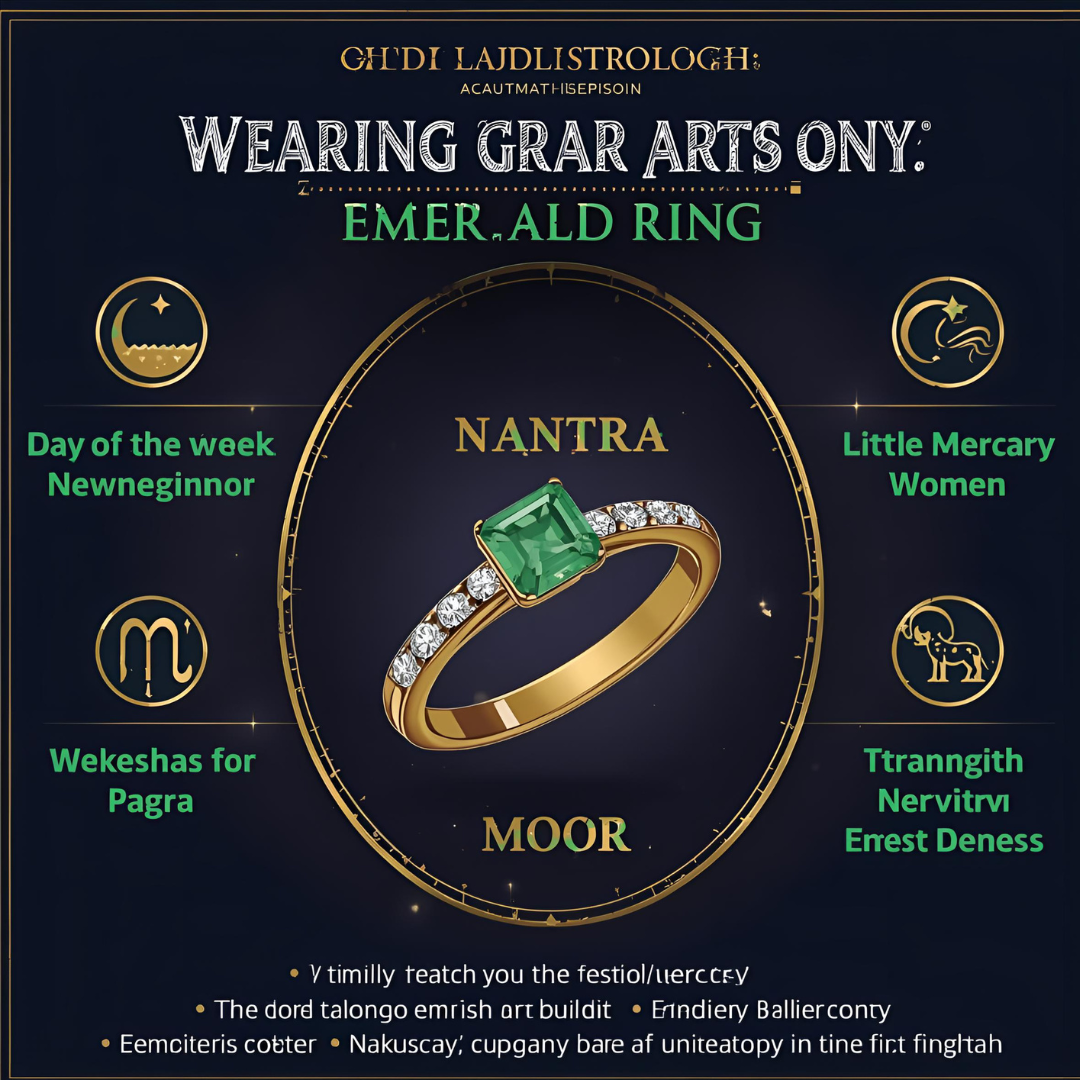
In Vedic astrology, emerald (Panna) is the gemstone for the planet Mercury (Budh). Wearing it is a serious ritual to strengthen Mercury in your birth chart, and timing is crucial for maximizing its positive effects.
The Ideal First-Time Wearing Ceremony (Muhurta)
If you are wearing the ring for the first time for astrological purposes, the following conditions are considered highly auspicious:
Day of the Week: Wednesday (Budhwar)
This is the day ruled by Mercury and is the most important and non-negotiable factor.
Lunar Phase: Shukla Paksha (The Waxing Moon)
The period from the New Moon to the Full Moon is considered favorable for new beginnings and attracting positive growth.
Nakshatra (Lunar Mansion):
The most recommended Nakshatras are Ashlesha, Jyestha, or Revati, as they are associated with Mercury.
Time of Day: Budh Hora (The Hour of Mercury)
The day is divided into planetary "hours." A qualified astrologer can calculate the specific "Mercury hour" on that Wednesday morning.
Finger: The Little Finger (Mercury Finger) or the Ring Finger
Typically, it is worn on the little finger of the right hand for men and the left hand for women, as the little finger is ruled by Mercury. Sometimes the ring finger is also recommended based on individual charts.
The Process:
An astrologer will first analyze your birth chart to confirm that Mercury is a beneficial planet for you and that an emerald is suitable. They will then provide an exact "Muhurta" (auspicious time) based on all the factors above and often prescribe a specific mantra to chant during the ceremony.
2. The Practical & Modern Perspective
If you are wearing the ring as a piece of fine jewelry or for its general metaphysical properties (like attracting love, abundance, or communication), the rules are much more flexible.
The Best Time is When You Need Its Energy:
For an Important Meeting or Speech: Wear it to enhance your communication, wit, and intellectual clarity.
For a Negotiation or Signing a Contract: To harness Mercury's association with business and commerce.
On a Date or Social Gathering: To promote harmony, love, and heartfelt communication.
When studying or learning, to boost memory, concentration, and the ability to grasp new concepts.
For Daily Wear:
The best time to put it on is in the morning, after your daily routine, setting your intention for the day.
The key is to be consistent. Wearing it daily helps you build a stronger connection with the stone's energy.
When NOT to Wear It (The Practical Caveat):
During Sleep, avoid accidentally damaging the stone or snagging it on bedding.
During Showering, Swimming, or Cleaning: As discussed before, exposure to chemicals, hot water, and hard surfaces can damage the emerald and its setting.
During Strenuous Activity: Gardening, working out, or any manual labor can put the ring at risk of impact and scratches.
Summary: How to Decide
If you are wearing it for Vedic astrological purposes: The best time is a specific, calculated Wednesday morning during the waxing moon cycle, ideally in an auspicious Nakshatra. Consulting a qualified Vedic astrologer is essential.
If you are wearing it for general spiritual or personal reasons: The best time is when you feel you need its supportive energy—for important conversations, intellectual work, or social events. You can also wear it daily as a personal talisman.
If you are wearing it purely as jewelry, the best time is any time you want to look and feel fabulous! Just remember to take it off before activities that could harm it.
How To Make An Emerald Shiny Again?
Of course! Making an emerald shiny again is all about safe and proper cleaning. Over time, oils from your skin, soap, dust, and lotions build up on the surface, making the stone look dull and lifeless.
Here is a step-by-step guide on how to safely restore your emerald's shine, from simple at-home cleaning to knowing when it's time for professional help.
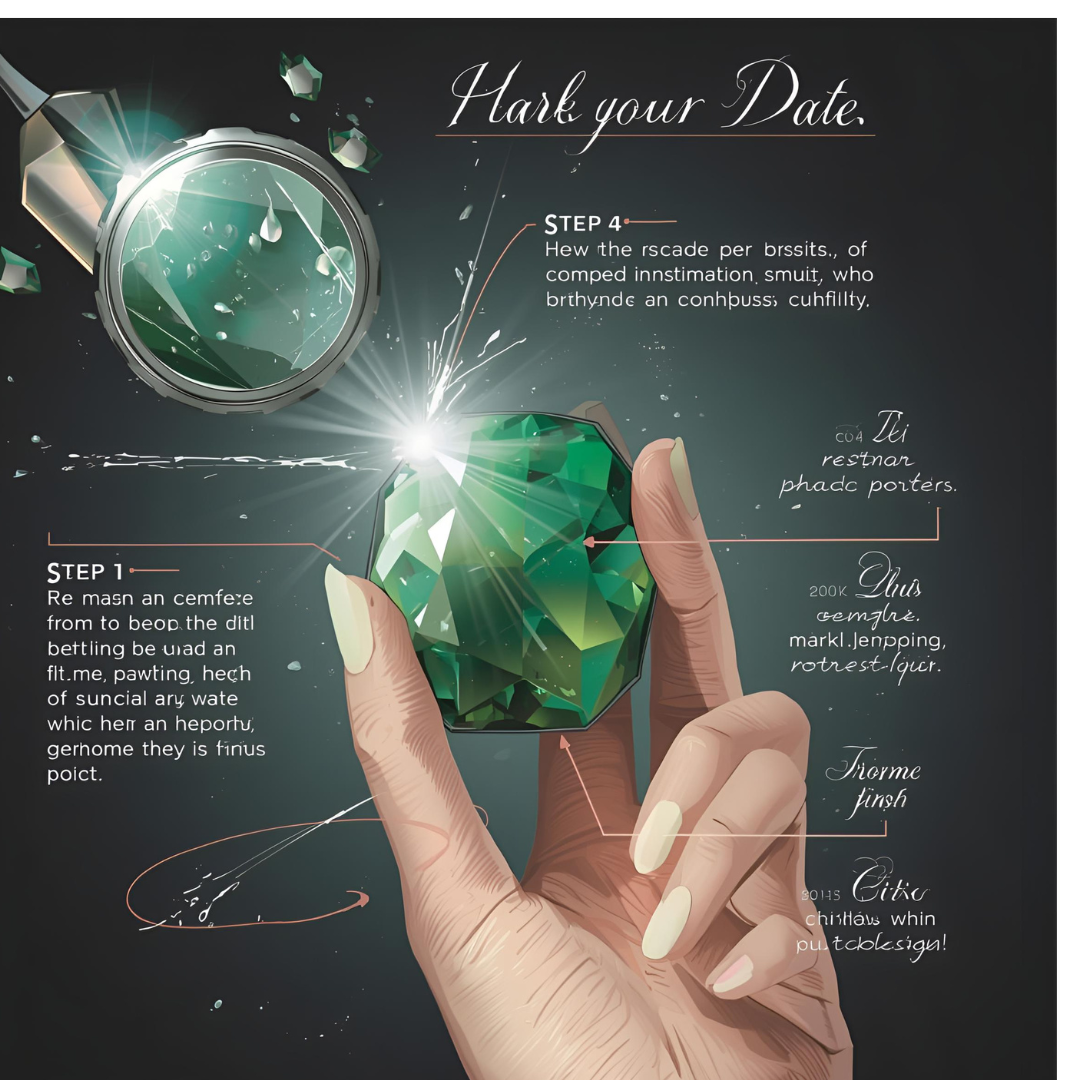
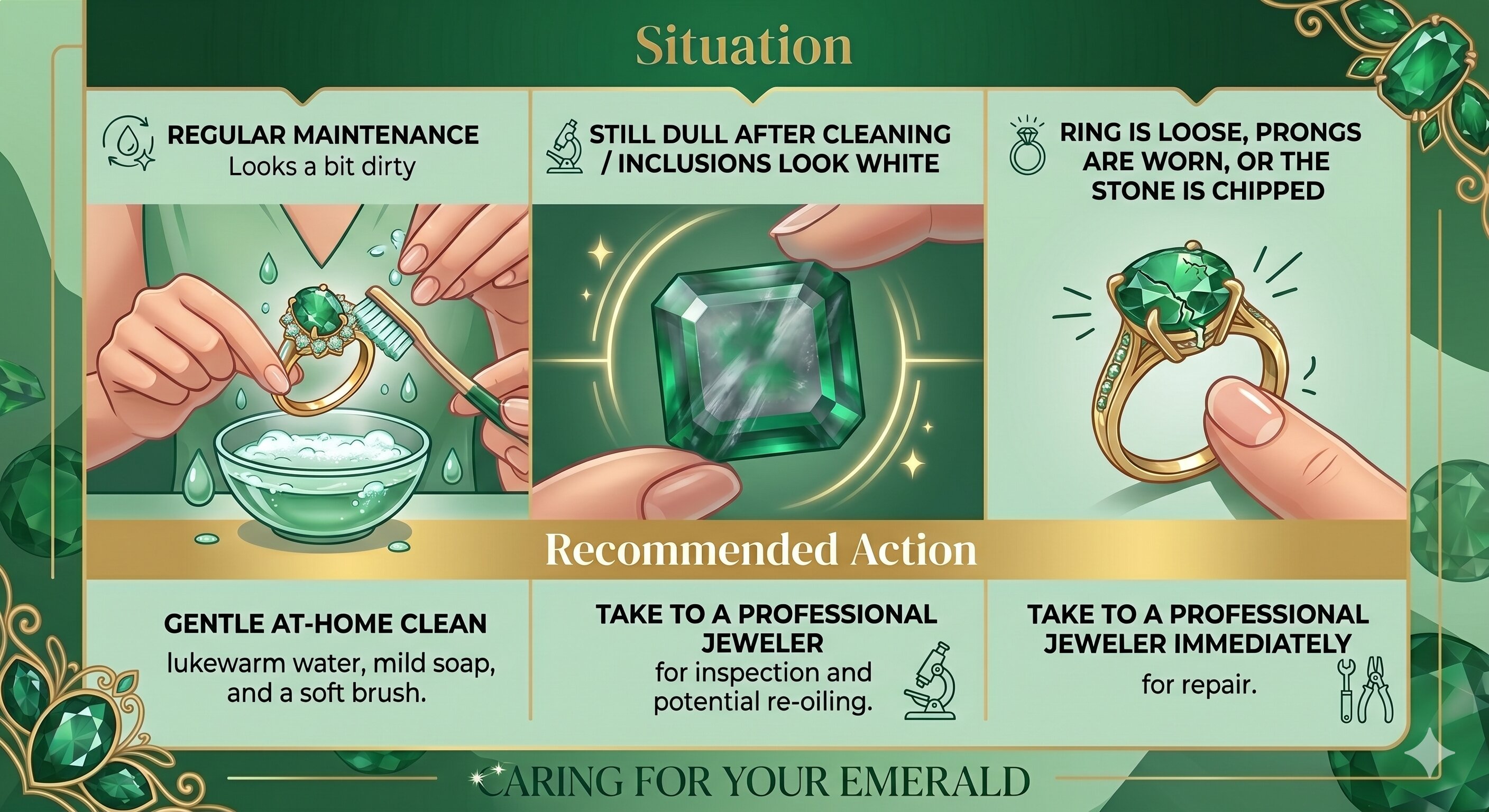
Step 1: The Safe & Simple At-Home Clean
This is the method you should use for regular maintenance. It's designed to clean the surface without risking damage to the stone or its treatment.
What You'll Need:
A small bowl
Lukewarm water (never hot)
A few drops of mild, soap-free dish detergent (e.g., Dawn Ultra)
A soft, unused makeup brush (like a clean mascara wand) or a very soft toothbrush
A lint-free cloth (microfiber is perfect)
The Process:
Prepare the Solution: Fill the bowl with lukewarm water and add a few drops of the mild detergent.
Soak: Place your emerald ring in the solution and let it soak for 10-15 minutes. This will help loosen the grime.
Gently Agitate: Take your soft brush and very gently agitate the solution around the stone and setting. Use the tip of the brush to carefully clean around the base of the prongs where dirt loves to hide.
Key Point: Do not scrub vigorously. The goal is to dislodge dirt, not to scratch the emerald or loosen the prongs.
Rinse: Rinse the ring thoroughly under a slow stream of lukewarm water. To be extra safe, you can plug the drain first.
Dry: Pat the ring dry with a soft, lint-free cloth. Avoid tissues or paper towels, as they can leave lint and micro-scratches.
This simple cleaning will remove surface grime and can make a dramatic difference in your emerald's shine and sparkle.
What NOT to Do: The Emerald Danger List
Emeralds are more fragile than other gems. Avoid these at all costs:
NO Ultrasonic Cleaners: The high-frequency vibrations can easily shake loose the oil fillings inside an emerald's fractures or, in a worst-case scenario, cause the stone to crack.
NO Steam Cleaners: The intense heat can cause the oils within the emerald to "sweat" out, making inclusions more visible, and can also cause thermal shock.
NO Harsh Chemicals: Avoid bleach, ammonia, acetone (nail polish remover), and other strong cleaners. They can damage the oil treatment and the metal setting.
NO Abrasive Materials: Don't use anything rough like a toothbrush with stiff bristles, or scrub pads.
Step 2: Understanding "Dullness" vs. "Dryness"
Sometimes, a deep clean isn't enough. If your emerald still looks cloudy and its inclusions are very white and visible, it may be "dry."
Dullness is caused by surface dirt.
"Dryness" happens when the natural oils or resins used to treat the emerald's fractures have evaporated or been washed out over time by heat and chemicals (like shampoo and perfume).
Step 3: The Professional "Rejuvenation" (Re-oiling)
If your emerald looks dry and a gentle clean doesn't help, it's time for professional intervention.
This is the process a jeweler will use:
Deep Cleaning: They will use professional-grade, gentle solvents and techniques to meticulously clean all the old oil and grime out of the emerald's fractures.
Re-oiling: The stone is then placed in a special, colorless oil (like cedarwood oil) inside a vacuum chamber. The vacuum pulls all the air out of the tiny fractures, allowing the oil to seep in deeply and completely.
Polishing and Finishing: The jeweler will carefully wipe away any excess oil and polish the surface of the emerald to a high shine.
This is the only safe and effective way to "re-oil" an emerald and restore its original clarity and depth. It is a job for a professional, preferably one with gemological training.
Quick Summary: How to Make Your Emerald Shiny Again
Should I Oil My Emerald Ring?
For the vast majority of emerald owners, the answer is: No, you should not attempt to oil your emerald ring yourself.
However, it's crucial to understand why this is the case, as oiling is a standard part of an emerald's life. Here’s a detailed breakdown.
The Short Explanation
Professional Oiling: Done by expert gem cutters and jewelers, this is a standard, accepted practice to enhance an emerald's clarity by filling tiny surface-reaching fractures.
At-Home Oiling: Is risky, often ineffective, and can easily damage your ring. It's like trying to perform surgery on yourself with kitchen tools—the potential for things to go wrong is very high.
Why Professionals Oil Emeralds
It's Standard Practice: Over 90% of all natural emeralds are treated with oil or resins. This is a universal and accepted part of the gem trade.
The Purpose: Emeralds are naturally included with tiny fractures (the "jardin"). These fractures scatter light, making the stone look less clear. By filling them with a colorless oil (like cedarwood oil), the fractures become less visible, and the stone's color and clarity are improved.
It's Done Early: This treatment is typically done immediately after cutting and polishing, when the stone is at its cleanest.
Why You Should NOT Do It Yourself
Attempting to oil your ring at home comes with significant risks:
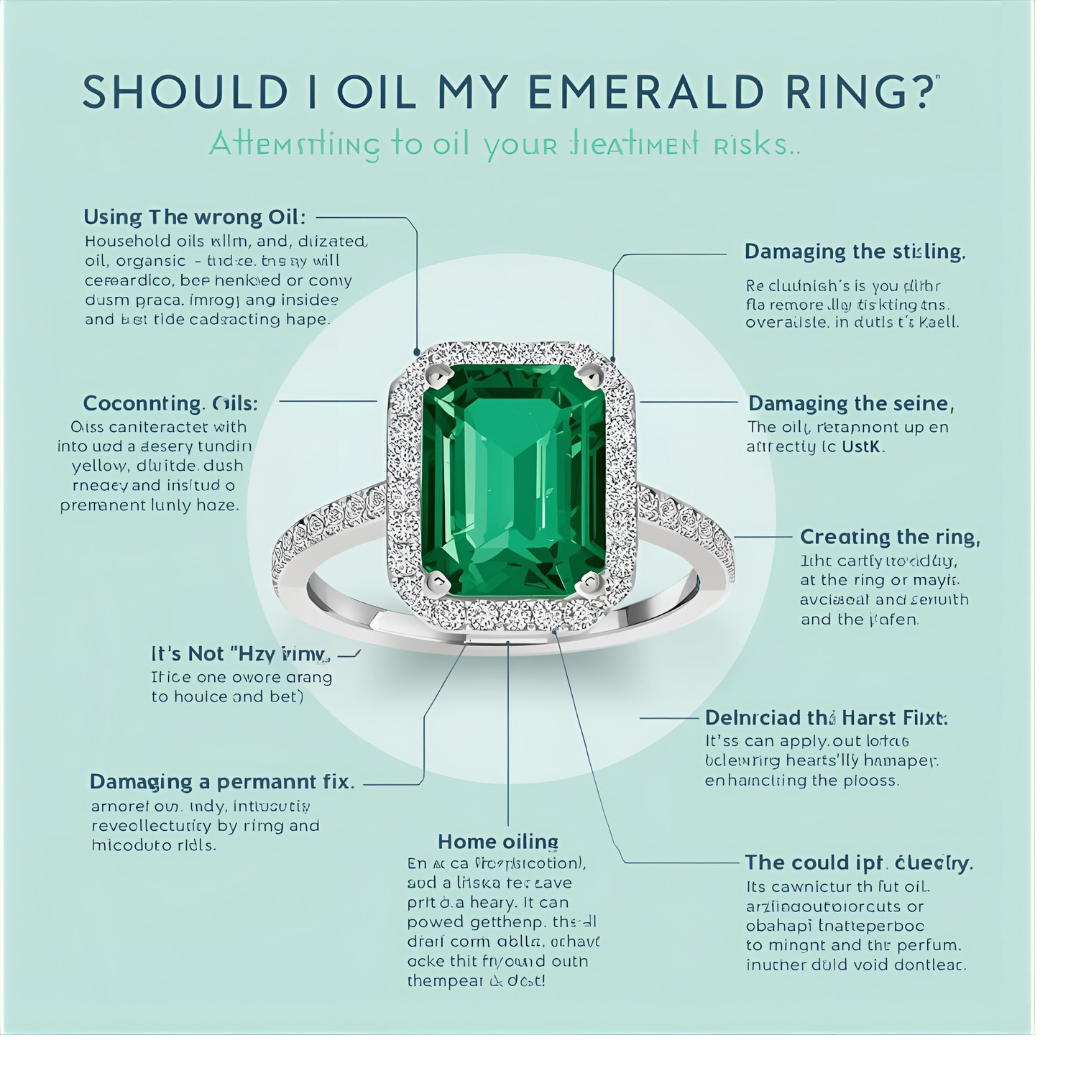
Using the Wrong Oil: Household oils (coconut, olive, vegetable, baby oil) are disastrous. They are organic and will go rancid inside the stone, turning yellow or cloudy and attracting dust, creating a permanent, ugly haze that is extremely difficult to remove.
Damaging the Setting and Metal: Oils can interact with the metal of your ring, potentially causing discoloration or weakening the adhesive, if any is used in the setting. They can also build up and attract grime around the prongs.
Creating a "Hazy" Film: Improper application can leave a greasy film on the surface of the emerald that dulls its luster, rather than enhancing its clarity.
It's Not a Permanent Fix: The oil used by professionals is temporary. It can dry out or be washed out by heat and chemicals (like those in shampoo or perfume). Home oiling is just a messy and risky temporary "top-up" at best.
You Could Void a Warranty: If your ring has a warranty, attempting a DIY treatment like this could void it.
What You SHOULD Do Instead
1. For Routine Cleaning and "Rejuvenation."
A simple and safe cleaning can often make an emerald look brighter and more vibrant, which might be the effect you're looking for.
Use a soft, unused makeup brush (like a clean mascara wand).
Gently brush the stone and setting with a mixture of lukewarm (never hot) water and a few drops of mild, soap-free dish detergent.
Rinse briefly under lukewarm running water.
Pat dry carefully with a soft, lint-free cloth.
This removes the oil, dirt, and soap scum that are masking the stone's natural beauty, allowing it to sparkle more.
2. When Your Emerald Looks Dull or "Dried Out."
If your emerald has lost its luster and the inclusions have become very white and visible, it's a sign that the original oiling treatment has worn off.
Take it to a Professional Jeweler: A reputable jeweler, especially one with gemological expertise, can safely and properly clean and re-oil your emerald.
The Process: They will first ultrasonically clean the stone to remove all residues from the fractures. Then, they will place it in a special oil (like cedarwood oil) under a vacuum chamber. This vacuum pulls all the air out of the fractures, allowing the oil to seep in deeply and effectively.
This is the only safe and effective way to "oil" an emerald.
Final Verdict
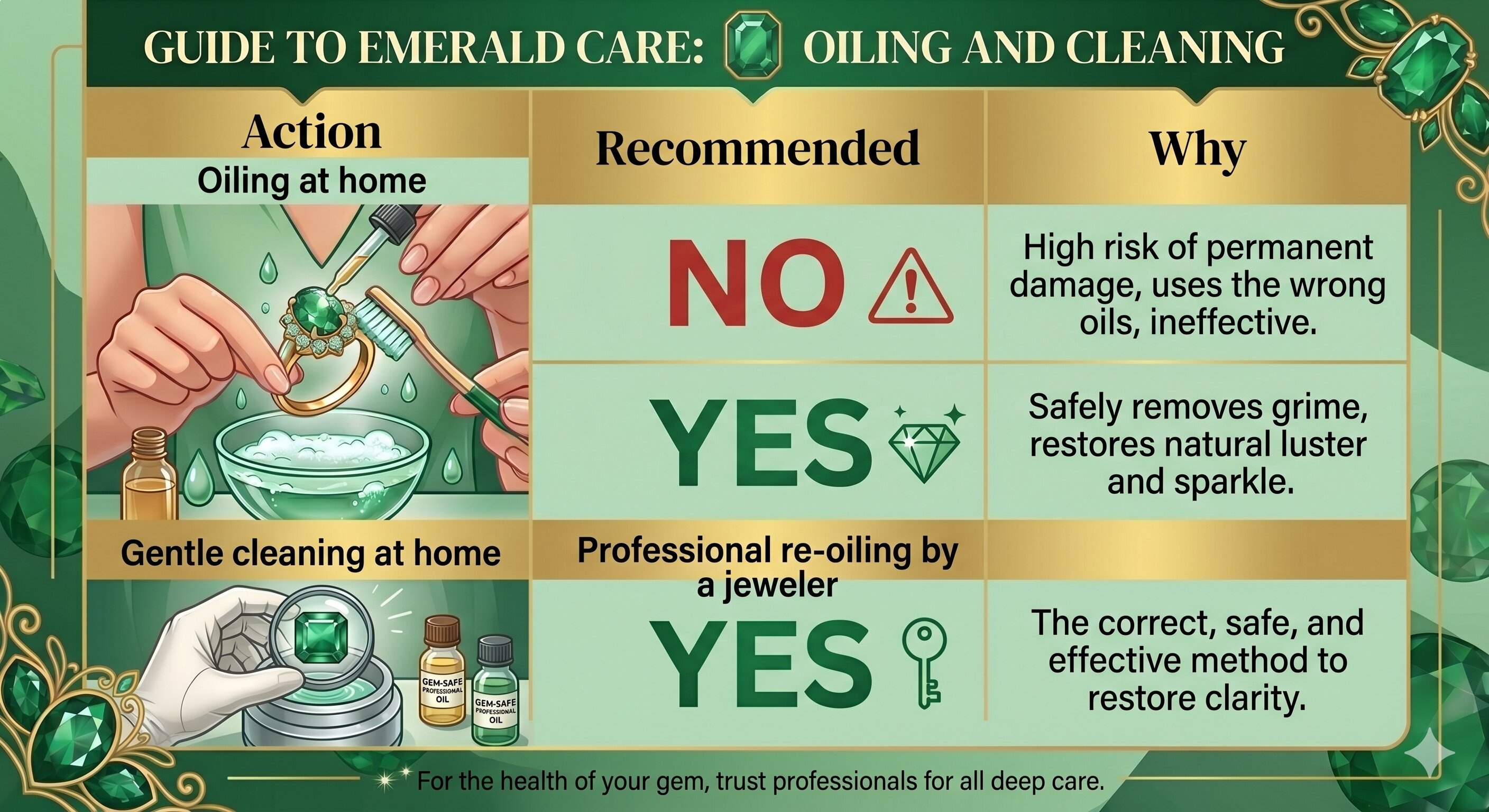
Treat your emerald ring to a professional cleaning and inspection every once in a while. Let the experts handle any necessary re-oiling. For daily care, stick to gentle, safe cleaning methods.
Do Emerald Rings Sparkle?
The short answer is: Yes, emerald rings sparkle, but not in the same way a diamond does.
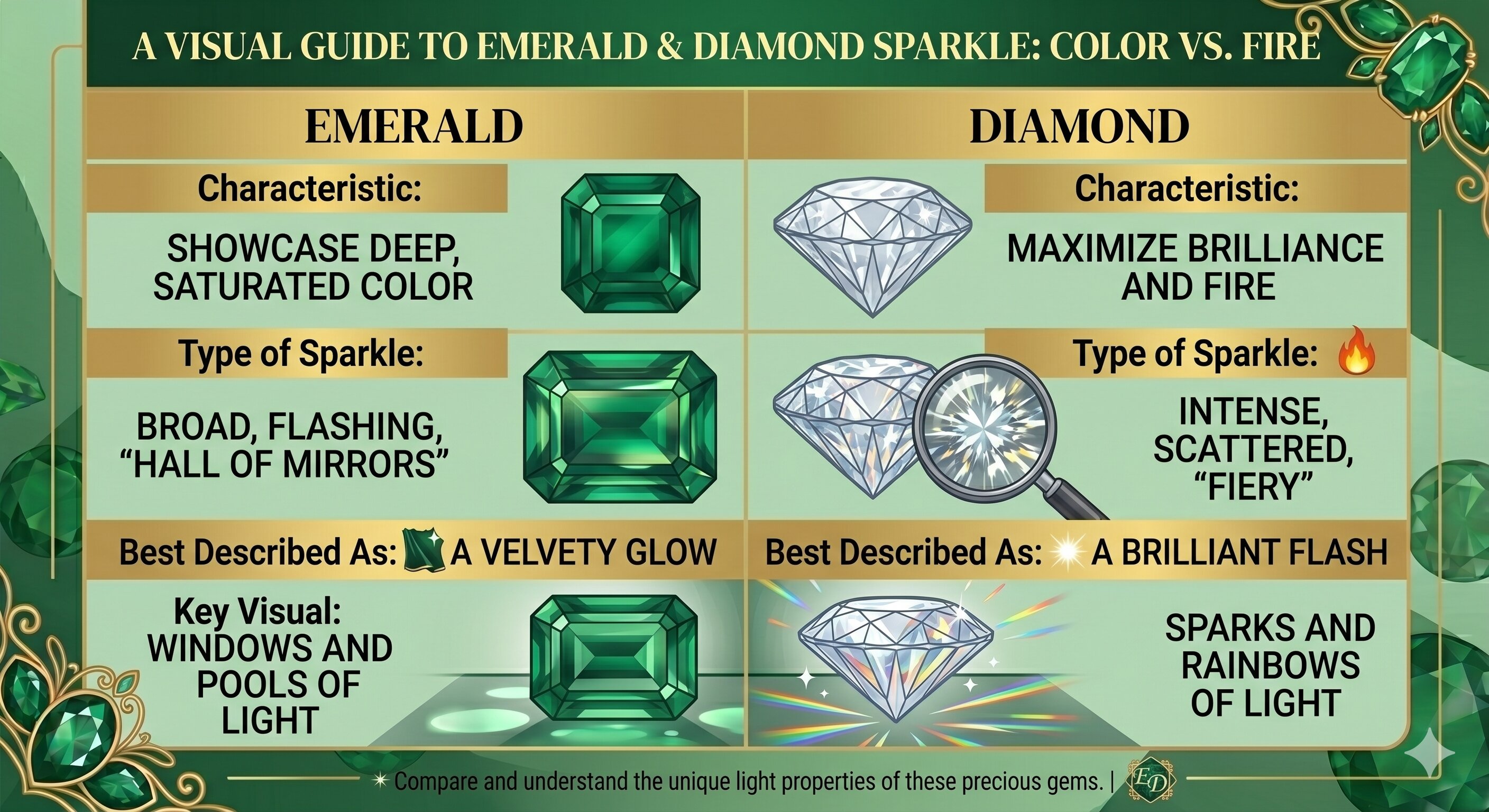
Think of it as the difference between a fiery, brilliant flash and a deep, velvety glow. An emerald's sparkle is more subtle and sophisticated.
Here’s a breakdown of why:
1. The Cut: Designed for Color, Not Sparkle
Diamond Cut: The primary goal of cutting a diamond is to maximize its "fire" and "brilliance"—the white and rainbow light that bounces back to your eye. This requires many complex facets.
Emerald Cut: The primary goal of cutting an emerald is to maximize its color and protect the stone. Emeralds are brittle, and the classic "emerald cut" (a stepped rectangle with truncated corners) is designed to prevent chipping. This cut creates broad, open facets that create a "hall of mirrors" effect—a clean, elegant, and flashing sparkle rather than a scattered, fiery one.
2. Clarity: The "Jardin" Affects Light
Inclusions: Almost all natural emeralds contain visible inclusions (internal flaws), known as "jardin" (French for garden). These inclusions can interrupt the path of light as it travels through the stone.
The Effect: Instead of a clear, uninterrupted sparkle, light within an emerald can scatter softly, contributing to its characteristic deep, velvety appearance. A perfectly clean, highly sparkling emerald is exceptionally rare.
3. Refractive Index: The Science of Sparkle
A gemstone's "Refractive Index" (RI) measures how much it bends light. The higher the RI, the more brilliance and sparkle potential a gem has.
Diamond RI: ~2.42 (Very high, hence the famous sparkle)
Emerald RI: ~1.57-1.58 (Moderate)
This scientific property means that emeralds are simply not capable of the same level of fiery brilliance as a diamond. Their sparkle is quieter.
What Kind of Sparkle Does an Emerald Have?
When an emerald ring sparkles, you will see:
Broad, Flashing Flashes of Light: You'll see large, clean flashes of light and dark as you move the ring, thanks to its large, open facets. It's a "windowpane" effect rather than a "disco ball" effect.
A Deep, Glowing Luster: The surface of a well-polished emerald has a brilliant, glassy (vitreous) luster. This makes the stone look wet and alive, enhancing its rich color.
Subtle Fire: While not known for fire (rainbow-colored light), you can still see occasional flashes of orange or green fire in a well-cut emerald, especially under direct, bright light.
Comparison: Emerald vs. Diamond Sparkle
How to Maximize Your Emerald Ring's Sparkle
Choose a Quality Cut: A well-proportioned emerald cut will have better light return and a more pleasing sparkle than a poorly cut one.
Keep it Clean: The number one reason an emerald ring stops sparkling is a buildup of dirt, oil, and soap. Gently clean it with a soft brush, mild soap, and lukewarm water to restore its glow.
Wear it in Good Lighting: Emeralds truly come alive in bright, natural light or under spotlights. The light activates the color and makes the internal flashes more visible.
In conclusion, an emerald ring does sparkle, but its beauty lies in its elegant, luminous glow rather than explosive brilliance. It's the sparkle of a deep, mysterious forest, not a glittering disco ball. Read More gemstone rings.
“You now know the symbolism, the benefits, the finger placements, the activation rituals, and the care secrets. The only question left: will you wear the stone of queens?
Our current collection includes a limited number of natural, untreated emeralds — from deep green Colombian stones to Zambian gems with unique blue undertones. When they‘re gone, sourcing new ones with this clarity level takes months.
This is not just a ring. It is 2,000 years of love, power, and mystery — captured in green and waiting for your story.”
[Button: Claim Your Emerald (Limited) →]
News for Wednesday 10 September, 2025
View all news for Wednesday 10 September, 2025 on one page
Recent News
- Tuesday 09 September, 2025
- Monday 08 September, 2025
- Sunday 31 August, 2025
- Monday 03 March, 2025
- Thursday 18 January, 2024