

Pavé Setting Guide: Pros, Cons, Cost, Security and Channel/Bezel
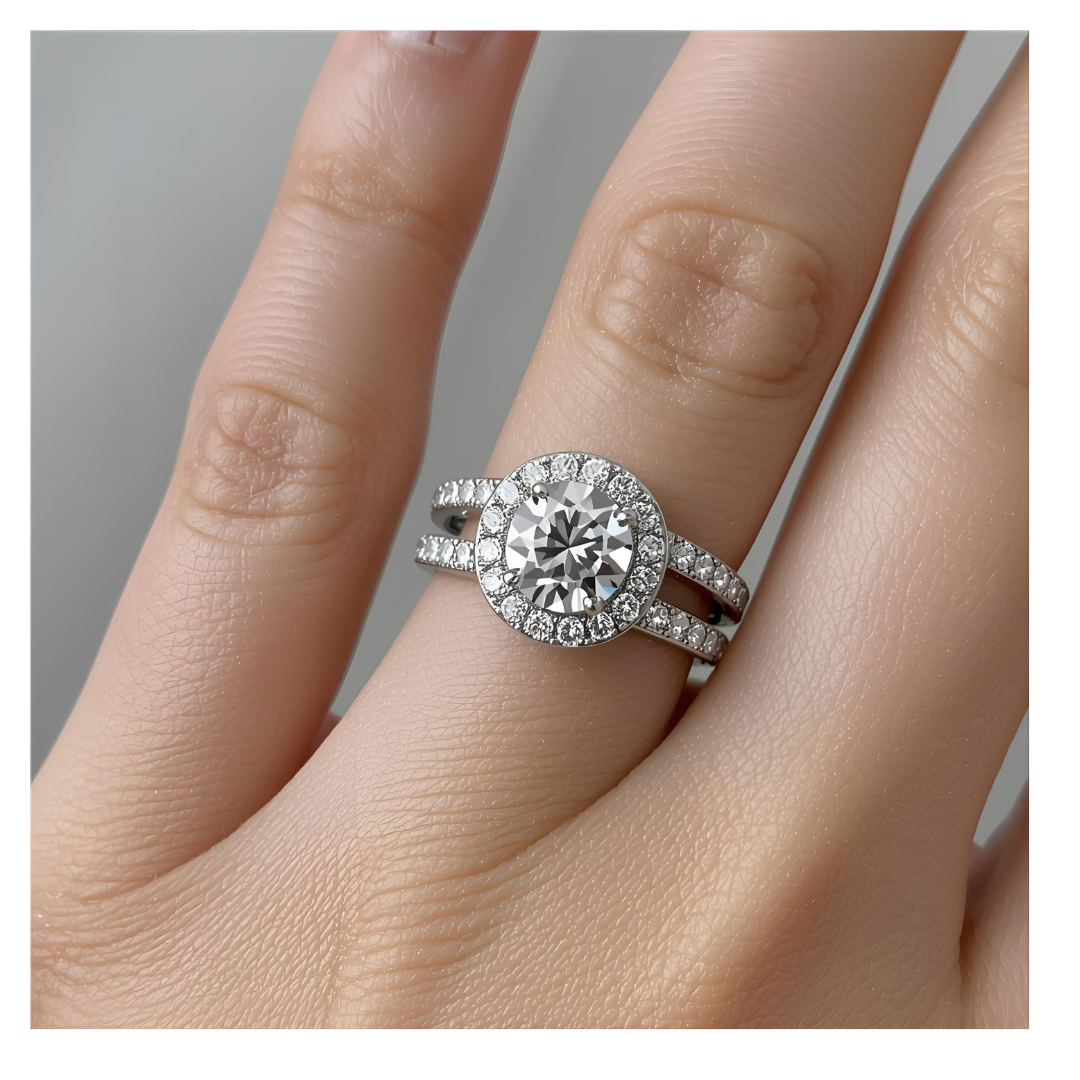
Pavé Setting Guide: Pros, Cons, Cost, Security, and Channel/Bezel
“The word ‘pavé‘ comes from the French for ‘paved‘ — as in a street paved with cobblestones. In jewelry, it means a surface paved with diamonds. In 18th-century France, pavé settings were reserved for royalty. Marie Antoinette owned pavé-set brooches that sparkled so intensely they seemed to glow in candlelight. Today, pavé is everywhere — from engagement rings to watches to iPhone cases. But the technique has not changed. A master jeweler still drills dozens of tiny holes, still carves microscopic beads of metal, still sets each stone by hand. Pavé is not a trend. It is a testament to patience. A single ring can take 20 hours to pave. And when it catches the light, you will know why.”
The same technique that paved Marie Antoinette‘s brooches now awaits your own finger — from classic pavé bands to micro-pavé halos. Every pavé setting in our collection is hand-set by master jewelers, because a surface paved with diamonds should never have a loose stone.”
[Button: Explore Pavé Setting Rings →]
Let's break down the beautiful and popular pavé setting.
Table of Contents
- What Is A Pavé Setting?
- What Is A Pavé Setting Diamond?
- Is Pavé More Expensive Than Other Settings?
- What Is The Most Popular Pavé Setting?
- Are Pave Settings Sparkly?
- What Are Common Problems With Pave Settings?
- Which Pavé Setting Is Best?
- What Is The Most Secure Pavé Setting?
- What Are The Cons Of Pavé Setting?
- Are Pavé Setting Diamonds Real?
- Is Pavé Setting Good For Everyday Wear?
- What Is the Alternative To Pavé Setting?
- Is It Easy To Lose Stones In A Pavé Setting?
- Does Pavé Setting Make A Diamond Look Bigger?
What Is A Pavé Setting?
The Simple Definition
A pavé setting (pronounced pah-VAY, from the French word for "paved") is a jewelry technique where many small gemstones are set closely together across the surface of a piece, creating a continuous "sheet" of sparkle. The metal base is often barely visible, making the piece appear as if it is entirely paved with diamonds or other gems.
How It's Done: The Key Characteristics
The magic of a pavé setting lies in its intricate craftsmanship. Here are the key elements that define it:
Small Stones: Pavé uses many tiny stones, typically diamonds. These are often referred to as "melee" (pronounced meh-LAY) diamonds.
Close Placement: The stones are set extremely close together, side-by-side, with minimal space between them.
Small Metal Beads or Prongs: The stones are not held by large, individual prongs. Instead, the jeweler uses the existing metal from the piece to create tiny "beads" or "prongs" that are pushed over the girdle (the widest part) of each stone to secure it.
No Metal Shows: The goal is to minimize the visibility of the setting metal, maximizing the visible gemstone surface for a seamless, glittering effect.
When done correctly, the result is a breathtaking, shimmering surface that catches the light from every angle.
Why Choose a Pavé Setting?
Maximum Sparkle: This is the biggest draw. The high concentration of small gemstones creates incredible brilliance and fire.
Luxurious Look: It gives the appearance of a larger, more substantial piece of jewelry without the cost of a single, massive stone.
Enhances the Center Stone: In rings, a pavé band makes the center stone look larger and more impressive by continuing the sparkle down the shank.
Elegant and Modern: It provides a beautiful, continuous line of light that is both classic and contemporary.
Types of Pavé Settings
While all pavés share the same basic principle, there are subtle variations:
Classic Pavé: The most common type, using small, uniform metal beads to hold the stones.
French Pavé: A more complex and decorative method where the stones are set in V-shaped openings, and the metal is cut to create a starburst pattern around each stone. It allows more light to enter, increasing brilliance.
Micro-Pavé: An even finer version where the stones and the metal beads used to set them are exceptionally tiny. This allows for an even denser "paving" of stones and is often done using microscopic precision tools.
U-Cut and V-Cavity Pavé: These refer to the shape of the hole drilled for the stone, which can affect how the light interacts with it.
Pros and Cons to Consider
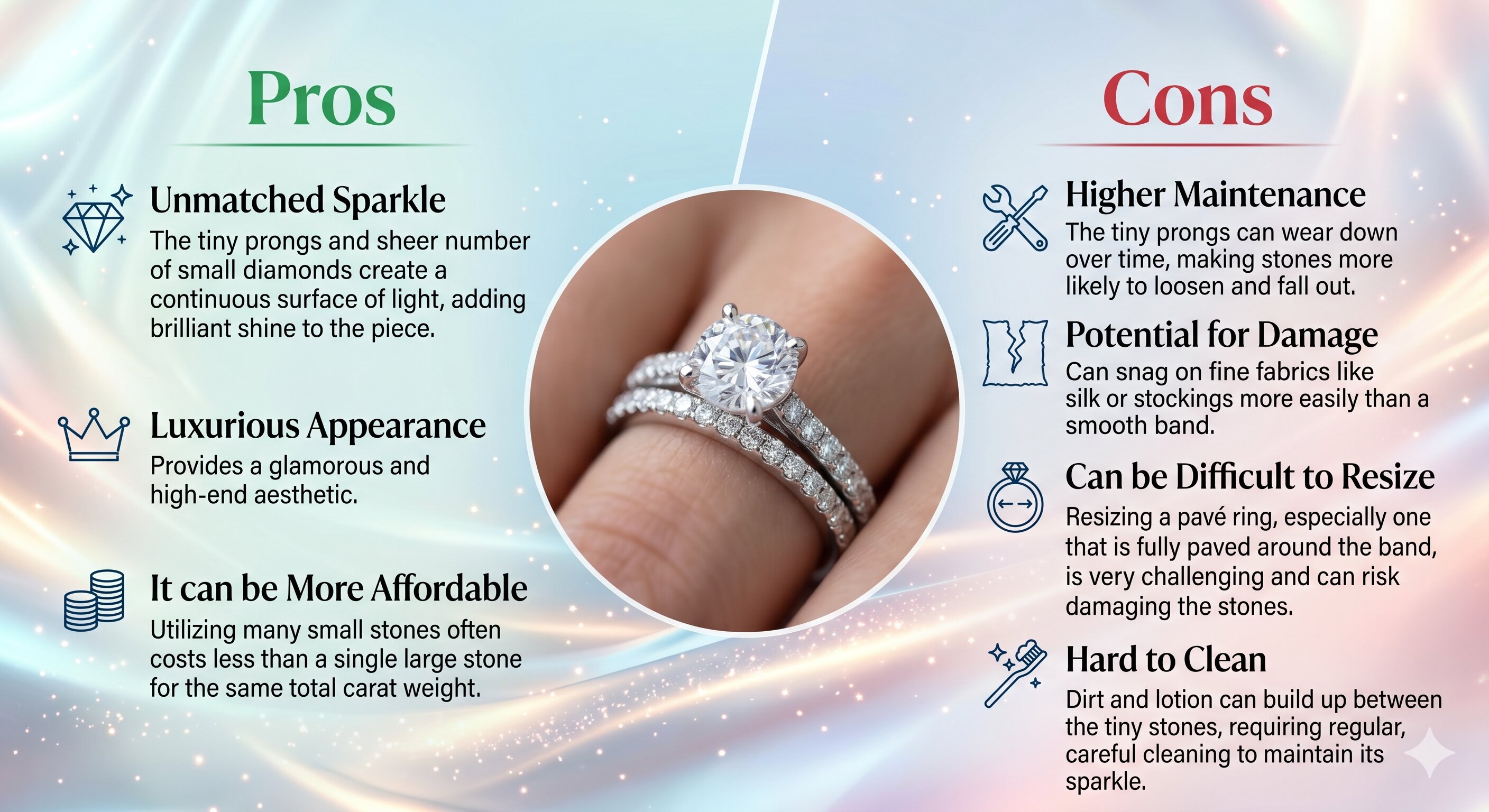
Pavé vs. Other Settings
Pavé vs. Channel: In a channel setting, stones are set into a channel within the band's walls, with no metal prongs between them. It's more secure but shows more metal.
Pavé vs. Bezel: A bezel setting wraps a strip of metal completely around a single stone. It's the most secure setting but shows the most metal and offers less sparkle than pavé.
A pavé setting is a masterful jewelry technique that transforms a metal surface into a dazzling, continuous display of sparkle by meticulously setting many small gemstones side-by-side. It's the perfect choice for anyone who wants to maximize brilliance and achieve a luxurious, eye-catching look.
For official information on jewelry settings, visit the GIA Jewelry Setting Guide.
What Is A Pavé Setting Diamond?
A "pavé setting diamond" refers not to a special type of diamond, but to the role a diamond plays in a pavé setting.
1. It's About the Setting, Not the Diamond Itself
There is no specific diamond cut or shape called a "pavé diamond." The term describes a diamond that is set using the pavé technique. Any diamond used in this way becomes a "pavé setting diamond."
2. The Diamonds are Small "Melee" Diamonds
The diamonds used in pavé settings are overwhelmingly melee diamonds (pronounced meh-LAY). This is the industry term for small, brilliant-cut diamonds, typically weighing less than 0.20 carats each, and often as small as 0.01 carats.
Size: They are tiny, often just a few millimeters in diameter.
Cut: They are almost always round brilliant cut because this shape is easiest to set closely together in a continuous pattern and provides maximum sparkle.
Quality: Due to their small size, melee diamonds are not individually graded for the "4 Cs" (Cut, Color, Clarity) like a center stone would be. They are usually purchased in bulk batches of consistent quality.
Think of it this way:
Pavé Setting: The jewelry-making technique (like a paved road made of many stones).
Pavé Diamond: An individual stone used in that technique (like a single cobblestone in the road).
So, when you hear "pavé setting diamond," you can understand it as one of the many small, usually round, diamonds set closely together to create a seamless sheet of sparkle on a piece of jewelry.
A pavé setting diamond is a small, melee diamond whose purpose is to contribute to the collective brilliance and luxurious appearance of a pavé-set item, rather than to stand out as an individual stone.
Is Pavé More Expensive Than Other Settings?
The answer is nuanced: Yes, a pavé setting is almost always more expensive than a simple solitaire setting, but it can be less expensive than settings that use larger accent stones.
It's not just about the cost of the setting itself, but the total cost of the piece. Let's break it down.
The Short Answer
A pavé setting adds high cost due to two main factors:
The additional diamonds (the "melee").
Intensive, skilled labor is required to set them.
However, when compared to a setting that uses a few larger accent stones (like a three-stone ring with substantial side stones), a pavé setting can be a more affordable way to achieve a high level of sparkle.
Detailed Cost Breakdown
Why Pavé is More Expensive:
Cost of the Melee Diamonds:
While each melee diamond is small and inexpensive, a pavé setting can use dozens of them. The collective cost of all these stones adds up quickly.
Example: A ring shank might hold 30-50 tiny diamonds. Even at a low per-stone cost, this can add hundreds or even thousands of dollars to the final price.
Labor and Craftsmanship (The Biggest Factor):
Pavé setting is one of the most labor-intensive and skill-demanding techniques in jewelry making.
A master jeweler must meticulously drill holes, set each stone, and hand-carve the tiny metal beads to secure them all perfectly. This process can take many hours.
You are paying for this expert time and precision. A poorly done pavé setting will have a rough texture and risk constant stone loss.
Comparing Pavé to Other Common Settings:
vs. Solitaire Setting:
A solitaire is almost always less expensive. It uses no extra diamonds and has a much simpler, less labor-intensive setting (usually 4 or 6 prongs). The cost of a solitaire ring is almost entirely in the center stone itself.
vs. Channel or Bezel Setting:
Generally, pavé is more expensive. While channel and bezel settings also require skill, they typically use fewer stones and a less intricate setting process than pavé. They are prized for their security and modern look, not for their diamond quantity.
vs. Three-Stone Setting (with larger side stones):
Pavé can be less expensive. This is a key comparison. Two larger, high-quality side diamonds (e.g., 0.25 carats each) can be much more costly than the collective cost of the tiny melee diamonds in a pavé band. Pavé gives you more "sparkle per dollar" than a few larger stones.
vs. Halo Setting:
Costs are often similar. A halo is essentially a "pavé frame" around the center stone. Both use a large quantity of melee diamonds and require similar skilled labor. The total cost will depend on the size of the halo and the band.
The Hidden "Lifetime Cost" of Pavé
It's also crucial to consider long-term costs, as mentioned in the previous answer:
Higher Insurance Premiums: Insuring a pavé piece is more expensive because it's riskier (higher chance of stone loss).
Maintenance Costs: You will likely need to pay for retipping prongs and replacing lost stones over the years.
Summary Table: Pavé vs. Other Settings
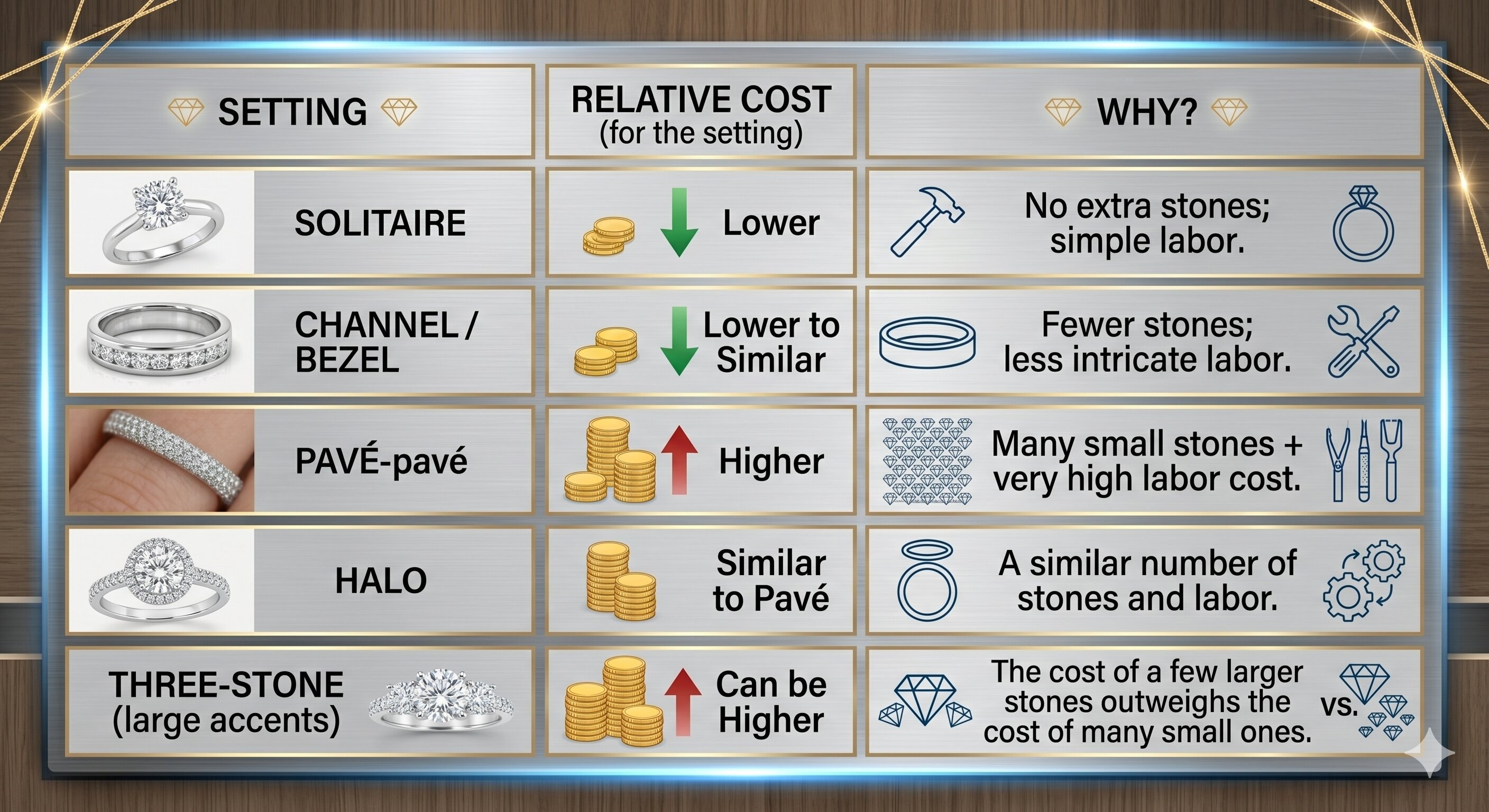
Is pavé more expensive? Yes, when comparing a pavé band to a plain band, the pavé version will always carry a premium due to the added diamonds and labor.
However, if your goal is a ring that is dazzling and covered in diamonds, a pavé band or halo can be a more cost-effective way to achieve that look compared to using larger accent stones.
Think of it this way: You are trading the cost of a few large "rocks" for the brilliant, shimmering effect of a "paved" surface of many small ones.
What Is The Most Popular Pavé Setting?
When people talk about the "most popular" pavé setting, they are almost always referring to its use in engagement rings. Within that category, one style stands out far above the rest.
The Most Popular Pavé Setting: The Pavé Shank (or Band)
The undisputed champion is a ring with a simple solitaire center stone on a pavé band.
“In 2018, a jewelry designer posted a photo of a pavé band ring on Instagram. It had 52 tiny diamonds, each one hand-set. The post went viral. Within a year, ‘pavé engagement ring‘ searches had tripled. But the pavé shank did not become popular because of social media. It became popular because it solves a problem that has frustrated brides for centuries: how to make a ring sparkle from every angle, not just from the top. A solitaire sparkles when you raise your hand. A pavé band sparkles when you lower it, when you turn it, when you forget you are wearing it. Pavé is not just a setting. It is a ring that never sleeps.”
Why this is the #1 choice:
Maximizes Sparkle: It perfectly complements the brilliance of the center diamond by creating a "river of light" that flows around the finger. The band sparkles from every angle, not just from the top.
Elegant and Timeless: It's a classic, sophisticated look that enhances the center stone without overpowering it. It strikes the perfect balance between simplicity and glamour.
Versatile: This style works with any shape of center stone (round, oval, princess, etc.) and metal color (white, yellow, or rose gold).
Illusion of Size: The continuous sparkle of the pavé band can make the center stone appear larger and more impressive by comparison.
Other Extremely Popular Pavé Styles
While the pavé band is the most popular overall, these other pavé settings are also hugely popular and often combined with it.
1. The Halo Setting
A very close second in popularity. This features a circle (or "halo") of pavé-set melee diamonds surrounding the center stone.
Why it's popular: It creates a dramatic effect, making the center stone look significantly larger and brighter. It's the ultimate choice for maximum sparkle and visual impact.
2. The Combination: Halo with a Pavé Band
This is the ultimate choice for someone who wants unparalleled brilliance. Combining a halo around the center stone with a pavé shank creates a ring that is essentially covered in diamonds from every single angle.
3. Micro-Pavé
This isn't a different style, but rather a technique used in the settings above. Micro-pavé uses even smaller stones and tinier, less visible metal beads. It's the standard for modern, finely crafted jewelry because it creates a denser, more seamless "carpet of diamonds." When people see a beautiful, continuous sparkle on a modern ring, they are most likely looking at micro-pavé.
Why You Don't See "French Pavé" as Often Anymore
You might recall French Pavé from the previous explanation—it's a specific, vintage technique with V-shaped metal cuts. While beautiful, it is not the most popular today because:
Cost: It is even more labor-intensive and expensive than classic pavé.
Trends: The modern preference is for a smoother, more continuous sheet of sparkle, which is better achieved with classic or micro-pavé.
So, to answer your question directly:
The single most popular pavé setting is a solitaire engagement ring with a pavé band (often using the micro-pavé technique).
If you are looking at rings online or in a store, this is the style you will see most frequently. It has become a modern classic for its perfect blend of timeless elegance and breathtaking sparkle.
Are Pave Settings Sparkly?
Yes, absolutely. Pavé settings are exceptionally sparkly, and this is their primary purpose and most celebrated feature.
Think of a pavé setting not as a few individual stones, but as a single, continuous surface of glitter and light. Here’s why they are so effective at creating maximum sparkle:
Why Pavé Settings Are So Sparkly
Maximized Light Return: The defining characteristic of pavé is the high concentration of small gemstones (melee diamonds) set very close together. Each one of these stones acts as a tiny mirror and prism, reflecting light and breaking it into colorful flashes (fire). With dozens of these facets working in unison, the effect is a brilliant, all-over sparkle from every angle.
Light from All Angles: Unlike a solitaire stone, which primarily sparkles from the top, a pavé setting catches light from the sides, top, and even underneath (depending on the design). As the wearer's hand moves, the numerous stones create a constant "twinkling" effect, making the entire piece look alive with light.
Minimal Metal Interference: The setting technique is designed to show as little metal as possible. By reducing the metal that blocks light, more of each gemstone's surface is exposed, allowing for unobstructed light entry and return. This creates a seamless "river" or "sheet" of sparkle rather than isolated points of light.
The "Halo Effect" for the Band: On a ring, a pavé band doesn't just sparkle on its own—it acts as a "halo of light" that frames the finger and enhances the center stone. This surrounding brilliance makes the entire hand look more luminous.
What Are Common Problems With Pave Settings?
While pavé settings are brilliant and beautiful, their intricate design leads to several common, practical problems that owners should be aware of.
Here are the most frequent issues associated with pavé settings:
1. Stone Loss (The Most Common Problem)
This is the number one issue with pavé settings.
Why it happens: The tiny metal beads or prongs that hold each small stone are very delicate. Every day wear and tear—knocking your hand against a counter, catching it on a sweater, or even just normal use—can wear down these prongs or loosen the stones, causing them to fall out.
The Reality: It's not a matter of if but when you might lose a stone, especially if the ring is worn daily without periodic checks.
2. Difficult and Risky Resizing
This is a critical, often overlooked, problem for rings.
Why it happens: Resizing a ring involves stretching or compressing the metal band. A pavé shank is filled with precisely drilled holes for the stones. Altering the ring's circumference can distort these settings, loosen the stones, or even cause the metal to crack.
The Reality: If the pavé covers more than half the band, many jewelers will be hesitant to resize it or may outright refuse. If they do attempt it, the cost will be high, and the risk of damage is significant.
3. High Maintenance and Upkeep
Pavé settings are not "wear and forget" jewelry.
Regular Inspections: To prevent stone loss, the ring should be professionally inspected by a jeweler every 6-12 months to check for loose stones and worn-down prongs.
Frequent Cleaning: The countless tiny gaps between stones are magnets for lotion, soap, dirt, and grime. This buildup will quickly dull its sparkle, requiring more diligent and frequent cleaning with a soft brush.
4. Prong Wear and "Retipping."
Over time, the delicate prongs holding the stones will wear down.
Why it happens: The constant friction against clothing, surfaces, and other jewelry gradually files the tiny metal beads away.
The Solution: "Retipping" is a process where a jeweler adds a small amount of new metal to the worn prongs. This is a standard maintenance cost for pavé owners, but it adds up over the lifetime of the piece.
5. Snagging on Fabrics
The textured surface of a pavé setting, while often smooth to the touch, can catch on certain materials.
What to watch for: Fine fabrics like silk, stockings, and loosely knit sweaters are particularly susceptible to being snagged by the tiny prongs.
6. Potential for discomfort
While generally comfortable, some people with sensitive skin may find the textured, non-smooth surface of a full pavé band slightly irritating, especially if the ring spins on the finger.
7. Higher Long-Term Costs
The initial price is only part of the financial picture.
Insurance: Insuring a pavé piece is more expensive than a simple solitaire because the risk of stone loss is higher.
Maintenance: The costs of annual inspections, retipping prongs, and replacing lost stones (even small ones) can accumulate over the years.
Who Should Be Cautious?
A pavé setting might not be the best choice if you:
Have a very active lifestyle or work with your hands.
Prefer low-maintenance jewelry.
Anticipate needing your ring resized in the future.
Are on a tight budget for long-term upkeep.
A pavé setting trades off durability and ease of maintenance for unparalleled sparkle. Being aware of these common problems allows you to make an informed decision and properly care for your jewelry to keep it sparkling safely for years to come. If you proceed with a pavé setting, prioritize high-quality craftsmanship and commit to a regular maintenance schedule.
For more on jewelry care, visit the American Gem Society's care guide.
Which Pavé Setting Is Best?
The "best" pavé setting isn't a single winner, but rather the one that best suits your priorities for style, durability, budget, and lifestyle.
After reviewing all the pros, cons, and common problems, here’s a breakdown of which pavé setting is best for different goals.
Quick Guide: Which Pavé is Best For You?
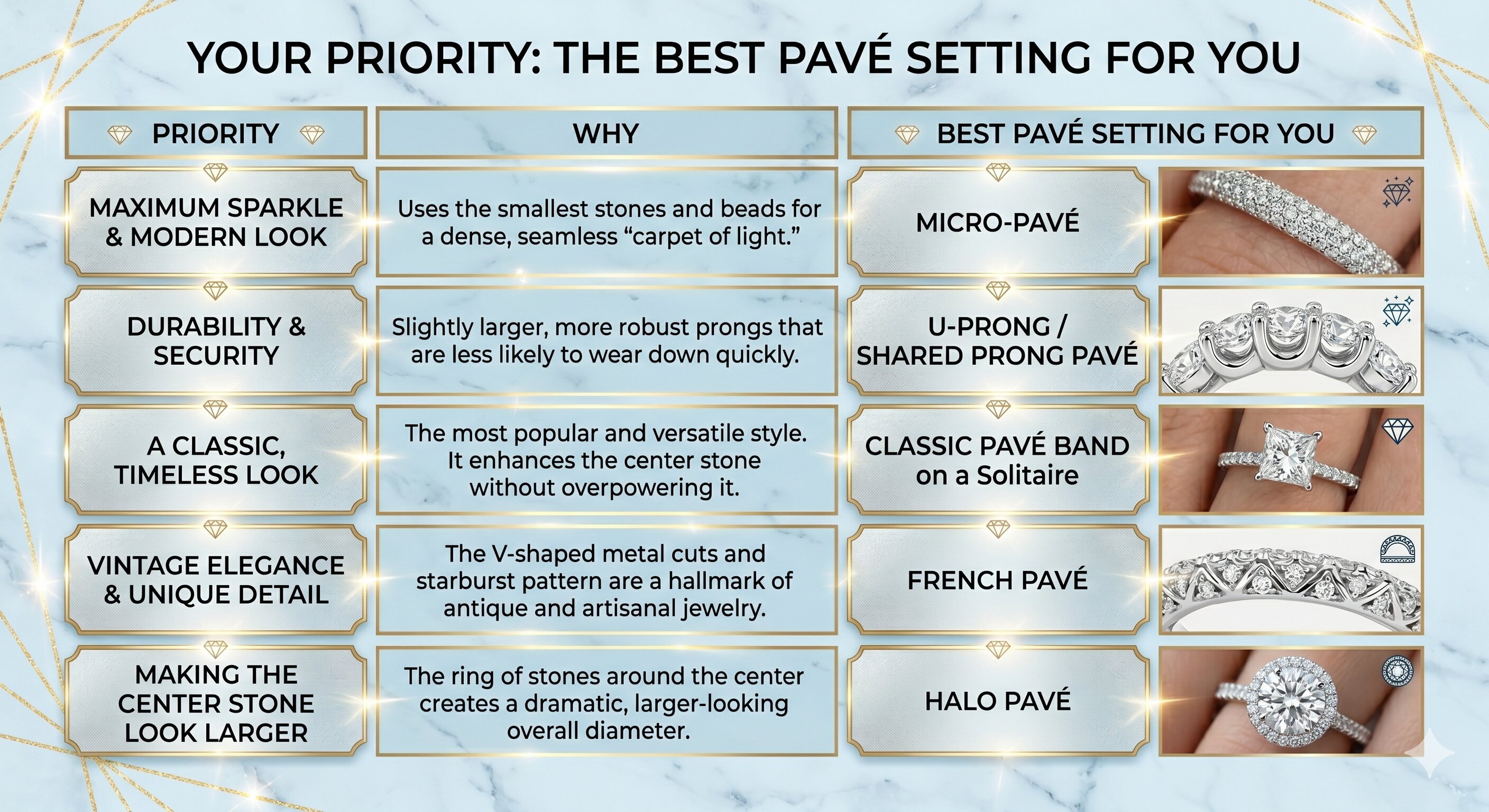
Detailed Recommendations
1. For Overall Brilliance and a Modern Feel: Micro-Pavé
Why it's the best: If your top priority is pure, uninterrupted sparkle, micro-pavé is the winner. The stones are set so closely with such tiny metal beads that the piece looks like a continuous sheet of diamonds. It's the ultimate choice for a dazzling, contemporary look.
Consideration: The tiny prongs can be delicate and require regular check-ups.
2. For Durability and Everyday Wear: U-Prong / Shared Prong Pavé
Why it's the best: This style uses slightly larger, rounded prongs that hold two adjacent stones at once ("shared prong"). While you see a bit more metal than in micro-pavé, the prongs are generally stronger and more secure, making this a better option for someone with an active lifestyle.
Consideration: Slightly less "seamless" sparkle than micro-pavé, but a great trade-off for peace of mind.
3. For a Timeless and Versatile Choice: Classic Pavé Band
Why it's the best: This is the safest and most popular choice for a reason. A solitaire stone on a classic pavé band is elegant, universally flattering, and never goes out of style. It offers tremendous sparkle while keeping the focus on the center stone.
Consideration: Ensure the band is not too thin (2mm is a good minimum) to provide a solid foundation for the stones.
4. For a Secure Setting with a Smooth Feel: Channel Set "Pavé Look".
Wait, this isn't technically pavé! That's correct. But if you love the look of a diamond band but are concerned about the durability of pavé, a channel setting is the best alternative. The stones are set within a channel of metal, completely protecting their edges. There are no prongs to snag or wear down.
Why it's the best: Maximum security and a smooth, comfortable feel.
Trade-off: It shows more metal and has slightly less brilliance than prong-set pavé.
Final Verdict and Pro-Tip
There is no single "best" pavé setting for everyone. The choice is highly personal.
The True "Best" Setting is the One That Is Well-Made.
No matter which style you choose, prioritize quality craftsmanship. A poorly made pavé setting will have a rough texture, uneven stones, and a high risk of problems. A well-made one will feel smooth, have evenly spaced stones, and be set by a skilled jeweler.
Lifestyle: Are you hard on your hands? Choose a more durable U-prong setting.
Style: Do you love vintage? Consider French Pavé. Want modern glam? Look at Micro-Pavé or a Halo.
Budget: Remember that the labor for intricate pavé adds cost, and factor in long-term maintenance.
Comfort: Try them on! See how a full pavé band feels compared to a classic shank.
By matching the setting type to your life and preferences, you'll choose the perfect pavé that is not only beautiful but also practical for you.
What Is The Most Popular Pavé Setting?
This is a crucial question, especially for an item meant for daily wear like an engagement ring.
The short answer is that no pavé setting is as secure as a bezel or channel setting. The very nature of pavé—using tiny prongs to maximize sparkle—is inherently less secure. However, some pavé styles are significantly more secure than others.
The Most Secure Type: Shared Prong / U-Prong Pavé
Among traditional pavé styles, the Shared Prong (or U-Prong) setting is generally considered the most secure and durable.
Why it's more secure:
Larger, Stronger Prongs: Instead of many tiny, individual beads, this setting uses slightly larger prongs that are shaped like a "U" or "V" to hold two adjacent stones at once. These prongs have more metal mass, making them less likely to wear down or break off.
Excellent Stone Retention: The girdle (edge) of each diamond is nestled securely into the U-shaped prong, providing a firm hold.
Reduced Snagging: While not as smooth as a channel setting, the shared prong design is often smoother than classic bead pavé and less likely to catch on fabrics.
The "Most Secure" Overall: Alternative Settings with a Pavé Look
If security is your absolute top priority and you want the appearance of a continuous line of diamonds, consider these non-pavé settings. They are technically more secure than any true pavé.
1. Channel Setting
This is often the #1 recommendation for security.
Why it's more secure: The stones are set into a channel carved into the band's walls, with no prongs exposed. The gems are held in place by the two walls of metal, protecting their edges from impact and eliminating the risk of prong snagging or wear.
Trade-off: It shows slightly more metal and can have slightly less light return (sparkle) than prong-set pavé because the sides are enclosed.
2. Bezel Setting (for melee stones)
A bezel can be used for small stones to create a very secure, modern look.
Why it's more secure: Each stone is surrounded by a custom-fitted rim of metal. This offers the highest level of protection against impacts and snagging.
Trade-off: This style shows the most metal, significantly reducing the visible surface area of the stones and, consequently, the overall sparkle. It also has a higher labor cost.
Summary: Secure Pavé Choices at a Glance
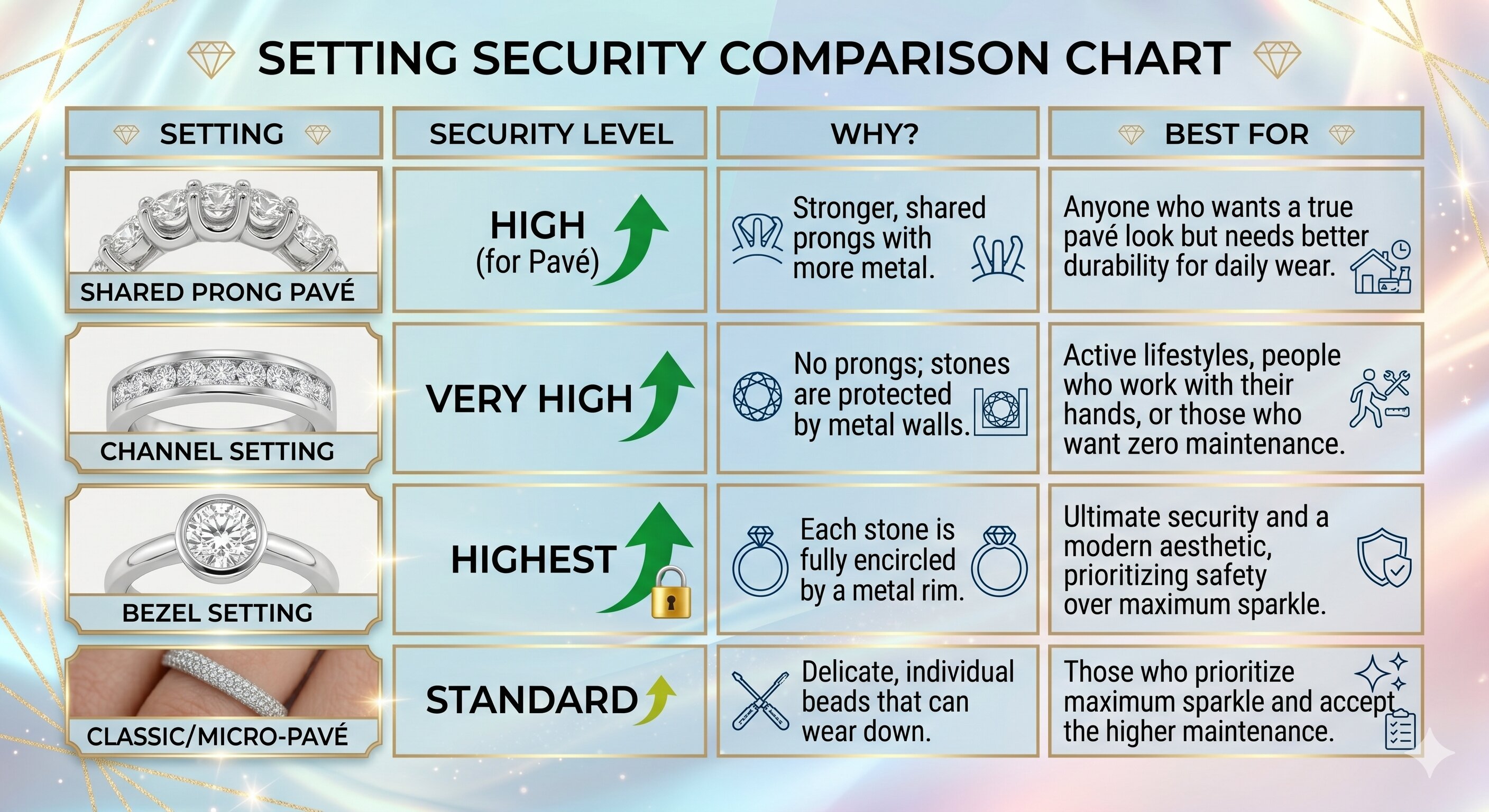
How to Maximize Security in ANY Pavé Setting:
No matter which you choose, you can improve security by:
Prioritize Craftsmanship: A well-made pavé setting from a reputable jeweler is fundamental. The prongs should be evenly sized and properly formed.
Choose a Substantial Band Width: A very thin pavé band (e.g., under 1.8mm) is delicate. Opt for a band width of 2.0mm or wider after polishing to provide a solid metal foundation for the stones.
Commit to Maintenance: Schedule professional cleanings and inspections every 6-12 months. A jeweler can catch loose stones and re-tip worn prongs before a stone is lost.
Get it Insured: Ensure your jewelry is appraised and insured against loss, theft, and damage.
Final Verdict: If you must have a true pavé, choose a Shared Prong setting on a well-made, substantial band. If security is your non-negotiable top priority, a Channel set band is the safest way to achieve a continuous line of sparkle.
What Are The Cons Of Pavé Setting?
While pavé settings are stunning, they come with several significant drawbacks that are important to consider, especially for an item meant for daily wear like an engagement ring.
Here is a concise list of the main cons of a pavé setting:
The Primary Disadvantages of a Pavé Setting
High Maintenance & Risk of Stone Loss: This is the biggest drawback. The tiny metal beads or prongs that hold each stone are delicate and can wear down over time with daily wear, leading to loose or lost stones.
Difficult and Risky to Resize: Resizing a ring with a pavé band is challenging and often expensive. The process of stretching or compressing the metal can damage the delicate settings and dislodge the small stones. In many cases, jewelers will advise against resizing a fully paved band.
Requires Regular Professional Check-ups: To prevent stone loss, a pavé piece should be inspected by a jeweler every 6-12 months to have the prongs checked and tightened—an ongoing cost and inconvenience.
Can Snag on Fabrics: The textured surface of tiny prongs can catch on fine materials like silk, wool, and stockings, potentially damaging the clothing or loosening a stone.
Higher Long-Term Costs: Beyond the initial price, you must factor in:
Higher Insurance Premiums due to the greater risk of damage.
Ongoing Maintenance costs for retipping prongs and replacing lost stones.
More Difficult to Clean: Lotions, soaps, and dirt easily build up in the numerous tiny gaps between the stones, requiring frequent and diligent cleaning with a soft brush to maintain its sparkle.
Potential for Discomfort: Some people with sensitive skin may find the textured, non-smooth surface of a full pavé band slightly irritating.
A pavé setting trades off durability and ease of maintenance for maximum sparkle. It is a beautiful choice but demands more care and attention than a simple solitaire or channel-set band.
Are Pavé Setting Diamonds Real?
Yes, the small diamonds in a pavé setting are real diamonds. The term "pavé" (from the French for "paved") refers specifically to the setting style where many small diamonds are set close together, not to a special type of diamond.
Understanding "Pavé Diamonds"
When people say "pavé diamonds," they're usually referring to the tiny melee diamonds used in the setting. These are real, fully faceted, and polished diamonds, just much smaller (typically under 0.10 carats each).
They come in two main forms, both of which are genuine diamonds:
Natural (Mined) Diamonds: Traditional diamonds formed over millions of years.
Lab-Grown Diamonds: Created in a controlled lab environment. They are chemically, physically, and optically identical to mined diamonds but are often more affordable and ethically sourced. Many retailers now specialize in pavé rings with lab-grown diamonds.
How to Verify the Quality of a Pavé Setting
Because the diamonds are so small, they aren't graded individually like a center stone. When evaluating a pavé ring, focus on craftsmanship and retailer transparency.
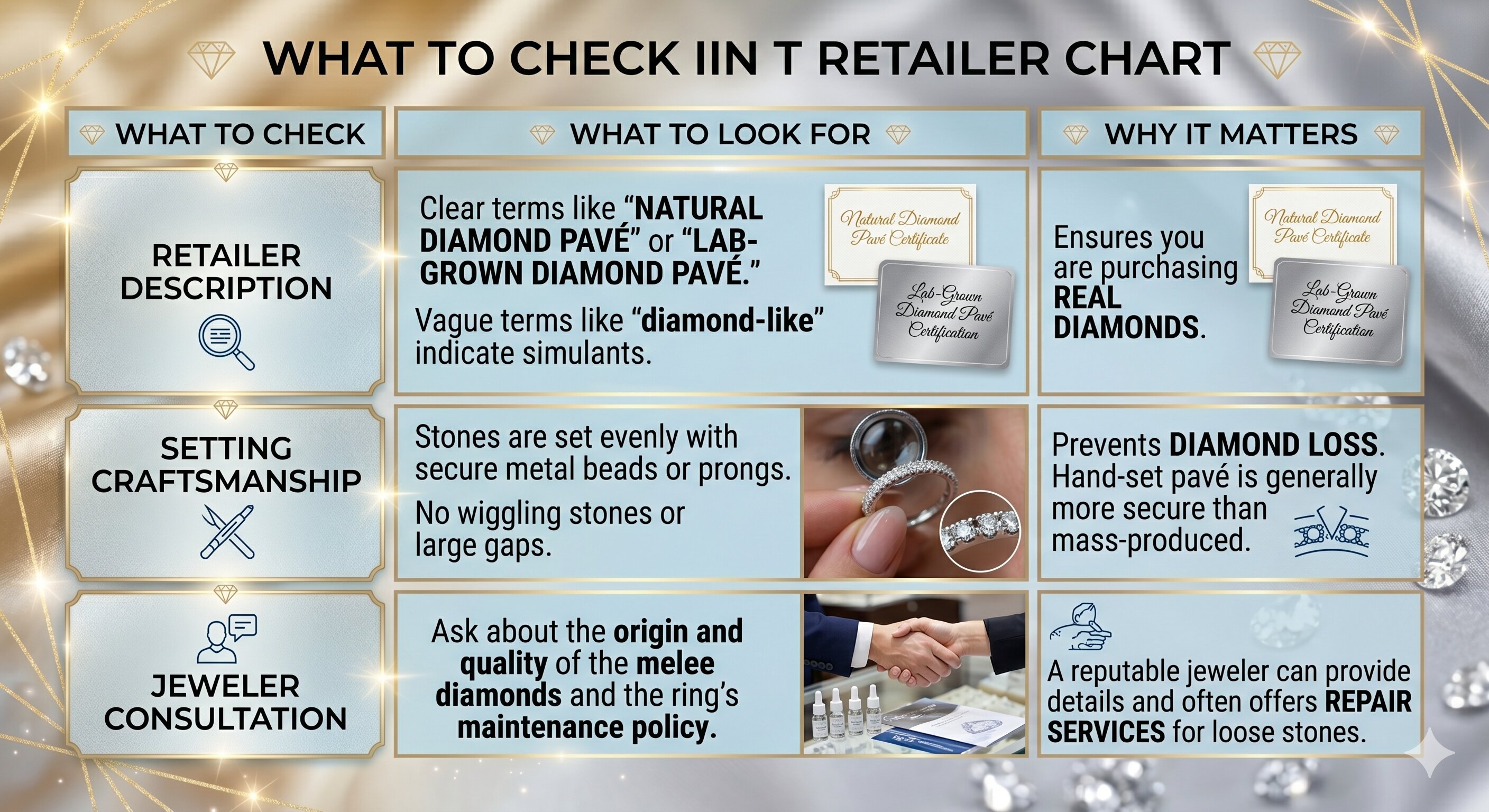
Is Pavé Setting Good For Everyday Wear?
While a pavé setting is certainly beautiful enough for everyday wear, it is not the most practical choice. It can be worn daily, but it requires significantly more careful maintenance and lifestyle adjustments than a simple solitaire ring.
Think of it as a trade-off between maximum sparkle and low-maintenance durability. Here is a summary of the key considerations:

Lifestyle Checklist for Wearing a Pavé Ring Daily
To make it work, you need to be proactive. If your lifestyle and habits match the following points, a pavé ring can last beautifully:
You'll remove it for:
Physical activities (gym, sports).
Household chores, gardening, or any manual work.
Showering, swimming, or using lotions/perfumes.
Sleeping, to avoid catching prongs on bedding.
You'll commit to:
Bi-weekly gentle cleaning with a soft brush and mild soap to prevent grime buildup.
Professional inspections every 6-12 months for a jeweler to check and tighten the tiny settings.
Choosing a durable metal like platinum or white gold for a more secure setting.
Key Decision Factors
Ultimately, choosing a pavé setting for everyday wear comes down to your personal priorities. If your primary goal is maximizing sparkle and visual impact and you are willing to commit to careful maintenance, it's a wonderful choice.
However, if your priority is a low-maintenance, worry-free ring that can withstand an active lifestyle without needing to be constantly removed and serviced, a simpler setting like a solitaire might be the more practical and durable option.
I hope this detailed breakdown helps you make a confident choice. If you have a specific activity or concern about your daily routine, feel free to ask—I can help you think through how a pavé ring might fit in.
What Is the Alternative To Pavé Setting?
Popular alternatives to a pavé setting include channel, bezel, and prong settings, each offering a distinct combination of durability, style, and maintenance needs.
The table below compares them directly with pavé settings on key factors:
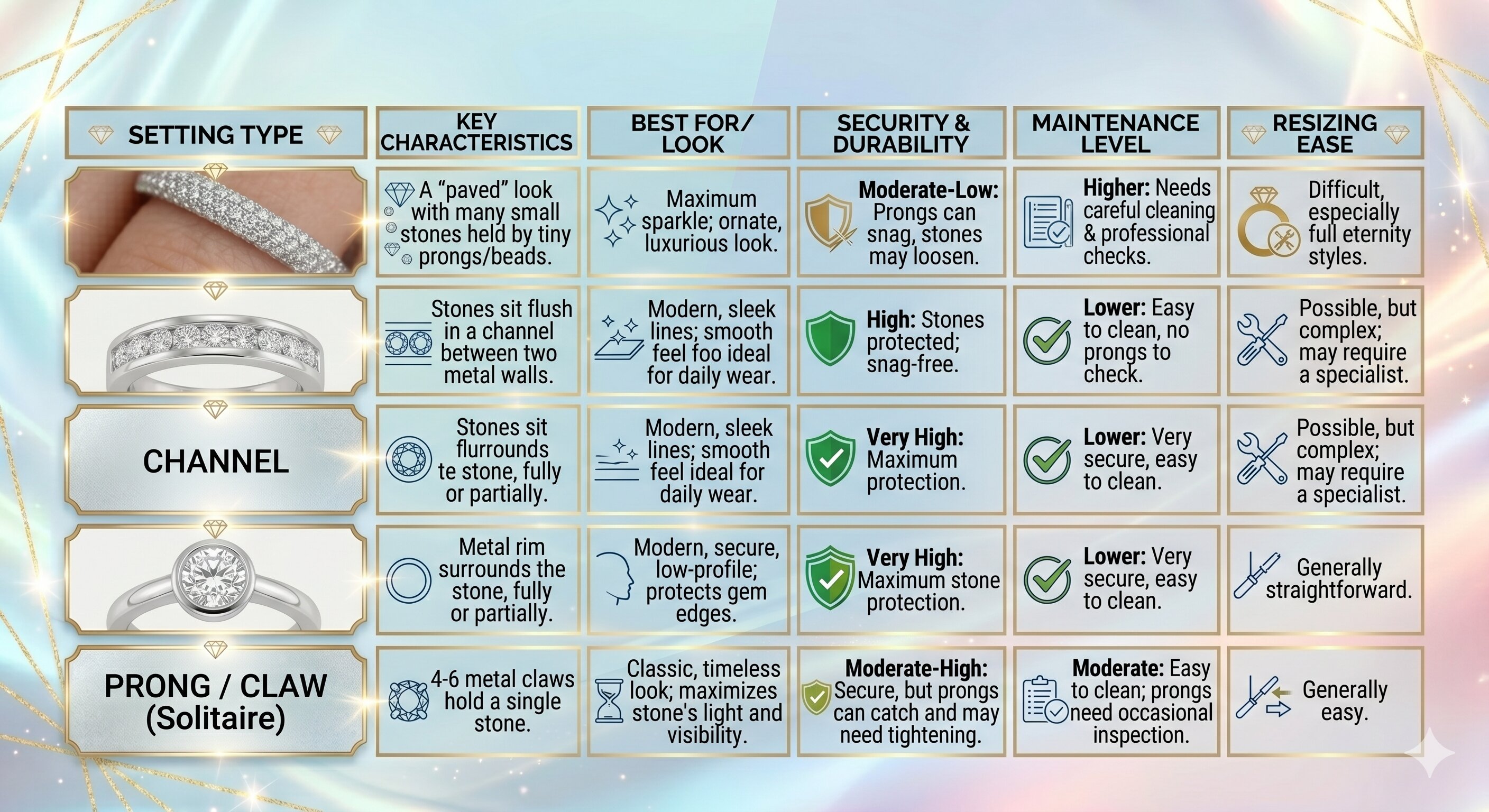
How to Choose Your Alternative
Select the alternative that best addresses your priorities:
Prioritize durability and low maintenance? Channel and bezel settings are the most robust and worry-free for active lifestyles.
Love classic style with a focus on one stone? A prong-set solitaire offers timeless elegance and brilliant sparkle.
Still drawn to sparkle but want more security? Look into bright-cut pavé (a hybrid with channel-like walls) or a half-eternity pavé band, which is easier to resize than a full eternity ring.
If you can share your top priority—whether it's durability, a specific style, or ease of care—I can offer more tailored suggestions on which setting to explore further.
Is It Easy To Lose Stones In A Pavé Setting?
Yes, there is a higher risk of losing stones in a pavé setting compared to other ring styles. This is due to its intricate design featuring many small diamonds held by tiny metal beads or prongs.
However, with proper care, high-quality craftsmanship, and regular maintenance, this risk can be significantly minimized.
Why the Risk is Higher
The risk stems from the design itself. Here’s how pavé settings compare to others:
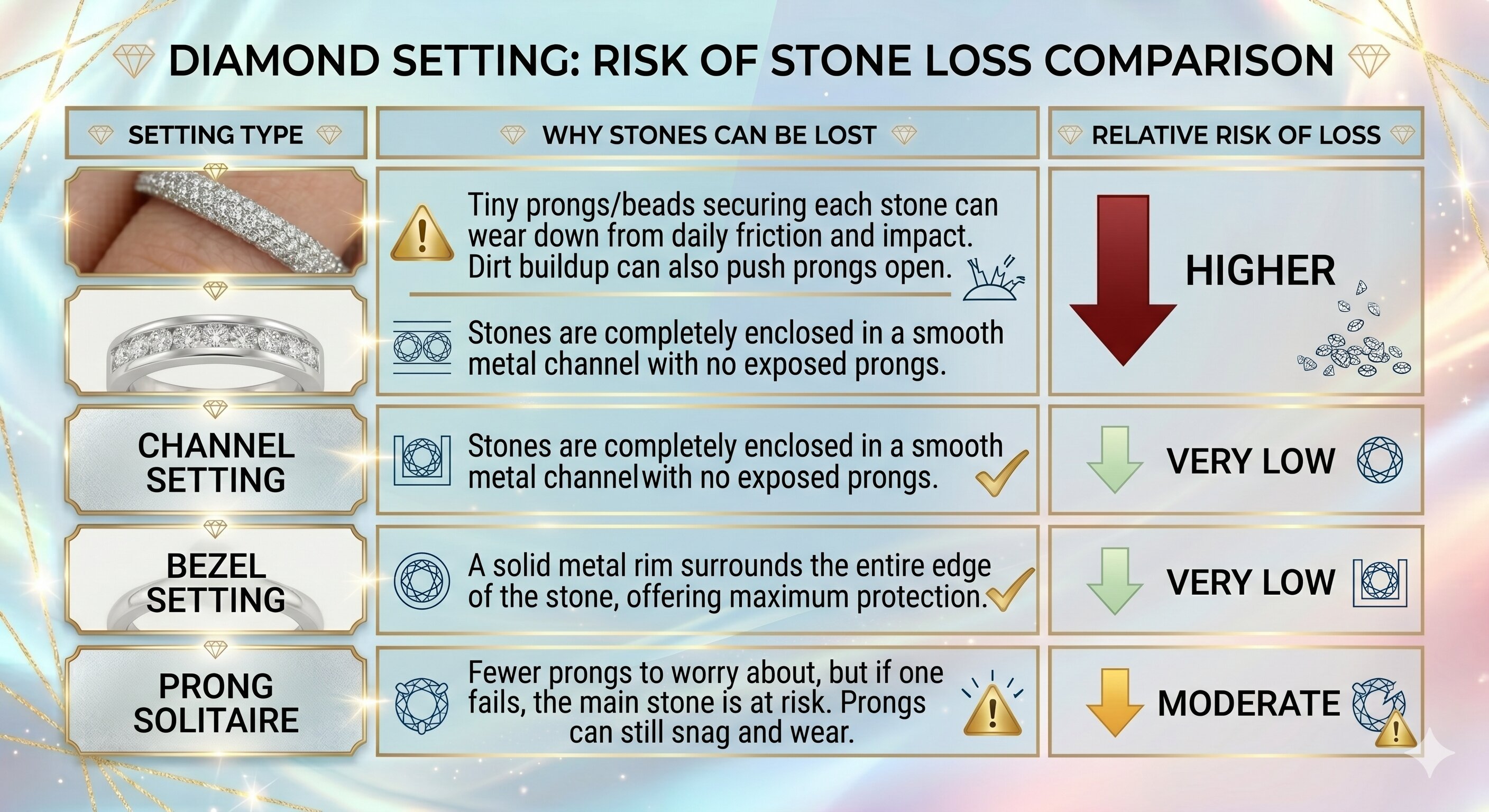
How to Minimize the Risk
You can protect your pavé ring by focusing on craftsmanship and maintenance:
Choose Quality Craftsmanship: Opt for hand-fabricated or hand-set pavé from a reputable jeweler. Machine-set pavé in mass-produced rings often has shallower settings and less secure stones.
Commit to Regular Maintenance:
Professional Check-ups: Have a jeweler inspect and tighten the settings every 6 to 12 months.
Gentle Home Cleaning: Clean regularly with a soft brush to prevent dirt, which can loosen prongs, from accumulating.
Mind Your Lifestyle:
Always remove your ring for physical activities (gym, sports), manual work (gardening, cleaning), and sleeping.
Avoid exposing it to harsh chemicals (bleach, chlorine) and extreme temperature changes.
A pavé setting is inherently more delicate, but it is not inherently fragile. Treating it as a piece of fine jewelry that requires conscious care and regular professional servicing is the key to keeping all its stones secure for a lifetime.
If you love the pavé look but are very active or prefer minimal maintenance, exploring a channel or bezel setting for the band might be a perfect compromise. Would you like more details on those alternatives?
Does Pavé Setting Make A Diamond Look Bigger?
Yes, a pavé setting is specifically designed to make a diamond look bigger. This is a well-known and effective optical illusion created by the setting style.
The effect works in two main ways:
Creating a Glittering Backdrop: The band is paved with small diamonds, acting as a continuous sparkle that draws the eye outwards from the center stone, enhancing its presence and perceived size.
Increasing Overall Sparkle: The collective brilliance of the many small diamonds (called "melee") adds so much fire and light that the entire ring appears more radiant, which amplifies the look of the center diamond.
Visual Benefits vs. Practical Considerations
Here is how this visual advantage balances against the practical factors you've already asked about:
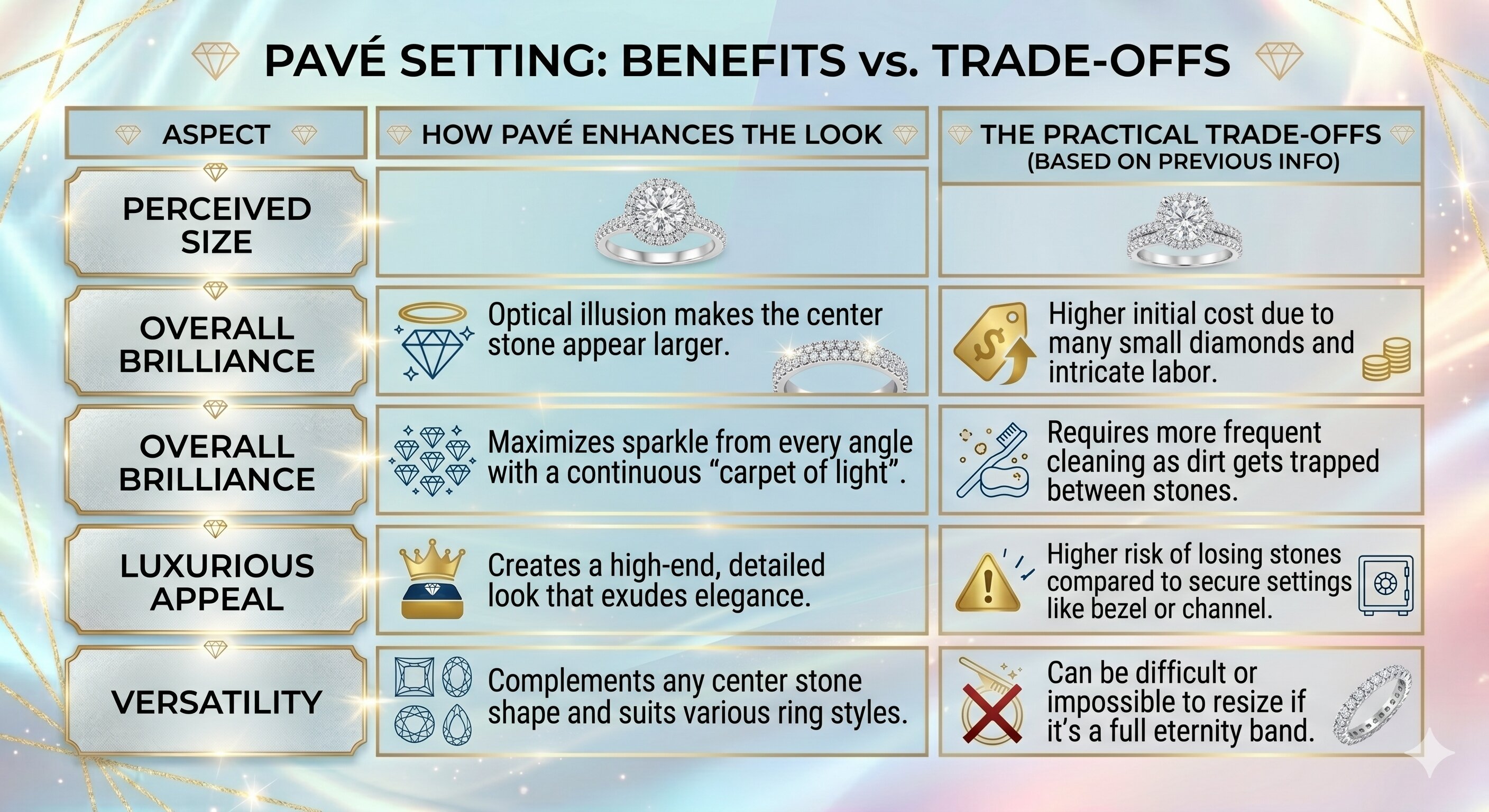
Maximizing the Effect
If you want to enhance the size illusion of a pavé ring further, consider these tips:
Choose a Slim Band: A thinner band creates a greater contrast, making the center stone appear more prominent.
Prioritize Diamond Cut: For the center stone, a better-cut diamond has more brilliance, which naturally draws the eye and enhances its appearance.
Opt for a Halo: A pavé halo (a circle of small diamonds around the main stone) is one of the most effective ways to make the center diamond look larger.
Consider Diamond Shape: Within your pavé setting, an elongated center stone shape (like oval or marquise) often looks larger per carat than a round one.
To summarize, a pavé setting is an excellent choice if your primary goal is to maximize the perceived size and sparkle of your diamond. This benefit comes with the trade-offs of higher maintenance and care requirements.
If you are deciding between a pavé setting and one of its more durable alternatives (like channel or bezel), I can help compare them directly based on the specific priorities you value most.
“You now know the definition, the diamond types, the pricing, the popular styles, the sparkle, the common problems, the ‘best‘ options, the security, the cons, the everyday-wear reality, the alternatives, the stone-loss risk, and the size illusion. The only question left: will you pave your finger with diamonds?
Our current collection includes a limited number of pavé setting rings — from classic micro-pavé bands to French pavé halos and shared prong designs. When certain styles are gone, restocking takes time because each tiny stone is hand-set, not machine-placed.
*This is not just a setting. It is 18th-century French royalty, Marie Antoinette‘s brooches, and 20 hours of a jeweler‘s patience — a surface paved with diamonds that sparkles when you raise your hand, and when you forget you are wearing it.”*
[Button: Secure Your Pavé Ring (Limited) →]


Other news for Monday 15 June, 2026
- Asscher Cut Guide: Complete Guide to Square Emerald Cut Diamonds
- Classic Cut Guide: Old Mine vs Old European vs Modern Round
- Marquise Cut Guide: Price, Size Illusion, vs Oval and Buying Tips
- Radiant Cut Guide: Price, vs Emerald, 1ct, 3ct Cost, Sparkle and Tips
- Vintage Cut Guide: Old Mine vs Old European vs Rose Cut
- Heart-Shaped Diamond Guide: Meaning, Price, 2ct Cost and Buying Tips
View all news for Monday 15 June, 2026 on one page
News for Sunday 14 June, 2026
- Round Brilliant Cut Guide: Price, Facets, vs Other Cuts and Buying Tips
- The Allure of the Cushion Cut Diamond: What You Need to Know
- Square Cut Diamond Guide: Princess, Cushion, Asscher and Radiant
- 24K Gold Guide: Purity, Price, vs 18K, Investment and Buying Tips
- 22K Gold Guide: Purity, Price, vs 24K/18K, Daily Wear and Care
- Oval Cut Diamond Guide: Price, vs Round, vs Radiant and Buying Tips
- Pear Cut Diamond Guide: Price, vs Round, Sparkle and Buying Tips
- Solitaire Setting Guide: 4 vs 6 Prong, Security, Unique Ideas and Comfort
View all news for Sunday 14 June, 2026 on one page
Recent News
- Saturday 13 June, 2026
- Friday 12 June, 2026
- Thursday 11 June, 2026
- Wednesday 10 June, 2026
- Tuesday 09 June, 2026