

Bezel Setting Guide: Benefits, Styles, and Buying Tips
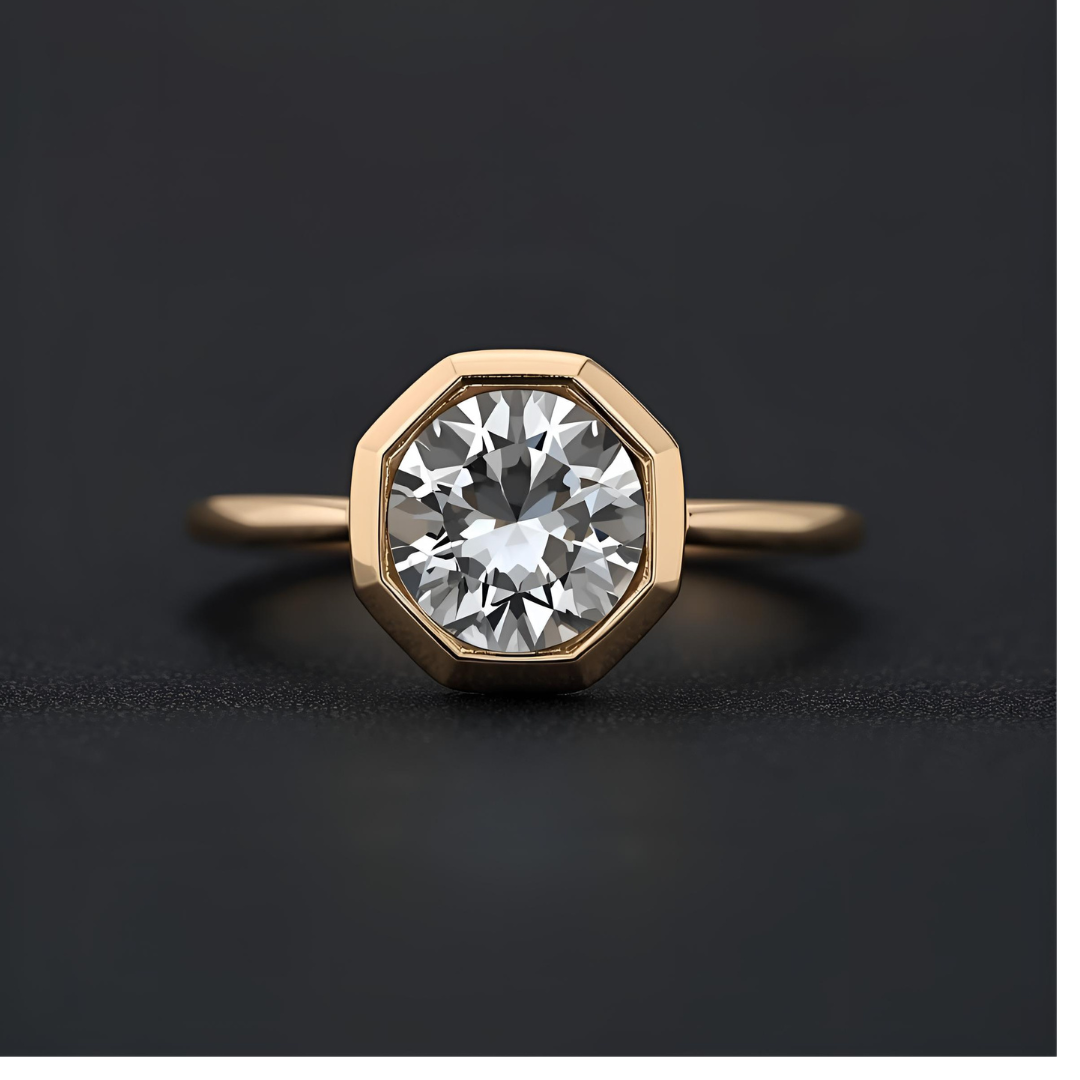
Bezel Setting Guide: Benefits, Styles, and Buying Tips
In 1953, Sir Edmund Hillary and Tenzing Norgay became the first men to reach the summit of Mount Everest. Few people know that Hillary carried something precious with him—not on his finger, but tucked safely inside his jacket.
It was a ring for his wife, set not with prongs, but with a full metal rim. A bezel setting.
"Prongs would have caught on ropes," he later explained. "The stone might have chipped against the ice and rock. But a bezel? It wraps around the stone like armor. It doesn't snag. It doesn't bend. It simply holds."
That ring traveled to the top of the world and back—enduring sub-zero temperatures, violent winds, and constant impacts. And it arrived home perfect.
This is why adventurers, soldiers, and anyone who lives an active life chooses the bezel setting. It's not the flashiest choice. It's the smartest.
The same setting that protected a ring to the top of Everest now awaits your own active life — whether you‘re a nurse, a gardener, a parent, or simply someone who refuses to take off their jewelry. Every bezel setting in our collection is handcrafted for security, from full bezels to partials.”
[Button: Explore Bezel Setting Rings →]
What Is A Bezel Setting?
Of course! Let's dive deep into the world of the bezel setting.
In simple terms, a bezel setting is a style of mounting a gemstone (like a diamond, sapphire, etc.) in which a thin strip of metal (the "bezel") completely or partially wraps around the stone's girdle (its widest point) to secure it in place. Here is the table of contents;
It's one of the oldest, most secure, and most modern-looking settings available.
Key Characteristics of a Bezel Setting
The Bezel Wall: This is the defining feature. It's a thin, custom-formed rim of metal that is pressed or rubbed over the edge of the gemstone. It can be a full circle or a partial one.
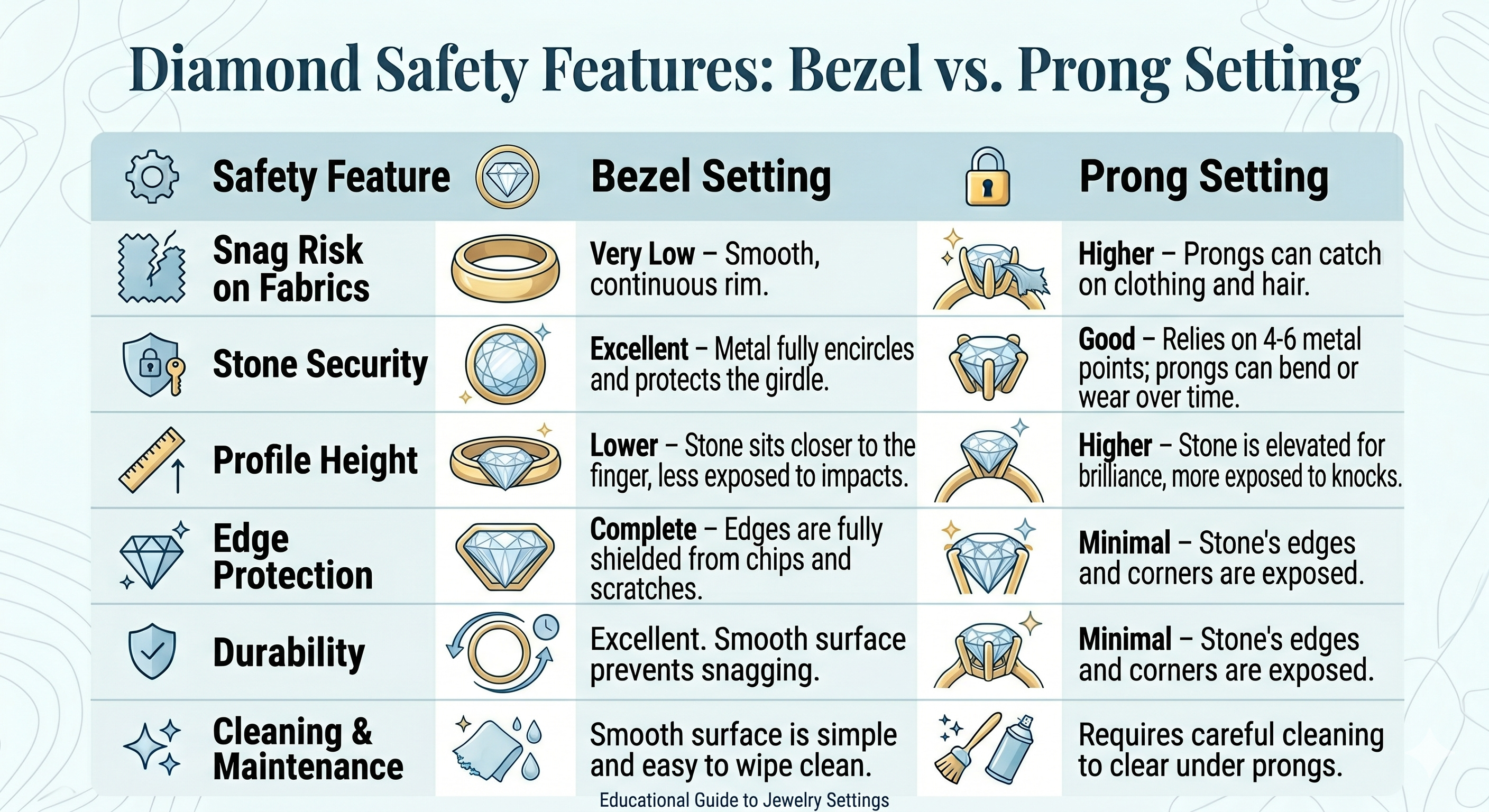
Security: Because the gemstone is surrounded and held by metal, it is extremely secure. The chances of the stone being knocked loose, chipped, or falling out are minimal.
Modern & Sleek Aesthetic: Bezels offer a clean, smooth, and continuous line. They have a minimalist, contemporary look that is very popular in modern jewelry design.
Protection: The metal rim protects the gemstone's edges and girdle from direct impacts, which is ideal for active lifestyles or for softer stones.
Types of Bezel Settings
There are two main types:
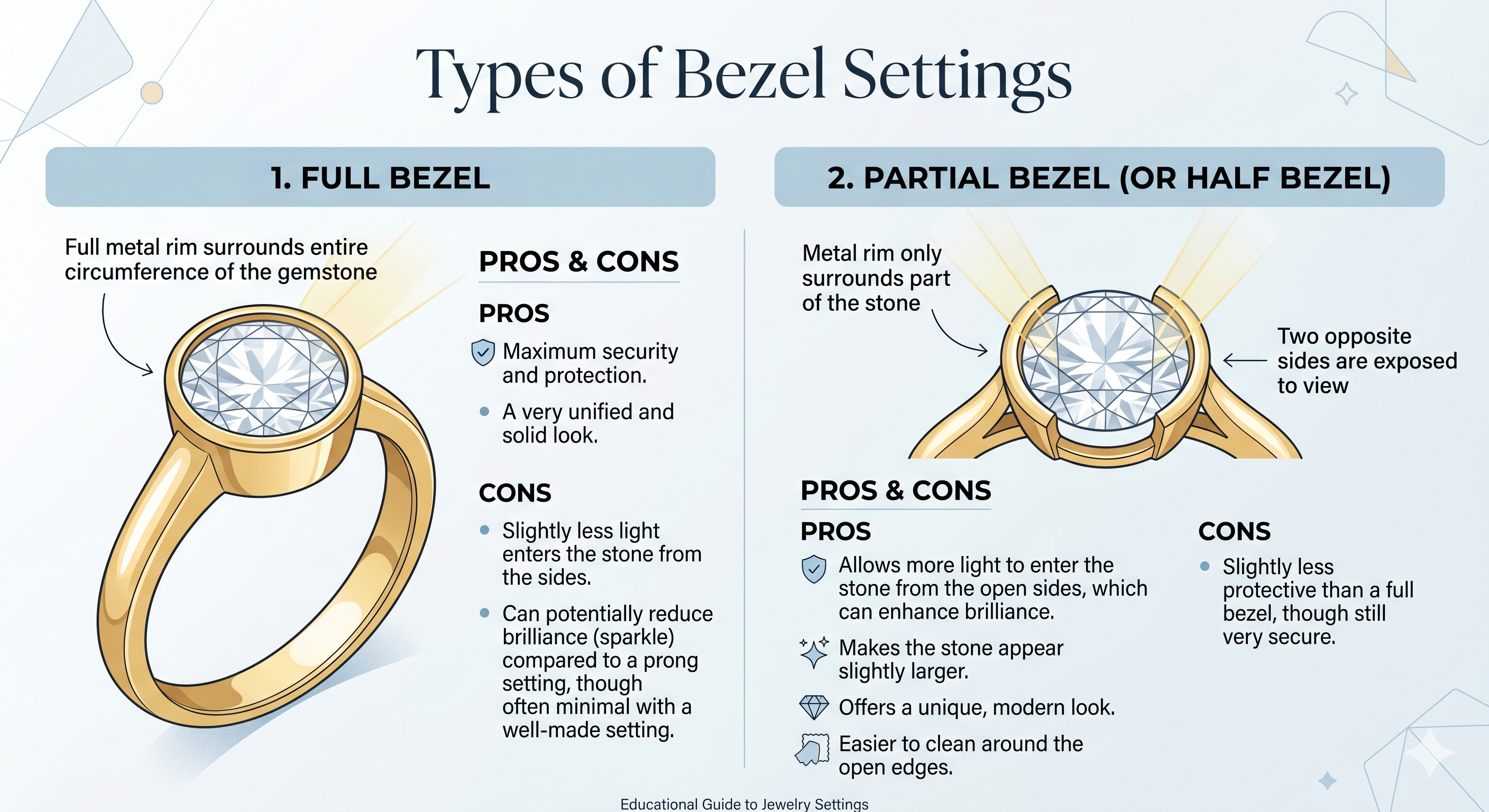
1. Full Bezel
A complete circle of metal surrounds the entire circumference of the gemstone.
Pros: Maximum security and protection. A very unified and solid look.
Cons: Slightly less light enters the stone from the sides, which can potentially reduce brilliance (sparkle) compared to a prong setting, though this effect is often minimal with a well-made setting.
2 . Partial Bezel (or Half Bezel)
The metal rim only surrounds part of the stone, leaving two opposite sides exposed.
Pros: Allows more light to enter the stone from the open sides, which can enhance brilliance. It also makes the stone appear slightly larger and offers a unique, modern look. It's easier to clean around the open edges.
Cons: Slightly less protective than a full bezel, though still very secure.
Bezel vs. Prong Setting: A Quick Comparison
The Process of Creating a Bezel Setting
Creating a bezel is a skilled jewelry technique:
Measurement: The jeweler precisely measures the gemstone.
Fabrication: A strip of metal (usually the same as the ring's shank, e.g., platinum or gold) is cut and shaped into a perfect circle or oval to match the stone's girdle.
Soldering: This bezel wire is carefully soldered onto the base plate of the setting.
Setting: The gemstone is placed inside the bezel. Using a special tool (a bezel rocker or burnisher), the jeweler gently and evenly presses the top edge of the metal over the stone's crown, locking it securely in place. This requires a steady hand to avoid scratching the stone.
Variations and Styles
Collet Setting: A pre-made, tube-like bezel that is soldered onto the piece. Often used for standard round stones.
Flush Bezel (Gypsy Setting): The stone is set into a hole drilled into the metal, so its table (top) is flush with the metal's surface. Extremely secure and low-profile. Common in men's rings.
Open Back Bezel: The back of the setting is open, allowing maximum light to pass through the stone, enhancing its brilliance. Used for transparent stones.
Closed Back Bezel: A solid metal backing covers the back of the stone. This can be used to enhance the color of certain stones or create a specific look.
It is a permanent setting; resizing a bezel-set ring can be more complex than a prong-set one.
For official information on jewelry settings, visit the GIA Jewelry Setting Guide.
Who Is A Bezel Setting For?
A bezel setting is an excellent choice for:
People with active lifestyles (healthcare workers, gardeners, athletes).
Anyone who values security and doesn't want to worry about their stone.
Those who prefer a modern, minimalist aesthetic.
Individuals who dislike the feeling of prongs catching on sweaters or hair.
Owners of softer gemstones (like opals or emeralds) benefit from the extra protection.
Is the Bezel Set More Expensive?
That's an excellent question. The short answer is:
Yes, a bezel setting is generally more expensive than a classic prong setting.
However, the price difference isn't always huge, and it's important to understand why it costs more and whether it's the right choice for you.
Let's break down the reasons for the cost and the pros and cons.
Why a Bezel Setting is More Expensive
More Metal Weight:
A bezel is a continuous band of metal that surrounds the entire girdle (the outer edge) of the gemstone.
A prong setting uses only a few small "claws" to hold the stone.
Simply put, a bezel uses significantly more gold or platinum, which is a major factor in the price of any piece of jewelry.
Higher Labor and Skill Requirement:
Crafting a bezel is a more complex and time-consuming process. The jeweler must perfectly form the metal strip to the exact contours of the stone.
It requires a high level of skill to ensure the stone is set securely and evenly without any gaps or warping. This precision labor costs more than the relatively simpler process of soldering and polishing prongs.
Is the Extra Cost Worth It?
This depends entirely on your priorities:
Choose a Bezel Setting if you value:
Security and Peace of Mind: It's the most protective setting available.
Low Maintenance: You don't want to worry about frequent jewelry check-ups.
A Modern or Minimalist Aesthetic: You love the smooth, clean lines.
An Active Lifestyle: If you work with your hands, work out, or are generally hard on your jewelry.
Protecting a Valuable or Delicate Stone: Ideal for soft stones like opals or emeralds, or for heirloom stones.
Choose a Prong Setting if you value:
Maximizing Sparkle and Brilliance: The open design allows the most light to enter and exit the stone.
A Traditional, Classic Look: The timeless appearance of a solitaire diamond engagement ring.
Making the Stone Appear Larger: Since it covers less of the gem, a prong setting can make a stone look bigger for its carat weight.
Yes, a bezel-set piece of jewelry will typically have a higher price tag than a comparable prong-set piece due to the increased materials and skilled labor involved.
Is a Bezel Setting Right for You?
- ✅ Active Lifestyles: Healthcare workers, gardeners, athletes, parents
- ✅ Soft Stone Owners: Opals, emeralds, turquoise (needs edge protection)
- ✅ Modern Style Lovers: Clean, minimalist, architectural aesthetic
- ✅ Snag Haters: No more catching on sweaters, hair, or gloves
- ✅ Low Maintenance Seekers: Less worry about loose prongs
- ❌ Maximum Sparkle Priority: If you want absolute maximum brilliance, prong settings let in more light
What Are The Disadvantages Of Bezel Setting?
Does a bezel setting make a diamond look larger?
A bezel setting does not make the diamond's actual size (carat weight) look larger, but it can create the illusion of a larger overall appearance.
Here’s the breakdown of how it works, both for and against the "larger look":
How a Bezel Can Make a Diamond Look Larger
It creates a Larger Silhouette: The continuous metal rim adds a border around the diamond. When you glance at the ring, your eye often takes in the entire bezel-set structure, not just the diamond itself. This can make the total footprint on your finger appear larger than a prong-set diamond of the same carat weight.
Analogy: Think of a picture with a thick matte and frame. The picture itself is the same size, but the whole framed piece on the wall commands more attention and looks bigger.
The Reflection Effect: A well-crafted bezel, especially in a highly polished white metal like platinum or white gold, can act as a mirror. It reflects light onto the sides of the diamond and can blend seamlessly with the diamond's edge, making it difficult to tell where the metal ends and the diamond begins. This blurring of lines can enhance the perceived size.
It provides a Stable Base for Illusion Effects: Because the bezel securely holds the entire girdle, it's an excellent setting for fancy-shaped diamonds (like ovals, pears, or marquise). The bezel can emphasize the length or width of these shapes, making them look more substantial.
How A Bezel Can Make A Diamond Look Smaller
It covers the Girdle: This is the main point against it. A prong setting elevates the diamond and leaves its entire circumference (the girdle) visible. A bezel physically covers the girdle with metal. Since you're not seeing the full outer edge of the diamond, the visible face-up table can appear slightly smaller than it would in a prong setting.
It Can Reduce Light Entry: While a well-designed bezel doesn't significantly impact brilliance, a very thick or poorly made bezel can block a small amount of light from entering the diamond from the sides. Less light can mean less sparkle, and a less sparkly diamond can sometimes appear less prominent.
The Verdict: Illusion vs. Actual Measurement
To visualize this, imagine two identical 1-carat round diamonds:
In a Prong Setting: You see the entire diameter of the diamond. It might look like a perfect, defined circle that's floating. The focus is entirely on the exposed stone.
In a Bezel Setting: You see the diamond's table (top surface), but its outer edge is bordered by metal. The overall piece you see is a metal circle containing the diamond. The total diameter of the ring's head is larger.
So, which effect wins?
It often comes down to personal perception and the specific design.
If you are someone who focuses on the exact borders of the diamond, you might think the bezel makes it look smaller.
If you take in the entire ring head as a single unit, you will likely perceive the bezel-set diamond as having a larger presence on your finger.
Pro Tip: The Best of Both Worlds
If you love the security of a bezel but want to maximize the look of size, consider these options:
A "Halo": A bezel-set center stone is the perfect foundation for a halo of smaller diamonds. The bezel around the center stone seamlessly integrates with the halo, creating a massive, continuous sparkly surface that dramatically increases the overall appearance of size.
A Thin, Knife-Edge Bezel: Modern jewelers can create very delicate bezels that use the least amount of metal necessary to secure the stone. This minimizes the coverage on the girdle while still providing superior security.
A Half-Bezel: This setting uses two bezel arms on opposite sides of the diamond, leaving the other two sides open. It offers more protection than prongs and a modern look, while showing more of the diamond's circumference.
Are Bezel Settings Old-fashioned?
Bezel settings are not old-fashioned. While they are one of the oldest jewelry setting techniques, originating in ancient times, they are currently enjoying a major resurgence and are considered a sleek, modern, and highly trendy choice.
Why Bezel Settings Are Timeless, Not Dated
The appeal of a bezel lies in its clean, architectural lines and practical benefits, which feel relevant in any era.
Modern Popularity: Major publications like Vogue note that bezel settings are a significant trend for 2025, and recent celebrity choices (like Taylor Swift's engagement ring) have brought them back into the spotlight.
Contemporary Benefits: The style is praised for its security, durability, and low-maintenance design, which suits active, modern lifestyles. The smooth metal rim prevents snagging on clothing.
Versatile Aesthetic: Bezel settings provide a minimalist, "clean" look that aligns with current tastes. They work equally well with vintage-inspired details or ultra-modern, sculptural bands.
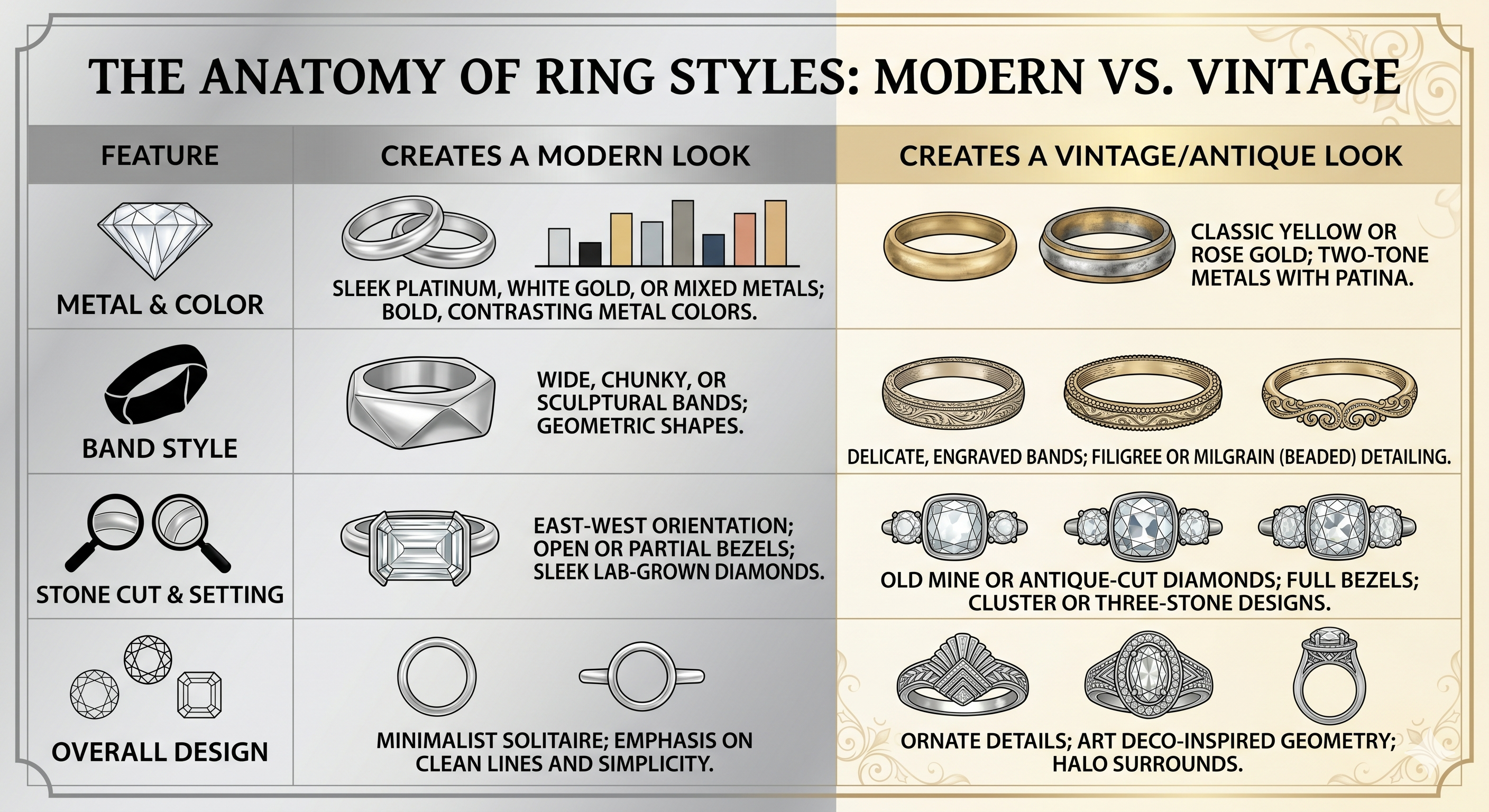
What Makes a Bezel Look Modern vs. Vintage
Whether a bezel ring feels contemporary or antique depends entirely on its specific design, not the setting style itself. Here's how the details change the look:
How to Choose a Bezel Setting
When selecting a bezel ring, consider these factors to get the look you want:
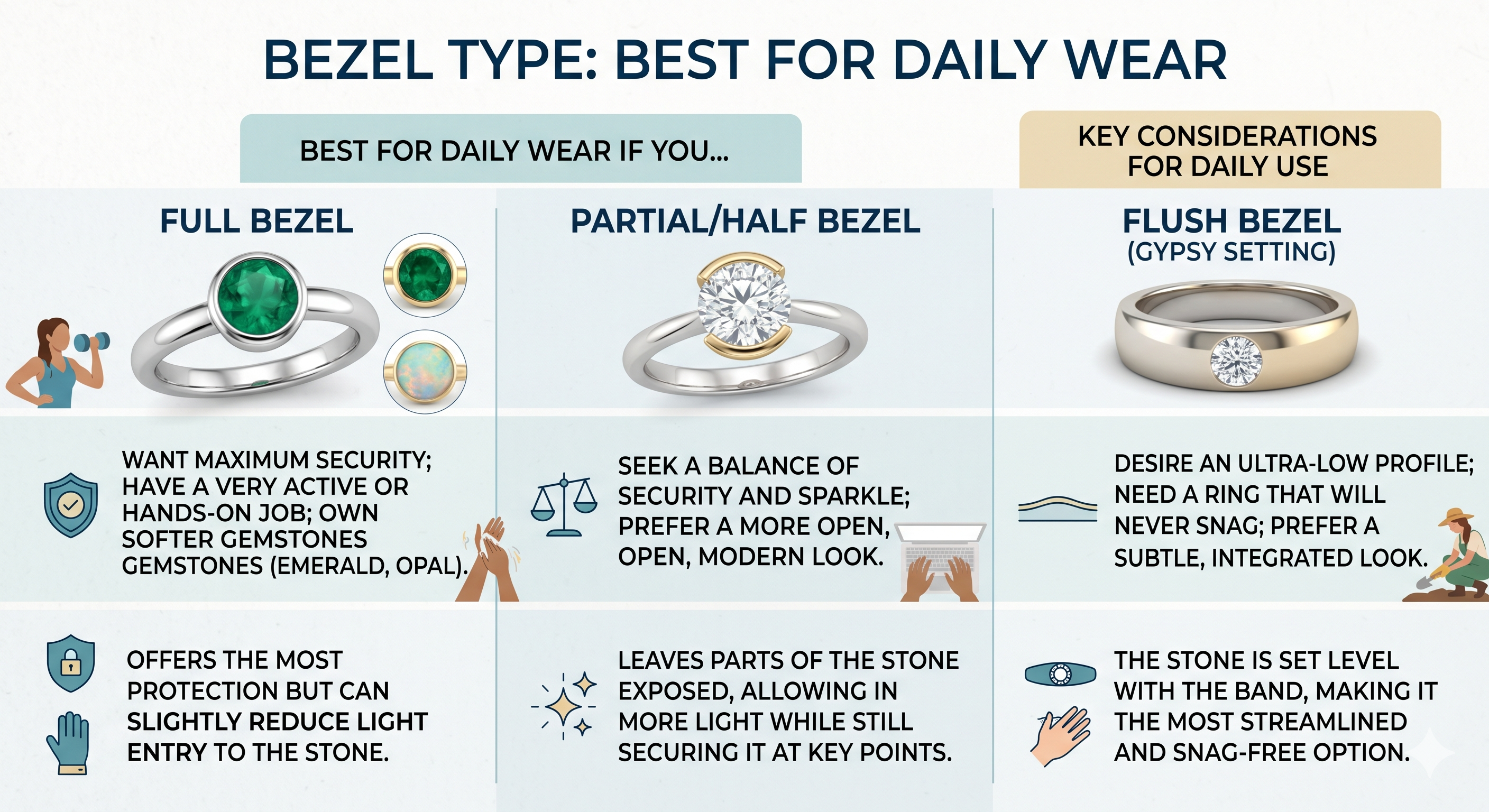
For Maximum Security & Low Profile: A full bezel is the most protective option.
For More Sparkle & Light: A partial, semi-, or open bezel exposes more of the stone's edges, potentially increasing its brilliance.
For a Unique Look: A flush bezel sets the stone level with the band surface for an ultra-smooth, modern feel.
In short, a bezel setting is a classic style that has been successfully reinvented for contemporary tastes. Its current popularity proves it's a fresh and stylish choice.
If you have a specific style in mind (like Art Deco, ultra-minimalist, or something with colored gemstones), I can offer more tailored information on what to look for.
Is A Bezel Setting Timeless?
Yes, a bezel setting is timeless. Its design has been cherished for thousands of years precisely because it combines enduring elegance with practical durability, making it a perennially relevant choice.
Historical & Modern Evidence of Timelessness
Its longevity is proven both by history and current trends:
Ancient Origins: Used in ancient Egyptian, Roman, and Byzantine jewelry, the bezel is one of the oldest setting techniques.
Modern Resurgence: As noted in the previous answer, it is a highlighted trend for 2025 in major fashion publications and has been popularized recently by celebrities.
Why the Bezel Has Endured for Millennia
Its timelessness comes from a powerful combination of form and function:
Unmatched Protection: The continuous metal rim fully encircles the stone, securing it firmly and protecting its edges from chipping—a practical advantage that never goes out of style.
Clean, Architectural Aesthetic: The smooth lines offer a minimalist look that fits seamlessly into any era, from antique to ultra-modern design languages.
Practical Elegance: Its low profile and snag-free design make it ideal for everyday wear, suiting active lifestyles across generations.
What Makes a Bezel "Timeless" vs. "Trendy"
While the setting itself is timeless, specific designs can feel more tied to a particular era. A "timeless" bezel often leans on simplicity and balance.

A Fundamentally Enduring Choice
A bezel setting is a fundamentally enduring choice. It transcends fleeting trends because its core advantages—security, sleek aesthetics, and comfort—are always in demand. Choosing a bezel is less about following fashion and more about selecting a proven, intelligent design for a piece meant to last a lifetime.
If you are considering a bezel for a specific type of jewelry, like an engagement ring or a pendant, I can provide more focused insights on what to consider.
Is A Bezel Setting Modern Or Classic?
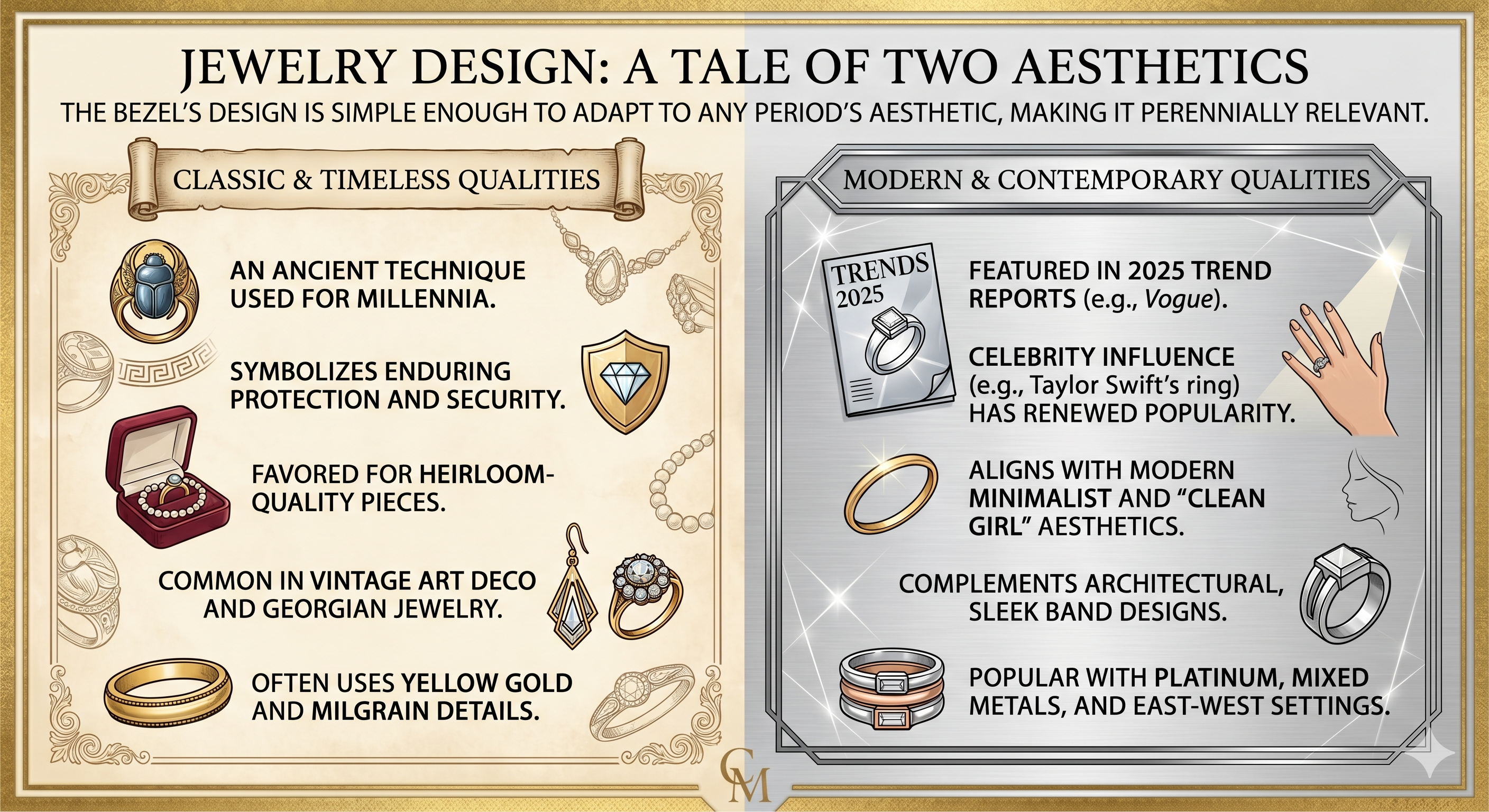
A bezel setting is both modern and classic. It is a classic design with ancient origins that is currently experiencing a strong modern revival. Its unique ability to bridge eras makes it a versatile and enduring choice.
The Dual Nature of Bezel Settings
The bezel's design is simple enough to adapt to any period's aesthetic, making it perennially relevant.
How Design Choices Influence the Style
You can lean into either the classic or modern side through specific design choices:
For a "Classic" Look: Opt for yellow or rose gold, a round- or cushion-cut stone, a delicate band with milgrain or engraving, and a full bezel.
For a "Modern" Look: Choose platinum or white gold, a geometric cut (like an emerald or Asscher), a bold, sculptural band, an east-west orientation, or an open/partial bezel.
Ultimately, the bezel setting is a chameleon. Its fundamental design is so strong and simple that it can be executed to feel either deeply traditional or strikingly contemporary.
If you're considering a bezel for a specific piece (like an engagement ring or a signature necklace), describing the style you're drawn to can help me offer more specific guidance on achieving that look.
What Are The Benefits Of The Bezel Setting?
Based on your questions, it seems you're looking for a secure, elegant, and practical jewelry setting. The bezel setting is an excellent choice that meets all these criteria, offering a unique combination of style and substance.
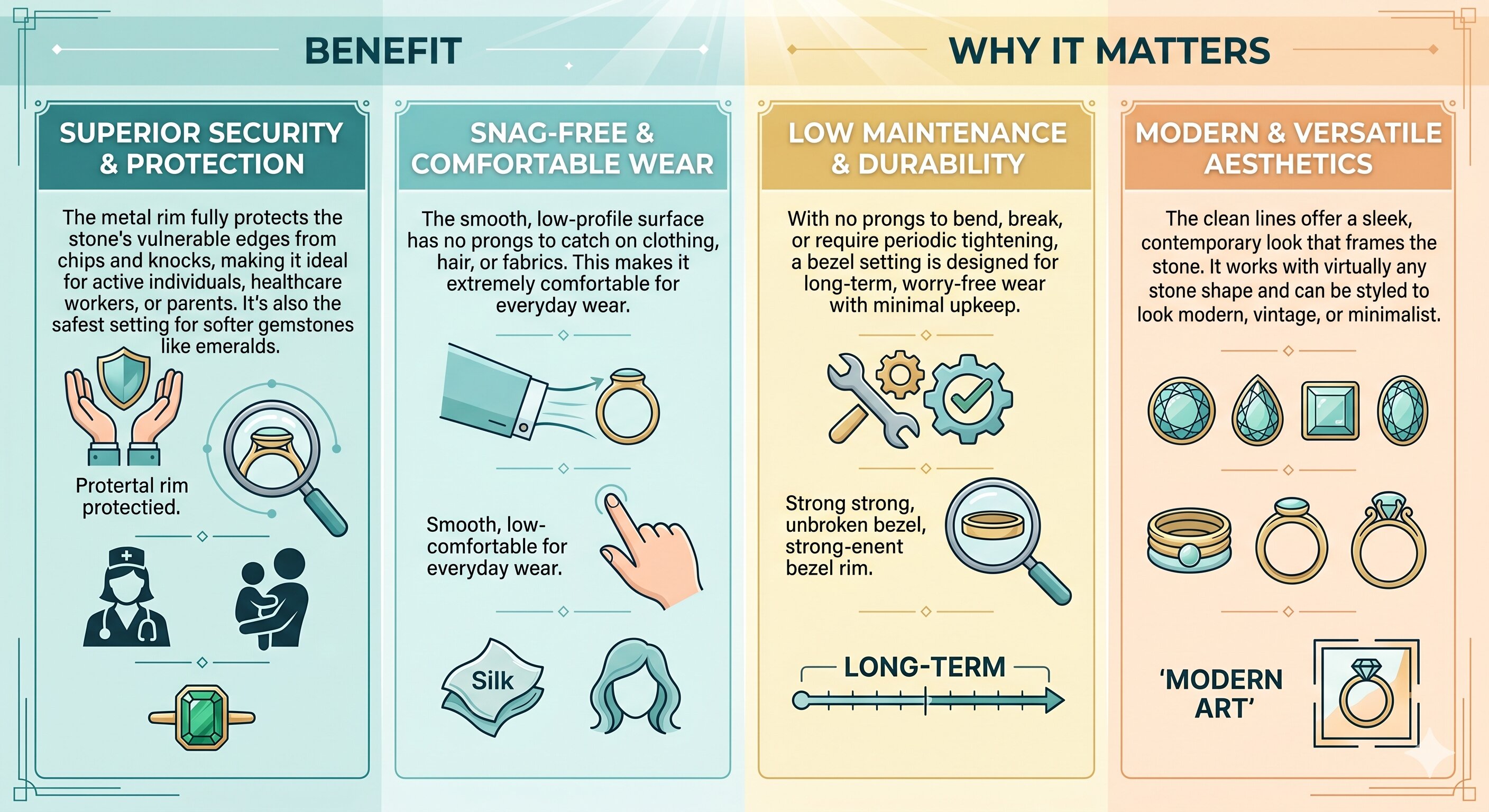
The core benefit of a bezel setting is that it offers unparalleled security and protection for a gemstone by encircling it with a continuous rim of metal. This fundamental design provides several major advantages, especially for active lifestyles or daily wear.
Primary Benefits of the Bezel Setting
“In the 19th century, sailors wore bezel-set signet rings to stamp wax seals on letters sent from distant ports. The smooth metal rim meant the ring wouldn‘t snag on ropes during storms. In World War II, pilots chose bezel-set rings for the same reason — no prongs to catch on parachute cords or cockpit controls. When Hillary climbed Everest, he chose a bezel. When your grandmother gardened, she chose a bezel. When you type, cook, exercise, and sleep, you might choose a bezel too. It is not the setting for a life in a glass case. It is the setting for a life fully lived.”
Points to Consider
A balanced view is important. The main considerations with bezel settings are:
Light Performance: The metal rim can slightly reduce the amount of light entering the stone from the sides, which may alter its sparkle compared to a prong setting. Some designs use open or semi-bezels to allow more light in.
Perception of Size: A full bezel can make a stone appear slightly smaller because it covers the outer edge. Opting for a thin bezel or a metal color that matches the stone can create an illusion of a larger size.
Cost: They often use more metal and require skilled craftsmanship, which can make them more expensive than simpler prong settings.
Is A Bezel Right for You?
A bezel setting is an outstanding choice if your top priorities are security, low maintenance, and modern elegance. It's perfect for anyone with an active, hands-on lifestyle who wants to wear their jewelry every day without worry.
If your primary goal is to maximize the traditional sparkle and fire of a diamond and you prefer a classic look, a prong setting might be more suitable.
Note: If you choose a bezel, regular cleaning is still important. Dirt can accumulate where the metal meets the stone. Gentle cleaning with a soft brush, mild soap, and warm water is recommended.
If you have a specific gemstone or a particular style in mind (like Art Deco or ultra-minimalist), I can help you explore what type of bezel design might work best.
Is Bezel Setting Good for Everyday Wear?
Based on your questions about safety and practicality, yes, bezel settings are widely regarded as excellent for everyday wear. Multiple jewelers highlight their security and comfort as ideal for a busy, active lifestyle.
Their popularity stems from a combination of protective design and modern aesthetics that offer peace of mind without sacrificing style.
Core Benefits for Daily Wear
Here are the main reasons a bezel setting works so well every day:
Superior Security & Protection: The continuous metal rim fully encircles the stone, protecting its edges from chips and knocks. This is perfect for active individuals, healthcare workers, or parents.
Smooth & Snag-Free Comfort: With no prongs to catch on clothing, hair, or fabrics, the smooth, low-profile design is exceptionally comfortable and prevents accidental pulls.
Low Maintenance & Durability: Unlike prong settings that need periodic checking and tightening, a well-made bezel is designed for long-term, worry-free wear with minimal upkeep.
Modern & Versatile Style: The clean, architectural lines offer a sleek look that fits both contemporary and minimalist aesthetics, making it a stylish choice for any occasion.
Choosing the Right Bezel for Daily Life
Not all bezels are the same. The best type for you depends on your priorities for security, sparkle, and style.
Points to Consider
For a complete view, it helps to know the common trade-offs mentioned with bezel settings:
Light & Sparkle: The metal rim can slightly reduce light entering the stone compared to a prong setting, which may affect its traditional brilliance. A partial bezel or an open-back design can mitigate this.
Perception of Size: A full bezel can make the center stone appear slightly smaller as it covers the outer edge. Opting for a thin bezel or a metal color that matches the stone can minimize this effect.
Craftsmanship & Cost: They often require more metal and skilled craftsmanship, which can make them more expensive than simpler prong settings. Quality craftsmanship is crucial for a secure and lasting setting.
Final Recommendation
A bezel setting is an outstanding, practical choice if your top priorities for an everyday piece are security, low maintenance, and modern comfort. It's designed to integrate seamlessly into an active life.
If maximizing traditional sparkle and a classic look is your primary goal, a prong setting might be more suitable, though it requires more care.
Note: For the best everyday performance, ensure your bezel setting is well-crafted by a reputable jeweler. Also, regular gentle cleaning is still recommended to prevent dirt from building up where the metal meets the stone.
I hope this detailed breakdown helps you decide. If you can tell me what kind of jewelry you're considering (e.g., engagement ring, pendant, stud earrings) or describe your typical daily activities, I can offer more specific advice on which bezel type might be the perfect fit for your lifestyle.
Learn more about jewelry care on the American Gem Society's care guide.
“You now know the history, the benefits, the disadvantages, the timelessness, the modern vs. classic debate, and the everyday practicality. The only question left: will you choose the setting that has survived pharaohs, soldiers, sailors, and the summit of Everest?
Our current collection includes a limited number of bezel-set rings — from full bezels for maximum protection to partial bezels for more light, and flush settings for an ultra-low profile. When certain styles are gone, restocking takes time because each bezel is hand-fitted to its specific stone.
This is not just a setting. It is 4,000 years of Egyptian goldsmiths, Roman soldiers, WWII pilots, and Everest climbers — the ring that never catches, never loosens, and never lets go.”
[Button: Secure Your Bezel Ring (Limited) →]


Other news for Saturday 13 June, 2026
- Ring Finger Meaning: Which Finger for Wedding, Single and More | Complete Guide
- Sterling Silver Jewelry Guide: 925 Meaning, Care and Green Skin Fix
- Channel Setting Guide: Pros, Cons, Safety and Cost vs Pavé
- Prong Setting Guide: 4 vs 6 Prongs, Security, Size and Types
- Ring Setting Guide: Types, Best for Daily Wear, and Size Tips
View all news for Saturday 13 June, 2026 on one page
News for Friday 12 June, 2026
- Tanzanite Ring Guide: Meaning, Price, Care and Buying Tips
- Topaz Stone Guide: Healing Properties, Colors, Price and Care
View all news for Friday 12 June, 2026 on one page
Recent News
- Thursday 11 June, 2026
- Wednesday 10 June, 2026
- Tuesday 09 June, 2026
- Monday 08 June, 2026
- Sunday 07 June, 2026