

Topaz Stone Guide: Healing Properties, Colors, Price and Care
Topaz Stone
Based on our conversation, you've explored many facets of topaz. To give you a complete picture, this answer combines scientific facts with the traditional beliefs we've discussed, providing a structured overview of the "Topaz Stone."
“For 2,000 years, topaz has been a stone of secrets. Ancient Greeks believed it could make its wearer invisible in times of danger. Roman soldiers carved talismans from it, trusting the stone to protect them from poison and lies. In medieval Europe, kings wore topaz as a cure for insomnia and a shield against curses. But the most famous topaz story comes from Portugal. For 300 years, the Braganza Diamond — a 1,680-carat stone in the Portuguese crown jewels — was believed to be the world‘s largest diamond. In the 19th century, gemologists discovered the truth: it was never a diamond at all. It was a colorless topaz, flawless and vast. The stone had fooled kings for centuries. Today, it still sits in the crown — not as a lie, but as proof that topaz has always been worthy of thrones.”
The same stone that fooled kings and crowned empires now awaits your own healing journey — or your golden moment. Whether you choose sunny yellow topaz, soothing blue topaz, or rare imperial topaz, every stone in our collection is genuine and hand-selected.”
[Button: Explore Topaz Jewelry →]
Here is the content of the tables;
- What Is Topaz Stone?
- What Is The Spiritual Meaning Of Topaz?
- Is Topaz A Lucky Stone?
- What Is The Real Color Of Topaz?
- What Are The Benefits Of Wearing A Topaz Stone?
- What Is The Topaz Stone Good For?
- Is Topaz Too Soft For Everyday Wear?
- Can Topaz Be Worn In The Shower?
- Is Topaz Too Soft To Be Used In An Engagement Ring Setting?
- Can A Topaz Stone Be Worn In Silver?
- What Determines The Value Of A Topaz Stone?
- How Can I Identify Topaz Stone?
- How To Tell Between CZ and White Topaz?
- What Does Topaz Protect Against?
- Is Topaz An Expensive Stone?
- Which Is Cheaper, Topaz or Aquamarine?
- Which Is More Expensive, Topaz or Citrine?
- What Healing Power Does Topaz Have?
The first topic;
What Is Topaz Stone?
Topaz is a beautiful and popular gemstone known for its brilliant luster, wide range of colors, and excellent hardness. It's a silicate mineral of aluminum and fluorine, and it's found in many parts of the world.
Key Characteristics
Chemical Composition: Al₂SiO₄(F,OH)₂
Crystal System: Orthorhombic
Hardness: 8 on the Mohs scale, making it very durable and excellent for everyday jewelry.
Luster: Vitreous (glass-like)
Clarity: Typically very clean with few inclusions, which contributes to its brilliant sparkle.
Learn more about topaz's geological properties on Wikipedia's topaz page.
What Is The Spiritual Meaning Of Topaz?
The spiritual meaning of topaz is rich and multifaceted, spanning cultures and centuries. At its core, topaz is universally celebrated as a stone of light, joy, and spiritual awakening.
It is not just a passive gemstone but is believed to be an active tool for healing, manifestation, and connecting with higher realms.
Here is a detailed breakdown of the spiritual meanings and properties associated with topaz:
Core Spiritual Meanings
Manifestation and Abundance: Topaz is often referred to as a "stone of manifestation." It is believed to amplify your intentions, thoughts, and desires, helping to bring them from the ethereal realm of thought into physical reality. This makes it a powerful crystal for attracting wealth, success, and personal goals.
Joy and Optimism: Its warm, golden hues are linked to the sun, carrying the energy of warmth, vitality, and positivity. Topaz is said to dispel sadness, fear, and worry, replacing them with joy, hope, and a renewed enthusiasm for life. It acts as a spiritual tonic for the soul.
Truth and Integrity: Historically, topaz was believed to have the power to reveal truth. It was thought to cool the heat of anger and make its wearer invisible in times of danger. Spiritually, this translates to helping you see your own truth, speak your truth with clarity and compassion, and live with integrity.
Spiritual Enlightenment and Wisdom: As a stone of "higher consciousness," topaz is used to open and activate the higher chakras (particularly the Third Eye and Crown). It is believed to enhance intuition, facilitate communication with spiritual guides, and bring profound insights and wisdom.
Emotional Healing and Release: Topaz is known for its ability to soothe, heal, and re-energize a tired or traumatized spirit. It helps to release suppressed emotions, old wounds, and destructive habits, promoting emotional resilience and self-acceptance.
Meanings by Color
While golden yellow is the most classic color, topaz comes in a spectrum, each with subtle nuances in its spiritual meaning:
Imperial Topaz (Golden Orange-Red): The most valuable variety, it is considered the ultimate stone of manifestation, personal power, and vitality. It connects the sacral and solar plexus chakras, fueling creativity and willpower.
Blue Topaz: A stone of calm communication, emotional balance, and truth. It helps you speak your truth clearly and peacefully (associated with the Throat Chakra). It is also known as a stone of relaxation and stress relief.
Yellow Topaz: The classic stone of joy, attraction, and abundance. It aligns with the Solar Plexus Chakra, boosting confidence, personal power, and the ability to attract what you desire.
Clear/White Topaz: A high-vibration stone of spiritual purity and clarity. It amplifies energy and intention, much like a clear diamond, and is excellent for connecting with the highest spiritual realms (Crown Chakra).
“In ancient India, topaz was known as the ‘stone of fire.‘ Yogis wore it to calm the mind and open the throat chakra, believing it helped them speak only the truth. The Bible lists topaz as one of the twelve stones in the High Priest‘s breastplate — a gem so sacred it could hold the word of God. In Victorian England, topaz became a favorite of mourning jewelry, not for sadness, but for hope. Its warm, golden glow symbolized light after loss, joy after grief. And in Brazilian mines today, miners still speak of ‘imperial topaz‘ — a stone so beautiful that when the Russian czar saw it, he claimed all rights to it for the royal family. That is why it bears the name ‘imperial.‘ Some stones are precious. Topaz is royal.”
Historical and Cultural Context
Ancient Egypt: The Egyptians associated topaz with the sun god Ra, believing it was colored with his golden glow. They wore it as an amulet of protection and to attract the sun god's benevolence.
Ancient Greece: The name "topaz" is thought to come from the Greek word "topazos," meaning "to seek." The Greeks believed topaz could increase strength and make its wearer invisible in times of emergency.
Hinduism: In Vedic traditions, topaz, especially yellow topaz, is associated with the planet Jupiter (Guru), which represents wisdom, knowledge, expansion, and good fortune. Wearing it is believed to please Jupiter and bring its blessings.
The Bible mentions Topaz several times as one of the stones in the High Priest's breastplate (Exodus) and as a foundation stone of the New Jerusalem (Revelation), symbolizing its sacred and protective qualities.
How to Use Topaz Spiritually
Jewelry: Wearing topaz as a necklace (near the throat or heart) or a ring allows you to carry its energy with you throughout the day, constantly benefiting from its uplifting and protective vibrations.
Meditation: Hold a piece of topaz in your hand or place it on your Solar Plexus, Third Eye, or Crown Chakra during meditation to enhance intuition, invite joy, and connect with higher wisdom.
In Your Environment: Place a piece of topaz on your desk to foster a positive and productive work environment, or in your living space to promote a joyful and harmonious atmosphere.
Crystal Grids: Use topaz as a central stone in a crystal grid for manifestation, attracting abundance, or enhancing creativity.
In essence, the spiritual meaning of topaz is that of a warm, radiant light for the soul. It is a stone that encourages you to step into your personal power, speak your truth, embrace joy, and manifest your highest potential.
Is Topaz A Lucky Stone?
Building on the spiritual meanings, the answer is a resounding yes, topaz is widely considered a very lucky stone, but with an important nuance.
It's not "lucky" in the sense of a random, passive good fortune. Instead, its luck-bringing reputation is deeply tied to its ability to actively attract favorable circumstances and amplify your own intentions.
Here's a breakdown of why and how topaz is considered a stone of luck:
The "Active" Luck of Topaz
Think of topaz less like a four-leaf clover you find and more like a powerful tool you wield. Its "luck" comes from its properties:
The Lack of Attraction and Manifestation: This is the primary reason for its lucky status. Topaz is believed to be a powerful manifesting stone. It amplifies your thoughts, energy, and intentions, thereby "attracting" the things you focus on—be it wealth, love, or success. This aligns with the classic law of attraction, making you "lucky" in achieving your goals.
The Luck of Opportunity: By clearing away mental fog, fear, and self-doubt, topaz is said to help you recognize and seize opportunities that you might otherwise miss. It brings clarity and courage, allowing you to take the necessary steps when luck presents itself.
The Luck of Protection (Avoiding Bad Luck): Historically, one of the most potent beliefs about topaz was its power to ward off danger, the "evil eye," and negative energies. By protecting you from harm and ill-wishing, it ensures a smoother, more "fortunate" path through life. In this sense, it gives you the "luck" of avoiding misfortune.
The Lack of Joy and Positive Energy: Its association with the sun infuses it with warm, joyful energy. A positive, joyful person naturally attracts better experiences and people. Topaz helps dispel sadness and negativity, making you a magnet for happy circumstances—which is a form of luck in itself.
Luck by Color
Different colors of topaz are associated with specific types of "luck":
Yellow & Imperial Topaz: The ultimate stones for luck in wealth, abundance, and career success. They are tied to the sun and the Solar Plexus chakra, boosting confidence and personal power to attract prosperity. In Hindu astrology, yellow topaz is a gem for the planet Jupiter (Guru), the greatest benefactor, bringing wisdom, expansion, and good fortune.
Blue Topaz: The stone of luck in communication and relationships. It brings the "good fortune" of being heard, understood, and speaking your truth effectively. It's lucky for lawyers, writers, and anyone who needs calm, clear communication.
Clear Topaz: Considered a general amplifier of luck and intention. It's like a blank slate that magnifies whatever energy or goal you project into it.
Cultural and Historical Beliefs
Ancient Greeks: Believed topaz could make the wearer invisible in times of peril—the ultimate luck in a dangerous situation.
Ancient Egyptians associated it with the sun god Ra, wearing it to attract his favor and protection, which was the foundation of all luck.
Romans: Associated it with Jupiter, the king of the gods, nd a symbol of law, protection, and good fortune.
Eastern Traditions: In Vedic astrology, wearing a natural yellow topaz (as a substitute for the more expensive yellow sapphire) is a renowned practice to harness the benevolent, expansive, and fortunate energies of the planet Jupiter.
How to "Activate" the Luck of Topaz
To use topaz as a lucky stone, you must engage with it actively:
Set a Clear Intention: Hold your topaz and clearly state what kind of luck or abundance you wish to attract (e.g., "I attract a new and fulfilling career opportunity").
Wear It as Jewelry: Keeping it on your body, especially as a ring or pendant, allows its energy to constantly interact with your own aura.
Place It in Key Locations: Put a piece on your desk for career luck, in your wallet for financial luck, or by the front door to attract positive energy into your home.
Yes, topaz is a profoundly lucky stone. Its luck is not a matter of chance, but a function of its ability to amplify your intentions, protect your energy, and open your eyes to the opportunities that lead to a joyful and prosperous life. It is a stone that helps you create your own luck.
What Is The Real Color Of Topaz?
The "real" color of pure topaz is colorless.
In its purest chemical form, Topaz is composed of aluminum, silicon, oxygen, and fluorine, and this structure has no inherent color. It's a masterpiece of geological purity.
However, the topaz we see in jewelry and collections comes in a breathtaking rainbow of colors. This happens due to two main processes:
1. Natural Color (Caused by "Impurities")
When trace elements or structural defects are present during the crystal's formation, they can absorb specific wavelengths of light, resulting in color. The most prized and valuable colors are natural.
Imperial Topaz: The most famous and valuable color, a vibrant sherry-orange, pinkish-orange, or reddish-orange. The color is thought to come from trace amounts of chromium. The name "Imperial" originates from its historical association with the Russian Czars.
Sherry Topaz: Brownsish-yellow, orangey-brown, or pinkish-brown.
Yellow Topaz: Pale to rich yellow, often caused by "color centers" (structural defects) in the crystal lattice.
Pink, Red, and Violet Topaz: These rare colors are also typically caused by chromium. Natural pink topaz is exceptionally rare.
Pale Blue Topaz: A very light, sky-blue color can occur naturally, though it is uncommon.
2. Treated and Enhanced Color
Many of the topaz gems on the market have been treated to enhance or change their color. These treatments are permanent and stable, making the stones perfectly suitable for jewelry.
Blue Topaz: This is the most common topaz color found in jewelry stores, and almost all of it is treated. Colorless topaz is irradiated and then heated to produce stable shades of blue. The popular shades have names like:
Sky Blue (the lightest)
Swiss Blue (a vibrant medium blue)
London Blue (a deep, inky steely-blue)
Mystic Topaz: This is a colorless topaz that has been artificially coated with a thin layer of titanium or other metal to create a dazzling, iridescent rainbow effect on its surface.
Pink Topaz: While rare in nature, some brownish or pale topaz can be heated to produce a stable pink color.
The real, inherent color of pure topaz is colorless. However, the "real" world of topaz is a vibrant spectrum, with colors created both by nature's "imperfections" and by human enhancement. When buying topaz, it's always a good practice to ask if the color is natural or treated.
What Are The Benefits Of Wearing A Topaz Stone?
Building on the spiritual and color properties we've discussed, the benefits of wearing a topaz stone are extensive, touching upon emotional, mental, spiritual, and even physical well-being.
It's important to remember that these benefits are rooted in crystal healing traditions, metaphysics, and historical beliefs, and are not a substitute for professional medical or psychological advice.
Here is a comprehensive breakdown of the benefits of wearing a topaz stone:
Emotional & Psychological Benefits
Cultivates Joy and Optimism: Topaz is a powerful antidote to negativity. It's warm, solar energy is believed to dispel sadness, fear, and anxiety, replacing them with a general sense of joy, hope, and enthusiasm for life.
Enhances Self-Confidence: By aligning with the Solar Plexus Chakra (the center of personal power), topaz helps to conquer self-doubt and imposter syndrome. It encourages you to recognize your own worth, abilities, and potential.
Promotes Emotional Balance and Release: It's known as a stone of emotional healing. Wearing topaz can help you process and release suppressed emotions, old traumas, and destructive habits, leading to greater emotional resilience and stability.
Encourages Truthful Communication: Particularly Blue Topaz (linked to the Throat Chakra) helps you speak your truth clearly, calmly, and with compassion. It benefits those who struggle with public speaking, difficult conversations, or expressing their needs.
Mental & Manifestation Benefits
Amplifies Manifestation: This is one of its prime benefits. Topaz is considered a powerful manifesting stone. It amplifies your intentions, thoughts, and desires, helping to bring your goals—whether related to career, wealth, or personal projects—into reality.
Attracts Abundance and Success: As a stone of good fortune, it's believed to attract prosperity and success. Yellow and Imperial Topaz are especially used for this purpose, helping to open doors to new opportunities and wealth.
Sharpens Mental Clarity and Focus: Topaz can help clear mental fog, confusion, and scattered thoughts. It aids in concentration, problem-solving, and making clear, decisive decisions.
Stimulates Creativity: The stone's connection to the Sacral and Solar Plexus chakras can unblock creative channels, inspiring new ideas, artistic expression, and innovative solutions.
Spiritual Benefits
Heightens Intuition and Wisdom: Topaz, especially when used in meditation, is believed to open and activate the Third Eye and Crown Chakras. This can lead to enhanced intuition, psychic awareness, and a deeper connection to spiritual wisdom and guidance.
Spiritual Awakening and Enlightenment: It is considered a stone of higher consciousness, aiding in spiritual growth, self-realization, and understanding the deeper meaning of life.
Energetic Cleansing and Recharging: Topaz is said to absorb and transmute negative energy, acting as a protective shield for your aura. It also helps to recharge your own spiritual energy when you're feeling drained.
Physical Well-being (Metaphysical Beliefs)
In metaphysical traditions, topaz is also associated with several physical benefits. It's crucial to note these are not scientifically proven.
It is believed to support the endocrine and digestive systems.
It's thought to aid in overcoming eating disorders and revitalizing a lagging metabolism.
It is associated with promoting restful sleep and preventing nightmares when placed under a pillow.
Benefits by Color (A Quick Guide)
Yellow/Imperial Topaz: The ultimate for confidence, manifestation, personal power, and attracting wealth.
Blue Topaz: Best for calm communication, emotional balance, speaking your truth, and stress relief.
Clear Topaz: A powerful amplifier of energy and intention, and for spiritual purity and clarity.
Pink Topaz: For emotional healing, self-love, and compassion.
How to Wear Topaz for Maximum Benefit
As a Ring: Worn on the ring finger of the dominant hand, it's said to directly project your personal power and intentions into the world. Worn on the index finger, it can enhance authority and leadership.
As a Pendant: Worn near the Throat Chakra, it aids communication. Worn near the Heart Chakra, it promotes compassion and emotional healing. Allowing it to rest near the Solar Plexus (just below the breastbone) boosts confidence and personal power.
Set in Silver: Traditionally, silver is believed to enhance the intuitive and receptive properties of stones like topaz.
Set in Gold: Gold is thought to amplify the stone's active, solar, and manifesting energies.
Wearing a topaz stone is like carrying a personal tool for empowerment. Its core benefit is to help you shift your energy from a state of lack and doubt to a state of abundance, confidence, and joyful purpose, ultimately assisting you in becoming the best and most successful version of yourself.
What Is The Topaz Stone Good For?
The topaz stone is celebrated for a wide array of benefits, making it a versatile and powerful gem in the realms of metaphysics, emotional well-being, and personal empowerment.
Here's a comprehensive summary of what the topaz stone is good for, synthesizing its key applications:
1. Manifesting Goals and Attracting Abundance
Topaz is renowned as a powerful manifestation stone. It is believed to amplify your intentions, thoughts, and desires, helping to bring them from the realm of thought into physical reality. This makes it an excellent tool for:
Attracting wealth and prosperity.
Achieving career success and recognition.
Realizing personal and professional goals.
2. Enhancing Joy, Confidence, and Emotional Balance
The stone's warm, solar energy acts as a tonic for the spirit. It is particularly good for:
Dispelling negativity, fear, and sadness.
Boosting self-esteem and personal power by energizing the Solar Plexus chakra.
Promoting optimism, joy, and a positive outlook on life.
Healing from emotional trauma and releasing suppressed emotions.
3. Improving Communication and Speaking Your Truth
Especially Blue Topaz, which is connected to the Throat Chakra, is excellent for:
Enabling clear, calm, and compassionate communication.
Helping you express your true thoughts and feelings effectively.
Aiding in public speaking, negotiations, and difficult conversations.
4. Stimulating Wisdom, Intuition, and Spiritual Growth
When used for spiritual purposes, topaz is good for:
Opening and activating the higher chakras (Third Eye and Crown), enhancing intuition and psychic awareness.
Gaining deeper insights and spiritual wisdom.
Connecting with higher guidance and one's own inner truth.
5. Providing Protection and Energetic Cleansing
Historically, one of topaz's primary roles was that of a protector. It is believed to be good for:
Shielding the aura from negative energies or the "evil eye."
Cleansing and re-energizing the mind and spirit.
Promoting good health and vitality in metaphysical traditions.
A Quick Guide by Color
To be more specific, different colors of topaz are often chosen for specific purposes:
Yellow & Imperial Topaz: Best for manifestation, confidence, attracting wealth, and personal power.
Blue Topaz: Best for communication, emotional calm, and speaking your truth.
Clear Topaz: Best for amplifying energy, clarity, and spiritual connection.
Pink Topaz: Best for emotional healing, self-love, and compassion.
How to Use Topaz for These Benefits
As Jewelry: Wearing it as a ring, pendant, or bracelet keeps its energy in your personal field all day.
In Meditation: Hold a stone or place it on the relevant chakra (e.g., Solar Plexus for confidence, Throat for communication).
As a Talisman: Carry a tumbled stone in your pocket or purse to focus your intentions.
In Your Environment: Place a piece on your desk to foster a productive and positive workspace, or in your home to promote harmony.
In essence, the topaz stone is a multifaceted tool for personal transformation. It's good for anyone looking to shift their life from a state of "wanting" to a state of "having"—whether that's joy, success, love, or spiritual insight. It empowers you to become the best and most authentic version of yourself.
Is Topaz Too Soft For Everyday Wear?
Topaz is generally suitable for everyday wear but comes with important limitations due to a unique combination of properties: it's hard enough to resist scratches but can be prone to chipping if struck. Whether it's "too soft" for you depends largely on the type of jewelry and your lifestyle.
Here's a summary of its key properties to help you decide:
Property: What It Means for Topaz Impact on Everyday Wear
Hardness (Mohs 8): Highly scratch-resistant. Excellent. It can withstand daily contact with most common objects.
Toughness (Poor): Low resistance to breaking due to "perfect basal cleavage". The main risk. A sharp blow can split or chip the stone, especially along its cleavage planes.
Stability (Good): Generally stable against chemicals but sensitive to extreme heat and sunlight. Safe for normal use. Avoid high heat (ovens, steam cleaners) and prolonged sun exposure for certain colors.
How to Wear Topaz Safely Every Day
You can successfully wear topaz daily by choosing the right design and being mindful of care:
Choose Protective Jewelry Settings: The setting is crucial for safeguarding the stone. A bezel setting (where metal encircles the stone's edge) or a halo setting (with smaller stones around it) offers much better protection from knocks than a simple prong setting.
Match the Jewelry Type to Risk: Given its vulnerability to impact, topaz is best suited for jewelry less likely to be bumped.
Best Choices: Earrings and pendants are ideal for daily wear.
Good with Caution: Rings and bracelets can be worn daily but benefit from protective settings and should be removed for manual work, exercise, or heavy household tasks.
Understand the Variety: The most common type, Blue Topaz (Sky, Swiss, London Blue), is excellent for everyday jewelry because its color is typically stable and it is widely available in all jewelry types. More valuable varieties like Imperial Topaz may be best reserved for occasional wear.
Proper Care and Cleaning
Proper care is essential to maintain a topaz stone's beauty over the years of daily wear.
Cleaning: Use only a mild dish soap, lukewarm water, and a soft brush. Never use ultrasonic or steam cleaners, as the vibrations and heat can cause damage.
Storage: Store topaz jewelry separately in a soft pouch or compartment to prevent scratches from harder gems like diamonds, sapphires, or even other topaz pieces.
Avoid: Sudden temperature changes, harsh chemicals (like chlorine), and prolonged direct sunlight, which can fade some colors like yellow or brown topaz.
In summary, topaz is not "too soft" for daily wear in terms of scratches, but you must be mindful of its tendency to chip. Choosing a secure setting (like a bezel), selecting lower-risk jewelry types (earrings or pendants), and practicing gentle care will allow you to enjoy its beauty every day.
If you have a specific type of jewelry in mind, such as an engagement ring or a bracelet, I can provide more tailored advice on its suitability.
Quick Durability Comparison
| Gemstone | Hardness (Mohs) | Toughness | Best For |
|---|---|---|---|
| Diamond | 10 | Excellent | Daily wear, any jewelry |
| Sapphire/Ruby | 9 | Excellent | Daily wear, engagement rings |
| Topaz | 8 | Fair (cleavage risk) | Pendants, earrings; rings with protective setting |
| Citrine/Quartz | 7 | Good | Daily wear with care |
| Opal | 5.5-6.5 | Poor (brittle) | Occasional wear, pendants |
Can Topaz Be Worn In The Shower?
This is an excellent and very practical question. While it might seem harmless, the general recommendation from jewelers and gemologists is:
No, it is not advisable to wear your topaz ring in the shower.
While a single, brief exposure likely won't cause immediate, visible damage, doing it regularly can lead to long-term problems. Here's a breakdown of why it's best to take it off:
The Risks of Wearing Topaz in the Shower
Chemical Damage to the Setting:
The real risk is often to the metal setting, not the topaz itself. Shower products like shampoo, conditioner, soap, and body wash contain chemicals that can be harsh on metals.
These chemicals can slowly break down the alloys in gold and silver, causing them to lose their luster, become discolored, and even weaken over time. A weakened setting increases the risk of the stone becoming loose and falling out.
Physical Damage from Impact:
Topaz has "perfect cleavage," meaning it can chip or crack if struck at the right angle against a hard surface.
The shower is a hard, slippery environment made of tile, porcelain, and metal. It's very easy to accidentally knock your ring against the shower wall, faucet, or a shampoo bottle with enough force to damage the stone.
Residue and Film Buildup:
Soap and hard water can leave a dull, filmy residue on both the topaz and the metal. This buildup clouds the stone's brilliance and sparkle, making it look dull and lifeless until it is professionally cleaned.
Thermal Shock (Less Common, but Possible):
While topaz is generally stable, extreme and rapid temperature changes are never ideal for any gemstone. If the stone has any internal fractures (even microscopic ones), sudden temperature shifts could potentially worsen them.
What About Topaz Itself?
You might be wondering why it's a problem since topaz is a hard gemstone (Mohs 8).
Hardness vs. Toughness: "Hardness" means resistance to scratching. Topaz is excellent at this. However, "toughness" is resistance to breaking or chipping. Due to its cleavage, topaz has fair to poor toughness. The physical risks in the shower are about impact, not scratching.
Best Practice:
The "Last On, First Off" Rule
To keep your topaz ring looking beautiful for a lifetime, adopt this simple habit:
First Off: Make your ring the first thing you take off before entering the shower, washing your hands, or doing dishes.
Last On: Make it the last thing you put on after applying lotions, perfumes, and hairspray.
In summary: It's best to play it safe. The minimal convenience of not taking your ring off is not worth the long-term risk of damaging the setting, chipping the stone, or dulling its sparkle. Treat your topaz ring as you would any other fine jewelry and keep it in a safe, dry place while you shower.
Is Topaz Too Soft To Be Used In An Engagement Ring Setting?
While topaz is hard enough to resist scratches, it can be too structurally vulnerable for a typical engagement ring, which experiences frequent impacts. This presents a key durability trade-off.
Here's a breakdown of the factors at play:
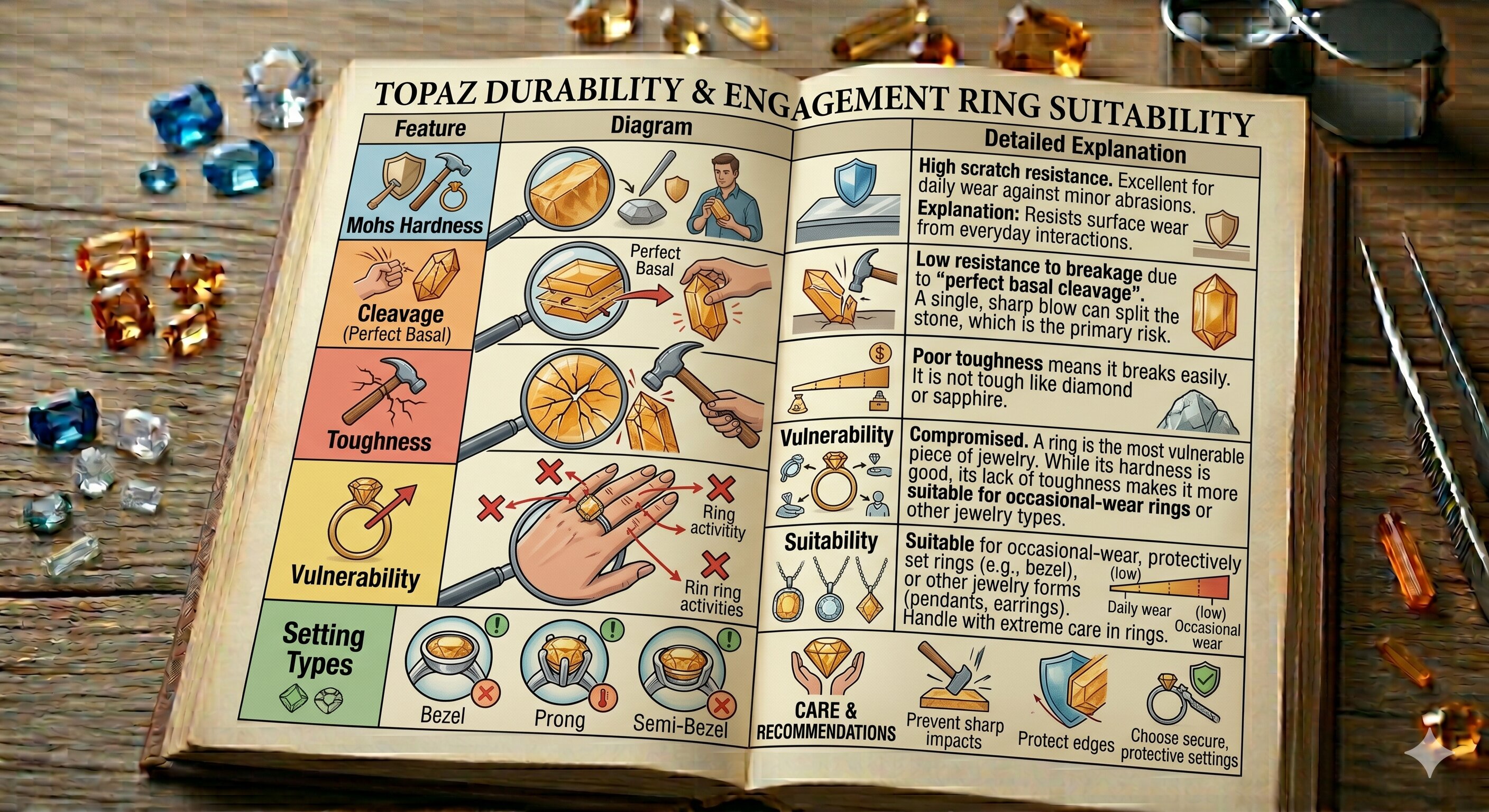
How to Mitigate the Risk for a Topaz Engagement Ring
If you have your heart set on a topaz, you can significantly improve its safety with specific choices:
Opt for a Protective Setting: This is non-negotiable. Avoid prong settings that expose the stone's edges. Instead, choose a bezel setting (a metal rim encircling the stone) or a halo setting (smaller stones around it), which safeguards the edges from knocks.
Choose Lower-Risk Jewelry: If flexibility exists, consider a pendant or earrings instead. These items face far less impact than a ring and are much safer for topaz.
Practice Proactive Care:
Remove the Ring during manual activities (sports, gardening, housework, etc.).
Clean gently with warm, soapy water and a soft brush.
Avoid harsh methods: Never use ultrasonic or steam cleaners.
Store it separately in a soft pouch to prevent scratches from harder gems.
Popular Topaz Choices for Jewelry
If you decide to proceed, these are the most common varieties:
Blue Topaz (Sky, Swiss, London Blue): The most popular and affordable choice. Its treated color is stable and permanent, making it a practical option.
Imperial Topaz (reddish-orange): A natural, rare, and valuable stone. Its warmth is often set in yellow gold.
White Topaz (colorless): Often used as a more affordable diamond alternative, though it lacks a diamond's brilliance and exceptional hardness.
In summary, topaz is not "too soft" for scratches but is "too brittle" for a carefree engagement ring. Success depends on choosing a very protective setting and committing to careful wear and maintenance.
If you would like to explore other colorful gemstones that offer higher toughness for an engagement ring (such as sapphire), I can provide information on those alternatives.
Can A Topaz Stone Be Worn In Silver?
Yes, you can definitely wear a topaz stone set in silver. The topaz is harder than the silver, so it won't be scratched by the metal itself, making them technically compatible.
However, as we discussed before, topaz's primary risk is chipping from impacts due to its perfect cleavage. Choosing the right setting and practicing good care are essential for long-term durability.
Topaz and Silver: The Facts at a Glance
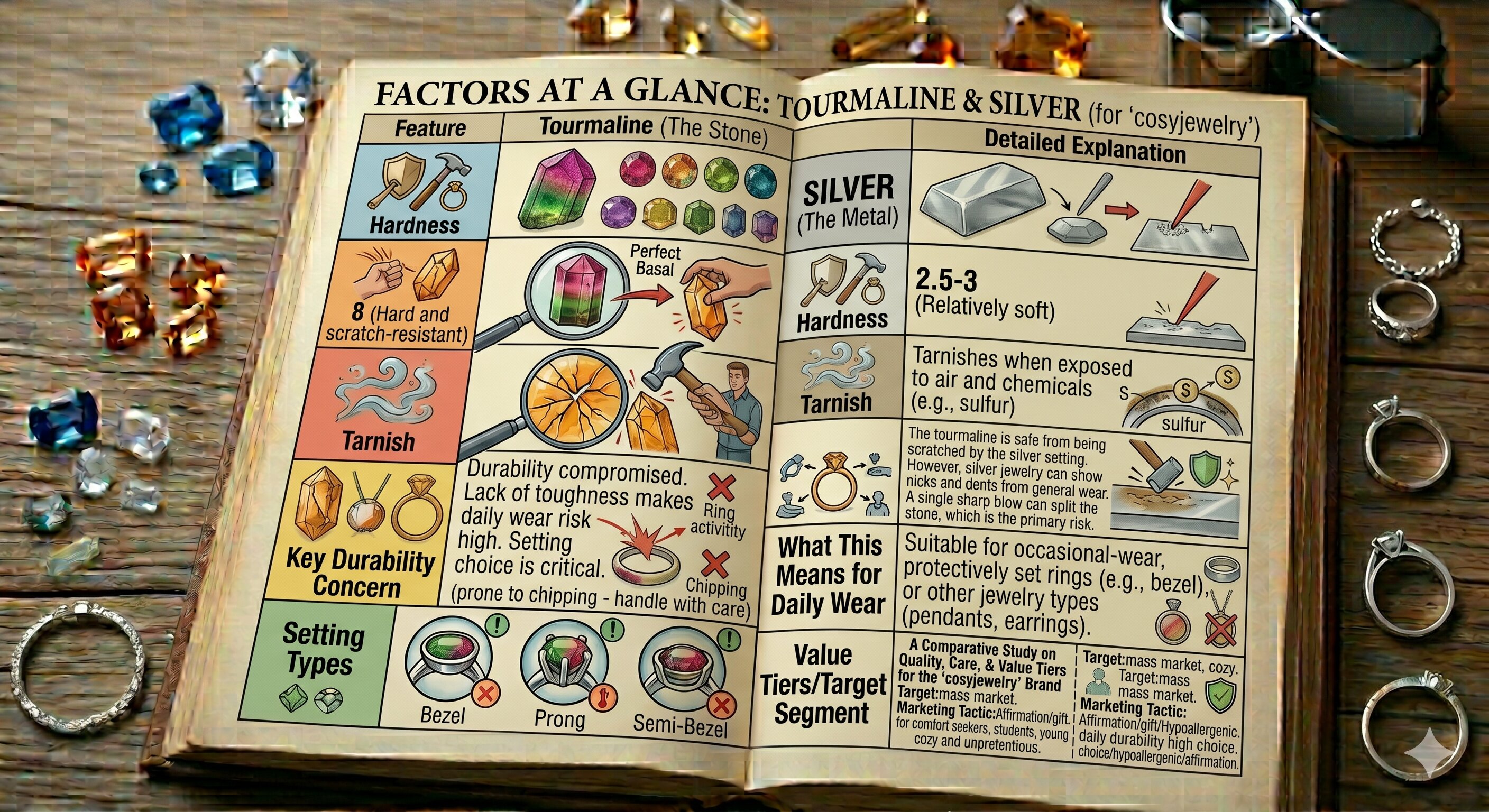
Choosing the Best Setting and Care
To protect your topaz in a silver setting, follow these key guidelines:
Opt for a Protective Setting: Avoid prong settings that leave the stone's edges exposed. A bezel setting—where a metal rim encircles the entire stone—is ideal for everyday wear as it absorbs impacts and holds the stone securely.
Care for Both the Stone and the Metal:
Cleaning: Use lukewarm water, mild dish soap, and a soft brush. Never use ultrasonic or steam cleaners, as they can damage both the stone (from vibration/heat) and any special coatings on the silver.
Protection: Remove jewelry during physical activities, housework, or when using chemicals (like lotions, perfume, or chlorine). To prevent tarnish, store silver jewelry in an airtight container or an anti-tarnish bag.
Storage: Store the piece separately in a soft pouch or compartment to prevent the topaz from being scratched by harder gems like diamonds or sapphires.
Is a Silver Topaz Engagement Ring a Good Idea?
Given topaz's risk of chipping from impact, a ring for daily, active wear carries inherent risk. If you are set on this combination, a solid, protective bezel setting in sterling silver is the strongest choice to mitigate that risk. For even greater durability, consider a pendant or earrings, which are less prone to knocks.
What Determines The Value Of A Topaz Stone?
The value of a topaz stone is determined by its color, clarity, cut, and carat weight, much like other gemstones. However, because topaz comes in a wide range of colors—from very common to exceptionally rare—its color is the single most important factor affecting its price.
Here's a breakdown of the main factors that determine a topaz's value:
Factor Impact on Value Key Details
Color: Most significant factor. Natural, vivid reds & oranges are most valuable; treated blues are most affordable. • Imperial Topaz (reddish-orange): The most valuable; can exceed $1,000/ct.
• Pink & Red: Very rare and valuable.
• Blue Topaz: Almost always treated; abundant and affordable (often $20-$60/ct for high quality).
• Colorless, Yellow, Brown: More common and less valuable.
Clarity: High clarity is expected; visible inclusions have a low value. Topaz is known for high clarity. "Eye-clean" stones (no visible inclusions to the naked eye) are standard for better-quality gems.
Cut: A good cut maximizes color and brilliance; poor craftsmanship lowers value. Elongated topaz crystals are often cut into oval or pear shapes. The emerald cut is popular for strongly colored stones to retain weight and color.
Carat: Weight Price per carat generally increases with size, especially for rare colors. Large stones of common colors (like blue) remain affordable. For rare Imperial Topaz, the price rises sharply with size.
Understanding Topaz Color & Treatments
The dramatic price differences are largely due to natural rarity and treatments:
Natural Rarity: Truly natural pink, red, and imperial orange topaz are extremely rare, making up a tiny fraction of all gem-quality material. This scarcity drives their high value.
Common Treatments: The abundant and popular blue topaz on the market is almost always colorless topaz that has been treated with radiation and heat to achieve its blue color. This process is permanent, accepted in the trade, and makes beautiful blue gems widely accessible.
Types of Blue Topaz: Blue topaz itself has value grades based on color saturation:
Sky Blue: The lightest and generally most affordable shade.
Swiss Blue: A vibrant, medium blue.
London Blue: A deep, "inky" blue-grey; typically the most valued of the blues.
Key Considerations When Buying
Disclosure is Key: Reputable sellers should always disclose if a topaz has been treated. Assume blue topaz is treated unless stated otherwise.
Get a Second Opinion: For valuable stones like Imperial Topaz, consider a report from a reputable gemological laboratory (like GIA or AGS) for verification.
Set a Budget: Prices can range from a few dollars per carat for commercial-grade treated blue topaz to over a thousand dollars per carat for fine Imperial Topaz.
In summary, you can find a beautiful topaz for nearly any budget, but its price is a direct reflection of its color's natural rarity.
If you have a specific color or type of topaz in mind, I can help provide more detailed information about its typical value range and characteristics.
How Can I Identify Topaz Stone?
You can identify topaz using several practical DIY tests and by understanding its key characteristics. However, for a definitive identification, especially for valuable stones, professional testing is necessary.
Here's a breakdown of tests you can try at home and the advanced methods professionals use.
Practical Tests You Can Do
These methods are good for initial screening but are not conclusive.
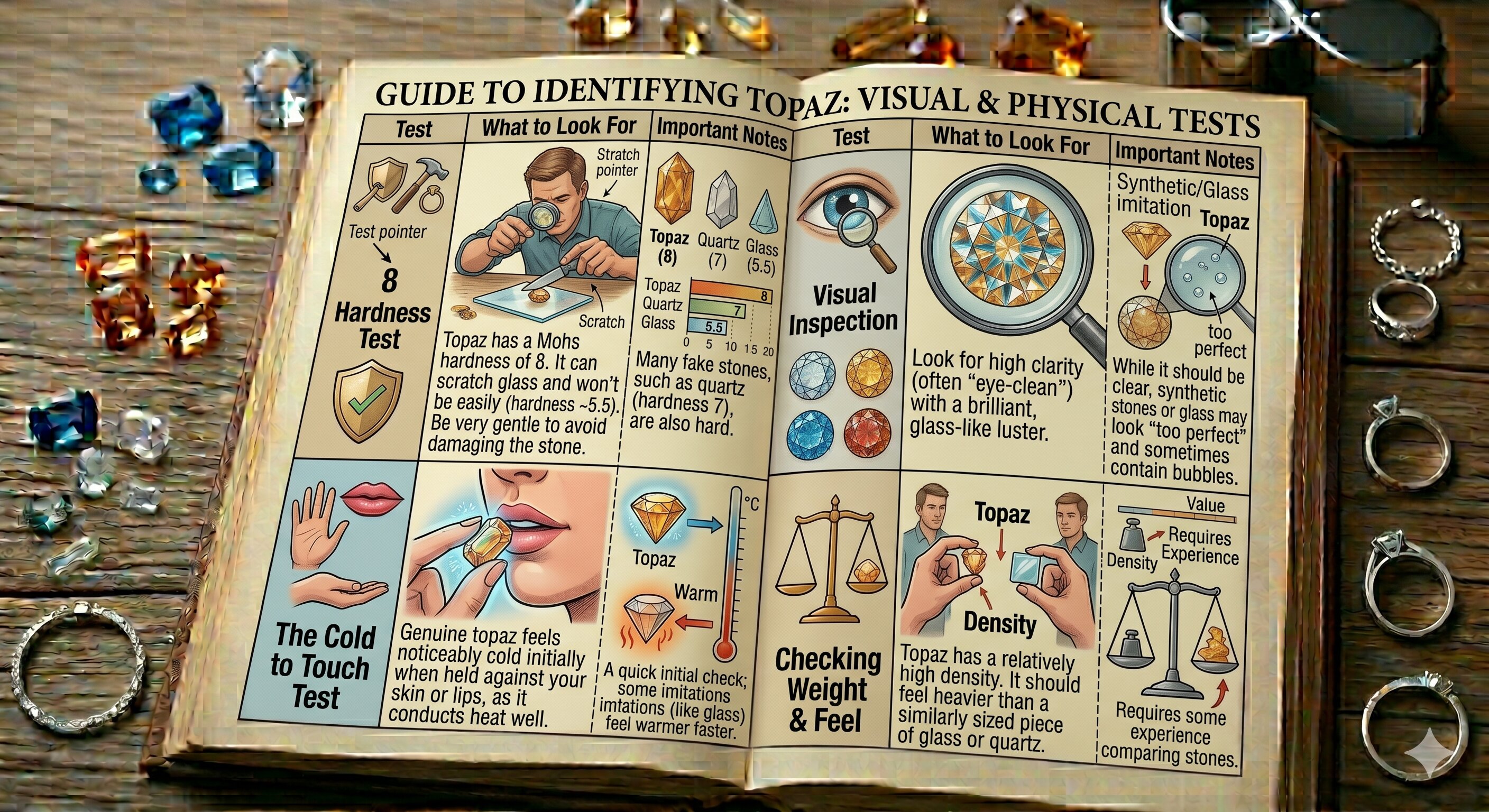
Important Cautions About DIY Tests
Color is not a reliable identifier: The most common blues (Sky, Swiss, London Blue) are almost always the result of treating colorless stones. "Natural" blue topaz is very pale and rare.
Treatments are standard: Treatments like irradiation and heating to create a blue color are permanent, accepted in the trade, and do not mean the stone is "fake".
Beware of misleading names: Terms like "smoky topaz" or "topaz quartz" usually refer to cheaper quartz, not genuine topaz.
When and How to Get a Professional Opinion
For a confident identification, especially if the stone is valuable (like a potential Imperial Topaz), consult a certified gemologist or lab.
Professional Tools: Gemologists use precise instruments like a refractometer to measure how light bends in the stone (refractive index of 1.61-1.62 for topaz) and calculate specific gravity (density around 3.5-3.6).
Gemological Reports: A lab like the Gemological Institute of America (GIA) can provide an identification report. While GIA doesn't "grade" topaz like a diamond, its reports confirm if the stone is natural topaz and identify any treatments.
Key Takeaway
You can perform simple checks on weight, temperature, and hardness for a basic screening. However, because topaz is frequently treated and can resemble other stones, a reliable identification for any important purchase requires an assessment from a qualified professional.
If you are looking at a specific colored topaz (like a golden-orange stone that might be Imperial, or a deep blue London Blue), I can provide more details on what to look for in that particular variety.
Topaz Color Price Guide (Per Carat)
| Color | Rarity | Treatment | Price per Carat |
|---|---|---|---|
| Imperial (Orange-Pink) | Very rare (<1% of topaz) | Natural (rarely treated) | $500 - $2,000+ |
| Natural Pink/Red | Very rare (rarely found) | Natural (chromium causes color) | $300 - $1,500+ |
| London Blue (deep inky blue) | Common (treated) | Irradiated + heated colorless topaz | $20 - $80+ |
| Swiss Blue (vibrant blue) | Common (treated) | Irradiated + heated colorless topaz | $15 - $60+ |
| Sky Blue (light blue) | Common (treated) | Irradiated + heated colorless topaz | $10 - $40+ |
| White/Clear (colorless) | Common (natural) | Natural (or treated for clarity) | $5 - $50+ |
For current topaz market prices, visit the American Gem Society's price guide.
How To Tell Between CZ and White Topaz?
Telling white topaz and cubic zirconia (CZ) apart can be tricky since both are popular diamond alternatives. However, they have distinct differences in sparkle, weight, and origin.
The table below summarizes their key characteristics.
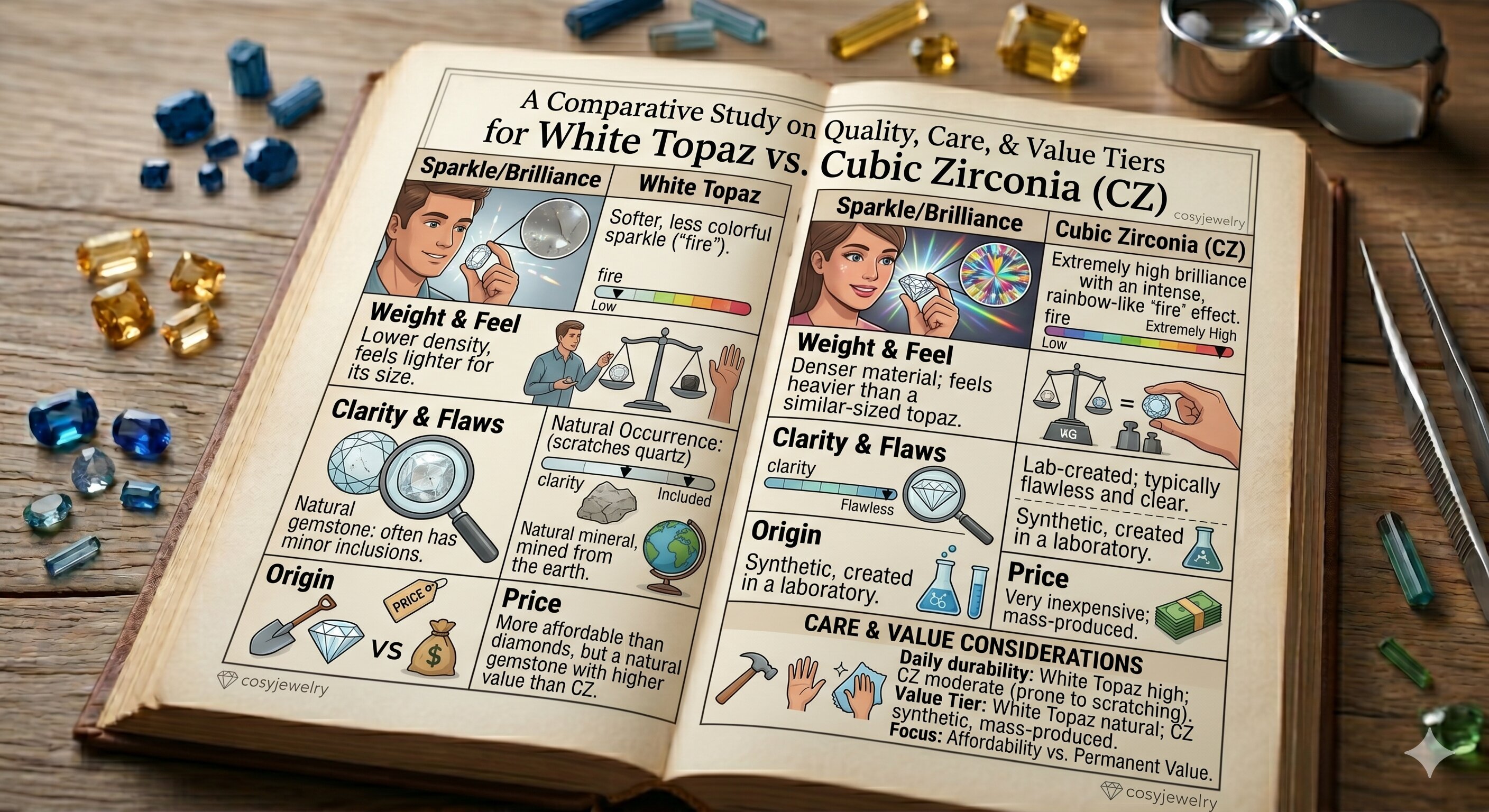
How To Test Them Yourself
You can perform a few simple, non-destructive checks to get clues about the stone's identity. The flowchart below outlines a practical process you can follow.
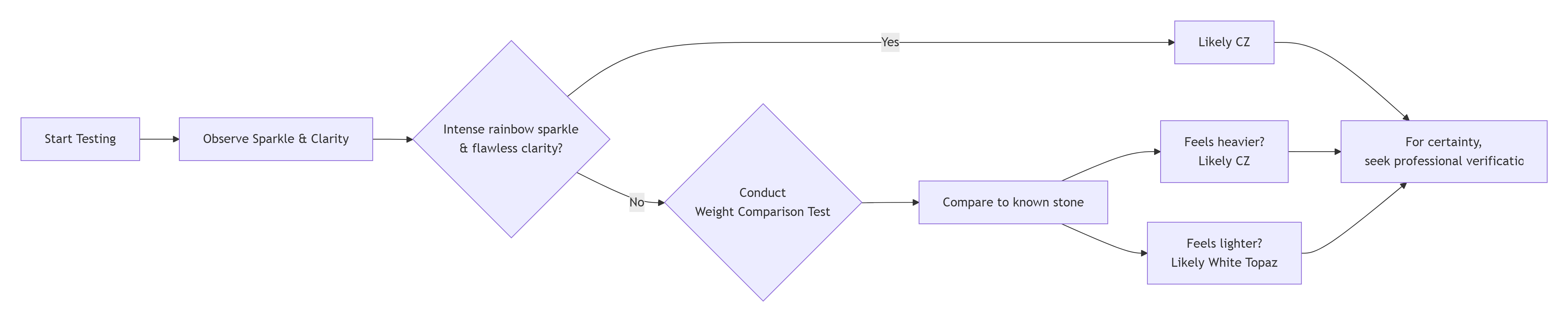
Beyond the sparkle and weight tests, here are a couple of other methods:
Thermal Conductivity (The "Fog Test"): Breathe on the stone to fog it up. Real topaz disperses heat very quickly, so the fog should disappear almost instantly. CZ will take slightly longer to clear.
Specific Gravity (Density) Test: This is more technical but very telling. It involves weighing the stone in air and then in water to calculate its density. Topaz has a specific gravity of 3.5-3.6, while CZ is much denser at 5.6-6.0.
When to Seek Professional Help
For a definitive answer, especially for valuable jewelry, a professional gemologist can provide conclusive identification using tools like a refractometer to measure how light bends in the stone.
A diamond tester (thermal conductivity probe) can also quickly distinguish both stones from diamond, but note that it cannot reliably tell topaz and CZ apart, as they can give similar readings.
I hope this guide helps you identify your stone. If you can share what made you suspect the stone might be CZ in the first place (like its price or an overly perfect appearance), I might be able to offer more specific insights.
What Does Topaz Protect Against?
Based on historical beliefs and cultural traditions, topaz has been credited with a wide range of protective properties across different civilizations. It's important to note that these are cultural beliefs, folk traditions, or metaphysical claims, not scientifically proven effects.
The table below summarizes what various cultures historically believed topaz could protect against.
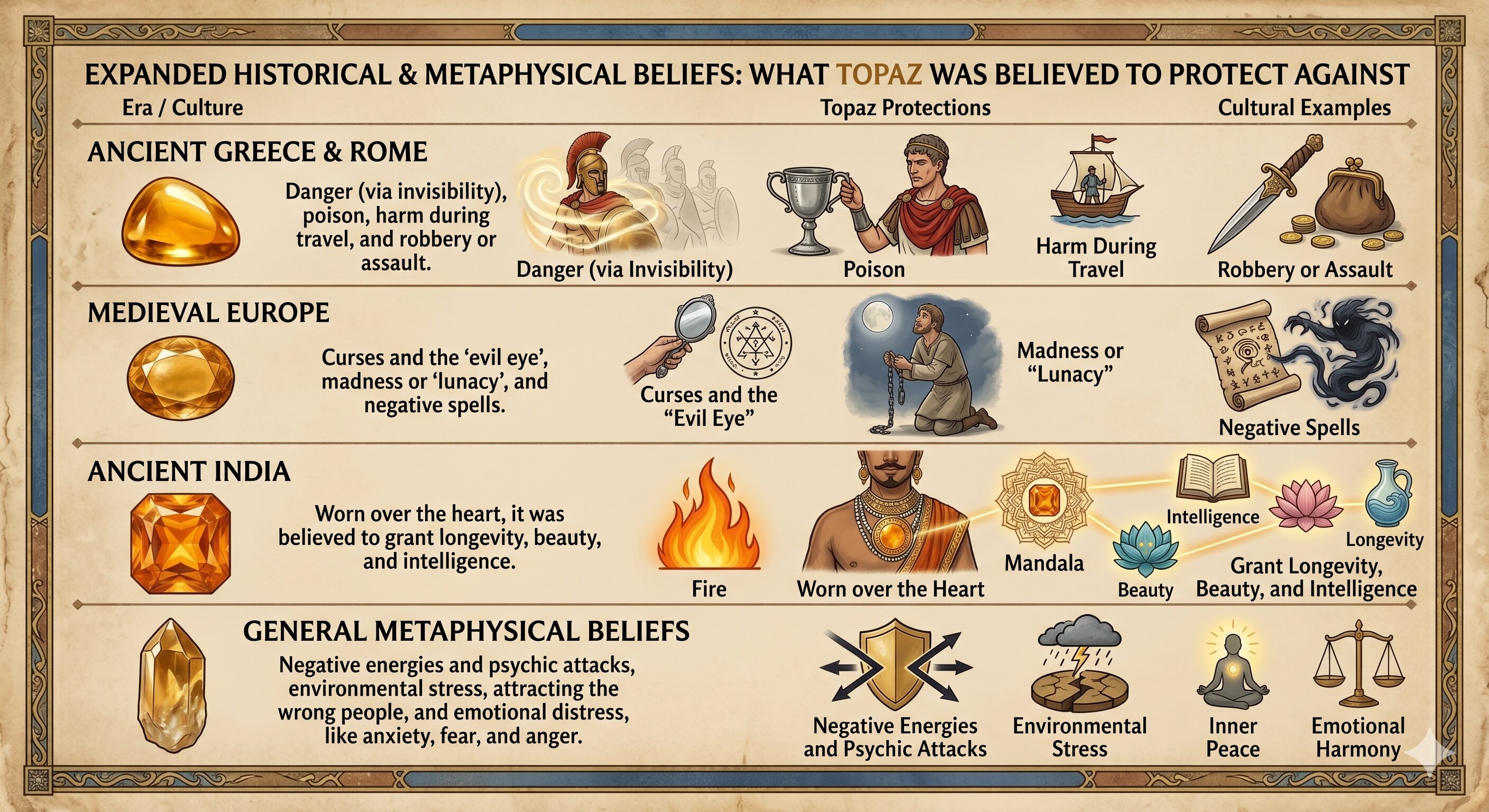
How These Beliefs Connect to Physical Properties
The idea of topaz as a protective stone is sometimes symbolically linked to its physical durability. As we've discussed, topaz is a hard mineral (8 on the Mohs scale), making it resistant to scratches and suitable for daily wear. This tangible resilience may have contributed to its historical reputation as a powerful, enduring protector.
If you are interested in how these protective beliefs translate to specific colors of topaz (like blue topaz for communication or imperial topaz for personal power), I can provide more detailed information on that.
Is Topaz An Expensive Stone?
Topaz has a surprisingly wide price range, from very affordable to extremely expensive. The cost depends almost entirely on the color and rarity of the specific stone.
The table below gives a quick overview of what you can expect to pay for different types of topaz.
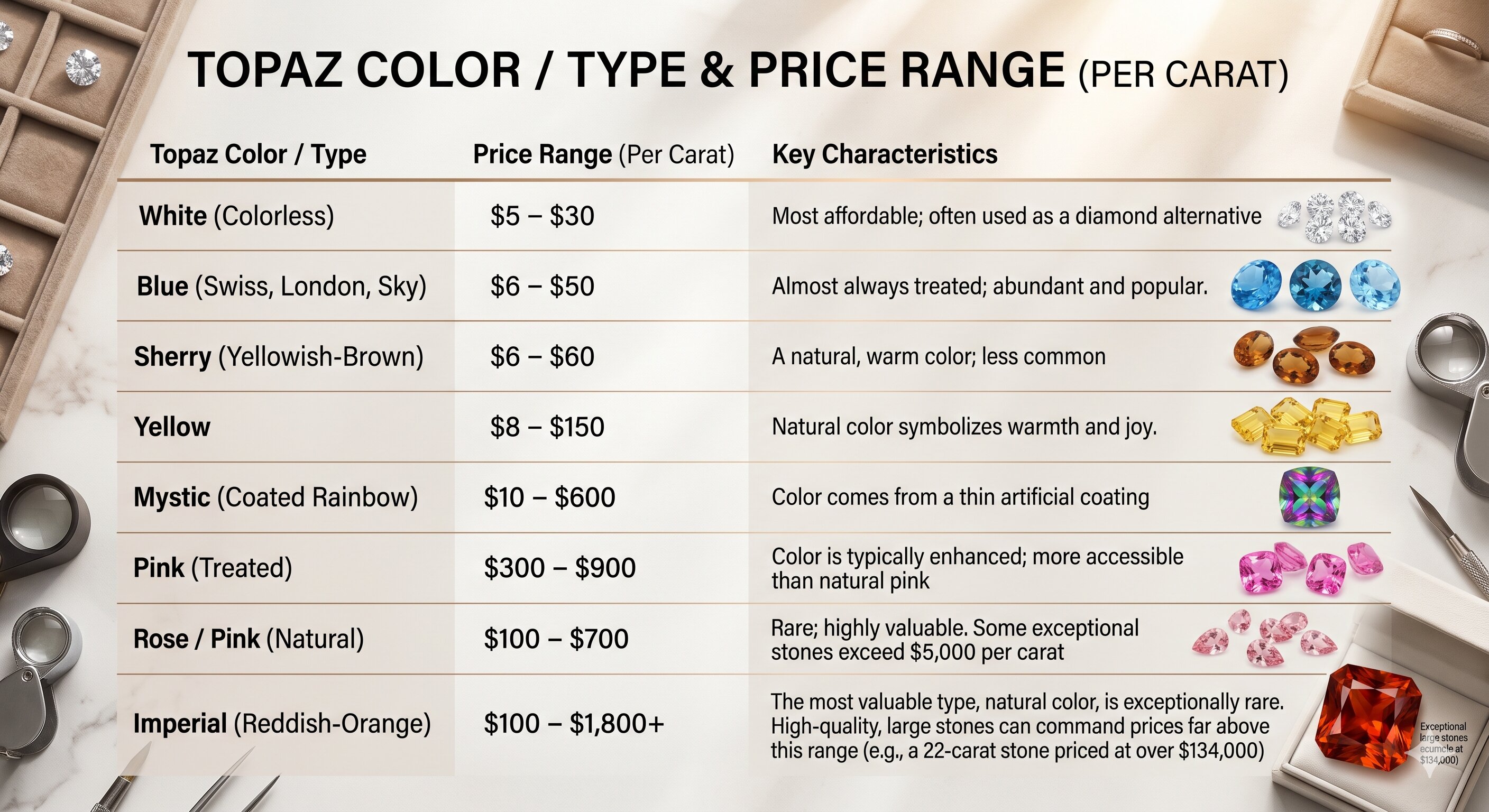
What Determines the Price?
The dramatic price differences are driven by a few key factors:
Color and Rarity: Imperial, natural pink, and deep red topaz are the most expensive because they are geologically rare. Conversely, blue and white topaz are common and affordable.
Treatment: Most vibrant blue and many pink stones get their color from irradiation and heat treatment. These treated stones are beautiful and durable, but cost far less than their rare natural-color counterparts.
The "Four Cs": Like other gems, clarity, cut, and carat weight also affect value. A large, flawless, well-cut stone will be worth more per carat than a small, included one.
In short, topaz is unique because it offers beautiful options for almost any budget. You can find an inexpensive blue topaz for everyday jewelry or invest in a rare, natural imperial topaz as a luxury piece.
If you have a specific color or budget in mind, I can help provide more focused information on what to look for.
Which Is Cheaper, Topaz or Aquamarine?
For blue topaz and aquamarine, blue topaz is overwhelmingly the cheaper option. However, this isn't true for every single topaz variety, as some rare types are much more expensive.
Here is a direct comparison of these two popular blue gemstones:
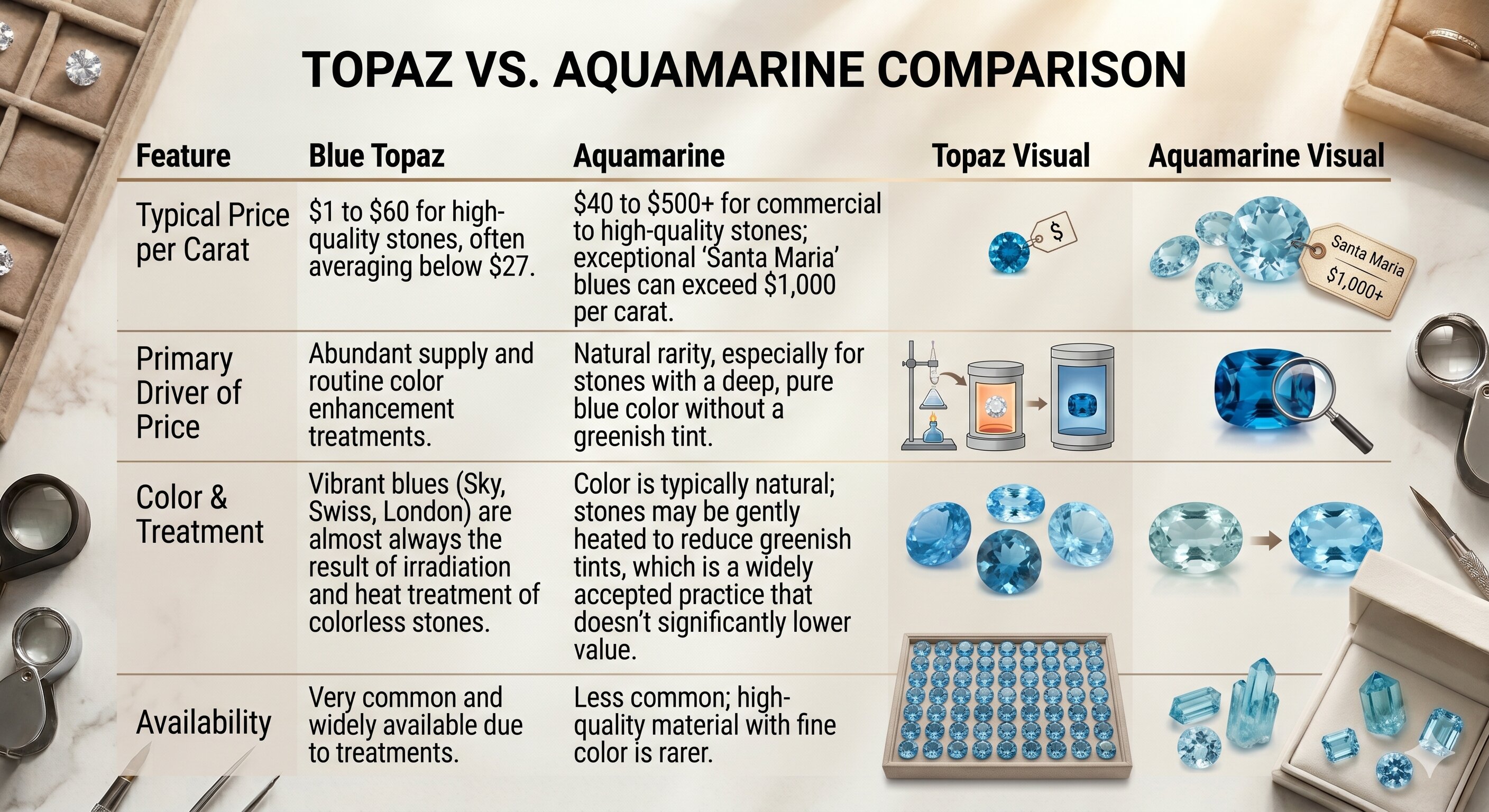
Beyond Blue: A Note on Topaz Price Range
The table above compares the common blue varieties. It's important to know that topaz has an enormous price range based on its color.
Affordable End: Besides blue topaz, white (colorless) and certain yellow or sherry topaz are also very budget-friendly.
Expensive End: Natural Imperial Topaz (reddish-orange) is among the most valuable colored gemstones and can cost $100 to over $1,800 per carat, rivaling or exceeding fine aquamarine prices.
How to Choose Between Them
Your decision depends on your priorities:
Choose Blue Topaz if your primary goal is to obtain a large, vibrant blue stone on a budget. You are comfortable with the fact that its color comes from standard, permanent, and safe treatments.
Choose Aquamarine if: You value a natural, lighter, and often "softer" ocean-blue color and are willing to pay a premium for its rarity and traditional status as a precious gem (a beryl, like emerald).
Practical Shopping Advice
Ask About Treatment: For any topaz, always ask if it has been treated. For blue topaz, you can assume it has been. Reputable sellers will disclose this information.
Prioritize Color in Aquamarine: With aquamarine, color is the main value driver. Deeper, more saturated blues without visible gray or green tones are most valuable.
If you're interested in a specific color beyond blue, such as a warm orange or pink stone, I can provide more detailed information on those topaz varieties and how they compare in price.
Which Is More Expensive, Topaz or Citrine?
The price difference between citrine and topaz is not straightforward because both stones have affordable and expensive varieties. Generally, citrine is less expensive than most topaz, but rare and high-quality topaz, like Imperial Topaz, can be significantly more valuable.
Here is a comparison of typical price ranges per carat for each stone:
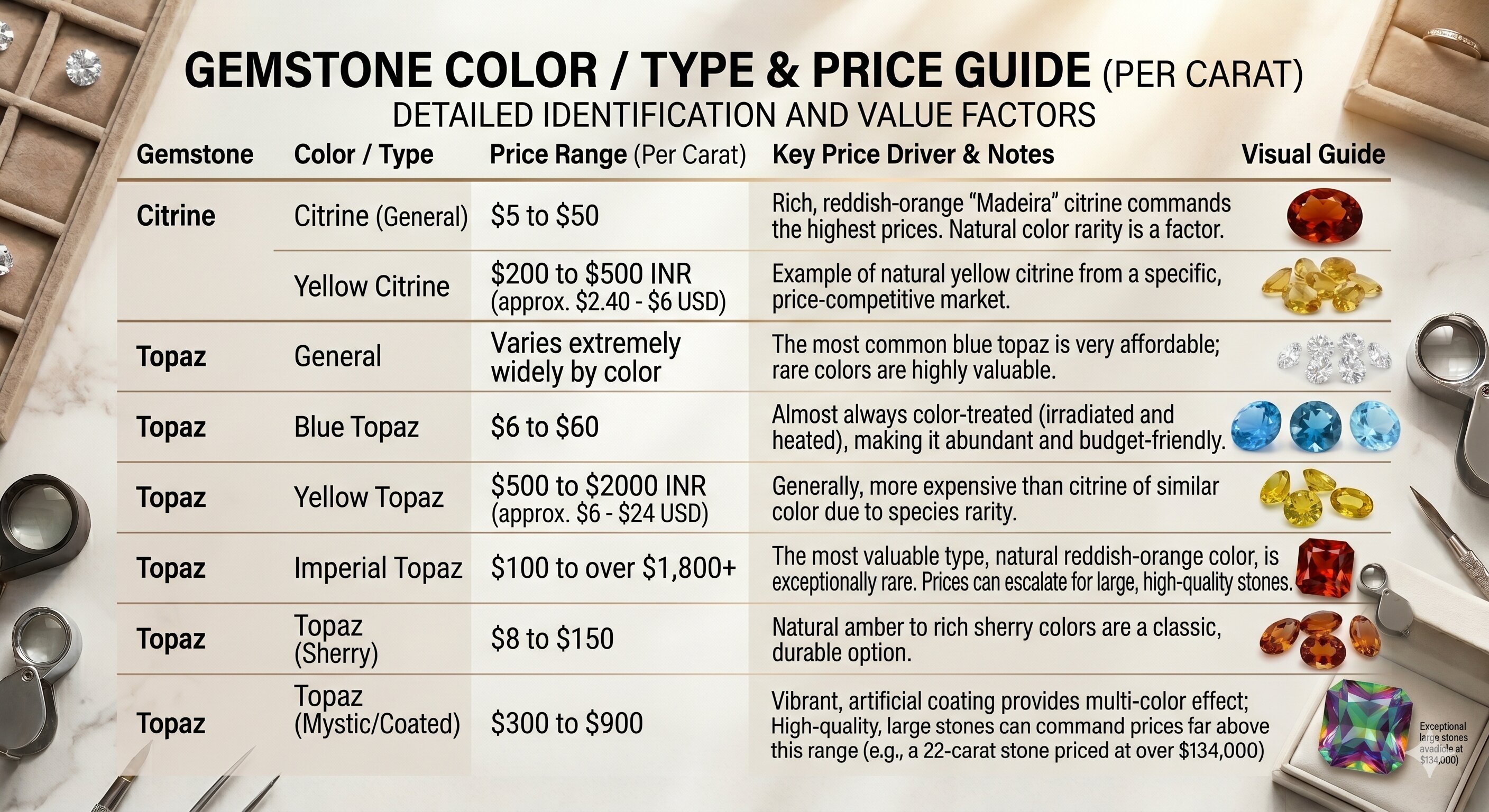
How to Choose and What to Look For
Your choice depends on your priorities:
Choose Citrine if you want a vibrant, warm-colored stone that offers excellent value for its size and brilliance.
Choose Blue Topaz if you desire a cool, vibrant blue stone at a very accessible price point.
Choose Imperial or Pink Topaz if you are looking for a rare, natural, and luxurious investment piece.
When shopping, always ask about treatments. Reputable sellers should disclose if a stone's color is enhanced.
I hope this helps you understand their value. If you're interested in a specific color—like comparing a yellow citrine to a yellow topaz—I can provide more focused information.
What Healing Power Does Topaz Have?
According to metaphysical beliefs, topaz is thought to have several healing powers. However, it's important to note that these are traditional or spiritual claims not backed by scientific or medical evidence.
Different colors of topaz are believed to have specific energies. The table below summarizes the key healing attributes associated with each type, compiled from common spiritual and holistic traditions.
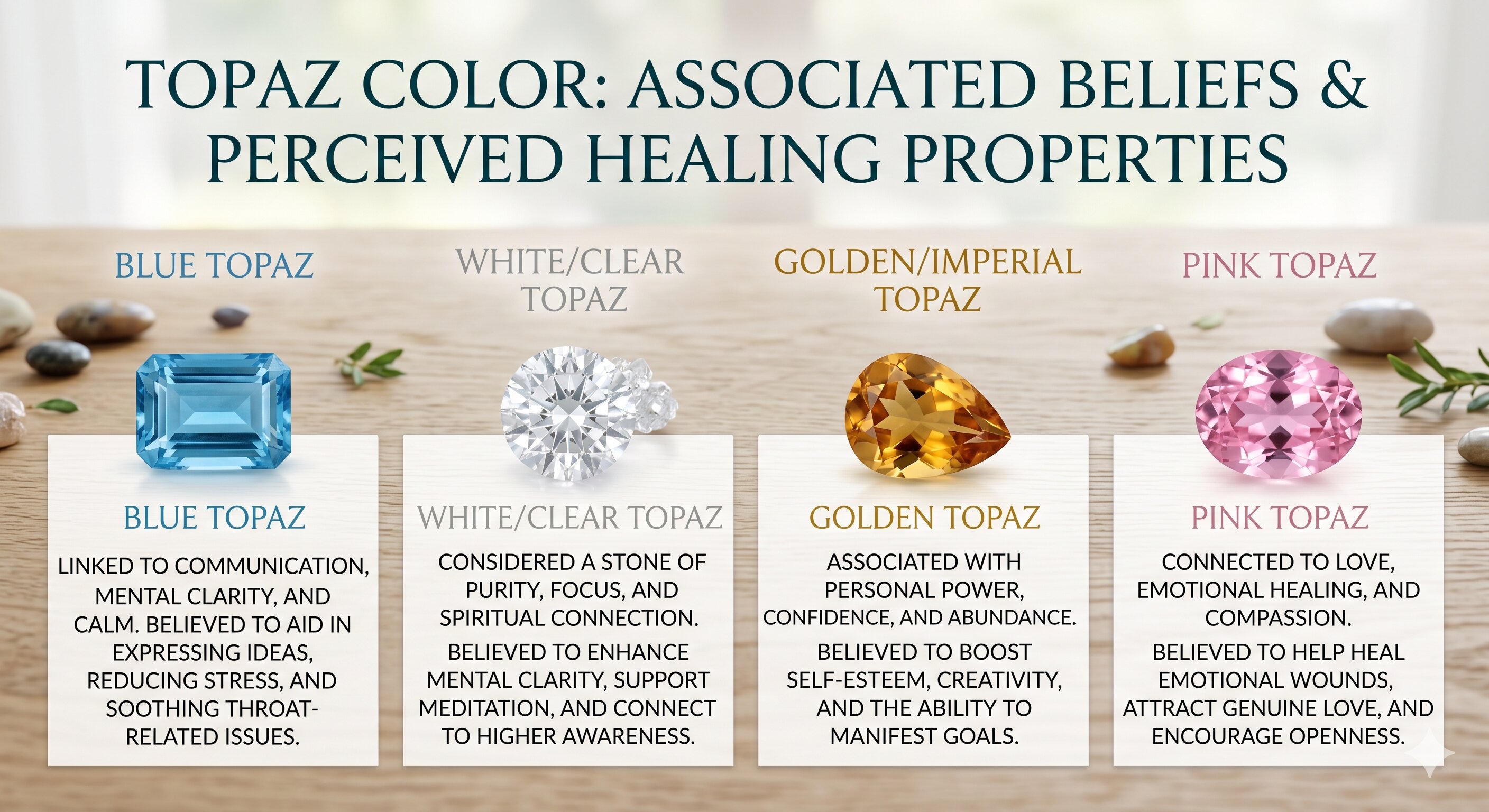
General Healing Themes of Topaz
Beyond color-specific beliefs, topaz in general is credited with several broad healing themes in metaphysical traditions:
Emotional & Mental: It is often described as a stone that promotes joy, reduces stress and anxiety, and increases self-confidence and emotional stability.
Spiritual: Many believe topaz aids in spiritual growth, enhances intuition, and helps in meditation by clearing the mind.
Physical (Folklore): In historical and folk contexts, topaz has been used in attempts to aid digestion, boost metabolism, and support overall vitality. It has also been lore-linked to eye and throat health.
How to Use Topaz Metaphysically
If you are interested in exploring these traditional beliefs, common practices include:
Wearing it as jewelry (like a pendant or ring) to keep the stone's energy close.
Meditating with the stone, often holding it or placing it nearby.
Placing it in your environment, such as on a desk or in a living space, with a specific intention in mind.
I hope this overview of traditional beliefs is helpful. If you're curious about the scientific or geological properties of topaz, such as its hardness or how it forms, I can provide that information as well.
“You now know the spiritual meaning, the lucky properties, the real colors, the benefits, the durability, the care, the value factors, the identification methods, and the healing powers. The only question left: which golden light will you wear?
Our current collection includes a limited number of natural and treated topaz stones — from rare imperial topaz to sunny Swiss blue topaz, and from protective London blue to joyful yellow topaz. When stones of this color saturation are gone, sourcing new ones with GIA certification can take months.
This is not just a stone. It is 2,000 years of Greek invisibility, Roman protection, Portuguese crowns, and Victorian hope — the stone that fooled kings and healed hearts, now waiting for your finger.”
[Button: Claim Your Topaz (Limited) →]


Other news for Friday 12 June, 2026
View all news for Friday 12 June, 2026 on one page
News for Thursday 11 June, 2026
- Opal Guide: Meaning, Price, How to Tell Real | October Birthstone
- Sapphire Rings Guide: Meaning, Colors, Settings and Value | September Birthstone
- Black Onyx Stone: Complete Buying Guide, Real vs. Fake and Prices [2026]
- 10K Gold Guide: Purity, Price, vs 14K/18K, Daily Wear and Care
- November Birthstones: Topaz vs Citrine Guide | Prices, Care and Meaning
View all news for Thursday 11 June, 2026 on one page
Recent News
- Wednesday 10 June, 2026
- Tuesday 09 June, 2026
- Monday 08 June, 2026
- Sunday 07 June, 2026
- Saturday 06 June, 2026