

Emerald Cut Diamond Guide: Symbolism, Price, Pros And Cons
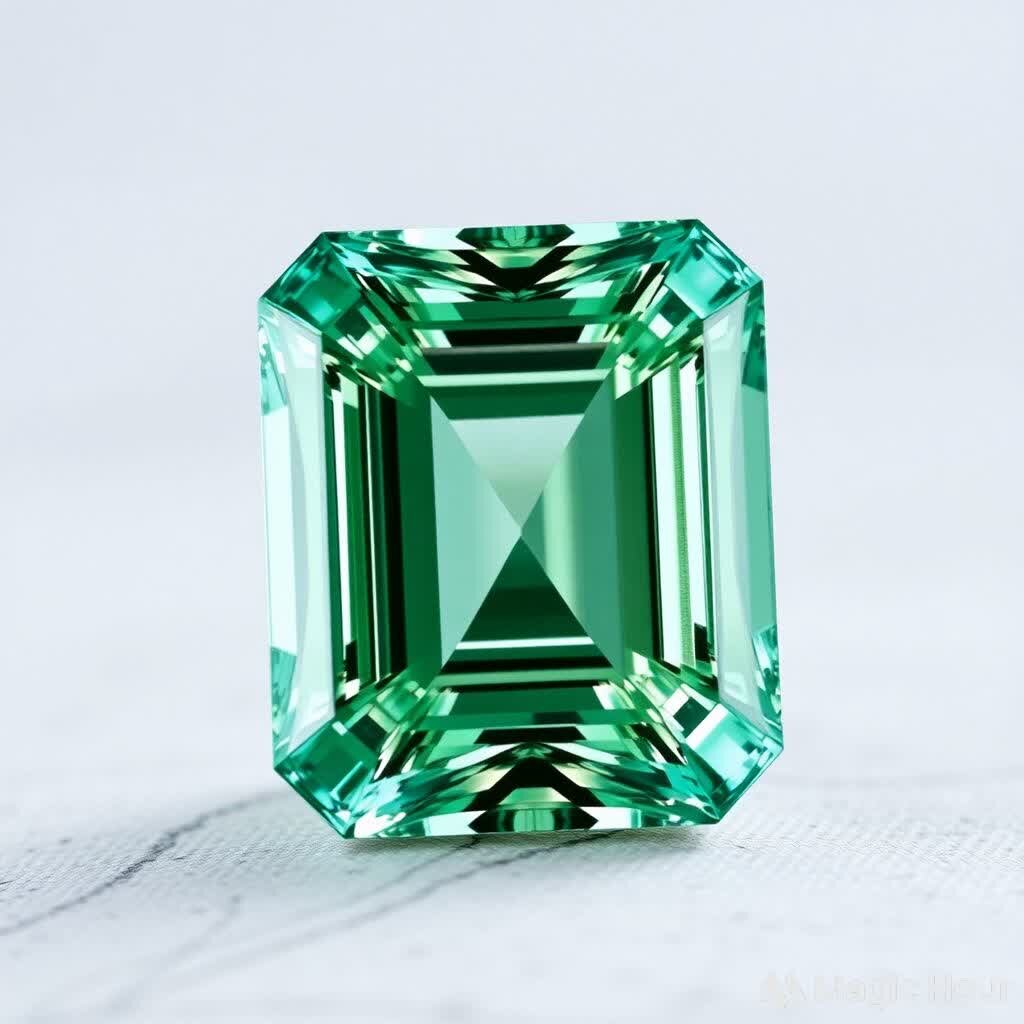
Emerald Cut Diamond Guide: Symbolism, Price, Pros And Cons
The emerald cut is a distinctive and elegant rectangular cut for gemstones, most famously diamonds, characterized by its stepped facets and large, open table.
“In the 1920s, the Art Deco movement changed everything. Designers rejected the fussy curves of the past — and the emerald cut was born. Its clean lines, stepped facets, and ‘hall of mirrors‘ effect captured the modern age: bold, geometric, unapologetically precise. When Grace Kelly wore an emerald-cut diamond engagement ring in 1956, she wasn‘t following tradition. She was declaring that elegance doesn‘t need to shout. It simply steps into the light.”
The same cut that graced Grace Kelly‘s finger now awaits your story. Every emerald cut diamond in our collection is hand-selected for clarity — because this cut has nowhere to hide.”
[Button: Explore Emerald Cut Diamonds →]
Table of Contents
- What Does Emerald Cut Symbolize?
- What Are The Cons of Emerald Cut Diamonds?
- How Much Is A 4 Carat Emerald-Cut Diamond Ring?
- How Much Is A Real 2 Carat Emerald Cut Diamond?
- How Much Is A 100 Carat Emerald Cut Diamond Worth?
- Do Emerald Cut Diamonds Sparkle Less?
- Why Do Celebrities Like Emerald Cut?
- What Is The Best Color For An Emerald Cut Diamond?
- Which Is Better? Emerald Cut Or Princess Cut?
- Is Oval Or Emerald Cut More Expensive?
Let's drive in first.
What Does Emerald Cut Symbolize?
The Emerald Cut diamond carries rich symbolism, rooted in its history, geometric elegance, and unique visual properties. Here’s what it commonly represents:
“The emerald cut‘s open table is not a flaw — it is a statement. Most diamond cuts hide imperfections behind a curtain of sparkle. The emerald cut has no curtain. Its long, step-cut facets act as windows into the stone‘s very soul. This is why it became the symbol of honest love: what you see is what you get. No smoke, no mirrors. Just clarity, truth, and quiet confidence.”
- Timeless Elegance & Sophistication
Its clean lines, symmetrical steps, and understated sparkle evoke a sense of refined taste and classic luxury. Unlike flashy, brilliant cuts, it whispers elegance rather than shouting it—making it symbolic of quiet confidence and mature style.
- Clarity & Honesty
The large, open table and step facets act like "windows" into the diamond, revealing its interior with minimal distortion. This transparency has made it a metaphor for openness, truth, and integrity in relationships—particularly popular for engagement rings symbolizing a commitment built on honesty.
- Stability & Balance
Its elongated rectangular shape and precise parallel facets represent order, stability, and harmony. The strong linear geometry suggests reliability and enduring structure, making it a token of steadfast love or enduring values.
- Art Deco Heritage
Popularized during the 1920s–1930s Art Deco movement, the cut embodies that era’s values:
Modernity: Breaking from traditional round cuts.
Bold Geometry: Celebrating symmetry and industrial-inspired design.
Luxury: Favored by icons like Grace Kelly and Elizabeth Taylor, linking it to Old Hollywood glamour.
- Unique Individuality
Choosing an emerald cut often reflects a rejection of convention. Its lower sparkle (compared to round brilliants) appeals to those who value subtlety, depth, and uniqueness over mainstream trends—symbolizing independent taste.
- Protection (Historical Lore)
In ancient times, emeralds (the gemstone) were believed to ward off evil. Though emerald cut diamonds aren’t emeralds, the shared "emerald" name borrows this legacy of safeguarding and foresight.
- Intellectualism
The cut’s mathematical precision and emphasis on clarity (both literal and metaphorical) resonate with wisdom, insight, and rationality. It’s often chosen by those who appreciate logic and depth.
For more information on diamond cut grades, visit the GIA Diamond Cut Guide.

What Are The Cons of Emerald Cut Diamonds?
Emerald cut diamonds are prized for their elegant, sophisticated look and vintage appeal, but they do come with some significant drawbacks compared to other popular cuts like round brilliant or princess cut:
Less Sparkle and Brilliance (Fire):
Why: The emerald cut is a step cut, featuring long, parallel facets that create broad, flat planes and a "hall of mirrors" effect. This contrasts sharply with the brilliant cut (like round or oval), which has numerous small, angled facets specifically designed to maximize light return, sparkle (scintillation), and fire (flashes of color).
Result: Emerald cuts display larger, clearer flashes of light rather than intense, fiery sparkle. They have a more subdued, elegant, and sometimes icy brilliance. If maximum sparkle is your priority, this cut may disappoint.
Demand Higher Clarity:
Why: The large, open table (top surface) and long step facets act like windows, making inclusions (internal flaws) and blemishes (surface flaws) far more visible to the naked eye compared to brilliant cuts, where the complex facet pattern tends to hide imperfections.
Result: You typically need to choose a diamond with a higher clarity grade (VS2 or above is often recommended, sometimes even VVS) to avoid seeing obvious inclusions, which increases the cost.
Show Color More Readily:
Why: The open facets and lack of the light-dispersing complexity of brilliant cuts mean that the body color of the diamond is less masked. Yellow or brown tints in the diamond become more apparent.
Result: You often need to select a higher color grade (G or above is common, sometimes even D-F for larger stones or very discerning buyers) to achieve a colorless look, again adding to the cost.
Susceptible to the "Bow-Tie" Effect:
Why: Due to the elongated shape and facet pattern, poor light performance can manifest as a dark, bow-tie-shaped area stretching across the center of the stone when viewed face-up. This is caused by light leaking out of the sides or bottom instead of reflecting to the eye.
Result: A prominent bow-tie is considered undesirable and can significantly detract from the stone's beauty. Careful selection and viewing the stone in various lights are crucial to minimize this effect.
Shape Considerations:
Elongation: While the elongated shape can make fingers appear longer, it's a distinct look that might not appeal to everyone who prefers a more traditional, symmetrical round shape.
Corners: The sharp, stepped corners are more vulnerable to chipping compared to rounded corners. This necessitates protective settings (like V-prongs at the corners) and potentially more careful wear.
Perceived Value & Price Nuance:
Lower Price Per Carat? While often cheaper per carat than equivalent round brilliants, the need for higher clarity and color grades to achieve a desirable appearance can significantly narrow or even reverse this price gap.
Face-Up Size: Their large table and elongated shape mean an emerald cut diamond often looks larger face-up than a round brilliant of the same carat weight. However, the lower sparkle might make the perceived "value" feel different to some.
Learn more about the history of step cuts on Wikipedia's emerald cut page.

How Much Is A Real 2 Carat Emerald Cut Diamond?
The price of a 4-carat emerald cut diamond ring varies dramatically based on the diamond's quality (the "Four Cs"), the ring setting, and the retailer. Here's a breakdown of key factors and estimated price ranges:
- Diamond Cost (Biggest Factor):
Quality Range:
Low End: $20,000–$40,000+
*(Lower color/clarity, e.g., J-K color, SI1-SI2 clarity, strong fluorescence, fair cut)*
Mid-Range: $40,000–$80,000+
*(Good balance, e.g., G-H color, VS1-VS2 clarity, faint/no fluorescence, good cut)*
High End: $80,000–$200,000+
*(Top-tier, e.g., D-F color, VVS1-VVS2 clarity, excellent cut, no fluorescence)*
Why Such Variation?
Clarity is critical: Emerald cuts show flaws easily. VS1+ is recommended.
Color sensitivity: Near-colorless (G-H) or better is ideal.
Cut precision: Poor cuts worsen the "bow-tie effect."
Certification: GIA-graded diamonds cost more than non-certified or IGI/EGL.
- Setting Cost:
Simple Solitaire: $1,000–$3,000
(Side diamonds increase cost)
Custom Design: $5,000–$20,000+
(Complexity and designer markup)
- Estimated Total Ring Cost:
Diamond Tier Diamond Price + Setting Total Range
Entry-Level $20,000–$40,000 $1,000–$5,000 $21,000–$45,000
Mid-Quality $40,000–$80,000 $2,000–$10,000 $42,000–$90,000
Premium/Luxury $80,000–$200,000+ $5,000–$20,000 $85,000–$220,000+
Key Considerations:
Lab-Grown Alternative:
A 4ct lab emerald cut diamond costs $3,000–$8,000 (same quality as natural). Total ring: $4,000–$15,000.
Shape Illusion:
Emerald cuts face up larger than rounds (a 4ct emerald looks like a 4.5ct round), offering visual value.
Bow-Tie Effect:
Always inspect in person/video—poor light performance drops value 20–30%.
Smart Buying Tips:
Prioritize Certification: Only consider GIA or AGS-graded diamonds.
Balance Quality: Aim for G-H color and VS1-VS2 clarity to optimize value.
Compare Retailers: Online vendors often offer better prices than brick-and-mortar.
Consider Lab-Grown: Identical appearance at ~10% of natural cost.
For current diamond price benchmarks, refer to the American Gem Society's price guide.

How Much Is A Real 2 Carat Emerald Cut Diamond?
The price of a natural 2-carat emerald-cut diamond varies significantly based on the "Four Cs" (Cut, Color, Clarity), certification, and market factors. Here’s a detailed breakdown for natural diamonds (lab-grown prices follow below):
Natural 2-Carat Emerald-Cut Diamond Price Ranges
(Approximate retail prices as of 2025)
Quality Tier Color Clarity Price Range
Entry-Level I/J SI1-SI2 $8,000 – $12,000
Mid-Range G/H VS1-VS2 $12,000 – $20,000
Premium D/E/F VVS1-VVS2 $20,000 – $35,000
Luxury (Flawless) D/E IF/FL $35,000 – $60,000+
Key Factors Affecting Price:
Clarity Matters Most:
Emerald cuts reveal inclusions easily. VS1 or higher is recommended (SI2 may show visible flaws).
Avoid stones with inclusions near corners or under the table.
Color Sensitivity:
Warm tints (I/J and below) are noticeable. Aim for G/H or better for a "colorless" look.
D-F commands a 15–30% premium over G-H.
Cut Precision:
Ideal length-to-width ratio: 1.30–1.50 (e.g., 9x7mm for a 2ct). "Chubbier" squares (1.0–1.2) cost more.
Poor symmetry or windowing (transparent areas) reduces value.
Certification:
GIA-graded diamonds cost 10–15% more than non-certified or IGI/HRD stones but ensure accuracy.
Market Trends:
Prices fluctuate with diamond supply, demand, and global economics.
Savings Tips:
Compromise on color: An H-color emerald cut often looks identical to F/G in yellow gold settings.
Prioritize clarity over carat: A 1.90ct VS1 may cost less than a 2.00ct SI1 and look cleaner.
Lab-Grown 2-Carat Emerald-Cut Diamonds
*(Identical physically/optically, 60–80% cheaper)*
Price Range: $1,200 – $3,500
D-F color + VVS/VS clarity at the higher end.
No ethical/environmental mining concerns.
Watch Out For:
Fluorescence: Strong blue fluorescence can reduce the price by 5–15%, but may cause haziness.
Setting Costs: A solitaire setting adds $500–$2,000+ (platinum/vs gold).
Retailer Markups: Boutique brands charge 30–100% more than online vendors.
Real-World Examples (Natural):
2ct, H-color, VS2 clarity, GIA-certified: $14,500
2ct, F-color, VVS2 clarity, GIA-certified: $25,000
2ct, D-color, FL clarity, GIA-certified: $48,000

How Much Is A 100 Carat Emerald Cut Diamond Worth?
The value of a 100-carat emerald-cut diamond depends on several critical factors, including color, clarity, cut quality, and certification. However, given its extraordinary size and rarity, here’s a general estimate:
Estimated Value Range:
Low Quality (Included, Faint Color): $2 million – $10 million
High Quality (Flawless, D-F Color): $50 million – $200+ million
Key Factors Affecting Price:
Color (D-F is most valuable) – Near-colorless or fancy colors (like blue or pink) can drastically increase value.
Clarity (FL/IF-VS is ideal) – Fewer inclusions mean higher worth.
Cut (Precision matters) – Emerald cuts require perfect symmetry and polish.
Certification (GIA, AGS, etc.) – A top-tier lab report adds credibility.
Provenance – If historically significant, value could skyrocket (e.g., royal or celebrity-owned).
Notable Comparisons:
The 165-carat "The Art of de Grisogono" emerald-cut diamond sold privately for an estimated $50 million+ (though it was black, not white).
A 100-carat D-color flawless diamond could rival the $44 million paid for the "Perfect Pink" (a 14.83-carat pink diamond).
Final Thought:
A 100-carat emerald-cut diamond of top quality could easily set auction records, possibly exceeding $100 million if flawless and colorless. For an exact valuation, a Gemological Institute of America (GIA) report and expert appraisal would be necessary.

Do Emerald Cut Diamonds Sparkle Less?
Yes, emerald cut diamonds do sparkle less than brilliant-cut diamonds (like round, oval, or princess cuts) — but this is intentional and part of their unique appeal. Here's why and how they differ:
Why Emerald Cuts Have Less Sparkle:
Facet Structure:
Emerald cuts are step cuts with long, parallel facets (like stair steps).
Brilliant cuts (e.g., round) have small, triangular facets arranged to maximize light reflection.
Light Performance:
Emerald cuts: Create broad, mirror-like flashes ("hall of mirrors" effect) and subdued scintillation.
Brilliant cuts: Produce intense sparkle, fire (rainbow flashes), and rapid scintillation (pinpoint sparkles).
Prioritizes Clarity Over Sparkle:
The open table and clean lines highlight the diamond’s transparency and internal clarity, trading "fire" for elegant sophistication.
How Their "Sparkle" Compares:
Light Effect Emerald Cut Round Brilliant
Brilliance Softer, more subdued Bright, white-light return
Fire (Rainbows) Minimal High
Scintillation Broad, flashing glides Rapid, pinfire sparkles
Overall Impact Understated, vintage glamour Dynamic, eye-catching dazzle
Important Nuances:
The "Bow-Tie" Effect:
Poorly cut emerald diamonds can develop a dark, bow-tie-shaped area across the center (due to light leakage), further reducing perceived sparkle.
Quality Matters:
An excellent-cut emerald will still glow with a clean, icy radiance — it just won’t explode with rainbows like a brilliant cut.
Setting & Lighting:
Platinum/white gold settings enhance its cool brilliance. Halos or pavé bands can add supplemental sparkle.
Who Loves Emerald Cuts?
They’re perfect if you value:
Timeless elegance over flashy sparkle.
Vintage/Art Deco aesthetics.
A "quiet luxury" that emphasizes clarity and sophistication.

Why Do Celebrities Like Emerald Cut?
Celebrities are often drawn to emerald-cut diamonds for reasons that blend aesthetics, symbolism, and practical appeal—despite this cut not being the cheapest option. Here’s why it’s a red-carpet favorite:
Key Reasons for Celebrity Preference:
Timeless Elegance
Emerald cuts have a vintage, Old Hollywood glamour (think Grace Kelly or Elizabeth Taylor) that feels both classic and sophisticated.
The clean lines and understated sparkle convey "quiet luxury" over flashiness—perfect for high-profile events.
Elongating Effect
The rectangular shape lengthens the finger visually, making it flattering on hands (a big plus for cameras and close-ups).
Unique Sparkle Profile
Unlike brilliant cuts (e.g., round or princess), emerald cuts have step facets that create broad, mirror-like flashes of light ("hall-of-mirrors" effect) rather than scattered sparkle.
This gives a clearer, more subdued brilliance—ideal for those who prefer subtlety over maximalism.
Rarity and Exclusivity
Flawless emerald cuts are harder to find because their open table magnifies inclusions and color tints.
Celebrities often seek high-clarity (VVS/IF), colorless (D-F) stones—showcasing both taste and investment power.
Symbolism of Refinement
The cut is associated with intelligence, confidence, and timeless style—traits many stars want to project.
Its geometric precision feels modern yet ageless, aligning with a "less is more" philosophy.
Royal and Iconic Connections
Beyoncé, Amal Clooney, Kim Kardashian, and Meghan Markle all wear/wore emerald-cut engagement rings.
This cut has a royal pedigree (Princess Diana’s famous sapphire ring was emerald-cut inspired).
Practical Celebrity Perks:
Photographs Exceptionally Well: The large table and linear facets catch light cleanly under studio lights or paparazzi flashes.
Pairs with High Fashion: Its minimalist lines complement haute couture without competing for attention.
Distinction: In a sea of round brilliants, an emerald cut stands out as "unconventional but classic."
Trade-Offs (Why It’s Not for Everyone):
Demands Flawless Quality: Inclusions or poor color are easily visible.
Less "Fire": If you love rainbow sparkle, a radiant or oval cut might satisfy you more.
Higher Cost for Top Tiers: While rough retention is efficient, premium emerald cuts (large + flawless) command luxury pricing.
In short: Celebrities choose emerald cuts for their quiet confidence, vintage-meets-modern appeal, and association with refined taste—a statement that says, "I appreciate legacy, not just glitter."

What Is The Best Color For An Emerald Cut Diamond?
The "best" color grade for an emerald cut diamond balances visual appeal and value, prioritizing near-colorless grades (G, H, or I) for most buyers. Here’s why, with a quick-reference guide:
Color Recommendations by Priority
Color Grade Who It’s For Why
G or H 90% of buyers (ideal balance) Face-up "white" in any setting. No visible tint. Best value.
F Perfectionists or larger stones (3ct+) Truly colorless, but price jump over G/H often isn’t necessary.
D or E Rare budgets/uncompromising seekers of purity. Maximum premium for minimal visible difference over F/G.
I or J, Budget-focused buyers using a yellow/rose gold setting. Slight warmth may show in white gold/platinum, um but masked in gold.
Key Factors Influencing Color Choice
Setting Metal:
White Gold/Platinum: Reveals warmth. Stick to G-H.
Yellow/Rose Gold: Masks faint warmth. I-J can work.
Diamond Size:
< 2ct: H-I often looks white.
> 2ct: Color concentrates; opt for G-H (or F for 3ct+).
Fluorescence:
Medium Blue Fluorescence can mask faint yellow in I-J stones, making them appear whiter (but test in person!).
Why Emerald Cuts Demand Better Color
Large, Open Table: Acts like a window, making body color obvious.
Step Facets: Lack the sparkle of brilliant cuts to disguise tint.
Elongated Shape: Color concentrates along the length.
Pro Tip: View diamonds in natural daylight (near a window) to judge color accurately. Jewelry store lighting hides warmth!
Price Impact (1ct Emerald Cut Example)
Color Grade Avg. Price (VS1 Clarity)
D $7,500+
G $5,200 ← Best Value
I $4,000
*Lab-grown alternative: G color ≈ $800 (no visible difference).*
Colors to Avoid
K or Lower: Noticeable yellow/brown tint in white metal settings (only suitable for vintage yellow gold designs).
Mismatched Grades: An H-color diamond with poor cut/clarity may look worse than an I-color with excellent specs.
The Sweet Spot
For most buyers:
Choose a G or H color, VS1-VS2 clarity, in a GIA/AGS-certified diamond.
This combo delivers a bright, white appearance without overpaying for imperceptible upgrades. Pair it with white metal prongs for maximum impact!

Which Is Better? Emerald Cut Or Princess Cut?
The choice between an emerald cut and a princess cut diamond depends on your priorities—whether you value brilliance, elegance, durability, or uniqueness. Here’s a detailed comparison to help you decide:
- Brilliance & Sparkle
More sparkle (brilliance and fire) due to its faceted pavilion (like a round brilliant).
Best for those who love maximum shine and scintillation.
Emerald Cut:
Less sparkle, more "hall of mirrors" effect (broad flashes of light).
Emphasizes clarity and elegance over brilliance.
Winner for Sparkle: Princess Cut
- Elegance & Style
Emerald Cut:
Sophisticated, vintage, and timeless—favored by celebrities (Beyoncé, Amal Clooney).
Looks larger per carat due to its elongated shape.
Princess Cut:
Modern and geometric—great for a contemporary look.
More common in engagement rings.
Winner for Elegance: Emerald Cut
- Durability
Princess Cut:
More prone to chipping at the sharp corners (requires a protective setting).
Emerald Cut:
More durable because of its stepped facets and clipped corners.
Winner for Durability: Emerald Cut
- Price & Value
Princess Cut:
Typically less expensive per carat than emerald cuts (more supply).
Emerald Cut:
Higher per-carat cost for top-quality stones (due to rarity and demand).
Winner for Affordability: Princess Cut
- Finger Flattery
Emerald Cut:
Elongates fingers (great for slender hands).
Princess Cut:
Looks best in square or slightly rectangular ratios.
Winner for Flattery: Depends on hand shape (Emerald for length, Princess for balance).
Final Verdict:
Choose Princess Cut if: You want maximum sparkle, modern style, and better value.
Choose Emerald Cut if: You prefer timeless elegance, durability, and a unique, luxurious look.

Is Oval Or Emerald Cut More Expensive?
The price difference between oval and emerald cut diamonds depends on quality tiers, but here's the clear breakdown:
Price Comparison (1ct Natural Diamond, GIA-Certified)
Cut Avg. Price Range (G-H/VS1)
Oval Cut $4,500–$6,500
Emerald Cut $4,000–$5,500
Verdict:
Emerald cuts are typically 10–15% cheaper than ovals of the same specs.
Why the Price Difference?
Cutting Efficiency:
Emerald cuts (step cuts) retain more weight from rough diamonds → lower base cost.
Oval cuts (brilliant cuts) require more precise faceting to avoid bow-ties → higher labor cost.
Market Demand:
Ovals are currently more popular (especially for engagement rings), driving up prices.
Quality Trade-Offs:
Emeralds need higher clarity (VS1+) to hide inclusions → offsets some savings.
Ovals can hide flaws better in their sparkle → more flexibility with lower clarity.
Key Factors That Flip Costs
Top-Tier Ovals: An ideal-cut oval (no bow-tie, D color) can cost more than an emerald with similar specs.
Size Illusion: A 1.5ct emerald ($10K) may look larger than a 1.5ct oval ($12K), offering better visual value.
Lab-Grown: Both plummet in price (1ct ≈ $800–$1,200), narrowing the gap.
“You now know the symbolism, the cons, the prices, the celebrity favorites, and the color guide. The only question left: will you choose quiet confidence over flashy sparkle?
Our current collection includes a limited number of GIA-certified emerald cut diamonds — from classic white to rare fancy colors. When they‘re gone, sourcing stones with this clarity level takes months.
This is not just a diamond. It is a window into quality, into truth, and into a love that needs no curtain.”
[Button: Claim Your Emerald Cut (Limited) →]


Tanzanite Guide: Value, Colors, vs Sapphire and Buying Tips | December Birthstone
Zircon Stone Guide: Meaning, Colors, Price vs Diamond | December Birthstone
Here is a comprehensive overview of the Tanzanite stone, covering its key characteristics, value, and what makes it so unique.
“In 1967, a Masai tribesman in the foothills of Mount Kilimanjaro stumbled upon a cluster of brilliant blue-violet crystals — stones so vivid he thought they were sapphires. He had found the world‘s only source of tanzanite. Tiffany & Co. quickly realized the gem was unlike anything seen before: it shifted from sapphire blue to amethyst purple as you turned it. They named it after Tanzania, the country that birthed it. Geologists now estimate the mines will be empty in 20 to 30 years. When your granddaughter asks where her tanzanite came from, you will tell her: from a single hill near Kilimanjaro, discovered in your lifetime, and gone by hers. Some stones are rare. Tanzanite is a geological miracle with an expiration date.”
The same stone that the Masai gifted for transformation now awaits your December birthday — or your own new chapter. Every tanzanite in our collection is natural, heat-treated only (the standard), and chosen for that signature blue-violet flash.”
[Button: Explore Tanzanite Jewelry →]
Table of Contents
- What Month Does Tanzanite Stone Represent?
- How Much Is A Tanzanite Stone Worth?
- Why Is Tanzanite Stone So Cheap?
- Is Tanzanite Stone Worth More Than Sapphire?
- Are Diamonds Or Tanzanite Stones More Valuable?
- What's Rarer, Tanzanite Or Diamond?
- Does Tanzanite Stone Look Better With Gold or Silver?
- Should Tanzanite Stone Be Blue Or Purple?
- What Pairs Well With Tanzanite Stone?
- Is It Worth Buying Tanzanite Stone Jewelry?
- Is Tanzanite Good For Daily Wear?
- How Can You Tell A Good Tanzanite Stone?
Tanzanite is the modern birthstone for December, sharing the month with two other gems: turquoise and zircon.
What Month Does Tanzanite Stone Represent?
Key Details:
Official Recognition:
Added to the official birthstone list by the American Gem Trade Association (AGTA) in 2002.
Recognized by the Jewelers of America and other major industry bodies.
Why December?
“The Maasai people of Tanzania have a tradition: when a woman transitions into a new phase of life — marriage, motherhood, elderhood — she is gifted a blue stone. When tanzanite was discovered on their lands, they recognized it immediately. Not as a jewel, but as a marker of transformation. The stone‘s journey mirrors this symbolism: it is born brown in the earth, then heated to reveal its violet-blue fire — a gem that must pass through fire to become its truest self. That is why tanzanite is the stone of new beginnings and the perfect gem for December, the month we close one year and step into the next. It asks no perfection of you. Only the courage to change.”
Its violet-blue hues evoke winter skies and icy elegance, aligning with December's aesthetic.
As a newer gem (discovered in 1967), it offers a vibrant alternative to traditional December stones.
Symbolism:
Represents transformation, wisdom, and spiritual insight—fitting for the year's reflective final month.
Pairing with Traditional Stones:
Turquoise (opaque blue-green) and zircon (fiery brilliance) offer distinct looks.
Tanzanite stands out for its rich color saturation and trichroism (color-shifting magic).
Learn more about tanzanite's geological formation on Wikipedia's tanzanite page.
How Much Is A Tanzanite Stone Worth?
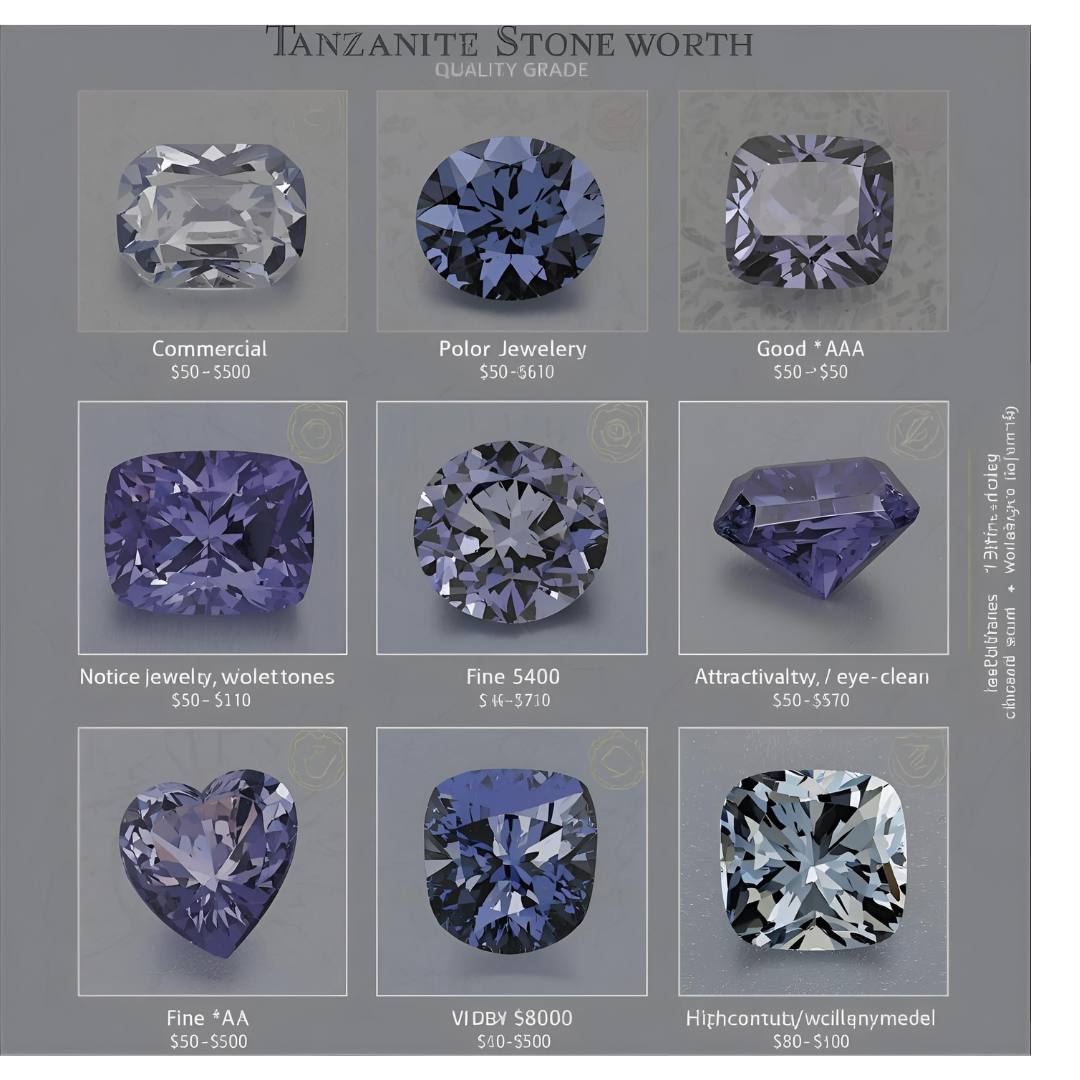
This is an excellent follow-up question. Determining the value of a tanzanite stone is complex because it can range from $50 per carat to over $1,500 per carat for top-tier gems. There is no single price, as it's entirely dependent on the stone's individual quality.
The value is primarily determined by the "Four Cs" (Color, Clarity, Cut, and Carat Weight), but with a very strong emphasis on Color.
Here’s a detailed breakdown of what factors into the price of a tanzanite stone.
1. Color (The Most Important Factor)
This is, without a doubt, the #1 driver of value. The most prized color is a saturated, vivid violet-blue with a dominant blue hue. The GIA (Gemological Institute of America) uses the following terms to describe tanzanite color:
Hue: The primary color (blue, violet, purple).
Tone: The lightness or darkness of the color.
Saturation: The intensity or purity of the color.
Grading and Price Impact:
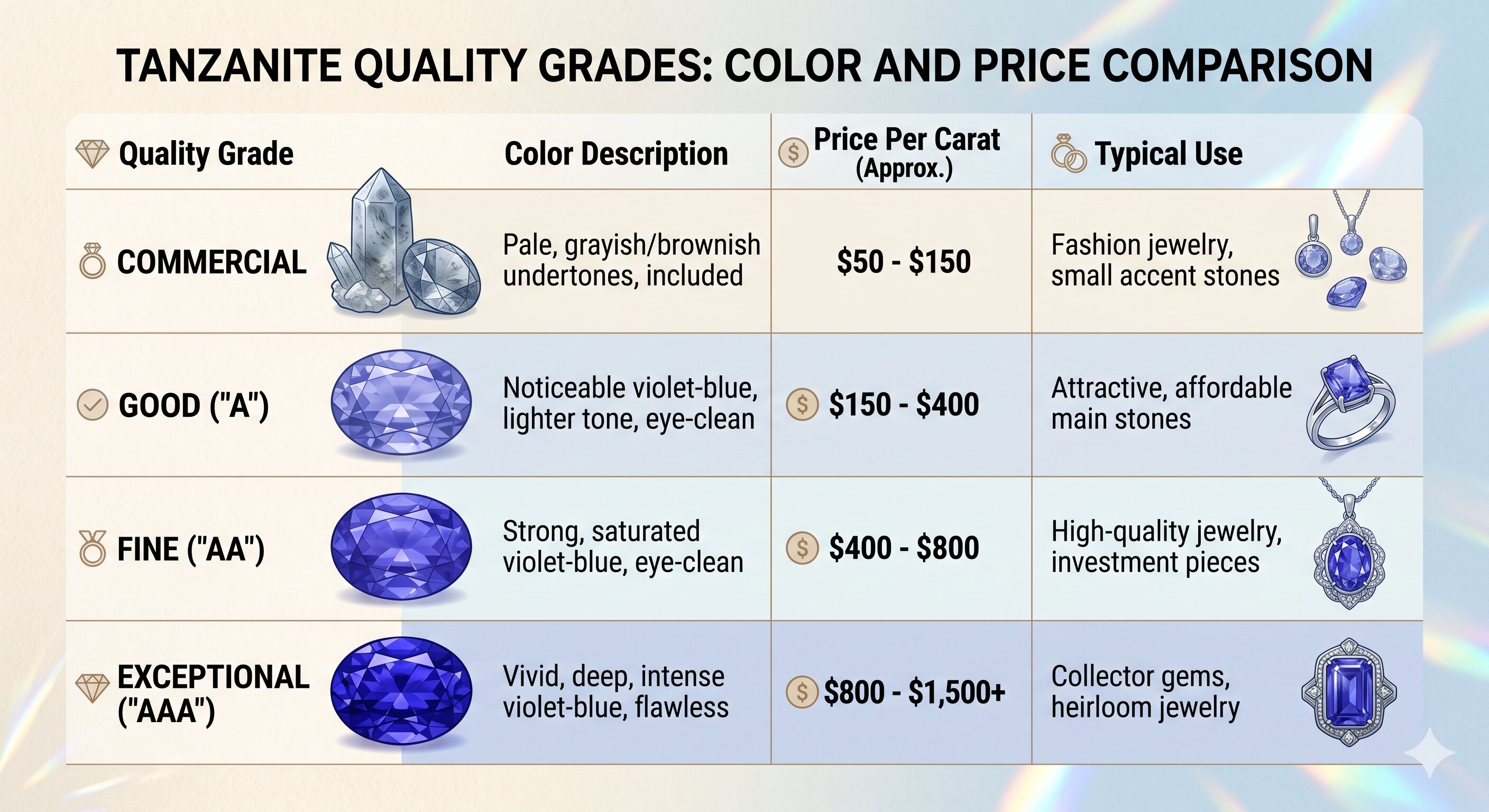
Exceptional (Vivid/Vivid+) / "AAA" Grade: Top 1% of all gems. A deeply saturated, intense violet-blue that is breathtaking. These are exceptionally rare and command the highest prices.
Price: $800 - $1,500+ per carat (and much higher for large, flawless stones).
Fine (Intense) / "AA" Grade: High-quality, strong color. The blue is prominent and very pleasing to the eye, though perhaps not as deep as the exceptional grade. This is a great choice for fine jewelry.
Price: $400 - $800 per carat.
Good (Moderate) / "A" Grade: Good commercial quality. The color is noticeable but may be lighter or have a more balanced mix of blue and violet, or even lean slightly towards a lighter lavender.
Price: $150 - $400 per carat.
Commercial / "B" or "C" Grade: Pale color, significant brownish or grayish undertones. Often has visible inclusions. These are the stones you'll find in mass-market, lower-priced jewelry.
Price: $50 - $150 per carat.
Crucial Note on Heat Treatment: Over 95% of tanzanite on the market is heat-treated to enhance its blue-violet color. This is a stable, permanent, and universally accepted process. An unheated, naturally vibrant tanzanite is incredibly rare and can be worth 2-3 times more than a heated stone of similar appearance.
2. Carat Weight
Like many gems, the price per carat increases significantly with size. However, with tanzanite, large crystals are more common than in many other gem species. The price jump is most dramatic when you move from small, common sizes to larger, rarer ones.
Small Stones (1-5 carats): Relatively abundant. Price is mostly driven by color and clarity.
Medium Stones (5-15 carats): A significant market exists for these sizes. A fine-quality 10-carat stone can be very valuable.
Large Stones (15+ carats): High-quality stones in this size range are rare and command a strong premium per carat.
3. Clarity
Tanzanite is typically a "Type I" gemstone, meaning it is expected to be eye-clean (no visible inclusions to the naked eye).
Eye-Clean: The standard for fine jewelry. Inclusions are not visible without magnification. Commands the highest prices.
Slightly Included: Minor inclusions visible to a trained eye. Will lower the value.
Heavily Included: Obvious inclusions, clouds, or silk that affect the brilliance and transparency. These stones have significantly lower value and durability.
4. Cut
The cut is what unleashes the gem's fire and color. A well-cut tanzanite will be symmetrical, have good proportions, and showcase the stone's pleochroism (different colors from different angles) beautifully.
Excellent Cut: Maximizes brilliance and color. May retain more of the rough crystal, making it more expensive.
Poor Cut: "Windows" (see-through areas with no color), asymmetrical shapes, or overly deep/shallow cuts. These are cut to maximize carat weight from the rough, not beauty, and are worth less.
Price Ranges: A Quick Summary Table
Example Scenarios:
A 3-carat, "A" grade oval tanzanite might cost around $600 total ($200/ct).
A 5-carat, "AA" grade emerald-cut tanzanite might cost around $3,000 total ($600/ct).
A 10-carat, "AAA" grade top-color tanzanite with an excellent cut could easily cost $12,000 - $15,000 or more.
Final Advice for Buying:
Prioritize Color: In tanzanite, color is king. A smaller stone with exceptional color is often a better value than a larger stone with a weak color.
Buy from a Reputable Dealer: Always ask for a gemological certificate from a recognized lab (like GIA or AGL) for high-value purchases. This verifies the stone's identity, weight, and any treatments.
See it in Person (or in Multiple Lights): Tanzanite's color can shift dramatically under different light sources (daylight vs. incandescent). Make sure you love the color in the lighting you'll see it in most often.
While tanzanite is a "rarity" in the sense that it comes from only one place on Earth, its price is accessible at various levels. Your budget and desired look will determine which quality tier is right for you.
Why Is Tanzanite Stone So Cheap?
That's a great question, and the answer reveals some fascinating nuances about the gem market! While top-quality tanzanite stone is certainly not cheap (reaching $1,500+ per carat), it's true that lower to mid-grade tanzanite can seem surprisingly affordable compared to gems like sapphire or emerald, especially given its reputation for rarity. Here's why:
"Rarity" is Relative & Managed:
Single Source: While it's true that tanzanite comes from only one small area in Tanzania (Merelani Hills), mining has been ongoing for decades, and large quantities of material are extracted. The mines are well-organized and productive.
Market Supply Chain: The supply chain (miners -> brokers -> cutters -> wholesalers -> retailers) is well-established and efficient. Unlike historical gemstones, tanzanite hit the modern market after global trade networks were mature, allowing a consistent supply to meet demand.
Not "Running Out" Imminently: While reserves are finite, significant deposits remain. Fears of imminent "extinction" (often used in marketing) are exaggerated and help drive sales, but don't currently translate to universally sky-high prices.
Heat Treatment is Standard & Inexpensive:
The Crucial Factor: Over 99% of tanzanite is heat-treated to transform its natural brownish/zoning color into the desirable vibrant blue-violet. This process is:
Relatively simple and low-cost.
Permanent and stable.
Universally accepted in the trade (and disclosed).
Massive Impact: Vast quantities of otherwise low-value brownish rough can be transformed into beautiful, salable gems. This dramatically increases the supply of attractive stones, bringing down prices for the treated material. Untreated top-color tanzanite is incredibly rare and commands huge premiums.
Quality Vastly Impacts Price (The "Cheap" Tanzanite is Usually Low Quality):
Color is King: Pale, washed-out, or overly violet-dominant stones are significantly less valuable than vivid "Tanzanite Blue" (strong blue with violet). The "cheap" tanzanite you see is almost always low color saturation.
Clarity Matters: Stones with visible inclusions, clouds, or fractures are much less valuable than eye-clean material. Cheap tanzanite often has noticeable flaws.
Cut: Poorly cut stones (losing light, windowed, asymmetrical) sell for less.
Size: While larger top-quality stones command premiums, small (under 1ct) or low-quality larger stones are abundant and affordable.
Competition with Synthetics & Simulants:
Lab-Created Alternatives: While there's no true synthetic tanzanite, vibrant blue and violet synthetic sapphires, spinels, and cubic zirconia are widely available and very inexpensive. These pull the perceived value of natural tanzanite down, especially for casual buyers.
Glass & Other Imitations: Abundant, cheap imitations flood the market, particularly online or in tourist areas, setting a very low price expectation in some consumers' minds.
Lack of Cartel Control & Marketing:
No De Beers Equivalent: Unlike diamonds, which historically had supply tightly controlled and marketed by a single entity, tanzanite mining and sales involve multiple players. There's no central body artificially inflating prices across all qualities.
Marketing Focus on Rarity, Not Value: Tanzanite marketing often emphasizes geographic rarity and beauty, but hasn't established the same universal "investment grade" perception for mid/low quality stones as diamonds or top sapphires/rubies.
For current tanzanite market prices, visit the American Gem Society's price guide.
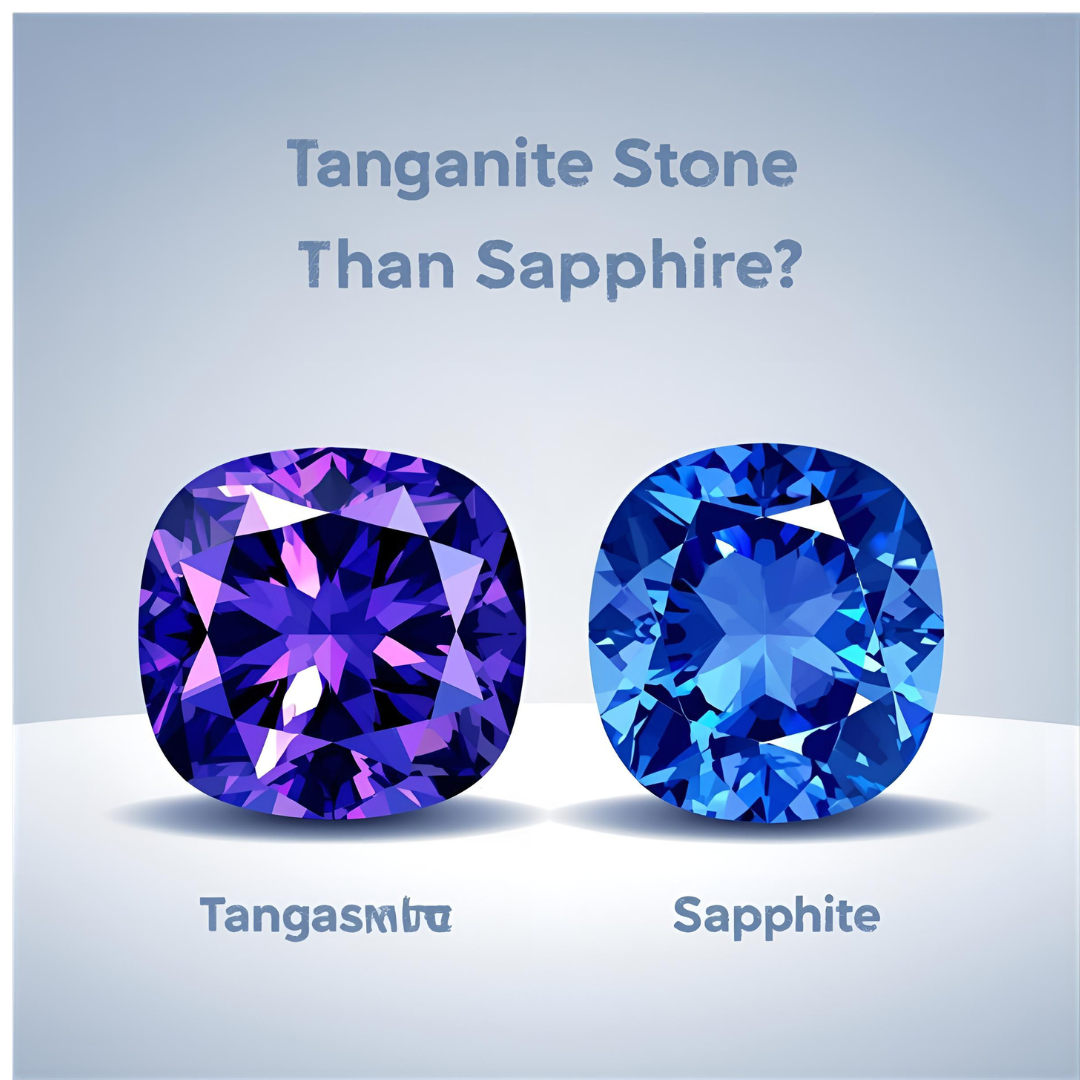
Is Tanzanite Stone Worth More Than Sapphire?
That's an excellent question that gets to the heart of gem valuation! There's no simple "yes" or "no" answer because the value of both tanzanite stone and sapphire varies enormously based on quality factors. However, we can break it down:
Generally, Top-Quality Blue Sapphire is Worth More Than Top-Quality Tanzanite
The Premium for Top Sapphires:
Rarity & Demand: Fine, untreated, vivid "cornflower" blue sapphires from legendary sources like Kashmir or Burma are among the most expensive gems on earth per carat, often exceeding high-quality diamonds. Even top untreated Ceylon (Sri Lankan) sapphires command very high prices.
Durability: Sapphire (Mohs 9) is second only to diamond in hardness, making it ideal for daily wear (especially rings). This durability adds significant value.
Market Position: Sapphire has been a cornerstone precious gem for centuries, with established, massive global demand.
Tanzanite stone Position:
Rarity: Tanzanite is geologically rarer (single source) than sapphire overall.
Value: Top-quality, saturated blue-violet tanzanite (especially larger stones over 5 carats) can be very expensive, often reaching prices comparable to mid-range sapphires or even some lower-tier fine sapphires. It can easily surpass the price of lower-quality, included, or heavily treated sapphires.
Limitations: Its lower hardness (6.5-7) and perfect cleavage make it less suitable for rings worn daily, impacting its practicality and long-term value perception for some buyers. Almost all tanzanite is heat-treated (an accepted practice) to achieve its desirable color.
When might Tanzanite stone Be Worth More?
Compared to Low-Quality Sapphire, A fine tanzanite stone will always be worth significantly more than a low-grade, included, poorly colored, or heavily fractured sapphire.
Size for Size (Mid-Range Quality): In the commercial to good quality range (not the absolute top tier), a tanzanite might command a similar or slightly higher price per carat than a sapphire of comparable size and perceived beauty, especially if the sapphire requires significant treatment (like lattice diffusion) to look good.
Rarity Factor: For collectors specifically seeking large, top-color tanzanite, its single-source rarity can drive prices very high for exceptional stones.
Key Considerations Influencing Value:
Color: For sapphire, a pure, vivid, saturated blue (without gray or green) is king. For tanzanite, a saturated blue-violet or violet-blue with minimal brown undertones is most valuable.
Clarity: Eye-clean stones are essential for high value in both.
Carat Weight: Price per carat increases significantly for larger stones in both gems, especially over 5 carats for tanzanite and over 3-5 carats for high-quality sapphire.
Cut: A well-cut stone maximizes color and brilliance.
Treatment: Untreated sapphires command massive premiums. Heat-treated sapphires are standard and accepted. Nearly all tanzanite is heated (to remove brownish tones and enhance blue/violet) - this is expected and doesn't carry the same discount as treatments on sapphire. Other treatments (e.g., fracture filling, lattice diffusion on sapphire; coating on tanzanite) drastically reduce value.
Origin: Kashmir/Burma sapphires command huge premiums. Tanzanite's origin is always Tanzania - but specific mines might carry cachet.
Rarity vs. Durability: While tanzanite stone is geologically rarer, the combination of sapphire's extreme durability, timeless demand, and the exceptional value placed on its finest untreated colors keeps it at the top of the value pyramid for blue gems.
Are Diamonds Or Tanzanite Stones More Valuable?
That's a highly nuanced question with no single answer — diamonds and tanzanite stone occupy very different positions in the gem world, and "value" depends entirely on context. Here's a breakdown to help you compare:
Key Differences Driving Value
Rarity vs. Market Scale:
Tanzanite is geologically rarer (found only in one small area of Tanzania). Some estimates suggest it's over 1,000 times rarer than diamonds in terms of new mineable material.
Diamonds are commercially rarer at the top end and have a massive, established global market. While diamond deposits exist worldwide, fine, large, colorless (D-F) diamonds with top clarity and cut are exceptionally rare and command astronomical prices. The diamond market is orders of magnitude larger and more liquid.
Value Range & Consistency:
Diamonds have an extremely wide value range, from industrial grit to multi-million dollar auction stars. Prices are highly standardized (via Rapaport reports) based on the 4Cs (Carat, Color, Clarity, Cut). A top 1ct D/Flawless/Excellent cut diamond is vastly more expensive than a low-color, included diamond of the same size.
Tanzanite stone has a much narrower (though still significant) range. Top vivid blue-violet stones over 5 carats are very valuable, but even the best tanzanite rarely approaches the per-carat prices of the finest large diamonds. Its value is less standardized and more volatile.
Durability & Utility:
Diamonds (Mohs 10) are the hardest natural substance, making them ideal for daily-wear rings.
Tanzanite (Mohs 6.5-7) is significantly softer and has perfect cleavage. It's best suited for pendants, earrings, or occasional-wear rings. This practical limitation impacts its long-term value perception and broad jewelry use.
Market Perception & Demand:
Diamonds have unparalleled cultural status (e.g., engagement rings), a massive marketing infrastructure (De Beers legacy), and universal recognition. Demand is deep and global.
Tanzanite is a relative newcomer (discovered in 1967), lacks the same universal prestige (though highly prized by collectors), and its demand is more niche (though strong). Its value is heavily tied to its single-source story.
Direct Value Comparison (Generalizations)
Top Tier vs. Top Tier:
Fine Diamonds win overwhelmingly. A 10ct D/Flawless/Excellent cut diamond can cost millions per carat. The finest large (e.g., 10ct+) vivid blue-violet tanzanite might reach tens of thousands per carat – valuable, but not in the same league as top diamonds.
High Quality Commercial Range (e.g., 1-3 carats):
It's competitive:
A well-cut 2ct vivid blue-violet tanzanite (eye-clean) will often be more valuable per carat than a comparable 2ct medium-quality diamond (e.g., H-I color, SI1-SI2 clarity).
However, a 2ct high-quality diamond (e.g., G color, VS1 clarity, Excellent cut) will typically be more valuable per carat than that same 2ct top tanzanite.
Lower Quality / Small Sizes:
Small or included diamonds are abundant and relatively inexpensive. Small, included, or poorly colored tanzanite also has low value. Neither is particularly valuable here.
Value Spectrum Analogy
Diamonds: Think of a pyramid.
A massive base of low-value stones.
A steep slope of increasing value based on quality.
A tiny, incredibly expensive peak of exceptional stones.
Tanzanite: Think of a tall, narrow spire.
A small base of low-value material.
A rapid rise to high value for good quality, especially larger sizes.
A sharp, expensive point for the very best, but this peak doesn't reach the height of the diamond pyramid's peak.
At the Absolute Peak: Diamonds are significantly more valuable. The finest diamonds are among the most expensive items on earth per carat.
Comparing High-Quality Stones (Not the Peak): It depends heavily on the specific quality and size. Top tanzanite often surpasses mid-range diamonds in per-carat value, but high-quality diamonds surpass top tanzanite.
Overall Market Value: Diamonds are vastly more valuable as a total commodity due to their immense scale, liquidity, and universal demand.
Rarity Story: Tanzanite wins on geological rarity, but diamonds win on the commercial rarity and demand for the very best.
In short:
For investment or ultimate prestige? Top diamonds reign supreme (but require immense capital).
For a stunning, rare, and valuable colored gemstone? Top tanzanite offers exceptional beauty and value within its niche, often outperforming diamonds of comparable quality tier (except at the very top diamond level).
For daily-wear jewelry? Diamonds are the practical choice.
Always buy gems based on certified quality (GIA for diamonds, GIA/Gübelin/AGL for tanzanite) from reputable dealers, regardless of type.
What's Rarer, Tanzanite Or Diamond?
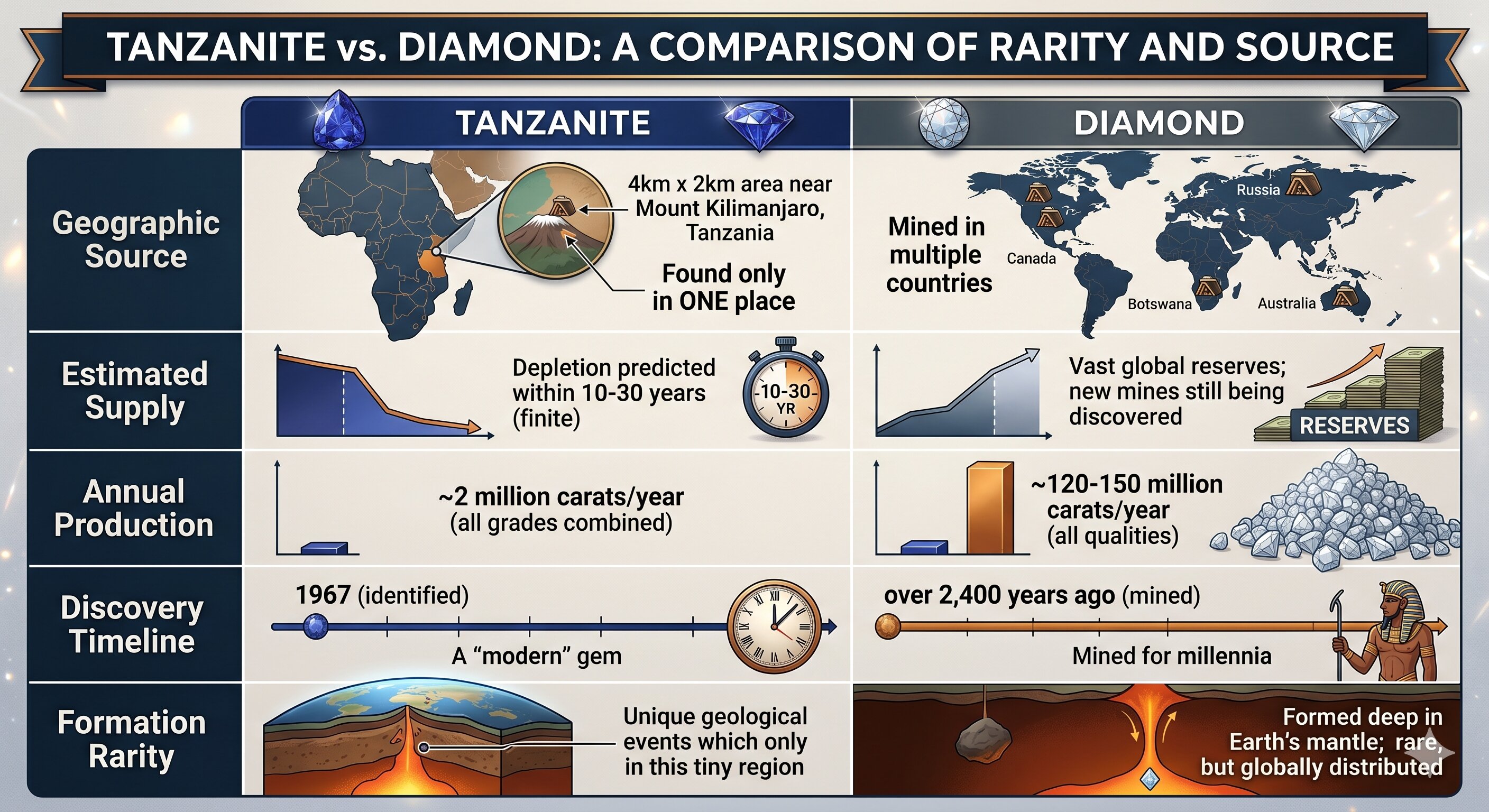
That's an excellent question that cuts to the heart of tanzanite's allure! Tanzanite stone is dramatically rarer than diamond by orders of magnitude. Here's why:
Key Rarity Factors
By the Numbers
Tanzanite is ~1,000 times rarer than diamond in terms of annual production volume.
High-quality (vivid blue-violet) tanzanite over 5 carats is exponentially rarer than a comparable diamond.
All gem-quality tanzanite ever mined would fill a single shipping container – diamonds fill warehouses.
Important Nuances
Commercial Availability ≠ True Rarity
Diamonds are perceived as less rare due to:
Controlled supply by major corporations (e.g., De Beers historically).
Vast marketing creates artificial demand.
Tanzanite has no such cartel – its scarcity is purely geological.
Quality Matters
Low-quality diamonds (industrial grade, brownish) are abundant.
Top-tier tanzanite (vivid saturation, eye-clean, 5+ carats) is vanishingly rare.
Synthetic Competition
Lab-grown diamonds flood the market, reducing natural diamond scarcity.
Synthetic tanzanite exists but is uncommon and easily detected. Most sold is natural.
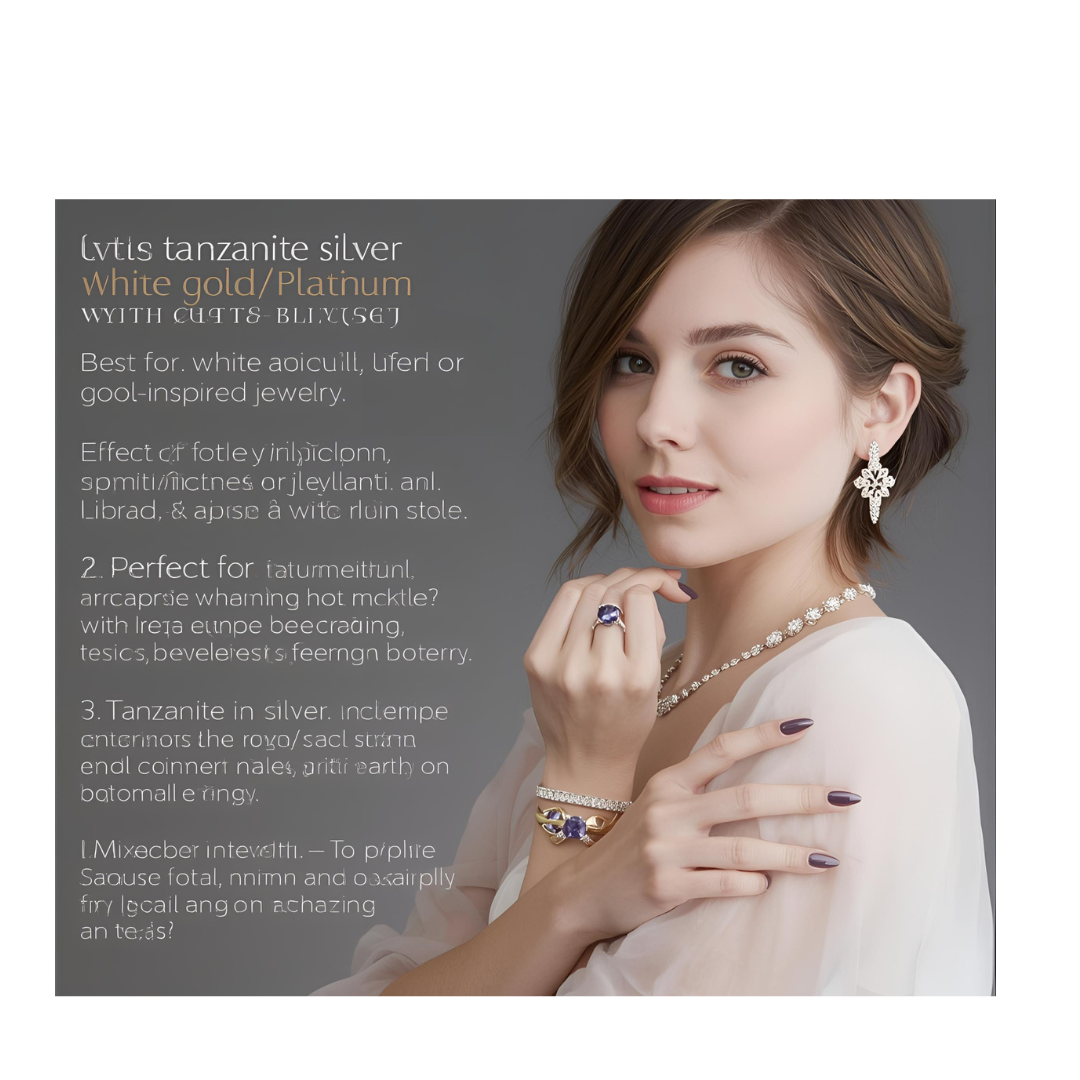
Does Tanzanite Stone Look Better With Gold or Silver?
Tanzanite’s mesmerizing blue-violet hue looks stunning in both gold and silver, but the metal you choose can dramatically alter its appearance and style. Here’s a breakdown to help you decide:
1. Tanzanite in Silver (White Gold/Platinum) – Cool & Elegant
Best for: Modern, sophisticated, or celestial-inspired jewelry.
Effect: Silver or white gold enhances tanzanite’s cool undertones, making the blue-violet pop with a crisp, icy brilliance.
Perfect for:
Gemini, Aquarius, Libra (air signs—harmonizes with their light, intellectual energy).
Engagement rings, pendants, and minimalist designs.
2. Tanzanite in Gold (Yellow/Rose Gold) – Warm & Luxurious
Best for: Vintage, royal, or bohemian styles.
Effect: Gold adds warmth and richness, creating a striking contrast that deepens tanzanite’s purple tones. Rose gold adds a romantic touch.
Perfect for:
Taurus, Leo, Sagittarius (earth & fire signs—complement their bold, sensual energy).
Statement rings, cocktail rings, and antique designs.
3. Mixed Metals – Best of Both Worlds
Why? Combining gold and silver (e.g., two-tone settings) balances tanzanite’s cool and warm tones, making it versatile for any outfit or occasion.
Classic & Timeless → Silver/White Gold
Regal & Bold → Yellow Gold
Romantic & Unique → Rose Gold
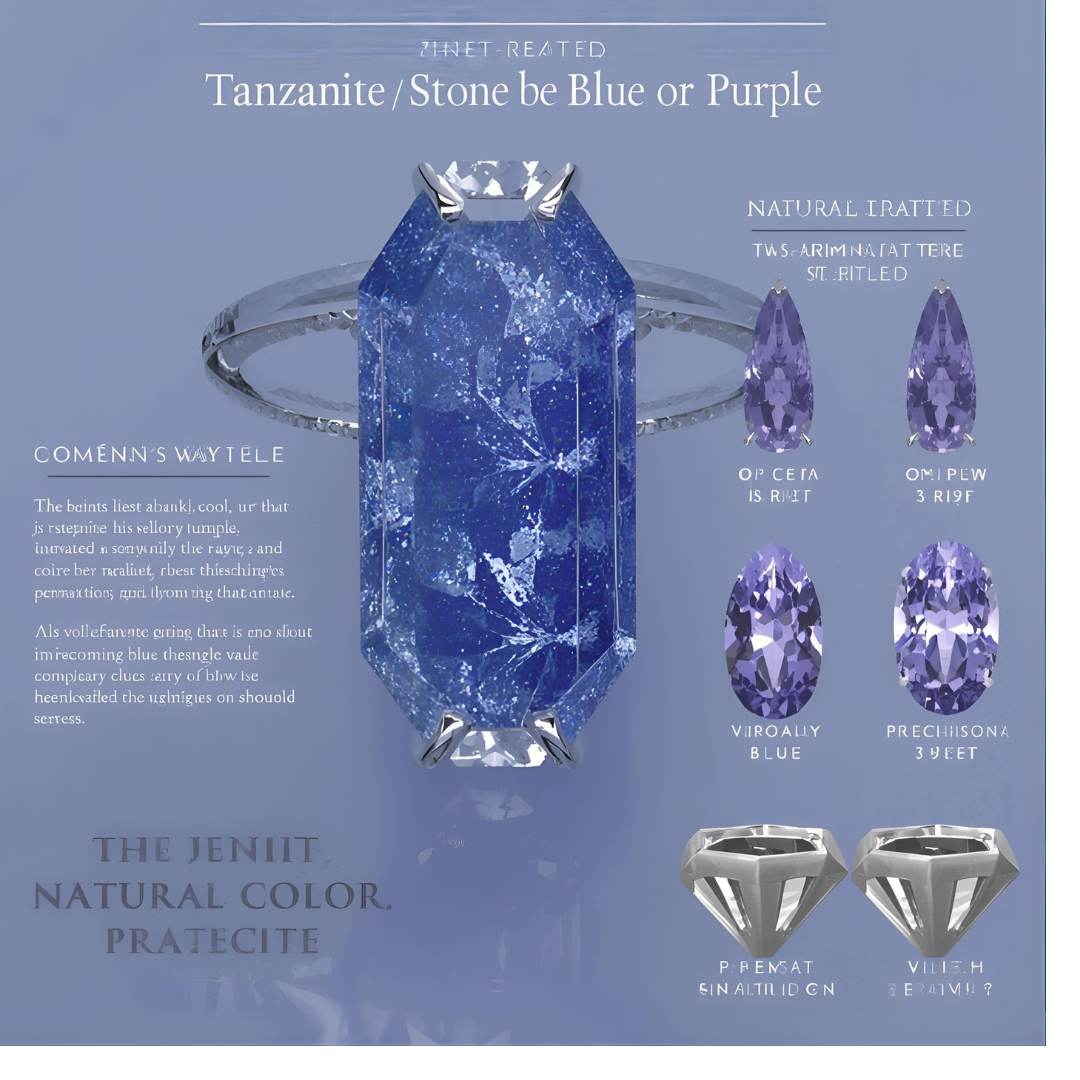
Should Tanzanite Stone Be Blue Or Purple?
That's a great question about tanzanite's most iconic feature—its mesmerizing color! Tanzanite can be blue, purple, or a stunning blend of both. There's no single "correct" color, but here's a breakdown of what to know:
Natural Color vs. Treated Color:
Natural (Rare): Mined tanzanite is typically brownish, yellowish, or greenish when first extracted. Very rarely, it might show violet or blue hints naturally, but this is uncommon.
Heat-Treated (Standard Practice): Nearly all tanzanite on the market has been heat-treated (a stable, permanent, and accepted process). This treatment transforms the brownish hues into the vibrant blues, violets, and purples tanzanite is famous for. This treatment is expected and should be disclosed.
Trichroism - The Secret to Its Magic:
Tanzanite is trichroic. This means it can show three different colors depending on the angle you view it and the direction of the light.
The three colors are typically shades of blue, violet/purple, and burgundy/reddish-brown (though the brown is minimized by heat treatment).
This is why a single tanzanite stone can shift between blue and purple as you move it!
The Blue vs. Purple Spectrum:
Predominantly Blue: Many buyers and the market highly value stones that show a strong, saturated sapphire-like blue (especially in daylight or fluorescent light). This is often considered the most desirable and valuable color, particularly if it has high clarity and saturation. Think "Tiffany blue."
Predominantly Violet/Purple: Stones that show a rich, royal violet or deep purple (especially in incandescent light) are also incredibly beautiful and sought after. This color is rarer in other gemstones and showcases tanzanite's unique character.
The Blend (Most Common): The majority of tanzanite exhibits a beautiful mix of blue and violet/purple. This is its signature look! The exact balance depends on:
The stone's orientation: How it's cut (cutters often orient it to maximize blue).
Lighting: Looks bluer in daylight/fluorescent light, more violet/purple in warm/incandescent light.
The specific stone's chemistry: Natural variations in the crystal.
What's "Best"? It Depends!
Market Preference & Value: Historically, the stronger blue hue has commanded the highest prices per carat, especially in larger sizes with high clarity. This is driven partly by its resemblance to a blue sapphire.
Personal Preference: Ultimately, beauty is subjective! Some people adore the pure blue, others love the unique violet, and many cherish the captivating color shift between the two. A fine violet tanzanite can be just as stunning and valuable as a fine blue one to the right buyer.
Rarity of Pure Violet: While blue is highly valued, a truly saturated, pure violet (without strong blue) is actually quite rare and can be equally special.
Cutting Matters:
Skilled cutters carefully orient the rough crystal to maximize the most desirable color face-up. Most aim to emphasize the blue because it's the most marketable, but they also consider size and overall beauty.
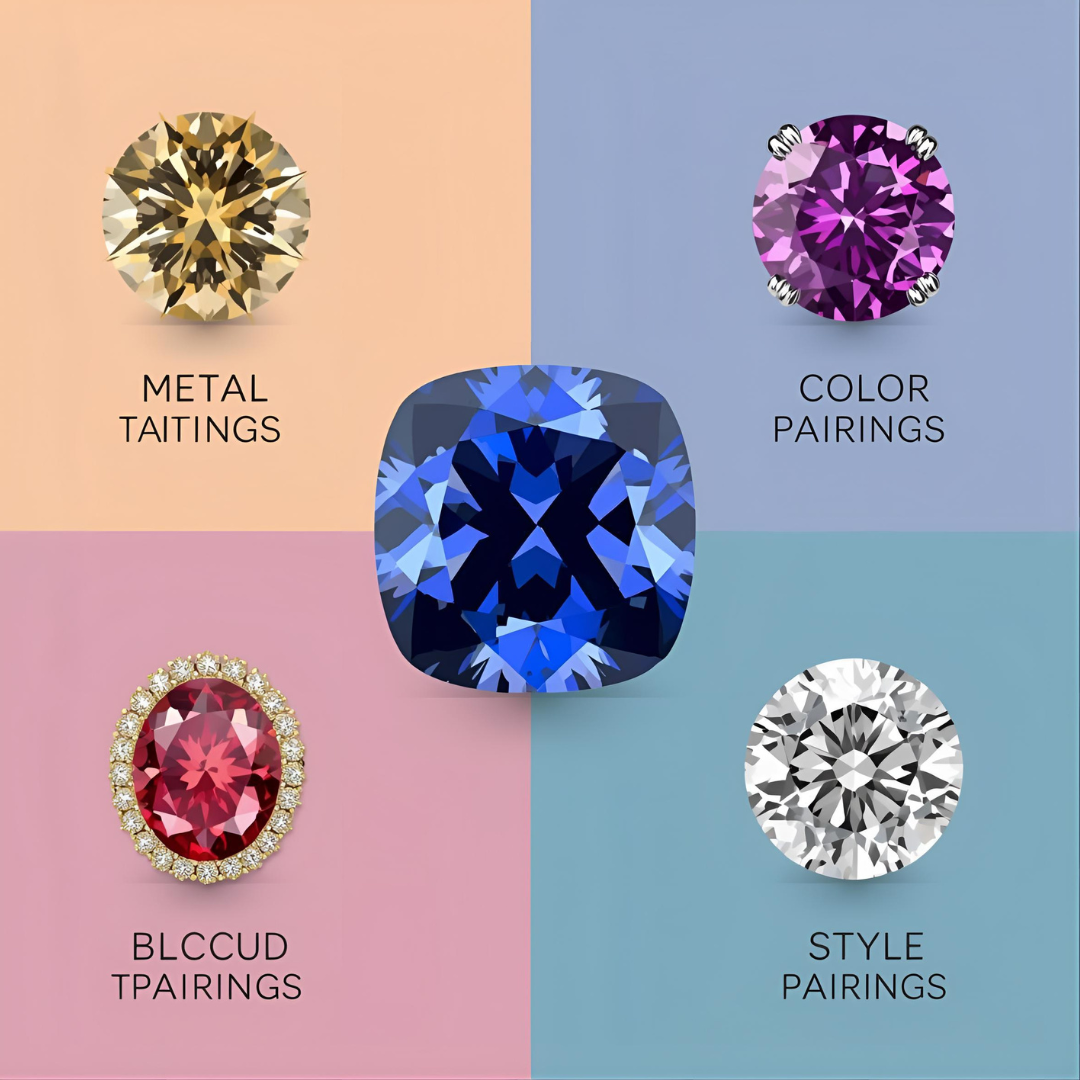
What Pairs Well With Tanzanite Stone?
Tanzanite's mesmerizing blue-violet color makes it incredibly versatile for pairings! Here's a breakdown of what works beautifully with it, covering metals, gemstones, colors, and design styles:
1. Metal Pairings:
Platinum or White Gold: The classic choice. Cool-toned metals enhance tanzanite's blue notes and create an elegant, sophisticated look. Perfect for a timeless, high-contrast aesthetic.
Yellow Gold: Creates a striking, warm contrast against the cool blues and purples. This pairing leans bolder and more vintage/bohemian. Works best with tanzanite that has stronger violet/purple undertones.
Rose Gold: Offers a romantic, contemporary vibe. The soft pink warmth complements both the blue and purple aspects of tanzanite beautifully, creating a unique and feminine look.
2 . Gemstone Pairings:
Diamonds: The ultimate companion. Diamonds add brilliance and sparkle without competing for color. They frame tanzanite beautifully (halo settings, side stones, pave bands) and enhance its elegance.
White Sapphires: A more affordable diamond alternative that provides similar sparkle and contrast.
Sapphires: Especially light to medium blue sapphires or purple sapphires. Creates a harmonious monochromatic look with varying depths of blue/violet. Pink sapphires can add a soft, romantic contrast.
Amethyst: Pairs with the purple/violet side of tanzanite for a rich, regal purple palette. Ensure the amethyst has good saturation to hold its own.
Citrine or Yellow Sapphires: The warm yellow provides a vibrant complementary contrast to tanzanite's cool blues and purples (think split-complementary color scheme). Creates a lively, energetic look.
Garnet (especially Rhodolite or Tsavorite): Deep reds (Rhodolite) offer bold contrast, while vibrant greens (Tsavorite) create a stunning complementary pop against the purple tones.
Pearls: Both white and lavender pearls offer a soft, elegant, and classic contrast to tanzanite's brilliance. Creates a sophisticated, feminine aesthetic.
Champagne Diamonds/Cognac Diamonds: Their warm, earthy tones provide a sophisticated and unique contrast that works surprisingly well, especially with yellow or rose gold settings.
Aquamarine or London Blue Topaz: Pair lighter blue aquamarine for a serene, watery look, or deeper London Blue Topaz for a richer blue-on-blue effect (analogous colors).
3. Color Theory Pairings:
Monochromatic: Pair tanzanite stone with other gems in the blue-violet-purple spectrum (sapphires, amethyst, iolite, spinel). Creates depth and harmony.
Analogous: Combine with colors next to blue-violet on the color wheel, like blue (aquamarine, topaz) and purple/red-violet (amethyst, garnet). Creates a cohesive, flowing palette.
Complementary: Pair with yellow or yellow-orange gems (citrine, yellow sapphire, fire opal, golden beryl) for maximum vibrancy and pop.
Split-Complementary: Pair with yellow AND red-violet/purple gems. Offers vibrant contrast while staying harmonious.
Triadic: Pair with red-orange (spessartite garnet, fire opal) and green (tsavorite garnet, peridot). Creates a very bold, dynamic look.
4 . Design & Style Pairings:
Protective Settings: Since tanzanite is softer, pairing it in designs with diamond shoulders, bezels, or channel-set side stones offers physical protection while adding sparkle.
Vintage Styles: Tanzanite looks stunning in intricate Art Deco, Victorian, or Edwardian-inspired settings, often paired with diamonds or seed pearls.
Modern/Minimalist: A single, well-cut tanzanite in a sleek bezel or simple solitaire setting makes a bold, modern statement. Pairs well with clean lines in the metal.
Nature-Inspired: Tanzanite's unique color works beautifully in organic designs with leaves, vines, or floral motifs, often paired with diamonds or smaller colored stones like peridot or sapphire.
Stacking Rings: Tanzanite looks fantastic stacked with:
Simple diamond bands
Yellow gold bands (plain or engraved)
Bands featuring complementary stones (citrine, garnet, amethyst, sapphire)
Textured metal bands (hammered, braided)
Important Considerations:
Protection First: If pairing in a multi-stone ring (like a three-stone ring), ensure harder stones (sapphire, diamond) are placed where they might take more impact, protecting the tanzanite.
Color Balance: Consider the dominant hue of your specific tanzanite (more blue or more purple?) when choosing complementary gems.
Metal Harmony: Ensure the metal colors of all pieces you wear together are harmonious (e.g., all white gold, or intentionally mixing warm and cool).
Occasion: Bolder pairings (like citrine or garnet) are great for evenings, or statement looks, while diamonds or sapphires are more versatile for day-to-night elegance.
In essence, Tanzanite stone pairs brilliantly with diamonds, sapphires (blue/purple/pink), citrine, pearls, and amethyst. White metals are classic, while yellow and rose gold offer striking warmth. Let the stone's unique blue-violet magic guide you, and don't be afraid to experiment! What "pairs well" ultimately depends on your personal style and the effect you want to create.
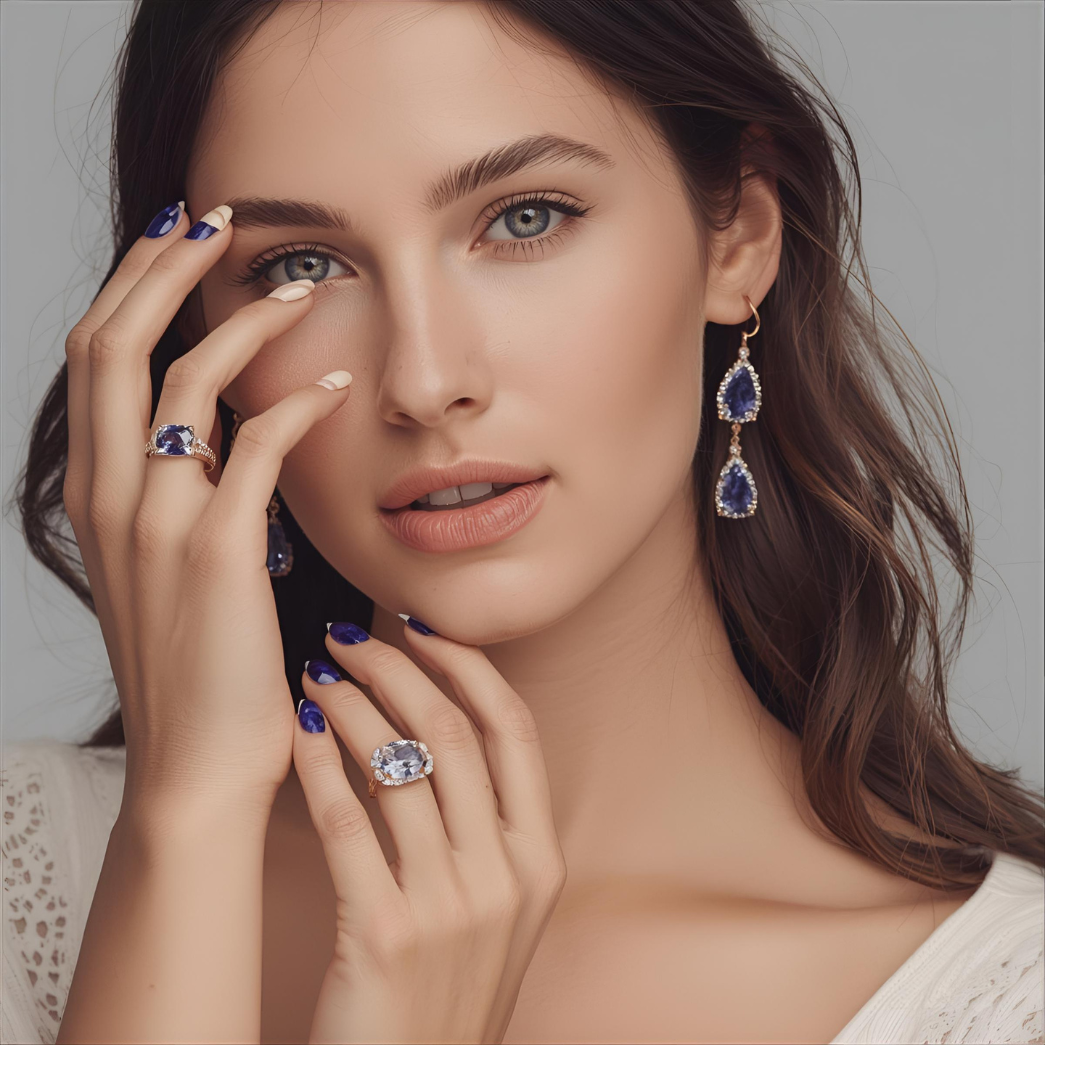
Is It Worth Buying Tanzanite Stone Jewelry?
Whether tanzanite jewelry is "worth" buying depends on your priorities, budget, and understanding of the gemstone's unique characteristics. Here's a balanced breakdown to help you decide:
Reasons it CAN be Worth Buying:
Rarity & Single Source:
Tanzanite is found in only one place on Earth – a small mining area near Mount Kilimanjaro in Tanzania. This geological rarity makes it inherently special.
Mining experts predict the economically viable deposits could be depleted within a generation (estimates vary, but 10-30 years is often cited). This finite supply drives long-term value.
Stunning & Unique Beauty:
Its trichroism (showing blue, violet, and burgundy hues depending on the light and viewing angle) is mesmerizing and unlike any other gem.
The rich, saturated blue-violet color is highly desirable and often compared to fine sapphire.
Investment Potential (Speculative):
Due to its rarity and depleting supply, high-quality tanzanite (especially larger stones over 5 carats with strong saturation and clarity) has appreciated significantly in value over the past decades.
It's often seen as a potential "heirloom" gem due to its story and scarcity.
Meaning & Significance:
As the December birthstone, it holds meaning for those born in that month.
Its discovery in the 1960s makes it a modern gem with a fascinating history, often associated with uniqueness and transformation.
Growing Popularity & Recognition:
Promoted heavily by Tiffany & Co. since its discovery, tanzanite has gained significant recognition and desirability in the fine jewelry market.
Reasons for Caution & Considerations:
Durability Concerns (The Biggest Factor):
Softness (6.5-7 on Mohs Scale): Significantly softer than sapphire, ruby, or diamond. Prone to scratches and abrasions with daily wear.
Perfect Cleavage: Can chip or cleave (split) if struck sharply on the cleavage plane. Rings are especially vulnerable.
Sensitivity: Susceptible to heat, thermal shock, acids, and ultrasonic/steam cleaning. Requires careful handling.
Not Ideal for Daily-Wear Rings: Best reserved for pendants, earrings, or occasional-wear rings. If buying a ring, a protective bezel setting is crucial.
Color Stability (Potential Fading):
Prolonged exposure to strong light and heat can cause some color fading over a very long period (years/decades). While not a rapid process, it's a consideration for an heirloom piece meant to last centuries. Storing it in darkness helps.
Market Value & Resale:
Not as Liquid as Diamonds: While high-quality stones appreciate, the resale market isn't as established or liquid as diamonds. You may not recoup your investment easily.
Value Depends Heavily on Quality: Color (saturation and hue), clarity, cut, and size dramatically impact value. "Muddy" or included stones have much lower value.
Treatment is Universal: Virtually all tanzanite is heat-treated to achieve its blue/violet color (a stable and accepted practice). Untreated stones are exceptionally rare and command huge premiums, but be wary of inflated claims.
Price:
High-quality tanzanite commands high prices per carat, especially for larger sizes. Ensure you're paying a fair market price based on the "Four Cs" (Color, Clarity, Cut, Carat).
Ethical Sourcing:
Ensure you buy from reputable dealers who can provide information on ethical mining practices and fair labor conditions in Tanzania. Look for members of groups like the Tanzanite Foundation.
So, Should You Buy? Consider This Checklist:
Do I love the color and uniqueness of tanzanite above other gems? (Emotional value matters!)
Am I buying it for the right type of jewelry? (Pendant, earrings, occasional-wear ring? Avoid daily-wear rings unless you're extremely cautious.
Am I willing to care for it properly? (Remove during activities, avoid chemicals/heat, clean gently, store safely).
Am I buying primarily as an investment? (Understand it's speculative; focus on top-quality stones over 5 carats with excellent color/clarity if so).
Am I buying primarily for beauty and rarity? (This is its strongest suit).
Have I budgeted for insurance? (Essential for a valuable and rare gem).
Have I chosen a protective setting? (Especially for rings - bezel is best).
Am I buying from a reputable source? (Get a lab report from GIA, AGL, or similar for significant stone).
Is Tanzanite Good For Daily Wear?
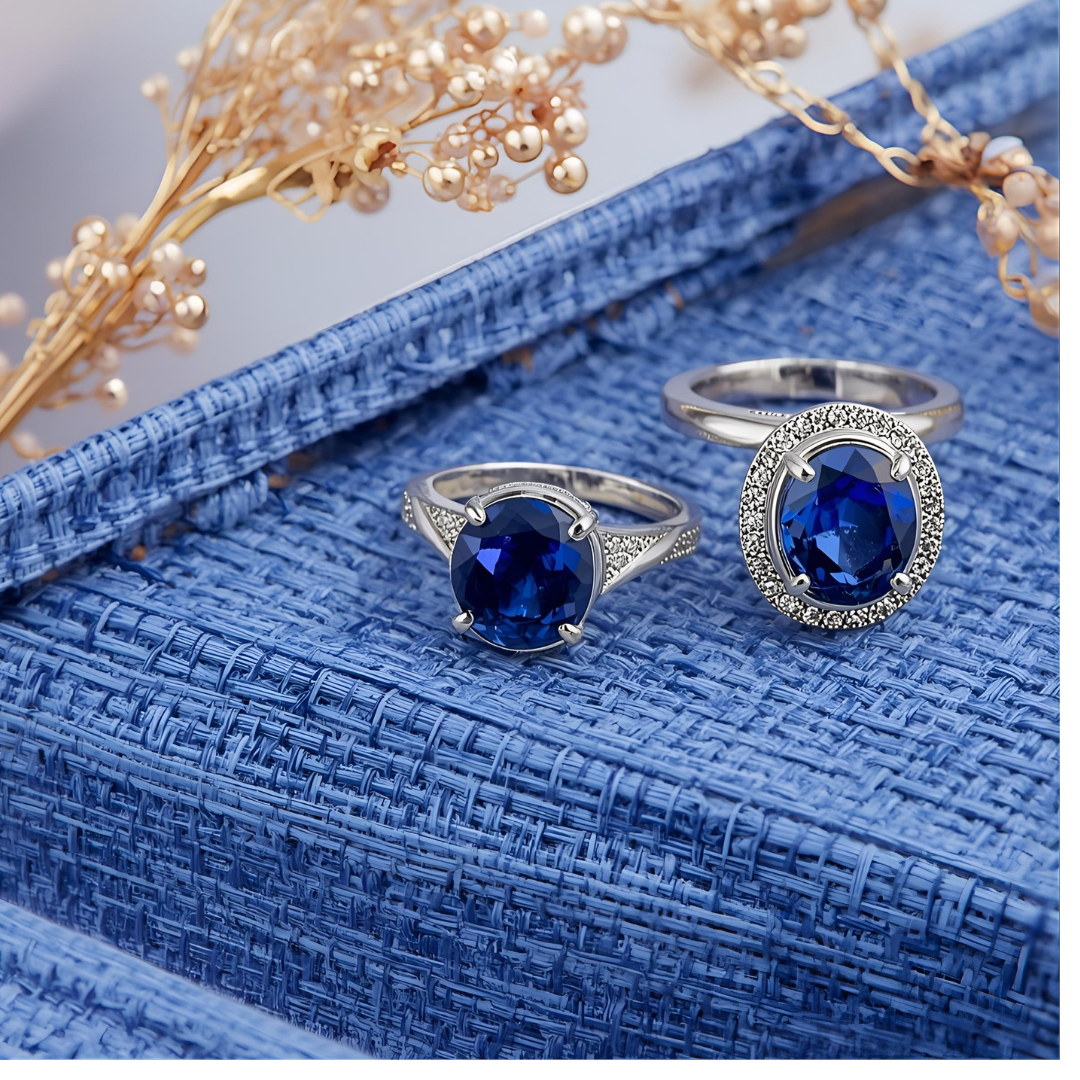
Despite its delicacy, tanzanite is still a gemstone, not glass. It can be worn regularly if you are mindful and if the piece is designed for it.
In protective settings, the setting is crucial for ringsl.
Bezel Settings: A full bezel that surrounds the gemstone offers the best protection for the vulnerable girdle (edge) of the stone.
Low Profile Settings: A design that doesn't sit high on the finger is less likely to get knocked against things.
Protected Prongs: Ensure prongs are sturdy and cover the corners well.
In Other Types of Jewelry:
Earrings and Pendants: These are excellent choices for more frequent wear. They are far less prone to the impacts and abrasion that a ring or bracelet endures.
How to Care for Tanzanite if Worn Regularly
If you decide to wear a tanzanite piece often, adopting these habits is essential:
The "Last On, First Off" Rule: Put your tanzanite jewelry on after you've finished applying makeup, perfume, and hairspray. Take it off first when you get home.
Have a Safe Spot: Keep a soft pouch in your bathroom or bedroom to store it when not in use. Never toss it loosely into a jewelry box where it can scratch or be scratched by other pieces.
Be Mindful of Activities: Remove your tanzanite jewelry for:
Household chores (cleaning, gardening)
Exercise or sports
Swimming (chlorine is harsh)
Manual labor
Clean Gently: Use only warm water, a mild dish soap, and a soft toothbrush. Rinse thoroughly and dry with a soft, lint-free cloth.
Think of tanzanite more like a fine piece of art or a delicate silk blouse—beautiful, valuable, and meant to be enjoyed, but not something you would wear for rugged, everyday activities. If you desire a durable blue-purple stone for a daily ring, consider a sapphire (which can be treated to achieve a color similar to tanzanite), spinels, or even aaniolite as more robust alternatives.
How Can You Tell A Good Tanzanite Stone?
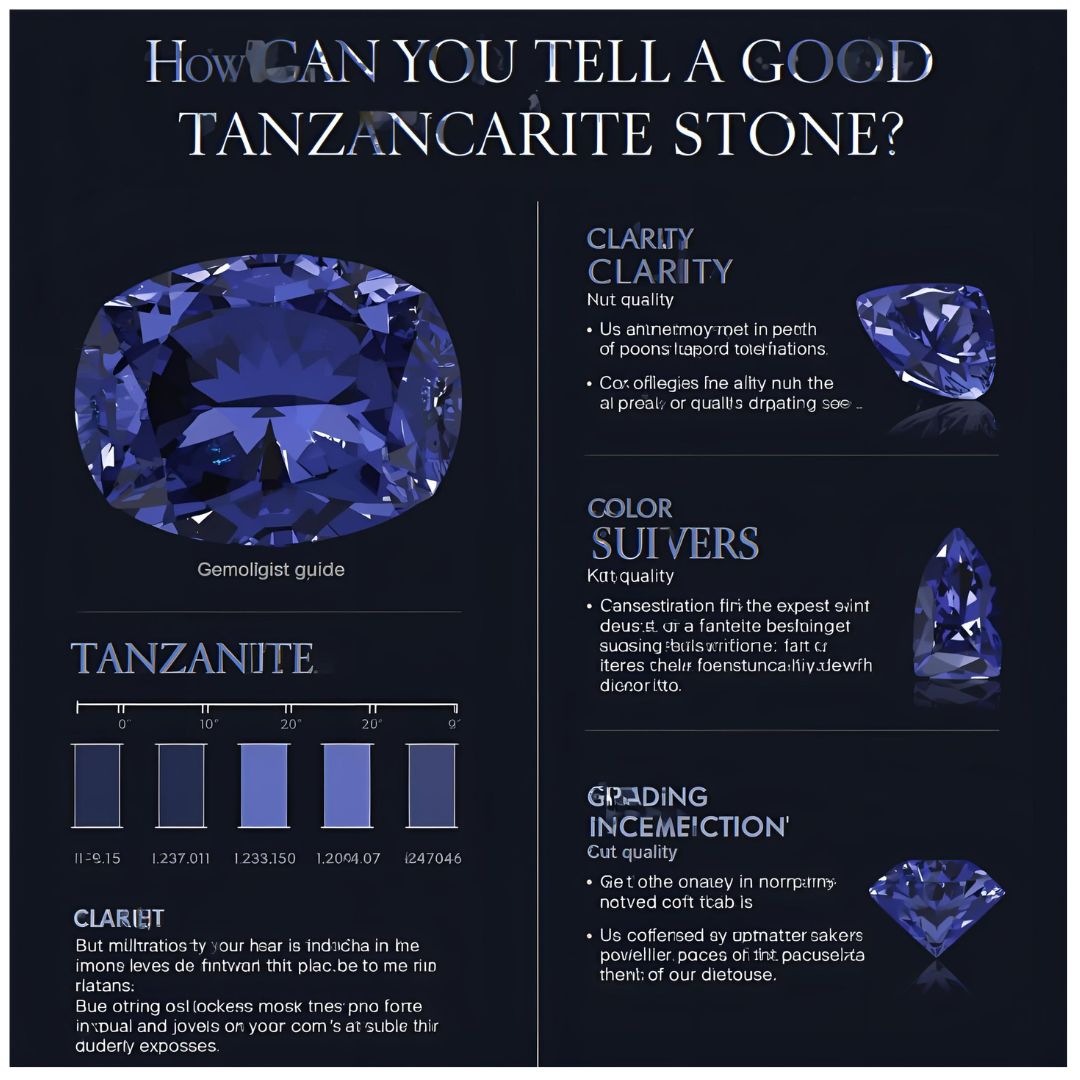
Determining a "good" tanzanite involves evaluating the "Four Cs" (Color, Clarity, Cut, and Carat Weight) – but with tanzanite-specific nuances. Here’s how to assess quality:
1. COLOR (The MOST Important Factor)
Saturation (Intensity):
Top Tier: Vivid, saturated "electric" blue-violet or deep royal violet. Avoid stones that look washed-out, grayish, or brownish.
Value Driver: Rich saturation is paramount. A smaller stone with intense color is often worth more than a larger, paler one.
Hue (Dominant Color):
Blue vs. Purple: Market preference leans toward strong blue (resembling sapphire), especially in daylight. However, rich violet/purple is rarer and equally prized by collectors.
Avoid: Muddy colors or stones with visible brown/green undertones.
Pleochroism (Color Change):
Check in Different Lights: High-quality tanzanite shows dramatic shifts: blue in daylight, violet in incandescent light, and hints of burgundy from certain angles.
Desirable: A vibrant, balanced shift between blue and violet.
2. CLARITY
Eye-Cleanliness:
Ideal: Flawless to eye-clean (no visible inclusions to the naked eye). Tanzanite is a Type I gemstone (typically clean), so inclusions should be minimal.
Acceptable Inclusions:
Minor silk, feathers, or healed fractures are common, but they should not affect brilliance or durability.
Avoid:
Visible cracks, chips, or inclusions that dull the stone or pose cleavage risks.
3 . CUT (Critical for Color & Brilliance)
Maximizing Color:
A skilled cutter orients the stone to emphasize blue or violet (usually blue for market appeal). Tilt the stone – if it turns brownish, it’s poorly cut.
Proportions & Polish:
Look for sharp facets, even symmetry, and high polish. Avoid windowed (see-through) or overly dark stones.
Shape:
Cushion, oval, and emerald cuts are most common. Round brilliants are rare due to their o rough crystal shape.
4. CARAT WEIGHT
Price Per Carat Increases Dramatically:
Larger stones (5+ carats) with top color/clarity are exponentially rarer and more valuable.
Budget Tip:
Slight color or clarity compromises in larger stones can offer better value if the cut is excellent.
Critical Additional Checks:
Treatment Disclosure:
Heat Treatment: 99% of tanzanite is heated to enhance blue/violet. This is permanent and accepted, but must be disclosed. Avoid sellers claiming "untreated" without proof (lab report).
Coating/Fracture Filling: Uncommon but unacceptable. Ask explicitly.
Lab Reports:
Always request a certificate from reputable labs (GIA, AGL, GRS) for stones >1 carat. This verifies:
Natural origin
Color description
Clarity grade
Treatments
Carat weight
Origin & Ethics:
Tanzanite is only from Tanzania. Buy from dealers supporting ethical mining (e.g., members of the Tanzanite Foundation).
Practical Evaluation Tips (When Viewing):
Lighting: Examine under daylight and warm indoor light to see color shifts.
Background: Place on a white surface to judge true color.
Magnification: Use a 10x loupe to check inclusions and cut quality.
Compare: View multiple stones side-by-side. Color differences become obvious.
Value Summary (Highest to Lowest Impact):
Color Saturation (Vivid > Pale)
Clarity (Eye-clean > Included)
Cut Quality (Maximizes color + brilliance)
Carat Weight (Larger = rarer, but color rules)
Red Flags to Avoid:
Stones with visible brown/gray undertones.
Heavy inclusions or surface cracks.
Sellers who can’t provide treatment disclosure.
Prices that seem "too good to be true" (likely synthetic or low quality).
The Ideal "Good" Tanzanite:
A vividly saturated blue-violet stone (5+ carats), eye-clean, with excellent cut to maximize pleochroism, backed by a reputable lab report, set in a protective bezel for jewelry.
If investing, prioritize color and size; for beauty, choose what captivates you under light. Always buy from trusted jewelers!
“You now know the month, the value, the rarity comparisons, the metal pairings, the color science, the buying advice, and the evaluation secrets. The only question left: will you wear the miracle from Kilimanjaro?
Our current collection includes a limited number of natural tanzanites — from vivid AAA blues to softer lavender hues. When stones of this color saturation are gone, the mines will not replace them. Geologists say we have 20 years left. Maybe less.
This is not just a gemstone. It is a single hill in Tanzania, discovered in your lifetime, and destined to run dry. Wear it as a reminder: some beauties are not forever. That is why they matter now.”
[Button: Claim Your Tanzanite →]
News for Friday 05 June, 2026
- Tourmaline Guide: Meaning, Price, Colors and Benefits | October Birthstone
- The Emerald Ring: A Symbol of Love and Good Fortune
- Stacking Rings Guide: How to Stack, Size, Style and Meaning | Complete Guide
View all news for Friday 05 June, 2026 on one page
Recent News
- Thursday 04 June, 2026
- Wednesday 03 June, 2026
- Tuesday 02 June, 2026
- Monday 01 June, 2026
- Sunday 31 May, 2026