

Sapphire Stone Guide: Meaning, Price, Colors and How to Tell Real
Sapphire Stone: The Ultimate Guide to Meaning, Price, Colors & How to Tell Real
The sapphire is a gemstone rich with meaning, history, and symbolism that spans centuries and cultures. Its significance goes far beyond its stunning beauty.
“Ancient Persians believed the sky was blue because the earth rested on a giant sapphire, and the stone‘s reflection painted the heavens. Kings and queens wore sapphires not for vanity, but for protection — they believed the gem would shield them from envy, poison, and betrayal. In the Middle Ages, clergy wore blue sapphires to symbolize Heaven itself. And in 1981, when Prince Charles gave Diana a 12-carat blue sapphire engagement ring, he didn‘t choose a diamond. He chose the stone of royalty, fidelity, and eternal truth. That same ring now belongs to Catherine, Princess of Wales. Some stones outlast empires. Sapphires outlast them all.”
The same stone that painted the sky for Persians and crowned Diana‘s finger now awaits your September birthday — or your own royal promise. Every sapphire in our collection is chosen for color saturation and clarity, from cornflower blue to padparadscha pink.”
[Button: Explore Sapphire Jewelry →]
Here are the details of the table of contents;
- What Is The Meaning Of The Sapphire Stone?
- Sapphire Stone Benefits
- How To Tell If It's A Real Sapphire?
- Is Emerald Cut Good For Sapphire?
- Is Sapphire More Expensive Than Emerald?
- Are Sapphire Stones Worth Money?
- Is A Sapphire More Expensive Than A Diamond?
- What Color Of Sapphire Is Most Expensive?
- How Much Is 1 Carat Of A Sapphire?
- What Is Sapphire Stone Good For?
- Is Sapphire Good For Gemini?
- What Power Of The Sapphire?
- Why Are Sapphires So Special?
- What Is The Rarest Color Of Sapphire?
What Is The Meaning Of The Sapphire Stone?
Here is a comprehensive look at the meaning of the sapphire stone.
Overarching Themes
Across most cultures and histories, sapphire is consistently associated with:
Wisdom & Knowledge
Royalty & Nobility
Truth & Honesty
Protection & Good Fortune
Divine Favor & Spirituality
Historical and Cultural Meanings
Ancient Persia: The Persians believed the sky was blue because it was reflected by the earth's giant sapphire. They saw it as a celestial stone, a piece of heaven on earth.
Ancient Greece and Rome: Kings and queens wore sapphires to protect themselves from envy and harm. They believed the stone would attract favor from the gods and that it could guard against negative energies and poisoning.
Middle Ages: During this period, clergy wore blue sapphires to symbolize Heaven, while commoners thought the gem attracted heavenly blessings. It was also believed to suppress immoral thoughts and promote chastity.
British Royalty: Perhaps the most famous modern association is with royalty. Sapphires have been a staple in royal jewelry collections for generations. The most iconic example is the 12-carat blue sapphire engagement ring that belonged to Princess Diana and now belongs to Catherine, Princess of Wales. This cemented the stone's image as a "royal gem."
Symbolism by Color
While blue is the most classic color, sapphires come in every hue (except red, which is a ruby). Each color carries its own unique meaning:
Blue Sapphire: The most traditional color. It symbolizes wisdom, loyalty, truth, and integrity. It's associated with focus, clarity, and calming the mind.
Pink Sapphire: Represents love, compassion, and emotion. It symbolizes unconditional love and is often associated with healing emotional wounds and promoting forgiveness.
Yellow Sapphire: A stone of prosperity, abundance, and joy. It's believed to attract wealth and success while promoting creativity and self-expression.
Padparadscha Sapphire: This rare pink-orange variety symbolizes uniqueness, spiritual growth, and immense joy. Its name comes from the Sinhalese word for "lotus blossom."
White Sapphire: Represents purity, innocence, and new beginnings. It is often seen as a symbol of clarity and truth, making it a popular diamond alternative.
Green Sapphire: Symbolizes peace, nature, and renewal. It is connected to balance, growth, and the healing power of the natural world.
Purple Sapphire: Associated with intuition, spirituality, and mysticism. It is believed to connect the physical world with higher consciousness.
Modern and Personal Meanings
Today, the sapphire continues to hold powerful significance:
Engagement Rings: Sapphires are the second most popular engagement ring stone after diamonds. They symbolize faithfulness, sincerity, and a lasting commitment. A sapphire ring is often chosen to represent a unique, deep, and loyal love.
Birthstone: Sapphire is the official birthstone for September. It is believed to bring truth, protection, and good health to those born in this month.
5th and 45th Anniversaries: Sapphire is the traditional gift for these milestones, symbolizing the strength and durability of a long-lasting relationship.
A Talisman for Focus: Many believe sapphire helps to focus the mind, release mental tension, and find mental clarity. It's considered a stone for students and those seeking to achieve their goals.
Summary of Meanings
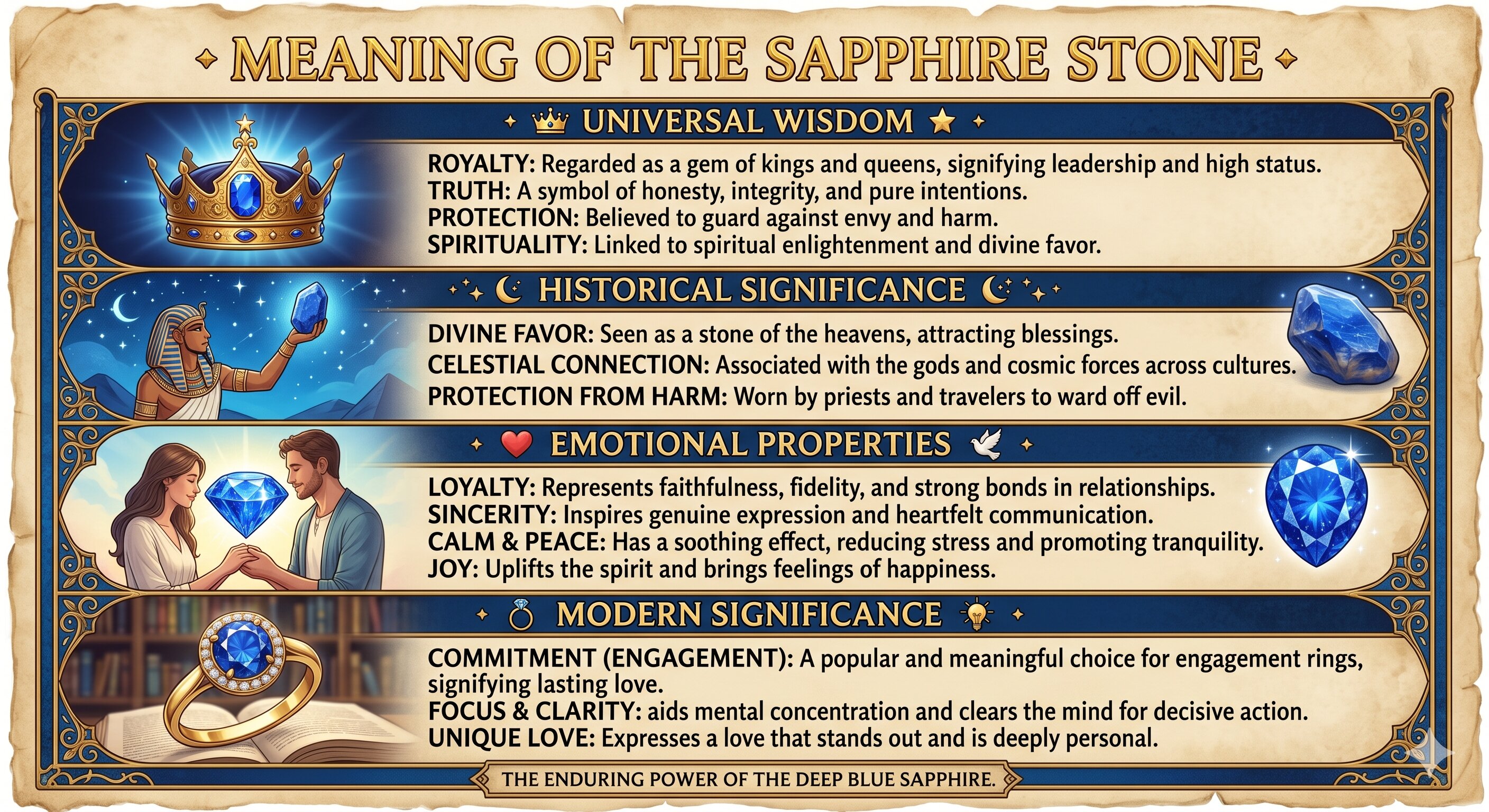
In essence, the sapphire is more than just a beautiful gem. It is a symbol of deep wisdom, unwavering loyalty, and divine protection. Whether chosen for its royal history, its stunning array of colors, or its personal symbolism, a sapphire carries a weight of meaning that makes it a truly special possession.
Sapphire Stone Colors
Sapphires are renowned for their incredible range of colors, offering a spectrum of options far beyond the classic blue. This variety is caused by trace elements present during the stone's formation.
Here is a comprehensive guide to the different colors of sapphire.
The Core Concept: Corundum
First, it's important to know that sapphire is a variety of the mineral corundum (aluminum oxide). Any corundum that is not red and not colorless is called a sapphire.
Red corundum = Ruby
Every other color of corundum = Sapphire
The Color Spectrum of Sapphire
1. Blue Sapphire
The Classic Ranges from pale sky blue to deep, velvety midnight blue.
Cause: Trace elements of titanium and iron.
Most Prized Hue: A vivid, medium-deep cornflower blue. The most valuable origins are Kashmir (rare), Burma (Myanmar), and Sri Lanka (Ceylon).
2. Pink Sapphire
Romantic & Delicate. Ranges from soft pastel pink to vivid hot pink.
Cause: Trace elements of chromium. The more chromium, the redder the stone. The line between a pink sapphire and a ruby is technically defined by color saturation.
Significance: Extremely popular in modern engagement rings for its feminine and unique appeal.
3. Yellow Sapphire
Sunny & Joyful. It can be a light buttery yellow, a bright canary yellow, or a rich golden-orange.
Cause: Trace elements of iron.
Significance: Known as a stone of prosperity and wisdom. Generally offers excellent value for its vibrant color.
4. Padparadscha Sapphire
The Rarest & Most Coveted. An exquisite and delicate blend of pink and orange, resembling a lotus flower or a tropical sunset.
Cause: A specific combination of chromium and iron impurities, along with unique formation conditions.
Significance: The name comes from the Sinhalese word for "lotus blossom." It commands the highest prices of any sapphire color due to its rarity.
5. Green Sapphire
Earthy & Unique. Often a subtle, greyish or olive green rather than a pure emerald green.
Cause: The presence of iron.
Significance: Less common as a center stone but valued for its sophisticated, understated elegance.
6. Purple Sapphire
Regal & Mysterious. Ranges from a pale lavender to a deep, royal amethyst-like purple.
Cause: Trace elements of vanadium and chromium.
Significance: Offers a durable alternative to amethyst (which is a 7 on the Mohs scale, while sapphire is a 9).
7. White Sapphire (Colorless)
The Pure Alternative. Essentially colorless corundum.
Cause: The absence of any significant trace elements.
Significance: A popular and very durable alternative to diamonds in engagement rings. It has a different, more "glassy" sparkle compared to a diamond's fiery brilliance.
8. Teal & Parti-Sapphires
The Multi-Colored Marvels.
Teal Sapphires: A beautiful mix of blue and green, creating a stunning oceanic color.
Parti-Sapphires: These stones show two or more distinct colors in a single stone (e.g., blue and yellow, or green and yellow) due to color zoning during formation.
Cause: Variations in trace elements during crystal growth.
Significance: Highly unique and sought after for their one-of-a-kind appearance, often sourced from Australia and Madagascar.
9. Fancy Sapphires
This is a catch-all term for other colors, including:
Orange Sapphires: Pure orange hues are rare and vibrant.
Black Sapphires: Opaque and dark, often used in men's jewelry for a bold look.
What Causes the Color? A Quick Reference
.jpg)
Choosing a Sapphire Color
Personal Preference: The most important factor is what you love.
Rarity & Value: Padparadscha and rich, untreated Kashmir blue sapphires are the rarest and most valuable.
Treatments: Most sapphires are heat-treated to improve color and clarity. This is a permanent and accepted practice. Always ask if a stone has been treated.
In short, the world of sapphire colors is vast and beautiful, offering a perfect hue for every taste and style, from the timeless elegance of blue to the unique charm of parti-color.
Learn more about sapphire's geological properties on Wikipedia's sapphire page.
Sapphire Stone Benefits
The benefits of sapphire stones are woven through centuries of history, culture, and metaphysical belief systems. It's important to note that many of these benefits are based on lore, tradition, and crystal healing practices, not scientific evidence.
Here is a comprehensive look at the purported benefits of sapphire, categorized for clarity.
Overarching Symbolic Benefits

Across cultures, sapphire is consistently associated with:
Wisdom & Knowledge
Royalty & Nobility
Truth & Honesty
Divine Favor & Spiritual Insight
Protection & Good Fortune
Benefits by Category
1. Mental & Emotional Benefits
Sapphire is primarily known as a stone of the mind. It is believed to:
Promote Mental Clarity: Helps to clear confusion, focus the mind, and release unwanted thoughts.
Calm the Nerves: Said to have a peaceful, calming energy that can soothe anxiety and bring peace of mind.
Encourage Self-Discipline: Believed to help with organization, discipline, and achieving one's goals.
Stimulate Concentration: Often used as a talisman for students or those needing to focus on complex tasks.
Uplift Mood: The yellow sapphire is associated with attracting joy, prosperity, and banishing negativity.
2. Spiritual & Metaphysical Benefits
In metaphysical traditions, sapphire is considered a powerful spiritual stone:
Enhance Intuition: Believed to open the mind to beauty, intuition, and spiritual truth.
Connect to Higher Consciousness: Often used in meditation to access higher states of awareness and connect with spiritual guides.
Align the Chakras: Different colored sapphires are associated with different energy centers (chakras).
Blue Sapphire: Throat Chakra (communication, truth)
Indigo Sapphire: Third Eye Chakra (intuition, perception)
Pink Sapphire: Heart Chakra (love, compassion)
3. Physical Well-being (Traditional Beliefs)
In ancient and alternative healing practices, sapphire was thought to aid:
Thyroid and Glandular Systems: Blue sapphire was believed to help regulate the glands.
Nervous System: Its calming energy was said to help with neuralgia and nerve-related pain.
Eye Health: Ancient Romans believed sapphires could improve eyesight.
Cell Regeneration: Some traditions hold that sapphire can help with cellular regeneration and healing.
4. Practical & Modern Benefits
Durability: On a practical, non-metaphysical level, sapphire's supreme hardness (9 on the Mohs scale) makes it an excellent choice for everyday jewelry like engagement rings. It is highly resistant to scratching, a very real benefit for long-term wear.
Birthstone: As the September birthstone, it serves as a personal and meaningful gift.
Anniversary Gem: It is the traditional gift for the 5th and 45th wedding anniversaries, symbolizing strength and durability in a relationship.
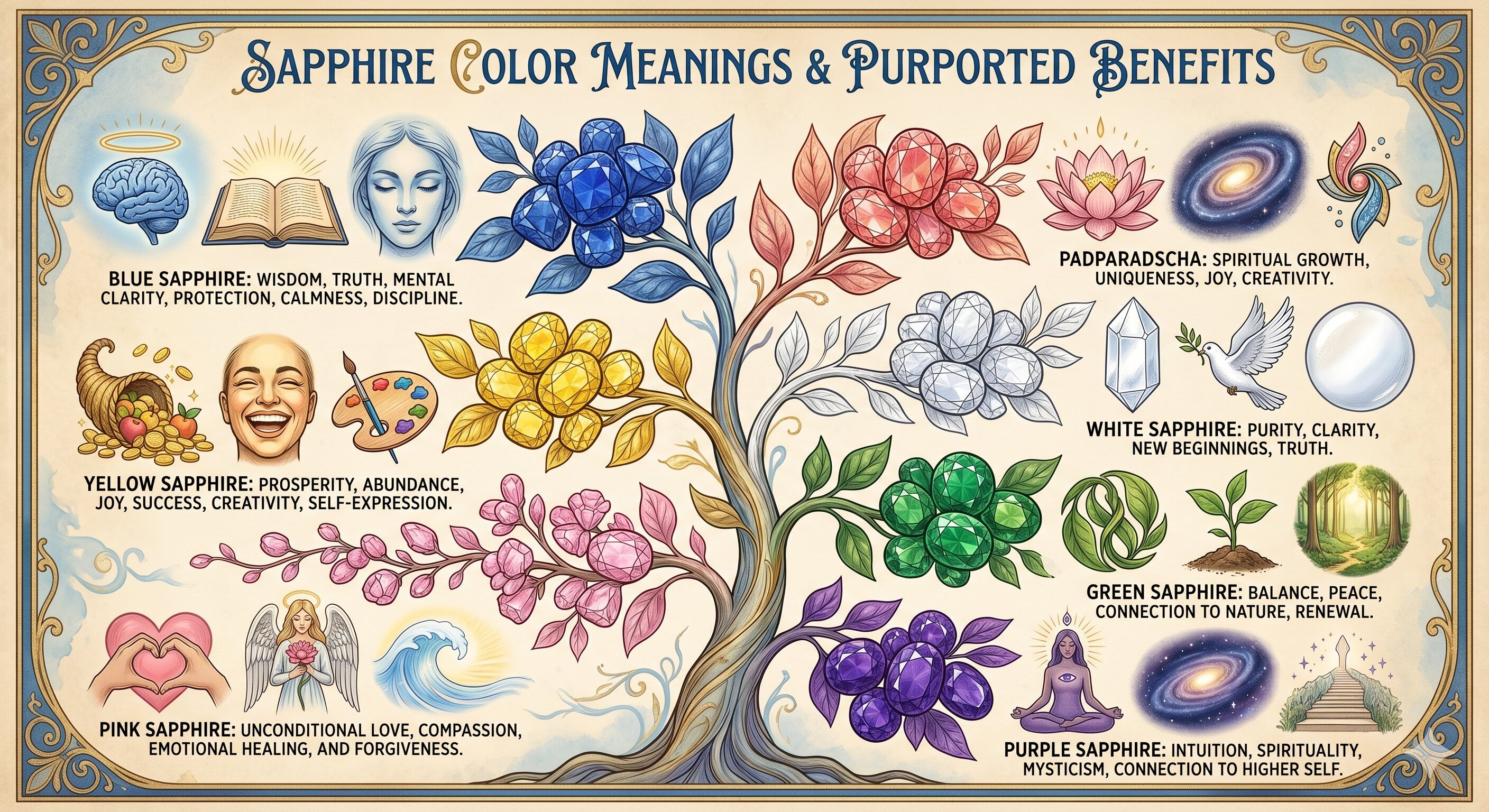
Benefits by Color (A Summary)
Different colored sapphires are associated with specific benefits:
Important Disclaimer
It is crucial to approach these benefits with understanding.
Not Medical Advice: The benefits listed are from historical, cultural, and metaphysical traditions. They are not a substitute for professional medical advice, diagnosis, or treatment. Sapphire should be used as a complementary tool for wellness, not a medical solution.
The Placebo Effect: Much of the power of crystal healing is attributed to the placebo effect—the powerful belief of the user that the stone is helping them. This belief itself can be a potent tool for focus and calm.
How To Use Sapphire for Its Benefits
If you are interested in exploring these traditional benefits, you can:
Wear it as Jewelry: Keeping the stone close to your skin is a common way to connect with its energy.
Meditate with it: Hold a sapphire tumbstone or place it on your corresponding chakra during meditation.
Place it in Your Environment: Keep a sapphire on your desk to promote focus or on your bedside table for peaceful sleep.
Set an Intention: The most important step is to program the stone with your intention (e.g., "I wear this sapphire for clarity and focus").
The benefits of sapphire are a blend of its legendary history, its stunning physical properties, and the personal meaning we assign to it. Whether you are drawn to it for its beauty, its symbolic power, or its durability, it remains a gemstone of profound significance.

How To Tell If It's A Real Sapphire?
Determining if a sapphire is real can be challenging, especially with high-quality imitations, but there are several methods you can use, from simple at-home tests to professional verification.
Here is a comprehensive guide, from things you can do yourself to steps that require a professional.
Part 1: Simple At-Home Tests (Initial Indicators)
These tests can raise red flags but are not 100% conclusive.
1. The Fog Test
How to do it: Hold the stone and breathe on it heavily to fog its surface, as you would with a mirror.
What to look for:
Real Sapphire: The fog will dissipate almost instantly (within 1-2 seconds) because sapphire is an excellent conductor of heat.
Glass or Fake: The fog will linger on the surface for several seconds because glass is a poor thermal conductor.
2. Visual Inspection (Under a Loupe if Possible)
Look for Inclusions (Flaws): Real natural sapphires almost always have some minor imperfections called "inclusions." These can look like:
Silk: Fine, needle-like inclusions of the mineral rutile.
Crystals: Specks of other minerals trapped inside.
Color Zoning: Areas of lighter and darker color, often in angular patterns.
What to be wary of:
Perfectly Flawless: A stone that is completely clean and flawless is a major red flag. It is either synthetic (lab-made) or glass.
Gas Bubbles: Round, isolated bubbles are a classic sign of glass. Natural inclusions in sapphire are crystalline, not round and bubbly.
3. Check for Signs of Wear
How to do it: Examine the stone, especially along edges and facets (the flat, polished surfaces).
What to look for:
Real Sapphire: It is extremely hard (9 on the Mohs scale) and very resistant to scratching. The facets will be sharp and well-defined, even in old jewelry.
Glass or Quartz: Softer materials will show signs of abrasion and scratching. The facet edges may be rounded and worn down.
4. The Weight Test (Requires Experience)
The Concept: Sapphire (corundum) has a high "specific gravity" — it is denser and heavier than most common fakes like glass or quartz.
How to do it: If you have a similar-sized stone you know is glass or quartz, compare its weight in your hand. A real sapphire should feel noticeably heavier.
Note: This is very subjective and requires practice.
5. The Refractivity Test (Sparkle Test)
The Concept: Sapphire has a high "refractive index," meaning it bends light strongly, resulting in exceptional brilliance (white light sparkle) and fire (colored light sparkle).
How to do it: Compare the stone's sparkle to a known material like glass or cubic zirconia (CZ) under a good light.
What to look for:
Cubic Zirconia (CZ) has more "fire" (rainbow colors) than a natural sapphire.
Glass will have a much duller, more "glassy" appearance with less life and sparkle.
This takes a trained eye to judge accurately.
This is the only way to be 100% certain. A qualified gemologist has the tools and expertise to provide a definitive answer.
6. Take it to a Certified Gemologist or Reputable Jeweler
A professional will perform tests that are impossible to do at home:
Hardness Tester: They can use a specialized tool to confirm the gem's hardness is a 9 on the Mohs scale without damaging it.
Refractometer: This device measures the gem's precise refractive index, which is a unique identifier for sapphire.
Microscope Examination: They will examine the internal inclusions under high magnification. The type of inclusions (e.g., rutile silk, specific crystal formations) is the ultimate fingerprint of a natural sapphire. They can also identify the tell-tale signs of synthetics (e.g., curved growth lines in lab-created stones).
Polariscope: This tool helps distinguish between single-refractive (sapphire) and double-refractive (many imitations) stones.
They will also be able to tell you if the stone is:
Natural: Mined from the earth.
Synthetic (Lab-Created): Has the same chemical composition as natural sapphire but was grown in a lab. It is a "real" sapphire, but not natural, and is far less valuable.
Imitation: A completely different material, like glass, spinel, or C, Z, made to look like sapphire.
Treated: Most sapphires are heat-treated to improve color. This is standard but should be disclosed, as it affects value.
Summary: Quick Checklist of Red Flags
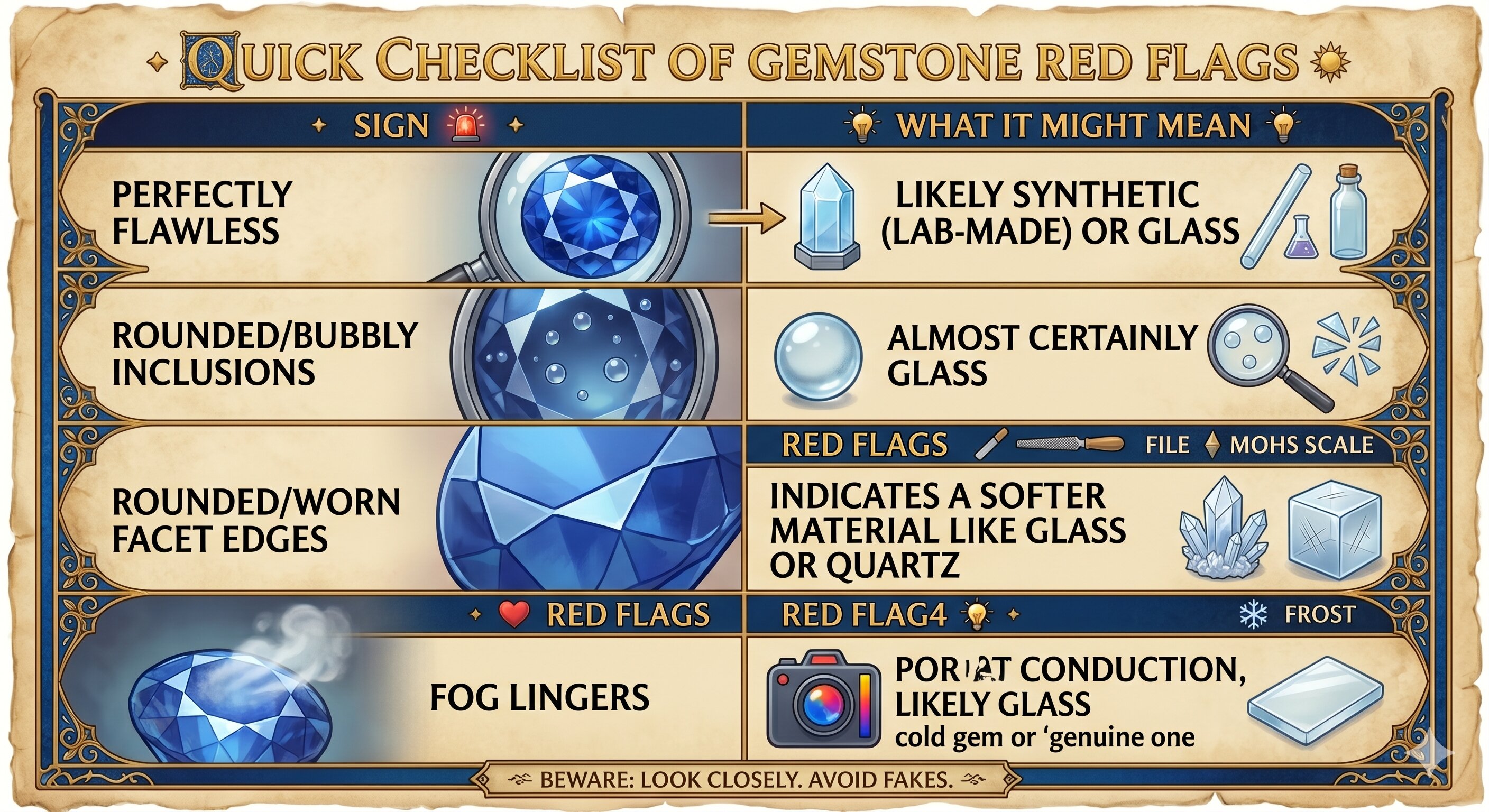
Extreme Rainbow Fire is likely a Cubic Zirconia (CZ) or another simulant.
Very Low Price: If it seems too good to be true, it almost always is.
Final and Most Important Advice: For any significant purchase or for verification of an heirloom piece, always get a professional appraisal from a certified gemologist (e.g., with a G.G. (Graduate Gemologist). The small fee for an appraisal will save you from potentially costly mistakes.
.png)
Is Emerald Cut Good For Sapphire?
The emerald cut can be a stunning and excellent choice for a sapphire, but it comes with a few important considerations. It's not a simple "yes" or "no" — it's about understanding the unique interaction between this specific cut and this specific gemstone.
Here’s a breakdown of the pros and cons to help you decide.
The Pros: Why an Emerald Cut is Great for Sapphire
Elegance and Sophistication: The emerald cut is renowned for its timeless, classic, and elegant appearance. Paired with a sapphire—a gem associated with royalty, wisdom, and nobility—it creates a piece of jewelry that is exceptionally refined and sophisticated, less "flashy" and more "graceful" than a brilliant cut.
Showcases Color and Clarity: The large, open "step cuts" (the parallel facets) of an emerald cut act like windows into the stone. This is perfect for highlighting the deep, velvety blue (or other color) of a high-quality sapphire. It also beautifully displays the gem's exceptional clarity, if it's a clean stone.
Unique and Distinctive: While a round brilliant is the most common cut for sapphires, an emerald cut offers a distinctive, geometric, and modern vintage look. It stands out for its understated luxury.
Complements a Variety of Styles: The clean lines of an emerald cut sapphire look fantastic in both classic solitaire settings and more modern, Art Deco-inspired settings with baguette or trapezoid side stones.
The Cons & Important Considerations
Demands High Quality: This is the most critical point. The emerald cut is less forgiving than brilliant cuts (like oval or round). It's a large, open table that magnifies any inclusions (internal flaws) or uneven color within the sapphire. You must choose a stone with high clarity and excellent color consistency. A poorly cut or included sapphire will look very obvious in an emerald cut.
Offers Less "Sparkle": The emerald cut is designed for mirror-like "hall of mirrors" flashes of light rather than the fiery, scattered sparkle of a brilliant cut. If you or the recipient loves lots of brilliance and scintillation, an oval, cushion, or round brilliant cut might be a better choice for a sapphire.
Color Saturation: The way the emerald cut reflects light can sometimes make a sapphire appear slightly less saturated or darker in the center than a brilliant cut would. This isn't necessarily a bad thing—it can create a beautiful, deep pool of color—but it's something to view in person or in high-quality videos.
Durability Concerns (The Corners): Like all emerald-cut gems, an emerald-cut sapphire has four sharp corners. These corners are vulnerable to chipping if knocked hard against a surface. A well-designed setting (like a V-prong or bezel setting at the corners) is essential to protect the stone, especially for a ring worn daily.
Comparison to Other Cuts for Sapphire
vs. Oval/Cushion: These brilliant cuts will hide inclusions better and typically offer more sparkle and face-up color. They are generally more forgiving and popular choices.
vs. Round Brilliant: The classic choice for maximum sparkle. It's very safe and effective, but less unique.
vs. Emerald Cut for Diamond: The emerald cut is classic for diamonds, but a diamond has a higher refractive index than a sapphire. A sapphire in an emerald cut will have a different, more subdued, and velvety look.
Final Verdict
Yes, an emerald cut is a fantastic and beautiful choice for a sapphire:
You prioritize elegance and clarity over fiery sparkle.
You are willing to invest in a higher-quality stone with excellent clarity and even color.
You ensure the setting protects the four corners of the stone.
You love a unique, vintage-inspired, and sophisticated look.
Is Sapphire More Expensive Than Emerald?
The answer isn't a simple yes or no, because both sapphires and emeralds can be among the most expensive gemstones in the world, and their value is highly dependent on quality.
For top-quality, untreated gems of significant size, they can be very comparable in price. However, several key factors tilt the scales in one direction or the other for most gems on the market.
Here’s a breakdown of the factors that determine their value:
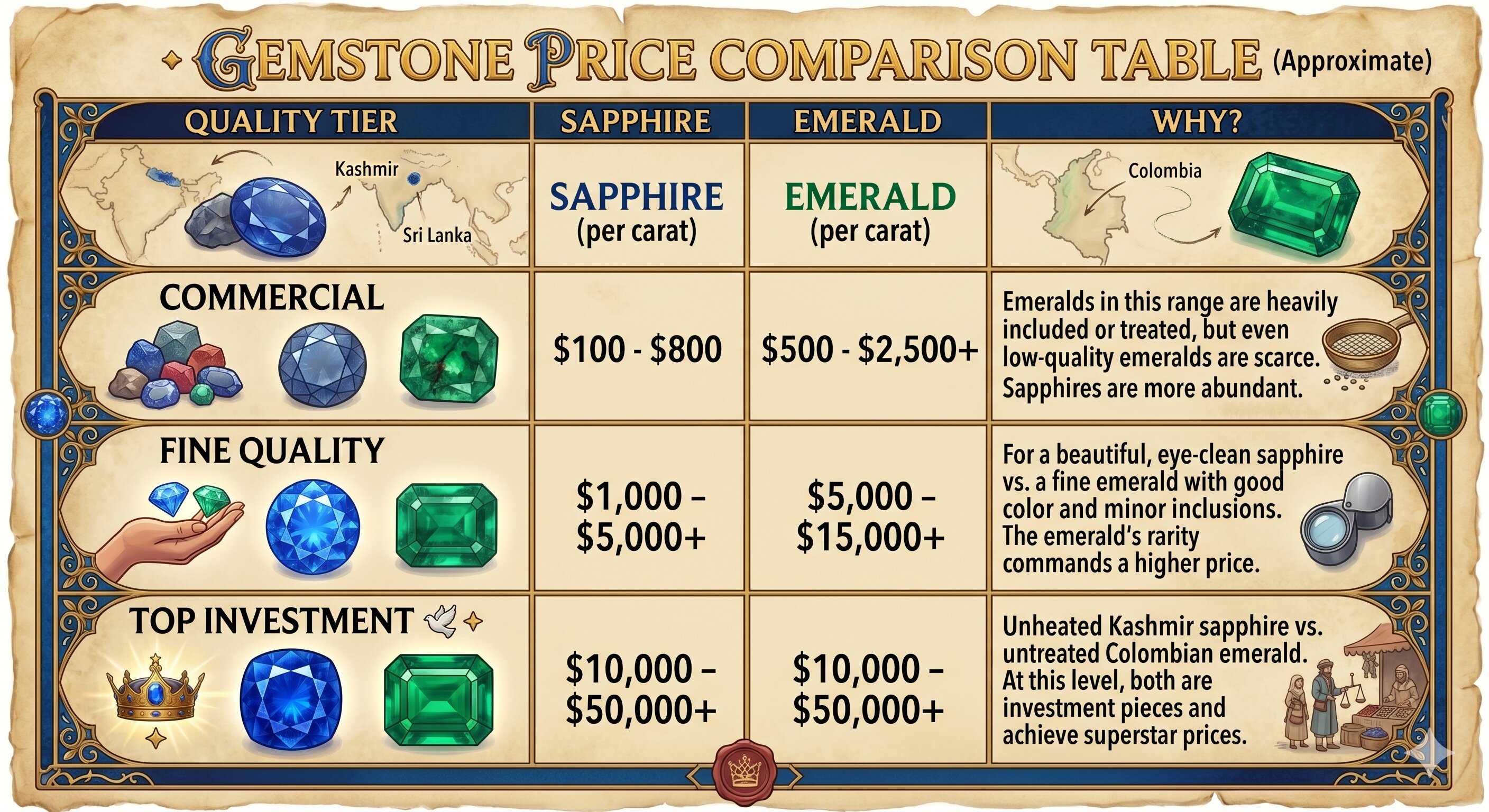
The Short Answer
For high-end, investment-quality gems:
The finest blue sapphires (especially from Kashmir) and the finest emeralds (especially from Colombia) can achieve similar, record-breaking prices at auction, often tens of thousands to millions of dollars per carat.
For fine-quality gems you'd find in a jewelry store:
A high-quality emerald will often be more expensive than a high-quality sapphire of similar size. This is primarily because truly fine emeralds without treatments are exceptionally rare.
For commercial-grade, everyday jewelry:
Sapphires are generally more affordable and abundant than emeralds of equivalent size, meaning you'll often find a decent sapphire for a lower price than a comparable emerald.
Key Factors Influencing the Price
1. Rarity & Availability
Emerald: It is incredibly rare to find a large emerald with excellent color and high clarity. Almost all emeralds have visible inclusions (jardin, or "garden"). Flawless, top-color emeralds are one of the rarest gems on earth.
Sapphire: While high-quality sapphires are also rare, they are generally more readily available than emeralds of similar quality. Sapphires are found in more locations worldwide, which increases supply.
2. Treatments & Enhancements
Emerald: It is an industry-standard practice (accepted by all major gemological labs) to treat almost all emeralds with oils or resins to fill surface-reaching fractures and improve clarity. A top-quality, untreated emerald commands a massive premium.
Sapphire: Sapphires are also frequently heated to improve their color and clarity. This treatment is permanent and stable, and is also widely accepted. However, unheated sapphires with beautiful color are more common than untreated fine emeralds, so the premium for "no treatment", while significant, is not as extreme as it is for emeralds.
3. The 4 Cs (Color, Clarity, Cut, Carat)
This is where the direct comparison happens:
Color:
Sapphire: The most valuable color is a velvety, intense "cornflower" blue. Pink, padparadscha (orange-pink), and other vivid, fancy colors can also be very valuable.
Emerald: The most valuable color is a pure, highly saturated bluish-green to deep green hue, with strong saturation and tone that isn't too dark.
Clarity:
Sapphire: High-clarity, eye-clean sapphires are valued and available (though rarer in larger sizes).
Emerald: Inclusions are expected and accepted. The value is based on how the inclusions affect the stone's durability and brilliance, not their absence. An eye-clean emerald is extraordinarily rare and valuable.
Carat Weight:
Both gems see their price per carat increase significantly with size. However, because large, clean emeralds are so rare, the price jump for a 5-carat emerald compared to a 2-carat one is much more dramatic than it is for sapphires.
4. Origin
Sapphire: The most famous and valuable origin is Kashmir (mines are exhausted), followed by Burmese (Myanmar). Sri Lankan and Madagascar sapphires are also highly regarded.
Emerald: The most prized origin is Colombia (especially Muzo and Chivor mines). Zambian emeralds are also excellent and often have a slightly more bluish-green tone.
Price Comparison Table (Approximate)
Sapphire is one of the most famous and coveted gemstones in the world, long associated with royalty, romance, and wisdom. It is a variety of the mineral corundum (aluminum oxide) and is renowned for its exceptional hardness, ranking 9 on the Mohs scale, second only to diamond.
Are Sapphire Stones Worth Money?
Yes, sapphires are definitely worth money, but their value ranges dramatically from just a few dollars to millions per carat, depending entirely on their quality and characteristics.
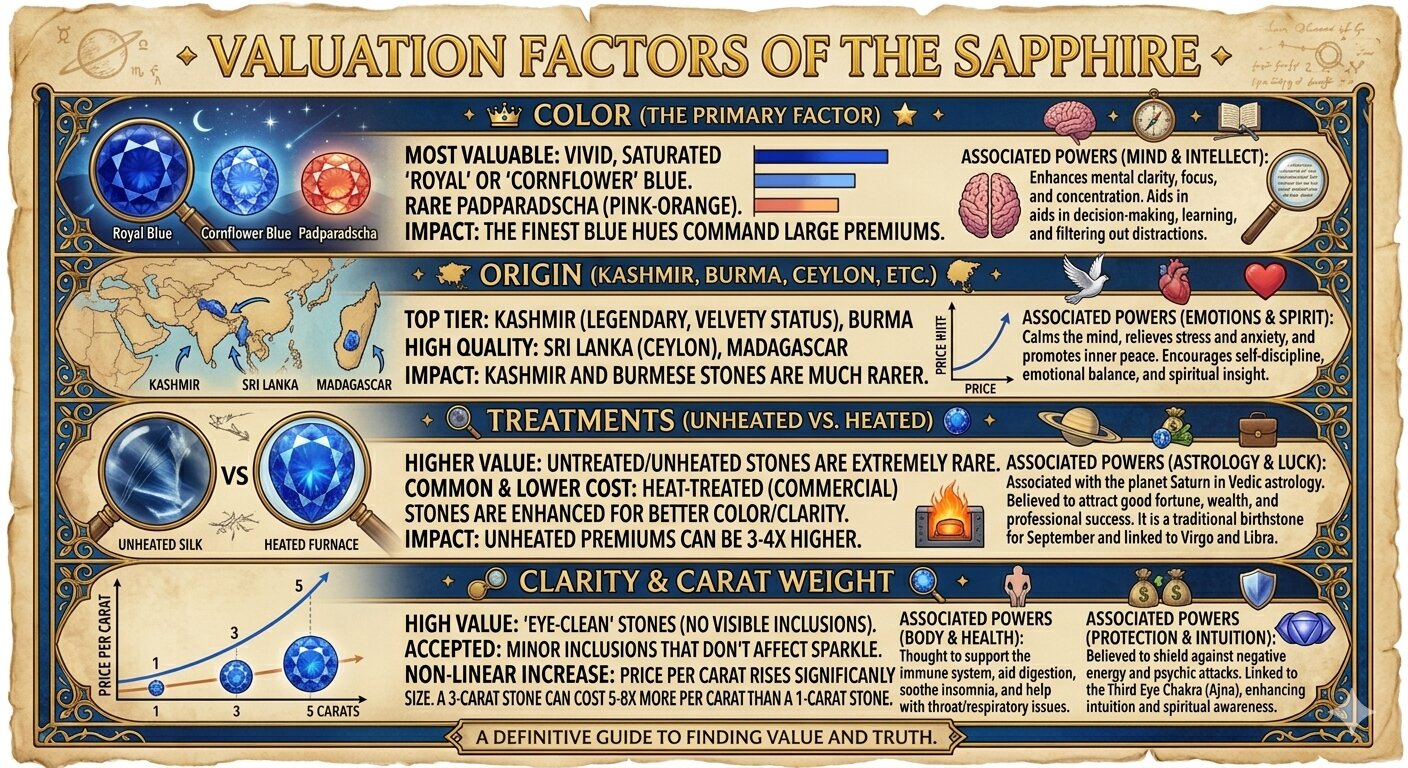
The wide range in value is due to specific quality factors. The table below summarizes how these key factors influence a sapphire's price.
Key Factors That Determine a Sapphire's Worth
Understanding these factors in more detail is essential:
Color is King: It is the most important factor. The ideal for blue sapphires is a vivid, medium-dark, pure blue with strong saturation. The exceptionally rare Padparadscha, a delicate pink-orange blend, is the most expensive sapphire color.
Origin Adds a Premium: Sapphires from certain historic locations, like Kashmir, are famous for their unique color and quality. Because these mines are largely exhausted, their origin can add hundreds of thousands of dollars to the price.
Natural vs. Lab-Created: Synthetic sapphires have the same chemical makeup but are created in a lab. They typically sell for much lower prices (e.g., around $40 per carat). They are perfect for jewelry but are not considered an investment.
Record-Breaking Examples: At auction, exceptional sapphires have sold for over $135,000 per carat, with one famous 27.68-carat Kashmir stone achieving a record $6.7 million.
How to Assess a Sapphire's Value
If you are looking at a specific sapphire:
Get a Professional Opinion: For any significant purchase, have the stone evaluated by an independent, certified gemologist who can assess all the quality factors and identify any treatments.
Request a Certificate: A reputable report from a major gemological laboratory (like GIA, GRS, or AGL) is the best way to verify a sapphire's natural origin, treatment status, and quality characteristics.
For Colored Sapphires: While blue is classic, sapphires come in every color. Pink, yellow, and teal stones can be valuable, especially with good saturation. White, black, and heavily included opaque stones are generally the most affordable.
I hope this gives you a clear picture of sapphire values. If you can share more details about a sapphire you're interested in (like its color, any certificates, or its intended use), I could offer more specific insights.
Is A Sapphire More Expensive Than A Diamond?
There is no simple "yes" or "no." For the majority of stones you'll find in jewelry stores, diamonds are typically more expensive than sapphires. However, the most exceptional and rare sapphires can far surpass the price of a typical diamond.
Here is a side-by-side comparison of price ranges for a 1-carat stone:
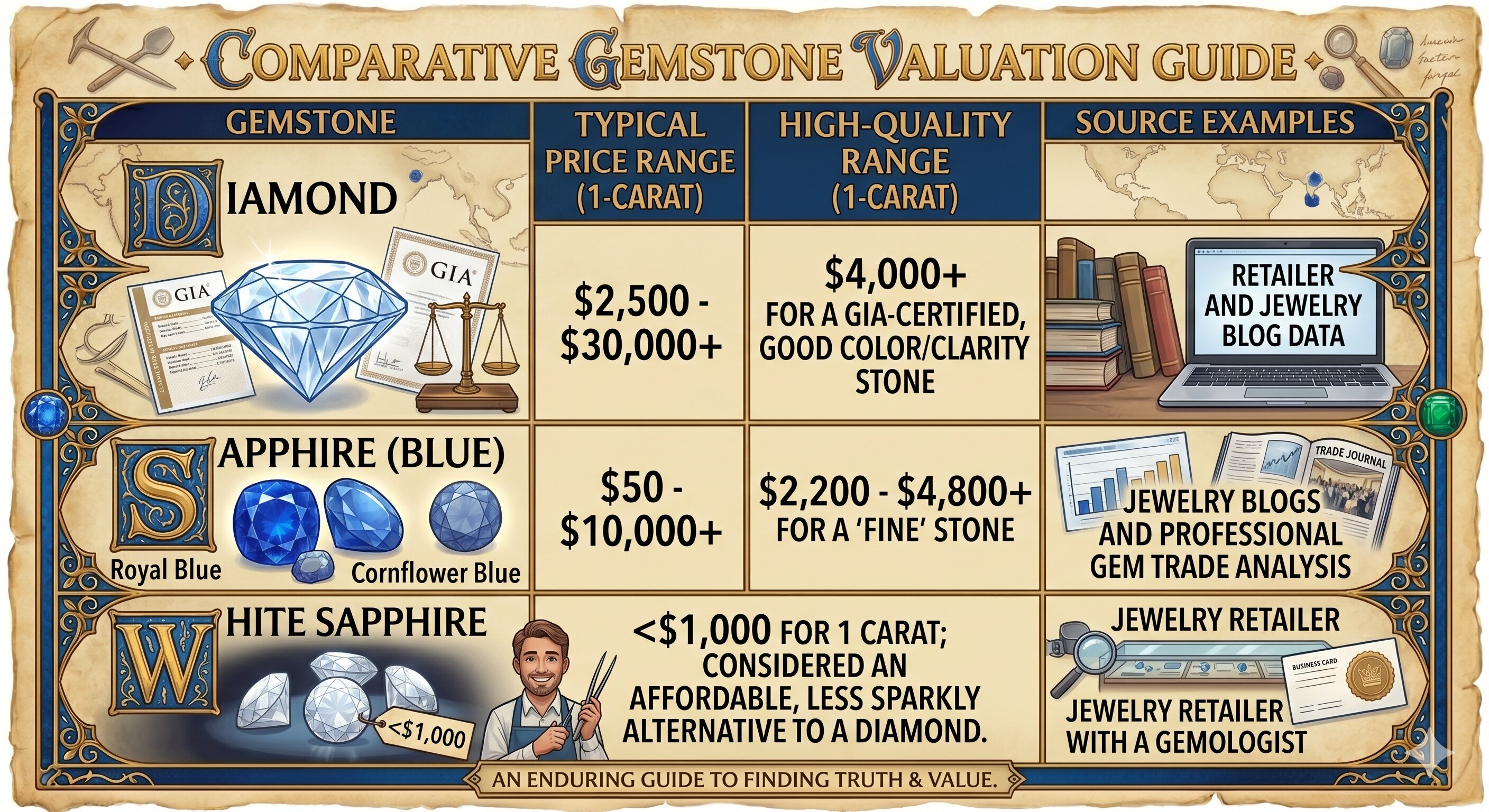
Important Note: The diamond market is currently experiencing a significant price shift. While high-quality, larger diamonds retain value, prices for many standard commercial diamonds have fallen sharply over the past year due to market competition and other factors.
Why This Price Difference Exists
The main drivers are market scale, perception, and rarity factors:
Diamond Market Scale: The diamond industry is massive, with highly standardized grading and global marketing that maintains high consumer demand and price points for quality stones.
Sapphire Rarity Factors: A sapphire's value is intensely personal. Exceptional color (like a vivid "cornflower" blue or rare padparadscha), prestigious origin (e.g., Kashmir), and being completely untreated can make a single sapphire astronomically valuable.
The "Cinderella" Stones: While a good-quality 1-carat diamond will almost always cost more than a good-quality 1-carat sapphire, a legendary 5-carat unheated Kashmir blue sapphire can be worth more than a 5-carat high-quality diamond.
Which is Right for Your Purchase?
Choose a diamond if you prioritize maximum brilliance/sparkle, tradition, and purchasing within a well-known grading system. Be aware of current market volatility for standard stones.
Choose a sapphire if you desire a unique color, you can often get a larger stone for your budget, and value individuality. For top-tier sapphires, independent certification from labs like GIA is essential.
If you're considering a purchase, I can help you think through it. For example, are you more interested in a classic clear stone or a colored gemstone, and is this for a special occasion like an engagement ring or another type of jewelry?
What Color Of Sapphire Is Most Expensive?
The most expensive sapphire colors fall into two main categories: the exceptionally rare Padparadscha (pink-orange) and the top-tier premium blues (like Cornflower and Royal Blue). Deciding which is more valuable depends on the specific stone's characteristics and market factors.
The table below compares these two contenders for the top value position.
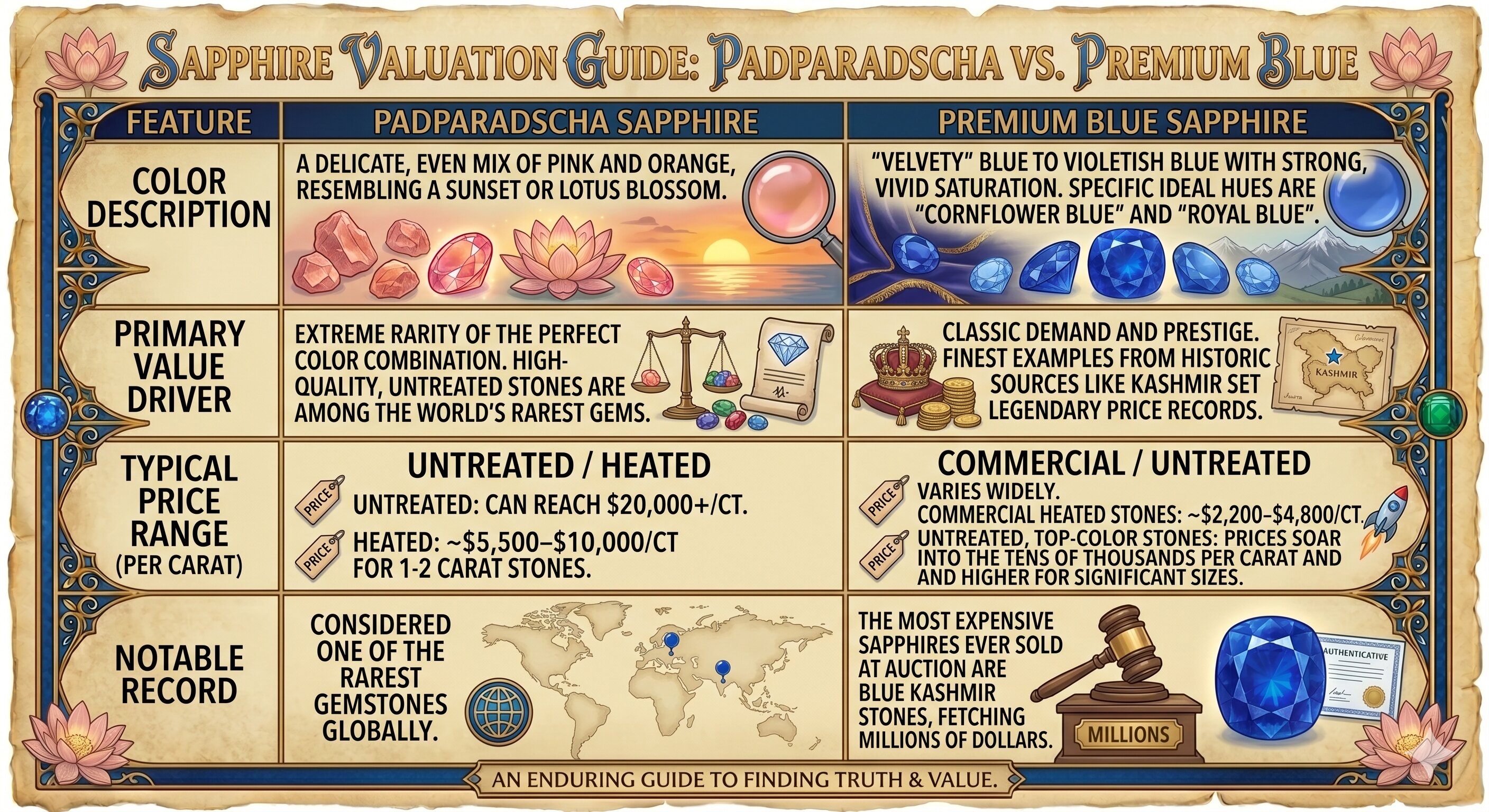
Key Factors That Influence the Price
Beyond just color, several critical factors determine the final value of any expensive sapphire:
Origin: A prestigious origin, like Kashmir for blue sapphires or Sri Lanka for Padparadscha, adds significant value.
Treatments: An untreated, natural stone is far rarer and more valuable than a heat-treated one. For example, an untreated Padparadscha can be worth twice as much as a heated one of similar size.
Quality of Color: The technical terms from GIA—Hue, Saturation, and Tone—are crucial. The most valuable stones show the ideal hue with vivid saturation and a medium tone (not too light or dark).
Size: Price per carat increases non-linearly with size. Large, top-quality stones in any precious color are exponentially rarer and more expensive.
Which One is Right for You?
Choose a Padparadscha if your priority is owning one of the rarest colored gemstones in existence, with a unique, warm, and romantic color.
Choose a premium blue sapphire if you desire a classic and iconic gem with a long history of commanding the highest auction prices, especially if you can find one with a top origin and no treatments.
For any significant purchase, I strongly recommend getting an independent report from a reputable gemological lab (like GIA, GRS, or AGL). This certificate will verify the stone's natural origin, color description, and any treatments, which is essential for high-value gems.
If you'd like to delve deeper into how origin or treatments specifically affect value, I can provide more focused information.
Sapphire Color Value Guide
| Color | Rarity | Price per Carat Range | Most Prized Origin |
|---|---|---|---|
| Padparadscha (pink-orange) | Rarest (<1% of sapphires) | $5,000 - $30,000+ | Sri Lanka |
| Kashmir Blue (cornflower) | Very rare (mines depleted) | $10,000 - $100,000+ | Kashmir, India |
| Royal Blue (deep vivid blue) | Rare | $2,000 - $15,000 | Burma (Myanmar), Sri Lanka |
| Pink Sapphire | Uncommon | $1,000 - $8,000 | Madagascar, Sri Lanka |
| Yellow Sapphire | Common | $200 - $2,000 | Sri Lanka |
| White/Colorless (Leucosapphire) | Common | $50 - $300 | Various |
How Much Is 1 Carat Of A Sapphire?
For a 1-carat sapphire, prices vary widely—from less than $50 for a synthetic stone to over $30,000 for the rarest Padparadscha. The price depends on color, treatment, and origin.
Here’s a breakdown of prices for different types of 1-carat sapphires:
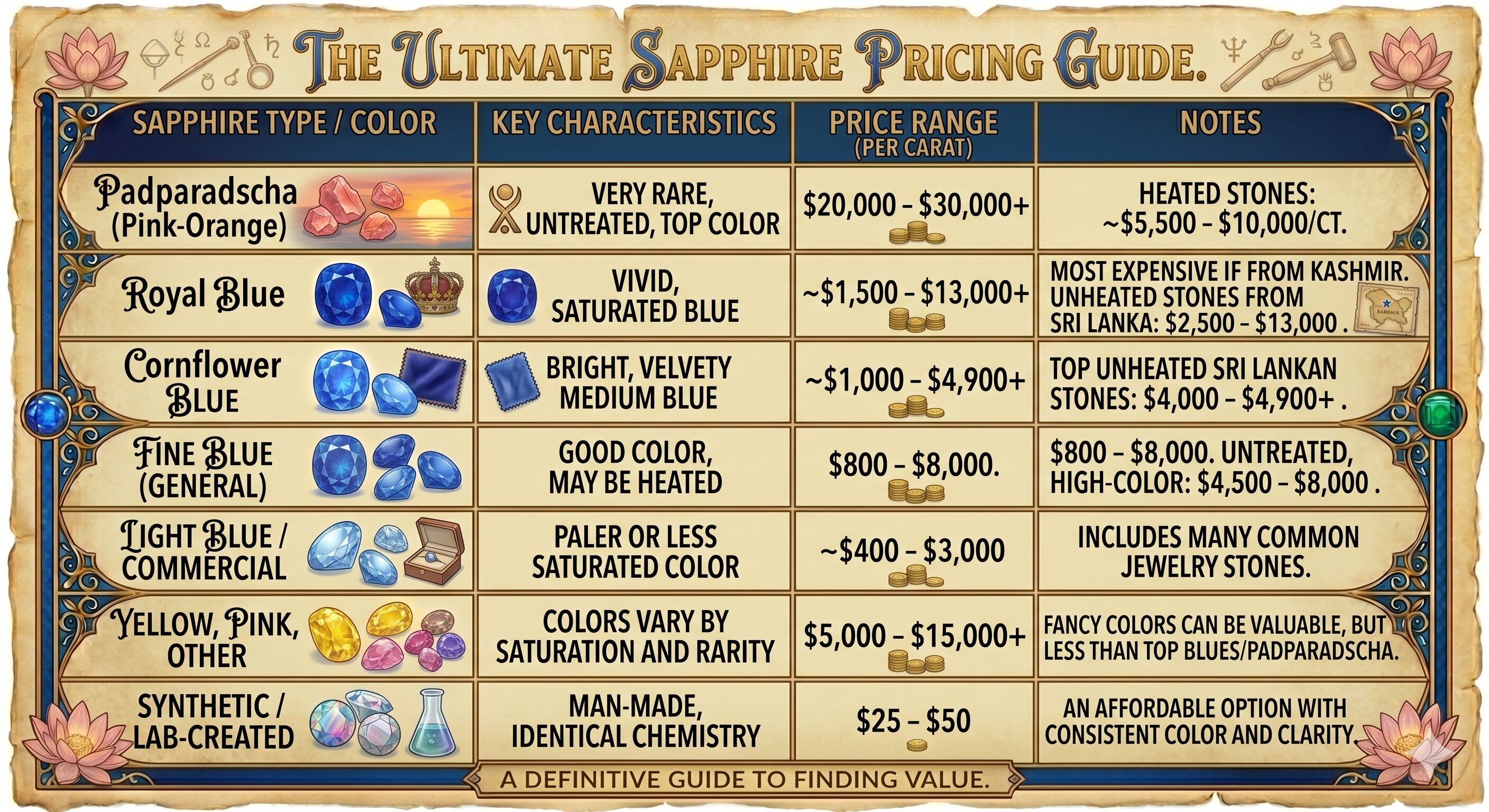
What Determines the Final Price?
Several factors explain this price range:
Color: Vivid, saturated, medium-toned colors are most valuable. Pale, dark, or grayish tones lower value.
Origin: Kashmir sapphires are the most valuable but very rare. Burmese sapphires are second, followed by Sri Lankan and Madagascar sapphires.
Treatments: Untreated (unheated) stones are rarer and command a significant premium—often 3-4 times the price of a similar heated stone.
Clarity & Cut: "Eye-clean" stones are more valuable, but minor inclusions are acceptable if they don't affect sparkle.
How to Approach Buying a Sapphire
Prioritize the "Big Three": For your budget, focus on Color, Origin, and Treatment first.
Get a Certificate: For any significant purchase, get a report from a lab like GIA, GRS, or AGL. It verifies natural origin, treatment status, and color.
See the Stone in Person: Color is very personal. View it in different lights to ensure you love it.
I hope this detailed pricing guide helps. If you are looking for a sapphire for a specific type of jewelry (like an engagement ring) or have a particular budget in mind, I can offer more tailored advice.
For current sapphire market prices, visit the American Gem Society's price guide.
What Is Sapphire Stone Good For?
Sapphire stones are valued for far more than just their beauty as gems. Their exceptional physical properties make them crucial for advanced technology, while their history and appearance give them significance in jewelry and culture. To understand their diverse uses, it's helpful to first know that there are two main categories: natural gemstone sapphires and synthetic sapphires created in laboratories.
Here's a quick overview of their primary uses:
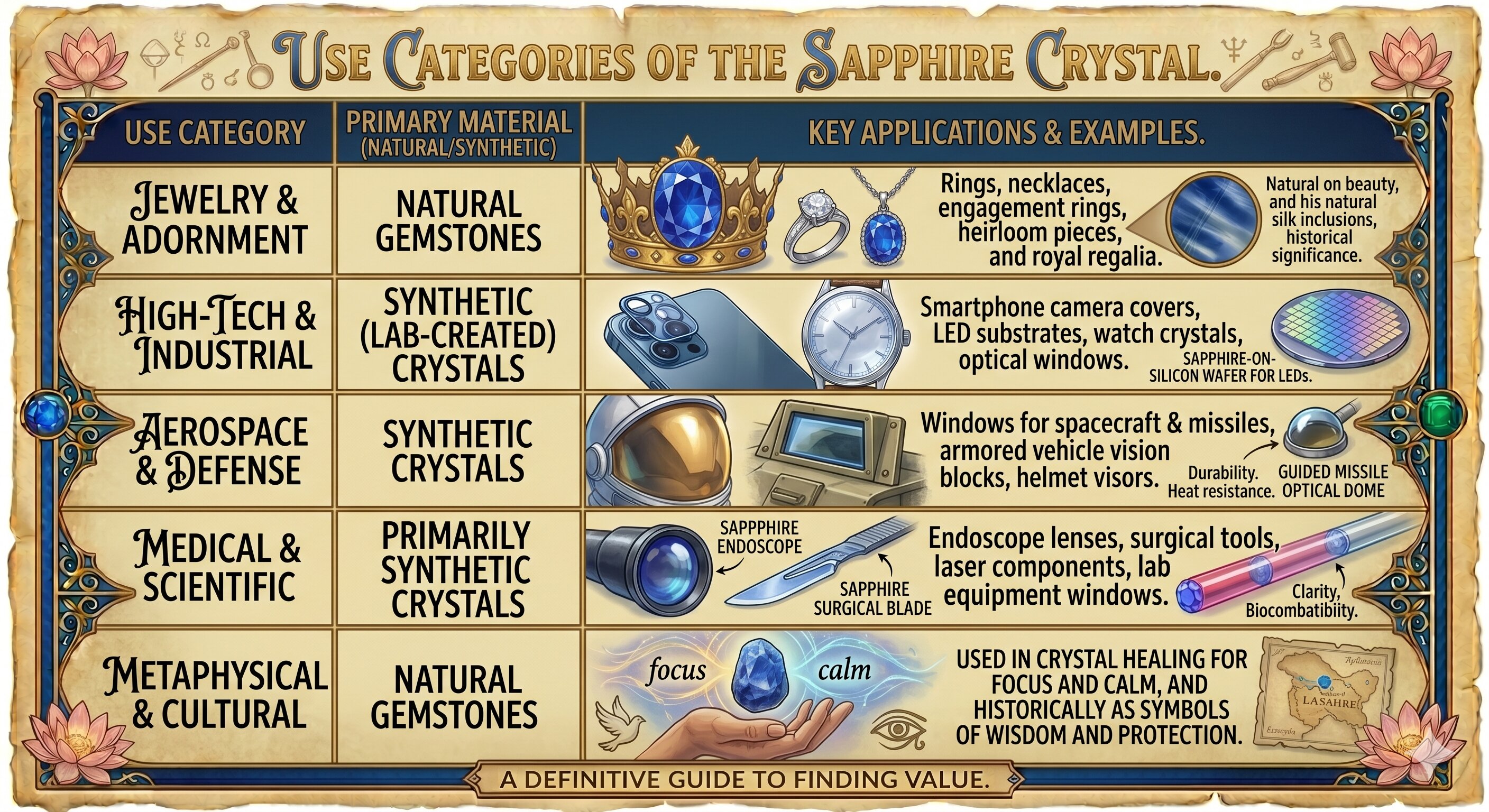
How Sapphire's Properties Enable These Uses
A sapphire is a crystal of aluminum oxide (Al₂O₃). It is the second hardest natural mineral after diamond (Mohs hardness 9), which is the foundation for most of its uses:
Extreme Durability: Makes it scratch-resistant for watch faces, phone covers, and windows exposed to sand and debris.
High Melting Point & Thermal Conductivity: Can withstand temperatures over 2000°C and dissipates heat well, ideal for high-power LEDs and environments like rocket nozzles.
Optical Clarity & Broad Transparency: Transmits light from ultraviolet to infrared, perfect for specialized sensors, lenses, and scientific equipment.
Chemical Inertness: Resists corrosion from most strong acids and alkalis, crucial for semiconductor manufacturing and medical implants.
Differences Between Gem and Industrial Sapphire
The sapphire in a ring and the sapphire in your smartphone camera are chemically identical but very different in purpose:
Natural Sapphires for Jewelry: Prized for their rarity, color (especially blue, pink, and the rare padparadscha), and unique inclusions. They are cut and polished to maximize beauty. Their value comes from these aesthetic qualities.
Synthetic Sapphires for Industry: Grown in labs using methods like the Verneuil or Czochralski process. Valued for their flawless purity, optical perfection, and ability to be made in large sizes. They are essential where performance, not rarity, matters.
Key Insights for Your Decision
Durability for Jewelry: A sapphire's hardness makes it excellent for everyday jewelry like engagement rings, as it resists scratches better than almost any other gem.
Industrial Demand Affects Value: The booming tech industry's need for synthetic sapphire (market exceeding $6 billion) doesn't directly raise the price of natural gem sapphires, but it highlights the material's intrinsic worth.
Check the Source: If buying a gemstone, ask if it is natural or synthetic. A lab report from organizations like GIA can confirm this, which is vital for valuation. For tech uses, synthetic is the standard.
I hope this comprehensive overview helps you appreciate the full scope of what sapphire is good for. Are you curious about the specific processes used to create synthetic sapphire for industry, or would you like to know more about evaluating natural sapphires for jewelry?
Is Sapphire Good For Gemini?
Based on information from multiple astrology and gemstone sources, blue sapphire can be a beneficial gemstone for some Gemini individuals, but with important conditions and caveats. Astrology views gemstone effects as highly personal, depending on your complete birth chart rather than just your sun sign.
Potential Benefits for Gemini
Mental Clarity & Focus: Gemini is associated with a quick, versatile mind. Sapphire is said to help calm a busy mind, improve concentration, and bring mental clarity when feeling scattered or overwhelmed.
Professional Implementation: One source notes that while Geminis are good at planning, they can struggle with execution. Blue sapphire, linked to Saturn, may help with implementing plans properly.
Material & Spiritual Gains: In Vedic astrology, a well-suited sapphire (Neelam) is associated with good fortune, wealth, material happiness, and spiritual advancement for Gemini (Mithun Rashi).
Important Cautions and Considerations
Not Universally Suitable: Blue sapphire is ruled by Saturn, which can have a complex relationship with Gemini in an individual's chart. It is not automatically good for every person born under this sign.
Requires Expert Analysis: Vedic astrology emphasizes that for Gemini ascendants, Saturn governs both challenging and beneficial houses. Wearing a blue sapphire is only recommended after analyzing the specific position of Saturn in one's birth chart.
The "Test" Period: A strong tradition advises a trial period before fully committing to the stone. It is recommended to test a blue sapphire for about 3 days to gauge initial effects, as it is believed to show results quickly.
Potential for Harm: If incompatible with your personal astrology, blue sapphire is said to potentially cause restlessness, obstacles, or a feeling of being "off," rather than benefits.
How to Proceed If Interested
If you are considering a sapphire for astrological purposes, these are the recommended steps from the sources:
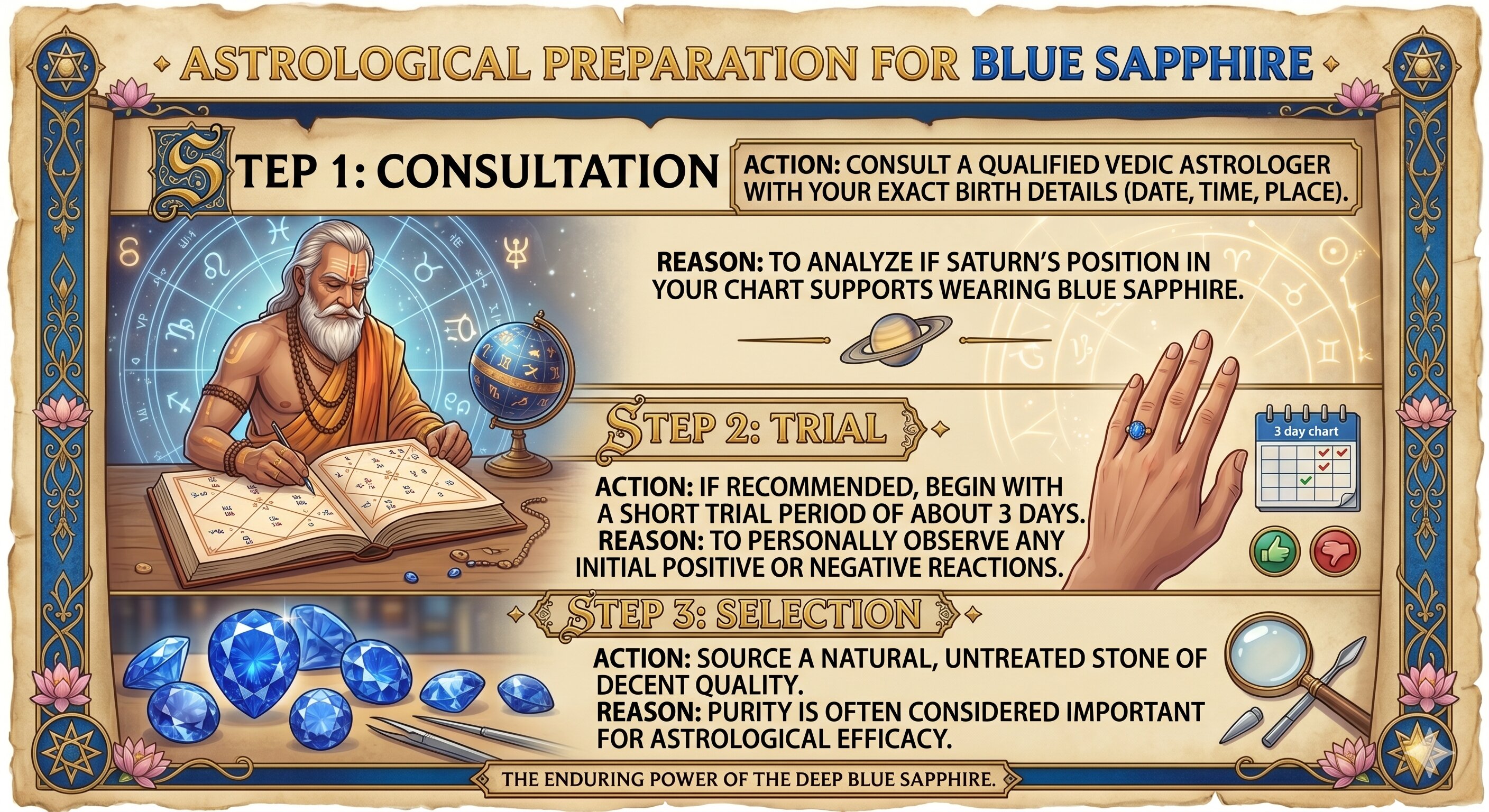
I hope this detailed explanation helps you make an informed decision. If you'd like to explore other gemstones traditionally associated with Gemini, such as emerald or agate, I can provide information on those as well.
What Power Of The Sapphire?
Sapphires, especially blue sapphires, are believed to hold various "powers" in metaphysical, spiritual, and astrological traditions. These powers are part of cultural beliefs and are not scientifically proven.
Based on common themes across traditions, here are the main attributes associated with sapphire:
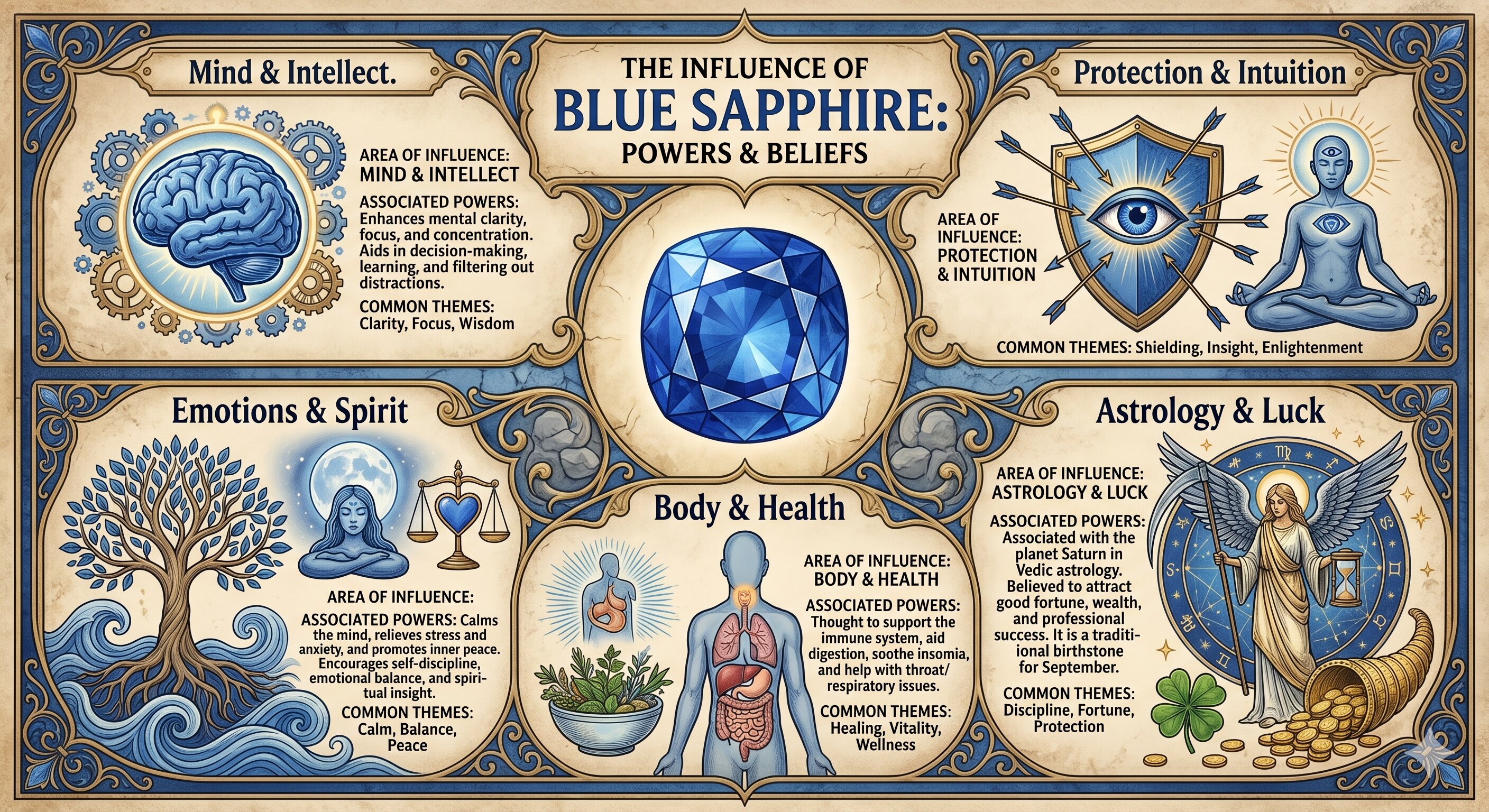
How Sapphires Are Used for These Purposes
If you're interested in exploring these traditional uses, here are some common practices:
Wearing as Jewelry: This is the most common method to keep the stone's energy close. Rings, pendants, and bracelets are popular.
Meditation: Holding a sapphire or placing it nearby during meditation is believed to help access its calming and insight-enhancing properties.
Carrying a Stone: Keeping a small tumbled stone in a pocket or purse is thought to offer protection and mental clarity throughout the day.
Important Considerations and Next Steps
Consultation is Key: If you are considering a sapphire for astrological purposes, consult a qualified astrologer with your birth chart. They can advise on its suitability for you, as sapphire's effects are considered highly personal.
Follow Traditional Practices: For astrological use, sapphires are often set in silver or white gold and worn on the middle finger of the right hand.
Natural vs. Treated Stones: For metaphysical purposes, natural, untreated stones are generally believed to possess the most potent energy, though they are more expensive and rarer.
A Holistic View: These beliefs are part of spiritual and cultural traditions. Approach them with an open mind, understanding they are complementary to, not a replacement for, professional medical or psychological advice.
I hope this detailed overview of the traditional powers attributed to sapphire is helpful for your exploration. If you are curious about how to select a sapphire for these purposes or want to know about the properties of other colored sapphires (like yellow or pink), feel free to ask!
Why Are Sapphires So Special?
Sapphires are considered special for a powerful combination of reasons: their exceptional physical durability, the captivating science and rarity of their colors, their profound historical and cultural legacy, and their critical role in modern technology.
Here’s a breakdown of what makes them unique across different domains:
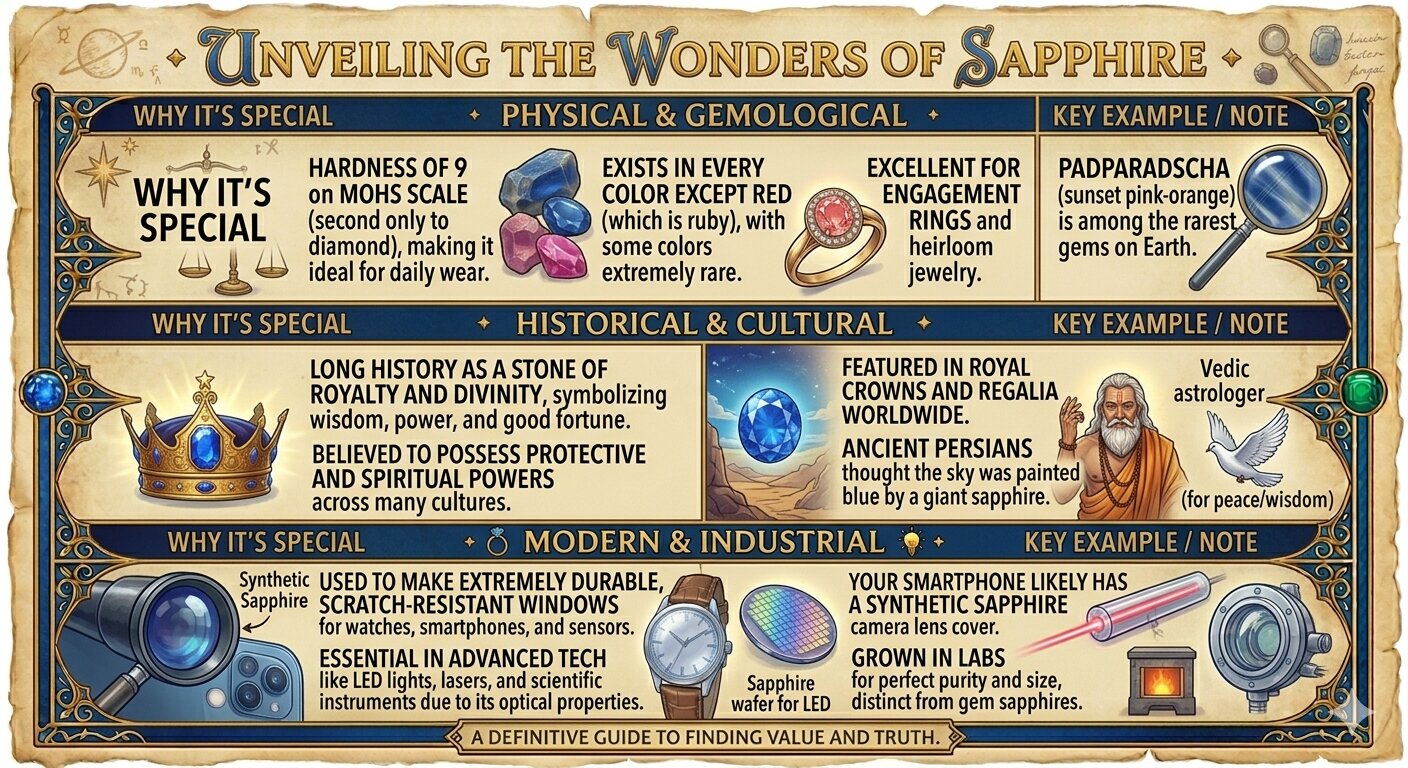
A Stone of Legends and Crowns
Beyond their physical properties, sapphires carry deep symbolic weight. For centuries, they have been associated with wisdom, virtue, and divine favor. Clergy and kings wore them to symbolize heaven and attract protection. This legacy continues today, most famously with Princess Diana’s and now Kate Middleton’s iconic engagement ring, which solidified the sapphire's status as a modern symbol of enduring love and royal heritage.
From Ancient Belief to Advanced Technology
The sapphire's journey from ancient talisman to tech component is unique:
Metaphysical Beliefs: Traditionally, blue sapphires are linked to clarity of thought, spiritual insight, and emotional calm. In astrology, particularly Vedic traditions, they are associated with the planet Saturn and used only after careful consultation.
Scientific Application: The same properties that made it precious historically—hardness and clarity—make it indispensable today. Synthetic sapphire is a vital material in aerospace, medicine, and electronics, proving its worth far beyond adornment.
How to Appreciate a Sapphire's Value
When looking at a sapphire, consider:
The Color Spectrum: While blue is classic, explore fancy colors like vibrant yellows, pinks (often called "pink sapphires" rather than rubies), and the exquisite Padparadscha.
The Origin's Story: A sapphire's source (like Kashmir, Burma, or Sri Lanka) adds to its narrative and often its value, with certain origins commanding legendary status.
Natural vs. Synthetic: Natural sapphires are valued for their unique, geological beauty and rarity. Synthetic sapphires are identical in chemistry but created in labs, making advanced technology and affordable jewelry possible.
In essence, a sapphire is special because it is a perfect bridge between the ancient and the modern, the mystical and the scientific, and enduring symbolism and physical resilience. If you're curious about how to evaluate a specific sapphire's quality or the stories behind the most famous sapphires in history, I can delve deeper into those topics for you.
What Is The Rarest Color Of Sapphire?
The unequivocally rarest color of sapphire is Padparadscha, a unique blend of pink and orange tones resembling a sunset or lotus flower.
Here is a comparison of Padparadscha with other notable rare sapphire types to give you context:
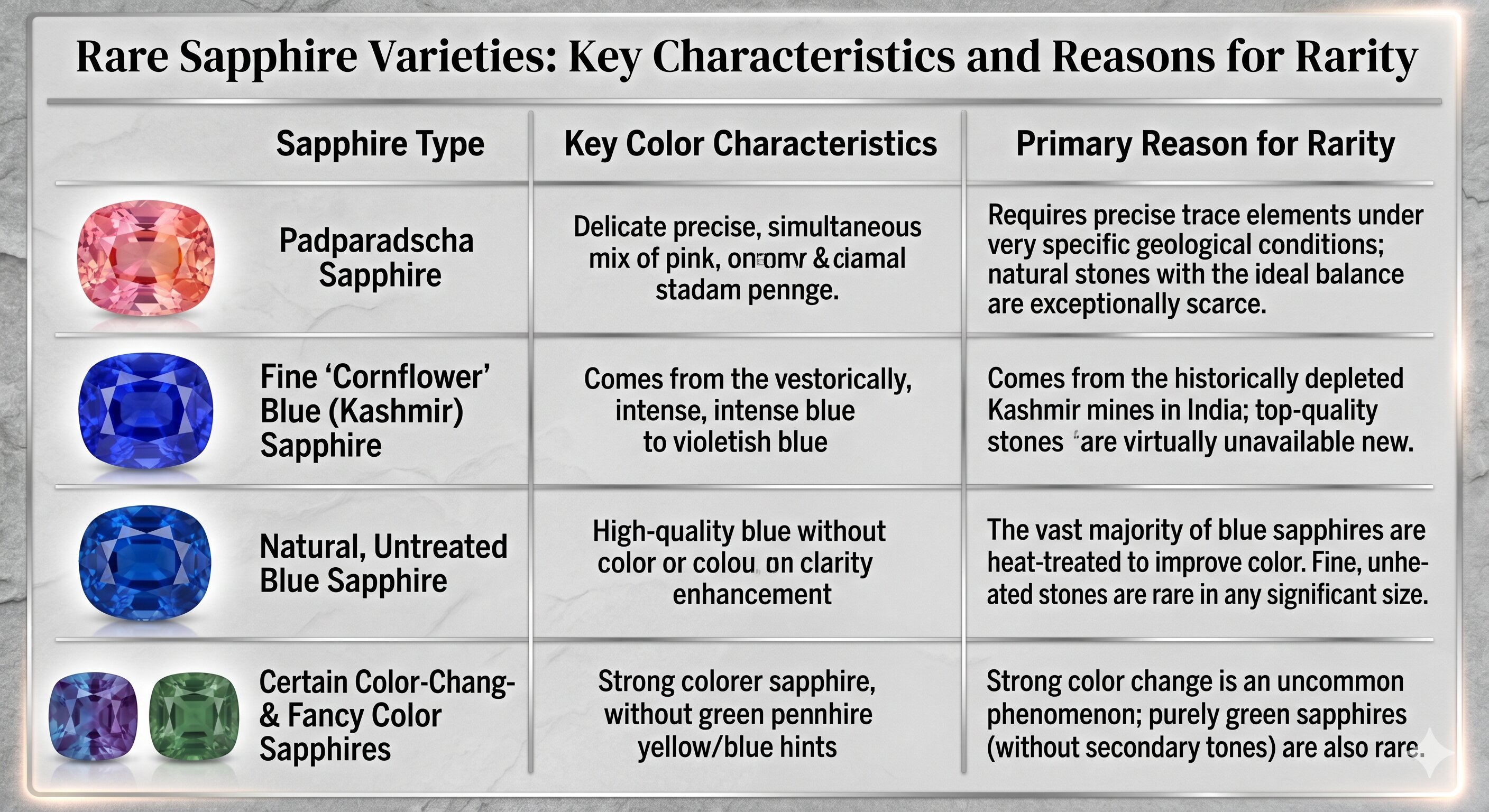
Understanding Padparadscha's Unique Rarity
Its rarity stems from a perfect storm of factors:
Exact Color Balance: The value hinges on a harmonious, light-to-medium blend of pink and orange. Stones too pink, too orange, or too dark are not considered true Padparadscha.
Geological Scarcity: This color occurs only when trace elements like chromium (causing pink) and iron (causing yellow/orange) combine in very specific amounts during formation.
Source Limitations: While originally and famously from Sri Lanka, deposits have also been found in Madagascar and Tanzania. However, fine-quality gems from any source remain extremely rare.
Important Distinctions
Rarest vs. Most Expensive: While Padparadscha is the rarest, the most expensive sapphires at auction are often top-tier Kashmir blue stones due to legendary color, quality, and historical prestige. Padparadscha, however, commands very high prices per carat due to its scarcity.
Pink Sapphires: These are different. While once extremely rare, the discovery of large deposits in Madagascar in the late 1990s increased their availability. A vivid pink sapphire is valuable, but not as intrinsically rare as a true Padparadscha.
If you'd like to delve deeper into what to look for when evaluating a Padparadscha sapphire or the fascinating stories behind Kashmir blue sapphires, I can provide more detailed information.
“You now know the history, the colors, the benefits, the tests, the prices, and the powers. The only question left: will you wear the stone that outlasts empires?
Our current collection includes a limited number of natural, untreated sapphires — from Kashmir-like cornflower blues to rare padparadscha pink-oranges. When stones of this color saturation and origin are gone, sourcing new ones with GIA certification can take months.
This is not just a birthstone. It is 3,000 years of Persian skies, Roman protection, and British crowns — the gem of kings, clergy, and lovers, now waiting for your finger.”
[Button: Claim Your Sapphire (Limited) →]


News for Wednesday 01 July, 2026
View all news for Wednesday 01 July, 2026 on one page
Recent News
- Tuesday 16 June, 2026
- Monday 15 June, 2026
- Sunday 14 June, 2026
- Saturday 13 June, 2026
- Friday 12 June, 2026