

Peridot Guide: Meaning, Price, How to Tell Real
Peridot Guide: Meaning, Price, How to Tell Real
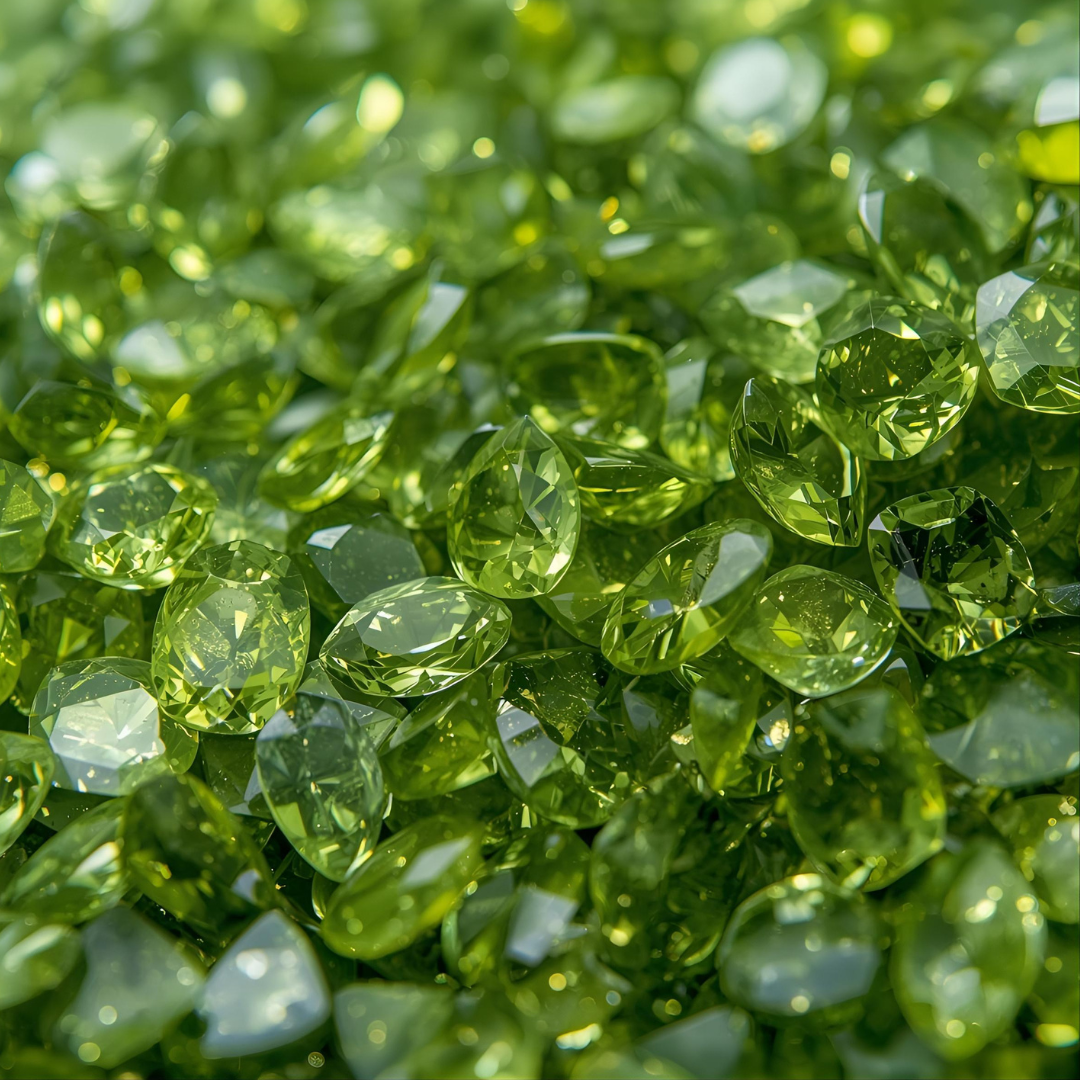
Peridot (pronounced pair-uh-doe) is a gem renowned for its signature vibrant, lime-green hue. It is one of the few gemstones that occurs in only one color, though the shade and intensity can vary.
“Ancient Egyptians called peridot the ‘gem of the sun.‘ They mined it on a snake-infested island called Zabargad — believing the stone glowed even at night, too bright for darkness to hide. Priests drank from peridot cups to bring them closer to Ra, the sun god. Cleopatra‘s famed ’emeralds‘ may have actually been peridots. And when crusaders returned from distant lands centuries later, they brought peridot back to Europe — not as plunder, but as a miracle: a stone that could ward off evil and calm the wearer‘s anger. Peridot is the only gem born from fire and found in meteorites — earth‘s lava and the stars‘ tears, all in one green light.”
Here is the content of the table;
- What Month Birthstone Is Peridot?
- What Does Peridot Mean Spiritually?
- What Are Peridot Stones Good For?
- Which Chakra Is Peridot?
- Does Peridot Attract Money?
- How To Tell If Peridot Is Real?
- Can Peridot Go In Water?
- Can I Sleep With A Peridot?
- What Stones Pair With Peridot?
- How Much Is Peridot Worth?
- Which Is More Expensive, Emerald Or Peridot?
Let's first topic of content.
What Month Birthstone Is Peridot?
Peridot is the primary birthstone for August. It shares this designation with sardonyx in some traditional lists, but peridot is the most well-known modern August birthstone.
Birthstone by Month Quick Reference
- January: Garnet
- February: Amethyst
- March: Aquamarine
- April: Diamond
- May: Emerald
- June: Pearl / Alexandrite / Moonstone
- July: Ruby
- August: Peridot / Sardonyx / Spinel ← You are here
- September: Sapphire
- October: Opal / Tourmaline
- November: Citrine / Topaz
- December: Turquoise / Tanzanite
Here are a few more interesting facts about peridot:
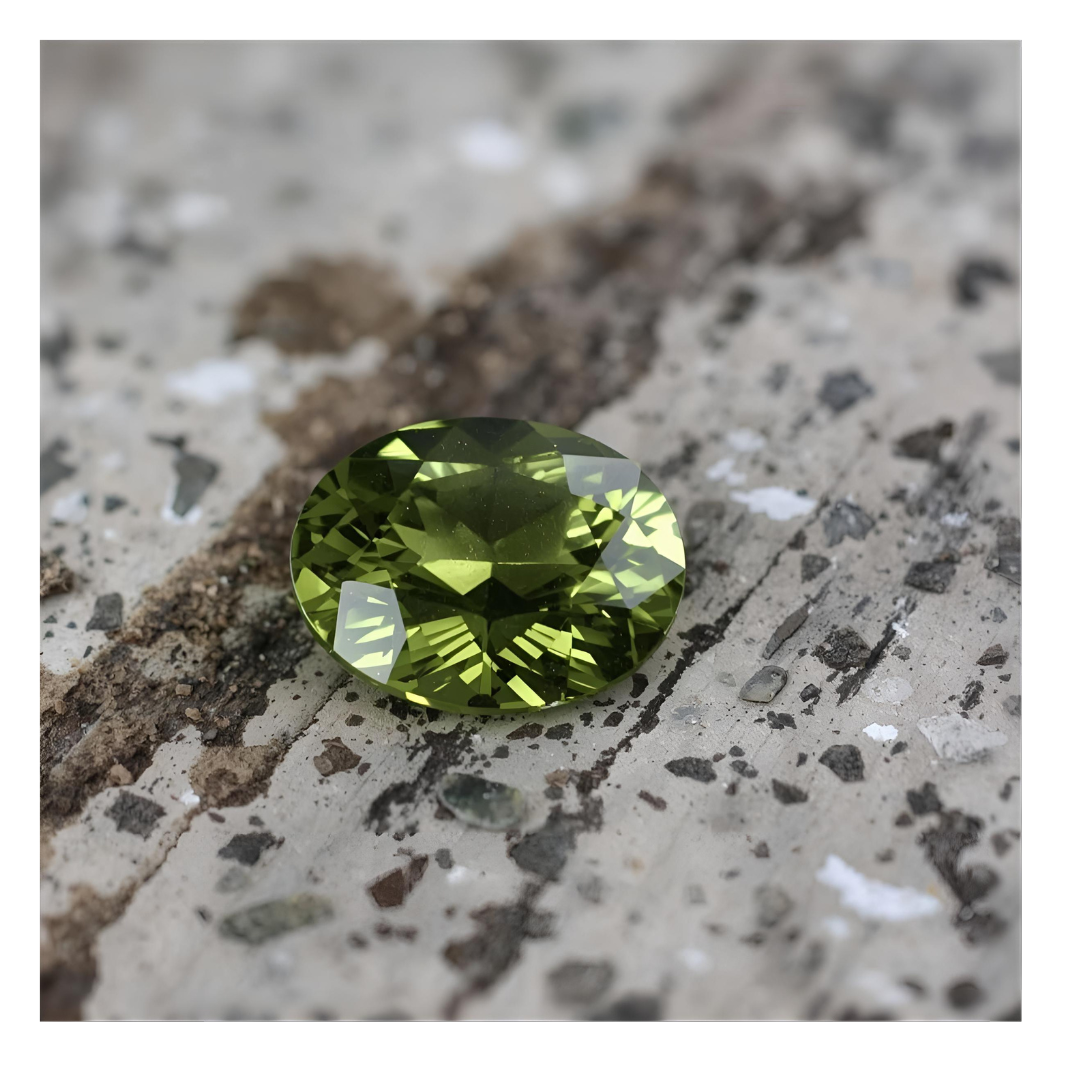
Color: It is one of the few gemstones that only comes in one color: a distinctive lime or olive green. The intensity of the green depends on the amount of iron in the crystal structure.
Volcanic Origin: Peridot is formed deep within the Earth's mantle and is brought to the surface by volcanic activity. It can even be found in meteorites!
Historical Name: It was historically known as "the evening emerald" because its bright green color doesn't darken in artificial light.
Symbolism: It is associated with strength, protection, and good luck.
For official peridot grading information, visit the GIA Peridot Guide.
What Does Peridot Mean Spiritually?
The spiritual meaning of peridot is vibrant, much like its distinctive green color.
Spiritually, peridot is primarily known as a stone of compassion, light, and healing. It's believed to carry a very positive, high-vibrational energy that can have several profound effects on the spirit.
Here’s a breakdown of its key spiritual meanings and properties:
1. The Stone of Light and Transformation
Peridot is often called the "gem of the sun." Spiritually, it's believed to attract and amplify light, helping to dispel darkness—both literal and metaphorical. This includes:
Dispelling Negative Patterns: It's said to help clear away old, self-destructive habits, toxic relationships, and negative thinking patterns.
Alleviating Spiritual Darkness: It's used to combat feelings of jealousy, resentment, anger, and fear, replacing them with a sense of inner light and well-being.
Encouraging Letting Go: It aids in the process of releasing the past, including old baggage, guilt, and attachment to past hurts.
“Hawaiian legend says peridot is the tears of Pele, the volcano goddess. When the goddess weeps, she sheds green gems — a reminder that even destruction births beauty. In medieval Europe, peridot was set into church relics and bishops‘ rings, not for vanity, but for vigilance. Believers thought the stone‘s green glow could reveal hidden truths and protect against illusions. Today, peridot is still the stone of transformation — formed deep in the earth‘s mantle, carried to the surface by volcanic fire, and then polished into something that glows like summer leaves. It is the only gem that asks you to remember: even from pressure, something brilliant can grow.”
The same stone that glowed on Egyptian priests and Hawaiian goddesses now awaits your August birthday — or your own new beginning. Every peridot in our collection is chosen for that signature lime-green fire.”
[Button: Explore Peridot Jewelry →]
2. Heart Healer and Emotional Balancer
With its radiant green color, peridot has a strong connection to the Heart Chakra. Its spiritual role here is to:
Heal a Wounded Heart: It's considered a powerful balm for emotional pain, helping to mend a broken heart from grief, betrayal, or failed relationships.
Release Emotional Baggage: It helps to identify and release the emotional "hooks" that keep us tied to past pain, such as old resentments and stored anger.
Teach Forgiveness: It encourages forgiveness, both for others and, most importantly, for oneself, fostering self-love and self-acceptance.
3. Guardian and Protector
Historically, peridot was worn to ward off evil spirits and "terrors of the night." In modern spiritual practice, this translates to:
Psychic Protection: It's thought to create a protective shield around the aura, deflecting negative energy and psychic attacks from others.
Shielding from Negativity: It can help protect sensitive individuals from absorbing the negative emotions and stress of people around them.
4. Manifestation and Prosperity
As a stone connected to the life-giving energy of nature, peridot is also associated with abundance:
Attracting Prosperity: It is believed to attract wealth and opportunities for growth.
Manifesting Intentions: Its energetic vibration is said to help clarify and accelerate the manifestation of your goals and desires, especially when they are aligned with your heart's true purpose.
5. Mental Clarity and Purpose
Reduces Stress and Anxiety: By clearing away negative mental chatter, peridot can help calm the mind and reduce anxiety.
Connects to Life's Purpose: It is said to help you understand your destiny and the lessons your soul is here to learn, bringing clarity to your life's path.
How to Use Peridot Spiritually
Wear it as Jewelry: Wearing peridot as a necklace (close to the heart) or a ring allows for constant contact with its energy.
Meditate: Hold a peridot stone in your hand or place it on your Heart Chakra (center of the chest) during meditation to connect with its healing vibrations.
Place in Your Environment: Keep a piece in your bedroom to promote peaceful sleep free from nightmares, or in your workspace to protect against negative energy.
What Are Peridot Stones Good For?
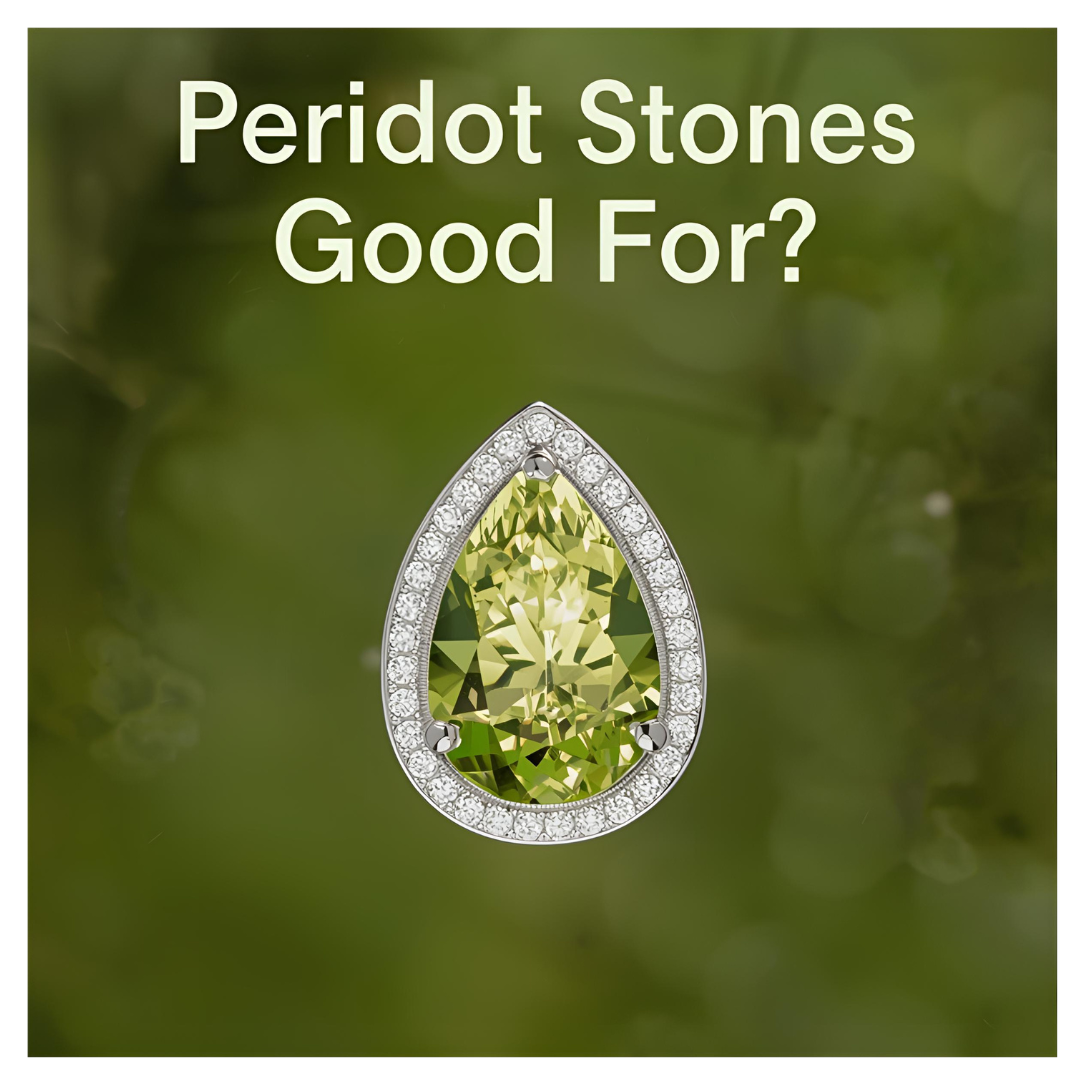
Peridot stones are "good for" a wide range of things, from their practical uses in jewelry to their celebrated metaphysical properties.
Here’s a comprehensive breakdown of what peridot is good for:
1. Jewelry and Aesthetic Uses
This is the most common and practical use for peridot.
Beautiful Gemstone: Its unique, vibrant lime green color makes it a striking and recognizable choice for all types of jewelry, including rings, necklaces, earrings, and bracelets.
August Birthstone: It is the primary modern birthstone for August, making it a popular and meaningful gift for those born in that month.
Affordability: While high-quality peridot is valued, it is generally more affordable than other green gems like emerald, making it an excellent choice for colorful, everyday wear.
Durability: With a hardness of 6.5 to 7 on the Mohs scale, peridot is durable enough for jewelry, though it requires some care to protect it from scratches and hard knocks.
2. Metaphysical and Healing Properties (Spiritual & Emotional Benefits)
This is where peridot's ancient reputation shines. It's considered a powerful stone for:
Heart Healing: It's renowned for mending emotional wounds, soothing heartache, and helping to release old baggage, resentment, and jealousy.
Emotional Balance: Peridot is believed to calm the mind, reduce stress and anger, and bring a general sense of well-being and happiness.
Protection: Traditionally, it was worn to ward off negativity, evil spirits, and anxiety, creating a protective shield around the wearer.
Attracting Abundance: As a stone of prosperity, it's thought to attract wealth and new opportunities.
Personal Growth: It is said to help you understand your destiny and life's purpose, encouraging positive change and growth.
3. Physical Benefits (In the Realm of Crystal Healing)
In alternative healing practices, peridot is believed to have physical benefits. It's important to note that these are not scientifically proven and should not replace professional medical advice.
Detoxification: It's often associated with supporting the liver, gallbladder, and digestive system, helping to eliminate toxins.
Strengthening: Believed to strengthen the immune system and increase vitality and overall physical energy.
Healing and Regeneration: Some use it to support the healing of tissues and the cardiovascular system.
4. Historical and Symbolic Significance
The "Gem of the Sun": Ancient Egyptians revered peridot, calling it the "gem of the sun." They believed it protected its wearer from "terrors of the night."
Stone of Compassion: It is symbolically linked to compassion, kindness, and open-heartedness.
How to Use Peridot to Get Its Benefits
To leverage these properties, you can:
Wear It: The most effective way to keep its energy with you is to wear it as jewelry, especially over the heart (as a pendant).
Carry a Tumble Stone: Keep a small, polished peridot in your pocket or purse for on-the-go support.
Meditate: Hold a peridot stone in your hand or place it on your Heart Chakra during meditation to connect with its healing energy.
Place in Your Home/Office: Position a piece in your bedroom to promote peaceful sleep or in your workspace to protect against negative energy and encourage prosperity.
In summary, peridot is good for:
As a Gemstone, it creates beautiful, meaningful, and relatively affordable jewelry.
As a Healing Stone: Providing emotional healing, protection, and attracting abundance (based on metaphysical beliefs).
As a Symbol: Representing light, compassion, and personal transformation.
Which Chakra Is Peridot?
This is a key aspect of peridot's metaphysical properties.
Peridot is primarily associated with the Heart Chakra (Anahata).
Its vibrant green color resonates perfectly with the energy center located in the center of the chest, which governs love, compassion, and emotional well-being.
Here's a more detailed breakdown of its connection to the chakras:
1. Primary Chakra: Heart Chakra (Anahata)
Function: The Heart Chakra is the bridge between the lower (physical) and upper (spiritual) chakras. It governs our ability to give and receive love, feel compassion, forgive, and experience inner peace.
How Peridot Works: Peridot is considered a powerful heart healer. It is believed to:
Release old baggage: Help clear stored emotional pain, heartache, jealousy, and resentment.
Encourage forgiveness: Foster forgiveness towards others and, crucially, towards oneself.
Attract love: Open the heart to new and healthy relationships.
Promote self-love: Help you recognize your own worth and practice self-acceptance.
2. Secondary Chakra: Solar Plexus Chakra (Manipura)
Function: Located in the upper abdomen, this chakra is the core of our personal power, self-esteem, and confidence.
How Peridot Works: While its primary connection is to the heart, peridot's energy of cleansing and new beginnings also influences the Solar Plexus. It is thought to:
Clear negative patterns: Release old, self-destructive habits and thoughts that block your personal power.
Boost willpower: Help you take control of your life and make positive changes.
Align with purpose: By clearing emotional blocks (Heart Chakra) and boosting personal power (Solar Plexus), peridot can help you connect with your true life's purpose.
How to Use Peridot for Chakra Work
To harness these properties, you can use peridot in the following ways:
Wear it as a Pendant: Wearing a peridot necklace allows the stone to rest directly over your Heart Chakra, providing constant energetic support.
Meditate: Lie down and place a peridot stone directly on your chest over your Heart Chakra. As you breathe, visualize its green light filling your heart, releasing any heaviness and replacing it with feelings of love and peace.
Carry a Stone: Keep a tumbled peridot in your pocket to support both your Heart and Solar Plexus chakras throughout the day.
Does Peridot Attract Money?
Yes, peridot is strongly believed to attract money, prosperity, and abundance.
However, it's crucial to understand how it's thought to do this, as its approach is more nuanced than simply "making money appear."
The "How" Behind Peridot and Prosperity
Peridot is not typically considered a "get-rich-quick" stone. Instead, its connection to wealth is intertwined with its core properties of growth, light, and cleansing. Here’s how it's believed to work:
Attracting Opportunities: Peridot is thought to vibrate with a prosperous energy that attracts new opportunities for growth and wealth. This could mean a new job, a promotion, a successful business idea, or a chance to improve your financial situation.
Clearing Blockages: Its primary function is to clear away negative energy. This is applied to finances by clearing mental and emotional blocks that hinder prosperity, such as:
Scarcity Mindset: The deep-seated belief that there's "never enough."
Fear of Success or Failure: Self-sabotaging thoughts that hold you back.
Feelings of Unworthiness: The belief that you don't deserve to be wealthy or abundant.
The Energy of Growth: With its vibrant green color, peridot is powerfully connected to nature, renewal, and the life force of plants. Just as plants grow and thrive, peridot is believed to encourage your endeavors to grow and flourish, including your financial ventures.
Heart-Centered Abundance: Because peridot is a powerful heart chakra stone, it encourages aligning your financial goals with your heart's true purpose. The idea is that when you do what you love, abundance (in all forms, including financial) will follow.
How to Use Peridot to Attract Money?
If you want to explore this property, here are some common practices:
Carry a Stone: Keep a small tumbled peridot in your pocket or purse, especially when going to work, a business meeting, or when making financial decisions.
Place in Your Wealth Area: In Feng Shui, the far left corner of your home or room (from the front door) is considered the "Wealth and Abundance" area. Placing a peridot there is believed to activate that kind of energy.
Create a Money Grid: Some people create crystal grids with peridot at the center, surrounded by other "prosperity stones" like citrine or pyrite, to amplify the intention of attracting wealth.
Meditate with it: Hold a peridot in your hand while meditating on your financial goals. Visualize yourself achieving them, feeling the feelings of security and abundance.
Important Disclaimer: These properties are based on spiritual and metaphysical beliefs that are not scientifically proven. Peridot should be used as a complementary tool for focus and intention-setting, not as a substitute for practical financial planning, hard work, and sound decision-making.
How To Tell If Peridot Is Real?
Telling if a peridot is real is a common concern, as it can be faked with glass or other synthetic gems. Fortunately, peridot has several distinctive characteristics that make it possible to identify with a few simple tests.
Here is a guide on how to tell if peridot is real, starting with simple at-home methods and moving to more technical ones.
Simple At-Home Tests (Good Indicators)
The Color Test: Look for "Olive Green"
Genuine Peridot has a unique, signature color that is a yellowish-green or olive green. It is not a pure, deep green like an emerald. It should look like the color of a green olive.
What to suspect: If the stone is a pure, vivid green, a blue-green, or has any other color (like purple or red), it is almost certainly a different stone or a fake. Glass imitations often have a color that is "too perfect" or doesn't match the natural olive hue.
The "Lily Pad" Inclusion Test: Use a Loupe
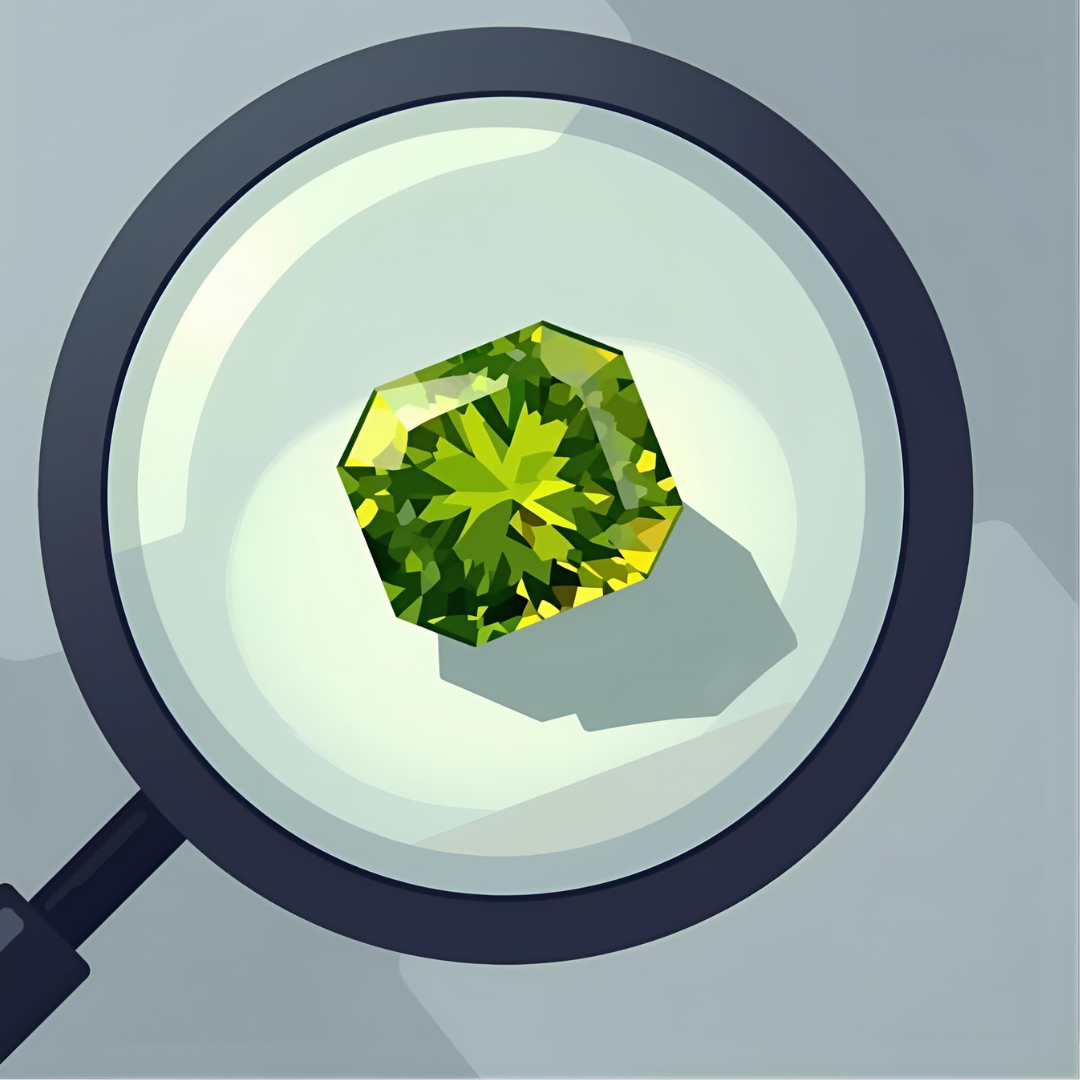
This is one of the most telltale signs of a natural peridot. Look closely at the stone with a jeweler's loupe (a 10x magnifier).
Genuine Peridot often contains tiny, disc-shaped inclusions that look like little lily pads or tiny water lilies. These are actually mineral crystals (usually chromite) surrounded by a stress fracture.
What to suspect: Glass fakes will often have gas bubbles, which are round and smooth, not flat and disc-like. Synthetic stones will be completely flawless or have a different type of inclusion.
The Double Refraction Test: The "Doubling" Effect
This is a very strong test for peridot. You will need a loupe for this.
Look through the side (the pavilion) of the stone at a single point or line on the opposite side (like a facet junction).
Genuine Peridot is double refractive. This means you will see two of each line or point, slightly separated. It's like seeing a "ghost" image.
What to suspect: Glass is single refractive, so you will only see one line. This is a very reliable way to distinguish it from the most common imitation.
More Advanced Tests (Requiring Equipment or a Professional)
Hardness Test: Scratch Resistance
Caution: This is a destructive test. Only perform this on a loose stone and in an inconspicuous area if you are sure.
Peridot has a hardness of 6.5-7 on the Mohs scale. Try to scratch it with a common piece of quartz (hardness 7), which is easy to find.
Genuine Peridot will be scratched by quartz, as quartz is slightly harder.
What to suspect: If the stone is not scratched, it might be a harder material like topaz or sapphire. If it scratches very easily (e.g., with a copper coin), it's likely glass or something softer.
The "Hazy" or "Sleepy" Look
While high-quality peridot is clear, many stones have a slightly hazy or "sleepy" appearance due to the multitude of tiny inclusions. This is very common and can be a sign of a natural stone.
What to suspect: Glass imitations are often "too clean" and perfectly transparent.
What is Peridot Most Often Faked With?
Glass: The most common fake. It will have bubbles, be single refractive, and feel less "sharp" to the touch than a faceted gemstone.
Green Cubic Zirconia (CZ): Has more "fire" (rainbow colors) than peridot and is single refractive.
Synthetic Forsterite: This is a lab-created version of peridot's mineral. It is chemically identical and can pass many tests, but it is very rare and expensive to produce, so it's not a common fake in the market.
The Ultimate Test: Get a Professional Opinion
If you are still unsure, especially for an expensive piece, take it to a certified gemologist or a reputable jeweler. They have specialized tools like a refractometer to measure the stone's refractive index precisely, which will definitely identify peridot.
Quick Summary Checklist:
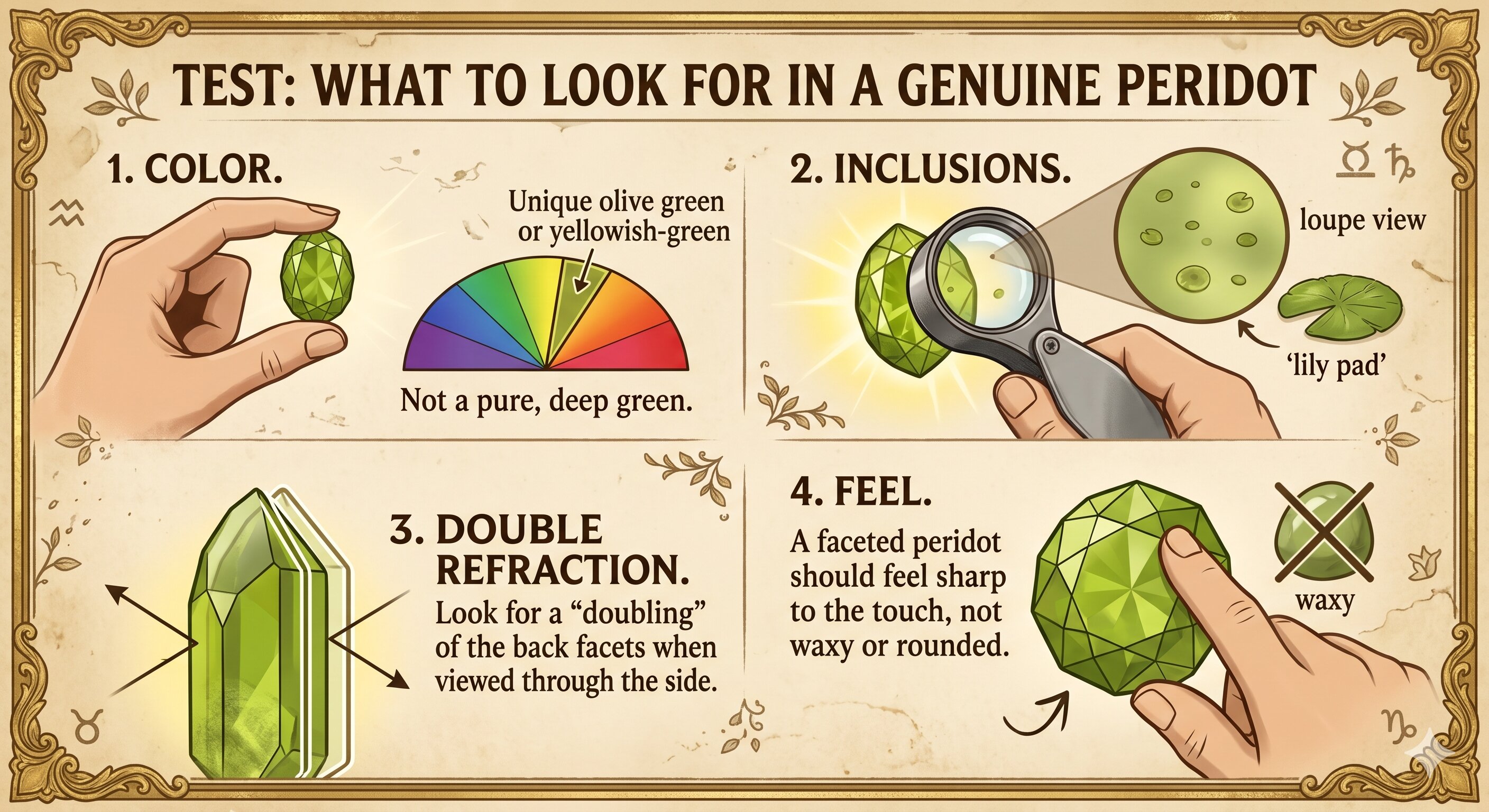
By using a combination of the color check and the double refraction test, you can be fairly confident in identifying a real peridot.
Can Peridot Go In Water?
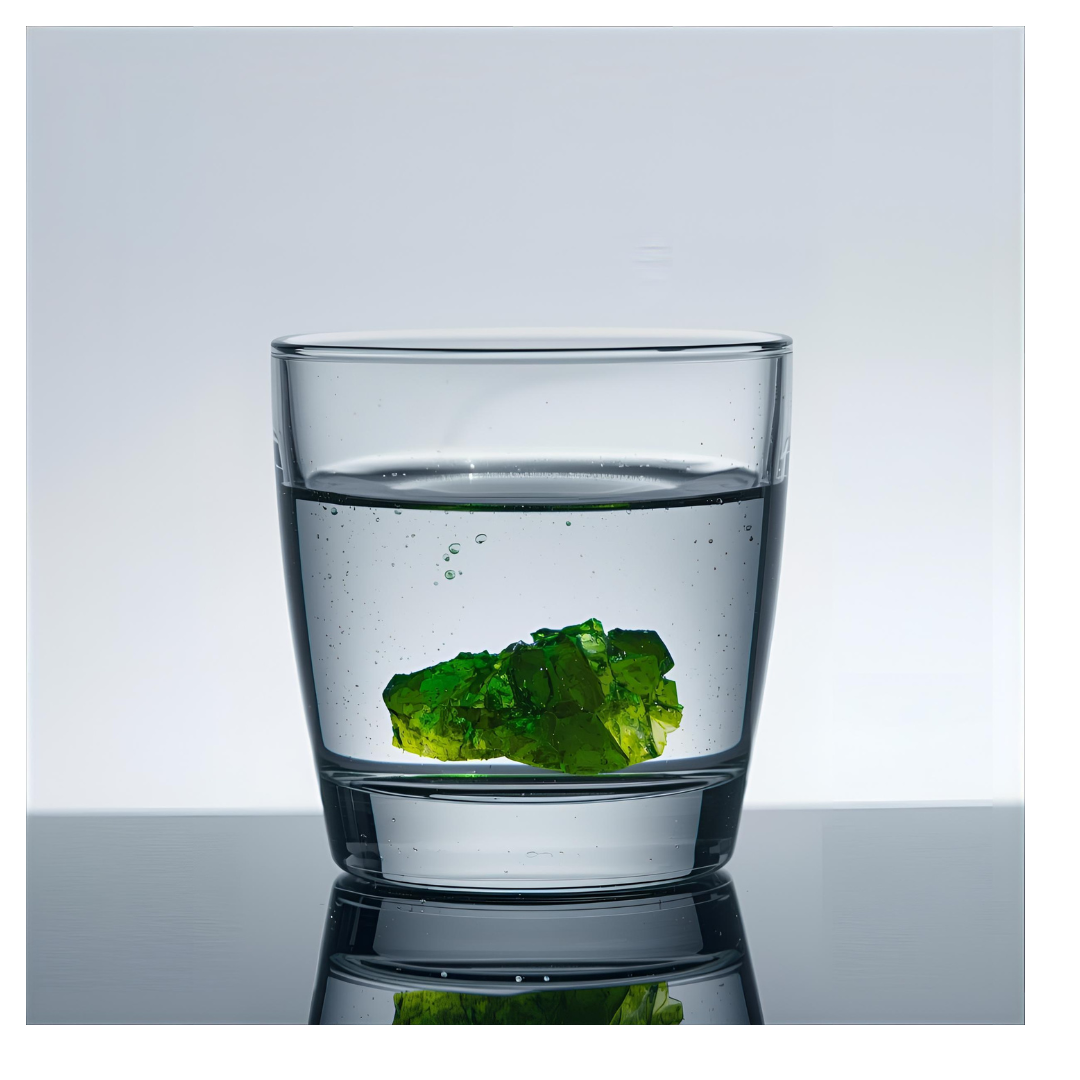
The short answer is: It's not recommended to immerse peridot in water for prolonged periods.
While a brief, accidental exposure (like washing your hands) won't immediately destroy the stone, making a habit of it can lead to permanent damage.
Here’s a detailed breakdown of why:
1. Hardness and Durability
Mohs Hardness: Peridot has a hardness of 6.5 to 7. This means it's durable enough for everyday wear, but it is softer than many other popular gemstones like quartz (7), topaz (8), or diamond (10).
Risk from Impurities: Water often contains microscopic mineral particles and chlorine. These particles are abrasive and can gradually scratch and dull the surface of peridot over time.
2. Chemical Sensitivity
Heat and Acids: Peridot is formed in magma, so it's sensitive to sudden temperature changes (thermal shock). More importantly, it can be easily damaged by acids, including the mild acids found in perspiration, lotions, and swimming pools.
Accelerated Damage: Soaking peridot in water, especially chlorinated or salt water, can accelerate this chemical erosion, potentially eating away at the stone's polish and facets.
3. Potential for Structural Damage
Inclusions: Many peridot stones have tiny inclusions or fractures. Prolonged exposure to water can seep into these tiny cracks. If the water freezes or the stone is subjected to heat, the expansion and contraction can worsen these fractures, potentially causing the stone to crack or break.
Best Practices for Cleaning Peridot
To keep your peridot sparkling safely, follow these steps:
The Safe Cleaning Method: Use a soft, lint-free cloth (like a microfiber cloth) dampened with warm, soapy water. Use a mild dish soap without harsh chemicals or lotions.
Gently Wipe: Carefully wipe the stone and setting with the cloth.
Rinse Quickly: You can briefly run the piece under lukewarm (not hot) tap water to rinse off the soapy residue. Keep this exposure very short.
Dry Thoroughly: Immediately pat it completely dry with a clean, soft cloth.
What to Avoid:
Ultrasonic Cleaners: The vibrations can shatter included peridot.
Steam Cleaners: The intense heat and pressure can cause damage.
Harsh Chemicals: Avoid any contact with bleach, ammonia, acids, or hairspray.
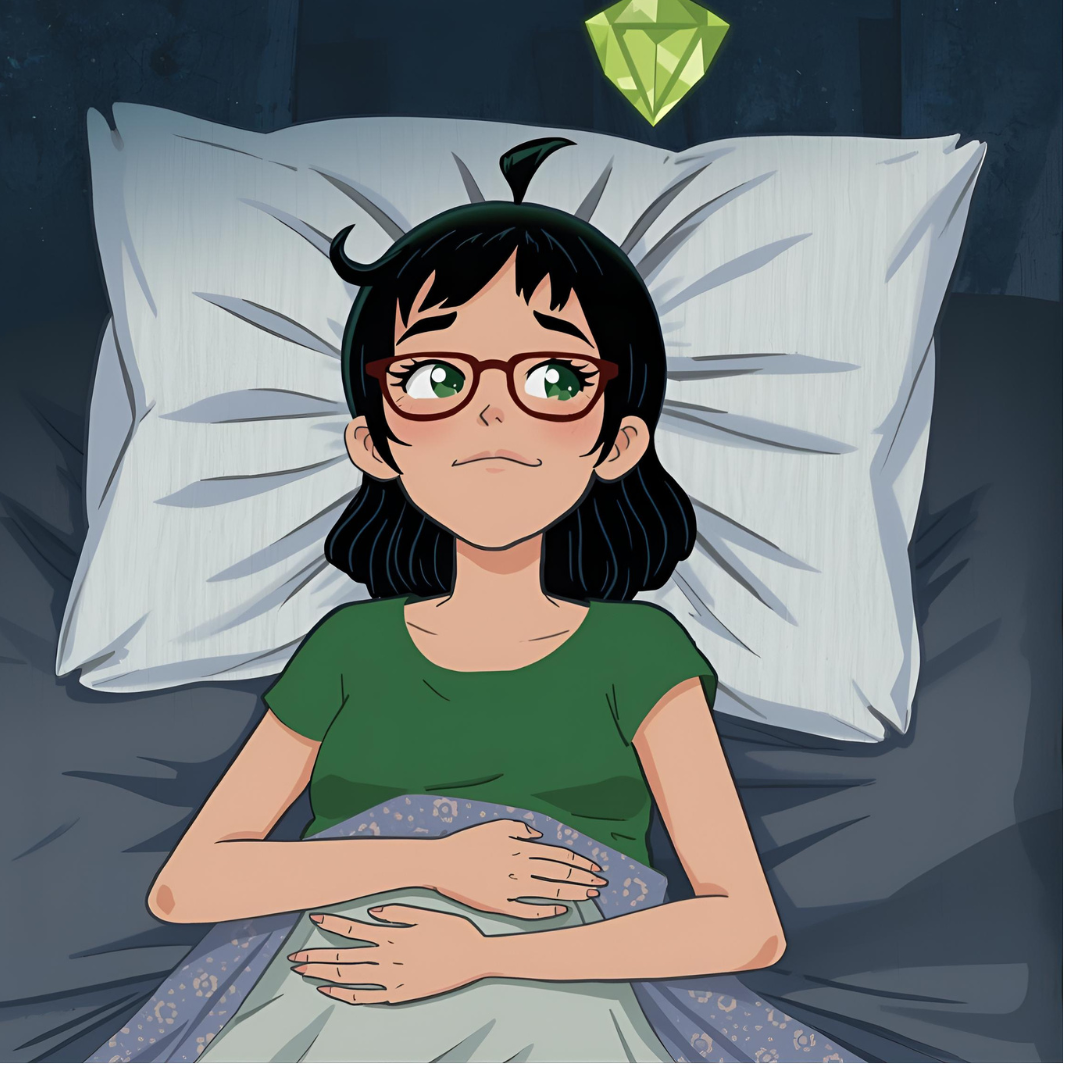
Can I Sleep With A Peridot?
The answer is yes, you can generally sleep with peridot, but whether you should depends entirely on your personal sensitivity and your intention.
Here’s a breakdown of the reasons for and against, along with some best practices to help you decide.
Reasons You Might Want to Sleep with Peridot (The Benefits)
In metaphysical traditions, peridot is considered a powerful stone for the heart and mind, making it a potential ally for sleep:
Promotes Peaceful Sleep and wards off Nightmares: Peridot is known as a "stone of light" that can dispel darkness and fear. It's believed to create a protective, calming energy around you, which can lead to more restful sleep and fewer nightmares or anxious dreams.
Encourages Emotional Healing: Since it's strongly connected to the Heart Chakra, sleeping with peridot is thought to help process and release stored emotional pain, heartache, or resentment overnight. It's like doing emotional "maintenance" while you sleep.
Reduces Stress and Anxiety: Its calming energy is said to soothe a racing mind, making it easier to fall asleep if you tend to overthink or worry at night.
Reasons to Be Cautious (The Potential Drawbacks)
Overstimulation or Vivid Dreams: For some sensitive individuals, the energetic vibration of a stone can be too stimulating. Peridot is a powerful cleanser, and this internal "cleaning" process can sometimes lead to very vivid, intense, or strange dreams, which might disrupt your sleep rather than help it.
Physical Discomfort: If you are wearing it as jewelry (like a necklace or ring), it could pose a choking hazard, get tangled, or simply be uncomfortable to sleep in.
Risk of Damage: Peridot is not an extremely hard stone (6.5-7 on the Mohs scale). If you toss and turn, you could scratch it against your bedside table or knock it off the bed, potentially chipping it.
Best Practices for Sleeping with Peridot
If you want to try it, here are the safest and most effective ways:
Place it Under Your Pillow or on a Nightstand: This is the most common and safest method. It keeps the stone's energy close to you without the risk of physical discomfort or damage. Placing it on your nightstand is a gentler option if you find it too intense directly under your pillow.
Use a Tumbled Stone, Not Jewelry: A smooth, tumbled stone is ideal as it has no sharp edges and is less likely to be damaged.
Set an Intention: Before you go to sleep, hold the stone and set a clear intention. For example, you could say, "I invite the peaceful energy of peridot to guard my sleep and bring me healing dreams," or "Help me release the stress of today and wake up feeling refreshed."
Listen to Your Body and Dreams: This is the most important step. Pay attention to how you feel.
If you sleep soundly and wake up feeling great, it's working for you.
If you have restless nights, intense dreams, or feel tired in the morning, the stone's energy might be too strong for you to sleep with. In this case, try placing it further away (e.g., on a dresser across the room) or only meditate with it during the day.
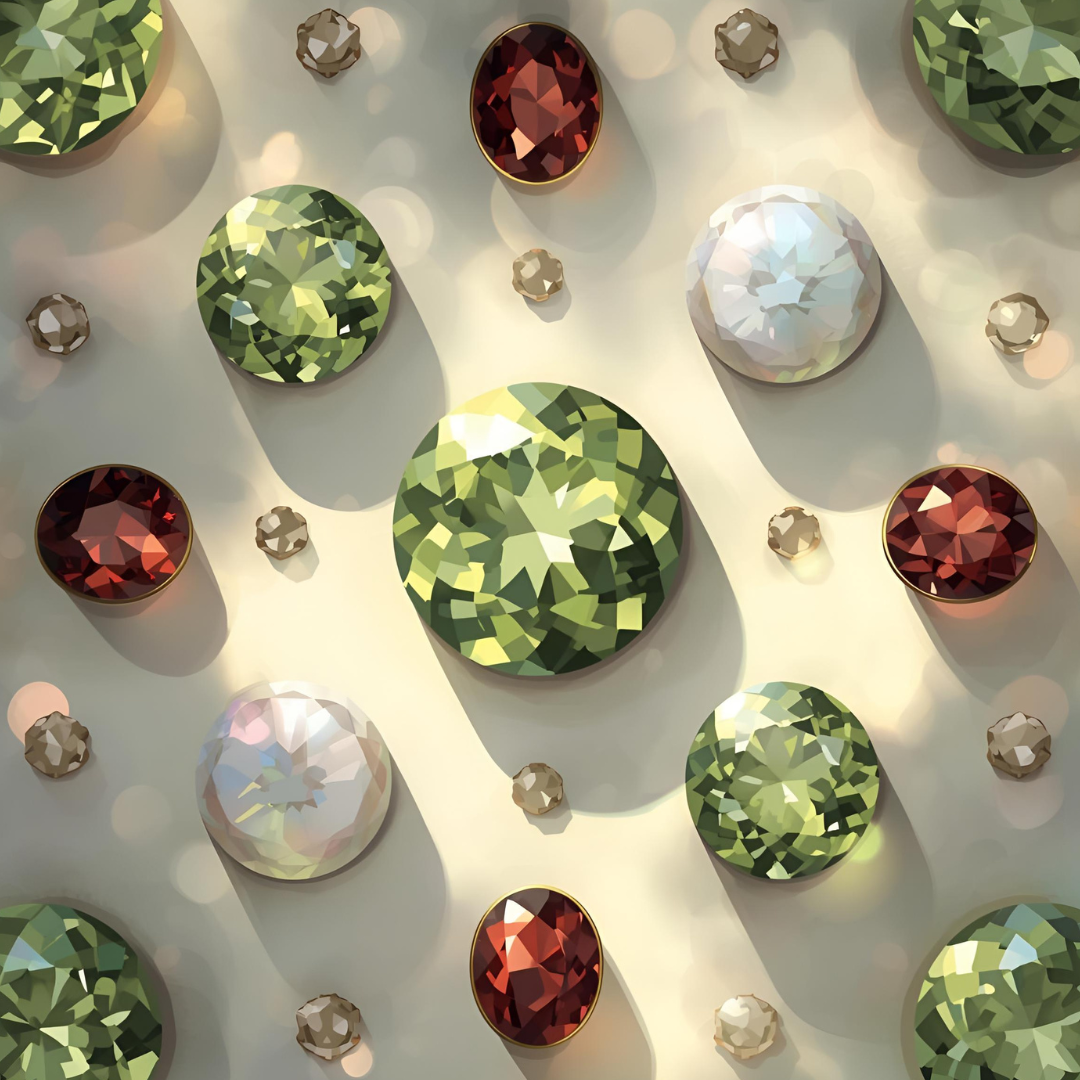
What Stones Pair With Peridot?
Peridot is a vibrant and versatile stone that pairs beautifully with many others. The best pairing depends on your goal—whether it's for aesthetics in jewelry or for metaphysical purposes.
Here’s a guide to the best stones to pair with peridot, categorized by their purpose.
For Stunning Jewelry (Aesthetic Pairings)
The goal here is to complement or contrast peridot's unique lime green color.
Diamonds or White Topaz: The ultimate classic. The brilliant white of these stones makes peridot's green "pop" and adds a touch of luxury and sparkle. This is a very popular combination in modern jewelry.
Citrine or Yellow Sapphire: This creates a warm, sunny, and harmonious analogous color scheme (colors next to each other on the color wheel). The yellows and golds blend beautifully with peridot's yellowish-green hue.
Amethyst or Iolite: For a bold and regal look, use purple. Purple is the direct complement to green on the color wheel, creating a striking and high-contrast combination.
Pearls: The soft, creamy luster of pearls provides an elegant and sophisticated contrast to the bright, vivacious green of peridot.
Brown Diamonds or Smoky Quartz: These earthy tones ground peridot's vibrant energy and create a natural, organic look.
For Metaphysical & Healing Pairings
The goal here is to combine and amplify energies for a specific purpose.
1. For Amplified Heart Healing & Emotional Balance
Rose Quartz: This is a classic and powerful pairing. Peridot clears away old heartache (jealousy, resentment), while Rose Quartz fills the space with unconditional love and compassion. Together, they are a profound team for heart chakra healing.
Rhodonite: Another excellent heart healer. Rhodonite is known for healing emotional wounds and promoting forgiveness, making it a strong partner for peridot's cleansing energy.
2. For Abundance & Prosperity
Citrine: Known as the "Merchant's Stone," Citrine is a powerhouse for attracting wealth and success. Paired with peridot, which is also linked to abundance, they create a potent "money magnet" combination.
Green Aventurine: Another classic stone of luck and opportunity. Pairing it with peridot is believed to magnify the flow of prosperity in all forms.
Pyrite (Fool's Gold): Pyrite is a symbol of wealth and manifestation. Its metallic luster alongside peridot's vitreous shine is both visually and energetically powerful for attracting financial success.
3. For Protection & Cleansing Negative Energy
Black Tourmaline or Onyx: These are the ultimate protective stones. They ground negative energy and provide a psychic shield. Peridot cleanses and brings in light, while Black Tourmaline blocks and grounds negativity—a perfect defensive team.
Clear Quartz: This is an amplifier for any intention. Pairing Clear Quartz with Peridot will magnify its cleansing, heart-healing, and abundance-attracting properties. It's like turning up the volume on peridot's energy.
4. For Spiritual Growth & Connection
Amethyst: While a visual contrast, this is a powerful spiritual pairing. Amethyst enhances spiritual awareness and intuition, while peridot helps to clear the mental and emotional blocks that hinder that connection.
Moonstone: Connects to intuition and the divine feminine. Paired with peridot, it can help bring emotional insights to the surface for healing and growth.
How to Use the Pairings
Jewelry: Create a bracelet with a combination of stones (e.g., Peridot, Rose Quartz, and Clear Quartz).
Gridding: Arrange the stones in a geometric pattern (a crystal grid) with a specific intention.
Carry Together: Keep a small pouch with your chosen stone combination in your pocket or purse.
Meditate: Hold peridot in one hand and its partner stone in the other during meditation to balance their energies.
In summary, some of the most popular and effective pairings for peridot are:
Rose Quartz for ultimate heart healing.
Citrine for abundance and joy.
Black Tourmaline for protection and grounding.
Diamonds/Clear Quartz for amplification and aesthetic beauty.
Ultimately, the best pairing is the one that resonates most with you and your intentions.
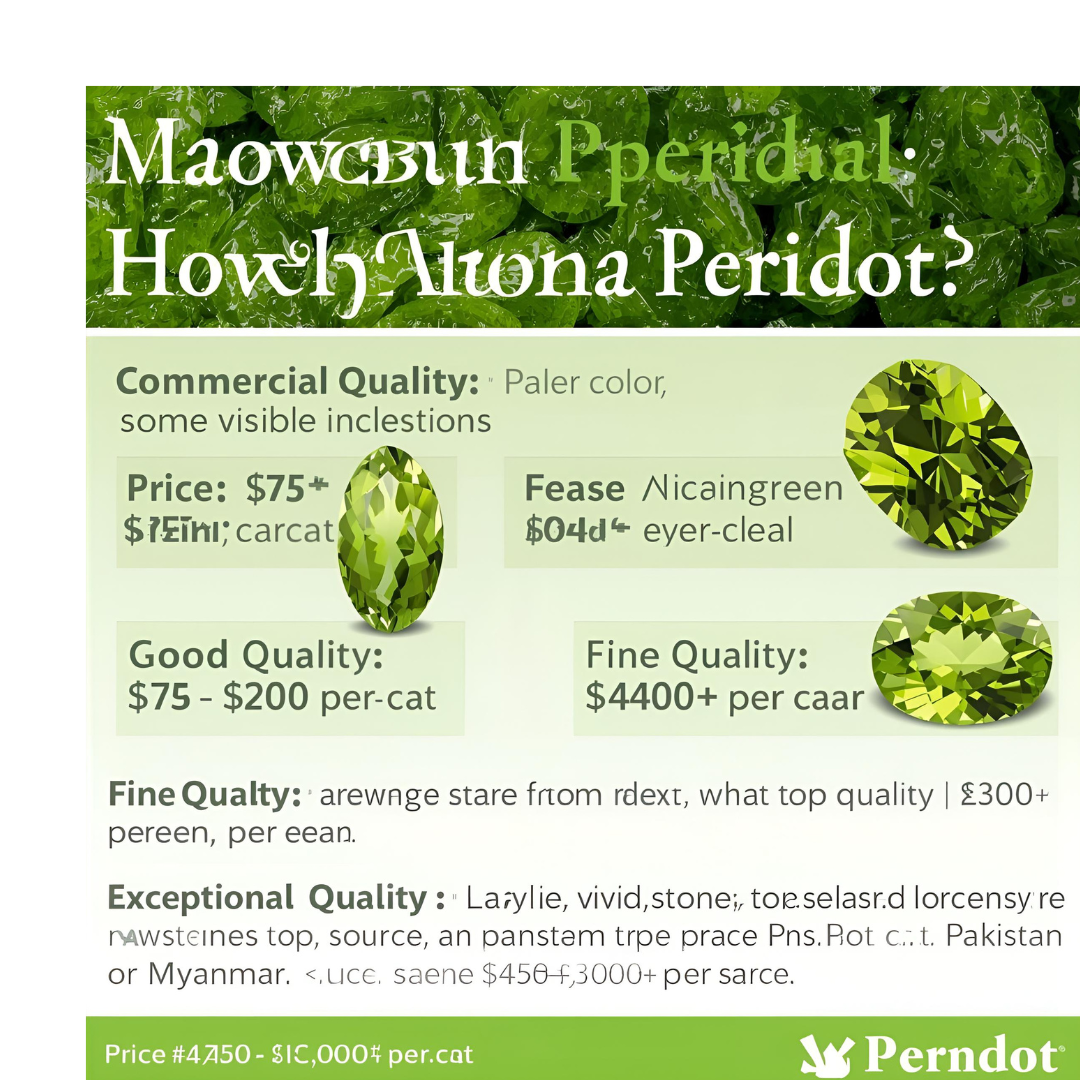
How Much Is Peridot Worth?
This is one of the most common questions about peridot, and the answer depends heavily on the quality of the stone.
To give you a straightforward answer: Peridot is generally an affordable gemstone, but fine-quality stones can be quite valuable. You can find small peridots for $20, while large, top-quality stones can cost thousands.
Here’s a detailed breakdown of what determines its price and what you can expect to pay.
Key Factors That Determine Peridot's Value
Color (The Most Important Factor): The most valuable peridot has a pure, vibrant, "lime" or "grass" green color with no brown or yellow hints. The intensity of the green is key.
High Value: Vivid, saturated pure green.
Medium Value: Strong yellowish-green or olive green (the most common color).
Lower Value: Pale, washed-out, or brownish-green stones.
Clarity: Peridot is known for being often "eye-clean" (no visible inclusions to the naked eye). Stones with no visible inclusions are more valuable. While tiny black specks (chromite crystals) are common, heavily included stones that look cloudy are worth much less.
Carat Weight: Peridot is found in a wide range of sizes. Smaller stones (under 5 carats) are common and affordable. The price per carat increases significantly for larger, high-quality stones (over 10-15 carats) as they are rarer.
Cut: A good cut enhances the stone's brilliance and color. A well-proportioned peridot will be lively and bright. A poor cut can make even good material look dull.
General Price Ranges (Per Carat for the Stone Alone)
Commercial Quality: (Paler color, some visible inclusions)
Price: $25 - $75 per carat
Good Quality: (Nice green color, eye-clean)
Price: $75 - $200 per carat
Fine Quality: (Vivid, intense green, eye-clean)
Price: $200 - $450+ per carat
Exceptional Quality: (Large, vivid stones from top sources like Pakistan or Myanmar)
Price: $450 - $1,000+ per carat
What This Means for Jewelry (Real-World Examples)
A standard 1-carat, good-quality peridot in a simple sterling silver setting might cost you $100 - $300 for the entire piece.
A 3-carat, fine-quality peridot in a gold ring could range from $800 to $1,500 or more.
A large, 10-carat museum-quality peridot could easily cost several thousand dollars.
What Makes Some Peridot More Valuable?
Origin: Peridot from Pakistan and Myanmar (Burma) is highly prized for its top-tier color and clarity.
Lack of Brown Tints: The purest green stones are always the most sought-after.
Large Sizes: As with most gemstones, the price per carat jumps once you get into larger sizes with good color and clarity.
In conclusion: Peridot is an excellent choice for those who want a vibrant, durable, and meaningful gemstone without the high cost of a ruby, sapphire, or emerald. Its value lies in its beautiful, unique color and its role as the primary August birthstone.
Is Peridot Worth Buying?
Absolutely, peridot is absolutely worth buying for the right person and for the right reasons. It's not just a "cheap alternative"; it's a beautiful and unique gemstone in its own right.
Whether it's a good purchase for you depends on what you're looking for. Here’s a balanced breakdown to help you decide.
The "Pros" – Why Peridot is a Great Buy
Stunning and Unique Color: Its signature lime or olive green is vibrant and eye-catching. You won't confuse it with an emerald or a tsavorite garnet; peridot has a personality all its own.
Excellent Value for Money: This is one of its biggest advantages. You can get a large, high-quality, and faceted peridot for a fraction of the price of a diamond, sapphire, or ruby of the same size. It offers a lot of "wow" factor without a massive investment.
Durability for Everyday Wear: With a hardness of 6.5-7 on the Mohs scale, it's durable enough for rings and bracelets with proper care (e.g., avoiding hard knocks and harsh chemicals). It's a great choice for frequent-wear jewelry.
Meaningful Birthstone: As the primary modern birthstone for August, it is a perfect and deeply personal gift for anyone born in that month.
Rich in History and Lore: From being the "gem of the sun" for ancient Egyptians to its associations with light, healing, and compassion, peridot has a fascinating story that adds to its allure.
The "Cons" – Things to Consider
Not a "High-Investment" Gem: If you're looking for a gem that will significantly appreciate like a fine ruby or diamond, peridot is not it. Its value is primarily aesthetic and personal.
Requires Some Care: While durable, its hardness means it can be scratched by dust (which contains quartz) or by harder gems if stored together. It's best to store it carefully and remove it during strenuous activities.
Color Preference is Key: The unique yellow-green hue isn't for everyone. If you prefer a pure, deep green, you might be better suited with an emerald or tsavorite garnet (though they are much more expensive).
Who is Peridot Perfect For?
You should seriously consider buying peridot if you are:
An August baby or buying a gift for one.
Someone who loves vibrant colored gemstones but is on a budget.
Looking for a unique piece that stands out from the more common sapphires and rubies.
Drawn to its metaphysical properties of heart healing, abundance, and light.
A collector who wants a beautiful example of a classic gemstone.
For current gemstone market prices, visit the American Gem Society's price guide.
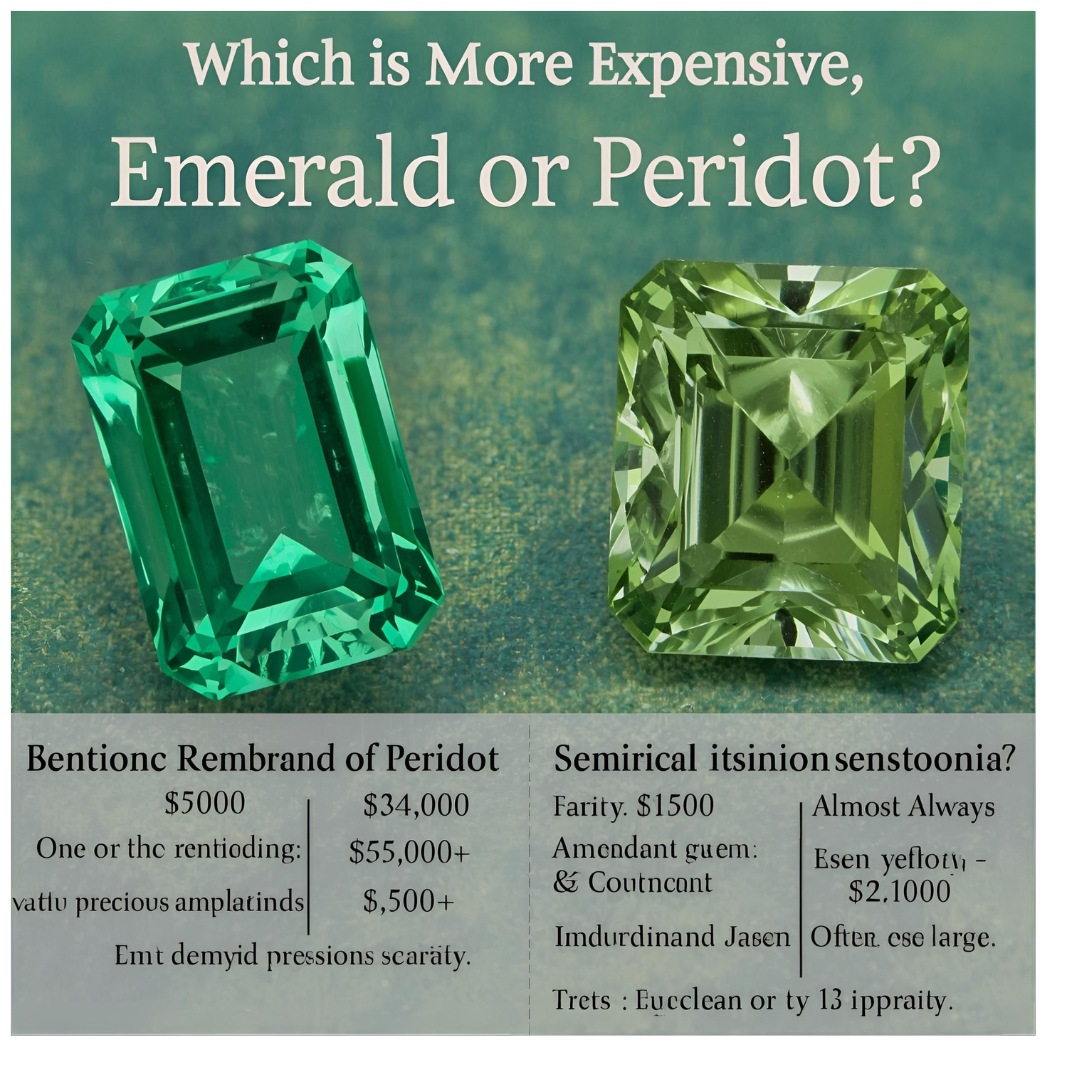
Which Is More Expensive, Emerald Or Peridot?
Emerald is almost always significantly more expensive than peridot.
The price difference isn't just a little; it's often a difference of 10x, 100x, or even more for high-quality stones.
Here’s a direct comparison breaking down why:
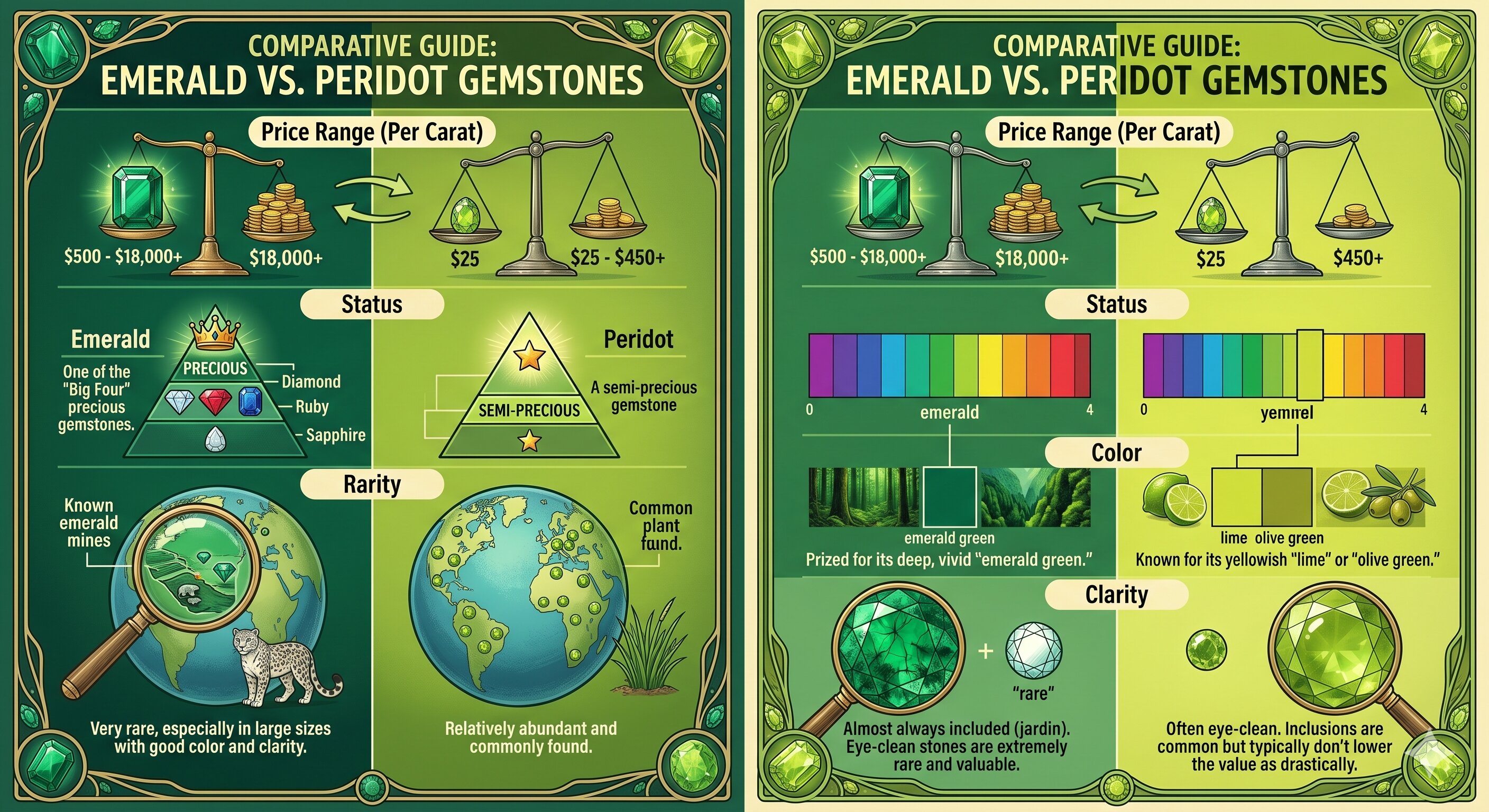
At a Glance: The Price Gap
Why is Emerald So Much More Expensive?
Rarity and Precious Status: Emerald is one of the "Big Four" precious gemstones (along with diamond, ruby, and sapphire). This status is based on its extreme rarity, especially in high quality. Peridot is far more common and is classified as a semi-precious stone.
The Clarity Factor (Jardin): Emeralds are famously included with internal fractures and fissures (called "jardin," the French word for garden). A completely eye-clean emerald is exceptionally rare and commands an astronomical price. Peridot, on the other hand, is commonly found with excellent clarity, and eye-clean stones are the standard for good quality.
Color Significance: While both are green, the specific hue is crucial. The most valued emerald color is a very specific, deep, highly saturated bluish-green. Peridot's lime green is beautiful, but does not carry the same historic prestige or market demand.
Treatment: Almost all emeralds are treated with oils or resins to fill fractures and improve clarity. This is an accepted practice, but it adds to the cost and care requirements. Peridot is rarely treated, making it a more "natural" and lower-maintenance stone.
A Practical Example
You could buy a beautiful, large, 5-carat peridot of fine quality for around $1,000 - $2,000.
For the same budget ($1,000 - $2,000), you would likely be looking at a small, heavily included, low-quality emerald of under 1 carat.
“You now know the origin, the spiritual meaning, the chakras, the money lore, the real vs. fake tests, and the price. The only question left: will you wear the sun‘s stone?
Our current collection includes a limited number of gem-quality peridots — from the historic Zabargad Island (the same source as ancient Egypt) to vibrant Pakistani stones. When stones of this color saturation are gone, sourcing new ones with this clarity can take months.
This is not just a birthstone. It is volcanic fire, meteorite stardust, and summer light — the only gem that glows both from the earth and from the stars.”
[Button: Claim Your Peridot (Limited) →]


Other news for Sunday 07 June, 2026
- Princess Cut Diamond Guide: Price, Pros and Cons vs Oval
- Diamond Cut Guide: Grades, Shapes, Value And Buying Tips
View all news for Sunday 07 June, 2026 on one page
News for Saturday 06 June, 2026
- Emerald Cut Diamond Guide: Symbolism, Price, Pros And Cons
- Tanzanite Guide: Value, Colors, vs Sapphire and Buying Tips | December Birthstone
View all news for Saturday 06 June, 2026 on one page
Recent News
- Friday 05 June, 2026
- Thursday 04 June, 2026
- Wednesday 03 June, 2026
- Tuesday 02 June, 2026
- Monday 01 June, 2026