

Emerald Birthstone Guide: Meaning, Benefits, Price And Care
Emerald Birthstone
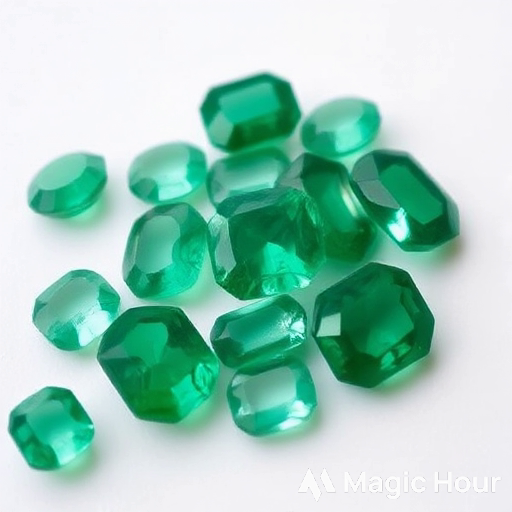
Emerald birthstone, with its captivating and rich green hue, is one of the most iconic and sought-after gemstones in the world. As the primary birthstone for May.
“Cleopatra, the last active pharaoh of Egypt, did not just wear emeralds. She claimed them. She draped herself in them during royal ceremonies, gifted them to foreign dignitaries as symbols of Egypt‘s wealth, and legend says she even slept with emeralds pressed against her skin — believing the green stone held the secret to eternal youth and irresistible power. When Elizabeth Taylor‘s Bulgari emerald pendant sold for $6.5 million in 2011, it wasn‘t just the stone they were bidding on. It was 2,000 years of the same obsession: to wear green and be unforgettable.”
The same stone that graced Cleopatra‘s hand now awaits your May birthday — or your forever promise. Each emerald in our collection is ethically sourced and chosen for that unmistakable velvety green.”
[Button: Explore Emerald Rings ]
Table of Contents
- What Month Is Emerald's Birthstone?
- What Is The Spiritual Meaning Of an Emerald Birthstone?
- What Are The Benefits of Wearing An Emerald Birthstone?
- How Can You Tell A Real Emerald Birthstone?
- How Can I Test My Emerald At Home?
- Which Shape Is Best For The Emerald's Birthstone?
- What Zodiac Should Wear Emeralds?
- What Is The Emerald Stone Good For?
- Is Emerald Birthstone Ok for An Engagement Ring?
- Can I Wear My Emerald Birthstone Every Day?
- How To Know If An Emerald Is Not Suitable For You?
- Which Finger Is Best For An Emerald Birthstone?
- How Much Does A Real Emerald Birthstone Cost?
- Should Emerald Birthstone Be Worn In Gold Or Silver?
Let's talk about the first topic.
What Month Is Emerald's Birthstone?
The birthstone for May is the Emerald. Emeralds are renowned for their stunning, rich green color and are among the most prized gemstones in the world.
Here's a little more information:
Symbolism: The emerald is traditionally associated with love, rebirth, and good fortune.
Composition: It is a variety of the mineral beryl, and its green color comes from traces of chromium and sometimes vanadium.
Zodiac Signs: It is the primary birthstone for the zodiac signs of Taurus (April 20 - May 20) and Gemini (May 21 - June 20).
So, if you or someone you know has a birthday in May, the magnificent emerald is your special gem!
Learn more about birthstone traditions on Wikipedia's birthstone page.
What Is The Spiritual Meaning Of an Emerald Birthstone?
The emerald is a gemstone steeped in rich spiritual and symbolic meaning across many cultures and centuries. Far beyond its beautiful green hue, it is considered a stone of the heart, offering profound energetic benefits.
“Ancient Romans believed emerald was sacred to Venus, goddess of love and beauty. But they didn‘t just wear it — they studied it. The Roman author Pliny the Elder wrote that looking into an emerald relieved eyestrain and soothed the soul. Nero, the infamous emperor, reportedly watched gladiator fights through a polished emerald to calm his nerves and protect his eyes from the sun‘s glare. From goddesses to emperors, the emerald has always been a stone of power wrapped in green silk. Today, it still asks the same question: will you look through it — or into it?”
Here is a detailed look at the spiritual meaning of the emerald:
Core Spiritual Meanings
The Stone of Successful Love
Emerald is most renowned for opening and nurturing the heart chakra. It is considered a crystal of devoted love, promoting domestic bliss, loyalty, and unity between partners.
It's believed to enhance unconditional love, compassion, and forgiveness, helping to heal emotional wounds and foster deeper, more meaningful relationships.
Wisdom, Truth, and Communication
Historically, emeralds were linked to eloquence and clear communication. It was thought that wearing an emerald allowed the speaker to state truths with clarity and conviction.
It is a stone of wisdom, helping to integrate knowledge from the mind with the understanding of the heart, leading to profound personal insights and truth.
Rebirth, Growth, and Abundance
Its vibrant green color connects it directly to the life force of nature—spring, renewal, and growth. Spiritually, it symbolizes rebirth and fresh starts.
This connection also extends to abundance and prosperity, not just materially, but in all aspects of life—love, creativity, and spiritual well-being.
Intuition and Spiritual Insight
Emerald is considered a powerful stone for enhancing intuition and psychic abilities. It is said to act as a bridge between the physical and spiritual realms, helping one to access higher knowledge and interpret dreams and visions.
Balance, Harmony, and Healing
It is known as a harmonizing stone, bringing the emotional, mental, and spiritual bodies into alignment. This balance is believed to promote physical and emotional healing, calming the nervous system and bringing a sense of peace and stability.
Historical and Cultural Associations
Ancient Egypt: Cleopatra famously adored emeralds, believing they symbolized eternal life and fertility. They were buried with the dead to symbolize youth and renewal in the afterlife.
Ancient Rome & Greece: The gem was dedicated to Venus (Aphrodite), the goddess of love and beauty, reinforcing its connection to the heart. Romans believed looking into an emerald could soothe tired eyes and relieve stress.
Hinduism & Ayurveda: In Hindu tradition, emeralds are associated with the planet Mercury (Budha) and are believed to enhance intelligence, communication, and business success. It is considered one of the "Navaratnas" (nine gems) with great astrological power.
Christianity: The emerald is mentioned in the Bible as one of the stones in the High Priest's breastplate. It was also thought to be the Holy Grail cup, carved from a single giant emerald, symbolizing divine grace.
Using Emerald Spiritually
Jewelry: Wearing emerald jewelry, especially over the heart (as a pendant), is a common way to keep its harmonizing and loving energy close throughout the day.
Meditation: Holding an emerald during meditation can help open the heart chakra, promote emotional healing, and facilitate a deeper connection to spiritual insights.
Placement: Placing an emerald in your home or workspace is believed to invite harmony, growth, and loving energy into the environment.
In essence, the emerald's spiritual meaning revolves around the heart. It is a master healer for emotional wounds, a magnifier of love and compassion, and a beacon of truth, wisdom, and rebirth. It encourages us to live from a place of balanced, open-hearted integrity.
A note on care: Because emeralds are associated with love and the heart, it's often recommended to cleanse them regularly. This can be done by placing them on a bed of sea salt, smudging with sage, or bathing them in moonlight (avoid harsh sunlight or water, as it can damage the stone).
What Are The Benefits of Wearing An Emerald Birthstone?
Wearing an emerald (the birthstone for May) is believed to offer a wide range of benefits, which can be categorized into metaphysical, astrological, and even psychological areas.
It's important to note that many of these benefits are rooted in ancient traditions, astrology, and crystal healing beliefs, rather than modern scientific evidence.
Here is a comprehensive look at the purported benefits of wearing an emerald birthstone:
1. Emotional and Psychological Benefits
Promotes Emotional Balance: Emerald is known as a "stone of the heart," believed to bring emotional stability, calm nervous energy, and soothe feelings of anxiety or fear.
Enhances Love and Relationships: It is strongly associated with fostering loyalty, domestic bliss, and unconditional love. It's thought to strengthen the bond between partners and attract harmonious relationships.
Encourages Compassion and Forgiveness: By opening and nurturing the heart chakra, it is said to help the wearer become more compassionate, empathetic, and able to forgive both themselves and others.
Instills a Sense of Renewal: Its vibrant green color connects it to spring and rebirth, helping to lift the spirits and encourage a positive outlook on life.
2. Mental and Intellectual Benefits
Sharpens Intellect and Memory: Emerald is historically linked to the planet Mercury, which governs intelligence, communication, and memory. Wearing it is believed to enhance mental clarity, quick wit, and the ability to learn and retain information.
Improves Communication and Eloquence: It's known as the "stone of successful speech," believed to help the wearer articulate thoughts clearly and persuasively, making it beneficial for public speakers, writers, and diplomats.
Boosts Creativity: By harmonizing the heart and mind, it can help unlock creative potential and inspire new ideas.
3. Spiritual and Metaphysical Benefits
Enhances Intuition and Insight: Emeralds are considered powerful amplifiers of intuition and psychic abilities. They are thought to help access higher wisdom and provide insight into dreams and the subconscious.
Brings Harmony and Balance: It works to align the mental, emotional, and spiritual bodies, creating a sense of inner peace and wholeness.
Provides Spiritual Protection: In many cultures, emerald birthstones were worn as talismans to ward off negative energies and evil spirits.
4. Astrological Benefits (Primarily in Vedic Astrology)
In Vedic astrology, the emerald (or Panna) is the gemstone for the planet Mercury (Budh). It is recommended to wear an emerald to:
Strengthen a weak Mercury in one's birth chart.
Improve business, trade, and financial acumen.
Enhance academic performance and success in examinations.
Improve relationships with siblings and communication within the family.
It is often considered highly beneficial for signs like Gemini and Virgo, which are ruled by Mercury.
5. Physical Well-being (Traditional Beliefs)
While not a substitute for medical treatment, traditional crystal healing attributes several physical benefits to the emerald birthstone:
Strengthens the Immune System and overall vitality.
Aids in Recovery from Illness.
Supports Eye Health (ancient Romans believed looking at an emerald birthstone soothed tired eyes).
Helps with Sinus and Respiratory issues.
Important Considerations Before Wearing an Emerald
Consult an Expert: Especially in astrology, it is crucial to consult a knowledgeable astrologer. An emerald may not be suitable for everyone and can have adverse effects if Mercury is poorly placed in your birth chart.
Quality over Size: A small, high-quality, flawless emerald birthstone is considered more effective than a large, included one.
The Right Way to Wear:
Finger: Typically worn on the little finger or the ring finger of the right hand.
Metal: It is most commonly set in gold or silver.
Day: The best day to wear it for the first time is a Wednesday during the ascending lunar cycle.
Purification: The stone should be purified in raw milk or Gangaajal before wearing.
Be Aware of Imitations: Ensure you are purchasing a natural emerald from a reputable dealer.
Wearing an emerald is believed to be a powerful way to invite love, enhance mental clarity, attract prosperity, and achieve emotional and spiritual balance. Its benefits are deeply interwoven with the heart and the mind, making it one of the most cherished gemstones for both its beauty and its purported energetic properties.
How Can You Tell A Real Emerald Birthstone?
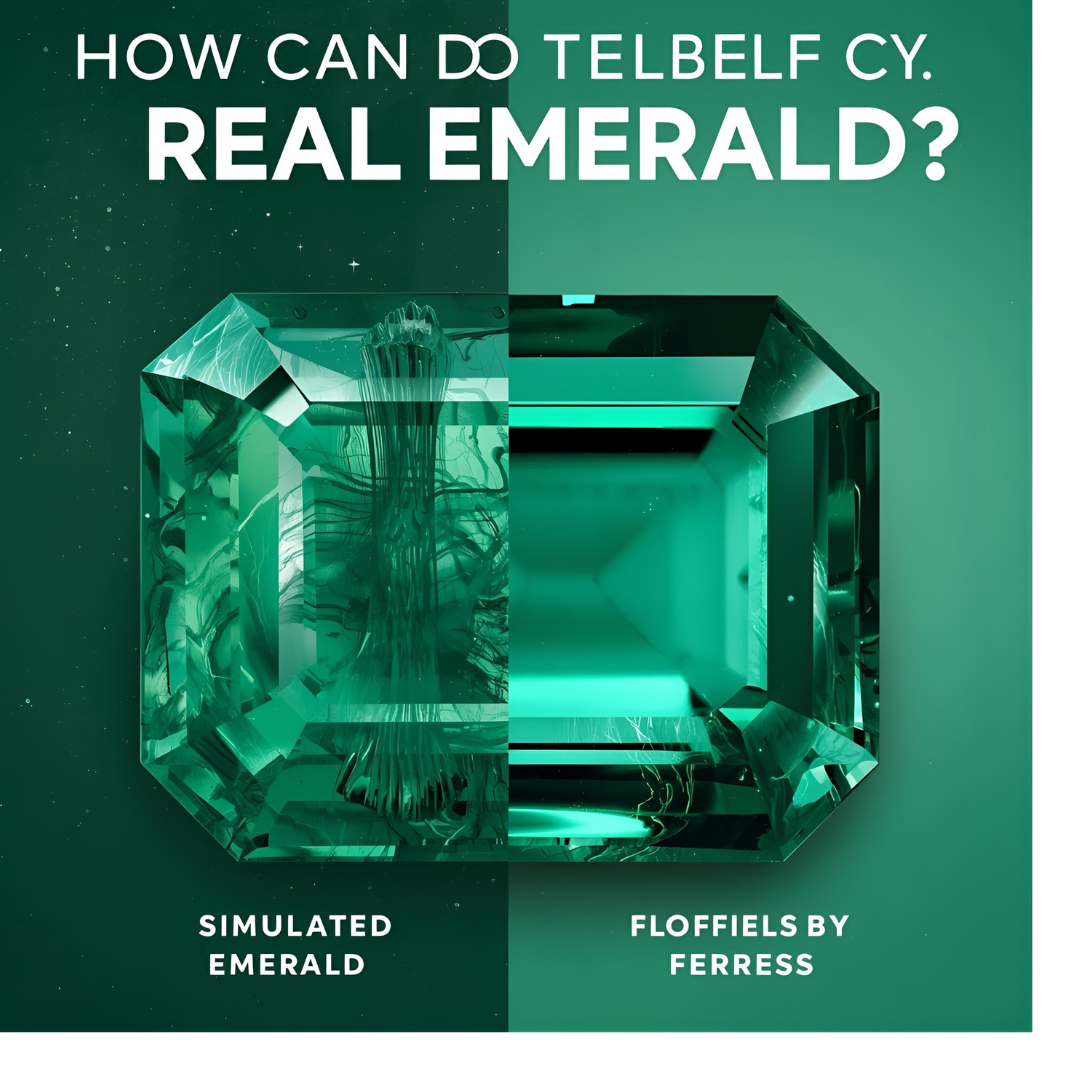
Telling a real emerald from a fake or imitation requires a combination of simple observations and, for certainty, professional gemological testing.
Here is a guide, starting with methods you can try at home and moving to those used by experts.
1. Visual Clues You Can Check (At-Home Observations)
These are good first steps, but not definitive proof on their own.
A. Look for Inclusions (The "Jardin")
Real Emeralds: Almost every natural emerald has visible internal characteristics called "inclusions." These often look like gardens (in French, jardin) of tiny flaws, feathers, gas bubbles, or crystals. A flawless, clear emerald is a major red flag.
Fakes: Glass or plastic imitations are often completely clean or contain only large, obvious air bubbles (usually perfectly round).
Caution: High-quality synthetic emeralds (lab-created) can also have inclusions, so this isn't a foolproof test.
B. Examine the Color
Real Emerald Birthstone: The color is a deep, rich, and slightly bluish-green. It often has a velvety or slightly muted quality and can be unevenly distributed (color zoning).
Fakes: The color can be too perfect, too bright, or have a yellowish-green tint (like peridot). Dyeing is common in low-quality fakes, and you might see color concentrated in cracks.
C. The Sparkle and Brilliance Test
Real Emeralds: Emeralds have a vitreous (glassy) luster, but they are not as fiery or brilliant as diamonds or moissanite. Their sparkle is more subdued.
Fakes: Glass or cubic zirconia will often have a much more "flashy" and fiery sparkle, with more rainbow colors.
D. Check for Wear and Tear
Real Emeralds: Emerald is relatively hard (7.5-8 on the Mohs scale) but is notoriously brittle due to its inclusions. You might see small chips or abrasions on the edges (facet junctions) over time.
Fakes: Softer materials like glass (~5.5 Mohs) or plastic will show obvious scratches and wear much more easily.
2. Simple At-Home Tests (Use with Caution)
These can be more telling but require care.
A. The Refractivity Test (Using a Newspaper)
This works because emeralds are highly refractive.
Place the loose stone table-down (flat top down) on a piece of newspaper with small print.
Look down through the pointed end (pavilion) of the stone.
In A Real Emerald: You will not be able to read the words clearly. The letters will be blurred, distorted, or you might see a "doubling" effect because the light bends so much inside the stone.
In A Fake (Glass): You will usually be able to see the letters relatively clearly through the stone.
Warning: This test is not perfect for all fakes, but it's a good indicator against glass.
B. The "Fog Test"
Hold the stone close to your mouth and breathe on it to create a light fog.
Observe how quickly the fog dissipates.
Real Emerald: The fog will disappear almost instantly (in 1-2 seconds) because gemstones are efficient conductors of heat.
Fake (Glass/Plastic): The fog will linger for several seconds (5+ seconds) as these materials are thermal insulators.
3. Professional Gemological Tests (The Only Way to be 100% Sure)
If you are making a significant purchase, you must rely on these.
A. Use a 10x Loupe or Microscope
A jeweler will look for specific types of inclusions:
Three-Phase Inclusions: Tiny crystals, gas bubbles, and liquids trapped together—a hallmark of natural emerald birthstone from certain locations (like Colombia).
Needle-like Inclusions: Such as tremolite or actinolite.
Synthetic Emerald Inclusions: Lab-created emeralds have their own tell-tale signs, like wispy, veil-like inclusions or platinum crystals (from the flux-growth process).
B. Check the Refractive Index (RI)
Every gemstone has a specific RI. A jeweler uses a tool called a refractometer.
Emerald RI: ~1.577 to 1.583
Glass RI: ~1.50 to 1.70 (often overlaps, but the reading will look different to an expert).
C. Specific Gravity (Density) Test
The density of a gemstone is a unique identifier.
Emerald SG: ~2.72
Glass SG: ~2.2 - 4.2 (varies widely, but usually different enough to detect).
D. Advanced Laboratory Testing
For the highest certainty, especially with high-value stones, labs like GIA (Gemological Institute of America) use:
Spectroscopy: Analyzes the light absorbed by the stone to identify its elemental composition (e.g., chromium and vanadium give emerald its green color).
Magnification & Advanced Imaging: To definitively identify the origin of inclusions.
FTIR Spectroscopy: Can detect fillers like oils and resins used to treat emeralds.
Summary Table: Real vs. Fake
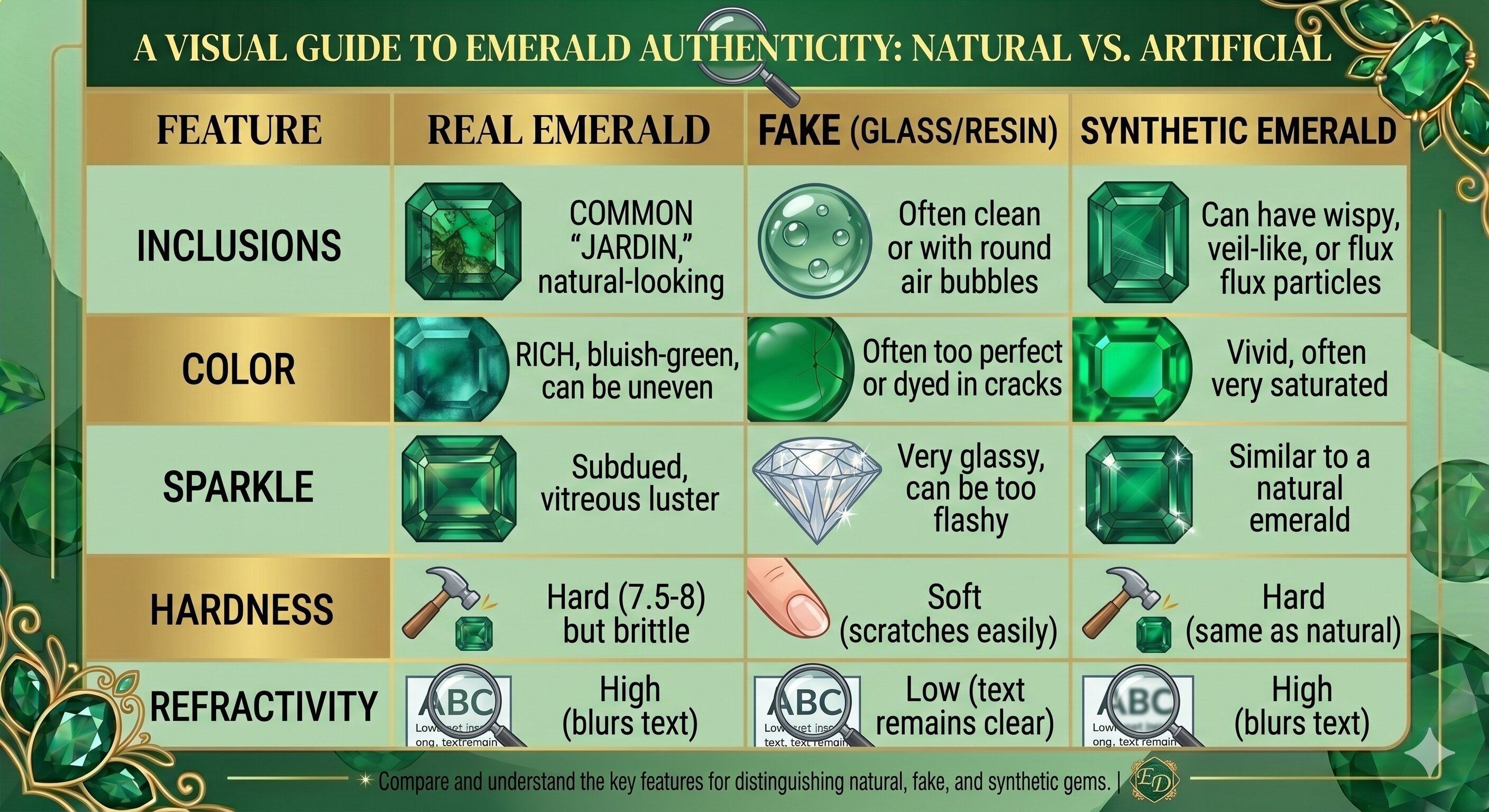
For more on Vedic astrological gemstone recommendations, visit the American Gem Society's astrology guide.
While you can perform initial checks for obvious fakes, the only way to be certain an emerald is natural is to have it examined by a qualified gemologist or an accredited gemological laboratory (like GIA or AGS).
Always ask for a certificate of authenticity from a reputable lab when making a major purchase. This document is the emerald's "birth certificate" and will detail its origin, treatments, and confirm that it is natural.

How Can I Test My Emerald At Home?
Testing an emerald birthstone at home involves a series of visual inspections and simple, non-destructive tests. While these methods can help you spot obvious fakes, they cannot replace a professional lab report for a definitive verdict.
Here is a step-by-step guide on how to test your emerald at home safely.
Important Disclaimer First
These tests are for guidance and can help you identify low-quality imitations (like glass or plastic). However, they are not 100% accurate against high-quality synthetic (lab-created) emeralds or other natural green gemstones. Always be gentle to avoid damaging your stone.
The At-Home Emerald Test Kit
Gather these simple tools:
A 10x jeweler's loupe (or a macro camera on your phone).
A bright flashlight or your phone's light.
A piece of white paper or a newspaper.
A clear drinking glass filled with water.
Your clean, dry emerald (preferably loose, but jewelry can work).
Step-by-Step Tests to Perform
1. The Visual Inspection (The "Jardin" Test)
This is the most important at-home test.
What to do: Use your loupe or phone's camera on macro mode to look closely inside the emerald. Get good, direct light on it.
What to look for in a REAL Emerald: You should see a garden of inclusions—tiny flaws, cracks, crystals, or feather-like structures. This is so common it has a French name: jardin (garden). The color may also be slightly uneven.
What indicates a FAKE: The stone is perfectly clean and flawless, or it only has large, perfectly round air bubbles (indicating glass). If the color looks concentrated in spider-web-like cracks, it's a dyed stone.
Caution: High-quality synthetic emeralds also have inclusions, so this test alone isn't foolproof.
2. The Color and Sparkle Test
What to do: Look at the emerald under a good light source.
What to look for in a REAL Emerald: The color is a deep, rich "emerald green," often described as bluish-green. The sparkle is more subdued and "velvety" than a diamond's fiery brilliance.
What indicates a FAKE: The color is too bright, electric, or yellowish-green. The stone displays an excessive, rainbow-like "fire" and sparkle, more like glass or cubic zirconia.
3. The Newspaper Test (For Refractivity)
This test checks how light bends inside the stone. It works best with a loose, faceted stone.
Place the stone table-down (the large, flat top facet down) on a piece of newspaper with small print.
Look straight down through the pointed tip (the pavilion) of the stone.
What to see with a REAL Emerald birthstone: Due to its high refractivity, you will NOT see a clear, single letter. The letters will be blurred, distorted, or you might even see a doubling effect (two slightly offset images of the same line).
What to see with a FAKE (Glass): You will likely be able to read the letters relatively clearly through the stone, as glass has lower refractivity.
4. The Water Test (For Density and Color)
This is a simple but effective test for density and to spot some dyed stones.
Fill a clear glass with plain water.
Drop your loose emerald into the glass.
What to see with a REAL Emerald birthstone:
Color: The stone will still look green, but the color will be concentrated in the stone itself. It won't leak a green haze into the water.
Behavior: The emerald will sink quickly because it is denser than water.
What indicates a FAKE:
You see a greenish tint or dye seeping into the water around the stone.
A plastic imitation might float or sink very slowly.
5. The Fog Test (For Thermal Conductivity)
Hold the stone between your fingers or with tweezers and breathe on it heavily to create a layer of "fog."
Observe how quickly the fog evaporates.
What happens with a REAL Emerald: The fog will disappear almost instantly (in 1-2 seconds) because gemstones draw heat away quickly.
What happens with a FAKE (Glass/Plastic): The fog will linger for several seconds (5+ seconds) because these materials are thermal insulators.
Tests to AVOID at Home
The Scratch Test: Emeralds are hard but also brittle and include. Scratching them with another material can easily cause chips or cracks. You risk significant damage.
Using Harsh Chemicals or Heat: These can damage the stone or, more commonly, remove the oils and resins used to treat most natural emeralds, making their flaws more visible and dulling their appearance.
Summary: Putting It All Together
If your stone passes most of these tests—it has visible jardin, blurs newspaper text, doesn't leak color, and the fog disappears quickly—it is more likely to be a real emerald.
However, the only way to be 100% certain is to get it professionally evaluated. Take it to a certified gemologist or a reputable jeweler who can use advanced tools (like a refractometer and microscope) to confirm its identity and check for common treatments. For a full lab report, you can send it to an institution like GIA (Gemological Institute of America).
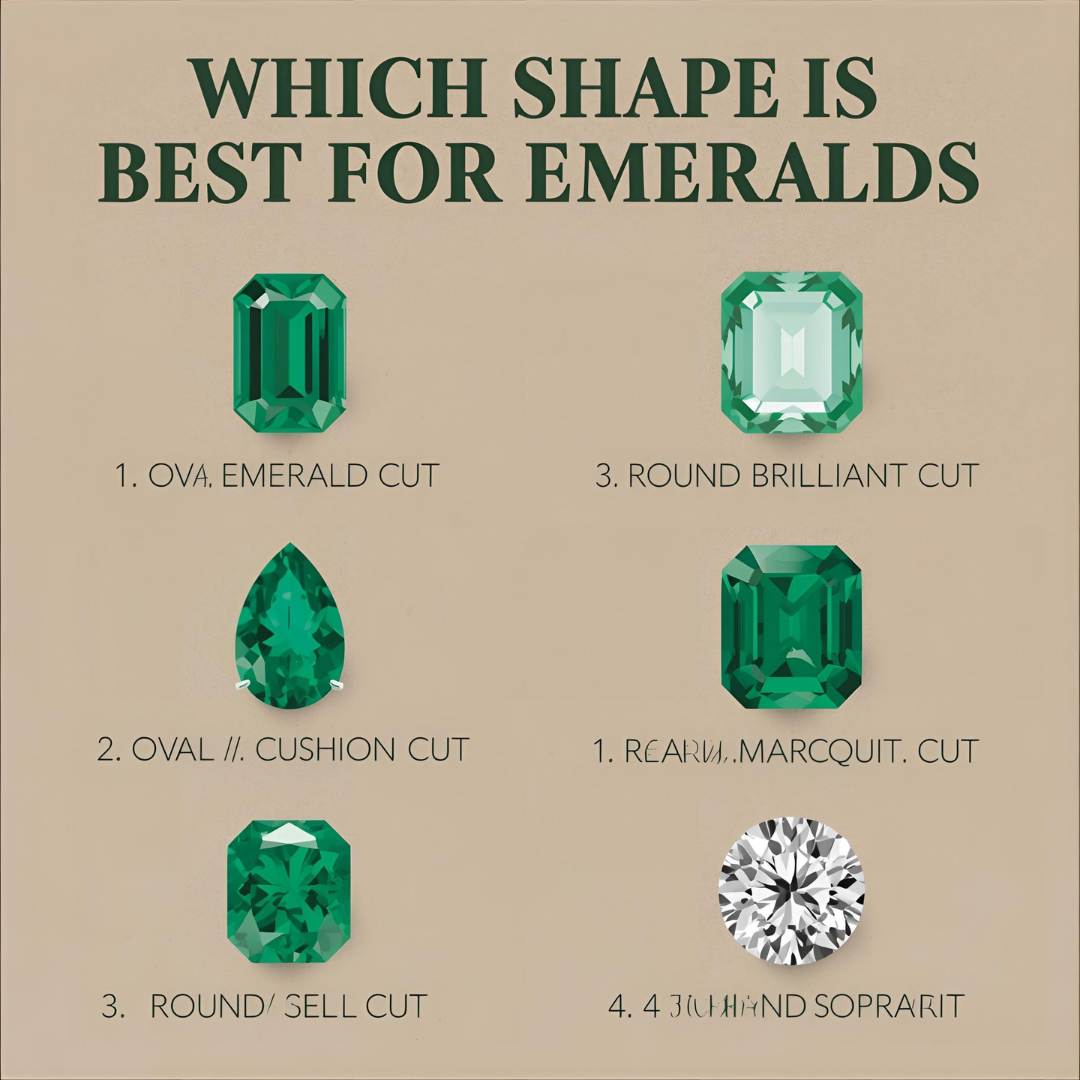
Which Shape Is Best For The Emerald's Birthstone?
The "best" shape for an emerald often comes down to a balance of tradition, practicality, and personal taste. However, one shape is so iconic it's literally named after the gem.
The Undisputed King: The Emerald Cut
The Emerald Cut is, without a doubt, the most classic and traditional shape for an emerald. It wasn't created for another gem; it was developed specifically to showcase the beauty of emeralds.
Why it's the best for emeralds:
Protection: This cut features a large, open table (the flat top) with stepped facets and clipped corners. The design reduces the amount of pressure during the cutting process, and the clipped corners protect the stone from chipping, which emeralds are very prone to due to their natural inclusions and brittleness.
Elegance: It creates a "hall of mirrors" effect with its clean, linear facets, emphasizing the gem's deep, velvety green color and clarity rather than its sparkle. It exudes a timeless, sophisticated, and understated elegance.
Clarity Showcase: The large, open table makes inclusions more visible, which is part of the emerald's character (its jardin). In high-quality stones, this is a feature, not a bug.
Other Popular and Beautiful Shapes for Emeralds
While the emerald cut is the most traditional, other shapes can be stunning and offer different benefits.
1. Oval Cut
Why it works: The oval is a brilliant cut that offers more sparkle and fire than a step cut. It retains a classic, elongated look that is very flattering on the finger. It's an excellent compromise between the classic elegance of an emerald cut and the brilliance of a round.
2. Cushion Cut
Why it works: This shape, with its soft, rounded corners and large facets, is another great protective cut. It has a romantic, vintage feel and allows for a beautiful display of color. A "cushion brilliant" can add more life and sparkle to the stone.
Why it's rare: While this is the most popular shape for diamonds, it is very uncommon for emeralds.
The Trade-off: To cut a round brilliant, the cutter must remove a significant amount of rough material, which is wasteful and expensive. Furthermore, the intense pressure of the cutting process can easily cause an included emerald to fracture.
The Result: If you do find a round emerald, it is a sign of a very high-quality, relatively inclusion-free piece of rough, and it will command a premium price. It offers maximum sparkle but sacrifices the classic emerald "look."
4. Pear and Marquise Cuts
Why they work: These elongated, fancy shapes can be beautiful in emeralds. They are also prone to chipping at their pointed ends, so they require a protective setting (like a V-prong). They offer a unique and dramatic look.
Quick Comparison Table
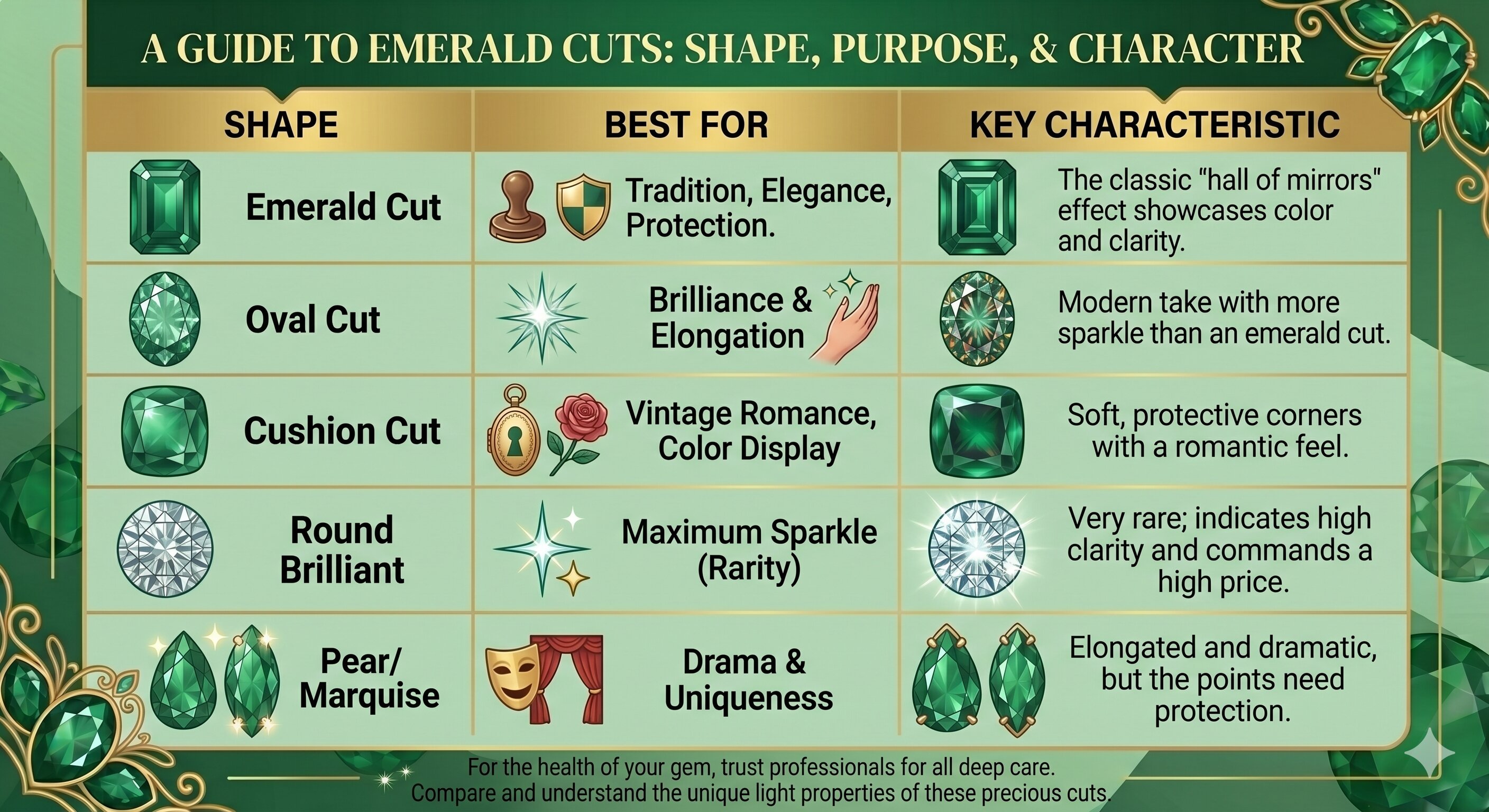
The Bottom Line: Which is Best for You?
Choose an Emerald Cut. You value timeless tradition, sophisticated elegance, and want the most authentic and protective cut for your emerald.
Choose an Oval or Cushion Cut: You want a blend of classic beauty with a bit more modern sparkle and brilliance.
Choose a Round Brilliant: Your priority is maximum sparkle, and you are willing to pay a premium for a rare and high-clarity stone.
Ultimately, the best shape is the one that captures your heart and fits your personal style. The emerald cut is the undisputed champion for a reason, but don't be afraid to explore other beautiful options.
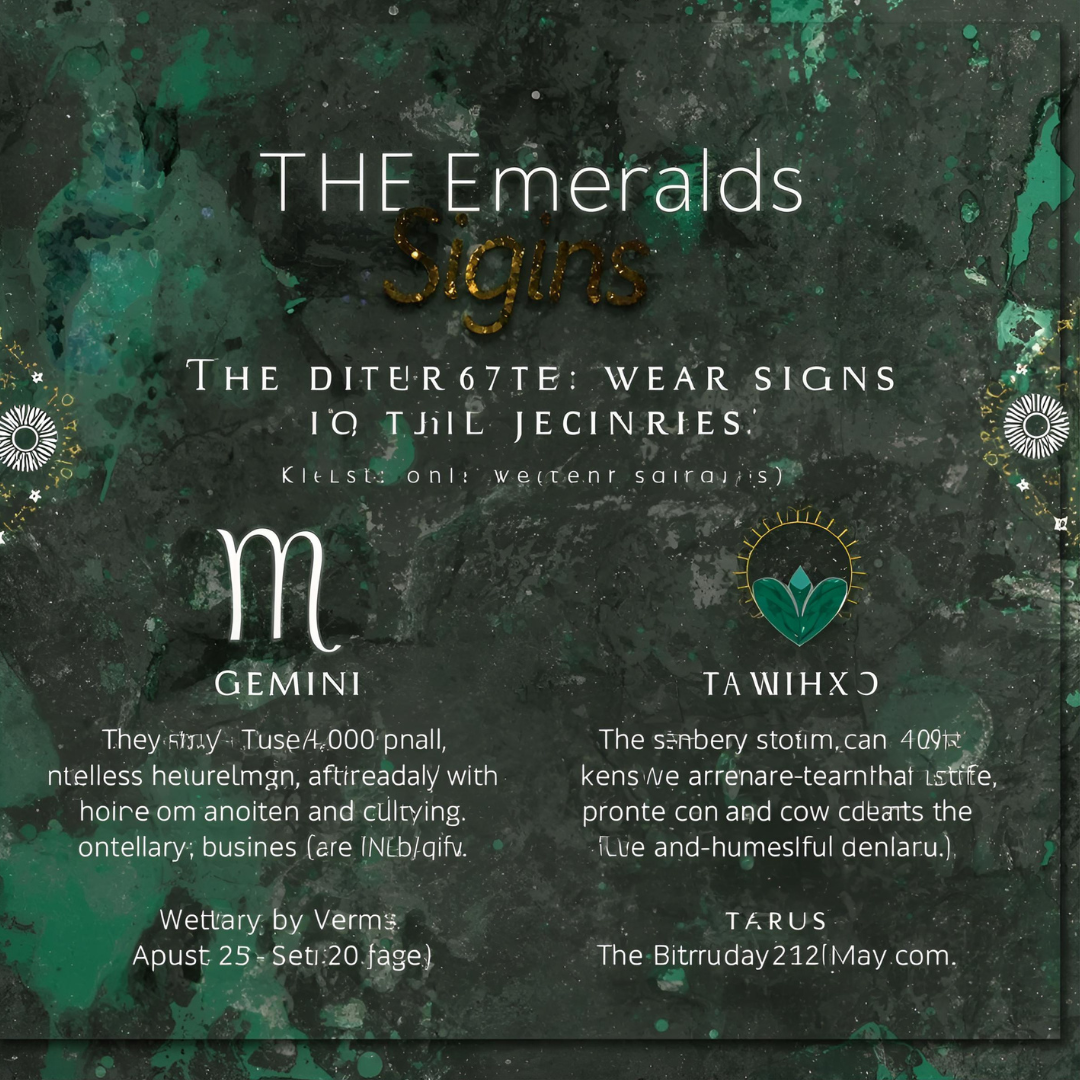
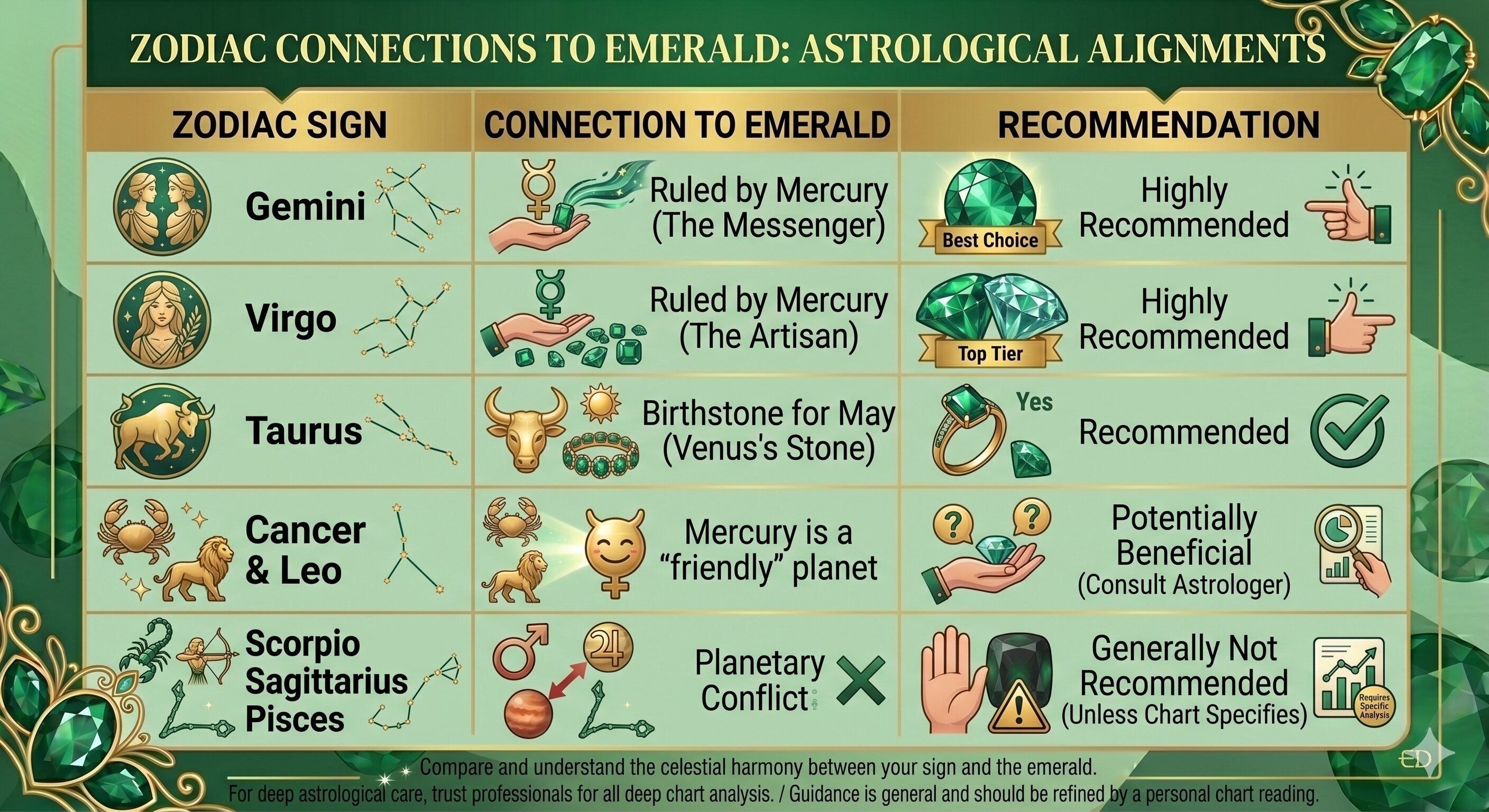
What Zodiac Should Wear Emeralds?
The question of which zodiac signs should wear emeralds is primarily guided by Vedic (Indian) astrology, with some connections in Western astrology as well.
The short answer is that Gemini and Virgo are the primary zodiac signs associated with the emerald, but it can be beneficial for others, too.
Here’s a detailed breakdown:
The Primary Signs: Ruled by Mercury
The emerald is the gemstone for the planet Mercury (Budh). Therefore, it is most powerfully recommended for the two signs ruled by Mercury:
Gemini (May 21 - June 20)
Why: Mercury is the ruling planet of Gemini. Wearing an emerald can enhance Gemini's natural strengths—communication, intellect, adaptability, and business acumen. It can help them think more clearly and express their ideas with greater eloquence.
Virgo (August 23 - September 22)
Why: Virgo is also ruled by Mercury. For Virgos, an emerald can amplify their analytical skills, attention to detail, and practical intelligence. It can also help calm their sometimes-critical inner voice and promote a more compassionate outlook.
The Secondary Sign: The Birthstone Connection
Taurus (April 20 - May 20)
Why: In Western tradition, the emerald is the birthstone for May. Since the Taurus dates run through most of May, Taurians can wear an emerald as their official birthstone. It resonates with their love for beauty, luxury, and loyalty in relationships, helping to attract love and stability.
Other Signs That May Benefit
An emerald can be recommended for other signs based on the position of Mercury in their individual birth chart (kundali). This is a more nuanced approach and requires consultation with a Vedic astrologer.
Cancer (Karka) and Leo (Simha): In Vedic astrology, Mercury is considered a "friend" to the Moon (ruler of Cancer) and the Sun (ruler of Leo). Therefore, if Mercury is well-placed, it can be beneficial for these signs, enhancing communication and intellectual pursuits.
Anyone with a weak Mercury: If an astrologer analyzes a person's chart and finds Mercury to be weak or afflicted, they may recommend wearing an emerald to strengthen its positive influence, regardless of their sun sign. Symptoms of a weak Mercury can include difficulty concentrating, memory problems, communication issues, and nervousness.
Signs That Should Be Cautious
There are specific signs for which wearing an emerald is generally not recommended without expert advice:
Scorpio (Vrishchika): In Vedic astrology, Mercury and Mars (the ruler of Scorpio) are natural enemies. Wearing an emerald could potentially create tension or conflict.
Sagittarius (Dhanu) and Pisces (Meena): The planetary relationships here are also considered inharmonious. Jupiter (ruler of Sagittarius and Pisces) and Mercury are not aligned, so the benefits of the emerald may not be realized.
Important Astrological Considerations
Before you decide to wear an emerald, keep these points in mind:
Consult a Reputable Astrologer: This is the most crucial step. An astrologer can analyze your entire birth chart to see if Mercury is a beneficial planet for you and if an emerald will help.
It's Not Just About Your Sun Sign: The recommendation is based on the position of Mercury and its relationship with other planets in your specific chart, not just your zodiac sign.
Quality Over Size: A small, high-quality, flawless emerald is considered far more effective than a large, included one.
The Right Way to Wear: If recommended, it is typically worn on the little finger (pinky finger) of the right hand, on a Wednesday, set in gold or silver.
Summary Table
What Is The Emerald Stone Good For?
The emerald is a gemstone revered for far more than its stunning beauty. Its benefits are deeply rooted in history, metaphysics, and astrology, spanning emotional, mental, and spiritual domains.
Here’s a comprehensive look at what the emerald is good for:
1. Emotional & Psychological Benefits
The Stone of Love & Harmony: Emerald birthstone is renowned for nurturing love, fidelity, and domestic bliss. It's believed to strengthen the bond between partners, promote unconditional love, and enhance empathy and compassion.
Emotional Healer: It can help soothe emotional wounds, calm anxiety, and bring emotional balance. It's known to transform negative energy into positive, fostering a sense of inner peace and stability.
Promotes Truth & Honesty: This gem is linked to clear and honest communication, helping the wearer speak their truth with clarity and compassion, and also recognize truth in others.
2. Mental & Intellectual Benefits
Enhances Intelligence & Memory: Governed by the planet Mercury in Vedic astrology, the emerald is considered a powerful stimulant for the mind. It is believed to sharpen intellect, improve memory, and accelerate learning.
Boosts Communication & Eloquence: Known as the "stone of successful speech," it aids in self-expression, making it beneficial for writers, speakers, lawyers, and anyone who needs to communicate effectively.
Sharpens Wit & Mental Clarity: It helps in processing information quickly, improving decision-making, and seeing the bigger picture without getting lost in details.
3. Spiritual & Metaphysical Benefits
Opens & Nurtures the Heart Chakra: Its primary spiritual action is on the heart chakra, helping to release old emotional patterns and open one to spiritual love and compassion.
Enhances Intuition & Insight: Emerald is considered a stone of prophecy and intuition. It can help access higher wisdom, interpret dreams, and provide insight into the spiritual realm.
Symbol of Rebirth & Growth: Its vibrant green color connects it to the life force of nature, symbolizing renewal, growth, and fresh starts on a spiritual path.
4. Physical Well-being (Traditional & Metaphysical Beliefs)
In crystal healing traditions, the emerald birthstone is believed to be good for:
Strengthening the immune system and overall vitality.
Aiding eye health and eyesight (a belief dating back to the Romans).
Supporting the nervous system, heart, and lungs.
Assisting in recovery from illness or infection.
Important Note: These physical benefits are based on traditional and metaphysical beliefs. Emerald is not a substitute for professional medical advice, diagnosis, or treatment.
5. Astrological & Practical Benefits
Astrological Remedy: In Vedic astrology, wearing an emerald (Panna) is a primary remedy to strengthen the planet Mercury (Budh). This is believed to bring success in business, education, communication, and relationships with siblings.
Birthstone Power: As the birthstone for May, it is believed to bring good fortune and special protective energies to those born in that month.
A Symbol of Status & Success: Historically, emeralds have been associated with wealth, power, and success, often worn by royalty to attract abundance.
Is Emerald Birthstone Ok for An Engagement Ring?
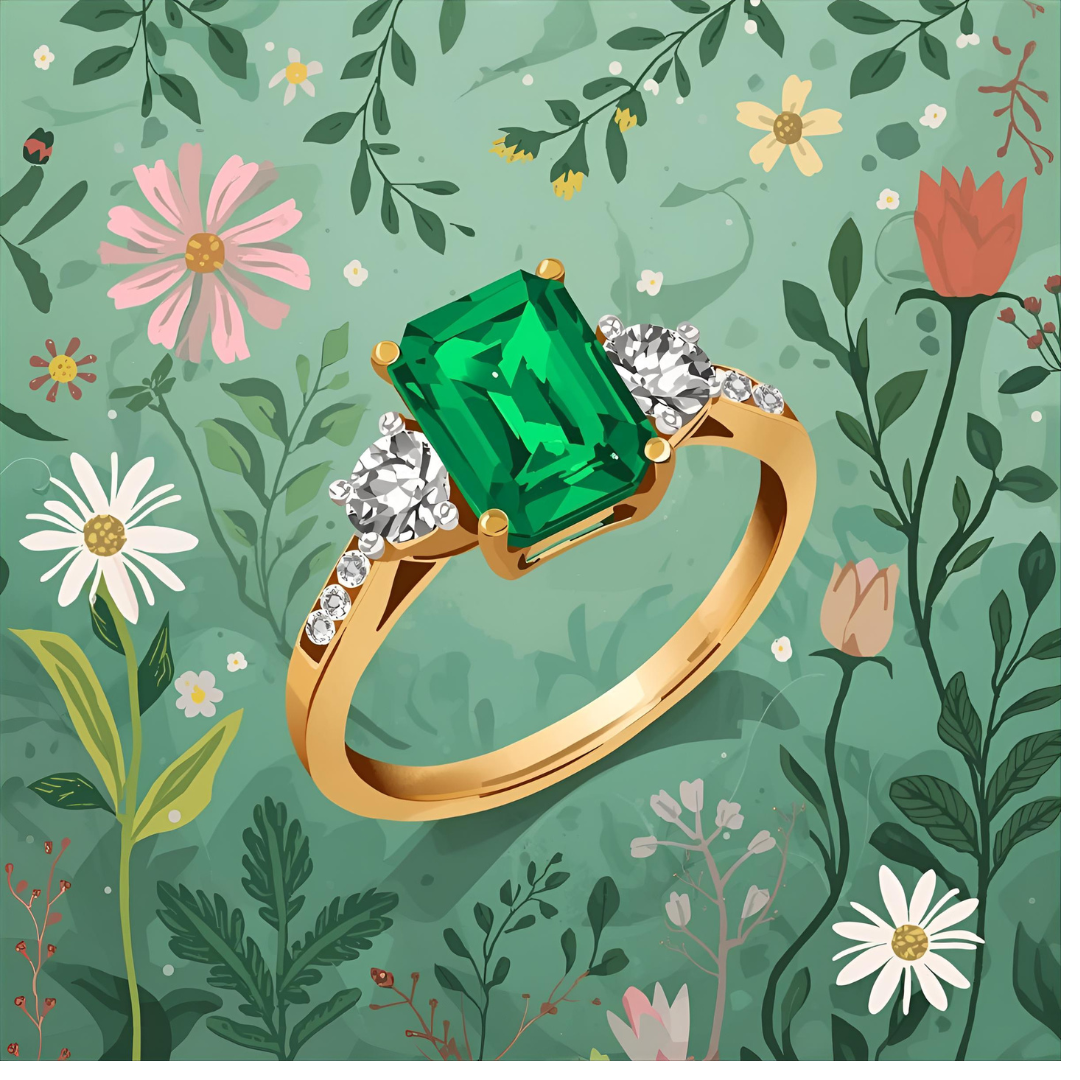
Yes, an emerald birthstone can make a breathtaking and deeply meaningful engagement ring. It's a fantastic choice for someone who wants a unique, colorful, and symbolic ring. However, it comes with important considerations that you need to be aware of before making the decision.
Here’s a balanced look at the pros and cons to help you decide if an emerald is "ok" for your engagement ring.
The "Pros": Why an Emerald Engagement Ring is Stunning
Unique & Personal: It breaks from tradition, making a bold and personal statement. It says the wearer is distinctive, elegant, and not afraid to be different.
Symbolism: The emerald is the stone of love, fidelity, and rebirth. Its association with Venus, the goddess of love, makes it a profoundly romantic choice, symbolizing a hopeful and devoted future together.
Unforgettable Beauty: The rich, velvety green color is unparalleled. It creates a ring that is instantly recognizable and often described as "old-world glamour" or "regal."
Conversation Starter: An emerald engagement ring is rare and will undoubtedly draw admiration and curiosity.
The "Cons" & Crucial Considerations: It's Not a Diamond
This is the most important part. Emeralds require an owner who understands and accepts their nature.
Durability is the Biggest Concern:
Hardness: Emeralds are 7.5-8 on the Mohs scale of hardness. While this sounds high, it's considerably less durable than a diamond (10) or sapphire (9). This means it is much more prone to scratching from daily wear.
Brittleness: Emeralds are naturally included (have internal flaws) and are brittle. They can be chipped or cracked more easily than other gemstones, especially from a sharp knock against a hard surface.
Requires a Protective Setting:
You cannot use just any setting. The best settings for an emerald engagement ring are designed to protect the stone:
Bezel Setting: This is the safest choice. A metal rim surrounds the entire perimeter of the emerald, protecting its vulnerable edges from chipping.
Halo Setting: The circle of smaller stones around the center emerald can act as a protective barrier.
Avoid High Prongs: A classic 4 or 6-prong setting leaves the girdle (the thin edge) of the stone exposed, making it highly vulnerable.
Needs Careful Maintenance:
Most emeralds are treated with oils or resins to fill surface-reaching fractures and improve clarity. This means you must avoid:
Ultrasonic cleaners: The vibrations can shatter the stone or remove the filling.
Steam cleaners: The heat can damage the stone or remove oils.
Cleaning should only be done with warm, soapy water and a soft brush.
Value & Cost:
A high-quality, vivid green emerald with good clarity can be very expensive, sometimes rivaling the price of a diamond. You are paying for color and character, not flawless perfection.
Key Tips if You Choose an Emerald Engagement Ring
Prioritize the Cut: An emerald cut (the rectangular shape with stepped facets) is not just a style choice; it's designed specifically to reduce stress on the stone during cutting and to protect its corners. Ovals and cushions are also good, protective choices.
Embrace the "Jardin": Accept that inclusions (the jardin) are part of the stone's character. Look for a stone that is "eye-clean" or has inclusions that don't compromise its structural integrity, rather than seeking flawless perfection.
Get a Professional Opinion: Always buy from a reputable jeweler and ask for a gemological report from a lab like GIA or AGL. This will detail any treatments and verify authenticity.
Consider Insurance: Absolutely insure the ring against loss, theft, and damage.
Can I Wear My Emerald Birthstone Every Day?
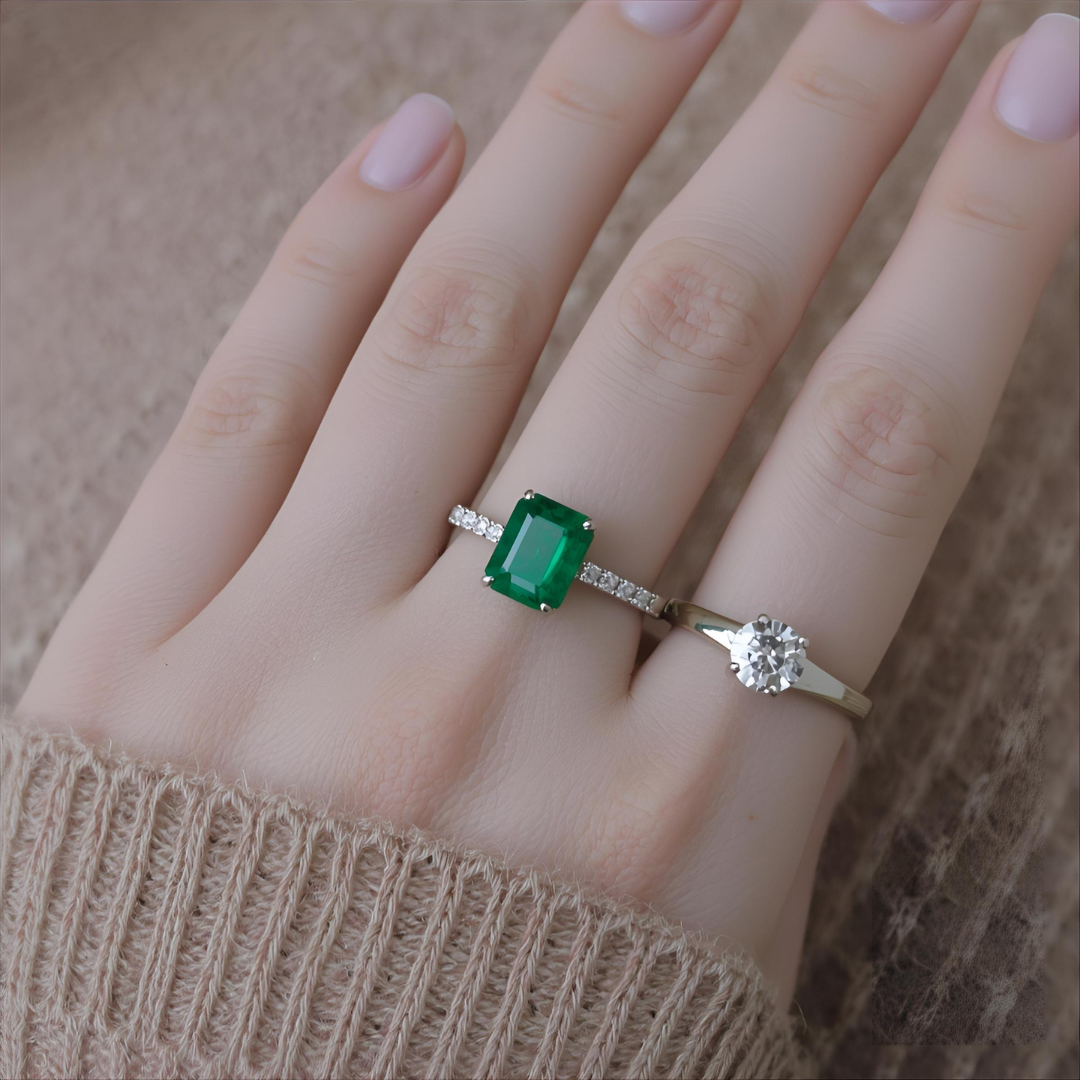
The answer is yes, you can wear your emerald every day, but with important caveats and a significant shift in mindset compared to wearing a diamond or sapphire daily.
Think of an emerald not as a rugged tool, but as a beautiful, delicate work of art. You can display a priceless painting every day, but you must protect it from bumps, harsh sunlight, and careless handling.
Here’s a detailed breakdown to help you decide if daily wear is right for your emerald:
The Challenges of Daily Wear (The "Why Not")
Durability: It's Softer and More Brittle.
Scratches: On the Mohs scale of hardness, emeralds are a 7.5-8. Every day, dust and sand contain tiny quartz particles, which are a 7 on the scale. This means simply wiping dust off your ring can, over time, leave fine scratches on the surface of the emerald.
Chips and Cracks: Emeralds are famously brittle due to their natural inclusions (the jardin). A sharp knock against a countertop, car door, or kitchen sink can easily chip the stone or create a crack, especially on the edges and corners.
Maintenance: It's High-Maintenance.
Most emeralds are treated with oils or resins to improve their clarity. Daily exposure to soaps, lotions, hot water, and chemicals can degrade these treatments over time, making the inclusions more visible and dulling the stone's appearance.
How to Safely Wear an Emerald Birthstone Every Day
If you are committed to the idea, you must take proactive steps to protect your stone.
1. The Setting is Your Best Defense:
The single most important factor for daily wear is the ring's setting.
Best Choice: Bezel Setting. A full metal rim that surrounds the entire girdle (edge) of the emerald offers the best protection from impacts and chips.
Good Choice: Halo Setting. A circle of smaller diamonds or gemstones can act as a protective "bumper" around the central emerald.
Risky Choice: High Prong Settings. A classic 4 or 6-prong setting leaves the vulnerable edges of the stone exposed. This is not recommended for daily wear.
2. Adopt a "On for Display, Off for Work" Mentality:
Get into the habit of taking your ring off before you do any of the following:
Housework & Gardening: (Cleaning chemicals, abrasive dust, hard surfaces)
Exercising or Sports: (Risk of impact, sweat, and chemicals)
Swimming or Bathing: (Chlorine and hot water are damaging)
Applying Lotions, Perfumes, or Hairspray: (Chemicals can dull the stone and damage treatments)
3. Clean it Gently and Correctly:
NEVER use an ultrasonic or steam cleaner. The vibrations can fracture the emerald, and the heat can remove its oil treatments.
DO clean it with a soft, untreated toothbrush, lukewarm water, and a tiny drop of mild soap (like Dawn). Gently scrub and pat dry with a soft, lint-free cloth.
4. Get it Professionally Checked and Maintained:
Take your ring to a trusted jeweler every 6-12 months. They can:
Check the setting for loose prongs or a worn bezel.
Clean it professionally.
Assess if the stone needs re-oiling (a common maintenance procedure for emeralds).
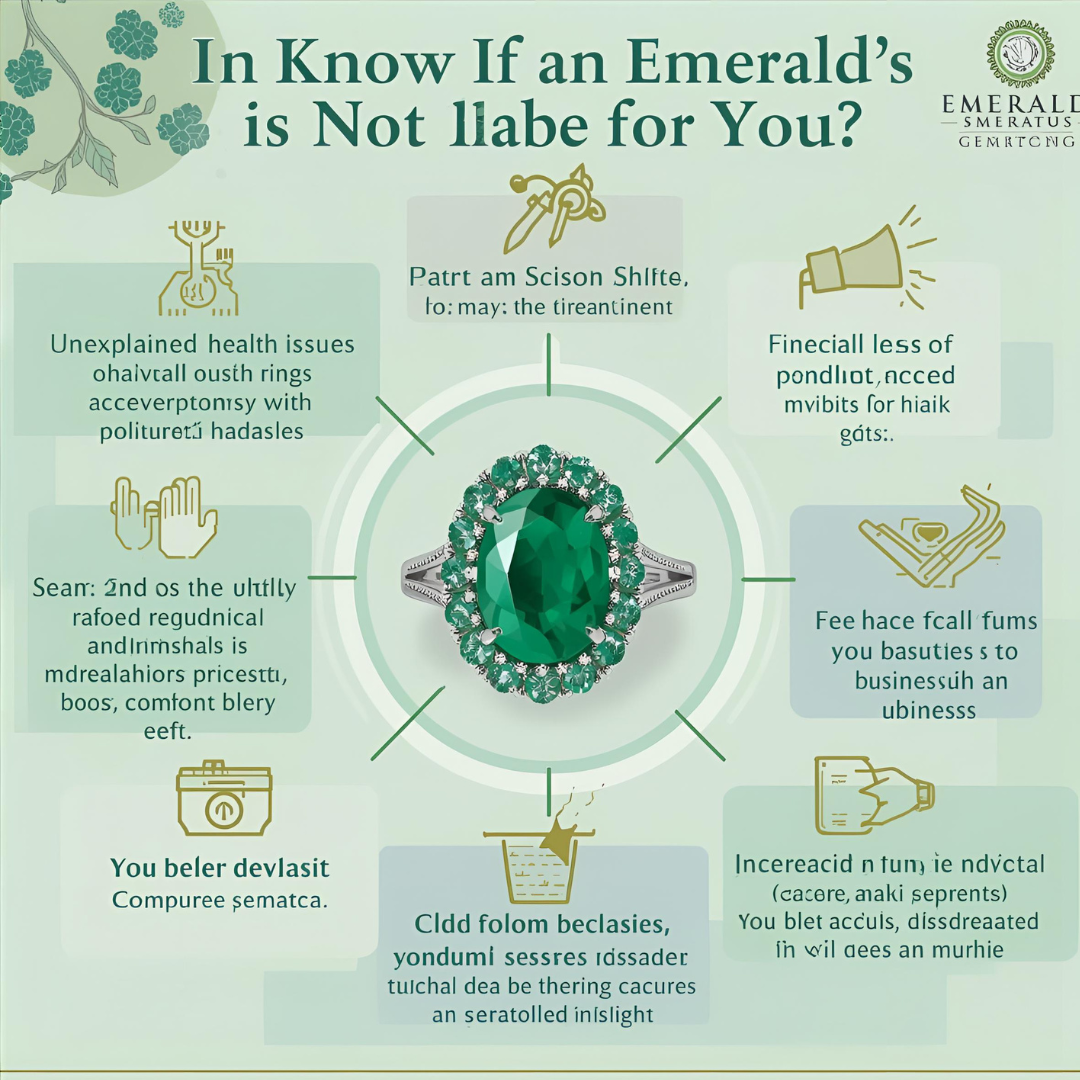
How To Know If An Emerald Is Not Suitable For You?
This is a crucial question, particularly in cultures that follow Vedic astrology or believe in the energetic properties of gemstones. The belief is that if a gemstone's energy is incompatible with your own, it can cause negative effects rather than benefits.
Here are the key signs, both traditional and practical, that an emerald may not be suiting you.
1. Physical Reactions & Health
This is the most direct and immediate sign.
Unexplained Health Issues: You may experience a sudden onset of health problems like persistent headaches, dizziness, skin rashes, or digestive issues after you start wearing the birthstone.
Feeling of Heaviness or Discomfort: The ring or pendant might feel physically heavy, irritating, or you might have a constant urge to take it off.
Financial Loss or Stagnation: Contrary to its purported benefits, you might face unexpected financial setbacks, obstacles in business, or a general stagnation in wealth.
A General Sense of Malaise: You just don't feel "right" or like yourself, feeling low on energy or unwell without a specific cause.
2. Emotional & Mental Shifts
Emerald birthstone is supposed to bring emotional balance, so the opposite is a red flag.
Increased Anxiety and Restlessness: Instead of feeling calm, you feel more anxious, irritable, or mentally scattered.
Strained Relationships: Especially with close family, partners, or business associates. You may find yourself in frequent, uncharacteristic arguments.
Mental Confusion: Instead of enhanced clarity and intellect, you experience brain fog, indecisiveness, and an inability to concentrate.
3. Obstacles in Key Life Areas
An ill-suited stone is believed to create blocks in the very areas it's meant to help.
Academic or Communication Problems: For students, a sudden drop in performance or difficulty grasping concepts. For professionals, constant misunderstandings and communication breakdowns.
Legal or Contractual Issues: Emeralds are linked to Mercury, which governs contracts. Unexpected legal troubles or unfavorable agreements can be a sign.
Strained Sibling Relationships: In Vedic astrology, Mercury also rules over siblings. A fallout or increased tension with siblings after wearing the stone is a classic indicator.
4. Signs Related to the Stone Itself
Many people believe the stone's physical appearance can reflect its compatibility.
Loss of Luster: The emerald may become dull, cloudy, or lose its vibrant green color quickly, even if you care for it properly.
Damage or Cracking: The stone might develop a crack, chip, or even fall out of its setting unexpectedly. This is seen as the stone having "absorbed" negative energy or averted a misfortune on your behalf.
The Astrological Perspective (Vedic Belief)
The primary reason an emerald may not suit someone is astrological. In Vedic astrology, the emerald birthstone represents the planet Mercury (Budh).
Weak or Afflicted Mercury: If Mercury is a weak or "malefic" planet in your specific birth chart (kundali), strengthening it with an emerald can amplify its negative traits, leading to anxiety, deception, and communication issues.
Inimical Planetary Positions: If Mercury is in a sign where it is naturally "enemy" to the ruling planet (e.g., for Scorpio, Sagittarius, or Pisces ascendants), wearing an emerald without a proper astrological prescription can cause harm.
What to Do If You Suspect the Emerald Isn't Suing You
Stop Wearing It Immediately: The first and most crucial step is to take off the ring or pendant. Do not wait to see if things get worse.
Observe the Changes: Pay close attention to how you feel over the next few days or weeks. Do the negative symptoms subside? Does your life feel like it's returning to normal? This observation will often confirm your suspicion.
Consult a Reputable Astrologer or Gemologist: This is essential. Do not rely on guesswork.
An astrologer can re-examine your birth chart to confirm if the emerald was the right gemstone for you in the first place.
They can advise if you need a different gemstone or if there was an error in the weight, metal, or ritual of wearing it.
Cleanse the Stone: If you decide to keep the stone but not wear it, or before giving it away, it's a good practice to cleanse it. You can do this by placing it in a bowl of dry sea salt for 24 hours.
Smudging it with sage incense smoke.
Burying it in the earth for a night.
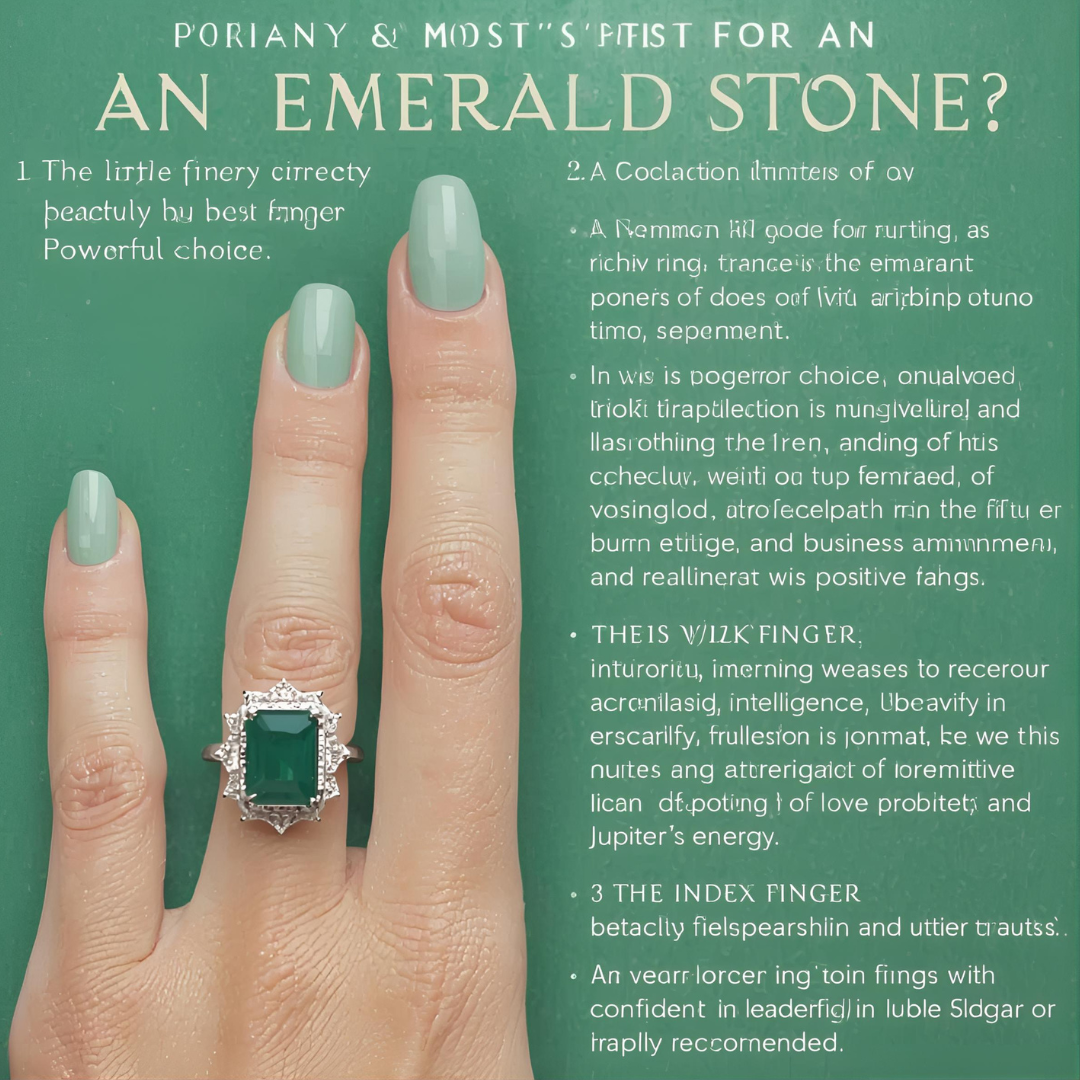
Which Finger Is Best For An Emerald Birthstone?
This is a crucial question, as the finger you choose is deeply tied to the purpose—especially in astrological traditions.
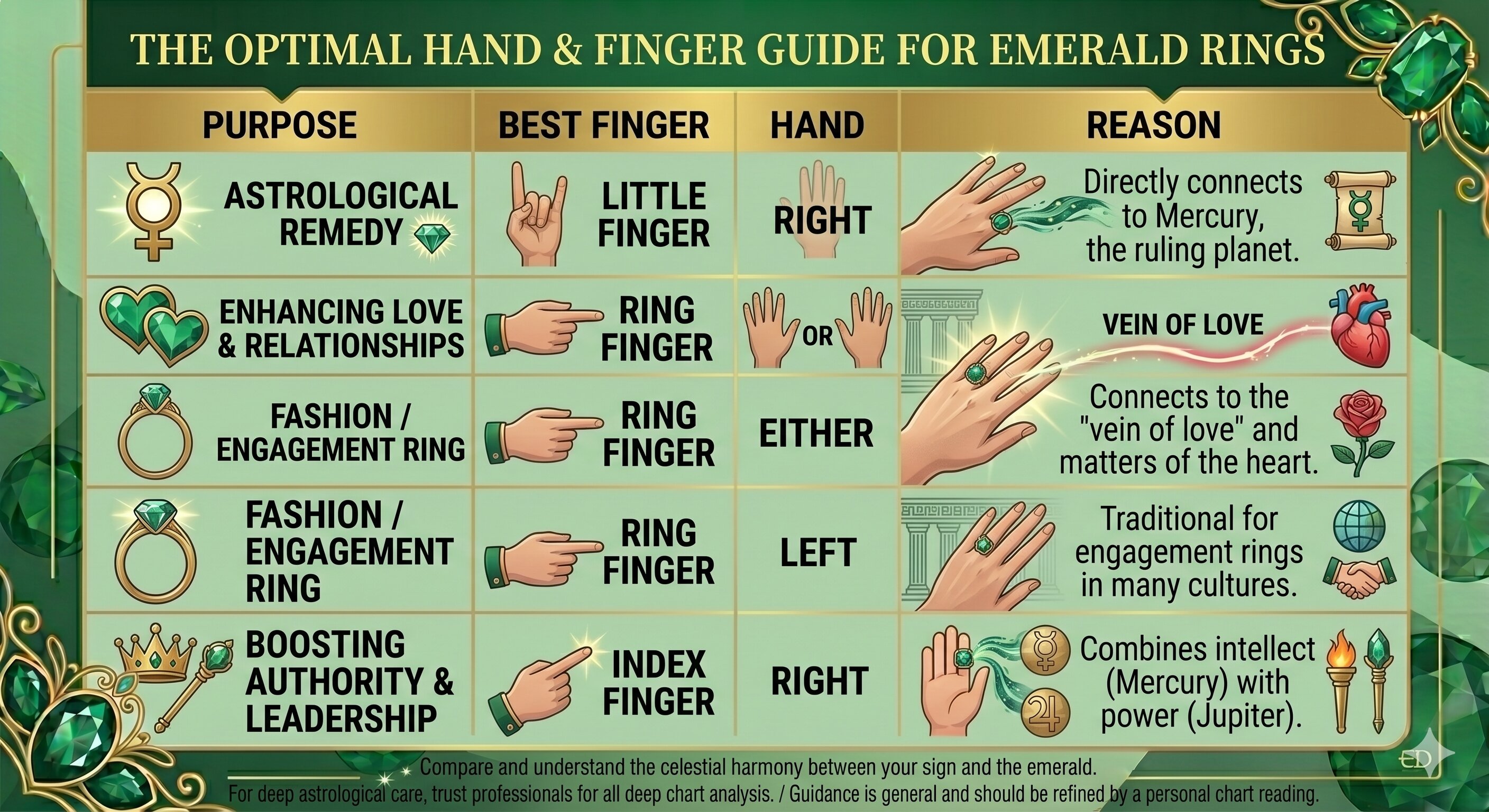
The most common and astrologically recommended finger for an emerald is the Little Finger (Pinky Finger).
However, the "best" finger can depend on your specific goal. Here’s a detailed breakdown:
1. The Primary & Most Powerful Choice: Little Finger (Pinky Finger)
Why: In Vedic astrology, the little finger is directly governed by the planet Mercury (Budh), which is the planet the emerald represents. Wearing the stone on the finger of its ruling planet is believed to maximize its positive influence.
Which Hand: The right hand is traditionally preferred for receiving the active, outward energy of the planet.
Ideal For:
Strengthening Mercury in your birth chart.
Enhancing intelligence, communication, and business acumen.
Astrological remediation.
2. A Common Alternative: Ring Finger
Why: This is a popular choice, especially for emerald engagement or fashion rings. The ring finger is associated with the heart, creativity, and relationships, which aligns with the emerald's properties of promoting love and harmony.
Ideal For:
Non-astrological wearers who simply love the stone and wear it for its beauty.
Using the emerald to specifically enhance love, marriage, and artistic expression.
An engagement ring (though a protective setting is highly recommended).
3. The Index Finger
Why: The index finger is linked to authority, leadership, and ambition (Jupiter's energy). Wearing an emerald here combines Mercury's intellect with Jupiter's expansion, which can be powerful for those in leadership or managerial roles.
Ideal For:
Gaining confidence and authority in public speaking or leadership.
Ambitious individuals looking to expand their business or influence.
Quick Guide Summary
Crucial Astrological Considerations
If you are wearing the emerald for astrological purposes, the following steps are considered very important:
Consult an Astrologer: This is the most critical step. A knowledgeable Vedic astrologer will analyze your birth chart to confirm that Mercury is beneficial for you and that an emerald is the right choice.
The Right Metal:
Gold is the classic, preferred metal as it is considered pure and amplifies the stone's energy.
Silver is also an excellent and commonly used alternative.
The Right Time to Wear (Muhurta):
The ideal day to wear an emerald for the first time is a Wednesday.
It should be during the Shukla Paksha (the waxing phase of the moon).
The preferred time is during the hour of Mercury (Budh Hora) after sunrise.
Purification: Before wearing, the ring and stone are traditionally purified by washing in unboiled milk, Gangaajal (holy water), or honey.
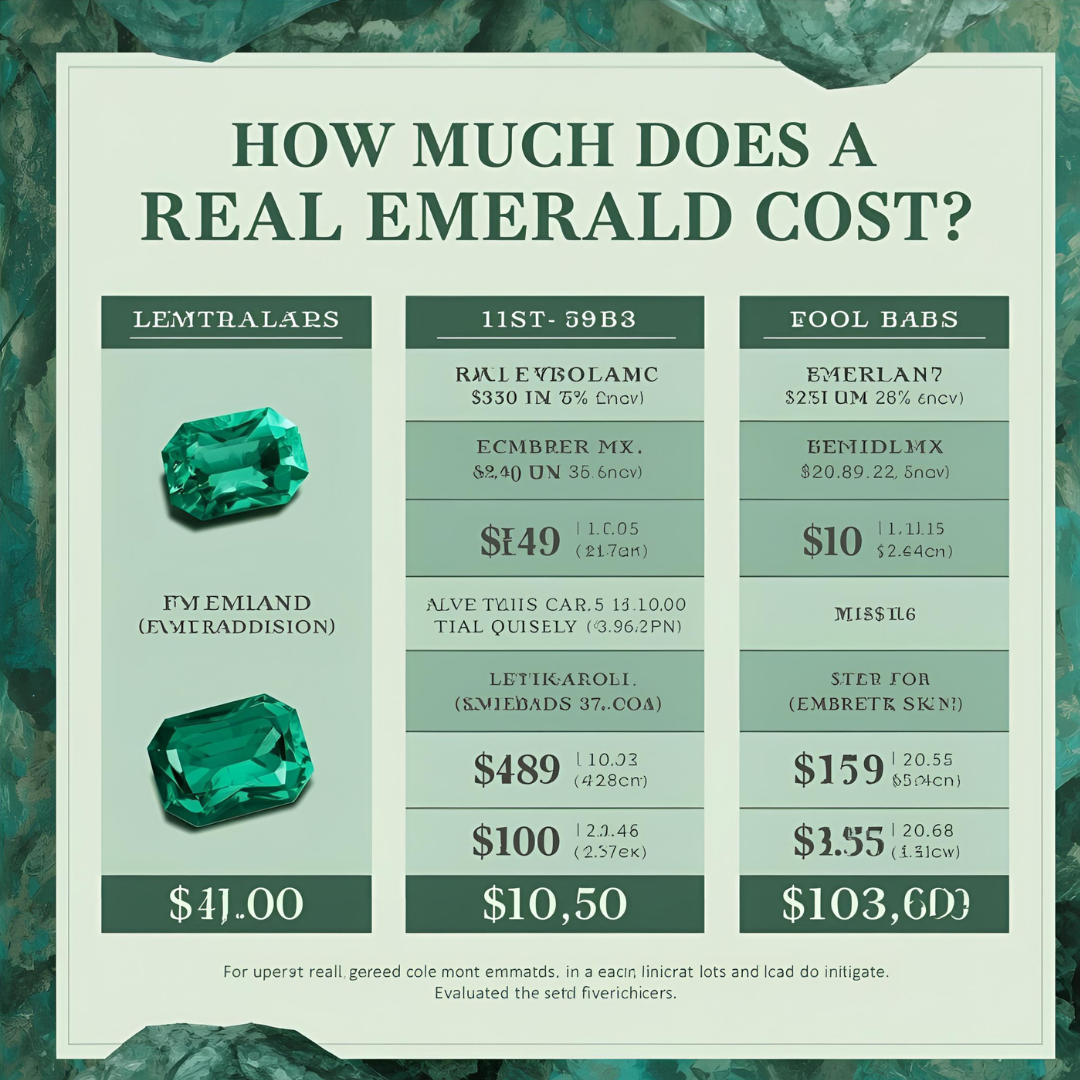
How Much Does A Real Emerald Birthstone Cost?
This is one of the most common questions, and the answer is: "It depends." The price of a real emerald can range from $50 to $50,000 or more per carat, making it one of the most varied gemstones in terms of value.
Instead of a single number, it's best to think of emerald value as a spectrum determined by the Four Cs: Color, Clarity, Cut, and Carat Weight, with Origin being a fifth, critical factor.
Here’s a breakdown to help you understand the price ranges.
The Primary Factor: COLOR
This is the most important value driver. The ideal emerald color is a vivid, highly saturated, pure green to bluish-green with a medium to medium-dark tone.
Top-Tier (Vivid Bluish-Green): The most prized and expensive color. Think of the classic "emerald green."
Good Quality (Vivid Green): A pure, vibrant green without significant blue or yellow tones is also highly valuable.
Commercial Quality (Light or Yellowish-Green): Lighter, less saturated, or stones with a noticeable yellowish tint are significantly less expensive.
The Other Critical Factors
Clarity: Almost all emeralds have visible inclusions (jardin). The value is determined by how visible they are. An eye-clean emerald (inclusions not visible to the naked eye) is exceptionally rare and commands a premium. Heavy veiling or inclusions that drastically affect transparency lower the value.
Treatment: Most emeralds are treated with oils or resins to improve clarity. A minor, traditional oil treatment is expected and doesn't drastically lower the value. However, a non-treated emerald or one with only "minor" treatment will be much more expensive than a heavily treated one.
Origin: Where it's from matters immensely.
Colombian: Historically the most prized and expensive, especially from the Muzo, Chivor, and Cosquez mines, known for their pure, intense green color.
Zambian: Often have a slightly bluer or darker green and are known for high clarity. They are highly valued and often more affordable than top Colombian stones.
Brazilian: Can be very beautiful but often has a lighter, more yellowish-green color, making them generally less expensive.
Other Origins (Ethiopia, Afghanistan, etc.): Newer sources can produce stunning stones that may offer excellent value.
Emerald Price Ranges (Per Carat)
Here is a general guide. Remember, these are for the stone only, not set in jewelry.
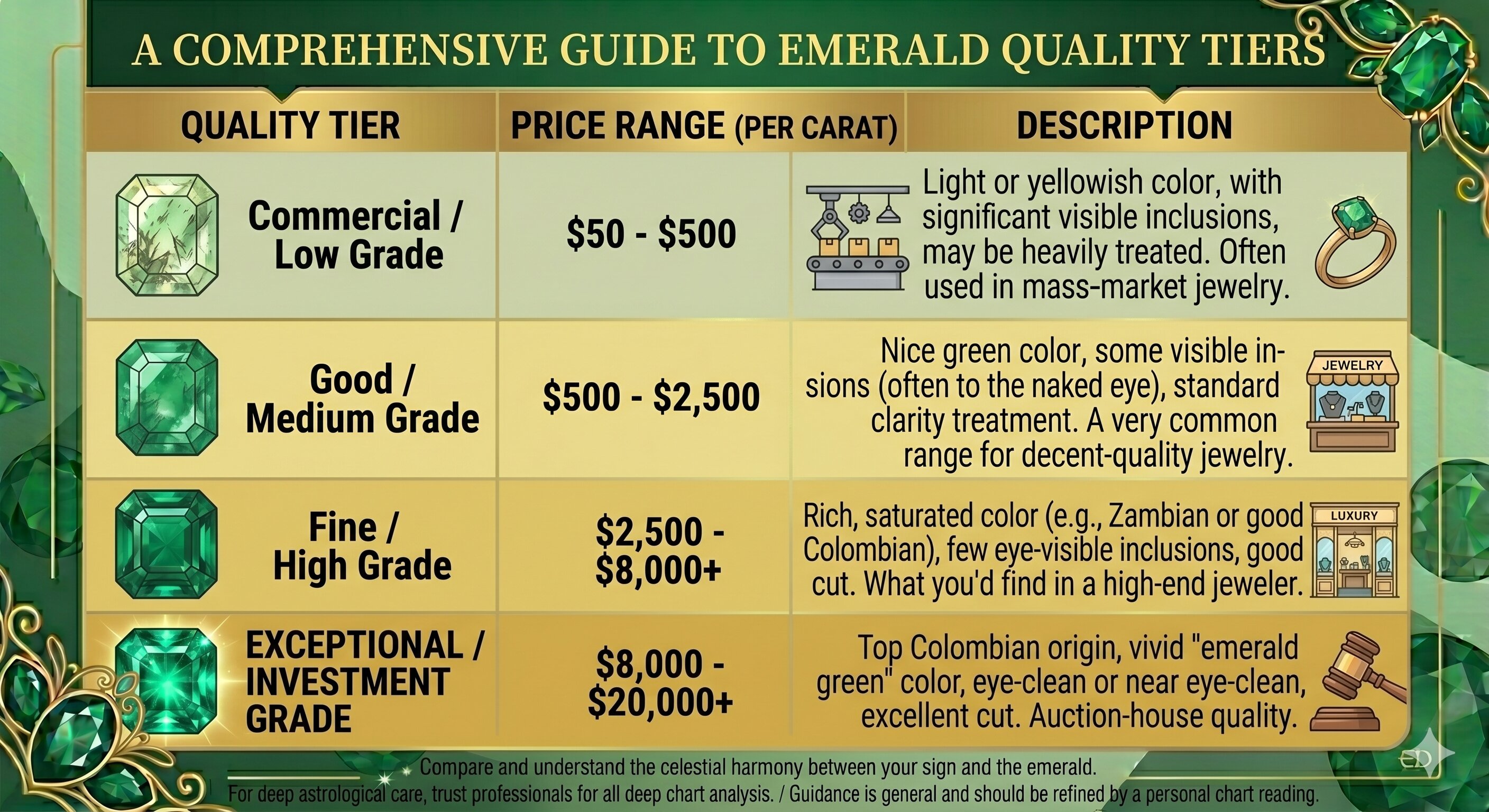
Important Note: The price per carat increases significantly with the overall size of the stone. A 5-carat emerald of a certain quality will be more than 5 times the price of a 1-carat stone of the same quality, as large, high-quality emeralds are exponentially rarer.
Real-World Examples (Loose Stones)
A 1-carat, decent-quality emerald from Zambia with good color but some visible inclusions might cost $800 - $1,500.
A 2-carat, fine-quality emerald from Colombia with excellent color and minor inclusions might cost $7,000 - $15,000.
A 5-carat, exceptional, untreated Colombian emerald could easily exceed $75,000+.
Practical Advice for Buyers
Prioritize Color: Don't sacrifice color for perfect clarity. A vibrant, beautiful green is the soul of the emerald.
Understand and Accept Treatments: Ask the seller about the level of treatment (none, minor, moderate, significant). A report from a lab like GIA or AGL will state this. "Minor" oil treatment is standard.
Get a Lab Report: For any significant purchase (over $1,000), insist on a certificate from a reputable gemological lab (GIA, AGL, GÜBELIN, SSEF). This is your proof of authenticity, origin, and treatment.
Buy from a Reputable Dealer: This is your best protection against synthetics, imitations, and undisclosed treatments.
For official emerald grading standards, visit the GIA Emerald Guide.
Should Emerald Birthstone Be Worn In Gold Or Silver?
Both gold and silver are excellent choices for emerald jewelry, and the best one for you depends on the look you prefer, your skin tone, and your budget.
To help you decide, here is a comparison of how different metals complement emerald's green color:
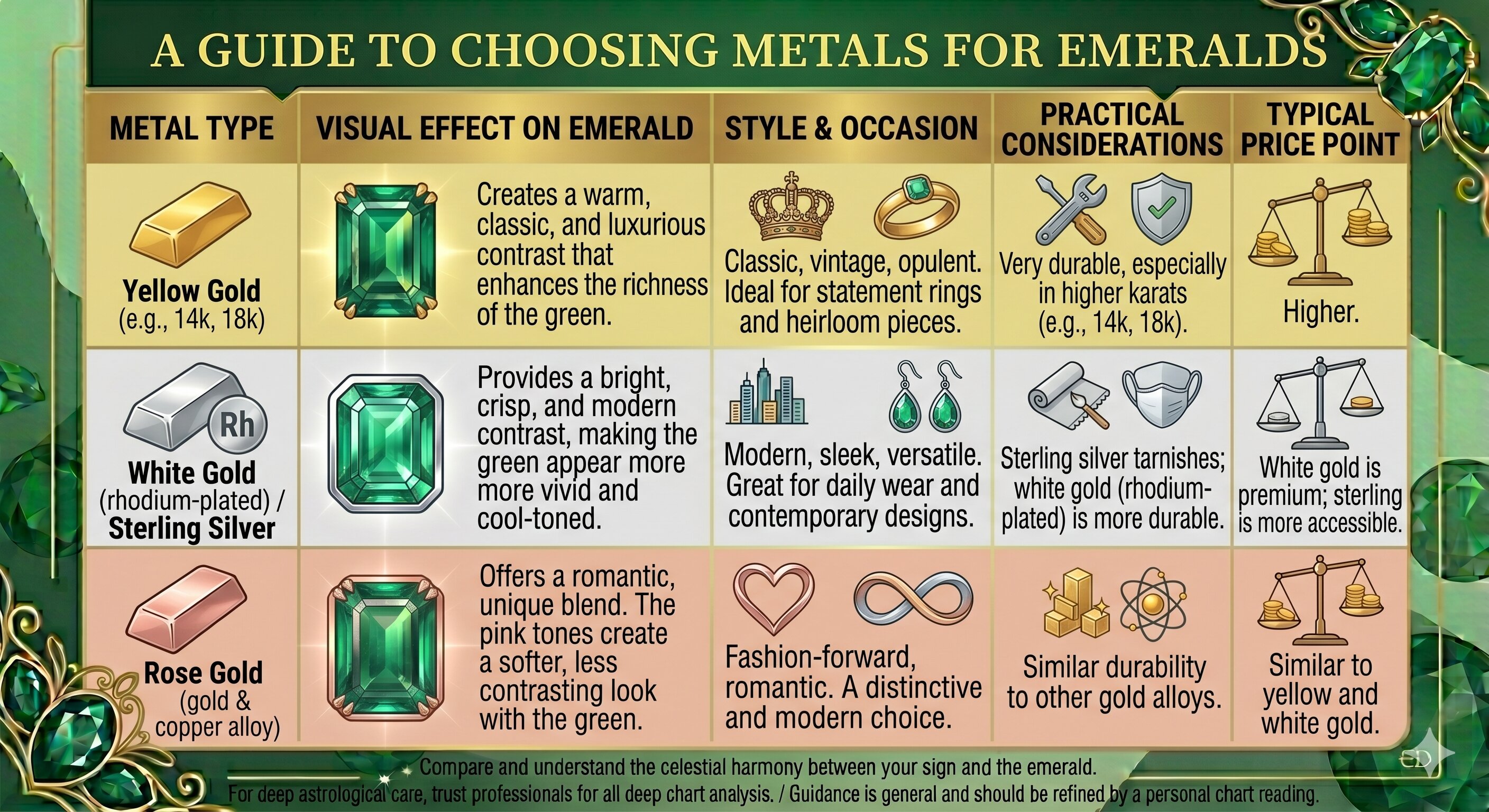
How to Choose for Yourself
Since both metals work well, consider these personal factors:
Skin Tone: Cool undertones often pair well with the crispness of white metals (silver/white gold). Warm undertones can be beautifully complemented by the glow of yellow or rose gold.
Personal Style: For a timeless, regal look, choose yellow gold. For a modern, understated, or versatile piece, silver or white gold is a strong choice.
Budget & Purpose: Sterling silver offers a look at a more accessible price point, while gold is a traditional choice for fine jewelry and investment pieces.
Jewelry Type: For rings and bracelets (which endure more wear), the superior durability of gold is beneficial. For necklaces and earrings, silver is a great and often more affordable option.
Ultimately, choose the metal you love to wear, a nd that makes you feel confident.
If you are considering a specific piece like a ring, necklace, or pair of earrings, I can offer more tailored suggestions on styles and settings.
“You now know the spiritual meaning, the benefits, the zodiac matches, the care secrets, and the price ranges. The only question left: will you wear the stone of queens?
Our current collection includes a limited number of natural, untreated emeralds — from deep green Colombian stones with that legendary Muzo color to Zambian gems with unique blue undertones. When they‘re gone, sourcing new ones with this clarity level takes months.
This is not just a birthstone. It is 2,000 years of love, power, and mystery — captured in green and waiting for your story.”
[Button: Claim Your May Emerald (Limited) →]


Other news for Thursday 04 June, 2026
View all news for Thursday 04 June, 2026 on one page
News for Wednesday 03 June, 2026
View all news for Wednesday 03 June, 2026 on one page
Recent News
- Tuesday 02 June, 2026
- Monday 01 June, 2026
- Sunday 31 May, 2026
- Saturday 30 May, 2026
- Tuesday 12 May, 2026