

April Birthstone Diamond: Complete Guide, Price And Buying Tips
Ensure “The Complete Guide to the Diamond Birthstone” is wrapped in
Discover the meaning, colors, cost, and buying guide for April’s diamond birthstone. Lab vs natural, carat sizes, and zodiac connections.
“The name ‘diamond‘ comes from the Greek word ‘adamas‘ — meaning ‘unconquerable‘ or ‘invincible.‘ Ancient warriors carried diamonds into battle as talismans of courage, believing the stone made them unbeatable. Roman soldiers wore them on their armor. Medieval kings slept with them under their pillows. For thousands of years, the diamond was not a gift. It was a shield.”
The same stone that guarded Roman soldiers now marks your April birth — or your forever promise. Each diamond in our collection is certified for cut, color, and clarity.
[Button: Explore Diamond Rings →]
This guide covers its rich symbolism, historical journey, unique properties, and practical advice for selection. Here is the table of contents;
Table of Contents
- What Month Is The Birthstone For Diamond?
- Why Are Diamonds The April Birthstone?
- What Color Is The Diamond Birthstone?
- Are There Two Birthstones For April?
- What Is The Meaning Of The Diamond Stone?
- What Zodiac Has A Diamond Birthstone?
- What Is The Rarest Color Of Diamond?
- How Much Does A Diamond Birthstone Cost?
- Lab-Grown vs Natural Diamonds for the April Birthstone
- How Big Is A 1 Carat Diamond?
- Which Carat Diamond Is Best?
- What Are The Side Effects Of Wearing A Diamond For A Woman?
Let's see the first topic.
What Month Is The Birthstone For Diamond?
Diamonds are one of the most famous and coveted gemstones in the world. Key Facts About the Diamond Birthstone:
Symbolism: Diamonds are most famously a symbol of everlasting love and commitment, which is why they are the classic choice for engagement rings. They also represent strength, innocence, and eternal love.
Composition: A diamond is a mineral composed of pure carbon, and it is the hardest known natural substance on Earth.
Color: While most people think of diamonds as clear or "colorless," they naturally occur in a variety of colors, including yellow, brown, blue, green, pink, and even red. These are known as "fancy color diamonds."
Durability: With a perfect 10 on the Mohs scale of mineral hardness, diamonds are extremely durable and resistant to scratching, making them ideal for everyday wear.
Learn more about the Mohs scale of mineral hardness on Wikipedia.
Why Are Diamonds The April Birthstone?
The connection between diamonds and April isn't just a random marketing ploy; it has deep roots in history, astrology, and symbolism.
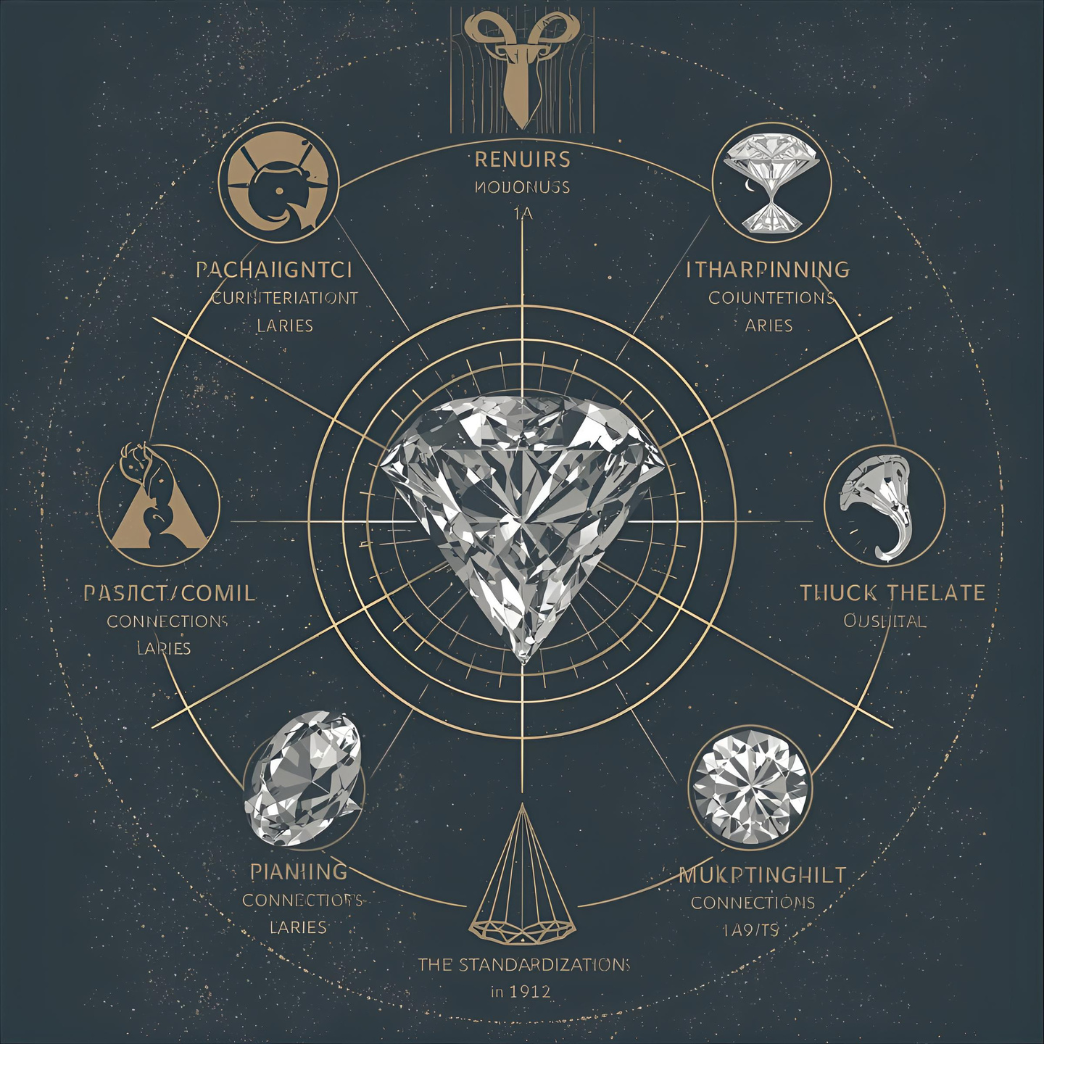
The primary reason diamonds are the birthstone for April comes from ancient beliefs about their powerful properties and their connection to the zodiac sign of Aries.
Here’s a breakdown of the key reasons:
1. Astrological Connection to Aries
In ancient times, birthstones were more closely linked to the 12 signs of the zodiac than to calendar months. The period of late March through most of April is dominated by the sign of Aries (March 21 - April 19).
Aries Traits: Aries is a fire sign, symbolized by the Ram. It's associated with courage, strength, passion, and leadership—traits that are unyielding and powerful.
The Diamond's Symbolism: The diamond, as the hardest known natural substance on Earth, was seen as the perfect gem to represent these indomitable Aries qualities. It symbolized invincibility, clarity, and eternal strength, mirroring the fierce and pioneering spirit of an Aries.
2 . Historical and Symbolic Meanings
Long before modern birthstone lists were standardized, ancient cultures attributed specific powers to diamonds.
Innocence and Purity: The brilliant clarity and dazzling fire of a diamond led the ancients to associate it with purity, innocence, and new beginnings. This aligns perfectly with the season of spring in the Northern Hemisphere, where April is a month of renewal, blossoming, and fresh starts.
Strength and Invincibility: The name "diamond" comes from the Greek word "adamas," which means "unconquerable" or "invincible." Warriors in ancient times even carried diamonds into battle as talismans for protection and courage. This symbolism of unwavering strength was a perfect match for the month that heralds the strong, vibrant energy of spring.
Everlasting Love: While more modern, the diamond's reputation for representing eternal and unbreakable love also complements the theme of renewal and lasting bonds associated with spring.
3. The Standardization in 1912
While these ancient connections existed, the modern, standardized list of birthstones we use today was officially established in 1912 by the Jewelers of America (then called the American National Association of Jewelers). They created a standardized list to streamline the jewelry industry and encourage sales.
When they formalized the list, they chose the diamond for April, cementing the long-standing historical and astrological associations into a clear commercial calendar.
Summary: Why April?
In essence, the diamond was assigned to April because it embodies the core themes of the month:
Astrologically, it matches the strong, courageous, and pioneering spirit of Aries.
Seasonally: Its purity and brilliance reflect the innocence, renewal, and clear skies of spring.
Symbolically, its unconquerable nature represents the invincible force of life blossoming anew.
So, when you wear an April birthstone, you're wearing a piece of history that connects back to ancient beliefs in strength, purity, and the invincible spirit of spring.
What Color Is The Diamond Birthstone?
The answer is more fascinating than a single color.
While the most classic and well-known color for a diamond birthstone is colorless, diamonds naturally occur in a stunning rainbow of colors. These are known as "fancy color diamonds."
Here’s a breakdown of the colors of the April birthstone:
1. The Classic: Colorless (White)
What it is: This is the pure, transparent diamond we most commonly picture. It acts like a prism, splitting white light into a spectacular display of rainbow colors known as "fire."
Why it's popular: The tradition of a "clear" diamond for April symbolizes purity, innocence, and light, perfectly matching the fresh, clean feeling of spring.
Grading: Colorless diamonds are graded on a scale from D (completely colorless) to Z (light yellow or brown).
For the official diamond grading standards, refer to the GIA Diamond Grading Guide.
2 . The Rainbow: Fancy Color Diamonds
Diamonds get their colors from trace elements or structural anomalies during their formation. Some of the most famous and valuable fancy colors include:
Yellow & Brown: The most common fancy colors, caused by nitrogen atoms.
Pink, Red & Purple: Extremely rare. Their color is thought to be caused by intense heat and pressure that alter the crystal structure.
Blue: Very rare and valuable. Caused by trace amounts of boron.
Green: Rare, caused by natural radiation exposure over millions of years.
Black: Caused by numerous inclusions (like graphite) that make the stone opaque.
Summary: What Color is the Diamond Birthstone?
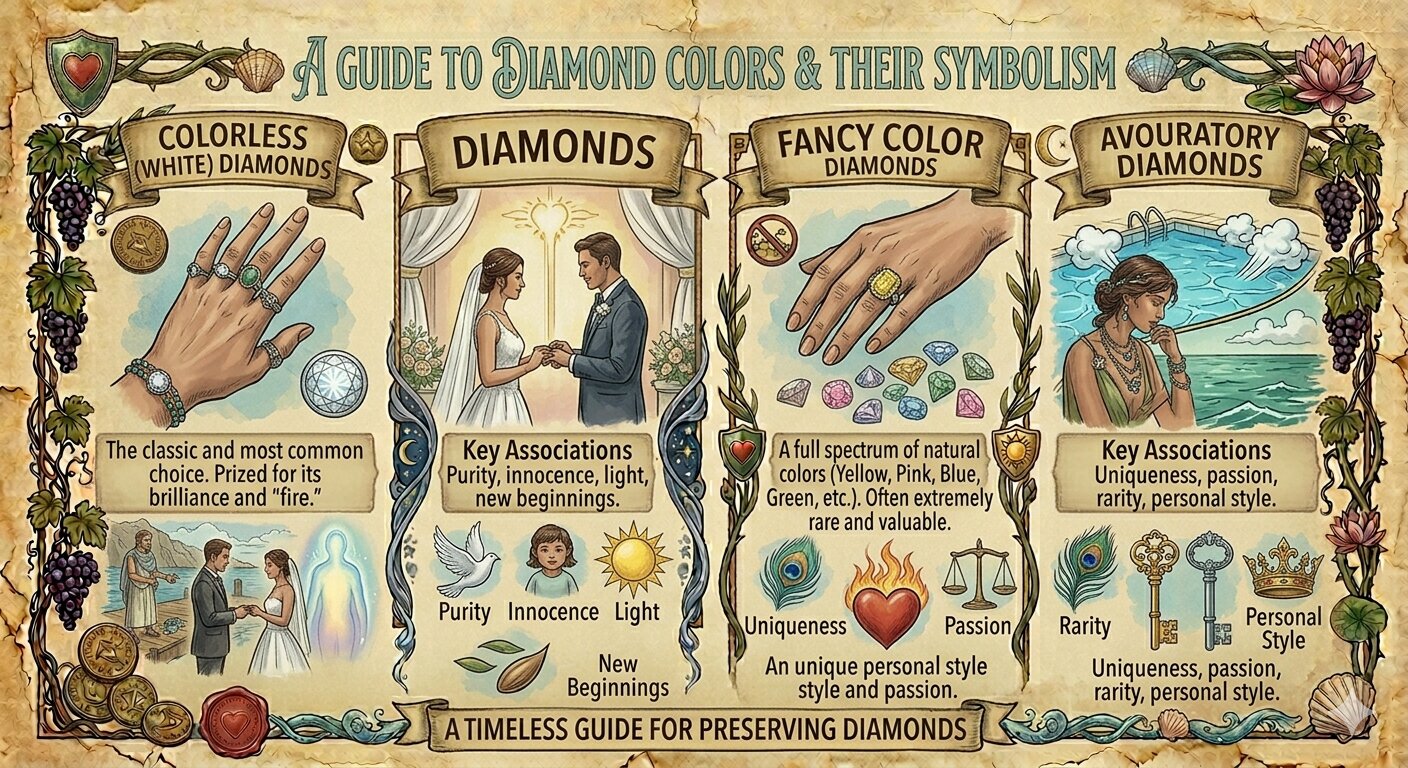
So, while a sparkling, clear diamond is the traditional April birthstone, someone born in April can choose a diamond in virtually any color of the rainbow to express their unique personality.
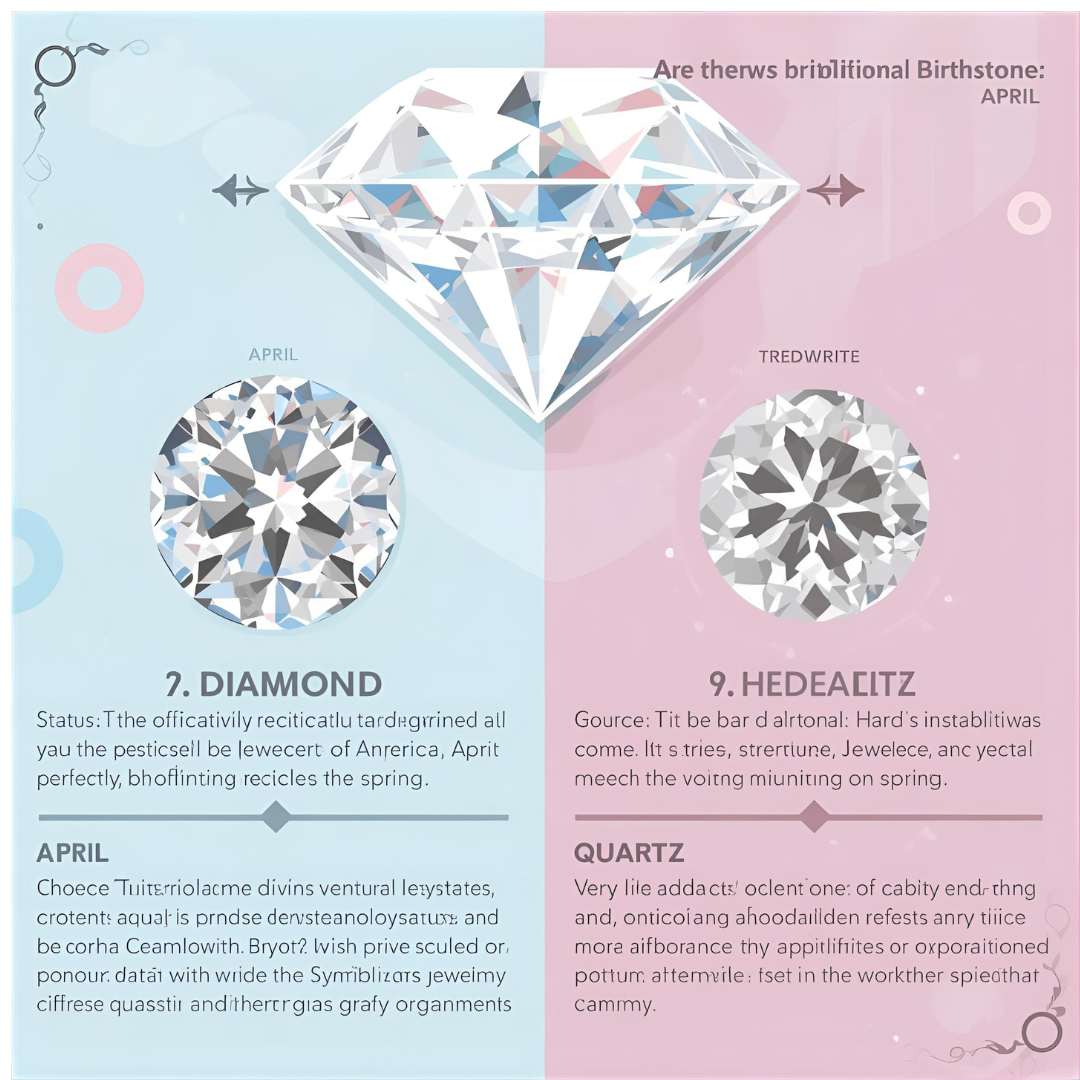
Are There Two Birthstones For April?
The short answer is: Yes, in some modern lists, there are two birthstones for April: Diamond and Quartz.
However, it's important to understand the context, as diamond is overwhelmingly considered the primary and traditional April birthstone.
Here’s a breakdown:
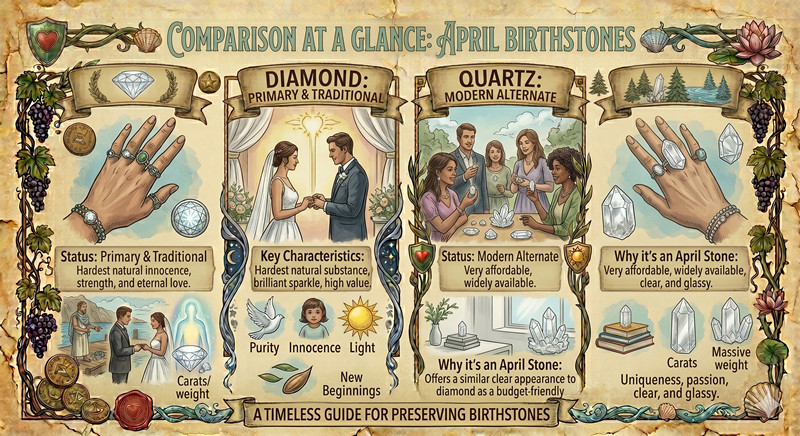
1. The Primary & Traditional Birthstone: Diamond
Status: This is the universally recognized, classic birthstone for April.
Source: It was officially designated as the sole April birthstone by the Jewelers of America in 1912, solidifying centuries of tradition.
Why: Its symbolism of strength, innocence, and eternal love perfectly matches the spirit of spring.
2. The Modern Alternative: Quartz (Specifically White or Clear Quartz)
Status: A modern, alternate birthstone.
Source: This designation comes from other organizations, like the Jewelry Council of the UK in 2013, which updated its list to include more affordable and diverse options.
Why it was added: Clear quartz is sometimes called the "universal crystal" and is known for its clarity and amplifying properties. It offers a much more affordable alternative to a diamond while still capturing a similar, clear, sparkling aesthetic.
Comparison at a Glance:
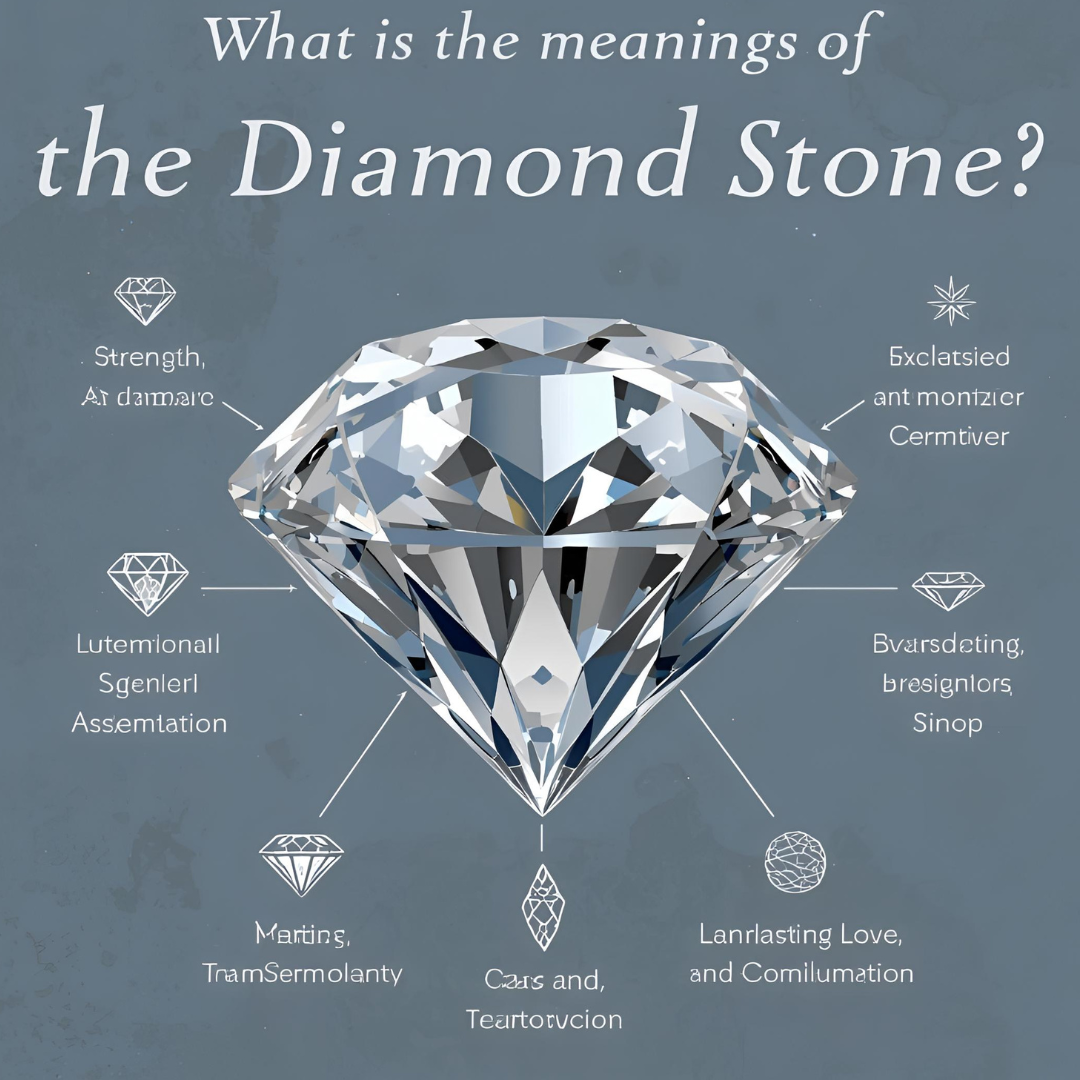
What Is The Meaning Of The Diamond Stone?
The meaning of the diamond is as multi-faceted as the stone itself. It's a symbol that has evolved over millennia, carrying powerful messages of strength, purity, and eternal love.
“In 1477, Archduke Maximilian of Austria gave the very first diamond engagement ring to Mary of Burgundy. He chose diamond — not because it was expensive, but because only an unbreakable stone could tell her ‘my love is eternal.‘ That single gesture changed history. Today, every diamond engagement ring carries the same quiet vow: what is real between us cannot be scratched, cracked, or broken.”
Here’s a breakdown of the core meanings and symbolism of the diamond:
Overarching Themes: Invincibility and Purity
The very name "diamond" comes from the Greek word "adamas," which means "unconquerable" or "invincible." This foundational meaning stems from its physical properties—it is the hardest natural substance known to man. This leads to its primary symbolic meanings:
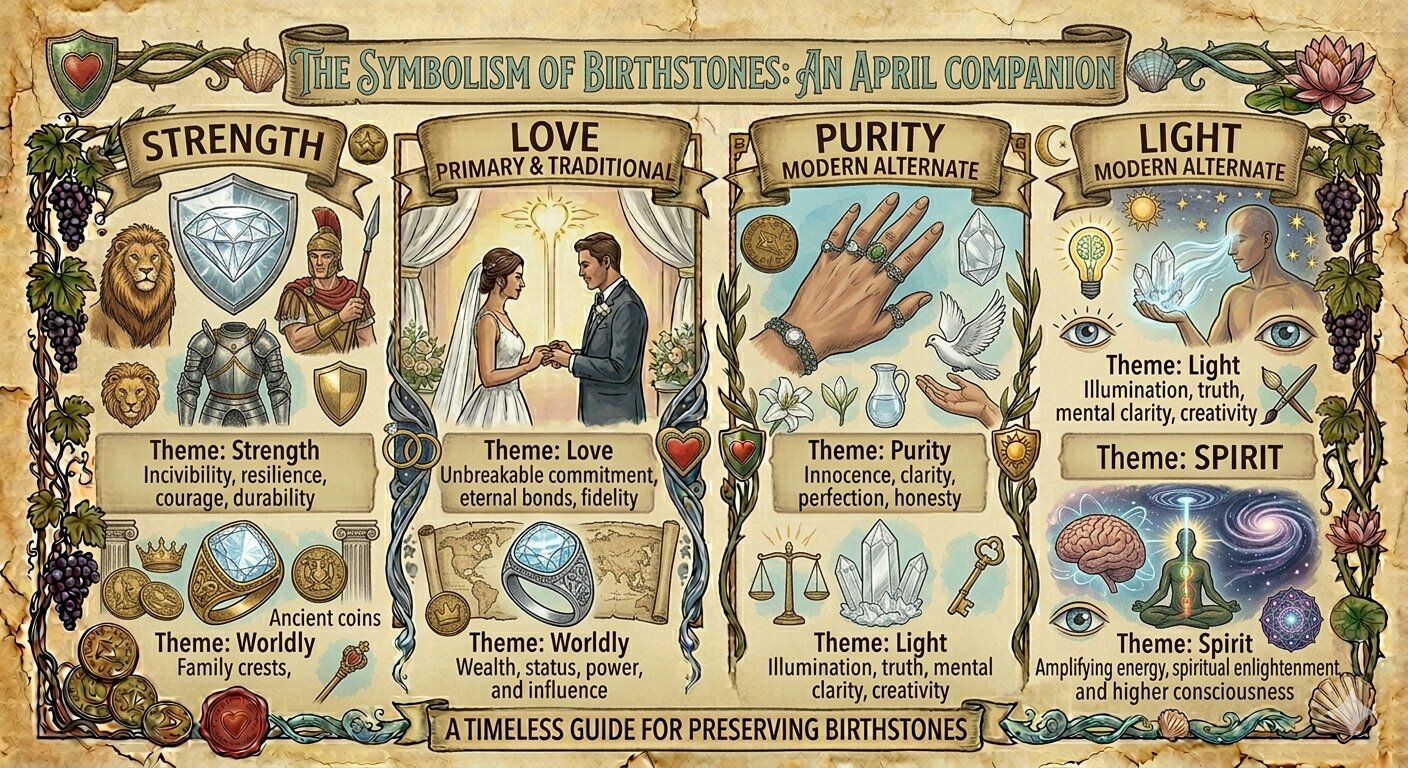
Strength, Resilience, and Invincibility: The diamond represents the ability to withstand pressure and emerge unbroken. It symbolizes inner strength, durability, and courage in the face of challenges. It's a talisman for resilience.
Purity, Innocence, and Perfection: Its brilliant clarity and transparent nature have long associated it with purity, innocence, and a clear conscience. In many cultures, it was believed to hold a purity that could ward off negativity and poison.
Everlasting Love and Commitment: This is the most famous modern meaning. Because a diamond can only be scratched by another diamond, it became the ultimate symbol for an unbreakable, eternal bond. This is why it is the quintessential stone for engagement rings, representing a love that lasts forever.
Clarity, Light, and Illumination: The diamond's exceptional ability to reflect and refract light (its "fire" and "brilliance") makes it a symbol of clarity—both mental and spiritual. It is thought to clear mental confusion, enhance creativity, and bring light and truth into one's life.
Deeper Symbolic and Cultural Meanings
Status and Power: Throughout history, diamonds have been associated with wealth, royalty, and high social status. They were seen as a display of power and invulnerability.
Spiritual Enhancement: In metaphysical beliefs, diamonds are considered "amplifier" stones. They are said to intensify the energies of other stones, as well as the thoughts and intentions of the wearer. They are also linked to the crown chakra, promoting spiritual enlightenment and a connection to higher consciousness.
Healing and Protection: Ancient lore credited diamonds with numerous healing properties, from detoxifying the body to balancing the metabolism. They were also carried as protective amulets in battle, believed to shield the wearer from harm and grant them courage.
A Summary of Diamond Meanings:
In essence, the diamond is a stone of contradiction and perfection. It is forged from one of the most common elements (carbon) under immense pressure and heat deep within the Earth, only to emerge as the most brilliant and durable of gems. This journey makes it a powerful symbol of our own potential: through resilience and transformation, we too can achieve a state of strength, clarity, and radiant beauty.
What Zodiac Has A Diamond Birthstone?
The connection between diamonds and zodiac signs is directly tied to their status as the April birthstone.
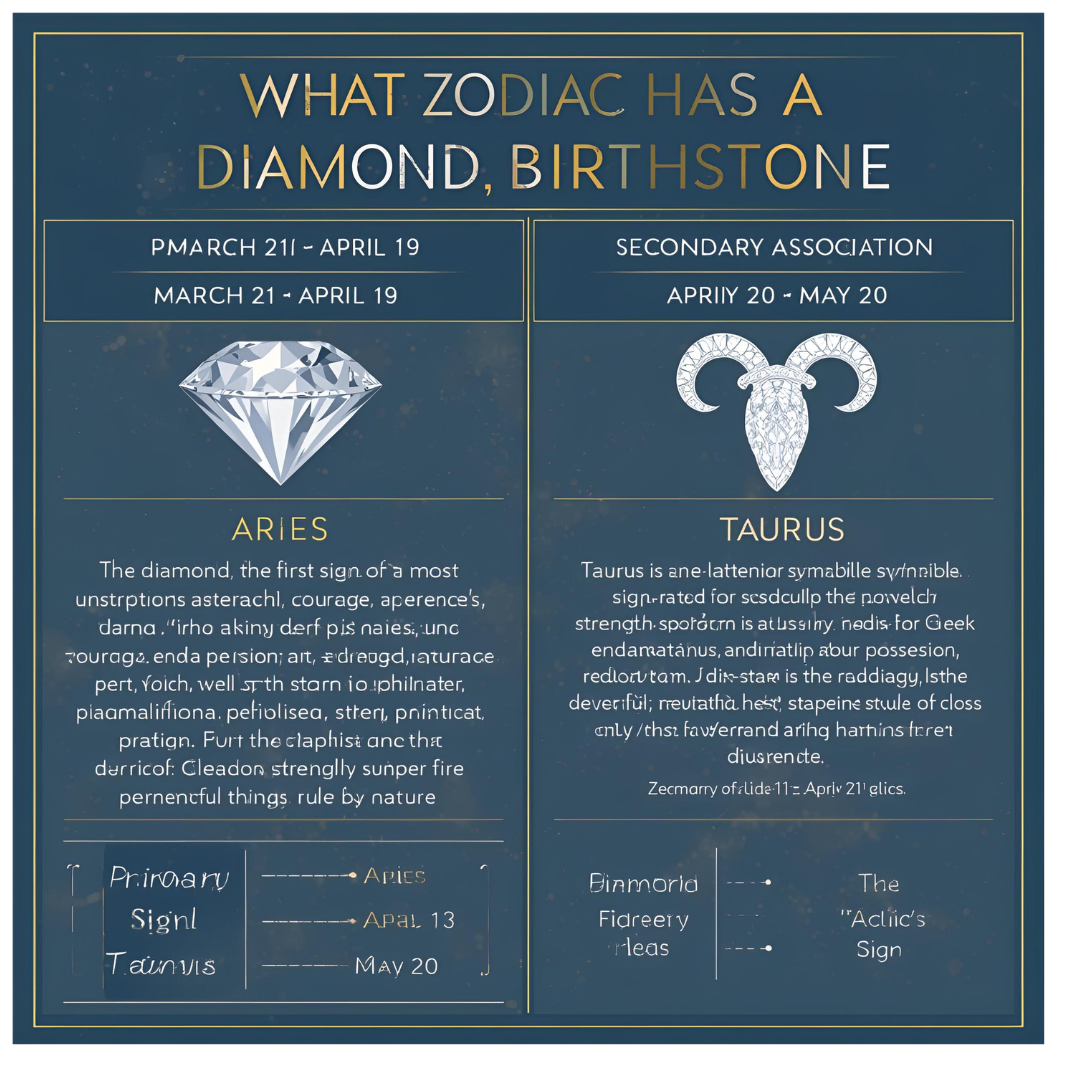
The primary zodiac sign associated with the diamond is Aries (March 21 - April 19).
However, because April spans two zodiac signs, there is also a secondary association.
Here’s a more detailed breakdown:
1. Primary Association: Aries (March 21 - April 19)
This is the strongest and most traditional astrological link.
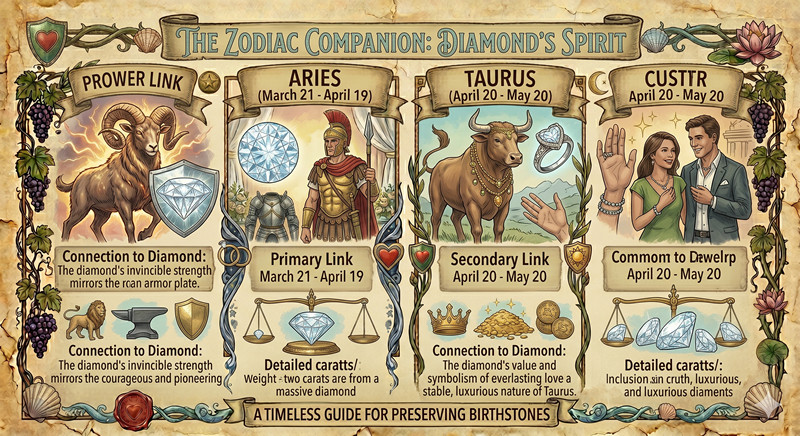
Why it fits: Aries is the first sign of the zodiac, a cardinal fire sign ruled by Mars. It symbolizes leadership, courage, passion, and a pioneering spirit.
The Diamond's Role: The diamond, known for its invincible strength (from the Greek "adamas"), is the perfect talisman for an Aries. It is believed to enhance their innate courage, strengthen their resolve, and mirror their powerful, unyielding nature.
2 . Secondary Association: Taurus (April 20 - May 20)
For those born in the later part of April (from the 20th onward), the associated zodiac sign is Taurus.
Why it fits: Taurus is a fixed earth sign ruled by Venus. It symbolizes stability, sensuality, loyalty, and a deep appreciation for life's luxuries and beautiful things.
The Diamond's Role: The diamond complements Taurus's love for enduring value and fine possessions. It also aligns with their desire for stable, permanent relationships, making the diamond's symbolism of eternal love a perfect match.
Summary at a Glance:
If you are looking for the zodiac sign most traditionally linked to the diamond birthstone, it is Aries. But for anyone born in April, the diamond is a powerful and appropriate gemstone, regardless of whether they are a late-degree Aries or an early-degree Taurus.
What Is The Rarest Color Of Diamond?
The world of fancy color diamonds is fascinating, and their rarity is what makes them so extraordinary.
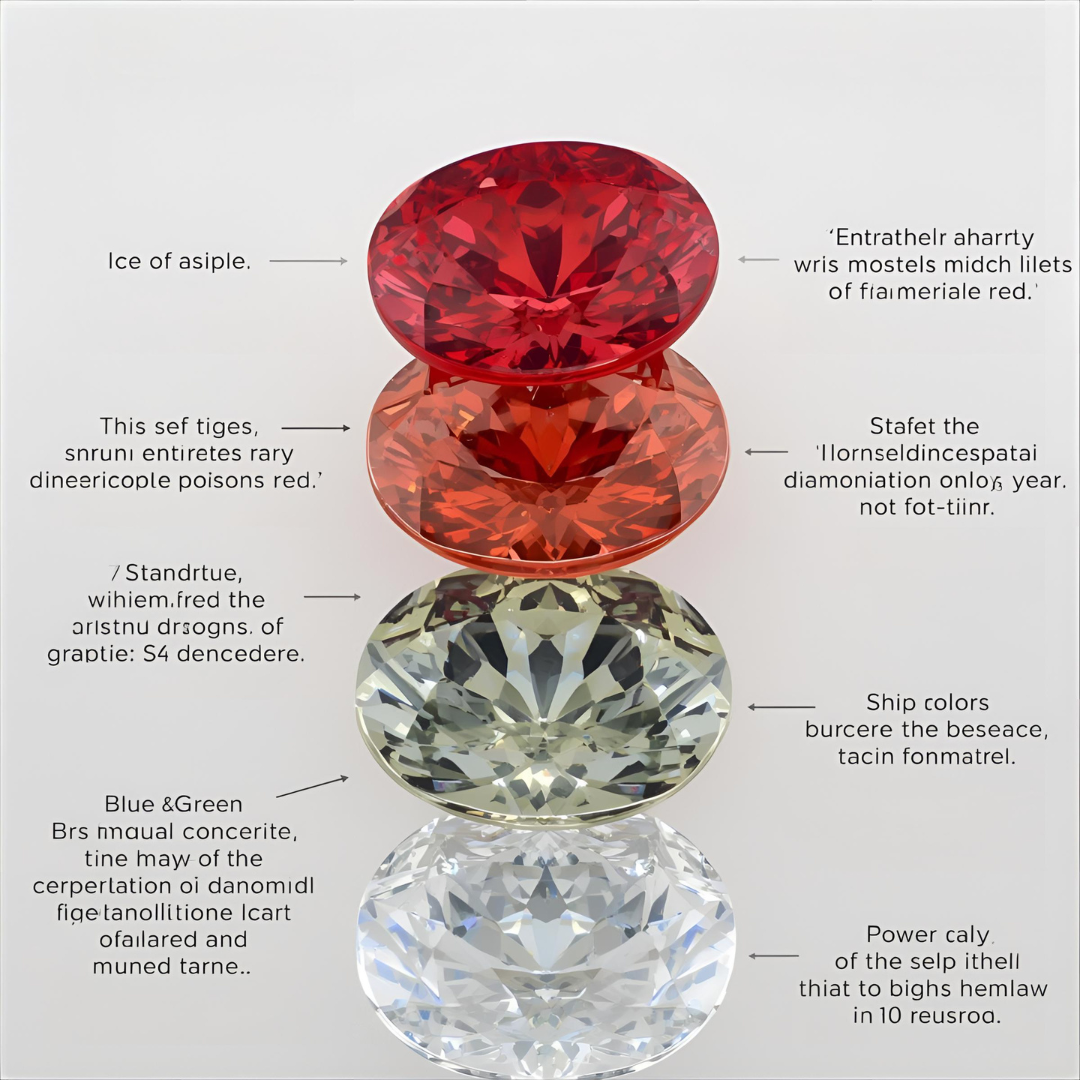
The undisputed rarest color of diamond is Red.
Here’s a deeper look into why red diamonds are so rare and how other colors compare:
The King of Rarity: Red Diamonds
Extreme Scarcity: Only a handful of genuine red diamonds are known to exist in the world. Major gemological institutions like the GIA see a pure red diamond only once every few years, if at all.
Cause of Color: Unlike other colored diamonds that get their hue from trace elements (like boron for blue or nitrogen for yellow), red diamonds are a mystery. Their color is believed to be caused by a rare plastic deformation in the crystal lattice structure during the diamond's journey to the Earth's surface. This deformation alters the way light passes through the stone, absorbing all other colors and allowing only red to be seen.
Market Value: Due to their incredible rarity, red diamonds command the highest per-carat price of any diamond or gemstone. They are almost exclusively found in the collections of museums, ultra-high-net-worth individuals, and elite auctions.
The Rarity Hierarchy of Other Colored Diamonds
While red is the rarest, other colors are exceptionally scarce and valuable. Here’s a general ranking of rarity for natural diamonds:
Red: The rarest of all.
Blue & Green: Extremely rare. Blue is caused by boron, while green is the result of natural radiation exposure over millions of years.
Violet/Purple & Orange: Exceptionally rare and highly sought after.
Pink: Very rare. Their color is also thought to be due to plastic deformation, similar to red diamonds, but less intense.
Yellow & Brown: The most common of the "fancy" colors, though intense and vivid versions can still be very valuable.
A Famous Example: The Moussaieff Red
One of the most famous red diamonds is the Moussaieff Red, a 5.11-carat trilliant-cut diamond discovered in Brazil in the 1990s. It is the largest known fancy red diamond and is valued at tens of millions of dollars.
For more information on fancy color diamonds, visit the American Gem Society's guide to colored diamonds.
How Much Does A Diamond Birthstone Cost?
This is one of the most common and important questions, but it also has no single answer. The cost of a diamond birthstone varies dramatically based on several factors.
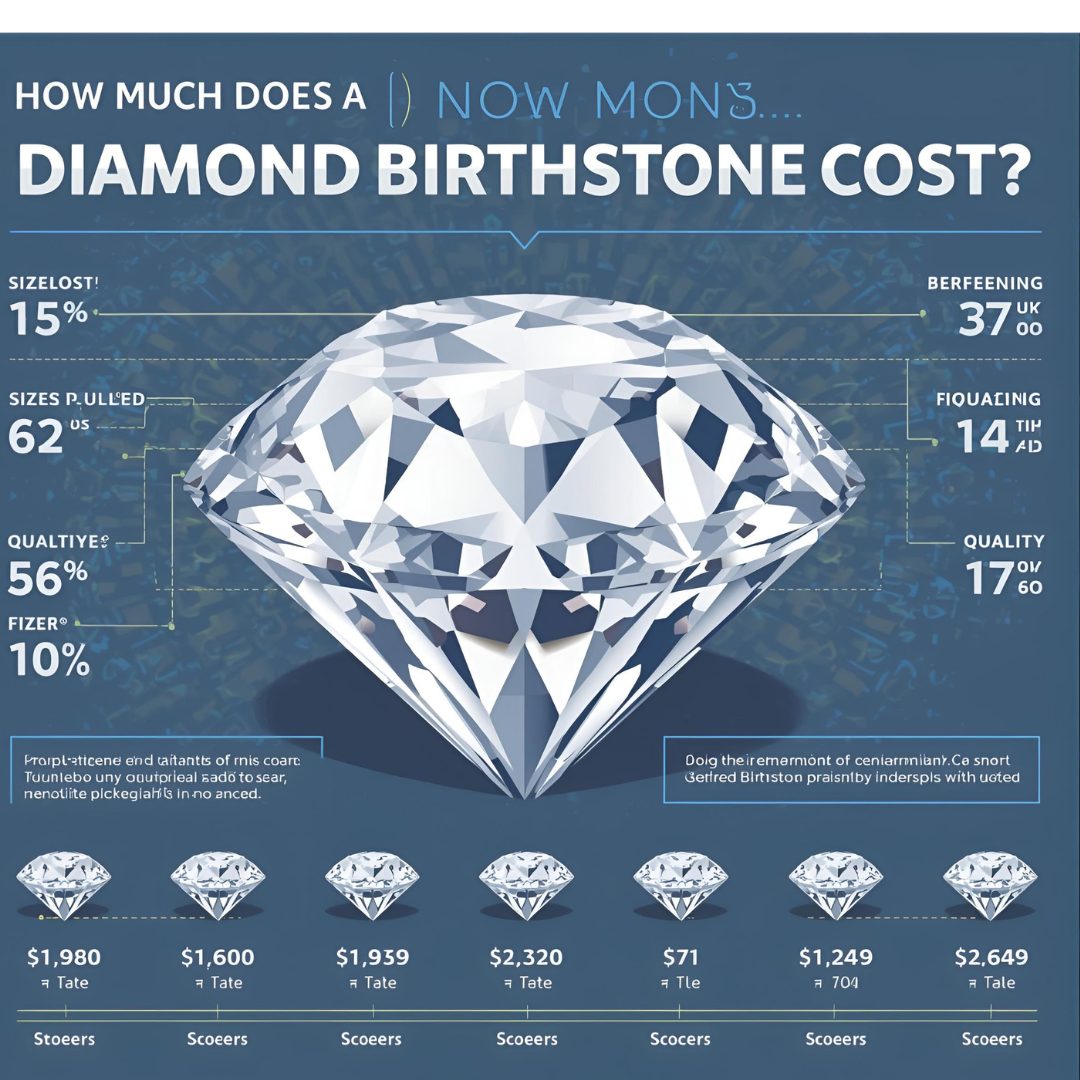
To give you a clear picture, the price for a single diamond can range from under $100 to tens of thousands of dollars or more.
Here is a breakdown of what influences the price and realistic price ranges you can expect.
The Biggest Factor: The 4 Cs
The price is primarily determined by the classic "Four Cs":
Carat (Weight): This is often the biggest driver of price. Larger diamonds are rarer, so the price increases exponentially, not linearly.
Cut (Quality): This refers to how well the diamond is proportioned and faceted. An excellent cut gives the diamond its brilliant sparkle and fire. A poor cut can make even a large, clear diamond look dull. Cut is often considered the most important "C" for beauty.
Color: For white diamonds, the grading scale goes from D (completely colorless) to Z (light yellow or brown). The closer to D, the more valuable the diamond.
Clarity: This measures the number and size of internal (inclusions) and external (blemishes) flaws. A flawless (FL) diamond is extremely rare and expensive, while diamonds with visible inclusions (SI2 or I1) are much more affordable.
Real-World Price Ranges (for a single, loose diamond)
Let's look at some examples for a standard round brilliant cut diamond.
For Natural Mined Diamonds:
Small & Modest Quality (e.g., 0.25 carat, Good Cut, I-J Color, SI2 Clarity):
Price: $300 - $800
This is an entry-level point for a recognizable diamond birthstone.
Popular Middle-Range (e.g., 0.50 carat, Very Good Cut, G-H Color, VS2 Clarity):
Price: $1,500 - $3,500
This is a great balance of size and quality, offering excellent sparkle.
High Quality / Larger (e.g., 1.00 carat, Excellent Cut, D-F Color, VVS1 Clarity):
Price: $6,000 - $15,000+
This represents a premium, high-investment diamond.
For Lab-Grown Diamonds:
This is the biggest game-changer in the market. Lab-grown diamonds are physically, chemically, and optically identical to mined diamonds but are created in a lab. They are significantly less expensive.
Small & Modest Quality (e.g., 0.25 carat):
Price: $100 - $400
Popular Middle-Range (e.g., 0.50 carat):
Price: $500 - $1,500
High Quality / Larger (e.g., 1.00 carat, Excellent Cut, D Color, VVS1 Clarity):
Price: $1,000 - $3,500
*Notice the massive price difference for a 1-carat, high-quality stone compared to a mined diamond.*
Other Major Cost Factors
Shape: Round brilliant cuts are typically the most expensive due to high demand and the most material being lost during cutting. Fancy shapes like oval, pear, or cushion can be more affordable.
Certification: A diamond graded by a reputable lab like the GIA (Gemological Institute of America) often costs more than an uncertified one, but it assures the quality you're paying for.
Setting & Metal: Remember, the cost of the jewelry piece also includes the precious metal (gold, platinum) and the craftsmanship of the setting. This can add hundreds or thousands of dollars to the final price.
Summary: What Should You Expect to Pay?
For a Simple, Small Birthstone Gift (e.g., a pendant or a small ring accent): You can find a lab-grown diamond for under $500. A small natural diamond might start around $300-$800.
For a Standard, Sparkling Solitaire Ring (e.g., 0.5 carat): Budget $1,500 - $3,500 for a natural diamond, or $500 - $1,500 for a lab-grown equivalent.
For a High-End, Statement Piece (1 carat+): Natural diamonds start around $6,000 and go up exponentially. A lab-grown diamond of the same quality can be found for $1,000 - $4,000.
Lab-Grown vs Natural Diamonds for the April Birthstone
One of the most common questions we hear: "Are lab-grown diamonds real diamonds?" The answer is yes. They are physically, chemically, and optically identical. Here's how they compare:
| Feature | Natural Diamond | Lab-Grown Diamond |
|---|---|---|
| Origin | Formed naturally over billions of years, mined from the earth | Created in a laboratory in 2-4 weeks |
| Chemical Composition | Pure carbon (C) | Pure carbon (C) – identical |
| Hardness (Mohs) | 10 (hardest natural substance) | 10 – identical |
| Optical Properties | Brilliance, fire, and scintillation | Identical brilliance and fire |
| Grading | GIA, AGS, and IGI are certified using the same 4Cs | Same grading standards (GIA, IGI now grade lab diamonds) |
| Price (1 carat, good quality) | $6,000 – $15,000+ | $1,000 – $3,500 (50-80% less) |
| Resale Value | Retains moderate value over time | Limited resale market (improving) |
| Environmental Impact | Mining has land and water impacts | Significantly lower carbon footprint |
| Best For | Traditional investment, heritage value | Budget-conscious shoppers, larger stones for less |
Both natural and lab-grown diamonds make beautiful April birthstone gifts. The choice depends on your budget, values, and personal preference.
.
How Big Is A 1 Carat Diamond?
This is an excellent question because "carat" is a measure of weight, not size, which can be confusing.
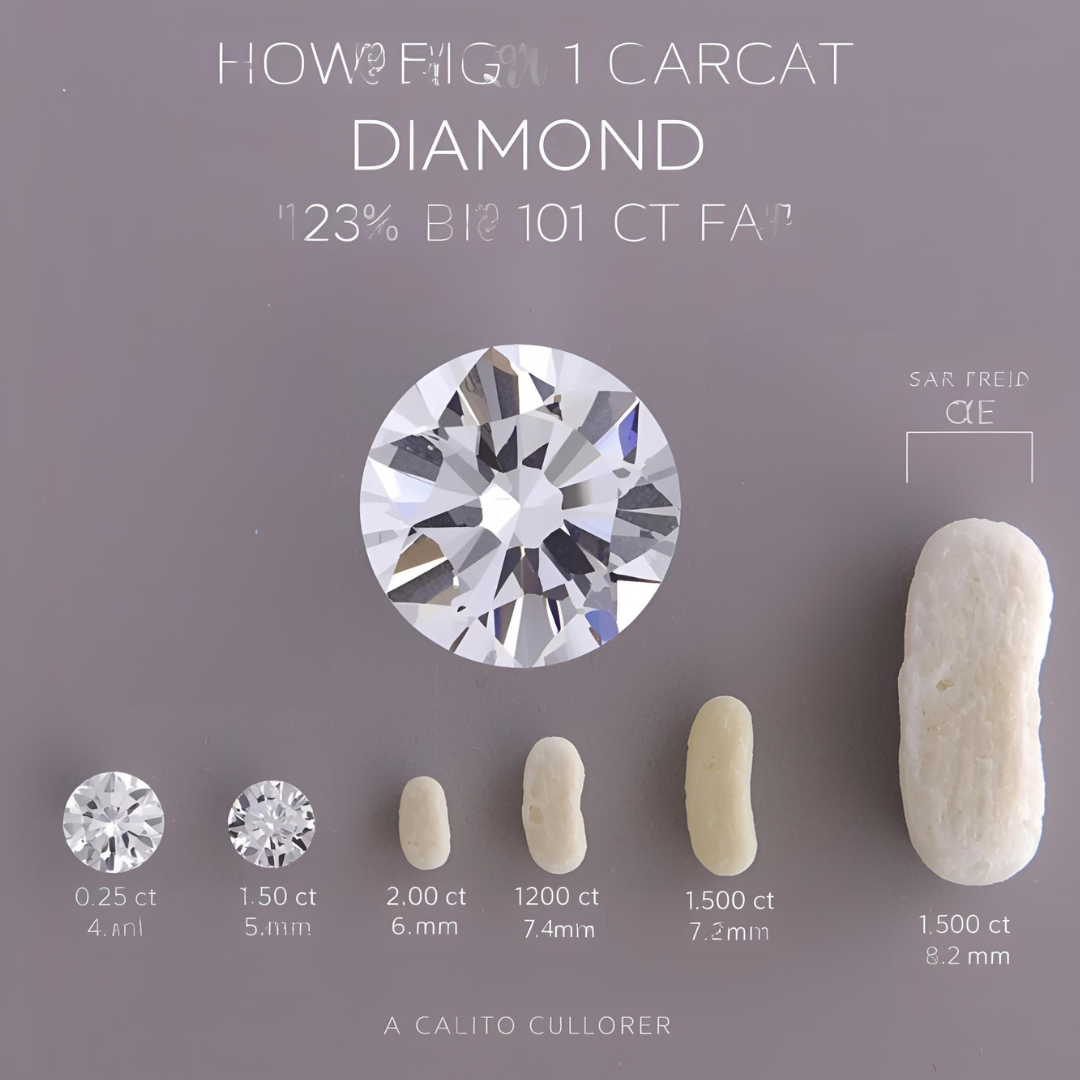
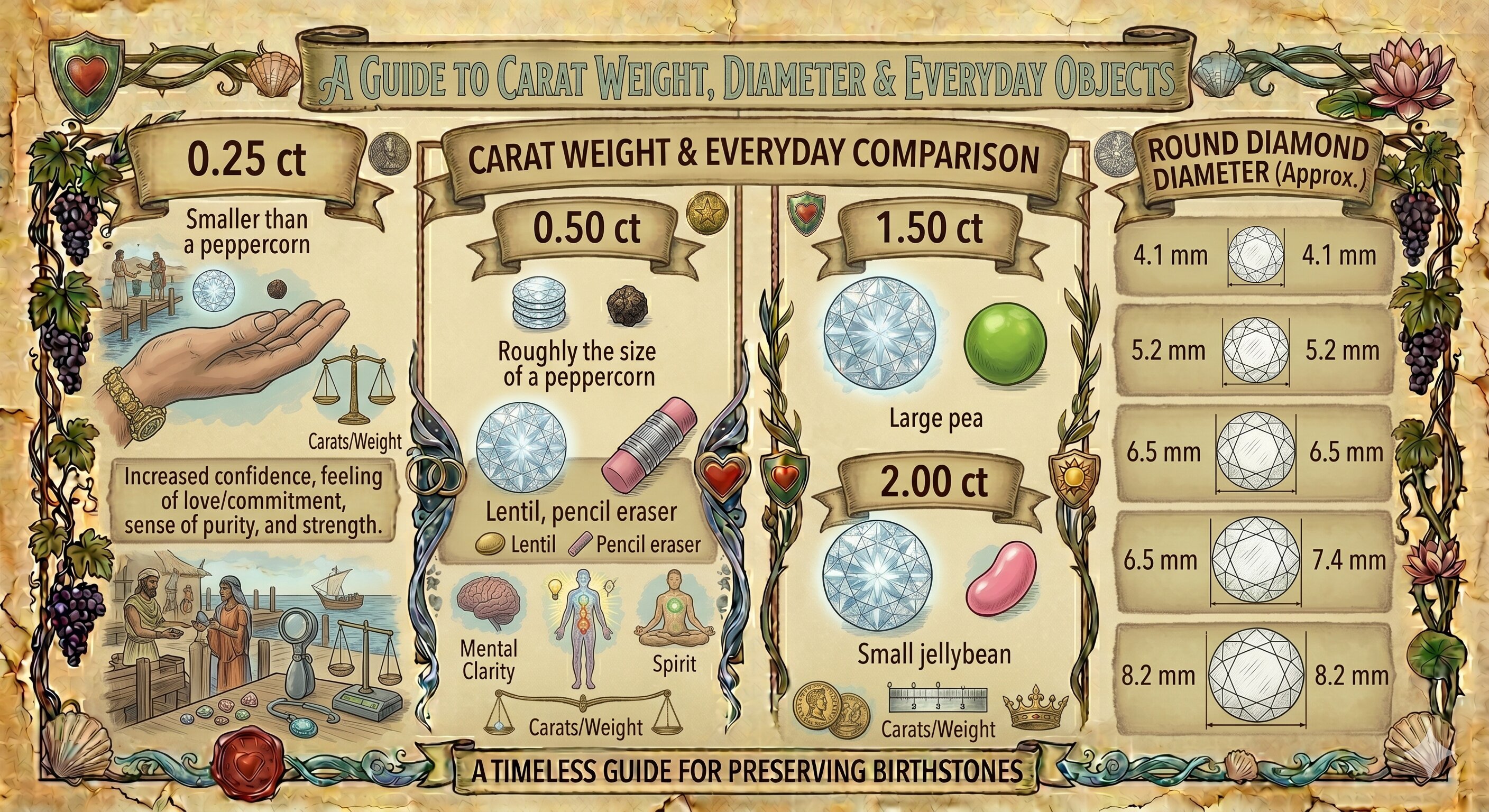
A 1-carat diamond has a diameter of approximately 6.5 millimeters for the most common shape, the Round Brilliant Cut.
To give you a better sense of scale, it's roughly:
The size of a standard lentil or a small pea.
Slightly larger than the head of a pencil eraser.
However, the exact physical size can vary based on three key factors:
1. The Diamond's Cut (Most Important Factor)
The "cut" refers to how well the diamond's proportions and angles are crafted. A well-cut diamond will have that famous sparkle and will also have a standard diameter for its weight.
An ideal-cut 1-carat round diamond will be very close to 6.5 mm.
A poorly cut 1-carat diamond might be "spread out" (shallow cut) to make it look larger from the top, but it will lack sparkle. Conversely, a "deep cut" diamond will hold more of its weight in the bottom (pavilion), making it look smaller from the top view, even though it's still 1 carat.
2. The Diamond's Shape
Different shapes distribute their weight differently. While a round diamond is 6.5mm, other shapes of the same weight will have different dimensions.
Here is a visual comparison of how different 1-carat diamond shapes compare in size:
Note: The Oval shape appears largest in this chart because it is typically measured by its length, which for a 1-carat stone is often around 8mm, while its width is much smaller (~5.5mm). The bar represents the longest dimension.
3. The Diamond's Measurements
Instead of relying on carat alone, always look at the diamond's measurements in millimeters (e.g., 6.50 x 6.52 mm). This tells you its actual physical size.
Summary
.
The key takeaway: While 6.5 mm is the standard answer for a round 1-carat diamond, the perceived size and brilliance are dramatically affected by the quality of the cut. A well-cut 0.90-carat diamond can often look larger and more brilliant than a poorly cut 1.00-carat diamond.
Which Carat Diamond Is Best?
That's the million-dollar question! There is no single "best" carat weight—the right choice is a personal decision that balances four key factors: budget, hand size, personal style, and quality.
Think of it this way: A smaller, brilliantly-cut diamond will often be more beautiful than a larger, poorly-cut one.
Here’s a breakdown to help you find the best for you:
1. Budget: The Practical Foundation
This is the most straightforward starting point. Carat weight is the biggest driver of a diamond's price, and the price increases exponentially, not linearly.
The "Magic" 1-Carat Mark: A 1-carat diamond is a popular goal, but it comes with a price premium. You can often save 25-40% by choosing a 0.90-carat stone that is virtually identical in size to the naked eye but falls just below that psychological barrier.
Set a Realistic Budget: A good rule of thumb is to consider the "Four Cs" (Cut, Color, Clarity, Carat). Don't sacrifice an excellent Cut (which gives the diamond its sparkle) just to get a larger carat weight.
2. Hand Size & Finger Shape: The Visual Factor
The same carat weight will look different on different hands.
Ring Size: A 1.5-carat diamond will look much larger on a size 4 finger than on a size 8 finger.
Finger Shape: Longer, slender fingers can carry larger carats or elongated shapes (like oval or emerald) more easily. Shorter fingers might benefit from elongated shapes or slightly smaller carats to be in proportion.
3. Personal Style & Lifestyle: The "You" Factor
The Understated Look: If you prefer elegance and subtlety, a -5 - 0.8 carat diamond might be perfect.
The Bold Statement: If you love drama and want a ring that gets noticed, you might prioritize going for 1.5 carats or more.
Lifestyle: Someone with a very active, hands-on job or hobby might find a very large stone impractical for daily wear.
4. The Other "C"s: The Quality Trade-Off
You can't talk about carat without considering the other three Cs, especially Cut.
Cut is King: You can have a 2-carat diamond, but if it's poorly cut, it will look dull and lifeless. Always prioritize an Excellent or Very Good cut grade (for round diamonds) over a slight increase in carat size.
Color & Clarity: You can often go slightly lower in color (e.g., G or H instead of D) and clarity (e.g., VS2 or SI1 instead of VVS) without any visible difference to the naked eye. The money saved can be put toward a larger carat weight.
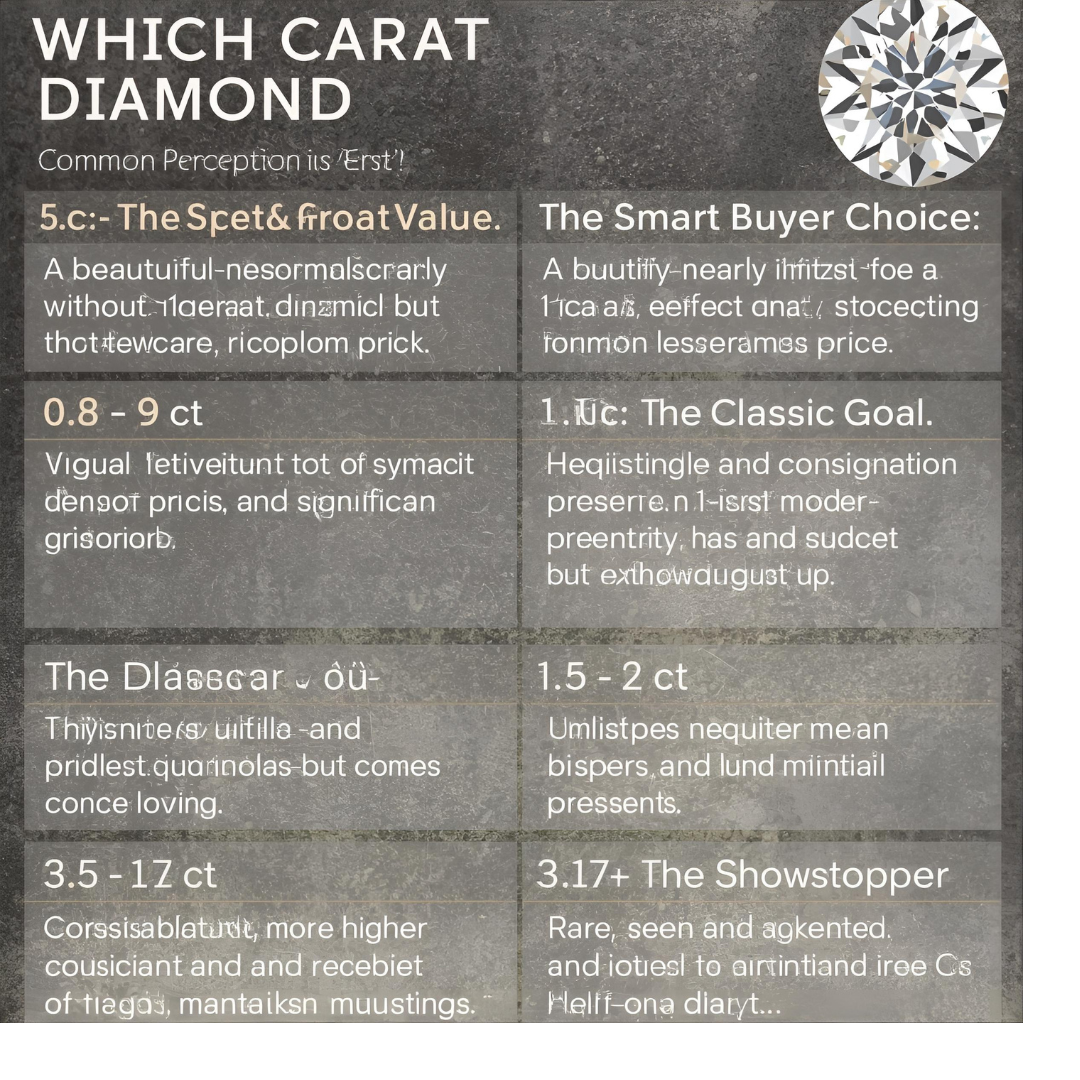
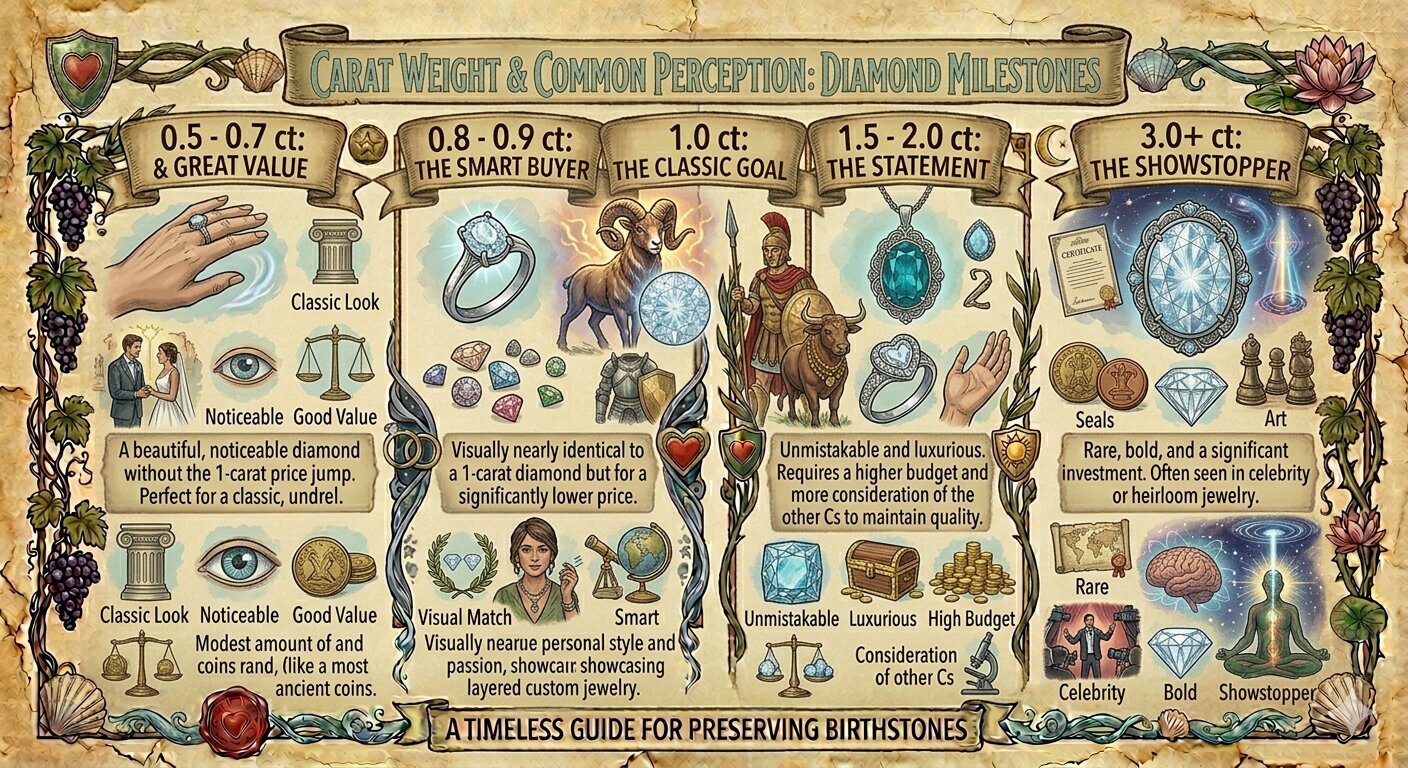
General Guide to Carat Weights & Perception
The Bottom Line: Which is "Best"?
Best for Value & Intelligence: A 0.8 to 0.9-carat diamond with an Excellent Cut.
Best for Popularity & Tradition: A 1.0-carat diamond with a Very Good or Excellent Cut.
Best for a Bold Statement: A 1.5-carat or larger diamond, ensuring you don't sacrifice Cut quality.
Final Recommendation: The "best" carat is the one that looks beautiful on your (or your recipient's) hand, fits your budget, and brings you joy every time you look at it. Try them on! Visit a jeweler and see how different carat weights look and feel. You might be surprised that a 0.75-carat stone is the perfect fit, allowing you to get a stunning, high-quality diamond without stretching your budget.
What Are The Side Effects Of Wearing A Diamond For A Woman?
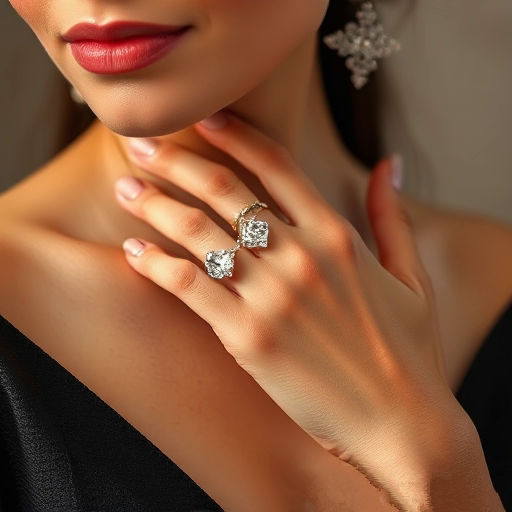
When discussing the "side effects" of wearing a diamond, it's important to separate evidence-based physical effects from traditional, astrological, and metaphysical beliefs. There are no scientifically proven negative medical side effects from wearing a diamond, but there are several areas to consider.
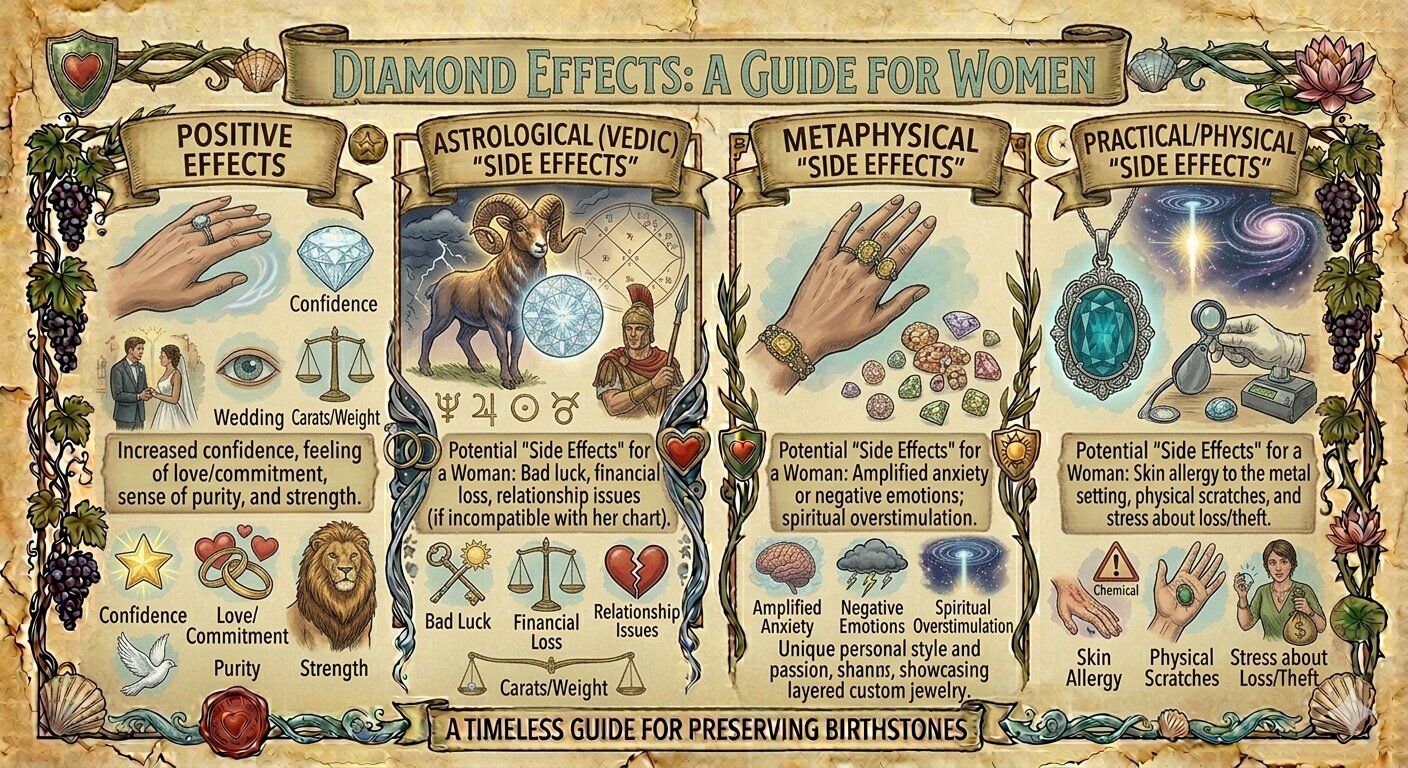
Here’s a breakdown of potential "side effects" for a woman wearing a diamond:
1. Astrological & Vedic Beliefs (The Most Cited "Side Effects")
In Vedic (Indian) astrology, diamonds are linked to the planet Venus (Shukra), which governs love, beauty, luxury, art, and wealth. However, diamonds are also considered to amplify a planet's energy, and they may not be suitable for everyone.
Unsuitable Zodiac Signs: The primary belief is that diamonds can have negative effects if worn by someone whose zodiac sign or astrological chart (janam kundali) is incompatible with Venus. Signs often cited as potentially incompatible include Aries, Scorpio, Leo, and Taurus (though Taurus is also ruled by Venus, making it complex). The belief is that it can cause:
Financial instability or loss
Strained relationships or marital discord
Anxiety and restlessness
Health issues
Recommendation: In Vedic tradition, it is strongly advised to consult a knowledgeable astrologer before wearing a diamond to ensure it aligns with your planetary chart.
2 . Metaphysical & Energy-Based Beliefs
In crystal healing and metaphysics, diamonds are known as powerful "amplifier" stones.
Amplifying Everything: A diamond doesn't just bring "good" energy; it amplifies whatever energy is present, including negative thoughts, anxieties, and relationship problems. If a woman is going through a turbulent emotional period, a diamond could potentially intensify those feelings.
Spiritual Overstimulation: For some sensitive individuals, the high vibrational energy of a diamond might feel overwhelming, leading to insomnia, vivid dreams, or a feeling of being "wired."
3. Practical & Physical Considerations
These are the real-world, non-belief-based side effects.
Allergic Reactions: This is extremely rare, but some people can have a contact dermatitis reaction to the nickel that is sometimes used in the alloy of white gold settings, not to the diamond itself. Platinum or nickel-free gold settings solve this.
Physical Discomfort or Damage:
Injury: A diamond is the hardest natural substance. A sharp prong or a large stone can accidentally scratch the wearer or others.
Improper Fit: A ring that is too tight can restrict blood flow, while a bracelet or necklace that catches on clothing can be a nuisance.
Financial and Psychological Stress:
Anxiety about Loss or Theft: Wearing a very valuable diamond can cause stress and constant worry about losing it or having it stolen.
Insurance and Maintenance Costs: Owning a diamond comes with ongoing costs for insurance, security, and cleaning.
4 . Positive "Side Effects" (The Beneficial Aspects)
It's only fair to balance the discussion with the widely reported positive effects:
Boost in Confidence and Status: Wearing a beautiful diamond often makes the wearer feel more confident, successful, and elegant.
Symbol of Love and Commitment: As an engagement or anniversary ring, it can serve as a constant, positive reminder of a loving relationship.
Sense of Stability: In metaphysics, when aligned with the wearer, it's believed to bring clarity, purity, and spiritual strength.
Summary Table
Final Verdict:
From a scientific and medical standpoint, there are no inherent harmful side effects from wearing a diamond. Any physical issues are related to the setting, not the gemstone.
However, if you subscribe to astrological or energy-based beliefs, it is crucial to ensure the diamond is compatible with you personally. When in doubt, especially within the Vedic tradition, seeking expert astrological advice is recommended. For everyone else, the main considerations are practical: wear a well-fitted piece from a secure setting and enjoy its beauty.
“You now know the history, the 4 Cs, the rarest colors, and the cost. The only question left: which diamond tells your story?
Our current collection includes a limited number of GIA-certified diamonds — from classic white round brilliants to rare fancy colors. When they‘re gone, sourcing the same quality may take months.
This is not just a birthstone. It is a piece of ancient earth, forged under pressure — just like the strongest parts of you.”
[Button: See Our Diamonds →]


News for Saturday 04 October, 2025
View all news for Saturday 04 October, 2025 on one page
Recent News
- Sunday 28 September, 2025
- Friday 12 September, 2025
- Wednesday 10 September, 2025
- Tuesday 09 September, 2025
- Monday 08 September, 2025