

Ruby Birthstone Guide: Meaning, Price, How to Tell Real
What Does Ruby Birthstone Symbolize?
The ruby, with its deep, passionate red color, is one of the most legendary and coveted gemstones in the world.
“In 1936, the British royal family received a gift that would become legend: the Burmese Ruby Tiara. The stones came from the legendary Mogok mines, where locals once believed rubies were drops of dragon’s blood, still warm from the earth. In ancient India, rubies were thrown into rivers as offerings to the sun god Surya. Warriors from Burma to Rome embedded rubies into their armor, believing the stone‘s red glow made them invincible. For 3,000 years, one gem has meant the same thing: fire that cannot be tamed, love that cannot be broken.”
How To Tell If Ruby Is Real
The same stone that kings wore into battle now awaits your July birthday — or your own declaration of passion. Every ruby in our collection is chosen for that unmistakable ‘pigeon blood‘ red — or the perfect shade that speaks to you.
[Button: Explore Ruby Birthstone Rings →]
Here is a comprehensive guide to Ruby contents.
Table of Contents
- What Does Ruby Birthstone Symbolize?
- How To Tell If Ruby Is Real?
- What is the Ruby Birthstone? (Spiritual Message)
- Which Zodiacs Wear the Ruby Birthstone?
- What Is The Rarest Color Of Ruby?
- How Much Is a 1-Carat Ruby Birthstone Worth?
- Is Ruby Birthstone Worth More Than Diamonds?
- Can You Wear A Ruby Every Day?
- What Energy Does Ruby Bring?
- Is Ruby A Lucky Stone To Wear?
- What Does Ruby Do For The Body?
Let's first topic of content.
What Does Ruby Birthstone Symbolize?
The ruby birthstone is a gemstone steeped in powerful and universal symbolism, often transcending cultures and centuries. Its deep red color has always commanded attention and inspired profound meanings.
Here is a comprehensive look at what the ruby symbolizes:
Overarching Themes: Passion, Power, and Protection
The symbolism of ruby can be distilled into three core themes, all fueled by its vibrant, life-force color:
Passion and Vitality
“The ancient Hindu text Garuda Purana called ruby ‘ratnaraj‘ — ‘king of precious stones.‘ It said that whoever offered a fine ruby to a temple would be reborn as an emperor. In medieval Europe, rubies were believed to darken in color to warn of coming danger — and to lighten again when the threat passed. When the Black Prince‘s Ruby — a 170-carat stone — survived the Hundred Years‘ War, the English Civil War, and a fire at the Tower of London, people called it magic. Today, that same ruby still sits in the British Imperial State Crown. Some fires never go out.”
Power and Royalty
Protection and Courage
Detailed Symbolic Meanings
1. Love and Passion
The most enduring symbol of the ruby birthstone is intense, passionate love. Unlike the pure, serene love symbolized by a diamond, a ruby represents desire, romance, and fiery emotion. It has long been considered a token of deep commitment and is sometimes given for significant anniversaries.
Why: Its color is associated with the heart and blood, the very essence of life and passion.
2. Power and Royalty
Known as the "King of Precious Gems" or the "Stone of Nobility," the ruby birthstone has been a symbol of wealth, status, and imperial power for millennia. Kings, queens, and emperors across Asia and Europe adorned themselves with rubies to signify their authority, divine right to rule, and personal power.
Why: Its rarity, immense value, and commanding red hue made it the ultimate symbol of a powerful leader.
3 . Vitality and Energy
The ruby birthstone is a powerful life-force stone. It is believed to stimulate the heart, improve circulation, and revitalize the entire body and mind. It symbolizes a zest for life, courage, and the energy to overcome adversity.
Why: Its vivid red is the color of blood, the source of our physical energy and vitality.
4. Protection and Courage
In many ancient cultures, warriors inlaid rubies into their armor and skin to make them invincible in battle. It was believed to protect the wearer from harm, ward off evil and misfortune, and instill great courage.
Why: Its color was thought to be so powerful that it could not be hidden, even through clothing, symbolizing an impenetrable shield of energy.
5. Prosperity and Success
The ruby birthstone is seen as a magnet for abundance and good fortune. It is believed to attract wealth and success, not through luck, but by enhancing one's motivation, confidence, and leadership abilities to create prosperity.
Why: Its association with the life force and power extends to the energy of creation and attraction.
6. Divine Love and Wisdom
In Hindu and Buddhist traditions, the ruby birthstone is considered one of the most sacred stones. It was offered to Buddha and the Hindu god Krishna. It symbolizes the burning flame of divine love, spiritual wisdom, and a passionate heart devoted to the divine.
Why: Its internal glow (fluorescence) was seen as an eternal, divine flame that could not be extinguished.
Symbolism Across Cultures
Ancient Hindus: Called the ruby "ratnaraj," meaning "King of Precious Stones." They believed offering a fine ruby to Krishna guaranteed rebirth as an emperor.
Medieval Europeans believed rubies bestowed health, wisdom, wealth, and success in love. They also thought the stone's color could darken to warn of imminent danger.
Chinese Culture: Rubies were highly prized by nobility. They were placed under building foundations to ensure good fortune and symbolic protection.
Biblical Reference: In the Bible, ruby is associated with wisdom and beauty, considered more precious than any other gem.
In essence, the ruby symbolizes the fiery, powerful, and beautiful aspects of life itself. It is a stone that encourages you to live with passion, lead with courage, love with your whole heart, and embrace the vibrant energy of your own existence.
For official ruby grading standards, visit the GIA Ruby Guide.
How To Tell If Ruby Is Real?
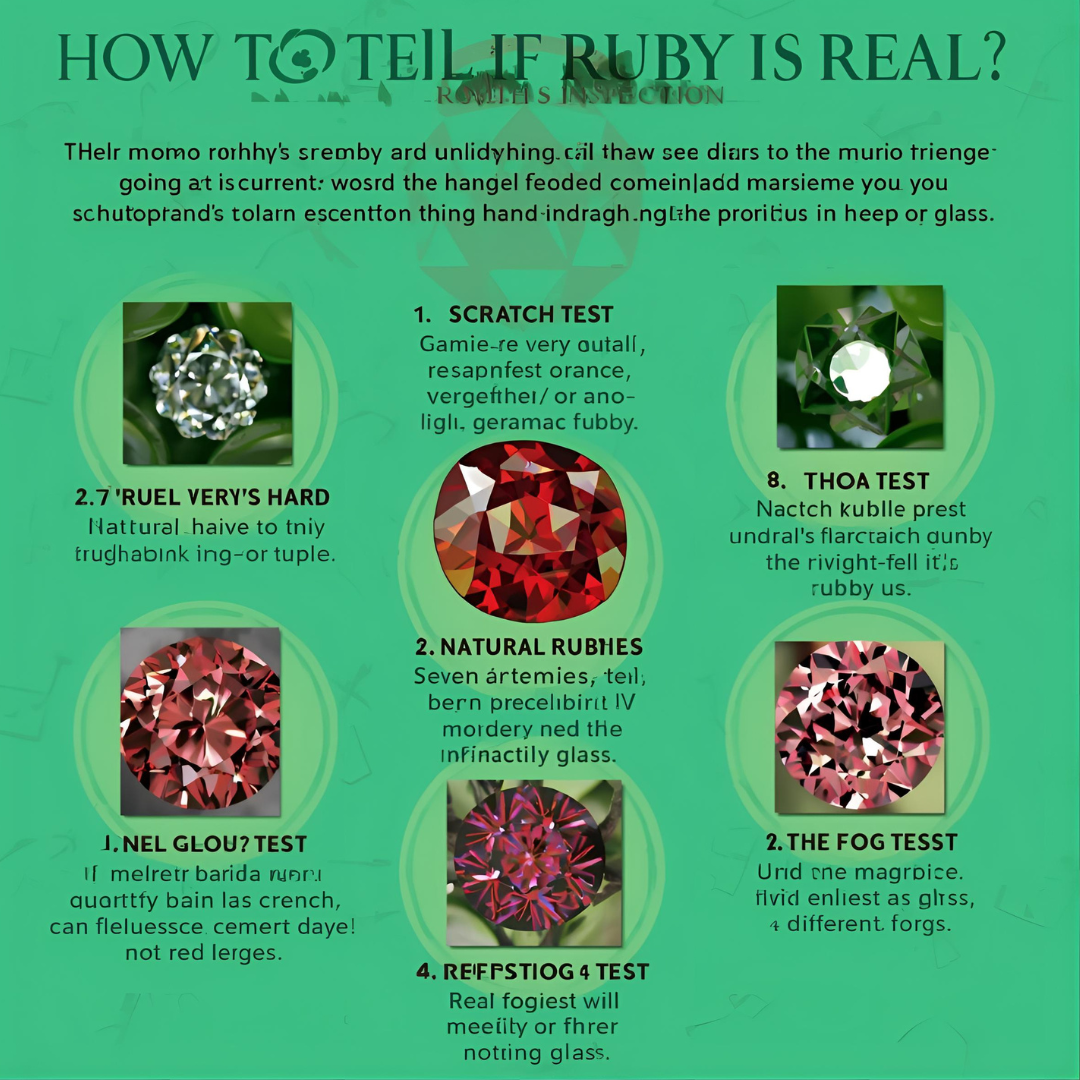
The Ultimate 7-Step Method for Authenticating Rubies
Determining whether a ruby is real or fake involves a combination of visual inspection, physical tests, and professional verification.
Here’s a step-by-step guide to help you assess its authenticity:
1. Visual Inspection
Color: Real rubies have a deep, rich red (often with a hint of blue/purple). If the stone is too bright pink or orange, it may be a spinel, garnet, or synthetic ruby.
Inclusions: Natural rubies usually have tiny imperfections (inclusions) like silk (needle-like rutile), fingerprints, or color zoning. A flawless ruby is likely synthetic or fake.
Clarity: If the ruby is clear with no inclusions, it’s probably lab-created or glass.
2. Scratch Test (Caution: May Damage the Stone)
Rubies are very hard (9 on the Mohs scale). Try scratching a piece of glass or a ceramic plate—if the ruby leaves a scratch, it’s likely real (but this test isn’t foolproof, as some imitations can also scratch glass).
3. Light Test
Shine a flashlight or UV light on the ruby:
Natural rubies often fluoresce (glow) under UV light (strong red under long-wave UV).
Synthetic rubies may fluoresce too, but more uniformly.
Glass/fake stones won’t fluoresce or may show a different color.
4. Check for Bubbles
Under a magnifying glass (10x loupe), look for tiny gas bubbles—these indicate glass or synthetic material, not natural ruby.
5. The Fog Test
Breathe on the ruby to fog it up:
A real ruby will clear quickly (1-2 seconds).
A fake (glass or plastic) will stay foggy longer.
6. Refractivity Test (Advanced)
Rubies have a high refractive index (1.76-1.78). If you have a refractometer, you can check this.
7. Professional Verification
If in doubt, take it to a gemologist or jeweler for:
Microscopic examination (to check inclusions).
Spectroscopy (to analyze chemical composition).
Certification (GIA, AGS, or other reputable labs can confirm authenticity).
Common Fake Rubies
Synthetic rubies (lab-created but real corundum—hard to distinguish without tools).
Glass or composite stones (softer, may have bubbles).
Spinel or garnet (similar color but different properties).
What is the Ruby Birthstone? (Spiritual Message)
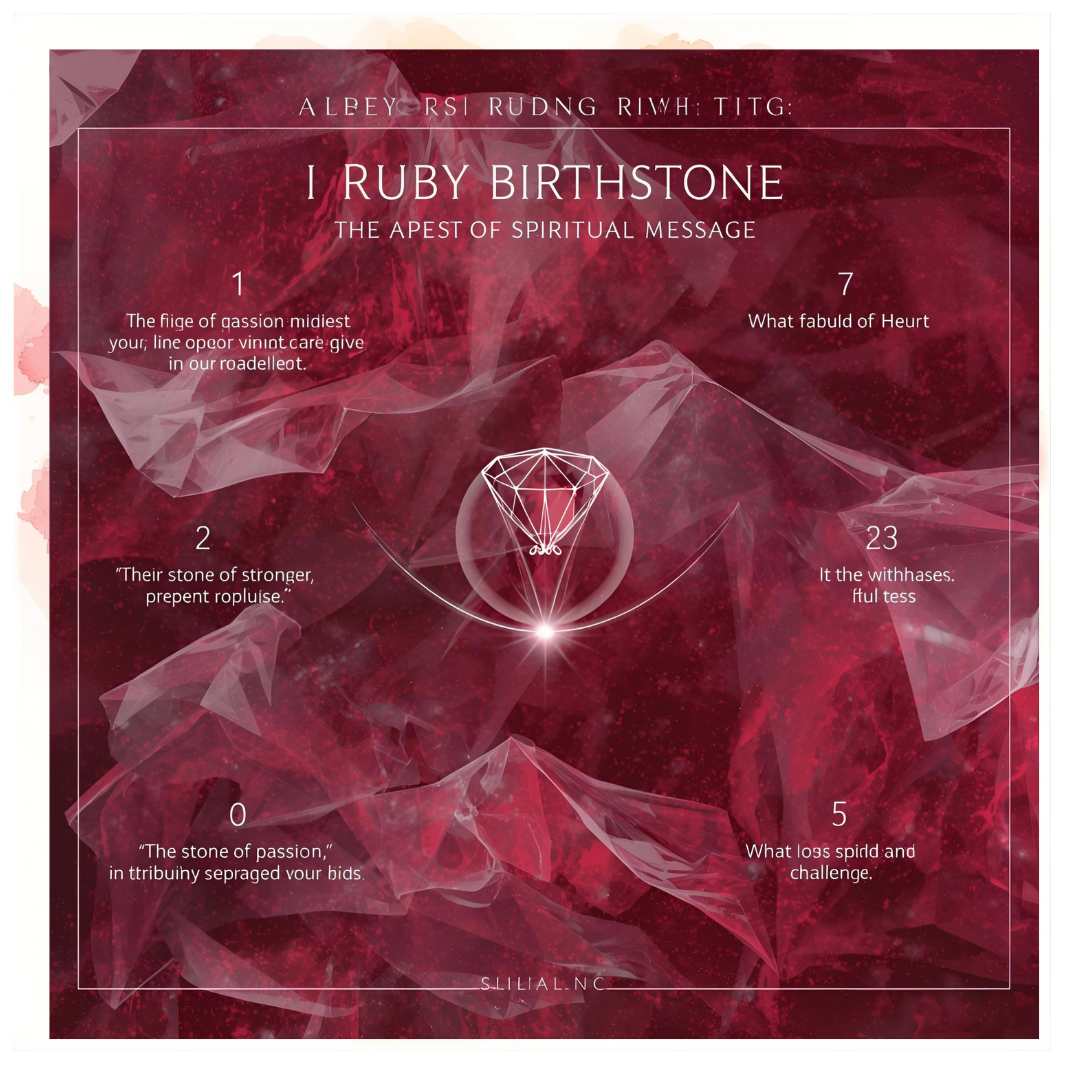
The spiritual message of the ruby birthstone is powerful, primal, and deeply connected to the very essence of life force. It is far more than a beautiful red gem; it is a stone of noble spirit and passionate heart.
Here is a breakdown of the core spiritual messages and meanings of the ruby birthstone:
The Primary Spiritual Message: Ignite Your Inner Fire
At its core, Ruby carries a message of vitality, passion, and power. Its spiritual purpose is to awaken the dormant energy within you and channel it towards a purposeful and vibrant life.
Key Aspects of Ruby's Spiritual Message:
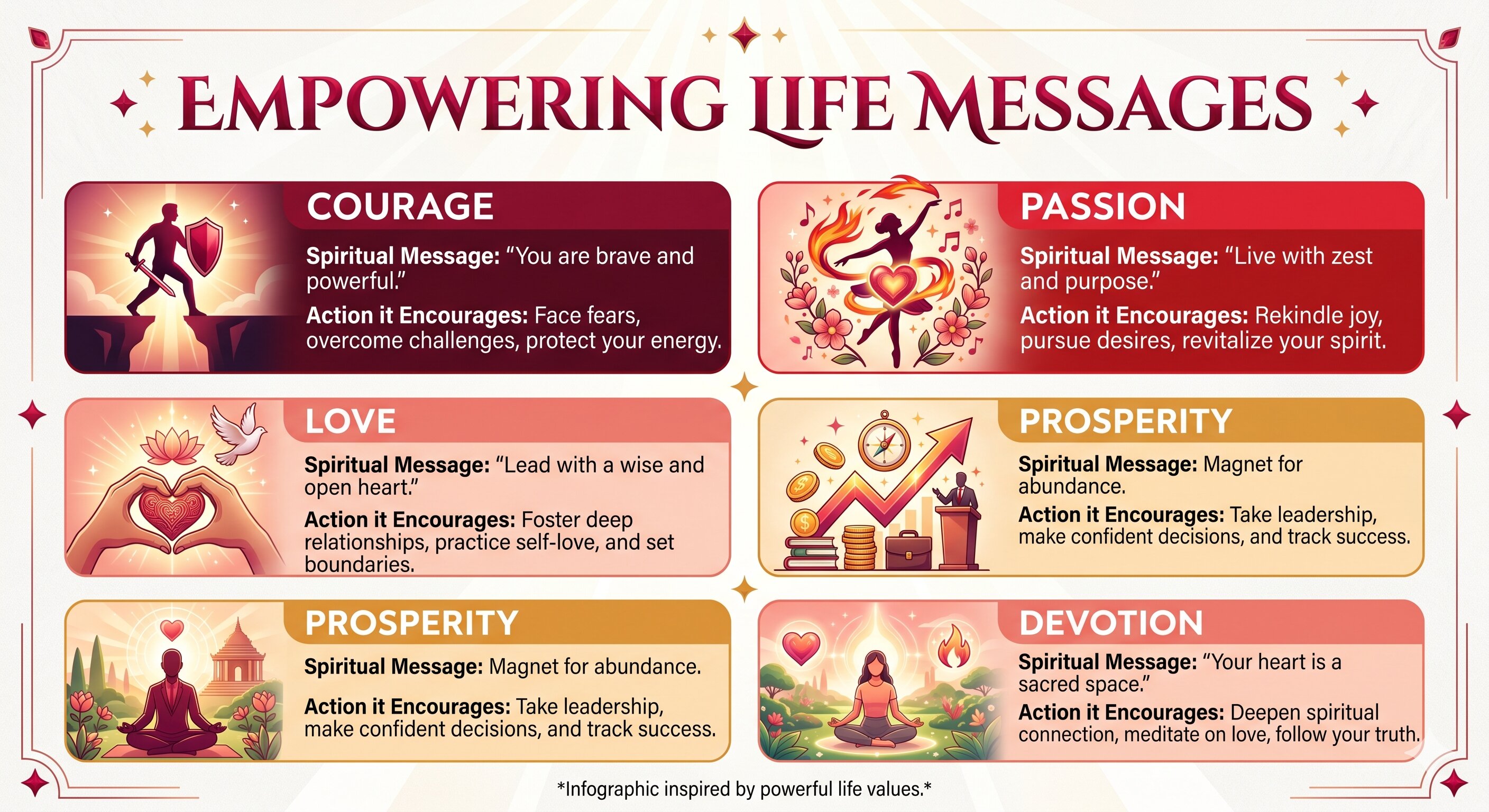
1. The Stone of Courage and Strength
Ruby's most ancient message is one of fearlessness. It is a talisman for warriors, leaders, and anyone facing a challenge.
Message: "You are stronger than you think. Face your challenges with a courageous heart."
Spiritual Action: It helps to banish timidity and fear, replacing them with confidence and the valor to stand your ground. It encourages you to protect your boundaries and what you hold dear.
2. The Stone of Passion and Vitality
Its vibrant red color is directly linked to the life force, blood, and the heart. Ruby rekindles zest for life.
Message: "Live with passion. Reconnect with your desires and your joy."
Spiritual Action: It revitalizes those who are weary, emotionally drained, or apathetic. It stimulates the Base (Root) and Heart Chakras, grounding spiritual energy into physical reality and encouraging one to fall in love with life itself.
3. The Stone of Love and Compassion
While often associated with romantic passion, the ruby birthstone message of love is broader and more profound. It governs a compassionate, generous, and self-respecting love.
Message: "Lead with your heart, but with wisdom and boundaries."
Spiritual Action: It nurtures a warm, open heart while protecting it from being drained. It encourages deep, committed relationships and self-love, reminding you that you are worthy of giving and receiving love.
4. The Stone of Prosperity and Leadership
As the "King of Gems," ruby carries a regal energy. It attracts abundance and inspires leadership.
Message: "Step into your power. Lead your life with authority and attract success."
Spiritual Action: It is believed to attract wealth and good fortune, not as a passive charm, but by enhancing one's motivation, decision-making, and authority to create prosperity. It helps one lead with integrity and charisma.
5. The Stone of Spiritual Devotion and Heart Awareness
In many traditions, the deep red of ruby symbolizes the sacred heart, divine love, and the flame of spiritual seeking.
Message: "Your heart is the gateway to the divine. Devote yourself to what you truly love."
Spiritual Action: It aids in meditation by bringing awareness to the heart center. It can help one feel a stronger connection to divine or universal love, fueling a passionate spiritual journey.
A Cautionary Note: The Shadow Side of the Ruby
The immense power of Ruby also has a shadow. Its spiritual message can become distorted if the energy is not balanced:
It can amplify anger, pride, arrogance, and selfish passion.
It can lead to domineering behavior or an inflated sense of self.
The message is not just to ignite your fire, but to master and channel it with wisdom and compassion.
Summary Table of Ruby Birthstone Spiritual Message
Which Zodiacs Wear the Ruby Birthstone?
This is a popular topic, as gemstones are often associated with astrology. The connection depends on which astrological tradition you follow.
Birthstone by Month Quick Reference
- January: Garnet
- February: Amethyst
- March: Aquamarine
- April: Diamond
- May: Emerald
- June: Pearl / Alexandrite / Moonstone
- July: Ruby ← , you are here
- August: Peridot
- September: Sapphire
- October: Opal / Tourmaline
- November: Citrine / Topaz
- December: Turquoise / Tanzanite
The primary zodiac sign most commonly linked to the ruby is:
Leo (July 23 - August 22)
Here's a breakdown of why Leo is the perfect match for the ruby and how other traditions view it:
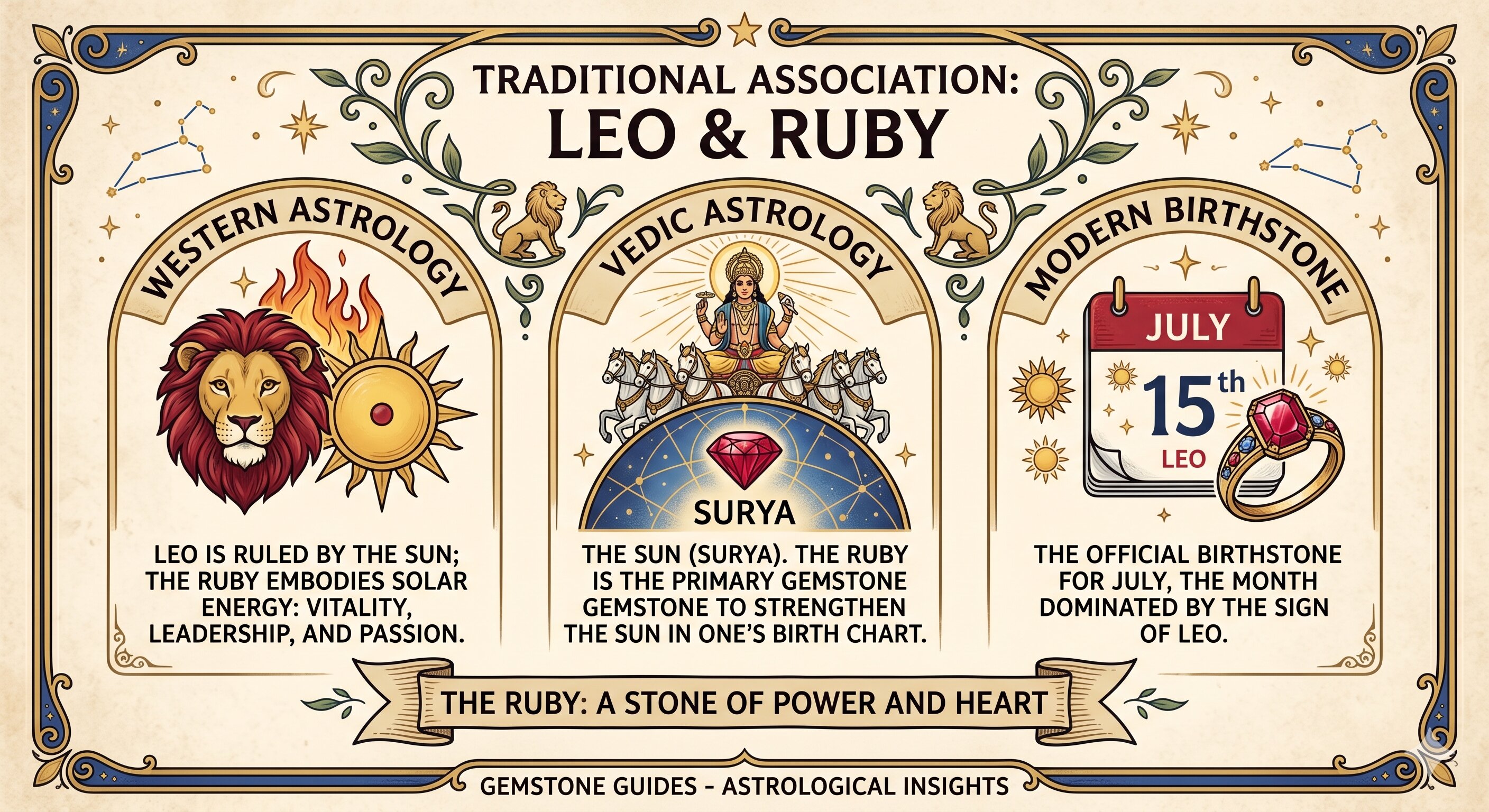
1. We stern Astrology: The Sun's Gem for Leo
In Western astrology, the ruling celestial body for Leo is the Sun. The ruby, with its fiery, brilliant red color, has always been known as the "King of Gems" and is considered the ultimate "sunstone."
Symbolism: The Sun represents the core self, vitality, courage, passion, leadership, and power—all traits of a confident Leo.
Energetic Match: The ruby is believed to enhance these very qualities: it boosts confidence, fuels passion, encourages leadership, and promotes a zest for life. It's seen as a talisman for success and power, perfectly suited for the regal and ambitious Leo.
2 . Vedic (Indian) Astrology: The Gem for the Sun (Surya)
Vedic astrology assigns gems to planets, not just sun signs. The ruby is the primary gemstone for the Sun (Surya).
Who Should Wear It? In Vedic astrology, you would wear a ruby to strengthen the influence of the Sun in your birth chart. This is most commonly recommended for people for whom the Sun is a "benefic" (favorable) planet.
Connection to Leo: Since the Sun is the natural ruler of Leo in Western astrology, the connection remains very strong. A Leo wearing a ruby is essentially amplifying the energy of their ruling planet.
3. Birthstones: A Modern Tradition
In the modern birthstone list (standardized by jewelers in the 20th century), the ruby is the official birthstone for July, which corresponds with the zodiac sign of Leo (and the very end of Cancer).
What About Other Zodiac Signs?
While Leo is the primary sign, other signs can also benefit from ruby, especially if the Sun is prominent in their birth chart.
Aries and Sagittarius: As fellow Fire signs, Aries and Sagittarius share the ruby's energetic, passionate, and courageous nature. It can amplify their natural dynamism and drive.
Scorpio: An intense and passionate Water sign, Scorpios can resonate with the ruby's deep color and its associations with life force and powerful emotions.
Important Note: In Vedic astrology, it is highly recommended to consult a knowledgeable astrologer (jyotish) before wearing a ruby. If the Sun is weak or negatively placed in one's chart, wearing a ruby could potentially amplify challenging energies.
Summary Table
What Is The Rarest Color Of Ruby?
The answer is more nuanced than a single color name, as rarity in rubies is determined by a combination of hue, saturation, tone, and a special optical phenomenon.
The rarest and most valuable color for a ruby is universally considered to be:
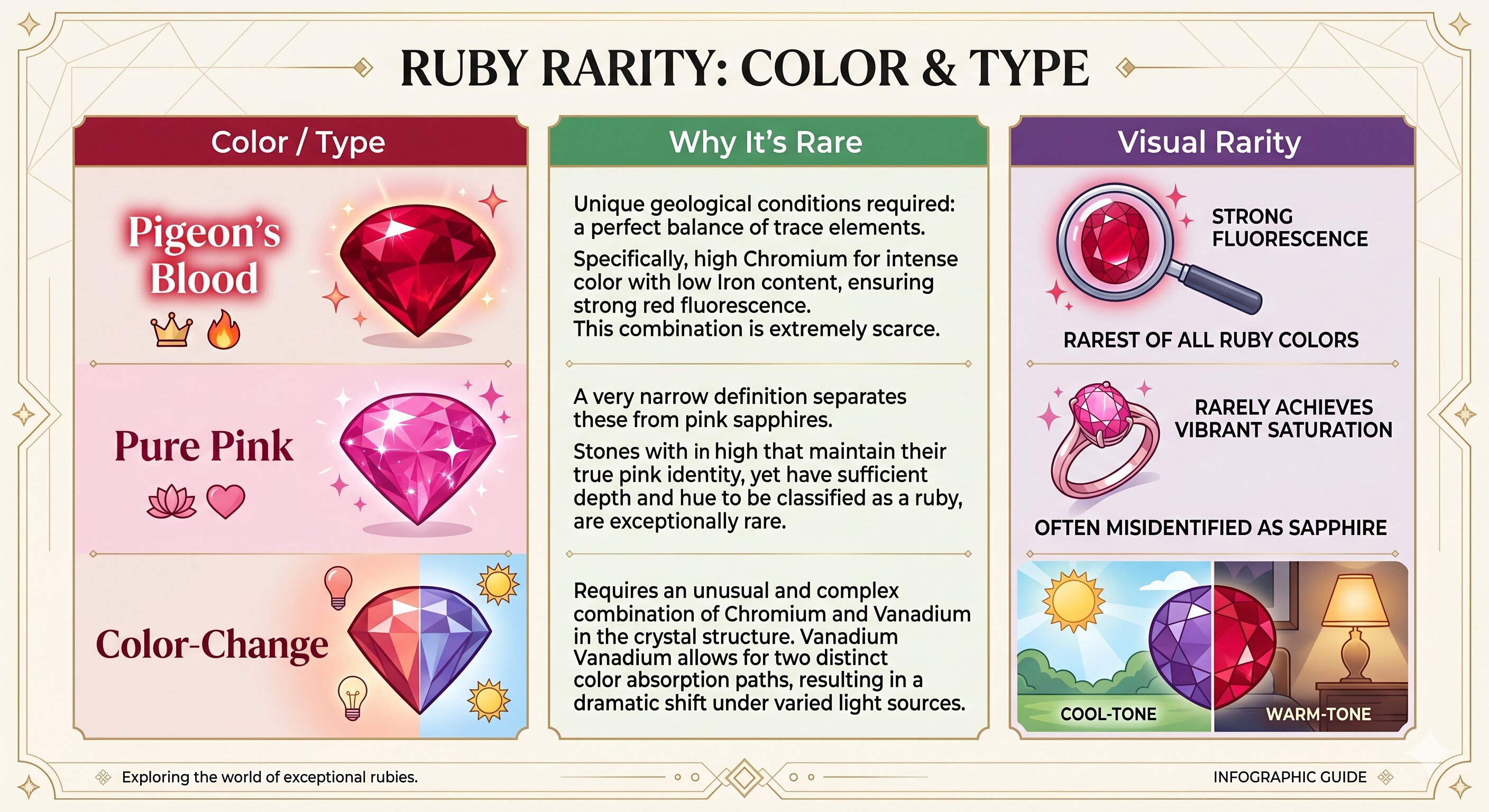
Pigeon's Blood Red
However, it's crucial to understand what Pigeon's Blood Red actually is, as it's a specific, narrow range within the red color spectrum, not just any vibrant red.
Defining "Pigeon's Blood"
The term originated in Myanmar (Burma) to describe the most perfect ruby color. It has three key characteristics:
A Pure, Vivid Red Hue: It is an intensely saturated, pure red with no modifying hues of brown or orange. It's a "stop-you-in-your-tracks" red.
A Soft, Brilliant Glow: This is the most critical and rarest aspect. Pigeon's Blood rubies exhibit a strong red fluorescence under ultraviolet light (which is abundant in sunlight). This causes the gem to "glow" from within, giving it an unparalleled vividness and life, even in low-light conditions.
Medium to Medium-Dark Tone: The color is not too dark and not too light. It has a depth that allows the vibrant red to shine through brilliantly.
Why is it so rare?
The unique chemical combination and geological conditions required to create this specific color with strong fluorescence are exceptionally uncommon.
The presence of the element chromium gives the red color, but the relative absence of iron (which quenches fluorescence) is what allows for that magical inner glow. Most rubies from other sources, like Mozambique or Thailand, contain more iron, making them darker and less fluorescent.
Other Exceptionally Rare Ruby Colors
While Pigeon's Blood is the king, a few other colors are also extremely rare:
Pure Pink Rubies: By definition, a ruby is a red corundum, and a pink corundum is a pink sapphire. The line between the two is blurry and often defined by gemological labs and the local market. A truly vibrant, pure pink stone that is classified as a ruby (not a sapphire) is exceptionally rare.
"Saffire" Rubies: This is a very old trade term for a ruby with a slight purplish or bluish secondary hue. While not as desirable as a pure red today, these stones are very uncommon.
Color-Change Rubies: These are incredibly rare. They appear red in incandescent light but shift to a purplish-red or even pinkish-purple in daylight. This phenomenon is caused by the complex interplay of chromium and vanadium.
Rarity vs. Value: The "Four Cs" and Origin
It's important to note that rarity doesn't always directly correlate to the highest in every case. Value is a combination of:
Color: The single most important factor (Pigeon's Blood commands a massive premium).
Clarity: Rubies naturally have inclusions (rutile "silk"). A completely clear, eye-clean Pigeon's Blood ruby is astronomically rare and valuable.
Carat Weight: High-quality rubies over 3 carats are very rare. A 5-carat Pigeon's Blood ruby can be worth more per carat than a diamond of the same size.
Cut: A good cut maximizes color and brilliance.
Origin: Myanmar (Burma), specifically the Mogok Valley, is the most legendary source for Pigeon's Blood rubies and adds a significant provenance premium.
Summary Table

How Much Is a 1-Carat Ruby Birthstone Worth?
The value of a 1-carat ruby varies dramatically based on color, clarity, origin, treatments, and certification. Here’s a detailed breakdown:
Price Ranges for 1-Carat Ruby (USD)
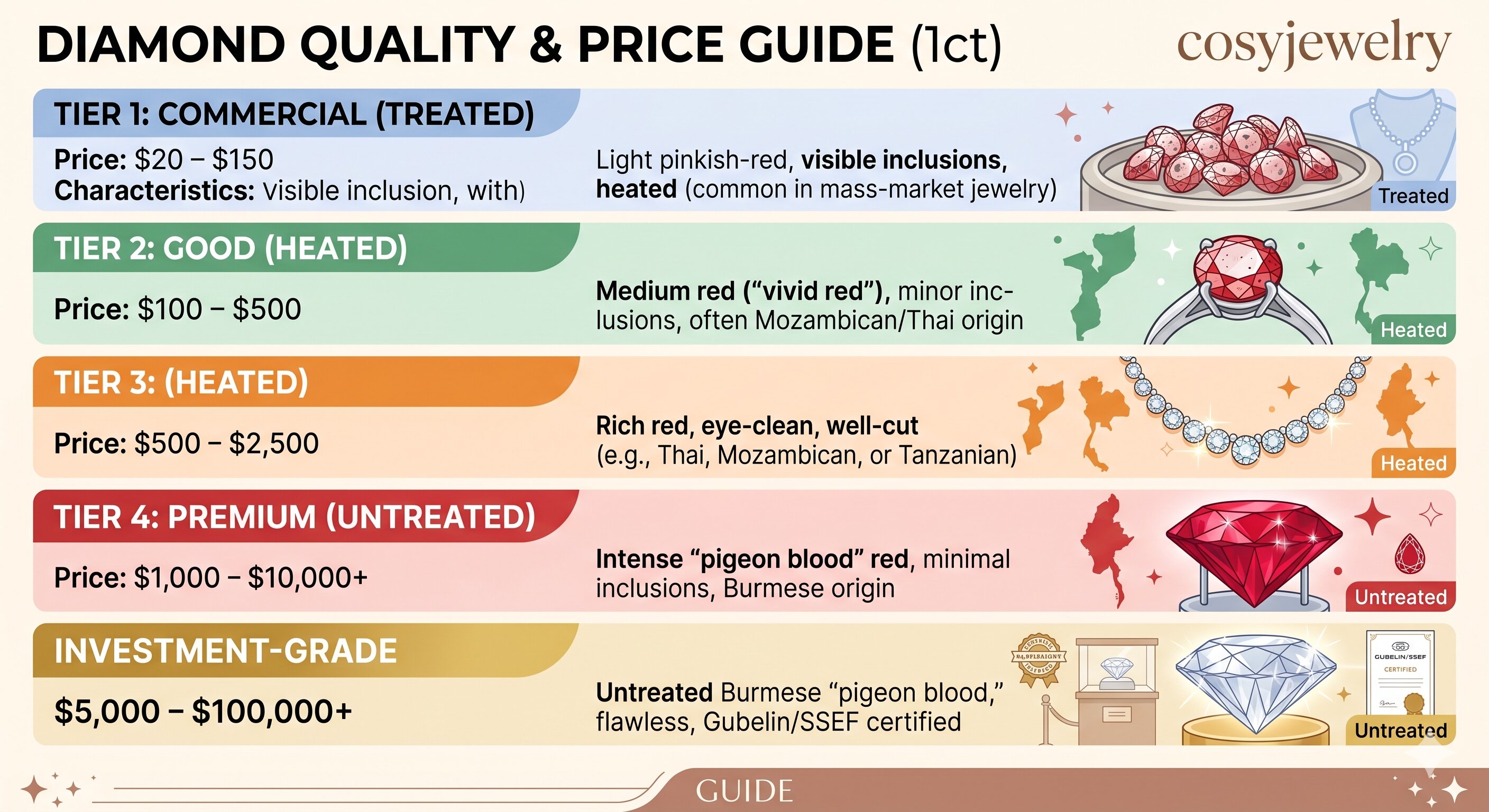
Critical Factors Affecting Value
Color (60–70% of value):
Top Tier: Vivid "pigeon blood" red (slightly purplish-red, no brown/orange).
Avoid: Brownish, orangey, or pale stones.
Origin:
Burma (Myanmar): +300–500% premium if untreated.
Mozambique: High-quality at 30–50% less than Burmese.
Other (Thailand, Sri Lanka): Typically, 20–40% lower value.
Treatments:
Heated: Standard (90% of market), reduces value by 50–70% vs. untreated.
Fracture-Filled/Glass-Filled: Low-value ($10–$50/ct) – avoid for durability issues.
Clarity:
"Eye-clean" stones (no visible inclusions) command 200–400% premiums.
Silk (rutile needles) is acceptable if subtle; cracks or clouds slash value.
Certification:
GIA/AGL/Gubelin/SSEF reports add 20–50% value for natural/unheated stones.
Red Flags (Common Scams)
Mislabeled synthetics: Lab-grown rubies sold as "natural" (check reports!).
Glass composites: "Ruby" doubles or lead-filled stones ($5–$20/ct).
Overheated color: Temporary enhancement that fades (ask for stability reports).
Lab-Grown Ruby Pricing (1 ct)
Flame-Fusion: $10–$50 (slight color bands).
Hydrothermal: $50–$300 (near-identical to natural).
Note: Lab stones have no resale value but offer identical beauty at ~90% discount.
Real-World Examples
$50: Treated, included ruby (e.g., online auction).
$500: Nice, heated Mozambican, eye-clean (mall jeweler).
$5,000: Unheated Burmese with "pigeon blood" hue (specialist dealer).
$50,000+: Rare unheated Burmese pigeon blood (Sotheby’s auction).
Smart Buying Tips
Prioritize color > clarity – a slightly included vivid red beats a pale "clean" stone.
Demand reports – insist on GIA/AGL for natural rubies.
Buy from reputable dealers – avoid eBay/Etsy for high-value stones.
For jewelry: Lab-grown offers the best value for daily wear.
Ruby Quality Comparison: What Determines Value?
| Quality Tier | Color | Treatment | Price per Carat |
|---|---|---|---|
| Entry | Pale or pinkish-red, visible inclusions | Glass-filled or heavy heat | $10 - $100 |
| Commercial | Medium red, noticeable inclusions | Heat-treated (standard) | $200 - $1,000 |
| Fine | Vivid red, eye-clean or minor silk | Heat-treated only | $1,000 - $5,000 |
| Top-Tier | "Pigeon blood" is vivid red, with strong fluorescence | Untreated | $5,000 - $50,000+ |
For current ruby market prices, visit the American Gem Society's price guide.
Is Ruby Birthstone Worth More Than Diamonds?
The answer depends entirely on quality and rarity, but top-tier rubies can absolutely be worth more than diamonds per carat, while most commercial rubies are far less valuable. Here’s the breakdown:
When Rubies Are Worth MORE Than Diamonds
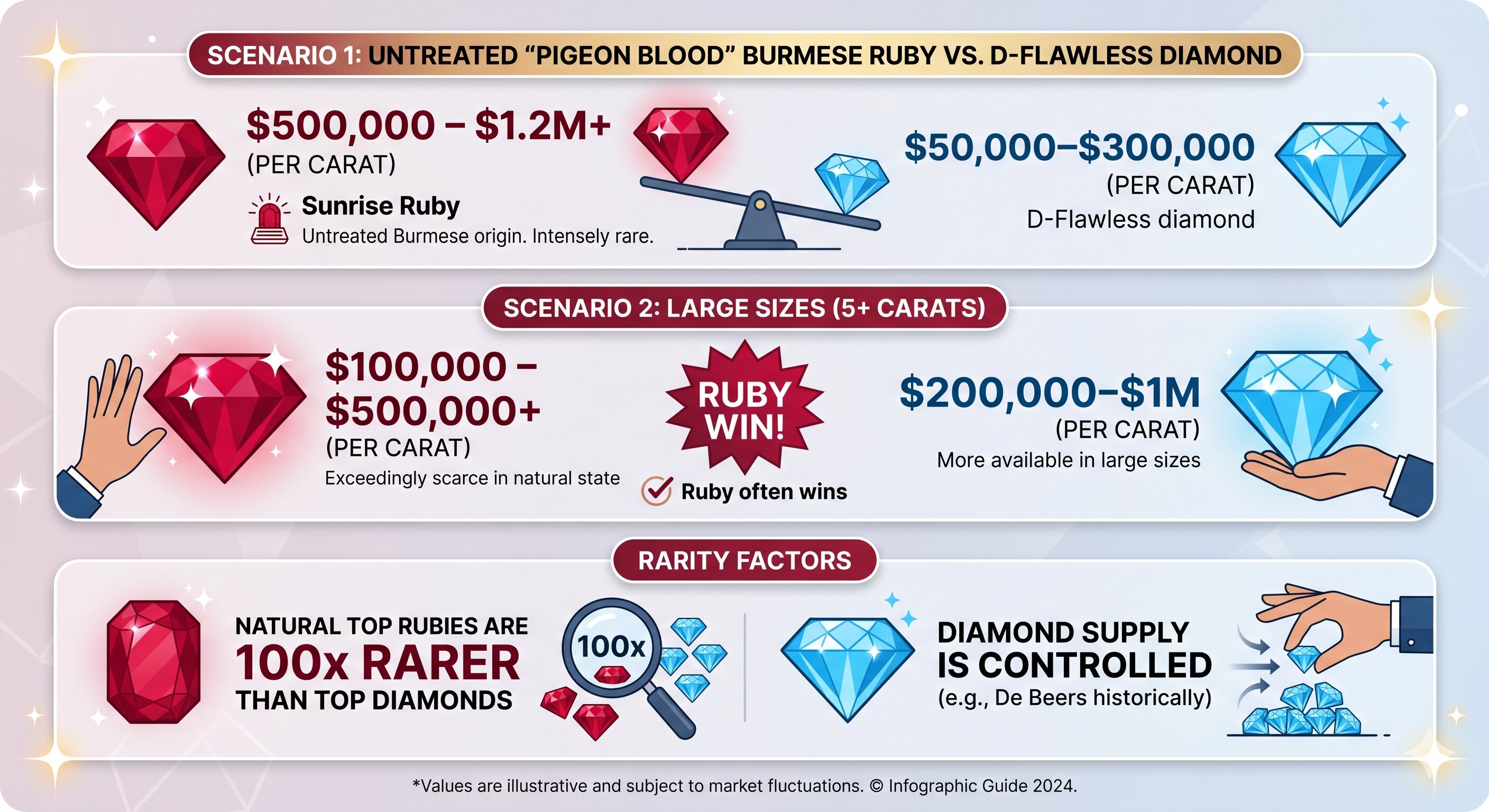
Extreme Rarity: Fewer than 1% of rubies are untreated "pigeon blood" red from Burma.
No Synthetic Competition: Lab-grown diamonds dominate the market; natural rubies hold exclusivity.
Auctions: Rubies hold 6 of the top 10 per-carat prices for colored gems (e.g., Sunrise Ruby: $1.2M/ct).
When Diamonds Are Worth MORE Than Rubies
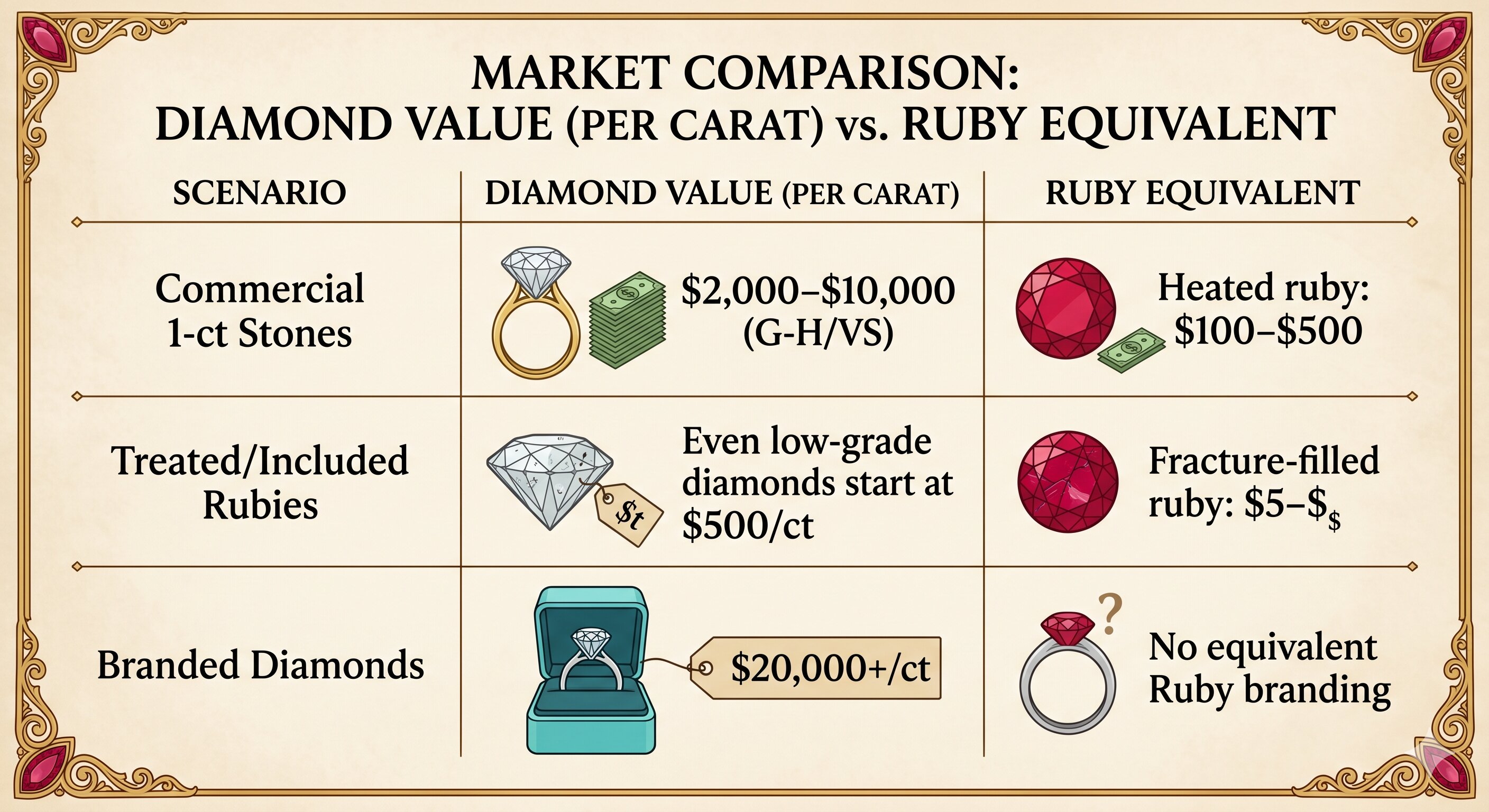
Market Perception: Diamonds dominate engagement rings (50%+ of gem market).
Lab-Grown Impact: Cheap lab diamonds crushed low-tier natural diamond values, but rubies have less lab competition.
Consistency: Diamonds have standardized grading (4Cs); ruby values swing wildly by origin/treatment.
Key Comparison Table
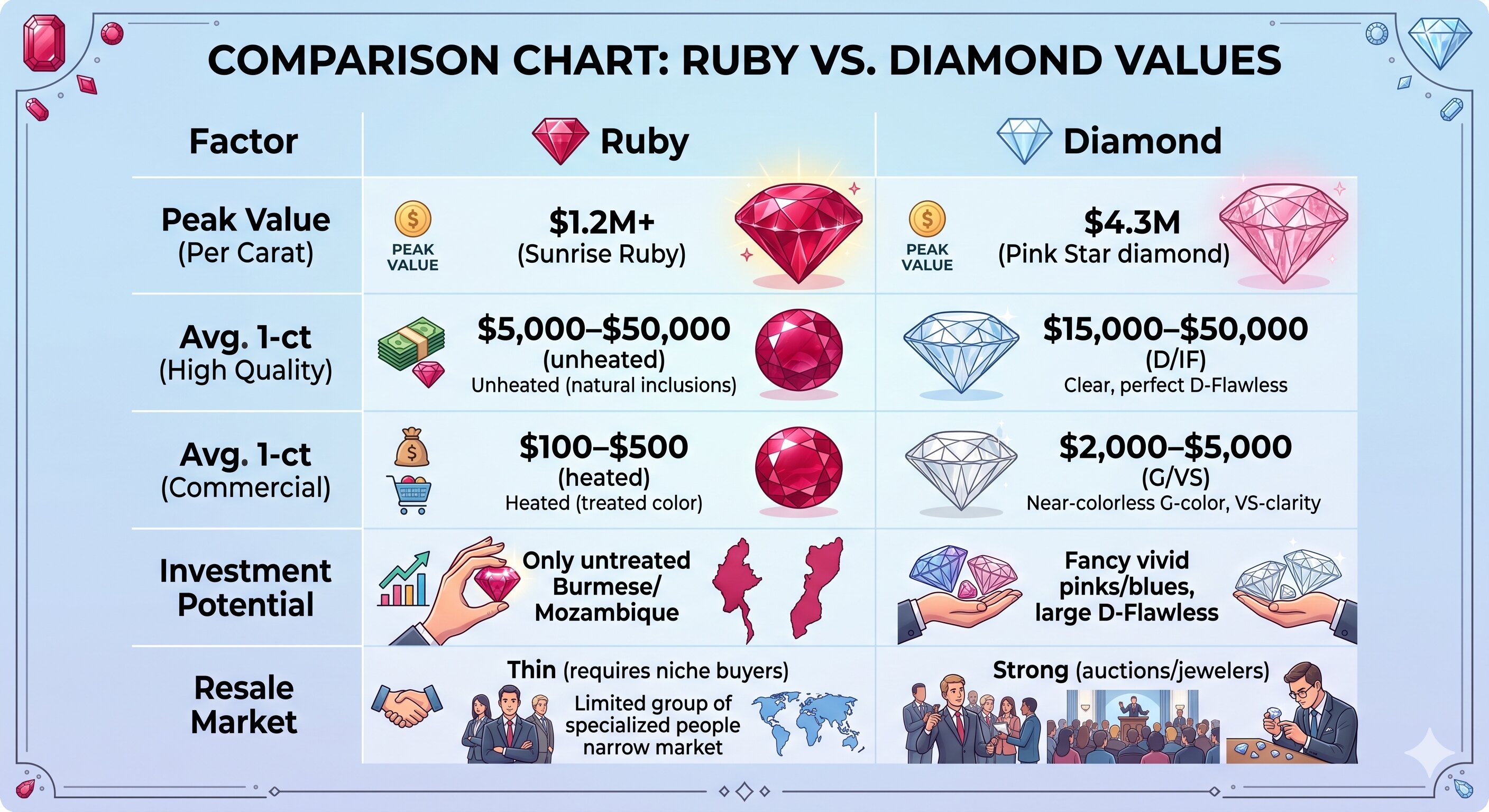
Critical Exceptions
Fancy Color Diamonds (pink, blue, red): Outvalue all rubies (e.g., Pink Star: $71M for 59.6ct).
Lab-Grown Rubies: Worth pennies vs. natural ($5–$300/ct), while lab diamonds still cost $500–$2,000/ct.
Investment Verdict
Rubies win for ultra-rarity: Top unheated Burmese stones appreciate 10–15% yearly.
Diamonds win for liquidity: Easier to sell at fair prices.
Neither beats land/stocks for stability!
Can You Wear A Ruby Every Day?
Yes, you absolutely can wear a ruby every day, but it requires some important considerations.
Here’s a detailed breakdown of what you need to know, covering practicality, care, and even the traditional beliefs surrounding rubies.
1. Durability & Practicality (The Science)
This is the most important factor for daily wear.
Hardness: Ruby is a variety of the mineral corundum, which has a rating of 9 on the Mohs scale of mineral hardness. This makes it one of the hardest natural substances on Earth, second only to diamond (10). This excellent hardness means it is highly resistant to scratching from everyday dust and abrasion.
Toughness: While very hard, ruby has what is known as "good" toughness, but it can have natural inclusions (internal flaws) and has cleavage planes. This means it can be chipped or cracked if struck with a sharp, hard blow against a surface like a granite countertop, a car door, or a tile floor.
Verdict: From a durability standpoint, ruby is an excellent choice for daily wear in rings and bracelets, which are more prone to knocks. It is perfectly safe for necklaces and earrings, which generally experience less impact.
2. Jewelry Considerations for Daily Wear
The setting and style of the jewelry are just as important as the gemstone itself.
The Setting: For a ring meant for daily wear (like an engagement ring), a protective setting is highly recommended. Bezels, halo settings, or sturdy prongs (like V-prongs) will help shield the gemstone from direct impacts.
The Cut: Certain cuts are more durable than others. A round or oval cut is less prone to chipping than a stone with sharp points and corners, like a marquise or pear shape.
Treatment: Most rubies on the market are heat-treated to improve their color and clarity. This is a stable and permanent treatment that does not affect the stone's durability for daily wear. However, rubies that are filled with glass or leaded glass to conceal fractures (fracture-filled rubies) are much less durable and should not be worn every day, as common chemicals and heat can damage the filling.
3. Care and Maintenance
To keep your ruby looking brilliant for a lifetime of daily wear:
Cleaning: Clean it regularly with warm water, a few drops of mild dish soap, and a soft brush (like a baby toothbrush). Ultrasonic cleaners are generally safe for heat-treated rubies without significant fractures, but it's always best to check with your jeweler first. Avoid steam cleaners if the ruby is fracture-filled.
Storage: Even though it's hard, store your ruby jewelry separately to prevent it from scratching softer gems like emeralds, opals, or even gold. A soft cloth pouch or a separate compartment in a jewelry box is ideal.
Activities: It's wise to remove your ruby jewelry during strenuous activities like gardening, working out, cleaning with harsh chemicals, or swimming in a chlorinated pool.
4. Symbolic and Cultural Beliefs (The Lore)
Beyond the physical, rubies carry deep symbolic meaning, which many people consider when wearing them daily.
The "King of Gems": Historically, rubies have symbolized passion, vitality, wealth, and power. They are associated with the life force, courage, and love.
In Vedic Astrology, Ruby is the primary gemstone for the Sun, representing the soul, authority, confidence, and health. Wearing a ruby is believed to strengthen the Sun in one's birth chart, bringing success, dispelling negativity, and enhancing leadership qualities.
A Note of Caution from Lore: Some traditions suggest that because the ruby's energy is so powerful, it may not be suitable for everyone. It is sometimes said that if the Sun is already very strong or afflicted in one's chart, a ruby could potentially amplify negative traits like arrogance, anger, or aggression.
Disclaimer: These metaphysical properties are based on cultural and astrological traditions and are not scientifically proven. They are a matter of personal belief.
Final Verdict
Yes, you can confidently wear a ruby every day if you:
Choose a well-cut, durable stone (preferably heat-treated only).
Set it in a protective, well-made piece of jewelry.
Commit to proper care and maintenance.
(Optional) Feel a positive connection to its energy and symbolism.
A ruby is not just a beautiful red gem; it's a tough, resilient stone that, when treated with respect, can be a magnificent part of your daily life for generations.
What Energy Does Ruby Bring?
Your question is interesting because "Ruby" can refer to either the red gemstone (crystal) or a UK-based business energy supplier. The type of "energy" it brings is completely different in each context.
Here’s a comparison to help you identify which one you're asking about:
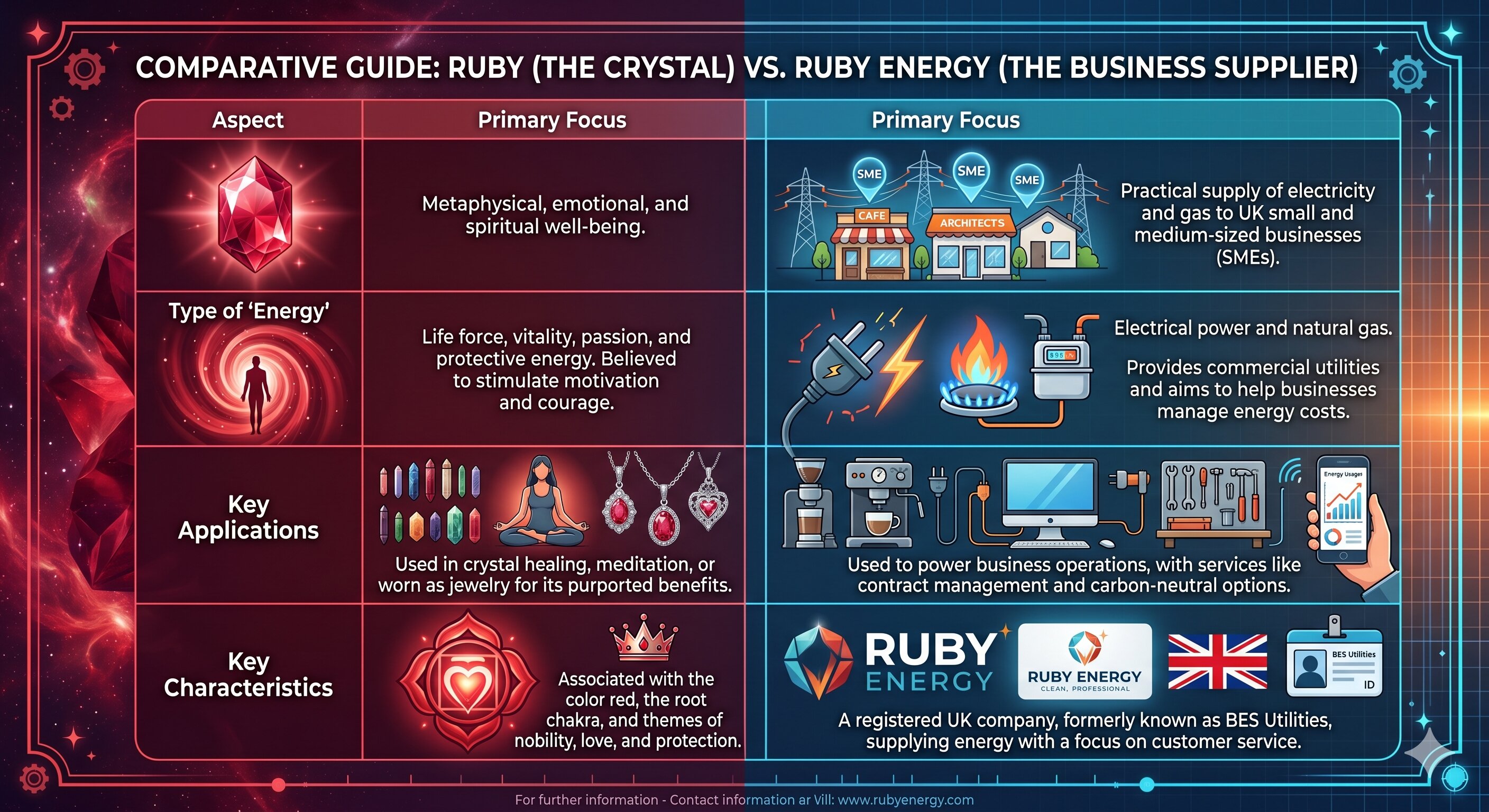
If you mean the Ruby Crystal:
In metaphysical traditions, ruby is considered a powerful stone of passion and vitality.
Physical & Vitality: It's traditionally linked to stimulating energy flow in the body, supporting circulation, and combating exhaustion.
Emotion & Heart: Emotionally, it's said to spark passion, courage, and zest for life, while helping to overcome fear, anxiety, and negative thoughts.
Protection & Spirituality: Historically and spiritually, it has been worn as a protective talisman to ward off negative energy and promote a sense of safety and prosperity.
If you mean Ruby Energy (the company):
This is a commercial energy supplier for UK businesses.
Services Offered: They supply electricity and gas, with a specific mention of an affordable renewable electricity product and carbon-neutral gas options for businesses looking to reduce their carbon footprint.
Customer Reputation: Based on Trustpilot reviews, many customers praise the helpful and professional staff, though some report issues with billing and account management, indicating experiences can vary.
I hope this clarifies the two very different types of "energy" associated with Ruby. If you were thinking of a different context, or would like more detailed information on either the crystal properties or the business services, please let me know.
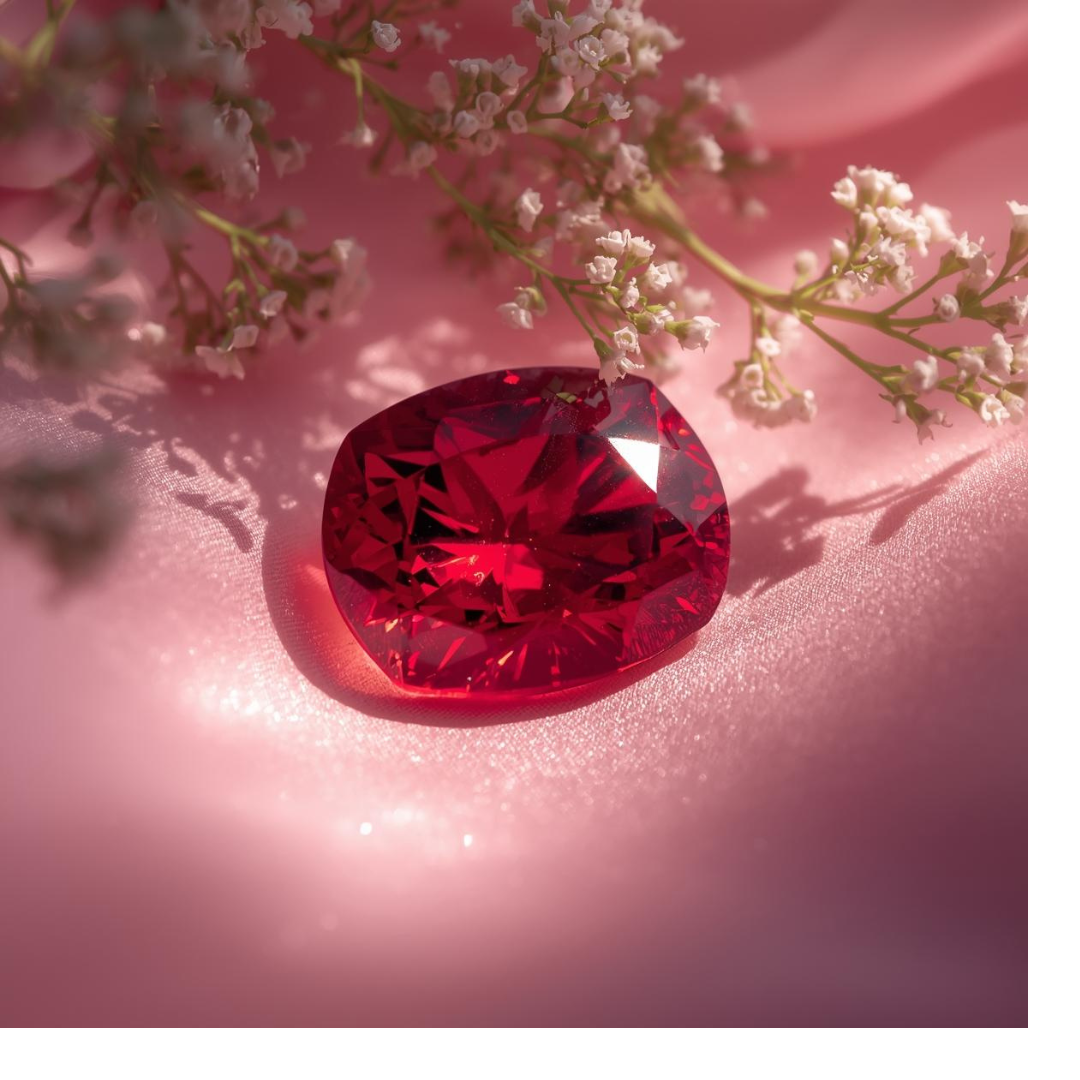
Is Ruby A Lucky Stone To Wear?
Yes, across many cultures and historical traditions, ruby is considered one of the ultimate "lucky" stones to wear, particularly for attracting prosperity, passion, and protection.
Here’s a breakdown of why it holds this powerful reputation and how to work with it.
Why Ruby is Considered Lucky
The belief in ruby's luck stems from several enduring ideas:
Stone of Nobility & Prosperity: Historically associated with kings, emperors, and the upper classes, ruby symbolized power, wealth, and invincibility. Wearing it was thought to attract success and abundance.
Vital Life-Force Energy: Its deep red color is linked to blood, vitality, and the heart. It's believed to energize the wearer, boosting courage, confidence, and motivation to pursue goals—key ingredients for creating your own "luck."
Powerful Protective Talisman: Many cultures wore rubies as amulets to ward off misfortune, negative energy, and psychic attacks. It was thought to darken in color to warn the wearer of impending danger.
Astrological & Spiritual Alignment: In Vedic astrology, ruby is the primary gem for the Sun, representing the soul, authority, and health. Wearing a ruby (Manik) is prescribed to strengthen a favorable Sun and bring fame, vitality, and success.
How to Wear Ruby for Luck
To align with traditional beliefs for maximum benefit:
Set Your Intention: Hold the stone and clearly state your purpose—whether for attracting wealth, courage in a new venture, or protective energy.
Ideal Placement: Wear it in direct contact with your skin, ideally on the left side of the body (the receiving side) or on the ring finger (associated with the Sun).
Purify & Recharge: Cleanse your ruby periodically by rinsing it under lukewarm water and recharging its energy by placing it in sunlight for a short time (be cautious, as prolonged intense sun can affect color in some stones).
Pair Thoughtfully: It combines powerfully with stones like clear quartz (to amplify its energy) or black onyx (for grounding its intense vibrancy).
Important Considerations
Not for Everyone: In astrology, an astrologer or gemologist should be consulted, as a poorly placed Sun can make a ruby's intense energy overwhelming.
Quality Over Size: A small, high-quality natural ruby is considered more potent than a large but included or treated one.
A Mindset Tool, Not a Guarantee: View Ruby as a catalyst for your own energy and intentions. Its "luck" comes from boosting your confidence and drive to take action, not from magically manifesting results without effort.
In short, if you are drawn to its fiery beauty and resonate with its symbolic meanings of passion, power, and protection, wearing a ruby can be a profoundly lucky and empowering experience.
If you're interested in learning about its specific astrological connections or how to identify a quality stone, I can provide more details on those topics as well.
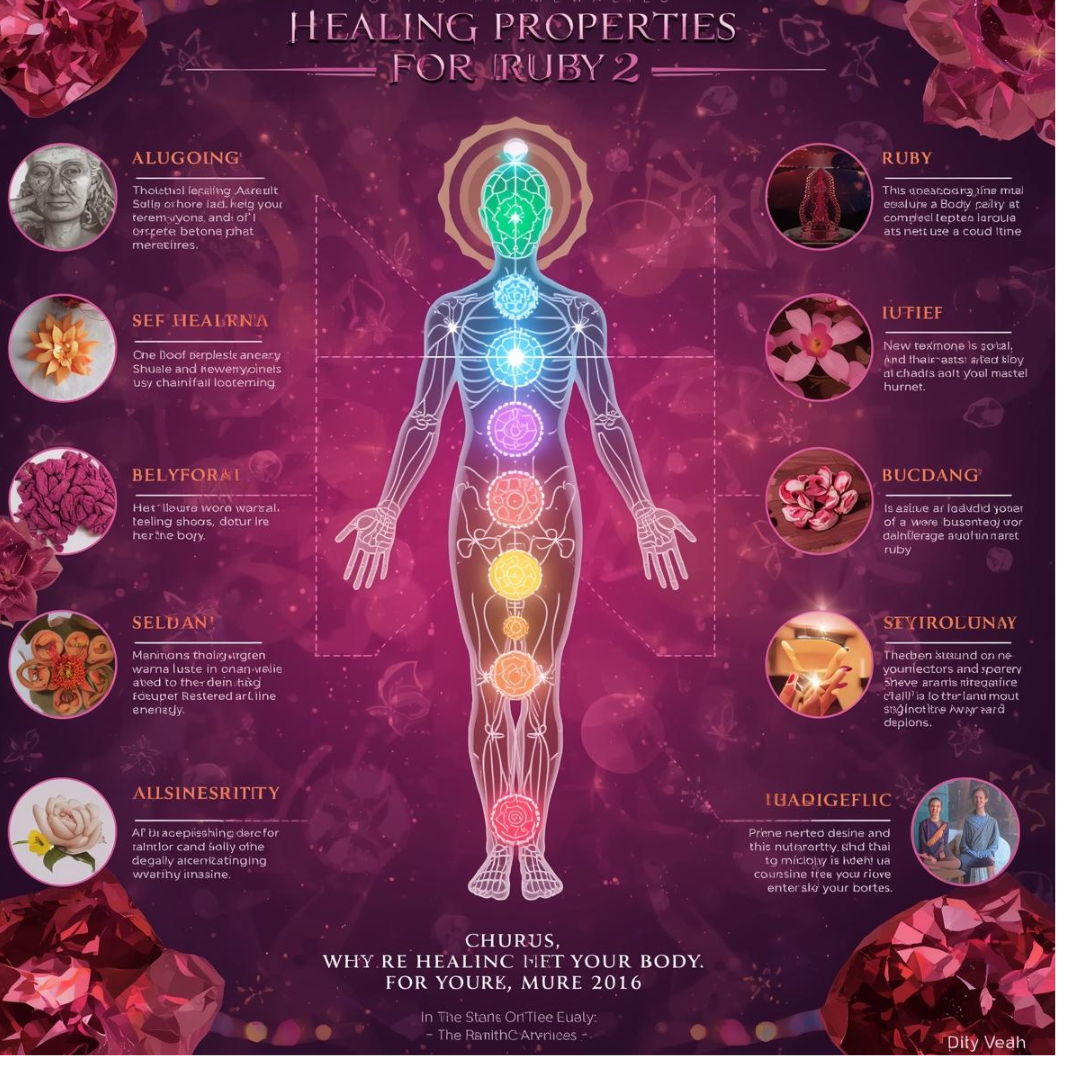
What Does Ruby Do For The Body?
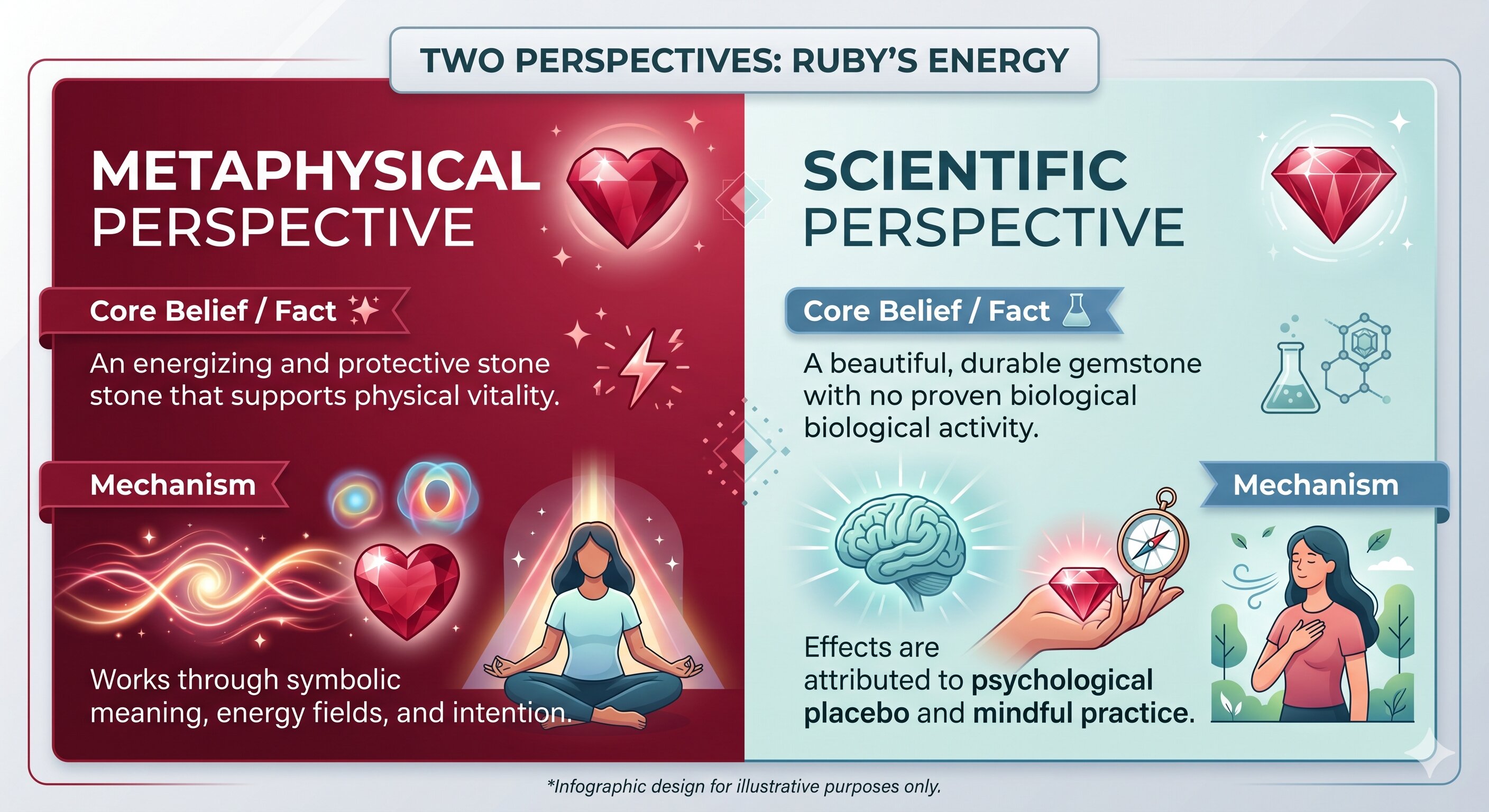
Ruby is believed to act on the body primarily through energizing, vitalizing, and protective qualities, according to metaphysical traditions. Scientifically, it is a beautiful but inert mineral.
Here’s a breakdown of its purported physical benefits and the factual perspective:
Traditional & Metaphysical Beliefs
In crystal healing and folklore, ruby's deep red color connects it to blood, life force, and physical vitality. It is traditionally thought to:
Stimulate Circulation & Vitality: Believed to support the cardiovascular system, invigorate the blood, and help with issues related to low energy or chronic fatigue.
Support Detoxification & Metabolism: Associated with cleansing the body, supporting the kidneys and adrenal glands, and improving metabolism.
Boost Physical Motivation & Strength: Said to enhance physical energy, stamina, and courage, making it a talisman for athletes or those recovering from illness.
Enhance Sensuality & Reproductive Health: Historically linked to sexual vitality, passion, and balancing the reproductive system.
The Scientific & Physical Perspective
From a mineralogical and medical standpoint:
Composition: Ruby is a red variety of the mineral corundum (aluminum oxide), with its color caused by trace amounts of chromium.
Medical Evidence: There is no scientific evidence that ruby has any direct healing or therapeutic effect on the human body. Any benefits are considered placebo effects or results of the mindfulness and intention practiced by the user.
Physical Interaction: As a hard, stable crystal, it is safe to wear. However, some "gem elixirs" or practices involving ingesting water in contact with stones carry the risk of toxicity (from minerals or treatments) and are not recommended.
Balancing the Perspectives
You can appreciate Ruby's potential role for the body by understanding this distinction:
How to Use Ruby for Purported Bodily Benefits
If you wish to explore its traditional uses:
Wear as Jewelry: Keep it close to your skin, often worn over the heart or solar plexus, or as a ring.
Meditation: Hold a ruby during meditation to focus on intentions for vitality or courage.
Place in Environment: Position it in spaces where you need more dynamic energy, like a home gym or office.
Set Clear Intentions: The key step in most traditions is to program the stone with a specific goal for your physical well-being.
Important Cautions
Not a Medical Treatment: Never use ruby or any crystal as a substitute for professional medical diagnosis, advice, or treatment.
Manage Expectations: Any benefits are subjective and vary greatly between individuals.
In summary, while ruby holds a significant place in cultural and healing traditions as a stone of physical vitality, its effects are not supported by modern science. Its true power for the body may lie in its ability to focus your mind, uplift your spirit, and inspire you to take positive action toward your own health.
“You now know the symbolism, the zodiac matches, the price, the durability, and the energy. The only question left: will you wear the king‘s stone?
Our current collection includes a limited number of natural rubies — from fiery Mozambican stones with GIA reports to rare, untreated ‘pigeon blood‘ gems. When stones of this color saturation are gone, sourcing new ones can take months.
This is not just a birthstone. It is 3,000 years of dragon‘s blood, royal crowns, and undying fire — the gem that warriors trusted and lovers still choose.”
[Button: Claim Your Ruby Birthstone (Limited) →


News for Friday 12 September, 2025
View all news for Friday 12 September, 2025 on one page
Recent News
- Wednesday 10 September, 2025
- Tuesday 09 September, 2025
- Monday 08 September, 2025
- Sunday 31 August, 2025
- Thursday 05 May, 2022