

Garnet Birthstone Guide: Meaning, Colors, Price And How To Tell Ruby

Garnet birthstone: Is it a garnet or a ruby? Discover the complete guide to January's birthstone. Learn about rare green tsavorite, 1-carat prices, and whether it brings luck.
This guide will tell you everything you need to know about gemstones—their colors, their qualities, and their costs. But as you read, remember: the most valuable thing a stone can give you is a story. And that story is yours to write.
I bought this garnet ring for myself after reading about its meaning. Every time I look at it, I’m reminded of my own inner strength.” — Jessica, verified buyer
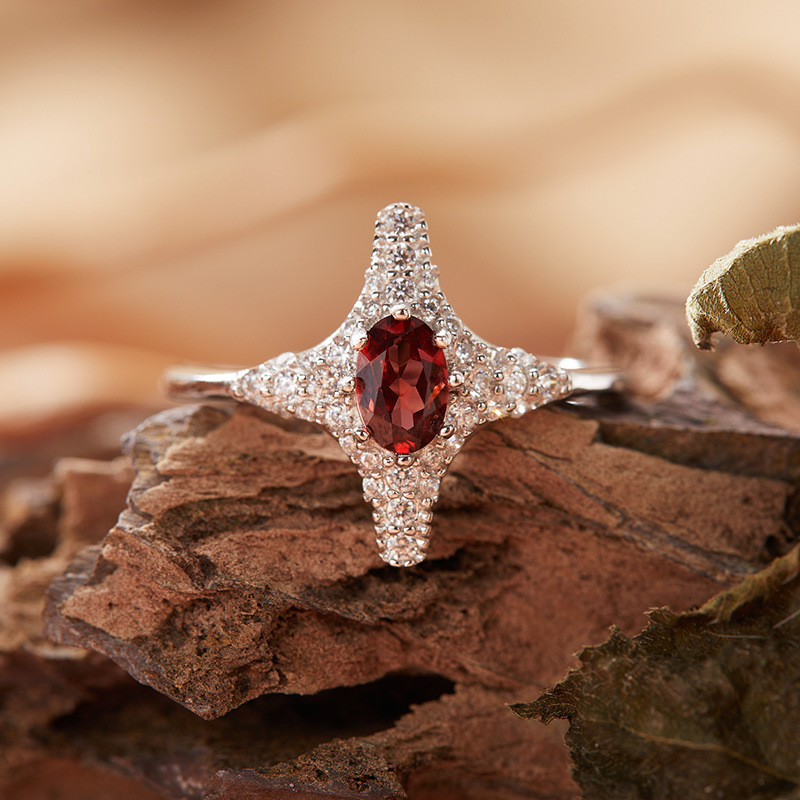
Explore Our Garnet Ring Collection
Table of Contents
- What Is The Garnet Birthstone?
- What Are Some Types Of Garnet Gemstones?
- Is Garnet A Lucky Stone?
- What Is The Rarest Color Of the Garnet Birthstone?
- How Can I Test My Garnet Birthstone At Home?
- How To Tell If It's A Ruby Or Garnet Birthstone?
- Is Garnet Considered A Precious Stone?
- How To Maintain a Garnet Birthstone?
- How Much Is 1 Carat Of Garnet Birthstone?
Let's begin the topic.
What Is The Garnet Birthstone?
Garnet is the birthstone for the month of January. While most people know it for its classic deep red color, this gemstone actually comes in a surprising spectrum of beautiful hues.
The Name & History
The name comes from the Latin granatus, meaning "seed-like," because small, red garnet crystals embedded in rock reminded people of the bright red seeds of a pomegranate.
For thousands of years, garnet has been:
A Warrior's Talisman: Ancient warriors (Celts, Romans, Asian tribes) embedded garnets into their weapons and armor, believing the red stones would protect them from wounds and ensure victory.
A Traveler's Lantern: Legend says Noah used a glowing garnet lantern to steer the ark through the dark. In the Middle Ages, travelers carried garnets to light the way and warn of danger.
A Symbol of Friendship & Trust: Exchanging garnets was seen as a promise to see each other again.
The Classic Color vs. The Full Spectrum
The Classic: Deep, wine-red to brownish-red (from the Almandine and Pyrope species). This is the iconic January birthstone color.
The Full Rainbow: Depending on the specific garnet species, it can actually be any color except pure blue (though rare blue-green color-change garnets exist).
Green: Tsavorite (bright emerald green) & Demantoid (yellow-green with diamond-like fire).
Orange: Spessartite (fiery "mandarin" orange).
Purple-Pink: Rhodolite (raspberry to lavender).
Color-Change: Blue-green in daylight, purple-red in incandescent light.
Symbolism & Meaning
Garnet symbolizes protection, strength, and enduring love.
Specifically, it is known for:
Protection: Especially for travelers (the "safety stone").
Passion & Romance: It deepens commitment and rekindles love.
Vitality & Energy: Believed to invigorate the spirit, boost confidence, and help overcome challenges.
Grounding: Activates the root chakra, promoting feelings of safety and stability.
Hardness & Durability
Mohs Hardness: 6.5 to 7.5 (depending on the species).
Durability: Good for most jewelry types (rings, earrings, pendants, bracelets).
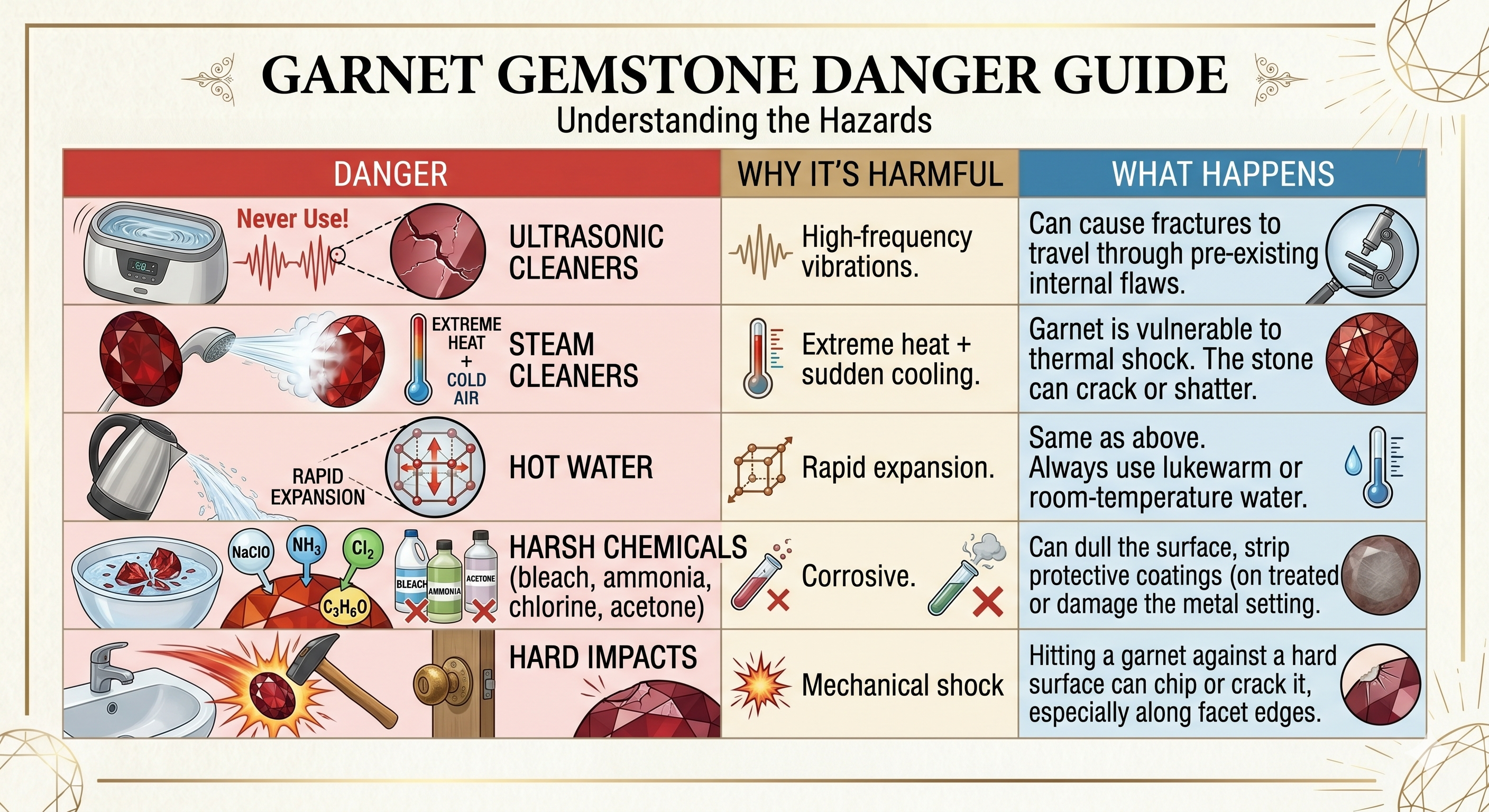
Care: Avoid ultrasonic cleaners, steamers, extreme heat, and hard impacts. Clean with warm, moist, soapy water and a soft brush.
How to Wear It
As a ring (on the non-dominant hand) for constant grounding and protection.
As a pendant over the heart for emotional strength and love.
Carried as a pocket stone during travel, negotiations, or difficult conversations.
What Are Some Types Of Garnet Gemstones?
Garnet is not a single gemstone, but rather a large family of over 20 distinct minerals. While they share the same crystal structure, slight differences in their chemical makeup create a spectacular range of colors and properties.
Here is a breakdown of the major gem-quality garnet types, from the most common to the rarest.
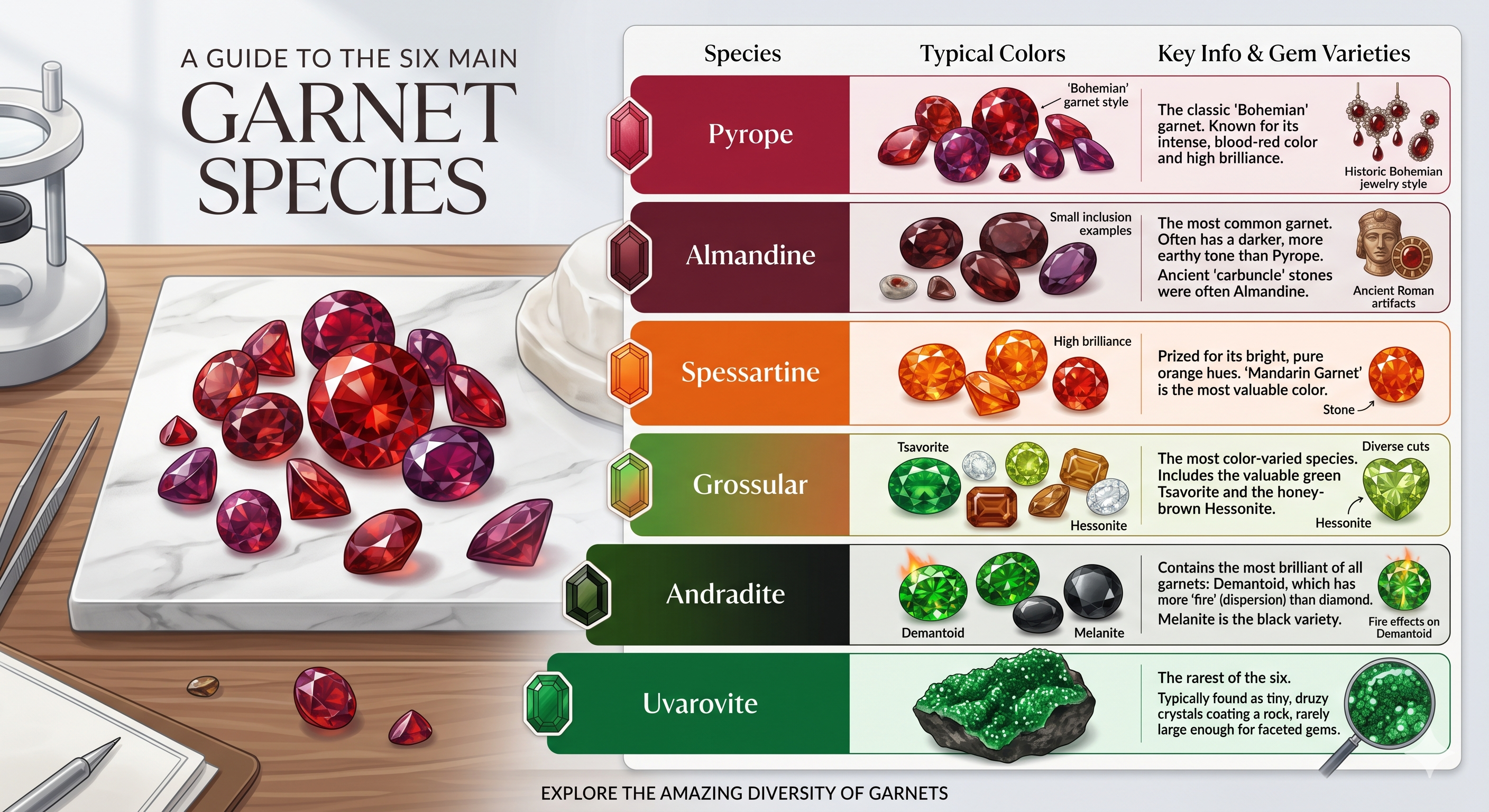
The "Big Six" Garnet Species
All garnets belong to one of six main mineral species. Think of these as the root families.
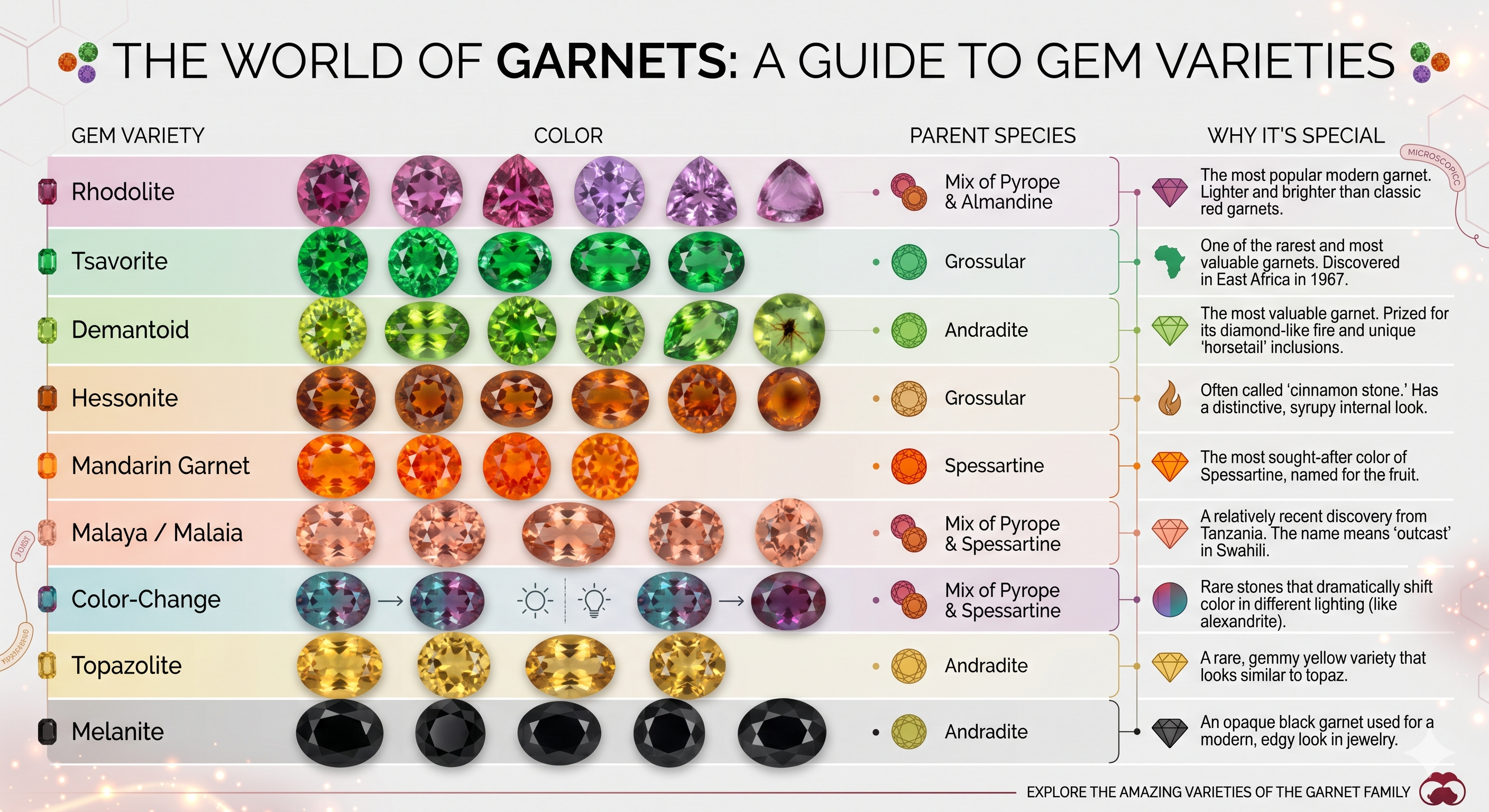
The Stars You'll See in Jewelry
These are the specific "variety names" you'll most likely encounter when shopping for garnets. They are either specificolor types or natural mixtures of the species above.
Is Garnet Good For Arthritis?
Based on the available information, the answer depends on whether you are asking about metaphysical beliefs or scientific evidence.
Metaphysical Belief: Yes, garnet is widely believed by crystal healers to help with arthritis, rheumatism, and joint pain.
Scientific Evidence: No, there is no scientific evidence that wearing or holding a garnet stone has any effect on arthritis.
The Metaphysical Belief in Garnet for Arthritis
In the world of crystal healing and folk tradition, garnet has a long history as a stone for physical vitality and is specifically mentioned for arthritis. Here is what proponents believe:
Eases Inflammation: It is said to soothe arthritis, rheumatism, and gout by reducing "over-acid conditions" in the body.
Increases Blood Flow: Garnet is believed to stimulate blood circulation, which is thought to help with joint stiffness.
Eases Muscle Pain: Some sources claim it helps relax muscles and loosen cramps, which can be beneficial for those with arthritis-related muscle tension.
Some crystal healing guides also suggest that specific varieties of garnet may be better suited for different types of physical healing:
Pyrope Garnet: Said to help specifically with rheumatism and arthritis, in addition to blood flow and boosting metabolism.
Tsavorite Garnet: Believed to speed healing, support cell growth, and address inflammatory disorders.
The Scientific Reality
When you look for clinical evidence, there is no scientific study supporting the use of garnet crystals for arthritis.
It is important to note that "Garnet" is also the name of a variety of plum (the "Queen Garnet" plum), which has been studied for its anti-inflammatory properties. Research has shown that the fruit (specifically the anthocyanins in the plum juice) can reduce inflammation in rats. However, this has nothing to do with the gemstone. You cannot get these benefits from holding a stone.
For comparison, the American Gem Society lists specific healing properties for other stones (e.g., Amethyst is "said to aid arthritis), but it only credits garnet with aiding "blood, heart, and lungs" and promoting love, with no mention of arthritis.
The Bottom Line
You can certainly wear a garnet as a personal talisman for hope and comfort while managing arthritis, and many people find value in that. However, it should never replace proven medical treatments.
For actual arthritis relief, doctors recommend scientifically validated methods such as :
Anti-inflammatory medications
Physical therapy
Proven herbal remedies (like Devil's Claw or Willow bark extract)
Weight management and exercise
Always consult your rheumatologist or doctor for medical advice, and think of garnet as a beautiful addition to your life, not a medical treatment.
Is Garnet A Lucky Stone?
This is an excellent question, as the answer depends on which culture and historical period you're asking about.
The short answer is yes, Garnet is widely considered a very lucky stone, but its specific "luck" is different from a stone like a Four-Leaf Clover (general good fortune) or Jade (general prosperity).
Here’s a breakdown of the specific kinds of luck and protection Garnet is famous for:
1. The "Traveler's Luck" (Most Famous)
Historically, garnets' most renowned lucky power is protection for travelers, especially on long or dangerous journeys.
The Noah's Ark Myth: Legend says Noah used a glowing garnet lantern to help steer his ark through the dark, stormy nights of the flood.
The Crusaders' Gem: Crusaders would set a garnet into their armor or carry a stone, believing its bright, inner fire would act as a protective light, warning them of danger or poison.
Safe Return: It was considered extremely lucky to have a garnet on you to ensure a safe journey and a happy return home.
Lucky for: Anyone traveling for work, vacation, or a major life change.
2. The "Warrior's Luck" (Protection & Courage)
Ancient warriors across many cultures (from Celts to Romans to Asian tribes) used garnets as lucky talismans in battle.
Wound Protection: They believed garnet would staunch bleeding and protect them from wounds.
Victory: The deep red color symbolized blood, strength, and fire, giving the wearer courage and the "luck of the victor."
Lucky for: Overcoming powerful obstacles, competition, or conflict.
3. The "Lover's Luck" (Passion & Fidelity)
Garnet is a stone of deep emotional bonds. It was thought to bring luck in love by:
Reuniting Lovers: A famous Bohemian legend says a garnet necklace could reunite separated lovers.
Ensuring Fidelity: It symbolized a constant, heartfelt bond and passion that wouldn't fade.
Attracting a Partner: Its fiery red energy was used to attract a suitable and devoted partner.
Lucky for: Rekindling romance, finding true love, and maintaining loyalty in a relationship.
4. The "Healer's Luck" (Energy & Regeneration)
In crystal healing traditions, "luck" is often tied to vitality. Garnet is said to be lucky for health by:
Activating Root Chakra: It grounds energy and promotes feelings of safety and survival.
Regenerating Qi: It's believed to boost metabolism, improve blood circulation, and help the body heal from illness or injury.
Lucky for: Recovering from illness, fighting fatigue, and feeling more "alive" and grounded.
Which Colors of Garnet are Lucky?
While red/orange Almandine and Pyrope garnets are the classic "lucky" stones for the reasons above, other colors have their own associations:
Green Garnet (Tsavorite, Demantoid): Extremely lucky for wealth, career success, and business growth. It's a stone of abundance, not just protection.
Orange Garnet (Spessartine/Mandarin): Lucky for creativity, confidence, and manifesting new projects.
Rhodolite (Purple-Pink): Lucky for emotional healing, spiritual growth, and finding clarity in difficult situations.
Important Considerations (When it's not lucky)
If you don't like the color red, A stone that repels you won't feel "lucky." Choose a green or orange garnet instead.
If you need calm, not energy: Garnet is an invigorating stone. If you need stone for tranquillity and sleep (like Amethyst or Moonstone), Garnet's active energy might feel overstimulating.
If it's cracked or damaged: In most traditions, a cracked stone is considered to have "done its job" of absorbing bad luck and should be retired respectfully.
The Final Verdict
Garnet is an excellent, historically rich, lucky stone. It is not a "gambling luck" stone. Instead, its luck is protective, courageous, passionate, and revitalizing.
The luckiest way to wear it:
As a pendant (over the heart) for emotional protection and love luck.
Set in a ring (on the non-dominant hand) to constantly absorb its active, grounding energy.
Carried in a pocket during travel, job interviews, or before a difficult conversation.
What Is The Rarest Color Of the Garnet Birthstone?
That's a fantastic follow-up question, because the popular idea of garnet as simply a "deep red" stone is just the tip of the iceberg.
The true answer is: Garnet has no single "true" color.
Instead, garnet is the name for a large family of silicate minerals with a shared crystal structure but varying chemical compositions. This chemical variation allows garnets to occur in almost every color except blue (though a color-changing blue-green variety exists under specific lighting).
Let's break it down.
The "Classic" Red Garnet (What Most People Know)
When someone says "garnet," the image that comes to mind is the deep, wine-red to brownish-red stone. This is the most common and historically famous variety, primarily from two members of the garnet family:
Pyrope: Known for its fiery, blood-red to deep crimson color. The name comes from the Greek pyropos, meaning "fiery-eyed."
Almandine: The most common garnet. Its color is a deeper, darker red, often with a brownish or violet undertone. Think of the color of a fine burgundy wine.
This classic red is chemically "true" for Pyrope and Almandine, but it's not the whole story.
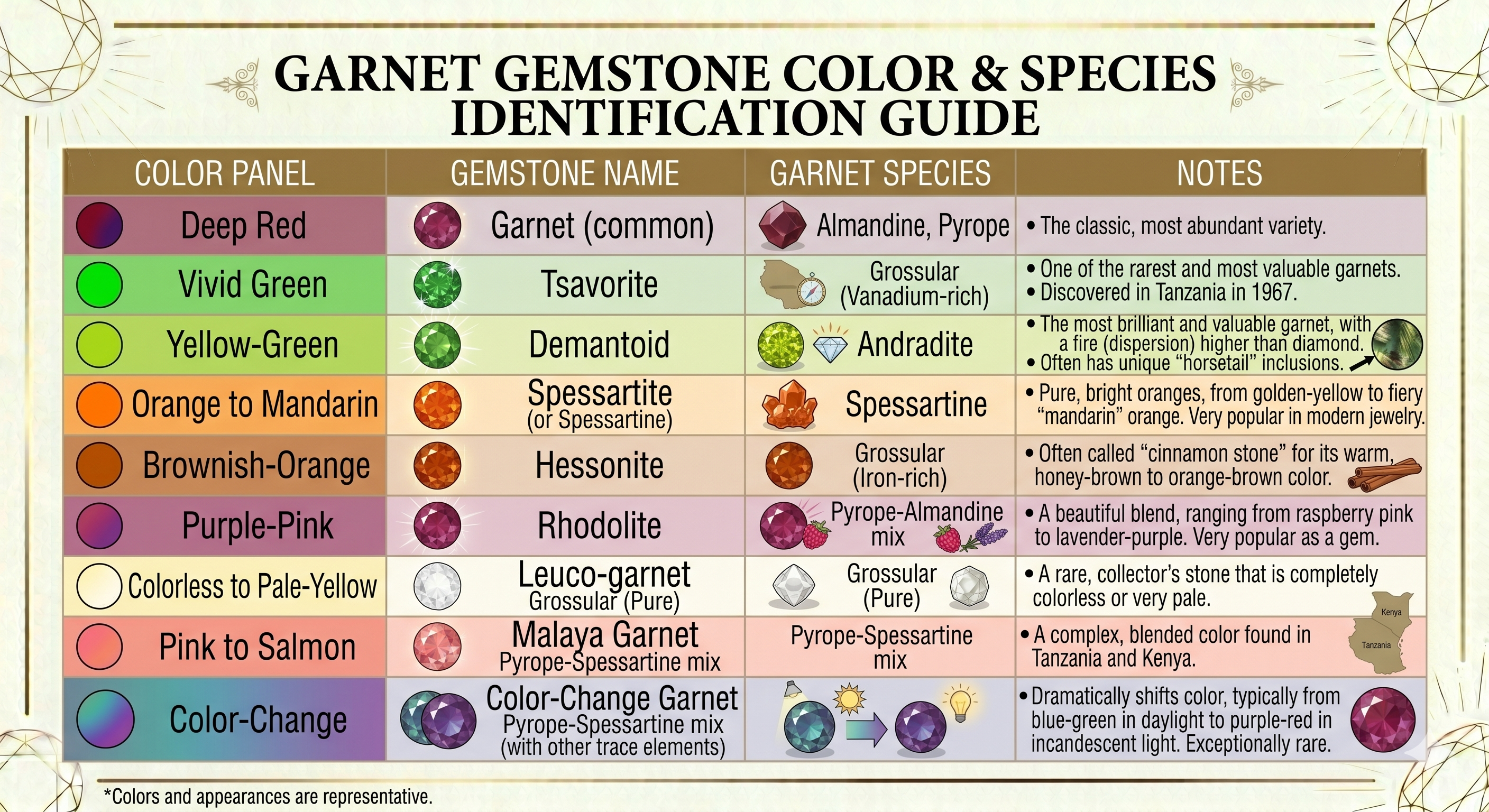
The Full Rainbow: Garnet's Diverse Color Palette
Here are the other "true" colors found in the garnet family, each with its own distinct gemstone name:
Why Does This Happen? The Chemistry of Color
Imagine the garnet crystal structure as a 3D chain-link fence. Different "trace elements" (tiny impurities) are the paint colors sprayed on that fence.
Iron (Fe²⁺): Creates the classic deep reds (Almandine) and brownish-reds.
Chromium (Cr³⁺): Creates vivid green (Tsavorite, Uvarovite) and intense red (some Pyrope).
Vanadium (V³⁺): Also creates green, often with a slightly yellow or blue undertone (some Tsavorite).
Manganese (Mn²⁺): Creates orange to yellow (Spessartine).
Titanium (Ti⁴⁺) & Iron (Fe³): Creates black (Melanite, a type of Andradite) and yellow-green (Demantoid).
So, What's the "True" Answer?
If you're asking a jeweler or gemologist: The "true" color of garnet is any color except blue (and pure blue is still scientifically debated and exceptionally rare). They would ask you which garnet you mean.
If you're asking a historian or crystal healer: The "true" color is classic, deep red. This is the color that gave the stone its name (from the Latin granatus, for "seed-like," referring to red pomegranate seeds) and defined its properties for thousands of years.
If you're asking a mineralogist: The "true" color of a specific garnet is determined entirely by its chemical formula. There is no single answer for the entire group.
The takeaway: Don't limit garnet to red! If you love green, orange, pink, or even color-changing gems, there is a "true" garnet waiting for you. The rarest and most valuable garnets today are the green Demantoid and green Tsavorite, not the classic red.
What Is The Rarest Color Of the Garnet Birthstone?
That's an excellent question because it highlights just how special the garnet family truly is. While deep red is the classic January birthstone, the rarest colors are the ones that break all expectations.
The answer depends on whether you're asking about theoretically possible or commercially available gemstones.
The Rarest of All: Blue Garnet
If we're talking about the single rarest color a garnet can be, the answer is blue. For decades, it was believed that garnets simply could not be blue. That changed in the late 1990s with a discovery in Bekily, Madagascar.
These are not a constant blue, but color-change garnets. They shift from a blue-green in daylight or LED light to a purple or reddish-purple under incandescent (yellow) light. This remarkable "alexandrite-like" effect, caused by traces of vanadium, makes them extraordinarily rare and highly coveted by collectors.
The Rarest "Pure" Color for Jewelry: Green (Demantoid)
While blue is the ultimate rarity, if you are looking for the rarest and most valuable pure color within the garnet family for fine jewelry, the answer is green, specifically the variety called Demantoid.
The Smithsonian's National Museum of Natural History explicitly calls Demantoid "the rarest and most valuable garnet gem". Its value comes from a unique combination of factors:
Exceptional Brilliance: Its name means "diamond-like," and it actually has a higher dispersion (the ability to split light into rainbow colors, or "fire") than a diamond.
Vivid Color: The finest specimens, first found in Russia's Ural Mountains, are a vivid, intense emerald-green.
Small Size: Fine-quality demantoids are rarely found in sizes larger than 2 carats, making large stones exceptionally rare and valuable.
A Quick Guide to Rare Garnet Colors
To help visualize the spectrum of rarity, here are the standout colors within the January birthstone family:
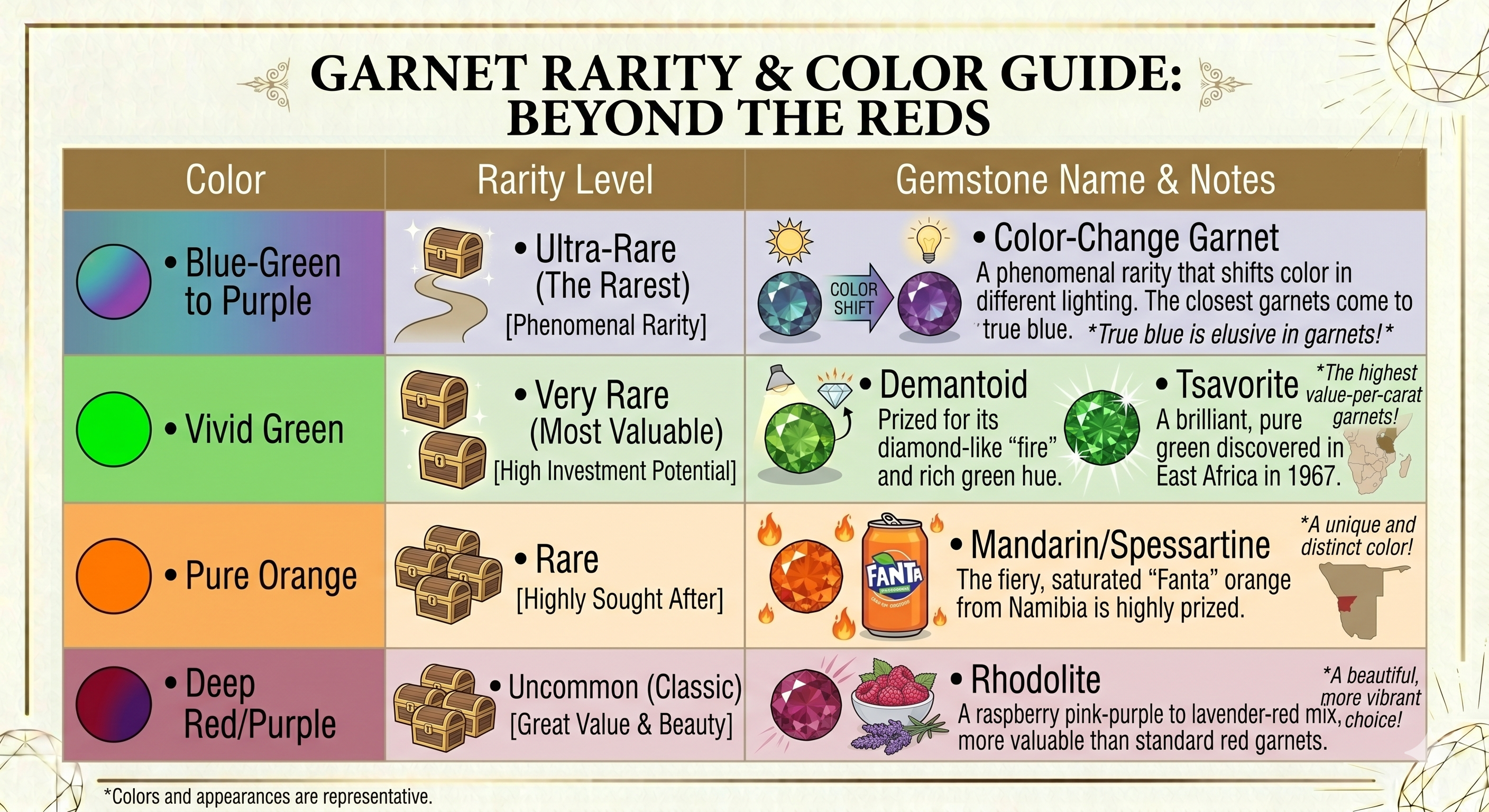
To summarize:
For the absolute rarest color a garnet can be, the answer is blue (specifically, a color-change garnet).
For the rarest, most prized, and most valuable color you can typically buy for birthstone jewelry, the answer is vivid green (especially Demantoid).
How Can I Test My Garnet Birthstone At Home?
Testing your garnet birthstone at home can be fun and insightful, but it's crucial to start with a clear warning: No at-home test is 100% conclusive. The only way to be certain is to take it to a certified gemologist.
However, you can perform several safe, non-destructive tests to get a very strong indication of whether your stone is a true garnet or a common imitation (like glass, cubic zirconia, or other red gems like ruby or spinel).
Here is a step-by-step guide to the most effective home tests.
Before You Begin: Essential Rules
Clean the Stone: Dirt and oils will skew results. Clean it with mild soap, warm water, and a soft toothbrush.
No Scratch Tests: Do not try to scratch glass or steel with your stone. You can damage the stone or its setting.
Know Your Setting: These tests work best on loose stones. If your garnet is in a closed-back setting (no light can pass through the back), the optical tests won't work.
Test 1: The Magnet Test (Most Reliable for Home Use)
This is the single best at-home test because most genuine garnets are slightly magnetic, while almost all common fakes (glass, CZ, synthetic spinel, ruby, sapphire) are not.
What you need: A strong, small "rare earth" neodymium magnet (like the tiny disc magnets sold in hardware or craft stores for £5-10). A fridge magnet is usually too weak.
The Method:
If the stone is loose, place it on a smooth, non-metallic surface (a glass table or plastic lid).
Hold the magnet very close to the stone (almost touching).
Slowly move the magnet away.
What to look for:
Positive for Garnet: The stone will "jump" or visibly drag towards the magnet as you bring it close. Pyrope and Almandine (the classic reds) are the most magnetic. Even a slight, subtle pull is a very good sign.
Negative (Likely Fake): The stone shows absolutely no reaction to the magnet.
Important Caveat: Some green garnets (like Tsavorite) are much less magnetic. A few fakes (like certain types of glass with iron filings) can be magnetic. So this is a strong clue, not proof.
Test 2: The "Rainbow" & Color-Zoning Test (For Red Stones)
This test exploits how light moves through a garnet vs. glass or synthetic corundum.
What you need: A bright pen light or a powerful smartphone flashlight.
The Method:
In a dark room, shine the light directly through the stone (from back to front for a mounted stone, or side to side for a loose one).
Observe the pattern of colors you see inside the stone.
What to look for:
Strong Sign of Garnet: You will see a distinct "rainbow" of color bands in a specific pattern. Look for a broad, pale greenish-yellow band merging into a broader pinkish-orange band. This is a "diagnostic" absorption spectrum for many garnets.
Sign of Glass or CZ: You will likely see no rainbow bands, just a single, uniform color. CZ often shows a bright, flashy "rainbow disco ball" effect (fire) rather than broad, soft bands.
Sign of Ruby or Spinel: You will see a strong, vivid red glow (like a red laser pointer) and often a clear "red line" in the spectrum, not the broad yellow-pink bands of garnet.
Test 3: The "Double Refraction" Check (For Loose Stones)
Garnet is singly refractive, meaning it simply bends light. Many red imitations (like CZ, glass, and synthetic spinel) are doubly refractive (they split light into two rays).
What you need: A magnifying glass or a smartphone camera with a strong zoom, and a printed paper with a very straight, sharp black line.
The Method:
Place the loose stone directly over the black line on the paper.
Look closely through the top of the stone at the line.
Slowly roll the stone back and forth.
What to look for:
Sign of Garnet: The line will look like a single, sharp, clean line, no matter how you roll the stone. It will not blur, split, or duplicate.
Sign of CZ or Glass: You will see the line clearly split into two parallel lines (ghost images) as you roll the stone. This is called doubling.
Test 4: The Hardness & Scratch Test (Use with Extreme Caution)
This is a destructive test, so only do this on a hidden, inconspicuous spot on a very cheap stone you don't care about. Do not do this on valuable jewelry.
The Method: Try to scratch a piece of common (float) glass with a sharp corner of your stone.
Result: Garnet (hardness 6.5-7.5) will easily scratch glass (hardness ~5.5). So will many fakes (CZ, ruby, spinel). This test does NOT prove it's garnet – it only proves it's harder than glass. Avoid this test.
Test 5: The "Iron Nail" & "Quartz" Test (For the Brave)
Iron Nail (Hardness 4.5): A garnet will NOT scratch an iron nail. If your stone scratches an iron nail, it's probably not glass, but it could be quartz, topaz, or garnet.
Quartz (Hardness 7): This is the best scratch test. If you have a piece of quartz (an old,d clear crystal or a cheap tumbled stone), try to scratch the quartz with your garnet. Result: A true garnet (hardness 6.5-7.5) will not scratch quartz. If it does, you likely have a harder stone like ruby, sapphire, or CZ.
Summary Table: Putting It All Together
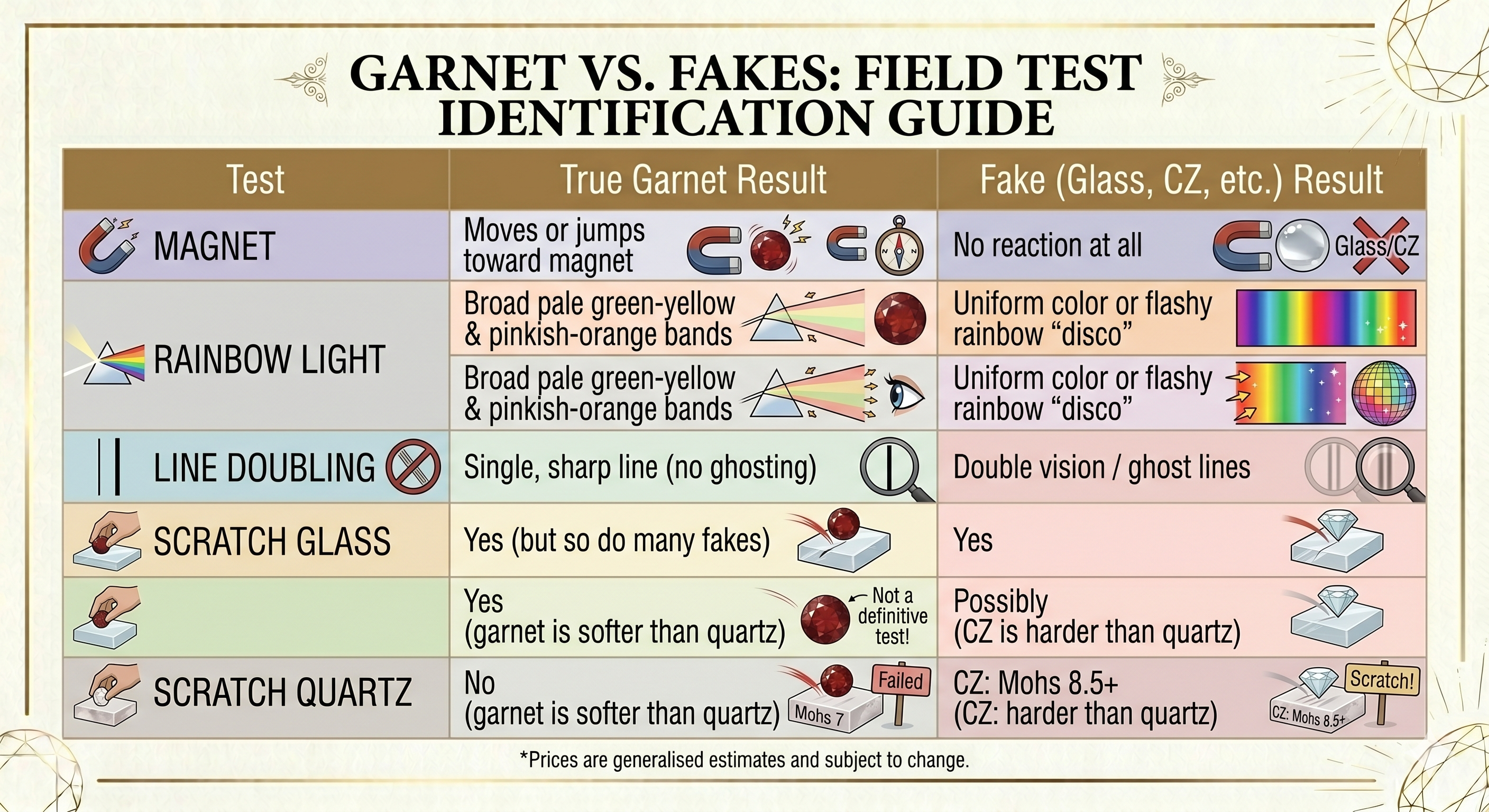
The Verdict
If your stone passes Test 1 (Magneti, nd Test 2 (Rainbow bands), and Test 3 (No line doubling), you can be about 95% confident it's a genuine garnet.
The final 5% requires a professional who can measure the exact refractive index (RI) with a refractometer.
If you have any doubt – or if the stone is valuable or has sentimental meaning – skip the home tests and take it to a local jeweler. Most will test it for free or for a very small fee (often under £10) and give you an instant, reliable answer.
How To Tell If It's A Ruby Or Garnet Birthstone?
This is one of the most common confusions in gemology because a fine red garnet (like a Rhodolite or Pyrope) and a ruby can look very similar to the naked eye.
However, there are several reliable at-home tests you can use to tell them apart. Since both are January (Garnet) and July (Ruby) birthstones, getting them mixed up changes the month and the value significantly (rubies are usually much more expensive).
Here is how to tell them apart, from the easiest home methods to the most scientific.
1. The Black Light Test (UV Light) – Best Home Test
This is the quickest and most reliable indicator for a beginner.
What you need: A UV Black Light (LED UV flashlight works best).
The Test: Shine the UV light on the stone in a dark room.
Result:
Ruby: Will glow a bright, fiery red (like a stoplight or a red laser pointer). This is called fluorescence. Note: Very low-quality rubies or synthetic rubies doped with iron might not glow.
Garnet: Will show no reaction or a very weak, chalky, greenish-brown glow. Garnet typically does not fluoresce red.
2. The "Double Rainbow" Test (Spectrum / Pleochroism)
This gets into the physics of how light moves through the stone.
The Test: Look at the stone under a bright desk lamp or sunlight. Slowly turn it back and forth, looking at the colors inside.
Result:
Garnet: Typically shows one color (singly refractive). It looks red from every angle. You might see subtle "bands" of yellow and pink if you look closely, but only one primary color.
Ruby: Shows two colors (doubly refractive/pleochroic). As you turn it, you will see it shift between crimson red and orangey-red or purplish-red. It looks like two different reds are fighting for space inside the stone.
3. The Loupe Test (Inclusions)
If you have a 10x jeweler's loupe (or a strong magnifying glass), look inside the stone. Nature leaves fingerprints.
What to look for:
Garnet: Look for long, thin, needle-like crystals (often rutile) that are straight and orderly. Also, look for "lizard skin" or "treacle" (wavy, swirly patterns like thick syrup). Garnets are often "cleaner" than rubies.
Ruby: Look for tiny, sharp, jagged, intersecting needles (silk). These look like little white dashes or tiny fingerprints. Rubies almost always have these natural imperfections. If it is perfectly clean, it might be synthetic (lab-created) or glass.
4. The Color Test (The "Red" Check)
While risky to judge by color alone, there is a nuance.
Garnet: Tends to have brownish undertones (like a burgundy wine) or purplish undertones (like raspberry).
Ruby: Tends to have bluish undertones or a pure, vivid "stoplight" red. If the stone looks slightly "pinkish-blue" rather than "brownish-purple," it is likely a ruby.
5. The Scratch Test (Use with Caution – Last Resort)
The Theory: Ruby is a 9 on the Mohs scale (almost as hard as diamond). Garnet is 6.5 to 7.5.
The Test: Try to scratch a piece of common quartz (like a clear crystal or a cheap agate) with your stone.
Result:
Ruby (9): Will scratch the quartz easily.
Garnet (6.5-7.5): Will not scratch quartz. (Garnet is softer than quartz, so the quartz will scratch the garnet).
Warning: Do not do this on a valuable faceted stone. Do it on a rough piece or an inconspicuous spot.
6. The Magnet Test (Referencing previous answer)
Garnet: As noted before, red garnets are magnetic. A neodymium magnet will make them wiggle or drag.
Ruby: Is not magnetic. It will not react to a standard magnet at all. (Corundum is non-magnetic.
Summary Cheat Sheet
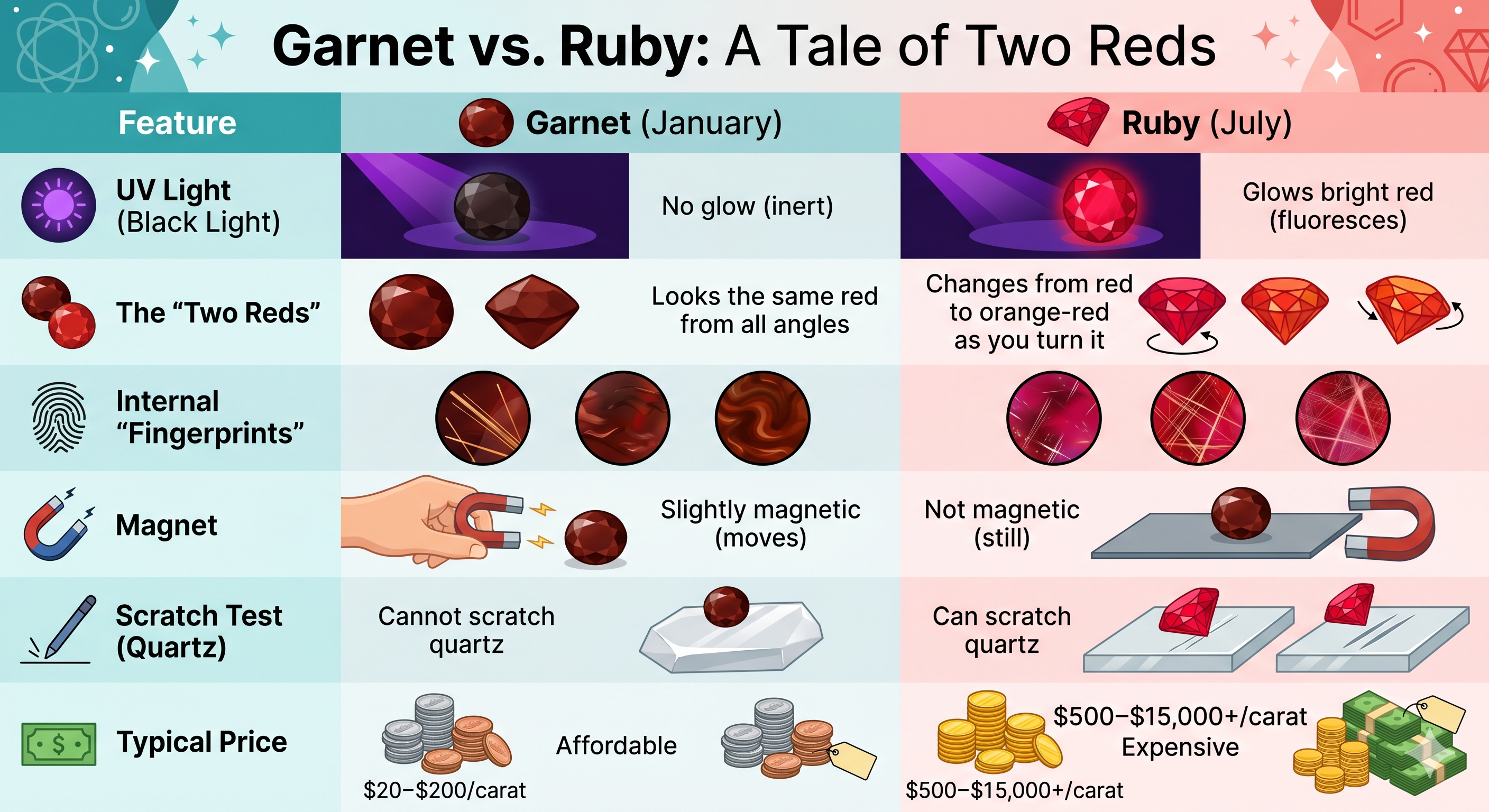
A Crucial Warning on Synthetics
If your stone is perfectly clean, glows neon red under UV, and was not expensive, it is likely a Lab-Created Ruby (synthetic corundum). These are real rubies chemically, but not natural. They are often sold as "Ruby Birthstones" for under $50.
The Verdict:
If you don't have a UV light, use the color-shift test (rotating the stone). If the red stays the same: Garnet. If the red shifts to orange: Ruby.
Is Garnet Considered A Precious Stone?
That's an excellent question because it gets to the heart of a major shift in how we value gemstones.
The short answer is: Traditionally, no. But in the modern world, the distinction is largely meaningless for garnet.
Here’s the detailed breakdown of why.
The Traditional "Precious" vs. "Semi-Precious" Hierarchy
Historically (and in older textbooks), gems were divided into two rigid categories:
Precious Stones: Only four gems held this title – Diamond, Ruby, Sapphire, and Emerald. This was based on their extreme rarity, hardness (above 7.5 on the Mohs scale), and historical value.
Semi-Precious Stones: Every other gemstone fell into this catch-all category, including Garnet, Amethyst, Topaz, Citrine, Peridot, etc.
By this old definition, Garnet is absolutely not a precious stone. It is classified as "semi-precious."
Why This Old Definition is Misleading (and Outdated)
The jewelry industry has largely abandoned the "precious vs. semi-precious" labels because they are inaccurate and confusing. A single example proves the point:
A low-quality Ruby (Precious): Can be pale, heavily included, and worth only $50 per carat.
A high-quality Demantoid Garnet (Semi-Precious): Can be a vivid, fiery green, extremely rare, and command prices of 10,000 to 20,000 per carat (or more).
Does it make sense to call the dull 50 ruby"precious" and the stunning 20,000 garnet "semi-precious"? No. The market doesn't work that way.
Where Garnet Fits in the Modern View
Today, professionals value stones based on their individual Beauty, Rarity, and Durability, not an old label.
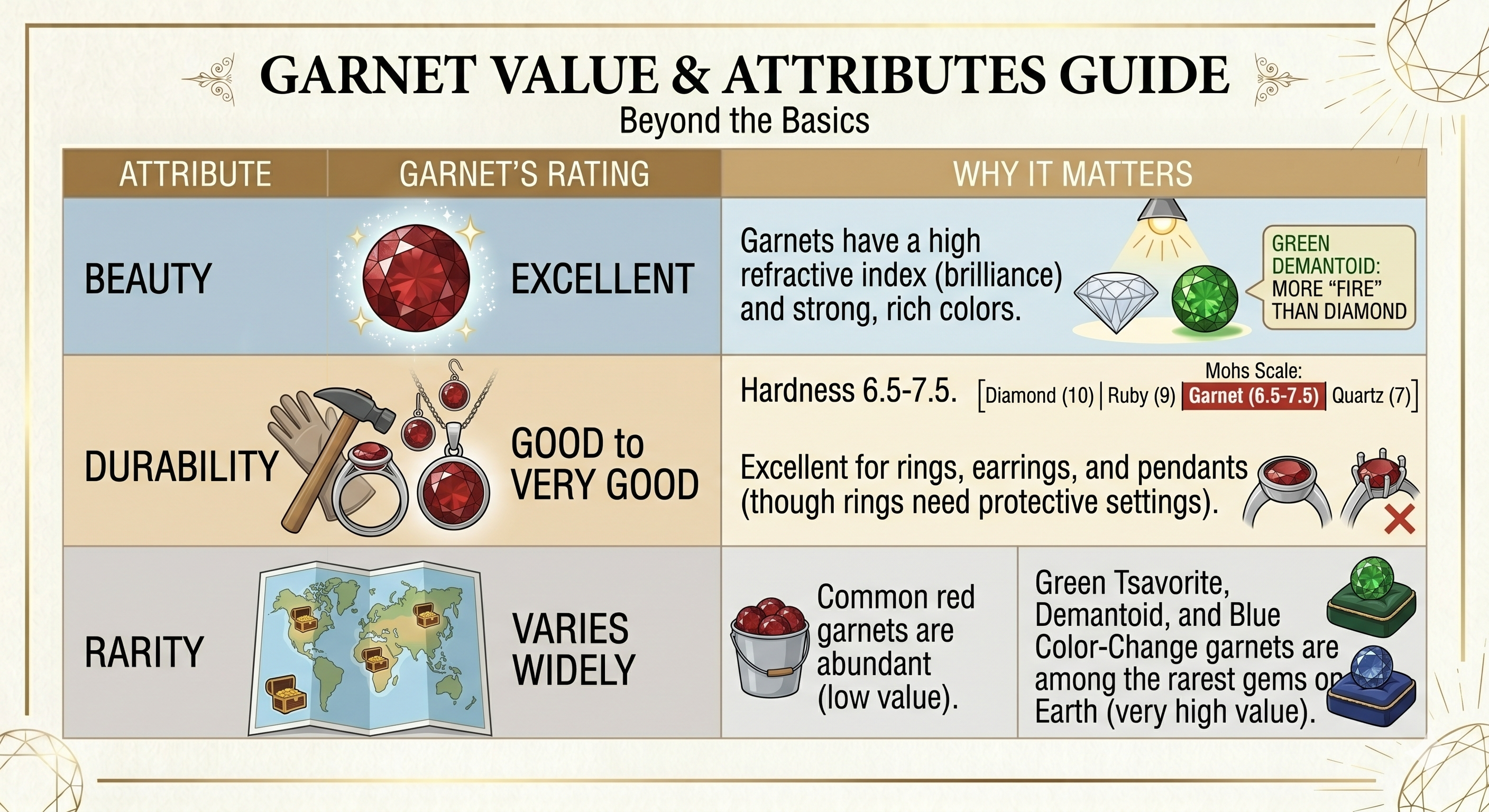
The Right Way to Think About It
Instead of asking "Is it precious?" ask "Is this specific garnet a fine gem? "
Common Red Garnet (Almandine/Pyrope): Widely available, affordable. In trade terms, you'll still hear "semi-precious," but it's a durable, beautiful gem for everyday jewelry.
Rhodolite (Purple-Pink): A step up. Clean, vivid stones are very desirable and command higher prices.
Tsavorite (Vivid Green): A top-tier gemstone. It is rare, brilliant, durable, and valued as highly as fine sapphire or emerald. No professional would dismiss it as "just semi-precious."
Demantoid (Yellow-Green with Fire): An absolute collector's gem. Top specimens sell for diamond-level prices and are considered "precious" by any realistic standard.
The Final Verdict
By the old, rigid, 19th-century definition: No, Garnet is not a precious stone.
By the modern, realistic standard of gemology and value, the label doesn't apply. A common red garnet is a beautiful, affordable "semi-precious" gem. A fine green Demantoid or Tsavorite garnet is a rare, precious treasure that rivals any ruby or emerald.
If a jeweler today calls a fine garnet "semi-precious," they are using outdated terminology. Trust your eye and the stone's actual beauty, rarity, and quality over a two-century-old label.
How To Maintain a Garnet Birthstone?
Maintaining a garnet birthstone is thankfully quite easy because garnets are durable (6.5–7.5 on the Mohs hardness scale) but not indestructible. With proper care, your garnet will stay brilliant for a lifetime.
Here is a practical guide to cleaning, storing, and protecting your garnet jewelry.
1. The Best Way to Clean Your Garnet (Safe for All)
This method is safe for natural garnets, but see the warning below if your stone is treated or assembled.
What you need: Warm water, mild dish soap (no citric acid or bleach), a soft-bristled toothbrush (new/clean), and a soft, lint-free cloth.
The Method:
Mix a few drops of mild soap into a bowl of warm (not hot) water.
Soak the garnet for 2–3 minutes to loosen any dirt or body oils.
Gently brush the stone, especially around the setting (prongs or bezel) where grime hides.
Rinse thoroughly under lukewarm running water. Pat dry with a soft cloth. Do not rub vigorously.
2. What to AVOID (The "Killers" of Garnet)
Garnets can be damaged by sudden temperature changes, hard knocks, and harsh chemicals.
3. Special Warning for "Composite" or "Treated" Garnets
Not all garnets are solid natural stone. If yours was inexpensive, very large, or sold as "enhanced," check this first:
Fracture-filled garnets: These have glass or resin injected into cracks to make them look clearer. Avoid all liquids except a barely damp cloth. Soaking can dissolve the filler.
Garnet doublets/triplets: These are thin slices of garnet glued to glass or another backing. Never soak them. The glue can dissolve, causing the layers to separate.
Dyed garnets: Rare, but exist for low-quality material. Do not soak; use a damp cloth only.
If you don't know if your garnet is treated, assume it is and use the "damp cloth only" method.
4. How to Store Your Garnet Safely
Garnet is harder than many gems (like opal or turquoise) but softer than diamond, ruby, sapphire, and topaz.
Individual soft pouch or fabric-lined box: Never toss it loose into a jewelry box.
Keep away from harder stones: Diamond (hardness 10), Ruby/Sapphire (9), Topaz (8), and CZ (8.5) can scratch a garnet's polished surface if they rub against it.
Avoid extreme temperatures: Do not leave garnet jewelry on a sunny windowsill, near a radiator, or in a hot car.
5. When to Remove Your Garnet Jewelry
To keep it safe, take it off during these activities:
Household chores: Cleaning products (bleach, oven cleaner) can damage it. Also protects from hard knocks.
Gardening or DIY: Dirt can abrade the surface, and impacts can chip it.
Working out: Sweat and impact are both bad. Salt from sweat can dull the polish over time.
Cooking: Grease and grime build up quickly. Also, sudden heat from an oven or stovetop is risky.
Applying lotion, perfume, or hairspray: These can leave a filmy residue that dulls the stone's brilliance. Put your garnet on after your beauty routine.
6. Routine Professional Check (Once a Year)
If you wear your garnet ring frequently, take it to a local jeweler once per year. They will:
Check the prongs: Make sure the garnet isn't loose.
Inspect for chips: Small edge chips can become larger cracks over time.
Professional clean: They can use a steamer (on untreated garnets only) or a gentle ultrasonic (again, only if they confirm it's safe).
Summary: The Garnet Care Cheat Sheet
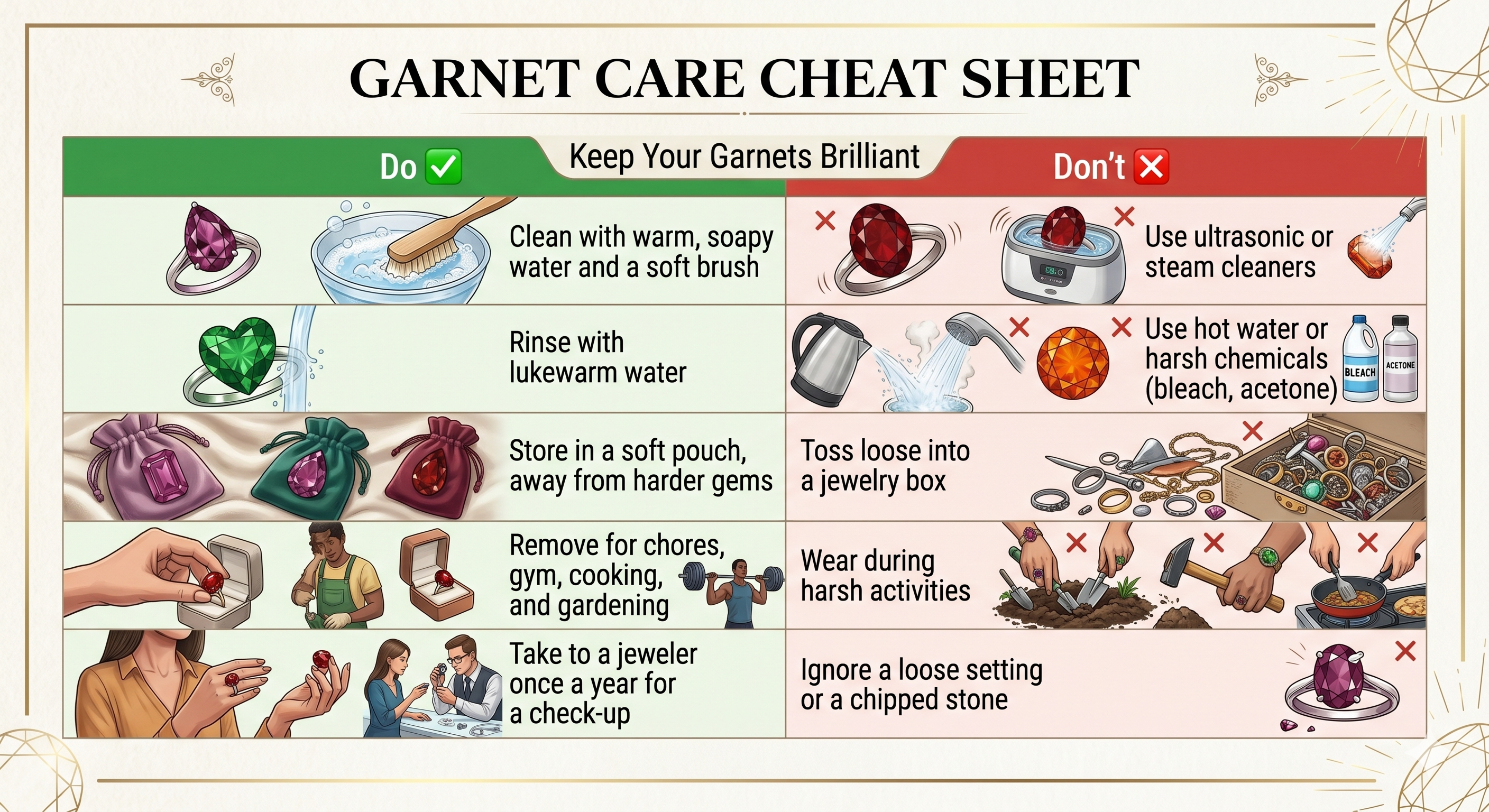
The Golden Rule for Garnet: Gentle soap, soft brush, lukewarm water, and common sense. Treat it like a durable but not indestructible gem, and it will stay bright and beautiful for generations.
How Much Is 1 Carat Of Garnet Birthstone?
The price of a 1-carat garnet birthstone varies significantly based on its type, color, and quality. While common red garnets are quite affordable, rare green or orange varieties can cost as much as premium sapphires or emeralds.
Here is a breakdown of the current market prices for a 1-carat garnet:
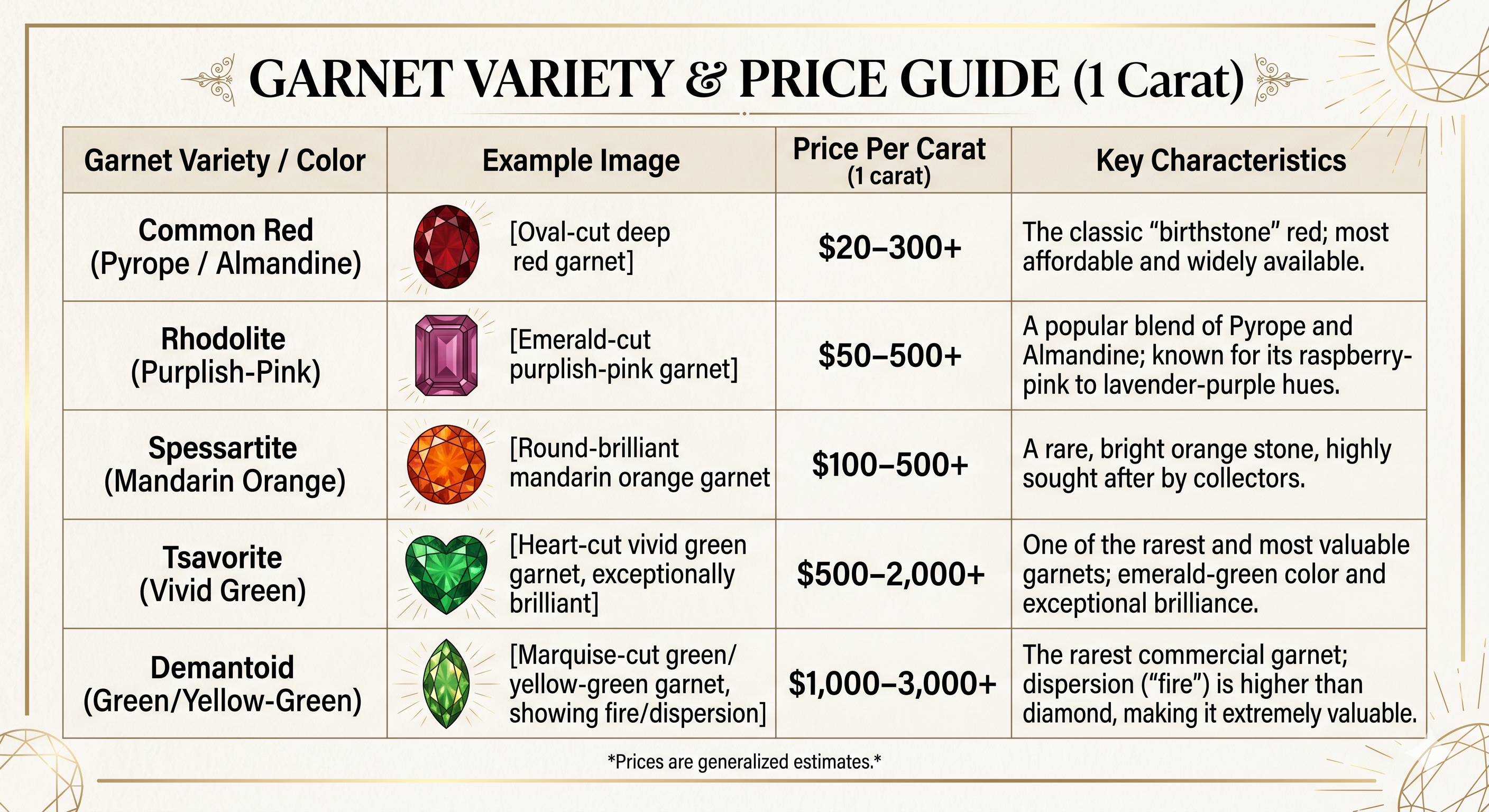
Why Is There Such a Big Price Difference?
The price depends on four main factors:
Type & Rarity: The red garnets used in most birthstone jewelry are relatively common. In contrast, Tsavorite is rarer than emerald, and Demantoid is a true collector's gem, which drives their prices significantly higher.
Color: For all garnets, the more vivid and saturated the color, the higher the price. A pale red garnet is worth much less than a deep, "stoplight" red one.
Clarity & Cut: Garnets are generally eye-clean (no visible inclusions). A well-cut stone will have excellent brilliance, while a dull or uneven cut lowers the value.
Carat Weight: As the stone gets larger, the price per carat often increases. For example, a 7-carat Rhodolite garnet priced at 1,600
Practical Buying Tips
Know Your Budget: If you want a 1-carat stone for under $300, stick with classic red or purplish Rhodolite.
Check for Treatments: One of garnet's best features is that most are completely untreated. This natural integrity is a major selling point, so verify that the stone hasn't been fractured-filled or dyed.
Use Reputable Sellers: Always buy from established vendors. Auction sites may list a 1.15-carat Tsavorite for $43 (likely a typo or low-quality stone), while a professional dealer will provide accurate grading and pricing.
Consider the Setting: A garnet's durability (6.5–7.5 on the Mohs scale) makes it suitable for rings, earrings, and pendants.
I hope this guide helps you find the perfect garnet! Are you looking for a specific color for your jewelry, or just exploring the possibilities?
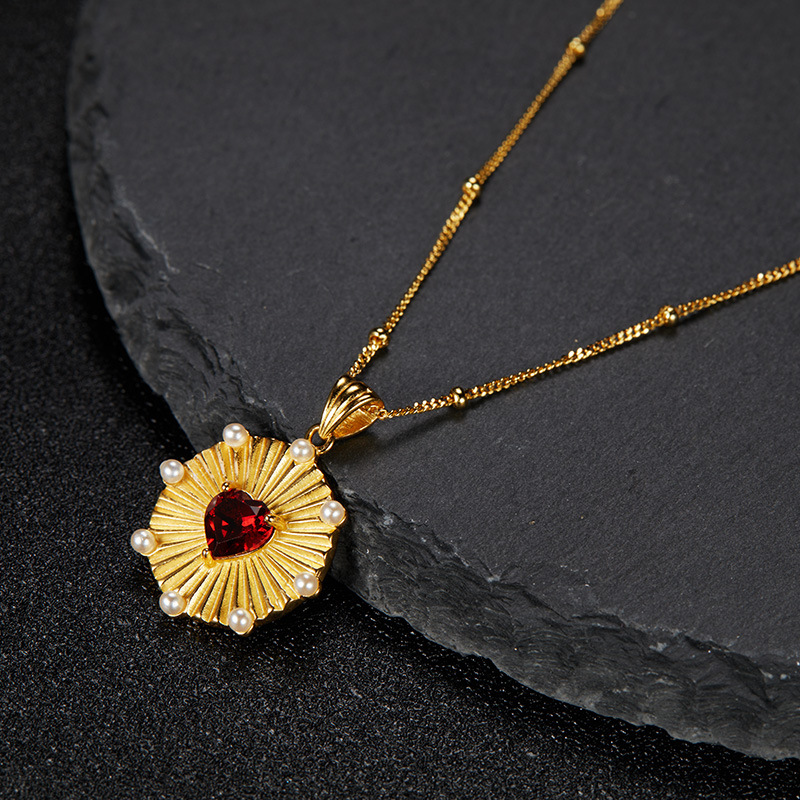
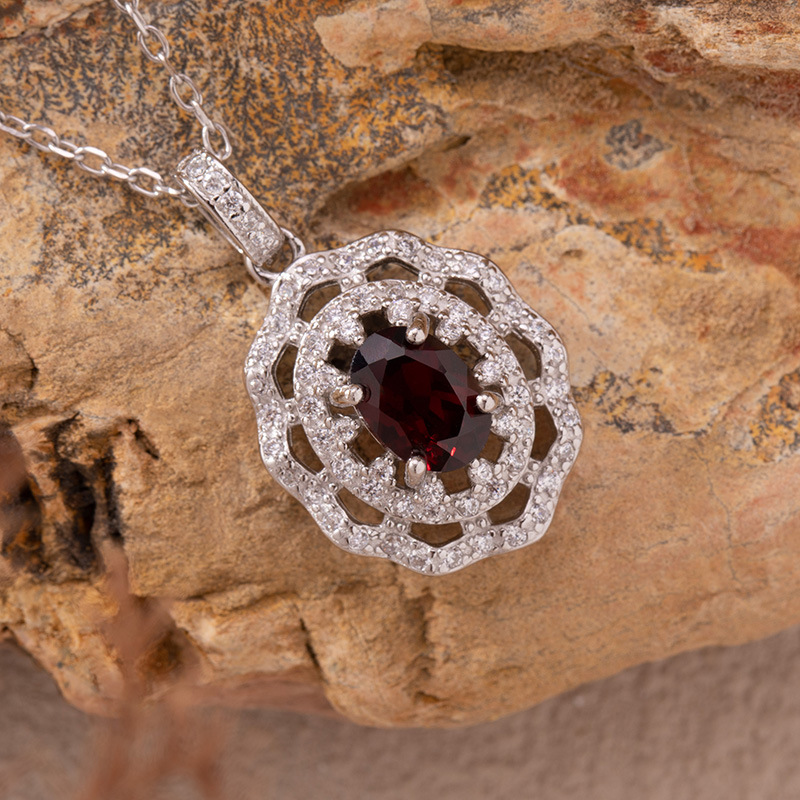
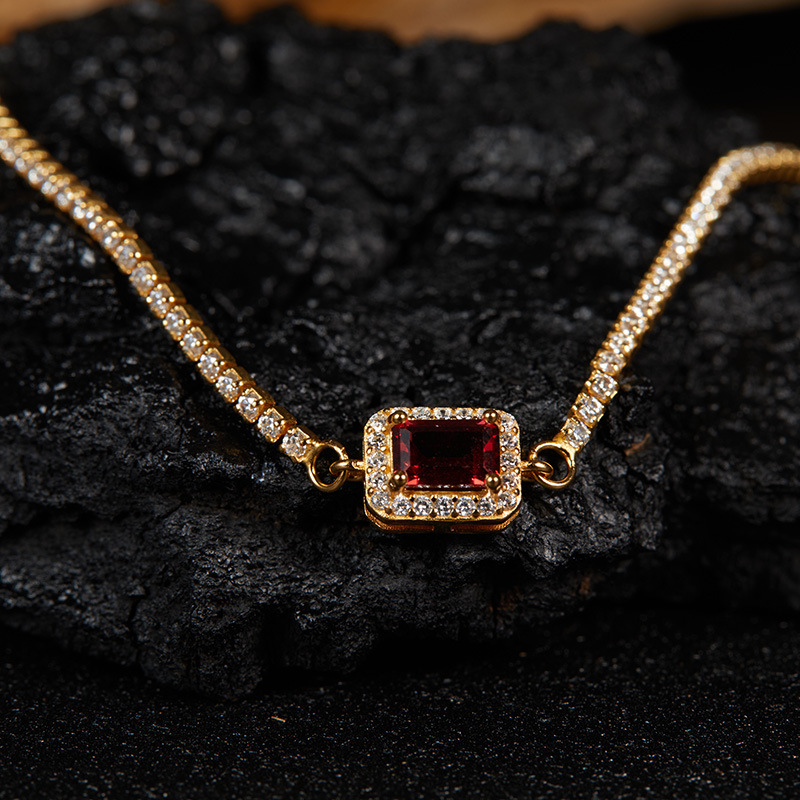
✨ Featured Garnet Jewelry
Back to Complete Gemstone Guide


News for Wednesday 10 September, 2025
View all news for Wednesday 10 September, 2025 on one page