

Ultimate Gemstone Guide: List, Meanings, Hardness and Buying Tips
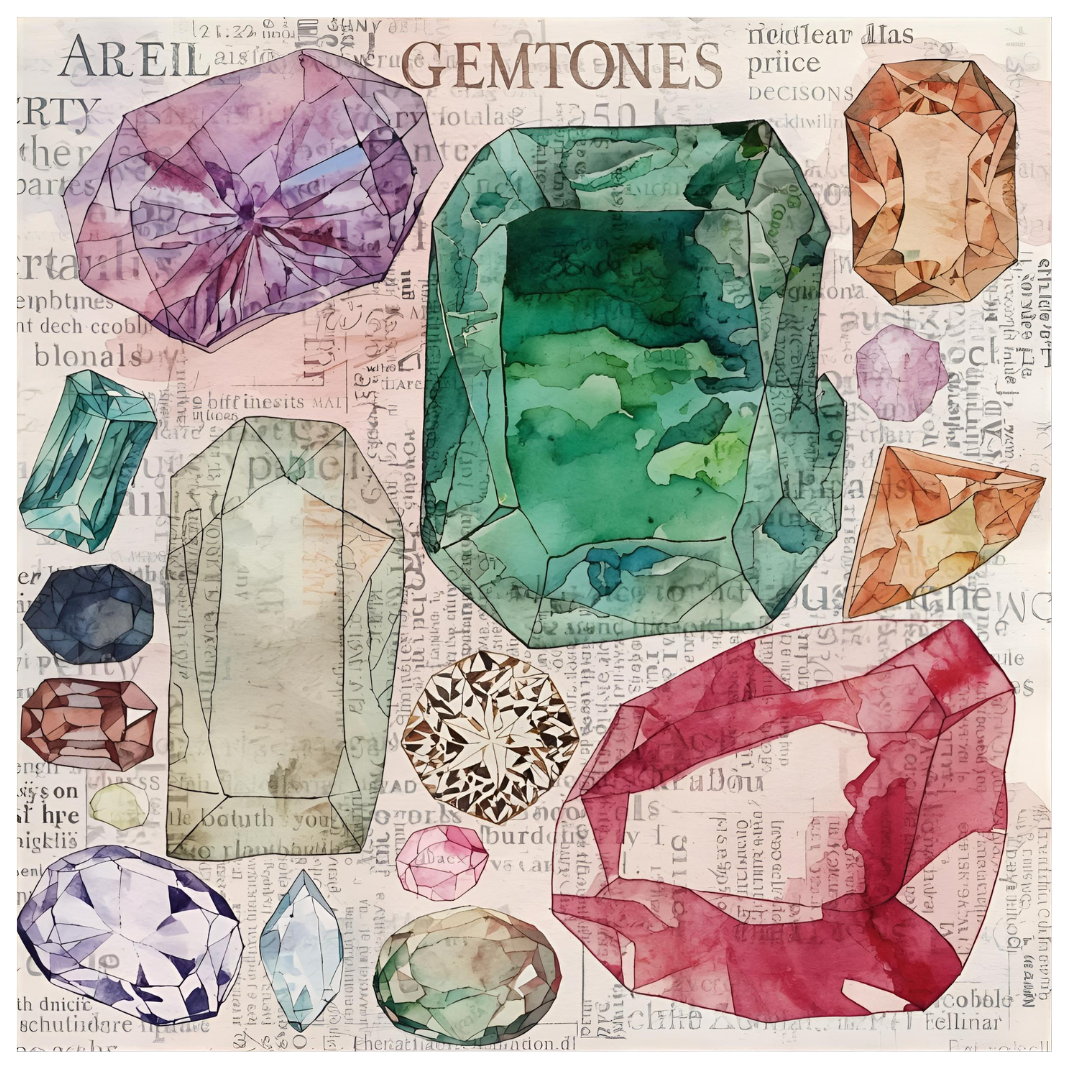
What Is The List Of Gemstones?
Here is a comprehensive list of gemstones, categorized for clarity. It's important to note that there are hundreds of gem varieties, but this list covers the most well-known and significant ones.
Modern Birthstone Chart (Gemological Institute of America)
| Month | Traditional Birthstone(s) |
| Jan | Garnet |
| Feb | Amethyst |
| Mar | Aquamarine, Bloodstone |
| Apr | Diamond |
| May | Emerald |
| Jun | Pearl, Moonstone, Alexandrite |
| Jul | Ruby |
| Aug | Peridot, Spinel |
| Sep | Sapphire |
| Oct | Opal, Tourmaline |
| Nov | Topaz, Citrine |
| Dec | Turquoise, Zircon, Tanzanite |
This list covers the major gemstones, but there are hundreds of mineral species and varieties used in jewelry and collected by enthusiasts. The value of any gem depends on the "Four Cs" (Color, Clarity, Cut, Carat) as well as its rarity and provenance.
Here, let's see the table of contents.;
- What Is The Meaning Of Gemstones?
- What Is The Luckiest Gemstone?
- What Are The Best Gemstones For Jewelry?
- What Are Good Gemstones For Rings?
- Which Is Better, Gemstone or Diamond?
- What Is The Strongest Gem?
- How Do You Measure Whether A Gemstone Is Genuine Or Not?
- Which Gemstone Is The Most Expensive And Rare?
- What Are The Most Popular Gemstones For Engagement Rings?
- How Can I Find My Lucky Gemstone?
- Where Can I Go If I Want To Buy Gemstone Jewelry?
What Is The Meaning Of Gemstones?
The "meaning" of gemstones operates on multiple levels, ranging from the scientific and practical to the deeply symbolic and personal. Here’s a breakdown of the different ways gemstones are meaningful:
1. Geological & Scientific Meaning
At their core, gemstones are rare and beautiful pieces of the Earth's mineral history.
Formation: They are minerals, rocks, or organic materials that form under specific, often extreme, conditions of heat, pressure, and chemistry over millions of years.
Value Criteria: Their scientific properties—hardness (Mohs scale), clarity, crystal structure, refractive index (brilliance), and color—determine their durability, beauty, and rarity.
2. Symbolic & Metaphysical Meaning (Historical & Cultural)
This is the most commonly referenced "meaning." For millennia, cultures worldwide have ascribed symbolic powers, virtues, and connections to gemstones.
Protection & Power: Many were worn as amulets to ward off evil, illness, or danger (e.g., Turquoise for protection in many Native American and Middle Eastern cultures).
Healing & Well-being: In traditions like Ayurveda and crystal healing, gems are believed to influence the body's energy or "vibrations." Amethyst is for calm, Carnelian for vitality.
Status & Identity: Historically, gems denoted royal authority (Ruby), divine favor (Emerald), or purity (Pearl). Today, they can signal social status, personal style, or group affiliation (e.g., fraternity rings).
3. Birthstones & Calendrical Meaning
A modern system that links specific gems to months of the year, offering a personal symbol.
Origin: Has roots in the Biblical breastplate of the High Priest and was popularized in 18th- to 20th-century jewelry marketing.
Personal Significance: Wearing one's birthstone is thought to bring good luck, health, or access to the stone's symbolic attributes (e.g., Sapphire for wisdom for September babies).
4. Commemorative & Emotional Meaning
Gemstones serve as powerful vessels for human emotion and memory.
Love & Commitment: Diamonds (eternity), Rubies (passion) in engagement and anniversary rings.
Memorial & Connection: Often used in "mourning jewelry" or to remember a loved one. An heirloom gem carries family history.
Personal Milestones: Marking achievements, birthdays, or new chapters (e.g., a class ring with the school's gem, a gem for a 40th anniversary).
5. Investment & Economic Meaning
As rare natural resources, high-quality gemstones are stores of value and luxury commodities.
Portable Wealth: Historically, gems were a compact form of wealth that could be transported and traded.
Market Value: Rarity, demand, and quality create significant monetary value (e.g., a fine Burmese Ruby or Kashmir Sapphire can command prices per carat rivaling top diamonds).
Examples of Common Symbolic Meanings:
Diamond: Eternal love, purity, strength, invincibility.
Ruby: Passion, courage, vitality, royalty.
Sapphire: Wisdom, truth, loyalty, nobility.
Emerald: Hope, renewal, growth, fertility.
Amethyst: Peace, stability, sobriety, spirituality.
Pearl: Purity, innocence, lunar energy, transformation.
Important Perspective:
Cultural Variation: Meanings differ greatly. For example, in the West, jade is often just a beautiful green stone, while in Chinese culture, it embodies virtue, protection, and heart.
Personal Belief: The most powerful meaning is often the one you assign. A stone can be meaningful simply because it was a gift, it matches your eyes, or you find it beautiful.
The meaning of a gemstone is a multifaceted blend of:
Its Natural History (a wonder of geology)
Its Cultural History (a symbol laden with human stories)
It's a personal Story (a token of love, memory, or identity)
Its Material Value (a rare and valuable object)
Ultimately, a gemstone's meaning is a dialogue between its ancient, inherent qualities and the significance we choose to give it.
What Is The Luckiest Gemstone?
Which Stone Is Most Powerful?
The question of which stone is "most powerful" depends entirely on the framework of belief or measurement you are using. There is no single, objective answer, as "power" can mean spiritual energy, cultural significance, physical properties, or symbolic weight.
Here is a breakdown of the strongest contenders for "most powerful" stone across different categories:
1. For Metaphysical & Energy Work: The "Master Healer."
Clear Quartz is often called the "Master Healer." Its claimed power lies in its versatility, amplification, and programming.
Why: It's believed to amplify the energy and intention of the user and other stones, store information (like a crystal computer battery), and work on all energy levels. Its power is seen as adaptive and directive.
2. For Protection & Grounding: The "Psychic Shield."
Black Tourmaline is frequently cited as the most powerful protective stone.
Why: It's believed to create an impermeable shield against negative energy, psychic attacks, and environmental pollutants (like EMFs). Its power is defensive and grounding, transforming negativity rather than just deflecting it.
3. For Cultural & Historical Significance: The "Stone of Heave.n"
Jade (Nephrite/Jadeite) holds this title, particularly in Chinese, Mesoamerican, and Maori cultures.
Why: For over 8,000 years in China, it has symbolized virtue, moral integrity, imperial authority, and the link between heaven and earth. Its power is spiritual, social, and cosmological, deeply woven into the fabric of a civilization.
4. For Physical Hardness & Invincibility: The "Ultimate Material."
Diamond is scientifically the hardest natural substance on Earth (10 on the Mohs scale).
Why: Its power is literal and industrial. It represents invincibility, eternal love, and supreme value in the modern world. Its physical dominance is unmatched.
5. For Intensity & Transformation: The "Accelera.tor."
Moldavite (a rare green tektite from a meteor impact) has a cult following for its intense, often overwhelming, transformative energy.
Why: Users describe it as a "fast-forward" button for spiritual growth and life changes. Its power is catalytic and disruptive, linked to its extraterrestrial origin.
6. For Rarity & Legend: The "King of Gems" in Lore
Ruby and Blue Sapphire have been historically regarded as the most powerful precious gems.
Why: In ancient cultures, ruby was the stone of kings, representing the sun, blood, life force, and undefeatable power. Blue sapphire was associated with divine favor, wisdom, and celestial connection. Their power is regal and sacred.
Critical Perspective: The Most Powerful Stone for YOU
The truth is, the "most powerful" stone is highly personal and depends on:
Your Intention: What do you need? Protection (Black Tourmaline), Clarity (Clear Quartz), Love (Rose Quartz), and Luck (Jade)?
Your Cultural Connection: A stone revered in your heritage (e.g., Turquoise in Navajo culture, Lapis Lazuli in ancient Egypt) will carry profound power for you.
Your Personal Resonance: You may feel a strong, unexplainable pull to a specific stone. That personal connection is its power.
Final Synthesis
If forced to choose based on a composite of historical reverence, cultural depth, and widespread metaphysical reputation, the strongest candidates are:
Jade: For its unbroken, millennia-spanning role as a sacred, life-protecting symbol of cosmic power.
Clear Quartz: For its central, foundational role in modern crystal practice as the ultimate amplifier and tool.
Diamond: For its absolute physical dominance and its unparalleled status as a symbol of invincibility and commitment in the modern era.
Jade is perhaps the most powerfully significant stone in human culture.
Clear Quartz is considered the most powerful functional stone in energy work.
Diamond is a powerfully enduring stone in the physical world.
The power ultimately resides not in the stone itself, but in the meaning, intention, and belief you project onto it.
What Are The Best Gemstones For Jewelry?
Selecting the "best" gemstones for jewelry involves balancing durability, beauty, versatility, value, and personal meaning. Here’s a categorized guide to help you choose, whether for an engagement ring, daily wear, or a special occasion.
Top Tier: The "Big Four" & Classics (For Heirloom & Fine Jewelry)
These are the most traditional, durable, and valuable choices for lifelong pieces.
Diamond
Why: The hardest natural substance (10/10 Mohs). Unmatched brilliance, timeless symbolism (love, commitment). Ideal for engagement rings and daily-wear pieces.
Considerations: Price, ethical sourcing. Lab-grown diamonds offer identical properties at a lower cost.
Sapphire
Why: Extremely hard (9/10), second only to diamond. Classic in blue, but comes in every color (except red, which is ruby). Excellent for engagement rings (e.g., Princess Diana's ring) and statement pieces.
Best For: Rings, pendants. A perfect, durable alternative to diamond.
Ruby
Why: Hardness of 9/10. The king of colored gems symbolizes passion and power. The finest red is rare and valuable.
Best For: Rings, cocktail rings, high-end jewelry.
Emerald
Why: Iconic green, rich history. Softer (7.5-8/10) and typically included (natural internal "jardin"), requiring more care. Often oil-treated for clarity.
Best For: Pendants, earrings, and rings with protective settings (bezel). Best for occasional wear or careful daily wear.
Excellent All-Around Choices (Durable & Versatile)
These gems offer great durability for regular wear in various jewelry types.
Spinel
Why: Hardness of 8/10, brilliant, often mistaken for ruby or sapphire. Comes in vibrant reds, blues, pinks, and neon "hot" colors. A fantastic, often more affordable alternative.
Topaz
Why: Hard (8/10), affordable, and available in large sizes. Imperial Topaz (orange-pink) is most prized. Blue topaz (treated) is very popular.
Tourmaline
Why: Hardness of 7-7.5/10. The "chameleon gem" has an incredible color range. Paraíba tourmaline (electric blue-green) is spectacular. Great for unique, colorful designs.
Garnet (especially Almandine & Rhodolite)
Why: Hardness of 7-7.5/10, excellent durability. Not just red—comes in greens (Tsavorite), oranges (Spessartite), and color-change varieties.
Why: Hardness of 7.5-8/10. Serene blue color, excellent clarity, and often cut in large, clean stones. Perfect for statement earrings or necklaces.
Citrine & Amethyst
Why: Quartz family, hardness of 7/10. Very affordable, available in large sizes. Citrine's sunny yellow and amethyst's regal purple are perennially popular.
Best for Statement & Fashion Jewelry
These are beautiful but softer or more delicate. Best for pieces that won't suffer heavy impacts (earrings, pendants, brooches).
Opal
Why: Unique play-of-color. Relatively soft (5.5-6.5/10), sensitive to heat and dryness. Best in pendants, earrings, or protective bezel settings.
Pearl
Why: Classic, organic beauty. Soft and can be scratched, harmed by acids/perfume. Best for necklaces, earrings, and special occasions.
Tanzanite
Why: Stunning violet-blue. Moderate hardness (6.5/10) with perfect cleavage (can split if hit). Best for pendants and earrings, or rings worn with great care.
Moonstone, Labradorite, Opalite
Why: Ethereal optical effects (adularescence, labradorescence). Soft (6-6.5/10). Best for necklaces and earrings.
Ultimate Guide: Choosing by Jewelry Type
Engagement Rings / Daily-Wear Rings: Prioritize hardness (8+ on Mohs).
Best: Diamond, Sapphire, Ruby, Moissanite (9.25), Spinel.
Good with care: Emerald, Aquamarine, Topaz.
Earrings & Pendants: These are protected from knocks. You can use softer, more delicate stones.
Best: Opal, Pearl, Tanzanite, Emerald, any stone you love.
Bracelets & Bangles: Subject to frequent scratching and impact.
Best: Diamond, Sapphire, Ruby, Quartz (Agate, Jasper).
Men's Jewelry: Often favors durability and opaque stones.
Best: Onyx, Black Diamond, Sapphire, Lapis Lazuli, Hematite, Carnelian.
Key Factors to Consider
Durability (Mohs Hardness):
8+ (Excellent for Rings): Diamond, Moissanite, Sapphire, Ruby, Spinel, Topaz.
7-7.5 (Good for Rings with Care): Garnet, Tourmaline, Amethyst, Citrine, Peridot.
Below 7 (Better for Earrings/Pendants): Opal, Tanzanite, Moonstone, Pearl, Turquoise.
Budget & Value:
High Investment: Diamond, Ruby, Emerald, Sapphire, Alexandrite.
Excellent Value: Sapphire/Spinel (vs. Diamond), Garnet, Tourmaline, Quartz varieties, Aquamarine.
Affordable & Beautiful: Amethyst, Citrine, Agate, Peridot, Freshwater Pearl.
Personal Style:
Classic/Timeless: Diamond, Sapphire, Ruby, Emerald, Pearl.
Colorful & Modern: Tourmaline, Spinel, Paraíba, Tsavorite Garnet.
Organic/Earthy: Turquoise, Lapis Lazuli, Malachite, Jade.
Final Recommendation
There is no single "best" gemstone—it depends on the piece and the wearer.
For a lifetime, a daily-wear ring, you can't beat the durability of Diamond, Sapphire, or Ruby.
For a unique, colorful ring with great durability, explore Spinel or Tourmaline.
For a stunning, conversation-starting pendant or earrings, consider Opal, Tanzanite, or a fine Pearl.
The best gemstone is ultimately the one that resonates with you personally, fits your lifestyle, and is set in a well-made piece of jewelry that protects it appropriately. Always purchase from a reputable jeweler who can inform you about the stone's specific care needs.
What Are Good Gemstones For Rings?
Choosing a gemstone for a ring requires special consideration because rings are subject to the most wear and tear of any jewelry. The "best" stones combine durability, beauty, and personal meaning.
Here’s a breakdown of the best gemstones for rings, categorized by priority.
Top Tier: Best for Daily Wear & Engagement Rings
These stones are hard enough (Mohs 8+) to resist scratches from everyday dust and abrasion, making them ideal for a lifetime of wear.
Diamond (10/10)
Why: The hardest natural substance. Unmatched for daily wear, symbolism, and brilliance.
Note: Lab-grown diamonds are a popular, ethical, and more affordable option with identical properties.
Sapphire (9/10)
Why: Exceptionally hard, second only to diamond. Comes in all colors except red. Blue is classic, but pink, yellow, and white (colorless) sapphires are stunning alternatives.
The Ultimate Choice: Arguably the best all-around colored gemstone for a ring.
Ruby (9/10)
Why: Equal hardness to sapphire. The classic red gem of passion and royalty. A durable and prestigious choice.
Moissanite (9.25/10)
Why: A brilliant, lab-created gemstone often used as a diamond alternative. Has more "fire" (color flashes) than a diamond and is extremely durable and affordable.
Excellent & Durable Choices (Great for Regular Wear)
These stones are hard enough (7-8) for daily wear with some basic care. They are fantastic for engagement or signature rings.
Spinel (8/10)
Why: Often overlooked gem with great hardness and brilliance. Comes in vibrant reds (looks like ruby), hot pinks, and blues. A fantastic, durable alternative.
Topaz (8/10)
Why: Very hard and affordable. Imperial Topaz (orange-pink) is prized. Blue Topaz (treated) is widely popular. Avoid hard knocks, as it has perfect cleavage.
Beryl Family (7.5-8/10)
Aquamarine: Serene blue, excellent clarity. Softer than sapphire but still a good choice for a ring worn with reasonable care.
Morganite: Soft peachy-pink, very trendy. Requires a protective setting.
*Note: Emerald (7.5-8) is here but needs extra care* (see next section).
Quartz Family (7/10)
Amethyst (Purple), Citrine (Yellow), Prasiolite (Green): Hard enough for daily wear, but can scratch over many years. Excellent value, available in large sizes.
Beautiful But "Handle With Care" Stones
These are stunning but softer (below 7) or have cleavage (can split if hit). They are best in protective settings (like bezels) and for rings worn on special occasions or with high mindfulness.
Emerald (7.5-8/10)
Why: Softer and almost always included (natural internal fractures). It can chip. Requires a bezel or halo setting and should not be worn for manual work.
Tourmaline (7-7.5/10)
Why: Comes in every color imaginable. Durable enough for regular wear, but some colors can be included. Avoid sharp blows.
Garnet (6.5-7.5/10)
Why: Classic red Almandine and Rhodolite are great. Softer varieties like Tsavorite (green) are beautiful but need more care.
Opal (5.5-6.5/10)
Why: Stunning play-of-color. Very soft and sensitive to dryness/heat. Must be in a protective bezel and removed for chores. Not for daily wear.
Tanzanite (6.5/10)
Why: Gorgeous violet-blue. Soft and has perfect cleavage. Only for occasional-wear rings or pendants.
Moonstone, Labradorite (6-6.5/10)
Why: Ethereal glow. Soft and can chip. Best in pendants or very protected ring settings.
Key Factors When Choosing a Ring Stone
Hardness & Toughness (The Most Important):
Mohs 8+ (Ideal): Can handle daily abrasion from dust (which contains quartz, hardness 7).
Mohs 7 (Good): The minimum for daily wear rings. It will show micro-scratches over decades.
Below Mohs 7 (Use Caution): Prone to scratching and damage.
The Setting is a Protector:
Bezel Setting: A metal rim encircling the stone. Best for soft stones (Opal, Emerald).
Halo Setting: A circle of small diamonds/gems around the center stone. Adds protection and sparkle.
Prong Setting: Classic, exposes the stone the most. Best for hard stones only (Diamond, Sapphire).
Lifestyle: Be honest. If you work with your hands, garden, or are very active, choose a harder stone or plan to remove your ring during those activities.
Quick-Reference Recommendations
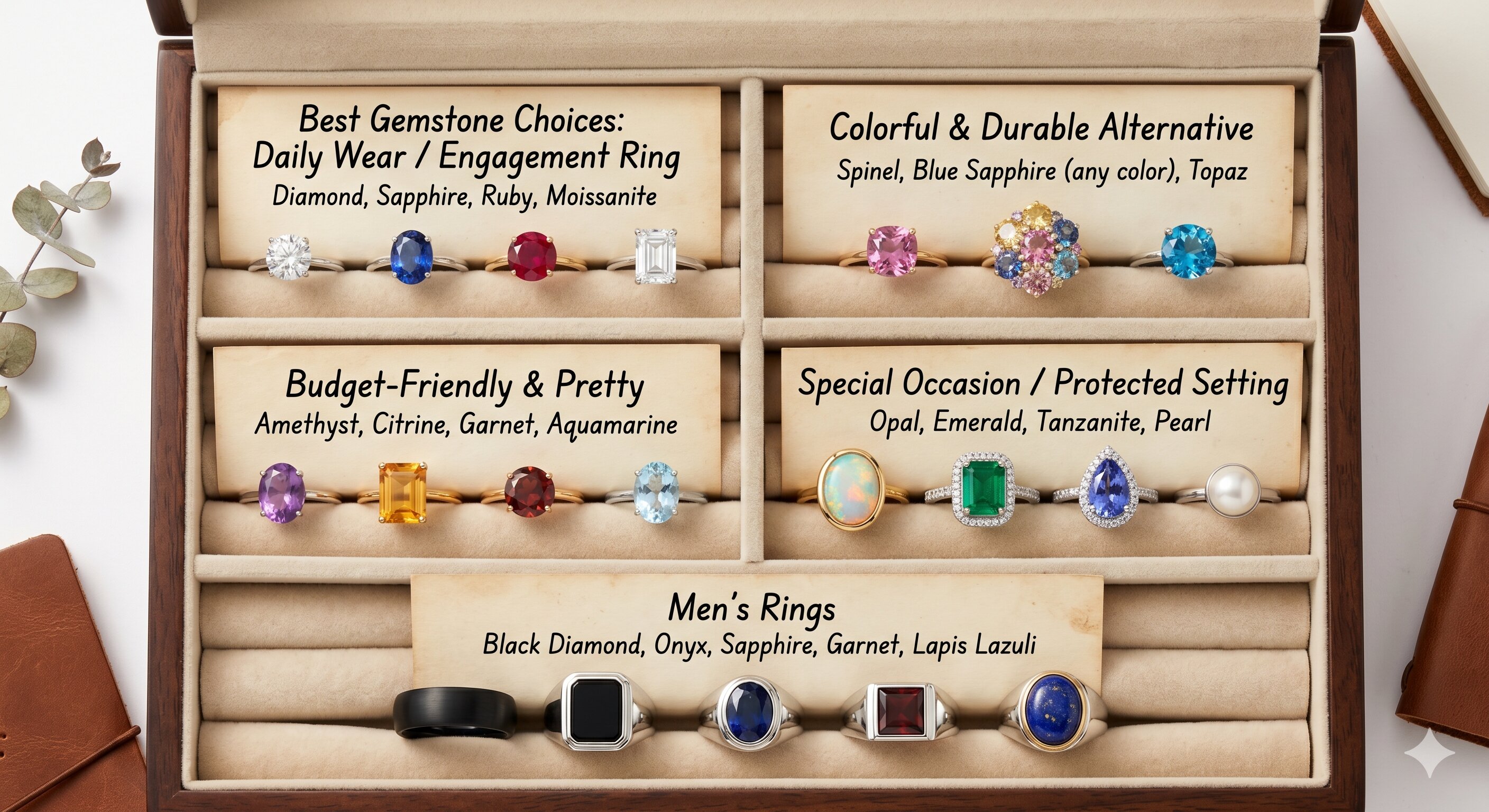
Prioritize Hardness: For a ring you'll wear every day, choose a stone with a Mohs hardness of 8 or higher. This is the single best way to ensure it lasts.
Consider a Lab-Grown Stone: They offer exceptional quality and size for your budget, with identical chemical and physical properties to mined stones.
Talk to a Jeweler: A reputable jeweler can help you select a stone and design a protective setting suited to your lifestyle and choice.
In short, for the ultimate combination of durability and beauty, you can't go wrong with Sapphire, Diamond, or Ruby. For a unique and still very durable choice, explore Spinel. Choose what speaks to you, and just make sure the setting is designed to keep it safe.
Which Is Better, Gemstone or Diamond?
The question of whether a gemstone or diamond is "better" has no single answer—it depends entirely on your priorities, values, and the purpose of the jewelry. Here’s a detailed comparison to help you decide.
Diamond: The Classic Benchmark
Strengths:
Unmatched Hardness: 10/10 on the Mohs scale. It is the most scratch-resistant substance on Earth, making it the most durable choice for daily wear, especially in engagement rings.
Timeless Brilliance: Its exceptional ability to refract light creates a unique, iconic sparkle ("brilliance" and "fire").
Cultural Symbolism: In many cultures, it's the undisputed symbol of eternal love, commitment, and high status.
Liquidity & Value Recognition: High-quality diamonds have a well-established global market and resale value.
Considerations:
Cost: Premium pricing per carat, especially for high-color, high-clarity stones.
Ethical Concerns: Historically linked to conflict ("blood diamonds"). Always insist on certified conflict-free (Kimberley Process) or lab-grown diamonds.
Less Color Variety: While "fancy color" diamonds exist (yellow, pink, blue), they are exceedingly rare and expensive. The classic choice is white/colorless.
Colored Gemstones: The World of Personality & Color
Strengths:
Spectacular Color: Offers an infinite palette—the deep blue of a sapphire, the fiery red of a ruby, the lush green of an emerald, or the unique play-of-color in an opal.
Uniqueness & Personal Meaning: Often tied to birthstones, astrological signs, or personal favorites. Allows for highly personalized jewelry.
Potential Value: Rare, high-quality colored gems (like Burmese ruby, Kashmir sapphire, Paraíba tourmaline) can be more valuable per carat than a white diamond.
Variety & Options: A vast range of price points, from affordable amethyst to ultra-rare alexandrite.
Considerations:
Durability varies: Hardness ranges from 10 (diamond) to as low as 1. For a daily-wear ring, aim for gems with a hardness of 8+ (sapphire, ruby, spinel). Softer stones like opal or tanzanite require protective settings and careful wear.
Less Standardized Market: Valuation can be more complex and subjective, heavily dependent on color, origin, and treatment.
May Need More Care: Many gems are treated (heated, oiled) to enhance color, which is standard but should be disclosed. Some are sensitive to heat or chemicals.
Direct Comparison: Key Decision Factors
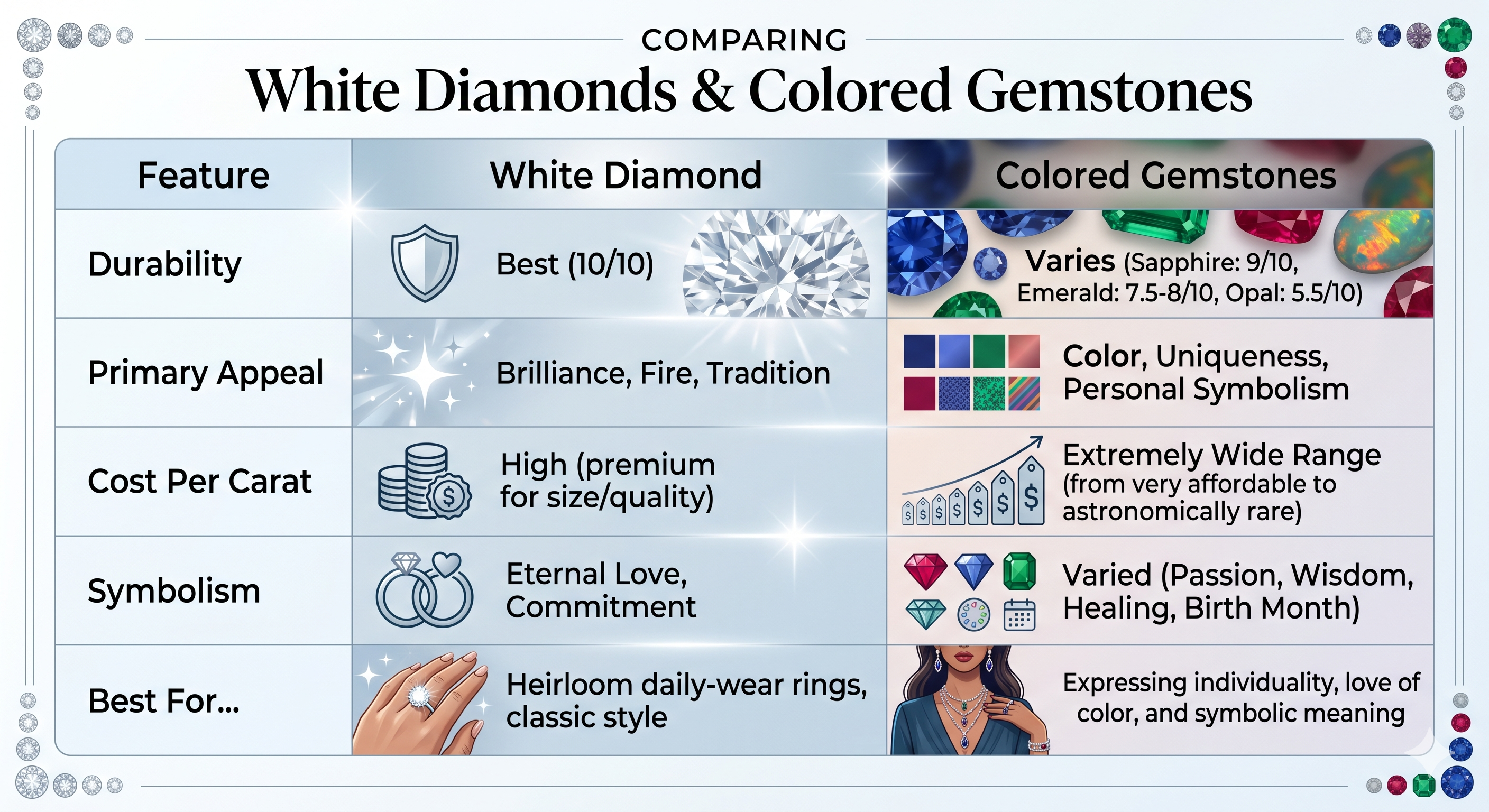
Important Middle Ground: Colored Diamonds & Lab-Grown
Fancy Color Diamonds: Combine diamond durability with stunning color. They are exceptionally rare and costly (e.g., pink, blue, green diamonds).
Lab-Grown Diamonds: Chemically identical to mined diamonds, often 30-50% less expensive. A great ethical and budget-friendly choice for the diamond look.
Lab-Grown Gemstones: Available for many gems (sapphire, emerald), offering perfect color at a lower cost.
Choose a DIAMOND if:
Your top priority is maximum durability for a piece worn every day (like an engagement ring).
You love the classic, fiery sparkle and timeless tradition.
You want a stone with a highly standardized grading system (4Cs).
Choose a COLORED GEMSTONE if:
Color and personal expression are most important to you.
You want a stone with personal or symbolic meaning (e.g., a birthstone, or a color with special significance).
You desire a unique, non-traditional look.
You are open to selecting a stone for specific jewelry (e.g., sapphire for a durable ring, opal for a protected pendant).
There is no objective "better." It's a personal choice between the unrivaled durability and tradition of a diamond and the expressive color and individuality of a gemstone. Many people today are choosing stunning colored gemstones for engagement rings, while others find deep meaning in the classic diamond.
Recommendation: Set a budget, consider the wearer's lifestyle, and then look at options side-by-side. The stone that captivates you and fits your story is the "better" one. For the best of both worlds, consider a ring with a central diamond accented by colored gemstones, or a vibrant colored sapphire (which is nearly as hard as a diamond).
What Is The Strongest Gem?
Based on the standard scientific measurement of scratch resistance, diamond is the hardest gem, ranking 10 on the Mohs scale. However, "strongest" in gemology is more complex; a gem's overall durability for jewelry depends on more than just hardness.
Hardness vs. Durability: What "Strongest" Really Means
When evaluating a gem's "strength," two key concepts matter:
Hardness: Specifically measures scratch resistance. Diamond's perfect 10 rating means it can scratch any other natural material and can only be scratched by another diamond.
Durability (or Wearability): A broader measure of a gem's ability to withstand daily wear, combining hardness with:
Toughness: Resistance to chipping, cracking, or breaking.
Cleavage: Tendency to split along defined planes.
Despite its top hardness, diamond can shatter if hit with a hammer because it is brittle and has perfect cleavage. Conversely, jade (nephrite or jadeite) is renowned for its exceptional toughness—it's very difficult to break despite having a much lower hardness (6-7 on Mohs).
Hardness of Popular Gemstones
For practical comparison, here is where common gems fall on the Mohs scale:
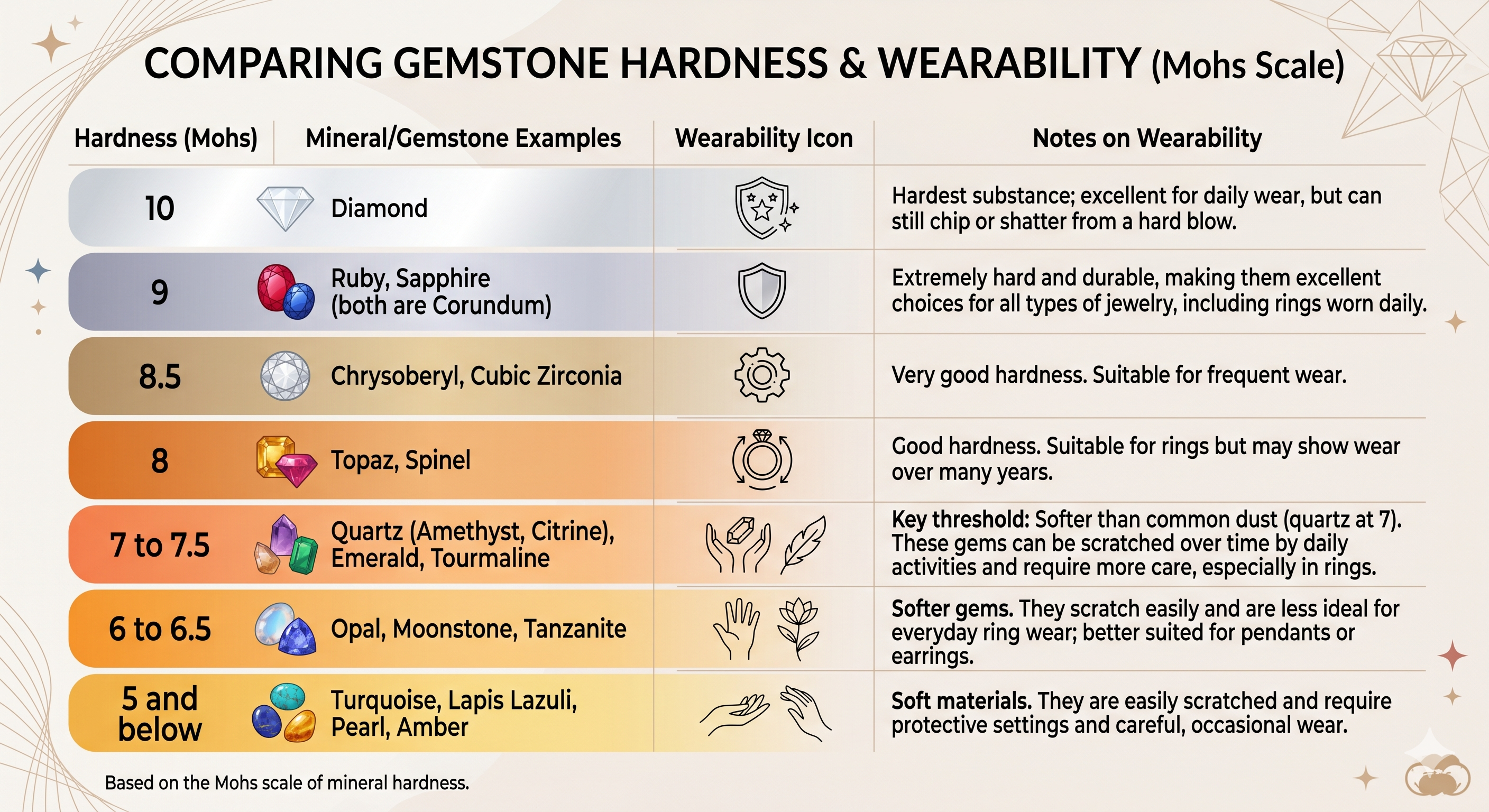
How to Choose a Durable Gem for Jewelry
For jewelry, especially rings, the goal is balance. Consider these points:
For frequent or daily wear (like an engagement ring): Prioritize gems with a hardness of 8 or higher, like sapphire, ruby, or topaz. Diamond is the classic choice.
For special occasion pieces: You can confidently choose beautiful but softer gems like opal or emerald, as they won't face constant wear.
Consider the setting: A protective bezel setting can shield a gem's edges from impacts, which is helpful for both hard-but-brittle stones like diamonds and softer stones.
In summary, while diamond is scientifically the hardest, gems like sapphire and ruby offer a superb balance of hardness and toughness for everyday jewelry.
If you have a specific type of jewelry or lifestyle in mind, I can offer more tailored suggestions on gemstone choices.
Learn more about the Mohs hardness scale on Wikipedia's Mohs scale page.
How Do You Measure Whether A Gemstone Is Genuine Or Not?
To measure if a gemstone is genuine, professional gemologists and specialized laboratories use a multi-step process involving specialized tools. For consumers, there are some basic at-home tests, but they have significant limitations compared to professional analysis.
The table below outlines the main differences between professional and consumer-level testing:
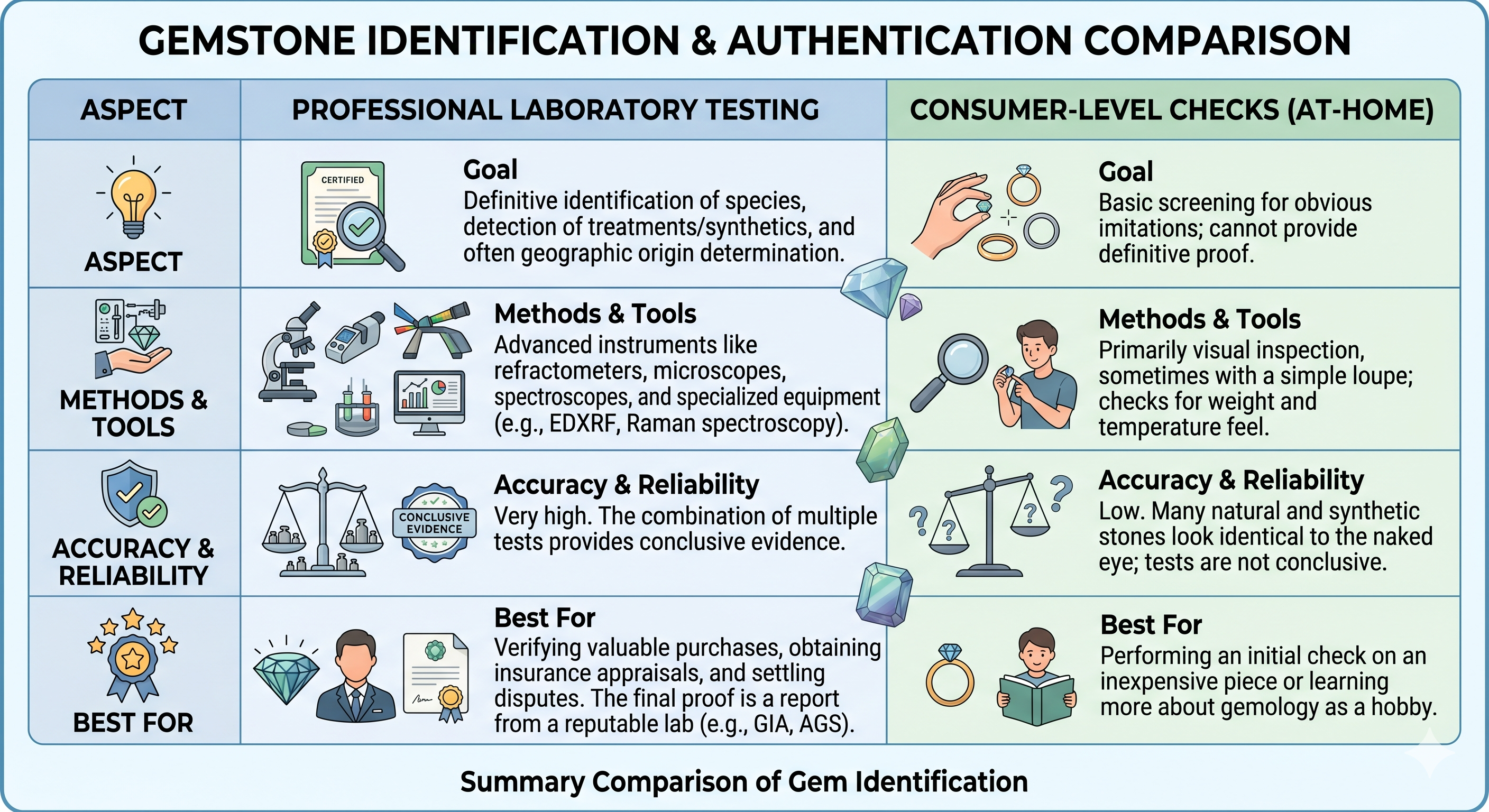
Common Consumer-Level Checks
If you are examining a gemstone at home, you can look for a few indicators, but always be aware of their limitations:
Visual Inspection with a Loupe: Use a 10x jeweler's loupe to look inside the stone. Natural gemstones almost always have minor inclusions (tiny crystals, feathers, or color zoning). A completely flawless, "too-perfect" interior can be a red flag for glass or some synthetics. However, some high-quality natural stones can be very clean, and some synthetics are made with inclusions.
Check the Weight and Feel: Some common imitations have different densities. For example, cubic zirconia is noticeably heavier than a diamond of the same size. However, this requires a known genuine sample for comparison and is not a reliable standalone test.
The "Fog Test" (For Diamonds): Breathe on a clean diamond. Because it dissipates heat instantly, the fog should clear almost immediately. On a diamond simulant like cubic zirconia or glass, the fog may linger for a few seconds. This is not a definitive test and can be misleading.
How to Get a Definitive Answer
For any stone of significant monetary or sentimental value, the only way to be certain is to get a professional gemological report from an accredited laboratory. The process in a top-tier lab like GIA is rigorous:
Initial Assessment: The stone is weighed, measured, and photographed.
Standard Gemological Testing: Gemologists use fundamental tools to measure optical and physical properties like refractive index and specific gravity.
Advanced Analysis: Instruments such as spectrometers are used to analyze the stone's chemical composition and spectral "fingerprint" to distinguish natural from synthetic and detect treatments.
If you can tell me what type of gemstone you're curious about (e.g., a blue sapphire, a red stone you think might be ruby, or a clear stone), I can provide more specific details about what professionals look for in that particular case.
Which Gemstone Is The Most Expensive And Rare?
There isn't a single gemstone that is the definitive "most expensive and rare," as these two qualities are measured differently. Some gems are geologically scarce, while others command extreme prices due to color, size, and demand.
The table below lists some of the top contenders in both categories for comparison.
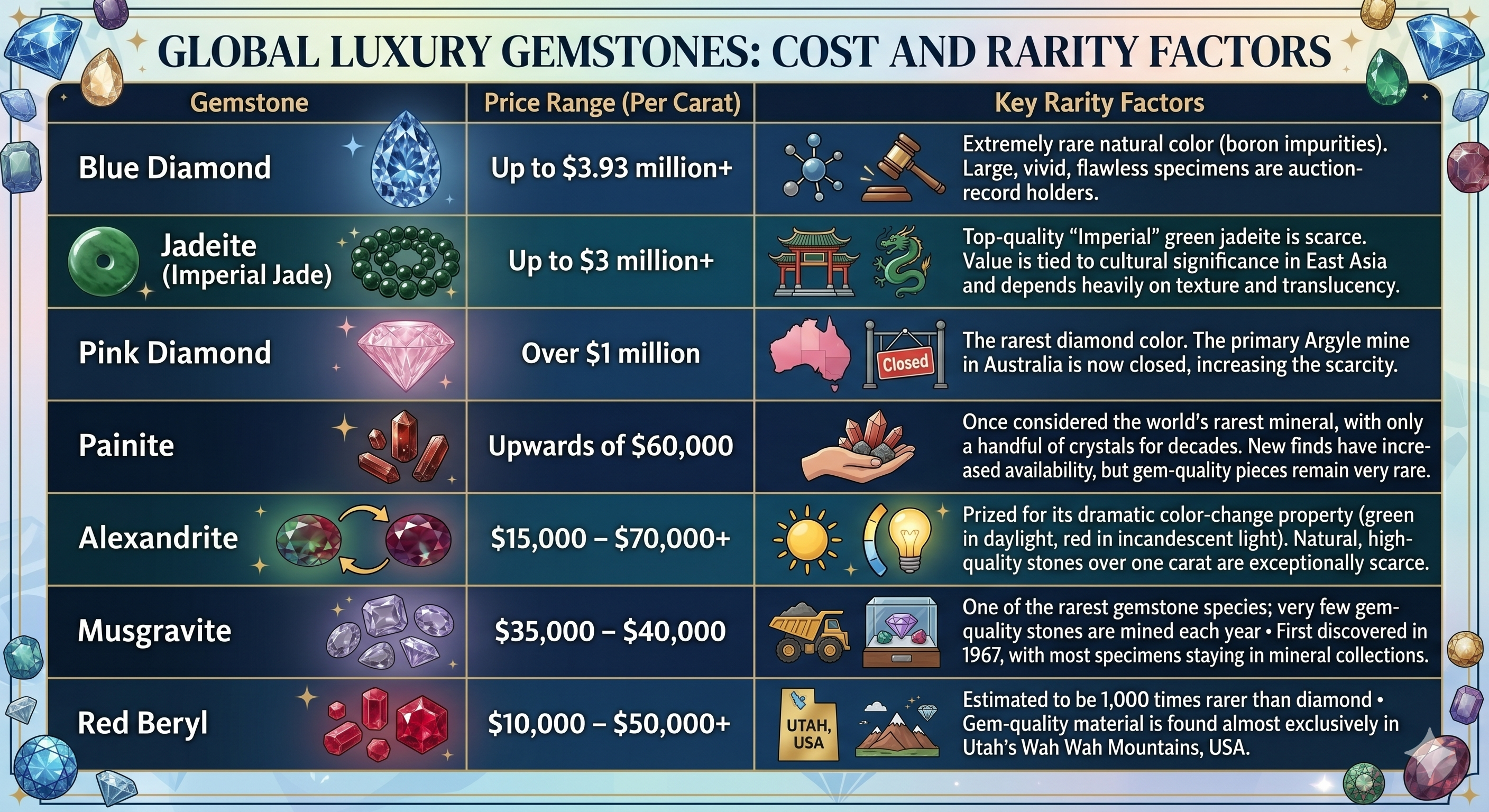
Understanding the Difference: Rarity vs. Value
As shown, the "most expensive" and "most rare" are not always the same stone. This is because a gem's final price depends on more than just its geological scarcity:
What Makes a Gem Rare: Extreme rarity, like that of Painite or Musgravite, stems from very specific and uncommon geological conditions required for formation. These gems are mineralogical curiosities and may be more common in museums than jewelry stores.
What Makes a Gem Expensive: Record-breaking prices, like those for Blue Diamonds or Pink Diamonds, combine rarity with exceptional color, size, clarity, and perfect cut. High auction prices are also driven by intense demand from collectors and investors, as well as cultural significance (like with Jadeite).
How to Think About "The Most"
The true "most expensive" gem is often a specific, famous stone sold at auction (like the Pink Star or Oppenheimer Blue diamonds). For rarity, mineral collectors might point to Painite or Red Beryl. For the ultimate combination of rarity, beauty, and cultural status, Imperial Jadeite is a strong contender.
If you are interested in a particular gem from the list, such as the color-changing property of Alexandrite or the specific locations where Red Beryl is found, I can provide more detailed information about it.
How Can I Find My Lucky Gemstone?
Finding your "lucky" gemstone is a personal journey that varies significantly depending on the cultural, spiritual, or astrological system you follow. There is no single scientific method, but several established traditions offer guidance.
Here's a comparison of the most common systems used to determine a lucky gemstone:
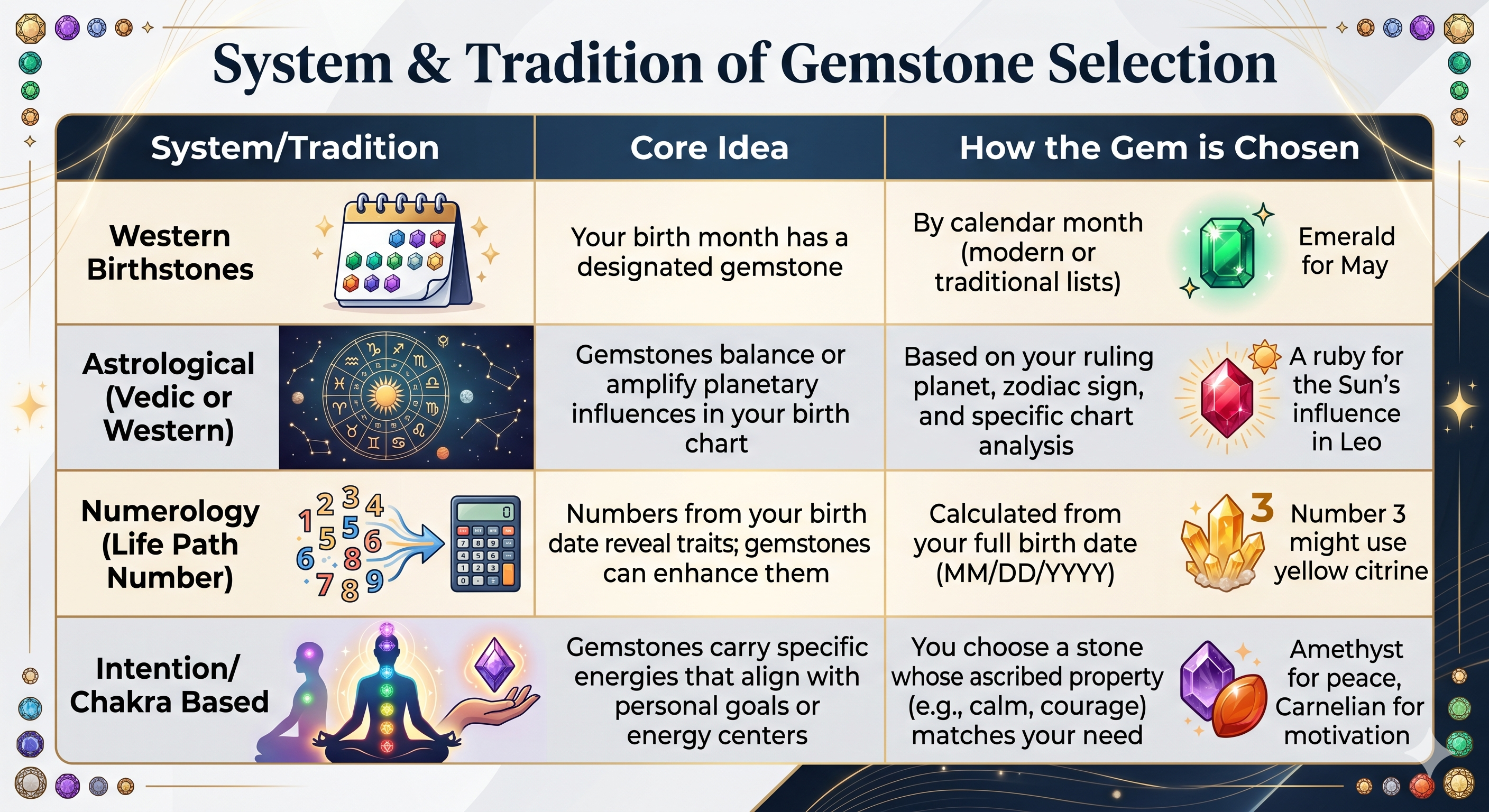
Key Principles to Consider
If you explore astrological or numerological systems, keep these points in mind:
Consultation is Key: For Vediastrologylo, especially, consulting a knowledgeable astrologer is highly recommended. They analyze your entire birth chart to recommend the most beneficial gemstone and can advise on proper rituals, metals, and finger wearing.
The "Lucky" Effect is Subjective: A gemstone's "luck" often comes from the placebo effect and personal meaning. Wearing a stone you believe in can boost confidence and mindfulness, which can positively influence your actions.
Beware of Contraindications: In systems like Vedic astrology, certain gemstones are believed to be incompatible with some individuals' charts and could bring negative effects. This is a primary reason for professional guidance.
Would you like to explore a specific system in more detail? If you share your birth date (or just your zodiac sign) or a personal intention, I can offer more tailored information to help guide your search.
What Are The Most Popular Gemstones For Engagement Rings?
For engagement rings, diamond is by far the most popular stone, prized for its durability and sparkle. If you're interested in a colored gemstone, sapphire is the most popular choice.
The popularity of these stones stems from a combination of durability for daily wear, timeless beauty, and meaningful symbolism.
Comparing Popular Engagement Gemstones
Here's a quick overview of the most common and recommended gemstones, comparing their key features.
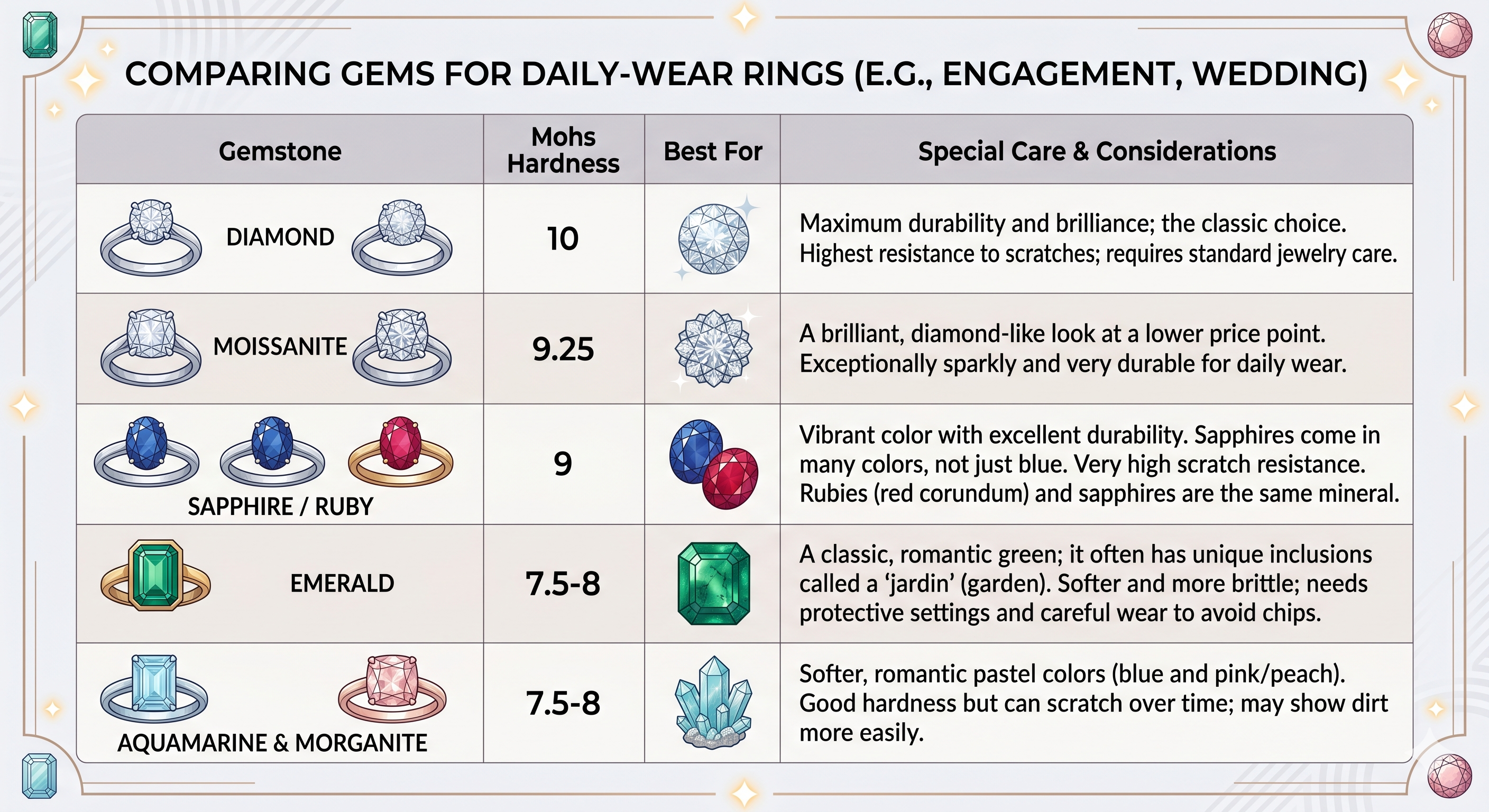
How to Choose the Right Stone for You
Selecting a gemstone is personal, but these practical tips can help you decide:
Prioritize Durability for Daily Wear: For a ring worn every day, experts recommend a hardness of 7 or higher on the Mohs scale. Softer stones like opals, pearls, or tanzanite are generally not recommended as they can easily scratch, chip, or break.
Consider Your Lifestyle and Ring Care: If you have an active lifestyle, harder stones (8+) are best. For stones like emeralds, a protective bezel setting can help guard against impacts.
Think Beyond the Obvious Colors: Sapphires come in almost every color (pink, yellow, padparadscha), offering durability with unique style. Lab-created gemstones are also an excellent ethical and often more affordable option.
If you'd like to explore a particular color or have a specific budget in mind, I can help you narrow down the best durable options within those preferences.
Where Can I Go If I Want To Buy Gemstone Jewelry?
You have a wide range of options for buying gemstone jewelry, from large national chains to specialized gem dealers. Your choice will depend on what you're looking for: a ready-made piece, a custom design, or a specific, rare stone. CosyJewelry is a leading online retail beauty and birthstone jewelry site at affordable prices.
← Back to Complete Gemstone Ring


News for Tuesday 18 November, 2025
View all news for Tuesday 18 November, 2025 on one page
Recent News
- Monday 17 November, 2025
- Saturday 15 November, 2025
- Wednesday 05 November, 2025
- Monday 27 October, 2025
- Thursday 09 October, 2025