

March Birthstone Bloodstone: Complete Guide to Meaning And Jewelry
Bloodstone Birthstone
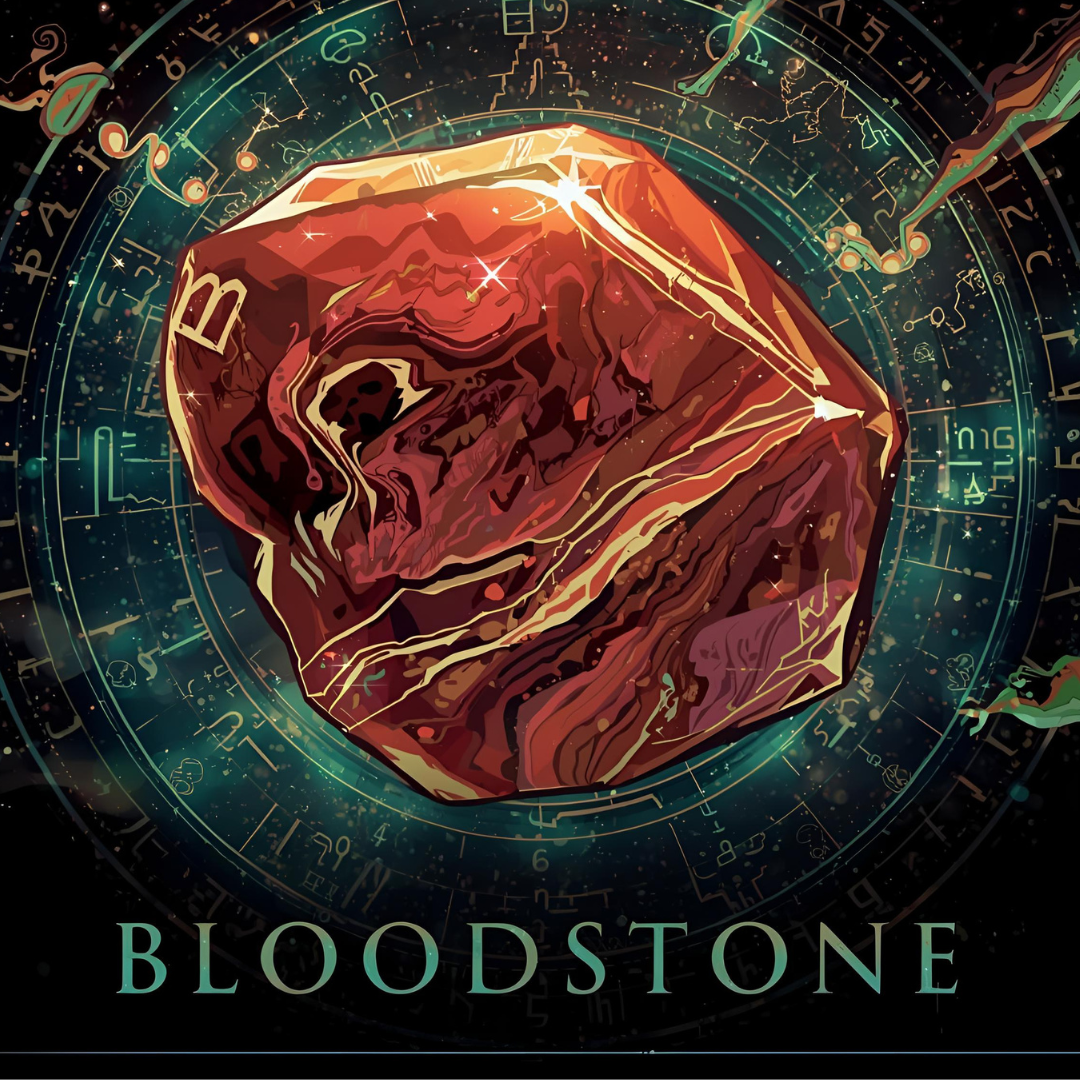
Bloodstone is the traditional birthstone for March. If you were born in March, it's one of your birthstone options. Its deep green color, speckled with red flecks, makes it a striking alternative to the blue aquamarine, which is March's modern birthstone.
Fascinating Origins & Meanings
The value of bloodstone comes from its powerful symbolism, woven through history by various cultures:
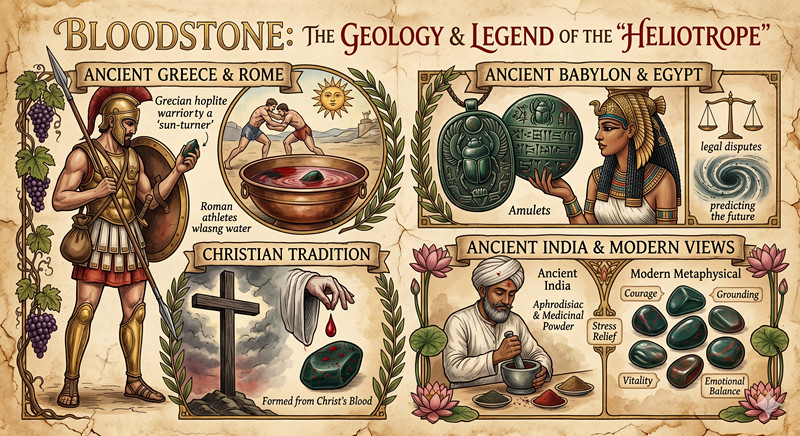
I hope this helps you explore its fascinating background. If you're interested in how these historical meanings translate into modern jewelry styles or how to care for a bloodstone piece, feel free to ask.
Table of Contents
- What Is The Birthstone For Bloodstone?
- What Does The Bloodstone Birthstone Mean?
- What Is The Bloodstone Stone Good For?
- What Is The Color Of Bloodstone?
- What Is A Good Quality Bloodstone?
- How To Tell If Bloodstone Is Real?
- Why Is Bloodstone So Expensive?
- How To Activate A Bloodstone?
- Is Bloodstone A Lucky Stone?
- Are Bloodstones Valuable?
- What Does Bloodstone Protect Against?
- Can You Wear Bloodstone Every Day?
- Can You Sleep With Bloodstone?
What Is The Birthstone For Bloodstone?
The short answer is: Bloodstone is a birthstone.
Bloodstone is one of the traditional birthstones for March.
Here's a more detailed breakdown to clarify the relationship:
The Two March Birthstones
March is unique in having two very different, but officially recognized, birthstones:
Aquamarine: This is the modern and more popular March birthstone. It's known for its beautiful, calming blue-to-blue-green color, reminiscent of the sea.
Bloodstone: This is the traditional and ancient March birthstone. It has a deep historical significance, especially in Christian and Babylonian lore.
All About Bloodstone
Since you're asking about it, here are some key facts about bloodstone itself:
What it looks like: Bloodstone is a dark green variety of the mineral chalcedony (a type of quartz). It's characterized by distinctive red or orange flecks and splatters that look like drops of blood, which is how it got its name.
The Legend of the Name: A Christian legend states that the stone was formed at the crucifixion of Jesus Christ. As his blood dripped onto the dark green earth and stained some jasper stones, they were transformed into bloodstone.
“Roman soldiers later carried bloodstone into battle — not as decoration, but as desperation. They believed it could stop bleeding from wounds and make them invincible. For them, bloodstone was not a gem. It was a prayer carved in stone: let me endure, let me return, let me be strong.”
The same stone that guarded Roman gladiators now fits your finger. Each bloodstone in our collection is hand-selected for a deep green base and vivid red speckles — unique as a fingerprint, strong as a vow.”
Other Names: It is also known as Heliotrope, which comes from the ancient Greek words for "sun" and "to turn," referring to the belief that it could turn the sun red if placed in water.
Symbolism and Lore: Historically, bloodstone was believed to have healing powers, could stop bleeding, and was carried by soldiers as an amulet for protection and courage.
So, to summarize: You don't look for the birthstone for bloodstone; bloodstone is the birthstone for March.
What Does The Bloodstone Birthstone Mean?
The bloodstone birthstone carries a rich and powerful tapestry of meanings, steeped in history, legend, and symbolism.
Unlike many gemstones known for their beauty, bloodstone's meaning is deeply tied to its unique appearance and a history of practical and spiritual use.
Here’s a breakdown of the core meanings associated with the bloodstone birthstone:
-
Courage, Strength, and Victory
This is one of the most ancient and primary meanings of bloodstone. Its dark, earthy green color was associated with the toughness of a warrior, and the red specks were seen as the blood of battle—not as a symbol of death, but of life force, courage, and the ability to endure hardship.
“In medieval Europe, knights heading to the Crusades wore bloodstone amulets sealed with wax. They believed the stone gave them the strength to stand for justice — even when outnumbered. The Babylonians carved it into royal seals, trusting its red spots to reveal truth from lies. Today, wearing bloodstone means you carry that same ancient fire: resilience without hardness, courage without cruelty.”
Historical Context: Roman soldiers and gladiators often carried bloodstone amulets into battle, believing it could stop bleeding from wounds and make them invincible. It was considered a "warrior's stone" that brought victory.
-
Healing and Vitality
The "blood" in its name directly connects to its long-standing reputation as a powerful healing stone, especially for anything related to the blood, circulation, and detoxification.
Ancient Medicine: In ancient times, it was ground into a powder and mixed with honey to treat tumors, stop bleeding, and draw out poison.
Modern Metaphysics: Today, in crystal healing practices, it is still seen as a stone that boosts the immune system, increases energy (vitality), and helps the body cleanse and purify itself.
-
Grounding and Protection
The deep, dark green color of bloodstone connects it strongly to the Earth. This gives it a powerful grounding energy, helping to calm anxiety, center the mind, and bring one's focus back to the present moment.
A Protective Talisman: Because of this grounding property and its legendary history, it is also considered a potent protective stone. It was used to ward off evil spirits and negative energies, creating a shield of safety for the wearer.
-
Justice and Wisdom
Bloodstone has also been linked to truth and justice. Its ability to reveal what is hidden (the red spots in the green) was metaphorically applied to revealing the truth in legal matters.
Babylonian Lore: The Babylonians used bloodstone to make seals and stamps, believing it would add power and authority to their decrees.
The Stone of Martyrs: The Christian legend of its creation from Christ's blood also associated it with sacrifice, moral courage, and standing up for one's beliefs.
-
Purification and Renewal
Connected to its healing properties, bloodstone is also a symbol of purification—both physical and spiritual. It is believed to help cleanse the body of impurities and the mind of negative thoughts.
Connection to March: As a birthstone for March, which marks the end of winter and the beginning of spring in the Northern Hemisphere, this meaning is particularly fitting. It symbolizes the cleansing of the old and the vibrant renewal of life, mirroring the season.
Summary of Bloodstone's Meaning for a March-Born:
If you are born in March and choose bloodstone as your birthstone, you are embracing a stone that symbolizes:
Resilience: The strength to face challenges and endure.
Courage: The heart to act bravely and stand up for what is right.
Vitality: A connection to your life force and physical well-being.
Grounding: A stable foundation in a chaotic world.
Purification: The ability to let go of the old and welcome new growth.
In essence, the bloodstone birthstone is not a delicate stone of mere beauty; it is a talisman of power, endurance, and life—a deeply meaningful choice for those who carry it.
What Is The Bloodstone Stone Good For?
The uses of bloodstone are as varied and fascinating as the stone itself. Its benefits are divided into three main categories: historical/practical, metaphysical, and modern jewelry.
Here’s a comprehensive look at what the bloodstone is good for.
-
Historical & Practical Uses (Lore and Legend)
Throughout history, bloodstone was revered not just as an ornament but as a powerful tool.
A Warrior's Talisman: Roman gladiators and medieval soldiers carried bloodstone amulets into battle, believing it could stop wounds from bleeding and make them invincible. This is its most famous historical use.
A Healing Agent: In ancient times, it was ground into a powder and mixed with honey to create poultices and potions. It was used to treat everything from tumors and abscesses to snake bites and poisoning. Its blood connection made it a go-to for any issue related to circulation or detoxification.
A Weather Manipulator (in legend): Its ancient name, Heliotrope, means "sun turning." It was believed that when placed in water, it could turn the sun red or even control thunderstorms.
A Seal and Engraving Material: Because of its hardness and unique appearance, bloodstone was a popular material for signet rings, seals, and intricate carvings, especially in Mesopotamia and Renaissance Europe.
-
Metaphysical & Spiritual Uses (Modern Crystal Healing)
In modern metaphysical practices, bloodstone is considered an extremely powerful and grounding stone. It's good for:
Boosting Energy & Vitality: It’s known as a "stone of courage" that dispels fatigue and revitalizes the mind, body, and spirit. It’s often used to overcome listlessness or apathy.
Grounding and Protection: Its deep green color connects it strongly to the Earth, making it an excellent stone for grounding scattered energy, calming anxiety, and creating a protective shield against negative influences.
Enhancing Courage & Willpower: Bloodstone is a talisman for confronting challenges. It is believed to strengthen one's resolve, promote moral courage, and help you stand up for your beliefs.
Purification and Cleansing: It is strongly associated with purifying the blood and the body’s systems, as well as clearing the mind of confused or negative thoughts.
Supporting Manifestation: Due to its connection to vitality and action, it's considered a great stone for turning ideas into reality, helping to "make things happen."
-
Modern Uses & Jewelry
Today, bloodstone remains popular for its unique beauty and symbolic meaning.
March Birthstone Jewelry: As a traditional March birthstone, it is set into rings, pendants, bracelets, and cufflinks, making for meaningful and distinctive birthstone gifts.
Men's Jewelry: Its deep, dark colors and historic "warrior" association make it a very popular choice for men's rings and signet stones.
Statement Pieces: Jewelry designers and collectors value bloodstone for its one-of-a-kind patterns. No two stones are exactly alike, making each piece unique.
A Focus for Meditation: Many people hold a bloodstone during meditation to connect with its grounding and revitalizing energy, aiming to feel more centered and courageous.
Summary: What is Bloodstone Good For?
In essence, bloodstone is a "doing" stone. It's good for anyone who needs a boost of strength, courage, and vibrant energy to face life's challenges and take decisive action.
What Is The Color Of Bloodstone?
The color of bloodstone is what makes it so unique and is the direct source of its name.
The primary color of bloodstone is a deep, dark, earthy green—often described as a forest green, jungle green, or almost blackish-green.
What defines bloodstone and gives it its dramatic name are the vivid red spots, splatters, and streaks that look like drops of blood scattered across the dark green background.
Here’s a more detailed breakdown:
The Two Key Colors:
Base Color: Deep Green
This green comes from the mineral chlorite or other green silicate minerals embedded within the quartz (chalcedony).
The green can vary in shade, sometimes being a more medium green, but it is typically a very rich, dark, and opaque green.
Markings: Red "Blood" Spots
The iconic red spots are caused by the presence of iron oxide (specifically, hematite), which is the same mineral that gives rust its red color.
These inclusions can range in color from rusty red and orange-red to a brighter, blood-red.
The patterns are completely random, making every bloodstone specimen one-of-a-kind.
A Helpful Comparison
A very simple way to visualize bloodstone is to think of it as resembling a watermelon, but in a dark green and red color scheme instead of light green and pink.
Variation and "Plasma"
It's worth noting that a very similar gemstone, sometimes called "Plasma," is also a green chalcedony but lacks the red spots. It may have other inclusions like yellow or white spots. True bloodstone is defined by the presence of red inclusions against a green background.
The color of bloodstone is a striking and dramatic contrast of deep forest green with specks and splashes of bright red, creating a stone that looks both ancient and powerful.
What Is A Good Quality Bloodstone?
Determining the quality of a bloodstone involves looking at a few key characteristics that affect its value, beauty, and desirability.
A good quality bloodstone is defined by its color contrast, pattern, polish, and lack of flaws.
Here’s a detailed breakdown of what to look for:
Color and Contrast (The Most Important Factor)
Rich, Deep Green Base: The background should be a strong, solid, dark green—like a forest or jungle green. It should not be a washed-out or muddy green.
Vivid Red Spots: The red inclusions (caused by iron oxide) should be a bright, distinct "blood-red" or rust-red. The more vivid and dramatic the red, the better.
High Contrast: The highest quality bloodstones have a stark, dramatic contrast between the dark green base and the bright red spots.
Pattern and Markings
Even Distribution: A stone where the red spots are fairly evenly distributed is generally more desirable.
Interesting Patterns: Some stones have patterns that resemble landscapes or specific shapes, which can be highly prized.
Clarity of Spots: The spots themselves should be clearly defined, not blurry or faded.
Polish and Finish
Glossy, Glass-like Shine: When cut and polished for cabochons, the surface should be flawlessly smooth and have a brilliant, glossy luster.
No Pitting or Scratches: The surface should be free of any visible pits, scratches, or dull areas.
Translucency and Texture
Opaque is Standard: Bloodstone is typically opaque.
Fine Grain: The stone should have a fine, smooth grain structure.
Durability and Lack of Flaws
Hardness: 6.5-7 on the Mohs scale.
No Cracks or Breaks: Check for any surface-reaching cracks or chips.
A Note on Imitations
Be aware that a common imitation is dyed howlite or dyed other stones. A tell-tale sign of a fake is that the colors look unnatural, and you can often see the dye concentrated in the cracks.
In essence, the best bloodstone is one that looks like a dramatic, starry night sky, but in deep green with vivid red stars.
How To Tell If Bloodstone Is Real?
With the popularity of bloodstone, imitations do exist, but they are usually quite easy to spot.
Here is a practical guide on how to tell if a bloodstone is real.
The Visual Inspection (The First and Easiest Check)
Look for the "Blood": Genuine bloodstone has a deep, dark green base with random, naturally occurring red spots.
Fake Sign: If the red spots are too bright, uniform, or look like they are sitting in surface cracks.
Check the Color Consistency: The green base should be complex and natural-looking.
Fake Sign: A flat, uniform, and artificially bright green.
Examine the Polish: Real bloodstone takes an excellent, high-gloss polish.
Fake Sign: A waxy, dull, or plastic-like finish.
The Hardness Test (A Key Diagnostic)
Bloodstone has a Mohs hardness of 6.5 to 7. It cannot be scratched by a steel knife.
How to Perform: Try to scratch a discreet spot with a steel knife.
Result: Genuine bloodstone will NOT be scratched.
The "Hot Point" or Needle Test (For Plastics & Resin)
How to Perform: Heat a needle until very hot and touch it to a discreet area.
Result: Genuine bloodstone will not react. A plastic fake will melt and produce a chemical smell.
The Transparency Test
Bloodstone is almost entirely opaque.
Fake Sign: If you see any significant light passing through the stone.
Professional Verification
Take it to a certified gemologist or a reputable jeweler.
Why Is Bloodstone So Expensive?
The simple answer is: high-quality bloodstone is expensive due to its rarity and demand, but more common pieces can be very affordable.
The High End: Why Some Bloodstone is Very Expensive
Rarity of Top-Quality Material: Vivid contrast, excellent polish, large size.
Artistic Craftsmanship: Intricate carvings and signets.
Market Demand for Unique Gems.
The Affordable End: Why Most Bloodstone is Reasonably Priced
Abundance of Lower-Grade Material.
It's a Form of Quartz (an abundant mineral).
How To Activate A Bloodstone?
The concept of "activating" a crystal comes from metaphysical traditions.
Here is a step-by-step guide.
Step 1: Cleansing (The Essential First Step)
Methods: Running water, smudging, earth burial, sound, and moonlight.
Step 2: Setting Your Intention (The "Activation" Itself)
Find a quiet space, focus on its properties, state your intention clearly, and visualize.
Step 3: Connecting and Using Your Stone
Carry it with you, reconnect regularly, re-clean and re-activate.
A Simple, Quick Activation Ritual
Cleanse, sit quietly, hold the stone, whisper your intention, carry it with you.
Is Bloodstone A Lucky Stone?
Yes, absolutely. Bloodstone is considered a powerfully lucky stone.
Luck Through Protection & Safety
Luck Through Courage & Victory
Luck Through Health & Vitality
Luck Through Wealth & Manifestation
How to Use Bloodstone for "Luck"
Carry a tumbled stone, wear it as jewelry, place it in your environment, use it in meditation.
Are Bloodstones Valuable?
Bloodstone is primarily valued for its symbolism, history, and durability. It is an affordable, semi-precious gemstone.
The price for a typical polished piece can range from a few dollars to about $50 per carat.
What Does Bloodstone Protect Against?
Based on metaphysical beliefs, bloodstone is valued as a protective stone.
How Bloodstone Offers Protection
Grounding and Cleansing, Courage and Strength, Heart-Centered Support.
How to Use Bloodstone for Protection
Wear it as jewelry, carry a tumbled stone, place it in your home or office, or use it in meditation.
Can You Wear Bloodstone Every Day?
Yes, you can absolutely wear bloodstone every day.
Excellent Physical Durability: Hardness of 6.5 to 7 on the Mohs scale.
Suitable for Sustained Energetic Practice.
Daily Care Recommendations.
Can You Sleep With Bloodstone?
Yes, you can sleep with bloodstone.
Practical Considerations for Safety & Comfort.
Energetic & Intentional Reasons for Sleeping with Bloodstone.
Tips for Sleeping with Bloodstone: Set an intention, keep it close, listen to your comfort, and clean it regularly.
Back to Complete Gemstone Guide


News for Monday 17 November, 2025
View all news for Monday 17 November, 2025 on one page
Recent News
- Saturday 15 November, 2025
- Wednesday 05 November, 2025
- Monday 27 October, 2025
- Thursday 09 October, 2025
- Saturday 04 October, 2025