

Aquamarine Birthstone: Complete Guide (2026 Update)

The Ultimate Guide to March’s Aquamarine Birthstone
“Aquamarine is the modern March birthstone – a blue to greenish-blue beryl known for calm, courage, and clarity. This guide covers its symbolism, value, how to tell real from fake, and daily care tips.”
Roman sailors once threw aquamarines into stormy waves as offerings to Neptune, god of the sea. They believed the stone calmed the deep and guaranteed safe passage home. When a sailor returned, his aquamarine was proof — not just of survival, but of courage carried close to the skin. That same protection now fits on your finger.
The same stone that calmed the Mediterranean now fits your finger. Each aquamarine in our collection is hand-selected for clear blue color and natural brilliance — ready for your journey.
[Button: Explore Aquamarine Rings →]
Table of Contents
- What Does The Aquamarine Birthstone Symbolize?
- What Is The Spiritual Meaning Of Aquamarine?
- How To Tell If An Aquamarine Stone Is Real?
- Can Aquamarine Birthstone Be Worn Daily?
- Is Aquamarine A Lucky Birthstone?
- Is Aquamarine A Rare Gemstone?
- How Much Is A Real Aquamarine Stone Worth?
- Is Aquamarine Color More Blue Or Green?
- Does Aquamarine Look Better In Gold Or Silver?
- Does Aquamarine Attract Money?
- Can Aquamarine Get Wet?
Here are the first topics;
What Does The Aquamarine Birthstone Symbolize?
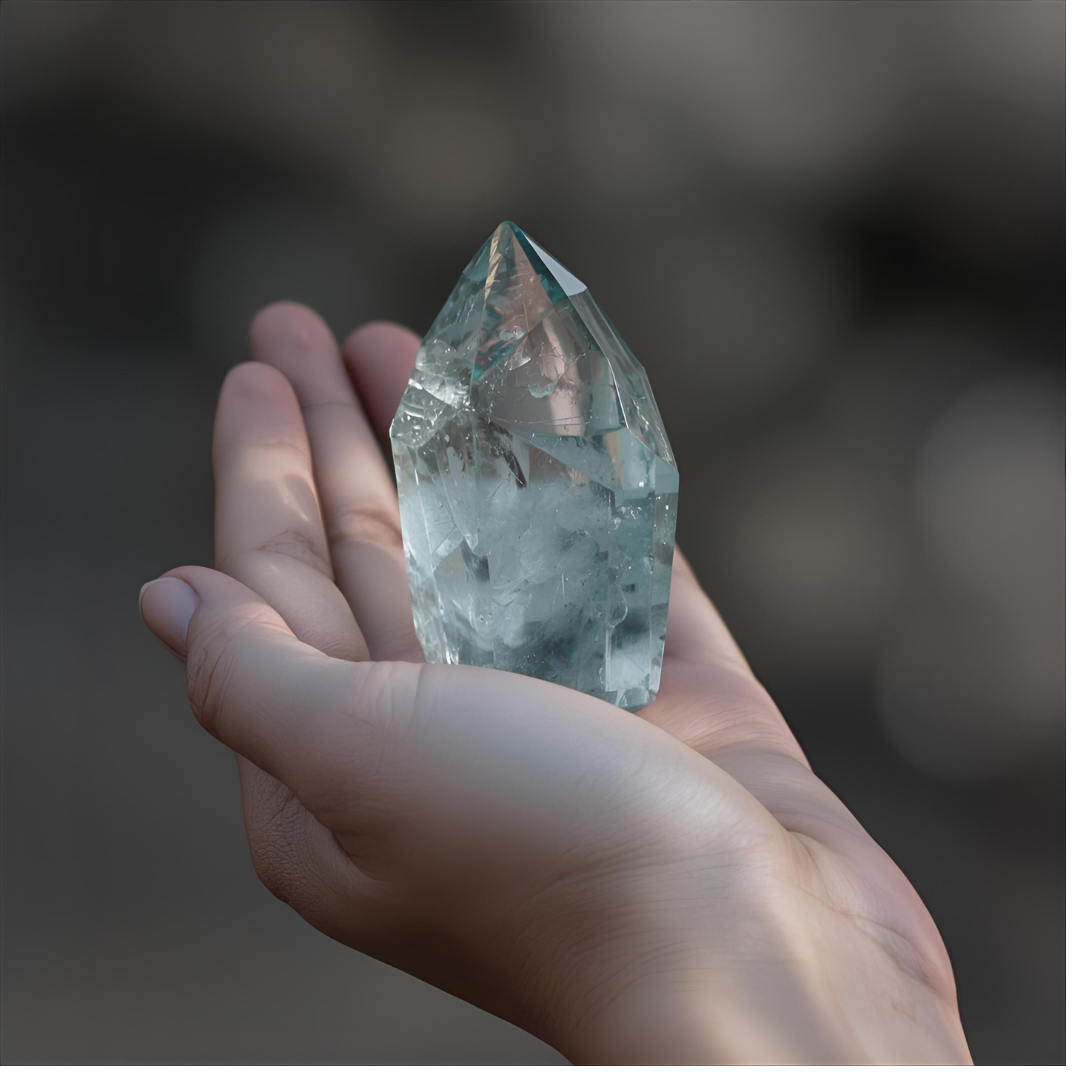
The aquamarine birthstone, with its captivating sea-blue hues, is rich with symbolism and meaning. Primarily known as the birthstone for March, it carries a legacy of tranquility, courage, and eternal youth.
“Medieval seers called aquamarine the ‘Stone of the Seer.‘ They placed it in water to reveal hidden truths and predict the future. In the Middle Ages, couples exchanged aquamarine rings to rekindle fading love — believing the stone‘s clear blue would wash away resentment. Today, wearing aquamarine means you carry a piece of that ancient vision: calm water, clear mind, honest heart.”
Here’s a detailed look at what the aquamarine birthstone symbolizes:
Primary Symbolisms
1. Serenity, Calm, and Clarity
The very name "aquamarine" comes from the Latin aqua marina, meaning "sea water." It's cool, tranquil blue tones instantly evoke the calm of the ocean. It is famously known as the sailor's stone, believed to protect those at sea and calm the waves. Metaphorically, it symbolizes:
Emotional Calm: It's said to soothe fears, quiet the mind, and reduce stress.
Mental Clarity: It promotes clear, rational thought and enhances communication, making it an excellent stone for negotiators and public speakers.
2. Courage and Protection
Historically, Roman soldiers believed aquamarine could make them unbeatable and protect them from poison. This legacy continues with its symbolism of:
Inner Courage: It’s considered a stone of empowerment, helping the wearer overcome fears and face challenges with bravery.
Universal Protection: Beyond the sea, it was thought to protect against all dangers and evil spirits, making it a powerful talisman.
3. Purity, Harmony, and Eternal Youth
Connected to the water element, aquamarine is associated with the flow of life and purification. Its clear, clean appearance symbolizes:
Purification: It's believed to cleanse the energy of a person or space, washing away emotional toxins.
Marital Harmony: In the Middle Ages, it was thought to rekindle love in marriage, making it a popular gift between spouses. It was also used in engagement rings to symbolize a happy and lasting union.
Youthfulness: The stone is linked to the vitality and freshness of spring, its associated season.
Historical and Cultural Significance
Ancient Romans: Used it for healing, believing it could cure ailments of the liver, stomach, and throat.
Medieval Era: Thought to have magical, fortune-telling powers and was used in crystal balls by seers.
Folklore: It was common to soak an aquamarine in water for a few hours and then use that water to wash sore eyes, believing it had healing properties.
A Quick Guide to Aquamarine Symbolism

Who is it for?
The aquamarine is a perfect gift or stone for:
March Babies: As their official birthstone, it is a deeply personal and meaningful gift.
People in High-Stress Jobs: Its calming energy can help manage anxiety.
Anyone Needing a Confidence Boost: Its association with courage can be empowering.
Couples: It makes a beautiful and symbolic gift for anniversaries or engagements, representing harmony and lasting love.
Travelers: As a modern protector for journeys.
What Is The Spiritual Meaning Of Aquamarine?
While the previous answer covered the general symbolism, the spiritual meaning of Aquamarine delves deeper into its role as a tool for energy work, consciousness, and soul-level healing.
In spiritual practices, Aquamarine is revered as a stone of profound truth, intuitive awakening, and cosmic connection. It's often called the "Stone of the Seer" or the "Stone of Courage" for the soul.
Here is a breakdown of its core spiritual meanings:
1. The "Truth-Teller" and Master of Communication
Spiritually, Aquamarine's connection to communication goes far beyond everyday conversation. It is linked to the Throat Chakra (Vishuddha), but its influence extends higher.
Speaking Your Soul's Truth: It empowers you to express your most authentic self without fear of judgment. It helps you articulate spiritual insights and personal revelations that are often hard to put into words.
Angelic Communication: In many metaphysical traditions, Aquamarine is considered a bridge for communicating with angels, spirit guides, and higher realms. It is believed to help you hear and interpret their messages more clearly.
Fearless Self-Expression: It dissolves the energetic blocks in the throat chakra that stem from fear, shame, or past trauma, allowing your true voice to emerge.
2. The Stone of Psychic and Intuitive Awakening
Its calming blue energy is not just for emotional peace; it's designed to calm the "static" of the mind to allow deeper knowing to surface.
Enhancing Intuition: Aquamarine is said to sharpen intuition and open the channels to subconscious knowledge. It helps you trust your gut feelings and inner visions.
Connection to the Subconscious: It acts as a key to the deep, symbolic world of dreams and the subconscious mind, making it an excellent stone to place under your pillow or hold during meditation for lucid dreaming and recall.
The "Seer's Stone": Historically, it was used by mystics and shamans in scrying (gazing) to perceive future events or hidden truths.
3. The Emotional Purifier and Soul Soother
On a spiritual level, emotional turmoil is seen as blocked or stagnant energy. Aquamarine is a master at cleansing this.
Soul-Level Healing: It doesn't just calm temporary stress; it helps to gently release deep-seated, old emotional patterns, karmic ties, and self-sabotaging behaviors carried over from past experiences or lifetimes.
Purifying the Emotional Body: Its energy is likened to a clear, flowing stream that washes away emotional toxicity, resentment, and fear, leaving a sense of renewed purity and lightness.
Spiritual Courage: It provides the profound courage needed to look within, face your shadow self, and undertake deep emotional and spiritual healing work.
4. A Bridge to Cosmic Consciousness
Some spiritual practitioners associate Aquamarine with higher spiritual centers.
Connection to the Third Eye and Throat: While its primary home is the Throat Chakra, its very pale, clear blue varieties are sometimes linked to the Third Eye Chakra (Ajna), enhancing the connection between intuition (seeing) and expression (speaking).
Alignment with Higher Self: Calming the mind and clarifying communication helps align your everyday consciousness with the wisdom and perspective of your Higher Self.
How to Use Aquamarine Spiritually
Meditation: Hold an Aquamarine crystal or place it on your throat chakra during meditation to enhance clarity, receive guidance, and connect with your inner truth.
Energy Grids: Place it in crystal grids focused on communication, peace, or spiritual awakening.
Jewelry: Wearing it as a necklace keeps its energy directly over your throat and heart, facilitating authentic expression throughout the day.
Dream Work: Keep it by your bedside to promote prophetic dreams, enhance dream recall, and protect your astral body during sleep.

How To Tell If An Aquamarine Stone Is Real?
Determining if an aquamarine birthstone is real (natural) involves a combination of visual inspection, simple at-home tests, and professional verification. Here’s a practical guide:
- Visual Inspection
Color & Clarity:
Natural aquamarine has a cool, pale to medium blue or blue-green hue (like seawater). Avoid stones with unnaturally vivid blue or purple tones—these are likely synthetic or dyed.
It’s typically eye-clean (few visible inclusions). Heavy bubbles, swirls, or cloudy areas suggest glass or plastic.
Inclusions: Look for subtle, wispy inclusions ("rain" or liquid/gas pockets). Perfect clarity is rare and expensive—suspiciously flawless stones may be lab-created.
Cut & Faceting: Poorly aligned facets or rounded edges may indicate imitation materials (e.g., glass).
- Simple At-Home Tests
The Breath Test: Breathe on the stone. Natural aquamarine (and most gems) clears fog instantly (1–2 seconds). Glass/plastic stays foggy longer.
Hardness Check:
Aquamarine (7.5–8 Mohs) can scratch glass. Gently try scratching a bottle (risk of damage—use caution!).
It should not scratch easily with a steel knife (5.5 Mohs).
Weight: Real aquamarine feels heavier than plastic/resin but lighter than cubic zirconia (CZ) or lead glass.
Temperature: Natural stone feels cold to the touch initially and warms slowly; plastic feels warmer faster.
- Light & Magnification Tests
Double Refraction: Use a loupe (10x magnification). Tilt the stone: if facets appear doubled (like a "ghost line"), it’s likely real aquamarine (birefringent). Glass/imitations show single lines.
UV Light: Some aquamarines fluoresce weakly under UV light (greenish-yellow). No reaction doesn’t mean fake, but strong blue fluorescence may indicate synthetic spinel or glass.
- Professional Verification
Refractometer: Measures refractive index (RI). Aquamarine RI: 1.577–1.583.
Specific Gravity: Density test (real aquamarine: ~2.68–2.74).
Polariscope: Checks double refraction (natural aquamarine will show interference patterns).
Lab Report: For expensive stones, get a certificate from GIA, AGL, or similar labs confirming natural origin.
Common Fakes & How to Spot Them
Blue Glass:
Bubbles, swirls, or mold marks.
Softer (scratches easily), warmer feel.
Synthetic Spinel:
Unnatural bright blue/purple hues.
Single refraction (no doubling).
Lab-Created Aquamarine:
Technically real but man-made. Flawless, cheaper, and may have gas bubbles. Requires lab testing.
Blue Topaz (Irradiated):
Often sold as "aquamarine." Slightly higher RI (1.61–1.62) and stronger pleochroism.
Plastic/Resin:
Lightweight, warm feel, scratches easily.

Can Aquamarine Birthstone Be Worn Daily?
Yes, the aquamarine birthstone can be worn daily with proper care and mindful settings, but it requires some precautions due to its physical properties.
Here’s a detailed breakdown:
Why It’s Suitable for Daily Wear:
Good Hardness (7.5–8 on Mohs Scale):
Harder than quartz (common in dust), so it resists light scratches from daily activities.
Stability:
Resists fading, won’t dissolve in water, and isn’t affected by light exposure.
Common in Jewelry:
Frequently used in engagement rings, pendants, and earrings designed for regular use.
Key Precautions for Daily Wear:
Avoid Harsh Impacts:
Aquamarine can chip or crack if hit hard (e.g., gym workouts, gardening, manual labor). Remove rings during such activities.
Protect from Chemicals:
Chlorine (pools/hot tubs), cleaners, acids, perfumes, and hairspray can dull the surface or damage settings. Put jewelry on last when getting ready.
Choose Secure Settings:
Opt for protective settings like bezels or halo designs for rings/bracelets. Prong settings should be thick and checked annually for loosening.
Gentle Cleaning:
Clean only with warm water, mild soap, and a soft brush. Avoid ultrasonic/steam cleaners (can fracture the stone).
Best Jewelry Types for Daily Use:
Jewelry Type Safety Level Why
Pendants ⭐⭐⭐⭐⭐ Least exposed to impacts/abrasion.
Earrings ⭐⭐⭐⭐ Low risk unless sleeping/sports (could snag).
Rings ⭐⭐ Prone to knocks. Choose lower-profile designs and avoid thin bands.
Bracelets ⭐ High scratch/impact risk (e.g., desk diving). Not ideal for daily wear.
Maintenance Tips:
Monthly Inspections: Check prongs/clasps for damage.
Storage: Keep separate from harder gems (diamonds, sapphires) to avoid scratches. Use a soft pouch.
Professional Check-Ups: Visit a jeweler yearly for deep cleaning and security settings.
When to Avoid Wearing It:
Swimming (salt/chlorine water)
Cleaning with chemicals
Heavy lifting, sports, or manual work
Direct sun exposure for extended periods (minimal fading risk, but caution is advised)
Lab-Created vs. Natural:
Lab-created aquamarine has identical properties and is equally durable for daily wear (often more affordable).
Natural stones may have inclusions – avoid heavily included pieces for rings/bracelets to reduce fracture risk.

Is Aquamarine A Rare Gemstone?
Aquamarine, the birthstone, is considered a lucky stone in specific contexts, though it’s not universally seen as a classic "luck magnet" like jade or aventurine. Its association with luck stems from symbolic, historical, and energetic properties:
- Traditional "Luck" for Sailors & Travelers
Maritime Protection: For centuries, sailors wore the aquamarine birthstone as a talisman for safe voyages, believing it calmed storms, prevented drowning, and ensured good fortune at sea.
Modern Travel: Carried for protection during journeys (flights, road trips) or moving to new places.
- Luck Through Communication
It’s called the "Courage Stone" for its ability to:
Help you speak clearly in high-stakes situations (e.g., job interviews, negotiations).
Reduce social anxiety, making networking or public speaking feel "luckier."
Indirect luck: Better communication → seizing opportunities.
- Emotional Luck
By soothing anxiety and overthinking, it creates mental space for:
Recognizing opportunities you’d otherwise miss.
Attracting positive relationships (business or personal).
Belief: Calm minds invite "lucky" synchronicities.
- Zodiac Luck (Pisces & Water Signs)
As the primary birthstone for Pisces, it’s considered especially auspicious for them (enhancing intuition, spiritual luck).
Also supportive for Scorpio, Gemini, and Libra in times of change.
Important Nuances
Not a Gambling Stone:
Aquamarine won’t influence random chance (e.g., lottery, casinos). Its "luck" is tied to clarity, courage, and alignment.
Stronger Alternatives for Classic Luck:
→ Green Aventurine (general luck & opportunity)
→ Citrine (wealth luck)
→ Jade (traditional good fortune).
Works Best with Action:
Its energy supports your efforts—it won’t manifest luck passively.
How to Use It for "Luck"
Wear as jewelry during pivotal moments (e.g., signing contracts, first dates, trips).
Keep it in your pocket while traveling or networking.
Pair with citrine or pyrite to blend courage with opportunity/wealth energy.
Meditate with it while visualizing calm, open pathways.

How Much Is A Real Aquamarine Stone Worth?
Aquamarine itself is not considered a rare gemstone, but high-quality aquamarine with a deep, vivid blue color is relatively rare.
Here’s a breakdown of why:
- Availability vs. Quality
Commonly Available: Pale blue or slightly greenish-blue aquamarine is actually quite common and is mined in many locations around the world (Brazil, Nigeria, Madagascar, Pakistan, etc.). Because it forms in large, clean crystals, it is readily available in large sizes. This makes it more accessible and affordable than gems like ruby, emerald, or alexandrite.
Rare in Top Quality: The gemstone's value skyrockets with color intensity. The most coveted color is a pure, intense, medium-dark blue to slightly greenish-blue, often referred to as "Santa Maria" (after the famous Brazilian mine) or the even deeper "Espirito Santo." Finding large stones with this saturated color and perfect clarity is significantly rarer and commands much higher prices.
- Key Factors Affecting Rarity & Value
Color: This is the biggest factor. The deep blue color is rare; most stones are lightly tinted. The pale stones are abundant.
Treatment: It is important to know that most aquamarines on the market are heat-treated. This is a standard, accepted, and permanent practice that heats pale greenish or yellowish beryl to transform it into a stable, pure blue color. This treatment makes the desirable blue color more available than it would be naturally.
Size: Unlike many gems, aquamarine is found in very large crystals. This means finding a 10-carat stone is not rare at all. However, finding a 10-carat stone with a top-color blue is rare.
How It Compares to Other Gemstones
To put it in perspective:
More common than: Emerald, ruby, sapphire, alexandrite, and red beryl (which are all much rarer).
Less common than: Amethyst or citrine (which are very abundant and inexpensive).
Similar to: Good quality topaz or tourmaline in terms of general availability, though its prized blue color can make it more valuable.
In a Nutshell:
If you're looking for... Is it Rare?
An aquamarine gemstone in general. It is readily available and not considered a rare species.
A large aquamarine N.o. It is known for forming in large, clean crystals.
A pale blue aquamarine .No. This is the most common type on the market.
A deep, vivid "Santa Maria" blue aquamarine. Yes. This top-tier color is relatively rare and
valuable.
A natural, untreated deep blue aquamarine.Very rare. Most deep blue stones have been heat-treated.
A large aquamarine. No. It is known for forming in large, clean crystals.
A pale blue aquamarine .No. This is the most common type on the market.
A deep, vivid "Santa Maria" blue aquamarine. Yes. This top-tier color is relatively rare and valuable.
A natural, untreated deep blue aquamarine. Very rare. Most deep blue stones have been heat-treated.

Is Aquamarine Color More Blue Or Green?
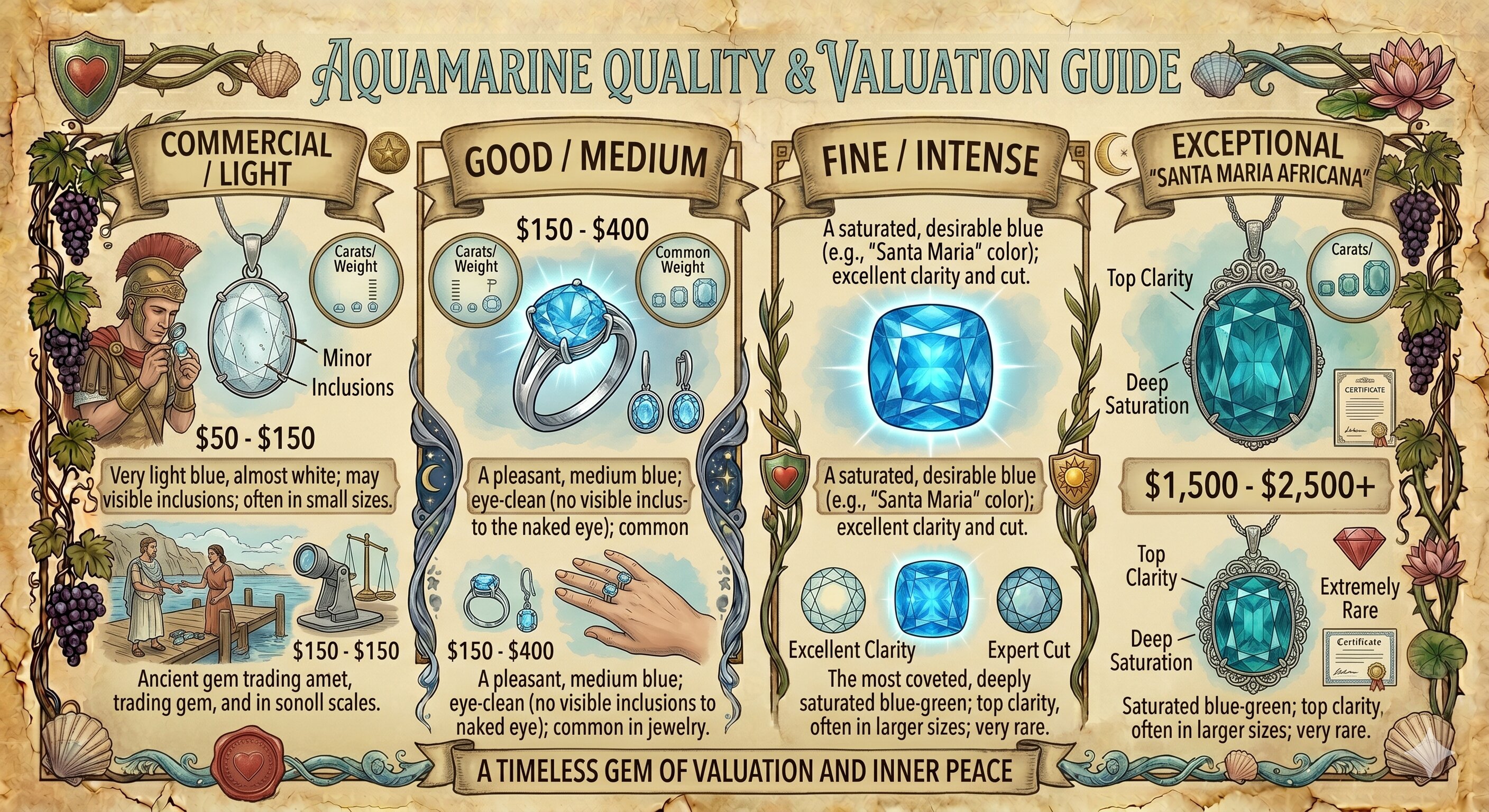
The value of a real aquamarine can vary dramatically, from as little as $50 per carat to over $2,500 per carat for exceptional pieces. There's no single price because aquamarine is valued on a complex combination of factors.
To give you a quick overview, here is a general price range guide per carat for faceted aquamarines:
The 4 Key Factors That Determine an Aquamarine's Value
1. Color (The Most Important Factor)
This is, without a doubt, the number one driver of value. It's not just about being blue; it's about the hue, saturation, and tone.
Hue: The best aquamarines are a pure blue to slightly greenish-blue. Pure blue is often the most valued.
Saturation (Intensity): This is the richness and purity of the color. Pale, washed-out blue stones are common and affordable. Stones with a deep, vivid, and saturated blue command a significant premium. The most famous and valuable colors are:
Santa Maria: A deep, intense blue with a slight green undertone, originally from the Santa Maria de Itabira mine in Brazil.
Santa Maria Africana: An equally intense color, but from mines in Africa (especially Mozambique). These can rival or even exceed the original Santa Maria in price.
Tone: This refers to how light or dark the stone is. The most valuable stones have a medium to medium-dark tone. Stones that are too light are less valuable; stones that are too dark can appear inky and lose brilliance.
2. Clarity
Aquamarine is a Type I gemstone, meaning it is typically "eye-clean." The market expects a high degree of clarity.
High Value: Stones that are completely free of visible inclusions (like tiny crystals, feathers, or clouds) to the naked eye are the standard for fine jewelry.
Lower Value: Stones with obvious inclusions, clouds, or significant internal flaws are much less valuable. A heavily included aquamarine, even with good color, will not command a high price.
3. Carat Weight (Size)
Aquamarine is found in very large crystals, so large stones are more readily available than in other gem families (like ruby or sapphire). However, the price per carat increases significantly as the size goes up, especially when combined with fine color and clarity.
A 1-carat stone of "Good" quality might be $200.
A 5-carat stone of the same quality will not be $1,000 ($200 x 5). It will be more, perhaps $700-$900 per carat, because a larger, clean stone with good color is rarer.
4. Cut and Shape
The cutter's skill directly impacts the stone's beauty and value.
High Value: A well-proportioned cut that maximizes the stone's brilliance, color saturation, and overall light return. The most common cut for aquamarine is the emerald cut (rectangular step-cut), as it showcases the crystal's clarity and color depth beautifully, but ovals, cushions, and rounds are also popular.
Lower Value: A poor cut that is too shallow or too deep ("windowed") will make the stone look lifeless and washed out, even if the raw material was good. This is often done to retain carat weight, but it destroys the gem's value.
Other Important Considerations
Treatments: The vast majority of aquamarines on the market are heat-treated. This is a stable, permanent, and universally accepted practice that removes greenish or yellowish tones to create a purer and desirable blue. An untreated aquamarine with a naturally perfect blue color is exceptionally rare and can be worth a significant premium.
Origin: While the gem's quality is more important than its origin, certain legendary mines (like the original Santa Maria de Itabira in Brazil) can command a premium due to their reputation and rarity.
Real-World Price Examples
An Affordable Piece: A small, light blue, eye-clean 1-carat aquamarine in a simple sterling silver setting might cost $75- $150 total.
A Fine Jewelry Piece: A 3-carat, medium-blue, well-cut, eye-clean aquamarine set in white gold could range from $1,000 to $2,500.
A Collector's Piece: A 10-carat "Santa Maria Africana" aquamarine with exceptional color and clarity could easily be $15,000 to $25,000 or more.
Is Aquamarine Color More Blue Or Green?
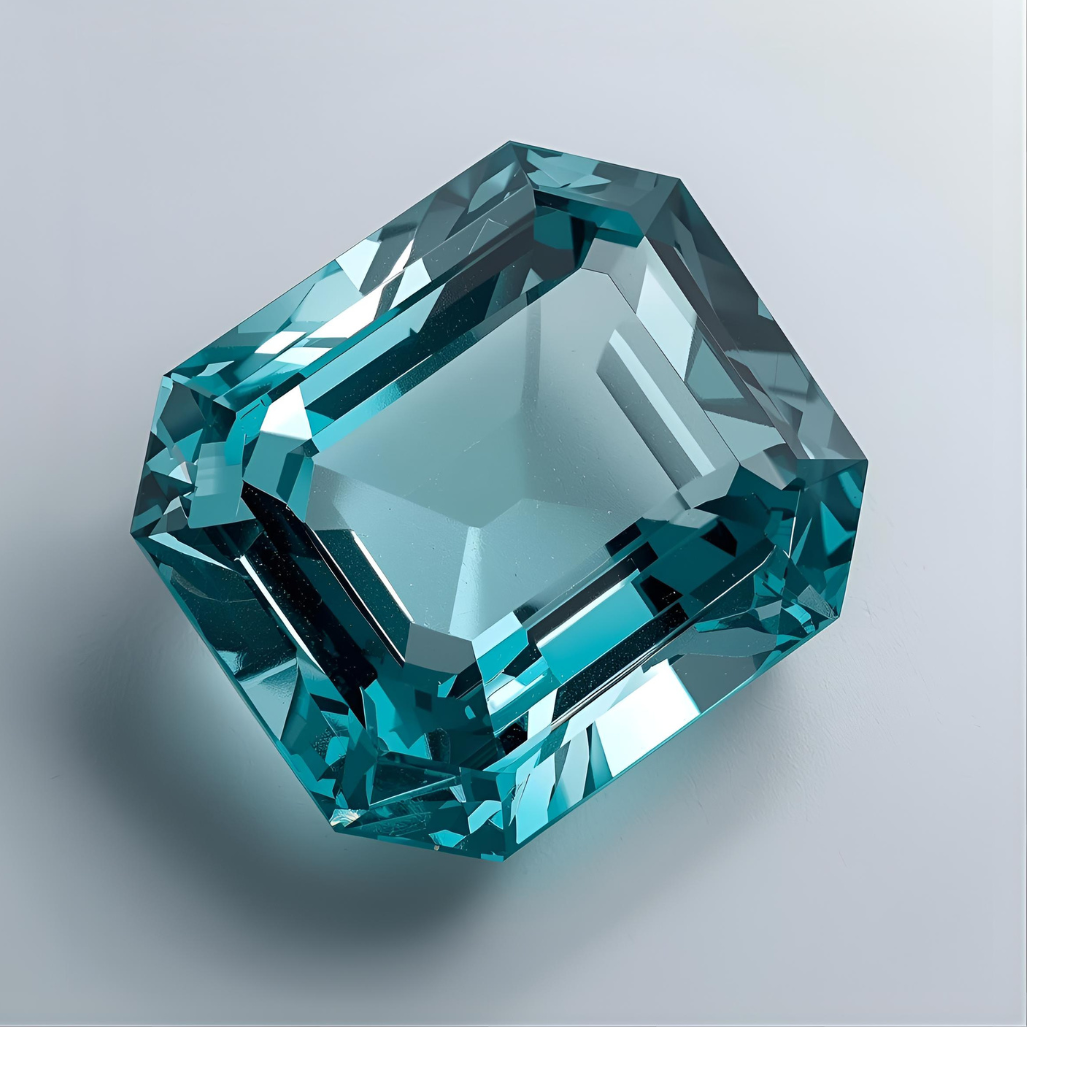
Aquamarine is predominantly BLUE, but it almost always has green undertones.
Think of the color of the sea in shallow, tropical waters—a beautiful, translucent blue with a hint of green. That is the essence of aquamarine.
Here’s a more detailed explanation:
1. The Name Says It All
The name "aquamarine" comes from the Latin aqua marina, meaning "sea water." This directly points to its classic color, which mimics the ocean—a blend of blue and green.
2. The Science of the Color
Aquamarine is a variety of the mineral beryl (the same family as emerald). Its color comes from traces of iron within the crystal.
Fe²⁺ (Ferrous Iron) creates the blue tones.
Fe³⁺ (Ferric Iron) creates the yellow/green tones.
The presence of both creates the signature greenish-blue we know. However, the blue component is almost always the dominant one.
3. The Role of Heat Treatment
This is a crucial point for understanding the gemstones you see in jewelry stores:
Natural State: Most aquamarines are mined with a noticeable greenish or bluish-green tint.
Standard Practice: The vast majority of aquamarines on the market are gently heated. This heat treatment is stable, permanent, and universally accepted. It works by neutralizing the yellow/green component (from Fe³⁺), resulting in a purer, more vibrant blue stone.
Because of this, the aquamarines you typically find in jewelry will appear much more blue than green.
The Color Spectrum of Aquamarine
To visualize the range, you can think of it like this:
More Green <---> Balanced <---> More Blue
(Rare) (Classic "Sea Green/Blue") (Most Common in Jewelry)
The Rarest and Most Valuable: The most prized aquamarines are those with a deep, saturated, pure blue (like the "Santa Maria" color from Brazil) with no green visible. These are quite rare.
The Most Common: The classic and popular aquamarine color is a light to medium, sky-blue or sea-blue.
The Green End: It is very uncommon to find an aquamarine that you would describe as "green." If it is distinctly green, it is likely a different type of beryl, such as a light green beryl or heliodor (yellow-green beryl).
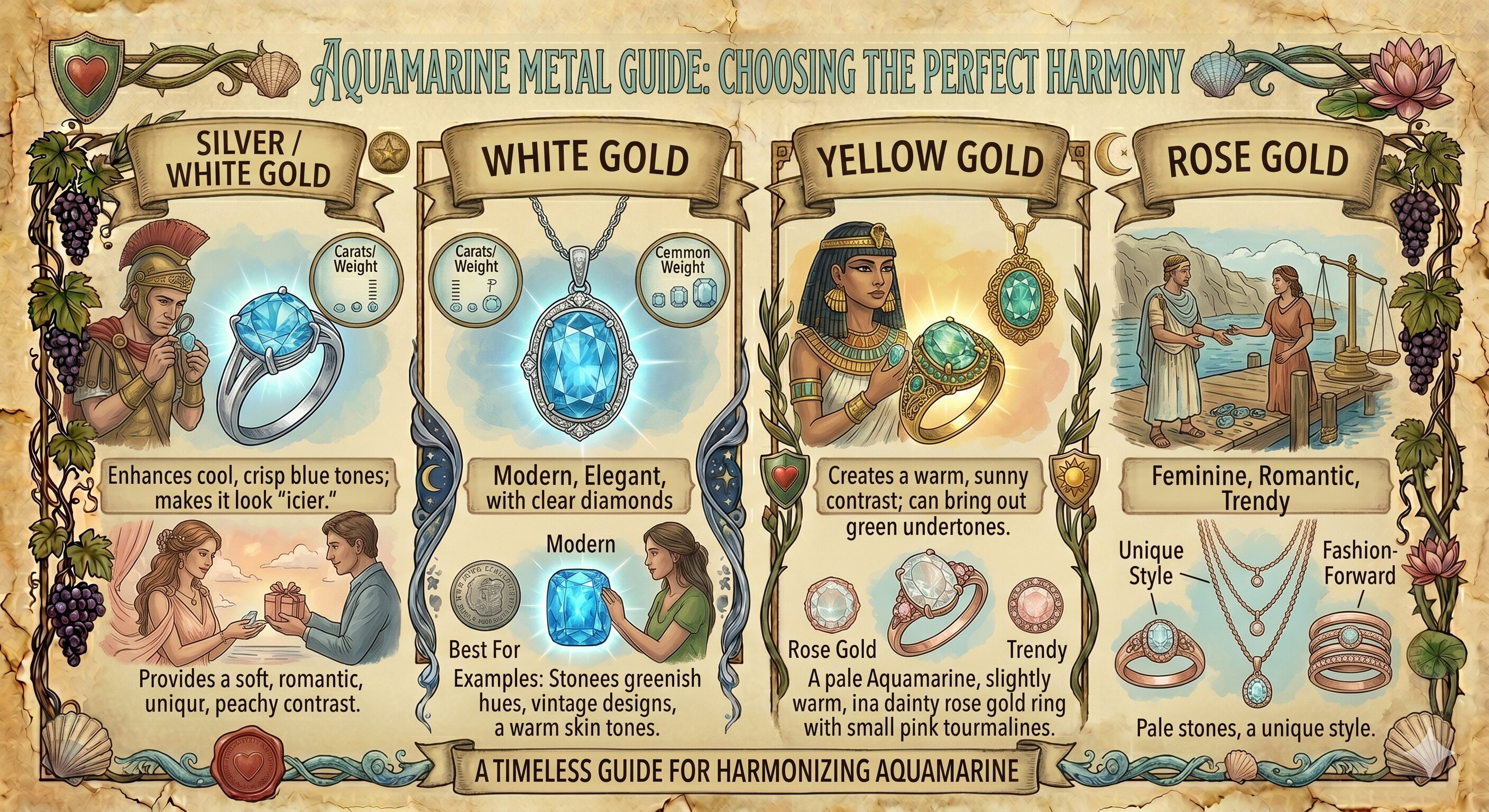
Does Aquamarine Look Better In Gold Or Silver?
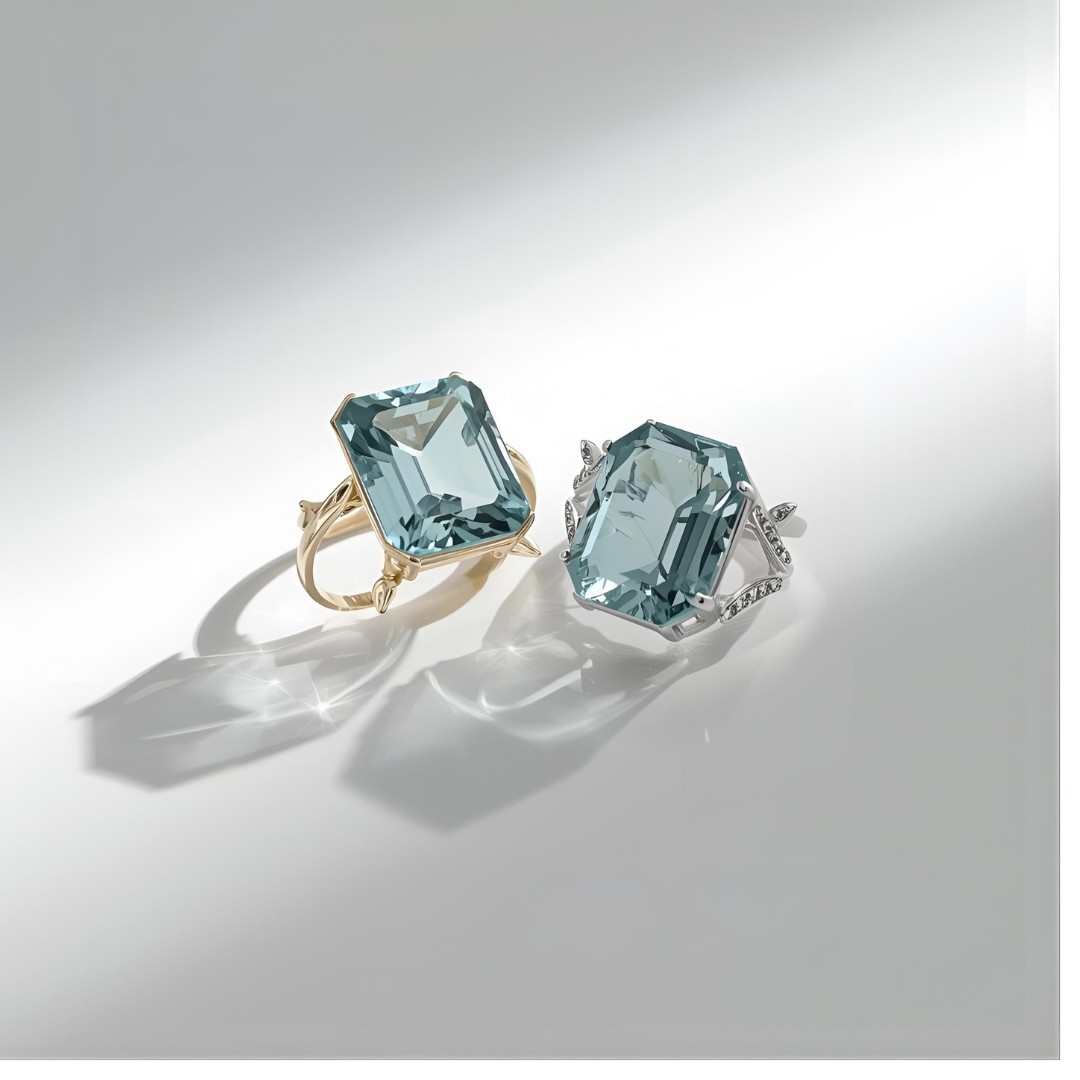
That's an excellent question, as the metal choice can significantly influence the stone's appearance and the overall style of the jewelry. The good news is that aquamarine is a versatile gemstone that looks beautiful in both gold and silver (which includes white gold and platinum). However, each metal creates a distinct effect.
Here’s a breakdown to help you decide which is "better" for your taste:
The Short Answer
Silver (White Gold/Platinum) is the most classic and popular choice. It enhances the cool, crisp blue tones of the aquamarine, creating a clean, modern, and elegant look.
Gold is a warm and luxurious choice. It creates a beautiful, soft, and vintage-inspired contrast that can make the aquamarine's color appear richer and more complex.
Detailed Comparison
1. Silver-Toned Metals (White Gold, Platinum, Sterling Silver)
Effect on the Stone: Enhances the cool, icy, blue tones. Silver acts like a mirror to the stone's inherent coolness, making the blue color appear more pronounced, crisp, and clear. It's like framing a picture of the sky or the sea with a sleek, modern frame.
Overall Style: Modern, elegant, timeless, and fresh. It has a clean and sophisticated look that is very versatile.
Best For:
Stones that are a pure, medium to light blue.
Modern and minimalist jewelry designs.
Someone with cool or neutral skin undertones.
Achieving a classic "something blue" for a wedding.
2. Yellow Gold
Effect on the Stone: Creates a warm, sunny, and vintage contrast. The warmth of the gold plays against the coolness of the blue stone, creating a dynamic and visually appealing contrast. This can sometimes make the aquamarine's subtle green undertones more visible, giving it a softer, "sea-glass" or tropical lagoon appearance.
Overall Style: Vintage, romantic, luxurious, and warm. It has a more artistic and heirloom-like feel.
Best For:
Stones with slightly greenish or teal undertones (the gold complements the warmth).
Vintage-inspired, Art Deco, or ornate designs.
Someone with warm skin undertones.
Creating a statement piece that feels unique and personal.
3. Rose Gold
Effect on the Stone: Creates a unique, romantic, and peachy contrast. The soft pink of rose gold provides a beautiful and unexpected complement to the blue of aquamarine. This combination is very contemporary and feminine, softening the stone's appearance dramatically.
Overall Style: Modern, romantic, feminine, and trendy.
Best For:
Fashion-forward jewelry designs.
Someone looking for a unique and soft look.
Stones that are a very pale, almost ethereal blue.
Visual Comparison Guide
How to Choose: Final Advice
Consider the Stone's Specific Color: Look at your aquamarine. Is it a pure, icy blue? Silver will make it pop. Does it have a slight greenish or teal tint? Gold will harmonize beautifully with it.
Think About Your Personal Style: Do you prefer a cool, sleek, and modern look? Or a warm, vintage, and opulent feel? Your metal choice is an extension of your style.
Consider Your Skin Tone (Optional but helpful):
Cool Undertones: Silver and white gold will likely be more flattering.
Warm Undertones: Yellow and rose gold will likely complement your skin better.
Don't Be Afraid to Mix! A two-tone setting (e.g., white gold prongs holding the stone set in a yellow gold band) can give you the best of both worlds, securing the stone in a way that maximizes its cool color while incorporating the warmth of gold.
There is no definitive "better." Silver is the safe, classic choice that highlights the blue. Gold is a beautiful, warm, and stylish alternative that creates a lovely contrast. The best choice is the one that makes you and the stone look and feel most beautiful.
Does Aquamarine Attract Money?
That's a fascinating question that delves into the world of crystal metaphysics and folklore. From a crystal healing and metaphysical perspective, aquamarine is not traditionally considered a primary "money stone" in the same way as, for example, citrine or jade.
However, its connection to wealth is more indirect and intellectual rather than directly attracting cash.
Here’s a breakdown of the belief and the reality:
The Metaphysical Belief: How Aquamarine is Indirectly Linked to Prosperity
While you wouldn't use aquamarine to perform a "money spell," it is believed to foster qualities that can lead to financial prosperity:
Clarity and Communication for Success: This is the most direct link. Aquamarine is the stone of clear communication and fearless self-expression. In a professional context, this can translate to:
Nailing a job interview or a salary negotiation.
Clearly presenting your ideas to win a contract or attract clients.
Effectively leading a team or collaborating with colleagues.
These successful professional actions directly lead to financial gain.
Courage to Seize Opportunities: It's known as the "Stone of Courage." This can empower you to:
Ask for that raise or promotion.
Start the business you've been dreaming of.
Invest in a new opportunity you believe in.
Make bold, confident decisions in your financial planning.
Calmness and Reduced Stress: Financial stress can cloud judgment. By soothing fears and calming the mind, aquamarine is believed to help you make more rational, less emotional decisions about money, avoiding impulsive purchases or panic-selling investments.
A "Flow" State: Connected to the energy of water, aquamarine is thought to help you "go with the flow," adapt to changing financial circumstances, and open yourself to new avenues of abundance that you might not have considered.
The Practical Reality
It's crucial to approach this with a balanced perspective:
No Scientific Basis: There is no scientific evidence that any crystal can directly attract money. The value lies in its function as a symbolic tool.
The Power of Intention: The true "power" comes from you. If wearing aquamarine reminds you to be more articulate in a meeting, or gives you the confidence to pursue a financial goal, then it is working—not through magic, but through psychology and focused intention. It's a tangible anchor for your own ambitions.
Compared to Traditional "Money Stones"
If your primary goal is to work with crystals for wealth, you might look at stones more directly associated with abundance:
Citrine: Known as the "Merchant's Stone" or "Success Stone," it's famously associated with manifesting wealth, success, and abundance.
Green Jade: An ancient symbol of luck and prosperity in many cultures, believed to attract both money and good fortune.
Pyrite ("Fool's Gold"): Literally looks like gold and is associated with wealth, business, and financial success.
How to Use Aquamarine for Financial Success (Metaphysically)
If you want to try using aquamarine for this purpose, here's how you might do it:
Set a Clear Intention: Hold your aquamarine (a ring, pendant, or raw stone) and state your intention clearly. For example: "I program this stone to help me communicate with clarity and confidence in my upcoming negotiation," or "I use this stone's energy to remain calm and make wise financial decisions."
Wear it as Jewelry: Wear an aquamarine necklace or ring to important meetings, interviews, or networking events to keep its symbolic energy with you.
Create a Prosperity Grid: Place aquamarine on your desk or in your workspace alongside traditional money stones like citrine or pyrite. The aquamarine can provide the clarity and courage to act on the opportunities the other stones are said to attract.
Can Aquamarine Get Wet?
Yes, aquamarine can get wet. In fact, it's perfectly safe to clean your aquamarine with water.
However, there are some important nuances and precautions to understand to keep your gemstone looking its best for a lifetime.
Why Water Itself Isn't the Problem
Aquamarine is a 7.5 to 8 on the Mohs hardness scale, making it a durable gemstone suitable for daily wear. It is not a porous material and is entirely stable in water. A quick exposure to water, whether from washing your hands, swimming in a pool, or getting caught in the rain, will not damage the stone itself.
The Real Risks: It's Not the Water, It's the "Extras"
The danger isn't the water, but what is in the water or the physical risks associated with getting it wet.
Chemicals: Harsh chemicals are the biggest threat to your aquamarine.
Chlorine (in pools and hot tubs) can damage the metal of the setting (especially lower-karat gold), and over time, it can dull the surface of the stone or even affect its color.
Saltwater can be corrosive to the metal setting.
Hard Water can leave a dulling film of mineral deposits on the stone.
Soaps, Lotions, and Cleaners can build up behind the stone, making it look cloudy and less brilliant.
Physical Impact: A wet aquamarine is a slippery aquamarine. The risk of the stone slipping out of your hand while washing it or the ring sliding off a wet finger is a real concern.
Thermal Shock: While aquamarine is generally stable, subjecting it to sudden, extreme temperature changes (like taking a hot shower and then plunging your hands into cold water) could, in rare cases, cause a fracture, especially if the stone has existing internal inclusions (flaws).
Best Practices for Cleaning & Care
Getting your aquamarine wet is safe, but you should be intentional about it.
✅ DO - The Safe Way to Clean:
Simple Soak: Use a small bowl of warm (not boiling) water with a few drops of mild, chemical-free dish soap.
Gentle Scrubbing: Use a very soft toothbrush or a lint-free cloth to gently scrub behind the stone and the setting where grime accumulates.
Thorough Rinsing: Rinse completely under lukewarm running water.
Careful Drying: Pat it dry with a soft, lint-free cloth. Crucially, close the drain in the sink while you are cleaning to prevent any disastrous accidents.
❌ DON'T - What to Avoid:
Don't wear it in the swimming pool or hot tub.
Don't wear it while using harsh cleaners, bleach, or hairspray.
Don't use ultrasonic or steam cleaners routinely. While aquamarine itself is usually safe in an ultrasonic, the vibrations can shake loose a stone in a worn setting. Furthermore, if the aquamarine has liquid inclusions (which some do), an ultrasonic cleaner can cause damage. It's best to avoid it unless checked by a professional jeweler.
Don't expose it to sudden, extreme temperature changes.
Summary: Can Aquamarine Get Wet?
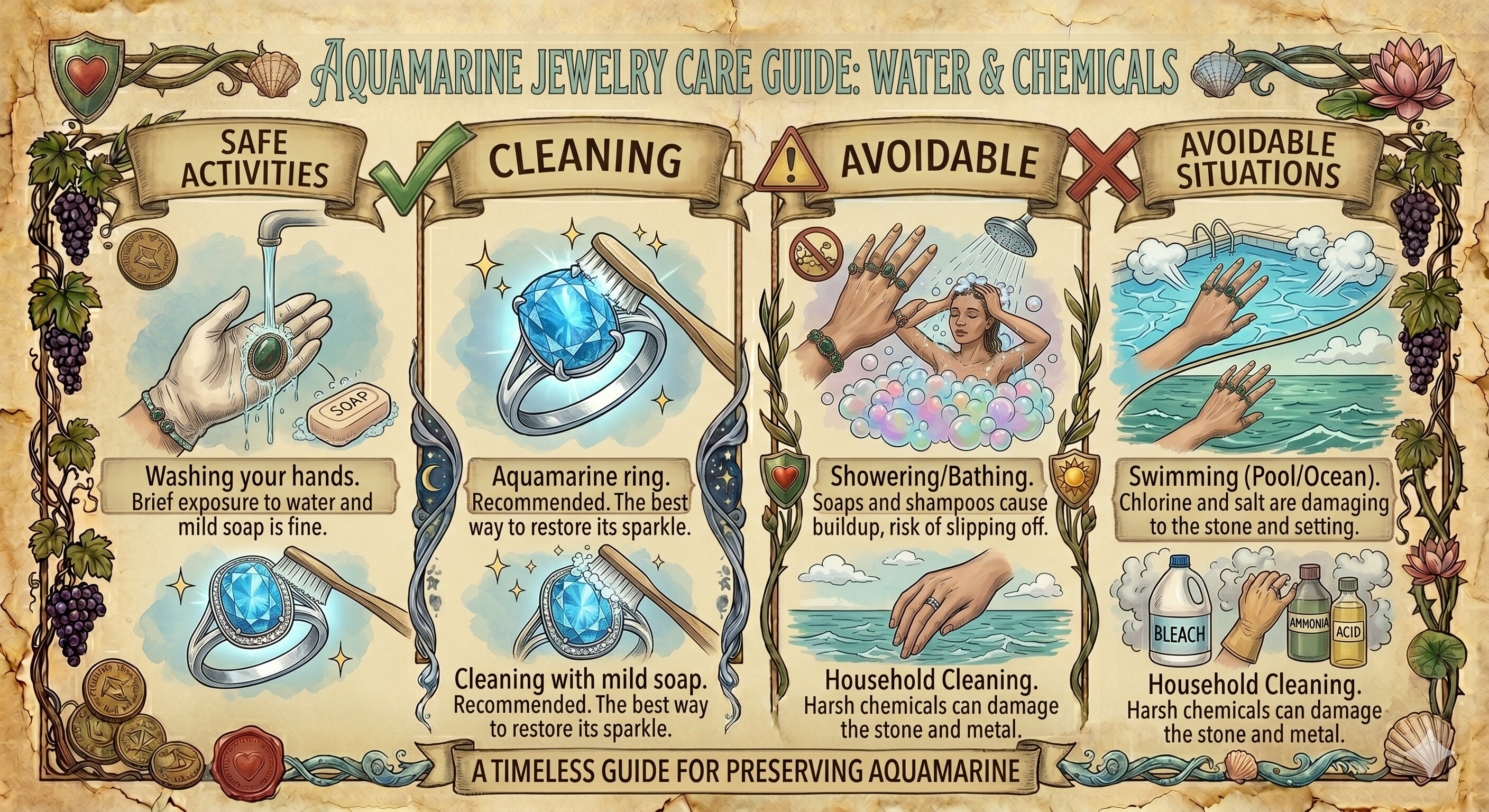
Final Verdict: Don't be afraid to get your aquamarine wet for cleaning. But for the long-term health of your jewelry, take it off before swimming, showering, or applying chemicals. Proper care will ensure its beautiful sea-blue color remains bright and brilliant for generations.
“You now know the symbolism, the spiritual meaning, the rarity, the price, and the care. The only question left: which blue speaks to you?
Our current batch holds only a limited number of ‘Santa Maria‘ aquamarines — the deep, vivid blue that ancient sailors prized. When they‘re gone, the next batch may be lighter.
This is not just a birthstone. It is a wearable promise of calm seas and clear skies — for you or someone you love.”
[Button: See the 925 Sterling Silver Aquamarines →]


Other news for Tuesday 09 June, 2026
- Heart Ring Guide: Meaning, Wearing Direction, Finger and Symbolism
- Demystifying Quartz Stone: Everything You Need To Understand
View all news for Tuesday 09 June, 2026 on one page
News for Monday 08 June, 2026
- Promise Ring Guide: Meaning, Price, Finger, Age and Buying Tips
- Diamond Ring Buying Guide: Shapes, 4Cs, Prices And Tips
- 14K Gold Guide: Purity, Price, vs 18K/24K, Daily Wear and Care
View all news for Monday 08 June, 2026 on one page
Recent News
- Sunday 07 June, 2026
- Saturday 06 June, 2026
- Friday 05 June, 2026
- Thursday 04 June, 2026
- Wednesday 03 June, 2026