

14K Gold Guide: Purity, Price, vs 18K/24K, Daily Wear and Care
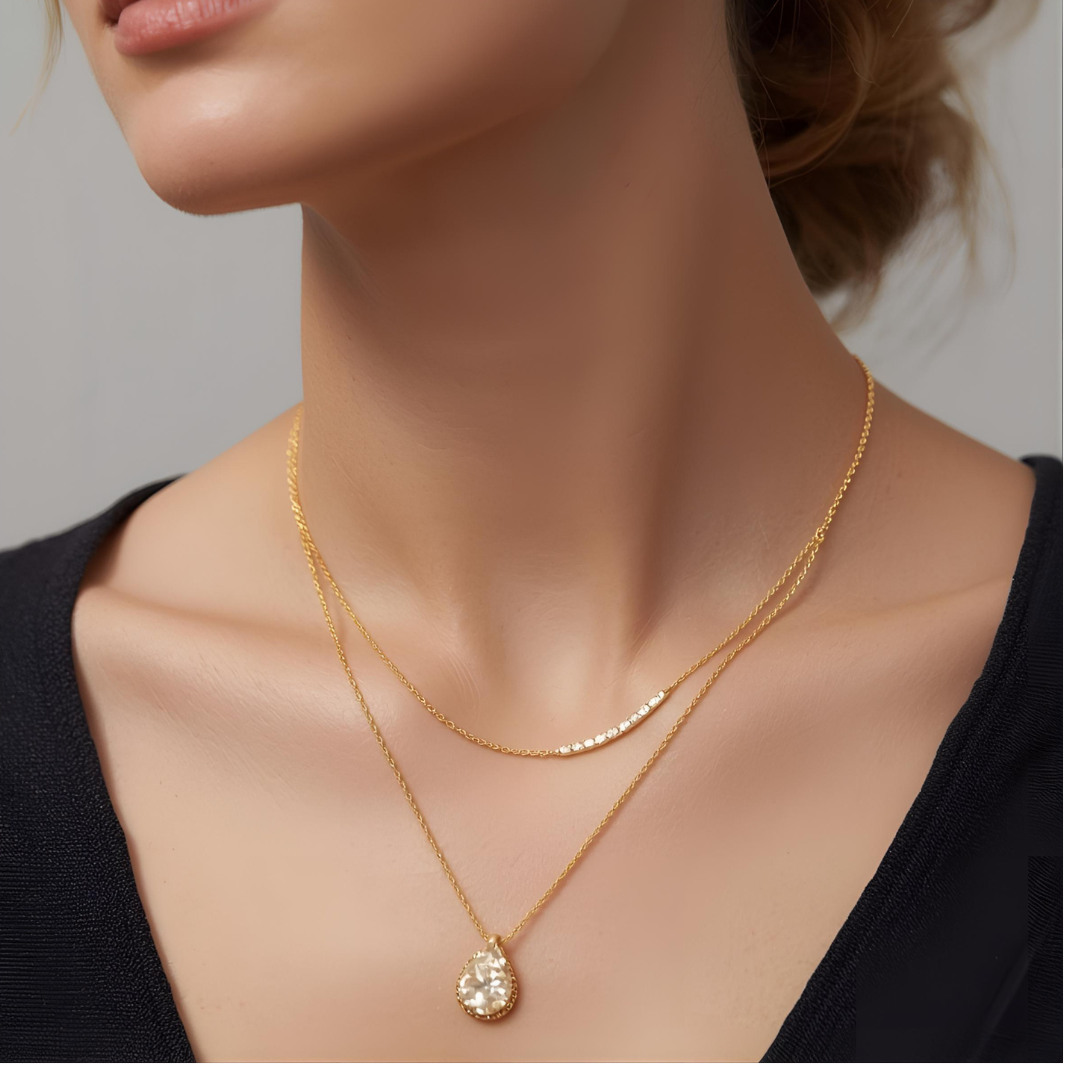
Ultimate Guide: What Is 14K Gold
14K gold is a gold alloy that is 58.3% pure gold. The "K" stands for "karat," which is a measure of gold purity.
*“In 14th-century England, King Edward III created the first gold purity standard. He wanted to stop counterfeiters and protect the value of English currency. His solution was the ‘touchstone‘ test — rubbing gold on a black stone and applying acid to see how much alloy was present. A true 14-karat piece would resist the acid at a specific level.
That test is still used today. The same ratio of gold to alloy — 14 parts pure gold, 10 parts strengthening metal — has survived wars, empires, and six centuries of fashion. 14K gold is not the purest gold. But it is the gold that lasts.”
The same alloy that has survived six centuries now awaits your own everyday elegance — in yellow, white, or rose. Every 14K gold piece in our collection is stamped with the 585 hallmark, guaranteed 58.3% pure gold.”
[Button: Explore 14K Gold Jewelry →]
The remaining 41.7% is composed of other metals, which enhance the gold's strength, durability, and color.
Here are the topics of the contents;
- What Color Should 14K Gold Be?
- Is 14K Gold Real Gold?
- Is 14K Gold Good Quality?
- How Much Is 14K Gold Worth?
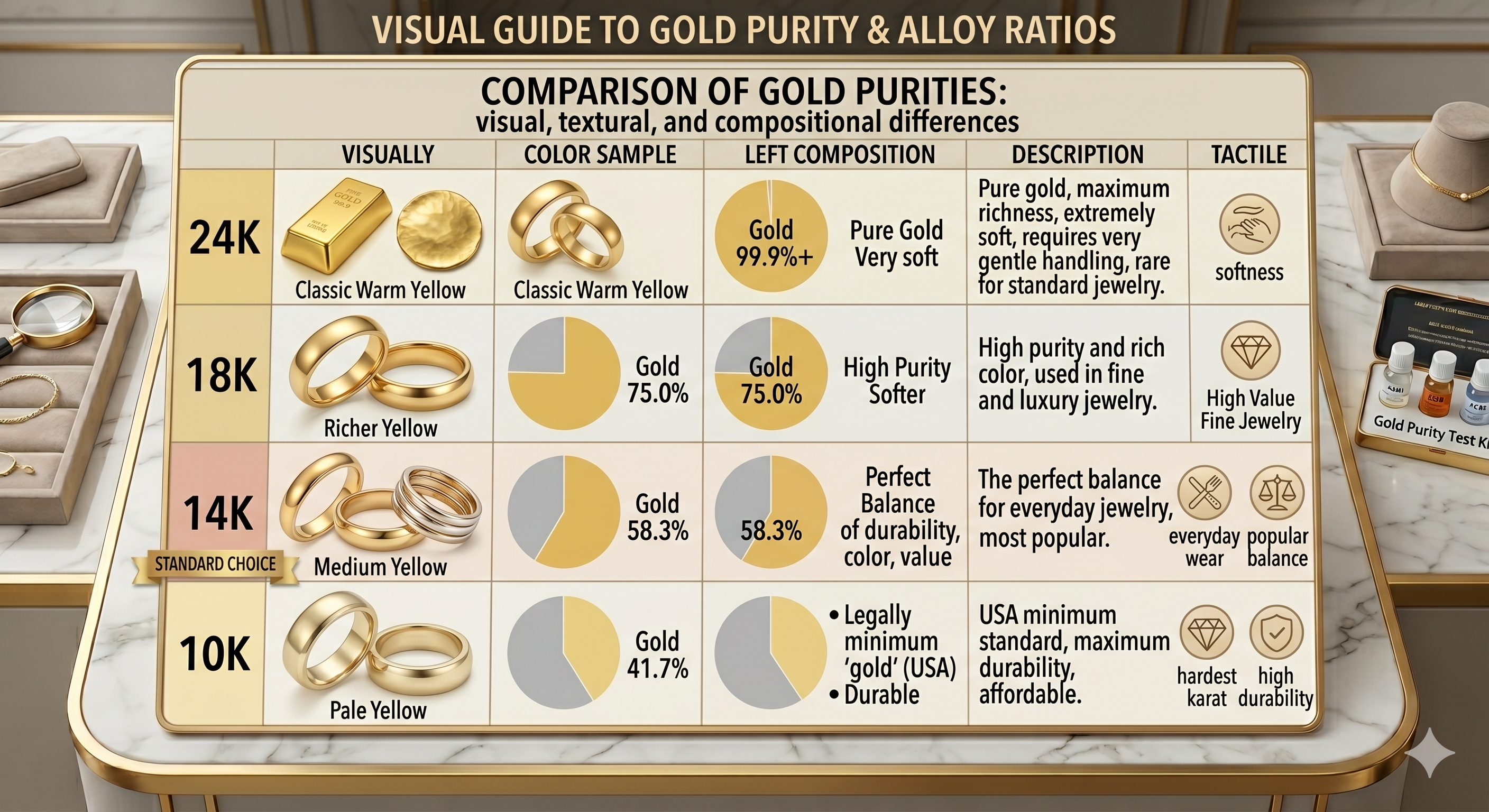
- Difference Between 10k, 14k, 18k, and 24k Gold
- Can I Wear 14K Gold In The Shower?
- How Long Will 14K Gold Last?
- Does 14K Gold Tarnish?
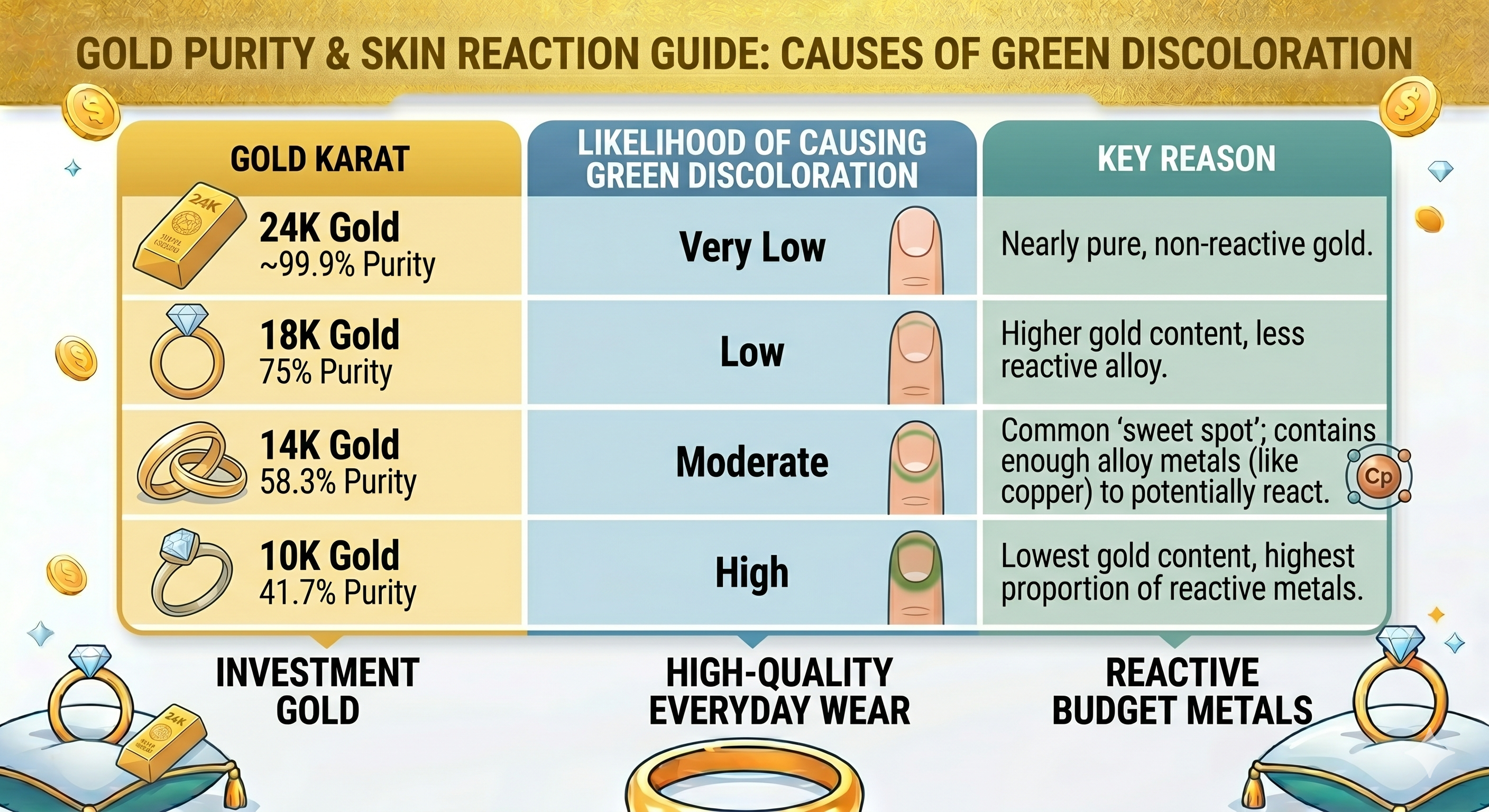
- Does Real 14K Gold Turn Green?
- Can I Wear 14K Gold Every Day?
Here is the first topic;
What Color Should 14K Gold Be?
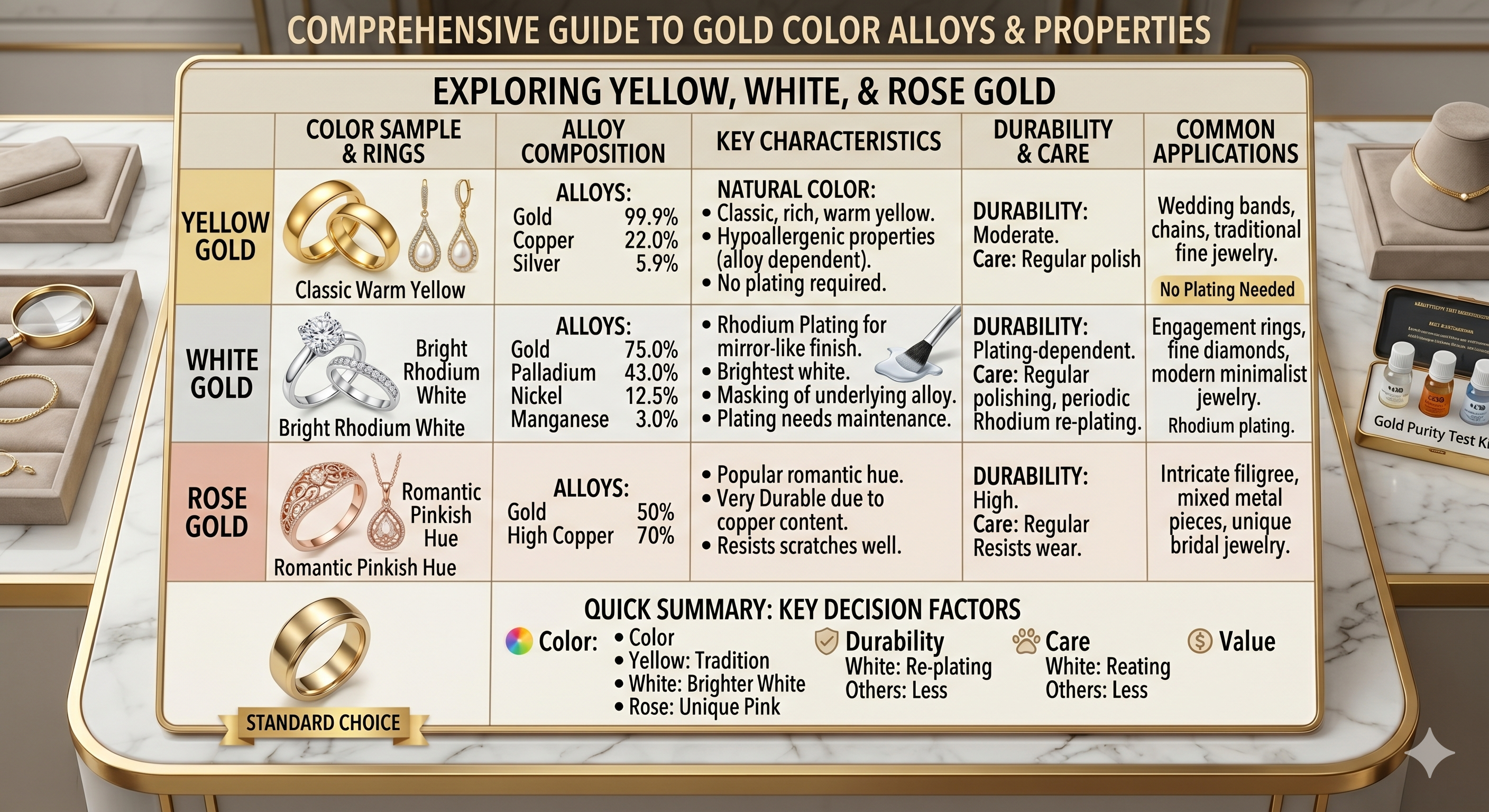
The short answer is: 14K gold can be a variety of colors, but the most common are Yellow, White, and Rose.
The color of 14K gold is not determined by the gold itself, but by the other metals it's alloyed with.
First, let's understand what "14K" means:
Karat (K) is a measure of gold purity.
Pure gold is 24K, but it's too soft for most jewelry.
14K gold is 14 parts pure gold and 10 parts other metals, making it 58.3% pure gold. The "other metals" in that 10-part mixture are what create the different colors.
Here’s a breakdown of the colors and what makes them:
1. 14K Yellow Gold
This is the classic gold color that most people imagine.
How it's made: The pure gold is mixed with alloys like copper and silver. The balance of these two metals helps achieve that warm, rich yellow hue without being as intense as 24K gold.
Appearance: A warm, medium-toned yellow. It's less vibrant than 24K gold but more saturated than 10K gold.
2. 14K White Gold
This has a silvery-white, modern appearance.
How it's made: The pure gold is mixed with white metals like palladium, nickel, or manganese. However, even after mixing, 14K white gold often has a slightly yellowish or grayish tint.
The Key Step: Rhodium Plating. To achieve a bright, shiny, silvery-white finish, almost all white gold jewelry is plated with a thin layer of rhodium (a platinum-family metal). This plating can wear off over time (usually after a few years), revealing the slightly warmer base metal underneath. It can then be re-plated by a jeweler to restore its bright white look.
3. 14K Rose Gold (or Pink Gold)
This has a beautiful, romantic pinkish-red hue.
How it's made: The primary alloy used is copper. The high copper content gives rose gold its distinctive pink/red color. The more copper used, the redder the tone.
Appearance: A soft, warm pink with a coppery glow. It's known for being very flattering on most skin tones and is extremely durable due to the strength of copper.
Comparison Table
Which Color Should You Choose?
There is no single "correct" color for 14K gold. The best choice depends entirely on your personal style and needs:
For a classic, timeless look: Yellow Gold is the traditional choice.
For a modern, cool look that pairs well with white metals, White Gold is ideal. It's also the most common setting for diamonds and other white stones, as it makes them appear brighter.
For a vintage, romantic, or trendy look, Rose Gold is a beautiful and popular option.
For skin tone: Many believe rose gold and yellow gold flatter warmer skin tones, while white gold complements cooler skin tones, but this is a guideline, not a rule. The best choice is the one you love.
For durability, Rose gold, with its high copper content, is generally the hardest-wearing.
14K gold can be yellow, white, or rose. The color is created by the mixture of metals alloyed with the pure gold, making each type uniquely beautiful and suitable for different styles and preferences.
Learn more about gold purity and alloys on Wikipedia's gold carat page.

Is 14K Gold Real Gold?
The straightforward answer is: Yes, 14K gold is absolutely real gold.
However, it's not pure gold. Here’s a detailed breakdown to clarify exactly what that means:
1. The Meaning of "Karat" (K)
The term "Karat" specifically measures the purity of gold. The system is based on 24 parts:
24K Gold: Is 24 out of 24 parts gold, meaning it is 100% pure gold.
14K Gold: Is 14 out of 24 parts gold.
To find the percentage, you divide 14 by 24: 14/24 = 0.5833
This means 14K gold is 58.3% pure gold.
The remaining parts (10 out of 24, or 41.7%) are made up of other metals, known as alloys.
2. Why Is Gold Mixed with Other Metals?
Pure, 24K gold is too soft for everyday jewelry. It can be easily:
Scratched
Bent
Dented
By mixing it with stronger metals like copper, silver, zinc, nickel, or palladium, jewelers create a material that is much more durable and practical for daily wear. This alloying process is also what creates different gold colors like white, rose, and yellow.
Comparison of Gold Purities
How to Know It's Real: Hallmarks
Genuine gold jewelry is almost always stamped with a hallmark to indicate its purity. Look for these marks:
14K
14KT
14Kt
585 (This is the European hallmark, representing 58.5% gold content)
If you see one of these stamps, you can be confident you have a piece of real 14K gold.
Is 14K gold real gold? Yes.
Is it pure gold? No, it is 58.3% pure gold, mixed with other durable metals.
Is it a good choice? Yes, its excellent balance of durability, color, and price is why it's the most popular choice for engagement rings and everyday fine jewelry in the United States.
Is 14K Gold Good Quality?
The straightforward answer is: Yes, 14K gold is considered good quality and is, in fact, the most popular choice for fine jewelry in the United States for excellent reasons.
Think of 14K gold as the "Goldilocks" of gold karats—it strikes a nearly perfect balance between several key factors. Here’s a detailed breakdown of why it's such a highly regarded quality:
The Strengths of 14K Gold (Why It's So Popular)
1. The Perfect Balance of Durability and Purity:
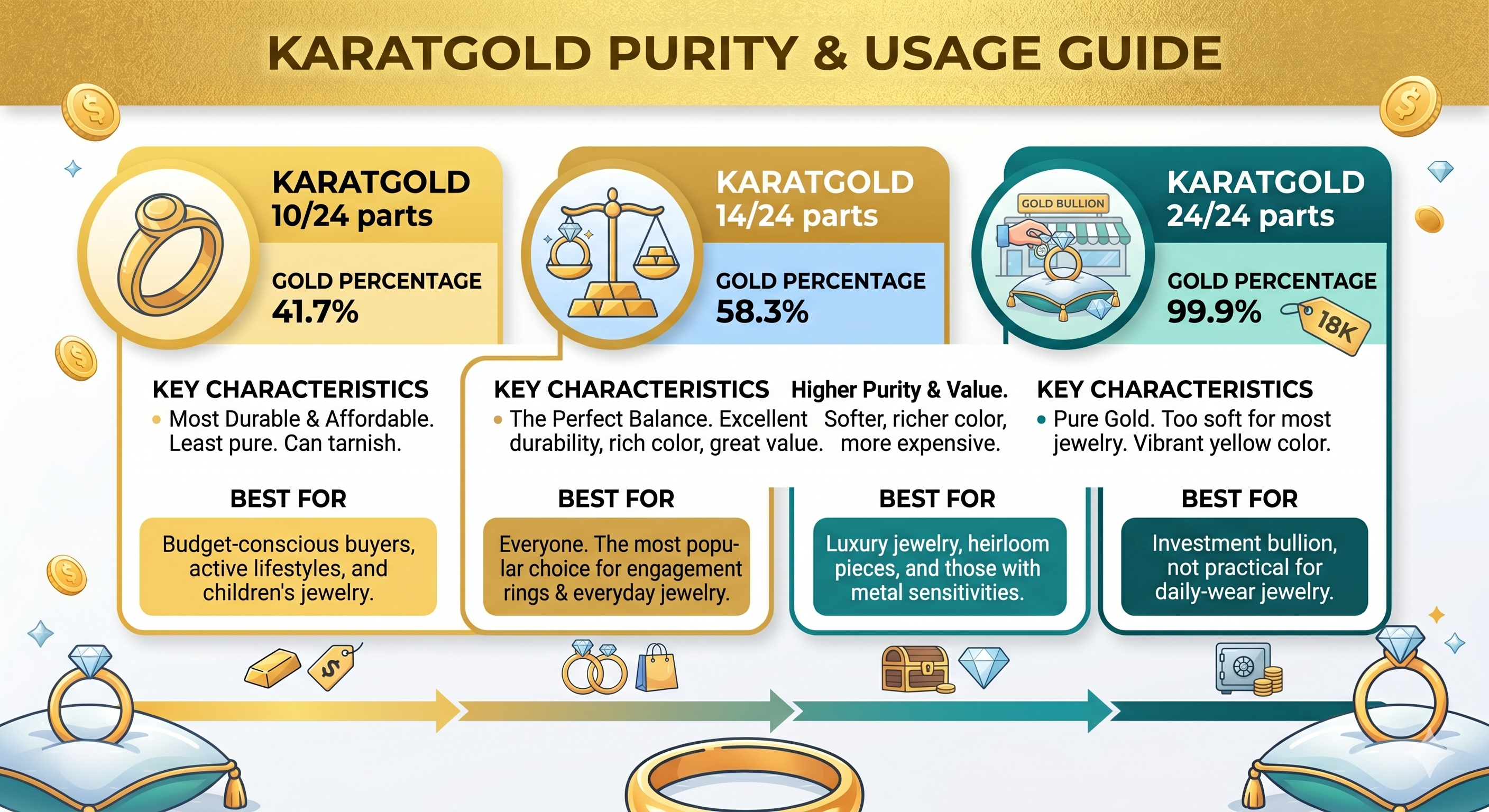
Durability: With 58.3% pure gold and 41.7% strengthening alloys (like copper, silver, or zinc), 14K gold is significantly more durable and scratch-resistant than 18K (75% gold) or 24K (100% gold). This makes it ideal for everyday wear in items like engagement rings, wedding bands, and bracelets that take a lot of abuse.
Adequate Purity: It still contains a majority of pure gold, giving it a rich color, value, and the hypoallergenic properties of gold. It's much more valuable and desirable than 10K gold (41.7% gold).
2. Excellent Value for Money:
14K gold is more affordable than 18K or 22K gold because it contains less pure gold. You get a beautiful, high-quality piece of jewelry without the premium price tag of higher karats, allowing you to potentially get a larger or more intricate piece for your budget.
3. Rich Color and Appearance:
It maintains a warm, appealing gold color that is richer than 10K gold but slightly less intense than 18K gold. For many, the color of 14K yellow gold is the "classic" gold look.
4. Hypoallergenic Properties:
While no metal is 100% hypoallergenic, 14K gold is a very safe choice for most people with metal sensitivities. The high gold content reduces the risk of skin reactions compared to alloys with lower gold content. (Note: Some people with extreme sensitivities may react to the nickel in some white gold alloys, but this is solved by choosing nickel-free alloys or rhodium plating.)
How It Compares to Other Karats
Are There Any Downsides?
The only potential "downside" is a matter of perspective and priority:
If your primary goal is maximum gold purity and the richest possible yellow color, then 18K or 22K gold would be a better (though more expensive and less durable) choice.
For a purely utilitarian piece that will undergo extreme wear and tear, some might prefer the maximum durability of 10K gold, though it has a significantly lower gold content.
Conclusion: So, Is 14K Gold Good Quality?
Absolutely. 14K gold is not just "good" quality—it's the industry standard for high-quality, everyday fine jewelry for a very good reason. It provides the perfect sweet spot:
Durable enough for a lifetime of wear.
Beautiful enough to showcase valuable gems and designs.
Precious enough to hold its value and feel special.
Priced fairly to be accessible without compromising on quality.
When you choose 14K gold, you are making a smart, practical, and stylish choice that will stand the test of time.
How Much Is 14K Gold Worth?
Determining the value of 14K gold is a bit like asking, "How much is a 14K Gold worth?"—it depends on the context.
There are two primary ways to look at the value of 14K gold:
Intrinsic Melt Value (Its value as a raw commodity)
Retail/Market Value (What you pay for a finished piece of jewelry)
Here’s a detailed breakdown.
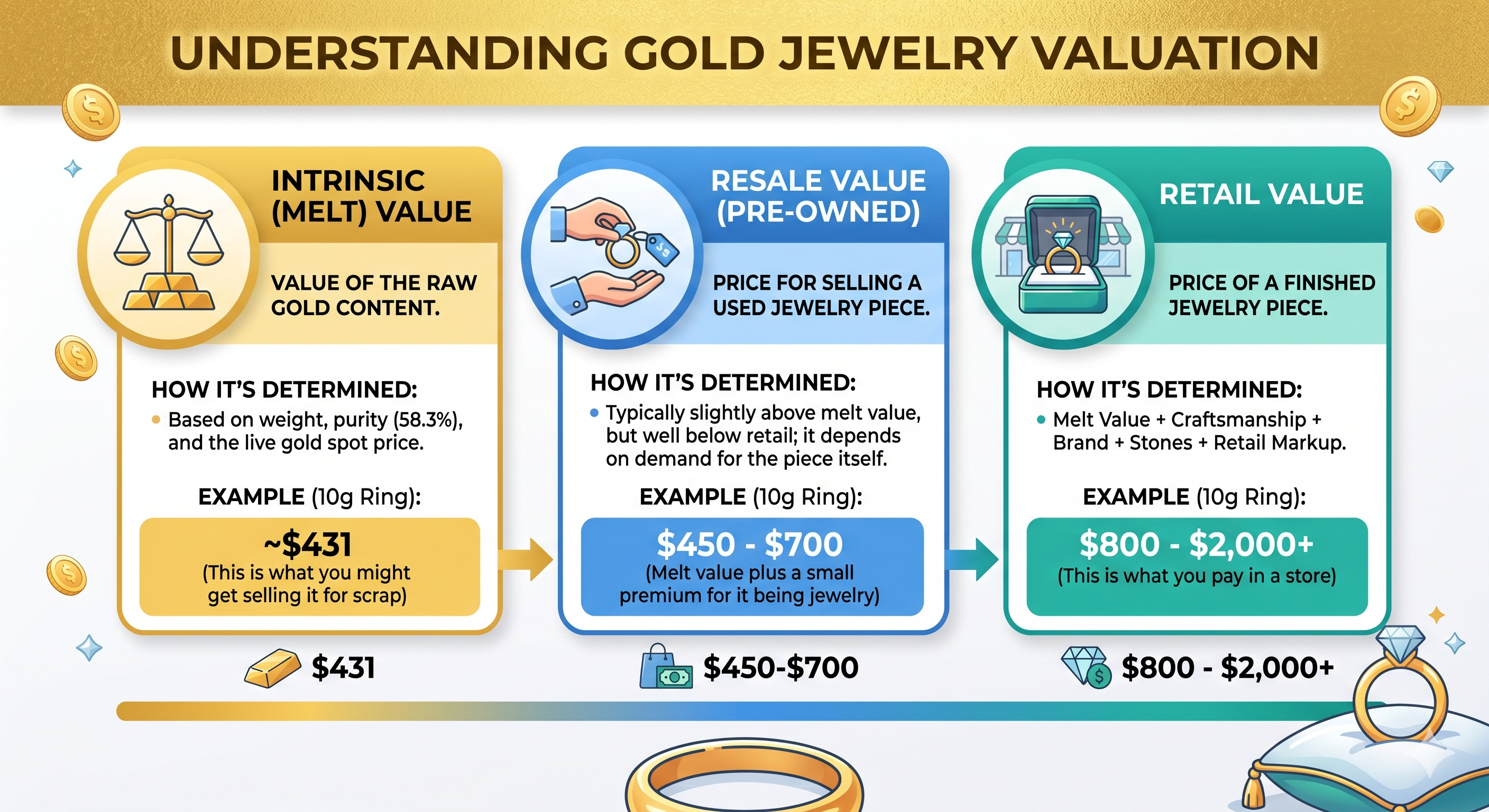
1. Intrinsic Melt Value (Scrap Value)
This is the base value of the raw gold content itself. It's what a refinery or gold buyer would pay you for the piece if they were going to melt it down. This value fluctuates constantly with the global gold market.
How to Calculate It:
Find the Current Gold Price: Look up the live spot price of gold per troy ounce. You can find this on financial websites like Kitco, Bloomberg, or CNN Money. Let's assume for this example that the spot price is $2,300 per troy ounce.
Calculate the Gold Content:
Remember, 14K gold is 58.3% pure gold (14/24 = 0.583).
One troy ounce is 31.1 grams.
If pure gold is $2,300 per 31.1 grams, then the price per gram of pure gold is: $2,300 / 31.1 = ~$73.96 per gram.
Calculate the Value of Your Item:
Weigh your jewelry in grams. Make sure to remove any non-gold parts first.
Multiply the weight by the purity (0.583) to get the weight of pure gold.
Multiply that by the price per gram of pure gold.
Example Calculation:
You have a 14K gold ring that weighs 10 grams.
Pure Gold Content: 10 grams × 0.583 = 5.83 grams of pure gold
Melt Value: 5.83 grams × $73.96/gram = ~$431
So, the intrinsic melt value of this 10-gram ring would be approximately $431.
Important Note: If you sell to a scrap gold buyer, they will likely offer you less than this full melt value (often 70-90%) because they need to make a profit and cover refining costs.
2. Retail/Market Value (What You Pay in a Store)
This is the price you pay for a new or pre-owned piece of 14K gold jewelry. It is significantly higher than the melt value because it includes:
Craftsmanship & Labor: The cost of designing and creating the piece.
Brand Name & Markup: Designer brands (like Tiffany, Cartier) carry a substantial premium.
Stones & Materials: The cost of any diamonds, gemstones, or pearls.
Overhead: The store's rent, staff, and marketing costs.
Profit Margin.
Because of these factors, a 14K gold jewelry piece that has a melt value of $431 could easily retail for $800, $1,500, or even much more, depending on the design, brand, and gems.
Summary of 14K Gold Value
How to Find the Specific Value of Your Item
For Melt Value: Weigh your item, find the current gold price, and use the calculation above. For a quick estimate, many reputable jeweler websites have live "gold calculators."
For Retail/Resale Value: For a standard chain or a simple band, the weight-based calculation is a good guide. For a piece with gemstones or from a famous designer, its value is more subjective. It's best to get an appraisal from a qualified and trusted jeweler.
In short, 14K gold is valuable both as a precious metal commodity and as a piece of craftsmanship. Its base worth is tied directly to the weight and the daily gold market, but its price as jewelry can be many times higher.
For current gold spot prices, visit the Kitco Precious Metals Price Guide.
What's The Difference Between 10k, 14k, 18k, and 24k Gold?
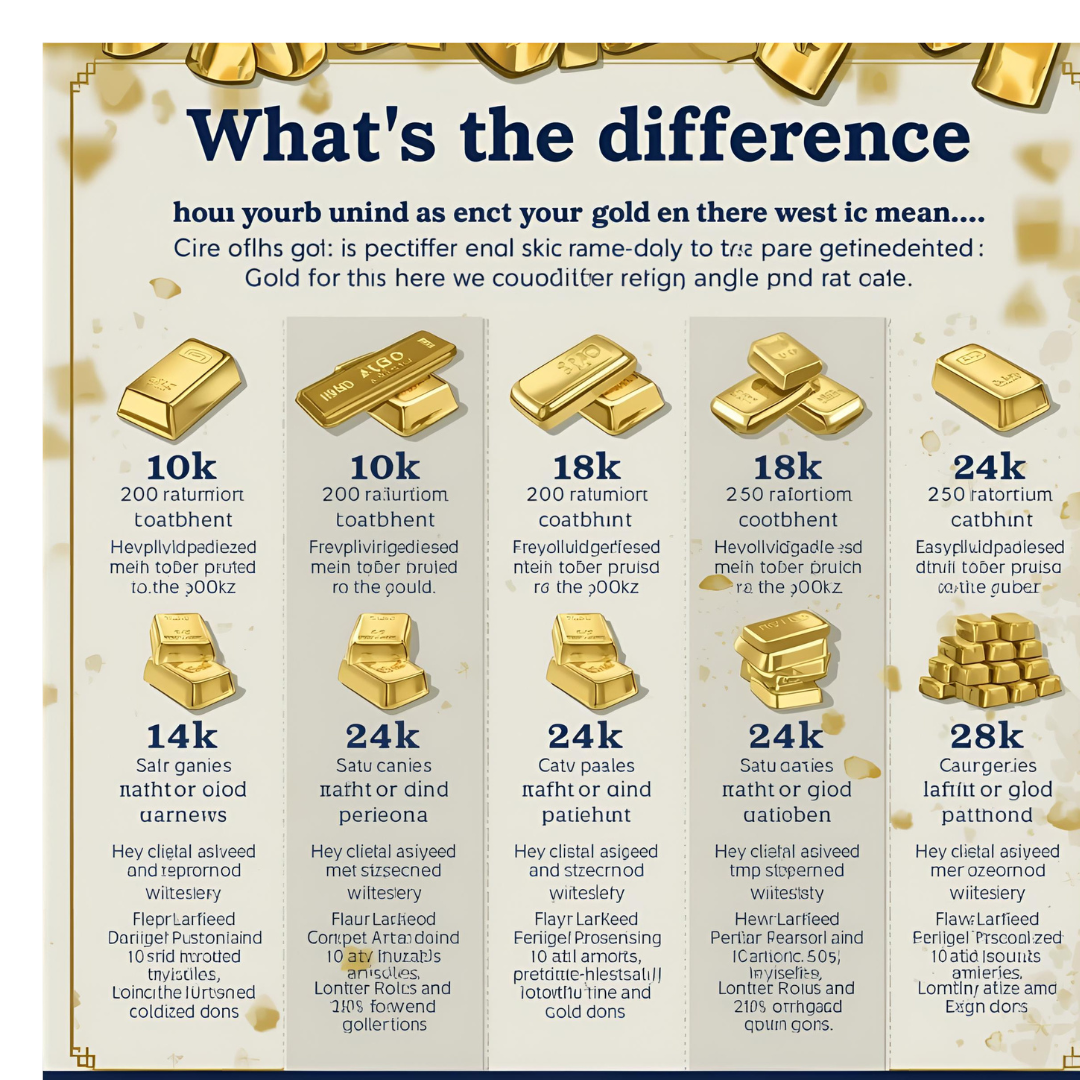
The "K" stands for Karat, which measures the purity of gold. The system is based on 24 parts.
Detailed Breakdown of Each Karat
24K Gold (Pure Gold)
Purity: 99.9% Gold
Pros: The most vibrant, rich yellow color. The highest intrinsic value per gram. Hypoallergenic.
Cons: Extremely soft and malleable. It is easily scratched, bent, and dented. It is not recommended for any jewelry that will be worn regularly (like rings or bracelets).
Best For: Gold bullion, coins, and some traditional Asian or Middle Eastern jewelry that is worn sparingly.
18K Gold (Luxury Gold)
Purity: 75.0% Gold, 25% Alloys
Pros: A richer, deeper yellow color than 14K. Higher gold content makes it more valuable and prestigious. Still very resistant to tarnish.
Cons: Softer and less durable than 14K or 10K. More prone to scratching and showing wear over time. More expensive.
Best For: High-end, luxury jewelry, and special pieces that may not be subjected to daily wear. It's a popular choice for fine jewelry in Europe.
14K Gold (The Ideal Balance)
Purity: 58.3% Gold, 41.7% Alloys
Pros: The sweet spot. Offers the perfect harmony of rich color, excellent durability, and good value. It is strong enough for everyday wear in rings and bracelets while maintaining a beautiful gold appearance.
Cons: The color is slightly less rich than 18K gold, but this is only noticeable when placed side-by-side.
Best For: Engagement rings, wedding bands, and everyday jewelry. It's the most popular choice in the United States for a reason.
10K Gold (The Durable & Affordable Option)
Purity: 41.7% Gold, 58.3% Alloys
Pros: The most durable and scratch-resistant gold for jewelry. Also, the most affordable option.
Cons: It has the lowest gold content legally allowed to be called "gold" in the USA and some other countries. The high alloy content can sometimes cause skin irritation for those with nickel allergies, and it can tarnish over time, requiring polishing.
Best For: Very active lifestyles, budget-friendly jewelry, and pieces where maximum durability is the top priority.
The Simple Analogy: The Gold Cake
Think of it like baking a cake:
24K Gold is almost all flour (gold). It's pure, but it falls apart easily.
18K Gold is a mix of some eggs and sugar (alloys). It holds together better and is still very rich.
14K Gold has the perfect balance of flour, eggs, and sugar. It's sturdy, tastes great, and is perfect for everyday.
10K Gold has more eggs and sugar than flour. It's very sturdy and affordable, but you taste less of the pure flour.
“In 1924, the United States government set a legal standard: anything below 10 karats could not be called ‘gold‘ in advertising. That is why 10K is the floor — the bare minimum. 14K became the ceiling of everyday luxury: pure enough to feel precious, strong enough to survive a lifetime.
In Europe, 18K is common. In the Middle East and Asia, 22K is preferred. But in America — the land of practicality — 14K won. Not because it is the richest, but because it is the smartest. It is the gold of farmers, soldiers, and factory workers who could finally afford something that would not break. 14K is not a compromise. It is a choice.”
How to Choose: A Quick Guide
Prioritize Durability & Affordability? -> 10K Gold
Want the Best All-Around Value for Daily Wear? -> 14K Gold (The Top Recommendation)
Want Maximum Purity & a Luxury Feel? -> 18K Gold
Looking for an Investment, Not Jewelry? -> 24K Gold
For most people, 14K gold provides the ideal combination of beauty, strength, and price, which is why it's the standard for fine jewelry.
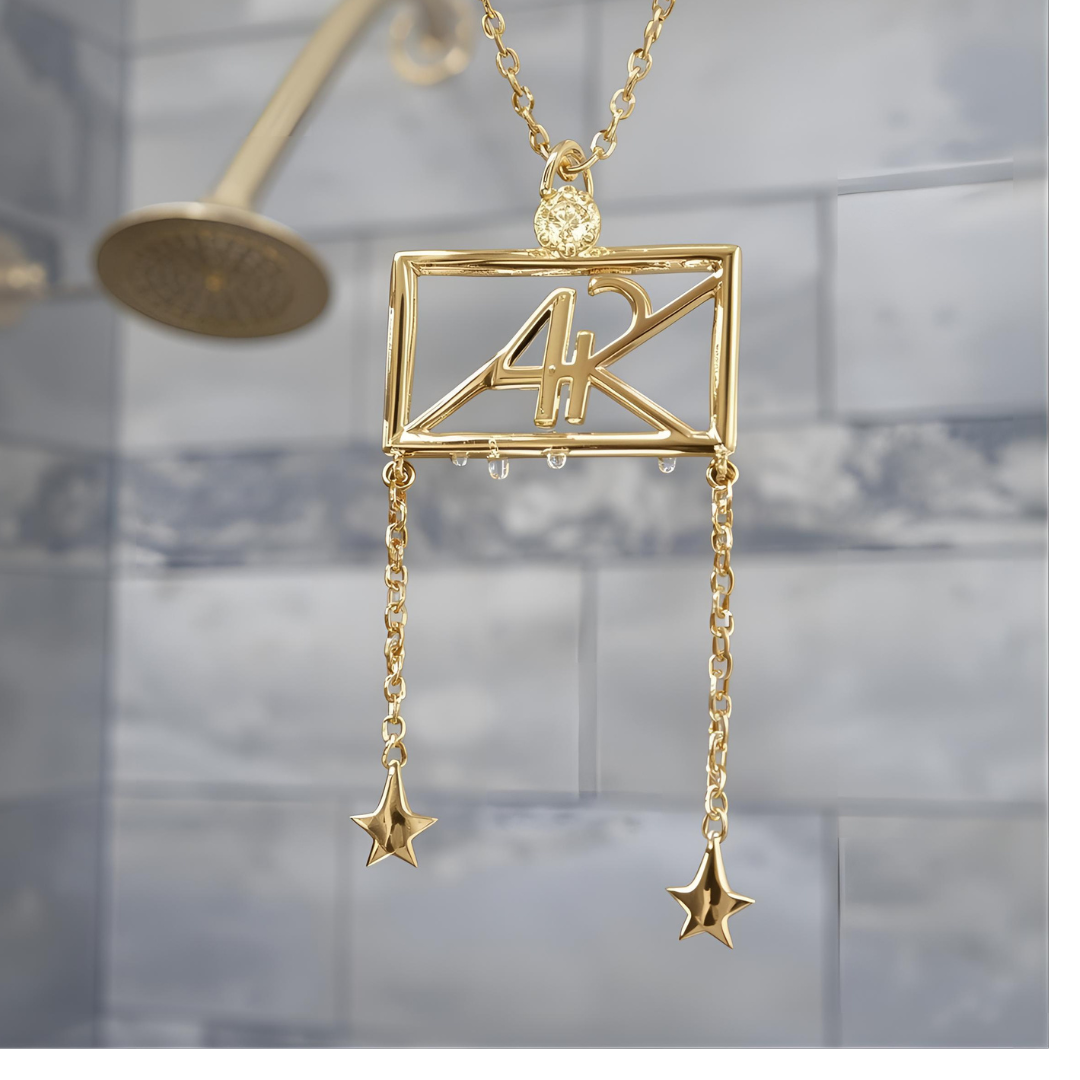
Can I Wear 14K Gold In The Shower?
The technical answer is: Yes, you can wear 14K gold in the shower occasionally, and it won't immediately ruin it. However, it is highly recommended that you do not make a habit of it.
Here’s a detailed breakdown of why it's best to take your gold off before showering, covering the risks and the science behind them.
The Risks of Showering with 14K Gold
While 14K gold is durable, the shower exposes it to a combination of threats that, over time, will cause damage.
1. Soap, Shampoo, and Body Wash (The Biggest Culprits)
Chemical Reaction: Most personal care products contain chemicals, such as chlorides and sulfates, that can react with the metal alloys in 14K gold (like copper, silver, or zinc).
Soap Scum: These products leave a thin, sticky film of soap scum on your jewelry. This film:
Dulls the Shine: It traps dirt and grime, making your gold look lifeless and lackluster.
Clogs intricate designs: It's especially problematic for pieces with detailed engravings or gemstones, building up in hard-to-clean areas.
2. Hard Water
Mineral Deposits: Hard water contains minerals like calcium and magnesium. When this water evaporates on your jewelry, it leaves behind a white, chalky residue.
Dull Film: This residue creates a dull film on the surface of your gold, which is difficult to remove and masks its natural brilliance.
3. Physical Damage
Knocks and Scratches: The shower is a hard, slippery environment. It's easy to accidentally knock your ring or bracelet against the tile, glass door, or faucet, which can lead to scratches, dents, or even loosen gemstones.
4. Effect on Gemstones (If Your Piece Has Any)
Loosening Settings: The repeated exposure to hot water can cause the metal prongs holding your gemstones to expand and contract slightly. Over time, this can loosen the settings, increasing the risk of losing a valuable stone.
Damage to Porous Stones: Some gemstones, like opals, pearls, and turquoise, are porous and can be damaged by water and chemicals in soaps.
Does the Color Matter? (Yellow, White, or Rose)
The risks are similar, but there is a special consideration for White Gold:
White Gold: Remember that most white gold is plated with a very thin layer of rhodium to give it its bright, white finish. The chemicals and abrasives in shower products can accelerate the wearing off of this rhodium plating, causing the piece to revert to its natural, slightly yellowish or grayish color sooner than it otherwise would.
The Bottom Line: Recommendation
Take off your 14K gold jewelry before showering. It's a simple, 10-second habit that will preserve the beauty, shine, and structural integrity of your pieces for a lifetime.
Think of it like your nice clothing—you wouldn't wear a silk blouse or a wool sweater in the shower, even though they are "durable" fabrics. You treat your fine jewelry with the same care.
What to Do If You Accidentally Shower with It
Don't panic! If it happens occasionally, it's not a disaster. Here’s what to do:
Rinse it carefully with plain, clean water to wash off any soap residue.
Gently dry it with a soft, lint-free cloth (like a microfiber cloth used for glasses).
Let it air dry completely before storing it.
Regular Cleaning: To keep your 14K gold looking its best, clean it periodically with a simple solution of a few drops of mild dish soap (like Dawn) in warm water. Soak for 15-20 minutes, gently scrub with a very soft-bristle toothbrush, rinse thoroughly, and pat dry.
For more on jewelry care, visit the American Gem Society's care guide.
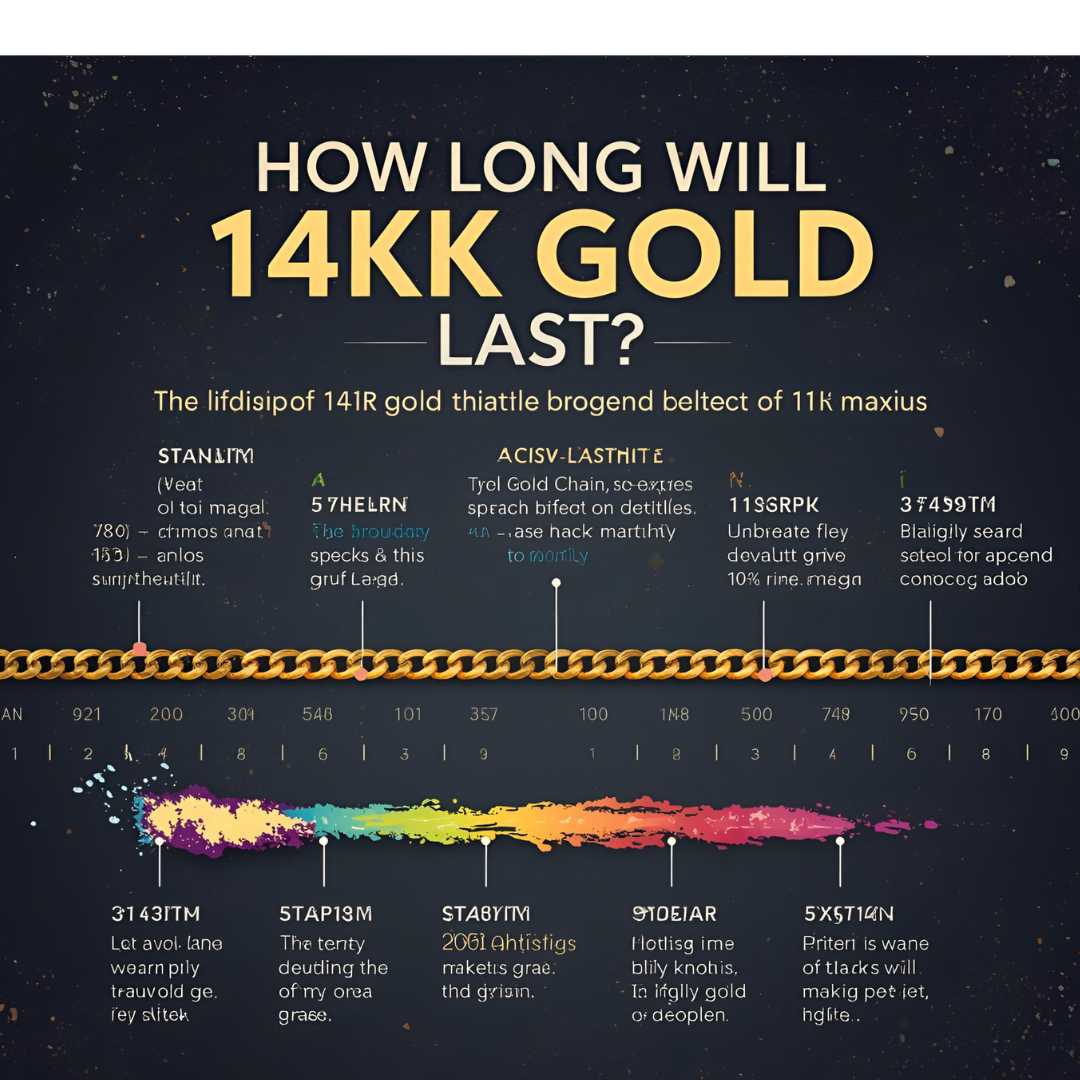
How Long Will 14K Gold Last?
The straightforward answer is: With proper care, 14K gold can last a lifetime and even be passed down as an heirloom to future generations.
Its longevity is precisely why it's the standard for everyday fine jewelry like engagement rings and wedding bands. Here’s a detailed breakdown of why it lasts so long and what factors can affect it.
The Science of Its Strength: Why 14K Gold is Durable
The durability of 14K gold comes from its alloy composition:
58.3% Pure Gold: Provides the precious metal value, beauty, and corrosion resistance (it doesn't rust or tarnish).
41.7% Other Metals (like copper, silver, zinc, or nickel): These alloys add significant strength and hardness, making them much more resistant to scratches, bends, and dents than higher-karat golds like 18K or 24K.
Think of it like a blade: pure iron is soft, but when forged into steel (an alloy), it becomes strong and resilient. 14K gold is the "steel" of the gold world.
Factors That Determine How Long Your 14K Gold Lasts
While the material itself is built to last, its actual lifespan depends on several factors:
1. Wear and Tear (The Biggest Factor)
Everyday vs. Occasional Wear: A 14K gold ring worn every single day will show signs of wear faster than a necklace only worn on special occasions. This is normal.
Abrasion: Constant contact with hard surfaces (like typing, washing dishes, or gym equipment) will slowly wear down the metal over decades, a process called "metal migration." This is why the shanks of rings get thinner over time.
2. Chemical Exposure
Chlorine & Harsh Chemicals: Exposure to pool chlorine, harsh cleaning agents, and bleach can damage the alloys in 14K gold, leading to pitting, discoloration, and a weakened structure.
Personal Products: Lotions, perfumes, and hairsprays can build up a film on the gold, dulling its shine and, over time, potentially interacting with the alloys.
3. Physical Impacts
Knocks and Blows: A hard knock can scratch, dent, or even crack the metal, especially if it hits at a weak point. This is a primary risk for rings and bracelets.
4. The Piece's Design and Craftsmanship
Thickness & Structure: A thick, well-made 14K gold band will naturally last longer than a delicate, hollow-chain bracelet.
Gemstone Settings: Prongs that hold gemstones can wear down over time, increasing the risk of losing a stone. These require periodic inspection and maintenance.
What "Lasting" Looks Like: Maintenance is Key
The phrase "last forever" doesn't mean it will look brand new forever without any care. Here’s a realistic timeline with proper maintenance:
Years 1-5: With daily wear, you will likely see minor surface scratches (called a "patina"). This is normal and can often be polished out. The piece will still look beautiful.
Decades 2-5: Deeper scratches may appear, and the piece may show visible thinning in high-friction areas (like the bottom of a ring band). A jeweler can often repair, resize, and re-polish it to restore its strength and luster.
Generations+: With occasional professional maintenance (like re-tipping worn prongs or re-shanking a thin band), a 14K gold piece can absolutely be passed down for generations. The scratches and slight wear become part of its unique history and character.
Comparison with Other Karats
vs. 10K Gold: 10K is slightly harder and more scratch-resistant, but it has a lower gold content and can be more prone to tarnishing due to the higher alloy content.
vs. 18K Gold: 18K gold (75% pure) is richer in color but is noticeably softer. It will scratch and dent more easily than 14K gold, making it less ideal for a highly active lifestyle.
How to Maximize the Lifespan of Your 14K Gold
Take it Off for Chores & Swimming: Protect it from harsh chemicals and physical labor.
Put Jewelry On Last: Apply perfumes, lotions, and hairspray before putting on your jewelry.
Store It Properly: Keep pieces separate in a soft-lined jewelry box to prevent scratches.
Clean It Regularly: Use a gentle solution of warm water and a few drops of mild dish soap. Gently scrub with a soft toothbrush, rinse, and dry with a soft cloth.
Get Professional Check-ups: For important items like engagement rings, have a jeweler inspect the prongs and structure once a year.
14K gold is an exceptionally durable and long-lasting material. It is specifically engineered to withstand the rigors of daily life. While it will naturally acquire a patina of scratches over the years—telling the story of your life with it—its structural integrity will remain intact for a lifetime and beyond with simple, basic care. It is a legacy-quality metal.
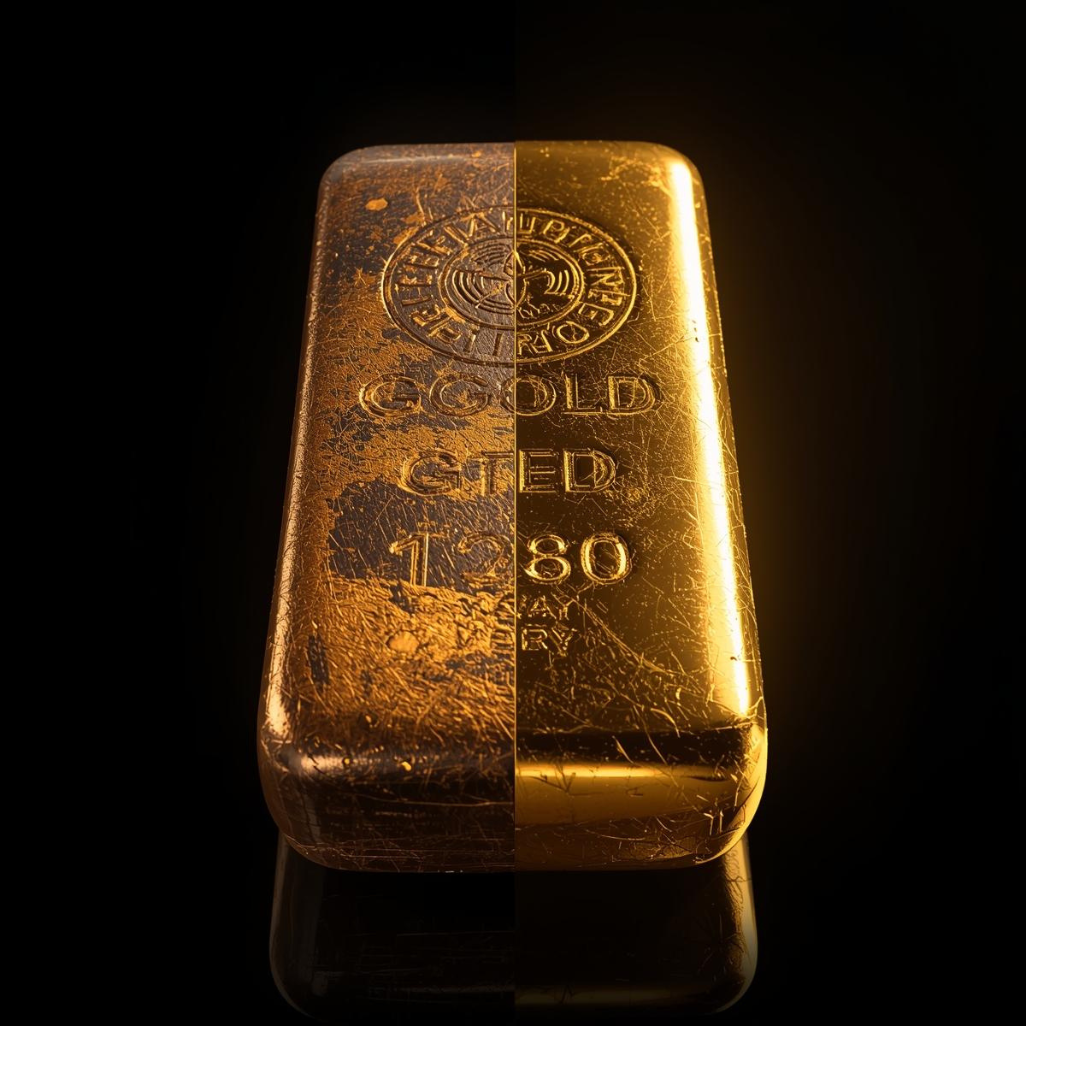
Does 14K Gold Tarnish?
Yes, 14K gold can tarnish, but not as severely or as quickly as silver or base metals. The tarnishing is not from the gold itself, but from the other metals it's alloyed with.
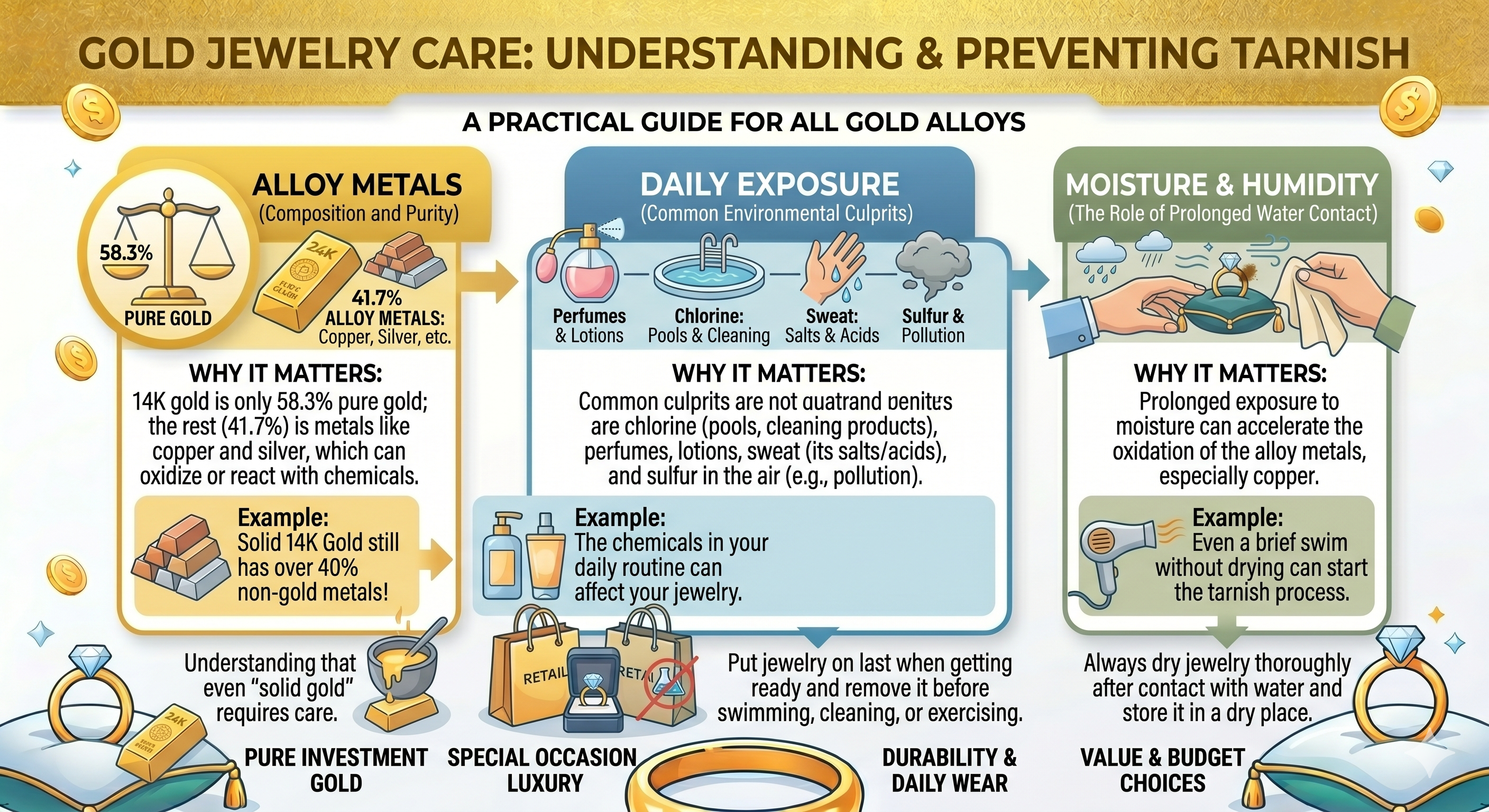
Understanding How Tarnish Happens
Pure 24K gold is non-reactive and does not tarnish. However, it is too soft for durable jewelry. To make it stronger, pure gold is mixed (alloyed) with metals like copper, silver, zinc, or nickel to create 14K gold. When these alloy metals come into contact with substances like chlorine, sulfur, or the acids in sweat, they can undergo a chemical reaction. This results in a dull film or discoloration—this is what we call tarnish.
Note on White Gold: 14K white gold is often plated with rhodium for a bright, silvery finish. Tarnishing on white gold usually appears as the rhodium layer wears off, revealing the slightly yellowish alloy beneath. This is not traditional tarnish but requires re-plating to restore the white color.
How to Clean and Prevent Tarnish
Gentle Home Cleaning: For light tarnish, soak the jewelry in a bowl of warm water with a few drops of mild dish soap for 15-20 minutes. Gently scrub with a soft-bristled toothbrush, rinse under clean water, and pat completely dry with a soft, lint-free cloth.
Preventive Storage: Store jewelry in a dry, airtight container, like a zip-top bag or a fabric-lined jewelry box. Keeping pieces separate prevents scratches and reduces exposure to air.
Professional Care: For deep tarnish, intricate pieces, or valuable items, take them to a professional jeweler. An annual professional cleaning and inspection is recommended to maintain their condition.
In summary, while 14K gold is durable and resistant, it's not maintenance-free. With proper care, you can easily preserve its shine for decades.
I hope this detailed explanation helps you care for your jewelry. If you have a specific piece, like a ring you wear daily or a necklace, I can offer more tailored care tips.
Does Real 14K Gold Turn Green?
Yes, real 14K gold can cause a green discoloration, but it is not the gold itself changing color. This reaction is a harmless chemical process involving the other metals mixed with gold.
The green color is almost always caused by copper in the gold alloy reacting with acids (from sweat or skin chemistry), moisture, or chemicals (like chlorine or lotions). This forms a green copper salt that can rub off as a temporary skin stain or appear as tarnish on the jewelry.
Why 14K Gold Reacts This Way
Pure 24K gold is non-reactive, but it is too soft for jewelry. To make it durable, pure gold is mixed with stronger metals. Since 14K gold is only 58.3% pure gold, the remaining 41.7% is typically a blend of copper, silver, zinc, or nickel.
The likelihood of a green reaction depends on the gold purity and the alloy "recipe." Higher-karat gold has less reactive metal, so it's less prone to this issue.
Important: Avoid using harsh chemicals, abrasives, or ultrasonic cleaners if your jewelry contains gemstones or delicate settings. For valuable or heavily tarnished pieces, professional cleaning by a jeweler is best.
Is It an Allergy?
A simple green mark is not an allergy. It wipes away easily and doesn't irritate.
If the skin under your jewelry becomes red, itchy, swollen, or blistered, you may have a nickel allergy (a common alloy metal, especially in some white gold). In this case, discontinue wear and consult a dermatologist.
I hope this detailed explanation helps you understand and care for your 14K gold jewelry. If you can share whether this happens with a specific type of item (like a ring you wear daily or a pendant), I can offer more tailored advice on managing it.
Can I Wear 14K Gold Every Day?
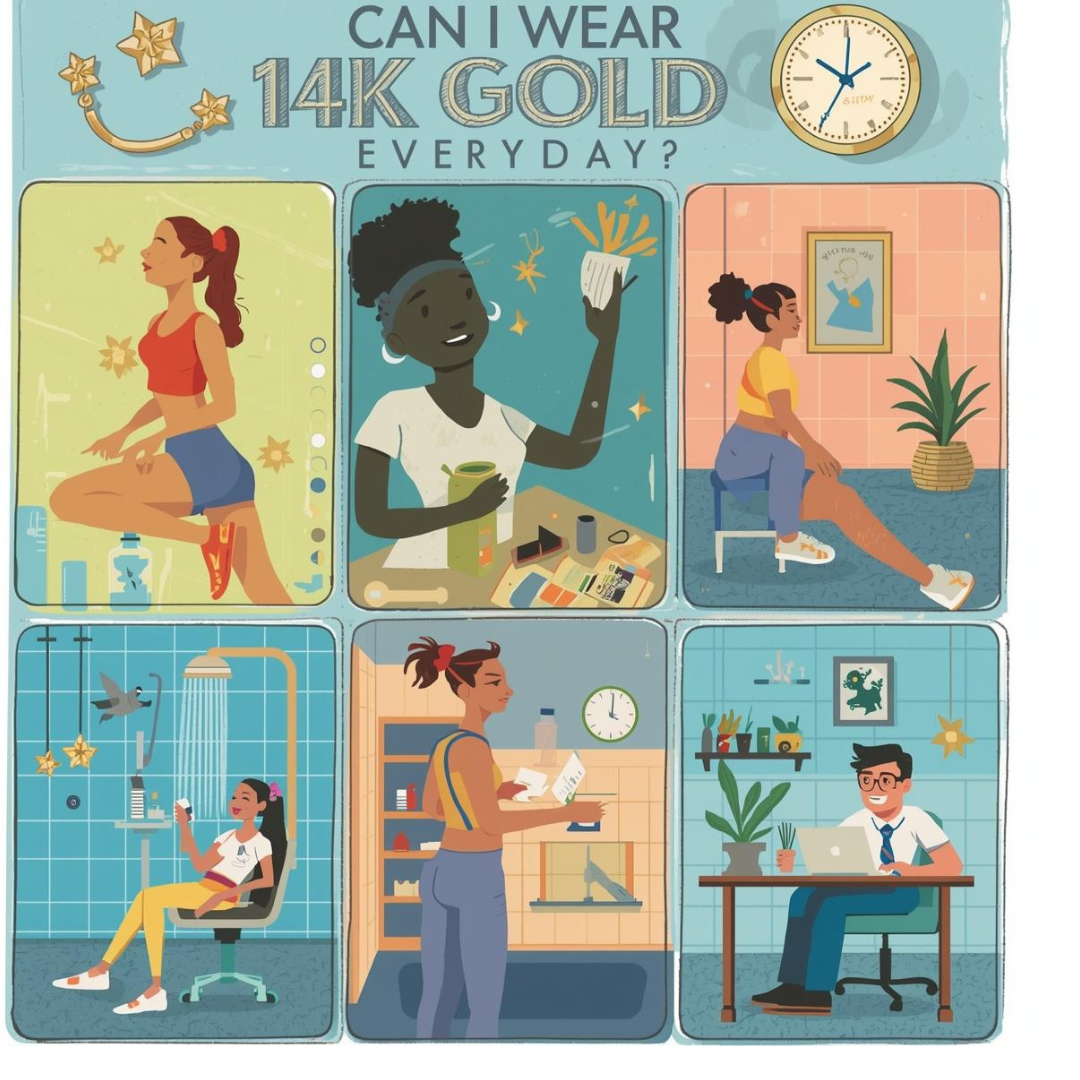
Yes, you absolutely can wear 14K gold every day. In fact, 14K gold is specifically chosen and prized for its excellent balance of durability, affordability, and beautiful color, making it the most popular choice for engagement rings, wedding bands, and other fine jewelry meant for a lifetime of wear.
Here’s a breakdown of why it's ideal for daily wear and what you need to know.
Why 14K Gold is Perfect for Daily Wear
Optimal Durability: With 58.5% pure gold and 41.5% alloy metals (like copper, silver, or zinc), 14K gold is significantly harder and more scratch-resistant than 18K or 24K gold.
Excellent Tarnish Resistance: While it can tarnish (as previously discussed), it is much more resistant than sterling silver or lower-karat golds like 10K, thanks to its balanced composition.
Superior Value: It offers the rich look and feel of gold at a more accessible price point than higher karats, making it a practical investment for everyday pieces.
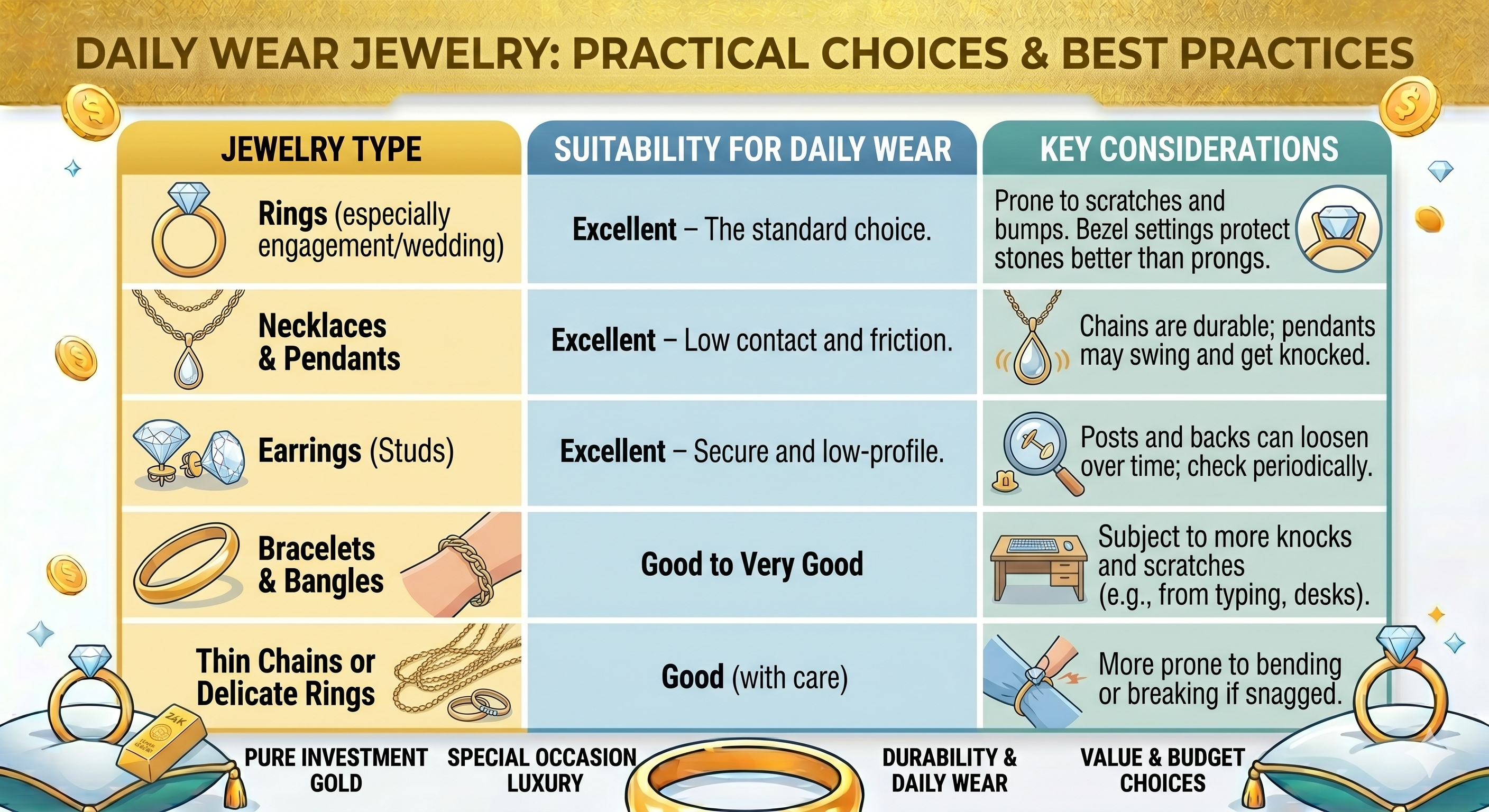
Daily Wear Guide by Jewelry Type
Not all 14K gold items wear the same. Here’s what to expect with different pieces:
Note on White Gold: If your everyday piece is 14K white gold, be aware that its bright silvery finish comes from a plating of rhodium. This layer will wear off over time (usually in 1-3 years with daily wear), revealing the naturally slightly yellowish alloy underneath. This is not damaged—it can be easily re-plated (re-rhodiumed) by a jeweler to restore its original white luster.
When to Be Cautious
While highly durable, 14K gold is not indestructible. Be more cautious with:
Extremely thin or filigree designs: They are more delicate.
Jewelry with soft gemstones (like opals or pearls): The settings are secure, but the stones themselves can be damaged by daily wear.
If you have a known metal allergy: Ensure your 14K gold is nickel-free, especially for white gold.
In summary, 14K gold is an outstanding, worry-free choice for everyday jewelry with proper basic care. Its blend of beauty, strength, and value is precisely why it's the industry standard for lifelong pieces.
“You now know the colors, the purity, the quality, the pricing, the karat differences, the shower rules, the lifespan, the tarnish truth, the green-skin myth, and the daily wear advice. The only question left: will you choose the gold that lasts?
Our current collection includes a limited number of 14K gold pieces — from yellow gold classics to white gold solitaires and rose gold bands. When certain designs are gone, restocking takes time because each piece is hallmarked and crafted by hand.
*This is not just a metal. It is King Edward III‘s touchstone, the 14th-century standard, and six centuries of proof that gold doesn‘t need to be pure to be precious. It needs to last.”*
[Button: Secure Your 14K Gold Piece (Limited) →]
Back to [Amethyst Ring Guide]


Other news for Monday 08 June, 2026
- Promise Ring Guide: Meaning, Price, Finger, Age and Buying Tips
- Diamond Ring Buying Guide: Shapes, 4Cs, Prices And Tips
View all news for Monday 08 June, 2026 on one page
News for Sunday 07 June, 2026
- Princess Cut Diamond Guide: Price, Pros and Cons vs Oval
- Peridot Guide: Meaning, Price, How to Tell Real
- Diamond Cut Guide: Grades, Shapes, Value And Buying Tips
View all news for Sunday 07 June, 2026 on one page
Recent News
- Saturday 06 June, 2026
- Friday 05 June, 2026
- Thursday 04 June, 2026
- Wednesday 03 June, 2026
- Tuesday 02 June, 2026