

Halo Setting Guide: Pros, Cons, Cost, vs Solitaire and Buying Tips
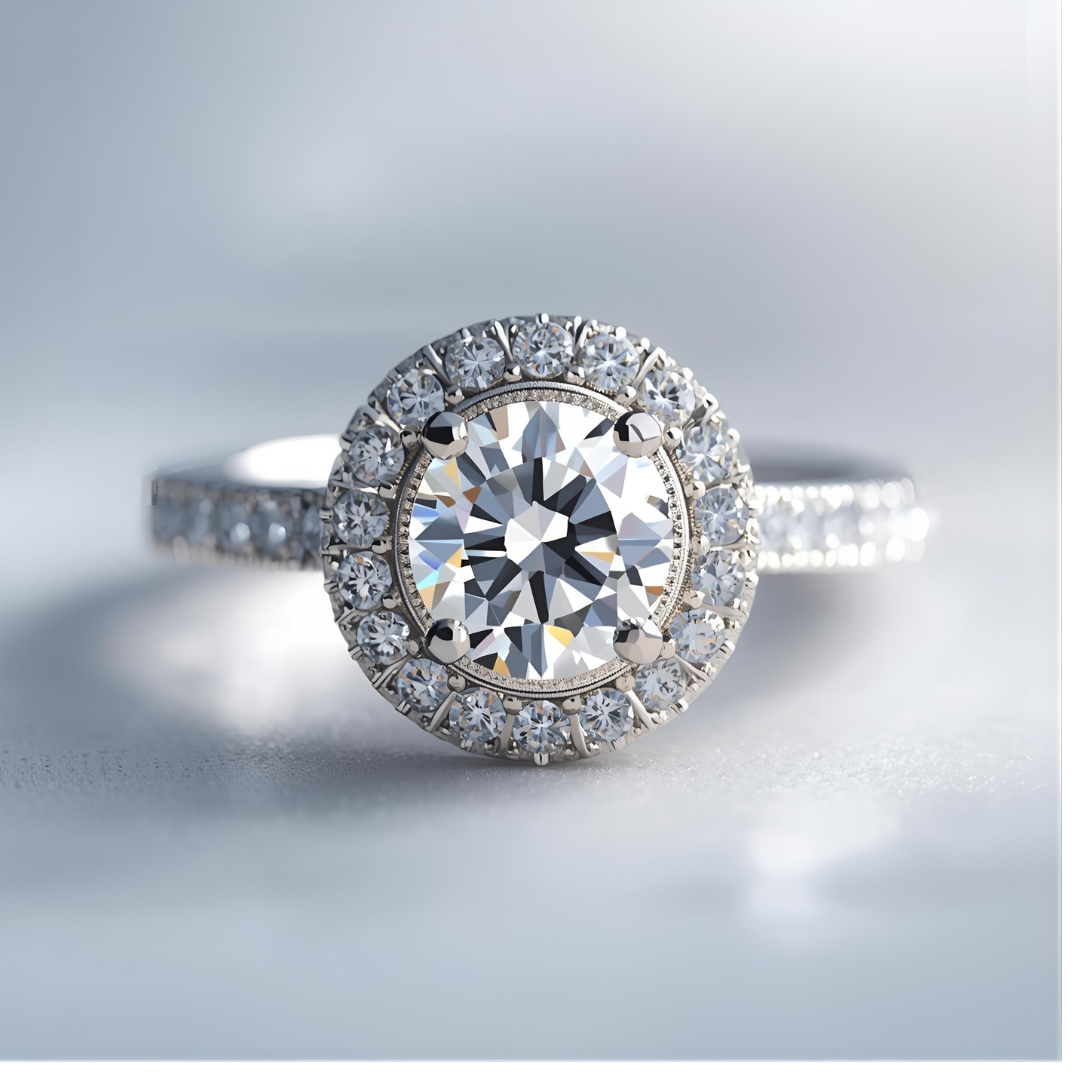
Halo Setting Guide: Pros, Cons, Cost, vs Solitaire, and Buying Tips
Let's break down the "Halo Setting," a hugely popular and brilliant jewelry design.
In 1902, the House of Cartier created a ring for a Russian princess. The center diamond was surrounded by a circle of smaller stones—a ‘halo‘—making it appear twice its size. The princess loved it. So did everyone who saw it. The halo became a signature of the Edwardian and Art Deco eras, a time when jewelry was designed to catch the new electric light. A century later, the halo returned—worn by celebrities on red carpets, pinned on Pinterest boards, and chosen by millions of couples. The halo does not just make a diamond look bigger. It makes it look like the sun. And everything else orbits around it.”
The same halo that adorned princesses and movie stars now awaits your own center stone — whether you choose a single halo, a double halo, or a hidden halo. Every halo setting in our collection is handcrafted with secure shared prongs or bezels, because brilliance should never come loose.”
[Button: Explore Halo Setting Rings →]
Table of Contents
What Is A Halo Setting?
Simple Definition
A Halo Setting is a ring design where the center stone (usually a diamond or gemstone) is surrounded by a "halo" or a circle of smaller pavé or micro-paved stones. This halo of smaller stones frames the center stone, making it appear larger, brighter, and more sparkly.
Key Characteristics & How It Works
The Center Stone: This is the main, focal point of the ring. It can be any shape (round, cushion, oval, pear, etc.) and any type of gem.
The Halo: This is the circle of small diamonds or gemstones that tightly encircles the center stone. These stones are usually set very close together in a shared metal bezel or with tiny, nearly invisible prongs to maximize their collective sparkle.
The Effect:
Illusion of Size: The halo creates a seamless, glittering border that visually expands the perceived size of the center stone. A halo can make a 0.75-carat center stone look like it's well over 1 carat.
Enhanced Sparkle: The additional small stones catch and reflect light from all angles, adding a tremendous amount of brilliance and fire to the entire ring.
Protection: The halo can act as a protective barrier for the girdle (edge) of the center stone, guarding it against chips and damage.
For official information on jewelry settings, visit the GIA Jewelry Setting Guide.
Why Is The Halo Setting So Popular?
Maximizes Impact: It offers a dramatic, luxurious look without the high cost of a much larger single-center stone.
Versatile and Customizable: Halos can be adapted to fit any center stone shape and can be single or double.
Timeless Yet Modern: While having vintage roots (popular in the Edwardian and Art Deco eras), the modern halo has a crisp, contemporary feel.
Adds Personality: It allows for creative designs, like using colored gemstones (e.g., a sapphire halo around a white diamond) for a unique touch.
Variations of the Halo Setting
The basic concept has been adapted into many stylish variations:
Single Halo: One circle of stones around the center gem. This is the most common type.
Double Halo: Two concentric circles of smaller stones, creating an even more expansive and glamorous effect.
Hidden Halo: A modern twist where the halo is set underneath the center stone's setting, visible only from the side profile. It adds a hidden sparkle.
Shaped Halo: The halo follows the shape of the center stone, like a cushion-shaped halo around a cushion-cut diamond or a flower-shaped halo.
Colored Halo: Using colored gemstones (like sapphires or emeralds) for the halo to create a beautiful contrast with a white or colored center stone.
Things to Consider
Style Longevity: While incredibly popular now, some consider it a strong trend. A simple solitaire is often viewed as more "timeless," but a halo's classic roots give it enduring appeal.
Maintenance: Because it has many small stones, a halo setting can trap dirt and may require slightly more frequent cleaning to maintain its sparkle. It's also important to have the prongs/bezel on the small stones checked periodically to ensure they are secure.
Can Look "Busy": For those who prefer a minimalist or ultra-classic look, the halo might feel too elaborate.
In summary, a halo setting is a brilliant design choice for anyone looking to maximize the visual size and sparkle of their center stone, offering a glamorous and eye-catching appearance.
Is A Halo Setting Secure?
That's an excellent and very common question. The short answer is:
No, the halo setting is not outdated. However, its peak, "trend-forward" popularity has passed, and it is now considered a modern classic rather than a cutting-edge trend.
Let's break down the current status of the halo setting:
Why It's NOT Outdated
Established Classic: The halo has been a dominant force in jewelry design for over two decades. When a style endures for that long, it transitions from a fad to a staple of the era, much like the Art Deco designs of the 1920s are now considered timeless.
Enduring Appeal: The core benefits that made it popular remain:
It makes the center stone look larger and more sparkly. This is a timeless desire for many people.
It offers design versatility. It works with countless center stone shapes and allows for personalization (e.g., colored gemstones, double halos).
Strong Market Presence: Jewelers continue to sell a huge volume of halo settings. You see them everywhere because they are still widely loved, not because they are outdated.
Why Some People Perceive It as "Trendy" Rather Than "Timeless"
This perception is the core of your question. Here’s why some might feel it's on its way out:
The Peak Has Passed: The halo was at the absolute height of its trendiness from the early 2000s to the 2010s. As with any trend, after the peak, there's a natural correction. The current shift is towards more minimalist and unique styles.
The Rise of Minimalism: There's a strong contemporary trend toward simpler settings like the solitaire, bezels, and three-stone rings. These styles are seen as "quiet luxury" and are often presented as the "timeless" alternative to the more elaborate halo.
Saturation: Because it was so popular for so long, some people feel they've "seen it everywhere," which can lead to a desire for something different.
The Verdict: It's a Matter of Personal Style
Think of it this way:
The Solitaire: Is the timeless little black dress—elegant, simple, and never goes out of style.
The Halo Setting: Is the classic, glamorous cocktail dress—it has a specific, bold personality. It's not for every single occasion, but it's a permanent and celebrated part of the fashion world.
If you love a halo setting, you should absolutely choose one. Its status as a modern classic means it will not look bizarre or "so 2010" in a few years. A well-designed halo is here to stay.
“In 2011, Kate Middleton walked down the aisle with a sapphire engagement ring that had once belonged to Princess Diana. The ring was a halo—a 12-carat oval sapphire surrounded by 14 diamonds. It was not a new ring. It was an heirloom. And when the world saw it, they didn‘t think ‘dated.‘ They thought ‘royal.‘ The halo setting has outlasted every trend that tried to replace it because it does something that a solitaire cannot: it frames a stone like a masterpiece in a museum. That is not outdated. That is timeless.”
How to Choose a Halo That Feels Current
If you want a halo but are concerned about it feeling dated, consider these modern twists:
Opt for a Hidden Halo: This gives you the extra sparkle and detail without changing the classic solitaire look from the top down. It feels fresh and modern.
Choose a Colored Gemstone Halo: A sapphire or emerald halo around a diamond feels unique and personal, moving away from the all-diamond look.
Keep the Band Simple: Pair a halo setting with a plain, thin metal band rather than an eternity band. This keeps the focus clean and prevents it from looking "too busy."
Consider a Geometric or Open Halo: Some designers create halos with negative space or geometric patterns that feel more contemporary than the traditional tightly-packed circle.
The halo setting is far from outdated. It has simply matured from a white-hot trend into a permanent and beloved option in the jeweler's catalog. Your choice should ultimately come down to which style makes your heart sing, not a fleeting fear of it being "out of fashion."
For more on jewelry care, visit the American Gem Society's care guide.
Are Halo Settings Popular?
Yes, halo settings remain very popular, but their popularity has evolved.
Think of it this way: The halo has transitioned from a white-hot, dominant trend to an established, permanent style choice. It's no longer the "it girl" of the ring world, but it's a beloved classic that continues to have a massive presence.
Here’s a breakdown of its current popularity:
Why It's Still a Top Contender
Proven and Enduring Appeal: After being a top trend for over two decades, the halo has proven it has staying power. It's not a fleeting fad that will disappear completely.
The "More Sparkle, Bigger Look" Factor: The core benefit—making the center stone appear significantly larger and more brilliant—is a timeless desire for many people. This practical and aesthetic advantage never truly goes out of style.
Design Versatility: The halo is incredibly adaptable. It works with any center stone shape (round, oval, cushion, pear, etc.) and can be customized in countless ways (single, double, hidden, colored gemstone halos). This keeps the design feeling fresh and personal.
Strong Market Presence: Walk into any jewelry store or browse major online retailers, and you will still find a huge assortment of halo settings. They continue to be one of the best-selling styles.
The Shift in Popularity (The "But...")
While still popular, the halo now shares the spotlight more than it did a decade ago. The market has seen a significant shift towards:
The Minimalist Revival: Simple, classic solitaire settings have made a huge comeback. They are often marketed as "timeless" and represent a "quiet luxury" aesthetic that appeals to many.
The Rise of the Oval and Elongated Cuts: Ovals, pears, and marquise cuts are extremely popular, and many people prefer to showcase their unique shape without the circular frame of a traditional halo.
Unique and Organic Styles: There's growing interest in non-traditional rings, including bezels (which are very secure and modern), three-stone rings, and vintage-inspired Art Nouveau or "crackled ice" styles.
The Bottom Line: Is a Halo Right for You?
The question is less about overall popularity and more about your personal style.
Choose a Halo if:
You love maximum sparkle and a glamorous, eye-catching look.
You want to maximize the perceived size of your center stone.
You appreciate a blend of vintage and modern aesthetics.
You are not worried about it being slightly less "trend-forward" than a solitaire or bezel, and you see it as a beautiful classic.
Consider a Different Style if:
You are a minimalist at heart and prefer "quiet luxury."
Your primary concern is adhering to the very latest trend (which currently favors simpler settings).
You want a ring that is purely and classically "timeless" in the most traditional sense.
Halo settings are absolutely still popular. They are a modern classic—much like a beloved designer handbag that every season has new versions of, but the core concept remains. You see it everywhere because it's a beautiful, effective, and enduring design, not because it's a passing trend.
If you love the halo, you will be in excellent company, and you will have a ring that is celebrated for its brilliance and beauty for decades to come.
What Size Diamond For A Halo Setting?
Excellent question. Choosing the right diamond size for a halo setting is a balancing act. The goal is to find a center stone that makes a statement without being overwhelmed by—or overwhelming—the halo itself.
There's no single "perfect" size, as it depends on your budget, finger size, and personal style. However, we can break it down into clear guidelines and popular choices.
The Golden Rule of Thumb
For a balanced and proportional look, the total carat weight (including the halo) is typically 1.5 to 2 times the carat weight of the center stone alone.
Example: A 0.75-carat center diamond with a halo will look like a 1.1 to 1.5-carat ring from a distance.
Example: A 1-carat center diamond with a halo will look like a 1.5 to 2-carat ring.
Recommended Center Stone Sizes & Their Impact
Here’s a practical guide to what you can expect from different center stone sizes in a classic halo setting:
1. Small Center Stone (0.25 - 0.50 Carats)
Effect: The halo will be the dominant feature. This is a fantastic way to get a lot of sparkle and the appearance of a much larger ring on a smaller budget. The result is very delicate and intricate.
Best For: A dainty, glittery look where the overall effect is more important than a large central diamond.
2. Medium Center Stone (0.75 - 1.00 Carats) <-- Most Popular & "Sweet Spot."
Effect: This is the most popular and classic range for a halo. The center stone and the halo work in perfect harmony. The center stone remains the clear focal point, while the halo magnificently amplifies its size and brilliance. A 1-carat center stone in a halo will look truly impressive.
Best For: Achieving the classic, glamorous halo look with excellent proportions and value.
3. Large Center Stone (1.50 - 2.00+ Carats)
Effect: With a larger center stone, the halo acts as a glorious "frame" for a masterpiece. The look is undeniably bold, luxurious, and statement-making. The ring will have substantial finger coverage and immense presence.
Best For: A luxurious, red-carpet style where the large center stone is the star, and the halo is its elegant supporting act.
Crucial Factors Beyond Carat Weight
Carat weight alone doesn't tell the whole story. These factors are just as important:
The Shape of the Center Stone:
Round Brilliant: The most common and versatile. It works seamlessly with a round halo.
Elongated Shapes (Oval, Cushion, Pear, Marquise): These can create even more dramatic finger coverage. Pay attention to the face-up size (the surface area you see). A well-proportioned 1-carat oval can look larger than a 1-carat round.
The Width of the Halo:
A thin, delicate halo will make the center stone appear only slightly larger.
A wider halo or a double halo will dramatically increase the overall size and presence of the ring. Be mindful that a very wide halo can sometimes overshadow a smaller center stone.
Your Finger Size:
Smaller Fingers (Size 4-5): A 0.75-carat center stone will look proportionally larger and more impactful.
Average/Larger Fingers (Size 6.5+): You may want to consider a 1-carat or larger center stone to achieve the same level of presence.
Practical Advice
Try It On! This is the most important step. A 0.75-carat center in a halo might look perfect on your hand, while a 1.5-carat might feel overwhelming (or perfect!). Perception is personal.
Focus on Proportions, Not Just Carat. Ask your jeweler for the millimeter measurements of the center stone and the total diameter/length of the finished halo setting. This gives a much more accurate picture of how it will look on your hand.
Consider a "Hidden Halo." If you love the idea of a halo but want a solitaire look from the top, a hidden halo adds sparkle from the side profile without changing the perceived size of the center stone.
For the classic, balanced halo look that most people envision, aim for a center stone between 0.75 and 1.50 carats. The 1-carat center stone is often considered the ideal sweet spot, offering a magnificent focal point that is perfectly complemented and enhanced by the surrounding halo.
How Much Does A Halo Setting Cost?
This is a crucial question, and the answer has a lot of variables. The cost of a halo setting can range from a few hundred dollars to several thousand, depending entirely on how it's acquired and what it's made of.
To give you a clear picture, let's break it down into the most common scenarios.
The Short Answer
For just the setting itself (without the center stone), you can expect a range of $500 to $3,000+, with most classic designs falling in the $1,000 - $2,000 range.
Detailed Cost Breakdown
The price is influenced by three main factors: 1) The Metal, 2) The Labor & Design, and 3) The Halo Diamonds.
Scenario 1: Buying a Pre-Made Halo Setting (from a large retailer)
This is the most common route. You are buying a pre-designed mounting.
Basic Halo (10K-14K White Gold, melee diamond halo): $800 - $1,500
Standard Halo (14K-18K White/Yellow/Rose Gold, good quality melee): $1,200 - $2,500
Premium/Luxury Halo (Platinum, high-quality melee, intricate detail): $2,000 - $4,000+
Scenario 2: Custom-Designing a Halo Setting (with a local jeweler)
This gives you complete control but costs more due to the jeweler's labor and design time.
Custom Halo Setting: $1,500 - $5,000+
A simple custom design might start around $1,500.
Complex designs (e.g., double halo, vintage filigree, intricate milgrain) will quickly push the price to $3,000 and beyond.
What You're Paying For: The 3 Key Cost Factors
1. Metal Type and Weight (The Base Cost)
This is the foundation of the cost. Platinum is always more expensive than gold.
10K Gold: Most affordable, but less pure and more prone to wear.
14K Gold: The most popular choice. A great balance of durability, color, and price.
18K Gold: More expensive, richer color (as it's 75% gold), but softer and more prone to scratching.
Platinum: The most expensive. It's dense, heavy, durable, and naturally white, so it doesn't need rhodium plating like white gold.
2. The Halo Diamonds (The "Sparkle" Cost)
The small diamonds in the halo are called melee diamonds (pronounced meh-lay). Their cost depends on:
Quantity: A halo for a 1-carat center stone can have 20-40+ small stones.
Size: Larger melee stones cost more.
Quality: While you don't need high-color/clarity for melee, better quality stones will increase the price and overall sparkle.
Important Note: The carat weight of the melee diamonds is almost always included in the setting's total price. A typical halo might add 0.25 to 0.50 carats of total diamond weight.
3. Labor and Design Complexity (The Craftsmanship Cost)
A simple, classic halo is less labor-intensive than a complex one.
Simple Pave Halo: Lower cost.
Shared Prong or Bezel Halo: Can be more costly due to the precision required.
Double Halo, Vintage-Style, or Detailed Halos: Highest cost due to significantly more labor and materials.
Putting It All Together: The Total Ring Cost
Remember, the setting cost is only part of the equation. The full cost of a halo engagement ring is:
Total Ring Cost = Cost of Center Diamond + Cost of Halo Setting
Example: A Classic 1-Carat Halo Engagement Ring
Center Diamond (1.0 ct, G color, VS2 clarity, Good Cut): ~$6,000 - $9,000
Halo Setting (14K White Gold, standard melee): ~$1,200 - $2,000
Total Estimated Cost: $7,200 - $11,000
Key Takeaways & Smart Shopping Tips
"Setting Only" vs. "Complete Ring": Always clarify if a price quote is for just the empty setting or the entire ring with a center stone.
Prioritize Craftsmanship: A well-made halo from a reputable jeweler is worth the investment. A cheap, poorly made halo will have a higher risk of losing its small stones.
Get Itemized Quotes: A good jeweler will provide a breakdown of the setting cost, metal weight, and melee diamond weight.
Consider the Long-Term: Factor in the cost of insurance and potential maintenance (e.g., retipping prongs, checking for loose melee stones), which might be slightly higher for a halo than a solitaire.
While you can find a basic halo setting for under $1,000, planning a budget of $1,200 to $2,500 for the setting alone will give you a wide range of beautiful, well-crafted options from most jewelers.
How To Choose Between A Halo/Solitaire Setting?
Choosing between a halo and a solitaire ring largely depends on your preference for a timeless, minimalist look versus a brilliant, eye-catching design. Here is a direct comparison based on the key factors:
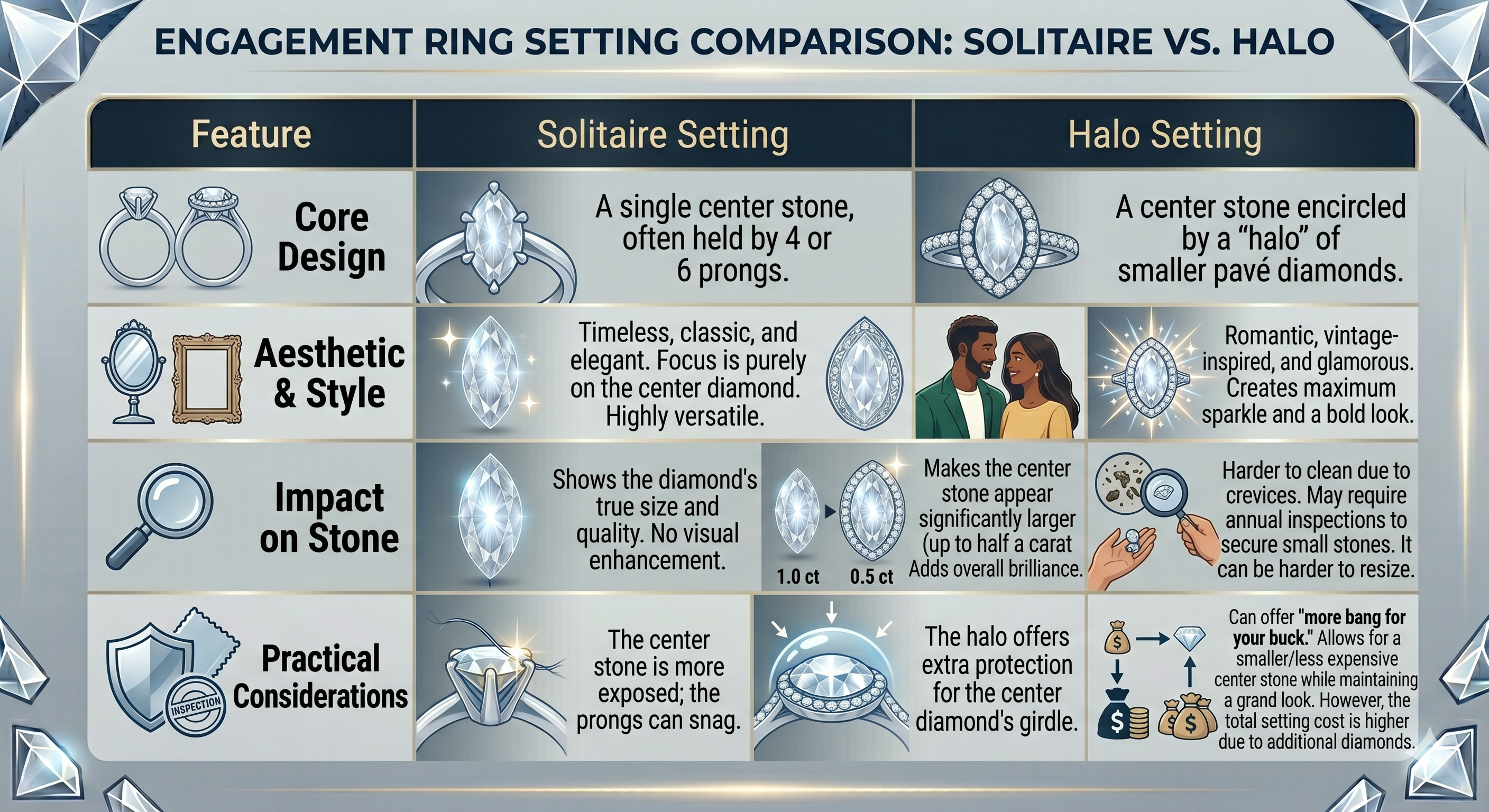
How to Make Your Choice
This decision is highly personal, but you can narrow it down by considering these three aspects:
For Style & Preference: Do you love timeless simplicity where a beautiful diamond stands entirely on its own? Choose a solitaire. Do you want dramatic sparkle, a vintage feel, or a ring that makes a bold statement? A halo is likely your match.
For Practical Lifestyle: Consider your daily activities.
Solitaire: Ideal if you prefer low-maintenance jewelry or plan to frequently stack or change your wedding band.
Halo: A good choice if you want extra protection for the center stone. Be prepared for slightly more diligent cleaning and annual check-ups.
For Your Budget:
With a solitaire, your budget is focused on acquiring the best possible single stone.
With a halo, you can allocate more of your budget to the intricate setting and potentially choose a more modest center stone, as the halo will enhance its appearance.
Beyond the Basic Setting
Both styles offer variations to further personalize your ring:
Solitaire Variations: While the classic is a prong setting, consider a sleek bezel setting for a modern look and superior security, or an elegant cathedral setting to add height and drama.
Halo Variations: Explore a double halo for ultimate glamour, a hidden halo (visible only from the side) for a subtle surprise, or a colored gemstone halo for a unique, personal touch.
“You now know the definition, the popularity reasons, the outdated debate, the security, the current popularity, the center stone size guide, the cost breakdown, and the solitaire comparison. The only question left: will you choose the setting that makes your diamond look like the sun?
Our current collection includes a limited number of halo setting rings — from classic single halos to double halos, hidden halos, and colored gemstone halos. When certain designs are gone, restocking takes time because each halo is hand-set with melee diamonds.
This is not just a setting. It is Cartier‘s 1902 creation, Princess Diana‘s heirloom, and 120 years of proof that a circle of small stones can make a single diamond look like royalty — the sun and its corona, now on your finger.”
[Button: Secure Your Halo Ring (Limited) →]
Back to Complete Aquamarine Ring Guide


News for Monday 27 October, 2025
View all news for Monday 27 October, 2025 on one page
Recent News
- Thursday 09 October, 2025
- Saturday 04 October, 2025
- Sunday 28 September, 2025
- Friday 12 September, 2025
- Wednesday 10 September, 2025