

Solitaire Setting Guide: 4 vs 6 Prong, Security, Unique Ideas and Comfort
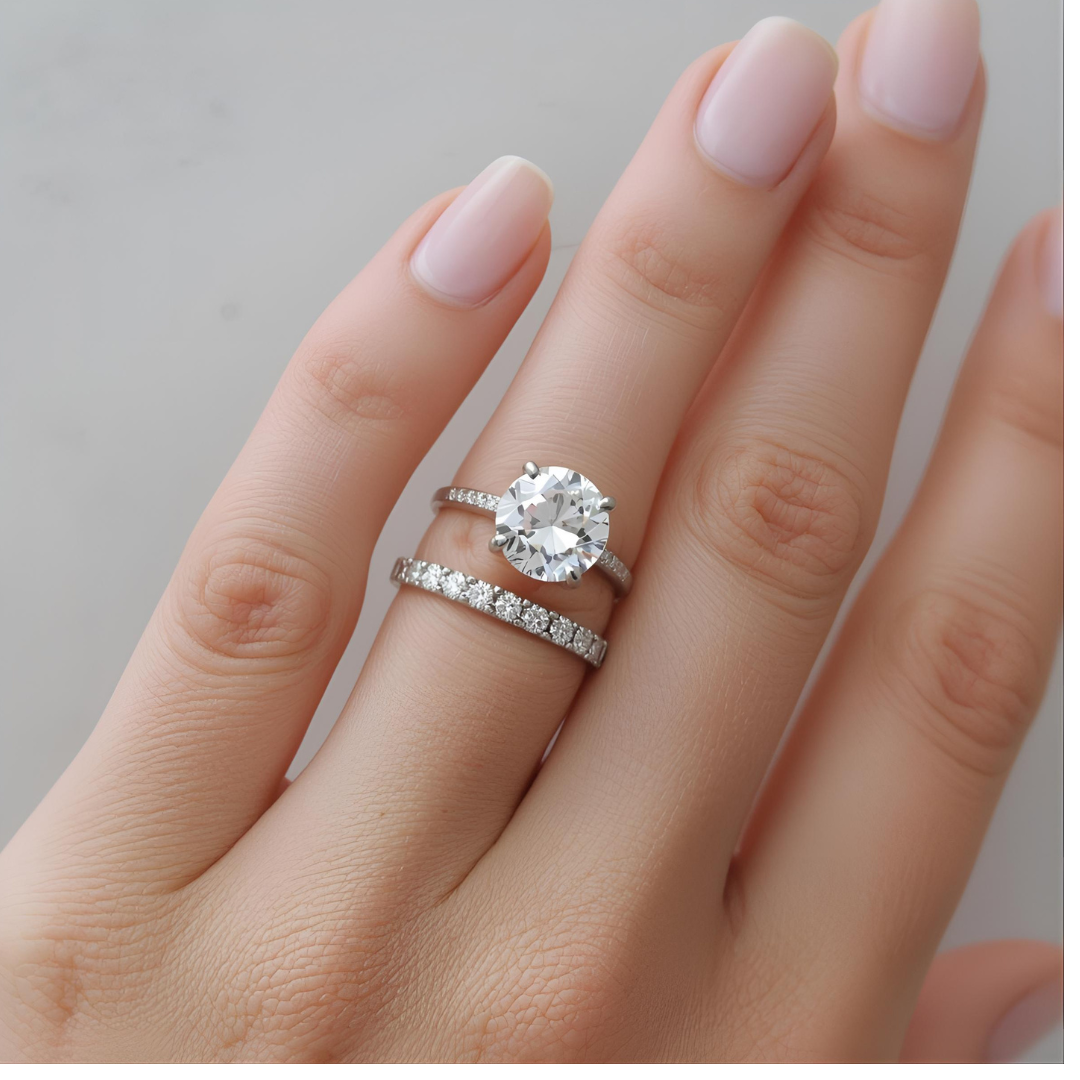
Solitaire Setting Guide: 4 vs 6 Prong, Security, Unique Ideas, and Comfort
In the simplest terms, a solitaire setting is a piece of jewelry, most commonly an engagement ring, that features a single, prominent center stone with no other distracting stones on the band or surrounding the main stone.
“In 1886, Charles Lewis Tiffany introduced a setting that changed engagement rings forever. He took a round brilliant diamond and lifted it above the band with six tiny prongs—allowing light to enter from every angle. Before Tiffany, diamonds were often set in closed-back bezels, hidden and dark. After Tiffany, the diamond floated. It caught the sun. It became the star. That single innovation—the six-prong solitaire—is still the most copied engagement ring design in history. The solitaire does not need side stones, halos, or intricate details. It needs one thing: a diamond. And that diamond needs nothing else.”
The same setting that Tiffany revolutionized in 1886 now awaits your own singular promise. Every solitaire ring in our collection is handcrafted—from classic 6-prong to modern bezel—because a diamond that stands alone should never stand insecure.”*
[Button: Explore Solitaire Rings →]
Table of Contents
What Is A Solitaire Setting?
The word "solitaire" itself comes from the Latin word solitarius, meaning "alone" or "solitary," which perfectly describes this style.
Key Characteristics of a Solitaire Setting:
Single Center Stone: This is the defining feature. The entire design is built to showcase one gemstone, usually a diamond.
Minimalist Band: The band is typically plain (though it can be polished, satin, or engraved) and is designed not to take attention away from the center stone.
Focus on the Diamond: The primary goal of a solitaire is to maximize the beauty, brilliance, and perceived size of the single stone. All eyes go straight to it.
The Most Common Types of Solitaire Settings:
While the principle is simple, there are different ways to hold that single stone in place. The most popular is the Prong Setting.
Prong Setting: This is the classic and most popular type of solitaire. Metal claws (called prongs) hold the stone securely.
4-Prong: Makes a round diamond look more square or cushion-like and allows more light to enter, but offers slightly less security.
6-Prong: Creates a more rounded look for a round diamond and offers superior security.
Why is the Solitaire Setting So Popular for Engagement Rings?
Timelessness: It's a classic style that has been popular for over a century and will never go out of fashion.
Focus on the Stone: It puts the quality and size of the center diamond on full display.
Versatility: Its simplicity allows it to be paired with virtually any wedding band style, from a plain band to an ornate eternity ring.
Symbolism: The single, unadorned stone is often seen as a powerful symbol of singular love and commitment.
Solitaire vs. Other Settings:
Solitaire vs. Halo: A halo setting has a central stone surrounded by a "halo" of smaller pavé diamonds, making the center stone appear larger. A solitaire is just a single stone.
Solitaire vs. Three-Stone: A three-stone ring has (as the name implies) three stones, often symbolizing the past, present, and future of a relationship.
In short, a solitaire setting is the epitome of "less is more." It's a timeless, elegant, and powerful design choice that ensures the beautiful center stone is the undeniable star of the show.
For official information on jewelry settings, visit the GIA Jewelry Setting Guide.
What Does Solitaire Set Mean?
While it sounds very similar to "solitaire setting," the phrase "solitaire set" can have two distinct meanings, and the correct one depends entirely on the context.
Meaning 1: A Matched Pair of Jewelry (Most Common Meaning)
In the world of fine jewelry, especially in the context of engagement and weddings, a solitaire set most often refers to a matched pair of rings designed to be worn together: the engagement ring and the wedding band.
The Engagement Ring: This is the classic solitaire ring with a single, prominent center stone (like a diamond) in a simple setting.
The Wedding Band: This is a complementary ring, usually a plain metal band or one with a simple design, that is sold as a perfect match to the engagement ring.
Why is it called a "set"?
Because the two rings are designed and sold together to ensure they fit together perfectly, both in style and physically. When worn together, they look like one cohesive piece of jewelry.
Key Idea: In this context, "solitaire set" means "engagement ring + matching wedding band."
Meaning 2: A Complete Game of Solitaire
In the context of games, a solitaire set refers to the physical equipment needed to play the classic card game of Solitaire (also known as Patience) by yourself.
This typically includes:
A special deck of cards (often with larger, easy-to-read indices).
A playing board or tablet with a patterned layout to place the cards. This helps keep the cards organized and is ideal for playing on a table or while traveling.
This is much less common today, as most people play Solitaire on computers or phones, but physical solitaire sets are still available and cherished by enthusiasts.
How to Tell the Difference
To know which meaning is intended, just look at the context:
If the conversation is about diamonds, engagement, or jewelry, it's Meaning 1 (the ring set).
If the conversation is about games, cards, or hobbies, it's Meaning 2 (the card game set).
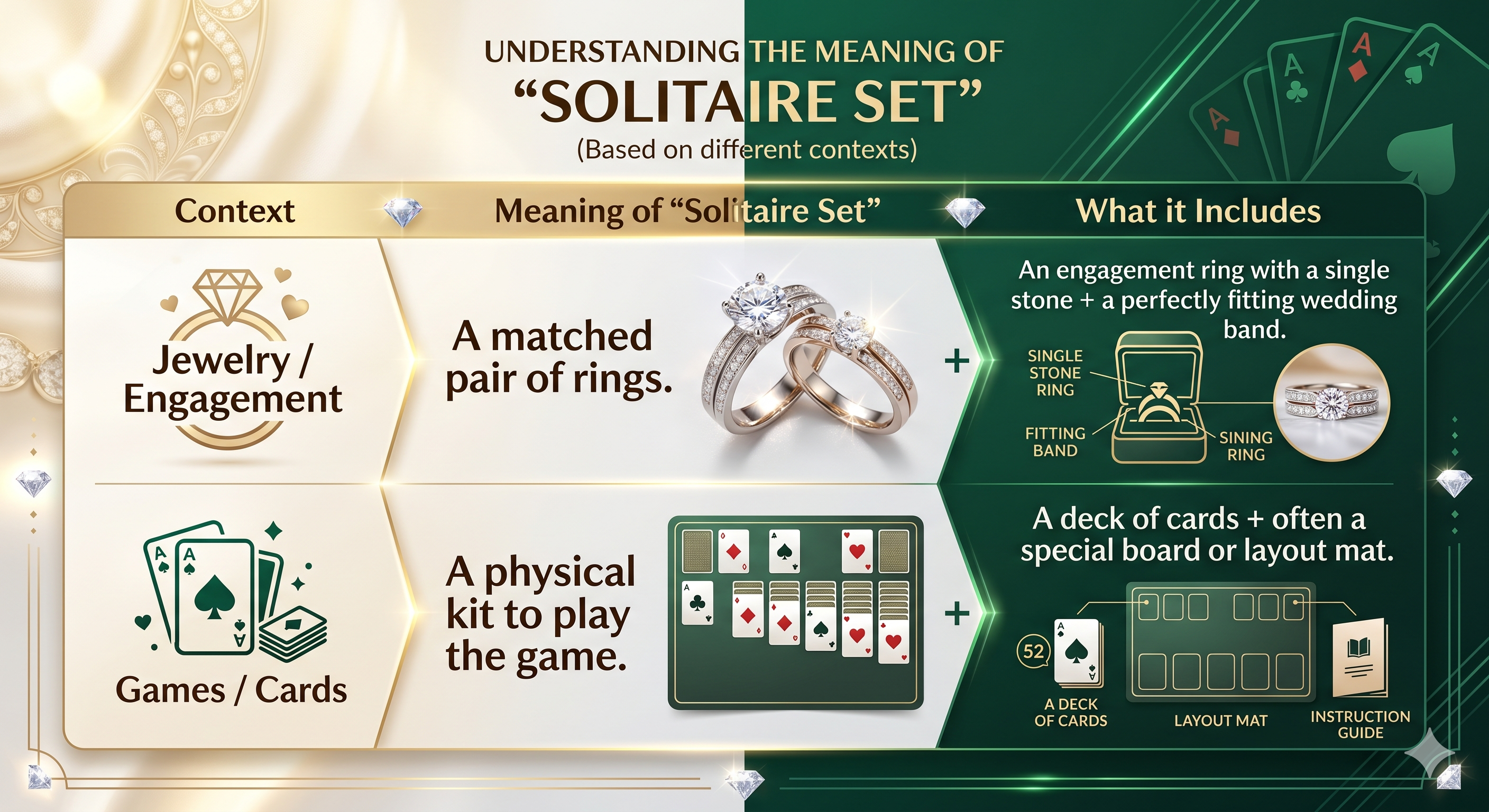
In everyday conversation, especially when discussing jewelry, you will almost always be referring to the matched pair of rings.
What Is The Classic Solitaire Setting?
The classic solitaire setting is the most iconic and timeless style for an engagement ring. When people imagine a "traditional" diamond ring, this is almost certainly what comes to mind.
It is defined by its elegant simplicity, designed to do one thing perfectly: showcase the beauty of a single, spectacular diamond.
The Hallmarks of the Classic Solitaire
Here are the key features that define this legendary setting:
A Single Central Stone: The star of the show. It's always one stone, typically a round brilliant cut diamond, chosen for its unmatched fire and brilliance.
The Prong Setting: This is the most classic and popular way to hold the stone. Metal claws, known as prongs, extend up from the band to clutch the diamond securely.
Four-Prong: Offers a more modern, square-like appearance and allows slightly more light to enter the diamond, potentially making it look brighter. However, it offers marginally less security than six prongs.
Six-Prong: The quintessential classic. This style creates a more rounded look for a round diamond and is renowned for its superior security and traditional feel.
A Simple, Unadorned Band: The band is almost always a plain, precious metal shank (round or knife-edge in profile). It is free of any additional diamonds or intricate detailing. This ensures that nothing distracts from the central stone.
Elevated Height: The head of the ring (the part that holds the diamond) is raised off the band. This lifts the diamond to catch more light from all angles, maximizing its sparkle, and also allows a wedding band to sit flush against it.
Why is it considered the "Classic"?
Timelessness: The design has been popular for over a century and has never gone out of style. It avoids trends, making it a forever-fashionable choice.
Focus on Quality: Because there is nothing else to look at, the quality of the single diamond is paramount. The setting puts the diamond's cut, color, clarity, and carat weight on full display.
Ultimate Versatility: Its simplicity means it pairs beautifully with any wedding band, from a plain metal band to a more ornate diamond-encrusted one.
Symbolism: The single, unaccompanied stone is a powerful and pure symbol of singular love and commitment.
Is A Solitaire Setting Secure?
That's a very important and practical question. The security of a solitaire setting is a common concern because it holds such a valuable stone.
The short answer is: Yes, a solitaire setting can be very secure, but its security depends heavily on the specific type of setting and, most importantly, on proper maintenance.
Let's break down the security of different solitaire settings from most to least secure.
Security Ranking of Common Solitaire Settings
1. Most Secure
Bezel Setting: This is widely considered the most secure solitaire setting. A continuous rim of metal wraps around the entire girdle (the widest edge) of the diamond, fully enclosing it. It offers excellent protection against impacts and snagging, and it's almost impossible for the stone to fall out.
2. Very Secure
Six-Prong Setting: With six prongs holding the stone, this setting offers superior security compared to a four-prong setting. Even if one prong were to become damaged or loose, the other five would likely keep the stone safely in place. The classic setting is a six-prong design for this reason.
3. Secure (with a caveat)
Four-Prong Setting: This is the classic and most popular solitaire look. It is perfectly secure for everyday wear as long as the prongs are well-made and maintained. The caveat is that if a single prong is badly damaged, the stone is at a much higher risk of falling out compared to a six-prong or bezel setting.
4. Least Secure (and requires special design)
Tension Setting: This is the most modern and dramatic style, where the stone appears to float. The security relies entirely on the precise engineering and metal strength of the band. While it's designed to be secure, a hard, direct impact to the exact point of tension could potentially dislodge the stone, which is less likely in a prong or bezel setting. Always buy a tension setting from a highly reputable and experienced jeweler.
The Real Key to Security: Maintenance and Prong Care
No matter which setting you choose, prongs are the number one point of failure. Over time, they can wear down from daily wear, especially if the ring is knocked against hard surfaces.
Here’s what you must do to ensure your solitaire setting stays secure:
Regular Professional Inspections: Take your ring to a jeweler at least once a year. They have specialized tools to check if the prongs are worn down, cracked, or loose. They will also check the overall integrity of the band.
Prong Retipping: Over many years, prongs can wear thin. A jeweler can add new metal to them in a process called "retipping," which restores their security without needing a whole new setting.
Be Mindful of Daily Wear: Remove your ring during activities that could subject it to hard impacts or chemicals (e.g., gardening, gym workouts, cleaning with harsh chemicals).
Get it Insured: Always ensure your engagement ring. Even with the most secure setting and perfect care, accidents can happen. Insurance provides peace of mind.
Is a solitaire setting secure? Absolutely. A well-made six-prong or bezel solitaire is an excellent and secure choice for a lifetime of wear.
However, the security is not "set it and forget it." Think of it like a car—it's built to be safe, but it requires regular check-ups and maintenance to stay that way. The classic four-prong solitaire is beautiful and secure, but its long-term safety is directly tied to your commitment to having those prongs checked and maintained by a professional.
Final Recommendation: If you are very active, hard on your hands, or want the ultimate peace of mind, a bezel or six-prong solitaire is your best bet. If you love the classic four-prong look, just be diligent about those annual check-ups.
For more on jewelry care, visit the American Gem Society's care guide.
How To Make A Solitaire Setting Unique?
Making a solitaire setting unique is about adding character to the classic "single stone on a band" concept. The goal is to preserve the solitaire's timeless elegance while injecting personality through unexpected details.
Here’s a breakdown of how to achieve a unique solitaire setting, from subtle tweaks to bold statements.
“In 1947, De Beers launched the most famous advertising campaign in history: ‘A Diamond Is Forever.‘ The campaign featured one image—a solitaire engagement ring. For 70 years, that single image shaped the dreams of millions of couples. But here is what the ads didn‘t show: the solitaire is not a formula. It is a canvas. The band can be hammered or engraved. The prongs can be clawed or rounded. The metal can be yellow, white, or rose. The diamond can be round, oval, or pear. A solitaire is not a lack of creativity. It is the discipline to let one stone say everything.”
1. Rethink the Shank (The Band)
This is the most impactful place to start, as it changes the ring's overall silhouette.
Split Shank: The band splits into two or more strands as it approaches the center stone. This creates a beautiful, airy feel and makes the center stone appear larger.
Unique twist: Try a V-split shank or an asymmetrical split where one side is thinner or textured differently.
Euro Shank: The bottom of the ring is squared off instead of perfectly round. This prevents spinning on the finger and feels surprisingly modern and architectural.
Tapered Band: The band starts thicker at the bottom and tapers as it reaches the head. This draws all focus to the center stone.
Textured Band: Move beyond polished metal. Consider hand-engraved patterns (vines, geometric lines, art deco shapes), hammered or brushed finishes, or a milgrain edge (tiny beaded metal dots along the band's edge).
2. Elevate the Prongs & Basket
Prongs aren't just functional; they are a prime opportunity for micro-personalization.
Prong Shape: Instead of standard round prongs, use claw prongs (more delicate, vintage feel), bunny-ear prongs (softer, rounded), V-prongs (ideal for pointed stones like pear or marquise), or even square or flat tab prongs (modern and minimalist).
Prong Color: Use a different metal color for the prongs than the band.
Example: A platinum band with rose gold prongs so the warmth subtly reflects into the diamond.
Example: A yellow gold band with white gold prongs to make a colorless diamond appear whiter and brighter.
Decorative Gallery/Basket: The "gallery" is the structure under the stone. Don't leave it plain.
Add a hidden halo (a tiny circle of micro-pavé diamonds underneath the main stone).
Add an open-worked design (a carved-out shape like a heart, a trefoil, or geometric cutouts).
Set a tiny accent gemstone (like a sapphire, ruby, or emerald) inside the basket, visible only from the side.
3. Play with Stone Shape & Setting
The "classic solitaire" usually means a round brilliant. Deviating here creates instant uniqueness.
Unconventional Fancy Shapes: An oval is popular, but a cushion, radiant, asscher (art deco vibes), marquise, or pear is less common. A hexagonal or kite-shaped diamond is very rare.
Alternative Center Stones: A colored diamond (champagne, grey, fancy yellow, or a subtle blue) or a different gemstone (sapphire, ruby, emerald, moissanite, or a salt-and-pepper diamond) makes the solitaire instantly unique.
Unusual Setting Styles:
Bezel Setting: The metal completely encircles the stone's girdle. A partial bezel (open on the sides) is a modern hybrid.
Tension or Compression Setting: The stone is held by the sheer force of the metal squeezing it from two sides. It looks like the stone is floating. Requires a specific, durable stone (diamond, moissanite, sapphire).
Gypsy (Flush) Setting: The stone is set flush into the band itself. For a solitaire, this creates an ultra-low-profile, sleek, almost brutalist look.
4. Embrace Negative Space & Asymmetry
Symmetry is classical, but breaking it is a surefire way to be unique.
Off-Center Stone: Set the diamond slightly to one side of the band's center. It's subtle but incredibly compelling.
Open (Voided) Shank: The band has a deliberate cut-out or gap on one side. This is very modern and architectural.
Asymmetrical Shoulders: One shoulder of the ring has a tiny pavé accent or a subtle curve, while the other is plain.
5. The Ultimate Unique Move: The Hidden Surprise
This is for a truly personal touch that only the wearer and a few others will ever know.
Engraving on the inside of the gallery: Not just the band, but under the stone. A date, a word, or a small symbol.
A Secret Birthstone: Set a tiny birthstone on the inside of the shank, facing the palm.
A Scented or Textured Inner Band: Some jewelers can create a subtle texture (like a fingerprint or a Morse code message) on the inside of the band.
Summary Table: A Unique Solitaire by Category
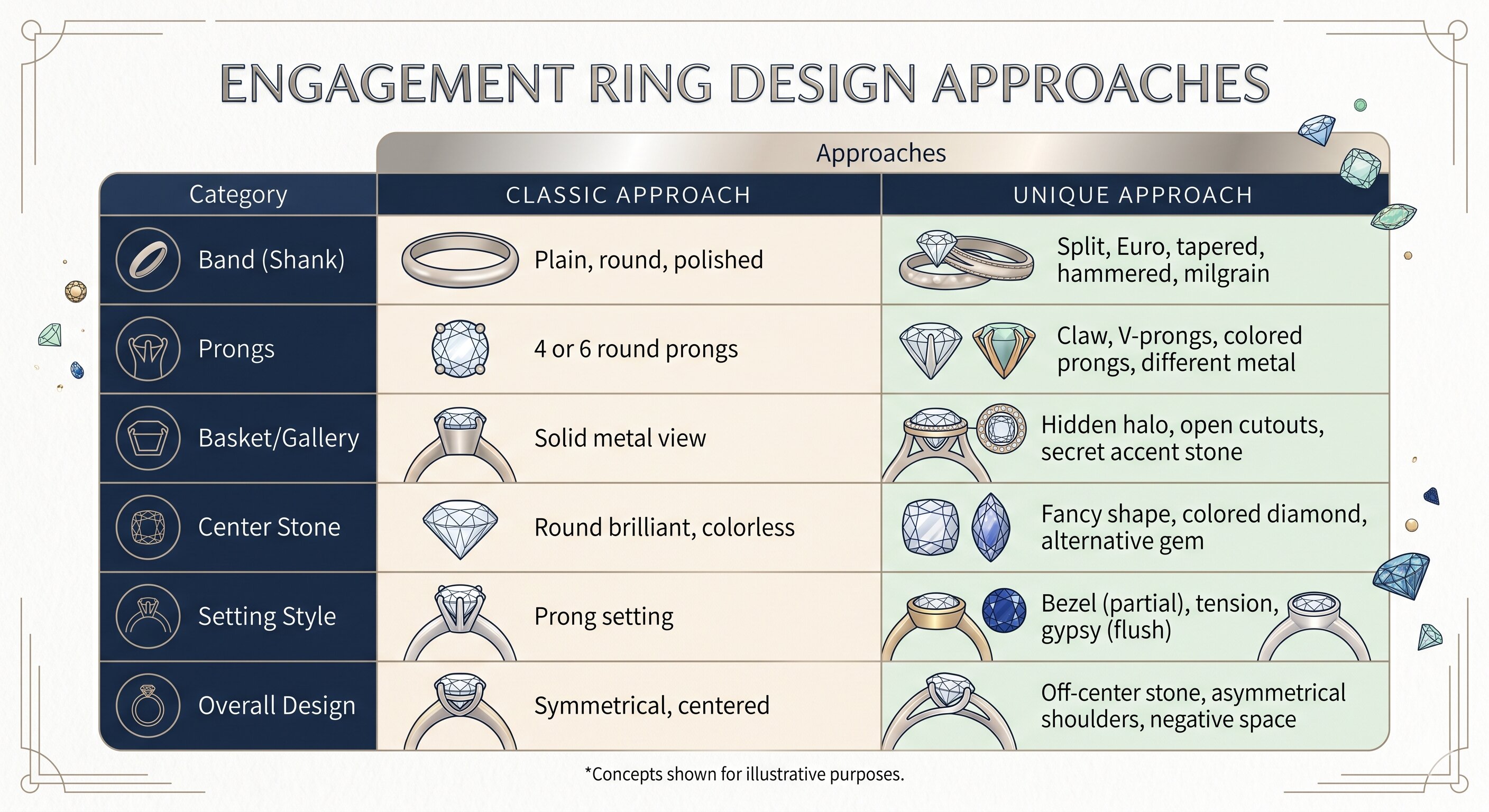
Final Pro-Tip: Don't try to incorporate all of these at once. Pick two or three elements that resonate with your personal style. A hammered band + a hidden halo + a pear-shaped diamond = a stunning, unique solitaire. A split shank + rose gold prongs + a yellow diamond = a masterpiece. Let the design breathe. Less is often more, even when aiming for unique.
Are Solitaires Comfortable To Wear?
Solitaires with a "comfort-fit" band design can be exceptionally comfortable for everyday wear. This feature, widely offered by jewelers, is engineered specifically for long-term comfort.
What Makes a Solitaire "Comfort-Fit"?
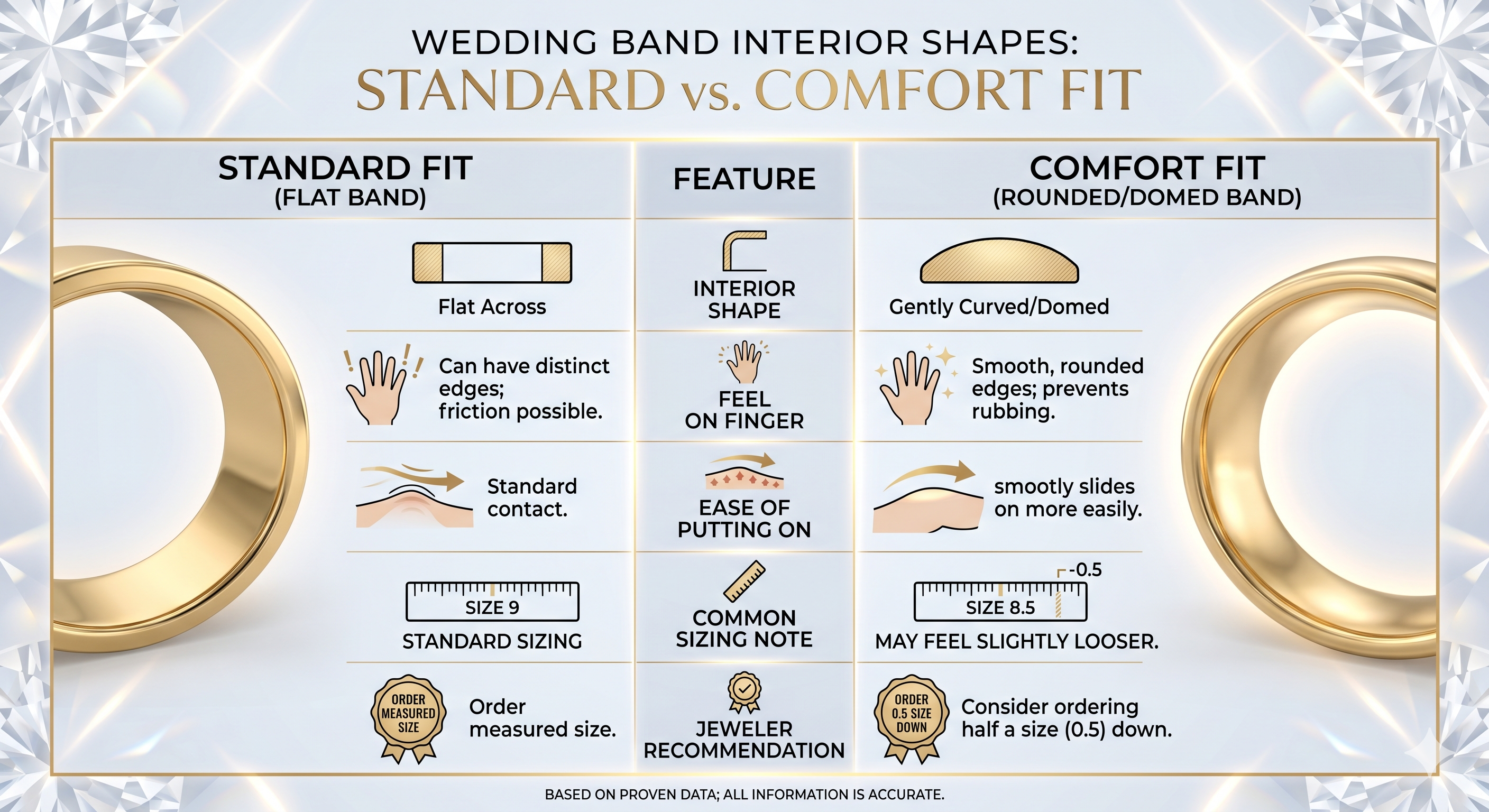
The comfort comes from the band's internal shape. Unlike a traditional flat band, a comfort-fit band has a gently curved interior that sits against your finger. This design prevents the edges from rubbing or digging into your skin, which is key for a ring worn every day.
Here’s a quick look at how comfort-fit compares to a standard fit:
Choosing a Comfortable Solitaire
When selecting your ring, focus on these details beyond just the fit:
Band Width and Profile: Narrower, "petite" bands (e.g., 1.5mm - 2.2mm) are less obtrusive, while a slightly wider band offers a more substantial feel.
Setting Security and Profile: A four or six-prong head securely holds the center diamond. A lower-profile setting keeps the diamond closer to your finger, making it less likely to catch on clothing.
Metal Choice: Comfort-fit is available in all common metals like platinum, white, yellow, or rose gold. The choice here affects the ring's look, durability, and price, not the comfort of the fit itself.
Perfecting the Fit: Always get professionally sized. Remember that fingers swell and shrink; the ring should fit snugly but slide over your knuckle with slight resistance. A reputable jeweler will offer a resizing period.
Key Considerations for Daily Wear
Even with a comfort-fit band, keep in mind that a solitaire ring is a piece of fine jewelry:
Prongs and Snagging: The prongs that hold the diamond can occasionally catch on fine fabrics like knitwear.
Stone Size and Weight: Larger center stones (over ~1.5 carats) will make the ring top-heavy, which some may find less comfortable than a lighter ring.
Lifestyle Adjustments: It's wise to remove your ring during activities like heavy gardening, gym workouts, or cleaning with harsh chemicals to protect both the ring and your finger.
A comfort-fit solitaire is designed to be a joy to wear every day. By prioritizing the curved band design and paying attention to the other features that suit your lifestyle, you can find a ring that is both stunning and comfortable.
I hope this helps you find the perfect ring! If you have a specific metal or diamond shape in mind, I can look for more tailored information.
“You now know the definition, the classic features, the security rankings, the personalization tips, and the comfort factors. The only question left: will you choose the setting that needs no distraction?
*Our current collection includes a limited number of solitaire rings — from classic 6-prong Tiffany-style to bezel solitaires, from split shanks to euro shanks. When certain designs are gone, restocking takes time because each setting is handcrafted.*
This is not just a ring. It is Charles Lewis Tiffany‘s 1886 rebellion, De Beers‘ ‘A Diamond Is Forever,‘ and 140 years of proof that one stone, held by a few tiny prongs, can say everything that needs to be said.”
[Button: Secure Your Solitaire Ring (Limited) →]
Back to Complete Aquamarine Ring Guide


Other news for Sunday 14 June, 2026
- Round Brilliant Cut Guide: Price, Facets, vs Other Cuts and Buying Tips
- The Allure of the Cushion Cut Diamond: What You Need to Know
- Square Cut Diamond Guide: Princess, Cushion, Asscher and Radiant
- 24K Gold Guide: Purity, Price, vs 18K, Investment and Buying Tips
- 22K Gold Guide: Purity, Price, vs 24K/18K, Daily Wear and Care
- Oval Cut Diamond Guide: Price, vs Round, vs Radiant and Buying Tips
- Pear Cut Diamond Guide: Price, vs Round, Sparkle and Buying Tips
View all news for Sunday 14 June, 2026 on one page
News for Saturday 13 June, 2026
- Ring Finger Meaning: Which Finger for Wedding, Single and More | Complete Guide
- Bezel Setting Guide: Benefits, Styles, and Buying Tips
- Sterling Silver Jewelry Guide: 925 Meaning, Care and Green Skin Fix
- Channel Setting Guide: Pros, Cons, Safety and Cost vs Pavé
- Prong Setting Guide: 4 vs 6 Prongs, Security, Size and Types
- Ring Setting Guide: Types, Best for Daily Wear, and Size Tips
View all news for Saturday 13 June, 2026 on one page
Recent News
- Friday 12 June, 2026
- Thursday 11 June, 2026
- Wednesday 10 June, 2026
- Tuesday 09 June, 2026
- Monday 08 June, 2026