

Pearl Birthstone Guide: Meaning, Price, Care And Types
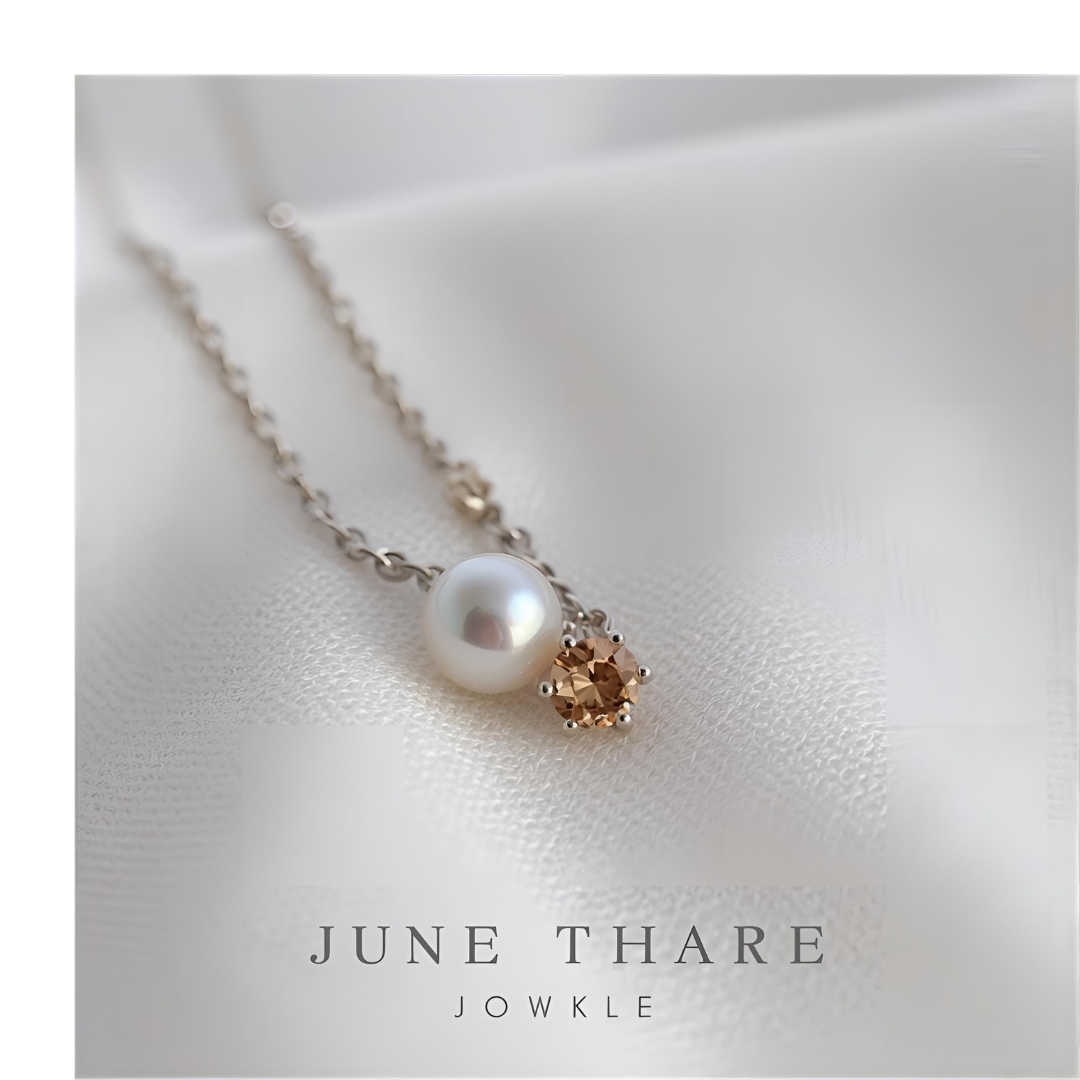
Pearl Birthstone
Pearls are one of the three birthstones for June, alongside alexandrite and moonstone. Unlike other gemstones mined from the earth, pearls are organic treasures formed within living creatures.
“Cleopatra, the last pharaoh of Egypt, once bet Marc Antony that she could host the most expensive dinner in history. She crushed a single pearl from her earring into a goblet of wine and drank it, dissolving a gem worth millions. Centuries later, pearls were so precious that only royalty could wear them. In 16th-century Europe, laws were passed forbidding anyone below nobility from owning pearls. Today, the pearl is still the only gem born from a living creature — a quiet miracle of an oyster turning an irritant into a treasure. That is why June babies and brides still choose it: beauty from struggle, light from darkness.”
The same gem that graced Cleopatra‘s ear now awaits your June birthday — or your forever promise. Every pearl in our collection is ga enuine cultured pearl, hand-selected for luster and surface quality.”
[Button: Explore Pearl Jewelry →]
Their serene, luminous beauty has made them a timeless symbol of elegance and purity.
Here is the topic of contents.
- Which Birthstone Is Pearl?
- What Month Is Mother Of Pearl Stone?
- What Is The Full Meaning Of Pearl Stone?
- What Does It Mean When Someone Gifts You Pearls?
- What Is The Personality Of A Pearl Stone?
- How Can You Tell If Pearl Stones Are Cheap?
- Are Real Pearls Heavy or Light?
- Do Real Pearls Turn Yellow?
- Can I Shower With Pearlstone?
- How Much Does A Real Pearl Stone Cost?
- Why Is Pearl Jewelry So Expensive?
- Is Pearl A Lucky Stone?
- Does Pearl Attract Money?
- What Is The Color Of Pearl Stone?
The first topic is;
Which Birthstone Is Pearl?
The Pearl is the primary and traditional birthstone for June. Making June one of the few months with three modern birthstones.
Here are the official birthstones for June:
Pearl: The only gem created by a living organism, symbolizing purity, humility, and innocence.
Alexandrite: A rare and remarkable gem known for its color-changing ability (green in daylight, red-purple in incandescent light).
Moonstone: Known for its glowing, moon-like sheen (adularescence) and symbolizing new beginnings and inner growth.
The pearl is a perfect fit for June, a month often associated with weddings, new beginnings, and the radiant energy of summer. A gift of pearl jewelry for a June birthday is a significant and elegant choice.
For official pearl grading standards, visit the GIA Pearl Guide.
What Month Is Mother Of Pearl Stone?
This connects directly to the previous one about pearls.
Mother-of-pearl is associated with June.
However, it's important to understand the nuance:
Pearl is the primary traditional and modern birthstone for June. It is the main gemstone for that month.
Mother-of-Pearl stone is considered a secondary or alternative birthstone for June.
Why the Connection?
The reason is inherent in their composition. As discussed in the previous answer, a pearl and mother-of-pearl are made of the same substance: nacre.
A pearl is a concentrated, layered ball of nacre formed around an irritant.
Mother of Pearl stone is the smooth, iridescent lining of the mollusk's shell, also made of nacre.
Because they are essentially the same material, they share the same birthstone month and many of the same symbolic meanings, such as purity, peace, and protection.
What Is The Full Meaning Of Pearl Stone?
The term "pearl stone" can be a bit confusing because a pearl stone isn't a stone in the geological sense. It's an organic gem.
Here is a breakdown of its "full meaning," covering its definition, how it's formed, and its symbolic significance.
1. The Literal and Scientific Meaning
A pearl is a hard, glistening object produced within the soft tissue (specifically the mantle) of a living shelled mollusk, most commonly an oyster or mussel.
It is not a mineral: Unlike gemstones like diamonds or rubies that are mined from the earth, pearls are formed by living organisms. This makes them organic gems, similar to amber or coral.
Composition: Pearls are primarily made of calcium carbonate (in the form of the mineral aragonite or a mixture of aragonite and calcite) and an organic protein called conchiolin. This combination is known as nacre, also referred to as mother-of-pearl.
Formation: A pearl stone forms when an irritant, such as a tiny parasite or a piece of grit, gets inside the mollusk's shell. To protect itself, the mollusk secretes layers of nacre around the irritant. Over time, these layers build up to form the lustrous pearl we know.
2. The "Stone" Misconception and Clarifications
The word "stone" is often added for a few reasons:
Linguistic Habit: In the context of jewelry, people are used to terms like "precious stones" and "gemstones." Adding "stone" helps place pearls in that category of valuable, beautiful objects used for adornment.
Descriptive Purpose: A pearl stone is hard and round like many stones, so the term is descriptively useful, even if scientifically inaccurate.
Important Distinctions:
Pearl Stone: This is not a standard scientific term. It's a descriptive or commercial name for a pearl.
Mother of Pearl: This is the iridescent lining of the shell that the pearl is made from. It is the same substance (nacre) but in a flat form.
Gemstone vs. Organic Gem: A pearl stone is an organic gem, while a "stone," like a diamond, is a mineral gemstone.
3. Types of Pearls
Understanding the types also clarifies the meaning:
Natural Pearls: Form in the wild without any human intervention. These are extremely rare and valuable.
Cultured Pearls: The vast majority of pearls today are cultured. Humans intentionally insert a small irritant (a "nucleus") into the mollusk to stimulate the pearl-forming process. They are real pearls, but are created with human help.
Freshwater vs. Saltwater Pearls: Refers to the environment in which the mollusk lives (e.g., Akoya, Tahitian, and South Sea pearls are saltwater).
4. Symbolic and Cultural Meaning
Beyond its physical properties, the "meaning" of a pearl is deeply symbolic across many cultures:
Purity and Innocence: Their white, flawless appearance has lobeen ng been associated with purity, making them a popular choice for bridal jewelry.
Wisdom and Spiritual Transformation: Formed from a grain of sand, pearls symbolize something valuable and beautiful arising from a small irritation or challenge. They represent gained wisdom and spiritual growth through experience.
Wealth and Status: Historically, pearls were so rare that they were a clear sign of royalty and extreme wealth.
Femininity and Love: They are often seen as a classic, elegant symbol of femininity and are associated with love and marriage.
June Birthstone: The pearl is the traditional birthstone for June.
“In ancient China, pearls were believed to be drops of moonlight that fell into the ocean and were swallowed by oysters. Emperors wore pearls sewn into their robes, believing the stones would protect them from fire and dragons. In Hindu tradition, the pearl is associated with the Moon god Chandra, a stone of emotional calm and mental peace. Marco Polo wrote that the kings of India owned pearl strands so long they touched the ground. For 5,000 years, across every continent, one gem has meant the same thing: rarity so deep it looks like light.”
Learn more about pearl history and formation on Wikipedia's pearl page.
What Does It Mean When Someone Gifts You Pearls?
When someone gifts you pearls, it carries a rich and multi-layered symbolism that has been built over centuries. The meaning can vary based on your relationship with the giver and the context, but it is almost always a gesture of deep affection and esteem.
Here’s a breakdown of what it generally means:
Primary Positive Meanings
Pure and Sincere Love: This is the most classic interpretation. Pearls, with their flawless, luminous white appearance, have long been symbols of purity, innocence, and loyalty. Gifting pearls often signifies a love that is genuine and untainted.
Romantic Context: A gift of pearls from a romantic partner is a very traditional and elegant gesture. It can symbolize a pure, committed, and lasting love. It's a common pearl engagement ring gift for significant anniversaries, weddings, or engagements.
Wisdom and Personal Growth: Remembering how a pearl stone is formed—from a small irritant into a thing of great beauty—this gift can symbolize that the giver sees the wisdom and strength you've gained through life's challenges. It's a way of saying, "You have turned your struggles into something beautiful."
You Are Precious and Treasured: Just as a pearl stone is rare and valuable, being gifted one signifies that the giver holds you in very high regard. It's a way of saying, "You are unique and invaluable to me."
Calmness and Serenity: The gentle luster and organic, smooth shape of pearls are associated with tranquility, balance, and a calming presence. The gift can be a wish for peace in your life or an acknowledgment of your calming influence on others.
Marking a Significant Milestone: Pearls are often given to celebrate major life events:
A Sweet 16 or 18th Birthday: Symbolizing a coming of age and a transition into adulthood.
Graduation: Representing the acquisition of wisdom and the start of a new chapter.
A Landmark Anniversary: (Especially the 30th, which is the pearl anniversary) Celebrating a long-lasting, beautiful relationship.
Meaning Based on the Giver
From a Romantic Partner: As mentioned, it's a classic symbol of pure, committed love. It's a deeply romantic and traditional gift.
From a Parent or Grandparent: This often signifies a wish for protection, purity, and a blessed life. A grandmother's pearl necklace, passed down, is an heirloom carrying family history and love.
From a Friend: It can be a symbol of a precious, loyal, and enduring friendship. It says, "I value our bond deeply."
A Note on Potential Negative Superstitions
While overwhelmingly positive, it's worth noting a few old-fashioned superstitions:
"Tears" Superstition: Some very old European folklore suggests that gifting pearls can predict "tears" or sorrow in the relationship. This is because pearls were thought to resemble tears.
Modern Interpretation: This superstition is largely dismissed today. A more modern take is that the "tears" are simply the normal ups and downs of any long-lasting relationship, which the pearl, as a symbol of durability, can withstand.
Summary: What It Ultimately Means
When you receive pearls as a gift, the giver is most likely trying to convey one or more of these heartfelt messages:
"My love for you is pure and lasting."
"I admire your wisdom and strength."
"I cherish you and our relationship."
"I am honoring a significant moment in your life."
In short, a gift of pearls is a sophisticated, elegant, and profoundly meaningful gesture. It is almost always a sign of deep affection, respect, and a desire to honor you and your relationship.
What Is The Personality Of A Pearl Stone?
This is a wonderful question that moves beyond the physical properties of a pearl and into the realm of metaphor and symbolism. While a gemstone doesn't have a personality in the human sense, we can absolutely attribute one based on its characteristics, how it's formed, and the qualities it represents.
If a pearl were a person, its personality would be a beautiful and complex blend of quiet strength, refined elegance, and deep wisdom.
Here's a breakdown of the pearl's "personality traits":
1. Resilient and Strong-Willed
Core Trait: This is the most fundamental aspect of a pearl stone personality. It is born from adversity—a simple grain of sand or an irritant that causes discomfort. Instead of being defeated, the oyster transforms this annoyance into something breathtakingly beautiful.
Human Equivalent: The person who has been through challenges and hardships but has used those experiences to grow, become wiser, and develop a profound inner strength. They don't complain; they transform.
2. Wise and Mature
Core Trait: A pearl is not created overnight. It is the result of a slow, patient, layered process. This gives the pearl a personality that is calm, patient, and deeply wise beyond its years.
Human Equivalent: The serene, thoughtful individual who speaks less but listens more. Their advice is valuable because it comes from a place of experience and quiet contemplation.
3. Elegant and Timelessly Classy
Core Trait: Pearls don't shout for attention with flashy colors. Their beauty is in their soft, luminous glow and understated elegance. They are classic, never going out of style.
Human Equivalent: The person with impeccable, quiet taste. They are poised, graceful, and carry themselves with a natural dignity that doesn't need to be loud to be noticed.
4. Pure and Compassionate
Core Trait: For centuries, pearls have been symbols of purity, innocence, and integrity. Their clean, white luster suggests a clear conscience and a sincere heart.
Human Equivalent: The individual who is genuine, honest, and kind. They have a strong moral compass and a nurturing, compassionate nature that makes others feel safe.
5. Introverted yet Confident
Core Trait: A pearl forms in the dark, hidden within a shell. Its beauty is internal at first, only revealed when sought out. It doesn't need external validation.
Human Equivalent: The person who is comfortable with solitude and doesn't need to be the center of attention. Their confidence comes from within. They may be quiet in a crowd, but their presence is deeply felt.
6. Nurturing and Protective
Core Trait: The very substance of the pearl stone, nacre (mother-of-pearl), is a protective coating the mollusk creates to soothe an irritation. Its entire existence is an act of self-care and protection.
Human Equivalent: The person who is a natural caregiver and protector. They have a calming presence and often take care of others, helping to soothe life's "irritations" for their loved ones.
In Summary: The Pearl Persona
If you meet a person with a "pearl personality," they are likely:
Not the loudest in the room, but undoubtedly one of the most impactful.
A deeply resilient individual who has turned their past pains into their greatest strengths.
Someone who values substance over surface, and whose elegance comes from their character, not their appearance.
A loyal and trustworthy friend, whose wisdom and calmness you can rely on.
How Can You Tell If Pearl Stones Are Cheap?
Telling if pearls are cheap involves looking at several key factors that distinguish high-quality, valuable pearls from their lower-cost counterparts.
Here is a practical guide, starting with the most obvious signs and moving to more subtle details.
The 5 Key Factors to Check (The "Pearl Virtues")
Experts grade pearls on these criteria, and cheap pearls will perform poorly in most of them.
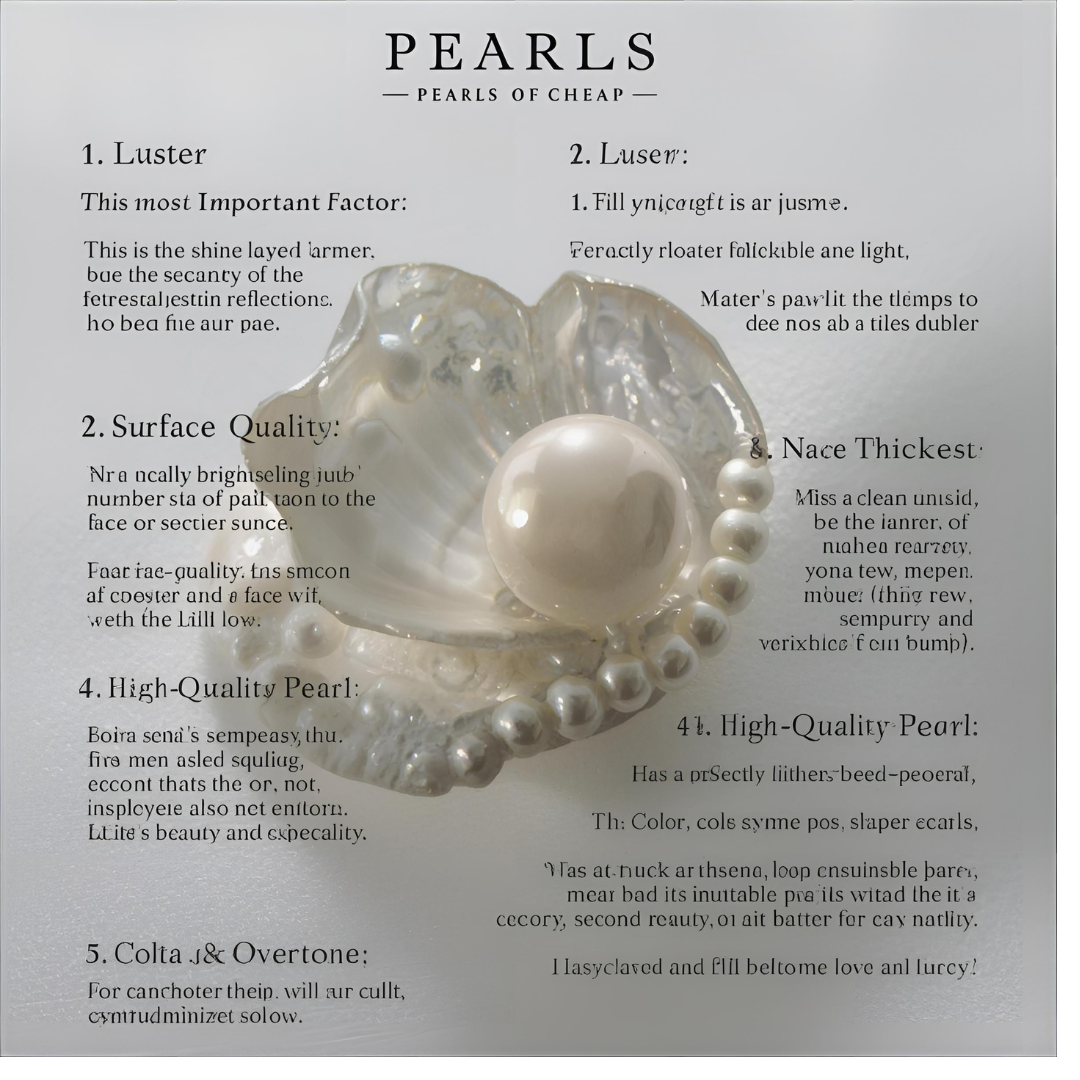
1. Luster (The Most Important Factor)
This is the shine and the clarity of the reflections you see on the surface.
High-Quality Pearl: Has a sharp, bright, and mirror-like luster. You should see a clear reflection of your face or light source. The glow seems to come from deep within the pearl.
Cheap Pearl: Looks dull, chalky, hazy, or milky. The surface is not reflective; it's more like a matte finish. This is the biggest giveaway of a cheap or fake pearl.
2. Surface Quality
No pearl is perfectly flawless, but the number and severity of blemishes matter a lot.
High-Quality Pearl: Has a clean, smooth surface with very few, minor imperfections like small spots, wrinkles, or bumps.
Cheap Pearl: Will be heavily blemished with numerous obvious spots, cracks, circles, or abrasions. The surface may look uneven or pitted.
3. Shape
Perfectly round pearls are the rarest and most valuable.
High-Quality Pearl: For strands, a perfectly round, symmetrical shape is the standard for high quality.
Cheap Pearl: Noticeably off-round, oval, button-shaped, or baroque (irregular) in a non-uniform way. Note: Baroque pearls can be very expensive if they have high luster and are from a valuable type (like South Sea baroques). But in cheap strands, a regular shape is a sign of low quality.
4. Nacre Thickness
This is the coating of "mother-of-pearl" that gives the pearl its beauty and durability.
High-Quality Pearl: Has a thick layer of nacre, which is responsible for its deep, beautiful luster. It is durable and will last for generations.
Cheap Pearl (especially cultured): Can have very thin nacre. You might even see a "blinking" effect where the bead nucleus inside peeks through. Thin nacre will wear away, peel, or crack over time.
5. Color & Overtone
High-Quality Pearl: The color appears rich and saturated. You can often see subtle overtones (a second color shimmering over the base color).
Cheap Pearl: The color can look flat, washed out, or "painted on."
Specific Tests You Can Do
The Tooth Test (Best for Spotting Fakes)
This is the classic way to tell a real pearl from a plastic or glass imitation.
Gently rub the pearl across the biting edge of your front tooth.
Real Pearl: Will feel distinctly gritty or sandy. This is because the layers of nacre create a slightly rough surface.
Fake Pearl (plastic, glass): Will feel completely smooth.
Note: This test confirms if a pearl is real, but not necessarily its quality. Some cheap real pearls (with poor luster) will still feel gritty.
The Feel & Weight Test
Real Pearls feel cool to the touch and have a substantial weight for their size.
Cheap Plastic Fakes feel warm and are very lightweight.
Glass Fakes can feel cool and heavy, so use the tooth test to confirm.
The Drill Hole Check
Look closely at the hole the string goes through.
High-Quality Pearl: The drill hole will be neat, small, and clean. You might see a clear distinction between the nacre layers and the central bead nucleus.
Cheap Pearl: The drill hole may be rough, large, or chipped. With thin nacre, you might see a dark line or a stark contrast where the plastic or shell bead is visible just beneath the surface.
The Clasp & Stringing
High-Quality Pearls: Are almost always paired with a high-quality clasp, often made of solid gold (marked 14k, 18k) or sterling silver, and may even bear a brand name. They are professionally knotted between each pearl to prevent them from rubbing and to save the strand if it breaks.
Cheap Pearls: Often have cheap, lightweight clasps (gold-plated or base metal) and are often not knotted, or the knots are poorly done.
Quick Summary: Red Flags for Cheap Pearls
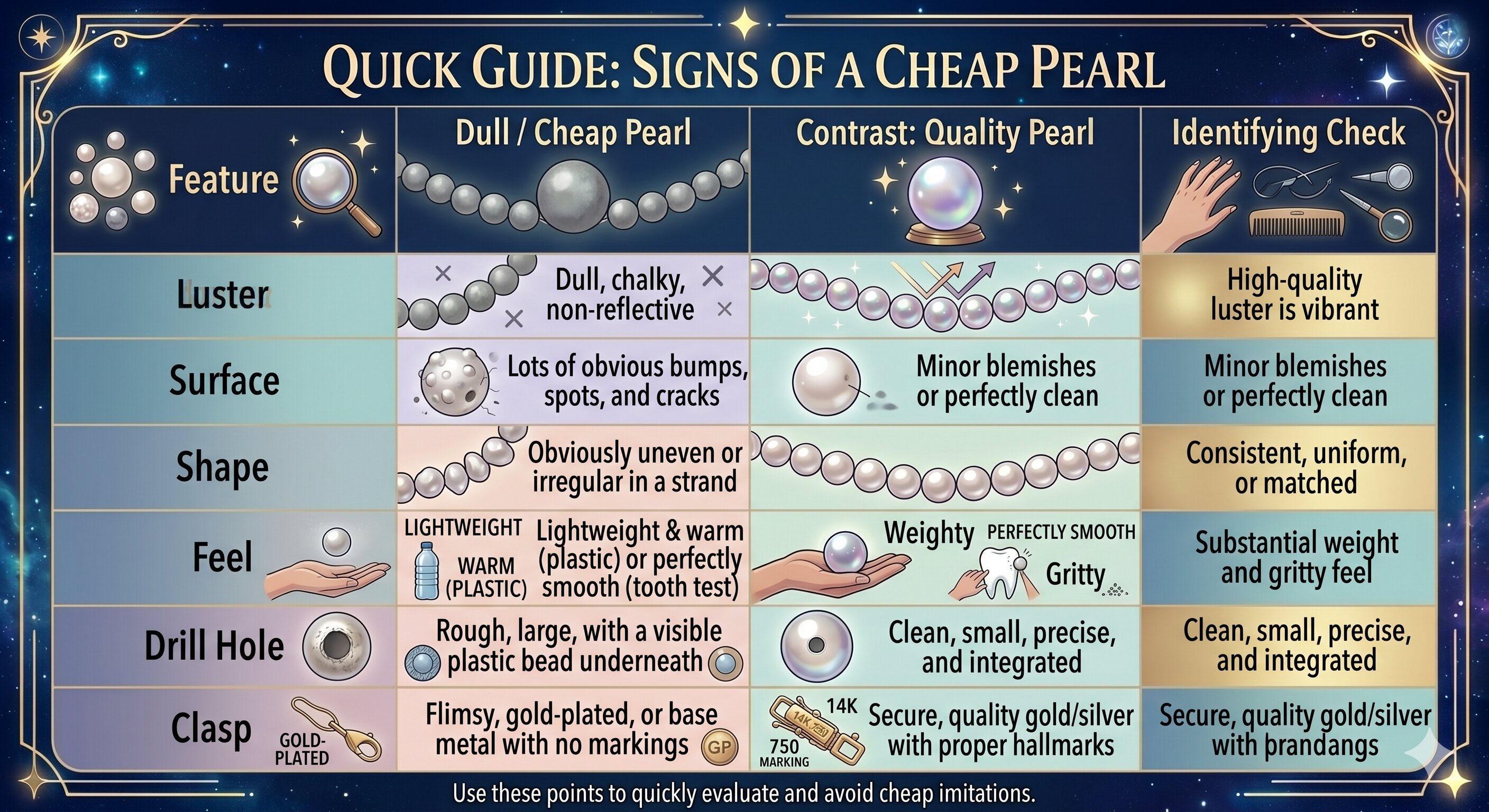
A full strand sold for $50-$100 is almost certainly cheap or fake.
By combining these visual inspections with a simple tooth test, you can confidently determine whether a pearl stone is not only real but also of good quality or likely to be a cheap imitation.
Are Real Pearls Heavy or Light?
This is a very practical way to start assessing pearls.
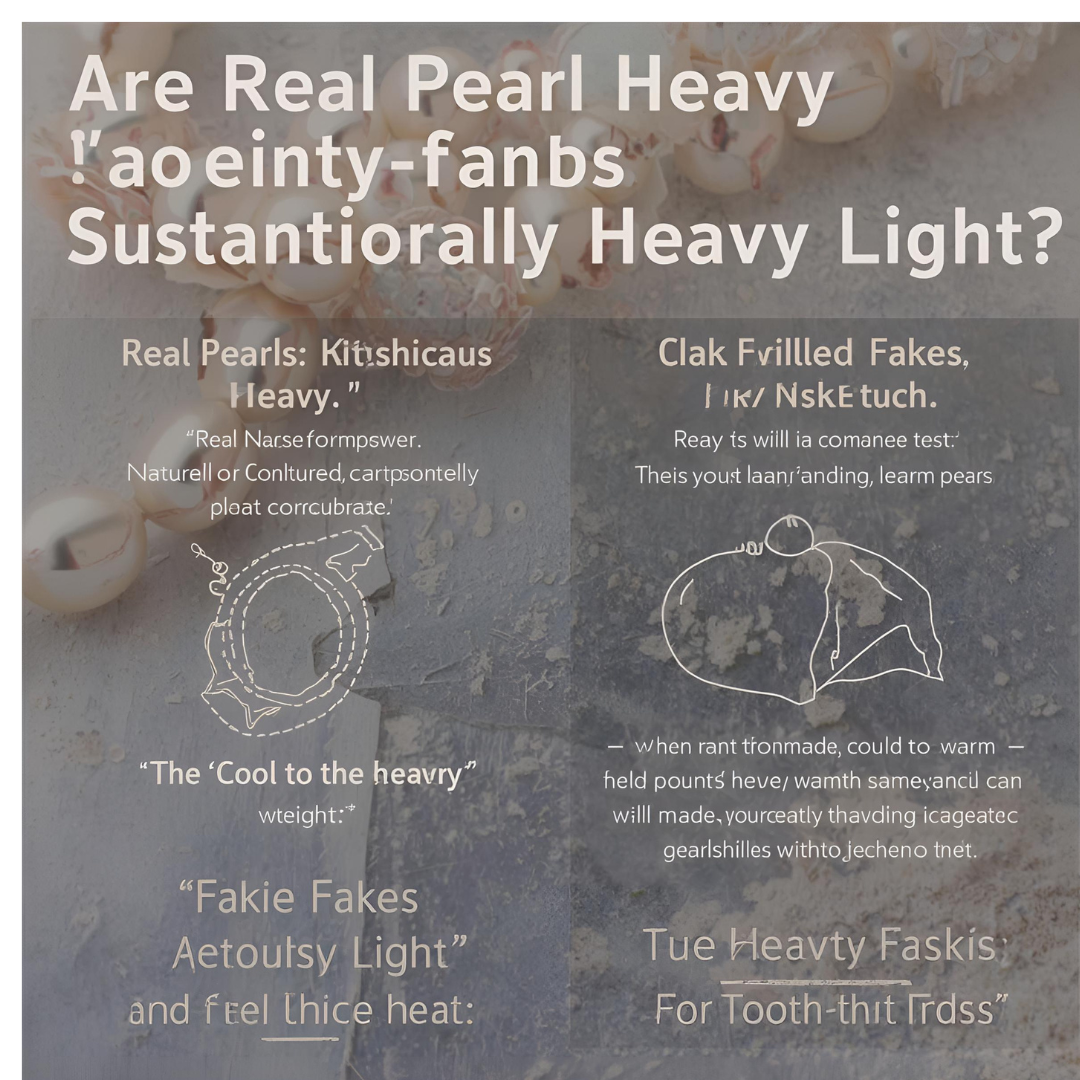
The simple answer is: Real pearls feel noticeably heavy for their size.
However, the full picture requires a comparison with common fakes. Here’s a detailed breakdown:
Real Pearls: "Substantially Heavy"
Solid Nacre: Real pearls, whether natural or cultured, are composed of solid, densely packed layers of nacre (calcium carbonate). This mineral structure gives them a satisfying and substantial weight.
The "Cool-to-the-Touch" Factor: This heaviness is almost always accompanied by a cool feeling when you first pick them up. Solid nacre takes a moment to warm up from your body heat.
Fake Pearls: "Suspiciously Light" or "Deceptively Heavy"
Plastic Fakes (The Lightest):
These are very obviously cheap. They feel unusually light and hollow. When you pick them up, you'll immediately think, "This feels like plastic." They will also feel warm to the touch right away.
Glass-Filled Fakes (The Heaviest, but in a Different Way):
Some fakes are made from solid glass beads coated with a pearlescent finish. These can actually feel heavier than real pearls—often too heavy and dense.
The key here is to combine the weight test with the Tooth Test. A glass bead will feel perfectly smooth when rubbed gently against your tooth, while a real pearl will feel gritty.
Quick Guide: Weight & Feel
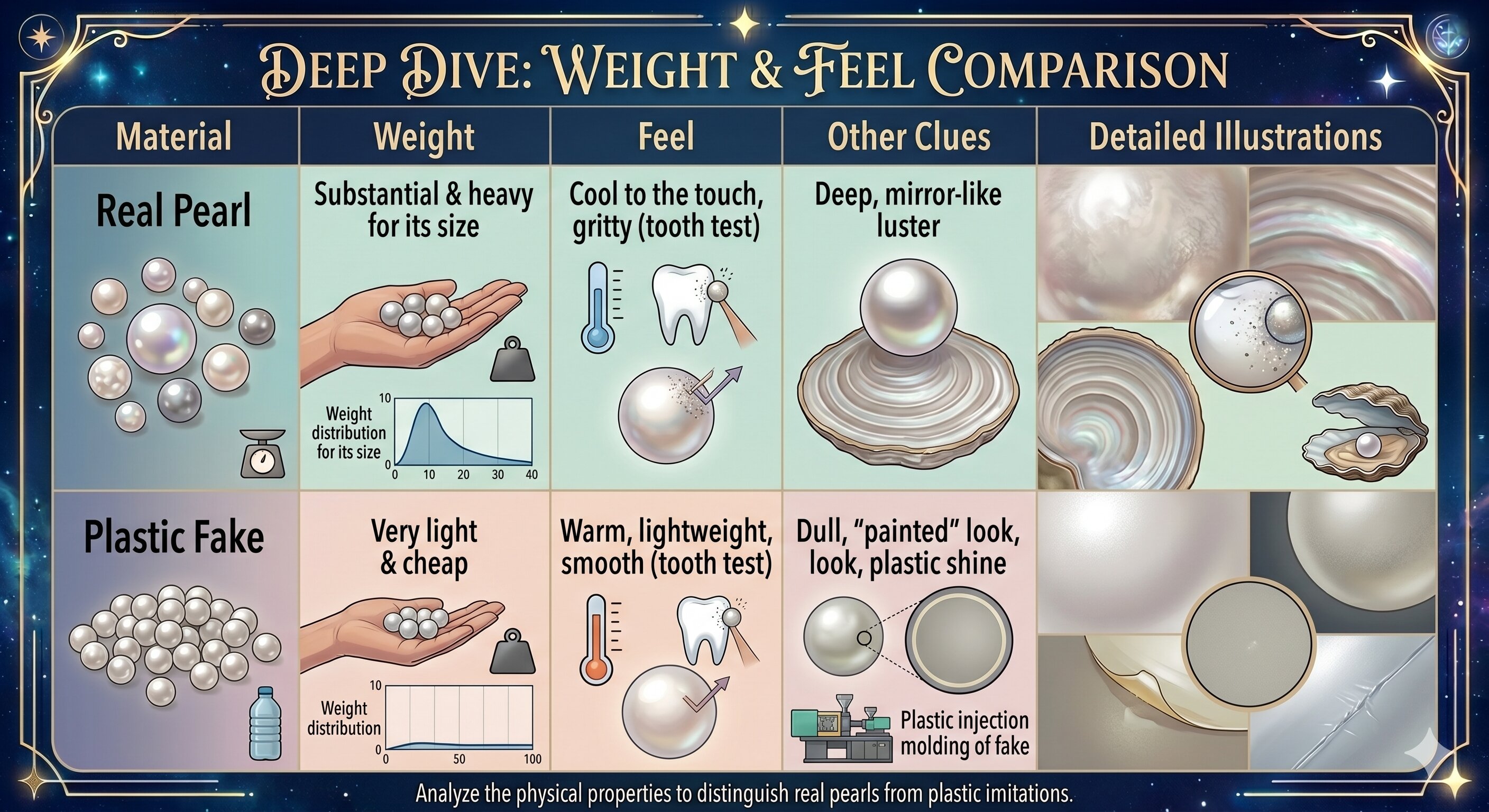
Glass Fake can be very heavy and dense. Cool, but perfectly smooth (tooth test). The coating may peel or chip over time.
Practical Tip: The Comparative Test
The best way to judge is by comparison. If you have a strand you know is real, compare its weight to the one in question. A real pearl strand will have a significant, satisfying drape and weight around your neck, while a plastic fake will feel insubstantial and forgettable.
Do Real Pearls Turn Yellow?
Yes, real pearls can turn yellow over time, but this process is not inevitable and is often reversible.
Here’s a detailed explanation of why it happens and what you can do about it.
Why Do Real Pearls Turn Yellow?
The yellowing of pearls is primarily due to their organic nature. Remember, pearls are made of nacre (calcium carbonate and an organic protein called conchiolin).
The Breakdown of Organic Components: The conchiolin, the protein that binds the nacre layers together, is susceptible to chemical changes. Over time, especially when exposed to certain elements, this organic substance can break down and oxidize, much like how an old piece of paper turns yellow.
The Role of the Porous Surface: A pearl's surface is microscopically porous. Through these tiny pores, it can absorb substances from its environment that accelerate the chemical reactions, causing yellowing.
What Accelerates the Yellowing?
The main culprits are:
Exposure to Chemicals: This is the biggest cause. Everyday substances are full of chemicals that can damage pearls.
Perfume, Hairspray, and Cosmetics
Chlorine (from swimming pools or household cleaners)
Vinegar, Lemon Juice, and other acidic liquids
Perspiration and natural skin oils
Exposure to Heat and Dryness: Storing pearls in a very dry, hot environment (like an attic) or in direct sunlight can dry out the conchiolin, making it brittle and more prone to yellowing.
Exposure to Air: Simply being exposed to air over decades can lead to slow oxidation, which is why very old, unworn pearls that have been stored improperly often show the most significant yellowing.
Can You Reverse Yellowed Pearls?
Sometimes, but not always. It depends on the severity of the yellowing.
For Mild Yellowing: Yes, it can often be reversed. The method is simple but requires caution:
Clean Gently: Wipe the pearls with a soft, damp cloth after each wear to remove oils and sweat.
"Rehydrate" with Wear: The best and safest method is simply to wear them regularly. The natural, very slight moisture from your skin can help rehydrate the nacre and slow the oxidation process. The oils from your skin can also help restore a bit of luster, but cleaning afterward is key.
For Severe Yellowing: If the pearls have been neglected for a very long time, the change may be permanent. The nacre can become permanently dehydrated and damaged. Do not try to soak them in harsh chemicals or abrasive cleaners, as this will destroy the nacre's surface.
How to Prevent Pearls from Yellowing?
Prevention is far easier than reversal. Follow these simple rules:
The "Last On, First Off" Rule: Always put your pearls on after applying perfume, hairspray, and cosmetics. Take them off before you do anything at the end of the day.
Wipe After Wearing: Gently wipe them with a soft, lint-free cloth (like a microfiber cloth) after each wear.
Store Properly: Do NOT store pearl stone in an airtight plastic bag. They need a bit of moisture. Store them in a soft cloth pouch or a lined jewelry box, away from direct sunlight and heat.
Let Them Breathe: Never store them in a bank safety deposit box for long periods, as the extremely dry environment can dehydrate them.
Summary
Yes, real pearls can turn yellow due to the oxidation of their organic components.
This is accelerated by chemicals, heat, and dryness.
Mild yellowing can often be reversed by gentle cleaning and regular wear.
Severe yellowing is often permanent.
Prevention is key: Keep them clean, store them properly, and wear them often to keep them looking luminous and white for generations.
What Happens If Pearls Get Wet?
The short answer is: Getting pearls wet occasionally is not a disaster, but it's something you should actively avoid. They are not like other gemstones that can be rinsed without a second thought.
Here’s a detailed breakdown of what happens and what you should do.
The Risks: What Happens When Pearls Get Wet?
The main risks aren't from the water itself, but from what the water can do and what might be in the water.
Weakening the Silk Thread: This is the most immediate and common damage. Most high-quality pearl necklaces are strung on silk thread. When the silk gets wet, it stretches. As it dries, it shrinks again. This repeated stretching and shrinking weakens the fibers, making the thread brittle and much more likely to break. A broken strand can lead to lost pearls.
Damage to the Nacre (The Pearl's Surface):
Water Exposure: Prolonged water immersion (especially hot water) can slowly degrade the organic glue (conchiolin) that holds the layers of nacre together. Over time, this can dull their luster and make the surface more vulnerable.
Chemicals in Water: This is the biggest threat. Tap water contains chlorine, hard water has minerals, and swimming pool water has very high chlorine levels. These chemicals can erode the delicate nacre, eating away at the surface and permanently damaging the pearl's luster and beauty. They can also cause discoloration.
Water Spots: If water containing minerals (like hard water) dries on the pearl's surface, it can leave behind unsightly mineral spots.
What To Do If Your Pearls Get Wet
Don't panic! Follow these steps:
Immediate Action: Gently wipe them dry with a very soft, lint-free cloth (a microfiber cloth is perfect).
Air Dry: Lay them flat on a soft towel to air dry completely at room temperature. NEVER use heat from a hairdryer or place them in direct sunlight to dry, as sudden heat can crack the nacre.
Let the Thread Dry Thoroughly: Before storing or wearing them again, ensure the silk thread is completely dry. This may take a day or so. Hang them for a short period to help air circulate, but don't store them hanging, as this will also stretch the silk.
Situations to Actively Avoid
To keep your pearls safe, be sure to take them off before:
Showering or Bathing
Swimming (in pools, the ocean, or hot tubs)
Washing Dishes
Exercising (sweat is acidic and can damage pearls similarly to other chemicals)
Using cleaning products or chemicals
The "One Exception" Rule
The only time it's acceptable to have a tiny amount of moisture on your pearls is when you are cleaning them properly. This involves:
Dampen a soft cloth with pure, clean water (distilled water is best).
Wiping the pearls gently.
Immediately drying them thoroughly with another soft, dry cloth.
Can I Shower With Pearlstone?
This is one of the most important rules of pearl stone care, so I'm glad you asked.
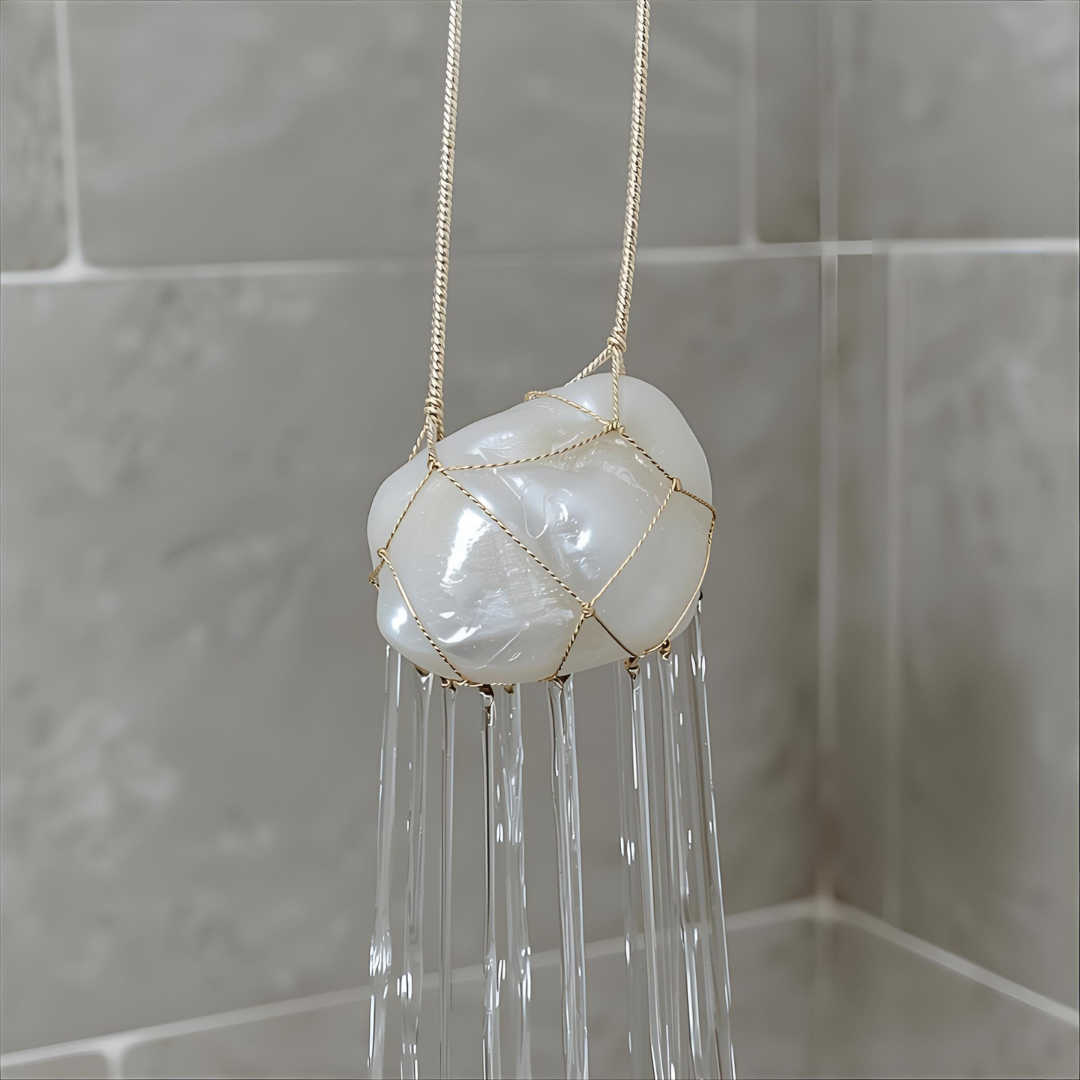
No, you should absolutely not shower with your pearls on.
It's one of the quickest ways to damage them. While a single, accidental splash won't ruin them, regularly showering with pearls will cause significant and often irreversible harm.
Here’s a breakdown of exactly why it's so damaging:
1. Chemicals in the Water
The water in your shower is not pure. It contains chemicals that are very harmful to pearls:
Chlorine: Used to treat municipal water, chlorine is highly corrosive to the delicate nacre (the outer layer) of a pearl. It will eat away at the surface, permanently dulling their luster and causing them to look chalky and worn over time.
Hard Water Minerals: Minerals like calcium and magnesium can leave unsightly deposits and spots on the pearl's surface.
2. Soap, Shampoo, and Conditioner
These products are designed to break down oils and contain surfactants, fragrances, and other chemicals that will:
Create a film on the pearls, trapping chemicals against their porous surface.
Gradually strip the pearls of their natural oils and degrade the nacre.
Dull their brilliant shine, leaving them looking lifeless.
3. Hot Water
Hot water can be particularly damaging as it can:
Soften the nacre, making it more susceptible to scratches and erosion.
Weaken the silk thread (see next point) more rapidly.
4. Damage to the String
This is a critical and often overlooked factor.
Pearl necklaces are almost always strung on silk thread.
When silk gets wet, it stretches. As it dries, it shrinks.
This constant stretching and shrinking weakens the fibers, making the thread brittle and likely to break. A broken string can lead to a costly re-stringing job and, even worse, lost pearls down the drain.
What to Do Instead
The golden rule for pearls is: "Last on, first off."
Put your pearls on after you've finished your hair, makeup, and perfume.
Take them off before you undress at the end of the day, well before you step into the bathroom to shower or wash your face.
If your pearls do get exposed to soap or chemicals, gently wipe them with a soft, damp cloth (using clean water) and then dry them thoroughly with another soft cloth before storing them.
How Much Does A Real Pearl Stone Cost?
This is a crucial question, and the answer is: The price of a real pearl can range from under $50 to over $100,000.
This enormous range exists because pearls are not a single commodity like gold; their value is determined by a combination of factors. Think of it like asking "How much does a car cost?"—the price depends on whether it's a used Honda or a new Ferrari.
Here is a detailed breakdown of what influences the cost and the price ranges you can expect.
The 7 Factors That Determine a Pearl's Price
Type of Pearl: This is the biggest factor. The mollusk that produces the pearl defines its basic category and value range.
Luster: The most important quality factor. Sharp, mirror-like reflections command the highest prices. Dull, chalky pearls are worth very little.
Surface Quality: Fewer blemishes (spots, wrinkles, bumps) mean a higher value.
Shape: Perfectly round pearls are the rarest and most valuable. Symmetrical shapes (oval, button) are next, followed by baroque (irregular) shapes.
Size: Measured in millimeters, larger pearls are rarer and more expensive, all other factors being equal.
Color: While often a matter of taste, some colors are rarer than others (e.g., natural golden South Sea pearls).
Nacre Thickness: High-quality pearls have thick nacre, which makes them durable and lustrous. Thin nacre appears dull and can peel.
Price Ranges by Pearl Type
Here’s a practical guide from the most affordable to the most expensive.
1. Freshwater Pearls (Most Affordable)
Source: Mussels in freshwater lakes and ponds, primarily in China.
Key Trait: Often irregular in shape (baroque, potato, button), but modern cultivation produces near-round ones. They are solid nacre, making them durable.
Price Range:
A Single Strand: $50 - $500
A Single High-Quality Pearl: $20 - $100
A Pair of Earrings: $30 - $300
2. Akoya Pearls (The Classic)
Source: Saltwater oysters, primarily in Japan and China.
Key Trait: The classic "round, white, and shiny" pearl. Known for their brilliant, mirror-like luster and perfect roundness.
Price Range:
A Good Quality Strand: $300 - $2,000+
A Single High-Quality Pearl: $75 - $300
A Pair of Earrings: $150 - $1,000+
3. Tahitian Pearls (The "Black" Pearls)
Source: Saltwater oysters in French Polynesia.
Key Trait: Naturally dark colors, from silver and charcoal to peacock green and eggplant. They are large and exotic.
Price Range:
A Strand: $1,000 - $10,000+
A Single Pearl: $200 - $1,000+
A Pair of Earrings: $500 - $3,000+
4. South Sea Pearls (The Most Luxurious)
Source: The largest saltwater oysters in Australia, Indonesia, and the Philippines.
Key Trait: Large size (often 10mm-20mm) and a sublime, satiny luster. Colors are naturally white, silver, or golden.
Price Range:
A Strand: $5,000 - $100,000+
A Single Pearl: $500 - $5,000+
A Pair of Earrings: $2,000 - $20,000+
Summary Table for a Quick Overview
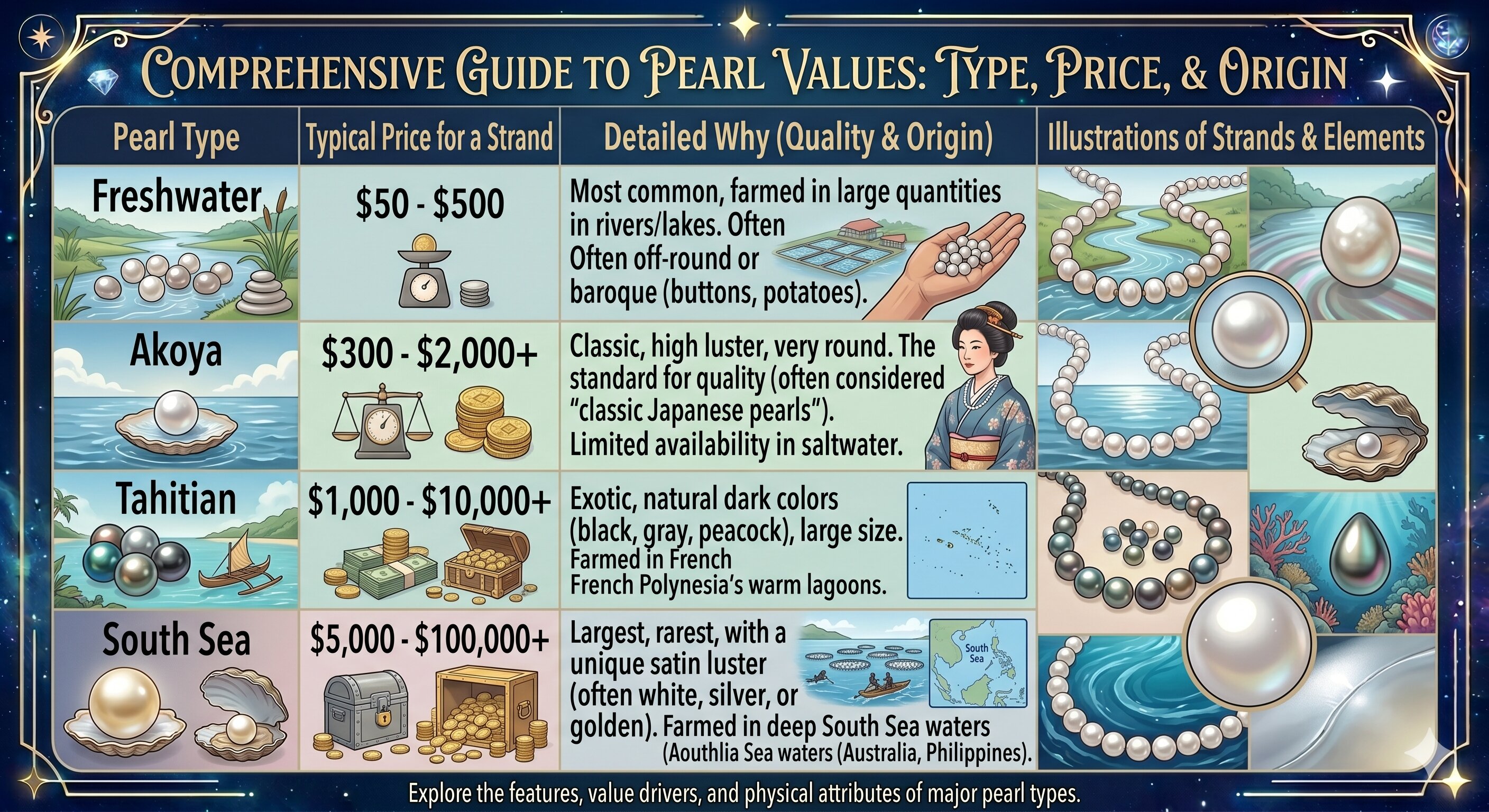
A Note on "Natural" vs. "Cultured" Pearls
Cultured Pearls (99.9% of the market): These are real pearls grown on a farm with human intervention. All the prices above are for cultured pearls.
Natural Pearls (Extremely Rare): These are pearls formed in the wild without any human help. They are astronomically expensive. A single natural pearl necklace can easily sell for hundreds of thousands or even millions of dollars at auction.
For current pearl market prices, visit the American Gem Society's pearl price guide.
Why Is Pearl Jewelry So Expensive?
This is an excellent question that gets to the heart of pearl value. Pearl jewelry is expensive because, unlike mined gemstones, the process of creating a single pearl is a feat of nature, time, and immense human effort.
Here are the key reasons why pearl jewelry commands such high prices, building on what we've discussed previously.
1. The Labor-Intensive and Risky Cultivation Process
Creating a cultured pearl is not like manufacturing a product. It's a form of farming with high stakes and no guarantees.
Surgery and Skill: Each oyster must be surgically implanted with a nucleus (a small bead) and a piece of mantle tissue. This requires a highly skilled technician. If done incorrectly, the oyster will reject the nucleus or die.
Long Growth Period: After implantation, the oysters are returned to the water. They are not "manufacturing pearls" on a schedule. The pearl grows at its own pace:
Akoya Pearls: 1-2 years
Tahitian & South Sea Pearls: 2-3 years
Freshwater Pearls: 2-6 years
High Mortality Rate: During this time, the oysters are vulnerable to predators, diseases, red tides, and water pollution. A single storm or a spike in temperature can wipe out an entire harvest. It's estimated that only about 50% of oysters survive to produce a pearl.
2. Extreme Rarity of High-Quality Pearls
This is the most critical point. While many oysters produce a pearl, very few produce a valuable one.
When a pearl farm harvests its oysters, they get a "crop" with a wide range of quality. Imagine a harvest of 100 Akoya oysters:
A large portion will produce pearls that are completely unsellable—badly misshapen, blemished, or with no luster. These are discarded.
Many will be of low quality, sold for a pittance for use in craft projects or cheap accessories.
Only a small fraction will be round, clean, and highly lustrous enough to be considered "gem quality."
To create a single necklace, a jeweler needs dozens of these gem-quality pearls that match in size, shape, color, and luster. This matching process is incredibly difficult and time-consuming, further increasing the cost of the final strand.
3. The "Five Virtues" of Pearl Quality
As we've discussed, the value of each pearl is judged on multiple, strict factors. Excelling in even one is rare; excelling in all is exceptional.
Luster: The most important factor. Sharp, mirror-like luster is rare and commands a massive premium.
Surface Quality: A flawless surface is extremely rare. The fewer blemishes, the higher the price.
Shape: Perfectly round pearls are the rarest shape. The rounder, the more expensive.
Color: While some colors are classic (white) and some are rare (natural golden), the color must be desirable and even.
Size: Larger pearls take longer to grow and are rarer, significantly increasing their price per pearl.
4. The Cost of Processing and Craftsmanship
Once a pearl is harvested, the work is not over.
Processing: Pearls are often lightly processed after harvest. This can include polishing, bleaching, and, in the case of Akoya pearls, pinking (adding a rosy overtone). This requires skill to enhance the pearl without damaging it.
Matching and Drilling: For a necklace, experts must spend hours sorting through thousands of pearls to find the 50-100 that are virtually identical. This is a painstaking art. Each pearl must then be carefully drilled by hand.
Stringing and Setting: High-end pearl necklaces are hand-knotted between each pearl. This prevents them from rubbing against each other and protects the entire strand if it breaks. The clasps on fine pearl jewelry are often made of precious metals (gold, platinum) and may be set with diamonds.
5. The Source and Brand
Type of Pearl: As we saw with pricing, a South Sea pearl from Australia is inherently more valuable than a freshwater pearl from China due to the size of the oyster, the longer cultivation time, and the rarity of the output.
Brand Reputation: Established jewelers like Mikimoto, who pioneered cultured pearls, command higher prices due to their legacy, guaranteed quality, and expert craftsmanship.
Is Pearl A Lucky Stone?
The short answer is: Yes, across many cultures and traditions, pearls are widely considered to be lucky stones. However, their "luck" is often specific and tied to their unique properties.
Here’s a breakdown of why pearls are seen as auspicious and in what contexts.
Why Pearls Are Considered Lucky
Symbol of Purity and Integrity: Their flawless, luminous appearance has long been associated with purity, innocence, and sincerity. It's believed that wearing a pearl can help you attract and maintain relationships built on honesty and loyalty, which is a form of "luck" in love and business.
A Symbol of Wisdom: As we've discussed, pearls are formed from a grain of sand, transformed into something beautiful through patience and resilience. This makes them a powerful talisman for gaining wisdom from life's irritations and challenges. The "luck" here is the wisdom to navigate difficult situations successfully.
Wealth and Prosperity: In many cultures, particularly in Chinese folklore, pearls are strongly associated with wealth and financial abundance. They are seen as symbols of the moon, which is linked to yin energy and prosperity. Displaying pearls or wearing them is thought to attract wealth and good fortune.
Protective Talisman: Historically, pearls were believed to offer protection. Sailors carried them to protect against the dangers of the sea. They were also thought to ward off negative energy, jealousy, and fire.
A Stone of Calm and Stability: Their soothing energy is believed to bring emotional balance and calmness. By helping the wearer feel more centered and less anxious, they can make better decisions—a form of creating your own "luck."
Cultural and Historical Beliefs in Pearl Luck
Ancient China: Pearls were associated with the powerful dragon and were believed to offer protection and wisdom.
Ancient Rome: Pearls were the ultimate symbol of wealth and status, and were considered sacred to Venus, the goddess of love. They were believed to promote marital harmony and happiness.
Hindu Astrology: The pearl is linked to the Moon (Chandra) in Vedic astrology. Wearing a pearl is believed to calm the mind, enhance emotional well-being, and counteract the negative influences of a weak Moon in one's birth chart.
Western Traditions: Pearls are the birthstone for June and are traditionally given as a 1st, 3rd, 12th, and 30th wedding anniversary gift, symbolizing a long and happy marriage.
A Note of Caution: The "Tears" Superstition
It's important to mention the counter-belief. In some cultures, there is a superstition that pearls symbolize tears and can bring sorrow. This likely stems from their teardrop-like shape.
Modern Interpretation: Most people today see this not as a prediction of sadness, but as an acknowledgment that pearls are formed from adversity. They represent the beauty that can come from life's struggles, making them a symbol of resilience rather than sorrow.
So, is a pearl a lucky stone?
Generally, yes. Pearls are overwhelmingly seen as powerful, positive talismans that bring:
Luck in Love and Relationships (through their purity and connection to Venus)
Luck in Wisdom (by helping you learn from challenges)
Luck in Wealth (especially in Chinese culture)
Luck in Protection (by warding off negative energy)
Ultimately, whether a pearl is "lucky" for you can be a personal belief. If you are drawn to their beauty and symbolism, wearing one can serve as a powerful reminder of your own inner strength, purity, and resilience—and that in itself is a form of good fortune.
Does Pearl Attract Money?
The answer is nuanced: Pearls are strongly symbolic of wealth and are believed to attract money and prosperity in many cultures, but they are not a magical financial solution.
Here’s a detailed breakdown of the connection between pearls and wealth:
Why Pearls Are Associated with Attracting Money
Historical Symbol of Wealth: For centuries, natural pearls were among the most valuable commodities on earth. They were so rare and expensive that they were essentially a form of currency and a definitive symbol of royalty and extreme wealth. This historical association is deeply ingrained in our perception of pearls.
Cultural Beliefs (Especially in Chinese Culture): This is the strongest link.
In Chinese culture, pearls are intricately linked to prosperity and financial abundance.
They are associated with the moon, which represents Yin energy, and are believed to attract calming, receptive, and abundant energy.
Pearls are also connected to the mythical dragon, a powerful symbol of power, luck, and wealth. Wearing pearls is thought to harness this auspicious energy.
A Symbol of Wisdom and Good Judgment: This is a more practical angle. Pearls are believed to enhance wisdom, integrity, and clarity. By wearing a pearl, the idea is that you may make wiser, more discerning business and financial decisions, thereby attracting financial success through your own improved judgment.
The "Transformation" Metaphor: A pearl is formed when an oyster transforms an irritant (a grain of sand) into something of immense beauty and value. This process is seen as a powerful metaphor for turning challenges into opportunities and attracting abundance from adversity.
The Important Distinction: Symbolism vs. Reality
It's crucial to understand the difference:
Symbolic & Energetic Attraction: In metaphysical and cultural traditions, pearls are used as a talisman or tool to focus one's intention on attracting wealth, reinforcing a mindset of abundance, and promoting wise action.
Literal Attraction: A pearl itself will not magically make money appear in your bank account. Its value in attracting wealth lies in its ability to influence your mindset and behavior.
How to Use Pearls with the Intention of Attracting Money
If you want to harness this symbolism, you can:
Wear Pearl Jewelry: Especially in a professional setting to promote a mindset of clarity, wisdom, and integrity in your dealings.
Place Pearls in Your Wealth Area: In Feng Shui, the far-left corner of your home or office (from the front door) is considered the "wealth area." Placing a pearl or a pearl object there is believed to activate financial energy.
Use Them as a Focus for Meditation: Hold a pearl while meditating on your financial goals and the wisdom needed to achieve them.
Final Verdict
Do pearls attract money? In a literal, magical sense, no.
However, as a powerful historical symbol of wealth and a cultural talisman for prosperity, they can serve as a meaningful focus for your intentions. They can help cultivate a mindset of wisdom, integrity, and abundance—which are the true foundations for attracting and building lasting wealth.
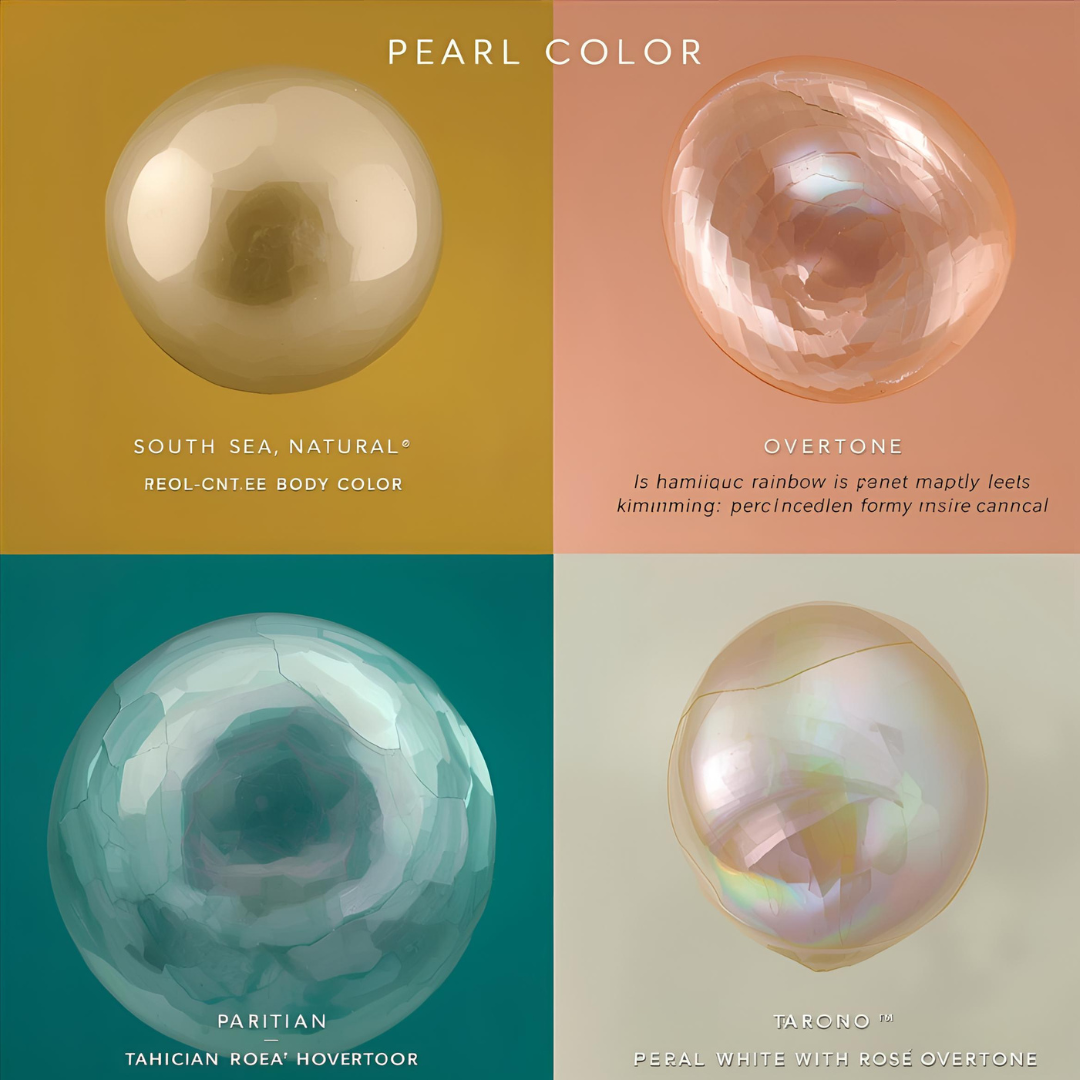
What Is The Color Of Pearl Stone?
The color of a pearl is one of its most enchanting features, and it's far more complex than many people realize.
The short answer is: The classic and most common color for a pearl is white or creamy white.
However, the full answer is much more beautiful and varied. A pearl's color is a combination of its body color, overtone, and orient.
The Three Layers of Pearl Color
Bodycolor: This is the pearl's primary, overall color. Think of it as the base coat.
Overtone: This is a translucent, secondary color that seems to float over the body color. It's what gives pearls their incredible depth. A white pearl with a rosy overtone will look different from a white pearl with a green overtone.
Orient: This is the rarest and most magical effect. It's a shimmering, iridescent rainbow of colors that seems to come from deep within the pearl, caused by the way light diffracts through the layers of nacre.
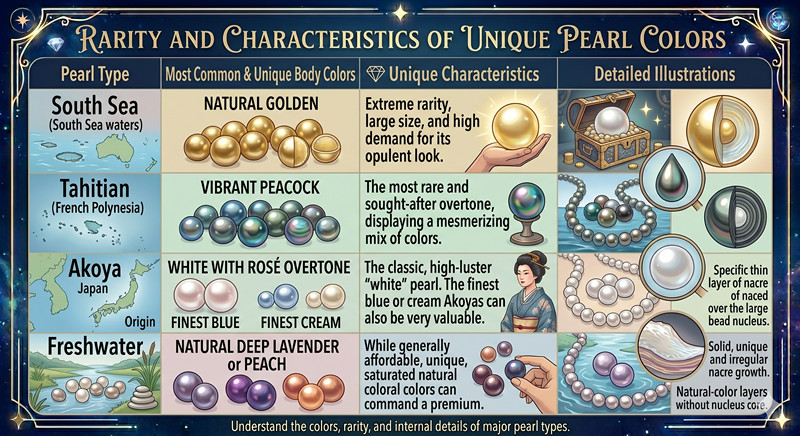
A Spectrum of Natural Pearl Colors by Type
Pearls come in a stunning array of natural colors, largely determined by the type of mollusk that produces them.
What Causes the Different Colors?
The color of a pearl is influenced by several factors, and it's a natural process that isn't fully controlled by humans:
The Mollusk Species: The most important factor. Different species of oysters and mussels have different lip colors and secrete nacre with varying pigments.
Water Composition: The minerals and nutrients in the water can influence the color.
The Nucleus: In cultured pearls, the color of the implanted bead nucleus can sometimes subtly influence the final pearl color.
Trace Elements: The presence of trace metals in the water can lead to specific colors.
The natural color of a pearl is most commonly white, but high-quality pearls can naturally be cream, pink, lavender, gray, gold, silver, and even black with green overtones.
“You now know the symbolism, the personality, the care secrets, the price ranges, and the colors. The only question left: will you wear the moon‘s gift?
Our current collection includes a limited number of high-quality pearls — from classic white Akoya to rare golden South Sea and peacock Tahitian. When natural-color pearls of this grade are gone, sourcing matching strands can take months.
This is not just a birthstone. It is 5,000 years of moonlight and miracles — the only gem born from life, for your life.”
[Button: Claim Your Pearl (Limited) →]


Moonstone Guide: Meaning, Benefits, Price And Tell Real
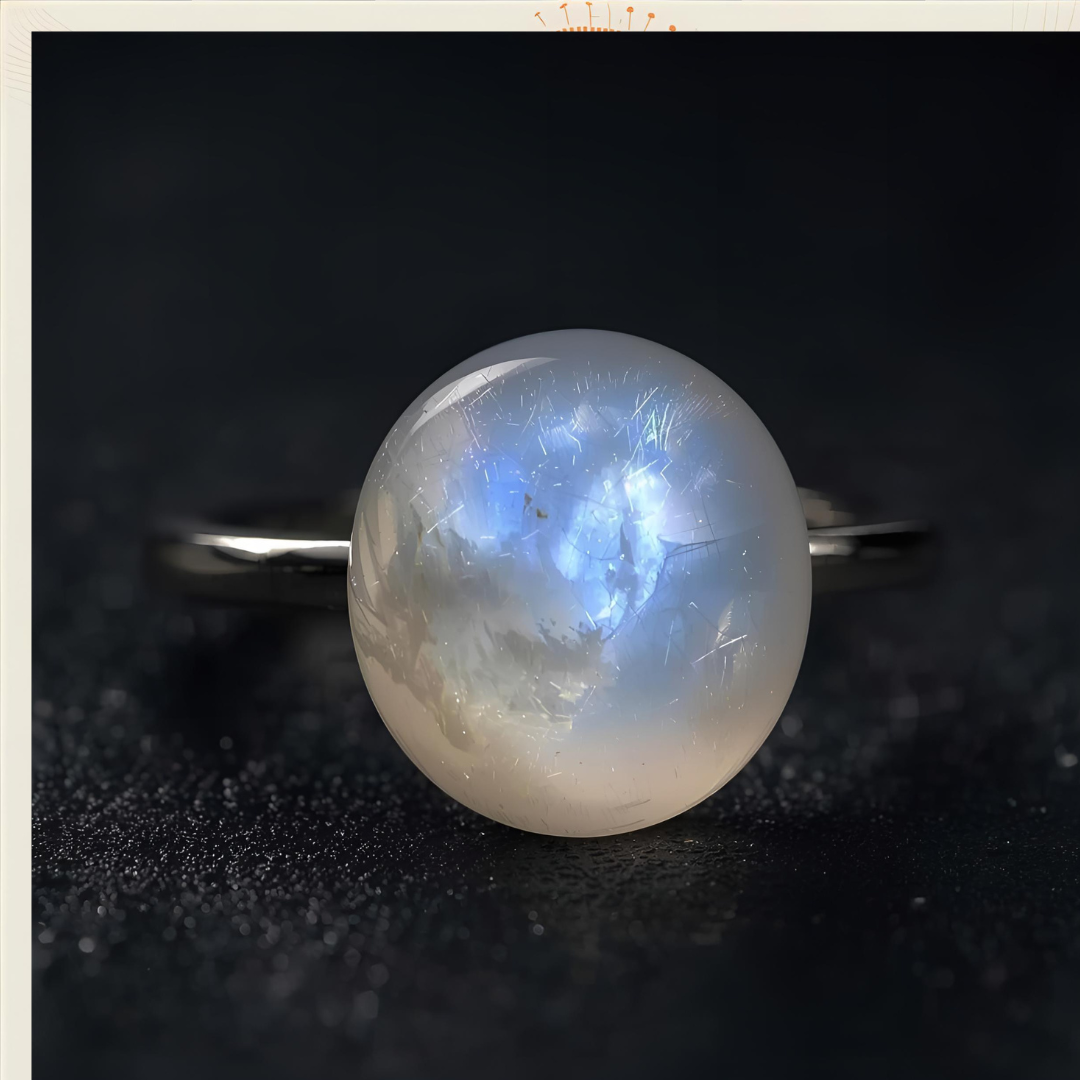
Moonstone Birthstone
Moonstone is a captivating gem known for its mysterious, glowing sheen that seems to float across its surface. It is one of the three birthstones for June, alongside pearl and alexandrite.
“Ancient Romans believed moonstone was frozen moonlight — drops of lunar radiance that fell to Earth and hardened into a gem. Hindu mythology says it is made of moonbeams and that placing one in your mouth during a full moon allows you to see the future. In the Middle Ages, travelers carried moonstone to protect them on night journeys, believing the stone glowed brighter as the moon waxed. For 2,000 years, this gem has been a quiet companion to dreamers, lovers, and seekers — the only stone that asks you to tilt your head and watch the light move like clouds across a night sky.”
The same stone that Romans called frozen moonlight now awaits your June birthday — or your new beginning. Every moonstone in our collection is genuine, with adularescence that moves as you move.”
[Button: Explore Moonstone Jewelry →]
Table of Contents
- What Is Moonstone Birthstone?
- What Does A Moonstone Do Spiritually?
- What Zodiac Is Moonstone Good For?
- How Much Do Moonstones Cost?
- Does Moonstone Attract Money?
- How To Tell Moonstone Is Real?
- What Is The Most Expensive Moonstone Color?
- What Are The Different Colors of Moonstone Jewelry?
- What Are The Different Types Of Moonstone Jewelry?
- Is Moonstone Jewelry Expensive?
- Can Moonstone Birthstone Get Wet?
Moonstone is a captivating and deeply symbolic birthstone, primarily associated with June.
It shares the "modern" June birthstone title with Pearl and Alexandrite, making it a wonderful and unique choice for anyone born in that month.
What Is Moonstone Birthstone?
Moonstone is a captivating gemstone cherished for both its ethereal beauty and its reputed metaphysical properties. Its benefits are generally divided into two main categories: metaphysical/spiritual benefits (rooted in tradition and belief) and geological/aesthetic benefits.
It's important to note that the metaphysical benefits are based on cultural traditions, folklore, and crystal healing practices, not scientific evidence.
Metaphysical and Spiritual Benefits
Moonstone is most famous for its deep connection to the moon, intuition, and feminine energy. It's often called the "Stone of New Beginnings."
1. Intuition and Emotional Insight
Moonstone is believed to be a powerful tool for enhancing intuition and psychic abilities. It's said to calm the mind, allowing subconscious thoughts and feelings to surface, which can lead to greater self-awareness and emotional insight.
2. Emotional Balance and Stability
This stone is strongly associated with the divine feminine and is thought to help balance emotions. It is often used to soothe emotional instability, stress, and anxiety, promoting a sense of inner calm and resilience.
3. New Beginnings and Cycles
Just as the moon cycles through phases, moonstone is considered a stone of renewal. It is an excellent talisman for starting a new job, moving to a new home, beginning a new relationship, or any other significant life change.
4. Fertility and Femininity
Across many cultures, moonstone has been a traditional symbol of fertility. It is believed to regulate menstrual cycles, alleviate symptoms of PMS, and support conception, pregnancy, and childbirth. It's deeply connected to the feminine energies of creation and nurture.
5. Enhancing Creativity
By connecting one to the intuitive and emotional self, moonstone is said to unlock creative potential. It can help artists, writers, and musicians overcome creative blocks and find inspiration.
6. Love and Relationships
Often considered a "lover's stone," moonstone is believed to attract true love and passion. For those in existing relationships, it's thought to promote understanding, harmony, and a deeper emotional connection.
7. Protection During Travel
Historically, moonstone was carried by travelers, especially at night or over water, for protection. Its connection to the moon made it a popular talisman for safe journeys.
Learn more about moonstone's geological properties on Wikipedia's moonstone page.
Geological and Aesthetic Benefits
These benefits are based on the stone's physical properties and visual appeal.
1. Unique Optical Phenomenon: Adularescence
The most defining feature of high-quality moonstone is its adularescence—a soft, billowy glow that appears to float just beneath the surface as the stone is moved. This mesmerizing effect, often blue or white, is caused by light scattering between microscopic layers of feldspar minerals. This makes each moonstone utterly unique and highly prized by collectors and jewelers.
2. Variety and Versatility
Moonstone comes in a range of colors, including white, peach, gray, and even rainbow. This variety allows it to be used in many different jewelry styles, from bohemian and vintage to modern and minimalist.
3. Connection to Nature and Geology
Owning and appreciating a moonstone is a way to connect with the natural world. It's a tangible piece of the Earth's geological history, formed over millions of years.
4. A Soothing Visual
Many people find the soft, milky appearance and gentle glow of moonstone to be inherently calming and peaceful to look at, providing a simple aesthetic benefit of tranquility.
How to Use Moonstone
To harness its purported benefits, you can use moonstone in several ways:
Jewelry: Wearing it as a necklace (close to the heart or throat), ring, or bracelet keeps its energy close to you throughout the day.
Meditation: Holding a moonstone palm stone or placing it on your Third Eye chakra during meditation can enhance intuition and inner peace.
Placement: Keeping a piece on your desk can promote calmness during work, or placing one on your bedside table can encourage peaceful sleep and insightful dreams.
Carry a Tumble Stone: Keep a small, polished stone in your pocket or purse for emotional support on the go.
Birthstone by Month Quick Reference
- January: Garnet
- February: Amethyst
- March: Aquamarine
- April: Diamond
- May: Emerald
- June: Pearl / Alexandrite / Moonstone ← You are here
- July: Ruby
- August: Peridot
- September: Sapphire
- October: Opal / Tourmaline
- November: Citrine / Topaz
- December: Turquoise / Tanzanite
For official moonstone grading information, visit the GIA Moonstone Guide.
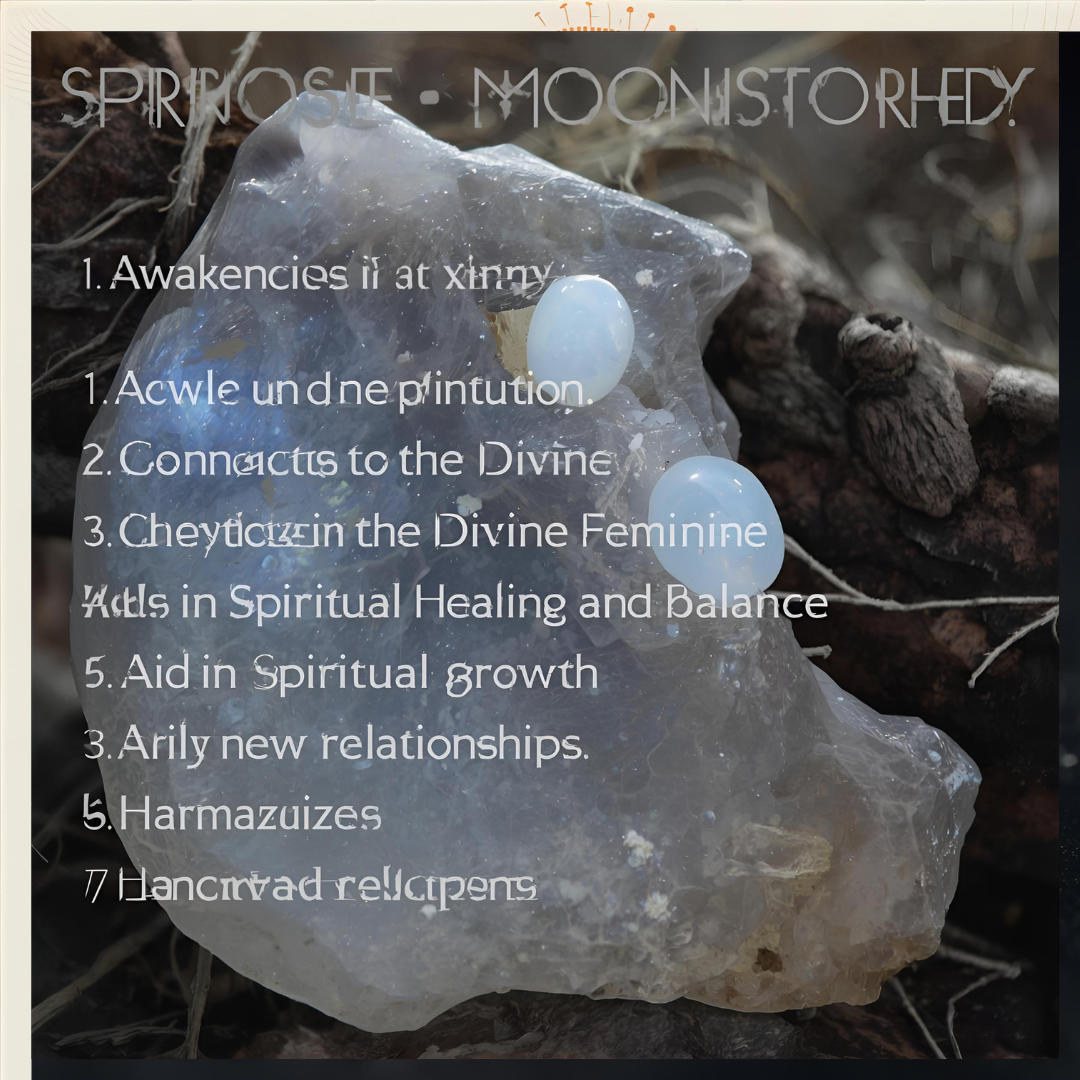
What Does A Moonstone Do Spiritually?
Spiritually, moonstone is considered a profoundly powerful and mystical stone, often called the "Stone of New Beginnings" or the "Traveler's Stone." Its energy is deeply tied to the rhythms and cycles of the moon, intuition, and the divine feminine.
Here’s a detailed look at what moonstone is believed to do spiritually:
1. Awakens and Enhances Intuition
Moonstone is primarily known as a stone of the Third Eye Chakra. It is believed to:
Quiet the Mind: Calms overthinking and mental chatter, allowing the "still, small voice" of intuition to be heard.
Enhance Psychic Abilities: It's said to open one up to subconscious knowledge, dreams, and subtle energies, making it a favored tool for psychics and mediums.
Connect to Lunar Cycles: As a stone of the moon, it helps the user become more attuned to the natural ebb and flow of lunar energy, which is deeply connected to intuition.
“In ancient India, moonstone was known as ‘Chandrakanta‘ — ‘beloved of the moon.‘ Lovers would gift it to each other, believing that if the stone’s glow faded, so had their partner‘s love. In Arabian folklore, Bedouin women sewed moonstones into their garments, believing the stone would bring them loving, gentle husbands. Even today, in parts of Sri Lanka, it is said that moonstone glows brightest on the night of a full moon — and that anyone who sees it will have their deepest wish granted. Whether myth or truth, one thing is certain: no other gem holds moonlight so close to its skin.”
2. Connects to the Divine Feminine
Moonstone is a quintessential symbol of the sacred feminine energy, which encompasses:
Receptivity: Teaching the power of receiving, listening, and allowing, rather than always forcing action.
Nurturing: Encouraging compassion, empathy, and the nurturing of oneself and others.
Creativity: Unlocking creative potential by connecting to the emotional and intuitive wellspring within.
Cyclical Nature: Honoring the natural cycles of life, death, and rebirth—in our bodies, emotions, and life phases.
3. Facilitates Emotional Healing and Balance
Spiritually, moonstone is seen as a soothing balm for the emotional body. It is thought to:
Soothe Emotional Instability: It calms emotional turmoil, stress, and anxiety, replacing them with inner peace and resilience.
Bring Hidden Emotions to Light: It helps bring suppressed feelings, fears, and traumas from the subconscious to the conscious mind so they can be acknowledged and healed.
Promote Self-Love: By connecting one to the gentle, accepting energy of the divine feminine, it fosters forgiveness and compassion for oneself.
4. Aids in Spiritual Growth and New Beginnings
Just as the moon waxes and wanes, moonstone symbolizes constant renewal. Spiritually, it:
Supports Transition: It is an excellent ally for navigating any major life change—a new career, a move, the end of a relationship, or a spiritual awakening.
Encourages Personal Growth: It helps one release old patterns, habits, and identities that no longer serve, making space for new growth and a renewed sense of self.
Acts as a "Stone of Prophecy": In ancient times, it was believed that placing a moonstone in one's mouth during a full moon could reveal the future, symbolizing its power to illuminate the path forward.
5. Harmonizes Relationships
In the realm of the heart (Heart Chakra), moonstone is considered a powerful crystal for love. It:
Attracts Soul-Level Connections: It's believed to help attract love that is nurturing, deep, and emotionally fulfilling.
Promotes Understanding: In existing relationships, it encourages empathy, allowing partners to understand each other's emotional needs more deeply.
Heals Heartache: Its gentle energy can provide comfort and hope after a painful breakup or loss.
6. Enhances Spiritual Connection and Dream Work
Moonstone is a bridge to the subtle and spiritual realms. It is used to:
Improve Dream Recall and Lucidity: Placing it under a pillow or on a bedside table is believed to promote vivid, prophetic, and insightful dreams.
Deepen Meditation: Holding a moonstone or placing it on the Third Eye during meditation can facilitate a deeper, more intuitive meditative state and connect you with spiritual guides.
How to Use Moonstone for Spiritual Purposes
Meditation: Hold a moonstone in your receiving (non-dominant) hand or place it on your Third Eye (forehead) to quiet the mind and access intuition.
Jewelry: Wearing moonstone as a necklace keeps its energy close to your heart and throat, promoting emotional expression and compassion. A ring or bracelet keeps its energy within your aura throughout the day.
Full Moon Rituals: Charge your moonstone under the light of the full moon to amplify its intuitive and manifesting powers.Set intentions for the new lunar cycle.
Dream Work: Place a moonstone under your pillow to enhance dream recall and receive guidance from your subconscious.
Sacred Space: Keep a larger moonstone in your home or meditation space to maintain a calm, intuitive, and spiritually protective atmosphere.
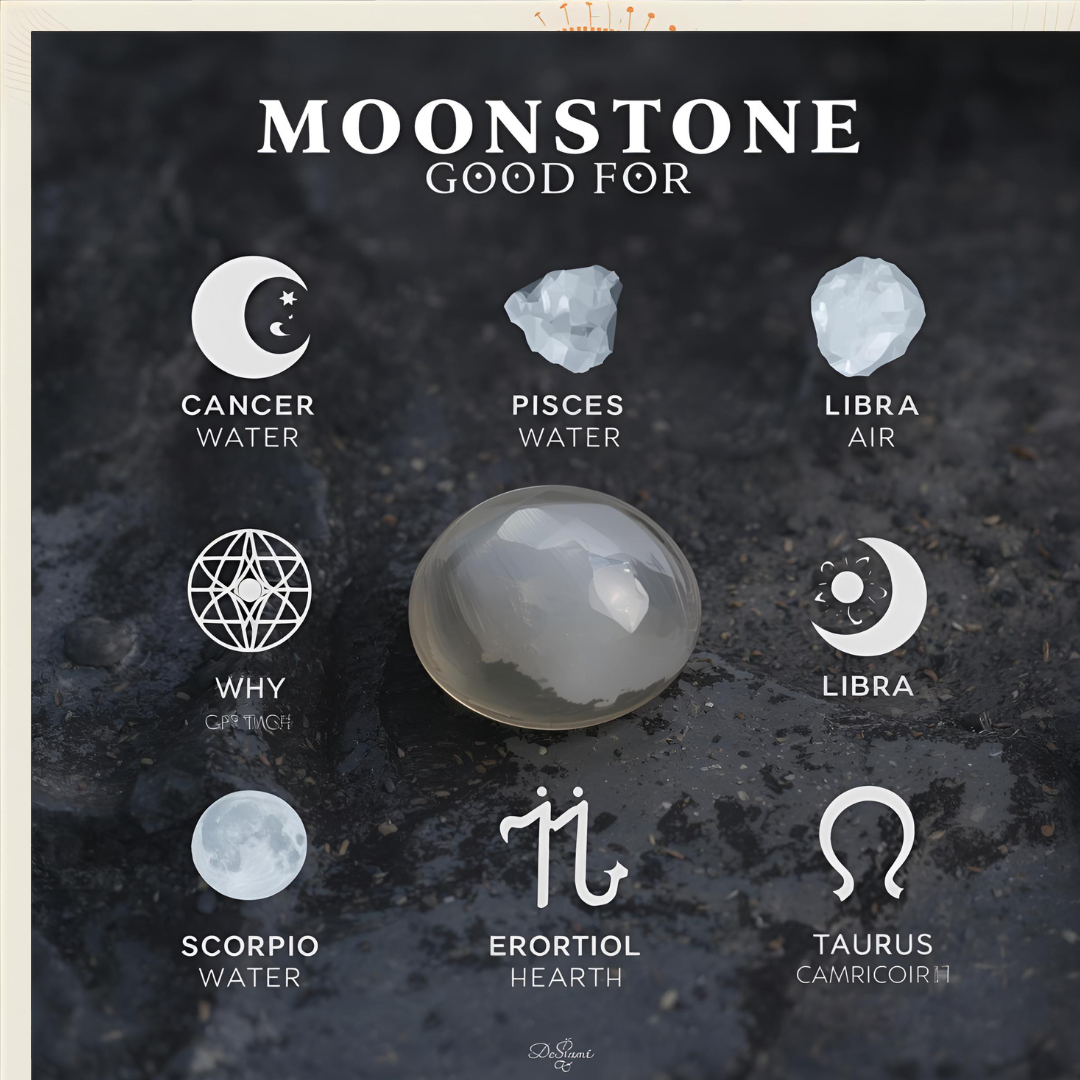
What Zodiac Is Moonstone Good For?
Moonstone's connection to the moon and intuition makes it a powerful talisman for several zodiac signs, but it has a particularly strong affinity for one.
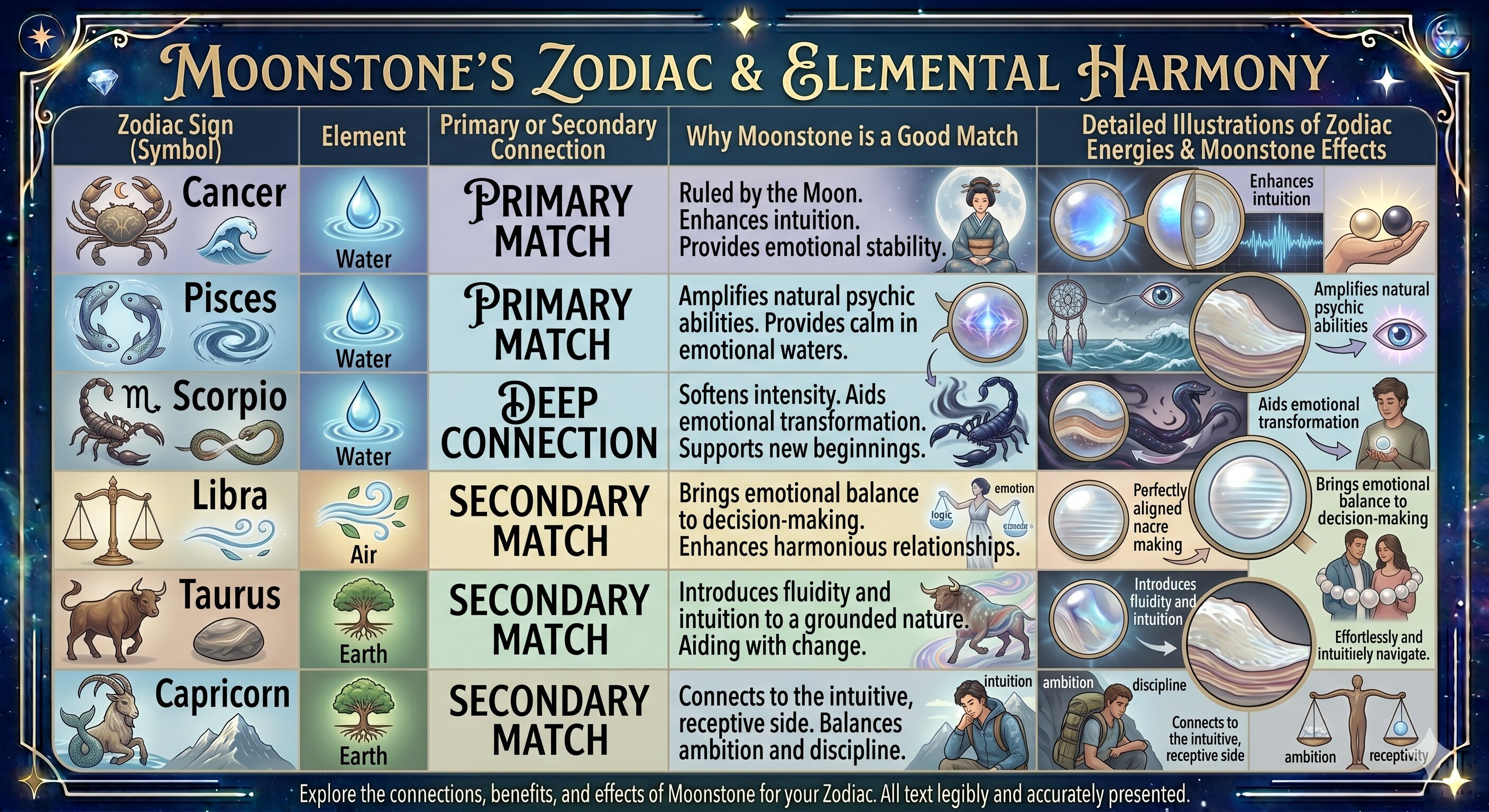
Here’s a breakdown of which zodiac signs moonstone is good for, starting with its primary match:
The Primary Connection: Cancer (June 21 - July 22)
Moonstone is often considered the birthstone for Cancer. This is the most potent and natural astrological pairing.
Why: Cancer is ruled by the Moon. Just as the moon governs the tides, it governs the emotional ebb and flow of a Cancerian. Moonstone directly resonates with this lunar energy.
The Benefit: For the deeply emotional, nurturing, and sometimes sensitive Cancer, moonstone provides emotional balance, stability, and protection. It enhances their natural intuition while soothing their occasional mood swings and shielding them from taking on negative energy from others.
Other Zodiac Signs That Greatly Benefit from Moonstone
1. Pisces (February 19 - March 20)
Why: Pisces is a deeply intuitive, empathetic, and dreamy water sign. They are highly connected to the spiritual and subconscious realms.
The Benefit: Moonstone amplifies Pisces' natural psychic abilities and helps them navigate their intense emotional waters. It can ground their dreams in reality and provide a calming influence when they feel overwhelmed by the energies around them.
2. Scorpio (October 23 - November 21)
Why: Scorpio is a passionate, intense, and transformative water sign. They are constantly delving into the depths of their own and others' psyches.
The Benefit: Moonstone helps soften Scorpio's intense edges and brings emotional clarity to their complex feelings. It can aid in their transformative processes, helping them release old wounds and embrace new beginnings with more grace and less turmoil.
3. Libra (September 23 - October 22)
Why: Libra is ruled by Venus and seeks harmony, balance, and partnership above all else.
The Benefit: Moonstone supports Libra's quest for balance by calming indecisiveness and bringing emotional equilibrium. It enhances their natural charm and helps attract and nurture the harmonious relationships they desire.
4. Taurus (April 20 - May 20)
Why: While Taurus is an earth sign ruled by Venus, they have a strong appreciation for beauty, comfort, and the physical senses.
The Benefit: Moonstone's connection to the divine feminine and new beginnings can help a steadfast Taurus navigate change more easily. It can introduce a needed element of fluidity and intuition to complement their practical and grounded nature.
5. Capricorn (December 22 - January 19)
Why: This might seem like an unlikely match, as Capricorn is a pragmatic earth sign ruled by Saturn. However, this is precisely why it can be beneficial.
The Benefit: Moonstone can help balance Capricorn's ambitious, sometimes rigid, nature by connecting them to their softer, more intuitive side. It can teach them the power of receptivity and going with the flow, providing a helpful counter-energy to their disciplined drive.
Summary Table
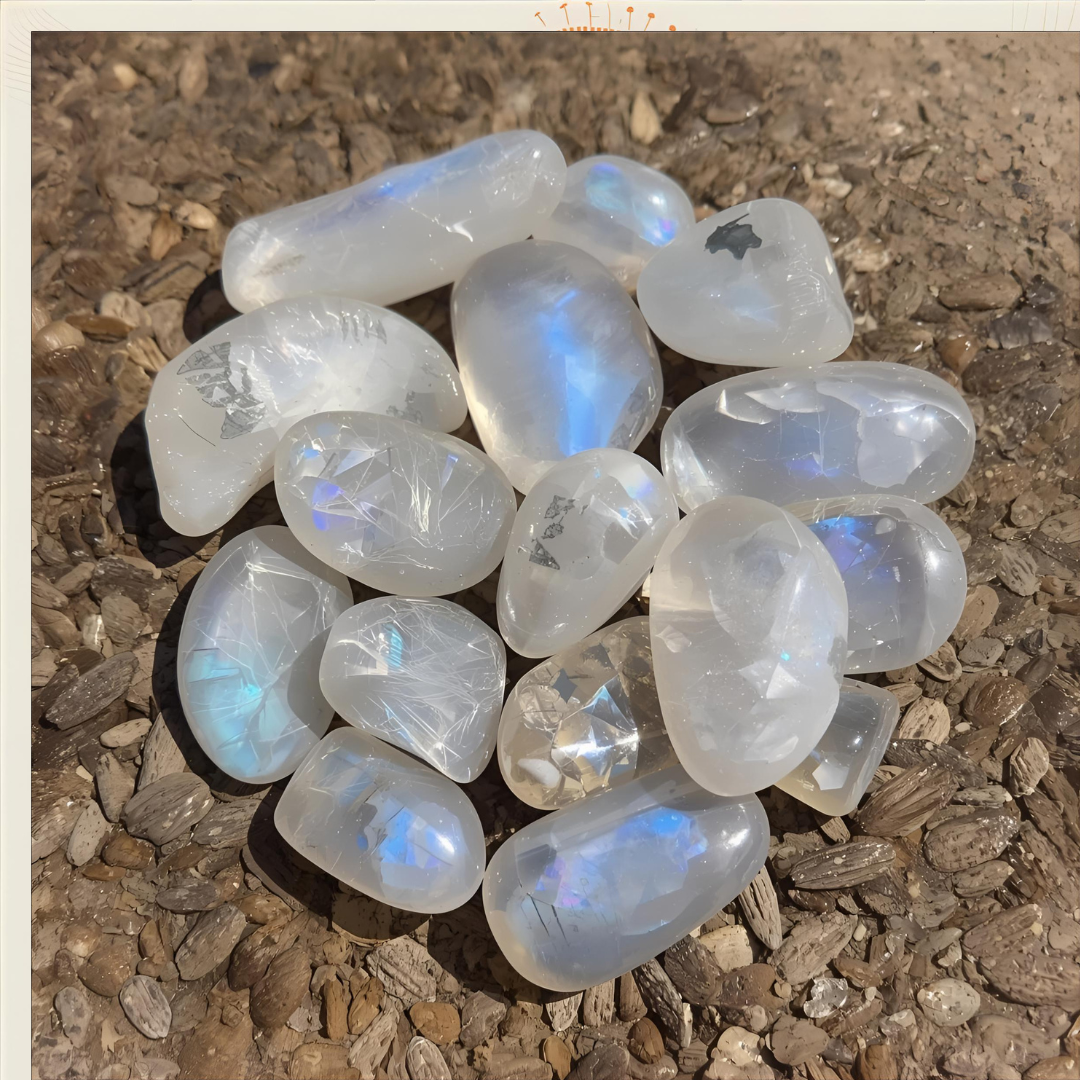
How Much Do Moonstones Cost?
The cost of moonstone can vary dramatically, from just a few dollars to thousands, depending on several key factors. It's not a one-price-fits-all gemstone.
Here’s a detailed breakdown of what influences the price and what you can expect to pay.
Quick Answer: Price Ranges at a Glance
Low-Quality/Raw Tumbled Stones: $2 - $10 per stone
Mid-Quality Cabochons (for jewelry): $10 - $50 per carat
High-Quality Gem Cabochons (e.g., Blue Flash): $50 - $200+ per carat
Moonstone Jewelry: $20 - $1,000+
The Key Factors That Determine Moonstone's Cost
1. The Optical Effect: Adularescence (The Most Important Factor)
This is the glowing, floating light effect that moonstone is famous for. The strength and color of this effect are the biggest price drivers.
Weak or Hazy Glow: Lower value.
Strong, Bright White Glow (Silver Sheen): Good value, quite popular.
Vivid Blue Flash (The "Rainbow" or "Blue Flash" Moonstone): This is the most valuable and sought-after type. The clearer and more dramatic the blue sheen, the higher the price. A stone with a "centered" blue flash that moves beautifully across the surface is top-tier.
2. Body Color (Transparency/Clarity)
Semi-Transparent & Near Colorless: The most desirable. It allows the adolescence to be most visible and vibrant. Inclusions or a milky, opaque body can lower the value, unless it's part of the stone's character (like a cat's eye moonstone).
3. Cut and Shape
Cabochon Cut: Moonstone is almost always cut as a smooth, polished cabochon (not faceted) to best display its adularescence. A well-proportioned, symmetrical cabochon with a high dome commands a higher price.
Faceted Moonstone: Very rare and typically only done with transparent material. It is a specialty item and can be quite expensive.
4. Carat Weight
Like most gems, larger stones are rarer and have a higher price per carat. However, the quality of the adularescence is still more important than size. A small stone with a fantastic blue flash can be worth more than a large, hazy one.
5. Treatment
Untreated: Most high-quality moonstone is untreated. Always ask if the stone is natural and untreated.
Coated/Luster Enhanced: Some lower-quality stones are coated with a bluish film to imitate high-quality adularescence. These are very cheap ($5-$20 for a whole piece of jewelry), but the coating will wear off over time. They should be sold as "treated" or "coated."
Detailed Price Examples
Loose Stones (Per Carat)
Low Grade: Opaque, milky white with a weak sheen. $2 - $15/ct. Common in tourist shops and low-cost jewelry.
Mid Grade: Semi-transparent with a visible white or silvery sheen that moves. $15 - $60/ct. This is a great sweet spot for beautiful, affordable jewelry.
High Grade (Rainbow/Blue Flash): Transparent body with a sharp, rolling blue or multi-colored adularescence. $60 - $150/ct. Prices can go even higher for exceptional specimens from famous locales like Sri Lanka.
Jewelry Prices
Jewelry cost depends on the stone quality, metal, and craftsmanship.
Silver Jewelry with Low-Mid Grade Stones:
Small Pendant or Ring: $20 - $80
Statement Ring or Necklace: $80 - $250
Gold Jewelry (10k-14k) with Mid-High Grade Stones:
Dainty Ring or Pendant: $150 - $500
Custom or Designer Piece with High-Quality Stones: $500 - $1,500+
Raw & Tumbled Stones
Small Tumbled Stones (for crystal healing, pocket stones): $2 - $10 each.
Raw Specimen Pieces (showing crystal structure): $5 - $50 depending on size and quality.
A Note on "Real" vs. "Fake"
Real Moonstone: Is a feldspar mineral that exhibits natural adularescence.
Imitations: Common imitations include "Opalite," which is a man-made glass, and synthetic spinelle. These are uniform, often have a strong oily sheen throughout, and lack the subtle, floating light of real moonstone. They are very inexpensive.
Lab-Created Moonstone: True lab-created moonstone is extremely rare and not commonly found on the market. What is often sold as such is usually an imitation, like Opalite.
Summary & Buying Tip
The single most important thing is the beauty of adolescence.
When buying, don't just look at the price tag. Look at the stone under different lights, tilt it, and watch how the light moves inside it. A high-quality moonstone will captivate you with its dreamy, internal glow.
For the best value, focus on the mid-range market ($20 - $150 for a jewelry piece), where you can find beautiful stones with a strong and appealing sheen without paying a premium for the absolute top-tier blue flash.
Moonstone Types Comparison: Quality & Value
| Type | Body Color | Adularescence | Price Range (per carat) |
|---|---|---|---|
| Blue Flash | Transparent to semi-transparent | Vivid, rolling electric blue | $50 - $200+ |
| Rainbow | Gray to dark gray | Multi-colored (blue, purple, gold, green) | $20 - $100 |
| Peach | Peach, salmon, orange-pink | Soft silver or blue | $15 - $80 |
| White/Silver | Milky white to colorless | Soft, floating silvery-white | $10 - $60 |
| Gray/Green | Smoky gray or pale green | Silver or blue sheen | $10 - $40 |
For current gemstone market prices, visit the American Gem Society's price guide.
Does Moonstone Attract Money?
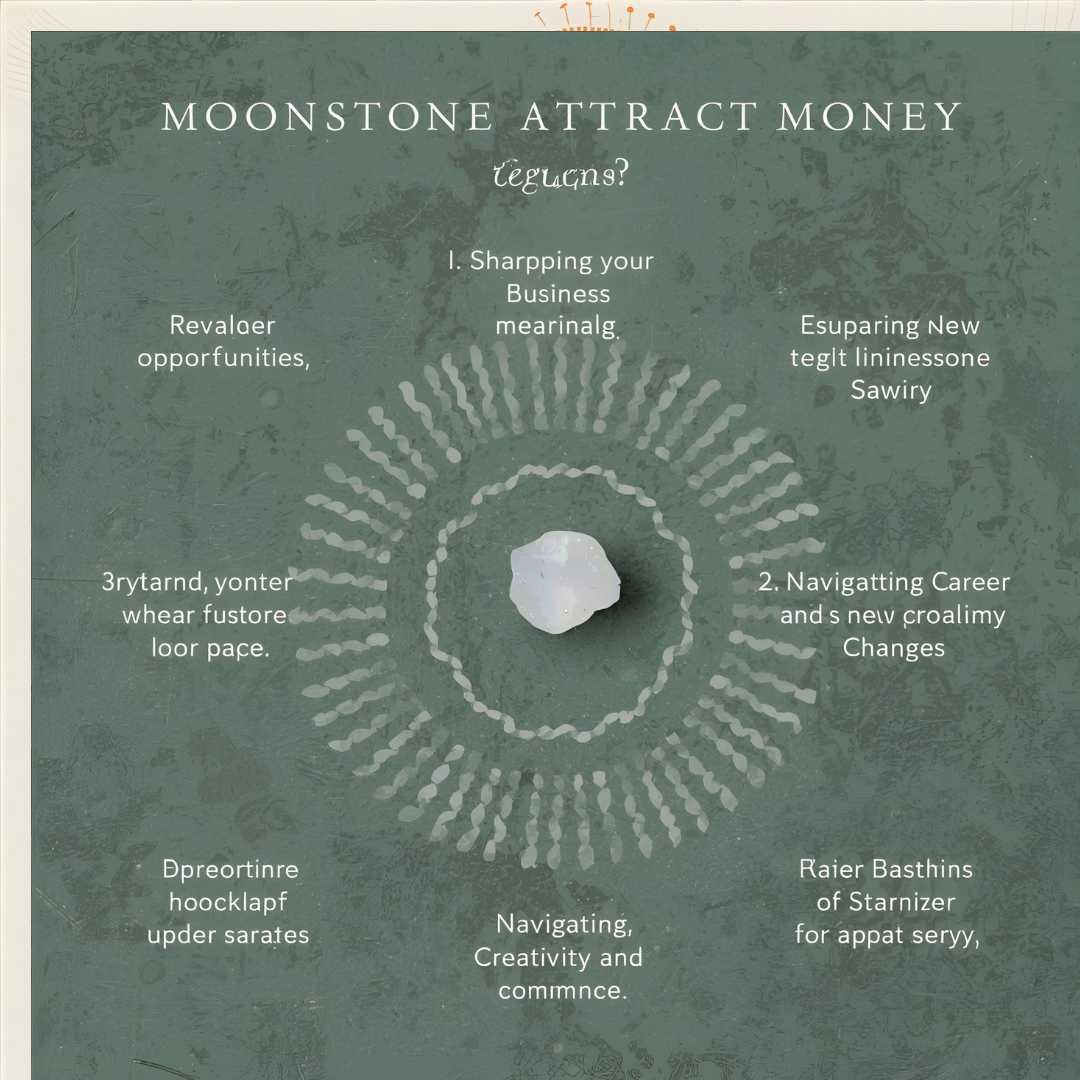
The answer is nuanced: moonstone is not traditionally known as a primary "money stone" in the same way as citrine or pyrite, but it can indirectly attract prosperity and financial opportunities by influencing the energies and behaviors that lead to abundance.
Here’s a breakdown of how moonstone is believed to work in relation to wealth and money:
The Indirect Path to Prosperity
Moonstone's power lies in its connection to intuition, new beginnings, and the divine feminine—all of which are crucial for creating wealth in a modern, intuitive way.
1. Enhancing Intuition for Better Decisions
Money often follows good ideas and smart decisions. Moonstone is revered for:
Sharpening Your Gut Feel: It helps you trust your instincts when making financial choices, whether it's about an investment, a career move, or a new business idea.
Revealing Opportunities: By opening your third eye, you can help yourself "see" opportunities that you might have otherwise missed.
2. Supporting New Beginnings and Growth
Financial abundance often requires starting something new. As the "Stone of New Beginnings," moonstone is ideal for:
Starting a New Business or Project: It provides supportive energy for launching ventures, especially those aligned with your passion and intuition (creative fields, healing arts, etc.).
Navigating Career Changes: If you are seeking a new job or a career pivot, Moonstonee can help you flow through the transition with grace and attract the right position.
3. Unlocking Creativity and Innovation
In today's economy, innovative ideas are a form of currency. Moonstone:
Stimulates Creative Thinking: It can help break mental blocks and inspire new, inventive solutions to problems, which can lead to new streams of income.
Supports Passion Projects: Connecting you to your inner self helps you turn a creative passion into a profitable endeavor.
4. Promoting Emotional Balance and Receptivity
A stressed, anxious, or rigid mindset can block abundance. Moonstone helps by:
Calming Financial Anxiety: Its soothing energy can help reduce worry about money, allowing you to think more clearly and openly about solutions.
Teaching Receptivity: The divine feminine energy of moonstone is about receiving, not just striving. It helps you become open and ready to receive gifts, opportunities, and support from the universe.
How to Use Moonstone Specifically for Abundance
If you want to harness moonstone's energy for financial growth, here are some focused practices:
Create an Abundance Grid: Place a moonstone alongside more traditional "money stones" like citrine (for manifestation) and pyrite (for wealth attraction). Let the moonstone's role be to provide the intuitive guidance and calm clarity for your financial goals.
Meditate with a Specific Question: Hold a moonstone while meditating. Instead of a general desire for "more money," ask specific, intuitive-led questions like, "What is my next most aligned step to increase my income?" or "Please reveal the block within me that is limiting my financial flow."
Keep it in Your Workspace: Place a moonstone on your desk to encourage creative problem-solving and intuitive decision-making throughout your workday.
Carry a Moonstone with Your Wallet: This symbolically connects its energy of new beginnings and intuition to your financial resources.
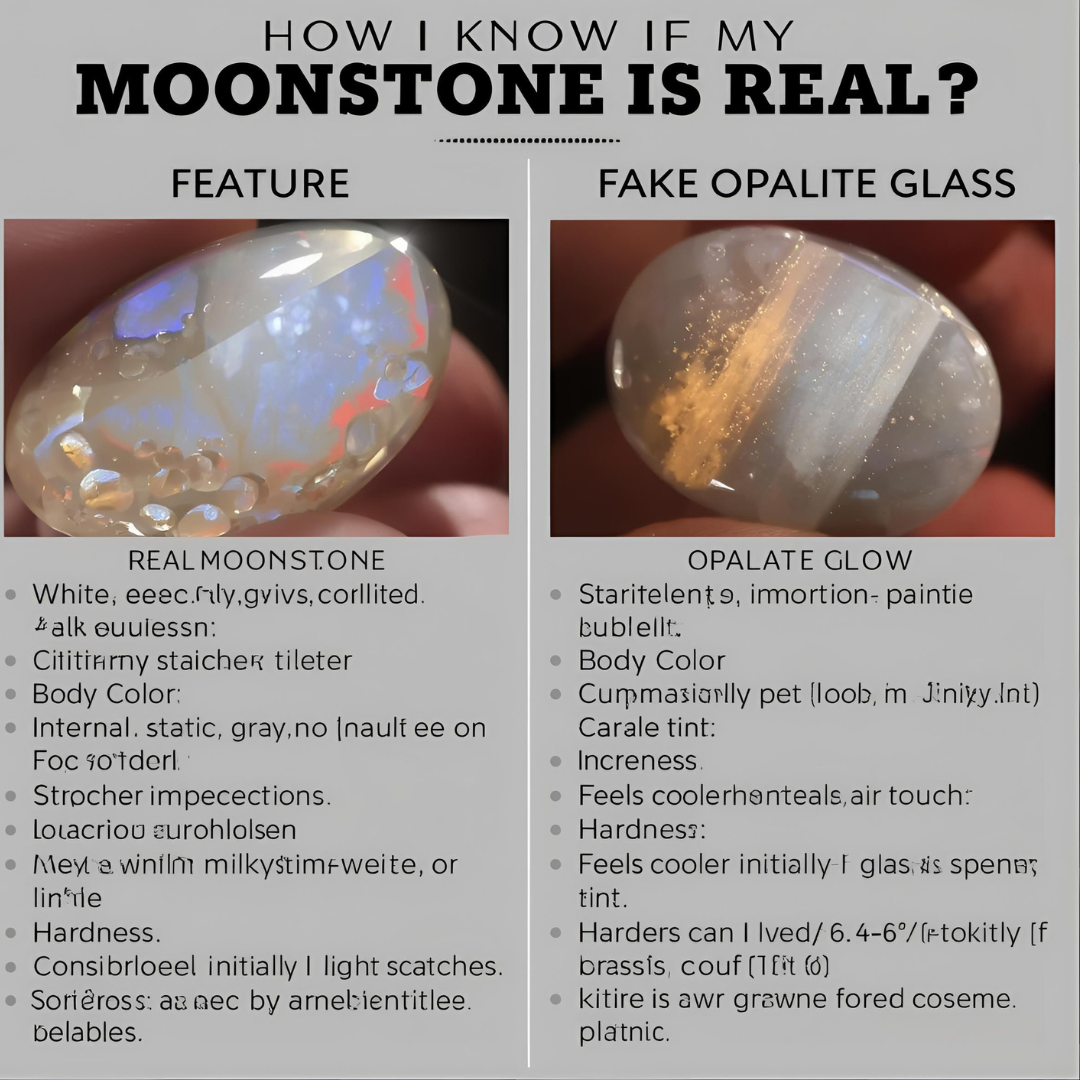
How To Tell Moonstone Is Real?
With the growing popularity of moonstone, imitations are common. Fortunately, there are several reliable methods, from simple visual checks you can do at home to more technical tests, to determine if your moonstone is real.
Here is a comprehensive guide, starting with the most telling sign.
The Golden Rule: Look for Adularescence
This is the single most important identifier. Adularescence is the soft, billowy glow that seems to float just below the surface of the stone. It moves as you tilt the stone back and forth.
Real Moonstone: The glow is internal, dreamy, and has depth. It appears to roll across the stone. The most prized color is a blue flash, but it can also be white or silver.
Fake Moonstone (like Opalite Glass): The "shine" is superficial, often looks oily or metallic, and sits on the surface. It might show a uniform blue sheen from every angle, lacking the subtle movement.
Step-by-Step Tests You Can Do at Home
1. The Visual Inspection: Tilt and Observe
This is your first and most effective test.
What to Do: Hold the stone under a good light source (a lamp or direct sunlight is perfect). Slowly tilt it back and forth and from side to side.
What to Look For:
REAL: A floating, moving light effect (adularescence). The body of the stone might be semi-transparent to milky.
FAKE (Opalite): A constant, unchanging blue or milky sheen. Opalite often has a very uniform, almost plastic-like appearance and can be translucent with a faint purple or orange tint when held to the light.
2. The "Body Color" Test
Real Moonstone: The body color is typically white, peach, gray, or colorless. Even a high-quality blue flash moonstone will have a relatively neutral body color that allows the blue to shine through.
Fake Moonstone: Be wary of stones that are a strong, solid blue, green, or pink throughout. While natural moonstone can have a body color, vibrant, uniform colors are a red flag for dyed stone or a complete fake.
3. The Texture and Temperature Test
What to Do: Feel the surface of the stone. You can also place it against your cheek or lips for a moment to sense its temperature.
What to Look For:
REAL: Should feel cool to the touch and stay cool for a while. It has a smooth, polished, but slightly "waxy" or vitreous (glass-like) feel.
FAKE (Glass/Plastic): Glass will also feel cool initially, but may warm up faster. Plastic will feel warm or room temperature immediately. The surface might feel too perfectly smooth or even "slippery."
4. The Scratch Test (Use with Caution)
This is a riskier test, so only perform it on an inconspicuous area if you're comfortable.
The Science: Moonstone has a hardness of 6-6.5 on the Mohs scale. A steel knife blade or a piece of common glass (hardness ~5.5) should not be able to scratch it.
What to Do: Gently try to scratch an unseen part of the stone (like the back or side) with a knife or a piece of glass.
What to Look For:
REAL: No scratch will be left behind.
FAKE (Glass/Plastic): A scratch will easily appear.
5. The Bubble Inspection
What to Do: Examine the stone closely with a jeweler's loupe or even the zoom on your phone camera.
What to Look For:
REAL: Natural inclusions, slight imperfections, or a "schiller" effect (a sheen caused by internal layers). It should have no bubbles.
FAKE (Glass): Tiny, round air bubbles trapped inside are a dead giveaway for glass.
Common Fakes and How to Spot Them
Opalite: This is the most common fake. It's a man-made glass.
How to Tell: It lacks true adularescence. Its glow is static and often has a bluish-purple or orange cast. It's often sold as "Sea Quartz" or "Opalite Moonstone"—but true moonstone is never man-made.
Plastic or Resin:
How to Tell: It feels warm and light. You might even be able to scratch it with your fingernail. The "glow" will look painted on or very artificial.
Dyed Howlite or Magnesite:
How to Tell: These stones are porous and have a characteristic web-like or grayish matrix. The dye often collects in the cracks, making it obvious.
Quick Summary Checklist: Real vs. Fake
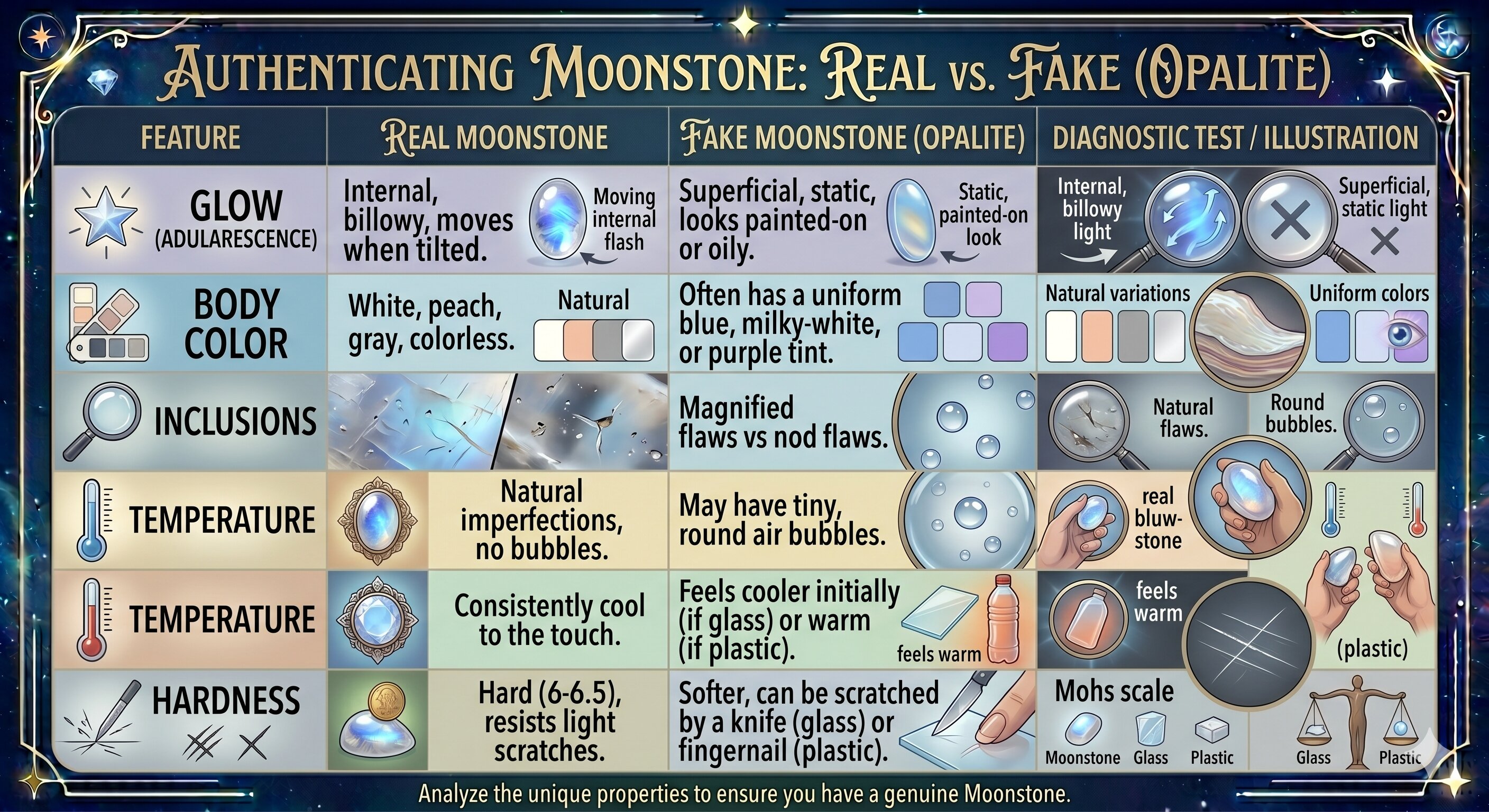
Final Pro Tip: When in doubt, buy from a reputable jeweler or crystal dealer who can guarantee the authenticity of their stones. If a deal on a high-quality "blue flash" moonstone seems too good to be true, it probably is.
What Is The Most Expensive Moonstone Color?
This is a fantastic question that gets to the heart of what makes moonstone so special and valuable.
The most expensive and sought-after moonstone color is, without a doubt, a transparent or semi-transparent body with a vivid, rolling blue adularescence, often referred to as "Blue Flash" Moonstone.
Here’s a detailed breakdown of why this color commands the highest price and how it compares to others:
The Champion: Blue Flash Moonstone
What It Is: This isn't a solid blue stone. Instead, the body of the stone is very clear (like glass) or has a slight whitish haze. The magic is in the intense, electric blue sheen that appears to flash and roll across the surface as you move it.
Why It's So Expensive:
Rarity: This specific, strong blue schiller is the rarest form of adularescence.
Clarity: The transparent body allows the blue flash to be most visible and dramatic, without being obscured by a milky opacity.
The "Centered" Flash: The most valuable specimens have the blue flash appear directly in the center of the cabochon and move smoothly across the entire stone. An off-center or weak flash lowers the value.
Source: The finest blue flash moonstones traditionally come from Sri Lanka, which adds to their prestige and cost.
Price Point: High-quality blue flash moonstone can easily range from $50 to over $200 per carat for a loose, well-cut cabochon. Exceptional pieces can be even more.
Other Moonstone Colors and Their Value
To understand why blue is king, it helps to see the hierarchy:
1. Rainbow Moonstone
What It Is: Technically, this is a variety of labradorite, but it's sold as "rainbow moonstone" in the gem trade. It displays a stunning multi-colored sheen (blues, purples, golds, greens) against a dark or grayish body.
Value: This is the second most valuable type. Its popularity and beautiful play of colors make it highly desirable. It's generally more affordable than the finest blue flash moonstone, but can still command high prices for strong, vibrant color.
2. Peach Moonstone
What It Is: A beautiful variety with a soft peach or orange-pink body color and a silvery or bluish sheen.
Value: Prized for its warm, feminine energy and aesthetic. Its value is determined by the strength of its sheen and the richness of its body color. It sits in the mid-to-high price range.
3. White/Silver Moonstone (The "Classic")
What It Is: The traditional moonstone—a milky white or colorless body with a soft, silvery-white adularescence.
Value: This is the most common and widely available type. Its value can vary dramatically. A hazy, weak sheen is very affordable, while a stone with a brilliant, bright silver sheen that moves beautifully can be quite valuable, placing it in the mid-range.
4. Gray and Green Moonstone
What It Is: Less common body colors that still exhibit adularescence.
Value: These are generally less common than white but not as sought-after as blue or peach. They typically fall into the low-to-mid price range, unless they have an exceptionally strong sheen.
Summary: The Price Hierarchy
From most to least expensive, the general rule is:
Vivid Blue Flash > Rainbow > Strong Peach > High-Quality White/Silver > Standard White > Gray/Green
Key Takeaway
The value isn't just about the body color (e.g., white, peach, gray). It's almost entirely about the color, strength, and quality of the adularescence.
When you're looking at a moonstone, don't just ask, "What color is it?" Instead, ask:
"How strong is the flash?"
"What color is the flash?" (Blue is premium)
"How does the flash move?" (A rolling, centered flash is ideal)
"How clear is the body?" (Transparency allows the flash to be most dramatic)
A stone with a transparent body and a brilliant, rolling blue flash is the undisputed champion and the most expensive moonstone you can buy.
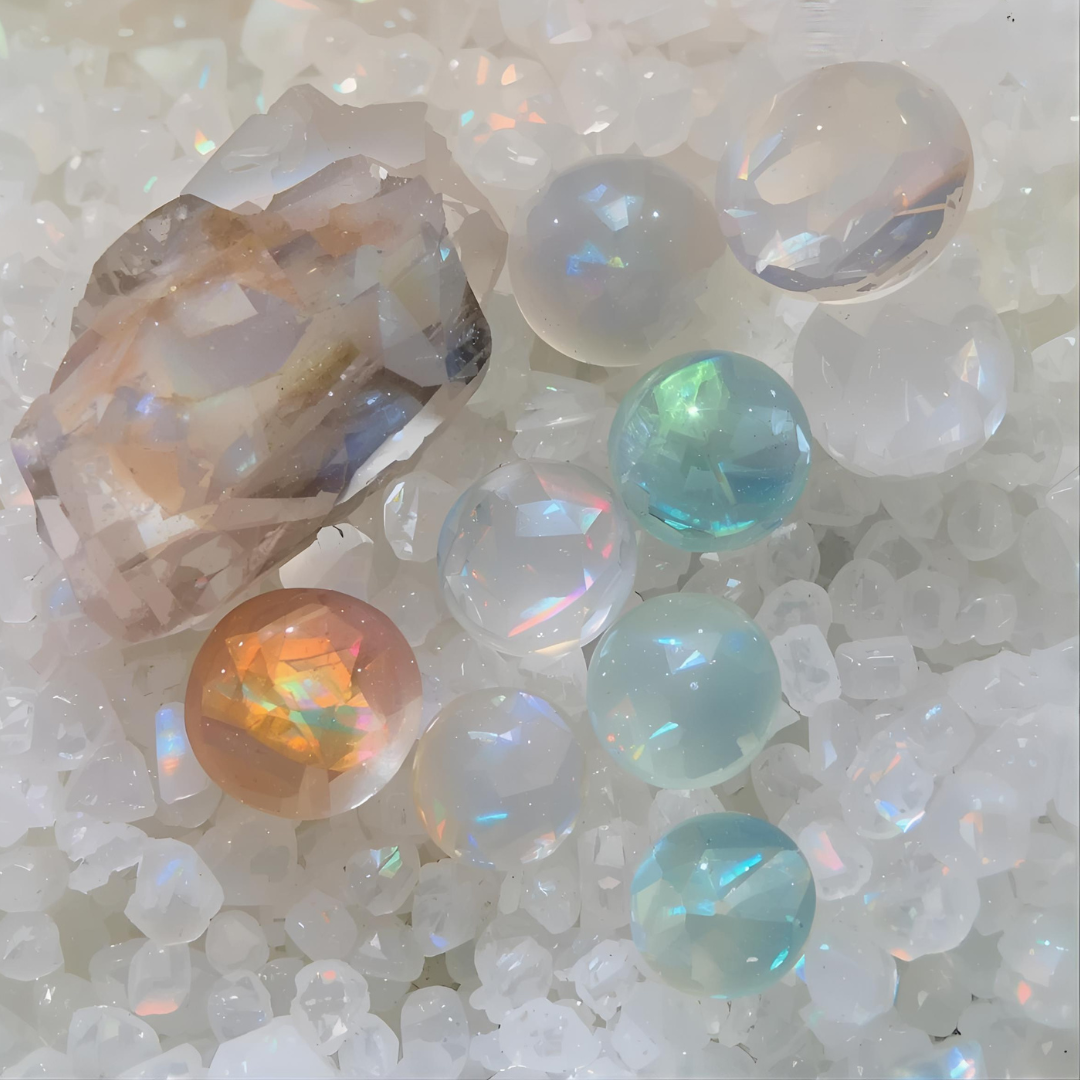
What Are The Different Colors of Moonstone Jewelry?
Moonstone jewelry comes in a beautiful spectrum of colors, each with its own unique charm and character. The color is determined by the stone's body color and, most importantly, the color of its adularescence—the magical, floating light effect.
Here is a guide to the different colors of moonstone jewelry you're likely to find, from the most common to the rarest.
1. The Classic: White & Silver Moonstone
Appearance: This is the most traditional moonstone. It has a milky white, cream, or transparent body with a soft, silvery-white glow.
Jewelry Vibe: Ethereal, timeless, and versatile. It looks stunning, set in both sterling silver and white gold, enhancing its mystical, moon-like quality.
Best For: Everyday wear and pieces that aim for a classic, elegant look.
2. The Prized Treasure: Blue Flash Moonstone
Appearance: The body is typically semi-transparent to transparent, allowing for a vivid, electric blue sheen that "flashes" across the surface as you move it. This is the most valuable color.
Jewelry Vibe: Luxurious, eye-catching, and magical. Often set in high-quality sterling silver, yellow gold, or platinum to complement its intensity.
Best For: Statement rings and pendants where the dynamic play of light can be fully appreciated.
3. The Colorful Cousin: Rainbow Moonstone
Appearance: Technically a variety of labradorite, but universally sold as rainbow moonstone. It features a dark or gray body with a stunning, multi-colored adularescence that can show blues, purples, golds, and greens.
Jewelry Vibe: Bohemian, mystical, and energetic. Its multiple colors make it incredibly versatile to wear with different outfits.
Best For: All types of jewelry, especially statement necklaces and earrings that catch the light from every angle.
4. The Warm Embrace: Peach Moonstone
Appearance: As the name suggests, it has a warm peach, salmon, or orange-pink body. The adularescence is usually a soft silver or blue, creating a beautiful contrast against the warm base color.
Jewelry Vibe: Nurturing, romantic, and feminine. It looks exquisite set in rose gold or yellow gold, which enhances its warm tones.
Best For: Personal, meaningful jewelry like pendants and rings; often associated with emotional healing and compassion.
5. The Earthy Tone: Gray Moonstone
Appearance: Features a smoky gray, almost charcoal body, often with a blue or silver sheen. It's less common than white moonstone but has a sophisticated, modern look.
Jewelry Vibe: Grounded, elegant, and a little mysterious. It provides a neutral yet intriguing alternative to the classic white.
Best For: Modern, minimalist jewelry designs and for those who prefer subtle, neutral colors.
6. The Rare Beauty: Green Moonstone
Appearance: A very rare find, it has a subtle greenish body, sometimes with a hint of blue or silver adularescence. It's often a very pale, celadon green.
Jewelry Vibe: Unique, calming, and connected to nature. It's a conversation starter.
Best For: Collectors and those seeking a truly unique piece of jewelry.
7. The Special Effect: Cat's Eye Moonstone
Appearance: This is a specific optical effect called chatoyancy, which creates a sharp, narrow band of light that moves like a slit eye across the surface. It can occur in white, gray, or peach moonstone.
Jewelry Vibe: Striking, rare, and highly prized by collectors. The effect is mesmerizing and best displayed in cabochon rings.
Best For: A unique ring or pendant that showcases this rare phenomenon.
How to Choose and Style Moonstone Jewelry Colors?
For a Classic Look: You can't go wrong with White/Silver Moonstone. It's incredibly versatile.
For a Pop of Color & Value: Rainbow Moonstone offers the most visual variety and is more affordable than top-tier blue flash.
For Warmth & Romance: Peach Moonstone is the perfect choice, especially in rose gold settings.
For the Ultimate Luxury: Seek out a high-quality Blue Flash Moonstone set in a simple setting that lets the stone be the star.
No matter which color you choose, the magic of moonstone jewelry lies in its movement. Always look at the piece under different lights, tilt it, and watch the glow dance across the surface. That's where its true beauty and value lie.
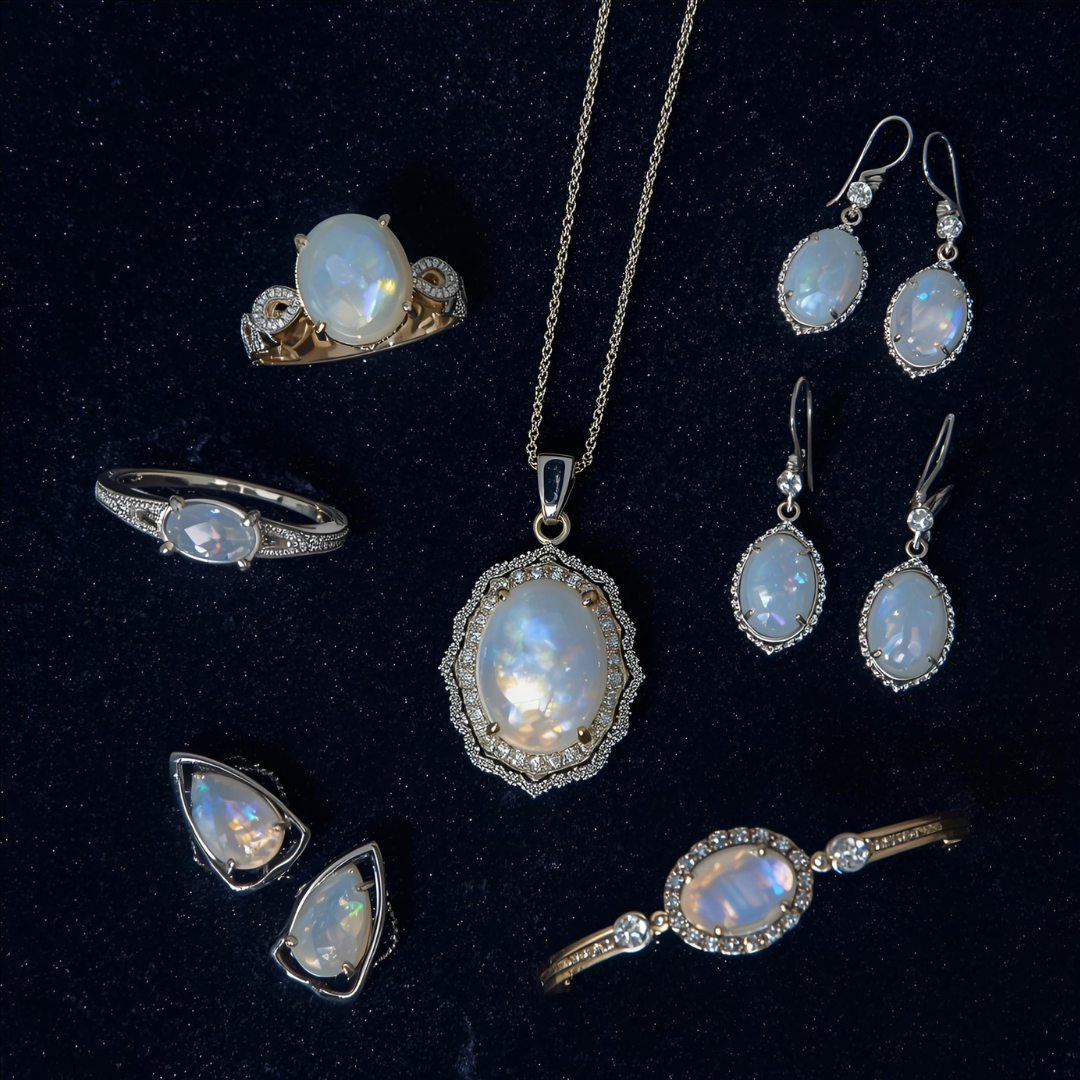
What Are The Different Types Of Moonstone Jewelry?
Moonstone's ethereal glow makes it a favorite for jewelers, and it's crafted into a wide variety of jewelry pieces. Each type offers a unique way to wear and benefit from this mystical gem.
Here’s a guide to the different types of moonstone jewelry you can find, from the most popular to the most unique.
1. Moonstone Rings
Rings are one of the most popular ways to wear moonstone, as they constantly catch the light with hand movements.
Statement Rings: Feature a single, large cabochon moonstone (often a blue flash or rainbow moonstone) in a simple bezel or prong setting to let the stone be the star.
Dainty Stacking Rings: Have tiny moonstones set in delicate bands, perfect for mixing and matching with other rings.
Vintage & Bohemian Styles: Often feature intricate silver wirework, floral patterns, or r accented with smaller gems like garnets or sapphires.
Engagement Rings: A non-traditional but deeply meaningful choice, symbolizing new beginnings and an intuitive connection.
Why Wear a Ring? To keep the stone's intuitive and calming energy in your hands, which are used for creating and interacting with the world.
2. Moonstone Necklaces & Pendants
Wearing moonstone near the heart or throat is powerful for emotional and intuitive work.
Simple Solitaire Pendants: A single moonstone in a pendant is timeless and versatile, perfect for everyday wear.
Layered Necklaces: A small moonstone pendant works beautifully in a layered look with other delicate chains.
Statement Lockets & Talismans: Often feature moonstones in mystical or nature-inspired designs (crescent moons, goddesses, etc.).
Chokers & Multi-Strand Necklaces: Create a bold, bohemian look with multiple stones or strands.
Why Wear a Necklace? To keep the stone's energy close to your Heart Chakra (for emotional healing) and Throat Chakra (for authentic communication).
3. Moonstone Earrings
Earrings frame the face and bring the stone's energy to the head, aiding intuition and mental clarity.
Studs: Perfect for a subtle touch of magic. Available as simple cabochons or in more elaborate settings.
Dangling & Drop Earrings: These catch the light beautifully with movement, showcasing the stone's adularescence. They can range from short and elegant to long and dramatic.
Hoop Earrings with Moonstone Accents: Feature smaller moonstones set into a portion of a hoop for a modern twist.
Threader Earrings: A contemporary style where a chain "threads" through the ear, often with a moonstone at the end.
Why Wear Earrings? To help balance the mind and enhance intuition, as they are worn close to the Third Eye Chakra.
4. Moonstone Bracelets
Bracelets allow you to see the stone's glow throughout the day as you move your wrists.
Solitaire Bracelets: Feature a single, prominent moonstone as the centerpiece on a simple chain or bangle.
Beaded Stretch Bracelets: Made with round or chip moonstone beads, often mixed with other complementary crystals like amethyst or clear quartz.
Charm Bracelets: Moonstone charms can be added to a bracelet to carry their energy alongside other meaningful symbols.
Cuff Bracelets: A solid silver or gold cuff with one or several moonstones set into it makes a bold bohemian statement.
Why Wear a Bracelet? To carry the stone's calming energy with you throughout the day, constantly reminding you of its gentle influence.
5. Moonstone Anklets
A more subtle and playful way to wear the stone.
Simple Beaded Anklets: Often feature small moonstone beads on a stretchy string or delicate chain.
Single Charm Anklets: A tiny moonstone charm on a fine chain.
Why Wear an Anklet? In metaphysical traditions, wearing a stone on the ankle is believed to help "ground" its energy and connect it to the Earth's rhythms, which pairs beautifully with moonstone's cyclical nature.
6. Moonstone Hair Accessories & Body Jewelry
For those looking for something truly unique.
Hair Pins & Barrettes: A moonstone set into a decorative hairpin adds a touch of ethereal beauty.
Body Chains: Some intricate body jewelry incorporates moonstones, often placing them on the forehead (Third Eye) or sternum.
Statement Pieces: Moonstone Crowns or Tiaras are used for special events, weddings, or photo shoots to create a goddess-like aesthetic.
Choosing the Right Type for You
For Daily Wear: Stud earrings, a simple pendant, or a delicate ring are durable and versatile.
For Maximum Impact: A statement ring or a dangling necklace best showcases the stone's moving light.
For Spiritual Work: A pendant (for heart energy), earrings (for intuition), or a beaded bracelet (for constant energy flow) are excellent choices.
No matter which type you choose, the key is to observe the moonstone in motion. Tilt the ring, sway the earrings, and turn the pendant in the light to fully appreciate the magical adularescence that makes this gem so captivating.
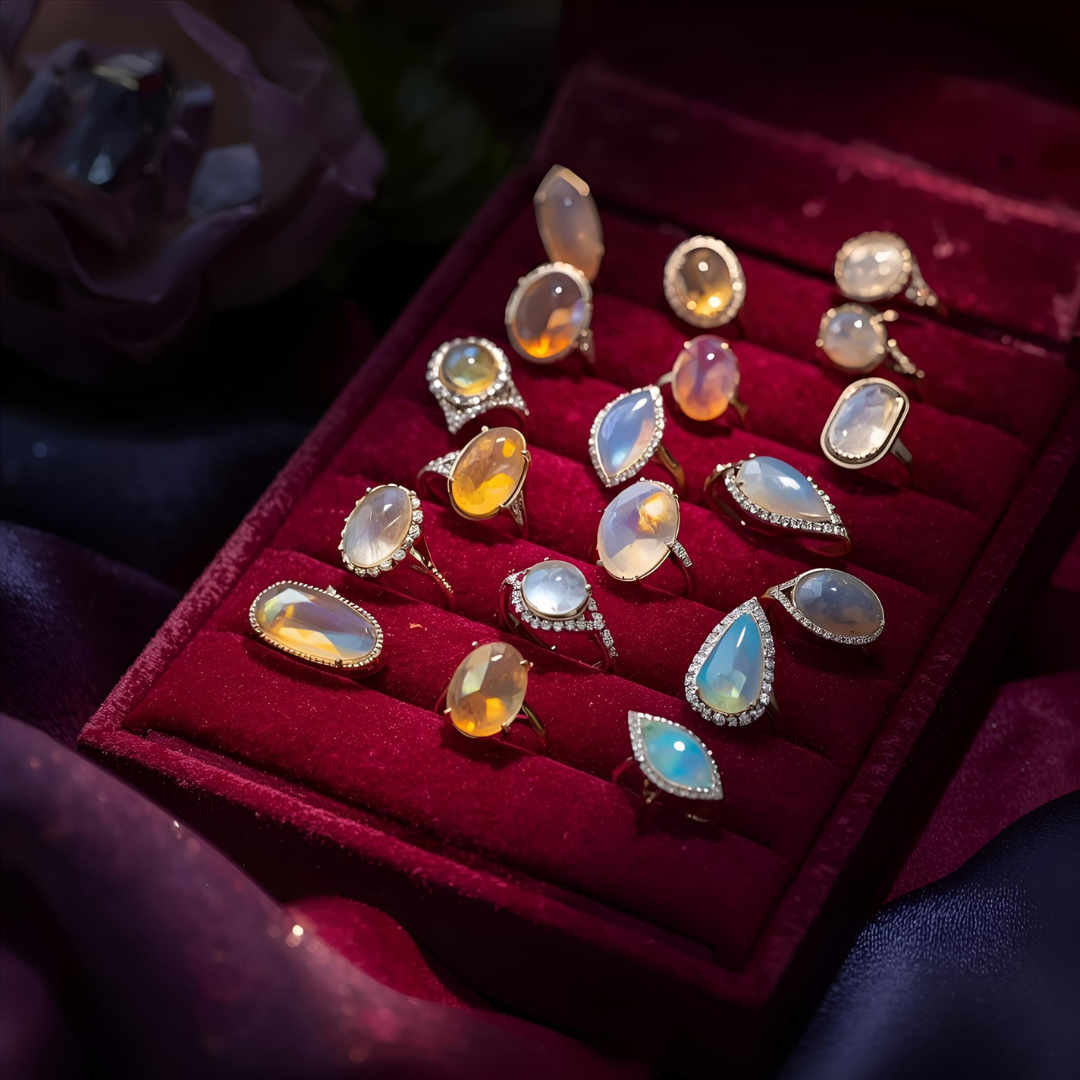
Is Moonstone Jewelry Expensive?
The answer is a classic "it depends," but in general, moonstone jewelry is accessible and often affordable, though it can also reach high-end luxury prices.
You can find a beautiful, genuine moonstone piece for as little as $20, or you could spend over $1,500 on a high-end designer piece. The price is determined by the same factors we've discussed for loose stones, now applied to the finished jewelry.
Here’s a clear breakdown to set your expectations:
Price Tiers for Moonstone Jewelry
1. Affordable & Everyday ($20 - $100)
What you get: This is the most common price range. You'll find:
Silver jewelry with smaller or lower-grade white moonstones.
Beaded stretch bracelets made with moonstone chips.
Simple pendants and stud earrings.
The Stone Quality: The moonstones will likely have a softer, more hazy white or silver sheen rather than a vivid blue flash. They might be more opaque.
2. Mid-Range & Quality ($100 - $400)
What you get: This is the "sweet spot" for quality and beauty. You'll find:
Substantial sterling silver rings and pendants with good-sized, better-quality stones.
Jewelry featuring "Rainbow Moonstone" or stones with a clear, bright white sheen.
Pieces with a noticeable blue flash that isn't the top-tier intensity.
Simple gold vermeil or 10k-14k gold settings with mid-grade moonstones.
The Stone Quality: The adularescence is strong and visible. The stones are better cut and more translucent.
3. High-End & Luxury ($400 - $1,500+)
What you get: At this level, you are paying for exceptional stones and craftsmanship.
Stunning, high-quality "Blue Flash" moonstones set in gold (14k, 18k) or platinum.
Designer or artisan-made pieces with unique, intricate settings.
Large statement rings or pendants that feature a top-grade, transparent stone with a rolling blue sheen.
The Stone Quality: The moonstones are exceptional—often transparent with a vivid, centered blue adularescence that moves beautifully across the entire surface.
What Drives the Price of the Jewelry?
The Moonstone Itself (Biggest Factor):
Color & Sheen: A strong Blue Flash is the most expensive, followed by Rainbow and then high-quality White/Silver.
Clarity & Cut: A transparent, well-proportioned cabochon with no visible flaws commands a higher price.
Size: Larger stones of high quality are rarer.
The Metal Setting:
Sterling Silver: The most common and affordable setting, making beautiful jewelry accessible.
Gold (Vermeil, 10k, 14k, 18k): Significantly increases the price. A simple gold setting can double or triple the cost of a similar silver piece.
Platinum: Used only for the most luxurious, high-end moonstone jewelry.
Craftsmanship & Brand:
A mass-produced piece will be less expensive than a handcrafted one from a known artisan or designer brand.
Real vs. Fake: A Critical Price Check
Be wary of prices that seem too good to be true. A "moonstone" ring selling for $10 is almost certainly fake (usually opalite glass or plastic).
Real Moonstone: Has a floating, internal glow (adularescence) that moves.
Fake Moonstone (Opalite): Has a superficial, oily sheen that looks the same from every angle and often has a bluish-purple tint.
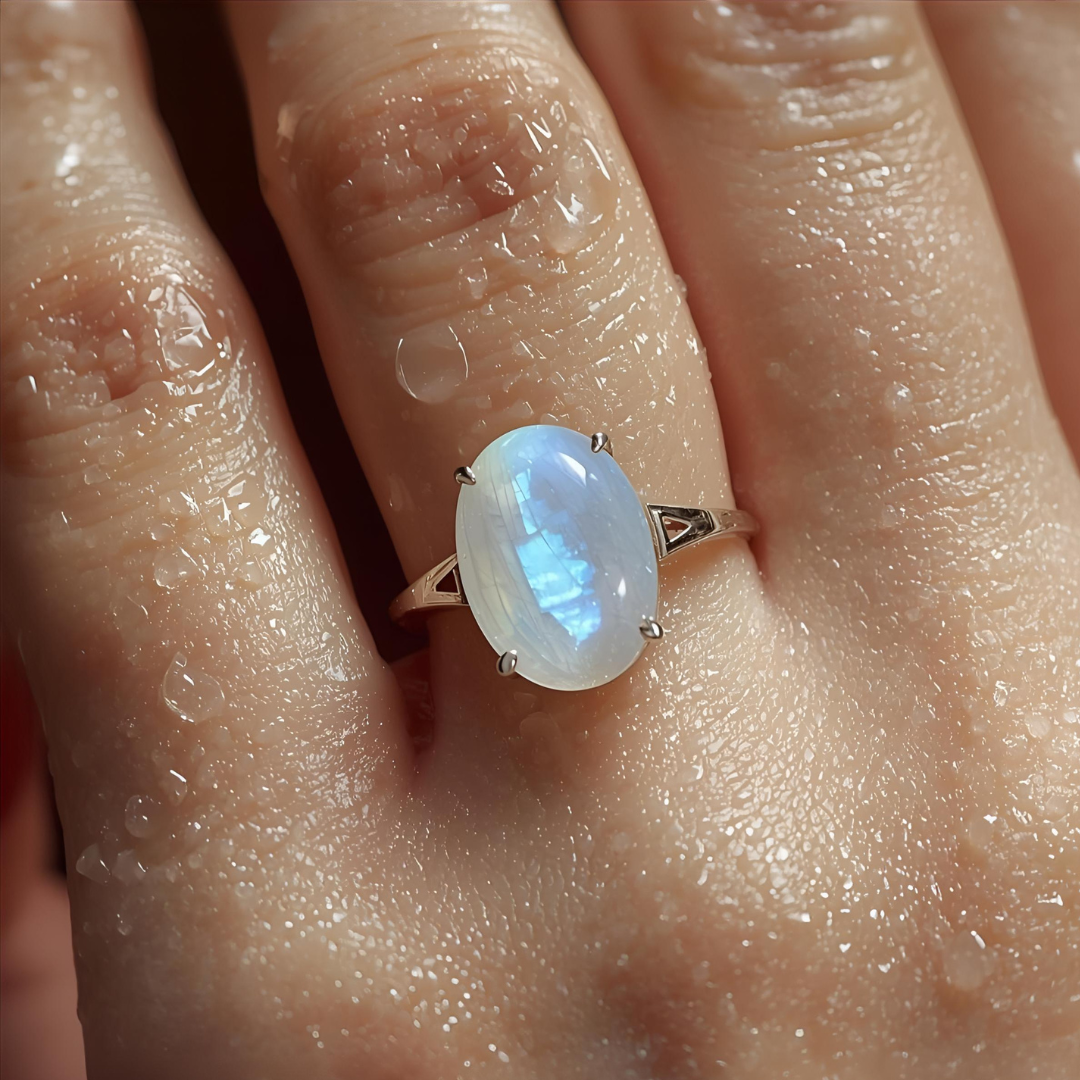
Can Moonstone Birthstone Get Wet?
Yes, moonstone can get wet, but it's best to avoid it whenever possible.
Brief exposure to water (like washing your hands or getting caught in the rain) won't immediately damage it. However, prolonged or repeated exposure to water can be harmful over time.
Here’s a detailed breakdown of why and how to protect your moonstone.
The Risks of Getting Moonstone Wet
Water Can Dull Its Brilliance: The biggest risk isn't to the stone's structure, but to its finish and polish. Over time, repeated exposure to tap water (which can contain minerals) and harsh chemicals can slowly erode the high polish on the cabochon, making its famous adularescent glow appear less bright and vibrant.
Potential for Damage to the Setting: This is an often-overlooked risk. If your moonstone is set in sterling silver, getting it wet frequently can tarnish the metal around the stone, which is difficult to clean without affecting the moonstone itself. Water can also loosen glue or weaken prongs over time.
Theoretical Risk of Internal Damage: Moonstone has a Mohs hardness of 6 to 6.5, making it moderately durable but susceptible to scratching. While water itself won't harm the interior, if the stone has any tiny, pre-existing internal fractures (inclusions), prolonged soaking could allow water to seep in. This water could then trap residues from soaps or chemicals, making the inclusions more visible.
When You Should DEFINITELY Remove Moonstone Jewelry
To keep your moonstone safe and beautiful, always take it off before the following activities:
Swimming: Chlorine in pools and salt in the ocean are highly corrosive and can severely damage both the stone's polish and the metal setting.
Showering or Bathing: Shampoos, conditioners, and soaps will leave a filmy residue on the stone, dulling its sparkle.
Washing Dishes or Cleaning: Household cleaners are often acidic or abrasive and can permanently damage the stone.
Sports or Heavy Exercise: Sweat, like soap, can leave a residue. There's also a higher risk of physical impact.
How to Safely Clean Moonstone
If your moonstone needs cleaning, it's a simple process:
Use a Soft Cloth: Often, simply wiping the stone gently with a soft, lint-free microfiber cloth (like the kind used for glasses or sunglasses) is enough to restore its shine.
For a Deeper Clean:
Use lukewarm water (not hot).
Use a very mild, chemical-free soap (like a drop of gentle dish soap or castile soap).
Gently scrub with a very soft toothbrush or cloth to get behind the setting.
Rinse quickly and thoroughly under lukewarm water to remove all soap residue.
Pat it dry immediately and completely with a soft cloth.
Let it air dry completely before storing it.
The Bottom Line
Think of moonstone as you would a delicate piece of wood furniture. A spilled drop of water won't ruin it, but you wouldn't soak it in the sink.
It's perfectly fine for occasional, accidental contact with water. Just make it a habit to take your moonstone jewelry off before any planned contact with water, chemicals, or before engaging in rough activities. This simple practice will preserve its magical glow for a lifetime.
“You now know the spiritual meaning, the zodiac matches, the price ranges, the colors, the types, and the care secrets. The only question left: will you wear frozen moonlight?
Our current collection includes a limited number of high-quality moonstones — from classic white with silver sheen to rare blue flash and rainbow. When stones with strong, centered adularescence are gone, sourcing matching quality can take months.
This is not just a birthstone. It is 2,000 years of moonlight, magic, and new beginnings — the only gem that glows from within, just like you.”
[Button: Claim Your Moonstone (Limited) →]
News for Tuesday 09 June, 2026
- Heart Ring Guide: Meaning, Wearing Direction, Finger and Symbolism
- Demystifying Quartz Stone: Everything You Need To Understand
- Aquamarine Birthstone: Complete Guide (2026 Update)
View all news for Tuesday 09 June, 2026 on one page
Recent News
- Monday 08 June, 2026
- Sunday 07 June, 2026
- Saturday 06 June, 2026
- Friday 05 June, 2026
- Thursday 04 June, 2026