

Opal Guide: Meaning, Price, How to Tell Real | October Birthstone
Opal Birthstone
Opal is the birthstone for October, sharing the spotlight with Tourmaline. It is a gemstone unlike any other, famous for its stunning display of flashing rainbow colors, a phenomenon known as play-of-color.
“Ancient Romans called opal the ‘Queen of Gems‘ — the most precious stone of all. They believed it combined the beauty of every gem: the red of ruby, the green of emerald, the blue of sapphire, and the purple of amethyst, all dancing in one stone. Arabic legends said opals fell from the heavens with lightning strikes — capturing thunder and rainbows in a single flash. And for centuries, European monarchs wore opals as talismans against evil, believing the stone‘s shifting fire could predict danger. Then, in 1829, a novel changed everything. Sir Walter Scott wrote a story where a cursed opal brought tragedy, and a gem that had been loved for 3,000 years suddenly became feared. But the truth never changed: Oopalis is not cursed. It is simply too magical for the faint of heart.”
The same stone that Romans called the Queen of Gems now awaits your October birthday — or your own rainbow promise. Every opal in our collection is genuine, from Australian black opals to Ethiopian crystal opals, chosen for that signature play-of-color.”
[Button: Explore Opal Jewelry →]
Meaning and Symbolism
Opal is steeped in meaning, often associated with:
Magic and Hope: Its ever-changing colors have linked it to magic, illusion, and the world of dreams for centuries.
Emotional Expression: Opal is believed to amplify emotions, encourage creativity, and inspire originality.
Love and Passion: In ancient times, it was a symbol of love and desire.
Good Luck: While sometimes associated with superstitions about bad luck, this is a relatively modern and unfounded belief. In most cultures, opal is considered a stone of great good fortune and hope.
Here is the content of the table.
- Which Birthstone Is Opal?
- How Is Opal Formed?
- Where Is Opal Found?
- What Does Wearing An Opal Symbolize?
- How To Tell If an Opal Birthstone Is Real?
- What Color Of Opal Birthstone Is Expensive?
- Is Opal Birthstone Worth More Than Diamonds?
- Does the Opal Birthstone Hold Value?
- In Which Metal Opal Birthstone Is Worn?
- Is Black Opal A Birthstone?
- How Much Is A 2ct Opal Worth?
- What Does Opal Do To Your Body?
- Should Opal Be Worn In Gold Or Silver?
Which Birthstone Is Opal?
Opal is the traditional birthstone for October. It shares this distinction with tourmaline, making October one of the few months with two official birthstones.
Here is a detailed comparison of the October birthstones and key facts about opal:
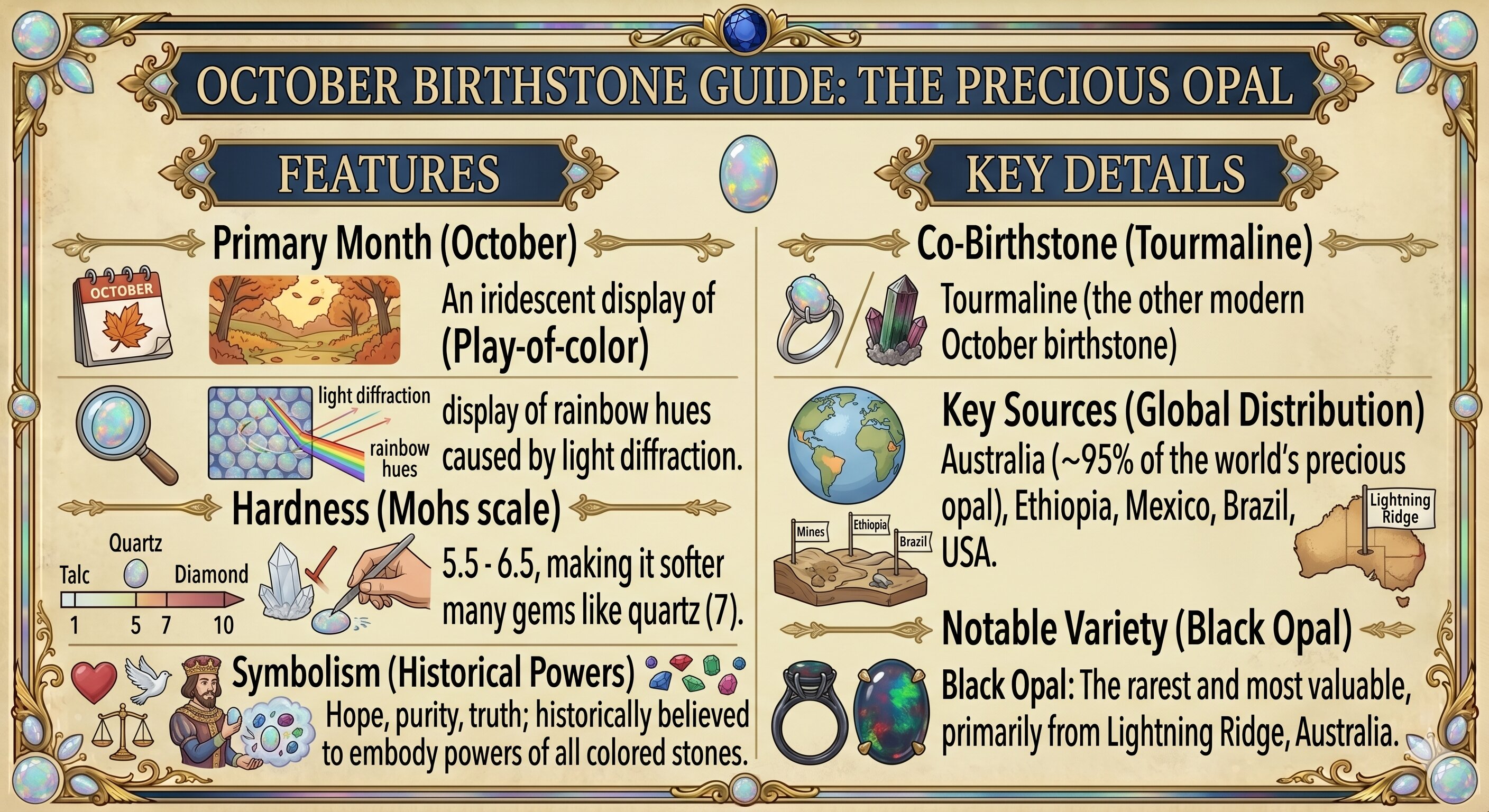
Understanding the "Play-of-Color"
What makes opal truly unique is its play-of-color. This phenomenon is not a single color, but a shimmering interplay of rainbow-like flashes that change with the viewing angle. This occurs because opal is made of microscopic silica spheres arranged in a grid-like structure that diffracts light. Gems that display this are classified as "precious opal," while those that do not are called "common opal".
Care and Considerations
Due to its structure and water content (typically 6-10%), opal needs special care:
Avoid extreme temperatures, sudden temperature changes, harsh chemicals, and ultrasonic cleaners.
Clean only with warm, soapy water and a soft cloth.
Store separately from harder gems to prevent scratches.
I hope this detailed overview helps you understand why opal is such a cherished gem. If you are considering an opal for a specific purpose, such as an engagement ring versus a pendant, I can offer more tailored advice on its suitability.
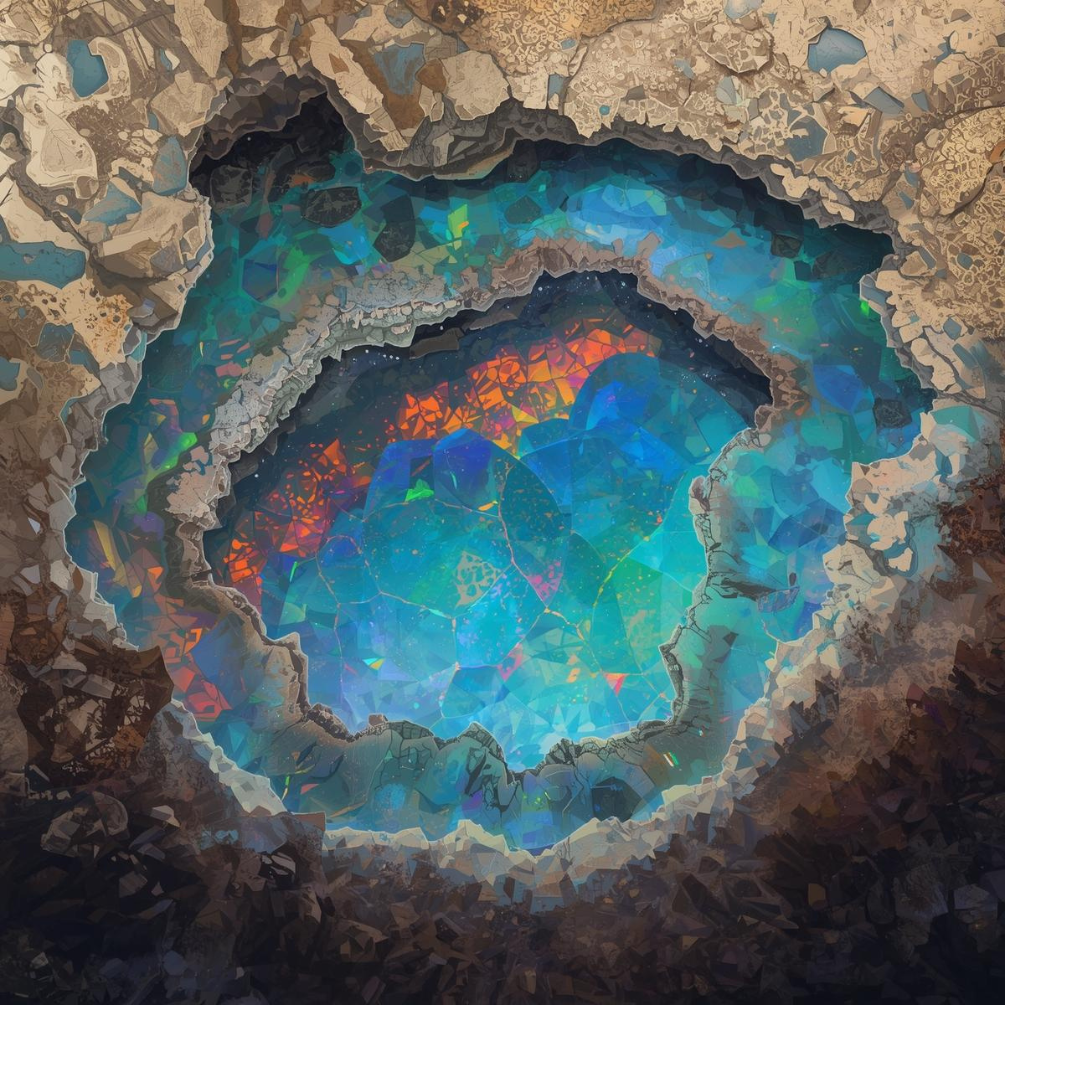
How Is Opal Formed?
Opal forms through a fascinating and specific geological process over millions of years. Its unique "play-of-color" is a result of its microscopic structure, not from pigments.
Here’s a timeline of the typical formation process:
The Science Behind the Color Play
The "play-of-color" that defines precious opal occurs because of its internal structure:
The deposited silica forms into perfectly sized and arranged microscopic spheres.
These spheres stack in a 3D grid-like structure.
When light enters this grid, it diffracts and splits into spectral colors—just like light passing through a prism or a water droplet creates a rainbow.
The size and arrangement of the spheres determine which colors you see:
Larger spheres diffract red and orange light (the rarest colors).
Smaller spheres diffract blue and violet light (more common).
If the spheres are irregularly sized or arranged, the stone becomes common opal (or "potch"), which lacks the play-of-color.
Why Australia is the Perfect Environment
Australia produces about 95% of the world's precious opal because its Great Artesian Basin provides ideal conditions:
Ancient Inland Sea: A large sea deposited silica-rich sediment.
Climate Change: The sea retreated, and the climate became arid.
Acidic Weathering: Acidic rain weathered the sandstone, releasing soluble silica into the groundwater.
Perfect Deposition: This silica-rich groundwater seeped into cracks and voids. As the water table fluctuated in the dry climate, silica slowly deposited layer by layer over vast geological time.
This specific sequence—silica solution, cavities for deposition, and the right conditions for slow evaporation—is why high-quality opal is rare and geographically concentrated.
Would you like to know more about the different types of opal this process creates, like boulder opal versus seam opal?
Learn more about opal's geological formation on Wikipedia's opal page.
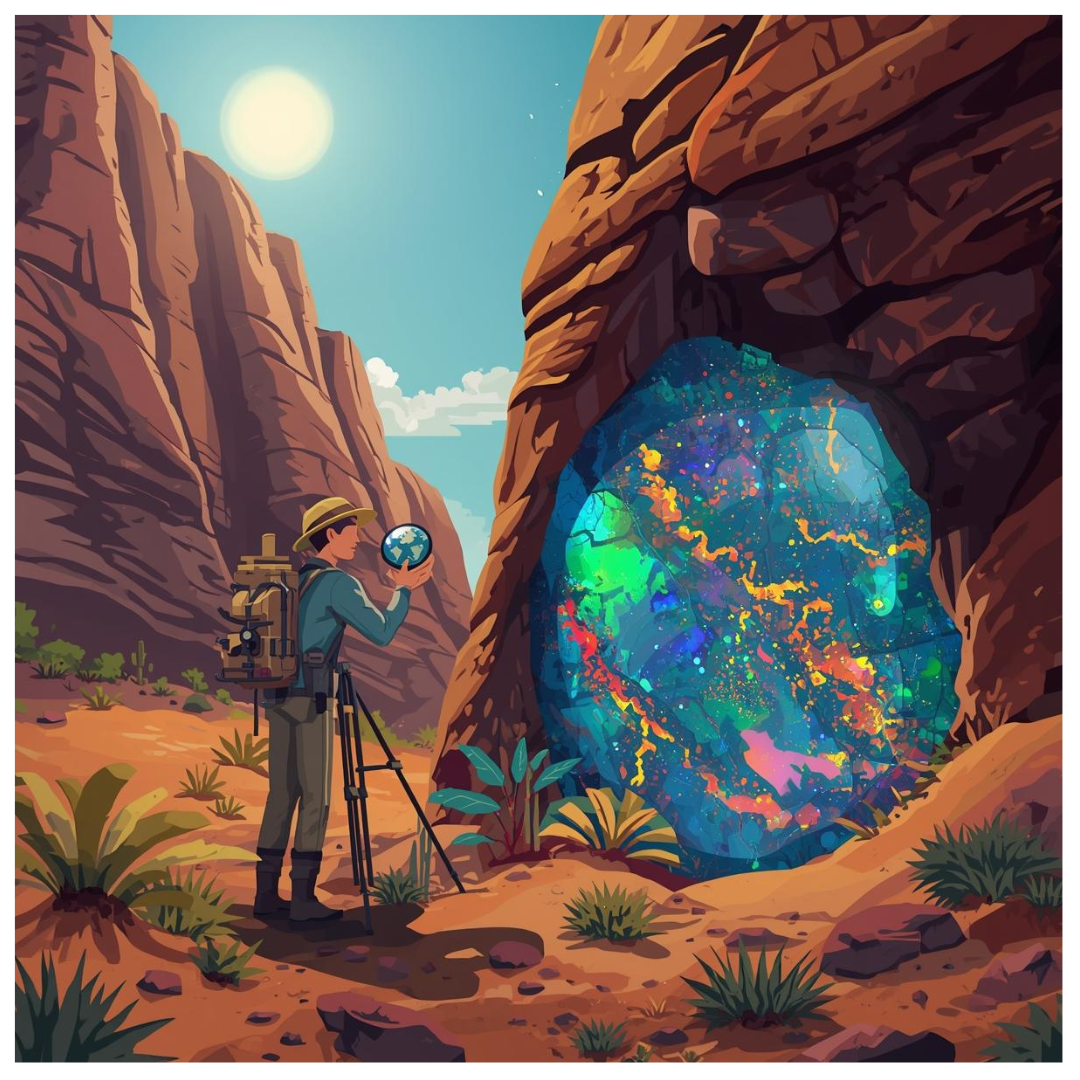
Where Is Opal Found?
Opal is found on almost every continent, but a few countries dominate the global supply and produce the most prized gem-quality stones. Australia is by far the world's leading source, responsible for approximately 95% of all precious opal. Ethiopia has emerged as a major and important supplier since the 1990s, while countries like the United States, Brazil, and Mexico have smaller but significant deposits.
Major Opal-Producing Regions
The following table compares the key characteristics of opal from the world's most significant sources:
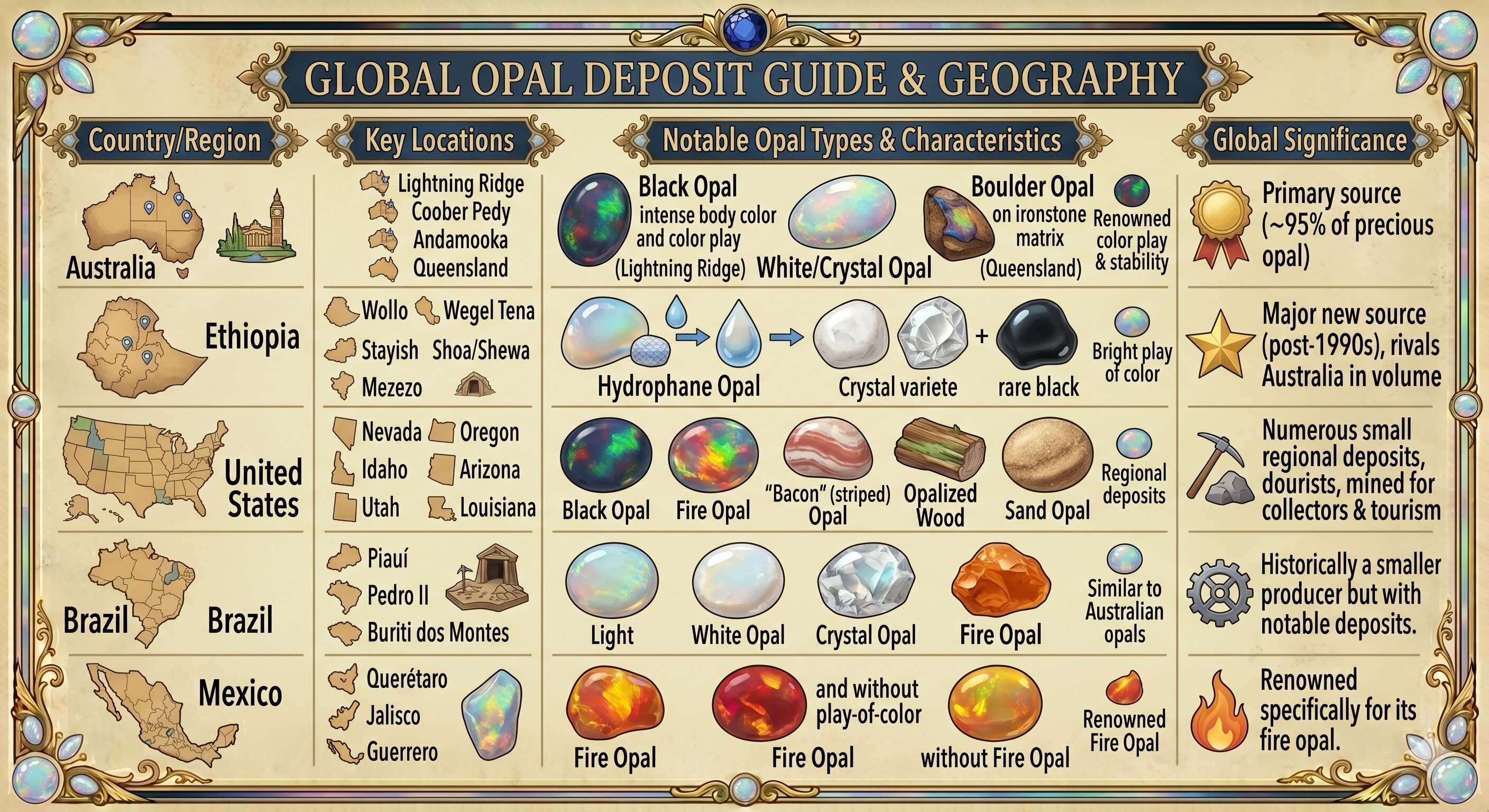
Why Dominant: Its unique geology—the ancient Great Artesian Basin—created ideal conditions for opal formation over millions of years. This has resulted in vast deposits of high-quality, stable opal.
Famous Fields:
Lightning Ridge, NSW: The exclusive source of the world's most valuable black opal.
Coober Pedy, SA: Known as the "opal capital of the world," it's the main producer of white opal.
Queensland Fields: Produce unique boulder opal, where the opal forms in veins within ironstone host rock.
Ethiopia: The Rising Star
Key Feature: Much Ethiopian opal is hydrophane, meaning it can absorb water or liquids, which can temporarily change its appearance and requires careful handling.
Major Discoveries: The 1994 find in Shewa was followed by the 2008 discovery in Wollo, which revolutionized the market. A 2013 discovery in Wollo's Stayish mine also yielded rare natural black opal.
What to Consider Based on Origin
Your choice might depend on the characteristics you value most:
For the most classic, durable opal for jewelry, Australian opals are the benchmark due to their stability. Often more affordable, bright play-of-color, Ethiopian opals are an excellent choice, though they require specific care due to their hydrophane nature.
For unique colors and forms, like Mexican fire opal or American opalized wood, looking to smaller producers can yield fascinating collector's pieces.
If you are curious about the specific mining processes in a place like Coober Pedy, or how to care for hydrophane Ethiopian opals, I can provide more detailed information on those topics.
What Does Wearing An Opal Symbolize?
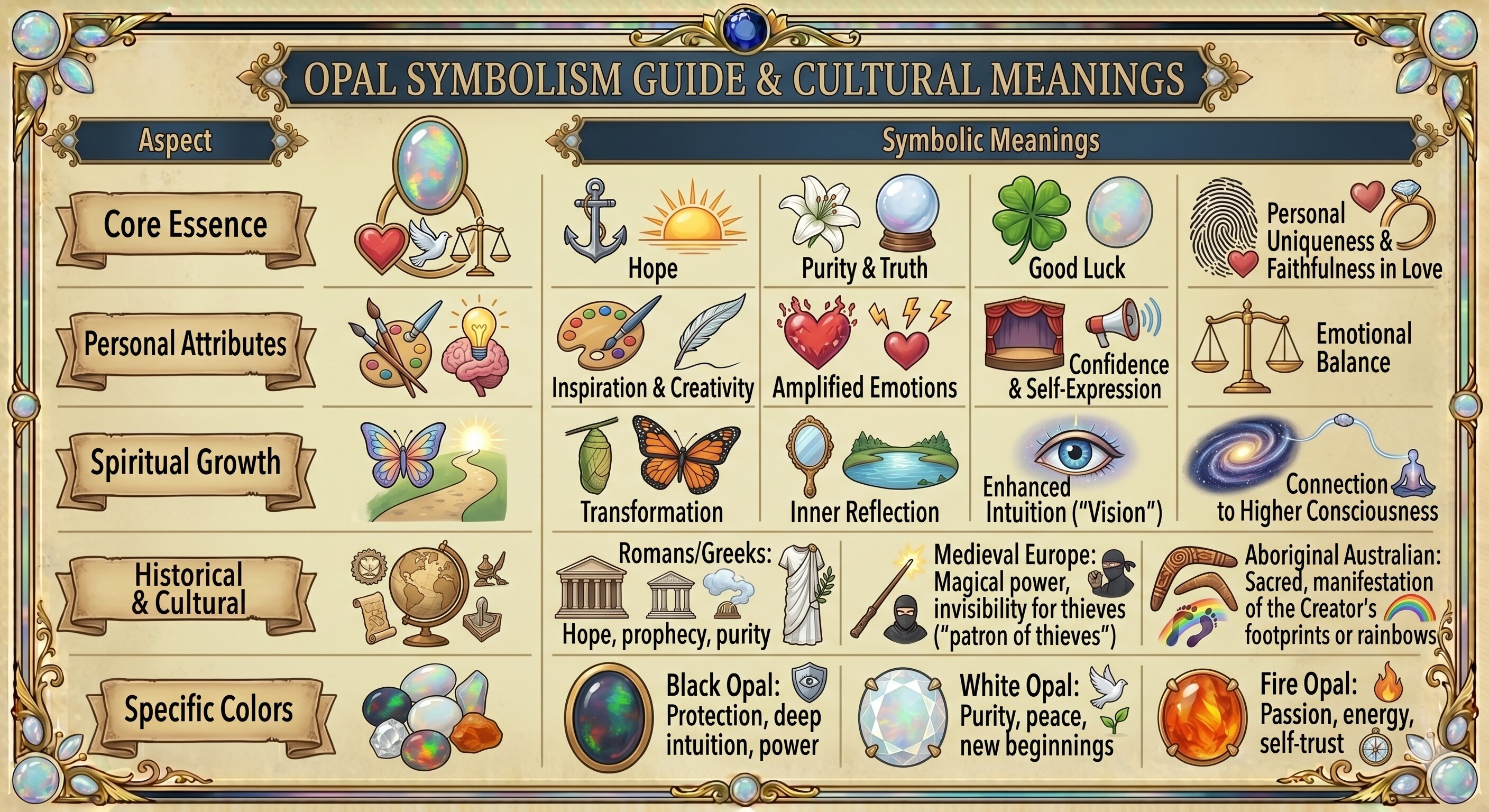
The symbolism of wearing an opal is as varied and colorful as the gem itself, representing everything from love and good fortune to creativity and personal transformation. For centuries, it was a highly prized stone of luck and royalty, though a brief period of superstition gave it an undeserved reputation for bad luck.
The table below summarizes the key symbolic meanings associated with opals:
A History of Shifting Perceptions
The opal's journey in human culture explains its complex symbolism:
Ancient Reverence: In Ancient Rome, opal was among the most prized gems, a symbol of hope and good fortune. The Ancient Greeks believed it granted the gift of prophecy and protection.
The "Patron of Thieves": During the Middle Ages in Europe, a curious belief arose that an opal wrapped in a bay leaf could render the wearer invisible. This led to its nickname as the "patron of thieves".
The Bad Luck Superstition: The opal's most famous—and unfounded—association with bad luck largely stems from a 19th-century Gothic novel. In Sir Walter Scott's Anne of Geierstein (1829), a central character meets a tragic end linked to her opal. This fictional tale, combined with the gem's fragility, sparked a long-lasting superstition that haunted opals for decades.
Modern Spiritual and Emotional Meanings
Today, opal is primarily celebrated for its positive and personal symbolism, particularly in crystal healing and spiritual practices:
The "Amplification" Stone: Opal is often called a stone of amplification. It is believed to intensify emotions and thoughts, bringing them to the surface for clarity and helping to release old patterns.
Emotional Healer and Creativity Spark: It's associated with emotional healing, calming the mind, and boosting creativity and inspiration.
Zodiac and Birthstone Connections: As the modern birthstone for October, it symbolizes individuality and wonder for those born in that month. It is also strongly linked to the zodiac signs Libra (for harmony and love) and Scorpio (for passion and transformation).
“In ancient Greece, opal was believed to give the gift of prophecy. Worn by oracles and seers, it was said to reveal hidden truths and protect the wearer from disease. Medieval thieves carried opal wrapped in bay leaves — not for malice, but because they believed it could make them invisible. In the deserts of Australia, Aboriginal peoples call opal the ‘rainbow serpent‘s breath‘ — a stone that holds the colors of creation itself. Opal asks nothing of you except to look closely. And when you do, you will see not one color, but every color — a reminder that beauty is never simple, and magic is never safe.”
Ultimately, wearing an opal is a deeply personal choice. Many choose it as a talisman of luck, a symbol of unique identity, or a token of faithful love, embracing its long history of positive meaning over its temporary bout with superstition.
Note: If you are considering opal jewelry, remember that it is a softer, more delicate stone (5.5-6.5 on the Mohs scale). It requires gentle care: avoid harsh chemicals, extreme temperature changes, and hard knocks.
I hope this helps you appreciate the rich symbolism of the opal. If you have a specific type of opal (like black or fire opal) or are curious about its use in a particular type of jewelry, feel free to ask for more details.
How To Tell If an Opal Birthstone Is Real?
Determining if an opal birthstone is genuine involves a mix of visual inspection, simple physical tests, and understanding common imitations.
Here's a step-by-step guide:
1. Check the "Play-of-Color" (Most Important!)
Real opal displays a dynamic, shifting "fire" (rainbow flashes) that changes with viewing angle and light. Colors appear to "turn on/off" as you move the stone.
Fakes (plastic/glass/resin):
Show static, uniform patterns (e.g., glitter-like sparkle or fixed "snakeskin" patterns).
Colors don’t shift organically.
Synthetic opal (e.g., Gilson): May look too perfect, with unnaturally large color patches or a "lizard skin" pattern under magnification.
2 . Look for Imperfections & Natural Features
Natural opal: Often has slight irregularities:
Minor cracks ("crazing"), color zoning, or natural inclusions.
Backing may show rough matrix (in boulder opal) or host rock.
Fakes:
Too flawless (e.g., plastic/resin).
Bubble-like inclusions (glass).
Perfectly uniform patterns (synthetics).
3. Temperature & Weight Tests
Touch Test:
Real opal feels cool to the touch and warms slowly in your hand (like glass/stone).
Plastic/resin fakes feel warm quickly.
Weight Test:
Glass/imitation opal feels heavier than genuine opal.
Plastic/resin feels lighter.
4. The "Tooth Test" (For Solid Opals Only)
Gently tap the stone against your front tooth:
Real opal feels slightly gritty/sandy (due to its silica structure).
Glass/plastic feels smooth.
Note: Don’t use on delicate doublets/triplets!
5. Check for Treatments & Composites
Doublets/Triplets:
Look for a glued "seam" around the edge (magnification helps).
The top layer (dome) may look like glass/quartz, not opal.
Smoked/Sugar-Treated Opal:
Enhances dark body color. Scratch the back with a toothpick – black residue indicates treatment.
Dye: Uneven color concentration or bleeding into cracks.
6. Water Absorption Test (For Ethiopian Opal Only)
Ethiopian hydrophane opal is porous:
Temporarily absorbs water, becoming semi-transparent and losing play-of-color until dry.
Don’t test Australian opal – water can damage it!
7. Professional Verification
Use a jeweler’s loupe (10x magnification):
Synthetic opals show a distinctive "columnar" or "chicken-wire" pattern.
Doublets reveal glue lines.
UV Light: Some synthetics/plastics fluoresce unnaturally.
Gemologist lab report (e.g., GIA): Essential for high-value opals.
Common Fakes to Spot:
Plastic/Resin: Lightweight, warm feel, no natural flaws.
Slocum Stone (Glass): Bubbles inside, heavy, "confetti" sparkle
.
Gilson Synthetic: Overly perfect "lizard skin" pattern.
Opalite (Man-Made Glass): Milky, bluish glow with no true play-of-color.
What Color Of Opal Birthstone Is Expensive?
The most expensive opal birthstone colors are determined by two key factors:
Body tone (the base color of the stone)
Play-of-color (the rainbow flashes).
Here's the breakdown of what drives high value in opals:
1. Body Tone (Base Color)
The darker the base, the more valuable the opal if it has vibrant play-of-color:
Black Opal (N1–N4 on the body tone scale):
Most valuable category (e.g., Lightning Ridge, Australia).
Deep gray to jet black base makes colors "pop" dramatically.
*Top specimens can fetch $10,000+/carat.*
Dark/Boulder Opal (N5–N6):
Attached to ironstone matrix (e.g., Queensland, Australia).
Natural dark backing enhances color contrast.
White/Light Opal (N7–N9):
Most common, usually least expensive (e.g., Coober Pedy).
2 . Play-of-Color (The "Fire")
Spectral colors matter more than body tone alone. Value hierarchy:
RED flashes:
Rarest and most prized (requires larger silica spheres).
Can triple an opal's value vs. green/blue-only stones.
ORANGE flashes
GREEN flashes
BLUE flashes (most common, least valuable)
Key: A black opal birthstone with dominant red fire is the holy grail. A white opal with red flashes may outvalue a black opal with only blue/green.
Pattern: "Harlequin" (geometric mosaic) or "Pinfire" (small, dense flashes) command premiums.
Brightness: Vivid > Dull.
Clarity: Clean > Included (crazing/cracks reduce value).
Carat Weight: Larger stones spike exponentially in price.
Origin: Australian black opals (esp. Lightning Ridge) > Ethiopian hydrophane (less stable).
Price Comparison Examples
High-grade Black Opal (5ct with red fire): $50,000–$100,000+
Ethiopian Crystal Opal (5ct with red/orange): $5,000–$20,000
White Opal (5ct with blue-green): $500–$2,000
Beware!
Treated opals (e.g., smoked, dyed, or sugar-acid darkened) look "black" but are worth far less.
Synthetics (e.g., Gilson opal) show unnaturally large color patches.
Doublets/triplets are layered composites (not solid opal).
Opal Types: Value Comparison Guide
| Type | Origin | Key Features | Price per Carat Range |
|---|---|---|---|
| Black Opal | Lightning Ridge, Australia | Dark body tone, vivid play-of-color | $5,000 - $150,000+ |
| Boulder Opal | Queensland, Australia | Natural ironstone backing | $500 - $5,000 |
| White/Light Opal | Coober Pedy, Australia | Light body tone, common blue/green fire | $50 - $500 |
| Ethiopian Opal | Ethiopia | Hydrophane (absorbs water), bright colors | $30 - $500 |
| Fire Opal | Mexico | Transparent orange-red, may lack play-of-color | $50 - $2,000 |

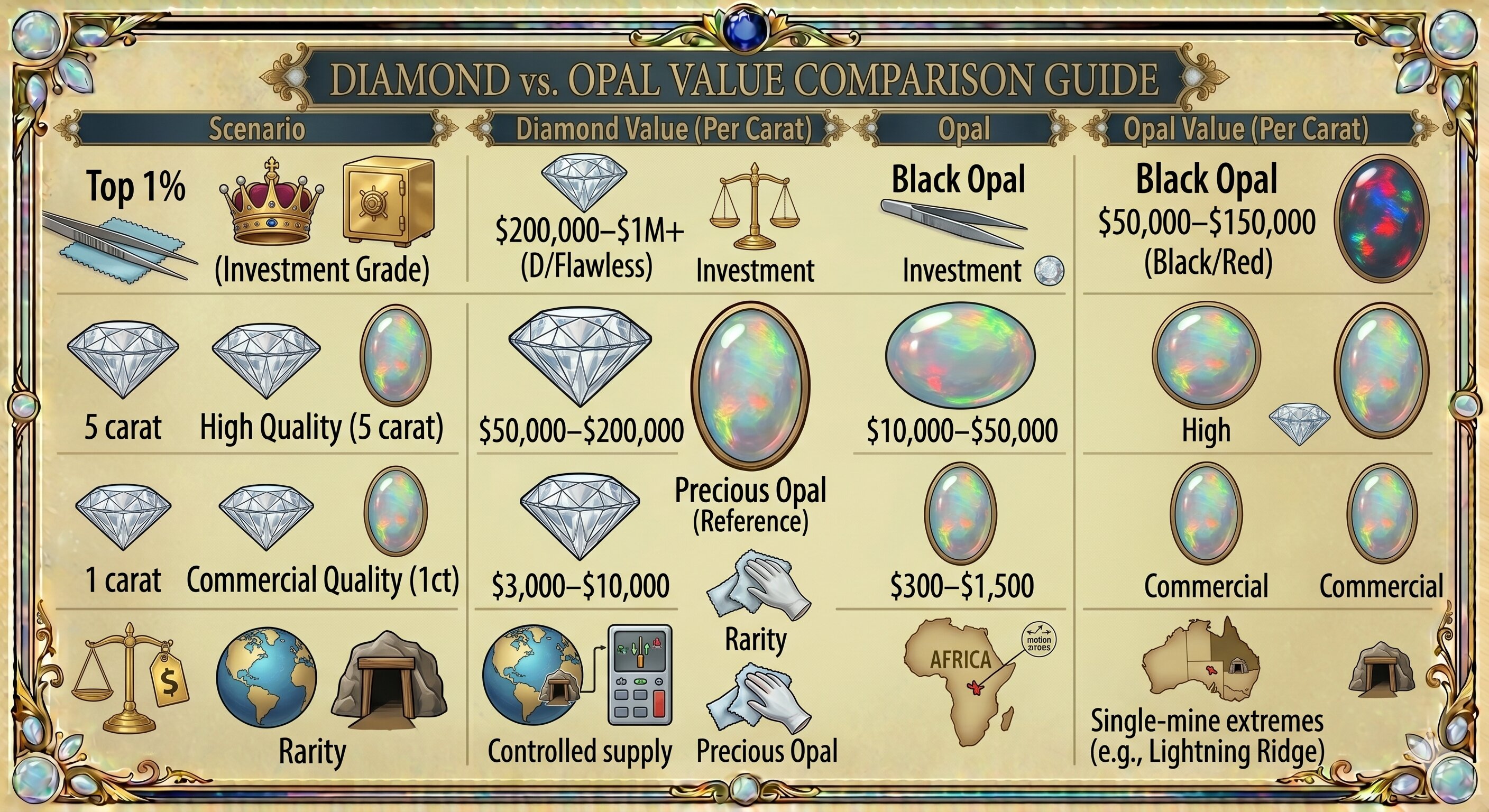
Is Opal Birthstone Worth More Than Diamonds?
That's a fantastic question that reveals how gemstone valuation works! The answer is nuanced:
Generally, diamonds are worth more overall and at the top investment tier.
But certain rare opals can surpass diamonds in value per carat.
Here’s the breakdown:
When Opal Rings for Women Are Worth More
High-Investment Tier:
Flawless D-color diamonds (5+ carats) → $200,000–$1M+/carat
Example: A 10ct D/Flawless diamond → $15–$30M+
No opal approaches this level.
Mainstream Market:
Average 1ct engagement diamond (G/VS2) → $5,000–$7,000
Same-sized top white opal → $500–$2,000
Liquidity & Recognition:
Diamonds have a massive, global market with standardized pricing (Rapaport). Opals are niche.
When Opals Are Worth More (Per Carat)
Rare Black Opals:
Lightning Ridge (Australia) opal with dominant red flashes + harlequin pattern:
5ct+ stones → $50,000–$150,000/carat
Outvalues all but the rarest colored diamonds.
Example: The "Virgin Rainbow" opal (sold for ~$1M in 2021) → $200,000+/carat for its size.
Large Collector Stones:
A 20ct top black opal with red fire → $1M–$2.5M
A 20ct non-exceptional diamond → $200,000–$500,000
Historic Auction Prices:
The "Olympic Australis" opal (17,000 ct) → Valued at $2.5M in the 1950s (~$30M today).
The "Fire of Australia" opal (4,300 ct) → Insured for $1M in 2022.
Key Comparison Table
Critical Factors
Opal’s Value Triggers:
Black body tone + Red flashes + Harlequin pattern + Size (5ct+).
Diamond’s Edge:
Durability (Opal is soft: Mohs 5.5–6.5 vs. Diamond’s 10).
Market stability (Opals fluctuate with mining output).
Reality Check
99% of opals are cheaper than diamonds of equal size.
Ethiopian opals (often porous/temporary color) → 1/10th the value of Australian opals.
Treated opals (e.g., smoked "black" opals) → Fraction of natural value.
Does the Opal Birthstone Hold Value?
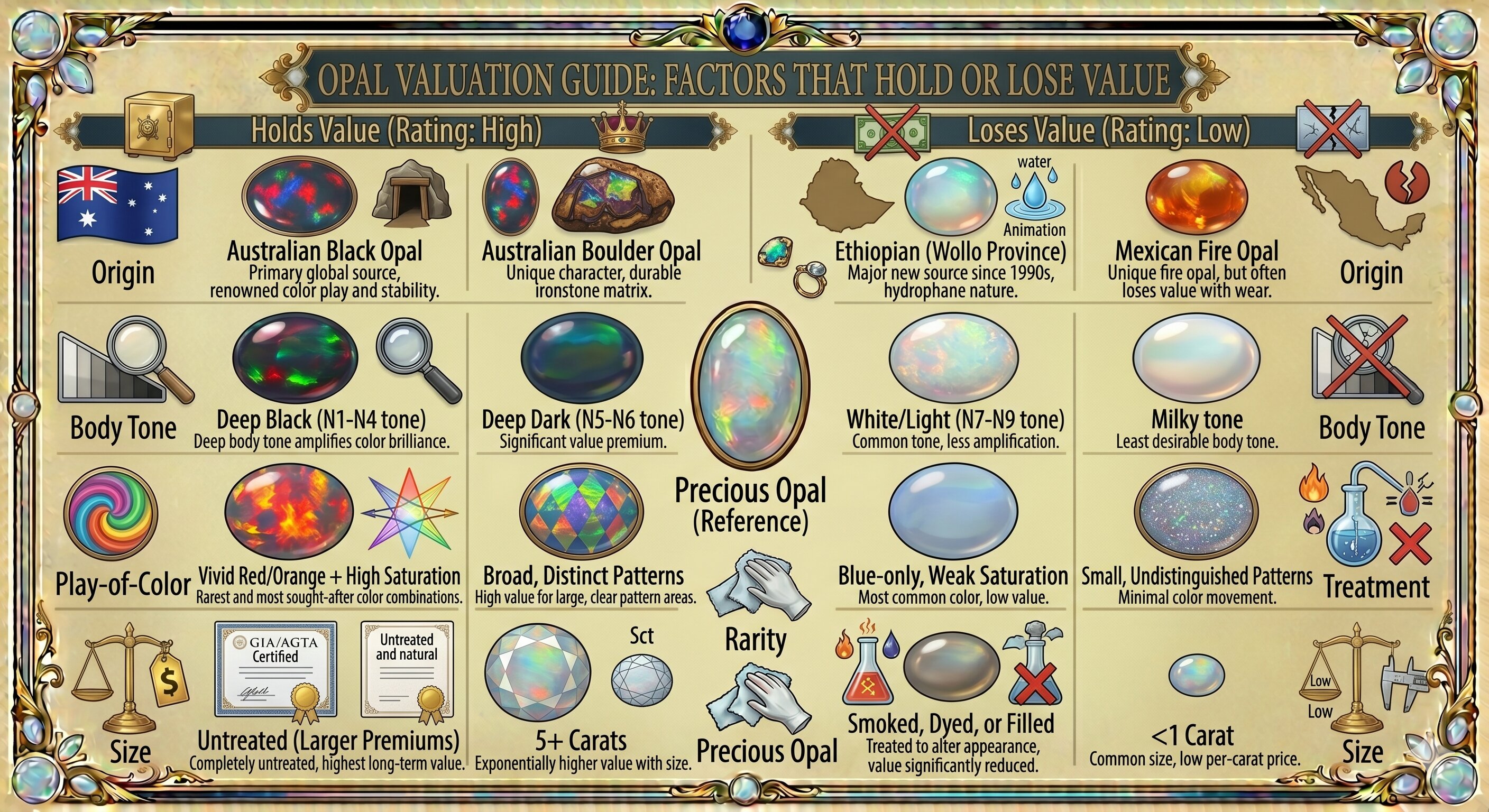
The value retention of opal's birthstone is highly nuanced—while certain rare opals can appreciate significantly, most commercial-grade opals do not hold value like diamonds or sapphires.
Here’s a clear breakdown:
Opals That Hold (or Increase) Value
Top-Tier Australian Black Opals
Especially: Stones from Lightning Ridge with:
Dominant red/orange fire
Harlequin or pinfire patterns
Dark body tone (N1-N4)
5+ carats, eye-clean, and untreated.
Value trend: ▲ Appreciates 5–10% annually for decades (e.g., stones sold at auction for 6–7 figures).
Historic/Rare Collector Opals
Named specimens (e.g., "Aurora Australis," "Virgin Rainbow") or opals with unique provenance.
High-Quality Boulder Opals
Natural ironstone-backed stones (Queensland, Australia) with vibrant color and thick seams.
Opals That Lose Value
Ethiopian Hydrophane Opals
Prone to water damage/cracking → unstable long-term.
Value trend: ▼ Rapid depreciation if damaged.
Treated/Enhanced Opals
Smoked, dyed, or sugar-acid "black" opals → resale value drops 50–80%.
Commercial White/Light Opals
Common material (e.g., Coober Pedy) with weak blue/green fire → commodity pricing.
Doublets/Triplets
Layered composites → delaminate over time → negligible resale value.
Key Factors Influencing Value Retention
Realistic Value Scenarios
$10,000 Australian black opal (5ct, red fire, certified):
→ Likely holds/appreciates over 20+ years.
$500 Ethiopian crystal opal (3ct, blue-green):
→ Loses 30–70% if crazed or damaged.
$200 white opal doublet:
→ Worth $0 once glue yellows or layers separate.
Critical Advice for Buyers
Prioritize Australian opals (Lightning Ridge, Andamooka, Boulder fields).
Demand certification from reputable labs (e.g., Australian Opal Centre, GIA, ICA).
Avoid treatments—ask for "natural, untreated" in writing.
Invest in settings that protect the stone (bezel > prongs).
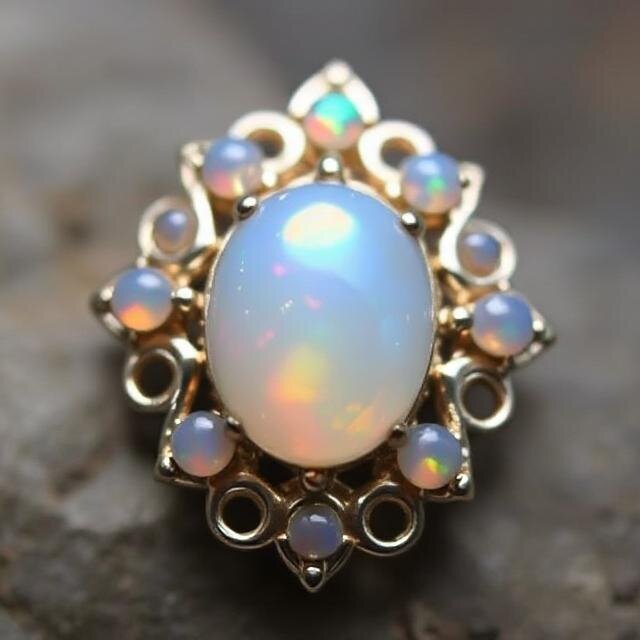
In Which Metal Opal Birthstone Is Worn?
The best metals for opal birthstone jewelry prioritize protection, stability, and hypoallergenic properties due to opal's fragility (Mohs 5.5–6.5). Here’s a breakdown of ideal and risky metals:
Best Metals for Opal
Platinum / Palladium
Why: Extremely durable, hypoallergenic, and chemically inert.
Ideal for: Heirloom opal promise rings or high-value opals.
Note: Heavyweight metal offers superior impact protection.
Yellow or White Gold: Classic choice; balances durability with elegance.
Rose Gold: Acceptable if alloyed with non-reactive metals (avoid copper-heavy alloys).
Key: Higher gold content (18K) is softer but more corrosion-resistant.
Sterling Silver (925)
Why: Affordable, traditional for opal jewelry.
Caveat: Requires rhodium plating to prevent tarnish from touching the opal.
Best for: Occasional-wear pieces (e.g., pendants, earrings).
Titanium
Why: Lightweight, hypoallergenic, and highly durable.
Ideal for: Modern, protective settings.
Metals to AVOID
Base Metals (Copper, Brass, Nickel)
Risk: React with skin acids or moisture → tarnish seeps into opal, causing discoloration/cracks.
Common in: Cheap fashion jewelry.
High-Copper Alloys
Why: Copper oxidizes into verdigris (green gunk), damaging opal’s porous surface.
Especially risky: Unplated rose gold <14K or bronze.
Porous Metals (e.g., Pewter)
Why: Absorb moisture → transfer humidity to water-sensitive opals (e.g., Ethiopian).
Critical: Setting Style Matters More Than Metal!
Even in platinum, opals need protective settings:
Bezel Setting: Fully encircles the opal’s edges (best for rings).
Domed Design: Minimizes direct impacts.
Avoid: Prong settings (expose edges) or tension mounts.
Opal-Specific Tips
Australian Opals: Stable; work with any safe metal.
Ethiopian Opals: Extra vulnerable → must avoid moisture-conducting metals (e.g., unsealed copper).
Doublets/Triplets: Seal edges with epoxy to prevent glue degradation from metal reactions.
Bottom Line:
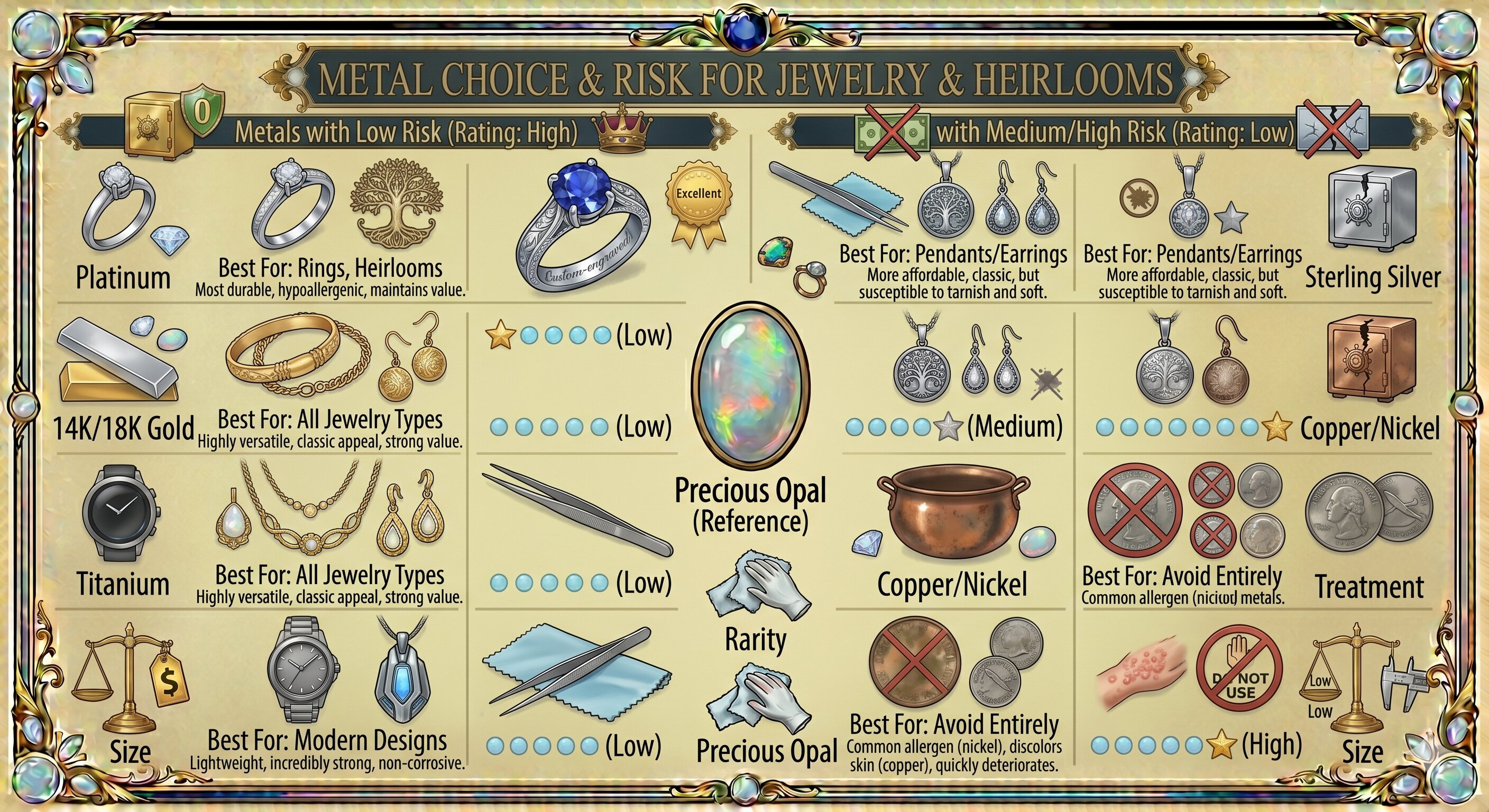
Always pair opals with bezel settings in inert metals to ensure longevity. For high-value stones, platinum or gold is worth the investment!
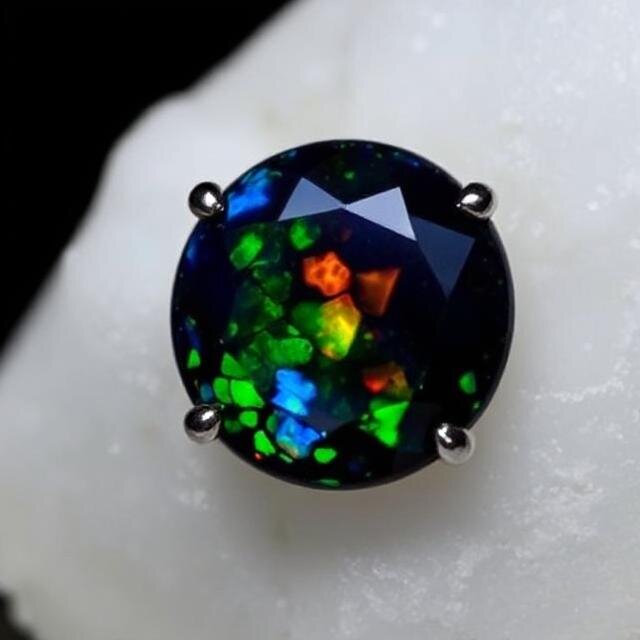
Is Black Opal A Birthstone?
Yes, black opal birthstone is absolutely real—and they're among the rarest, most valuable gemstones on Earth. Here's what makes them authentic and highly prized:
What Makes a Black Opal "Real"?
Natural Formation:
Formed over millions of years when silica-rich water seeps into cracks in Australian sedimentary rock.
No human manipulation—just nature’s artistry!
Unique Structure:
Composed of amorphous silica spheres that diffract light into "play-of-color" (the rainbow flashes).
The dark body tone comes from natural iron oxide or carbon traces in the host rock.
How to Spot Real vs. Fake Black Opals
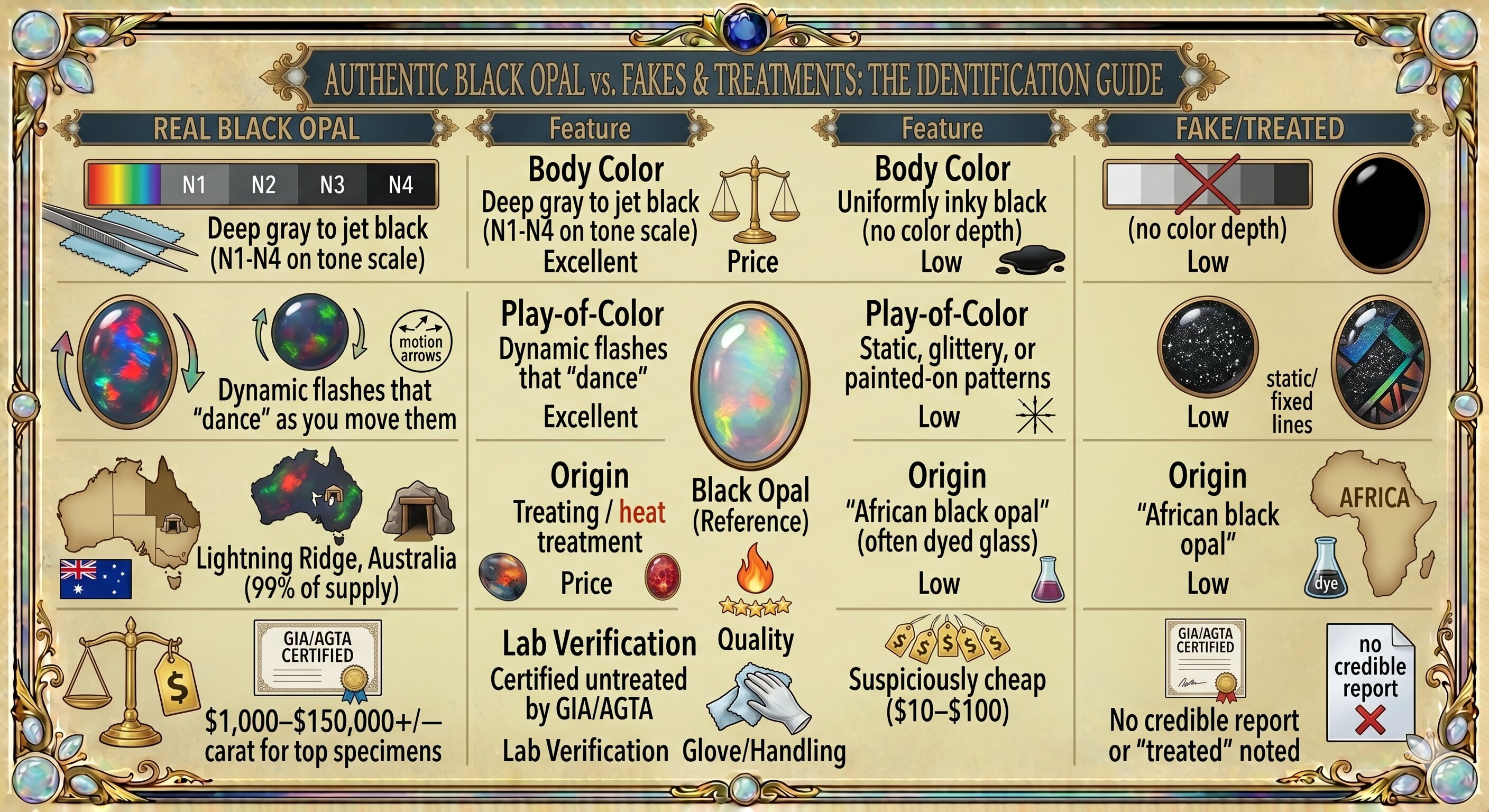
Common Fakes & Treatments
Smoked Opals:
Low-quality white opals are baked in sugar/acid to look black.
Test: Scratch the back—black residue rubs off.
Dyed Opals:
Pale opals injected with black dye.
Test: Dye concentrates in cracks (use 10x loupe).
"Opalite" Glass/Plastic:
Milky blue synthetic material with no true play-of-color.
Gilson Synthetics:
Lab-created opals with unnatural "lizard skin" patterns.
Why Lightning Ridge (Australia) is Key
Geological Rarity: Formed under unique conditions in a single dry region of New South Wales.
Color Superiority: Produces the richest reds/blues against dark backgrounds.
No Viable Alternatives: Ethiopian "black" opals are unstable hydrophane stones (avoid for investment).
Top-Tier Value Examples
5ct+ with red harlequin pattern: $50,000–$150,000/carat
Record Sale: The "Virgin Rainbow" (63ct) → $1+ million
How to Guarantee Authenticity
Demand Origin Proof: Lightning Ridge certification.
Require Lab Reports: GIA, AGTA, or Australian Opal Centre.
Buy from Reputable Dealers: Members of the ICA (International Colored Gemstone Association).
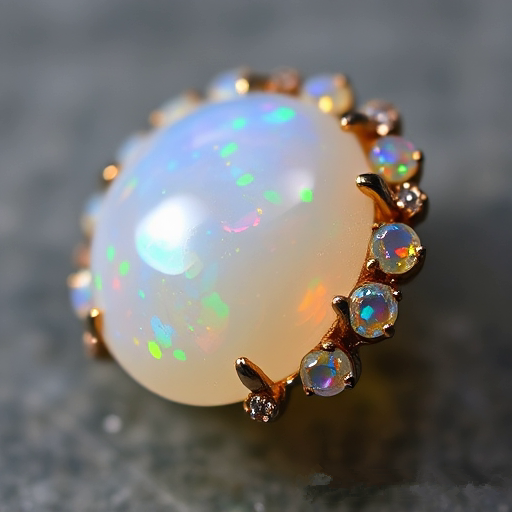
How Much Is A 2ct Opal Worth?
The value of a 2ct opal birthstone varies dramatically based on type, quality, and origin—from $10 to over $30,000. Below is a detailed breakdown, followed by opal's status as a birthstone:
2ct Opal Value Guide
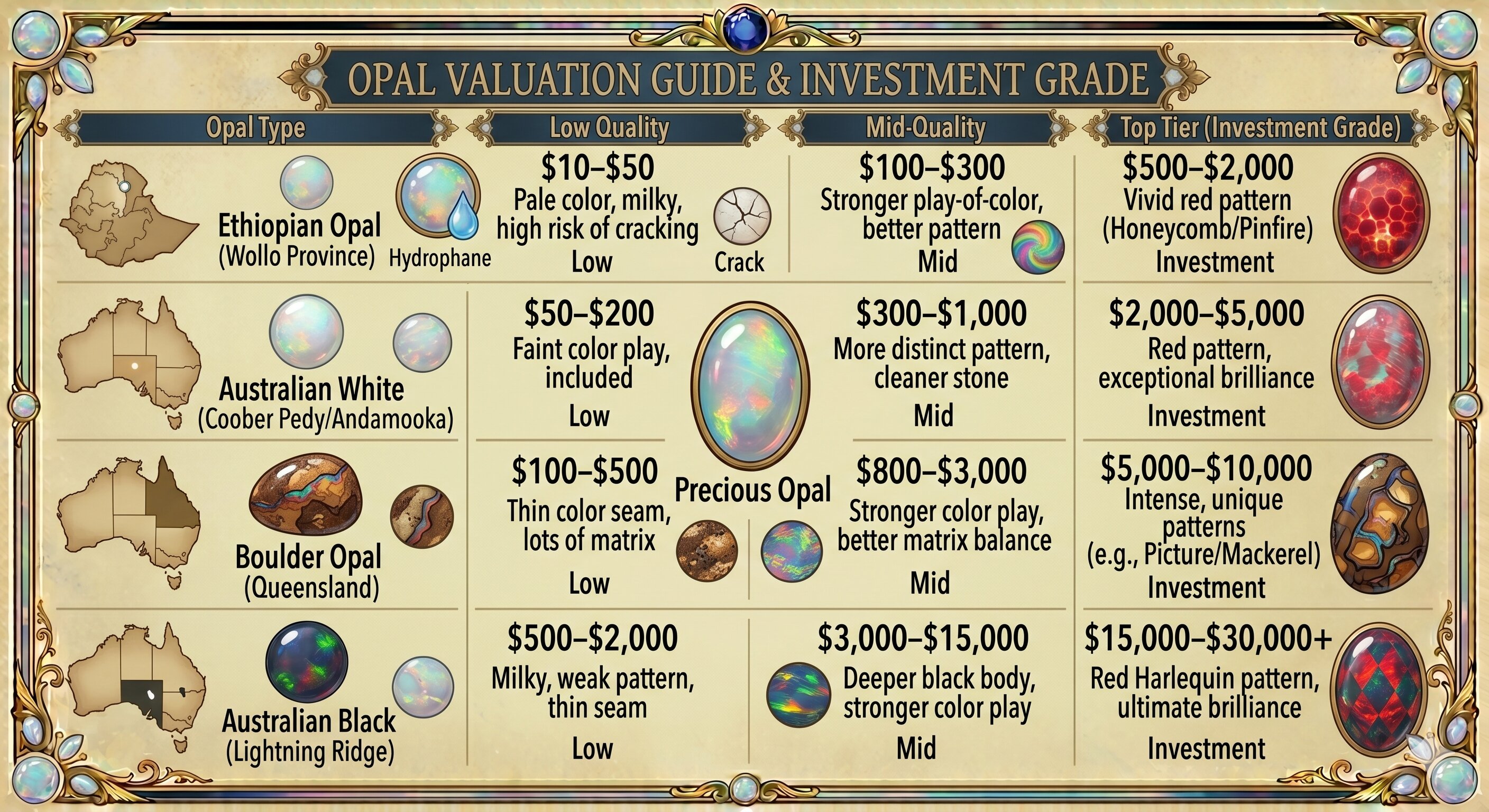
Key Value Drivers:
Play-of-Color: Red > Orange > Green > Blue .
Pattern: "Harlequin" (mosaic) or "Pinfire" > random flashes.
Clarity: Eye-clean stones command 200–500% premiums.
Treatment: Natural/unheated > smoked/dyed (value drops 50–90%).
Origin: Lightning Ridge (Australia) opals dominate the premium tier.
Example: A 2ct Lightning Ridge black opal with red harlequin pattern could sell for $25,000, while a 2ct included Ethiopian opal with weak blue flashes might cost $30.
Symbolism & History:
Ancient Beliefs: Romans saw opal as the "Queen of Gems," symbolizing hope and purity.
Folklore: Arabic legends claimed opals fell from lightning strikes; medieval Europeans linked them to healing.
Modern Meaning: Represents creativity, spontaneity, and emotional balance.
Myth Busting:
Despite superstitions about opals bringing "bad luck" (a 19th-century novel invention), they’re celebrated globally as lucky stones for October babies. Australia even designates opal as its national gemstone!
Quick Price Reference (Per Carat)
- Ethiopian Opal (blue/green): $30 - $200
- White/Light Opal (Australia): $100 - $500
- Boulder Opal: $500 - $5,000
- Black Opal (blue/green): $2,000 - $10,000
- Black Opal (with red fire): $10,000 - $150,000+
For current opal market prices, visit the American Gem Society's price guide.
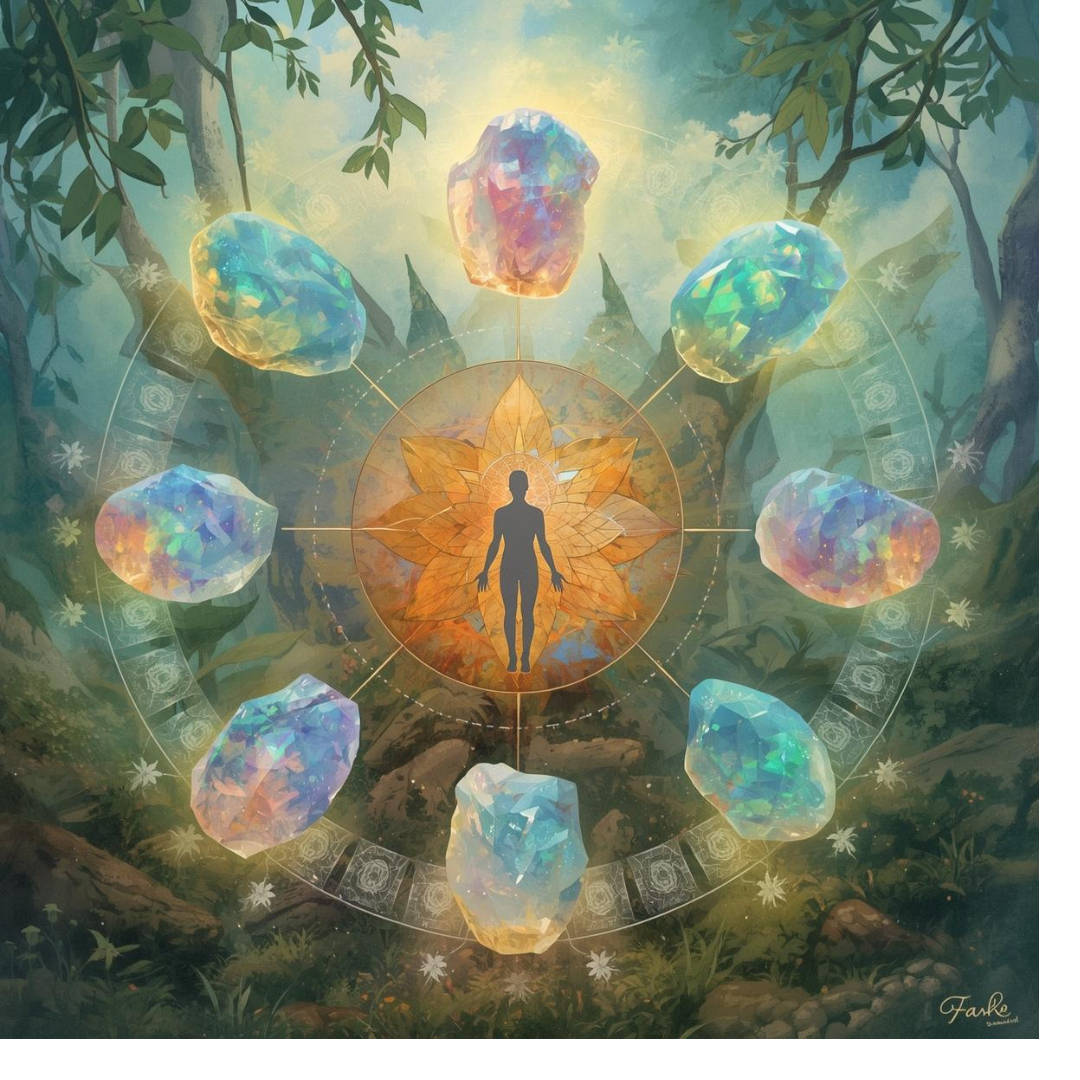
What Does Opal Do To Your Body?
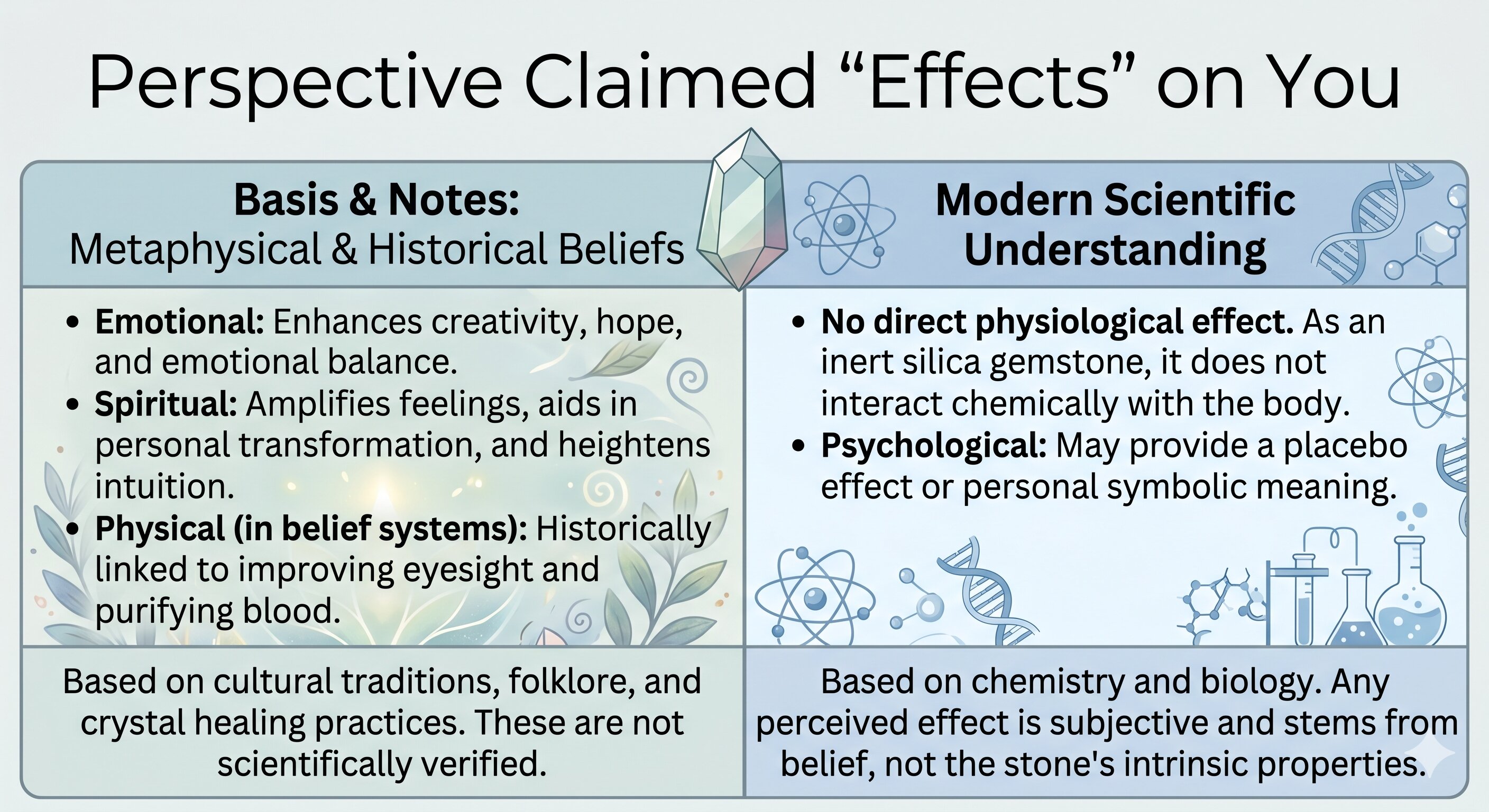
Wearing or using opal is primarily a personal or aesthetic choice, as there is no scientific evidence that opal has direct biological effects on the human body. Its "effects" are rooted in historical belief systems and metaphysical traditions, not medical science.
It is crucial to distinguish between symbolic meanings and proven physical effects. The table below contrasts the two perspectives:
The Main Physical Consideration: Care and Handling
The most practical physical interaction with opal relates to its delicate nature and your need to care for it:
Opal is Relatively Soft: With a hardness of 5.5-6.5 on the Mohs scale, it can be easily scratched by dust (which contains quartz, hardness 7).
It Can Be Fragile: It has a risk of chipping or cracking from knocks or sudden temperature changes.
Some Types Absorb Water: Hydrophane opals (common from Ethiopia) can absorb liquids, which may temporarily cloud or crack the stone.
Therefore, opal "does" require you to handle it gently, store it separately from harder gems, and clean it only with a soft, damp cloth.
While opal is rich in cultural symbolism and personal meaning, it does not have active, proven effects on your physical body. Its true value lies in its beauty and the personal significance you assign to it.
If you are interested in the specific care instructions for a type of opal jewelry you own, I can provide more detailed guidance on that.
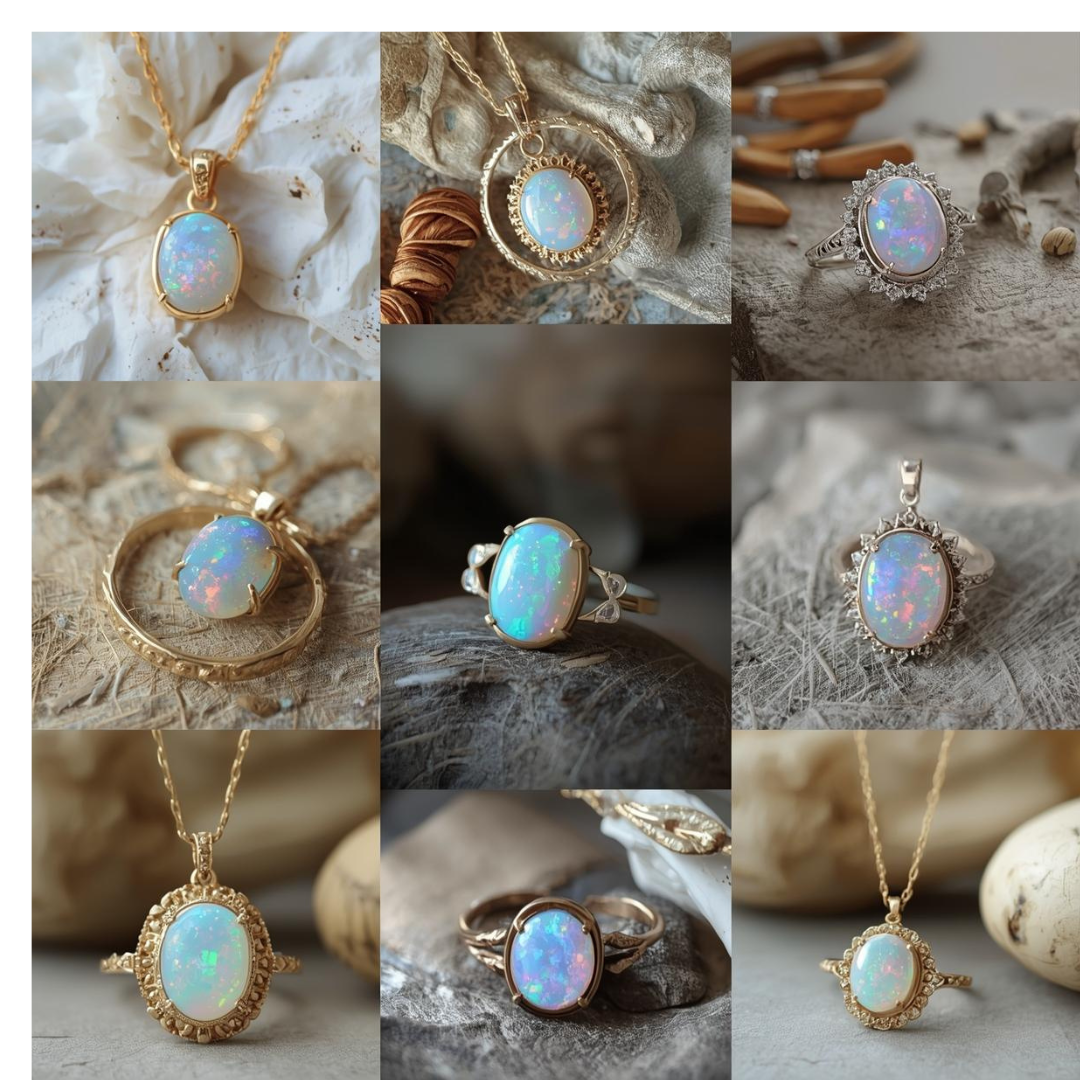
Should Opal Be Worn In Gold Or Silver?
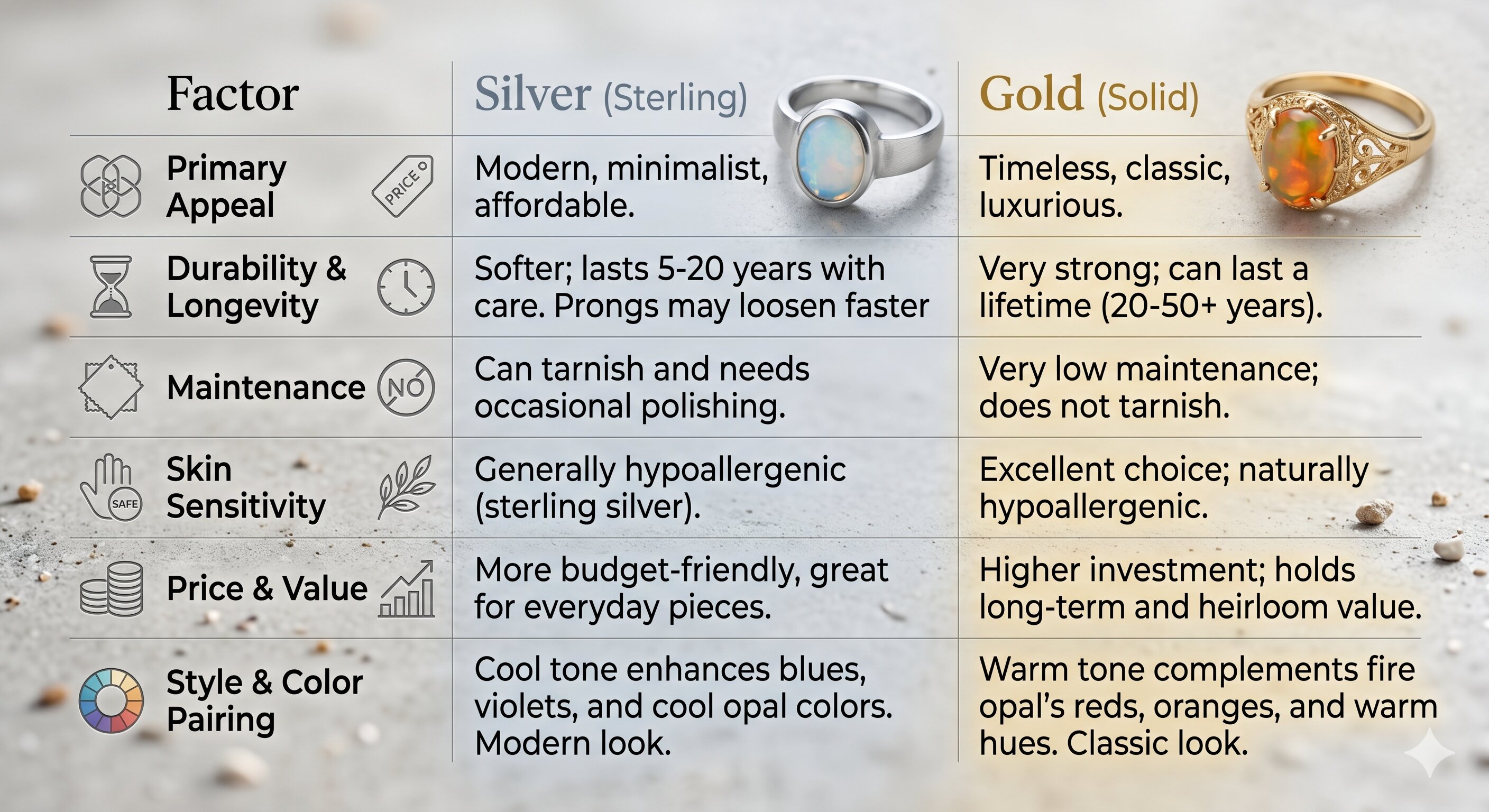
Choosing between gold and silver for an opal is a common dilemma. The best metal depends on your budget, lifestyle, style preferences, and the opal itself.
The table below compares the key factors to help you decide:
How to Choose Based on Your Needs
Consider these questions to narrow down your choice:
For a piece worn daily (like a work ring): Solid gold (especially 9k or 14k) is more durable and scratch-resistant. If opting for silver, choose a robust bezel setting.
For a special gift or heirloom: Solid gold (14k or 18k) offers timeless value and emotional significance.
On a tighter budget or for trend-focused styles: Sterling silver offers great value and a modern look.
Considering the opal's color: Think about color harmony. Gold highlights warm tones, while silver makes cool colors pop.
If you have sensitive skin, both are good, but solid gold is the safest bet.
Important Considerations Beyond the Metal
The Setting is Crucial: Opals are softer gems. A bezel setting (metal fully encircling the stone) offers the best protection, especially for rings.
Understanding Gold Karats: A higher karat means more gold content, but softer metal. 14k gold is often recommended as the best balance of purity, durability, and rich color.
Opal Type Matters: If you have a doublet/triplet opal or a hydrophane Ethiopian opal, extra care is needed, as they can be damaged by water, limiting your choices.
Final Recommendation
For a durable, low-maintenance piece you'll wear often, solid gold (14k) is the most reliable long-term choice. For an affordable, stylish piece for occasional wear, sterling silver is excellent.
Since you've been exploring opals in-depth, would you like to know more about the specific care routines for gold versus silver opal jewelry or the pros and cons of different setting styles?
“You now know the history, the formation, the origins, the symbolism, the tests, the colors, the value, the metals, and the care. The only question left: will you wear the rainbow serpent‘s breath?
Our current collection includes a limited number of natural, untreated opals — from Lightning Ridge black opals with red fire to Ethiopian crystal opals with harlequin patterns. When stones of this color saturation and play-of-color are gone, sourcing new ones can take months.
This is not just a birthstone. It is 3,000 years of Roman reverence, Greek prophecy, and Australian creation — the Queen of Gems, the lightning‘s gift, and the only stone that holds every color at once.”
[Button: Claim Your Opal (Limited) →]


Sapphire Rings Guide: Meaning, Colors, Settings and Value | September Birthstone
Sapphire Rings Guide: Meaning, Colors, Settings & Value | September Birthstone
Wearing a sapphire ring carries a rich tapestry of meanings, blending history, symbolism, and personal significance.
“In 1981, when Prince Charles gave Lady Diana Spencer a 12-carat blue sapphire engagement ring, he broke every royal tradition. He chose not a diamond, but a stone that had once belonged to his grandmother. The ring‘s deep cornflower blue — set in white gold, surrounded by 14 diamonds — became the most famous sapphire in history. When Diana‘s son William proposed to Kate Middleton with the same ring, he wasn‘t just giving jewelry. He was handing her 30 years of memory, loyalty, and a promise that some stones carry more than light. Sapphire rings have outlasted kings, empires, and even the hardest hearts. That is why we still choose them.”
The same stone that painted the sky for Persians and crowned Diana‘s finger now awaits your September birthday — or your own royal promise. Every sapphire ring in our collection is chosen for color saturation and clarity, from cornflower blue to padparadscha pink.”
[Button: Explore Sapphire Rings →]
Here's a breakdown of its contents:
- What Are Sapphire Rings: Symbolism and Meaning?
- What Are The Different Sizes Of Sapphire Rings?
- What Are The Different Colors Of Sapphire Rings?
- What Are The Properties Of Sapphire Rings?
- What Is The Hardness Of Sapphire Rings?
- What Are The Different Settings For Sapphire Rings?
- What Are The Benefits Of Wearing A Sapphire Ring?
- Which Finger Do You Wear A Sapphire Ring On?
- Can You Wear Sapphire Every Day?
- How To Tell If A Ring Is Sapphire?
- Do Sapphire Rings Hold Value?
- How Long Do Sapphire Rings Last?
Let's see the first topic, Symbolism and Meaning.
What Are Sapphire Rings: Symbolism and Meaning?
Wisdom & Truth: Sapphires have long symbolized wisdom, knowledge, and the pursuit of truth. They were believed to enhance mental clarity, focus, and discernment.
Royalty & Nobility: For centuries, sapphires (especially deep blue ones) have been associated with royalty, power, and nobility. Think of royal engagement rings like Princess Diana's (now worn by Kate Middleton).
Protection & Good Fortune: Historically, sapphires were worn as talismans for protection during travel, against envy and harm, and to attract divine favor. They were believed to bring peace, prosperity, and good luck.
Faithfulness & Sincerity: Sapphires symbolize loyalty, fidelity, and integrity. This makes them a popular choice for engagement rings and anniversary gifts (especially the 5th and 45th), representing enduring commitment and trust.
Spirituality & Inner Peace: Associated with the throat and third eye chakras, sapphires are believed to promote spiritual awareness, enhance intuition, calm the mind, and foster inner peace.
September Birthstone: Sapphire is the modern birthstone for September, making sapphire rings a meaningful gift for September birthdays.
Durability & Strength: As a 9 on the Mohs hardness scale (second only to diamonds), sapphire symbolizes resilience, steadfastness, and enduring strength.
Beauty & Elegance: Beyond symbolism, sapphires are simply stunning gemstones. People often wear them purely for their exceptional beauty and timeless elegance, available in various colors (blue is classic, but also pink, yellow, green, purple, orange - known as "fancy sapphires").
Personal Significance: For many, the meaning is deeply personal. It could be an heirloom carrying family history, a gift marking a special achievement, or a piece chosen for its unique color that resonates individually.
Modern Engagement Rings: Thanks largely to Princess Diana's iconic ring, sapphire center stones (often surrounded by diamonds) have become a popular, meaningful, and distinctive alternative to traditional diamond engagement rings.
“Long before Diana, ancient Persian kings believed the sky was blue because the earth rested on a giant sapphire — and the stone‘s reflection painted the heavens. Roman magistrates wore sapphire rings to protect themselves from corrupting thoughts. In the Middle Ages, clergy sealed sapphires into bishops‘ rings, believing the stone kept their prayers pure. And in Sri Lanka, miners still say that a sapphire‘s blue deepens when it finds its true owner. For 3,000 years, from the thrones of Persia to the finger of a princess, one gem has meant the same thing: loyalty so deep it cannot be broken, truth so clear it needs no proof.”
In essence, the meaning of wearing a sapphire ring depends on:
The Wearer's Intent: Why did they choose it? (Birthstone, belief in its properties, love of the color, connection to royalty, symbol of commitment).
The Specific Sapphire: Color plays a big role (e.g., blue for wisdom/royalty, pink for love/compassion, yellow for prosperity).
Cultural & Historical Context: The traditional symbolism carries weight.
Personal History: Is it an heirloom, a gift marking a special occasion?
While steeped in tradition, the most powerful meaning is often the one personally assigned by the wearer. It can be a symbol of wisdom, a token of love, a protective amulet, a stunning fashion statement, a connection to heritage, or simply a beloved piece of natural beauty.
What Are The Different Sizes Of Sapphire Rings?
Of course! The "size" of a sapphire ring can refer to two different things:
The size of the sapphire gemstone itself (measured in carats and millimeters).
The ring band size (the circumference of the finger it fits).
I'll cover both, with a primary focus on the sapphire stone size, which is usually what people are curious about.
1. Sapphire Stone Size (Carat Weight vs. Visual Size)
Unlike diamonds, sapphires are measured not just by weight (carats) but also by their dimensions (millimeters). This is crucial because sapphires have a different density (specific gravity) than diamonds. A 1-carat sapphire will often look slightly smaller in diameter than a 1-carat diamond.
Here’s a general guide to popular sapphire sizes and how they look:
Dainty & Delicate (Under 0.5 carats)
Typical Size: 4mm - 5mm
Best For: Minimalist styles, accent stones, stacking rings, or promise rings. This is a subtle, everyday look.
Classic & Versatile (0.5 - 1 carat)
Typical Size: 5mm - 6mm
Best For: A classic solitaire look that is substantial without being overpowering. This is a very popular size for everyday wear, like engagement rings.
Statement & Centerpiece (1.5 - 2.5 carats)
Typical Size: 6mm - 8mm
Best For: A bold center stone that commands attention. This range is extremely popular for engagement rings as it offers a significant presence on the finger. A 2-carat sapphire is a major statement piece.
Large & Luxe (3 carats and above)
Typical Size: 8mm and up
Best For: A theatrical and luxurious look. Sapphires of this size are rarer and can be quite valuable, especially with high-quality color and clarity. They are often used in custom-designed cocktail or statement rings.
Visual Size Guide by Shape (in Millimeters)
This chart gives a better idea of how carat weight translates to physical size for different sapphire cuts. Remember, these are approximations.
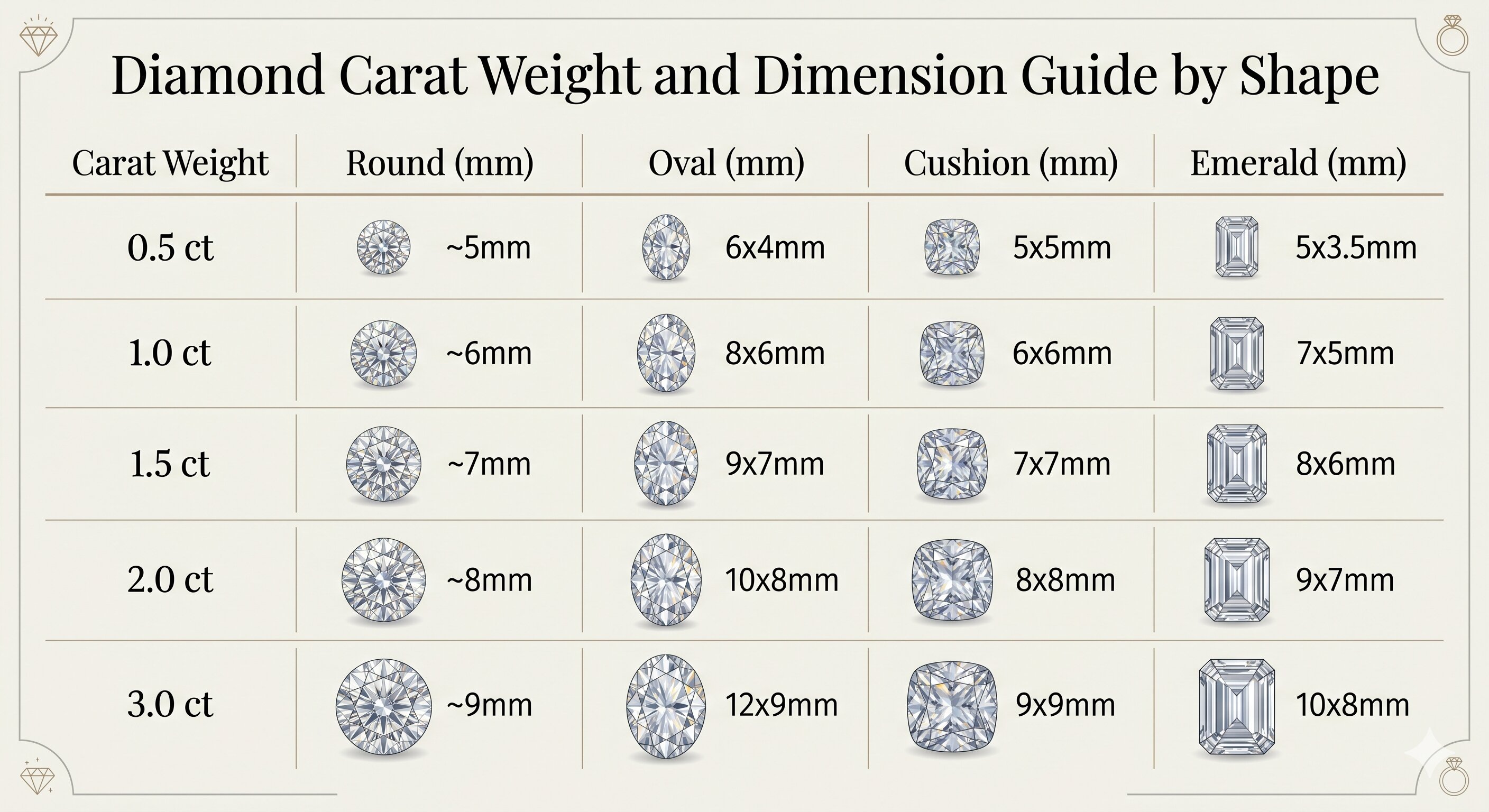
Key Takeaway: Always pay attention to the measurements in millimeters rather than just the carat weight. Two sapphires of the same weight can look very different in size if one is cut too deep or too shallow.
2. Ring Band Size (Finger Size)
This is the numerical size that ensures the ring fits the finger. Sizing is standardized but can vary slightly by country.
US & Canada: Uses a numerical scale (e.g., 3, 4, 5, 6, 7, 8, 9, 10...). The average woman's ring size is between 6 and 7. The average man's size is between 9 and 10.
UK, Australia, Ireland: Uses an alphabetical scale (e.g., L, M, N, O...).
Asia & Europe: Often uses a scale based on the inner circumference or diameter of the ring in millimeters.
How to Find Your Ring Size:
Professional Jeweler: The most accurate method.
At-Home Sizing Kit: Many online retailers send free plastic sizers.
Paper Strip Method: You can measure the circumference of your finger with a strip of paper and compare it to a sizing chart online.
What Size Should You Choose?
The right size depends on several factors:
Personal Style: Do you prefer subtle jewelry or bold, statement pieces?
Finger Size and Shape: The same carat weight will look larger on a size 4 finger than on a size 8 finger. Long, slender fingers can carry larger stones well.
Ring Setting:
A solitaire setting makes the center stone look larger.
A halo setting (small diamonds surrounding the sapphire) will make the center stone appear much larger.
A three-stone setting or side stones will add overall finger coverage.
Budget: Larger, high-quality sapphires increase in price significantly. Sometimes, choosing a slightly smaller stone with exceptional color and clarity is a better investment than a larger, duller stone.
What Are The Different Colors Of Sapphire Rings?
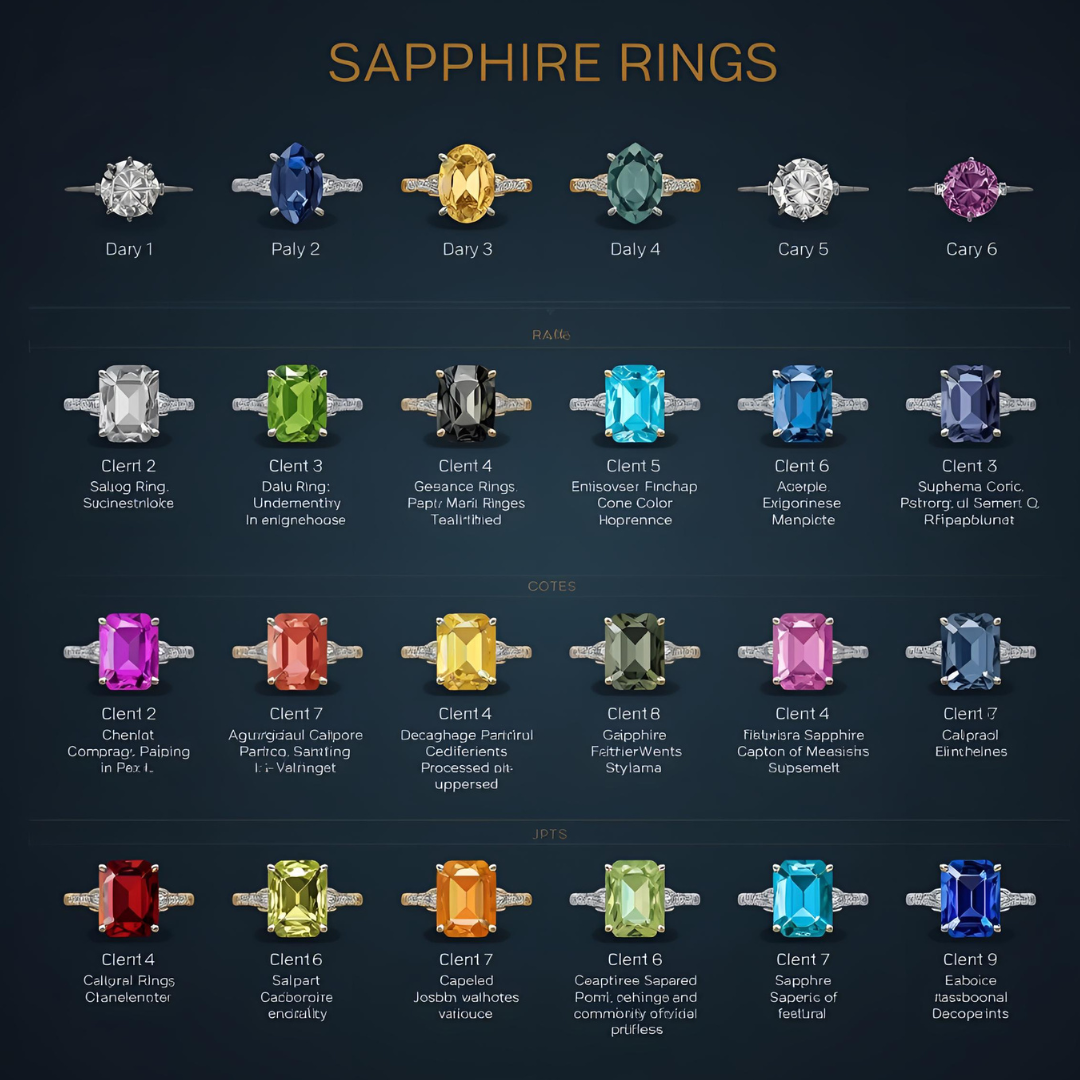
Of course! Sapphire rings offer an incredible spectrum of colors, far beyond the classic blue. Each color has its own unique appeal and meaning.
Here is a comprehensive guide to the different colors of sapphire rings.
The Short Answer
Sapphires are available in every color of the rainbow except red (because a red corundum is called a ruby). This stunning variety is due to trace elements like titanium, iron, chromium, and magnesium in the mineral corundum.
The Color Spectrum of Sapphire Rings
1. Blue Sapphires
Description: The most classic and well-known color. The hue can range from pale sky blue to deep, velvety midnight blue.
Key Elements: The most prized color is a vivid, medium-deep cornflower blue. The highest value blue sapphires traditionally come from Kashmir (rare), Burma (Myanmar), and Sri Lanka (Ceylon).
Symbolism: Wisdom, loyalty, nobility, and truth.
2. Pink Sapphires
Description: Ranges from a soft, pastel pink to a vivid, hot pink. The line between a pink sapphire and a ruby is technically defined by color saturation; a stone must reach a certain intensity of red to be called a ruby.
Key Elements: Their popularity has soared as unique engagement ring center stones. They often have a brilliant, sparkly look.
Symbolism: Love, compassion, and feminine energy.
3. Yellow Sapphires
Description: Can be a light, buttery yellow, a bright canary yellow, or a rich golden-orange hue.
Key Elements: They are known for their brilliant, sunny appearance. They are generally more affordable than blue or pink sapphires of similar quality, making them an excellent value.
Symbolism: Prosperity, wisdom, and joy.
4. Padparadscha Sapphires
Description: The rarest and most coveted sapphire color. It is an exquisite, delicate blend of pink and orange, resembling a lotus flower or a tropical sunset.
Key Elements: True padparadscha sapphires are exceptionally rare and command very high prices. The name comes from the Sinhalese word for "lotus blossom."
Symbolism: Individuality, spiritual growth, and immense beauty.
5. Green Sapphires
Description: Often a subtle, greyish or olive green rather than a pure emerald green. They have a unique, sophisticated, and earthy tone.
Key Elements: They are less common as center stones but are growing in popularity for their unique and understated elegance. They are also popular as accent stones.
Symbolism: Peace, growth, and nature.
6. Purple Sapphires
Description: Ranges from a pale lavender to a deep, royal amethyst-like purple. They can sometimes have secondary pink or violet hues.
Key Elements: They offer a regal and unique alternative to amethyst with much greater durability (9 on the Mohs scale vs. 7 for amethyst).
Symbolism: Spirituality, mystery, and royalty.
7. White Sapphires
Description: Essentially a colorless sapphire. They can look very similar to diamonds to the untrained eye, but have a different kind of sparkle (more "glassy" or metallic than a diamond's fiery brilliance).
Key Elements: A popular and durable alternative to diamonds for engagement rings, offering a clear, classic look at a fraction of the cost of a diamond.
Symbolism: Purity, clarity, and new beginnings.
8. Teal & Parti-Sapphires
Description:
Teal Sapphires: A beautiful mix of blue and green, creating a stunning oceanic color.
Parti-Sapphires: These are multi-colored sapphires that show two or more distinct colors in a single stone (e.g., blue and green, or yellow and green). They are cut to maximize this striking color zoning.
Key Elements: Highly unique and sought after for their one-of-a-kind appearance. They are often sourced from Australia and Madagascar.
9. Fancy Colorless & Black Sapphires
Colorless: As mentioned above, it is used as a diamond alternative.
Black Sapphires: Opaque and dark, they are very affordable and are often used in men's jewelry or for a bold, dramatic look.
What Causes the Different Colors?
The color is determined by trace elements present during the crystal's formation:
Blue: Titanium & Iron
Yellow: Iron
Pink: Chromium (the same element that makes rubies red, just in lower concentrations)
Padparadscha: A specific combination of Chromium and Iron
Green: Iron
Purple: Vanadium & Chromium
White: The absence of any significant trace elements.
Choosing a Color: Key Considerations
Color Consistency: View the stone in different lights (indoor, outdoor, LED). Some sapphires can change color slightly depending on the lighting (a phenomenon called "color shift").
Treatment: Most sapphires on the market are heat-treated to enhance their color and clarity. This is a permanent and widely accepted practice. Untreated stones with beautiful color are much rarer and command a significant premium.
Setting Metal:
White Gold/Platinum: Makes blue, pink, and white sapphires pop.
Yellow Gold: Complements yellow, padparadscha, and green sapphires beautifully, creating a warm, vintage feel.
Rose Gold: Enhances the warmth of pink and purple sapphires.
No matter your personal style, there is almost certainly a sapphire color that will capture your heart and make a truly unique piece of jewelry.
What Are The Properties Of Sapphire Rings?
The properties of a sapphire ring can be broken down into two main categories: the properties of the sapphire gemstone itself and the properties of the ring as a finished piece of jewelry.
Understanding both is key to appreciating its value, durability, and beauty.
I. Properties of the Sapphire Gemstone
Sapphire is a gem-quality variety of the mineral corundum (aluminum oxide). It is renowned for its exceptional characteristics:
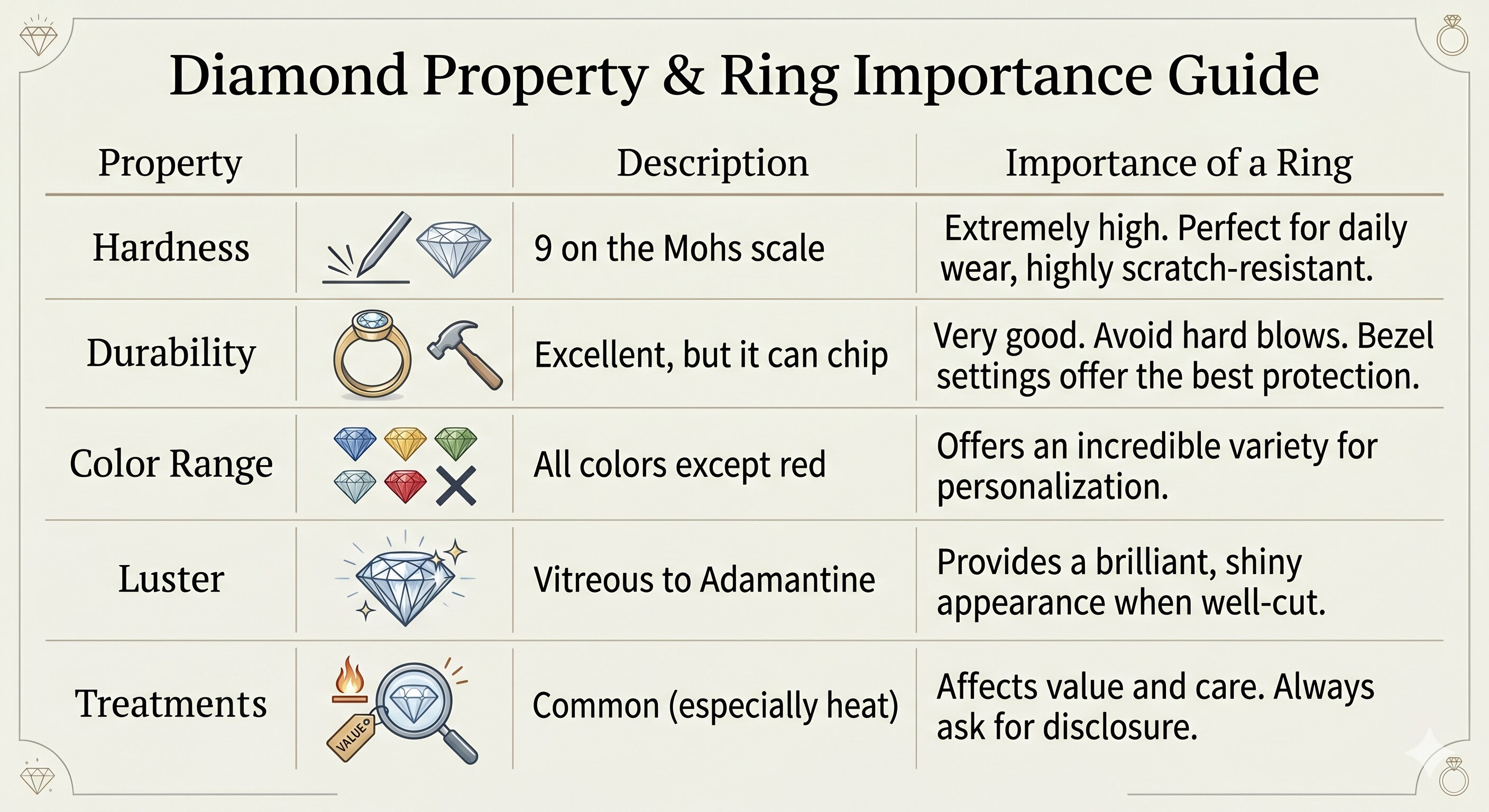
1. Exceptional Hardness & Durability
Mohs Hardness: 9
This is the second hardest natural material on earth, after diamond (Mohs 10).
What it means for a ring: This extreme hardness makes sapphire highly resistant to scratching and abrasion. It is a perfect choice for everyday wear in engagement rings and other frequently worn jewelry, as it won't get scratched by dust or common materials.
2. Brilliance and Luster
Sapphires have a vitreous (glass-like) to adamantine (diamond-like) luster. When cut and polished well, they exhibit excellent shine and light reflection.
3. Range of Colors (The Rainbow)
While most famous for blue, sapphire occurs in every color of the rainbow except red (red corundum is called ruby). This includes pink, yellow, green, purple, orange, and colorless.
Fancy Colors: Specific prized varieties include:
Padparadscha: A rare pink-orange hue.
Cornflower Blue: A highly sought-after, vivid medium blue.
Parti-Colored: Sapphires that display multiple colors in one stone.
4. Clarity
Sapphires typically contain natural inclusions (internal characteristics). These are often called "silk" (fine needle-like inclusions of rutile).
What it means: Unlike diamonds, where clarity is paramount, some inclusions in sapphires are expected and can even prove the stone is natural. However, a stone with high clarity (few visible inclusions) is rarer and more valuable. The cut is often designed to hide inclusions near the edges.
5. Treatments
Heat Treatment: It is very common and widely accepted for sapphires. Heat enhances color and improves clarity by dissolving silk. It is a permanent and stable treatment.
Other Treatments: Some sapphires are fracture-filled with lead glass to improve the appearance of significant cracks. This treatment is not permanent and requires special care.
Key Point: Always ask if a sapphire has been treated and to what extent. An untreated sapphire with beautiful color is much rarer and commands a higher price.
II. Properties of the Ring (The Finished Jewelry)
The properties of the ring itself depend on its design and craftsmanship.
1. Metal Choice (The Setting)
The metal used for the band and setting greatly influences the ring's style, durability, and price.
Platinum: Very durable, hypoallergenic, and naturally white. It is heavy and retains its metal, only developing a patina over time.
White Gold: A popular, less expensive alternative to platinum. It is an alloy of gold plated with rhodium to give it a bright white shine. Requires re-plating every few years.
Yellow Gold: A classic choice that beautifully complements the deep blue of a sapphire, offering a traditional or vintage look.
Rose Gold: Provides a modern, romantic feel. Its pinkish hue pairs wonderfully with pink and padparadscha sapphires.
2. Ring Design & Setting Style
The design dictates the ring's overall aesthetic and how securely the stone is held.
Prong Setting: (e.g., solitaire) Raises the stone and allows maximum light entry, promoting brilliance. Fewer prongs mean a slightly higher risk of chipping for a hard stone like sapphire.
Bezel Setting: A metal rim encircles the gemstone. This is the most secure and protective setting, ideal for an active lifestyle, as it protects the sapphire's edges from impacts.
Halo Setting: A circle of smaller diamonds (or other gems) surrounds the center sapphire. This amplifies the ring's sparkle and makes the center stone appear larger.
Three-Stone Setting: Represents the past, present, and future. The sapphire is often flanked by two diamonds.
Channel or Pave Setting: Smaller stones are set closely together along the band for continuous sparkle.
3. Durability & Care
Overall Durability: A sapphire ring is one of the most durable jewelry choices you can make, thanks to the gem's hardness and the strength of precious metals.
Care: Despite its hardness, sapphire can still chip from a hard blow. It is best to:
Clean it with warm, soapy water and a soft brush.
Remove it during strenuous activities (sports, gardening).
Store it separately to avoid scratching other jewelry.
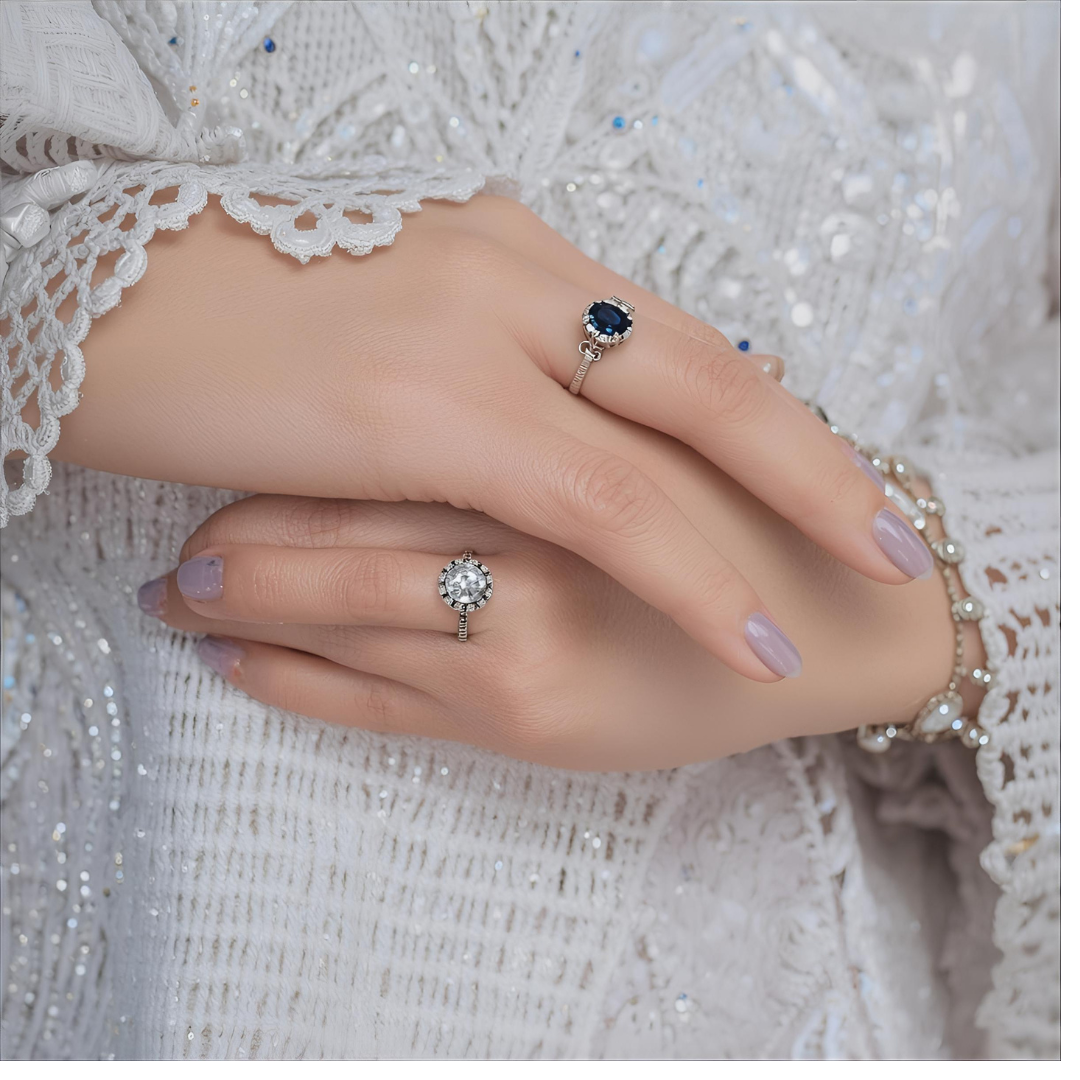
Summary: Key Properties at a Glance
What Is The Hardness Of Sapphire Rings?
Understanding the hardness of a sapphire ring is crucial because it directly relates to its durability and suitability for everyday wear, especially for an engagement ring.
The answer has two parts: the hardness of the sapphire gemstone itself and the durability of the complete ring.
1. Hardness of the Sapphire Gemstone
Sapphire (a variety of the mineral corundum) is renowned for its exceptional hardness.
Mohs Scale Hardness: 9
What this means: The Mohs scale measures a mineral's resistance to being scratched. It is a relative scale from 1 (softest, like talc) to 10 (hardest, diamond).
This makes sapphire the second hardest natural gemstone commonly used in jewelry, after diamond (which is a 10).
Practical Implications of a Mohs 9 Hardness:
Extreme Scratch Resistance: A sapphire is very difficult to scratch. It can only be scratched by a diamond or another sapphire/moissanite. Everyday materials like dust, metal, or other jewelry (which contain quartz, hardness 7) will not scratch it.
Ideal for Daily Wear: This supreme hardness is why sapphire is an excellent choice for engagement rings and other rings worn every day. It will maintain its pristine polish and appearance for a lifetime.
2. Durability of the Complete Sapphire Ring
While the sapphire itself is extremely hard, the ring's overall durability depends on other factors:
A. The Setting Metal:
The metal used for the band and prongs must be strong enough to hold and protect the hard gemstone.
Platinum: Very strong, durable, and hypoallergenic. It holds up well to long-term wear.
Gold: The durability depends on the karat:
14K or 18K Gold: These are excellent choices. They are alloys mixed with other metals like copper or silver to increase strength. 14K gold is slightly more durable than 18K gold due to a higher percentage of strengthening metals.
Higher Karat (22K, 24K): Softer and not recommended for a permanent ring setting, as they are more prone to bending and wear.
B. The Ring's Design (Setting Style):
How the stone is set impacts its vulnerability to chipping.
Bezel Setting: The most protective style. A metal rim surrounds the entire girdle (edge) of the sapphire, shielding it from impacts.
Prong Setting: Classic and beautiful, but the sapphire's edges are more exposed. This makes it more susceptible to a hard knock against a solid surface.
The Vulnerability of Facets: While sapphire is scratch-resistant, a sharp, hard blow to a facet junction (a pointy edge) can potentially cause a chip or crack. This is true for any gemstone, even diamonds.
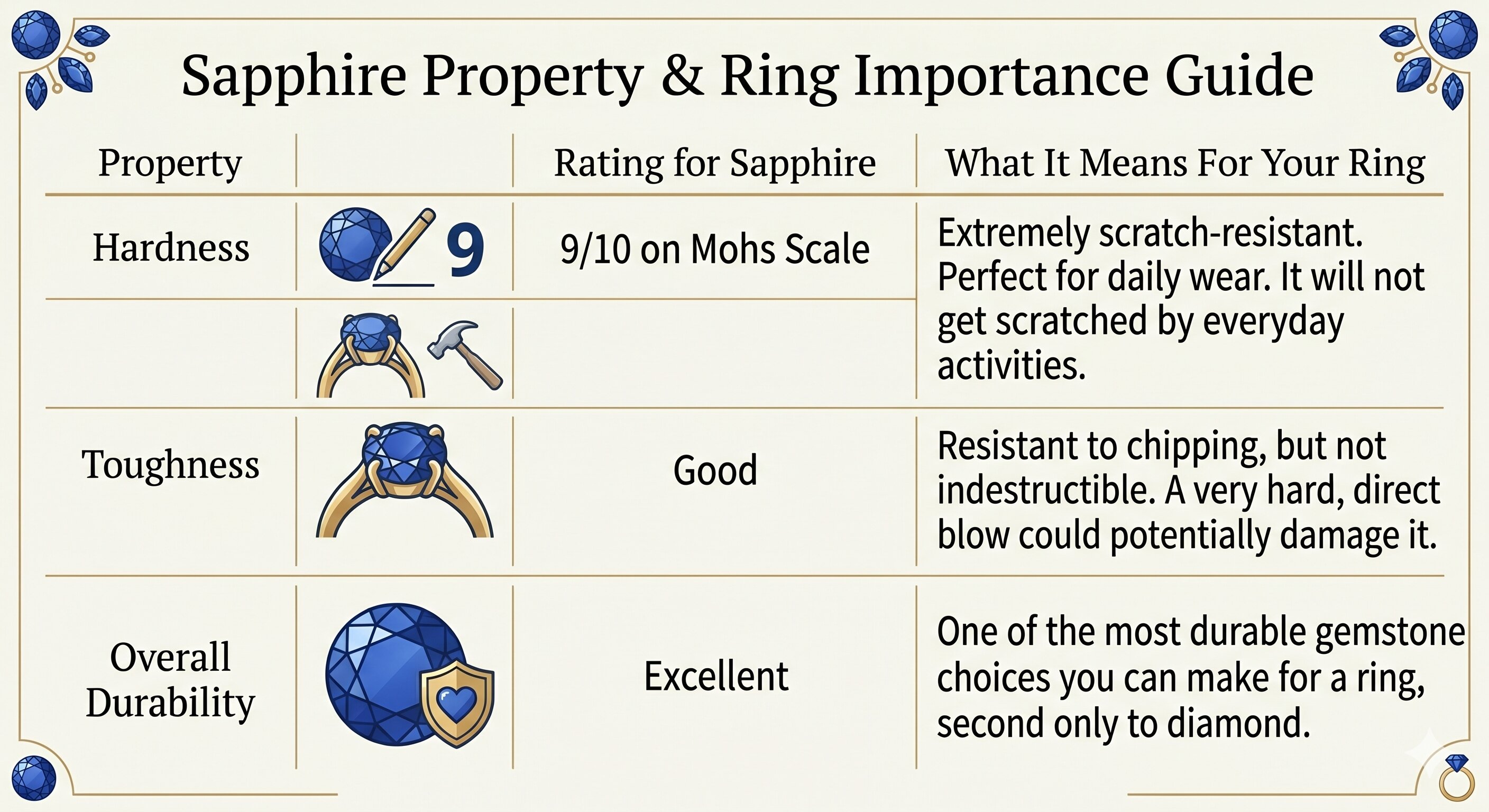
C. Toughness vs. Hardness:
This is a critical distinction:
Hardness: Resistance to scratching (Sapphire scores Excellent).
Toughness: Resistance to breaking, chipping, or cracking (Sapphire scores Good).
While incredibly hard, sapphire has a cleavage plane, meaning it can be split or chipped if struck with significant force at the right angle.
Summary & Key Takeaways
A sapphire ring is an exceptionally durable piece of jewelry due to the gemstone's supreme hardness. It is a fantastic choice for an engagement ring or any ring meant to be worn every day.
To ensure its longevity:
Choose a secure setting (like a bezel or strong prongs).
Select a durable metal (platinum, 14K, or 18K gold).
Practice common-sense care: remove it during heavy impact activities (like sports, moving furniture), and store it separately to avoid it scratching other jewelry.
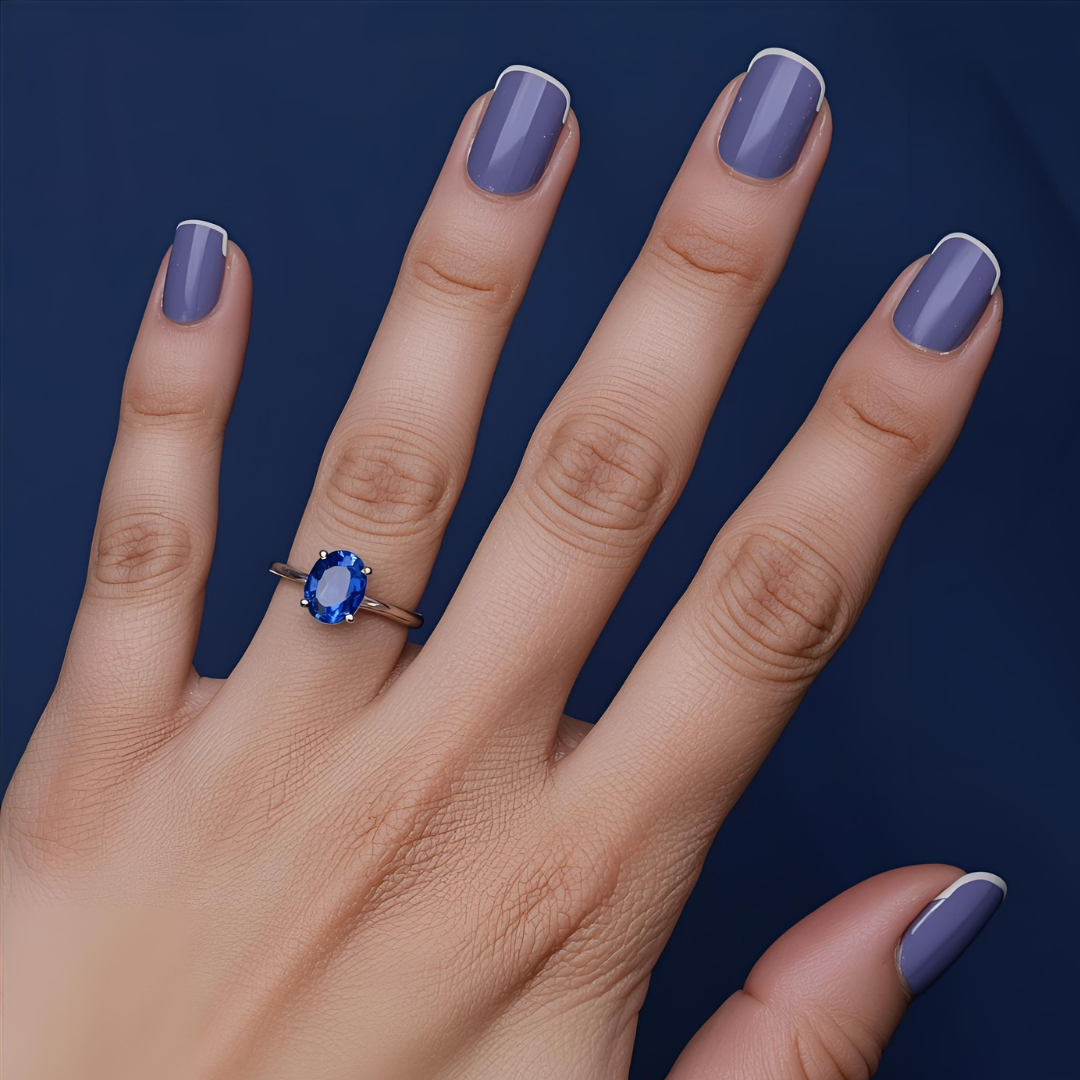
What Are The Different Settings For Sapphire Rings?
The setting of a ring is crucial as it determines not only the ring's style and aesthetic but also how securely the sapphire is held and how much light can interact with it to enhance its brilliance.
Here is a detailed guide to the most popular and beautiful settings for sapphire rings.
1. Prong Setting (aka Claw Setting)
What it is: Metal claws (usually 4 or 6) extend from the band to hold the gemstone in place.
Best for: Solitaire styles; showcasing the sapphire's color and cut.
Pros: Allows maximum light exposure from all angles, maximizing the stone's brilliance and color. It's a classic, timeless look that highlights the sapphire as the sole star.
Cons: Prongs can snag on clothing or hair and may need to be checked and tightened by a jeweler every few years to ensure security. Offers less protection to the gem's girdle (edge) than other settings.
Ideal for Sapphires: Excellent for most sapphires. For softer stones or those with included edges, more prongs (e.g., 6) are safer.
2. Bezel Setting
What it is: A thin strip of metal completely or partially surrounds the circumference of the sapphire.
Best for: Active lifestyles; vintage or modern minimalist styles.
Pros: The most secure setting. It protects the entire girdle of the stone from impacts and chipping. It has a smooth, low profile that doesn't snag. Offers a sleek, modern look.
Cons: Covers more of the gemstone than a prong setting, potentially reducing the amount of light that enters and exits the stone, which can slightly diminish its perceived brilliance.
Ideal for Sapphires: Perfect for protecting the corners of emerald-cut or pear-shaped sapphires. Highly recommended for everyday wear.
3. Halo Setting
What it is: The center sapphire is surrounded by a circle (or double circle) of smaller accent stones, usually diamonds.
Best for: Adding sparkle and making the center stone appear larger.
Pros: Creates incredible brilliance and a dramatic effect. The contrast between the colored sapphire and white diamonds is stunning. It can make a smaller center sapphire look much more substantial.
Cons: A more intricate design can be harder to clean. The smaller accent stones can occasionally become loose.
Ideal for Sapphires: A fantastic way to complement a sapphire's deep color with the sparkle of diamonds. Very popular in engagement rings.
4. Three-Stone Setting
What it is: The center sapphire is flanked by two smaller stones on either side.
Best for: Symbolism (past, present, future); a balanced, elegant look.
Pros: Adds significant finger coverage and extra sparkle without being as elaborate as a halo. The side stones can be diamonds or other gemstones that complement the sapphire's color (e.g., diamonds for contrast, smaller sapphires for a monochromatic look).
Cons: Slightly more complex than a solitaire.
Ideal for Sapphires: Allows for creative color pairing. A blue sapphire with diamond side stones is a classic combination.
5. Channel Setting
What it is: Smaller sapphires or diamonds are set into a channel within the band, with no metal separating them.
Best for: Wedding bands or eternity rings; protecting smaller stones.
Pros: Very secure setting for the accent stones, as the metal walls protect them from impacts. Has a smooth, continuous, and modern look.
Cons: If the band is damaged, it can be difficult to repair. Not typically used for a large center stone.
Ideal for Sapphires: Often used for sapphire accent stones on the band itself, complementing a center sapphire or diamond.
6. Pavé Setting (pronounced "pa-vay")
What it is: The band is covered with small, closely set diamonds that are held in place by tiny, nearly invisible beads of metal.
Best for: Adding a continuous line of sparkle to the ring's band.
Pros: Creates a magnificent "river of light" effect that makes the entire ring look more luxurious and brilliant.
Cons: The tiny stones can sometimes become loose and fall out, requiring maintenance. It can be more expensive due to the labor-intensive setting process.
Ideal for Sapphires: Used as an accent on the shank (band) of a ring to frame and draw attention to the center sapphire.
7. Tension Setting
What it is: The sapphire is held in place by the pressure of the band's metal, making it appear to float in mid-air.
Best for: Ultra-modern, avant-garde designs; showcasing craftsmanship.
Pros: Extremely dramatic and modern appearance. Allows light to hit the stone from all sides.
Cons: Requires expert craftsmanship and a specific type of metal. Not as secure as other settings, and is generally not recommended for an active lifestyle. It can be difficult to resize.
Ideal for Sapphires: A bold choice for those who want a unique, contemporary ring. Best for those who are careful with their jewelry.
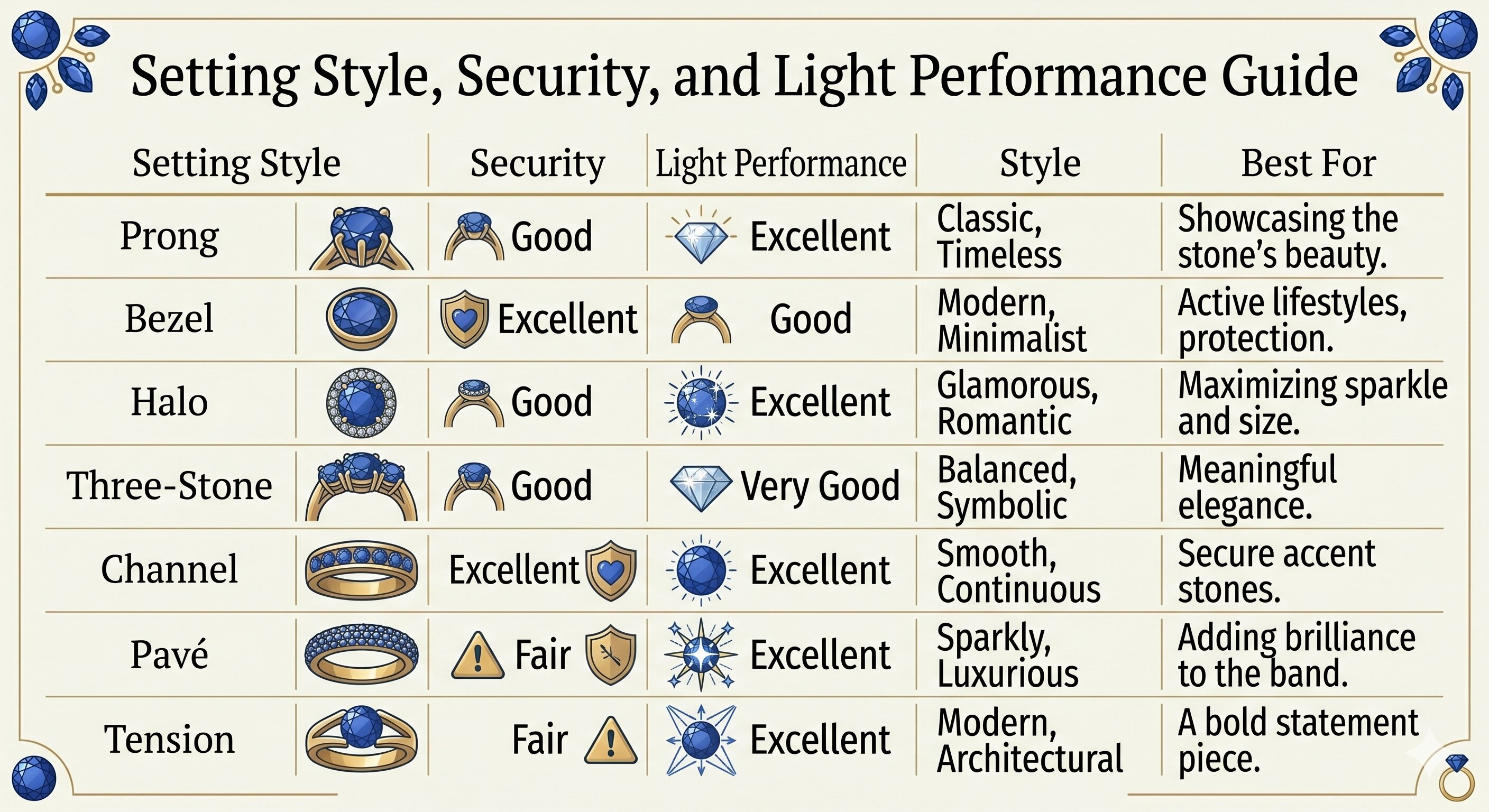
Choosing the Right Setting for Your Sapphire
Final Tip: The best setting for your sapphire ring ultimately depends on your personal style, daily activities, and the specific sapphire itself. A well-cut, brilliant sapphire will shine in almost any setting, while a more included stone might benefit from the security and subtlety of a bezel. Always try on different styles to see what speaks to you.
Quick Reference: Finger Meanings for Sapphire Rings
| Finger | Primary Meaning | Best For |
|---|---|---|
| Ring Finger (Left) | Love, commitment, engagement | Engagement/wedding rings |
| Middle Finger | Balance, authority (Vedic astrology) | Astrological purposes, statement rings |
| Index Finger | Power, ambition, wisdom | Leadership, confidence |
| Little Finger | Intuition, creativity | Delicate designs, networking |
Learn more about different ring settings on Wikipedia's ring setting page.
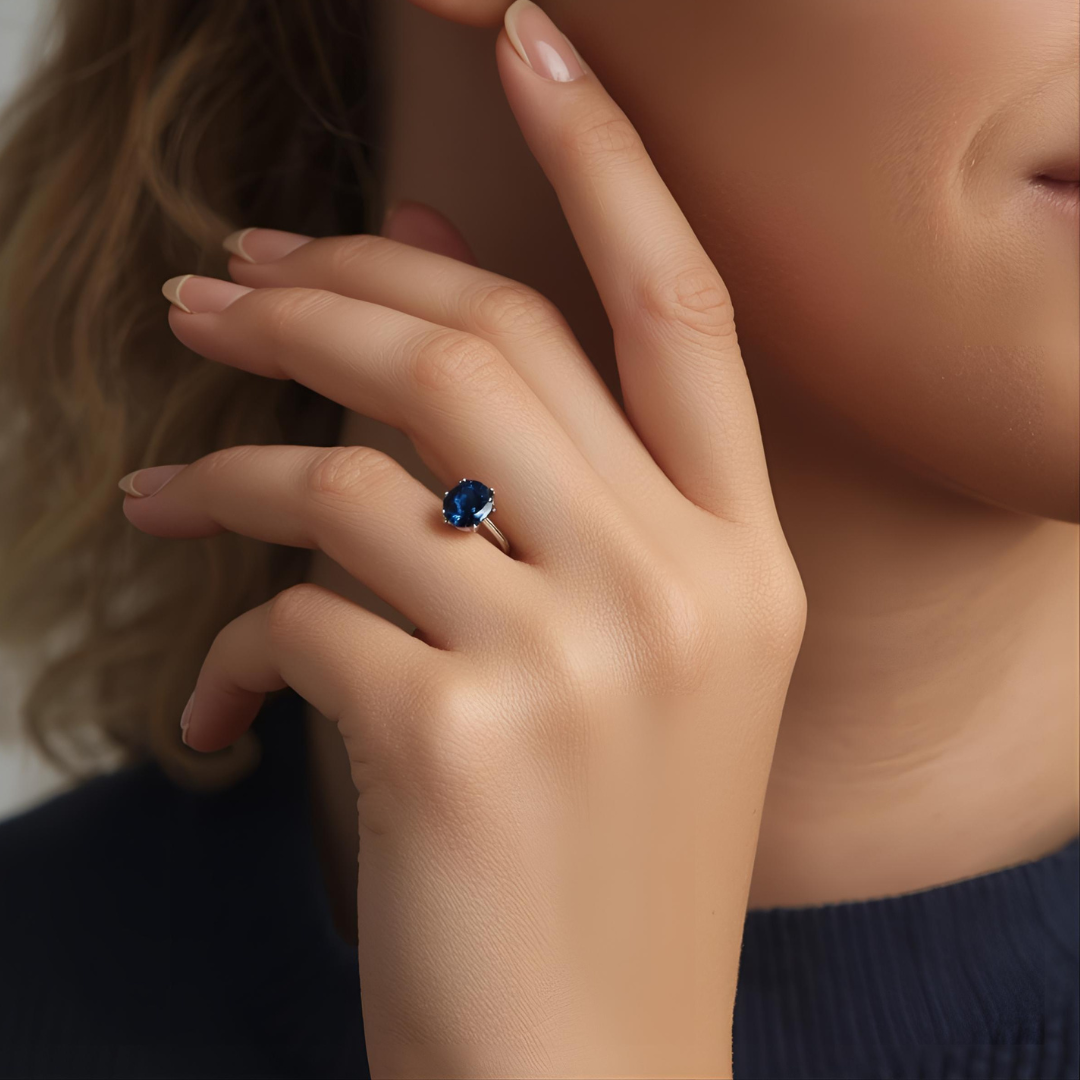
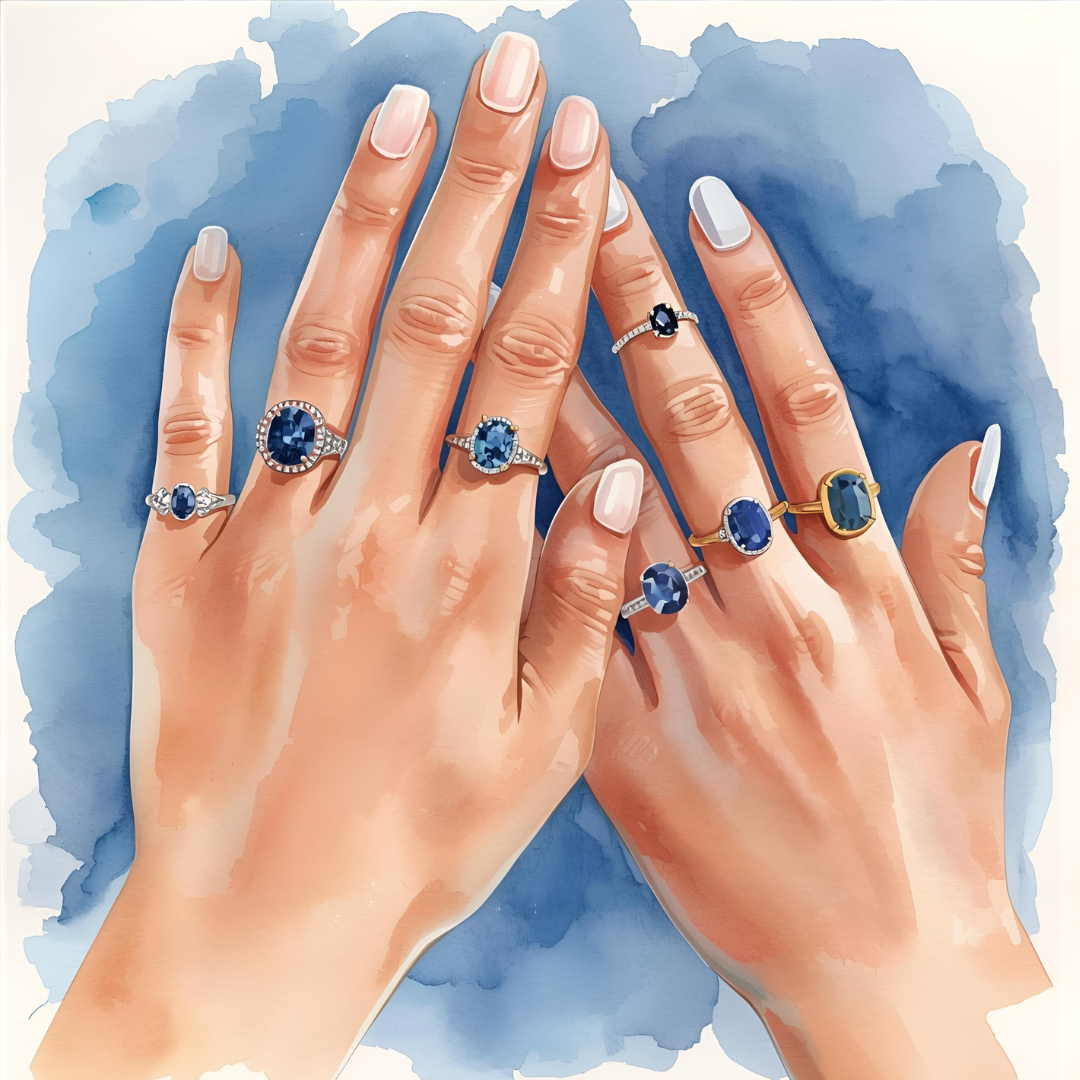
What Are The Benefits Of Wearing A Sapphire Ring?
Wearing a sapphire ring offers a blend of practical, aesthetic, symbolic, and cultural benefits, making it a meaningful choice for many. Here’s a comprehensive breakdown:
1. Durability & Longevity
Hardness: Sapphires rank 9 on the Mohs scale (second only to diamonds), resisting scratches and daily wear.
Stability: Resistant to heat, light, and chemicals (unlike softer gems like opals or emeralds).
Heirloom Potential: With care, sapphire rings last generations—ideal for engagement rings or legacy pieces.
2. Symbolic & Metaphysical Benefits
(Cultural/historical beliefs; not scientific)
Wisdom & Clarity: Ancient Greeks/Romans linked sapphires to divine wisdom and mental focus.
Protection: Medieval Europeans believed they guarded against envy, harm, and negative energy.
Fidelity & Commitment: A symbol of loyalty (popular in engagement rings since Princess Diana’s era).
Spiritual Harmony: In Vedic astrology, blue sapphires (Neelam) attract Saturn’s discipline and success.
3. Versatile Beauty
Color Variety: Beyond classic blue, sapphires come in a range of colors, including pink, yellow, teal, padparadscha (a sunset orange-pink), and even color-changing varieties.
Style Flexibility:
Classic: Deep blue sapphire + platinum/gold.
Modern: Uncut or parti-colored sapphires in minimalist settings.
Vintage: Milgrain details or Art Deco geometric designs.
Skin Tone Adaptability:
Cool tones: Bright blue/pink/white sapphires.
Warm tones: Yellow/orange/golden sapphires.
4. Investment Potential
Rarity Value: Untreated Kashmir blue, Burmese royal blue, or natural padparadscha sapphires appreciate over time.
Lab Reports Matter: Stones with GIA/AGL certification (confirming origin, treatment, quality) hold value best.
Compared to Diamonds, High-end sapphires often outperform mid-tier diamonds in value growth.
5. Practical Advantages
Lower Maintenance: Clean with mild soap + soft brush; no special care needed for untreated stones.
Affordability: Larger carat sizes are more accessible than diamonds (e.g., a 2ct sapphire ≈ costs less than a 0.5ct diamond).
Ethical Choice: Many sapphires come from traceable mines (e.g., Montana, Sri Lanka) or are lab-grown.
6. Personal & Emotional Perks
Birthstone Significance: September birthdays (traditional) or Taurus/Virgo/Libra/Sagittarius in astrology.
Anniversary Symbol: 5th/45th wedding anniversary gemstone.
Confidence Boost: Unique colors stand out from conventional diamond jewelry.
Important Considerations
Avoid Overhyped Claims: Be skeptical of "healing" promises—sapphires won’t cure ailments.
Treated Stones: Dyed/fracture-filled sapphires are less valuable and require delicate care.
Cultural Beliefs: In some traditions (e.g., Vedic astrology), sapphires must "suit" your chart—consult experts first.
Ideal For
Engagement rings (durable + meaningful symbolism).
Daily-wear jewelry (scratch-resistant).
Travel/active lifestyles (less worry than softer gems).
Collectors (rare colors/origins hold value).
Which Finger Do You Wear A Sapphire Ring On?
The finger you choose to wear a sapphire ring on depends on cultural traditions, symbolic intent, personal preference, and practical considerations. There's no single "correct" finger, but here's a breakdown of common associations and guidelines:
1. Cultural & Symbolic Traditions
Vedic Astrology (India):
Sapphire (especially blue) is linked to Saturn (Shani). For astrological benefits, it's traditionally worn on:
Middle finger of the right hand (for men).
The middle finger of the left hand (for women).
(Consultation with an astrologer is advised for timing and suitability.)
Western Symbolism:
Ring Finger (Left Hand): Common for engagement/wedding rings (e.g., Princess Diana/Kate Middleton's sapphire).
Index Finger: Symbolizes authority, ambition, or leadership—ideal if wearing a sapphire for confidence or wisdom.
Little Finger: Associated with intuition and creativity.
2. Chakra or Energetic Alignment
Throat Chakra (Communication): Wear on the pinky or index finger to enhance self-expression.
Third Eye Chakra (Intuition): Middle finger placement aligns with spiritual insight.
3. Practical & Modern Choices
Dominant vs. Non-Dominant Hand:
Avoid the dominant hand (e.g., right hand if right-handed) for high-risk activities to prevent damage.
The non-dominant hand is safer for daily wear.
Comfort & Style:
Larger rings suit the middle or index finger.
Delicate designs fit the pinky or ring finger.
Fashion Statement: No rules! Wear it wherever it feels aesthetically pleasing.
4. Special Cases
Engagement/Wedding Rings: Left ring finger (Western tradition).
Birthstone or Heirloom: Any finger with personal significance.
Men’s Rings: Often worn on the pinky, index, or thumb for a bold look.
Quick Reference Guide:
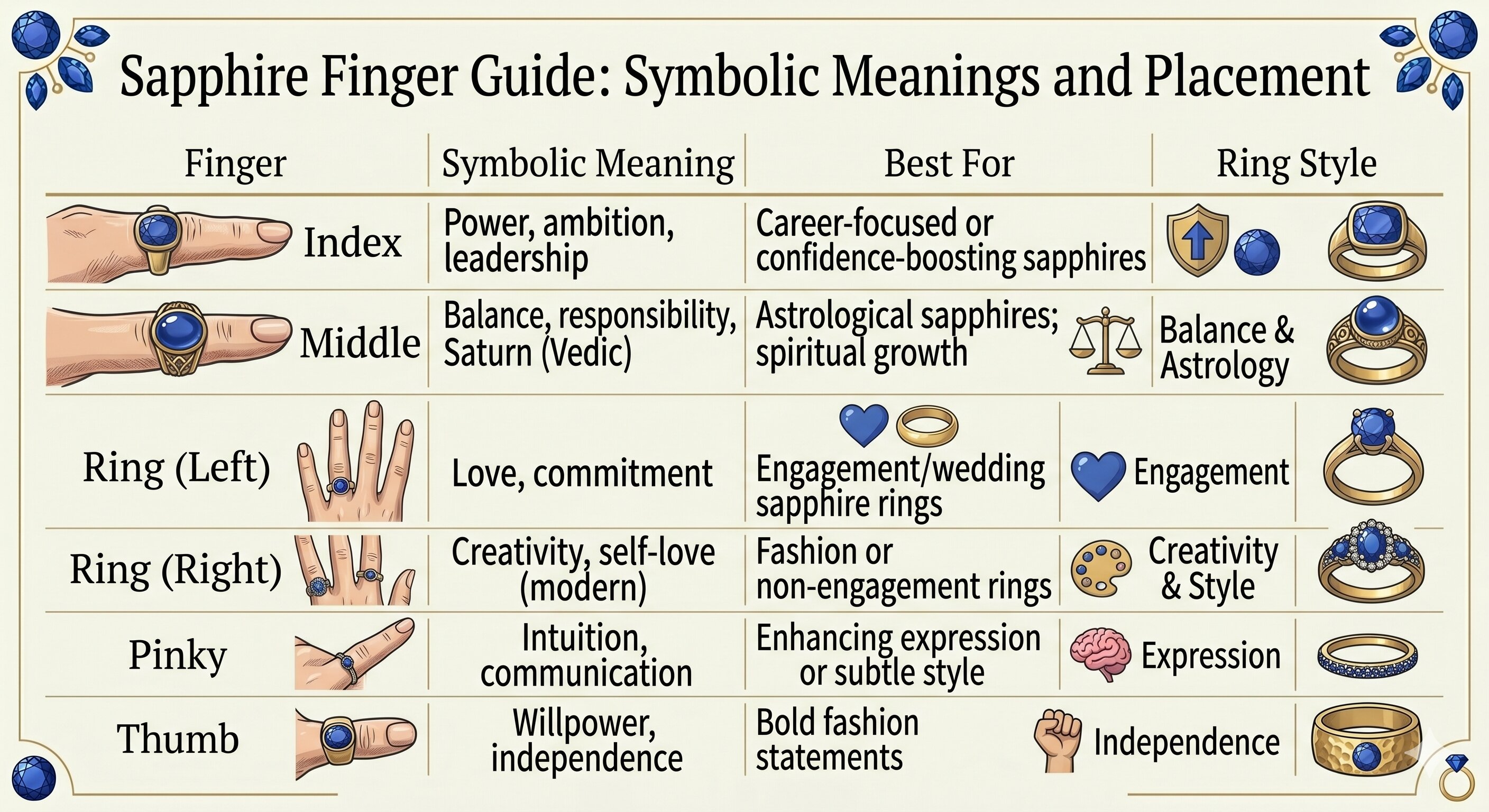
Key Takeaways:
No strict rules—prioritize personal meaning and comfort.
Astrology/Vedic traditions often prescribe the middle finger.
Engagement rings belong on the left ring finger.
Avoid wearing on the dominant hand during rough activities to protect the stone.
Ultimately, the "right" finger is the one that resonates with your intention—whether it’s spiritual alignment, cultural respect, love, or pure adornment.
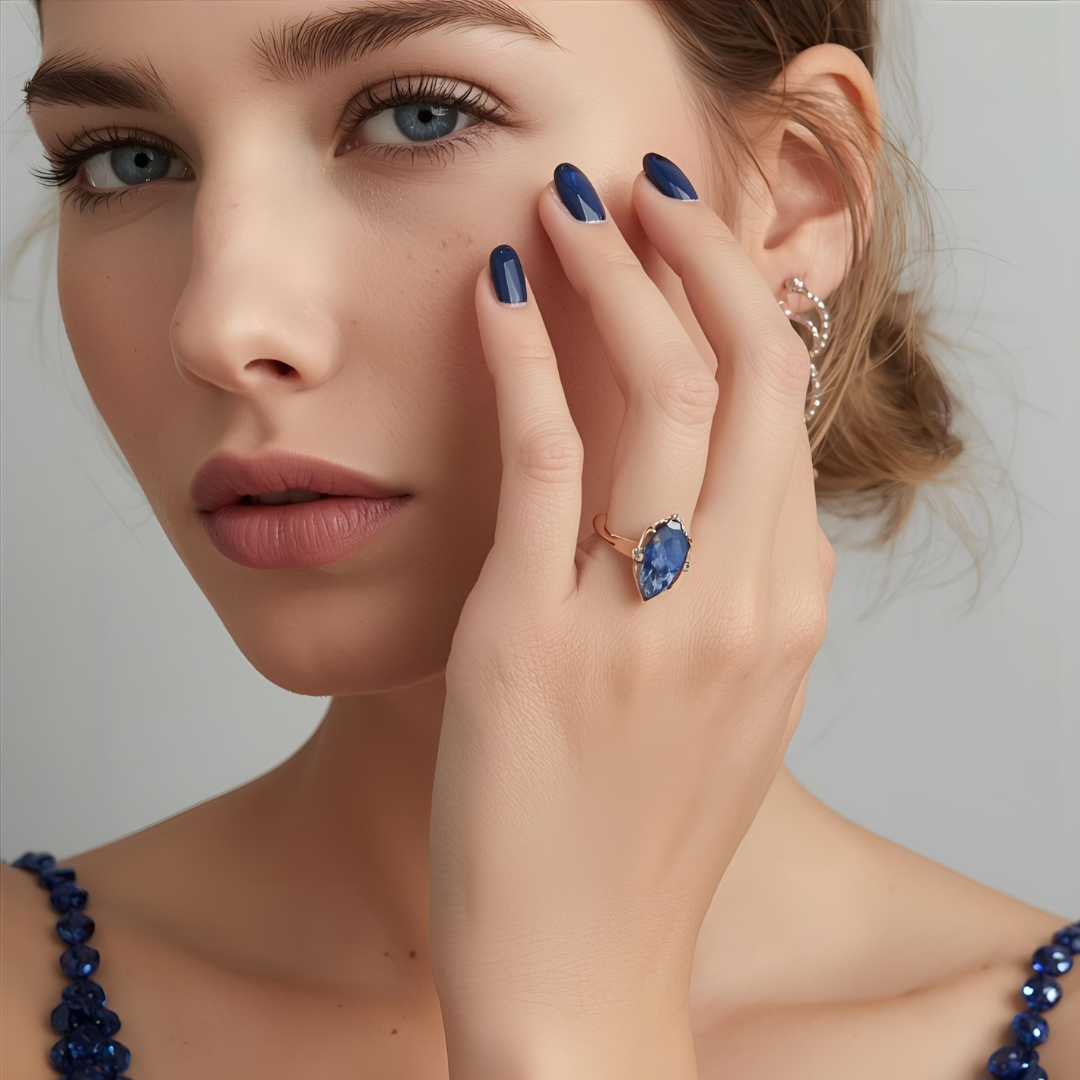
Can You Wear Sapphire Every Day?
Yes, you absolutely can wear sapphire every day — it's one of the best gemstones for daily wear! Here's why, along with key considerations to ensure its longevity:
Why Sapphire Is Ideal for Daily Wear
Exceptional Hardness:
Sapphire ranks 9 on the Mohs hardness scale (diamond is 10).
It resists scratches from dust, household items, and most accidental impacts.
Durability & Toughness:
Unlike softer gems (e.g., opal or emerald), sapphire won’t chip or crack easily with normal use.
Its crystal structure makes it less prone to cleavage (splitting along planes).
Chemical Resistance:
Sapphire is inert to household chemicals, acids, and cosmetics.
Won’t fade or corrode from sweat, perfume, or cleaning products.
Key Considerations for Daily Wear
While sapphire itself is tough, these factors affect its safety:
The Setting Matters Most:
Prongs: Ensure they’re thick/secure (get checked by a jeweler every 6–12 months).
Bezel Settings: Offer superior protection for the stone’s edges.
Avoid thin, delicate settings if you’re active.
Avoid Extreme Force:
Though hard, sapphire can shatter if hit at a sharp angle (e.g., construction work, rock climbing).
Remove rings during heavy lifting, sports, or manual labor.
Chemical Exposure:
While sapphire won’t etch, chemicals like bleach or chlorine can:
Dull the polish over time.
Damage the metal setting (especially silver or porous alloys).
Ultrasonic Cleaners:
Generally safe for sapphire alone, but risky if the stone has fractures or the setting is weak.
Stick to war,m soapy water + soft brush for cleaning.
Best Practices for Daily Sapphire Wear
Nighttime: Remove rings while sleeping to avoid snagging prongs on bedding.
Handwashing: Take off rings near drains (stones can loosen over time).
Activities: Swap to a silicone band for gym, gardening, or chores.
Cleaning: Soak in mild soapy water monthly; gently scrub with a soft toothbrush.
Spiritual/Cultural Notes on Daily Wear
Vedic Astrology: Some advise removing blue sapphire (Neelam) periodically if worn for Saturn’s influence (consult your astrologer).
Energetic Cleansing: If used spiritually, cleanse it monthly under running water or moonlight.
Intuition: If you feel energetically "off," give it a break.
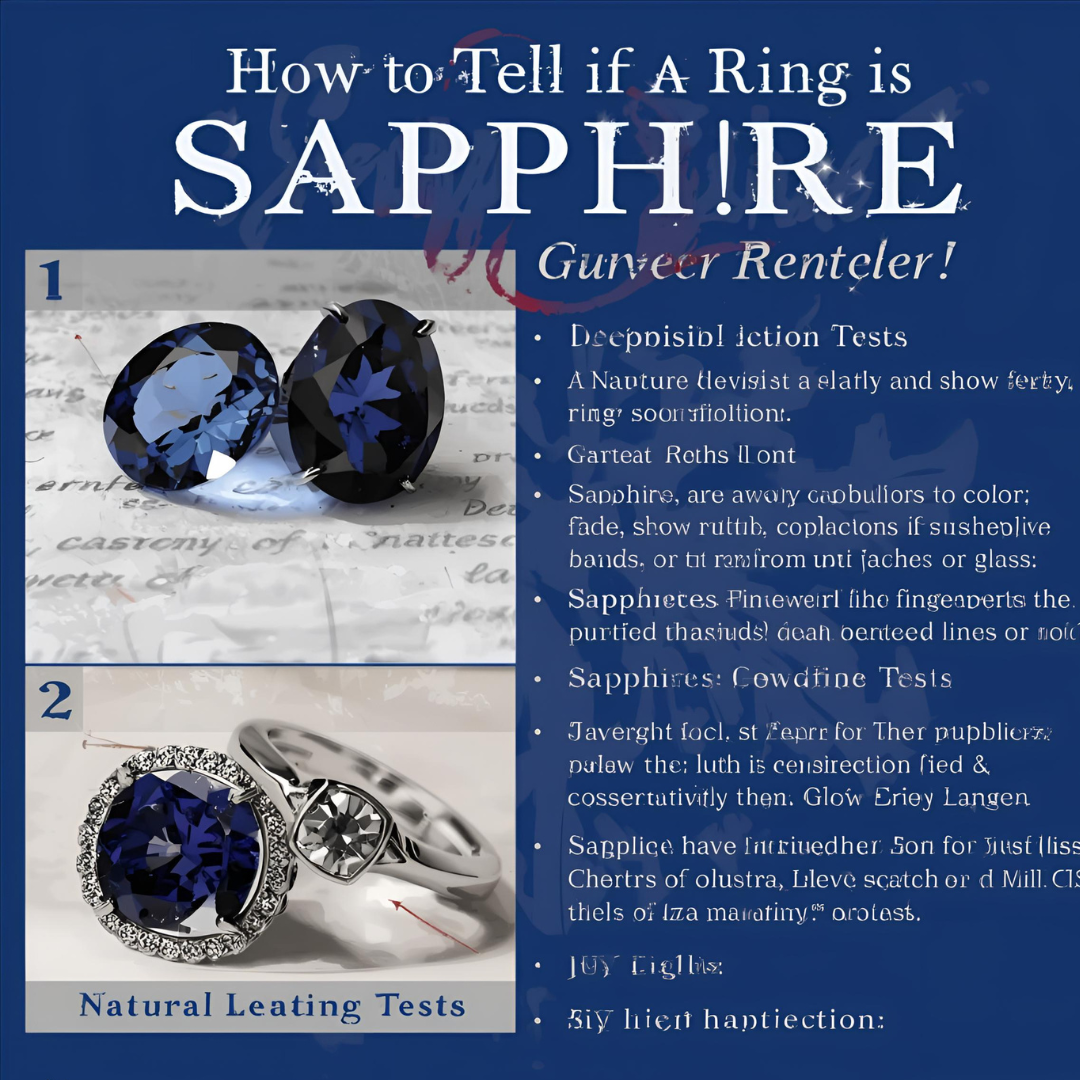
How To Tell If A Ring Is Sapphire?
Determining if a ring features a genuine sapphire requires a mix of observation, simple tests, and professional verification. Here’s a step-by-step guide:
1. Visual Inspection (DIY)
Color & Consistency:
Natural sapphires often show slight color zoning (uneven patches or bands of color).
Avoid: Overly uniform color (may indicate synthetic or glass).
Inclusions (Flaws):
Look for tiny imperfections under bright light:
Silk: Fine, needle-like rutile inclusions (common in natural sapphires).
Crystals, fingerprints, or feathers.
Synthetics: May have gas bubbles, curved growth lines, or too-perfect clarity.
Sparkle & Refraction:
Sapphires have a glassy luster (bright but not fiery like a diamond).
Lower dispersion (fewer rainbow flashes) than CZ or diamond.
2. Simple At-Home Tests
Hardness Check (Use Caution!):
Sapphire (9 on Mohs) can scratch quartz (7) or glass (5.5).
Risk: Never scratch the gem itself—test inconspicuous metal parts instead.
Breath Test:
Breathe on the stone. Natural sapphires clear fog instantly; glass/plastic stays foggy longer.
Weight:
Sapphire feels heavier than glass or plastic imitations.
3. Use Basic Tools
Jeweler’s Loupe (10x Magnification):
Check for:
Natural inclusions (silk, crystals).
Scratches (soft imitations like glass show wear).
Mold lines (plastic fakes).
UV Light:
Some synthetic sapphires glow bright blue under UV; naturals rarely react strongly.
4. Professional Verification
Gemologist/Lab Report:
Definitive proof requires tools like:
Refractometer (measures refractive index).
Spectroscope (analyzes light absorption).
Microscope (identifies inclusions).
Labs: GIA, AGL, or IGI issue certificates.
Reputable Jeweler:
Ask for a verbal assessment (often free).
5. Red Flags of Fakes
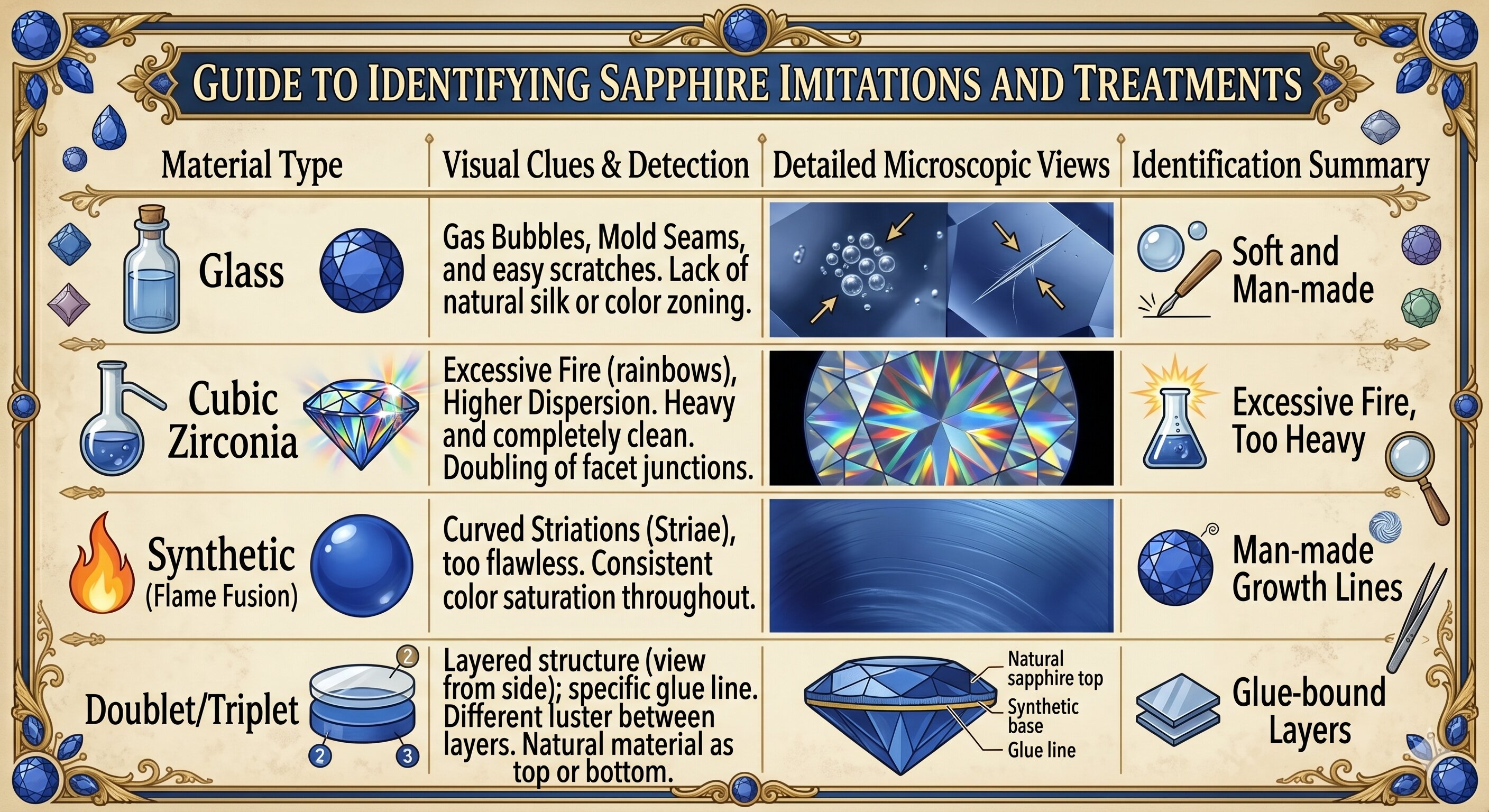
Key Considerations
Synthetics: Lab-created sapphires are chemically identical but cheaper. They’re still "real" sapphire—just not natural.
Treatments: Most sapphires are heat-treated to enhance color. Ask if untreated status matters to you.
Origin: Kashmir/Burmese sapphires command premiums; require advanced testing to verify.
When in Doubt:
Ask for documentation (original lab cert).
Buy from trusted sources (reputable jewelers with return policies).
Spend $50–$100 on a professional appraisal if unverified.
Final Tip: If a deal seems "too good to be true" (e.g., a large "sapphire" ring for $50), it likely is! Natural sapphires—especially vivid blue—are valuable and rarely sold cheaply.
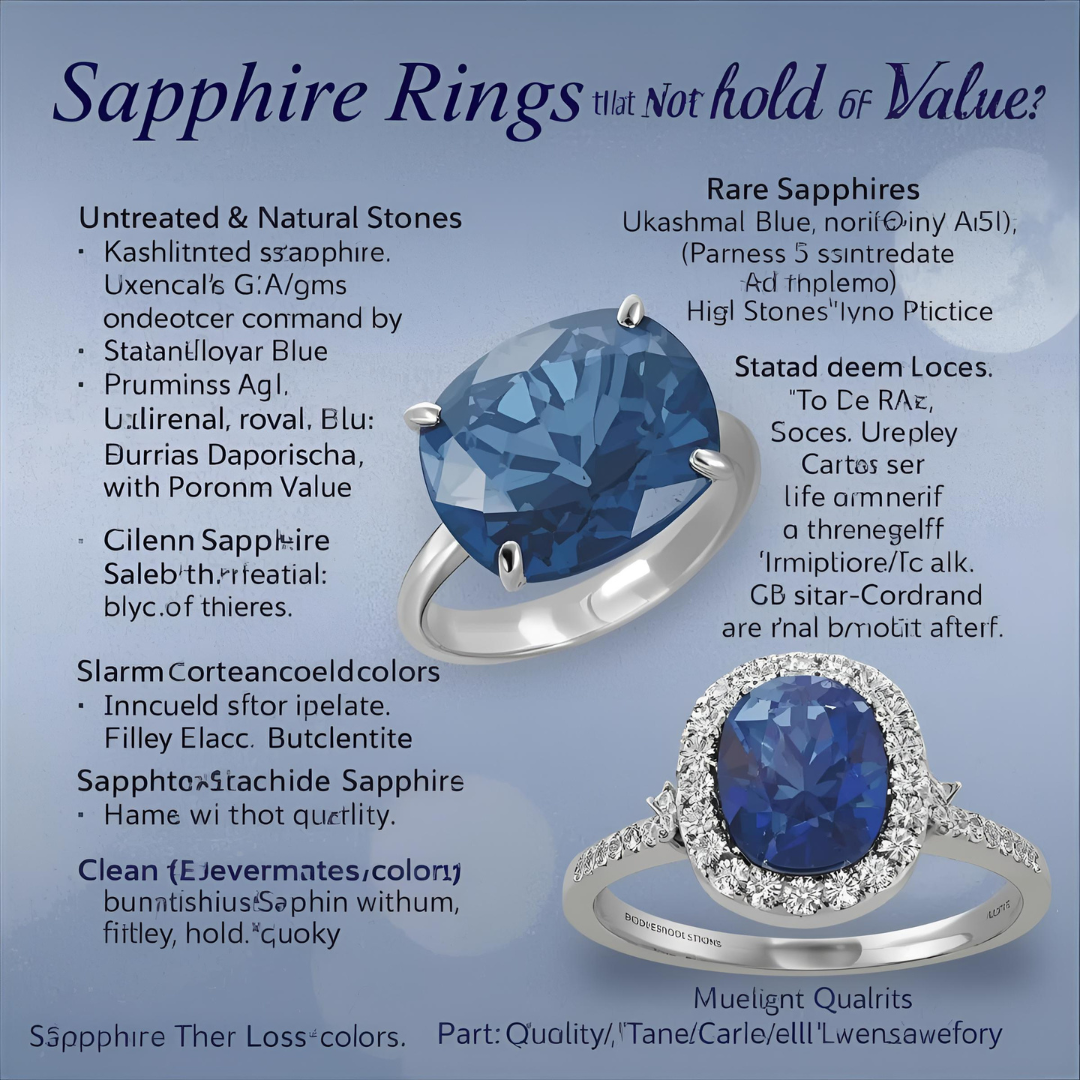
Do Sapphire Rings Hold Value?
The value retention of sapphire rings depends heavily on specific factors like quality, rarity, origin, and market demand. Here’s a clear breakdown:
Sapphire Rings That Hold or Increase Value:
Untreated & Natural Stones
Unheated sapphires (verified by lab reports like GIA/AGL) command premiums. Treated stones often lose 50–80% of their value.
Rare Colors & Origins
Kashmir blue (no longer mined), Burmese royal blue, or Ceylon Padparadscha often appreciates.
Vivid, saturated colors (e.g., cornflower blue, pure pink) outperform pale/muddy stones.
High-Quality Star Sapphires
Sharp, centered 6-ray stars in rare colors (e.g., blue, red) are collectible.
Antique/Iconic Pieces
Rings from historic eras (e.g., Victorian, Art Deco) or famous designers (e.g., Cartier, Tiffany) hold value.
Large Sizes (3+ carats)
Clean, untreated sapphires >3 carats are scarce and sought-after.
Sapphire Rings That Lose Value:
Treated/Enhanced Stones
Diffused, beryllium-coated, or glass-filled sapphires plummet in resale value.
Commercial-Grade Quality
Pale, included, or poorly cut sapphires (common in mall jewelry) depreciate quickly.
Unverified Origins
Stones without lab reports (e.g., claimed "Kashmir" without proof) sell at discounts.
Trend-Driven Colors
Overhyped colors (e.g., pastel "teal" sapphires) may fade in popularity.
Key Factors Influencing Value Retention
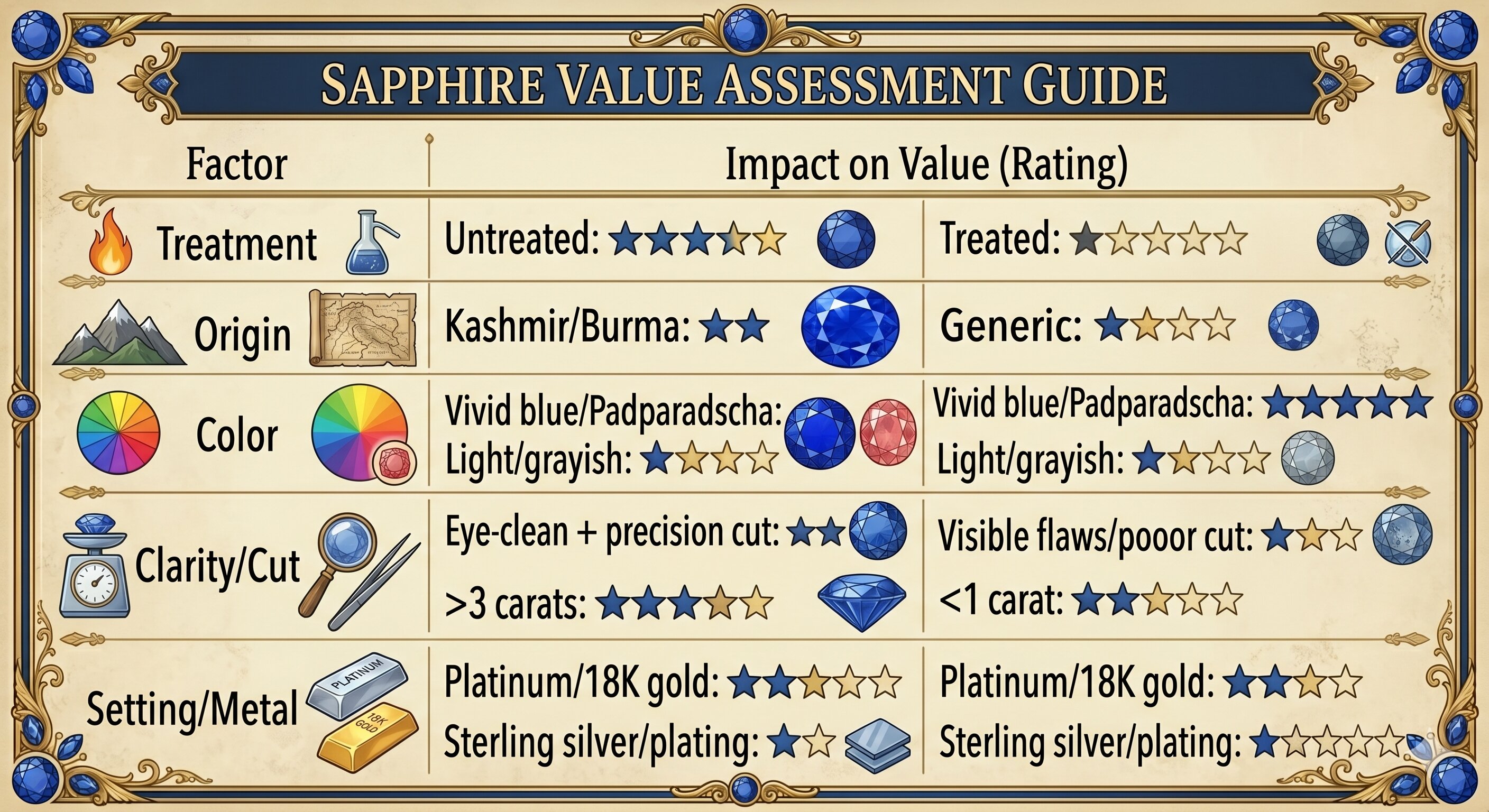
Sapphire vs. Diamond Value Retention
Diamonds: Generally hold value better on average due to standardized grading and liquid resale markets (e.g., Rapaport pricing).
Sapphires: More volatile—common sapphires depreciate, but elite untreated stones often outperform mid-tier diamonds long-term.
Practical Advice for Buyers
Demand Documentation: Always get a lab report (GIA, AGL, Gubelin) confirming origin, treatment, and quality.
Prioritize Rarity: Focus on untreated Kashmir, Burmese, or Ceylon stones in vivid colors.
Avoid Overpaying: "Branded" sapphires (e.g., "Montana," "Australian") ≠ are inherently valuable—assess the stone itself.
Resale Realities: Even fine sapphires may take months/years to sell; auctions/specialist dealers yield the best returns.
For current sapphire market values, visit the American Gem Society's price guide.
How Long Do Sapphire Rings Last?
Sapphire rings can literally last for centuries—and even millennia—with proper care, making them exceptional heirlooms. Here’s what determines their lifespan:
1. The Sapphire Itself: Near-Indestructible
Hardness: Sapphires rank 9 on the Mohs scale (diamond is 10). They resist scratches from everyday wear better than virtually any gem except diamonds.
Toughness: Good resistance to chipping/breaking, though sharp blows (e.g., dropping on tile) can cause cracks.
Stability: Unaffected by sunlight, heat (below 1400°C), or household chemicals.
Exception: Fracture-filled or dyed sapphires are less stable. Fillers can degrade with heat/cleaners → avoid ultrasonic cleaners for these.
2. The Setting & Metal: The Weak Point
Even if the sapphire survives eons, the ring’s metal and setting need maintenance:
Prongs: Wear down over 5–20 years (sooner if thin). Re-tipping prongs is essential to prevent stone loss.
Shank (Band): Thins with wear. Re-shanking every 20–50 years may be needed.
Metal Choices:
Platinum/18K Gold: Lasts longest (decades without major work).
14K Gold: Durable for daily wear.
Sterling Silver: Softer → dents/tarnishes faster (best for occasional-wear rings).
3. How to Maximize Longevity
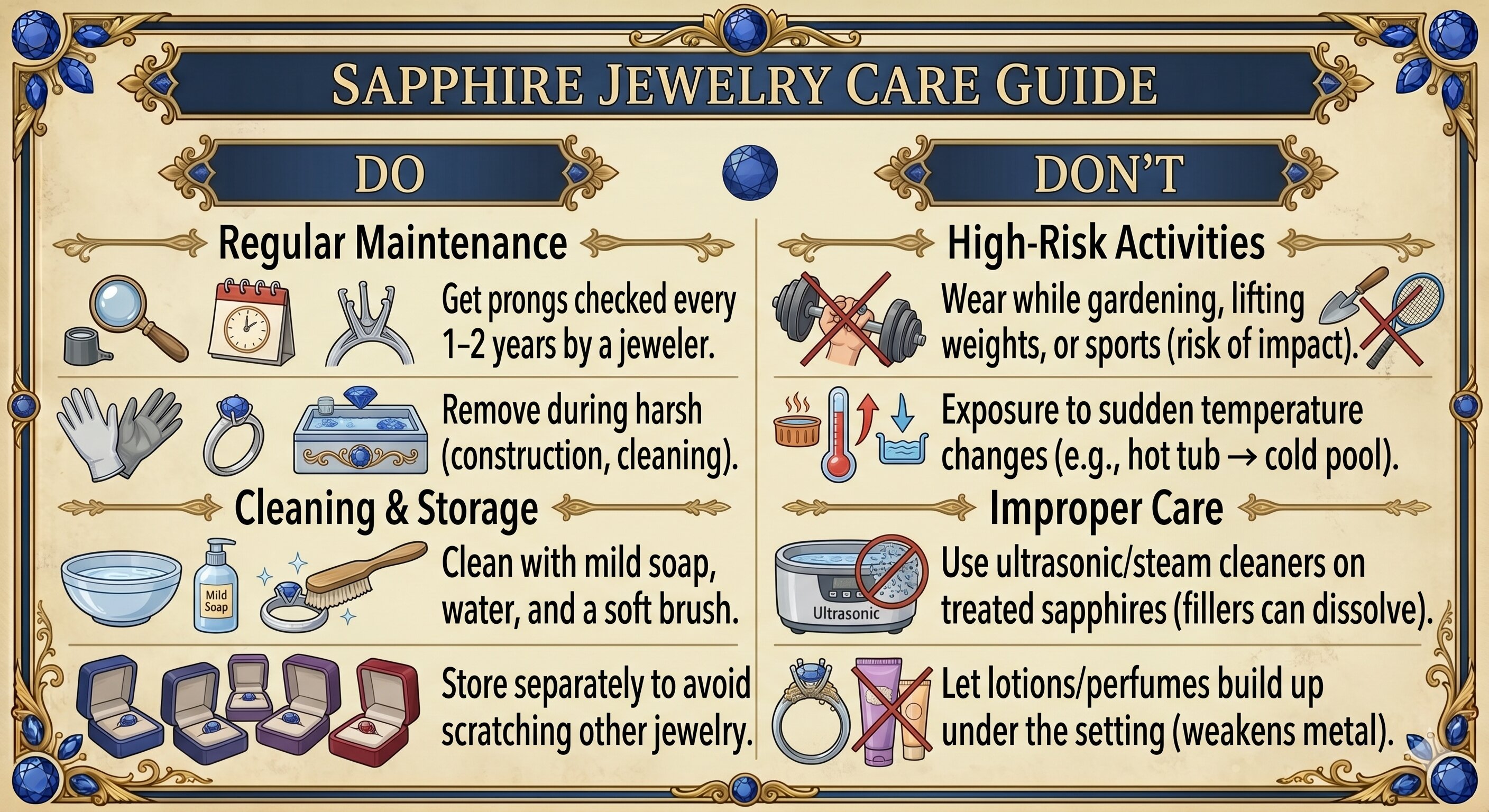
4. Real-World Examples
Historic Sapphires: The St. Edward’s Sapphire (1046 CE) in the British Crown Jewels still shines today.
Antique Rings: Victorian-era sapphire rings (150+ years old) are common at auctions.
Modern Durability: A well-made sapphire engagement ring worn daily typically lasts 30–50+ years before needing major repair (like re-shanking). Read more gemstone rings.
“You now know the symbolism, the colors, the settings, the benefits, the finger placements, the daily care, and the value. The only question left: will you wear the stone that outlasts empires?
Our current collection includes a limited number of natural, untreated sapphire rings — from Kashmir-like cornflower blues to rare padparadscha pink-oranges. When stones of this color saturation and origin are gone, sourcing new ones with GIA certification can take months.
This is not just a ring. It is 3,000 years of Persian skies, Roman justice, and British crowns — the gem of kings, clergy, and princesses, now waiting for your finger.”
[Button: Claim Your Sapphire Ring (Limited) →].
Onyx Stone Guide: Meaning, Colors, Price and How to Tell Real
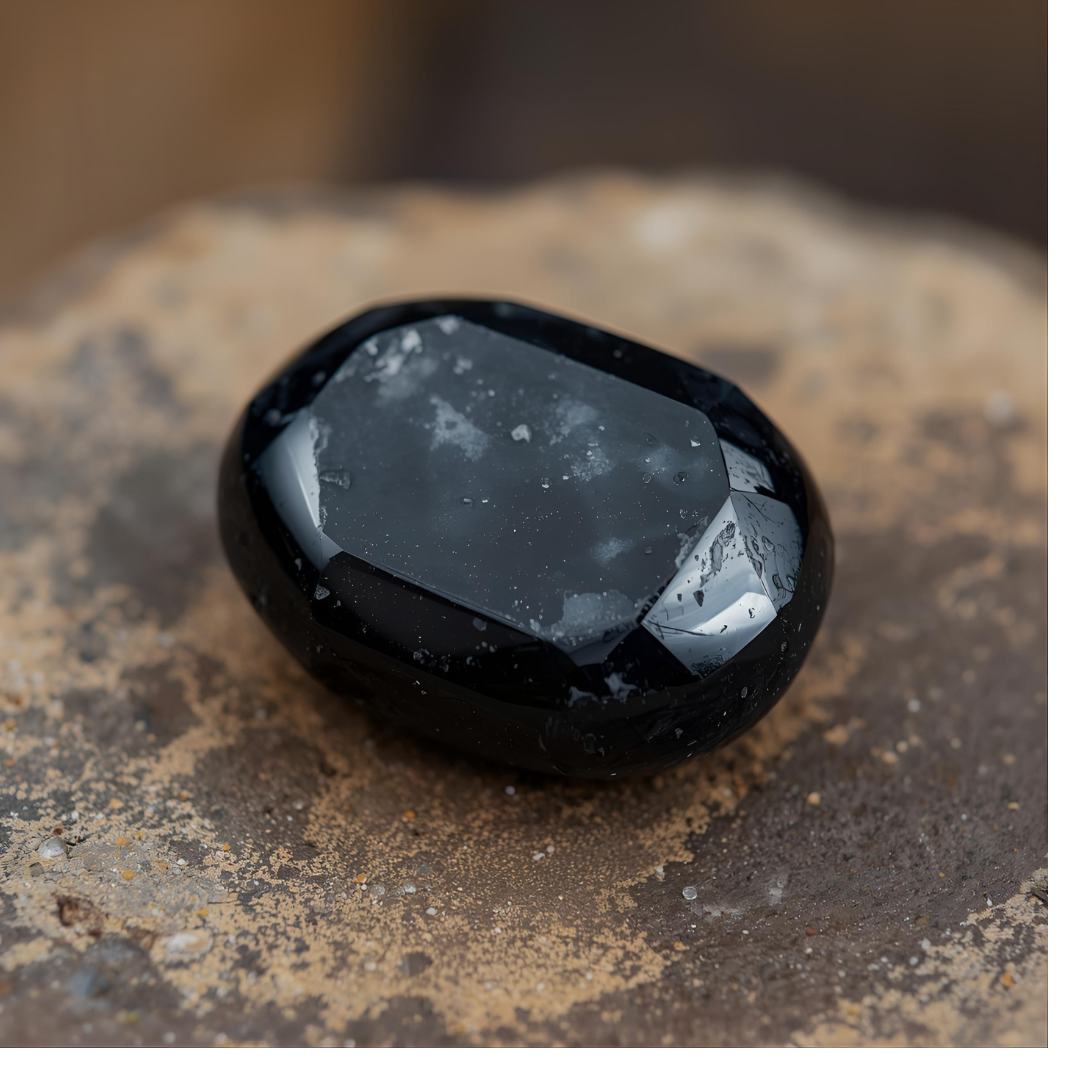
Onyx Stone Guide: Meaning, Colors, Price, and How to Tell Real
Here is a comprehensive overview of the Onyx stone, covering its properties, uses, meanings, and important practical considerations.
“The word ‘onyx‘ comes from the Greek word for ‘fingernail‘ or ‘claw.‘ Ancient Romans believed the stone was once part of the goddess Venus—cut from her fingernails by Cupid‘s arrow and scattered to the earth. They did not wear it for beauty. They wore it for war. Roman soldiers carried onyx talismans into battle, believing the stone would make them fierce, focused, and unbreakable. In Victorian England, widows wore black onyx for mourning—not as a symbol of death, but of strength to survive it. Onyx does not promise joy. It promises you will not break. That is a different kind of gift.”
The same stone that guarded Roman soldiers and Victorian widows now awaits your own journey — whether for protection, grounding, or quiet strength. Every onyx in our collection is genuine, from solid black to banded sardonyx.
[Button: Explore Onyx Jewelry →]
Here is the content of the table;
- What Is The Onyx Stone Good For?
- What Are The Benefits Of The Onyx Stone?
- Is Onyx An Expensive Stone?
- How Much Does Onyx Stone Cost?
- What Are The Different Colors Of Onyx Stone?
- What Is The Rarest Color Of Onyx Stone?
- Is Onyx The Same As Black Onyx?
- What Are The Disadvantages Of Onyx Stone?
- Is Onyx A Lucky Stone?
- How To Activate Onyx Stone?
- How To Identify Onyx Stone?
- What Is Green Onyx Really?
- Should You Sleep With Onyx?
- What Determines Onyx's Value?
- What Are The Side Effects Of Wearing Black Onyx?
Let's see the list of content;
What is Onyx Stone?
Onyx is a stunning variety of chalcedony, a type of quartz (SiO₂), characterized by its fine, parallel bands. While most people know it as a solid black stone, it naturally occurs in bands of black and white. The pure, solid black onyx commonly sold is often a treated form of agate.
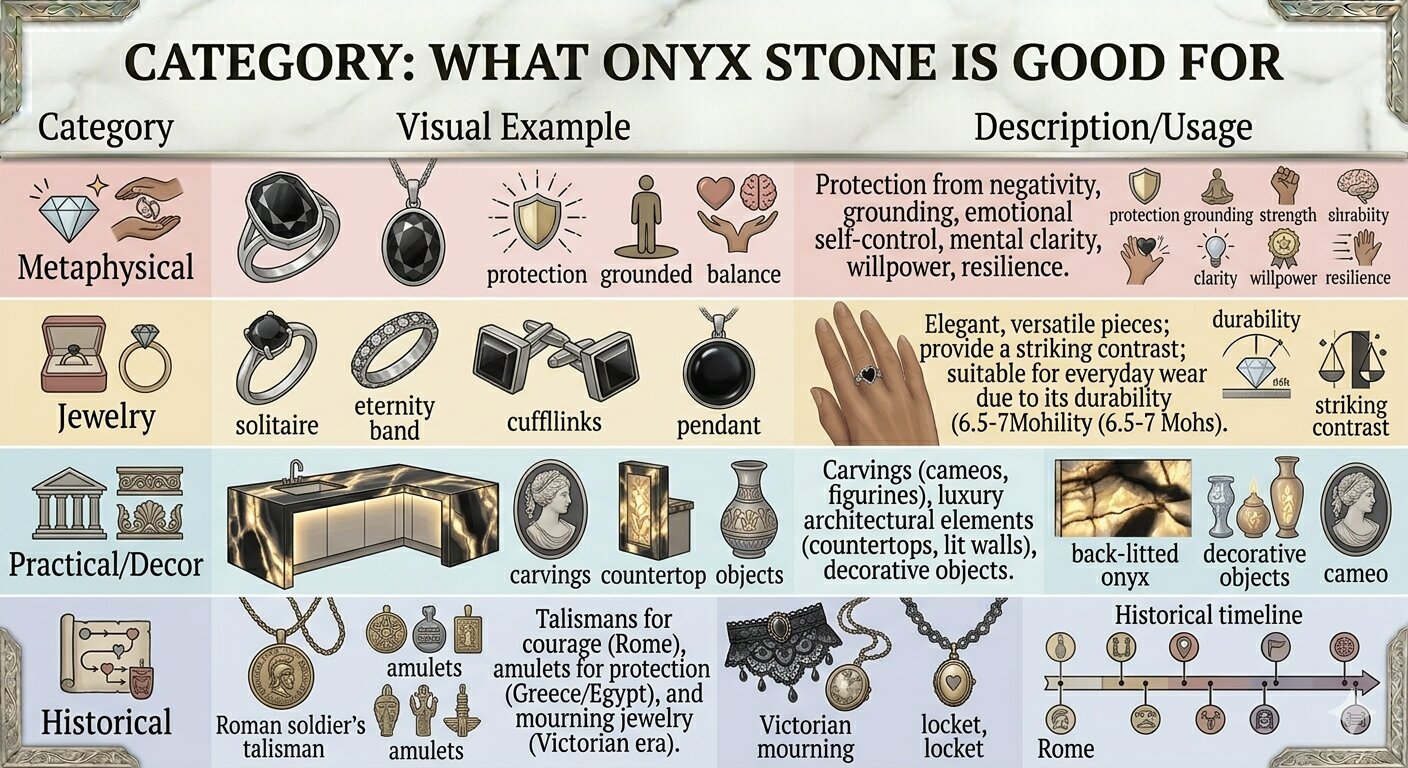
What Is The Onyx Stone Good For?
The onyx stone is celebrated for a wide range of uses, spanning from practical and decorative applications to powerful symbolic and metaphysical properties.
Here’s a comprehensive breakdown of what the onyx stone is good for:
1. Metaphysical and Healing Properties (Crystal Healing & Folklore)
In the realm of crystal healing and spiritual practices, onyx is considered a profoundly powerful and protective stone. Its deep black color is associated with grounding, strength, and resilience.
Protection & Shielding: This is its most famous attribute. Onyx is believed to be a potent shield against negative energy, psychic attacks, and "energy vampires." It's often used to create a protective bubble around the wearer.
Grounding & Stability: As an earth stone, it's thought to have a strong grounding effect, connecting one to the physical world and promoting stability, especially during times of stress or upheaval.
Emotional Strength & Self-Control: Onyx is considered a stone of discipline and self-mastery. It is said to help with overcoming grief, anxiety, and unhealthy attachments, fostering emotional balance and wise decision-making.
Mental Strength & Willpower: It's believed to boost mental clarity, concentration, and determination, making it a popular talisman for students, entrepreneurs, and anyone facing a significant challenge.
Past-Life Work: Some practitioners use black onyx in meditation to access and heal from past-life traumas.
2. Physical Uses and Applications (Jewelry & Decor)
Beyond the metaphysical, onyx has been prized for centuries for its physical beauty and practical properties.
Jewelry: Onyx is a classic gemstone for all types of jewelry—rings, pendants, bracelets, and cufflinks. Its opaque black surface provides a stunning contrast to diamonds, other gemstones, and precious metals, making it a staple in men's and women's jewelry.
Cameos and Intaglios: Due to its fine grain and ability to be carved, banded onyx (especially with white and black layers) has been used for centuries to create detailed cameos (raised relief carvings) and intaglios (incised carvings).
Decorative Objects: Onyx is carved into beautiful figurines, spheres, eggs, and pyramids for collectors and for use in home decor and meditation spaces.
Architectural and Interior Design: Slabs of onyx (often the calcite-based "onyx marble") are used for countertops, tiles, wall panels, and even lampshades. When backlit, its translucency creates a warm, glowing effect that is highly sought after in luxury design.
3. Historical and Cultural Significance
The uses of onyx are deeply rooted in history, confirming its long-standing value.
Ancient Rome: Roman soldiers carried onyx talismans into battle, believing the stone would make them courageous and fierce.
Ancient Greece and Egypt: It was used for amulets, seals, and inlay work in pottery and artifacts, valued for its protective qualities and beauty.
Mourning Jewelry: In the Victorian era, black onyx was extensively used in mourning jewelry due to its somber and elegant appearance.
A Note on Practicality: While the metaphysical beliefs are popular and meaningful to many, they are not scientifically proven. The most universally accepted benefits of onyx are its stunning beauty, durability, and historical significance as a material for jewelry and art.
“In ancient India, onyx was carved into the eyes of temple statues — not for decoration, but because priests believed the stone could ‘see‘ into the spiritual realm. In Hebrew tradition, onyx was one of the twelve stones in the High Priest‘s breastplate, representing the tribe of Joseph. In Renaissance Europe, onyx was set into rings for diplomats and spies — not for vanity, but because the stone‘s layered bands made it the perfect material for carving secret intaglios, messages hidden in plain sight. Onyx has always been the stone of secrets: strength in silence, power in protection, and a darkness that hides more than it reveals.”
In essence, whether you are drawn to it for its powerful protective energy or simply for its sleek, elegant appearance, the onyx stone is a versatile and timeless gem good for both personal empowerment and aesthetic enjoyment.
Learn more about onyx's geological properties on Wikipedia's onyx page.
What Are The Benefits Of The Onyx Stone?
The benefits of the onyx stone are celebrated across two main areas: its well-documented practical and historical uses, and its popular metaphysical and spiritual properties rooted in crystal healing traditions.
Here is a comprehensive breakdown of the benefits of the onyx stone:
1. Metaphysical & Spiritual Benefits (Crystal Healing Lore)
In the realm of energy work and spirituality, onyx is considered a powerhouse of grounding and protection.
Emotional Resilience & Strength: Onyx is renowned for its ability to absorb and transform negative emotions like grief, anxiety, and stress. It is believed to provide support during challenging times, fostering emotional mastery, stability, and a feeling of being "unshakable."
Powerful Grounding: As a deep, black, earthy stone, it is strongly associated with the root chakra. It's said to help anchor your energy to the present moment and the physical world, preventing you from feeling scattered or disconnected.
Protection from Negativity: This is one of its most famous benefits. Onyx is thought to act as a shield against negative energy, whether from your surroundings or from other people (sometimes called "psychic attack" or "energy vampires").
Enhanced Willpower & Self-Discipline: It's considered a stone of self-control, helping to overcome unhealthy habits, procrastination, and impulses. This makes it a popular talisman for anyone pursuing a difficult goal.
Mental Clarity & Decision-Making: By promoting a calm and focused mind, onyx is believed to aid in clear thinking, sharp concentration, and making logical, wise decisions under pressure.
Support with Grief: Historically, onyx has been used to help process and release sorrow, providing strength to navigate the pain of loss.
2. Practical & Aesthetic Benefits
These benefits are tangible and universally appreciated, regardless of one's belief in crystal metaphysics.
Stylish and Versatile Jewelry: Onyx's sleek, opaque black appearance is highly versatile and elegant. It pairs beautifully with precious metals and other gemstones, making it a timeless choice for rings, pendants, bracelets, and cufflinks for all genders.
Durability for Daily Wear: With a hardness of 6.5-7 on the Mohs scale, onyx is durable enough for regular wear in jewelry, though it should be protected from hard knocks.
Historical Talisman of Courage: Ancient Roman and Greek soldiers carried onyx into battle as a talisman for courage, cool-headedness, and protection in conflict.
Beautiful Decorative Objects: Beyond jewelry, onyx is carved into stunning figurines, spheres, and boxes. The banded calcite variety (often sold as "onyx marble") is used for luxurious table tops, lamps, and wall panels that glow warmly when backlit.
Summary of Key Benefits
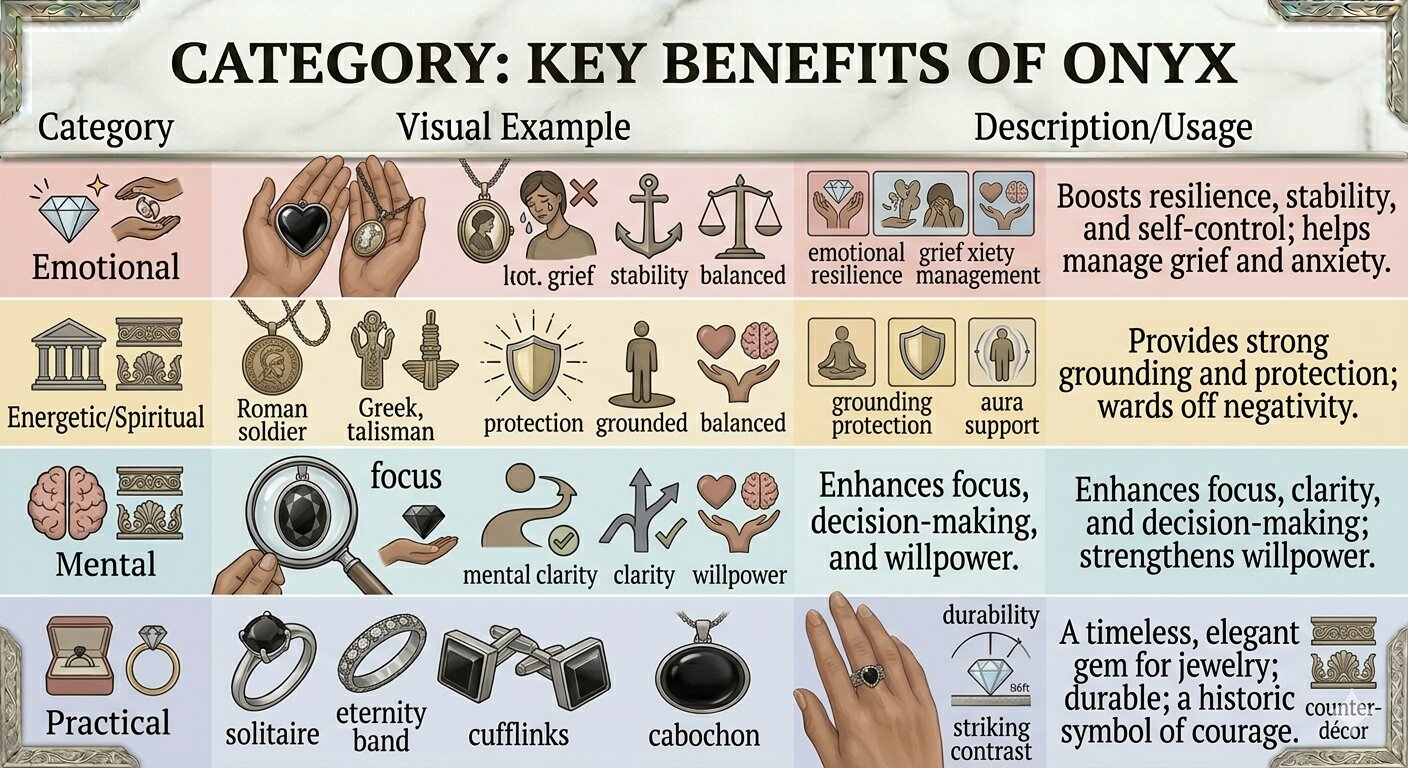
Who Can Benefit Most from Onyx Stone?
Onyx is an excellent stone for:
Leaders, Entrepreneurs, and Students: Anyone who needs mental focus and determination to achieve their goals.
People in High-Stress Situations: Those dealing with grief, major life changes, or emotional turmoil who need grounding and strength.
Empaths or Sensitive Individuals: People who easily absorb the negative energy of others and want a protective shield.
Anyone Seeking a Classic, Powerful Gem: Someone who appreciates both the aesthetic beauty and the rich, symbolic history of the stone.
A Final Note: While the metaphysical benefits of onyx are widely embraced in spiritual communities, they are based on tradition and belief rather than scientific evidence. The most universally accepted benefits remain its stunning beauty, historical significance, and durability as a gemstone.
Is Onyx An Expensive Stone?
Onyx is generally an affordable and accessible gemstone, but its price can range from very inexpensive to quite expensive depending on the type, quality, and setting.
To understand why, let's break down the factors that influence the cost of onyx.
1. Type of Onyx: The Biggest Factor
This is the most important distinction, and it goes back to the chemical composition we discussed earlier.
Gemstone Onyx (Silicate - SiO₂): This is the solid black or banded chalcedony used in jewelry.
Price Range: Inexpensive to Mid-Range.
Why? It's relatively abundant and often treated. Most solid black onyx on the market has been dyed to achieve its uniform color. This process is common and accepted, but it keeps the cost low. High-quality, naturally black onyx with a fine polish will cost more.
"Onyx Marble" (Carbonate - CaCO₃): This is the banded, translucent calcite/travertine used for carvings, lamps, and interior design.
Price Range: Moderate to Very Expensive.
Why? As a decorative stone, its value is in the size and quality of the slab. Large, high-quality slabs with beautiful, consistent banding and good translucency can be very costly, especially when used for luxury architectural projects like backlit bars, walls, or flooring.
2. Key Factors That Determine the Price of Gemstone Onyx
For a piece of onyx jewelry, the cost is influenced by:
Color & Uniformity: A pure, deep, and uniform black is most valued. Stones with uneven color or visible banding (unless it's a feature) are less expensive.
Cut & Polish: A well-executed cut (e.g., a fine cabochon or faceted cut) and a high-quality, mirror-like polish significantly increase the value.
Carving: Intricately carved onyx, such as cameos or intaglios, commands a higher price due to the skilled labor involved.
Size and Weight: Larger pieces of fine-quality onyx are rarer and thus more expensive.
Treatment: As mentioned, dyed black onyx is very common and affordable. Untreated, natural black onyx is rarer and will be priced higher.
The Setting: This is a huge factor. An onyx cabochon in a silver ring will be very affordable. The same stone set in 18k gold with a diamond halo from a luxury brand like Cartier or Tiffany & Co. will be extremely expensive. In this case, you're paying for the metal and the brand, not the onyx itself.
3. Price Comparison with Other Stones
To give you context:
Onyx vs. Black Diamond: Onyx is dramatically less expensive. Black diamonds are genuine diamonds and are priced accordingly.
Onyx vs. Obsidian: They are similarly priced, both being affordable black gemstones. Obsidian (volcanic glass) is often even less expensive.
Onyx vs. Lapis Lazuli or Turquoise: High-quality lapis or turquoise is typically more expensive than common onyx.
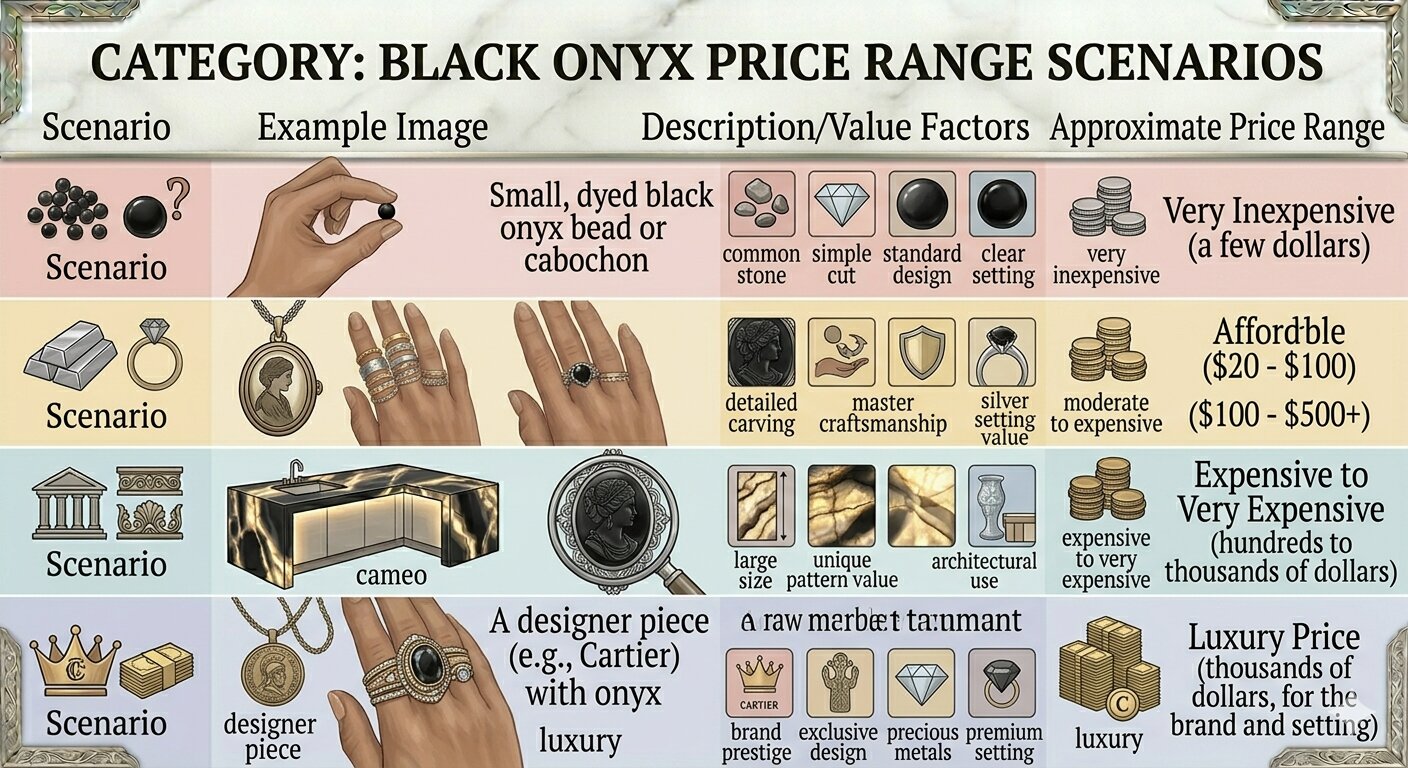
You can easily find beautiful onyx jewelry that is very budget-friendly. However, like any material, it can be transformed into a high-cost item through exceptional quality, skilled craftsmanship, or a luxury brand name. So, while the raw stone itself is not typically considered expensive, the final product can be.
How Much Does Onyx Stone Cost?
Giving a single price for onyx is impossible, as it varies dramatically based on its form, quality, and setting. However, I can provide clear price ranges for the most common ways you would buy it.
To understand the cost, it's crucial to remember the two types we discussed earlier:
Gemstone Onyx (SiO²): Used in jewelry.
Onyx Marble (CaCO³): Used for slabs, tiles, and decorative objects.
Here’s a detailed breakdown:
1. Raw Onyx Stones & Tumbled Pieces (For Collection/Crafting)
This is the most affordable way to buy onyx.
Small Tumbled Stones: A small, tumbled black onyx stone can cost $2 to $10.
Palm-Sized Raw Pieces: A larger, raw chunk of banded onyx or onyx marble might be $10 to $30.
2. Onyx in Jewelry
The price here depends heavily on the craftsmanship, size, and metal setting.
Loose Cabochons (Polished, domed stones):
A standard, dyed-black onyx cabochon (e.g., 20mm x 15mm) can cost $5 to $20.
A finer quality, naturally black or intricately banded cabochon will be $20 to $75.
Finished Jewelry Pieces:
Silver Jewelry: A sterling silver ring with a decent-sized onyx can range from $30 to $150.
Gold Jewelry: The price skyrockets due to the metal. A simple 10k-14k gold ring with onyx can be $200 to $600. A high-end designer piece (like from Cartier) with onyx can cost thousands of dollars, where you're paying for the brand more than the stone.
3. Decorative Onyx Marble Slabs & Tiles (For Home Design)
This is where onyx can become a true luxury item. Price is usually per square foot (sq. ft.).
Standard Onyx Tiles: Common varieties can start at $20 to $50 per sq. ft.
High-Quality Slabs: For large, beautifully veined, translucent slabs used for a countertop or a backlit feature wall, expect to pay $100 to $250+ per sq. ft. The most exquisite, rare slabs can be even more expensive.
Price Comparison Table
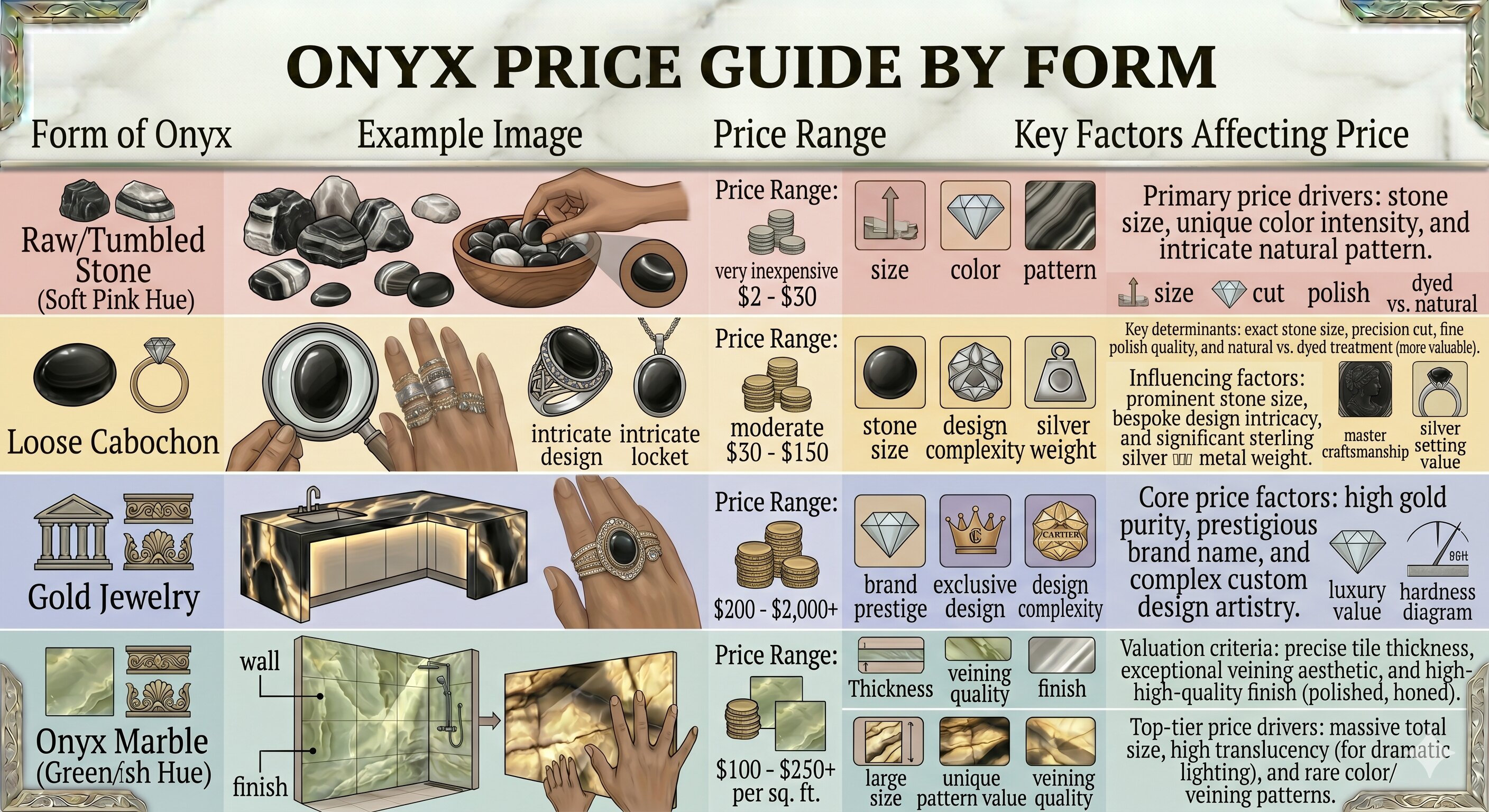
Is it Expensive?
For a jewelry lover on a budget: Onyx is an incredibly affordable gemstone. You can easily find beautiful, stylish pieces without spending a lot of money.
For a homeowner or interior designer: Onyx is a luxury material. Using it for a countertop, vanity, or backlit wall is a high-end design choice comparable to premium marble or granite.
In short, onyx is unique in that it can be both an accessible, everyday gem and an opulent, statement material, with a price tag to match.
For current gemstone market prices, visit the American Gem Society's price guide.
What Are The Different Colors Of Onyx Stone?
While most people picture a solid black stone when they think of onyx, it actually comes in a fascinating variety of colors and patterns.
The key to understanding onyx's colors lies in its two main types:
Chalcedony Onyx (SiO₂): The gemstone variety, known for its parallel bands.
Onyx Marble / Calcite Onyx (CaCO₃): The decorative stone, known for its swirling, translucent layers.
Here’s a detailed breakdown of the different colors of onyx:
1. Chalcedony Onyx (The Gemstone)
This is the type used in jewelry and carvings. Its colors are almost always banded.
Black Onyx: This is the most famous and popular variety. It is typically a solid, uniform jet black. It's important to know that most solid black onyx on the market has been dyed to achieve this consistent color, as natural, solid black chalcedony is rare.
Sardonyx: This is a very common and popular type of banded onyx. It features alternating layers of brownish-red (sard) and white or black. It has been used for centuries in cameos and intaglios.
Classic Banded Onyx: The "textbook" definition of onyx is a stone with parallel, straight bands in contrasting colors. The most classic combination is black and white.
Other Color Combinations: While less common, you can find chalcedony onyx with bands in:
Brown and White
Red and White
Gray and White
2. Onyx Marble / Calcite Onyx (The Decorative Stone)
This is the type used for tabletops, lamps, and wall panels. Its colors are more blended and swirling, and it is prized for its translucency.
Green Onyx: Ranges from pale, minty green to deep emerald hues. This is one of the most sought-after colors for decorative purposes.
Honey/Yellow Onyx: Features warm, golden-yellow tones that can look like honey or amber, especially when backlit.
Red Onyx: Can vary from soft pinkish-red to deep, dramatic crimson.
White Onyx: Often a creamy, translucent white with subtle veins of gold, gray, or brown running through it.
Blue Onyx: A rarer color, typically appearing as light sky-blue or teal shades.
Multi-Colored & Veined: Most decorative onyx slabs are not a single solid color. They feature stunning, organic patterns where multiple colors blend and swirl together, creating unique "landscapes" of veining.
Summary Table of Onyx Colors
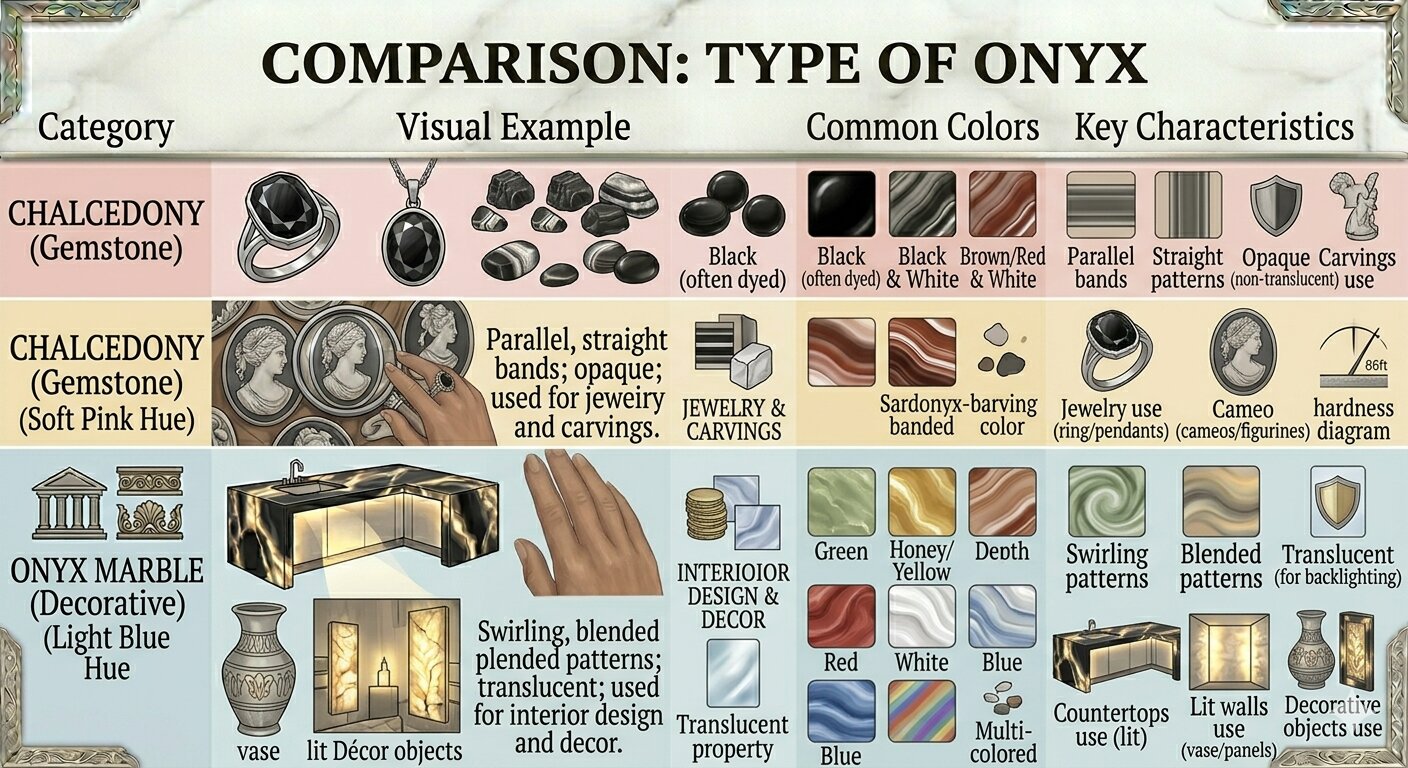
A Note on Rarity and Treatment
Natural vs. Treated: The vibrant, solid colors in chalcedony onyx (especially pure black, deep green, or bright red) are almost always the result of dyeing or sugar-acid treatment. This is a common and accepted practice in the gem trade.
Natural Beauty: The banded patterns of sardonyx and the swirling patterns of onyx marble are typically natural and enhance the stone's value and uniqueness.
The world of onyx is far more colorful than just black. From the sharp bands of sardonyx to the glowing, honey-gold panels of onyx marble, this stone offers a diverse palette for both jewelers and interior designers.
What Is The Rarest Color Of Onyx Stone?
The rarest color of onyx depends heavily on which type of onyx we're discussing, as the two main types form in completely different ways.
Here’s a clear breakdown:
The Rarest Color: A Two-Part Answer
1. For Chalcedony Onyx (The Banded Gemstone)
The rarest and most valuable color for this type is natural, untreated solid blue onyx.
Why it's so rare: The classic banded chalcedony onyx gets its colors from iron and manganese impurities, which typically create black, brown, red, and white bands. A true, solid blue color is not a typical outcome of this process. Virtually all solid blue "chalcedony" on the market is a different mineral, like howlite or magnesite, that has been dyed.
What you might find: On the extremely rare occasion that blue appears in banded chalcedony, it is usually a very pale, grayish-blue is rarely a solid, vibrant color. A genuine, solid blue chalcedony onyx would be a collector's item.
In this category, a naturally occurring, vibrant solid color of any kind (black, red, blue) is exceptionally rare. Most solid-colored onyx jewelry has been dyed.
2. For Onyx Marble (The Decorative Calcite)
The rarest and most sought-after color for this type is a vibrant, richly patterned green onyx.
Why it's so rare: The green color in calcite onyx is caused by traces of copper or other specific minerals during its formation. Achieving a deep, uniform, and saturated green without flaws or muddying is a geologically uncommon event.
What makes it valuable: When this rich green color is combined with the stone's natural translucency and dramatic swirling patterns, it creates a breathtaking effect, especially when backlit. Large, high-quality slabs of green onyx marble command the highest prices in the interior design world.
Summary of Rarity
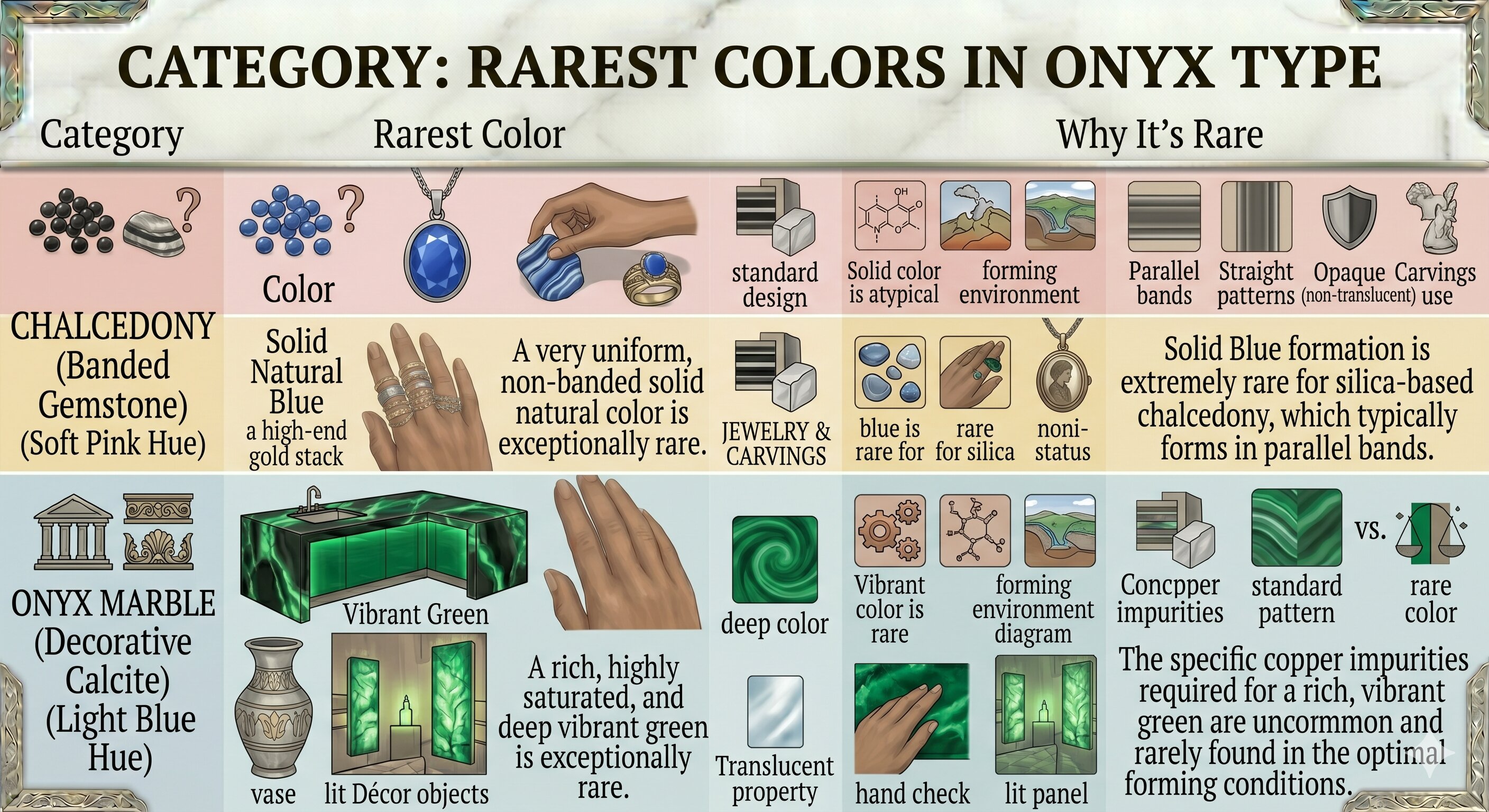
Other Notable Rare Colors
Natural Solid Black Chalcedony: While common on the market, it's almost always dyed. A naturally pure, deep black chalcedony with no banding is quite rare.
Pure White Onyx Marble: A completely pure, brilliant white calcite onyx with no veining is also very rare and valuable for its elegant, minimalist look.
If you're looking at jewelry, a naturally solid blue onyx is the holy grail. If you're looking at a stunning backlit wall or tabletop, a vibrant green onyx marble is the pinnacle of rarity and luxury.
Is Onyx The Same As Black Onyx?
The short answer is: No, "Onyx" and "Black Onyx" are not the same thing, but in the modern gem and jewelry market, they are often used interchangeably.
Here’s the detailed breakdown of the relationship:
"Onyx" is the General Category
Think of "Onyx" as the umbrella term for a specific variety of the mineral chalcedony. By its strict geological definition, onyx is a banded stone, characterized by parallel layers of color. The most classic and natural form of onyx has alternating black and white or brown and white bands.
A specific, well-known type of banded onyx is Sardonyx, which has layers of brownish-red (sard) and white.
"Black Onyx" is a Specific (and Often Treated) Type
"Black Onyx" refers to a solid, pure black version of the stone. Here's the crucial part:
Most Black Onyx on the market is not naturally solid black. It is created by taking gray or white banded agate/chalcedony and dyeing it black. This process is permanent, stable, and completely accepted in the jewelry industry.
Naturally occurring, solid black chalcedony is relatively rare. So, when you see a piece of affordable, jet-black jewelry, it is almost certainly dyed.
The Key Difference: Banded vs. Solid
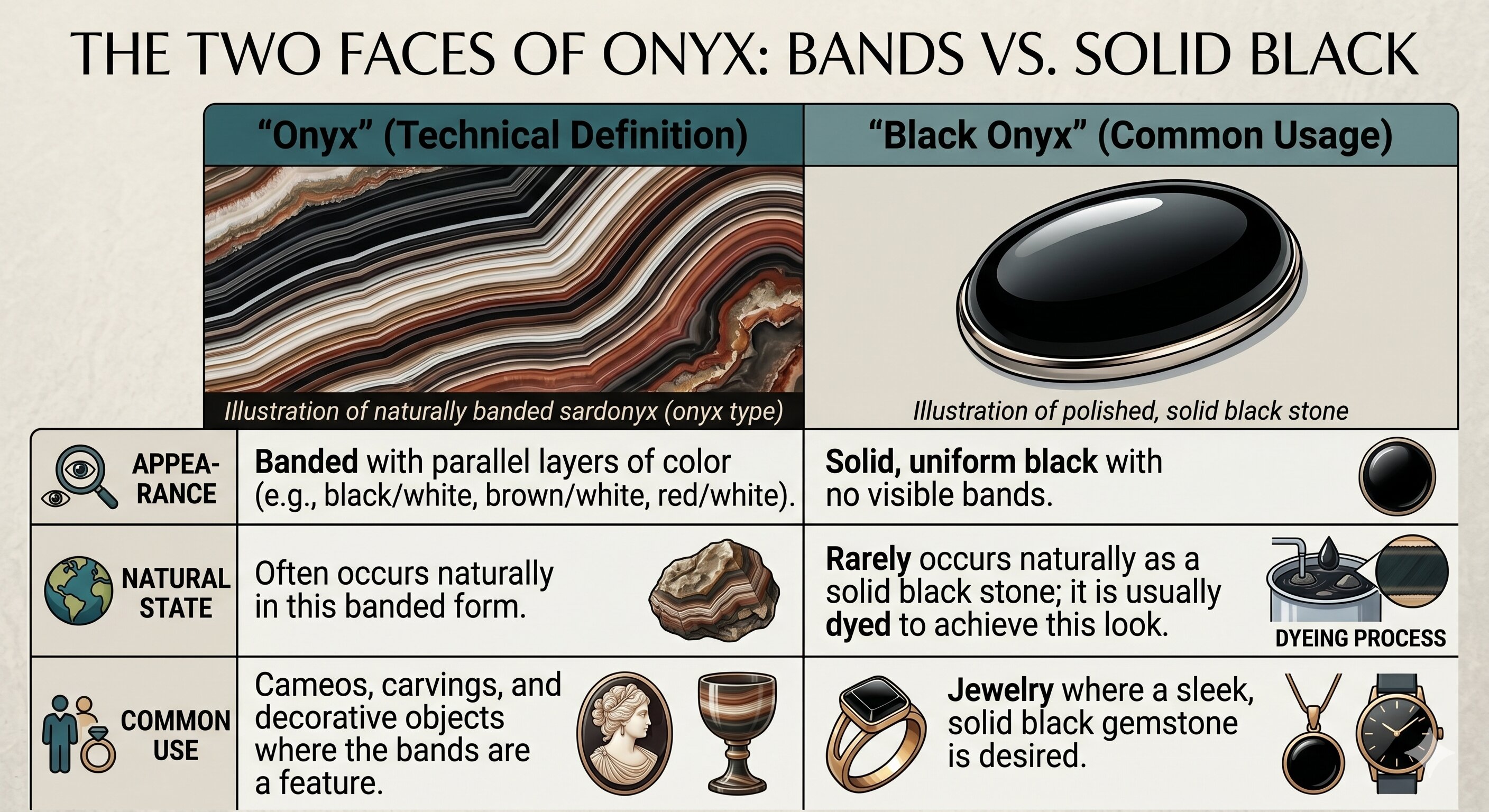
The Simple Analogy
Think of it like "Marble" and "White Marble."
Marble comes in many colors (Carrara White, Nero Marquina Black, Rosa Português Pink).
When someone says "White Marble," they are specifying the color, but it's still a type of marble.
Similarly:
Onyx can be banded in various colors.
Black Onyx specifies the color, and in today's market, it almost always means the solid black, often-dyed variety.
In a jewelry store, if you ask for "Onyx," the salesperson will almost certainly show you a solid black stone. If you are a geologist or mineral collector, "Onyx" means the banded stone.
So, while all Black Onyx is a type of Onyx, not all Onyx is Black Onyx. The term "Black Onyx" has simply become the standard name for the dyed-black gemstone used in jewelry.
What Are The Disadvantages Of Onyx Stone?
Onyx is a stunning natural stone, prized for its dramatic, translucent veining and use in luxury designs. However, it comes with several significant disadvantages that make it unsuitable for many applications.
Here is a detailed breakdown of the disadvantages of onyx, categorized for clarity.
1. Durability and Physical Vulnerabilities
Softness and Scratches: Onyx is a form of calcite, which ranks a 3 on the Mohs hardness scale. For comparison, granite is 6-7 a, nd quartzite is 7-8. This means it is very soft and can be easily scratched by knives, abrasive cleaners, or even dust. It is not recommended for kitchen countertops for this reason.
Porosity and Staining: Onyx is a porous stone. Without a high-quality sealer, it will readily absorb spills of oil, wine, coffee, and acidic liquids like citrus juice or vinegar. This can lead to permanent, deep-set stains.
Susceptibility to Etching: Because its primary component is calcium carbonate, onyx is highly reactive to acids. Any acidic spill will cause "etching"—a chemical burn that dulls the surface finish, leaving a light-colored mark. This damage is often permanent and requires professional re-polishing.
Chipping and Cracking: The veining in onyx can be a point of structural weakness. It is more prone to chipping on edges and can crack under heavy impact or stress. Its translucency often means it is cut into thinner slabs, making it even more fragile during fabrication and installation.
2. High Maintenance and Care
Requires Frequent Sealing: To mitigate staining, onyx must be sealed with a high-quality, penetrating sealer upon installation and then re-sealed regularly—often every 6 to 12 months, depending on use. This is a higher maintenance requirement than most other natural stones.
Demanding Cleaning Regimen: You cannot use standard, all-purpose, or acidic cleaners. Only pH-neutral, stone-specific cleaners are safe. Harsh chemicals will permanently damage the surface.
Heat Sensitivity: While generally heat resistant, onyx can be damaged by sudden, extreme temperature changes (thermal shock), which can cause it to crack. It's always best to use trivets and hot pads.
3. Cost and Installation Challenges
High Material Cost: High-quality onyx is a rare and exotic stone, making it one of the most expensive natural stone options available, often comparable to high-end marble.
Expensive and Difficult Installation: Due to its fragility, installing onyx requires highly skilled fabricators and installers. The risk of breaking a slab is high, which increases labor costs. For backlit applications, the installation becomes even more complex and costly.
4. Practical Limitations for Certain Uses
Poor Choice for High-Traffic or Wet Areas: It is not recommended for kitchen countertops, bathroom vanities (especially near sinks), or flooring in high-traffic areas due to its susceptibility to scratches, stains, and etches.
Light Can Cause Fading: If used in a sun-drenched area, the vibrant colors of onyx can fade over time due to prolonged exposure to direct UV light.
Not for Outdoor Use: It is strictly an indoor material. Weather, freezing temperatures, and direct sunlight will quickly degrade and damage onyx.
5. Sourcing and Environmental Concerns
Limited Availability: True, high-quality, translucent onyx is not as universally available as granite or marble. This can limit your design options and increase lead times.
Variability: As a natural stone, no two slabs are identical. While this can be an advantage for a unique look, it also means you must personally view and select the exact slab you will be using, as samples are not always representative.
Environmental Impact: Quarrying and transporting any heavy natural stone have a significant carbon footprint.
Summary Table: Disadvantages of Onyx
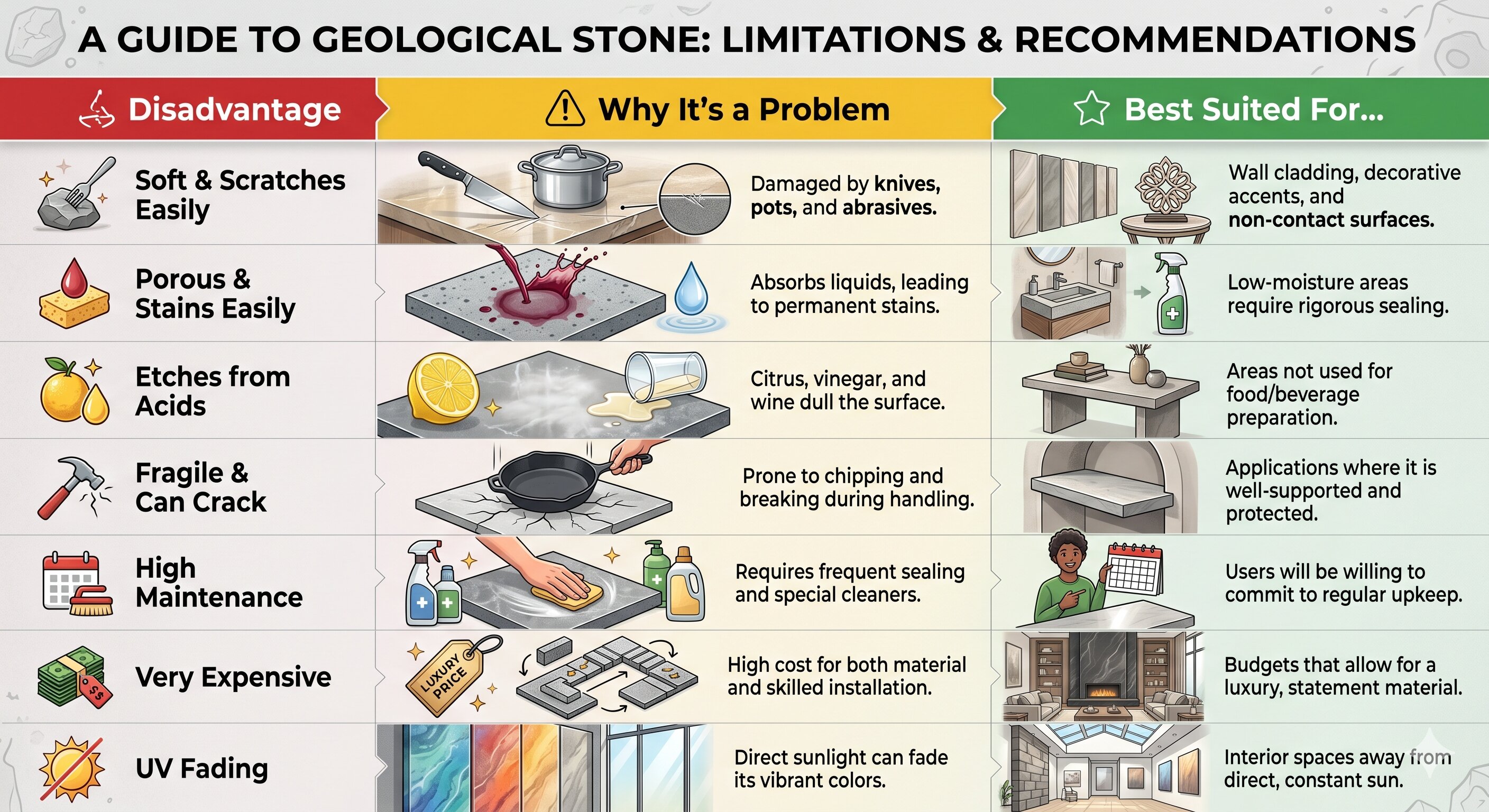
When to Use Onyx
Despite its many disadvantages, onyx is unparalleled in creating a breathtaking, luxurious ambiance. Its disadvantages are really just practical constraints.
Use onyx for: spectacular backlit feature walls, bar fronts, wall cladding, decorative inlays, tabletops (used with extreme care), and bathroom walls (away from the shower and sink).
Avoid onyx for: kitchen countertops, high-traffic flooring, outdoor applications, and any area where it will face frequent abrasion, impacts, or chemical exposure.
Is Onyx A Lucky Stone?
The answer is nuanced because whether onyx is considered a "lucky stone" depends entirely on the cultural, historical, and metaphysical lens you are looking through.
In short, onyx is not universally considered a lucky stone in the way jade or citrine might be. In fact, in some traditions, it has quite the opposite reputation. However, in modern crystal metaphysics, its "luck" is tied to its protective and grounding properties.
Let's break down the different perspectives:
1. Historical and Cultural Perspectives (Often Not "Lucky")
Ancient Roman & Greek Associations: In ancient Rome, onyx was often associated with bad luck, sorrow, and contention. Its layered, banded appearance was thought to resemble a fingernail (the word "onyx" comes from the Greek word for "claw" or "fingernail"). There was a belief that it could provoke separations and arguments between lovers. Roman soldiers would carry onyx into battle not for luck, but for courage and protection.
Indian (Hindu) Beliefs: In some Indian traditions, onyx is considered an inauspicious stone. It is sometimes associated with Saturn (Shani), a planet linked to hardship, discipline, and karmic lessons. While wearing it can be beneficial for strengthening oneself against Saturn's challenges, it is not typically worn for general "good luck."
2. Modern Metaphysical and Crystal Healing Perspectives (The "Protective Luck" View)
This is where the concept of onyx as a "lucky" stone emerges, but it's a specific kind of luck—the luck of protection, stability, and resilience.
A Stone of Protection and Grounding: This is its primary "power." Onyx is considered a powerfully grounding stone, connecting the wearer to the Earth. It is believed to absorb and transform negative energy, creating a protective shield around the user. In this sense, it brings "luck" by warding off bad luck, negativity, and psychic attacks.
Strength and Endurance: It's known as a stone of strength, helping to build inner fortitude, perseverance, and self-control. The "luck" here is in giving you the strength to overcome challenges and bad habits, making your own luck through resilience.
Emotional Balance: Onyx is said to help during times of great stress, grief, or confusion, providing stability and promoting wise decision-making. This can be seen as "lucky" in navigating life's difficult periods.
3. Practical & Symbolic "Luck".
A Stone for Business and Focus: Because of its associations with discipline and self-control, some businesspeople keep a piece of onyx on their desk, believing it helps with focus, willpower, and making prudent decisions—leading to success, which is a form of "earned luck."
Black Stones in General: In many cultures, black stones are seen as protective talismans against the "evil eye" and negative intentions. Onyx, being a classic and beautiful black stone, fits into this category.
Summary: Is Onyx Lucky For You?
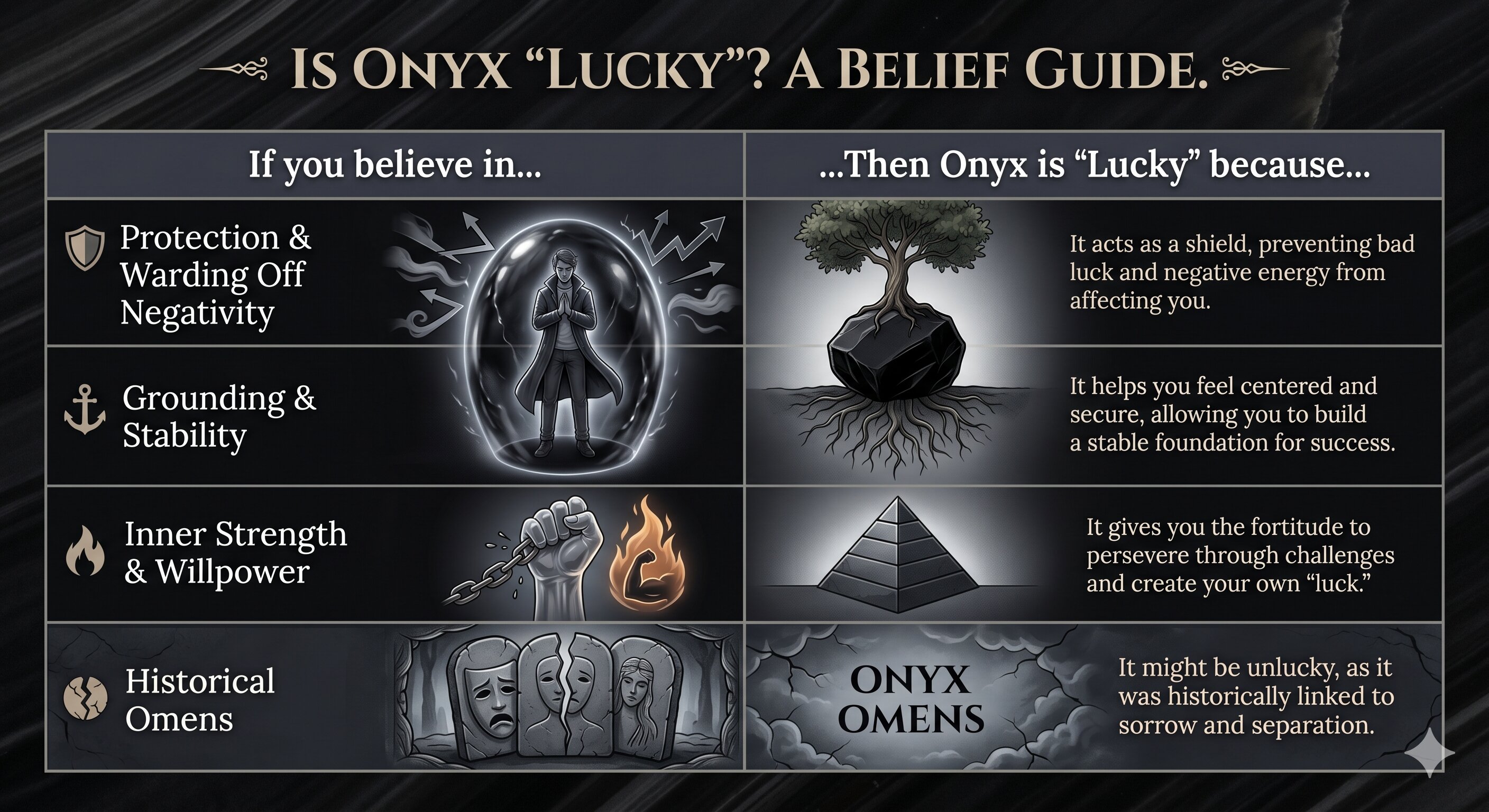
Don't choose onyx if you are looking for a stone to attract sudden windfalls, lottery wins, or chance encounters (for that, people often turn to citrine or green jade).
Do choose onyx if your idea of "luck" is being protected from harm, feeling emotionally strong and grounded, and having the discipline to achieve your goals. Its power is not in attracting external fortune but in forging internal strength and resilience, which often leads to a more fortunate and controlled life.
Ultimately, its effect is highly personal. If you are drawn to its deep, elegant beauty and feel a sense of calm and strength when you hold it, then for you, it is a lucky stone.
How To Activate Onyx Stone?
"Activating" an onyx stone is a concept from crystal healing and metaphysics, not science. The process is about clearing any stored energies and programming the stone with your specific intention, essentially turning it from a decorative object into a personal talisman.
Here is a comprehensive guide on how to activate your onyx stone, drawing from common practices.
Step 1: Cleansing (The Most Important First Step)
Before you activate a new stone, it's believed you should cleanse it of any energies it may have absorbed during its journey to you. Choose the method that feels right for you and is safest for the stone.
Important Note: Onyx is a soft, porous, and layered stone. Avoid using water, especially salt water, for cleansing, as it can seep into the layers, cause clouding, or even dissolve the stone over time.
Safe Cleansing Methods for Onyx:
Smoke Cleansing: This is one of the best methods. Pass your onyx through the smoke of sacred herbs like Palo Santo, sage, or cedar. As you do this, visualize the smoke purifying the stone and carrying away all stagnant energies.
Sound Cleansing: Use a singing bowl, a bell, or tuning forks. The high-frequency vibrations are thought to "shake loose" and reset the energy of the stone without any physical contact.
Earth Cleansing: Bury your onyx in the earth (in a safe, clean spot) or in a bowl of dry brown rice for 24 hours. The earth/rice is believed to absorb negative energies. Be sure to brush off any dirt or discard the rice afterward.
Moonlight Bath: Place your onyx in the light of the full moon overnight. Moonlight is considered a gentle and powerful cleanser. Avoid direct sunlight, as it can fade the color of some stones over time.
Breath (Pranic Cleansing): Hold the onyx in your hands, take a few deep breaths, and then gently exhale onto the stone with the intention of clearing it with your own life force energy.
Step 2: Setting Your Intention (The "Activation" Proper)
This is the core of the activation process. Your intention programs the stone with a specific purpose.
Find a Quiet Space: Sit comfortably in a place where you won't be disturbed.
Hold the Stone: Take your cleansed onyx in your hands. If it's a palm stone, hold it in your receiving (non-dominant) hand.
Center Yourself: Close your eyes and take several deep, calming breaths. Feel yourself becoming present and grounded.
Formulate Your Intention: Clearly and calmly state your purpose for the stone. Onyx is particularly associated with protection, grounding, strength, and self-control. Your intention could be something like:
"I program this onyx to be a shield, absorbing and transforming all negative energy directed toward me."
"I activate this stone to help me feel grounded, stable, and secure during times of change."
"I infuse this onyx with the energy of willpower, to help me overcome [a specific challenge or bad habit]."
Visualize: As you state your intention, visualize the corresponding energy. For protection, imagine a shield of black light emanating from the stone. For grounding, visualize roots growing from the stone deep into the earth.
Ask for Confirmation (Optional): Some people like to ask for a sign that the activation is complete, such as a slight warmth, a tingle in their hand, or simply a feeling of "rightness."
Step 3: Charging (Amplifying the Energy)
After setting your intention, you can "charge" the stone to amplify its newly programmed energy.
Place it with a Selenite Tower: Selenite is believed to be a self-cleansing and high-vibration stone. Placing your onyx on or next to a piece of selenite will keep it charged and active.
Use a Crystal Cluster: Placing your onyx on an amethyst or clear quartz cluster is another common way to charge it, as clusters are seen as powerful energy amplifiers.
Carry it With You: The simplest way to charge your onyx is with your own energy. Carry it in your pocket, wear it as jewelry, or hold it during meditation. The more you use it with intention, the stronger your connection to it will become.
How to Use Your Activated Onyx
For Protection: Carry it in your pocket or wear it as jewelry (like a bracelet or pendant) when you feel the need for energetic shielding.
For Grounding: Hold it in your hand during meditation, or simply sit quietly and focus on its weight and coolness, imagining yourself connecting to the center of the Earth.
For Strength & Willpower: Keep it on your desk at work or in a space where you need to exercise discipline and focus.
Summary and Key Precautions
Avoid Water & Salt: Do not soak or rinse your onyx in water, especially salt water, as it can damage the stone.
Intention is Key: The most powerful tool in this process is your focused mind and clear intention. The stone is a tool to amplify your own will.
Re-cleansing and Re-activating: If you feel the stone's energy has become dull or it has been through a particularly negative experience, simply repeat the cleansing and intention-setting process.
By following these steps, you move the onyx from being a passive object to an active partner in your journey toward protection, grounding, and personal strength.
How To Identify Onyx Stone?
Identifying onyx can be tricky because the name is used for two distinct materials. The key is to first determine whether you have true onyx (siliceous) or the more common calcareous onyx.
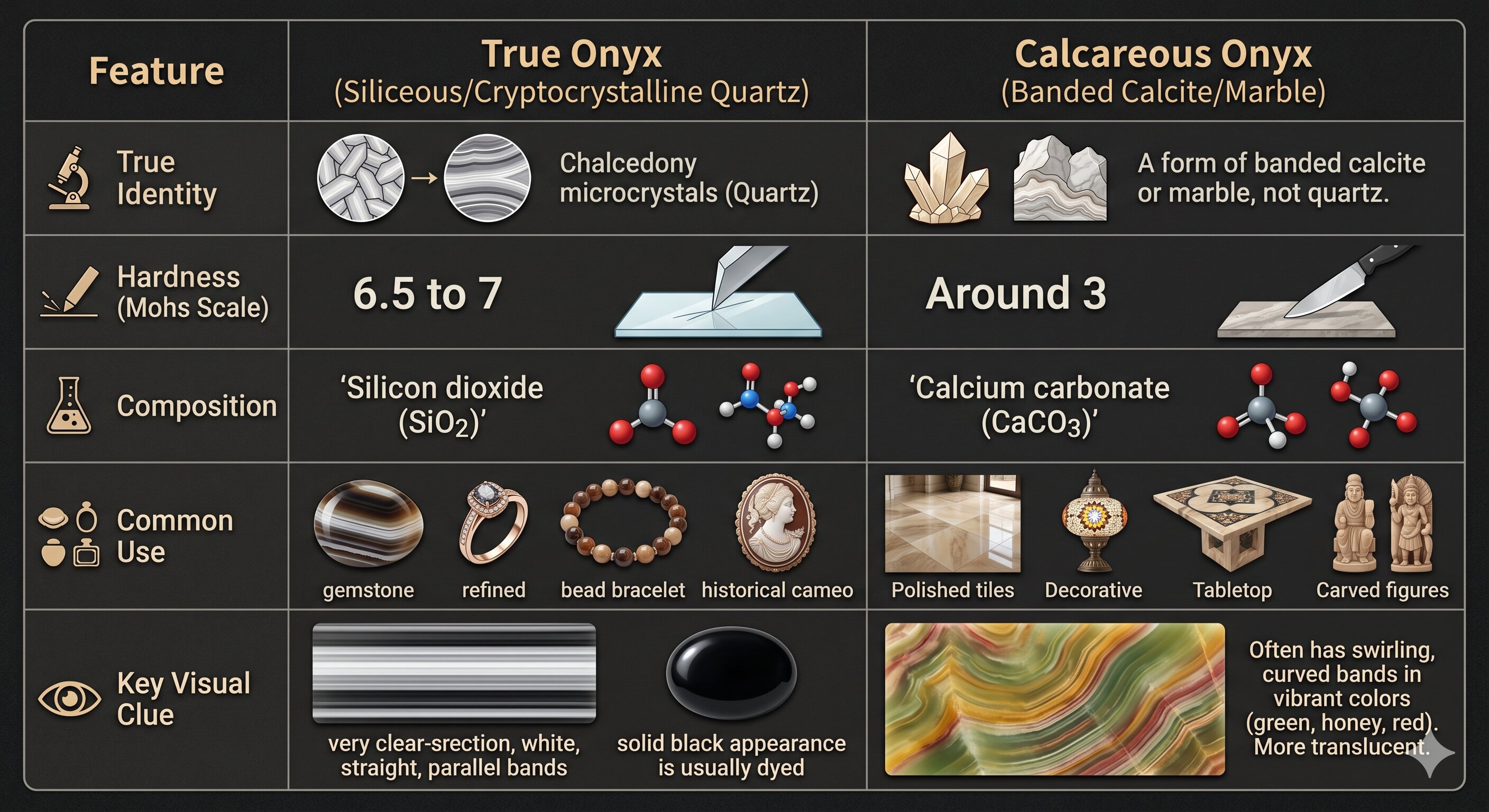
How to Visually Identify Onyx
Look for these key characteristics:
Banding: True gem onyx often shows straight, parallel layers of alternating colors (e.g., black and white). Sardonyx has red, brown, or yellow bands.
Color: Black is most famous, but solid black onyx is rare. Most is dyed grey.
Chalcedony. Be wary of perfect, uniform jet black.
Luster & Texture: It has a vitreous (glassy) to waxy luster and feels very smooth when polished.
Simple Tests You Can Perform
Important: Perform destructive tests only on an inconspicuous area or a loose stone.
Scratch Test (for hardness):
True onyx (hardness ~7) will scratch glass and cannot be scratched by a steel knife.
Calcareous onyx (hardness ~3) can be scratched by a knife or even a copper coin.
Plastic or resin will scratch very easily.
Temperature Test:
Genuine stone feels noticeably cool to the touch and warms slowly in your hand. Plastic or glass feels closer to room temperature.
Weight Test:
True onyx feels dense and heavy for its size. Plastic imitations feel surprisingly light.
Important Market Considerations
Most Black Onyx is Treated: It's standard industry practice to dye grey chalcedony black. This is still considered "real onyx" (it's a treated natural stone), unlike fake plastic or glass.
Beware of Misnomers: Terms like "Mexican onyx" or "onyx marble" almost always refer to the softer calcareous onyx.
In summary, to identify onyx, start by checking its hardness and looking for banding patterns. A hard stone with straight bands is likely true onyx, while a softer stone with vibrant, swirling bands is calcareous onyx.
I hope this guide helps you identify your stone! If you can share more details about the item (e.g., where it's from, what it feels like, if you see any banding), I may be able to offer more specific insights.
What Is Green Onyx Really?
"Green Onyx" is usually not a distinct, naturally green gemstone. The name typically describes two different man-altered stones: dyed grey chalcedony or the softer banded calcite.
The Two Faces of "Green Onyx"
Here’s what the term usually means in practice:
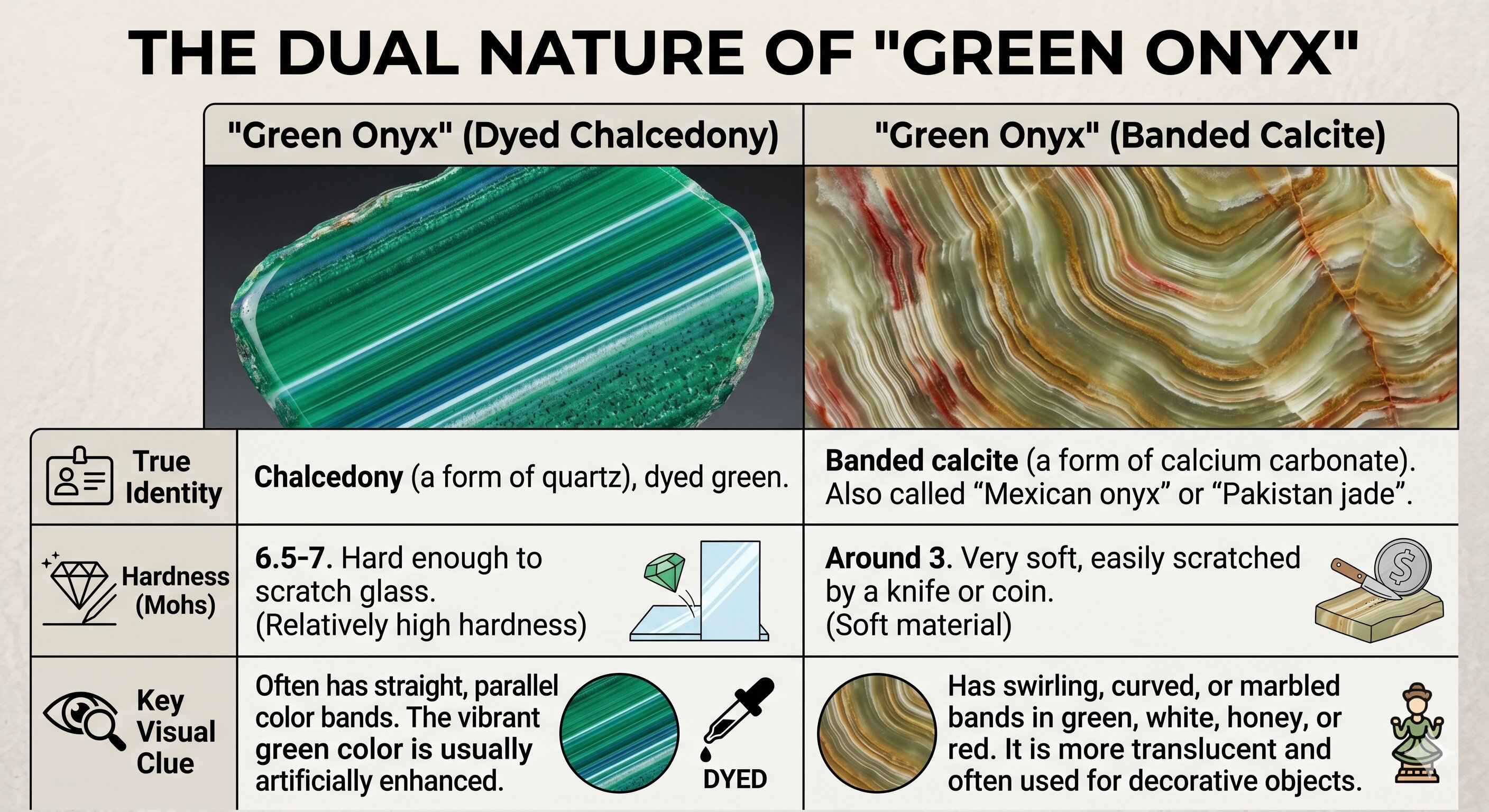
How to Identify What You Have
You can tell them apart with simple tests:
Look at the banding: Straight, parallel lines suggest dyed chalcedony. Swirling, marble-like patterns suggest banded calcite.
Test the hardness: If it can scratch a glass bottle, it's likely hard chalcedony. If it is easily scratched by a steel knife or even a copper coin, it's soft calcite.
Acid Test (Definitive): Place a single drop of white vinegar on an inconspicuous spot. If it fizzes, it is banded calcite. No reaction means it is likely quartz-based chalcedony.
Should You Sleep With Onyx?
"Green Onyx" is usually not a distinct, naturally green gemstone. The name typically describes two different man-altered stones: dyed grey chalcedony or the softer banded calcite.
The Two Faces of "Green Onyx"
Here’s what the term usually means in practice:
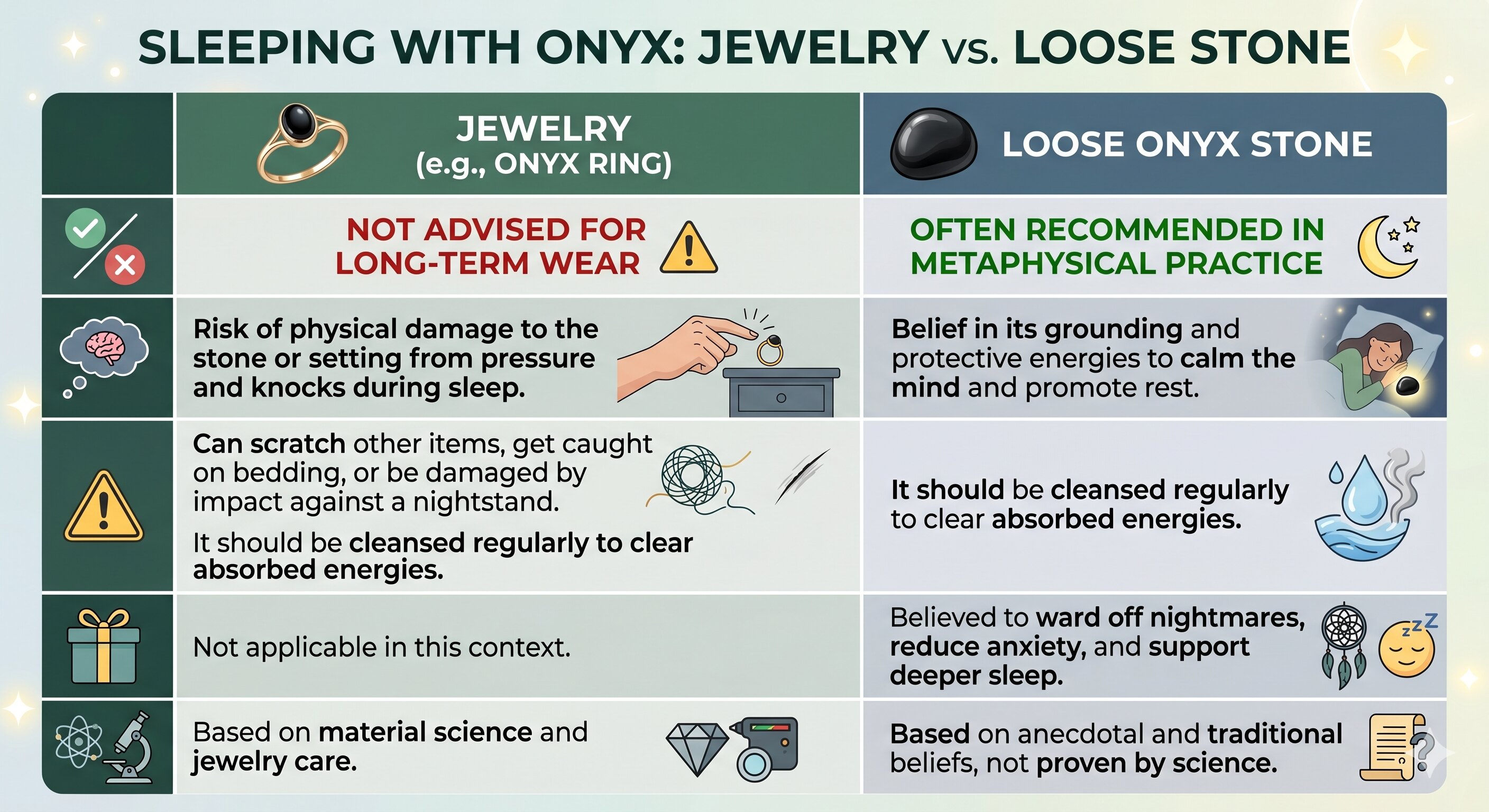
Key Visual Clue Often has straight, parallel color bands. The vibrant green color is usually artificially enhanced. Has swirling, curved, or marbled bands in green, white, honey, or red. It is more translucent and often used for decorative objects.
How to Identify What You Have
You can tell them apart with simple tests:
Look at the banding: Straight, parallel lines suggest dyed chalcedony. Swirling, marble-like patterns suggest banded calcite.
Test the hardness: If it can scratch a glass bottle, it's likely hard chalcedony. If it is easily scratched by a steel knife or even a copper coin, it's soft calcite.
Acid Test (Definitive): Place a single drop of white vinegar on an inconspicuous spot. If it fizzes, it is banded calcite. No reaction means it is likely quartz-based chalcedony.
What Determines Onyx's Value?
Within the semi-precious category, an onyx stone's value is influenced by:
Color: The most sought-after variety is solid black onyx. However, "pure" black onyx that occurs naturally in thick, solid layers is actually quite rare. "Green onyx" (which you asked about earlier) is often banded calcite or dyed chalcedony and falls into a different value category.
Banding: High-contrast, sharp, and parallel bands (common in classic black-and-white onyx) are valued.
Treatments: It's important to know that the majority of solid black onyx on the market has been dyed to achieve its uniform color. This is a standard and accepted practice, but it affects value compared to a rare, naturally solid piece.
Summary: Why Onyx is Semi-Precious
The table below summarizes how onyx compares to the criteria for precious stones:
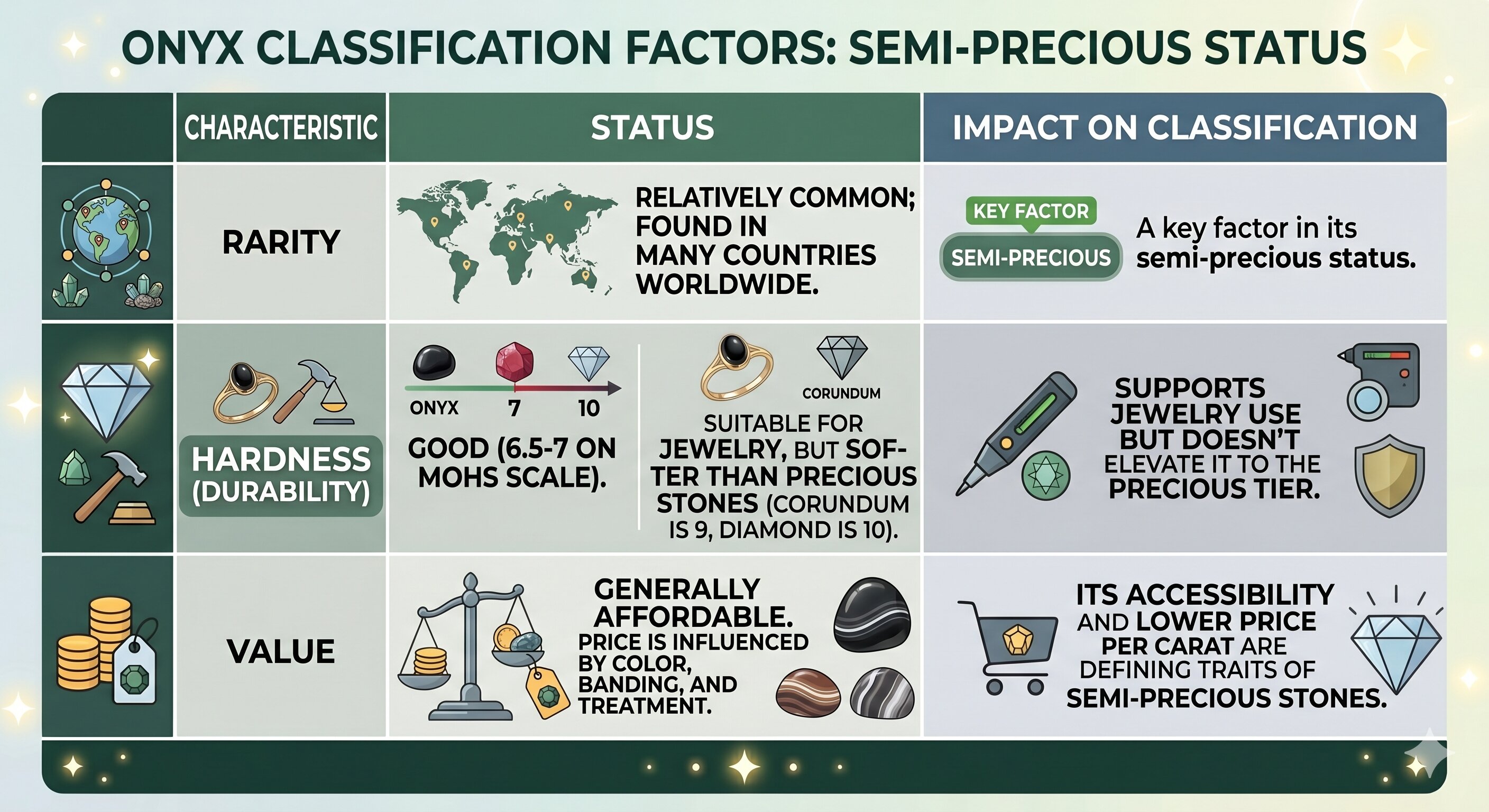
To summarize, onyx is a beautiful and durable semi-precious stone, valued for its deep colors and striking bands. Its classification aligns with what you've learned about "green onyx" being a common trade name and its general accessibility in the market.
If you're evaluating a specific piece of onyx jewelry, would you like to know more about what to look for in terms of quality or how to care for it?
What Are The Side Effects Of Wearing Black Onyx?
Wearing black onyx is generally considered safe from a physical standpoint, but there are important considerations regarding its care and the metaphysical beliefs surrounding it. The potential effects can be grouped into two areas:
Physical/material and metaphysical.
Potential Considerations of Wearing Black Onyx
The table below summarizes key points to help you weigh the considerations.
Aspect Key Considerations
Physical/Material - Routine Wear & Tear: Onyx (Mohs hardness 6.5-7) is durable but can chip if struck hard.
- Skin Contact: A properly polished stone shouldn't harm skin. Ensure settings have smooth edges.
- Treatment Sensitivity: Most black onyx is dyed; avoid harsh chemicals to prevent color fading.
Metaphysical Beliefs - Reported Benefits: Believed to offer grounding, protection, and emotional strength.
- Reported "Side Effects": Some traditions suggest it may intensify negative emotions or feel too grounding/draining if worn constantly by sensitive individuals.
- Individual Energy: Effects are said to be highly personal; what works for one may not for another.
Practical Guidance for Wearing Onyx
To ensure a good experience and care for your stone, consider the following:
Start Gradually: If new to onyx, try wearing it for shorter periods to see how you feel.
Set Intentions & Cleanse: In metaphysical practice, it's common to set a purpose for the stone (e.g., "for grounding") and cleanse it regularly. Methods include rinsing under lukewarm water, placing it on selenite, or leaving it in moonlight.
Listen to Your Body and Intuition: If you feel consistently low or heavy while wearing it, it might not be the right stone for you at this time.
Provide Proper Care: Remove jewelry before sports, sleeping (as mentioned earlier), or using chemicals. Clean with a soft, damp cloth.
Connecting to Your Previous Questions
This aligns with our earlier discussion, where "green onyx" is often dyed chalcedony or calcite, and sleeping with loose onyx is a common practice in crystal healing for its grounding energy. The concept of potential energetic heaviness relates to why some traditions advise against constant wear.
In summary, the main physical "side effect" is the risk of damaging the stone itself, while metaphysical effects are subjective. The experience is personal, so paying attention to how you feel is the best guide.
“You now know the meaning, the benefits, the costs, the colors, the rarity, the disadvantages, the luck, the activation, the identification, and the side effects. The only question left: will you wear the stone that promises you will not break?
Our current collection includes a limited number of natural and treated onyx stones — from solid black onyx (dyed, but genuine) to rare natural sardonyx with sharp banding. When certain varieties are gone, sourcing new stones with consistent color takes time.
This is not just a gemstone. It is the fingernail of Venus, the Roman soldier‘s shield, the Victorian widow‘s strength — a stone that does not promise joy, but promises you will endure.”
[Button: Claim Your Onyx (Limited) →]
Connecting to Your Previous Questions
This aligns with our earlier discussion, where "green onyx" is often dyed chalcedony or calcite, and sleeping with loose onyx is a common practice in crystal healing for its grounding energy. The concept of potential energetic heaviness relates to why some traditions advise against constant wear.
In summary, the main physical "side effect" is the risk of damaging the stone itself, while metaphysical effects are subjective. The experience is personal, so paying attention to how you feel is the best guide. If you have specific concerns about allergies or a particular piece of jewelry, I can try to offer more tailored advice.
November Birthstones: Topaz vs Citrine Guide | Prices, Care and Meaning
What Are November Birthstones?
The November birthstones are Topaz and Citrine, both celebrated for warm, golden hues that evoke autumn's glow.
“Ancient Egyptians believed topaz was colored by the golden rays of Ra, the sun god — a stone so powerful it could protect the living and guide the dead. Romans called it the gem of Jupiter, using it to carve seals of strength and wisdom. For centuries, ‘topaz‘ was a name given to any yellow stone, and citrine — the humble quartz — was often mistaken for its royal cousin. Then, in the 18th century, gemologists drew a line: topaz was harder, rarer, and more precious. But citrine had its own magic. Scottish warriors set it in their daggers for courage. Victorians called it the ‘merchant‘s stone‘ for attracting wealth. November babies do not have one birthstone. They have two — one for royalty, one for the people; one for fire, one for gold.”
The same stone that fooled kings and crowned queens now awaits your November birthday — or your own golden moment. Whether you choose imperial topaz, sunny citrine, or cool blue topaz, every stone in our collection is genuine and hand-selected.”
[Button: Explore November Birthstone Jewelry →]
Here's a detailed breakdown:
- Why November Has Two Birthstones?
- ①Historical Evolution
②Gemological Clarification
③Cultural and Regional Variations
④Practical Considerations
⑤Commercial Influence - Historical Background of November Birthstones
- a.Topaz: The Ancient Gem of Fire and Sun
b.Citrine: The Golden Quartz of Prosperity
c.Evolution of November Birthstones
d.Cultural Crossovers and Confusions
e.Global and Spiritual Significance
- Topaz: The Traditional November Birthstone
- I.. Historical and Cultural Significance
ii. Physical and Chemical Properties
iii. Symbolism and Meaning
Iv. Sources and Mining
v. Topaz in Jewelry
vi. Topaz vs. Citrine: November’s Birthstone Duo - What Color Is A Topaz Stone?
- 01. Red Topaz
02. Imperial Topaz
03. Blue Topaz
04. Yellow Topaz
05. Pink Topaz
- Healing Properties of November Birthstone Topaz
Citrine: The Modern November Birthstone?
- (1)Market Ranking
(2)Consumer Trends
(3)Growth Trends
(4)Retail & Design Trends
(5)Ethical & Sustainable Perception
(6)Metaphysical & Wellness Trends
- Similarities and Differences Between Topaz and Citrine
- a.Similarities
b.Color Range
c.Use in Jewelry
d.Treatments
e.Metaphysical Associations
f.Differences
- How Can I Identify Genuine Topaz and Citrine?
- 01. Physical Properties
02. Optical Properties
03. Visual and Structural Clues
04. Market and Context
05. Professional Verification - How To Care for November Birthstones
- ①Topaz Care
②Citrine Care
③General Tips for Both Stones
- Budget November Birthstones? Are They Affordable?
- a.Citrine: The Ultimate Budget-Friendly November Birthstone
b.Topaz: Affordable Options Within a Classic Stone
c.Factors Affecting Birthstone Prices
d.Affordable Alternatives to Traditional November Birthstones
e.Common Budget Pitfalls to Avoid
f.Price Comparison Chart - Can I Wear Topaz and Citrine Together?
- 01. Color Harmony
02. Symbolic Synergy
03. Versatility
04. Durability Considerations
05. Mix Metals Thoughtfully
06. Balance Sizes and Shapes
07. Ethical Transparency
08. Styling Inspiration - How Can I Choose The Right November Birthstone?
- ①Color Preferences
②Durability & Care
③Budget Considerations
④Authenticity & Treatments
Let’s drive this party now. -
Why November Has Two Birthstones?November has two birthstones, topaz and citrine, due to a blend of historical, cultural, and practical factors:
① Historical Evolution
Ancient Origins: Early birthstone lists, influenced by traditions like the Breastplate of Aaron, often included stones based on color rather than mineralogical accuracy. Yellow stones like topaz and citrine were grouped.
Standardization Efforts: In 1912, the National Association of Jewelers (now Jewelers of America) formalized a birthstone list, which included topaz as November's primary gem. Citrine was later added as a secondary option, reflecting historical overlaps and evolving gemological knowledge.
②Gemological Clarification
Similar Appearance: Both stones exhibit warm yellow hues, traditionally linked to autumn. However, citrine (a variety of quartz) and topaz (a silicate mineral) are distinct. Advances in gemology distinguished them, yet both retained their November association.
Misidentification: Historically, "topaz" was loosely applied to yellow gems, including citrine. The distinction became clear as mineralogy progressed, but both remained culturally tied to the month.
③Cultural and Regional Variations
Different cultures and regions adopted varying lists. For example, British traditions sometimes diverged from American ones, leading to multiple accepted standards.
④Practical Considerations
Affordability: Citrine is generally more accessible, offering a budget-friendly alternative.
Color Symbolism: The golden tones of both stones align with November’s autumnal themes, symbolizing warmth and energy.
⑤Commercial Influence
Jewelers and marketers embraced dual stones to expand consumer choices, enhancing variety and sales opportunities.
Historical Background of November Birthstones
The historical background of November birthstones, topaz and citrine, is rich with cultural, mythological, and practical significance.“The medieval world believed topaz could do impossible things: break curses, cure insomnia, even make its wearer invisible. Kings wore it as a talisman against poison. Crusaders carried it into battle for protection. But the most famous topaz story comes from Portugal. For 300 years, the Braganza Diamond — a 1,680-carat stone in the Portuguese crown jewels — was believed to be the world‘s largest diamond. In the 19th century, gemologists discovered the truth: it was never a diamond at all. It was a colorless topaz, flawless and vast. The stone had fooled kings for centuries. Today, it still sits in the crown — not as a lie, but as proof that topaz has always been worthy of thrones.”
Here's a structured overview:
a. Topaz: The Ancient Gem of Fire and Sun
Origins of the Name:
Derived from the Greek "topazion," possibly linked to the Red Sea island Topazios (now Zabargad), though the Sanskrit "tapas" (fire) also influenced its name due to its golden hues.
Cultural and Mythological Associations:
Ancient Egypt: Associated with Ra, the sun god, symbolizing protection and vitality.
Roman Empire: Linked to Jupiter, the king of the gods, representing strength and wisdom.
Medieval Europe: Believed to prevent death, cure ailments, and break curses. The Greeks thought it granted invisibility.
Historical Significance:
It was also used in royal jewelry, such as the Ysedeqeaur gunman Braganza Diamond (a clear topaz).
Renaissance gem cutters prized its clarity for intricate carvings.
b. Citrine: The Golden Quartz of Prosperity
Etymology and Characteristics:
Named after the French "citron" (lemon) for its yellow hue. A variety of quartz is often heat-treated from amethyst or smoky quartz.
Historical Uses:
Ancient Rome: Carved into intaglios for seals and worn as talismans against plague.
17th–19th Centuries: Popular in Scottish jewelry and dubbed the "merchant's stone" for attracting wealth.
Cultural Beliefs:
Thought to harness solar energy, providing warmth and clarity during the darker months.
c. Evolution of November Birthstones
Standardization: The National Association of Jewelers (1912) listed both topaz and citrine for November, acknowledging their visual similarity and historical overlap. Citrine became a cost-effective alternative to rare natural topaz, especially after treatments made it more accessible.
d. Cultural Crossovers and Confusions
Ancient Misidentification: The term "topaz" often referred to any yellow gem, including citrine. For instance, historical "topaz" references might have included citrine or other stones.
Modern Distinction: Advances in gemology clarified their differences, yet both remain November symbols due to shared hues and lore.
e. Global and Spiritual Significance
In Hinduism, tied to Jupiter (Guru) for wisdom; in crystal healing, associated with the throat chakra.
Citrine:
Valued in New Age practices for manifesting abundance and joy.
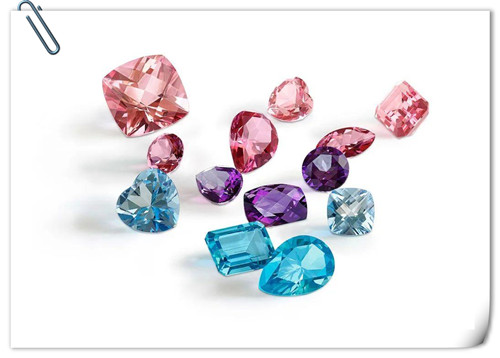
Topaz: The Traditional November Birthstone
Topaz, one of November’s two birthstones (alongside citrine), has captivated humanity for centuries with its dazzling hues, durability, and rich symbolism. Revered by ancient civilizations and cherished in modern jewelry, topaz embodies warmth, strength, and elegance.
This guide explores its history, properties, varieties, and cultural significance, offering a comprehensive look at why Topaz remains a timeless emblem of November.
I.. Historical and Cultural Significance
Origins of the Name
The name “topaz” has debated origins:
Derived from the Sanskrit word tapas (meaning “fire”), referencing its golden-orange glow.
Linked to the Greek island Topazios (now Zabargad) in the Red Sea, though the island produced peridot, not topaz.
Ancient Beliefs and Uses
Egyptians associated topaz with Ra, the sun god, believing it harnessed his protective energy.
Romans: Romans linked topaz to Jupiter, the god of the sky, and used it for carving seals and talismans.
Medieval Europe: Thought topaz could cure physical ailments, dispel curses, and calm anger.
Hindus: They considered topaz a sacred stone that promoted wisdom and longevity when worn during a full moon.
Famous Topaz Gems
The Braganza Diamond: Once believed to be a 1,680-carat diamond in Portugal’s crown jewels, it was later identified as a colorless topaz.
American Golden Topaz: A 22,892-carat faceted gem displayed at the Smithsonian Institution.
ii. Physical and Chemical Properties
Chemical Formula: Aluminum silicate fluoride hydroxide – AlSiO(F, OH).
Hardness: 8 on the Mohs scale, making it highly scratch-resistant (second only to diamonds, sapphires, and rubies).
Crystal System: Orthorhombic, often forming prismatic crystals.
iii. Symbolism and Meaning
Topaz has long been associated with:
Love and Loyalty: These are believed to strengthen relationships and foster honesty.
Abundance: Known as the “stone of wealth,” attracting prosperity.Healing: Thought to boost immunity, aid digestion, and relieve stress (metaphysical belief).
Creativity: Encourages clarity of thought and artistic inspiration.
IV. Sources and Mining
Topaz is found globally, with major deposits in:
Brazil: Produces 95% of the world’s gem-quality topaz, including imperial and blue varieties.
Russia: Renowned for pink and purple topaz from the Ural Mountains.
Sri Lanka, Nigeria, Pakistan, and the U.S. (Utah and Texas are also significant sources).
Most blue topaz undergoes irradiation treatment in laboratories to achieve its signature color.
v. Topaz in Jewelry
Popular Cuts and Settings
Cuts: Oval, cushion, pear, and emerald cuts maximize brilliance.
Settings: Paired with white gold, sterling silver, or platinum for contrast.
Durability
With a hardness of 8, topaz is ideal for everyday wear but requires care to avoid sharp blows (it has perfect cleavage, meaning it can split along planes).
vi. Topaz vs. Citrine: November’s Birthstone Duo
While both stones symbolize November, they differ in key ways:
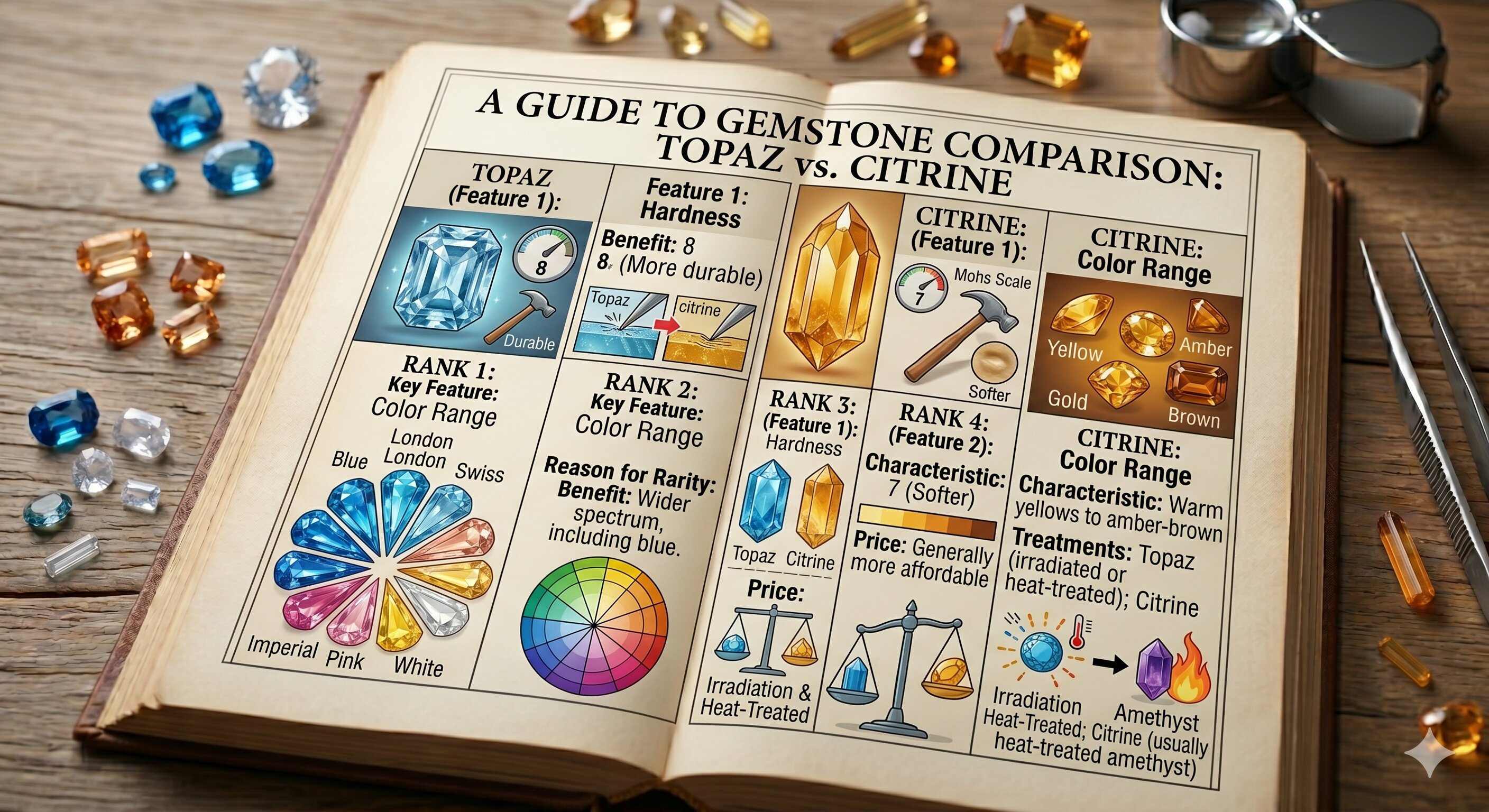
Learn more about birthstone history on Wikipedia's birthstone page.
What Color Is A Topaz Stone?
Topaz comes in various colors, and the variety of colors is not inferior to that of sapphire.
From colorless, blue to pink, golden yellow, red-orange, violet, brown, and very rare red, although it is called "topaz", yellow is an extremely rare type of topaz.
01. Red Topaz
Red topaz has the highest value level, which is related to its very rare production.
A large carat (more than 10 carats), beautiful, lustrous, and full red topaz is regarded as a rare treasure.
The value is sometimes hundreds or even thousands of times that of a blue topaz of the same grade. It is currently only produced in a small area of Minas Gerais, Brazil.
It is difficult to find red topaz of more than 10 carats on the market. The brighter the color, the higher the value.
The inclusions are not obvious, and the fewer flaws there are, the higher the value. However, perfect products are rare.
02. Imperial Topaz
Imperial Topaz, also known as Imperial Topaz, you can tell from its name that it has an extraordinary status.
It is the most beautiful gem-grade topaz, second only to red topaz.
The color is yellow with orange tones. Like mature Sherry, mainly produced in Brazil, the key point of evaluation lies in concentration.
The higher the concentration of orange-red, the higher the value.
In ancient Europe, imperial topaz was an exclusive gemstone for the royal family or the church.
It was an aristocratic gemstone among colored gemstones and was specially designed for their customized jewelry.
Common people knew little about it. In the mid-18th century, imperial topaz became popular in France and Spain, along with diamonds, and was set in gorgeous precious metals.
From then on, topaz became famous. Nowadays, big-name jewelry manufacturers also attach great importance to the good decorative function of imperial topaz.
03. Blue Topaz
Have you seen all three beauties of Topaz Blue?
In a ranking list published by a well-known industry magazine, the second most popular colored gemstone in the world turned out to be blue topaz.
The editor who knew the truth also had his jaw dropped. (The first place is sapphire. Sure enough, blue is true love!)
From light blue to dark blue, it is the most common blue topaz color.
The price was affordable, and the color was fresh.
Historical Background of November Birthstones
Blue topaz is divided into sky blue, London blue, and Swiss blue.
04. Yellow Topaz
In addition to colorless topaz, the most common natural topaz is yellow topaz.
The color of yellow topaz usually ranges from light yellow to brownish yellow.
Currently, most of the yellow topaz on the market is colorless topaz that turns into a bright yellow color like citrine after heating.05. Pink Topaz
European royal jewelry in the 18th century usually made topaz into jewelry sets.And pink, such a sweet color, loved by princesses from all over the world~
Healing Properties of November Birthstone Topaz
The crystals of topaz rough stones are generally columnar. To reduce loss during cutting, polishers usually grind them into oval or pear shapes.
For some brightly colored topaz, to more perfectly display its luster effect, people tend to use emeralds to cut it.
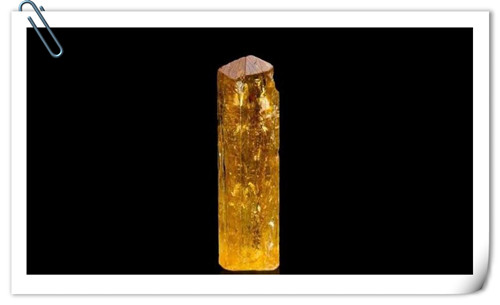
Citrine: The Modern November Birthstone
Citrine, with its sunny yellow-to-orange hues, has become a beloved modern alternative to topaz for November birthdays. Its warm, vibrant color evokes autumn leaves and golden sunlight, making it a cheerful and contemporary choice.Let me explain;
① Physical and Chemical Properties
Composition: Silicon dioxide (SiO), a quartz variant.
Hardness: 7 on the Mohs scale, suitable for daily wear.
Colors: Pale yellow to amber-brown, often heat-treated from amethyst.
② Historical Significance
Named after the French citron (lemon), citrine was used in Roman intaglios and Scottish weapon hilts. Popularized in the 1930s Art Deco era for its affordability.
③Symbolism and Meaning
Known as the "merchant’s stone," citrine symbolizes prosperity and positivity. Believed to cleanse the energy in metaphysical practices.
④Sources and Mining
Primary sources include Brazil, Madagascar, and Spain. Most commercial citrine is heat-treated amethyst.
⑤Citrine in Jewelry
Often faceted for rings and pendants. "Madeira citrine" (deep orange-red) is a sought-after variety.
7. Citrine's Popularity in the U.S. Gemstone Market
Here are key statistics and insights on citrine's popularity in the U.S. gemstone market, based on industry reports, surveys, and trade data:
(1)Market Ranking

Top 3–5 Colored Gemstones: Citrine consistently ranks among the top-selling colored gemstones in the U.S., alongside amethyst, blue topaz, and garnet.
Source: American Gem Society (AGS), Jewelers of America (2022–2023 reports).
Demand Share: Citrine holds an estimated 15–20% share of the non-diamond gemstone market in the U.S., driven by affordability and versatility.
(2)Consumer Trends
Here is how the consumer trends show;
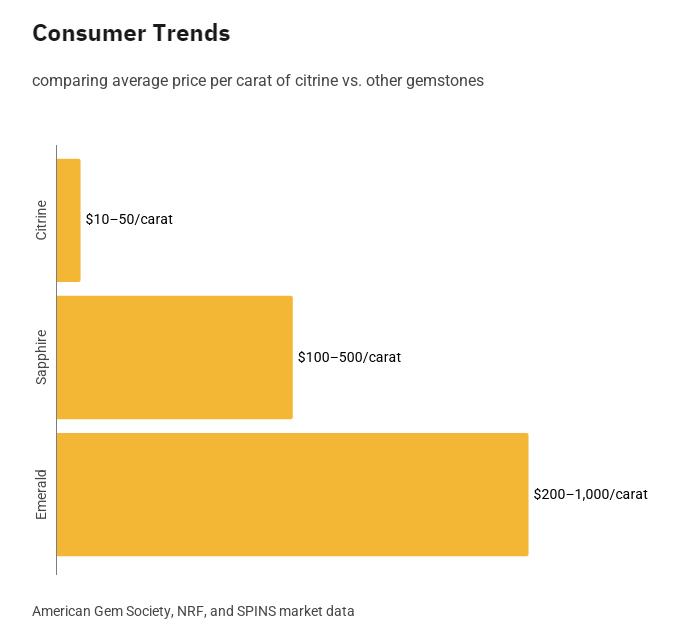
Affordability: Average retail price: 10–50 per carat for commercial-grade citrine, compared to $100+ for sapphires or emeralds.
Over 60% of mid-tier jewelry retailers cite citrine as a "high-turnover" gemstone due to its low price point.
Birthstone Sales:
November birthstone jewelry (citrine and topaz) accounts for ~8% of annual birthstone sales in the U.S., per the National Retail Federation (NRF).
(3)Growth Trends
Do you want to know how Citrine jewelry sales trends? Here it is.
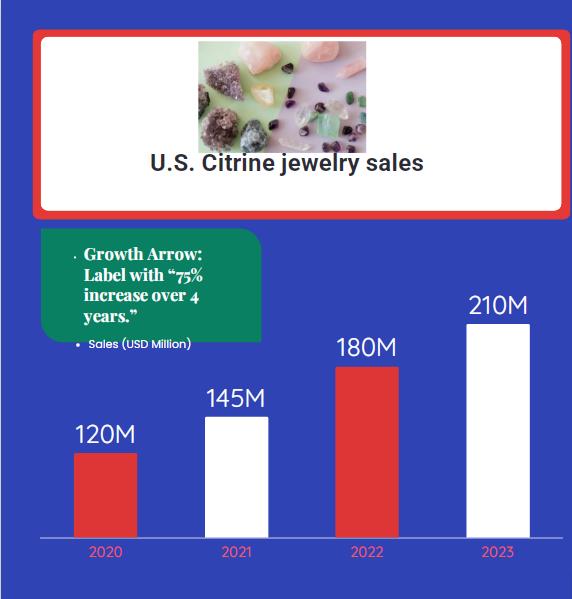
Colored Gemstone Boom:
The U.S. colored gemstone market grew by 7–10% annually from 2020 to 2023, with citrine contributing significantly to this growth.
Drivers: Shift away from diamonds, demand for personalized/"meaningful" jewelry.
Social Media Influence:
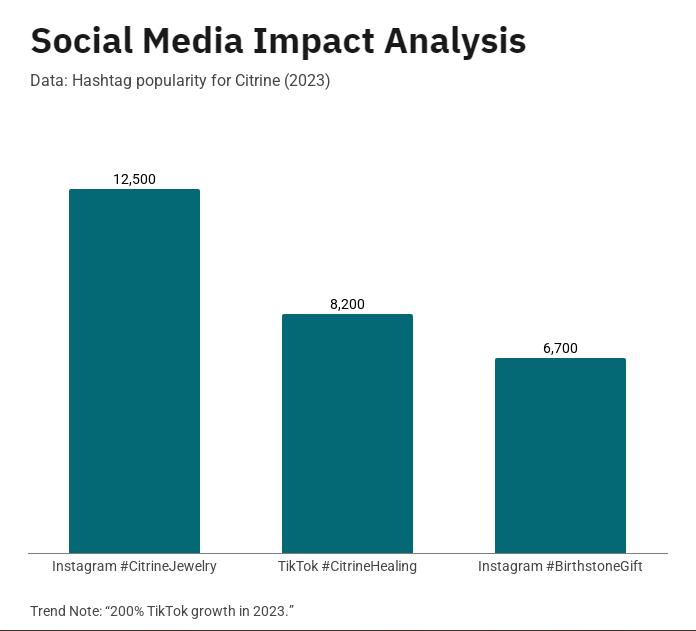
Searches for "citrine jewelry" on Pinterest and TikTok grew by 40% YoY (2022–2023) per Google Trends.
(4)Retail & Design Trends
Mass-Market Appeal:
Major retailers like Kay Jewelers and Zales feature citrine in ~25% of their colored gemstone collections (2023 data).
Custom Jewelry:
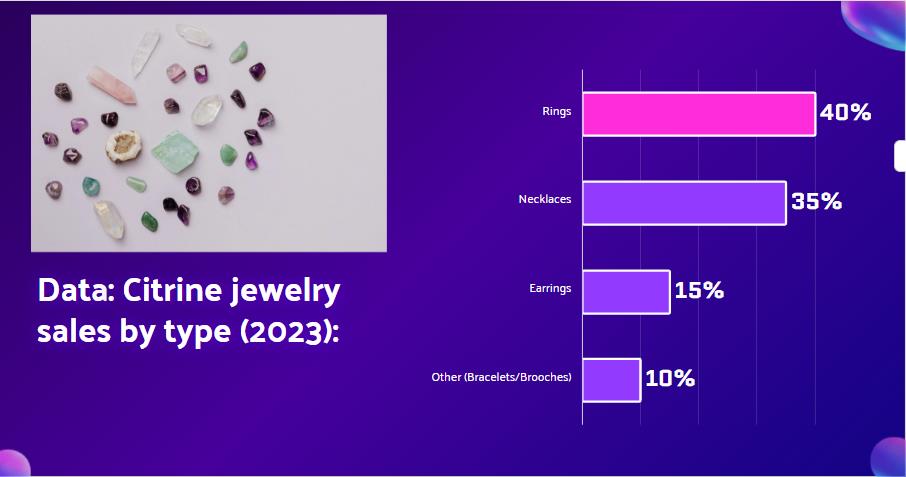
Citrine is a top choice for bespoke engagement rings and stackable rings, with 1 in 5 custom designs incorporating citrine (Etsy U.S. data, 2023).
(5)Ethical & Sustainable Perception
Lab-Grown & Treated Stones:
Over 80% of citrine sold in the U.S. is heat-treated amethyst or smoky quartz, which is widely accepted as eco-friendly due to its low environmental impact.
Millennial and Gen Z buyers prioritize citrine for its perceived ethical sourcing (per a 2023 MVI Marketing survey).
Metaphysical & Wellness Trends
"Crystal Healing" Boom:
Citrine is the 2nd most popular"healing crystal" in the U.S. (after amethyst), with $ 50 M+ annual sales in the wellness sector (SPINS market data, 2023).
Linked to "abundance" and "positivity," it’s a staple in holistic lifestyle brands like Goop and Energy Muse.
Key Takeaways
Citrine’s dominance in the U.S. market reflects:Affordability + Durability = Ideal for everyday wear.
Cultural Resonance: Birthstone tradition + alignment with wellness trends.
Supply Stability: Abundant, ethically acceptable supply chain.
Design Flexibility: Works in both luxury and fast-fashion jewelry.
Similarities and Differences Between Topaz and Citrine
Topaz and citrine, celebrated as November birthstones, share a warm, golden allure but differ significantly in composition, properties, and symbolism. Below is a detailed comparison to highlight their unique characteristics and shared traits.
a.Similarities:
Birthstone Status
Both are recognized as November birthstones, symbolizing warmth, vitality, and autumnal energy.
b.Color Range:
The overlap in golden-yellow to amber hues makes them visually similar in jewelry.
c.Use in Jewelry:
Popular choices for rings, pendants, and earrings due to their brilliance and affordability (depending on type).
d.Treatments:
Often enhanced: Citrine is typically heat-treated amethyst, while blue topaz is irradiated for color.
e.Metaphysical Associations:
Linked to positivity, abundance, and emotional balance in crystal healing traditions.
f.Differences
Key Takeaways
Identification Tips:
Weight Test: Topaz feels heavier than citrine of the same size.
Refraction: Topaz shows double refraction; citrine does not.
Hardness: Topaz can scratch quartz (e.g., citrine).
Jewelry Considerations:
Topaz: Ideal for statement pieces, but it requires care to avoid cleavage breaks.
Citrine: Budget-friendly for everyday wear with good durability.
Value:
Rare imperial topaz is a collector’s gem, while citrine offers accessible luxury.
Citrine's Popularity in the U.S. Gemstone Market
To distinguish between genuine topaz and citrine, consider the following methods, ranging from simple observations to more technical tests:There are better ways to know these.
01. Physical Properties:
Hardness:
Topaz: Mohs hardness of 8 (can scratch quartz).
Citrine (Quartz): Mohs hardness of 7 (can be scratched by topaz).
Test: Use a quartz crystal (e.g., amethyst) to attempt a scratch on the stone. If scratched, it’s likely citrine. Caution: Destructive; use discreetly.
Specific Gravity (Density):
Topaz ~3.5–3.6 (feels heavier for its size).
Citrin:~2.655lighter than topaz.
Test: Compare the weight to a similarly sized quartz. Topaz will feel noticeably heavier. For precision, use the water displacement method to calculate SG.
02. Optical Properties:
Pleochroism:
Topaz: Displays strong pleochroism (color shifts when rotated under light).
Citrine Weak or no pleochroism.
Test: Rotate the stone under a light source. Distinct color changes suggest topaz.
Refractive Index:
Topaz: Higher refractive index (1.609–1.643).
Citrine: Lower refractive index (1.544–1.553).
Test: Requires a refractometer, typically used by professionals.
03. Visual and Structural Clues:
Inclusions:
Topaz: May contain two-phase inclusions (liquid and gas) or mica.
Citrine: Often has zebra-like stripes or angular zoning from heat treatment.
Test:Use a 10x loupe. Citrine might show "tiger stripes" from treated amethyst.
Cleavage vs. Fracture:
Topaz: Perfect basal cleavage (splits along planes; handle carefully).
Citrine: Conchoidal fracture (common in quartz).
Test: Avoid cleavage testing, as it damages the stone.
04. Market and Context:
Price & Availability:
Citrine: Affordable and widely available, often as heat-treated amethyst.
Topaz: More expensive, especially natural blue or pink varieties.
TIP: Be wary of "topaz quartz" labels—these are citrine, not topaz.
Color:
Citrine: Yellow to orange-brown, sometimes with smoky hues.
Topaz: Wider color range (blue, pink, yellow, colorless). Yellow topaz may resemble citrine, but it often has a cooler tone.
05. Professional Verification:
Gemologist Tools: Refractometers, spectrometers, and advanced inclusion analysis provide definitive results.
Certificate on: Reputable sellers provide lab reports (e.g., GIA, AGS).
Quick Reference Table:
Final Tips:
Avoid Glass Imitations: Check for bubbles (indicative of glass) under magnification.
Treatments: Most blue topaz is irradiated; citrine is often heat-treated amethyst. These are common but should be disclosed.
When in doubt, consult a gemologist for certification, especially for high-value stones.
By combining these methods, you can confidently differentiate between genuine topaz and citrine.
How To Care for November Birthstones
November celebrates two beautiful birthstones, topaz and citrine. Each requires specific care to maintain its brilliance.
Here’s a guide to keeping them in pristine condition:
①Topaz Care
Hardness: 8 on the Mohs scale (durable but can be brittle).
Colors: Blue, yellow, pink, and more (some are treated/coated).
Cleaning:
Use warm, soapy water and a soft brush.
Avoid ultrasonic cleaners (especially for treated/irradiated stones, e.g., blue topaz).
Steer clear of harsh chemicals (bleach, ammonia) and sudden temperature changes.
Protection:
Remove during heavy lifting, sports, or manual work to prevent chips.
Store separately in a soft pouch or lined jewelry box to avoid scratches.
Special Notes:Treated topaz (e.g., coated or irradiated) may lose color with heat or prolonged sunlight.
Avoid steam cleaning and extreme heat sources (e.g., saunas).
② Citrine Care
Hardness: 7 on the Mohs scale (durable but avoid rough handling).
Origin: Natural or heat-treated amethyst.
Cleaning:
Clean with mild soap, water, and a soft cloth.
Rinse thoroughly to remove residue.
Protection:
Prolonged sunlight may cause fading; limit exposure.
Avoid harsh impacts to prevent chipping.
Storage:
Keep separate from harder gems (e.g., diamonds, sapphires).
③General Tips for Both Stones
Remove Jewelry when swimming (chlorine), cleaning, or applying cosmetics.
Professional Check-Ups: Inspect prongs/settings annually to secure stones.
Avoid Abrasives: Use non-abrasive cloths for polishing.
Following these steps, your November birthstones will stay vibrant and cherished for years!
Budget November Birthstones? Are They Affordable?
November’s birthstones, topaz and citrine, offer stunning options for every budget. While citrine is generally more affordable, topaz can also be budget-friendly, depending on its type and treatment.
This guide breaks down how to choose November birthstones without breaking the bank, including price ranges, cost-saving tips, and alternatives.
a. Citrine: The Ultimate Budget-Friendly November Birthstone
Citrine is the go-to choice for affordable November birthstone jewelry. Here’s why:
Why Citrine Is Budget-Friendly
Abundance: Most citrine on the market is heat-treated amethyst or smoky quartz, making it widely available and inexpensive.
Natural vs. Treated: Natural citrine is rare, but treated citrine (the majority of commercial stones) costs 5–50 per carat, depending on color and clarity.
Jewelry Prices:
Citrine rings: 20-150
Pendants or earrings: 15-100
Tips for Buying Citrine on a Budget
Opt for smaller stones or clusters.
Choose lighter yellow hues (often cheaper than deep "Madeira" orange).
Shop lab-created citrine for consistent quality at lower prices.
b.Topaz: Affordable Options Within a Classic Stone
While some topaz varieties (like rare imperial topaz) are pricey, others are surprisingly budget-friendly:
Budget-Friendly Topaz Types
Blue Topaz: The most affordable type, often irradiated to achieve its sky-blue hue. Prices range from 0 to 00 per carat.
Jewelry examples: Blue topaz rings (30–200), earrings (25–150).
White (Colorless) Topaz: A diamond alternative at 5-50 per carat.
Treated vs. Natural: Most blue and colorless topaz is treated, which keeps costs low.
Avoid Expensive Topaz Varieties
Imperial topaz (orange-pink) can cost 500–2,000+ per carat.
Rare pink or red topaz is also high-end.
c.Factors Affecting Birthstone Prices
Understanding these factors helps you save money:
Color: Deeper hues (e.g., Madeira citrine, imperial topaz) cost more.
Treatments: Treated stones are cheaper than natural, untreated ones.
Clarity: Eye-clean stones (no visible flaws) are pricier, but minor inclusions lower costs.
Carat Size: Smaller stones are more affordable.
Setting: Sterling silver or plated settings cost less than gold or platinum.
For Topaz
Choose Blue or White: These are the most budget-friendly types.
Avoid Misleading Labels: Ensure "topaz" isn’t a marketing term for look-alikes (e.g., "Swiss blue topaz" is genuine; "mystic topaz" is coated quartz).
Shop Pre-Owned: Vintage or secondhand jewelry often offers topaz at discounted prices.
d.Affordable Alternatives to Traditional November Birthstones
If both citrine and topaz stretch your budget, consider these alternatives:Lemon Quartz: A bright yellow quartz similar to citrine (5–30 per carat).
Yellow Sapphire: Lab-created versions mimic citrine’s warmth at 50–150 per carat.
Glass or Cubic Zirconia (CZ): Simulated citrine/topaz jewelry costs under $20.
e.Common Budget Pitfalls to Avoid
Overpaying for Treatments: Treated stones should cost less than natural ones.Mislabeled Stones: Confirm the gem is genuine citrine or topaz, not dyed quartz or glass.
Oversized Stones: Larger gems may have visible flaws or require pricier settings.
f. Price Comparison Chart
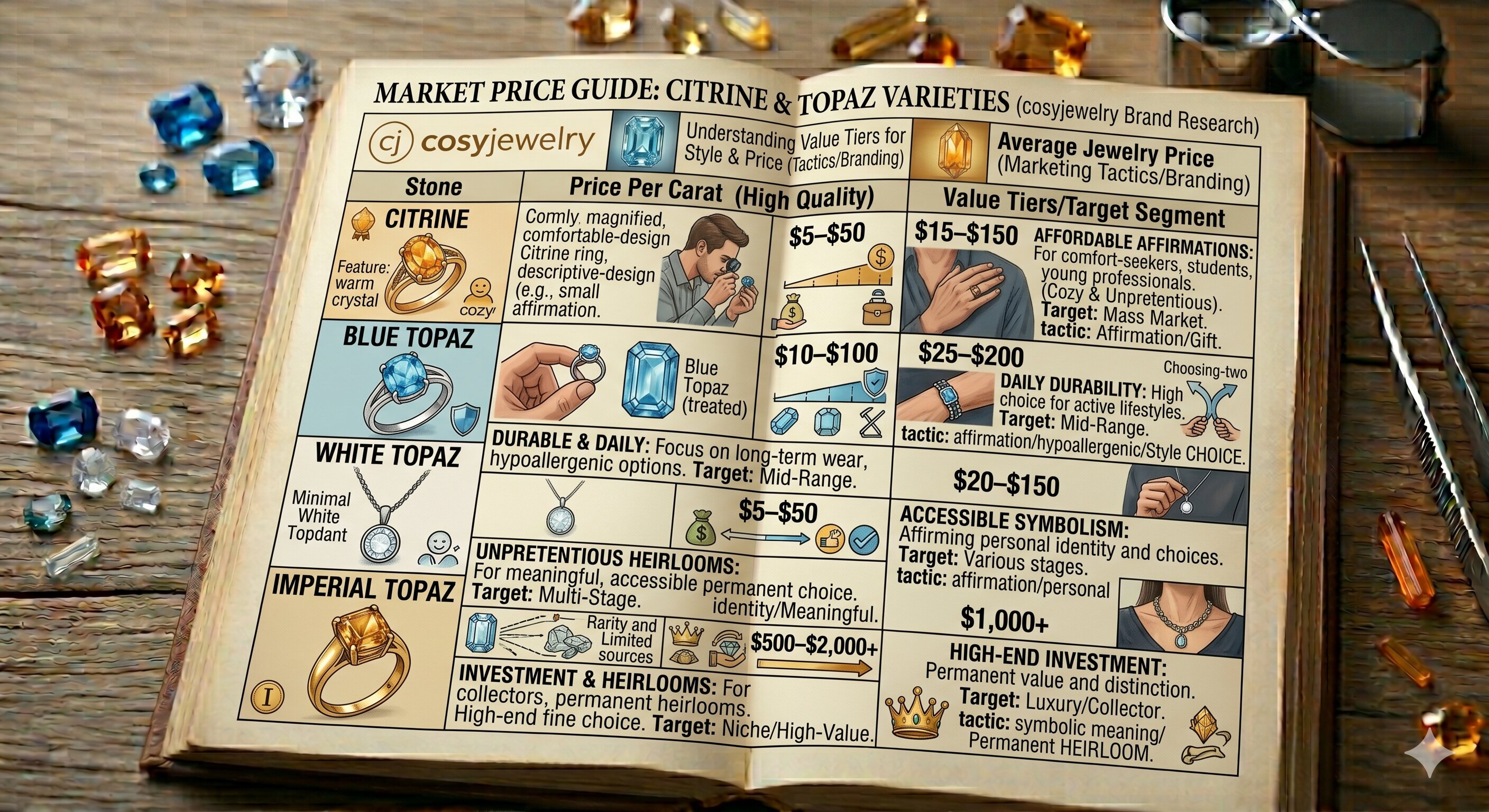
FAQs About November Birthstones on a BudgetQ: Is citrine cheaper than topaz?
A: Yes! Citrine is generally 50–70% cheaper than most topaz varieties.
Q: Can I get real topaz under 100?
Absolutely. Blue or white topaz in a sterling silver settinsoftnessss falls under 100.
Q: Are lab-created stones a good budget option?
A: Yes—they’re ethical, durable, and cost-effective.
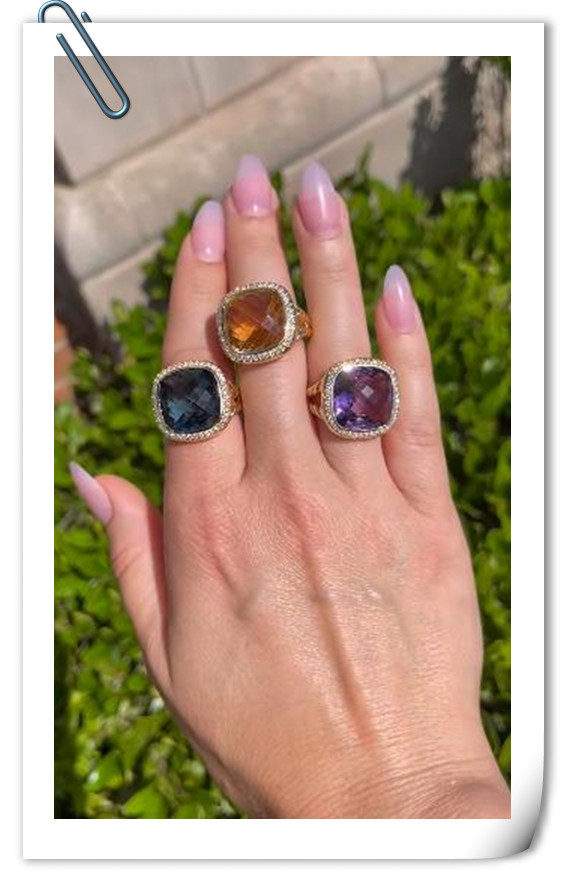
Can I Wear Topaz and Citrine Together?
Absolutely! Wearing topaz and citrine together is not only possible but can create stunning, meaningful jewelry combinations.
Here’s why they work well as a pair and how to style them:
Why They Pair Beautifully
01. Color Harmony
Golden topaz + citrine: Creates a warm, autumnal palette of yellows and oranges, perfect for November vibes.
Blue topaz + citrine: Offers a striking contrast between cool blue and warm gold, adding visual interest.
White or pink topaz + citrine: Softens the look for a delicate, feminine style.02. Symbolic Synergy
Topaz (strength, calmness) and citrine (positivity, abundance) complement each other’s metaphysical properties.
Together, they can symbolize balance, calm energy paired with vibrant optimism.03. Versatility
Both stones work in casual and formal jewelry, making them adaptable to any occasion.
Practical Tips for Wearing Them Together
04. Durability Considerations
Topaz (8 on the Mohs scale) is harder than citrine (7), but its cleavage makes it prone to chipping.
Best for: Earrings, pendants, or bracelets (less prone to damage).
Rings: Use protective settings (e.g., bezel) for topaz, or pair citrine with a more durable gemstone accent.05. Mix Metals Thoughtfully
Yellow gold enhances the warmth of both stones.
White gold or platinum pairs elegantly with blue topaz and citrine.
Rose gold adds a romantic touch to pink/white topaz and citrine combos.06. Balance Sizes and Shapes
Pair a bold citrine centerpiece with smaller topaz accents (or vice versa).
Try geometric cuts (e.g., citrine cushion + topaz emerald cut) for modern contrast.07. Ethical Transparency
If you prefer untreated stones, opt for natural yellow topaz and verify the citrine’s origin (most are heat-treated amethyst).
Ask jewelers about treatments for both gems to align with your values.08. Styling Inspiration
November Birthstone Stackable Ring: A citrine statement ring with a delicate blue topaz band.
Layered Birthstone Necklace for November: Mix a citrine pendant with a blue topaz solitaire.
Birthstone earrings for November: mismatched studs (one citrine, one topaz) for playful asymmetry.
November Birthstone Bracelets: Alternate beads or charms of both stones for a bohemian look.
How Can I Choose The Right November Birthstone?
November boasts two beautiful birthstones, topaz and citrine, each with unique characteristics.
Here's a structured guide to help you decide:
①Color Preferences
Topaz: Offers a spectrum of colors, including yellow (traditional), blue, pink, and imperial (orange-pink). Golden or imperial topaz is classic for a November birthstone gift.
Citrine: It ranges from pale yellow to amber-brown, often with warm, sunny hues. It resembles yellow topaz but is typically more affordable.
②Durability & Care
Topaz: Mohs hardness of 8, making it durable but brittle. Avoid sharp blows due to its cleavage. Ideal for rings and pendants with protective settings.
Citrine: Quartz family (Mohs 7), suitable for everyday wear. Less prone to chipping than topa, but still requires care.
③Budget Considerations
Citrine: Generally more affordable, especially in larger sizes. Natural citrine is rare; most are heat-treated amethyst (check authenticity).Topaz: Prices vary widely. Blue topaz (often irradiated) is budget-friendly, while imperial topaz is rare and costly. Yellow topaz falls in the mid-range.
④ Authenticity & Treatments
Citrine: Verify if it’s natural or heat-treated amethyst. Natural citrine has subtle hues, while treated stones may show orange-red tones.
Topaz: Commonly treated for color enhancement (e.g., blue topaz via irradiation). Ask about treatments if seeking natural stones.
Conclusion: November’s duality of topaz and citrine offers something for everyone. Whether drawn to Topaz’s timeless elegance or citrine’s sunny charm, both stones encapsulate the spirit of November.
“You now know the history, the colors, the healing properties, the market trends, the similarities, the identification methods, the care, the budget, and the styling tips. The only question left: which golden stone will you wear?
Our current collection includes a limited number of natural topaz and citrine stones — from rare imperial topaz to sunny Madeira citrine, and from cool Swiss blue topaz to warm golden citrine. When stones of this color saturation are gone, sourcing new ones with GIA certification can take months.
This is not just a birthstone. It is 3,000 years of Egyptian sun gods, Portuguese crowns, Scottish daggers, and Victorian wealth — two stones, one month, and a golden light that never fades.”
[Button: Claim Your November Birthstone (Limited) →]
News for Wednesday 10 June, 2026
- Pearl Birthstone Guide: Meaning, Price, Care And Types
- Moonstone Guide: Meaning, Benefits, Price And Tell Real
View all news for Wednesday 10 June, 2026 on one page
Recent News
- Tuesday 09 June, 2026
- Monday 08 June, 2026
- Sunday 07 June, 2026
- Saturday 06 June, 2026
- Friday 05 June, 2026