

How To Invest In Gold Plated Strategies For Beginners
Gold Plated
Gold-plated items themselves are not considered viable financial investments. Their value comes from design and aesthetics, not precious metal content, making them poor stores of value.
“In the 19th century, French jewelers perfected the art of electroplating. They discovered that a microscopic layer of gold—thinner than a human hair—could turn a brass brooch into something that looked like it belonged to a queen. The technology was a scandal. Purists called it ‘fake.‘ But ordinary women loved it. For the first time, they could wear gold without inheriting it. Today, gold plating still carries that same magic: it is not forever, but it is beautiful. And for millions of people, that is enough.”
The same French electroplating that democratized gold now awaits your own collection — from stackable rings to statement necklaces. Every gold-plated piece in our collection is made with a thick, durable layer (not flash plating) and a brass or stainless steel base for longevity.”
[Button: Explore Gold-Plated Jewelry →]
Let's see the list of gold-plated information.
What Does "Gold Plated" Mean?
How Long Will Gold-Plated Jewelry Last?
Can Gold-Plated Jewelry Tarnish?
Is It Worth Buying Gold-Plated Jewelry?
Is Gold-Plated Still Real Gold?
Can I Shower With Gold-Plated Jewelry?
Gold Plated Jewelry vs Gold
Is Gold-Plated Jewelry Good Quality?
Why Is Gold-Plated So Cheap?
Can I Wear Gold-plated Jewelry Every Day?
Can You Make Gold-Plated Jewelry Shiny Again?
Does Toothpaste Clean Gold-Plated Jewelry?
How Much Does Gold Plating Cost?
How To Invest In Gold Plated: Strategies for Beginners?
Let's drive in the first topic.
What Does "Gold Plated" Mean?
This is a great question, as the term can be a bit confusing. Here’s a detailed breakdown of what "gold-plated" means.
Simple Definition
Gold-plated means that a thin layer of gold is applied over the surface of a base metal (like brass, copper, or stainless steel) through an electrochemical process called electroplating.
Think of it like a chocolate-dipped strawberry: the strawberry is the base metal, and the thin layer of chocolate is the gold plating.
The Key Details
1. The Process: Electroplating
The item is submerged in a chemical solution containing gold ions. An electric current is passed through the solution, which causes the gold to bond to the surface of the base metal. This creates a uniform, but very thin, coating.
2. The Gold Layer is Very Thin
This is the most important characteristic. The thickness of the gold layer is measured in microns (a millionth of a meter). By law (in places like the US and UK), an item must have a gold layer of at least 0.5 microns thick to be called "gold plated." However, this is still extremely thin and will wear away over time.
3. It's Not Solid Gold
The core of the item is a different, less expensive metal. Common base metals include:
Brass: A very common choice for jewelry.
Copper: Often used under gold plating.
Stainless Steel: Common for watches and electronics.
Nickel: Sometimes used, but can cause allergic reactions.
4. Hallmarks and Markings
You will often see markings on gold-plated items, but they are different from solid gold markings.
Common markings include: GP (Gold Plated), GEP (Gold Electroplated), or HGE (Heavy Gold Electroplate).
Crucially, it will not have a karat stamp like "14k" or "18k" by itself. If you see something like "14k GP," it means the plating itself is 14k gold, but the item is not solid 14k gold.
Comparison to Other Gold Terms
It's easiest to understand gold plating by comparing it to other common gold coatings.
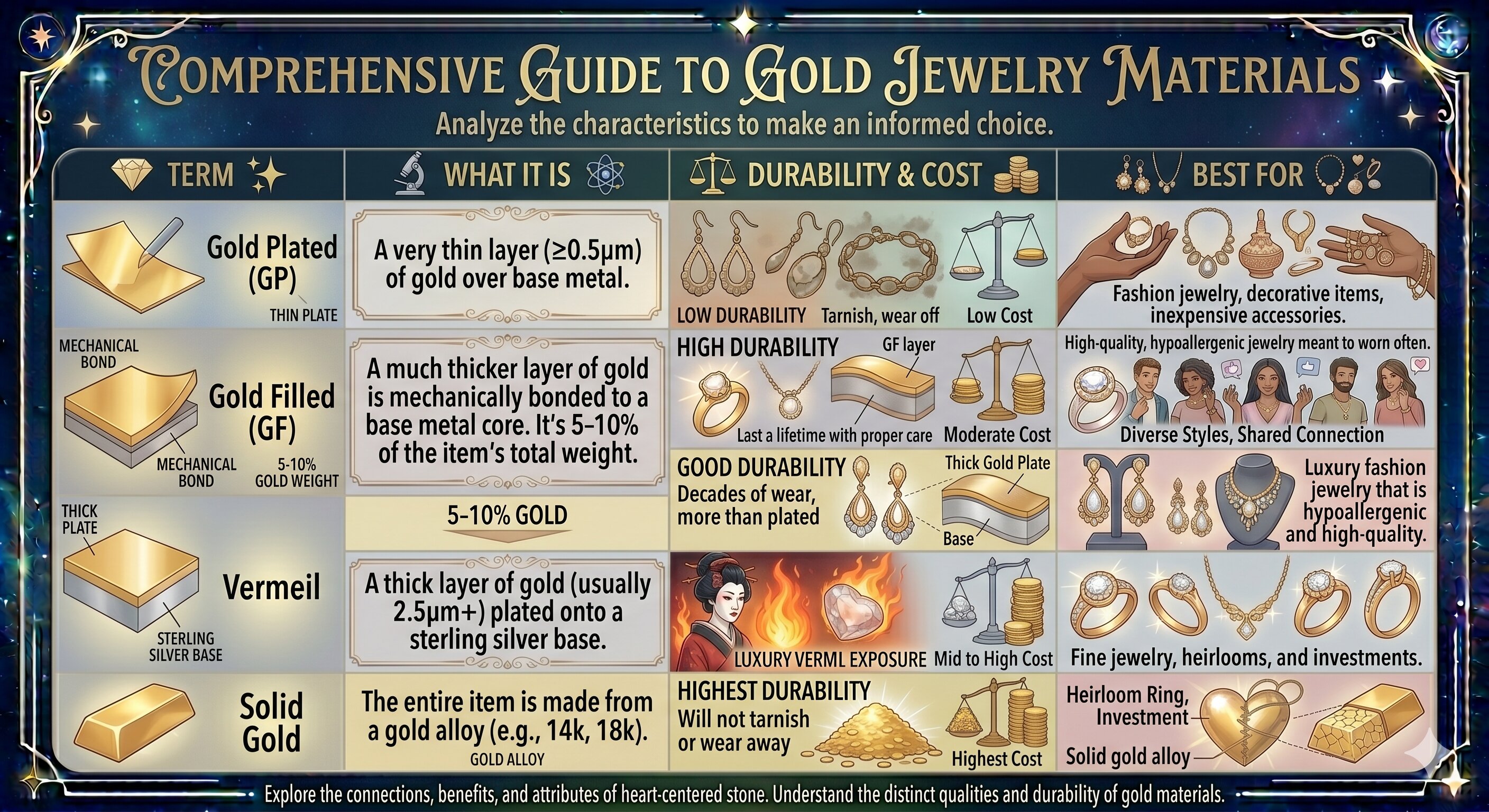
Advantages and Disadvantages of Gold-Plated Items
Advantages:
Affordability: You get the look of gold at a fraction of the price of solid gold.
Variety: Allows for trendy and frequently changing styles without a big investment.
Aesthetic: Provides a beautiful, real-gold finish.
Disadvantages:
Tarnishing: The base metal can tarnish and show through if the plating is scratched or worn thin.
Wear and Tear: The gold layer will eventually rub off with friction, exposure to chemicals, and sweat. It is not permanent.
Allergies: If the base metal is nickel, it can cause skin reactions for some people once the plating wears through.
How to Make Gold-Plated Items Last Longer
Keep it Dry: Remove jewelry before swimming, showering, or washing hands.
Avoid Chemicals: Put on lotions, perfumes, and hairsprays before putting on your jewelry.
Store Properly: Keep items in a soft, airtight bag or box to minimize exposure to air and moisture.
Clean Gently: Wipe with a soft, lint-free cloth. Avoid harsh chemicals or abrasive cleaners.
"Gold-plated" is a surface-level treatment that gives a less expensive base metal the appearance of gold. It's an affordable and beautiful option for fashion jewelry, but it is not durable or permanent like gold-filled or solid gold.
How Long Will Gold-Plated Jewelry Last?
With occasional wear and proper care, gold-plated jewelry can last 1 to 3 years. With daily wear, you might see signs of wear within 6 to 12 months.
Its longevity depends entirely on several key factors.
Key Factors That Determine Lifespan
1. Thickness of the Gold Layer
This is the most important factor. The thicker the plating, the longer it will last.
Standard Gold Plated: (0.5 microns) – This is the legal minimum. It's very thin and can wear away quickly.
Heavy Gold Electroplated (HGE): (2.5 microns or more) – This will be significantly more durable and last longer.
2. Base Metal
The metal underneath the plating matters.
Brass or Copper: Common and provides a good surface for plating. However, if the plating wears through, the base metal can tarnish and leave green or black marks on the skin.
Stainless Steel: An excellent base metal as it is less likely to corrode or tarnish even if the plating wears off.
3. Body Chemistry
Your personal pH balance affects the jewelry.
Acidic Skin: People with more acidic skin will cause the plating to wear away and tarnish faster.
Sweat & Moisture: Exposure to sweat, lotions, and perfumes accelerates the breakdown of the plating.
4. Friction and Wear
Where and how you wear the item is crucial.
High-Friction Items: Rings (rubbing against surfaces), bracelets (rubbing on desks), and necklace clasps will wear out the fastest.
Low-Friction Items: Earrings and pendants that don't move or rub much will typically last the longest.
Realistic Expectations: A Timeline of Wear
It's helpful to think of the lifespan in stages:
0 - 6 Months (The "New" Phase): With proper care, the piece should look pristine and show no signs of wear.
6 - 18 Months (The "Aging" Phase): You may start to see slight fading on high-friction areas (e.g., the back of a ring, the edges of a pendant). The shine might dull slightly as a microscopically thin layer wears away.
18+ Months (The "Wear-Through" Phase): The base metal may begin to show through in small spots. Tarnishing of the underlying metal can occur, potentially causing skin discoloration. The piece loses its original luster.
How to Make Your Gold-Plated Jewelry Last Longer
You can significantly extend its life with careful maintenance. Here are the golden rules:
Keep It Dry. This is the #1 rule. Always remove your jewelry before:
Showering or bathing
Swimming (chlorine and salt water are especially corrosive)
Washing your hands
Exercising heavily
Apply First, Wear Last.
Put on your gold-plated jewelry after applying perfume, hairspray, lotions, and makeup. These chemicals break down the gold layer.
Store It Properly.
Store each piece separately in a soft pouch, a jewelry box with compartments, or a Ziploc bag.
This prevents scratches and exposure to air, which causes tarnishing.
Clean It Gently.
Use a soft, lint-free microfiber cloth to gently polish the piece after wearing.
For a deeper clean, use a drop of mild dish soap in warm water and a soft cloth. Do not soak it.
Dry immediately and thoroughly.
Take It Off for Chores.
Remove jewelry before cleaning with household chemicals or doing dishes.
Signs It's Reaching the End of Its Life
The base metal is clearly visible in large areas (e.g., you see silver or brass-colored spots).
The item causes skin discoloration (a green or black mark), indicating the base metal is reacting with your skin.
It appears dull and brassy all over and cannot be polished back to a shine.
Treat gold-plated jewelry as beautiful, but temporary. It's perfect for following trends and adding a touch of luxury without a major investment, but it will not last a lifetime like solid gold or gold-filled pieces.
Can Gold-Plated Jewelry Tarnish?
Yes, gold-plated jewelry can and will tarnish, but it's not the gold itself that is tarnishing.
Here’s the detailed explanation of what's actually happening.
The Gold Itself Doesn't Tarnish
First, it's important to know that pure gold is a non-reactive metal and does not tarnish, corrode, or rust. This is one of the key reasons it's so valued for jewelry.
The problem lies in what's underneath the gold and what can happen to the plating itself.
Why Gold-Plated Jewelry Appears to Tarnish
There are two primary reasons for the tarnishing you see:
1. The Base Metal is Exposed and Tarnishes
This is the most common cause.
The Process: The thin layer of gold plating can wear off or become scratched over time through friction, contact with chemicals, and exposure to moisture. Once this happens, the base metal underneath (typically copper, brass, or silver) is exposed to air and moisture.
The Reaction: These base metals are much more reactive than gold. They undergo a chemical reaction (oxidation) when exposed to elements like sulfur in the air or sweat on your skin. This results in tarnish, which often looks like a dark, blackish, or greenish film on the metal.
So, when you see "tarnish" on a gold-plated piece, you are almost always seeing the tarnished base metal showing through where the gold plating has worn thin or broken down.
2. The Plating Metal Can Influence Color
Gold used for plating is often an alloy (e.g., 14k or 18k gold), mixed with metals like copper or silver to make it harder.
If the alloy contains copper, it can oxidize over time, causing the jewelry to take on a slightly darker or duller appearance, even if the plating is largely intact. This is a much slower process.
What Does Tarnish on Gold-Plated Jewelry Look Like?
Discoloration: The jewelry loses its bright, golden shine and becomes dull, brassy, or silvery in spots.
Dark Spots: You might see blackish or dark brown patches, especially in crevices.
Green Skin: A classic sign is a green or black ring on your skin. This is not harmful; it's simply the tarnished copper in the base metal (usually brass) reacting with the acids in your sweat.
The gold plating itself does not tarnish, but it wears away, exposing the non-gold base metal beneath, which does tarnish. Proper care can significantly delay this process, but it is an inherent characteristic of gold-plated jewelry over time.
Is It Worth Buying Gold-Plated Jewelry?
It is worth buying gold-plated jewelry if you value affordability, variety, and trendy styles. It is not worth buying if you are looking for a long-term, durable, and hypoallergenic heirloom piece.
Here’s a detailed breakdown to help you decide.
The Case FOR Buying Gold-Plated Jewelry (The Pros)
Affordability: This is the biggest advantage. You can get the luxurious look of gold at a fraction of the cost of solid gold or even gold-filled pieces. This makes it accessible for almost any budget.
Trend-Driven & Variety: It's perfect for following fast-moving fashion trends. You can buy multiple statement necklaces, colorful stackable rings, or bold earrings for the season without a significant financial commitment.
Aesthetic Appeal: It provides a real gold surface, so it has a more authentic look and feel than gold-colored alloy or costume jewelry, at least initially.
Great for Testing Styles: If you're unsure about committing to a solid gold version of a particular design, buying it in gold-plated form lets you "test drive" the style and see if you love it.
The Case AGAINST Buying Gold-Plated Jewelry (The Cons)
Lack of Durability: The gold layer is thin and will eventually wear off, revealing the base metal underneath. It is not a "forever" piece. With daily wear, this can happen in under a year.
Tarnishing: As discussed, the base metal can tarnish, causing the jewelry to look dull, discolored, or even leave marks on your skin.
Potential for Allergies: If the base metal is nickel (a common allergen), the jewelry can cause skin reactions once the plating wears through.
Not an Investment: Gold-plated jewelry has no resale value. The value is purely in its aesthetic and use, which is temporary.
When Is It WORTH Buying?
Go for gold-plated in these scenarios:
For Fashion & Fun: You want to experiment with new styles, colors, and statement pieces without breaking the bank.
For Special Occasions: You need a specific piece for a wedding, vacation, or party that you won't wear frequently.
If You Have a Small Budget: You want the gold look but cannot currently afford solid gold or gold-filled alternatives.
If You Tend to Lose Jewelry: If you're prone to misplacing earrings or rings, it's less heartbreaking to lose a $30 plated piece than a $300 solid gold one.
When Is It NOT WORTH Buying?
Avoid gold-plated and consider saving for gold-filled, vermeil, or solid gold in these scenarios:
For an "Everyday" Piece: You want a necklace, pair of studs, or a bracelet that you plan to wear daily and never take off. Gold-plated will not hold up.
For Sentimental or Heirloom Items: You're buying a piece to mark a special occasion (like a graduation or anniversary) with the intention of keeping it for a lifetime or passing it down.
If You Have Sensitive Skin, the risk of the nickel-based metal irritating it is high once the plating wears.
If You Dislike Maintenance: You don't want to have to carefully store your jewelry and avoid water, lotions, and sweat.
A Strategic Purchase
Think of gold-plated jewelry not as an inferior product, but as a different category with a specific purpose.
Gold-Plated = Fast Fashion. It's for temporary, trendy, and low-commitment style.
Solid Gold/Gold-Filled = Slow Fashion. It's for permanent, durable, and high-commitment investments.
It is absolutely worth buying gold-plated jewelry if you approach it with the right expectations. Understand that you are paying for the look, not the longevity. It's a fantastic way to build a versatile and stylish jewelry collection affordably.
“In 2019, a young woman posted on Reddit about her grandmother‘s gold-plated brooch. The plating had worn off in places, revealing the brass beneath. She asked if it was worth anything. The comments flooded in—not with appraisals, but with stories. ‘My mother has the same one.‘ ‘I wore that to my prom.‘ ‘It was my first ‘gold‘ piece.‘ The brooch had no melt value. But it had stories. Gold-plated jewelry is not an investment in metal. It is an investment in moments—the earrings you wore on your first date, the necklace you bought on vacation, the ring you gave yourself after a promotion. That is a different kind of wealth.”
Just be sure to care for it properly to maximize its lifespan, and know that for core, foundational pieces you wear every day, investing in a higher-quality alternative is a wiser long-term choice.
Is Gold-Plated Still Real Gold?
Yes, the outer layer is absolutely real gold, but the entire item is not considered a "solid gold" piece.
Here's a breakdown to clarify what "real" means in this context:
The "Yes" Part: The Coating is Real Gold
Material: The thin layer bonded to the surface is genuine gold, often alloyed with other metals (like copper or silver) to create different karat values (e.g., 14k or 18k gold plating). This is not a paint or a gold-colored imitation; it's the same metal you find in solid gold jewelry.
Process: It is applied through a scientific process (electroplating) that uses real gold atoms suspended in a solution.
So, when you look at a new gold-plated item, you are looking at a surface of real gold.
The "But" Part: The Structure is Not Solid Gold
The Core: The vast majority of the item's mass is a base metal like brass, copper, or stainless steel. If you were to cut the item in half, you would see that the gold is only a microscopic shell on the outside.
The Analogy: Think of it like a chocolate-dipped strawberry. The strawberry is the base metal, and the chocolate coating is the gold plating. The coating is real chocolate, but you wouldn't call the entire thing a "solid chocolate" item.
Key Differences at a Glance:
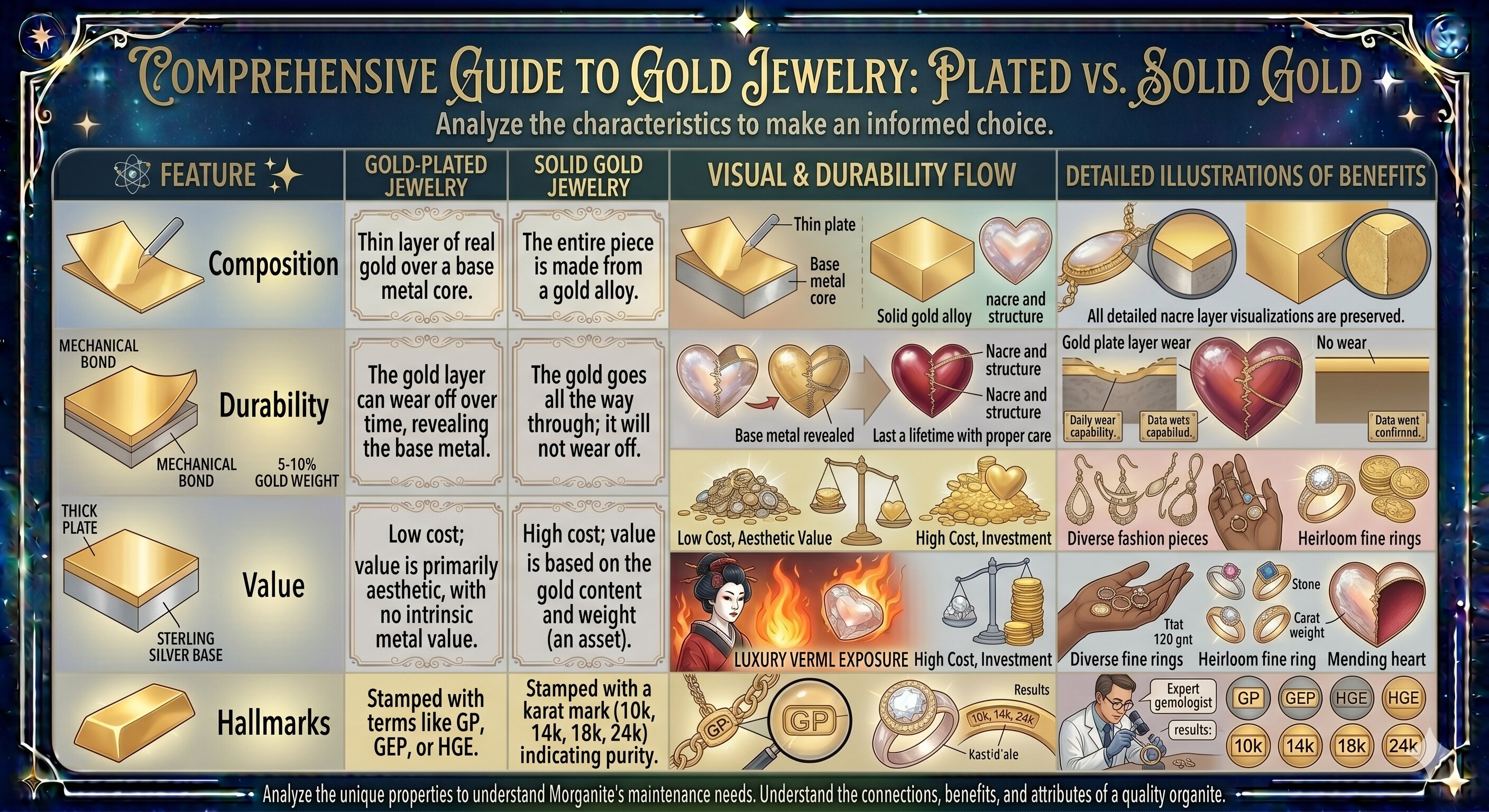
The Important Distinction: "Real Gold" vs. "Solid Gold"
This is the heart of the matter:
"Real Gold" refers to the material itself. The plating is made of real gold material.
"Solid Gold" refers to the construction of the item. A gold-plated item is not solid gold.
Yes, gold-plated jewelry has a surface layer of real gold. However, because this layer is so thin and covers a non-gold core, the item as a whole is not considered "solid gold" and does not possess the same value, durability, or longevity.
Can I Shower With Gold-Plated Jewelry?
This is a very common question, and the answer is important for preserving your jewelry.
No, it is not recommended to shower with gold-plated jewelry.
It's one of the quickest ways to damage the piece and shorten its lifespan. Here’s a detailed breakdown of why you should avoid it.
Why Showering with Gold-Plated Jewelry is Harmful
The water itself isn't the only issue; it's the combination of several factors present in your shower:
Water: Constant exposure to water, especially immersion, can slowly break down the bond between the gold layer and the base metal over time. This can cause the plating to loosen or peel.
Soaps and Shampoos: These contain chemicals, surfactants, and detergents that are corrosive to the thin gold layer. They strip away the plating and can cause the jewelry to become dull and discolored.
Hard Water: If you have hard water (water with a high mineral content, like calcium and magnesium), it can leave deposits on the jewelry, creating a filmy, dull appearance that is difficult to clean off without damaging the plating.
Heat: Hot water and steam open up the microscopic pores of the metal, allowing water and chemicals to penetrate more easily and accelerate the tarnishing of the base metal underneath.
Physical Abrasion: Rubbing against a washcloth or your skin while showering creates micro-scratches that wear down the thin gold layer.
What Happens If You Do It Occasionally?
An occasional, accidental splash of water won't ruin your jewelry immediately. The damage is cumulative. However, making a habit of showering with it will lead to:
Rapid Tarnishing: The jewelry will quickly lose its luster and take on a brassy or dull appearance.
Accelerated Wear: The gold plating will wear off much faster, revealing the base metal beneath.
Skin Discoloration: Once the base metal (like copper or brass) is exposed, it can react with water and your skin, potentially leaving green or black marks on you.
Best Practice: The "Last On, First Off" Rule
To maximize the life and beauty of your gold-plated jewelry, follow this simple rule:
Last On: Put on your jewelry after you have finished showering, applying lotions, and using hairspray or perfume.
First Off: Take off your jewelry before you shower, swim, wash dishes, or exercise.
What If It Gets Wet?
If your gold-plated jewelry does get wet, don't panic. Dry it immediately and thoroughly with a soft, lint-free cloth (like a microfiber cloth). This helps remove moisture and prevent water spots.
While an accidental splash won't spell disaster, consistently showering with your gold-plated jewelry will significantly shorten its lifespan and ruin its appearance. For such an affordable and beautiful piece, it's worth the small effort of taking it off to keep it looking new for as long as possible.
Gold Plated Jewelry vs Gold
This is the fundamental comparison. Here’s a clear, detailed breakdown of the differences between Gold-Plated Jewelry and Solid Gold.
Think of it as the difference between a print of a famous painting and the original masterpiece itself. Both can be beautiful to look at, but they are fundamentally different in composition, value, and longevity.
Head-to-Head Comparison Table
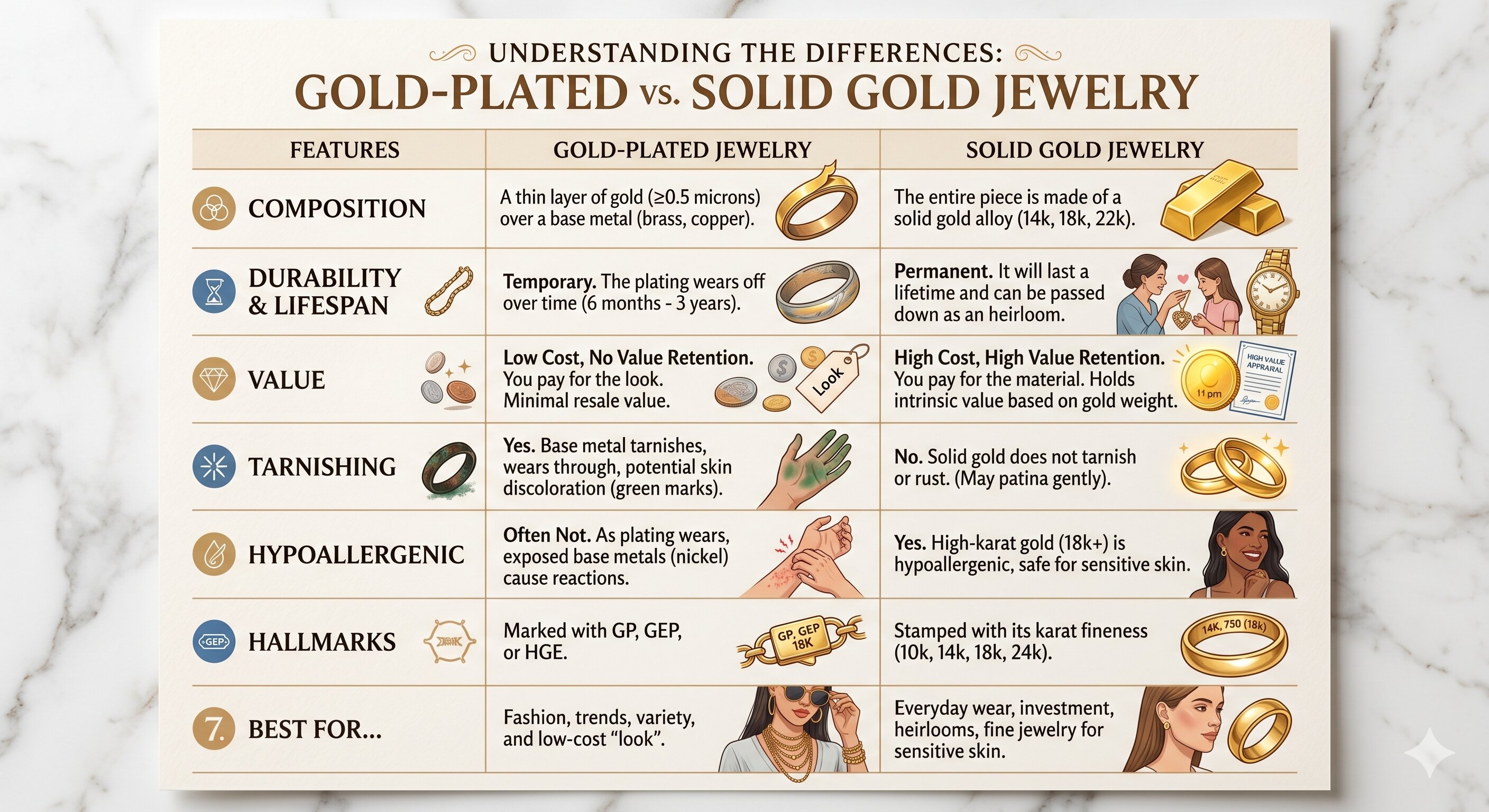
Key Differences Explained
1. Composition: The Core Difference
Gold-Plated: Like a chocolate-dipped strawberry. The core is a different, cheaper material with a thin gold coating.
Solid Gold: The entire piece is a gold alloy, through and through. If you scratch it, the color underneath is the same.
2. Value: Cost vs. Investment
Gold-Plated: You are paying primarily for the craftsmanship and design, not the raw material. It is an expense.
Solid Gold: You are paying for the weight and purity of the precious metal itself. It is a store of value and an asset. Its value is tied to the gold market.
3. Longevity: Temporary vs. Permanent
Gold-Plated: Has a limited lifespan. The gold layer will inevitably wear away with friction, chemicals, and time. It is not meant to be a "forever" piece.
Solid Gold: Can be worn for a lifetime and looks just as beautiful generations later. It can be polished, resized, and repaired indefinitely.
Which One Should You Choose?
The right choice depends entirely on your goal:
Choose Gold-Plated Jewelry if:
You want to follow current trends without a big financial commitment.
You love having a large, versatile jewelry collection to match different outfits.
You are buying for a special occasion and won't wear the piece daily.
Your budget is limited, but you desire the gold aesthetic.
Choose Solid Gold Jewelry if:
You are buying a symbolic piece for daily wear (e.g., an engagement ring, wedding band, signature necklace).
You view jewelry as an investment or a future heirloom.
You have sensitive skin and need a hypoallergenic metal.
You value longevity and durability over trendy styles.
The Strategic Approach
Many people wisely own both! They have:
A collection of gold-plated jewelry for fun, fashion, and variety.
A few key pieces in solid gold for everyday wear and sentimental value (like a pair of classic studs, a simple chain, or a wedding band).
Gold-plated jewelry offers the look of gold affordably, while solid gold offers the reality of gold as a permanent, valuable material. One is not inherently "better" than the other; they serve different purposes in a jewelry collection.
Is Gold-Plated Jewelry Good Quality?
Gold-plated jewelry is good quality for its intended purpose, but is poor quality if judged by the standards of fine, solid gold jewelry.
Here’s a more nuanced breakdown to help you decide what "good quality" means for you.
When Gold-Plated Jewelry is Considered "Good Quality"
It is a high-quality choice for its category when:
The Craftsmanship is Good: The plating is even, smooth, and without visible flaws like bubbles, cracks, or discoloration right out of the box. The clasps, chains, and settings are well-made from the base metal.
It uses a Better Base Metal: Jewelry plated over high-quality brass or, even better, stainless steel, will be more durable and less likely to cause tarnishing or skin reactions than pieces with a cheap, unknown base metal.
It has "Heavy" or "Thick" Plating: Terms like Heavy Gold Electroplate (HGE) indicate a thicker layer of gold (often 2.5 microns or more). This will last significantly longer and resist wear better than a piece with the legal minimum (0.5 microns).
It Serves Its Purpose Perfectly: For fast fashion, special occasions, or trend-testing, gold-plated jewelry is an excellent, high-value product. It provides a luxurious look at an accessible price point.
In these contexts, it is a well-made product that delivers exactly what it promises: affordable, beautiful, and on-trend style.
When Gold-Plated Jewelry is Considered "Poor Quality"
It falls short if you are looking for:
Long-Term Durability: The quality is poor if you need a piece for daily wear that will last for years without changing. The thin layer of gold will wear off; it's a matter of when, not if.
Hypoallergenic Properties: For those with metal sensitivities, the quality is unreliable. Once the plating wears through, exposure to nickel or other reactive base metals can cause skin irritation.
Investment Value: It has zero intrinsic value. You cannot resell it for the value of its materials. The money spent is for the aesthetic experience, not for an asset.
Heirloom Quality: It is not designed to be passed down through generations. It is inherently temporary.
The Verdict: A Question of Perspective
Think of it like this:
A paper plate is a high-quality product for a picnic—it's lightweight, cheap, and disposable. It's perfect for its job.
A porcelain plate is a high-quality product for a formal dinner—it's durable, beautiful, and meant to last for generations.
Gold-plated jewelry is the "paper plate" of the gold world. It's not meant to be used every day for years, but it serves a specific, valuable purpose wonderfully.
Final Answer:
Yes, gold-plated jewelry can be good quality if you judge it by these standards:
It provides an accurate and beautiful gold finish.
It is well-constructed for its price point.
It fulfills its purpose as an affordable, fashionable accessory.
No, gold-plated jewelry is not good quality if your standards are:
Lifetime durability.
Hypoallergenic safety.
Intrinsic and resale value.
Heirloom status.
Gold-plated jewelry is a high-quality fashion product, but a low-quality fine jewelry material. Your purchase is "good" if your expectations align with what the product is designed to deliver.
Why Is Gold-Plated So Cheap?
Gold-plated jewelry is cheap because it contains a minuscule amount of gold and is designed for mass production and affordability, not long-term value.
Here’s a detailed breakdown of the key reasons:
1. Minimal Gold Content (The Biggest Factor)
This is the primary driver of the low cost.
It's Just a Coating: A gold-plated item is like a chocolate-dipped strawberry. You're paying for the strawberry (the base metal) with a very thin coating of chocolate (the gold). The core of the item is made of inexpensive metals like brass, copper, or stainless steel, which cost a fraction of what gold does.
Extremely Thin Layer: The layer of gold is incredibly thin—measured in microns (millionths of a meter). By law, it only needs to be 0.5 microns thick to be called "gold plated." For perspective, a human hair is about 75 microns thick. The amount of gold used is so small that its material cost is negligible.
2. Inexpensive Base Metals
The core of the jewelry is made from non-precious metals. The cost of these materials is very low:
Brass and Copper: Common, malleable, and cheap alloys.
Stainless Steel: Durable and inexpensive.
Nickel: Very cheap, though often allergenic.
Compared to the high and fluctuating market price of solid gold, these base metals provide a stable, low-cost foundation.
3. Efficient and Scalable Production
The process of electroplating is highly efficient and perfect for mass production.
Speed: Many items can be plated at once in large vats.
Automation: The process can be largely automated, reducing labor costs.
Low Material Waste: The electroplating process uses only the gold that is necessary to coat the surface, with very little waste compared to crafting a solid gold item.
4. The Value is in the Design, Not the Material
When you buy a gold-plated piece, you are primarily paying for:
Labor (for the initial design and assembly of the base piece)
Branding & Marketing
Packaging
Retail Markup
You are not paying for the raw, intrinsic value of a precious metal. This is the opposite of solid gold, where a significant portion of the cost is the gold itself, which holds its value as a commodity.
5. It's a "Disposable" Fashion Item
Gold-plated jewelry is positioned in the market as fast fashion. It's not meant to last for decades. Manufacturers know it has a limited lifespan, so it is priced accordingly—as a temporary, trend-driven accessory rather than a permanent investment.
A Simple Analogy: The House Paint
Think of it like painting a house.
Solid Gold is like a house made entirely of gold bricks. The material itself is astronomically expensive and valuable.
Gold-plated is like a wooden house with a few coats of gold-colored paint. It looks like gold from a distance, but the core material is cheap, and the "gold" finish is just a thin, superficial layer that will chip and wear off over time. The paint is a tiny fraction of the house's total cost.
Gold-plated jewelry is cheap because you are buying the illusion of gold, not a significant quantity of the precious metal itself. This makes it an accessible way to enjoy the aesthetic of gold, but it comes with the trade-offs of limited durability and no intrinsic value.
Can I Wear Gold-plated Jewelry Every Day?
Yes, you can wear gold-plated jewelry every day, but it will only last for a long time with very careful handling and proper maintenance. Unlike solid gold, the thin layer of gold plating will naturally wear down over time. The longevity depends heavily on three things: the quality of the piece, how you treat it, and a consistent care routine.
Daily Care Essentials
To maximize the life of your everyday gold-plated jewelry, a strict care routine is essential. The following table summarizes the key dos and don'ts:
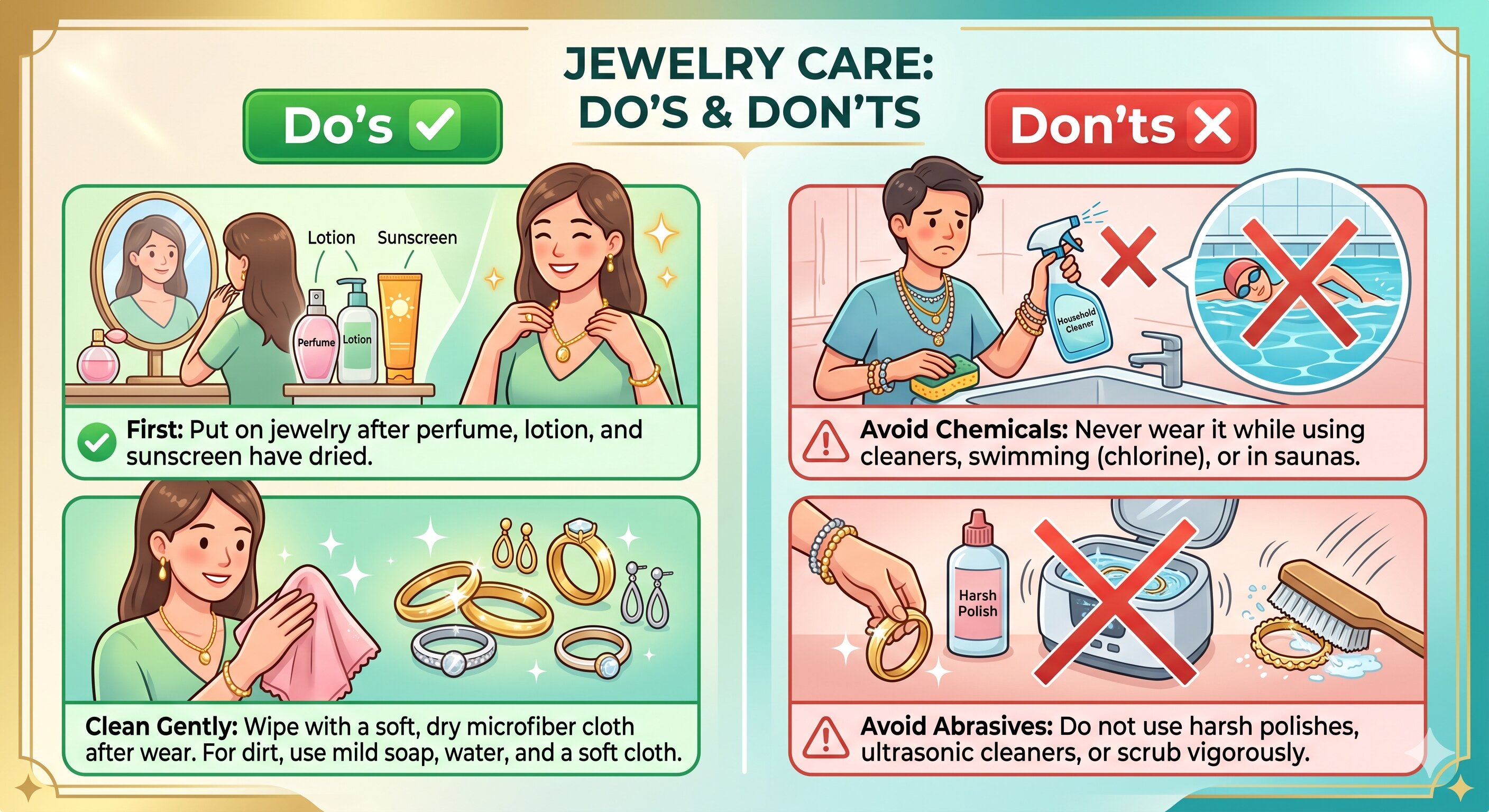
What Makes Some Gold-Plated Jewelry Last Longer
Not all gold-plated jewelry is created equal. Higher-quality pieces are more suitable for daily wear. Here's what to look for:
Thicker Plating: Look for terms like "heavy gold plating" or pieces specifying a thicker plating (e.g., 2-3 microns or more). Thinner "flash plating" wears off much faster.
Better Base Metal: Jewelry plated over surgical-grade stainless steel or sterling silver (this is called gold vermeil) is more durable and less likely to cause skin irritation than pieces plated over cheap alloys like brass.
Quality Process: Reputable brands often use proprietary plating processes for better adhesion and longevity.
In contrast, cheaper fashion sets (like the one found on Amazon) are often reported by customers to tarnish or break quickly, making them poor candidates for daily use.
When to Consider an Alternative
If your daily routine involves a lot of hand-washing, sweating, or you simply don't want the hassle of constant maintenance, you might want to consider these more durable alternatives:
Gold Vermeil: This is sterling silver coated with a thick layer of gold (at least 2.5 microns). It's more durable than standard gold plating and has intrinsic value from the silver core.
Solid Gold: For true "wear it and forget it" everyday jewelry, solid gold (10k, 14k, or 18k) is the most durable and low-maintenance option, though it comes at a higher cost.
In summary, wearing gold-plated jewelry daily is a balance between enjoying its affordable luxury and committing to a protective care routine. With diligent care and by choosing a well-made piece, you can extend its life significantly.
Can You Make Gold-Plated Jewelry Shiny Again?
Yes, you can often make gold-plated jewelry shiny again, but it depends on why it lost its shine and requires very gentle methods to avoid causing more damage.
Here’s a practical guide on how to do it and when it might be too late.
First, Understand Why It Lost Its Shine
Surface Grime: Oils from your skin, lotion, dust, and dirt can build up, creating a dull film. This is the easiest problem to fix.
Tarnished Base Metal: The gold plating has worn thin, allowing the base metal (like brass or copper) underneath to tarnish. You might see a dark, blackish, or greenish discoloration. This is harder to fix and may be a sign of permanent wear.
Worn-Off Plating: The gold layer has completely worn away in spots, revealing the non-gold metal beneath. This cannot be reversed at home; the piece would need to be professionally replated.
How to Make Gold-Plated Jewelry Shiny Again (Safely)
Always start with the gentlest method first.
Method 1: The Simple Wipe (For Daily Maintenance)
This is for removing light oils and dust.
What to do: Use a very soft, lint-free microfiber cloth. Gently but firmly wipe the jewelry all over. You'll be surprised by how much shine this can restore by simply removing surface grime.
Method 2: The Soap and Water Wash (For a Deeper Clean)
Use this for dirtier jewelry that has lost its luster.
Create a Mild Solution: Mix a few drops of mild, ammonia-free dish soap (like Dawn) into a bowl of lukewarm water. Never use hot water.
Dip and Gently Clean: Dip a soft cloth (like microfiber) into the solution and gently wipe the jewelry. Do not soak the jewelry. For intricate pieces, you can use a very soft-bristled toothbrush with gentle, circular motions.
Rinse Quickly: Quickly hold the jewelry under a small stream of lukewarm water to rinse off the soapy residue. Do not let it sit under running water.
Dry Thoroughly: Immediately pat the piece completely dry with a soft, clean cloth. Let it air dry for a few minutes to ensure no moisture is trapped.
Critical Warning: Never use harsh chemicals like bleach, toothpaste, baking soda, or commercial jewelry dips. These are too abrasive and will strip the thin gold layer right off.
What to Do If It's Tarnished
If the jewelry has tarnish (dark spots) from the base metal showing through, the gentle cleaning methods above might improve its appearance, but they will not remove the tarnish from the base metal underneath the plating. Aggressively trying to scrub off tarnish will make the situation worse by removing more gold.
When You Can't Restore the Shine
If the following is true, the plating is likely too far gone for a simple clean-up:
You see large areas of a different metal color (like brassy yellow or silvery white).
The jewelry leaves green or black marks on your skin.
Gentle cleaning makes no difference in its appearance.
At this point, the only way to truly restore the piece is to have it professionally re-plated by a jeweler, which can often cost more than the original piece.
How to Keep It Shiny for Longer (Prevention is Key!)
The "Last On, First Off" Rule: Put jewelry on after applying makeup, perfume, and lotion. Take it off before showering, swimming, or cleaning.
Wipe It Down: After wearing, gently wipe it with a microfiber cloth before storing to remove oils and sweat.
Yes, you can often restore the shine to gold-plated jewelry with a gentle clean using mild soap and water. However, if the plating has worn through to the tarnished base metal, you cannot "clean" the shine back—the damage is permanent without professional re-plating.
How Much Does Gold Plating Cost?
The cost of gold plating varies significantly based on the item's size, the thickness of the gold layer, and the gold's purity. For common jewelry items, professional plating typically ranges from $15 to $300+.
The table below summarizes average price ranges for professional gold plating services on different items.
Gold Plating Cost by Item
| Item Type | Average Cost Range | Notes |
| Rings | $20 – $75, $40 – $150. | Simple bands at the lower end, intricate designs cost more. |
| Necklaces & Chains | $30 – $100, $15 – $75 | Price often depends on length and surface area. |
| Earrings | $20 – $45, $30 – $100 | |
| Bracelets | $20 – $55, $60 – $200 | |
| Watches | $100 – $300+, $60 – $110 | Complex items; scratch removal may cost extra. |
| Small Electronics | $10 – $50 | For connectors, jacks, etc. |
Key Factors That Influence the Final Cost
Several key factors will affect the final price of your gold plating service:
Plating Thickness: Thicker plating lasts longer but costs more. "Flash" plating (under 0.5 microns) is the cheapest but wears off quickly, while "Heavy" plating (2.5+ microns) is more expensive and durable. For a ring, 3 microns is often recommended for daily wear.
Gold Purity (Karat): Higher karat gold (like 24K) is more expensive than lower karats (like 14K). The karat also affects the color, with 24K having the brightest yellow tone and 14K being lighter.
Labor and Preparation: The base price often assumes the item is in good condition. Complex pieces requiring extensive cleaning, polishing, or repair will incur higher labor costs.
Item Size and Complexity: Larger items with more surface area (like a long chain) require more materials and labor. Items with intricate details, grooves, or engraving are also more time-consuming to plate properly.
Practical Tips for Gold Plating
Get Multiple Quotes: Prices can vary between jewelers, so it's wise to get quotes from several professionals.
Clarify the Thickness: When requesting a quote, ask about the plating thickness to ensure you're comparing equivalent services.
Consider the Current Gold Market: The price of gold is volatile and can directly impact plating costs.
I hope this detailed breakdown helps you budget for your gold plating project. If you can share the specific type of item you're looking to plate, I may be able to provide more targeted information.
How to Invest In Gold Plated: Strategies for Beginners?
The search results show no direct ways to "invest" in gold-plated items as financial assets. However, several discuss starting a business related to gold plating, which is a very different approach.
The following table compares these two interpretations:
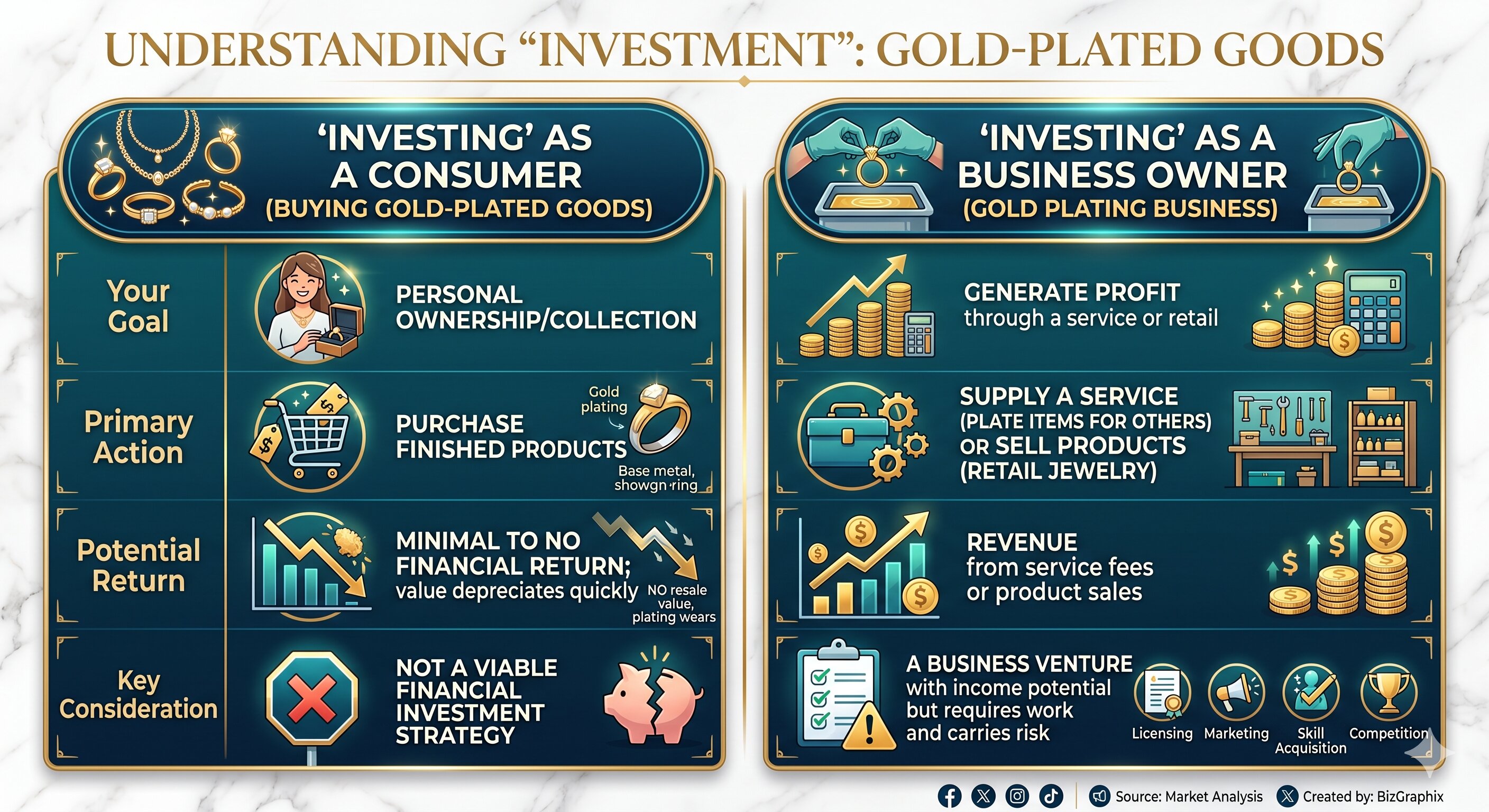
How To Start A Gold Plating Business
If your interest lies in the business side, here are the main strategies and steps based on the search results:
The Service Model: Mobile Gold Plating
This involves offering on-site plating services, commonly for automotive emblems but also for jewelry, fixtures, and other items. A provider of this service estimates that plating a car's emblems can cost about $15 in supplies and generate $125 to $200 in revenue.
What You Need: Portable plating equipment, training, and supplies (gold solution, etc.).
Your Market: Car dealerships, individual car owners, jewelry stores, and other businesses.
Key Point: Success depends heavily on your own marketing and sales efforts.
The Retail Model: Gold-Plated Jewelry Business
This involves designing, sourcing, or manufacturing gold-plated jewelry and selling it to consumers.
What You Need: A supplier for jewelry, an understanding of plating quality (e.g., double-plated vs. gold-filled), and a sales platform (online store, Etsy, Amazon).
Your Market: Customers interested in affordable, fashionable, or culturally specific jewelry.
Key Point: Success depends on product selection, branding, and effective online marketing.
Essential First Steps
If you're considering a gold plating business, you should begin with careful research:
Evaluate Your Market: Identify if there's local demand for plating services or a niche for jewelry you want to sell.
Research Suppliers Thoroughly: For service equipment, look for established companies with strong reputations, technical support, and transparency. Be wary of companies selling very cheap "complete systems".
Start Small: Consider beginning with a limited set of services or a curated jewelry collection to test the market before making large investments.
If you'd like to explore a specific business model—like mobile automotive plating or starting an online jewelry store—I can provide more detailed guidance on the next steps.
“You now know the definition, the lifespan, the tarnish truth, the worth, the real gold question, the shower risks, the solid gold comparison, the quality, the cheapness, the daily wear advice, the shine restoration, the cost, and the investment strategies. The only question left: will you invest in metal or in moments?
Our current collection includes a limited number of gold-plated pieces — from heavy electroplated (HGE) rings to stainless steel-based necklaces. When certain designs are gone, restocking takes time because each piece is hand-plated, not mass-dipped.
This is not an investment in gold. It is an investment in your first date, your vacation, your promotion, your story — a different kind of wealth, measured not in carats, but in memories.”
[Button: Claim Your Gold-Plated Piece (Limited) →]


News for Friday 21 November, 2025
View all news for Friday 21 November, 2025 on one page
Recent News
- Wednesday 19 November, 2025
- Tuesday 18 November, 2025
- Monday 17 November, 2025
- Sunday 16 November, 2025
- Saturday 15 November, 2025