

Discover the Truth About 10K Gold: Your Essential Guide
10K gold is a popular alloy for jewelry, consisting of 41.7% pure gold mixed with other metals like copper, silver, and zinc for increased durability.
“In 1906, the United States government passed the National Gold Standards Act, officially defining what could legally be called ‘gold‘ in jewelry. The threshold was set at 10 karats — anything less could not be stamped or sold as gold. That decision, made over a century ago, still shapes every gold ring, necklace, and bracelet sold in America today.
10K gold was not chosen because it was the richest. It was chosen because it was the toughest — the gold that could survive factory work, farming, and the daily grind of a growing nation. 10K is not the gold of kings. It is the gold of the working class. And it has never let them down.
The same gold that survived the Great War now awaits your own everyday life — from wedding bands to stacking rings. Every 10K gold piece in our collection is stamped with the 417 hallmark, guaranteed 41.7% pure gold.
[Button: Explore 10K Gold Jewelry →]
Its fundamental value is derived from its gold content and moves with the global gold market.
What is 10K Gold?
How Much Is 10K Gold Worth Now?
Does 10K Gold Go Up In Value?
Which Is Better, 10K, 14K, or 18K?
What Color Is 10K Gold?
Is 10K Yellow Gold Real or Fake?
Will 10k Gold Go Green?
How Long Will 10K Gold Last?
Can I Wear 10K Gold Every Day?
Can I Shower With 10K Gold?
Is 10k Gold Pawnable?
The First topic of content
What is 10K Gold?
10K gold is real, solid gold. The "K" stands for karat, which measures gold purity. 10K means the jewelry is 10 parts pure gold out of 24, making it 41.7% pure gold. The remaining 58.3% is made of other metals (alloys) like copper, silver, zinc, or nickel, which are added for strength and color.
“During World War II, gold was rationed for civilian use. American jewelers turned to 10K gold not by choice, but by necessity — it stretched supplies further. What they discovered surprised them: 10K gold rings survived the war on soldiers‘ hands, through boot camps, battles, and bombings. When the soldiers came home, their 10K gold wedding bands were scratched, dented, and patinaed — but still intact. That is when America fell in love with 10K gold. Not because it was perfect. Because it was unbreakable. And for a generation that had survived a war, unbreakable was better than perfect.”
Is 10K Gold Good Quality?
Here’s a detailed breakdown to help you decide if 10K gold is right for you.
The Short Answer
Yes, 10K gold is considered real, legal gold, and is a good quality option for certain purposes. Its primary advantages are durability and affordability. However, it has a lower gold content than higher-karat gold, which comes with some trade-offs.
The Detailed Breakdown
1. What Does "10K Gold" Mean?
Karat (K) measures the purity of gold, with 24K being 100% pure gold. Because pure gold is very soft, it's mixed with other metals (alloys) to make it stronger for jewelry.
10K gold is 10 parts pure gold out of 24.
This equals 41.7% pure gold (10/24 = 0.4167).
The remaining 58.3% is a mix of alloys like copper, silver, zinc, or nickel.
2. Advantages of 10K Gold
Exceptional Durability and Strength: This is its biggest selling point. The high percentage of stronger alloys makes 10K gold highly resistant to scratches, dents, and daily wear-and-tear. It's an excellent choice for:
Every dayyy rings (especially engagement rings and wedding bands)
Activewear jewelry
Items with delicate settings that need a strong base to hold gems securely.
Children's jewelry
Affordability: Because it contains less pure gold, 10K gold is the most affordable type of gold jewelry available. You can get a larger or more intricate piece for a lower price compared to 14K or 18K.
Hypoallergenic Qualities (Usually): While not as hypoallergenic as higher-karat gold or platinum, 10K gold is generally safe for most people. However, if it contains nickel, it could cause a reaction for those with sensitive skin.
3. Disadvantages of 10K Gold
Lower Gold Content: The most obvious downside is that it's less than half pure gold. For some, this diminishes the value and prestige associated with gold jewelry.
Potential for Tarnishing: The higher alloy content (especially copper) can cause 10K gold to tarnish or discolour over time, unlike higher-karat gold, which is tarnish-resistant. However, this tarnish can be easily cleaned.
Color Can Be Less Rich: 10K gold often has a slightly paler or lighter color compared to 14K or 18K gold. The difference is subtle, but side-by-side, 14K and 18K gold have a richer, deeper, and warmer yellow hue.
Not as Valuable for Resale: Its lower gold content means it has significantly less intrinsic value. It's not a good choice if you're looking at jewelry as a financial investment.
When is 10K Gold a Good Choice?
For an Everyday Item: If you're buying a piece you plan to wear every day without taking off (like a wedding band), its durability is a huge advantage.
On a Tight Budget: It allows you to own a solid gold piece at an accessible price point.
For Active Lifestyles: If you work with your hands or are rough on your jewelry, 10K gold will hold up much better.
For Pieces with Stones: The strong setting can provide excellent security for diamonds and gemstones.
When Should You Consider a Higher Karat?
You have sensitive skin; 14K or 18K gold is a safer bet to avoid skin irritation.
For a Special, Luxurious Piece: For an heirloom-quality item, an engagement ring you want to feel substantial, or a gift, the richer color and higher gold content of 14K or 18K is often preferred.
If You Value Purity and Investment: If the "real gold" feel and intrinsic metal value are important to you, go for a higher karat.
10K gold is good quality for what it is: a durable, affordable, and practical form of gold jewelry.
It's not a "low quality" material—it's a specific type of gold designed for strength and value. For many people, especially those looking for durable, everyday jewelry that fits a budget, 10K gold is an excellent and smart choice.
However, if your priorities are a richer color, higher purity, and a greater sense of luxury, then investing in 14K gold (the most popular and balanced choice) would be a better option for you.
How Much Is 10K Gold Worth Now?
This is a two-part question because there's a big difference between the melt value (its worth as a raw material) and the retail price (what you pay for a finished piece of jewelry).
I'll break down both and show you how to calculate it yourself.
Part 1: The Melt Value (Scrap or Intrinsic Value)
This is the value of the gold medal itself, based on its weight and the current market price of gold. It's what a refinery or pawn shop would pay you for it.
How to Calculate the Melt Value of 10K Gold:
Find the Current Gold Price: The market price is for one Troy Ounce of 24K (pure) gold. You can check this on sites like Kitco.com or JMBullion.com.
Let's use a live example. As of my last update, the gold price was approximately $2,400 per Troy Ounce.
Convert to Grams: Jewelry is almost always weighed in grams. There are 31.1 grams in a Troy Ounce.
Price per Gram of 24K gold = $2,400 / 31.1 ≈ = $77.17 per gram.
Account for the Purity: 10K gold is only 41.7% pure gold.
Price per Gram of 10K Gold = $77.17 × 0.417 ≈ = $32.18 per gram.
So, the current melt value of 10K gold is approximately $32 per gram.
Example:
If you have a 10K gold ring that weighs 5 grams:
Melt Value = 5 grams × $32.18/gram = $160.90
Important Note: If you sell to a scrap gold buyer or pawn shop, they will likely offer you less than this full melt value (often 60-80%) to cover their refining costs and profit margin.
Part 2: The Retail Price (What You Pay for Jewelry)
This is what you pay in a store for a finished 10K gold piece. It is significantly higher than the melt value and is based on:
Gold Weight & Melt Value: The base cost of the materials.
Craftsmanship & Design: The cost of designing and manufacturing the piece.
Brand Markup: Well-known brands charge a premium for their name.
Stones & Details: Any diamonds or gemstones add substantial cost.
Retailer Overhead: The store's rent, staff, and marketing costs.
Example Retail Prices:
Let's use our calculated melt value of $32/gram to estimate retail prices.
A Simple 10K Gold Band (weighing 3 grams):
Gold Value: ~$96
Estimated Retail Price: $150 - $300+
A 10K Gold Chain (weighing 10 grams):
Gold Value: ~$320
Estimated Retail Price: $500 - $900+
A 10K Gold Engagement Ring with a Diamond (weighing 4 grams):
Gold Value: ~$130
Retail Price: The cost will be dominated by the diamond! It could easily range from $800 to $3,000+, with the gold itself being a small fraction of the total.
For Selling: The value of your 10K gold item is based on its weight and the daily gold price. Use the calculation above to know its intrinsic melt value before you sell.
For buying: The price of a new 10K gold jewelry item is mostly about the brand, design, and any gemstones, not just the raw gold content. You are paying for the artistry.
To get a Live Price: Simply search "current gold price per ounce," take that number, divide it by 31.1, and then multiply by 0.417 to get the live melt value per gram for 10K gold.
Does 10K Gold Go Up In Value?
The short answer is yes, the value of 10K gold goes up and down with the global market price of gold. However, it's crucial to understand that 10K gold is primarily valuable for its melt value (the gold it contains), not as a collectible investment like a gold bar or coin.
Here is a breakdown of how 10K gold's value behaves.
1. How 10K Gold is Valued
10K gold is an alloy, meaning it is a mix of metals. By definition, it contains 41.7% pure gold and 58.3% other metals (like silver, copper, and zinc). Because of this, its value is directly tied to the current spot price of pure gold.
Pure Gold Drives the Price: When the global price of pure gold rises, the value of 10K gold rises with it, but only proportionally to its gold content.
2. Historical Performance: How Gold Has Performed
Gold has seen a strong and sustained increase in value over the long term, significantly outpacing inflation and even beating the stock market in some periods.
Recent Performance: Gold has been on a historic rally. Over the last 10 years, gold has delivered an annualized return of roughly 13.84%. In 2025 alone, gold prices surged over 50% in some markets, and in early 2026, the price soared past $5,000 an ounce to an all-time high.
Long-Term Growth: Gold's value has appreciated dramatically over the past two decades. A 10,000investmentingold20yearsagowouldhavegrowntoover65,000 by the end of 2024, representing a total gain of roughly 560%.
Outperforming Stocks: Over the 25 years from 2000 to 2025, a 10,000
Investing in gold grew to approximately∗∗126,596**, which is significantly higher than the $77,496 the same investment would have returned if placed in the S&P 500.
3. Factors That Drive Gold's Value
Unlike a company's stock, gold doesn't pay dividends or have earnings. Its value is driven by supply, demand, and investor sentiment, specifically as a "haven" asset. The value goes up when:
Economic Uncertainty is High: During times of geopolitical conflict, trade wars, or market volatility, investors flock to gold to preserve their capital.
Inflation is High: Gold is a classic hedge against inflation. When the cost of living rises, the value of paper currency falls, but gold tends to retain its purchasing power.
Interest Rates Fall: Gold becomes more attractive when interest rates are cut, as it makes holding non-yielding assets like gold less expensive compared to bonds or savings accounts.
4. Important Distinction for 10K Gold Jewelry
While the gold content of a 10K ring will go up in value, the piece of jewelry itself is unlikely to be a great investment.
You'll Get Melt Value: If you sell a 10K gold ring to a pawn shop or gold buyer, they will almost certainly pay you based on its melt value (the weight of the gold it contains), not the original retail price you paid. The retail price you pay includes a significant markup for the design, brand, and labor.
Not an "Investment Grade" Asset: For investing, people buy bullion (bars and coins) that are 99.9% pure (.999 gold), not 41.7% pure jewelry. For example, $10,000 gold price predictions from analysts like Ed Yardeni refer to the price of pure, .999 gold, not 10K gold.
Durability is its Strength: The main advantage of 10K gold is not its investment potential but its durability. Because it has a high percentage of other metals, it is harder and more resistant to scratching than 14K, 18K, or 24K gold, making it excellent for everyday-wear rings.
Summary: Does 10K Gold Go Up in Value?
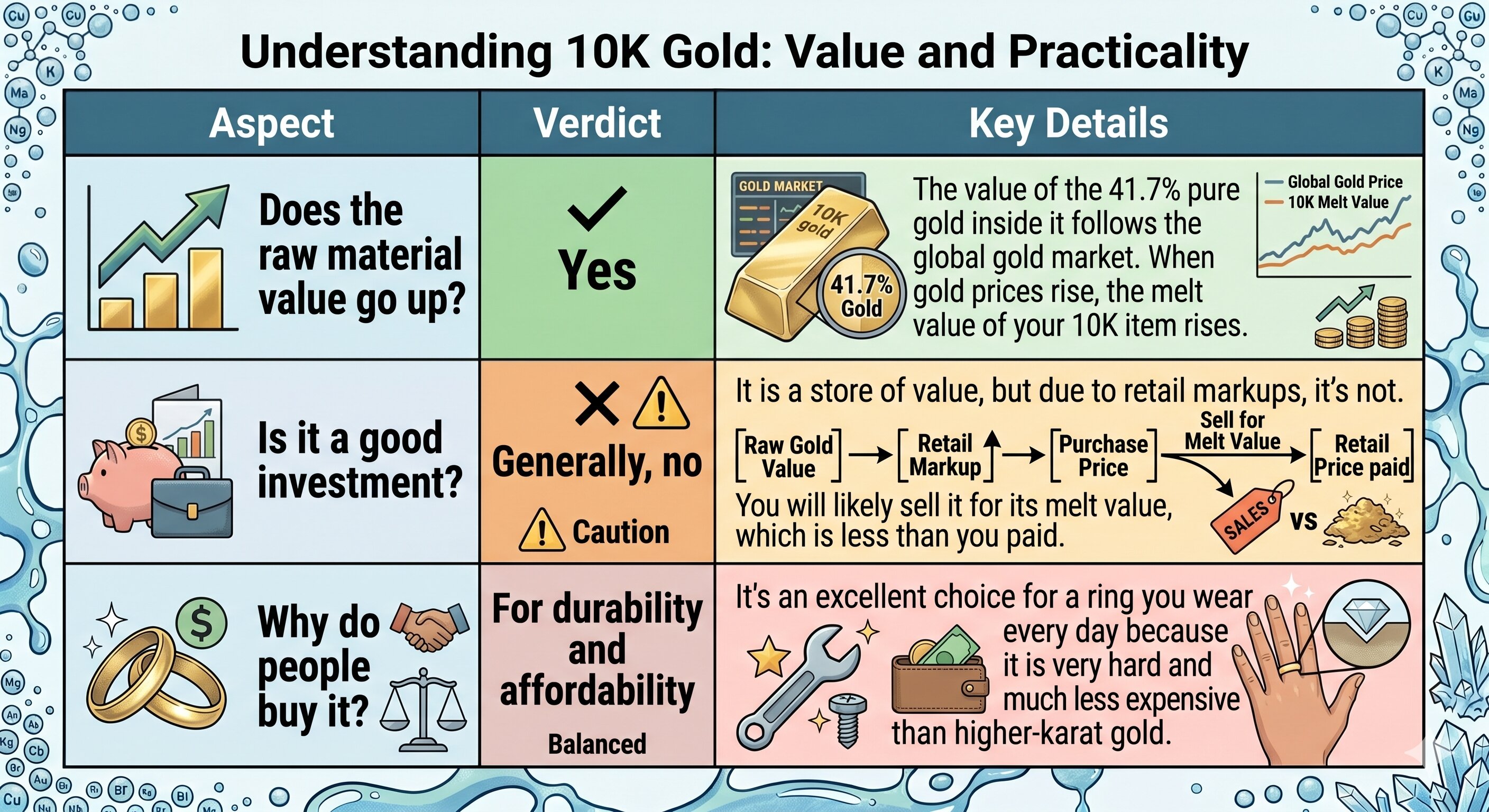
In short, while your 10K gold jewelry will hold its value relative to gold prices and can be a hedge against inflation, it is best thought of as a durable, valuable possession rather than a financial investment that will generate a profit.
Which Is Better, 10K, 14K, or 18K?
This is an excellent question, and the answer isn't that one is universally "better" than the others. The best choice depends entirely on your priorities for durability, purity, budget, and even skin sensitivity.
Here’s a detailed breakdown of 10K, 14K, and 18K gold to help you decide.
10K Gold: The most durable and affordable option. Best for everyday, active wear, or those on a tighter budget.
14K Gold: The best all-around compromise. It offers a great balance of durability, rich color, and good value. It's the most popular choice for engagement rings and fine jewelry in the U.S.
18K Gold: The most luxurious and pure option. It has a richer color but is softer and more expensive. Ideal for heirloom pieces, special occasion jewelry, and for those who prioritize purity.
The Key Factor: Gold Purity (Karat Explained)
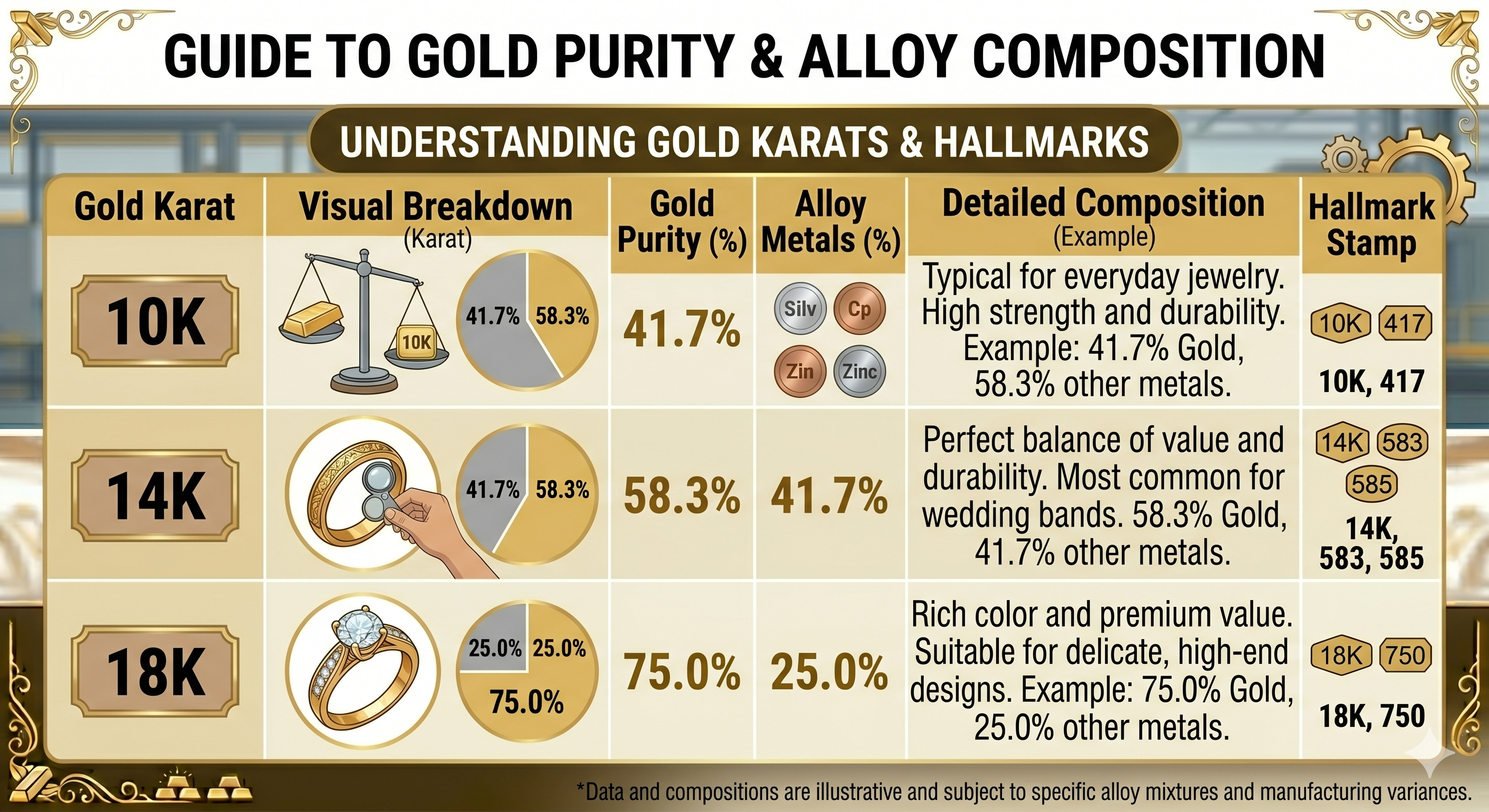
The "K" stands for Karat, which measures the purity of gold in parts per 24.
24K Gold is 100% pure gold, but it's too soft for most jewelry.
Lower Karat gold is mixed with other metals (alloys like copper, silver, zinc) to make it stronger and more durable.
Detailed Comparison
1. Durability & Hardness
10K Gold is the Most Durable. Because it has the highest amount of strong alloy metals, it is the most resistant to scratching, bending, and wear-and-tear. This makes it an excellent choice for: Every day, ngs you rarely take off.
Active lifestyle jewelry.
Pieces with delicate prongs that hold gemstones.
14K Gold is Very Durable. It strikes a perfect balance, being strong enough for daily wear (like engagement rings) while still having a high gold content. It's the standard for durability in fine jewelry.
18K Gold is Softer. It is more prone to scratching and showing signs of wear over time. It's not ideal for a rugged lifestyle or for very active hands.
Winner for Durability: 10K
2. Color & Appearance
18K Gold has the Richest Color. Its higher gold content gives it a deeper, more vibrant yellow hue (for yellow gold). It often has a more "luxurious" look that is highly sought after.
14K Gold has a Rich, But Slightly Paler Color. It still looks very much like gold, but the color is slightly less intense than 18K.
10K Gold can Look Paler. The lower gold content can sometimes give it a slightly lighter or even a faintly "washed-out" appearance, especially for yellow gold. This is less noticeable in white or rose gold.
Winner for Color Richness: 18K
3. Price & Value
10K Gold is the Most Affordable. Since it contains the least amount of pure gold, it has the lowest price point.
14K Gold is Mid-Range. It offers a great value, balancing cost with a high-quality appearance.
18K Gold is the Most Expensive. You are paying for the significantly higher gold content.
Winner for Affordability: 10K
4. Hypoallergenic Properties
Pure gold is hypoallergenic. The alloy metals (like nickel or copper) are what typically cause skin reactions.
18K Gold is the Most Hypoallergenic. With the lowest amount of alloy metals, it's the safest bet for those with sensitive skin or metal allergies.
14K Gold is Generally Safe for most people, but the risk of a reaction is slightly higher than with 18K.
10K Gold has the Highest Risk of causing a reaction because it contains the highest percentage of non-gold metals.
Winner for Sensitive Skin: 18K
Which One Should You Choose?
Choose 10K Gold if:
Your budget is the primary concern.
You need a piece for daily, rugged wear (e.g., a work ring you never take off).
You are buying for a child or for fashion jewelry that doesn't need to last a lifetime.
Choose 14K Gold if:
You want the best all-around option.
You are buying an engagement ring or wedding band for daily wear.
You want a great balance of durability, beautiful color, and value.
This is the most popular and recommended choice for a reason.
Choose 18K Gold if:
You prioritize luxury, purity, and rich color above all else.
You have sensitive skin or metal allergies.
The piece is for special occasions, or you don't mind the patina of wear over time.
You are creating an heirloom piece where the highest gold content is desired.
Special Note for White and Rose Gold
White Gold: The difference in color between 10K, 14K, and 18K is much less noticeable because it's plated with rhodium (a bright, white metal). All will look identical when newly plated.
Rose Gold: The pink color comes from copper. 10K rose gold can sometimes have a more pronounced pink or even reddish hue because it has more copper alloy, while 18K rose gold will be a softer, warmer pink.
For the vast majority of people buying jewelry for daily wear, 14K gold is the sweet spot. It provides an excellent blend of beauty, strength, and value that is hard to beat.
However, if your priorities lean heavily toward maximum durability or maximum purity, then 10K or 18 K becomes the clear winner in their respective categories.
What Color Is 10K Gold?
The short answer is: 10K gold can be yellow, white, or rose, but its color is generally less rich and more subtle compared to higher-karat golds.
Here’s a detailed breakdown of what gives 10K gold its color and how it differs in each color variant.
The Key Reason: Alloy Composition
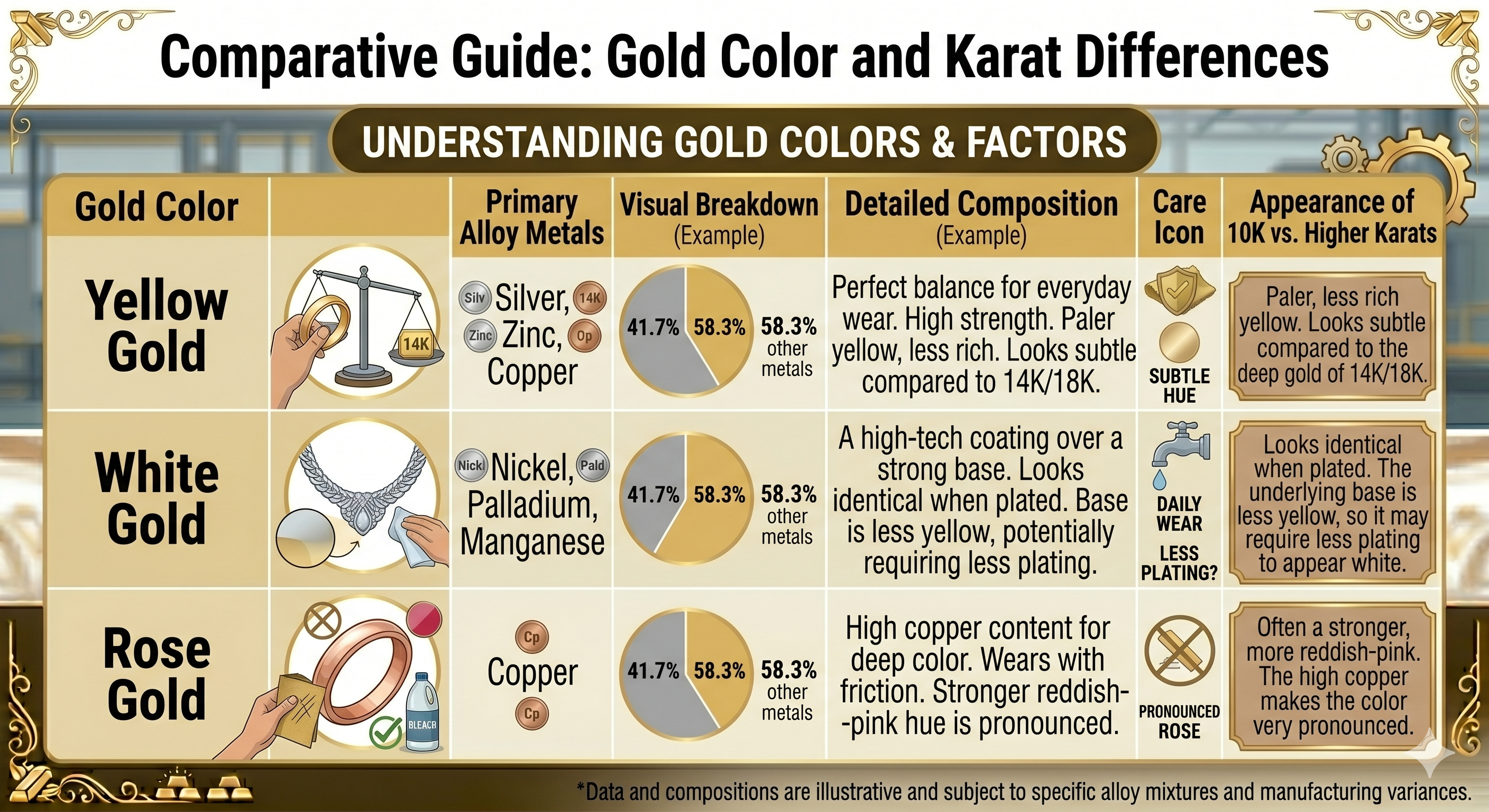
Remember, 10K gold is only 41.7% pure gold. The remaining 58.3% is a mixture of other metals called "alloys." The specific metals used in this alloy mix directly determine the final color.
Color Breakdown of 10K Gold
1. 10K Yellow Gold
What it looks like: A very pale, subtle yellow. It has a noticeably lighter and cooler tone compared to the deep, warm yellow of 14K or 18K gold. Some people describe it as a "lemony" or "light champagne" color.
Why it looks this way: Because it contains less pure yellow gold and more silver and zinc (which are silvery-white metals), the classic yellow hue is diluted.
Comparison: If you place a 10K and an 18K yellow gold ring side-by-side, the 10K will look much less vibrant.
2. 10K White Gold
What it looks like: When newly plated with rhodium, it looks identical to 14K or 18K white gold—bright, silvery-white, and shiny.
Why it looks this way: The alloy mix for white gold contains metals like nickel, palladium, or manganese to bleach out the yellow color. However, because the base 10K material has a weaker yellow color to start with, it's easier to achieve a neutral white base.
Important Note: All white gold is rhodium-plated. Over time, this plating wears off. When it does, the underlying 10K white gold will show a very faint, pale gray or yellowish-gray hue, but this is usually less noticeable than with higher-karat white gold.
3. 10K Rose Gold
What it looks like: A distinct pink or rosy color, often with a slightly more reddish or copper-like tone than higher-karat rose gold.
Why it looks this way: The pink color comes from copper. Since 10K gold has a high percentage of alloy (58.3%), a significant portion of that is copper. This higher copper content gives 10K rose gold its stronger, more pronounced pink/red color.
Comparison: Interestingly, 10K rose gold often has a more vibrant pink/red color than 18K rose gold, which has a softer, warmer pink hue due to its higher gold content.
Summary Table
So, Which Color of 10K is "Best"?
For Yellow Gold: If you love a strong, classic gold look, the pale color of 10K yellow can be a drawback. Many prefer 14K or 18K for yellow gold.
For White Gold: 10K is a very practical and cost-effective choice. Since it's always plated, you get the same bright white look for a lower price.
For Rose Gold: 10K can be a fantastic choice! The color is often more vibrant and pink than its higher-karat counterparts, which can be a desirable trait.
The color of 10K gold is heavily influenced by its alloy mix, making it a paler yellow, effectively white, or a very vibrant rose.
Is 10K Yellow Gold Real or Fake?
While it has value, 10K gold is generally a poor choice for capital appreciation when bought as retail jewelry.
It's Not an Investment Vehicle: It is primarily durable, affordable jewelry. You pay a significant retail markup for the craftsmanship, design, and brand, which you will not recoup when selling.
Lower Resale Value: Among gold jewelry, 10K has the lowest resale value because of its lower gold content. When you sell, buyers (pawn shops, refiners, online dealers) pay only for the metal's melt value, often at a discount.
Comparison with Other Karats: The same weight of 14K or 18K gold will always be worth more because it contains a higher percentage of pure gold.
If your goal is to sell 10K gold you already own, the amount you receive depends heavily on who you sell to:
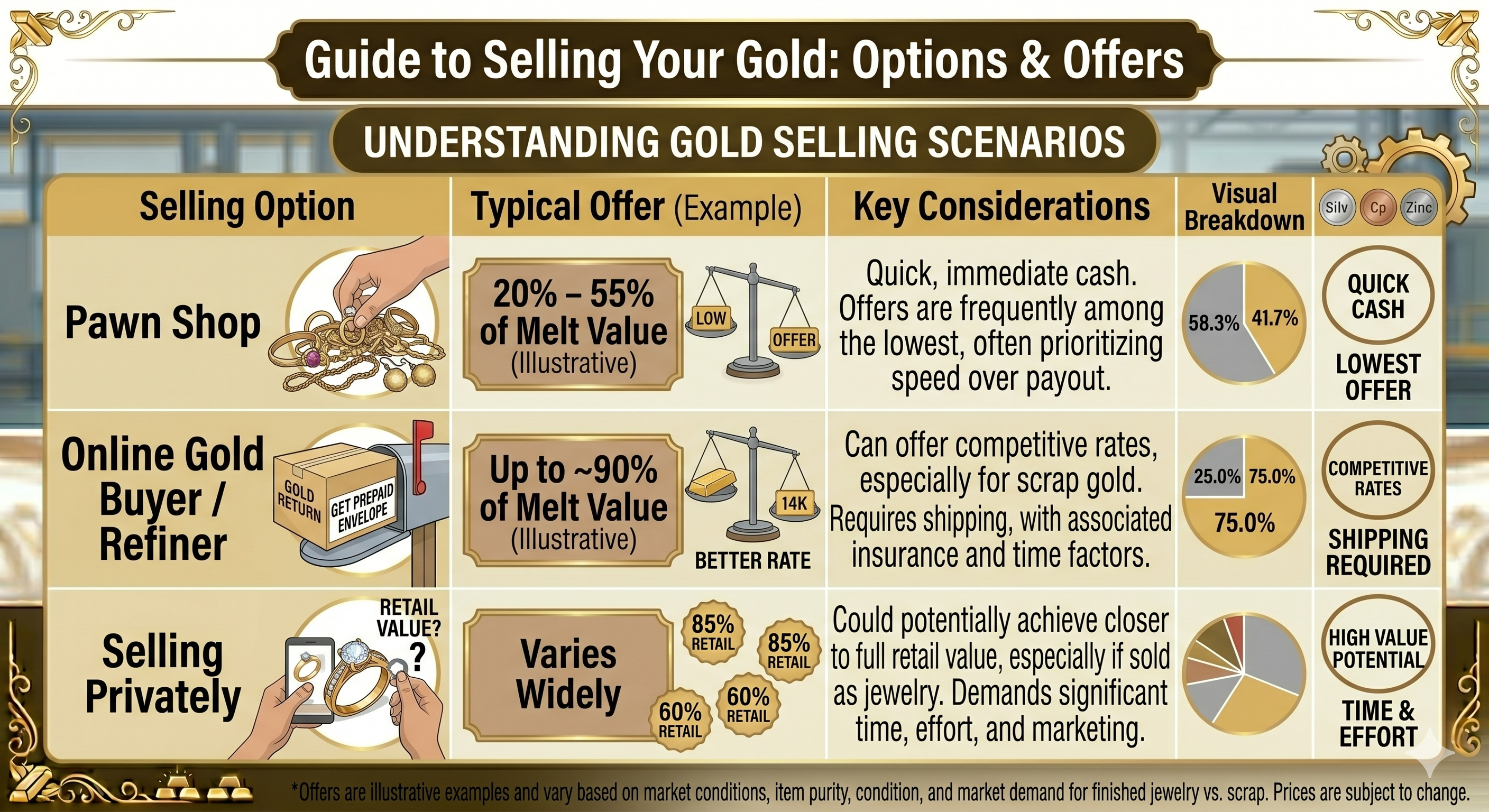
The Outlook for the Gold Market (2026)
Since the value of your 10K gold is a direct function of the gold price, its potential to "go up" depends on market forces. Major financial institutions are broadly optimistic for 2026, though forecasts vary.

Interest Rates & the US Dollar: Gold typically performs better when interest rates fall a nd the US dollar weakens.
Central Bank Demand: Sustained buying by global central banks creates a structural floor and upward pressure on prices.
Geopolitical & Economic Risk: In times of uncertainty, gold often sees increased demand as a safe-haven asset.
Final Considerations
If you are looking to invest in gold for potential appreciation, products like gold bullion bars, coins, or exchange-traded funds (ETFs) that track the gold price directly are more efficient. You avoid high jewelry markups and can sell more easily at prices closer to the spot value.
If you own 10K jewelry, view it as a durable accessory with underlying commodity value, not as a growing investment. Its dollar amount will rise and fall with the gold market, but selling it will rarely yield a profit over what you originally paid.
If you are looking to buy or sell physical gold for investment purposes and would like to understand the different forms (bullion, coins, ETFs) and their pros and cons, I can provide more detailed information on that topic.
Will 10k Gold Go Green?
Yes, 10 K gold can cause a green or black discoloration on your skin, but it is not the gold itself that's turning green.
Let's break down exactly why this happens and what you can do about it.
The Real Cause: The Alloy Metals
Remember, 10K gold is only 41.7% pure gold. The remaining 58.3% is made of other metals (alloys) like copper, silver, zinc, and sometimes nickel.
The Main Culprit: Copper. Copper is the metal most likely to react with elements on your skin. When copper oxidizes (combines with oxygen), it forms a compound called copper oxide, which is green. This is the same reason the Statue of Liberty is green!
Other Factors: The acids and chemicals in your sweat, lotions, perfumes, and even your skin's natural pH can accelerate this reaction with the copper and other alloy metals.
How Long Will 10K Gold Last?
With proper care, 10K gold can last a lifetime and even become an heirloom piece.
Its longevity is one of its biggest selling points. However, how it lasts and what it looks like over time depends on wear and care.
Here’s a detailed breakdown of the lifespan of 10K gold.
The Short Answer: It's Extremely Durable
10K gold is designed to be durable. Because it contains a higher percentage of strong alloy metals (like copper, silver, and zinc), it is more resistant to scratches, dents, and bending than higher-karat gold, like 14K or 18K. In terms of sheer structural integrity, 10K gold is built to withstand daily wear for decades.
Factors That Affect How Long 10K Gold Lasts
1. Type of Jewelry and Wear
Rings and Bracelets: These endure the most abuse. A 10K gold ring is an excellent choice for someone with an active lifestyle or a job that uses their hands heavily. It will show scratches over time (a patina of love!), but it's less likely to warp or wear thin compared to a softer metal.
Necklaces and Earrings: These pieces typically experience less direct impact. A 10K gold chain or pair of earrings will last for generations with minimal signs of wear.
2. Maintenance and Care
Even the most durable metal needs care. How you treat your jewelry is the single biggest factor in its long-term appearance.
Neglect: Without cleaning, dirt, oils, and lotions can build up, making the gold look dull and lifeless. This doesn't damage the metal itself, but it hides its beauty.
Proper Care: Regular, gentle cleaning and safe storage will keep your 10K gold looking bright and new for years.
3. The "Look" Over Time: Patina vs. Damage
This is a crucial distinction:
Patina: This is a soft, gentle wear that adds character. It consists of fine scratches that build up over time, giving the piece a softer, matte-like luster. Many people appreciate this look.
Damage: This is actual structural harm, like a bent prong, a deep gouge, or a broken clasp. This is less likely with sturdy 10K gold,d but it can still happen with significant impact.
Potential Long-Term Considerations for 10K Gold
While the metal itself will last, here are a few things to be aware of:
Color for Yellow Gold: As discussed before, 10K yellow gold has a paler color. Over many decades, if it wears down significantly and is repeatedly polished, the very top layer of metal can be slowly removed. However, this process takes an extremely long time and is not a concern for most people.
Plating for White Gold: If you have 10K white gold, it is rhodium-plated. This plating will wear off over time (usually in 1-5 years, depending on wear), revealing the natural, slightly warm/grayish color of the 10K white gold base metal. This is not a sign of the gold "failing"—it's just the plating wearing off. The piece can be easily re-plated by a jeweler to look brand new.
Prong Wear on Rings: This is true for any karat of gold. The tiny prongs that hold gemstones are vulnerable points. Over many years, they can wear down. It's essential to have a jeweler check the prongs every few years to ensure stones are secure. The durability of 10K gold makes it excellent for securing prongs.
How to Ensure Your 10K Gold Lasts a Lifetime
Clean It Regularly: Use a simple solution of warm water and a few drops of mild dish soap. Soak for 15-20 minutes, gently scrub with a soft-bristle toothbrush, rinse, and pat dry with a soft cloth.
Store It Properly: Keep pieces separate in a soft-lined jewelry box or pouch to prevent scratches.
Take It Off for Harsh Activities: Remove jewelry before swimming (chlorine), cleaning (harsh chemicals), exercising (sweat and impact), or gardening.
Get Professional Check-ups: For rings worn daily, have a jeweler inspect them every couple of years for prong wear and overall integrity.
Lifespan Comparison
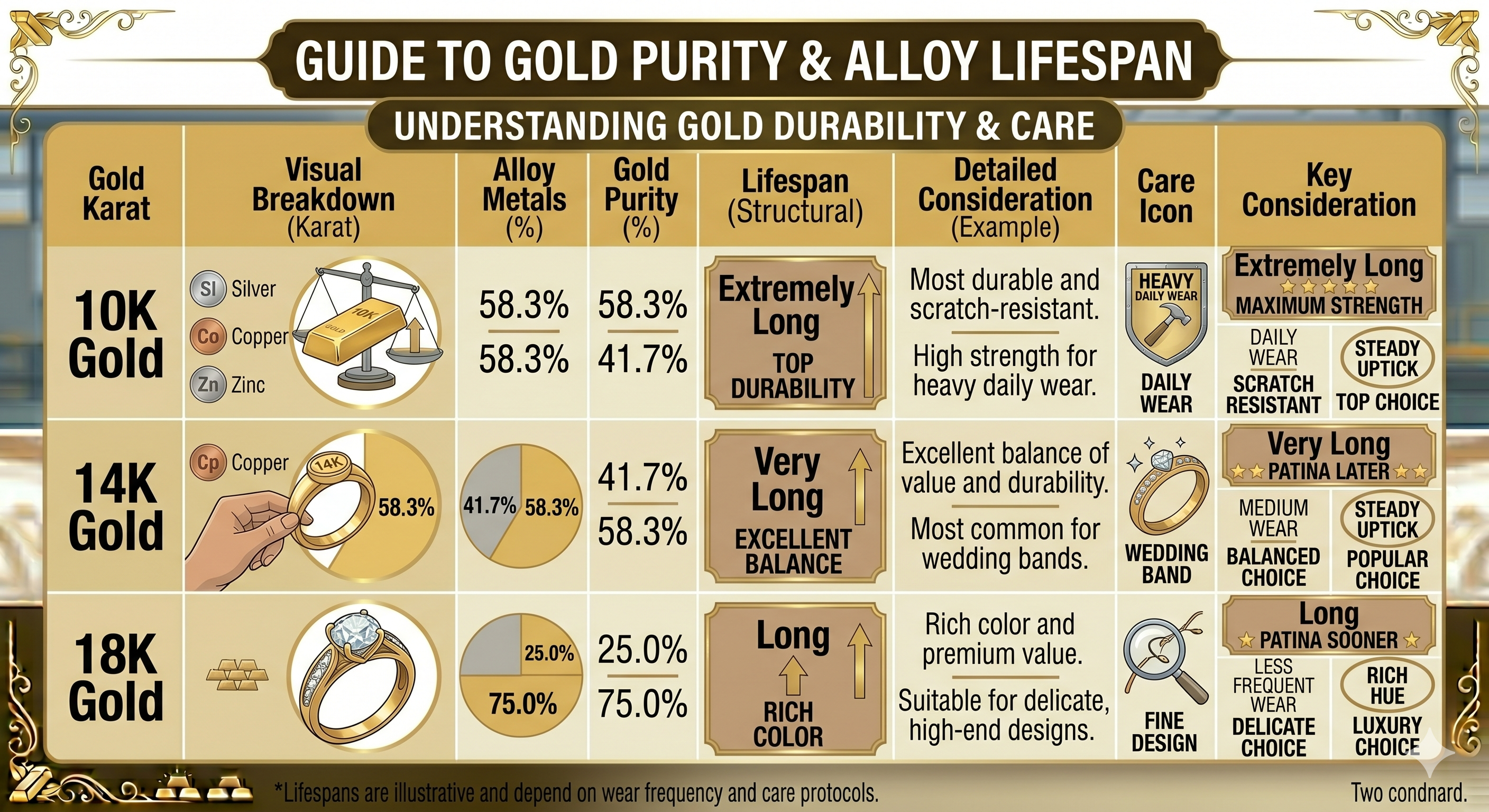
10K gold is a "lifetime" metal. You can confidently buy a 10K gold piece with the expectation that it will hold its shape and integrity for decades of daily use. Its longevity is a key reason it's chosen for engagement rings, wedding bands, and other signature pieces that are rarely taken off.
Think of it like a well-made leather belt or a cast-iron skillet—it's built for utility and will age with character, telling the story of your life with it.
Can I Wear 10K Gold Every Day?
Yes, you absolutely can wear 10K gold every day. In fact, its durability makes it one of the best choices for everyday wear.
Here’s a detailed breakdown of why it's such a great option for daily use and what to expect.
Why 10K Gold is Excellent for Everyday Wear
Superior Durability: This is the #1 reason. The high percentage of alloy metals (like copper, silver, and zinc) makes 10K gold very hard and resistant to scratches, dents, and bending. It can withstand the knocks and abrasions of daily life better than softer, higher-karat gold.
Affordability: Because it contains less pure gold, 10K gold is more budget-friendly. This makes it less stressful to wear every day, as replacing a lost or damaged piece would be less financially devastating than with an 18K gold item.
Low Maintenance: Its hardness means it holds its shape well over time. While it will develop a patina (fine scratches that give it a soft, lived-in luster), it is less prone to deep gouges or distortion.
Ideal Pieces for Everyday 10K Gold
Wedding Bands and Engagement Rings: These are pieces you rarely take off. 10K gold stands up to handwashing, typing, and general daily tasks beautifully.
Everyday Necklaces & Chains: A 10K gold chain, like a pendant you wear all the time, is a perfect choice. Its strength reduces the risk of it breaking or stretching.
Signature Bracelets: For bracelets that are prone to knocking against desks and doors, 10K gold's resilience is a major advantage.
Important Considerations for Daily Wear
While 10K gold is built to last, being aware of a few things will help you manage your expectations.
1. The Patina of Love
All jewelry worn daily will show signs of wear. With 10K gold, this typically manifests as a patina—a network of fine, shallow scratches that soften its shine and give it a matte, well-loved appearance. Many people cherish this look, as it tells a story. If you prefer a high-shine finish, a jeweler can easily polish it to look new again.
2. Skin Discoloration (The "Green Finger")
As discussed in a previous question, the alloy metals in 10K gold (primarily copper) can react with sweat and chemicals, causing a harmless green or black stain on the skin.
This is more likely if: You have acidic skin, live in a humid climate, or are active and sweat a lot.
Solution: Use the barrier methods mentioned before (clear nail polish) and keep the jewelry clean and dry.
3. Special Case: 10K White Gold
Remember that 10K white gold is always plated with rhodium to give it a bright, white finish.
This rhodium plating will wear off with daily wear, typically within 1-3 years.
When it wears off, the underlying 10K white gold will have a slightly warm, grayish hue. This is not the gold failing; it's just the plating wearing off. You can have it re-plated (re-rhodiumed) by a jeweler to restore its bright white color.
Best Practices for Wearing 10K Gold Daily
To ensure your piece lasts a lifetime, follow these simple tips:
Put Jewelry On Last: Apply perfumes, lotions, hairsprays, and cosmetics before putting on your jewelry. Chemicals can accelerate tarnishing.
Take It Off for Harsh Activities: Remove your jewelry during:
Swimming (chlorine and salt water are corrosive)
Cleaning (harsh chemicals can damage it)
Heavy Exercise (sweat and impact can cause issues)
Gardening or manual labor
Clean It Regularly: A simple soak in warm water with a drop of mild dish soap, followed by a gentle scrub with a soft toothbrush, will keep it looking fresh.
Store It Properly: Keep it in a soft-lined jewelry box or pouch away from other pieces to prevent scratches.
10K gold is not just suitable for everyday wear; it's often the most practical and smart choice.
It offers the perfect combination of strength, affordability, and longevity for pieces you want to wear through all of life's moments. If your priority is a piece of real gold that can keep up with your active lifestyle without causing financial worry, 10K gold is an excellent candidate.
Can I Shower With 10K Gold?
Technically, yes, you can shower with 10K gold. The water itself will not harm the metal. However, it is strongly not recommended for the long-term health and appearance of your jewelry.
While a quick, occasional shower won't cause immediate damage, making a habit of it will lead to problems over time.
The Risks of Showering with 10K Gold
The issue isn't the water, but what's in the water and what you use in the shower.
1. Dullness and Film (The Biggest Issue)
Soaps, Shampoos, and Conditioners: These leave a thin, invisible film of chemicals and oils on the gold. Over time, this buildup accumulates, trapping dirt and making your gold look dull, lifeless, and dirty long before it should.
Hard Water: Minerals in hard water (like calcium and lime) can also leave deposits on the gold, contributing to a filmy, spotty appearance.
2. Damage to the Alloy Metals
While the gold content is stable, the alloy metals in 10K gold (making up 58.3% of it) can be affected.
Chlorine (found in tap water and some shower cleaning products) is particularly corrosive to these alloy metals, like copper and silver. Repeated exposure can slowly break them down, making the metal more brittle and prone to damage over many years.
3. Physical Risks
Slippery Hands: Soap makes your hands slippery, increasing the risk of dropping a ring or bracelet down the drain.
Snagging: Necklaces and bracelets can easily snag on loofahs or towels, potentially stretching or breaking the chain.
4. Special Considerations for Other Components
Gemstones: Many gemstones are porous or have treatments that can be damaged by soaps and chemicals (e.g., pearls, opals, turquoise). Even for durable stones like diamonds, soap scum will build up around the setting, making them look less sparkly.
10K White Gold: Remember, white gold is plated with rhodium. Harsh chemicals can cause this bright, white plating to wear off faster, revealing the slightly yellowish base metal underneath sooner.
So, When Is It Okay to Shower with 10K Gold?
It's generally low-risk if you are wearing a very simple, durable piece with no gemstones (like a plain 10K gold band) and you only do it occasionally. For example, if you're traveling and don't want to take your ring off in a public place, it's not the end of the world.
Best Practice: Just Take It Off
The single best thing you can do for the longevity and beauty of your 10K gold jewelry is to make it a habit to take it off before you shower.
A simple routine to follow:
Designate a safe spot in your bathroom, like a small dish or a jewelry holder,r away from the sink.
Put your jewelry on after you've applied lotions, perfumes, and hairspray.
Take it off before you shower, swim, clean, or exercise.
How to Clean 10K Gold After Occasional Exposure
If you do shower with it occasionally, a simple clean will help:
Simple Soak: Mix a few drops of mild dish soap (like Dawn) in a bowl of warm water.
Gentle Scrubbing: Let the jewelry soak for 15-20 minutes, then gently scrub with a soft-bristled toothbrush to get into the crevices.
Rinse and Dry: Rinse thoroughly with clean water and pat dry with a soft, lint-free cloth.
Can you? Yes, the gold won't melt or dissolve.
Should you? No, it's a bad habit for maintaining its beauty.
Think of your 10K gold jewelry like a nice piece of clothing—you could wear it to do messy chores, but you take it off to keep it looking its best for years to come. Taking those extra 10 seconds to remove it before showering is the easiest way to preserve its shine and structural integrity.
Is 10k Gold Pawnable?
Yes, 10k gold is definitely pawnable. In fact, it's one of the most common types of gold that people bring to pawn shops.
However, the amount of money you'll get for it is directly tied to its actual gold content. Here’s a detailed breakdown of what to expect and how the process works.
How Pawning 10k Gold Works
Pawn shops are primarily interested in the melt value of your gold—the value of the raw precious metal itself. They are not typically appraising it for its retail value, brand, or craftsmanship (unless it's a highly collectible piece).
The value is calculated based on three factors:
Weight: The item is weighed in grams.
Purity: 10k gold is 41.7% pure gold.
Current Market Price of Gold: The shop will use the daily spot price of gold.
How Much Can You Get for 10k Gold?
You will not get the full retail value or even the full melt value. Pawn shops need to buy low to make a profit when they resell or refine it.
Here’s a simplified example of the calculation:
Item: A 10k gold ring that weighs 10 grams.
Spot Gold Price: Assume $2,300 per troy ounce.
There are 31.1 grams in a troy ounce.
Price per gram of pure gold = $2,300 / 31.1 ≈ = $74 per gram.
Calculate Melt Value:
Multiply the ring's weight by its purity: 10 grams x 0.417 (41.7%) = 4.17 grams of pure gold.
Melt Value = 4.17 grams x $74/gram ≈ $308.
A pawn shop will then offer you a percentage of this melt value, typically between 30% and 60%. In this example, you could expect an offer in the range of $90 to $185.
Important: This is a rough estimate. The final offer can be higher for highly desirable, brand-name, or antique pieces, or lower if the item is damaged or out of style.
Why Is My 10K Gold Turning Black?
Seeing your gold jewelry turn black can be alarming, but it's a very common issue with 10K gold, and it's almost always fixable.
The key thing to understand is that it is not the pure gold in your jewelry that is turning black. Pure gold is non-reactive. The discoloration comes from the other metals that are mixed with the gold to make a 10K alloy.
Here are the most common reasons why your 10K gold is turning black, starting with the most likely cause.
1. Tarnishing (The Most Common Cause)
What's Happening: The alloy metals in your 10K gold—primarily copper and silver—are reacting with environmental chemicals.
Copper reacts with sulfur in the air (from pollution, industrial emissions) or on your skin to form copper sulfide, which is black.
Silver reacts with sulfur to form silver sulfide, which is the black tarnish you see on sterling silver.
Why 10K is Prone: Since 10K gold is 58.3% alloy metals, there's a lot of material that can tarnish, especially if the piece isn't worn or cleaned regularly.
2. Chemical Reactions
Your gold is constantly exposed to chemicals that can accelerate tarnishing or cause direct corrosion:
Chlorine: Found in swimming pools, hot tubs, and even household bleach. It is highly corrosive to the alloy metals in gold.
Sweat: Perspiration is acidic and contains salts, which can react with the metals.
Lotions, Perfumes, and Hairsprays: These contain chemicals that can build up and react with the alloys.
Household Cleaners: Harsh chemicals can quickly damage the surface of the jewelry.
3. Skin Chemistry & Makeup
Acidic Skin: Some people have a more acidic pH level in their skin, which can speed up the reaction with the alloy metals.
Makeup and Foundations: Many cosmetics contain compounds that can react with the metals in 10K gold, causing a black smudge on your skin and the jewelry. This is especially common with rings.
4. Surface Grime and Dirt (The Simplest Cause)
What's Happening: Over time, oils from your skin, dirt, dust, and soap scum can build up into a thick, dark film on the jewelry. This isn't a chemical reaction, but it can look like black tarnish.
5. A Failed Plating (For 10K White Gold Specifically)
What's Happening: 10K white gold is almost always plated with a bright, white metal called rhodium. When this rhodium plating wears off over time (which is normal), it reveals the natural color of the 10K white gold base metal underneath, which can look slightly yellowish, grayish, or even dark in contrast.
How to Clean and Prevent the Blackening
Cleaning Your 10K Gold
You can easily clean most black tarnish and grime at home:
The Simple Soak:
Mix a few drops of mild dish soap (like Dawn) in a bowl of warm water.
Soak your jewelry for 15-20 minutes.
Gentle Scrubbing:
Use a very soft-bristled toothbrush to gently scrub the jewelry, paying attention to the crevices where gunk builds up.
Rinse and Dry:
Rinse thoroughly under clean, running water.
Pat dry completely with a soft, lint-free cloth.
For Stubborn Tarnish: You can buy a commercial jewelry cleaning dip designed for gold. Be sure to follow the instructions carefully and ensure it's safe for any gemstones your piece may have.
Preventing Future Blackening
Take It Off: Remove jewelry before swimming, cleaning, exercising, and applying lotions or perfumes.
Wipe It Down: After wearing, gently wipe your jewelry with a soft cloth to remove oils and sweat.
Store It Properly: Keep jewelry in a dry, sealed container or a soft pouch to limit its exposure to air and sulfur.
Wear It Regularly: The gentle friction from wearing your gold can actually help slow down the tarnishing process.
When to See a Jeweler
If the blackening doesn't come off with a gentle cleaning, it's best to take it to a professional jeweler. They can:
Give it a professional, ultrasonic cleaning.
Check if the piece needs to be re-polished or re-plated (if it's white gold).
Confirm that the piece is authentic 10K gold.
Summary
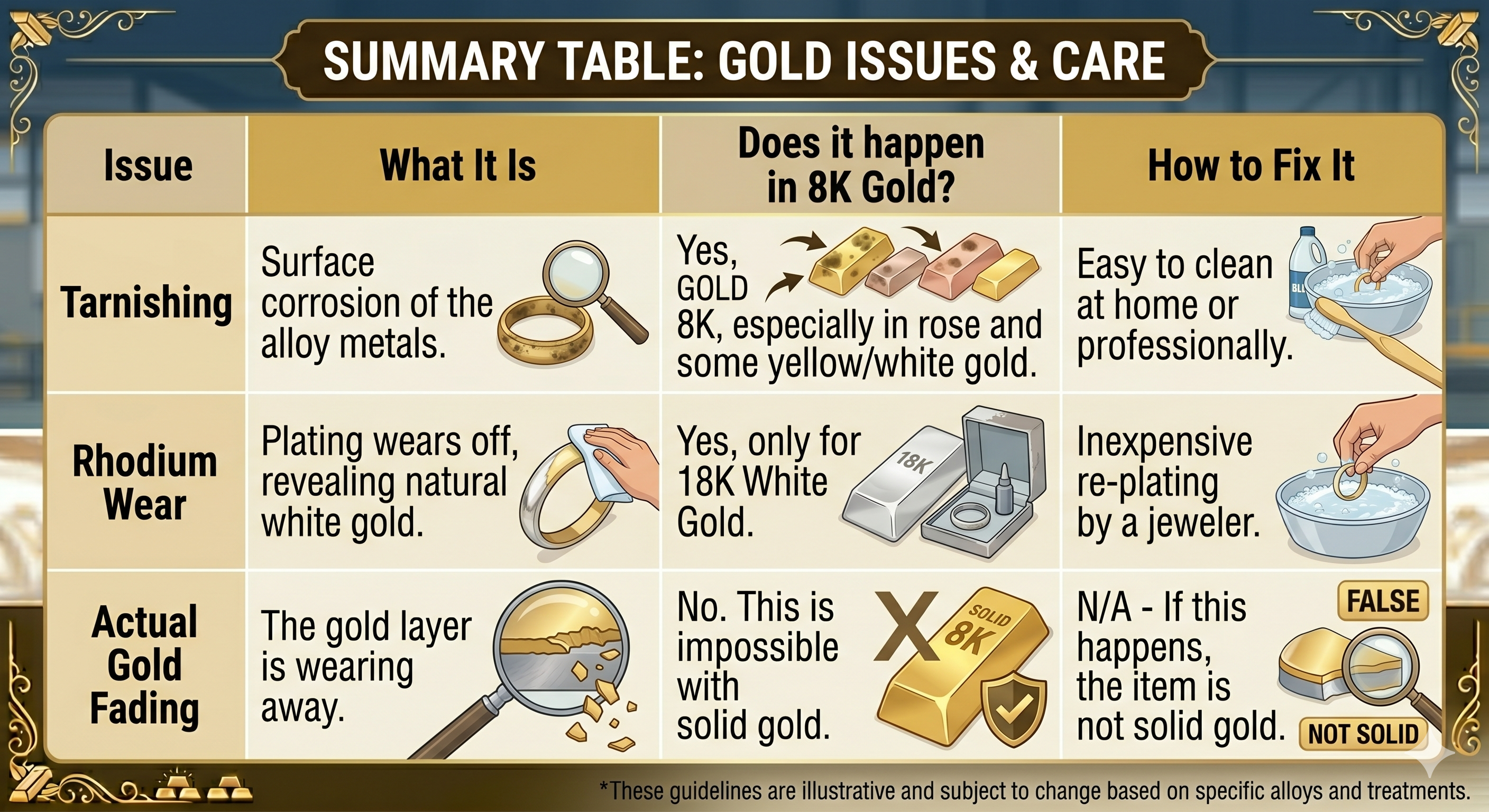
In short, your 10K gold turning black is a normal chemical reaction due to its high alloy content. It does not mean your jewelry is fake, and it is almost always completely reversible with a simple cleaning.
“You now know the definition, the value, the durability comparison, the colors, the tarnish truth, the lifespan, the daily wear advice, the shower risks, and the pawnability. The only question left: will you choose the gold that survived the war?
Our current collection includes a limited number of 10K gold pieces — from yellow gold wedding bands to white gold engagement rings and rose gold stacking rings. When certain designs are gone, restocking takes time because each piece is hallmarked 417.
This is not just a metal. It is the 1906 legal standard, the WWII soldier‘s survivor, and 100 years of proof that gold doesn‘t need to be pure to be precious — it just needs to last.”
[Button: Secure Your 10K Gold Piece (Limited) →]
Back to [Amethyst Ring Guide]


News for Tuesday 18 November, 2025
View all news for Tuesday 18 November, 2025 on one page
Recent News
- Monday 17 November, 2025
- Sunday 16 November, 2025
- Saturday 15 November, 2025
- Friday 14 November, 2025
- Thursday 13 November, 2025