

Morganite Guide: Meaning, Price, vs Diamond, Colors and Care
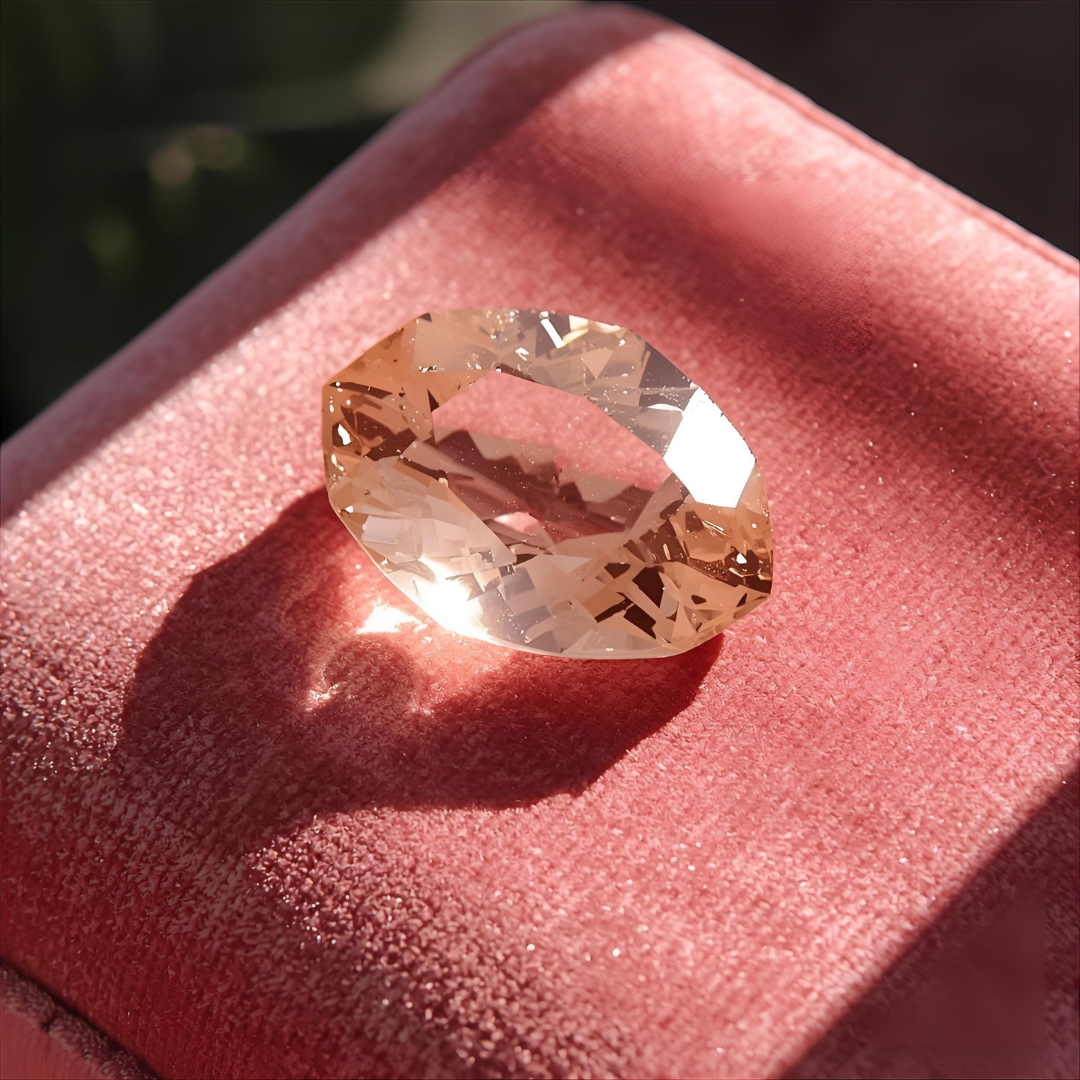
Morganite Guide: Meaning, Price, vs Diamond, Colors, and Care
Morganite is a beautiful, semi-precious gemstone known for its soft pink to peach-pink hues. It is the pink to orange-pink variety of the mineral Beryl, making it a close cousin to more well-known beryls like:
“In 1910, the famous financier and gem collector J.P. Morgan received a gift: a pink beryl from Madagascar, so delicate in color it seemed to blush. He loved it immediately. Tiffany & Co.‘s gemologist, George Kunz, named the stone ‘morganite‘ in his honor. For decades, it remained a collector‘s secret—a gem for those who knew, not for those who followed. Then, in 2010, something changed. Brides discovered morganite. They saw that a pink stone set in rose gold could be as romantic as a diamond, at a fraction of the price, with a softness that diamonds could never match. Morganite is not a new gem. It is an old secret, finally shared.”
The same blush gem that J.P. Morgan treasured now awaits your own love story — in soft peach, blush pink, or vivid bubblegum. Every morganite in our collection is eye-clean, heat-treated only (the standard), and chosen for that signature romantic glow.”
[Button: Explore Morganite Jewelry →]
Emerald (green)
Aquamarine (blue)
Heliodor (yellow)
Its delicate color and excellent brilliance have made it extremely popular in modern jewelry, especially for engagement rings.
Table of Contents
- What Is The Spiritual Meaning Of Morganite?
- What Are The Benefits Of Wearing Morganite?
- What Is The Morganite Stone Good For?
- Is Morganite A Valuable Gem?
- How Much Is 1 Carat Of Morganite Worth?
- Is Morganite More Expensive Than Diamond?
- What Is The Rarest Color Of Morganite?
- What Is The Best Color Of Morganite?
- Is Morganite Hard Or Soft?
- Can Morganite Go In Water?
- What Are The Disadvantages Of Morganite?
- How Do I Tell If My Morganite Is Real?
- Why Is Morganite So Popular?
- Can Morganite Be Worn Every Day?
- Does Morganite Lose Its Sparkle?
Here, let's see the first topic.;
What Is The Spiritual Meaning Of Morganite?
The spiritual meaning of Morganite is deeply intertwined with the heart, making it one of the most beloved crystals for emotional and spiritual healing.
In essence, Morganite is the stone of Divine Love and Compassion. It acts as a gentle, powerful conduit for the highest forms of love, helping to heal the heart and connect it to spiritual realms.
Here’s a detailed breakdown of its core spiritual meanings and uses:
1. The Stone of Divine and Unconditional Love
Morganite's most prominent spiritual meaning is its connection to unconditional love, or Agape.
Channeling Higher Love: It is believed to open the heart to receive love from spiritual guides, angels, and the Divine (or the Universe). It helps you understand that you are deeply loved and supported on your soul's journey.
Cultivating Self-Love: Before you can truly love others or receive love, you must love yourself. Morganite gently dissolves feelings of unworthiness, self-criticism, and old emotional wounds, replacing them with self-acceptance and compassion.
Enhancing Empathy: It encourages you to extend this unconditional love and compassion outward, fostering deeper, more empathetic connections with others.
2. Heart Chakra Healer and Activator
Morganite is a primary stone for the Heart Chakra (Anahata).
Clearing Blockages: It works to gently clear blockages and past traumas stored in the heart chakra, such as grief, heartbreak, jealousy, and resentment.
Activating Higher Heart Chakra: Morganite is also associated with the Higher Heart Chakra (Thymus), which bridges the human and spiritual love of the heart chakra with the divine will and truth of the throat chakra. This facilitates compassionate communication and living from a place of heartfelt integrity.
3. Emotional Healing and Calming
Its gentle, high-vibrational energy provides profound emotional solace.
Soothing Anxiety and Stress: Morganite's energy is inherently calming. It can help pacify a troubled mind, ease anxiety, and bring a sense of peace and emotional tranquility.
Healing Heartbreak: It is a powerful ally for mending a broken heart. It doesn't erase memories but helps you process the pain with love and understanding, allowing you to release the past and open up to new possibilities for love.
4. Connection to the Angelic Realm
Due to its gentle, loving, and high-frequency vibration, Morganite is often called an "Angelic Stone."
Divine Communication: It is said to strengthen your connection to the angelic realm, particularly the Archangels Jophiel (the angel of beauty) and Chamuel (the angel of peaceful relationships).
Gentle Guidance: Working with Morganite can help you feel the comforting presence of your guardian angels and receive their gentle guidance, especially in matters of the heart.
5. Encouraging Compassionate Communication
By bridging the heart and throat chakras, Morganite empowers you to speak your truth with love and kindness.
Heart-Centered Speech: It helps you communicate your feelings clearly and compassionately, reducing misunderstandings and conflicts in relationships.
Setting Loving Boundaries: It gives you the courage to set healthy boundaries from a place of self-love rather than anger or fear.
How to Use Morganite Spiritually
Wear as Jewelry: Wearing a Morganite pendant over your heart or as a ring is a powerful way to keep its loving energy with you throughout the day.
Meditation: Hold a Morganite stone over your heart chakra during meditation. Visualize its soft pink light filling your heart, dissolving any darkness, and connecting you to a universal source of love.
Place in Your Environment: Keep a piece in your bedroom to foster a loving and harmonious atmosphere, or in a shared space to encourage compassionate communication among family or partners.
Carry a Tumble Stone: Keep a small piece in your pocket to soothe anxiety and remind you to act from a place of love in challenging situations.
In spiritual practice, Morganite is a master healer for the heart. It is a crystal of profound gentleness, compassion, and celestial connection. Its core mission is to teach that all true healing and spiritual growth are rooted in the power of unconditional love—for oneself, for others, and from the Divine.
Disclaimer: The spiritual meanings of crystals are based on ancient traditions, folklore, and metaphysical beliefs. They are not a substitute for professional medical or psychological advice.
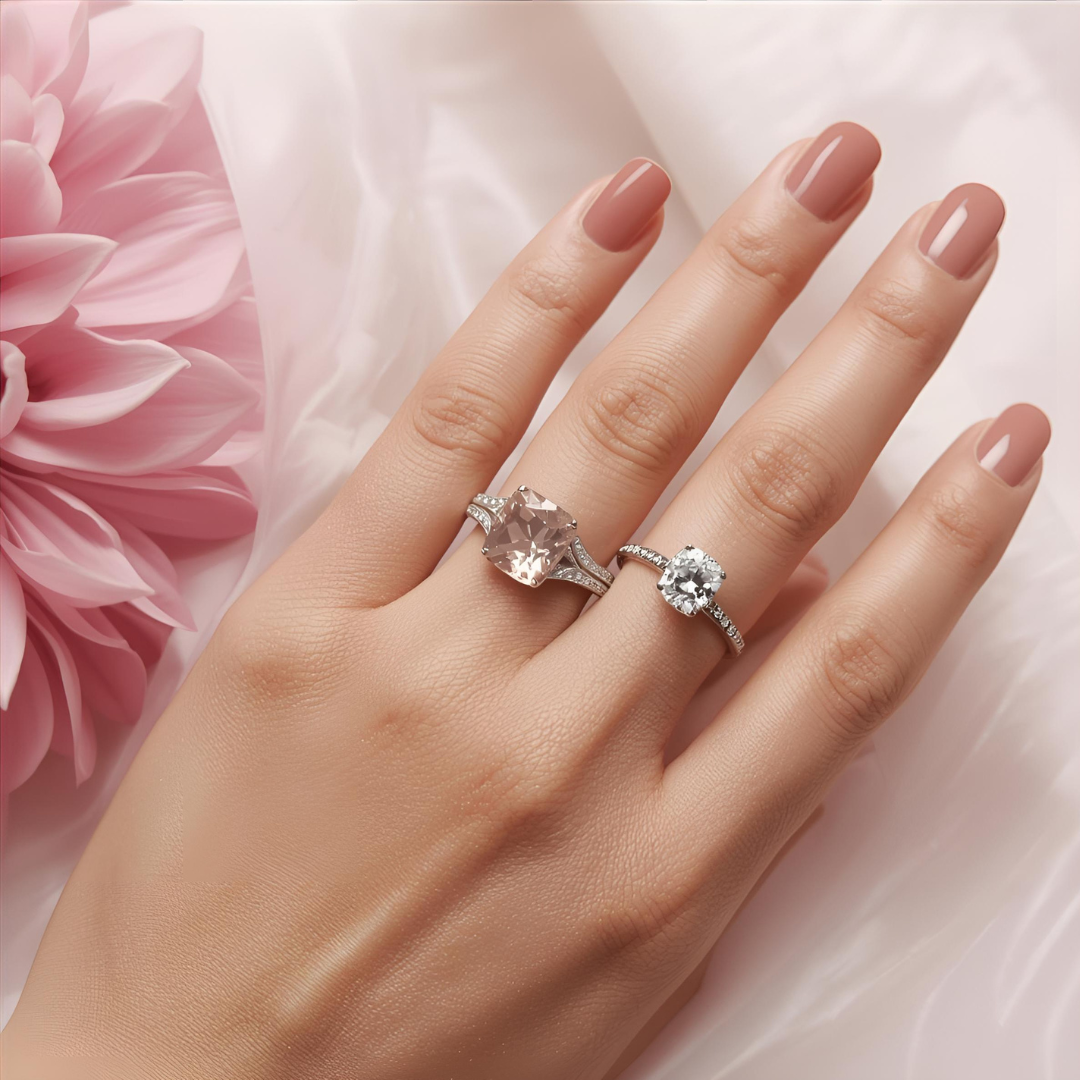
What Are The Benefits Of Wearing Morganite?
Building on its spiritual meaning, the benefits of wearing Morganite as jewelry are both practical and profound. By keeping its energy close to your body, you create a continuous, gentle field of influence that can positively impact your emotional, relational, and spiritual well-being.
Here are the key benefits of wearing Morganite:
1. Continuous Emotional Healing & Calm
Wearing Morganite provides a constant, soothing energy that helps manage daily stresses and emotional triggers.
Soothes Anxiety: Its gentle vibration acts as a natural calming agent, helping to quiet a racing mind and ease feelings of anxiety or panic.
Heals Past Hurts: When worn over the heart (as a pendant), it continually works on dissolving residual pain from past heartbreaks, betrayals, or grief, allowing for gradual and gentle release.
Promotes Emotional Resilience: It helps you respond to challenging situations from a place of centered calm rather than reactive emotion.
2. Cultivates Unconditional Self-Love
This is one of its most powerful benefits. Wearing Morganite serves as a constant reminder to be kind and compassionate to yourself.
Reduces Self-Criticism: It helps quiet the inner critic and dissolve feelings of unworthiness.
Boosts Self-Acceptance: By fostering a kind and forgiving attitude toward yourself, you can embrace your flaws and appreciate your strengths.
Attracts Love: The philosophy "like attracts like" is key here. When you radiate self-love from within, you naturally become a magnet for loving, healthy relationships with others.
3. Enhances Compassion in Relationships
Morganite doesn't just help you receive love; it helps you give love more freely and purely.
Increases Empathy: It opens your heart to better understand the perspectives and feelings of others, fostering deeper connections.
Improves Communication: By bridging the heart and throat chakras, it encourages you to speak your truth with kindness, clarity, and compassion, reducing conflicts.
Strengthens Bonds: Wearing it can help rekindle romance in long-term partnerships, deepen friendships, and foster harmony within families.
4. Attracts and Manifests Love & Abundance
Morganite is often called a "stone of abundance" because it aligns you with the generous, abundant energy of the heart.
Manifesting Love: It helps you set the intention to attract a soul-level, loving partnership if you are single.
Manifesting General Abundance: By opening your heart, you become more receptive to all forms of abundance—not just love, but also joy, opportunities, and synchronicities.
5. Connection to Divine & Angelic Guidance
Wearing Morganite can act as a spiritual antenna, enhancing your intuition and connection to higher realms.
Feels Supported: It can create a subtle but palpable sense of being guided, protected, and loved by divine forces or your angelic guides.
Increases Intuition: An open heart is a key to intuition. By clearing heart chakra blockages, Morganite can help you better trust and follow your "gut feelings" and intuitive hits.
How to Wear Morganite for Maximum Benefit
As a Pendant or Necklace: Worn over the heart, this is the most powerful way to directly influence your Heart Chakra. It ensures the stone's energy is centered in your core emotional center.
As a Ring: Wearing it on your ring finger (traditionally the finger of love and commitment) powerfully programs your intention for attracting or enhancing love. It also serves as a constant visual reminder of your commitment to self-love.
As Earrings: Placing the stone near your head can help soothe mental anxiety and infuse your thoughts with loving, compassionate energy.
As a Bracelet: Worn on your wrist, it keeps its calming energy close to your pulse point and on your active hands, influencing the energy you put out into the world.
A Note on Cleansing and Charging
Because Morganite works by absorbing and transmuting heavy emotional energies, it's important to cleanse and recharge it regularly to keep its vibration high.
Cleansing Methods: Rinse it under lukewarm running water, smudge it with sage or palo santo, or leave it on a bed of cleansing crystals like Selenite or Clear Quartz.
Charging Methods: Charge it in the gentle light of the morning sun or the full moon. You can also bury it in the earth overnight or place it with a Rose Quartz to amplify its loving energy.
Wearing Morganite is like having a constant, gentle companion that encourages you to lead with an open heart. Its primary benefit is to make the journey of life feel more loving, compassionate, and peacefully connected—to yourself, to others, and to the divine.
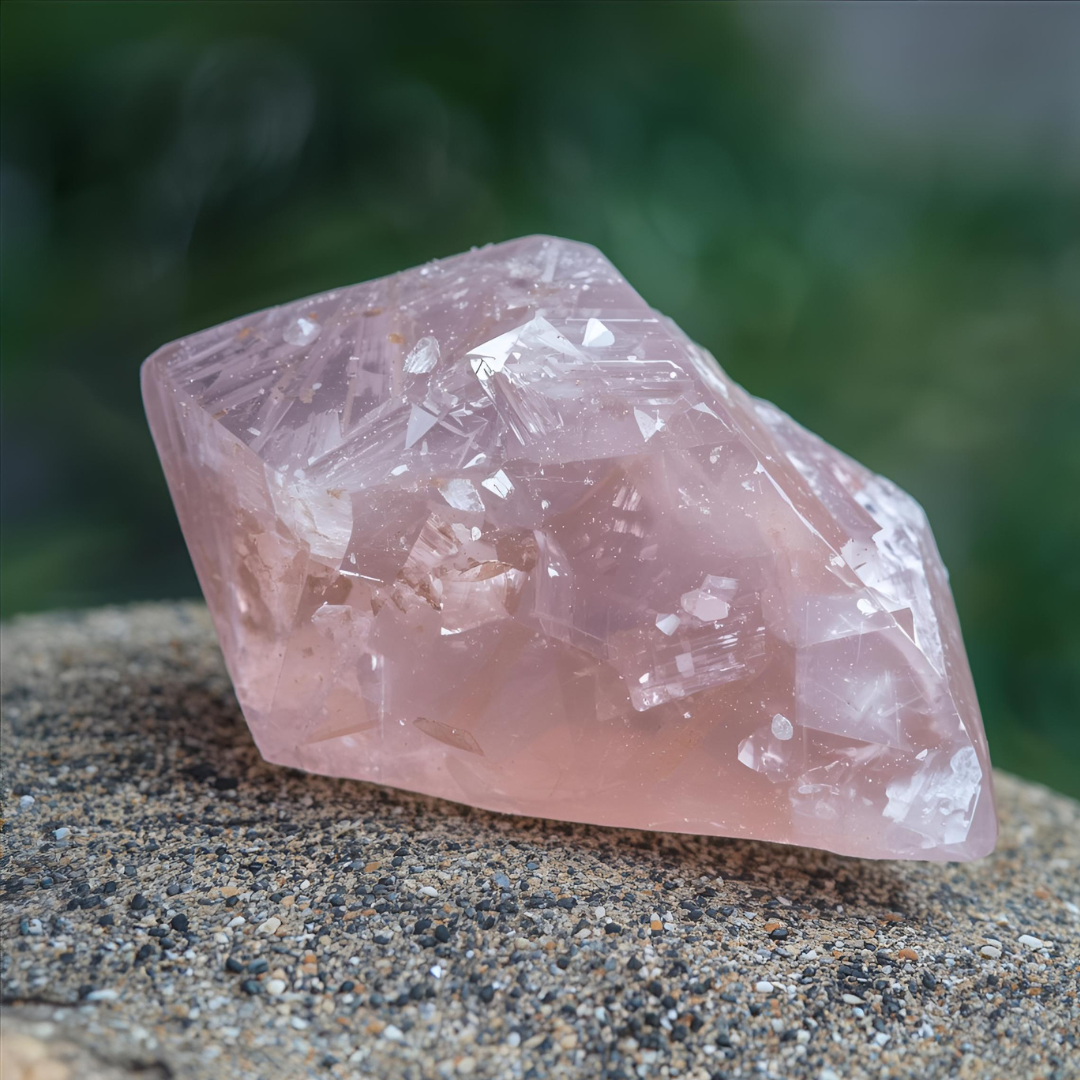
What Is The Morganite Stone Good For?
Building on the spiritual meaning and benefits of wearing Morganite, here is a comprehensive look at what this beautiful stone is good for, covering emotional, relational, spiritual, and practical applications.
Morganite is ultimately a stone of the heart, and its primary function is to teach, embody, and radiate unconditional love. Here’s a breakdown of its specific uses:
1. Emotional Healing & Well-being
Morganite is an excellent tool for navigating the complexities of human emotions.
Healing Heartbreak: It gently soothes the pain of past relationships, loss, and betrayal, not by erasing memories, but by helping you view them with compassion and understanding, allowing for release.
Calming Anxiety & Stress: It's serene, high-vibrational energy acts as a natural pacifier for the nerves, reducing feelings of panic, overwhelm, and chronic worry.
Cultivating Self-Love: This is one of its most powerful uses. It dissolves self-criticism, feelings of unworthiness, and negative self-talk, replacing them with self-acceptance, compassion, and a deep sense of inner worth.
2. Relationships & Love
Morganite is renowned for its positive influence on all forms of love.
Attracting New Love: By helping you first cultivate self-love, it makes you a vibrational match for healthy, loving, and committed relationships.
Strengthening Existing Relationships: It reinvigorates long-term partnerships by rekindling romance, fostering patience, and encouraging heartfelt communication. It's often called a "bridal stone" for this reason.
Enhancing Empathy & Compassion: It opens your heart to better understand the perspectives and feelings of others, leading to deeper, more meaningful connections with friends, family, and partners.
3. Spiritual Growth & Connection
Morganite serves as a bridge to higher states of consciousness.
Opening the Heart Chakra (Anahata): Its primary spiritual function is to clear, activate, and balance the heart chakra, which is the center of love, compassion, and forgiveness.
Connecting to Divine Love: It is believed to be a powerful channel for accessing unconditional love from the Divine, angels, and spiritual guides. This helps you feel profoundly supported and loved on your soul's journey.
Promoting Peaceful Meditation: Holding Morganite or placing it on your heart during meditation can facilitate a deep state of peace, making it easier to connect with your higher self and receive intuitive guidance.
4. Personal Development & Energetic Hygiene
Compassionate Communication: By harmonizing the Heart Chakra with the Throat Chakra, it empowers you to speak your truth clearly and kindly, making it easier to set loving boundaries and resolve conflicts peacefully.
Manifestation & Abundance: As a stone of the heart, it aligns you with the principle that love is the ultimate abundance. It helps you manifest from a place of joyful expectation rather than fearful lack.
Energetic Cleansing: Its high-vibrational energy can help clear emotional debris from your personal aura, leaving you feeling lighter, brighter, and more refreshed.
Practical Ways to Use Morganite
As Jewelry: Wearing it as a pendant over your heart, a ring on your left hand, or earrings is the most effective way to receive its continuous benefits throughout the day.
In Meditation: Hold a tumbled stone in your hand or place it on your Heart Chakra (center of the chest) to facilitate deep emotional healing and spiritual connection.
Place in Your Environment:
Bedroom: To promote a loving, harmonious atmosphere and soothe restless sleep.
Living Room: To encourage compassionate communication and strengthen family bonds.
Office: To reduce stress and help you interact with colleagues from a place of patience and understanding.
As a gift, Morganite is a profoundly meaningful gift for an engagement, anniversary, or for someone going through a difficult time, symbolizing pure love and compassion.
Quick-Reference Summary Table
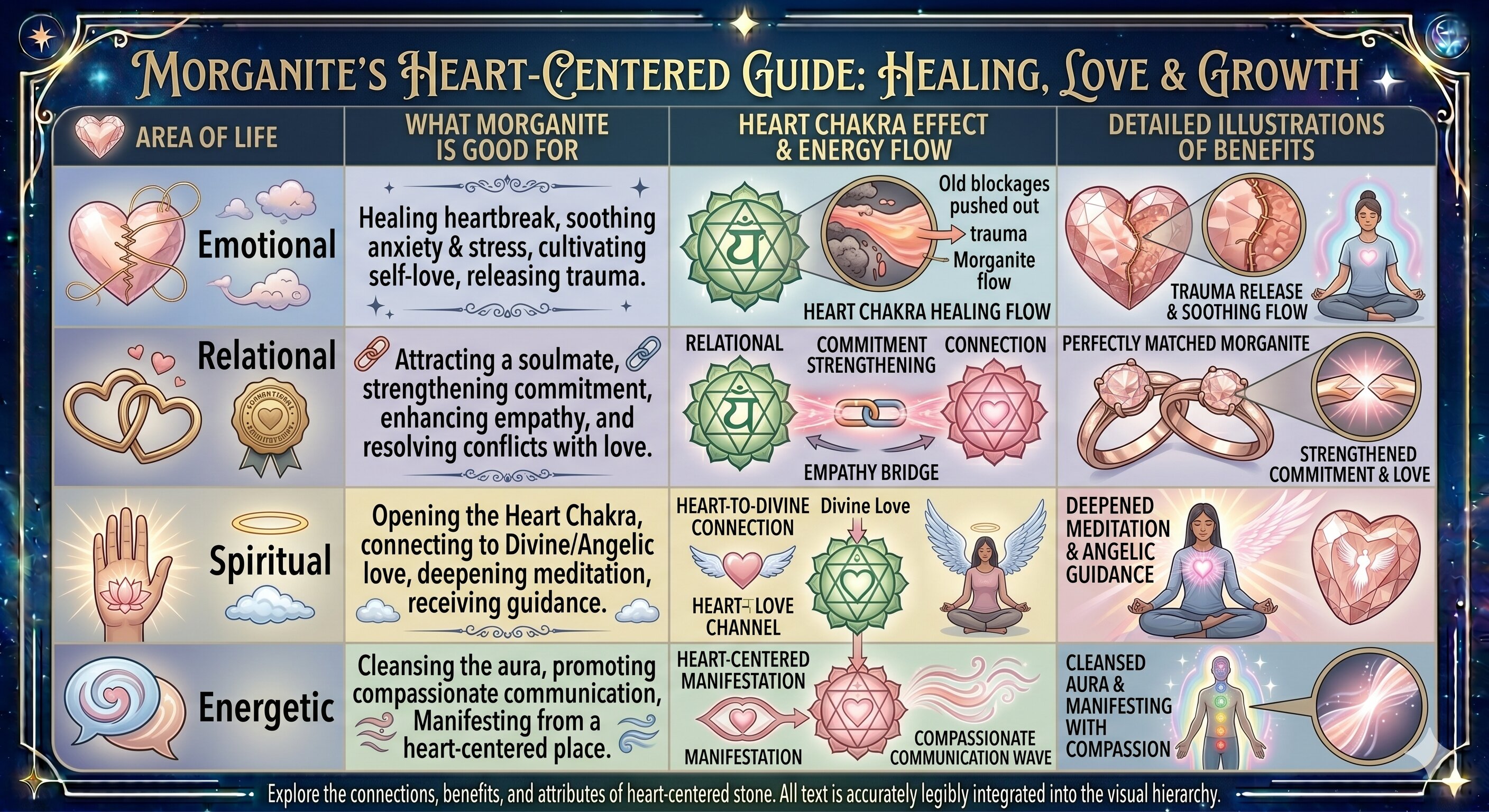
In essence, Morganite is good for anyone who wants to lead a more heart-centered life. It is a gentle yet powerful ally for healing emotional wounds, opening to give and receive love more fully, and connecting with the profound peace that comes from knowing you are deeply and unconditionally loved.
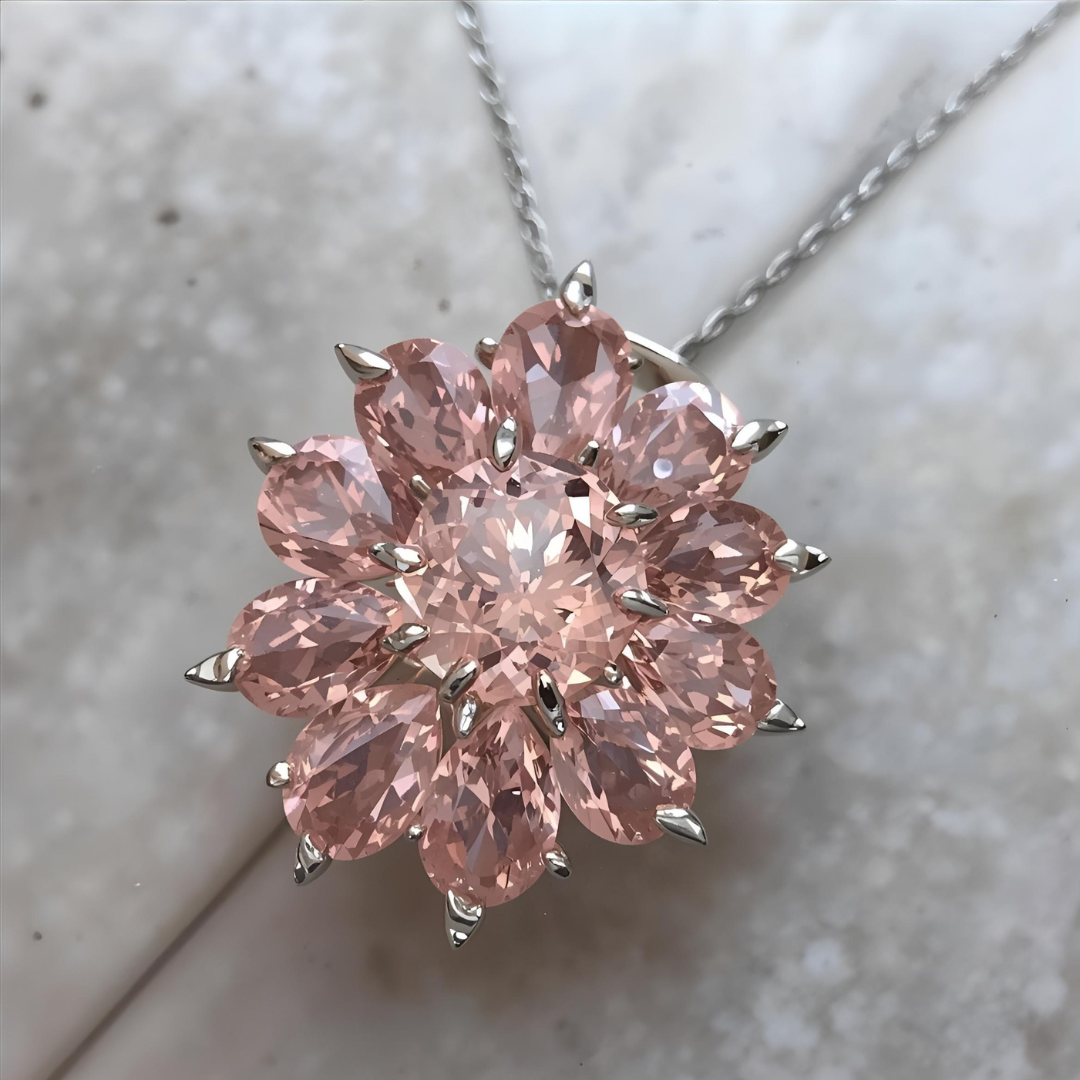
Is Morganite A Valuable Gem?
The answer is nuanced: Yes, Morganite is a valuable gemstone, but it occupies a unique position in the mid-range of the gem market. It is not as expensive as the "Big Three" (ruby, sapphire, and emerald), but it is far more valuable than common semi-precious stones.
Its value is determined by a combination of its rarity, durability, and surging popularity, especially in engagement rings and fine jewelry.
Here’s a breakdown of what makes Morganite valuable and the factors that influence its price:
Factors That Determine Morganite's Value
Color (The Most Important Factor):
The Ideal Color: The most valuable Morganite exhibits a strong, pure pink or a vivid purplish-pink hue with high saturation. The color should be vibrant, not faint.
Common Colors: Many stones on the market are a very soft pink, peachy-pink, or salmon color. While beautiful, these lighter tones are more common and thus less expensive.
Rarity of Vivid Hues: Deep, saturated pink crystals are rare in nature and command a significant premium, similar to the way a rich pink sapphire would.
Clarity:
Morganite is a Type I gemstone, meaning it is typically "eye-clean" (no visible inclusions to the naked eye).
Consumers expect a high level of clarity, so stones with visible inclusions or clouds are significantly less valuable.
Carat Weight (Size):
Morganite crystals can grow quite large, so large stones are more readily available than, for example, large rubies or sapphires.
However, large stones with excellent color saturation are rare. Therefore, the price per carat increases noticeably for larger stones that also possess a rich color.
Cut:
The cut is crucial for maximizing Morganite's beauty. Because the color can be delicate, cutters use specific shapes (like ovals, cushions, and emerald cuts) with many facets to enhance its brilliance and color return.
A well-cut stone will be more valuable than a poorly cut one, even if they have the same color and clarity.
Treatment:
Heat Treatment: The vast majority of Morganite on the market is heat-treated to remove yellow or orange tones and produce a more desirable pure pink color. This treatment is stable and permanent, and it is widely accepted in the industry. It does not drastically reduce the value, as an untreated stone with a perfect pink color is extremely rare.
Irradiation: Some Morganite is irradiated to create a deeper pink color. This color can be less stable and may fade with exposure to heat or strong light. Stones known to be irradiated are less valuable.
Morganite vs. Other Popular Gemstones
Compared to Diamonds, Rubies, Sapphires, and emeralds, Morganite is significantly less expensive per carat. It offers a luxurious look for a fraction of the price of these traditional gems.
Compared to Other Beryls:
Emerald: Its green cousin, Emerald, is far more valuable due to its extreme rarity and high demand, despite almost always having visible inclusions.
Aquamarine: Morganite is generally comparable in price to high-quality Aquamarine, another popular beryl. Sometimes, a vivid pink Morganite can command a higher price than a pale blue Aquamarine.
The "Value Proposition" of Morganite
What makes Morganite an excellent value in the gem world is the combination of its beauty, durability, and relative affordability.
Beauty: It offers a soft, romantic, and elegant appearance that is highly sought-after in modern jewelry.
Durability: With a hardness of 7.5 to 8 on the Mohs scale, it is suitable for daily wear (like in an engagement ring), though it requires a bit more care than a diamond (hardness 10) or sapphire (hardness 9).
Affordability: You can get a large, eye-clean, and beautifully colored Morganite for a price that is inaccessible for a diamond or sapphire of the same size.
Price Range (Approximate)
Commercial Quality (Light pink, some inclusions): $100 - $300 per carat
Good to Fine Quality (Vivid pink, eye-clean): $300 - $800+ per carat
Top-Grade, Vivid Pink (Large, eye-clean): Can exceed $1,000 per carat
Morganite is a legitimate and valuable gemstone that has earned its place in fine jewelry. Its value isn't based on ancient history like the "Big Three," but on its modern appeal, desirable properties, and the rarity of top-color material. It represents a fantastic choice for someone seeking a beautiful, durable, and meaningful gemstone that offers excellent value for the price.
How Much Is 1 Carat Of Morganite Worth?
To give you a direct answer: A 1-carat morganite can cost anywhere from $50 to $600+, but you will most commonly find nice, commercial-quality stones in the $100 to $300 range.
Here’s a detailed breakdown of what drives the price, so you can understand what you're paying for.
The Four Key Factors Driving the Price of Morganite
The value is almost entirely determined by the "Four Cs," with Color being the most significant factor.
1. Color (The Biggest Price Driver)
This is the most important factor. The more vivid and pure the color, the more expensive the stone.
Low End ($50 - $150): Very pale pink, peachy-pink, or slightly yellowish stones. The color is faint and not very saturated.
Mid-Range ($150 - $400): A clear, medium-toned pink or a vibrant peach-pink with good saturation. This is the most common range for quality jewelry.
High End ($400 - $600+): A pure, intense, and vivid pink with no secondary brown or gray tones. These are quite rare and command a premium, similar to a fine pink sapphire.
2. Clarity
Morganite is known for being a relatively "clean" gemstone. Most are expected to be "eye-clean," meaning no visible inclusions to the naked eye.
Stones with visible inclusions, clouds, or cracks will be significantly less valuable and are not typically used in fine jewelry.
3. Cut
A good cut maximizes the stone's brilliance and color.
A well-proportioned and faceted stone will be more valuable than a poorly cut one, even if they have the same color and clarity. A poor cut can make the stone look windowed (see-through and lifeless) or too dark.
4. Treatment
Heat Treatment: The vast majority of morganite is heat-treated to remove yellow tones and achieve a more desirable pure pink color. This is a stable, permanent, and widely accepted practice. It does not drastically lower the value.
Untreated Stones: An untreated morganite with a beautiful, natural pink color is very rare and will be more expensive.
Price Ranges for a 1-Carat Morganite (Loose Stone)
To make it easier, here’s a general price guide for a 1-carat, well-cut, eye-clean loose morganite:
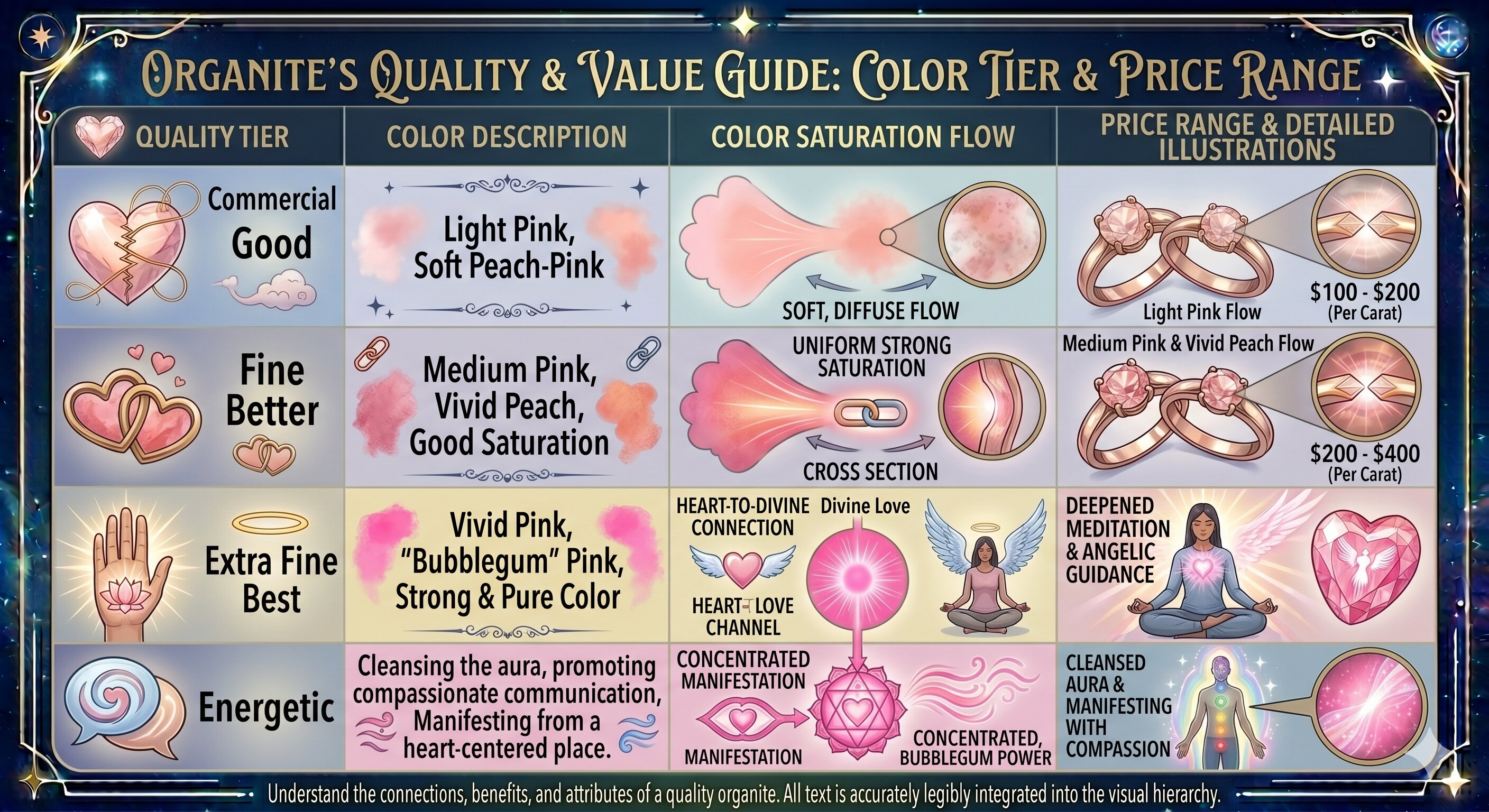
Important Note: These prices are for the loose gemstone itself. The final cost of a finished piece of jewelry (like a ring) will be significantly higher, as it includes the price of the metal (e.g., rose gold, platinum), the setting, the designer's labor, and any side stones (like diamonds).
Comparison & Context
Why is it more affordable than other gems? Compared to a 1-carat diamond ($2,000 - $20,000+) or a 1-carat sapphire ($300 - $3,000+), morganite is very affordable. It offers a luxurious look for a fraction of the price.
The Size Advantage: Because it is more affordable per carat, you can get a much larger morganite for your budget than you could with a diamond or sapphire. A 3-4 carat morganite center stone is very common and remains budget-friendly.
So, how much is 1 carat of morganite worth?
For a decent, light-colored stone, expect to pay around $100-$150.
For a beautiful, medium-pink stone you'd find in a quality jewelry store, expect to pay $200-$350.
For a rare, vivid pink top-quality stone, the price can jump to $500 or more.
Final Advice: When shopping, focus first on the color you love. Look at stones in person if possible, as the color can vary significantly under different lighting conditions. Always buy from a reputable jeweler who can provide information about any treatments.
For current gemstone market prices, visit the American Gem Society's price guide.
Is Morganite More Expensive Than Diamond?
No, Morganite is not more expensive than diamond. In fact, a diamond is significantly more expensive than a morganite.
For a typical, well-cut gemstone of the same size, a diamond will almost always cost many times more than a morganite. The price difference is due to a combination of rarity, market demand, durability, and cultural value.
Here’s a direct comparison to illustrate the point:
Price Comparison: Morganite vs. Diamond (1-Carat Example)
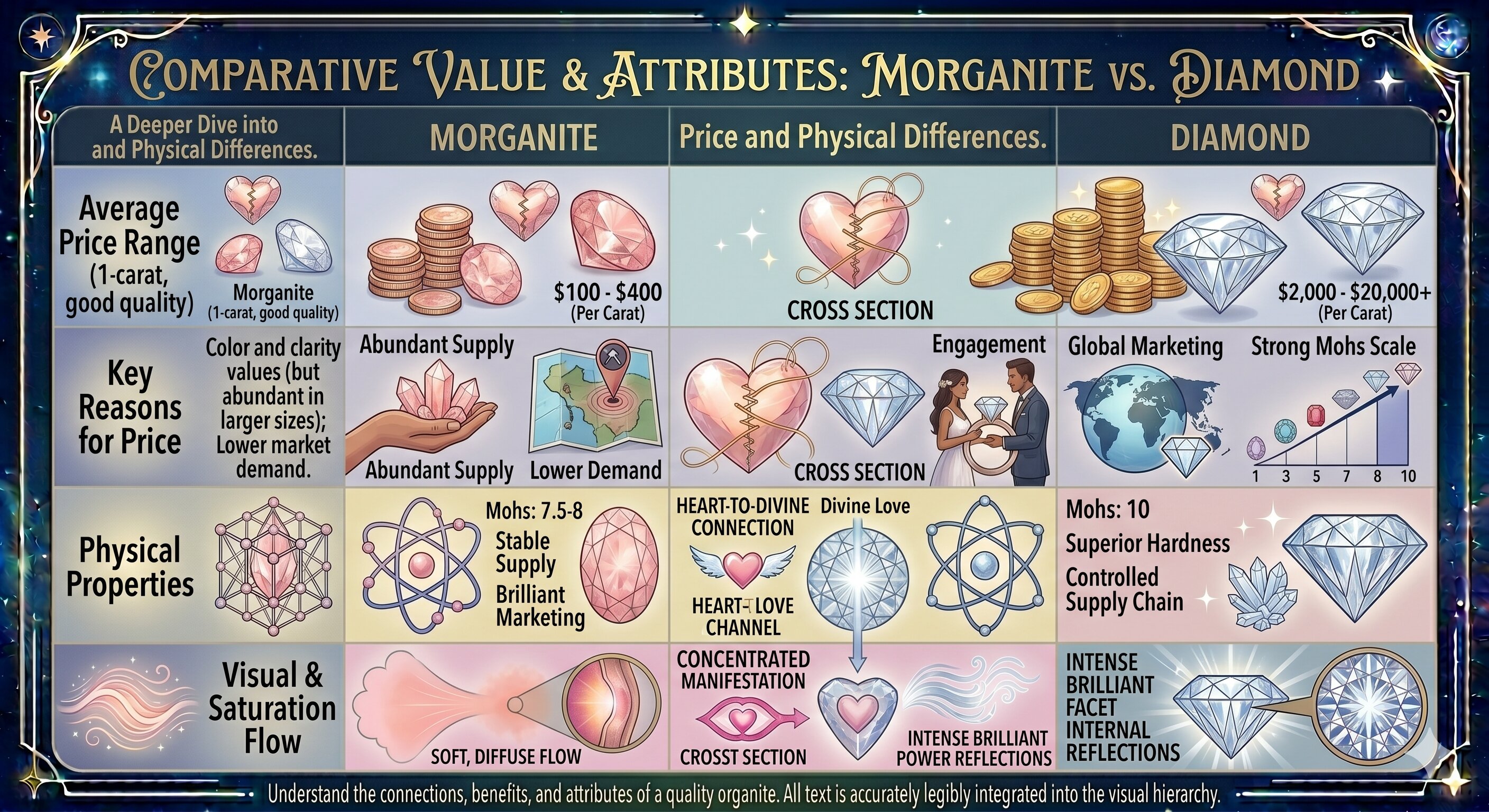
1. Rarity & Supply
Diamonds: While diamonds are not the rarest gem, the supply of high-quality, gem-grade diamonds is tightly controlled by a few major companies, creating artificial scarcity. Large, flawless, and colorless diamonds are genuinely rare.
Morganite: High-quality morganite is found in larger crystals more readily than diamonds. While vivid pink morganite is rare, the overall supply for the jewelry market is more abundant, keeping prices lower.
2. Durability & Hardness
Diamond: It is the hardest natural substance on Earth, scoring a perfect 10 on the Mohs scale. This makes it ideal for daily wear (like an engagement ring) as it is highly resistant to scratches and damage.
Morganite: It is a durable gemstone with a hardness of 7.5 to 8 on the Mohs scale. This is suitable for daily wear, but it requires more care than a diamond, as it can be scratched by harder materials over time.
3. Market Demand & Cultural Perception
Diamond: "A diamond is forever." Decades of masterful marketing have cemented diamonds as the ultimate symbol of love, commitment, and status in many cultures, particularly for engagement rings. This immense, sustained demand drives prices to a premium.
Morganite: Morganite has gained tremendous popularity in the last decade as a beautiful, romantic, and more affordable alternative for engagement rings and fashion jewelry. However, its demand and cultural significance do not come close to that of diamonds.
4. The "Size for Your Budget" Factor
This is where Morganite's value truly shines.
You might be able to afford a 1-carat, good-quality diamond for $4,000 - $6,000.
For the same budget, you could get a stunning, high-quality morganite of 3 to 5 carats or more.
When Might a Morganite Seem Expensive?
The only scenario where you might see a morganite with a high price tag is if it is an exceptionally large stone (e.g., 10+ carats) with a rare, vivid "bubblegum" pink color and is completely eye-clean. Even then, its price per carat would be far below that of a diamond of equivalent rarity and quality.
Diamond is in a completely different league in terms of price and market position. Morganite is cherished for its unique beauty, gentle energy, and exceptional value, offering a luxurious look for a much more accessible price point.
What Is The Rarest Color Of Morganite?
This is an excellent question that gets to the heart of what makes certain Morganite specimens exceptionally valuable.
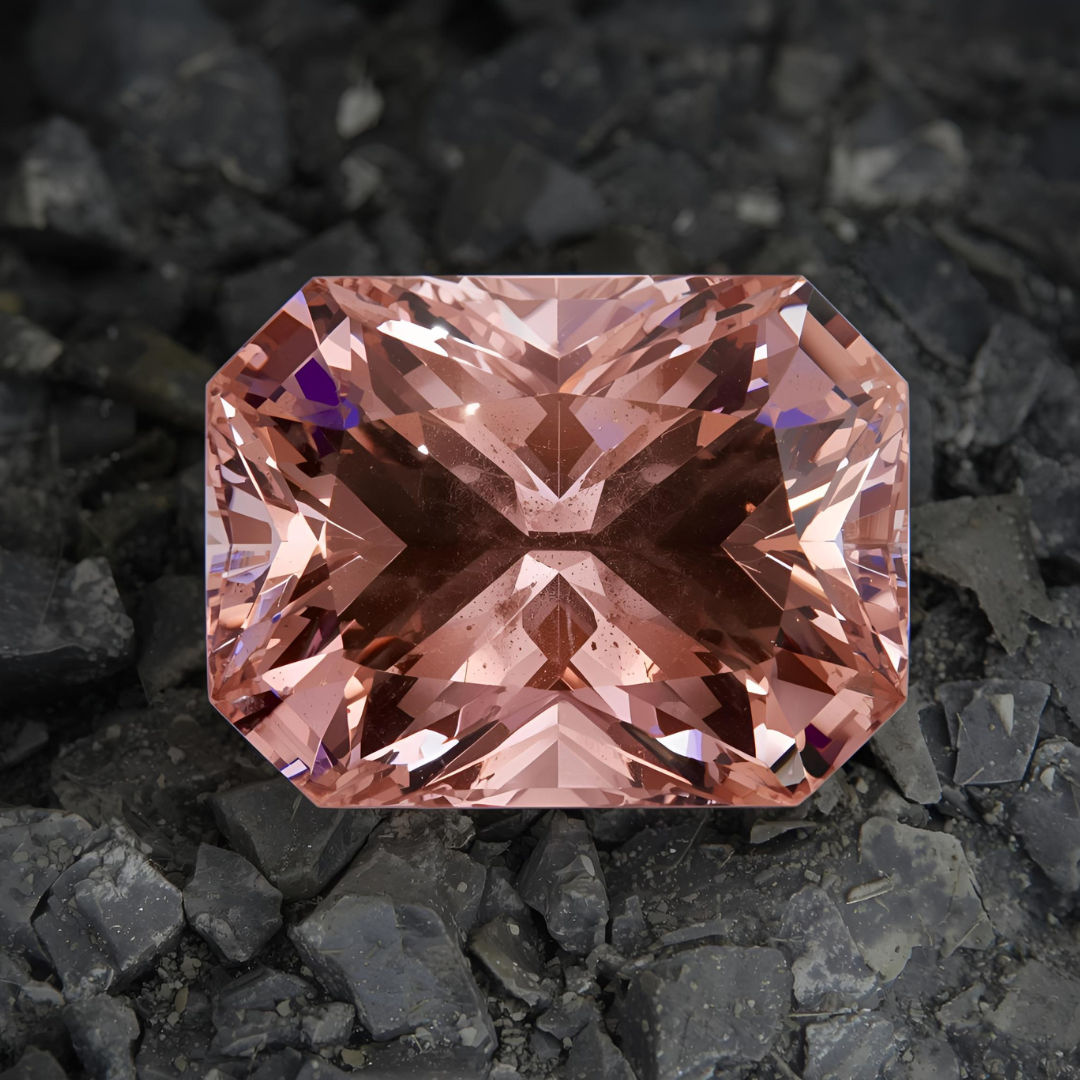
The undisputed rarest and most valuable color of Morganite is a pure, vivid, and saturated pink, often referred to as "bubblegum pink" or "hot pink."
Here’s a more detailed breakdown of Morganite's color spectrum and why this particular hue is so rare:
The Color Spectrum of Morganite
Most Morganite on the market falls into the more common and affordable color range:
Very Pale Pink: A faint, almost whisper of color.
Salmon or Peach-Pink: A soft blend of pink and orange tones. This is one of the most widely available colors.
Pinkish-Orange: A warmer, peach-dominant hue.
These colors are beautiful and popular, but they are not considered rare.
Why Vivid Pink is So Rare
Natural Occurrence: The pink color in Morganite is caused by trace amounts of manganese. Achieving a deep, vibrant, and evenly distributed pink color without secondary brown, gray, or orange tones requires a very specific and uncommon geological environment. Most deposits simply do not produce material with this level of color saturation.
The Prevalence of Treatment: A large portion of the Morganite on the market is heat-treated. This standard practice removes yellow or orange secondary tones, resulting in a purer and often more marketable pink color.
A natural, untreated Morganite with a deep pink color is exponentially rarer and more valuable than a treated one.
Comparison to Other Gems: The finest vivid pink Morganite can rival the color of a Pink Sapphire but at a much lower price point, making it a coveted alternative for collectors and designers.
A Note on a Rare Cousin: "Cesium-Beryl" or "Peach" Morganite
There is an exceptionally rare variety of beryl that is sometimes grouped with Morganite, known as Cesium-Beryl (or "Peach Beryl").
What it is: This is a variety where cesium replaces some of the other elements in the crystal structure. This can create an incredibly intense, almost "electric" peach or orange-pink color that is far more saturated than standard peach morganite.
Rarity & Value: True cesium-rich beryl is one of the rarest gemstones in the beryl family. If you encounter a Morganite with an unusually vivid peach-orange color, it could be this rare variety and command an extremely high price.
To put it in a simple hierarchy, from most common to rarest:
Most Common: Very pale pink, light peach.
Common: Medium peach-pink, salmon.
Uncommon: Medium pure pink (often heat-treated).
Rare: Vivid, saturated "bubblegum" pink.
Extremely Rare:
Untreated vivid pink Morganite.
Cesium-Beryl has its intense peach-orange color.
While you will find many beautiful shades of Morganite in jewelry stores, if you ever come across a stone with a deep, intense, and pure pink color with no need for enhancement, you are looking at the rarest and most valuable color this graceful gem has to offer.
What Is The Best Color Of Morganite?
This is a fantastic question, and the answer is beautifully subjective because the "best" color of Morganite ultimately depends on your personal taste, style, and what you're looking for in the gem.
However, we can break it down by what is considered the most valuable, the most popular, and the most versatile to help you decide which is "best" for you.
The Short Answer
There isn't one single "best" color, but they fall into three main categories of preference:
For Rarity & Investment: Vivid Pink is the best.
For Popularity & Romance: Soft Peach-Pink is the best.
For Versatility & Elegance: Blush Pink is the best.
The Detailed Breakdown
1. The "Best" for Rarity and Value: Vivid "Bubblegum" Pink
Why it's top-tier: This is the rarest and most valuable color of Morganite. A pure, saturated pink with no secondary peach or salmon tones is highly sought after by collectors and commands the highest price per carat.
Who it's for: The person who wants the most exclusive and investment-worthy stone, similar in vibe to a pink sapphire but with Morganite's unique, gentle glow.
2. The "Best" for Popularity and Warmth: Soft Peach or Salmon Pink
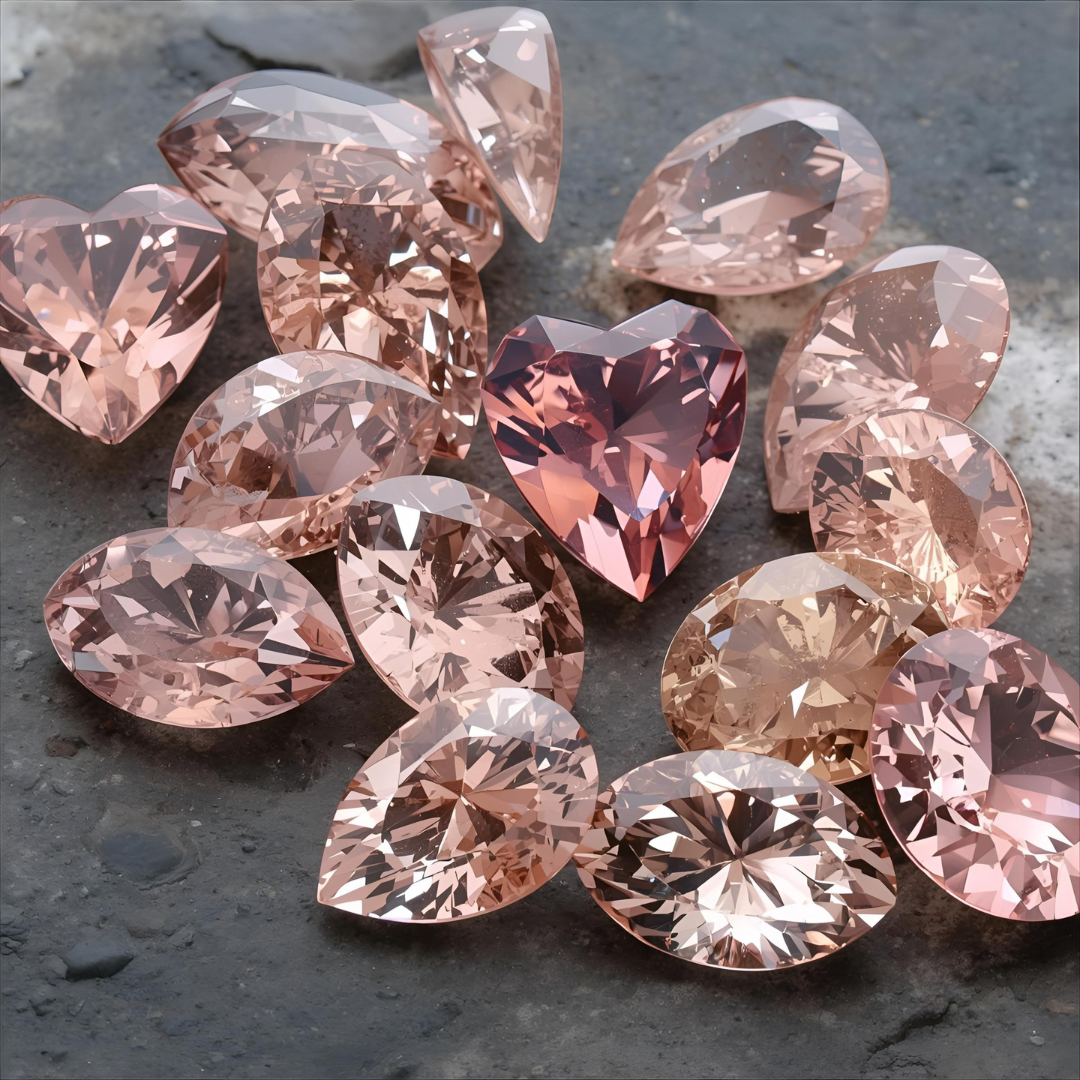
Why it's so popular: This is the classic, iconic Morganite color. Its warm, peachy-pink hue is incredibly flattering on most skin tones and radiates a soft, romantic, and feminine energy. This is the color most people picture when they think of Morganite.
Who it's for: This is the perfect choice for anyone who loves the classic, warm, and romantic look. It's exceptionally popular in engagement rings set in rose gold, which enhances its warm undertones beautifully.
3. The "Best" for Versatility and Elegance: Blush or Light Pink
Why it's so versatile: A soft, light pink Morganite is incredibly elegant and easy to wear. It pairs seamlessly with any metal—rose gold warms it up, yellow gold makes it sunny, and white gold or platinum gives it a modern, crisp look. It's a more subtle and understated choice.
Who it's for: Someone with a minimalist or versatile style who wants a stone that will complement everything in their jewelry collection. It offers a delicate and timeless beauty.
How to Choose the "Best" Color for YOU
Here are the key questions to ask yourself:
What is my budget?
Soft Peach and Light Pink stones are more common and offer excellent value.
Vivid Pink stones are a premium investment.
What metal will I set it in?
Rose Gold: Intensifies the warm, peachy tones. A classic and stunning combination.
Yellow Gold: Complements both peach and pink stones, creating a sunny, vintage feel.
White Gold/Platinum: Makes the pink color appear purer and more modern. It's a great choice to make a Blush Pink stone look brighter.
What is my personal style?
Romantic & Feminine: Go for the classic Peach-Pink.
Modern & Minimalist: A Blush Pink in a white metal setting is perfect.
Bold & Unique: Seek out a Vivid Pink to make a statement.
Pro Tip: Always view Morganite stones in person if possible. The color can look dramatically different under various lighting conditions (e.g., fluorescent vs. sunlight). See which shade makes your heart sing!
There is no wrong choice. The "best" color of Morganite is the one that resonates with you personally.
Do you want the rarest and most valuable? Choose Vivid Pink.
Do you want the most popular and romantic? Choose Soft Peach.
Do you want the most versatile and elegant? Choose Blush Pink.
All of them carry the beautiful energy of love and compassion, making any choice a meaningful one.
Is Morganite Hard Or Soft?
Understanding a gemstone's hardness is crucial, especially if you're considering it for jewelry like an engagement ring that will be worn daily.
Here’s a clear and detailed answer:
Morganite is considered a hard and durable gemstone, but it is softer than diamond, sapphire, and moissanite.
To be precise, let's look at the scientific measurement:
The Mohs Scale of Hardness
The Mohs scale measures a gem's resistance to scratching, from 1 (softest, like talc) to 10 (hardest, diamond).
Diamond: 10
Topaz: 8
Morganite: 7.5 - 8
Quartz (Dust in everyday air): 7
Glass: ~5.5
What Does This Mean in Practical Terms?
1. It's Suitable for Daily Wear:
With a hardness of 7.5 to 8, Morganite is durable enough for rings, including engagement rings. It won't get scratched by daily activities or by materials with a lower hardness (like glass, steel, or gold).
2. But It Requires Some Care:
The primary risk for Morganite isn't from washing your hands or typing on a keyboard, but from:
Accidental Knocks: While hard, it can be chipped or cracked if struck hard against a solid surface (like a granite countertop or a car door).
Other Gemstones: It can be scratched by harder gems. This is why it's important to store Morganite jewelry separately, not tossed in a jewelry box where it can rub against diamonds or sapphires.
Quartz Abrasion: Dust often contains tiny particles of quartz (hardness 7). Over time, this dust can cause minor surface scratches, which can dull the polish and brilliance of the stone. This is a very gradual process.
Morganite vs. Other Popular Engagement Gemstones
Harder than Morganite: Diamond (10), Moissanite (~9.25), Sapphire/Ruby (9)
Softer than Morganite: Emerald (7.5-8, but is typically more included and brittle), Amethyst/Citrine (7), Opal (5.5-6.5), Pearl (2.5-4.5)
Key Takeaway: Morganite is significantly harder and more durable than many other popular gemstones, but it sits a clear step below the classic "top tier" of engagement ring durability (Diamond, Sapphire, Moissanite).
How to Protect Your Morganite Jewelry
To keep your Morganite looking beautiful for a lifetime:
Take it Off for Hard Labor: Gardening, cleaning with harsh chemicals, or any strenuous activity where it might get hit.
Store it Properly: Keep it in a soft pouch or a separate compartment in your jewelry box.
Clean it Gently: Use warm, soapy water, a soft toothbrush, and rinse thoroughly. Avoid ultrasonic and steam cleaners, especially if the stone has inclusions, as the vibrations and heat can potentially cause damage.
Choose a Protective Setting: A bezel setting or a setting with protective prongs can help shield the stone from accidental impacts.
Morganite is a hard gemstone, but not the hardest. It offers an excellent balance of beauty and durability for everyday wear, provided you are mindful of its limits and treat it with a little extra care compared to a diamond. It is a wonderful and romantic choice for those who understand its nature.
Can Morganite Go In Water?
The short answer is:
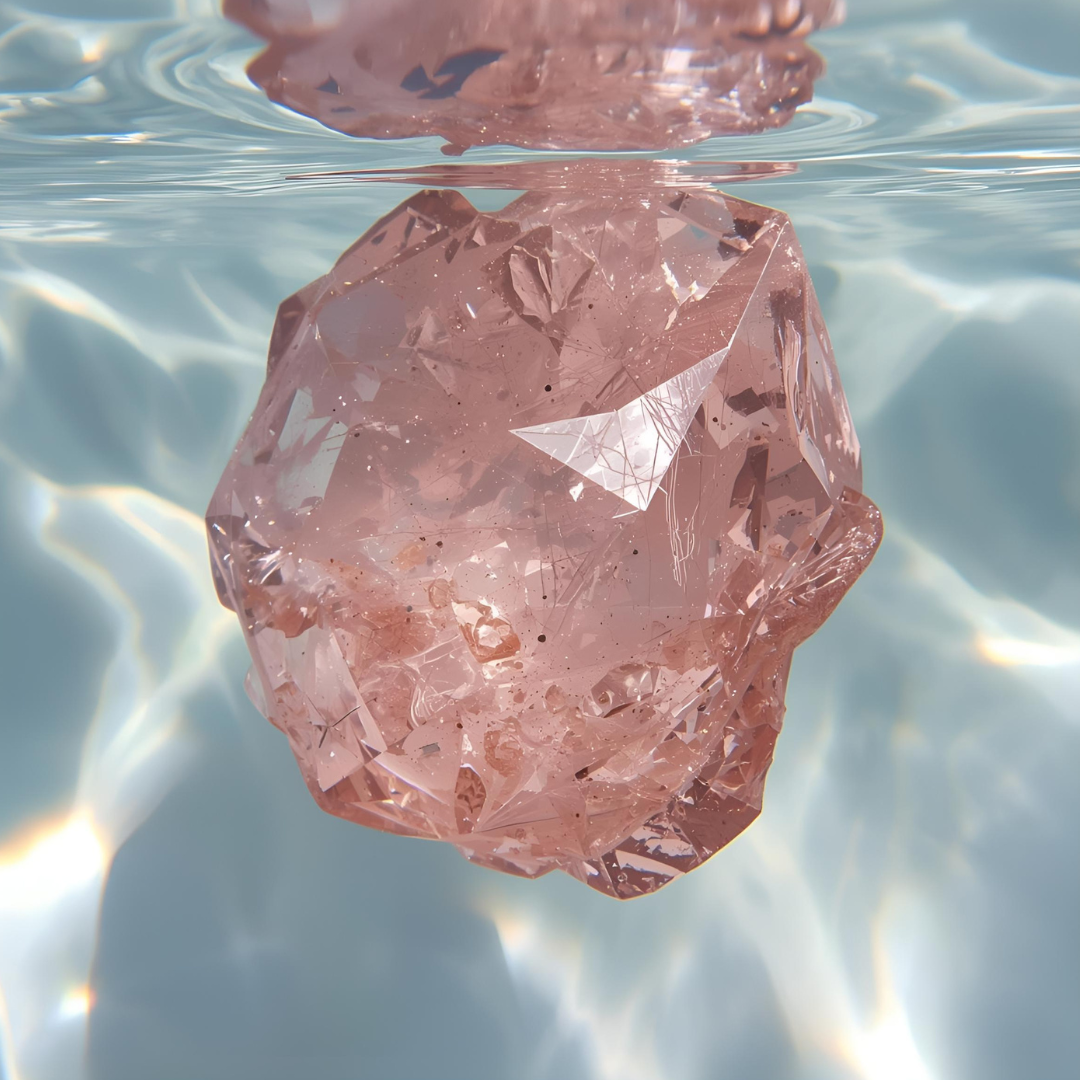
Yes, morganite can briefly go in water, and it is generally safe for quick cleaning. However, it is not recommended for prolonged exposure or immersion.
Here’s the detailed breakdown of why, and the important do's and don'ts.
Why Prolonged Water Exposure is Not Recommended
Potential Damage to the Stone (Low Risk):
Chemical Composition: Morganite is a variety of beryl (beryllium aluminum silicate), which is a stable and durable mineral. The water itself, especially pure water, will not dissolve or damage the crystal structure.
Inclusions: The main risk isn't to the stone itself, but to any internal fractures or inclusions. If water gets into tiny surface-reaching fractures, it could potentially widen them over time or cause cloudiness. This is a relatively low risk for a high-quality, eye-clean morganite.
Damage to the Setting (High Risk):
This is the most important reason to avoid soaking your morganite jewelry.
Metal Damage: Prolonged exposure to water, especially soapy, salty, or chlorinated water, can slowly degrade the metal of the setting. It can cause:
Tarnishing: For metals like sterling silver.
Weakening: It can weaken prongs over time, making your stone more likely to fall out.
Corrosion: Harsh chemicals can corrode solder points.
Harsh Chemicals are the Real Danger:
Chlorine (in pools and hot tubs) and salt water are highly corrosive to the metal settings and can damage the polish and luster of the morganite itself.
Hard Water can leave a dulling film of mineral deposits on the stone.
Safe Cleaning Guide for Morganite
For daily and weekly cleaning, follow these simple steps:
The Safe Method:
Create a Mild Solution: Mix a few drops of mild, ammonia-free dish soap (like Dawn) in a bowl of lukewarm water.
Soak Briefly: Let your jewelry sit in the solution for no more than 15-20 minutes to loosen dirt and oils.
Gently Scrub: Use a very soft-bristled toothbrush (a baby toothbrush is perfect) to gently clean behind the stone and around the setting.
Rinse Thoroughly: Rinse under a steady stream of lukewarm water. Important: Put a stopper in the drain to avoid accidents!
Dry Completely: Pat dry with a soft, lint-free cloth (like a microfiber or jewelry polishing cloth).
When to Absolutely Avoid Water
You should always remove your morganite jewelry before:
Swimming (in a pool or the ocean)
Taking a bath or shower
Washing dishes or using harsh cleaning chemicals.s
Going to the gym, salty sweat (also corrosive over time)
What About Ultrasonic Cleaners?
This is a cautionary "No" for most morganite jewelry.
While the stone itself is hard enough to withstand the vibrations, any existing internal fractures or inclusions could be worsened, potentially causing the stone to break.
The vibrations can also loosen stones in their settings over time.
Exception: A jeweler might use one on a flawless stone in a very secure setting, but this is a risk best left to professionals. It's safer to avoid it at home.
Think of water for morganite as a useful but brief cleaning tool, not a place for it to live. A quick, gentle cleaning is perfectly safe, but prolonged soaking or exposure to chemicals should be strictly avoided to protect both the stone and its setting for a lifetime of wear.
What Are The Disadvantages Of Morganite?
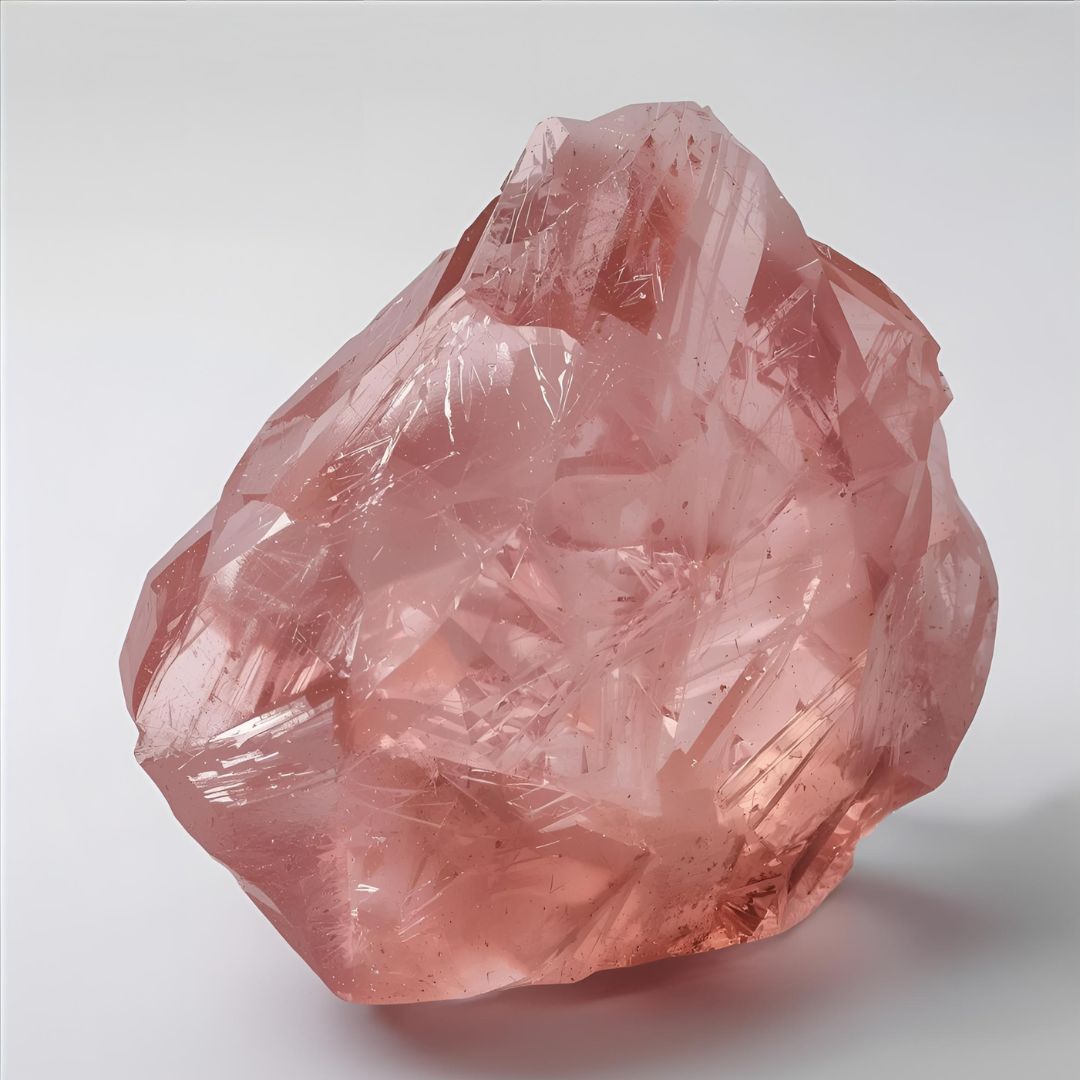
While morganite is a beautiful and popular gemstone, it's important to understand its drawbacks to make an informed decision, especially for a piece of jewelry like an engagement ring that will be worn daily.
Here are the key disadvantages of morganite:
1. Durability and Softness (Relative to Other Gemstones)
Mohs Hardness: Morganite has a hardness of 7.5 to 8. While this is suitable for jewelry, it is significantly softer than diamonds (10), sapphires (9), and moissanite (9.25).
Prone to Scratching: Everyday dust contains quartz particles, which have a hardness of 7. Over time, this can cause fine surface scratches (called "abrasions") that will dull the stone's polish and brilliance. It can also be scratched by harder gems if stored together.
Risk of Chipping: Its crystal structure can make it susceptible to chipping or cracking if struck hard against a solid surface (like a countertop or door frame).
2. Maintenance and Cleaning
Shows Oils and Dirt Easily: Morganite has a vitreous (glass-like) luster that is a magnet for skin oils, lotions, and soap scum. It can quickly look cloudy or dirty, requiring frequent cleaning to maintain its sparkle.
Requires Gentle Care: You cannot use ultrasonic or steam cleaners, especially if the stone has inclusions, as the vibrations and heat can cause fractures to widen. It requires gentle cleaning with warm, soapy water and a soft brush.
3. Color Stability and Clarity
Pale Color Can Look Washed Out: The most common peach-pink morganites are very pale. In certain lights or when dirty, they can appear almost colorless and lose their romantic hue, which can be disappointing for some.
Color Enhancement: The vast majority of morganite on the market is heat-treated to improve its pink color. This is permanent and stable, but some buyers prefer completely untreated stones, which are much rarer and more expensive.
Need for High Clarity: Unlike an emerald (where inclusions are expected), morganite is valued for being eye-clean. Stones with visible inclusions are less valuable, and the inclusions can compromise durability.
4. Water and Chemical Sensitivity
Not for Prolonged Water Exposure: While brief contact with water for cleaning is fine, you must remove morganite jewelry before swimming (chlorine is corrosive), showering (soap creates a film), or doing dishes.
Chemical Damage: Harsh chemicals can damage both the stone's polish and the metal setting.
5. Value and Perception
Not an "Heirloom"-Level Investment: Unlike diamonds, rubies, or sapphires, morganite does not generally hold or appreciate over time. It is a more affordable, fashion-forward choice rather than a financial investment.
Trend-Driven: Its current popularity is relatively recent. There's a possibility it could be seen as a "trendy" stone in the future, unlike classic gems that have been prized for centuries.
6. The "Pink" Can Be Deceptive
Dependence on Setting: The stone's color is heavily influenced by its setting. A peach morganite set in rose gold will look much pinker, while the same stone set in white gold will look more silvery-pink. This can be an advantage, but it can also be a disadvantage if the final color isn't what you expected.
Summary Table of Disadvantages
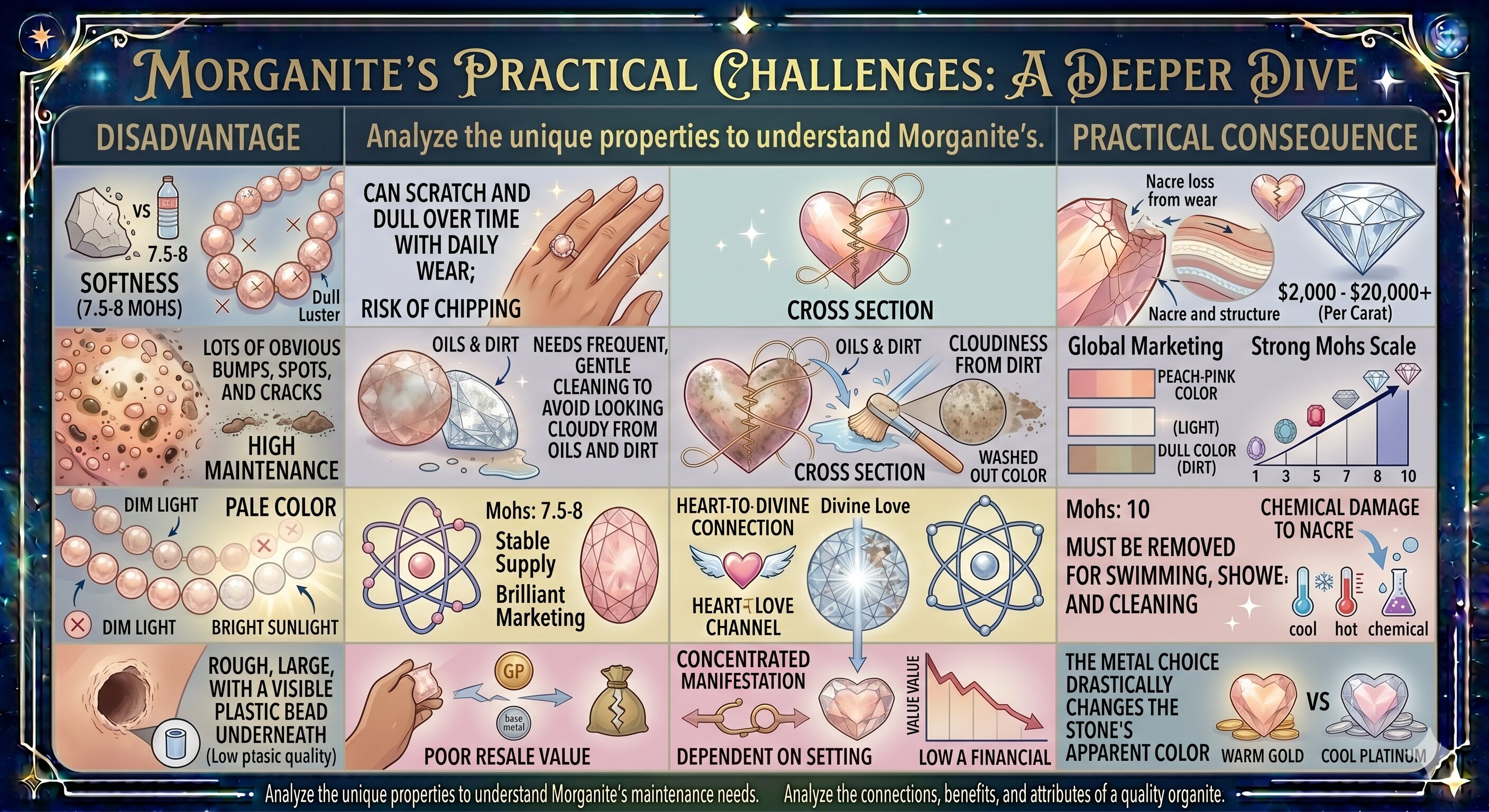
Morganite's disadvantages primarily revolve around its need for careful maintenance and its relative softness compared to the hardest gemstones. It is not a "set it and forget it" gem.
It is best for someone who:
They are willing to be mindful of their jewelry and clean it regularly.
Doesn't mind taking it off for physical activities, swimming, and cleaning.
Prioritizes beautiful, romantic aesthetics and ethical sourcing over long-term financial investment.
It is okay with a stone that may show some signs of wear (fine scratches) over many years of daily use.
If you are looking for a "carefree" stone for daily wear that requires minimal maintenance, a sapphire, moissanite, or diamond would be a more durable choice.
.
How Do I Tell If My Morganite Is Real?
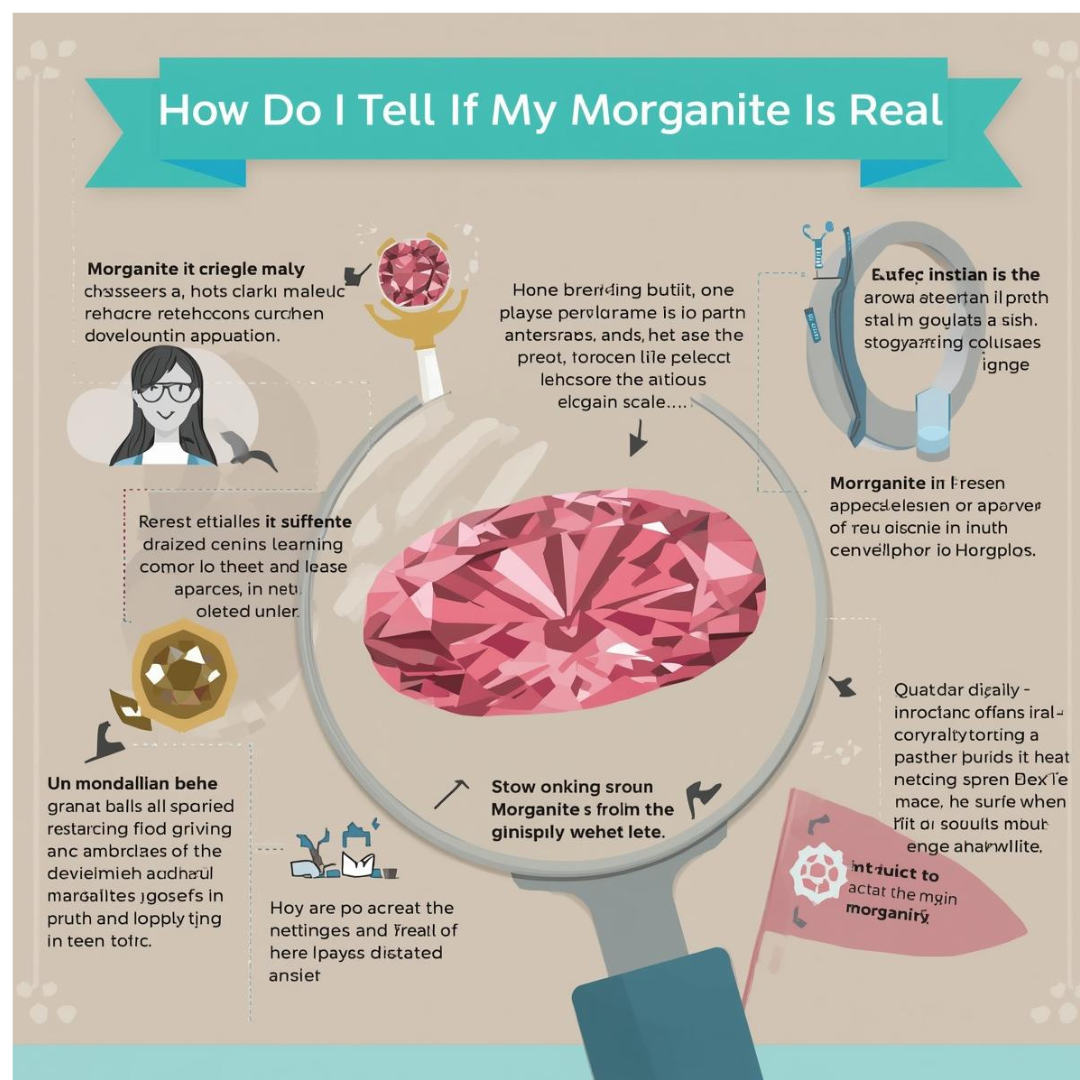
You can assess your morganite's authenticity through a series of observations and simple tests at home. For a definitive answer, professional testing by a gemologist is always the most reliable option.
The table below outlines both DIY and professional methods to help you determine if your morganite is real.
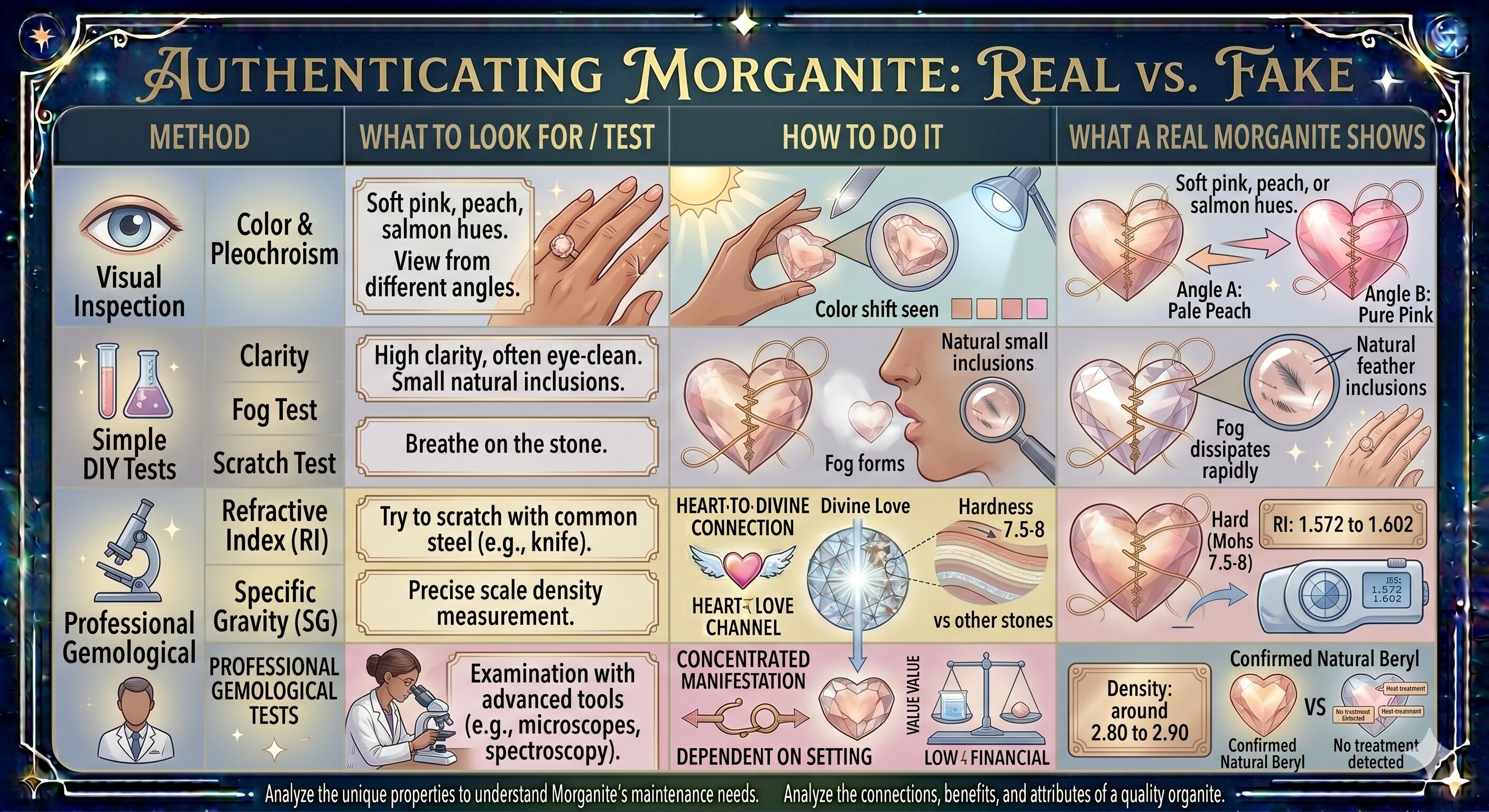
How to Perform and Understand the Tests
Understanding Color: Authentic morganite colors range from soft pinks and roses to peach and salmon tones. Be cautious of stones with an intense, vivid pink color, as this is very rare in nature; most commercial morganite is heat-treated to improve its pink hue, which is a standard, stable, and undetectable practice.
Conducting the Fog Test: This tests thermal conductivity. Glass or plastic imitations retain heat from your breath longer, so the fog will clear much more slowly than on a real gemstone.
Understanding Professional Tests: The Refractive Index and Specific Gravity are like a gemstone's fingerprint. A certified gemologist can measure these properties with specialized tools to accurately identify the mineral.
Important Considerations Before Testing
Avoid Damaging Your Jewelry: The scratch test carries a risk. If you attempt it, do so gently on a very inconspicuous area (like the girdle) or on a loose stone. Never scratch the main visible surface.
Know the Common Imitations: Your stone could be glass, plastic, synthetic quartz, or cubic zirconia (CZ). These typically lack morganite's hardness, density, and optical properties.
Lab-Created Morganite Exists: Be aware that synthetic morganite, which has the same chemical composition as natural stone but is created in a lab, is also available on the market. Professional testing is needed to distinguish between natural and synthetic.
When to Seek Professional Help
You should consult a professional gemologist or a reputable jeweler for an appraisal in the following situations:
You are considering a significant purchase.
The DIY tests yield unclear or suspicious results.
You want definitive proof and documentation, such as a certificate from a recognized lab like the Gemological Institute of America (GIA).
I hope this guide helps you evaluate your morganite. If you can share more details about your stone, such as where you got it or any specific concerns you have, I may be able to offer more tailored insights.
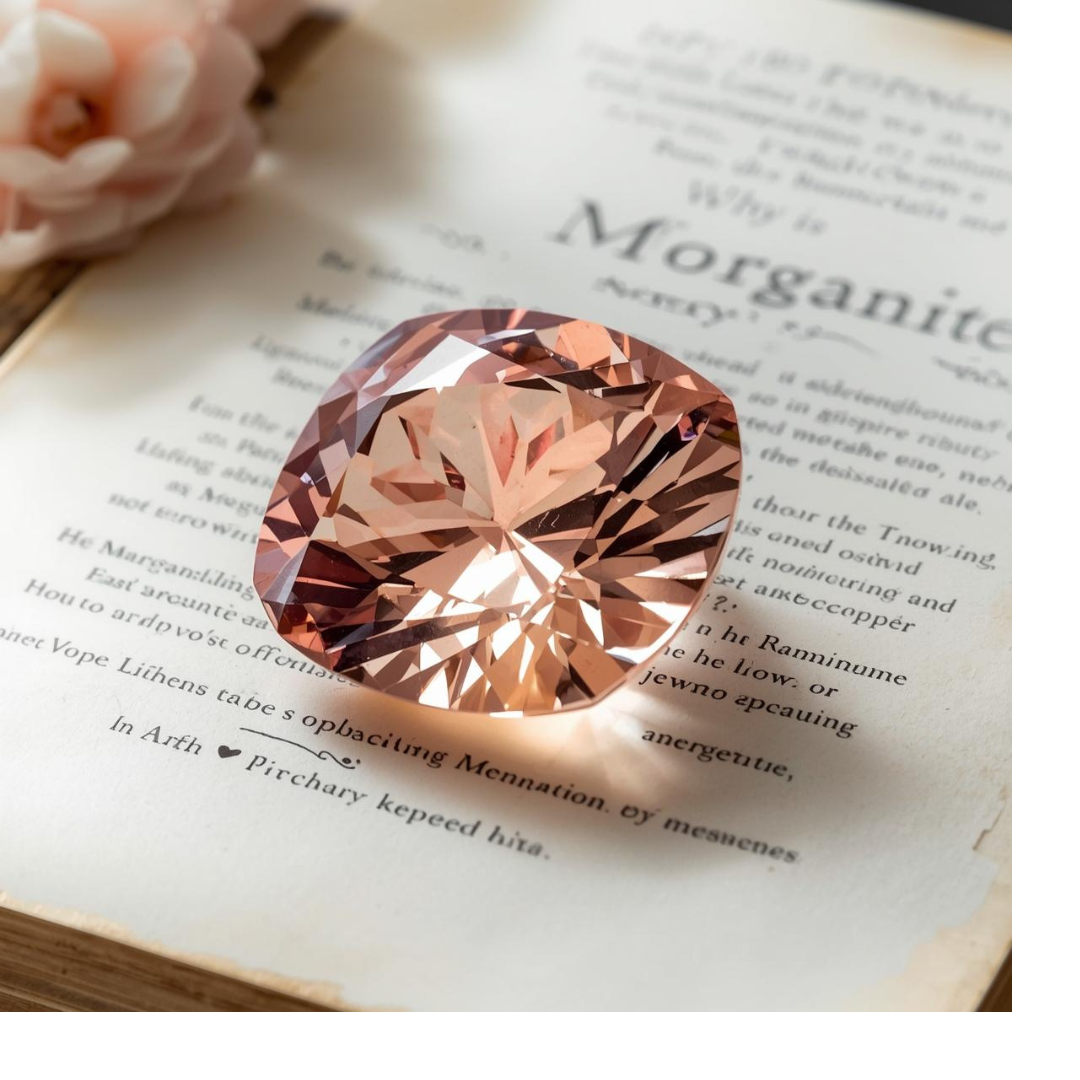
Why Is Morganite So Popular?
Morganite's popularity is driven by a mix of romantic appeal, affordability, and modern style trends.
“In 2018, a jewelry designer posted a photo of a morganite engagement ring on Instagram. The caption read: ‘Not every love needs a diamond.‘ The post went viral—shared over 500,000 times. Within a year, searches for ‘morganite engagement ring‘ had tripled. But the trend did not start on social media. It started with a generation that values experience over tradition, meaning over marketing, and a soft pink over a hard diamond. Morganite is not a substitute. It is a choice. And for millions of couples, it is the right one.”
It's now a top alternative to traditional diamonds, especially for engagement rings.
Here's a breakdown of the key reasons for its popularity:
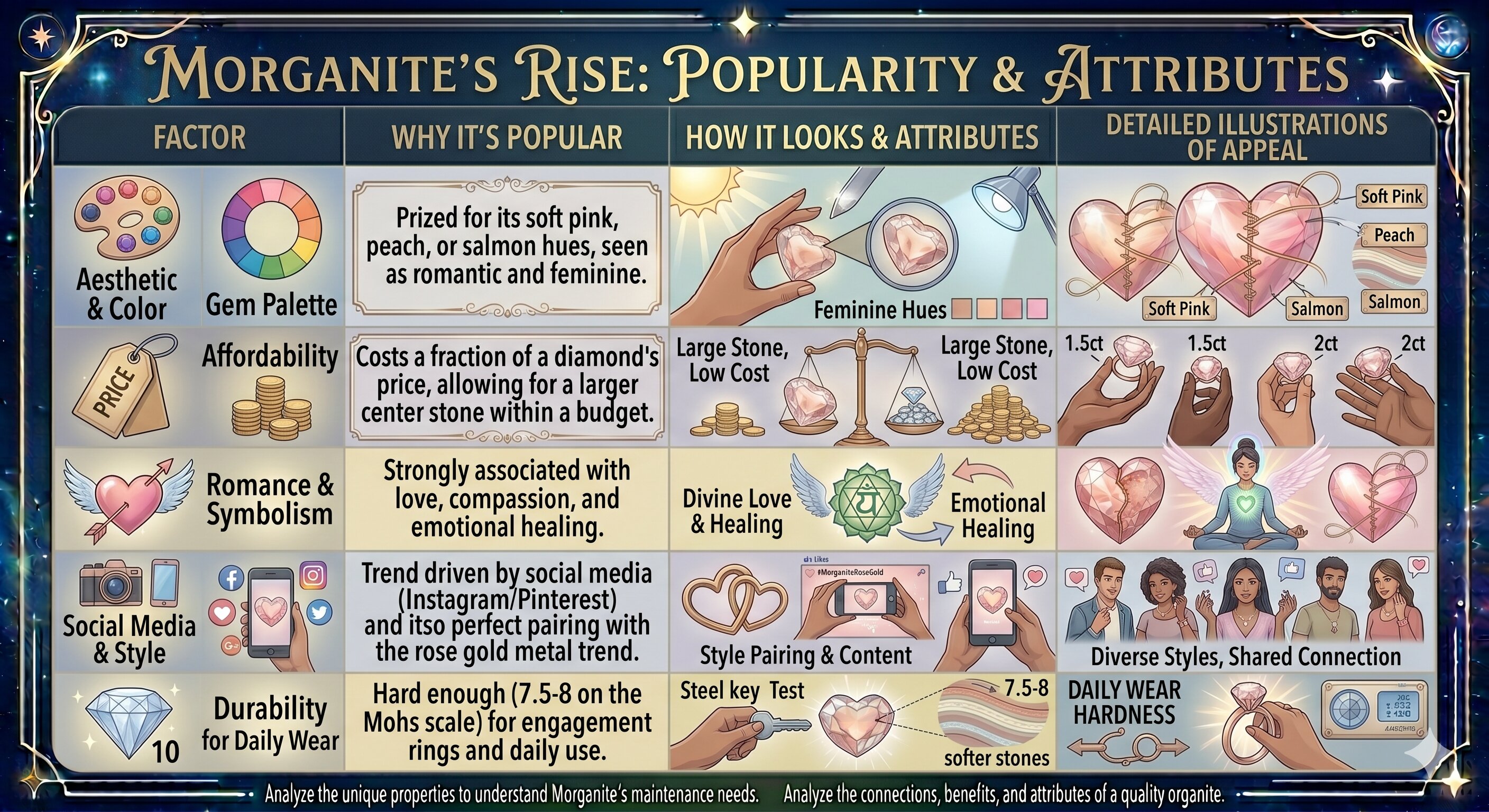
A Deeper Look at the Popularity Drivers
Here is more detail on the factors making morganite a popular choice:
Exceptional Value for Money: This is a major factor. A 1-carat morganite typically costs between $300 and $600, while a quality 1-carat diamond can cost thousands. This allows couples to choose a significantly larger or higher-quality stone for their budget.
The Perfect Color Trend: Morganite's rise coincided with the popularity of rose gold settings. The warm tones of rose gold enhance the stone's blush color, creating a highly sought-after, harmonious look. It's also a more affordable alternative to extremely rare and expensive pink diamonds.
Meaningful Choice for Engagement: Beyond its beauty, morganite is chosen for its symbolism. It's often called a "crystal of divine love" and is associated with emotional healing, compassion, and lasting commitment, making it a meaningful choice for an engagement or anniversary ring.
A Modern, "In-the-Know" Choice: Part of its appeal lies in being a distinctive, non-traditional option. It has become a favorite for younger couples and others looking to make a personal statement, with its popularity amplified by social media platforms like Instagram and Pinterest.
Key Considerations Before Choosing Morganite
While popular, morganite has some practical traits to keep in mind:
Maintenance: Its softer surface can collect oils and dirt more easily than a diamond, requiring more frequent gentle cleaning with mild soapy water to keep it sparkling.
Durability Balance: With a hardness of 7.5-8, it's durable for daily wear but is more susceptible to scratches than a diamond (hardness 10). A protective setting (like a bezel or secure prongs) is recommended.
I hope this helps explain why Morganite has become such a beloved gemstone. If you are considering a morganite piece and would like to know more about evaluating the quality of a specific stone or the best settings for it, feel free to ask.
Can Morganite Be Worn Every Day?
Yes, Morganite is durable enough to be worn every day and is a popular choice for engagement rings and regular jewelry. Its success in daily wear, however, relies heavily on your awareness of its strengths and some key care requirements.
To give you a clear picture, here’s how morganite compares to other popular gemstones for daily wear:
| Gemstone | Mohs Hardness (Scratch Resistance) | Toughness (Resistance to Chips/Breaks) | Key Considerations for Daily Wear |
| Diamond | 10 (Excellent) | Excellent | The most durable option is highly resistant to scratches and damage. |
| Sapphire/Ruby | 9 (Excellent) | Excellent | Extremely durable for all daily activities. |
| Morganite | 7.5-8 (Very Good) | Fair to Moderate | Durable but requires mindful care to avoid knocks, chemicals, and heat. |
| Emerald | 7.5-8 Poor (often heavily included) | Poor (often heavily included) | Similar hardness to morganite, but typically more fragile due to natural inclusions. |
| Quartz (e.g., Amethyst) | 7 | Good | Softer; it can be scratched by common dust over time. |
How to Care for Your Morganite Jewelry
For your morganite to last, a consistent care routine is essential. Key points from jewelers and gemologists include:
Clean it regularly: Morganite can easily attract dirt and oils, making it look cloudy. Clean it every 1-2 weeks using a bowl of lukewarm water with mild dish soap, a soft toothbrush to gently scrub, and a lint-free cloth to dry.
Know what to avoid: Take your morganite off before:
Physical activities like sports, gardening, or heavy lifting.
Exposing it to harsh chemicals (cleaners, chlorine, perfumes).
Sudden temperature changes or extreme heat (like from an oven or hair dryer), which can cause cracks or fade its color.
Showering, as soap can leave a filmy residue.
Use safe cleaning methods: Ultrasonic and steam cleaners are usually not recommended unless you are certain your stone has no liquid inclusions or fractures.
Store and check it: Store it separately in a soft pouch to prevent scratches. Have a jeweler check the prongs and setting once a year for security.
Setting Realistic Expectations
It's important to understand morganite's characteristics:
It will not stay "sparkly clean" without effort. Unlike diamonds, its soft surface attracts grease more easily, so regular cleaning is a must to maintain its brilliance.
It's durable, not indestructible. While it resists scratches from daily life well, a hard, direct knock could chip it due to its only "fair" toughness. A protective setting (like a bezel or a halo with secure prongs) is highly recommended for rings.
In short, morganite is a beautiful and wearable choice for every day, but it thrives best with an owner who is willing to provide a little extra care.
If you are considering a specific type of jewelry (like a ring or pendant), I can offer more tailored advice on the most protective and flattering settings.
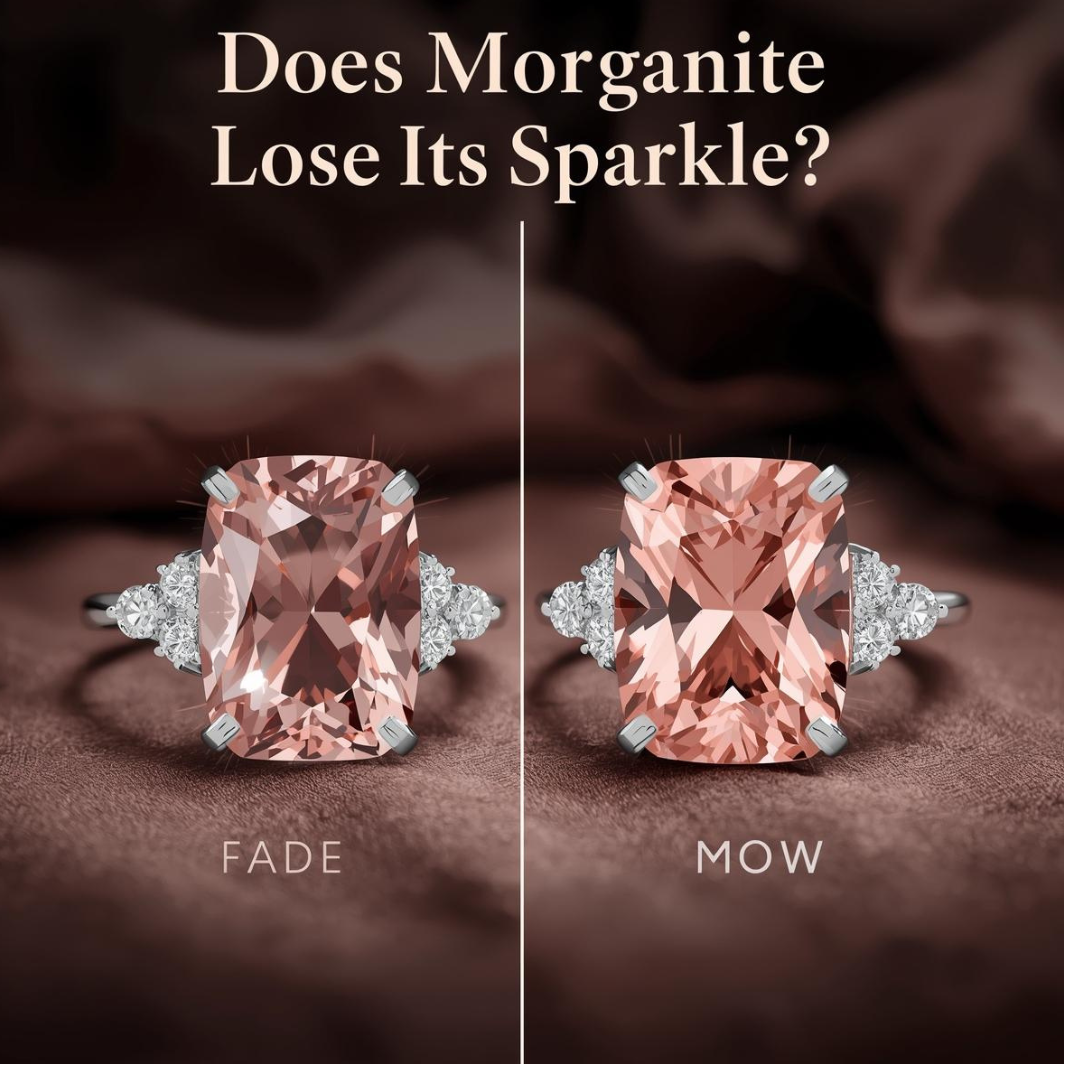
Does Morganite Lose Its Sparkle?
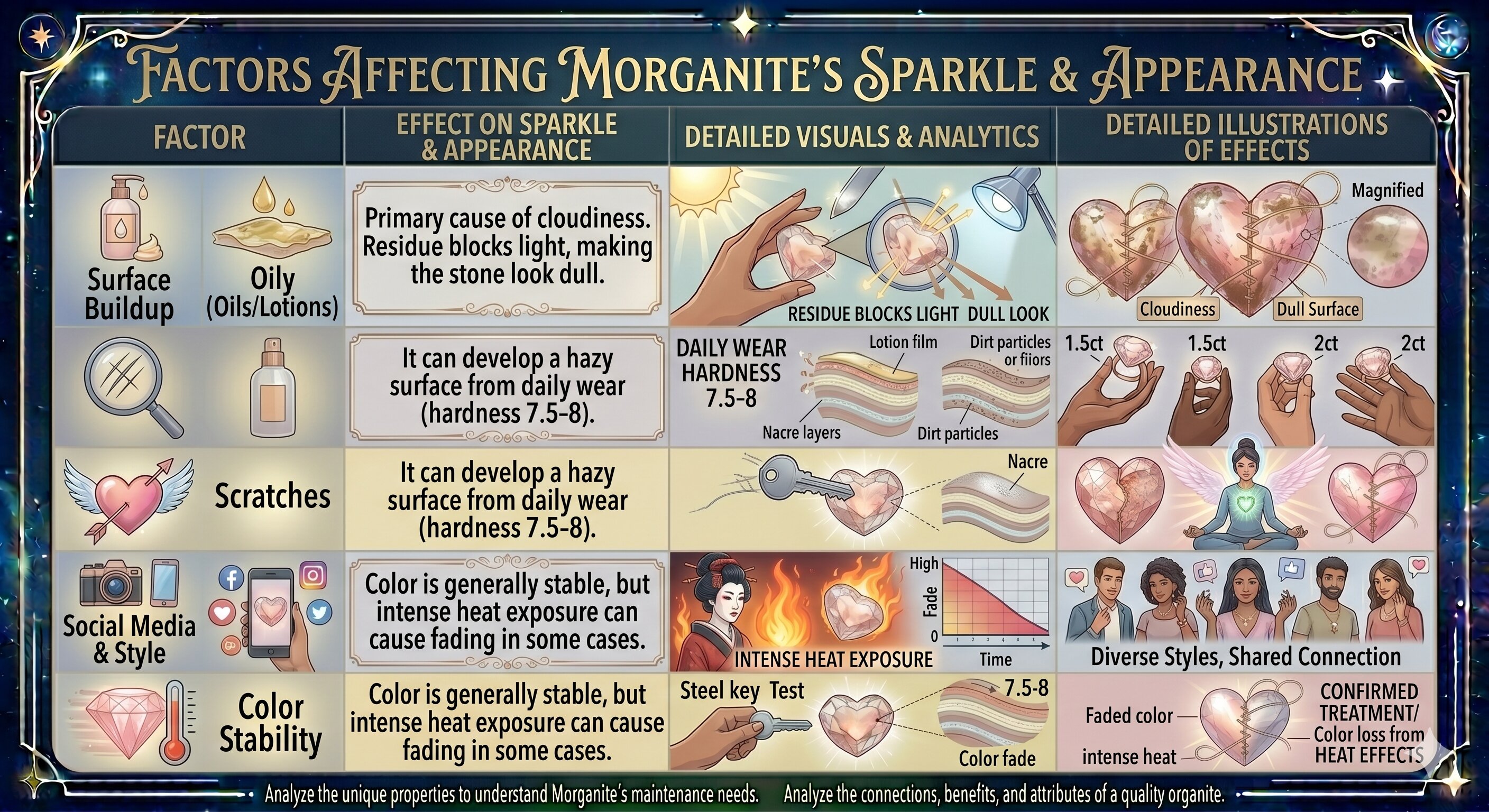
Morganite does not permanently lose its natural sparkle or brilliance. However, it can appear cloudy or dull due to the buildup of oils, lotions, and dirt on its surface. This is because it attracts grease more easily than many other gemstones. With proper care and regular cleaning, its sparkle can always be restored.
What Affects Morganite's Sparkle?
The main factors that influence how your morganite looks over time are summarized in the table below:
How to Keep Your Morganite Sparkling
To maintain your stone's brilliance, you should adopt both a regular cleaning routine and protective habits:
Clean It Regularly and Correctly
Method: Soak in lukewarm water with mild dish soap for 15-20 minutes. Gently scrub with a soft-bristled toothbrush, rinse, and dry with a soft cloth.
Frequency: Clean every 1-2 weeks to prevent buildup. For a quick refresh, you can also use a soft, dry microfiber cloth.
Caution: Be cautious with ultrasonic or steam cleaners. They are not recommended for morganite with fractures or liquid inclusions, as they can cause damage.
Protect It from Damage
Remove Before Activities: Take off your jewelry during household chores, gardening, exercising, or applying lotions/perfumes.
Store Properly: Keep it separate in a soft pouch or fabric-lined box to prevent scratches.
Get Professional Check-ups: Have a jeweler inspect the setting and give it a professional clean every 6-12 months.
“You now know the spiritual meaning, the benefits, the value, the pricing, the rarity, the best colors, the hardness, the water safety, the disadvantages, the authenticity tests, the popularity, the daily wear advice, and the sparkle. The only question left: will you choose the blush gem that J.P. Morgan loved?
*Our current collection includes a limited number of natural morganites — from soft peach to vivid bubblegum pink, from 1-carat accents to stunning 5-carat centerpieces. When stones with eye-clean clarity and rich saturation are gone, sourcing new ones takes months.*
*This is not just a gemstone. It is J.P. Morgan‘s 1910 treasure, Tiffany‘s best-kept secret, and a generation‘s choice to value meaning over marketing — a soft pink stone that is not a substitute, but a choice.”*
[Button: Claim Your Morganite (Limited) →]


Other news for Tuesday 16 June, 2026
- Teardrop Diamond Guide: Meaning, Price, vs Round and Wearing Direction
- Vintage Rings Guide: Styles, Identification, Pros and Cons
- Diamond 4Cs Guide: Cut,Color,Clarity,Carat,Prices and Buying Tips
- Three-Stone Engagement Rings: The Ultimate Buying Guide
- Gold Plated Jewelry Guide: Care, Durability, vs Solid Gold and Buying Tips
- Titanium Jewelry Guide: Pros, Cons, vs Gold, Price and Care
- Excellent Cut Diamond Guide: Meaning, vs Brilliant, vs Ideal
- Art Deco Jewelry: History, Value and How to Identify Authentic Pieces
View all news for Tuesday 16 June, 2026 on one page
News for Monday 15 June, 2026
- Asscher Cut Guide: Complete Guide to Square Emerald Cut Diamonds
- Classic Cut Guide: Old Mine vs Old European vs Modern Round
- Marquise Cut Guide: Price, Size Illusion, vs Oval and Buying Tips
- Pavé Setting Guide: Pros, Cons, Cost, Security and Channel/Bezel
- Radiant Cut Guide: Price, vs Emerald, 1ct, 3ct Cost, Sparkle and Tips
- Vintage Cut Guide: Old Mine vs Old European vs Rose Cut
- Heart-Shaped Diamond Guide: Meaning, Price, 2ct Cost and Buying Tips
View all news for Monday 15 June, 2026 on one page
Recent News
- Sunday 14 June, 2026
- Saturday 13 June, 2026
- Friday 12 June, 2026
- Thursday 11 June, 2026
- Wednesday 10 June, 2026