

Teardrop Diamond Guide: Meaning, Price, vs Round and Wearing Direction
Teardrop Diamond Guide: Meaning, Price, vs Round and Wearing Direction
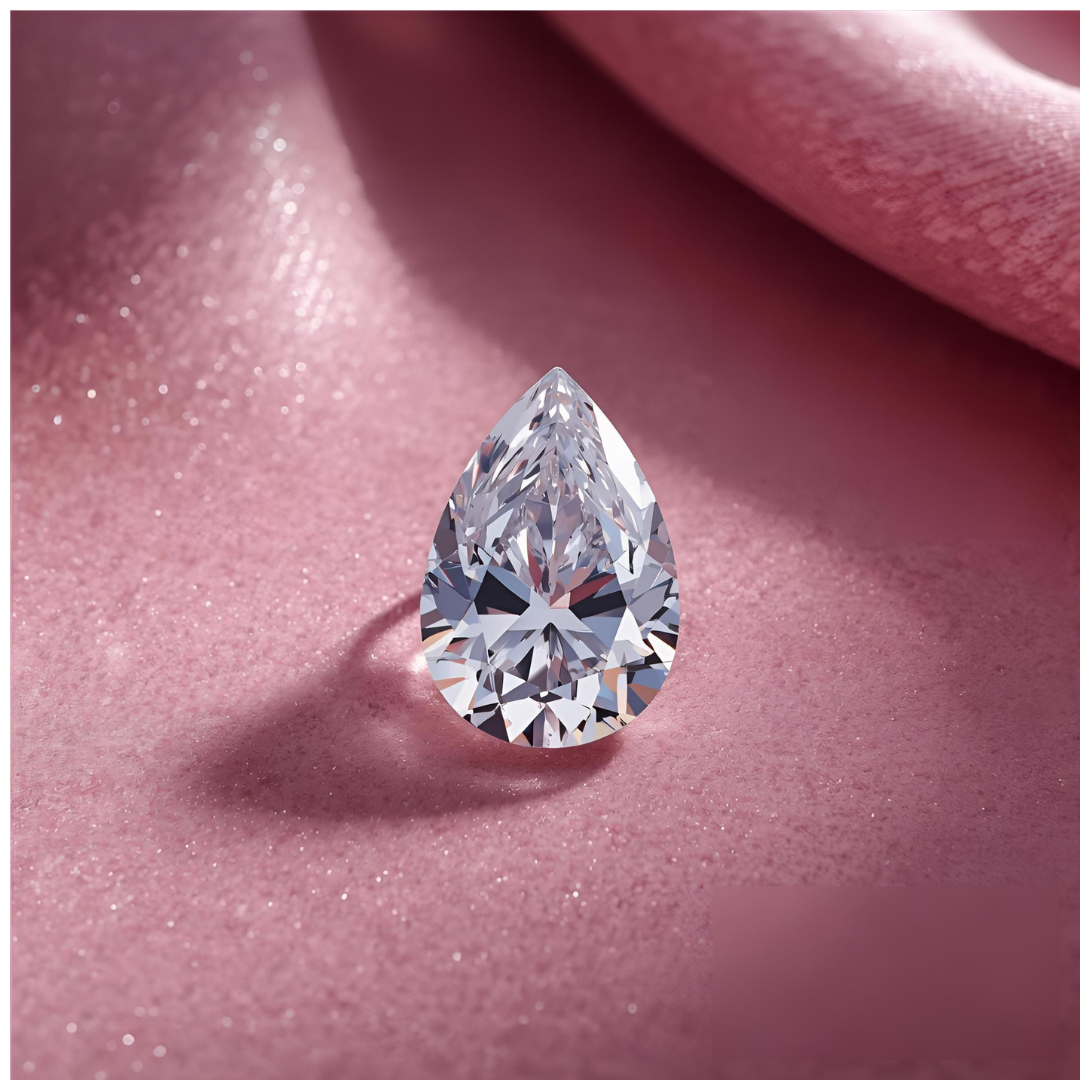
A teardrop diamond, also called a pear-shaped diamond, is a brilliant-cut gemstone that combines a rounded end with a single pointed end, resembling a drop of water or a teardrop.
“In 1957, Richard Burton gave Elizabeth Taylor a 69-carat pear-shaped diamond. She wore it as a pendant, the point facing down, close to her heart. When asked why she loved it, she said: ‘Because it is both a tear and a flame.‘ The pear shape has been called a teardrop, a flame, and a boat. But Burton understood its secret: it is the only diamond that can be two things at once—sorrow and joy, an ending and a beginning, a drop of water and a tongue of fire. That is why we still choose it. Not because it is the most popular. But because it holds the most feeling.”
The same teardrop that graced Elizabeth Taylor‘s neck now awaits your own story — point down for tradition, point up for hope. Every pear-shaped diamond in our collection is hand-selected for perfect symmetry and minimal bow-tie.”
[Button: Explore Teardrop Diamonds →]
Here, let's see the content of the table.
The first topic begins here.
What Is A Teardrop Cut Diamond?
A "teardrop cut diamond" is the popular and descriptive name for what is officially known in the jewelry world as a Pear-Shaped or Pear Cut diamond.
It's a classic and elegant "fancy shape" that combines the best of two worlds. Here’s a detailed breakdown of what defines a teardrop cut diamond:
The Anatomy of a Teardrop Cut
Hybrid Design: It is a unique fusion of two classic cuts:
The rounded, broad end of a Round Brilliant Cut.
The tapered, pointed end of a Marquise Cut.
The Goal: This combination is designed to maximize brilliance and fire, similar to a round brilliant, but in a distinctive and elongated shape.
Key Characteristics and Features
The Shape: The ideal teardrop should have a symmetrical, balanced curve from the rounded shoulder to the sharp point, forming a perfect teardrop silhouette.
The Bow-Tie Effect: Like other elongated cuts (oval, marquise), a pear-shaped diamond will almost always have a "bow-tie" effect—a dark band across the width of the stone that resembles a bow-tie. A well-cut stone will have a minimal, faint bow-tie, while a poorly cut one will have a prominent, dark one that blocks light.
Length-to-Width Ratio: This ratio determines how fat or slender the teardrop appears. Personal preference dictates the ideal ratio, but a "classic" pear shape typically falls within a ratio of 1.55 to 1.75.
A lower ratio (e.g., 1.45) will look like a stout, chubby teardrop.
A higher ratio (e.g., 1.85) will look like a slender, elongated teardrop.
Advantages of the Teardrop Cut
Flattering and elongating, its shape is renowned for creating a slimming effect on the finger, making it a very popular choice for engagement rings.
Unique and Timeless: It offers a distinctive look that stands out from more common round or square cuts while still maintaining a classic feel.
Versatile Setting Options: It looks beautiful in a variety of settings, from a simple solitaire to a halo or three-stone setting.
Important Considerations When Choosing One
Symmetry is Critical: This is the most important factor for a pear-shaped diamond. Both sides of the curve must be perfectly mirrored. Any imbalance or lopsidedness is immediately noticeable.
The Point is Vulnerable: The sharp point is the most delicate part of the diamond and is prone to chipping. It is crucial that the setting (like a V-prong or a bezel) protects this point.
Cut Quality: Even though it's a fancy shape, you should still look for an "Excellent" or "Very Good" cut grade from a reputable lab like GIA. This ensures good proportions, symmetry, and polish, which directly impact the stone's beauty.
In short, a teardrop cut diamond is a Pear Cut—a brilliant and romantic shape that blends a round's sparkle with a marquise's elongation, but it requires excellent craftsmanship to achieve its full, beautiful potential.
For official diamond cut grading information, visit the GIA Diamond Cut Guide.
What Does The Teardrop Diamond Shape Mean?
The meaning of the teardrop, or pear-shaped diamond, is rich with symbolism and is beautifully open to interpretation. It's more than just a shape; it carries a narrative.
Here’s a breakdown of the meanings and symbolism associated with the teardrop diamond:
The Dual Symbolism: Tears of Joy and Sorrow
The most prominent symbolism comes from its "teardrop" form. This can represent two powerful, contrasting emotions:
Tears of Joy, Happiness, and New Beginnings: This is the most common and positive interpretation, especially in the context of an engagement ring. It can symbolize:
The happy tears shed on a wedding day.
The joy and excitement of a new life together.
A hopeful outlook on the future.
Tears of Sorrow, Farewell, or Remembrance: In a different context, the shape can symbolize:
The sadness of a parting or a farewell.
Remembering a loved one who has passed away. Because of this, pear-shaped diamonds are sometimes used in sentimental or memorial jewelry.
Which meaning is correct? It truly depends on the context and the story behind the jewelry. For an engagement ring, it's almost universally seen as a symbol of joy. The wearer gets to define their personal significance.
“In Victorian England, widows wore teardrop-shaped jewelry in mourning—the point facing down for grief. When they healed, they turned the point up, toward the sky. The same shape that meant sorrow could also mean hope. The pear-shaped diamond is the only cut that asks you to choose: am I crying, or am I smiling? That is its power. It reflects not just light, but emotion. You decide what it means.”
A Blend of Two Worlds
The pear shape is a unique hybrid, combining two classic cuts:
The Round Brilliant End: Represents eternity, completeness, and softness.
The Marquise Point: Represents direction, ambition, and uniqueness.
This combination symbolizes a union of two people, blending their lives into one unique and balanced partnership. It suggests a relationship that is both nurturing (the round end) and forward-moving (the pointed tip).
Symbolism of Individuality and Style
Choosing a pear-shaped diamond is often a conscious decision to stand out from the traditional round or princess cuts. Therefore, it can also symbolize:
Independence and Non-Conformity: The wearer is often seen as creative, elegant, and confident in their unique taste.
A Forward-Looking Perspective: The pointed tip is often seen as pointing towards the future, symbolizing growth and a journey forward together.
A Nod to History and Glamour
The pear shape has a long history in royalty and Hollywood glamour. Most famously, it was the cut of the massive diamond given to Richard Burton by Elizabeth Taylor. This association lends the shape a meaning of:
Luxury, Drama, and Unforgettable Romance.
Summary of Meanings:
An engagement ring overwhelmingly symbolizes tears of joy, a unique union, and a future-looking love.
In Other Jewelry: Can represent remembrance, personal style, or simply a love for elegant and flattering designs.
Ultimately, the most beautiful meaning of a teardrop diamond is the one you assign to it. Its dual nature allows it to hold a deeply personal story, making it a profoundly meaningful choice for significant jewelry.
Are Teardrop Diamonds More Expensive?
No, teardrop (pear-shaped) diamonds are not generally more expensive than round brilliant diamonds. In fact, they are often significantly less expensive per carat.
However, the price depends heavily on several factors. Let's break it down.
The Cost Comparison: Teardrop vs. Round Brilliant
The most common comparison is against the round brilliant cut, which is the most popular and expensive shape.
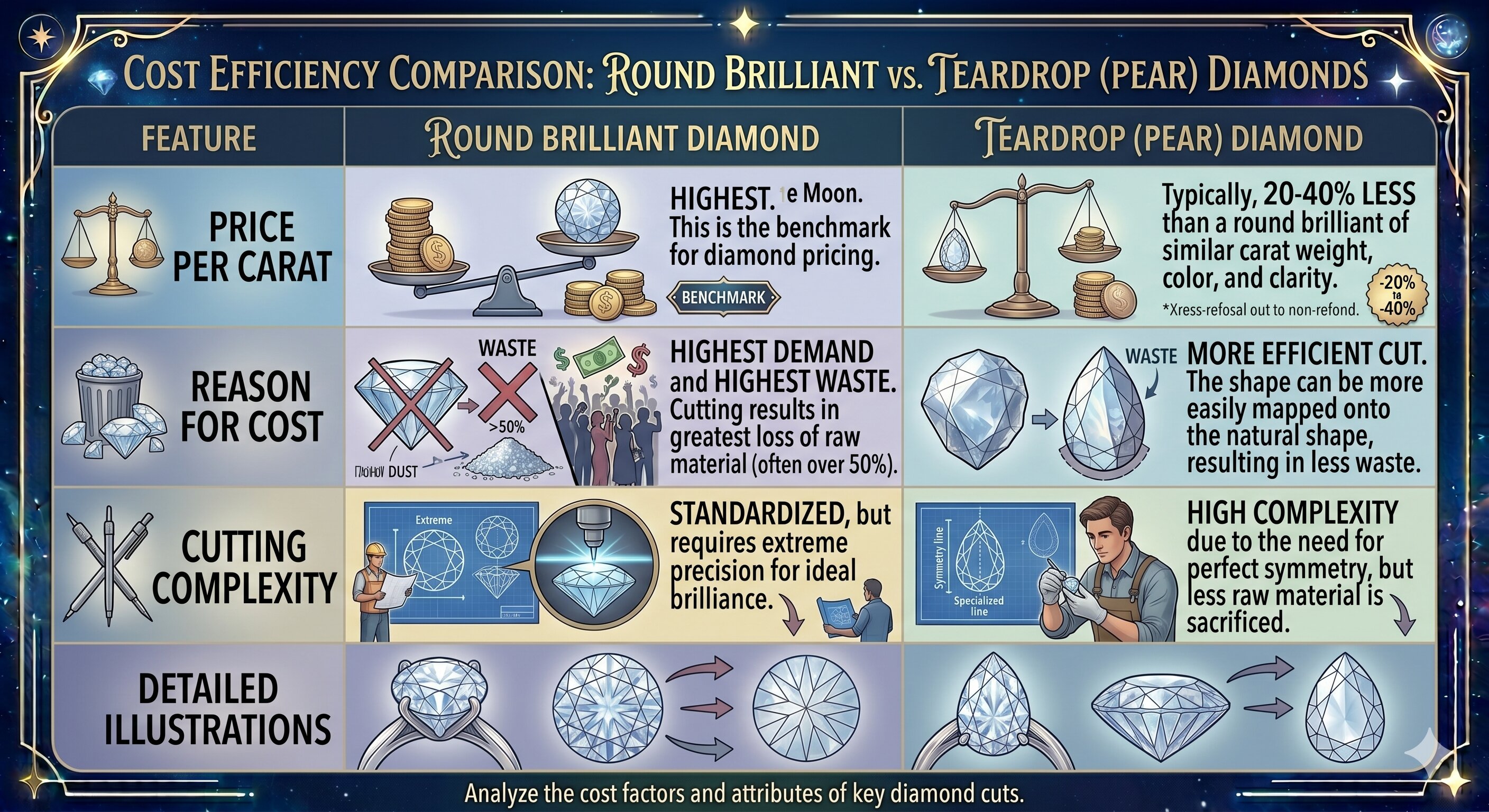
If you are comparing a 1-carat round diamond to a 1-carat teardrop diamond with similar color and clarity grades, the teardrop will almost always be the more affordable option.
For current diamond market prices, visit the American Gem Society's price guide.
What Can Make A Teardrop Diamond Expensive?
While generally less costly than rounds, several factors can drive up the price of a teardrop diamond:
Exceptional Cut Quality: This is the most important factor for a teardrop's beauty and price. A pear shape with "Excellent" symmetry and polish, no visible bow-tie effect, and ideal proportions will command a much higher price than a poorly cut one. The skill of the cutter is paramount.
High Carat Weight: Like all diamonds, larger stones are rarer and more expensive. A large, high-quality teardrop is a show-stopper and will be priced accordingly.
Superior Color and Clarity: Because the teardrop's large, flat table (top facet) can make inclusions and color more visible, the highest grades (D-F color, VVS/IF clarity) will be more expensive. However, you can often go slightly lower on color and clarity than with a round brilliant and still get a beautiful stone.
The "Fancy" Factor: While not as rare as some cuts (like a heart or asscher), a perfectly executed teardrop is still a "fancy shape" and can be more expensive than more common fancy shapes like the oval or cushion if the quality is top-tier.
Which Way Do You Wear A Teardrop Diamond?
The orientation of a teardrop (pear-shaped) diamond is not a matter of strict rules, but rather of personal preference and the desired visual effect. However, there are strong traditional and practical conventions.
Here’s a breakdown of the two main ways to wear it and what each means.
The Two Orientations
1. Pointing Downward (Towards the Wrist)
This is the most common and traditional way to wear a teardrop diamond, especially in engagement rings.
The Look & Symbolism:
Elongating Effect: This orientation is famous for creating a flattering, slimming effect on the finger, making it appear longer and more graceful.
Directional: The point leads the eye down the length of the finger.
Symbolism: When worn this way, it is almost universally interpreted as a tear of joy, not sorrow.
Practical Consideration:
The pointed tip is the most vulnerable part of the diamond. When pointing downward, it is slightly less exposed to accidental bumps than if it were pointing outward from the hand.
2. Pointing Upward (Towards the Fingernails)
This is a less common but equally beautiful and meaningful way to wear the stone.
The Look & Symbolism:
Modern & Unique: This orientation has a more modern, fashion-forward feel.
Symbolism: Pointing upward, the shape is often seen as a water droplet, a flame, or a heart. It can symbolize direction, aspiration, and looking toward the future. The "heart" interpretation, with the rounded end as the top of the heart, is particularly romantic.
Practical Consideration:
The point is more exposed and may be more prone to catching on clothing or other objects. A V-prong setting is essential to protect it.
Which Way is "Correct"?
There is no official "correct" way. The best choice depends on the wearer's style and the intended meaning.
For an Engagement Ring:
Traditional Choice: Pointing Downward. This is the classic, timeless look.
Modern Choice: Pointing Upward. This is for someone who wants a unique, symbolic look (like the "heart" orientation).
For a Pendant or Necklace:
For a teardrop pendant, the convention is almost always to wear it with the point facing downward. This creates a natural, elongating line that is universally flattering.
A Crucial Practical Tip: The Setting
No matter which way you choose to orient it, protecting the point is essential.
A V-Tip or V-Prong: The best settings for a pear-shaped diamond will feature a "V-prong" at the tip. This is a small, V-shaped metal claw that cradles and protects the delicate point from chipping. A round prong at the tip would not offer the same level of security.
Traditionally & Most Commonly: Wear it with the point facing downward towards your wrist.
For a Modern & Symbolic Look: Wear it with the point facing upward towards your nails.
The Most Important Thing: Choose the orientation that you find most aesthetically pleasing and meaningful. It's your jewelry, and your preference is the only rule that truly matters. Just ensure the pointed tip is well-protected by the setting.
“You now know the definition, the symbolism, the pricing, the cost drivers, and the orientation choices. The only question left: will you wear a tear or a flame?
*Our current collection includes a limited number of GIA-certified teardrop diamonds — from delicate 0.5-carat stones to breathtaking 3-carat centerpieces. When stones with perfect symmetry and minimal bow-tie are gone, sourcing new ones takes months.*
*This is not just a diamond. It is Elizabeth Taylor‘s 69-carat pendant, Richard Burton‘s gift, and a shape that can be both a tear and a flame — pointing down for grief, pointing up for hope. You decide what it means. That is its power.”*
[Button: Claim Your Teardrop Diamond (Limited) →]


Other news for Tuesday 16 June, 2026
- Vintage Rings Guide: Styles, Identification, Pros and Cons
- Diamond 4Cs Guide: Cut,Color,Clarity,Carat,Prices and Buying Tips
- Three-Stone Engagement Rings: The Ultimate Buying Guide
- Morganite Guide: Meaning, Price, vs Diamond, Colors and Care
- Gold Plated Jewelry Guide: Care, Durability, vs Solid Gold and Buying Tips
- Titanium Jewelry Guide: Pros, Cons, vs Gold, Price and Care
- Excellent Cut Diamond Guide: Meaning, vs Brilliant, vs Ideal
- Art Deco Jewelry: History, Value and How to Identify Authentic Pieces
View all news for Tuesday 16 June, 2026 on one page
News for Monday 15 June, 2026
- Asscher Cut Guide: Complete Guide to Square Emerald Cut Diamonds
- Classic Cut Guide: Old Mine vs Old European vs Modern Round
- Marquise Cut Guide: Price, Size Illusion, vs Oval and Buying Tips
- Pavé Setting Guide: Pros, Cons, Cost, Security and Channel/Bezel
- Radiant Cut Guide: Price, vs Emerald, 1ct, 3ct Cost, Sparkle and Tips
- Vintage Cut Guide: Old Mine vs Old European vs Rose Cut
- Heart-Shaped Diamond Guide: Meaning, Price, 2ct Cost and Buying Tips
View all news for Monday 15 June, 2026 on one page
Recent News
- Sunday 14 June, 2026
- Saturday 13 June, 2026
- Friday 12 June, 2026
- Thursday 11 June, 2026
- Wednesday 10 June, 2026