

How to Choose the Right 24K Gold for Your Needs?
24K Gold Mean?
24K Gold refers to gold that is 99.9% pure (or 99.99% in some standards), with no other metals mixed in.
Let's see the list of 24k information.
What Does 24K Gold Mean?
What Number Is 24K Gold?
How To Verify 24K Gold?
Which Is Better, 24K or 18K Gold?
How Much Is 24K Gold Worth Today?
Is 24 Karat Gold Expensive?
Is 24K Gold Worth Buying?
This is an excellent question. Here’s a detailed breakdown of what "24K Gold" means.
The Simple Answer
24K gold is pure gold. The "K" stands for karat (or carat), which is the unit used to measure the purity of gold. 24K is the highest karat rating possible, meaning it is 99.9% pure gold with no other metals mixed in.
The Detailed Explanation
1. The Karat System Explained
Gold in its pure form is very soft and malleable. To make it more durable for use in jewelry and other items, it is alloyed (mixed) with other metals like copper, silver, zinc, or nickel.
The karat system divides the purity into 24 parts:
24 Karats: 24 out of 24 parts are gold. This is 100% gold (or as close as possible, typically 99.9%).
18 Karats: 18 out of 24 parts are gold. This is 75% gold (18/24 = 0.75).
14 Karats: 14 out of 24 parts are gold. This is 58.3% gold (14/24 ≈ 0.583).
10 Karats: 10 out of 24 parts are gold. This is 41.7% gold (10/24 ≈ 0.417). This is the minimum to be legally called "gold" in the United States.
2. Characteristics of 24K Gold
Color: A distinct, rich, and vibrant yellow color. It is the "true" color of gold.
Value: It has the highest intrinsic value because it is almost pure gold. Its price is directly tied to the live market price of gold.
Durability: This is its biggest drawback. 24K gold is very soft and easily scratched, bent, or deformed. It is not practical for everyday jewelry like rings or bracelets.
Hypoallergenic: Because it contains no other alloy metals, it is ideal for people with metal allergies.
3. Comparison with Lower Karats
4. Common Uses for 24K Gold
Because of its softness, 24K gold is not used for most rings or bracelets. Instead, you'll find it in:
Investment Gold: Gold bars, bullion, and coins (like the Canadian Maple Leaf or American Buffalo) are often 24K.
Electronics: Its excellent conductivity and corrosion resistance make it valuable for high-end electronics.
Decorative Items: Leafing (gold leaf) is used in art, architecture, and on food.
Certain Types of Jewelry: It is used in some traditional jewelry (especially in Asia and the Middle East), where it is treated with great care, and in earrings or pendants that are less prone to impact.
24K = Pure Gold: It is the benchmark for gold purity (99.9%).
Not for Everyday Jewelry: Its softness makes it impractical for rings or bracelets meant for daily use.
Highest Intrinsic Value: Its price is closest to the spot price of gold.
Look for the Hallmark: Authentic 24K gold items will be stamped with 24K, 999, or 1000.
So, when you see "24K gold," you are looking at the real, unadulterated article—beautiful, valuable, but also delicate.
What Number Is 24K Gold?
This gets to the heart of how gold purity is measured.
The number for 24K gold is 999 (or sometimes 1000).
This means it is 99.9% pure gold.
Here’s a breakdown of what that number means and how it relates to other systems:
The Numbering Systems for Gold Purity
There are two main ways to express the purity of gold: the Karat System and the Millesimal Fineness System.
1. The Karat System (K)
This system divides gold into 24 parts.
24K means 24 out of 24 parts are gold.
This is pure gold, or as close as you can get.
2. The Millesimal Fineness System (the Number)
This system expresses purity in parts per thousand.
Pure gold is represented as 1000.
Since it's virtually impossible to refine gold to 100% purity, the highest standard for gold is 999, meaning 999 parts per thousand are gold, or 99.9% pure.
So, 24K and 999 are two different ways of saying the same thing: the gold is virtually pure.
Quick Reference Chart
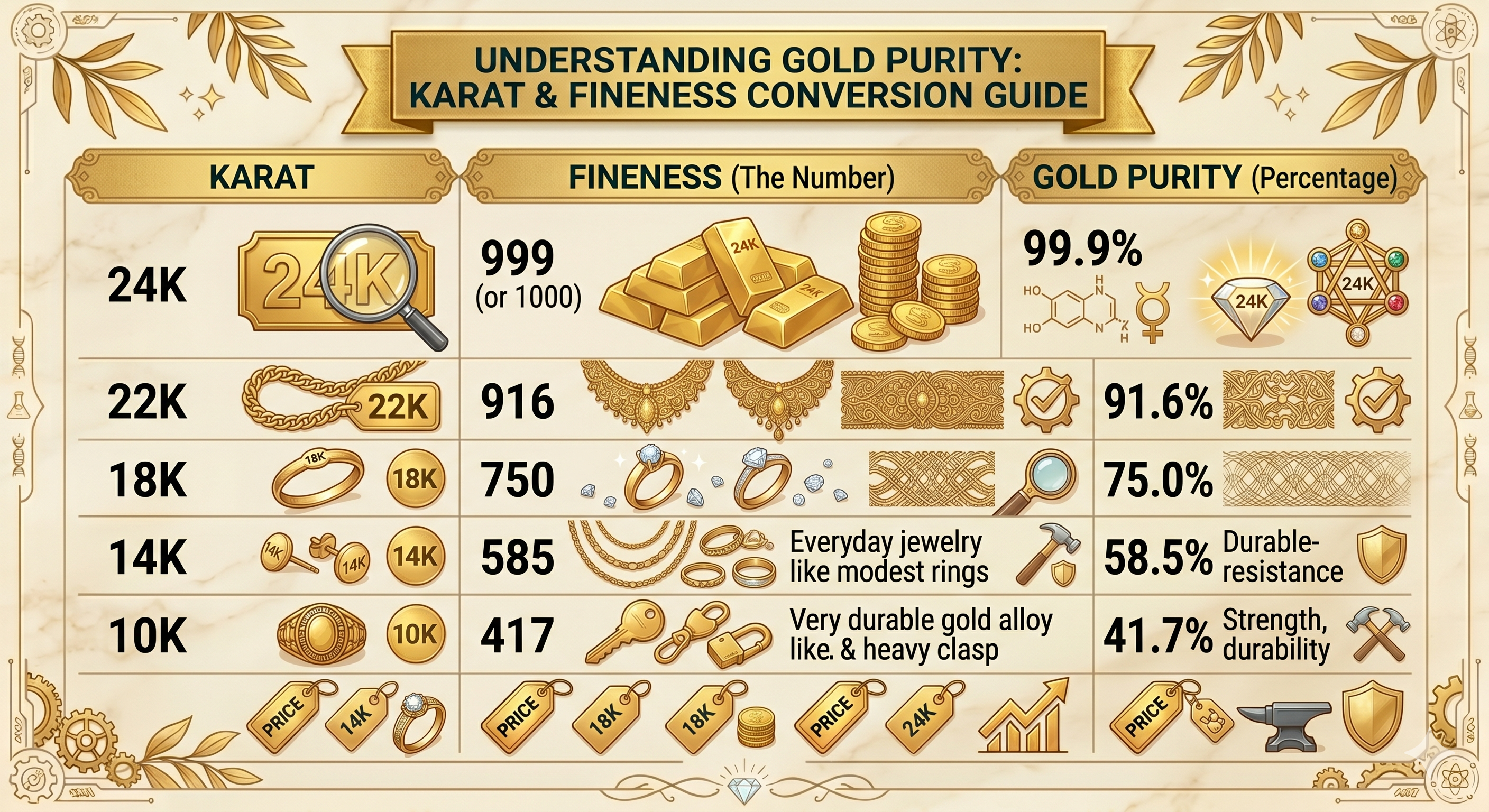
How to Find the Number
When you buy a piece of gold, look for a small stamp or hallmark. A 24K gold item will be stamped with one of the following:
24K
999
1000
When someone asks, "What number is 24K gold?" the direct answer is 999. This number confirms its status as the highest purity of gold commonly available, making it the most valuable but also the softest form.
How To Verify 24K Gold?
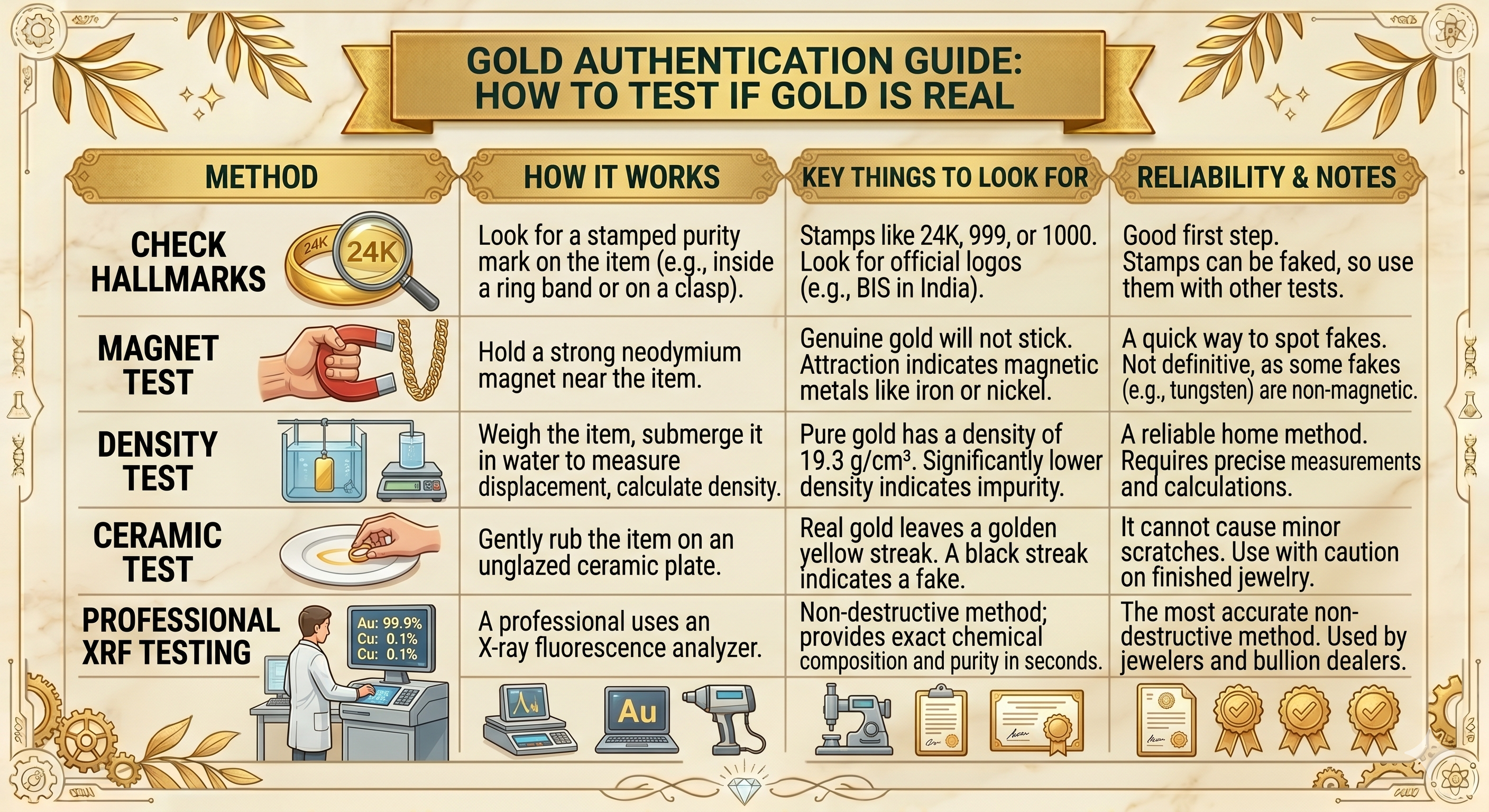
Verifying 24K gold can be done through a series of simple at-home checks and more advanced professional methods. The table below summarizes the most common techniques, ranging from quick visual inspections to scientific tests.
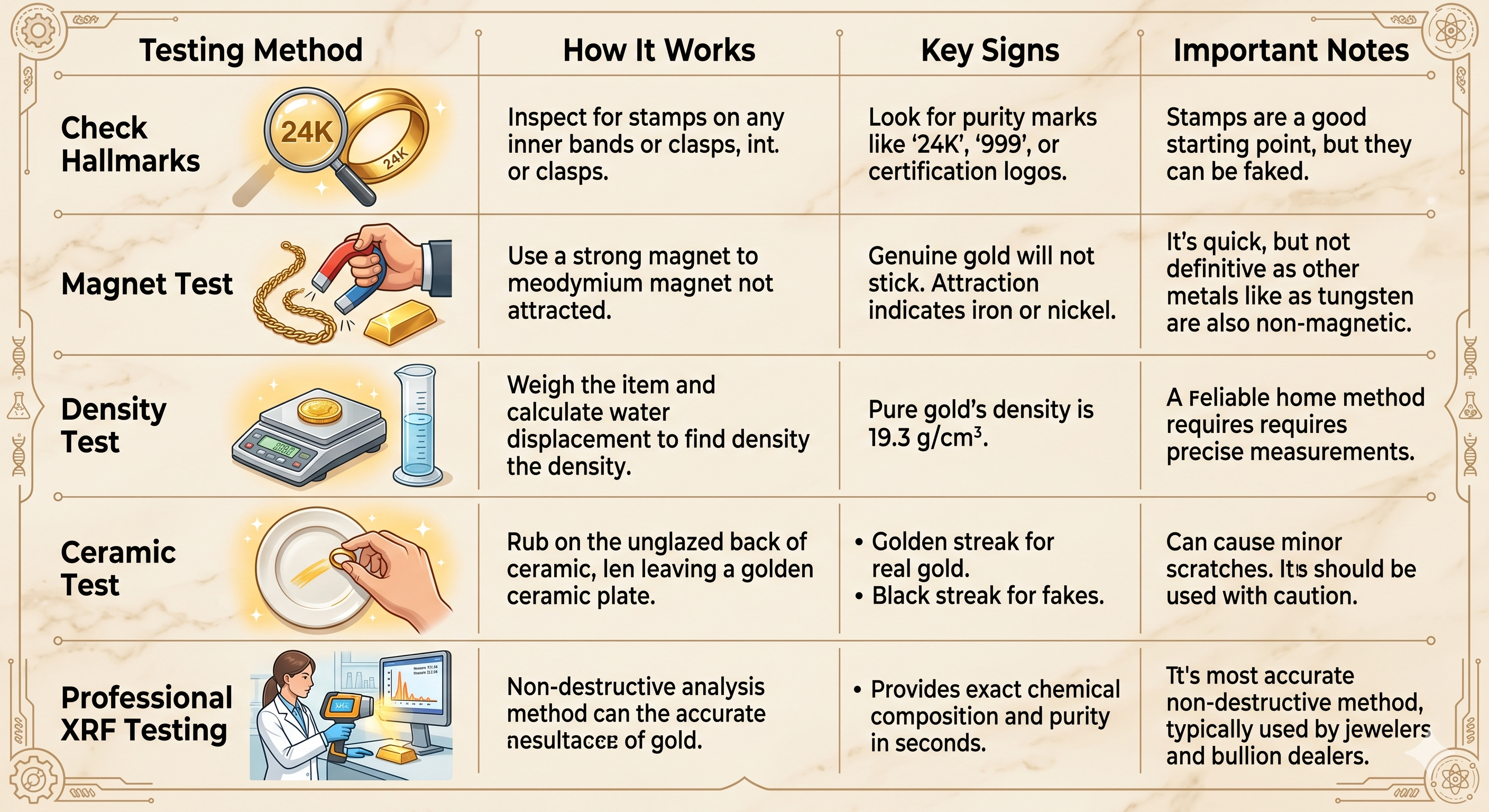
Other Home Verification Methods
Several other simple tests can provide additional clues, though they should be used with caution.
The Float Test: Drop the item into a glass of water. Genuine gold is very dense and will sink directly to the bottom. Fake or gold-plated items may float or sink slowly.
The Vinegar Test: Place a drop of white vinegar on the gold. Real gold will not change color, while other metals may tarnish or react. This is generally safe, but avoid harsh chemicals like nitric acid without proper training.
Visual and Physical Inspection: Look for signs of wear. Real gold has a consistent color and does not tarnish. If you see discoloration like green or black spots, or if the surface is flaking, it is likely gold-plated.
⚠️ Important Cautions and When to See a Pro
Avoid Destructive Tests at Home: Do not try acid tests, fire assays, or anything that involves scratching, biting, or applying harsh chemicals to your gold without proper training and safety equipment. These methods can permanently damage your item and are unsafe.
Trust but Verify Hallmarks: A stamp is a good sign, but it is not a guarantee of authenticity. Counterfeiters often stamp fake items with realistic-looking hallmarks.
Seek Professional Help for Valuable Items: For high-value bars, coins, or heirloom jewelry, a professional appraisal is the best choice. Jewelers use XRF technology for precise, damage-free verification.
I hope this guide helps you verify your gold with confidence. If you have a specific type of item you'd like to verify, feel free to ask for more tailored advice.
Which Is Better, 24K or 18K Gold?
The choice between 24K and 18K gold isn't about one being objectively "better" than the other, but about which is better for your specific needs and priorities.
They are fundamentally different materials, each with its own strengths and weaknesses. Here’s a detailed comparison to help you decide.
Quick Summary
Choose 24K Gold if your top priorities are purity, investment value, and the richest yellow color, and you are okay with it being less durable for everyday wear.
Choose 18K Gold if your top priorities are durability, intricate jewelry designs (especially with stones), and a slightly more subtle color, and you are willing to sacrifice a small amount of pure gold content.
Detailed Comparison Table
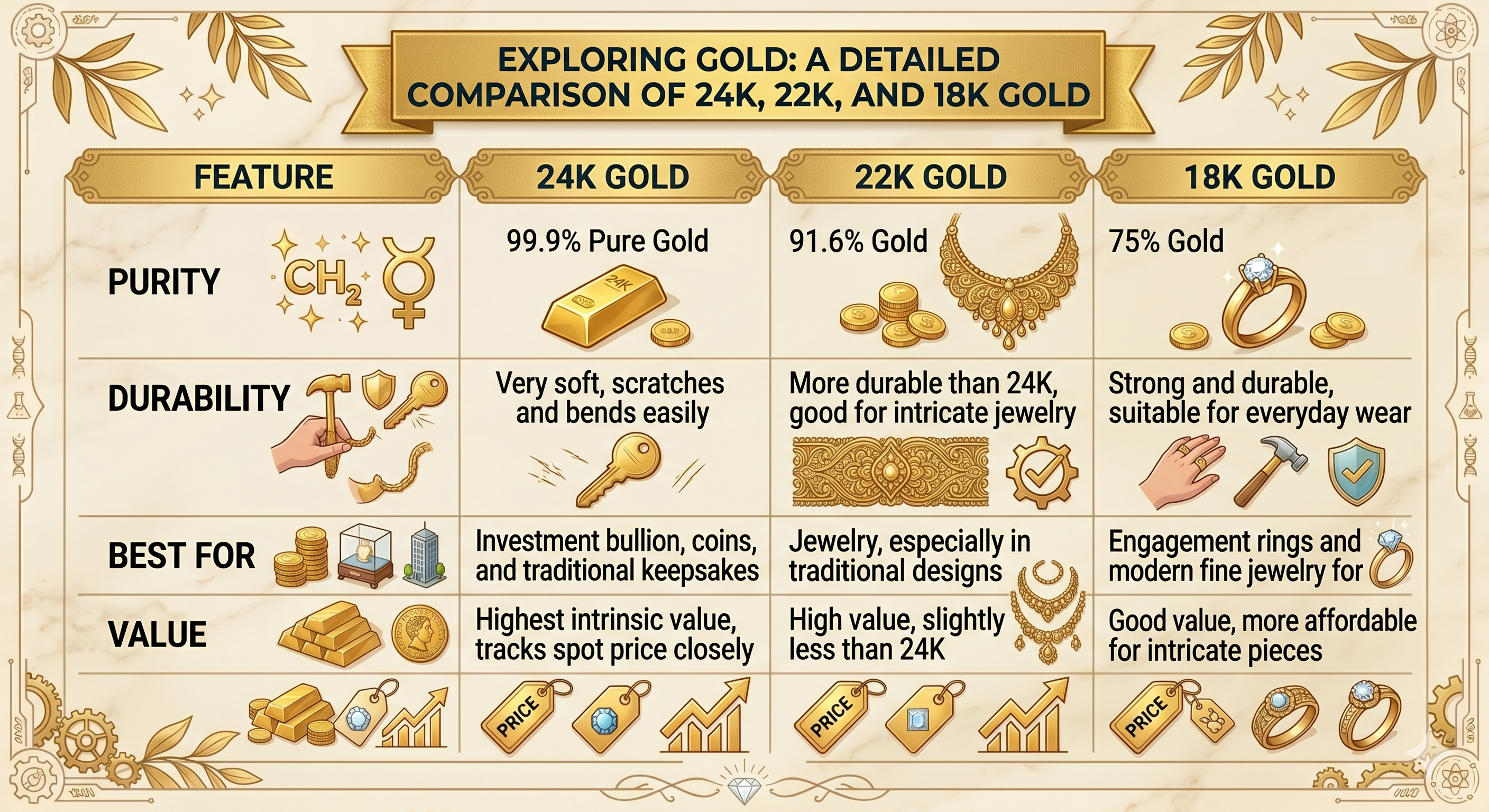
In-Depth Analysis
When to Choose 24K Gold
Investment: For gold bars, bullion coins, and savings, 24K is the standard. You are buying pure gold with the highest metal content.
Traditional & Cultural Jewelry: In many cultures (like in South Asia and the Middle East), 24K gold is preferred for its purity, value, and status symbol. These pieces are often worn on special occasions rather than daily.
The Ultimate Gold Color: If you love the intense, warm, and unmistakable color of pure gold, 24K is unmatched.
Severe Metal Allergies: Since it contains no other metals, it's the safest choice for those with sensitive skin.
The Big Drawback: Its softness means a 24K gold ring will quickly show scratches and can easily get misshapen.
When to Choose 18K Gold
Everyday & Lifetime Jewelry: This is the primary reason to choose 18K. Its durability makes it ideal for:
Engagement and Wedding Rings: They withstand daily knocks and wear.
Jewelry with Gemstones: It provides a secure and strong setting for precious stones (like diamonds, sapphires, etc.) that would risk falling out of a softer 24K setting.
Design Versatility: The 25% alloy content allows jewelers to create different colors:
18K White Gold: Alloyed with palladium or nickel.
18K Rose Gold: Alloyed with copper.
A More Subtle Look: The color is a lighter, more subtle yellow than 24K, which many people prefer for its understated elegance.
The Trade-off: You are getting less pure gold, so the intrinsic metal value is lower than an equivalent weight in 24K.
Which Should You Buy?
Ask yourself these questions:
What is it for?
An investment or a savings piece? → 24K Gold
An engagement ring or a piece you'll wear every day? → 18K Gold
What is your priority?
The highest purity and value of the metal itself? → 24K Gold
Durability and a piece that will last a lifetime without damage? → 18K Gold
What style do you prefer?
The richest, most traditional yellow? → 24K Gold
A lighter yellow, white, or rose gold? → 18K Gold
For the vast majority of people buying fine jewelry for daily wear, 18K gold offers the perfect balance of luxury, beauty, and practical durability.
How Much Is 24K Gold Worth Today?
For your convenience, here is a table with more detailed price points based on different weights:
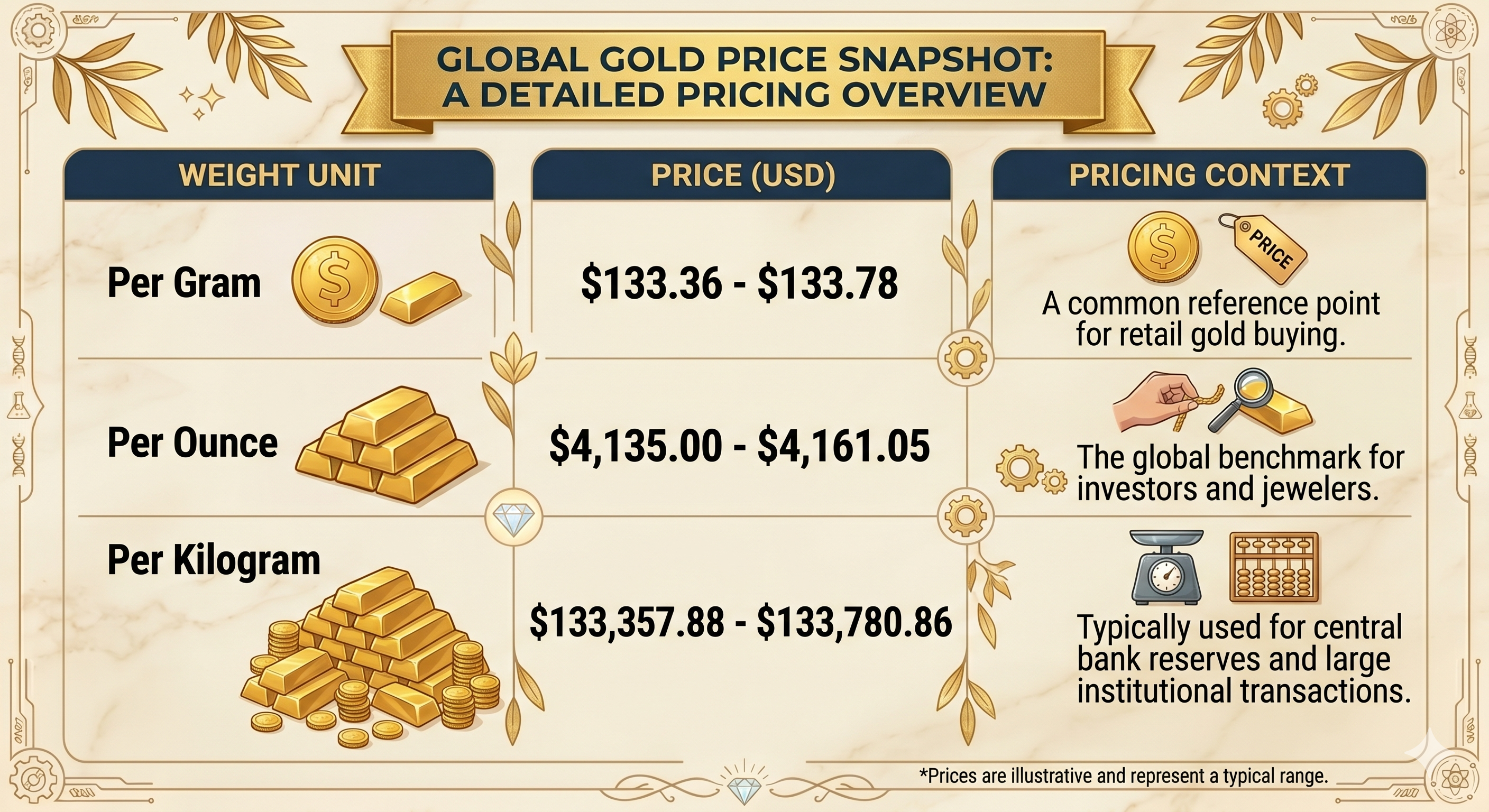
Market Context
The price of gold is dynamic and changes constantly during market hours based on supply and demand. Recently, prices have been trending upward. This is largely because investors are anticipating an interest rate cut from the U.S. Federal Reserve, which weakens the U.S. dollar and makes gold, which doesn't yield interest, a more attractive investment.
What These Prices Mean for You
The prices listed above are spot prices, which are the benchmark prices for raw, unrefined gold. If you are buying a physical gold product like a coin or a bar from a dealer, you will pay a premium over this spot price to cover the dealer's costs and profit. Conversely, if you are selling gold to a dealer, you will typically receive a price that is slightly below the spot price.
I hope this information helps you. Would you like me to help you find the prices for other gold purities, such as 18K or 22K?
Is 24 Karat Gold Expensive?
Yes, absolutely. 24-karat gold is the most expensive form of gold you can buy in terms of pure material cost.
Here’s a simple breakdown of why:
1. It's All About Purity
24K gold is 99.9% pure gold. Since its price is based directly on the live market price of gold (the "spot price"), you are paying for the maximum amount of gold content possible. Any other karat of gold (like 18K or 14K) is mixed with less expensive metals, making it cheaper per gram.
2. Price Comparison with Other Karats
Let's say the market price for pure gold is $70 per gram.
A 10-gram 24K gold chain would have a base material cost of 10 grams x $70 = $700.
A 10-gram 18K gold chain is only 75% gold. Its base material cost would be 10 grams x (0.75) x $70 = $525.
So, for the same weight, the 24K item will always have a higher intrinsic value and cost more than a lower-karat item.
Key Takeaway:
While 24K gold is the most expensive due to its purity, it's also the softest and least practical for everyday jewelry. This is why many people choose the excellent balance of purity, durability, and relatively lower cost offered by 18K or 14K gold for items like rings and bracelets.
In short, if you are comparing pure material cost, 24K gold is the most expensive option available.
Is 24K Gold Worth Buying?
Whether 24K gold is worth buying really depends on your goal. It's an excellent choice for pure investment, but less ideal for everyday jewelry.
The Trade-Off: Purity vs. Practicality
The key thing to understand about 24K gold is its main characteristic: it is 99.9% pure gold. This comes with a significant trade-off between purity and practicality, especially when compared to other common purities.
The table below compares 24K gold with 18K and 22K gold to help you see the differences clearly.
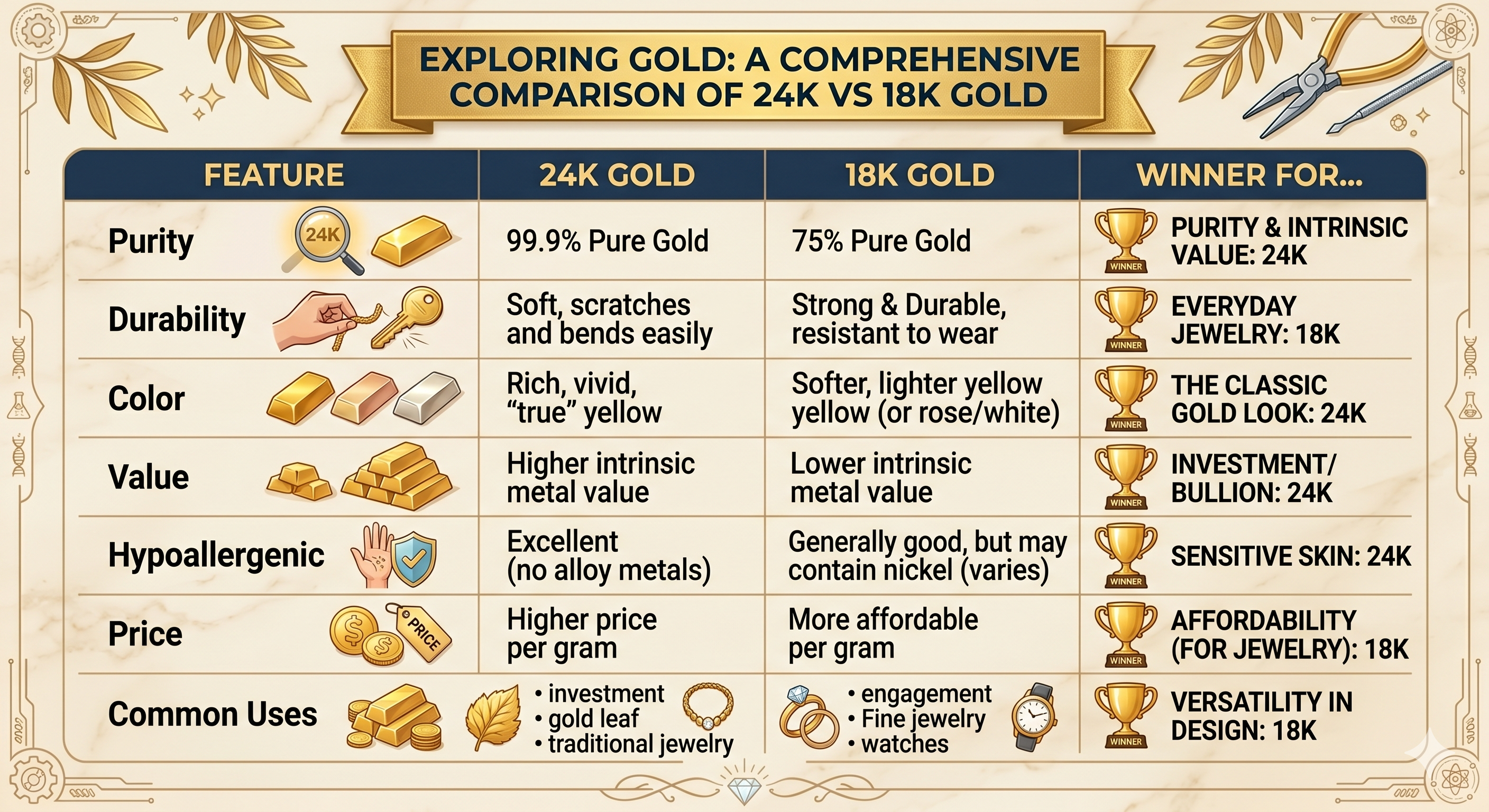
In summary, the disadvantage of 24K gold is not its quality or value as a metal, but its practical limitations for use in most jewelry. It is a soft, delicate material best reserved for investment bullion, special-occasion pieces like pendants and earrings, or traditional items not meant for daily wear. For anything you plan to wear regularly, 18K gold is a far more robust and practical choice.
Back to [Amethyst Ring Guide]


News for Saturday 22 November, 2025
View all news for Saturday 22 November, 2025 on one page
Recent News
- Friday 21 November, 2025
- Wednesday 19 November, 2025
- Tuesday 18 November, 2025
- Monday 17 November, 2025
- Sunday 16 November, 2025