

What You Need to Know About Tourmaline As A Birthstone.
What You Need to Know About Tourmaline As A Birthstone.
Tourmaline is a gem of endless fascination. Whether you are drawn to the electric glow of a Paraíba, the romantic pink of a rubellite, or the playful charm of a watermelon slice, there is a tourmaline for every taste and personality.
“Ancient legend says tourmaline walked the rainbow and collected every color it touched. That is why, today, it can be pink, green, blue, yellow, red — and sometimes all at once. In the 1700s, Dutch sailors brought tourmaline back from Sri Lanka and called it ‘aschentrekkers‘ — ‘ash pullers‘ — because they discovered the stone could attract hot ashes when heated or cooled. They didn‘t know the word ‘pyroelectricity.‘ They only knew that tourmaline held a secret. When Queen Victoria received a tourmaline parure as a gift from her Indian Empress, she wore it proudly — not as a curiosity, but as proof that the world‘s most magical stone was finally royal enough for a queen.”
The same stone that collected a rainbow and graced a queen now awaits your October birthday — or your own color story. Every tourmaline in our collection is genuine, from electric Paraíba blues to romantic rubellite pinks and protective black tourmaline.”
[Button: Explore Tourmaline Jewelry →]
Here, let's see the table of contents.
Is Tourmaline A Birthstone?
What Is The Stone Tourmaline Good For?
How To Tell If A Tourmaline A Black Stone Is Real?
What Are The Benefits Of Tourmaline?
Which Zodiac Should Wear Tourmaline?
Does Tourmaline Attract Money?
Is Tourmaline A Lucky Stone?
What Does Tourmaline Protect Against?
How Much Is A Tourmaline Stone Worth?
Why Is Tourmaline Expensive?
What Color Tourmaline Is Most Expensive?
Which Finger Do You Wear A Tourmaline Ring On?
What Color Tourmaline Is Rare?
Can You Put Tourmaline In Water?
Here we talk about the first topic.
Is Tourmaline A Birthstone?
The answer is a definitive yes, tourmaline is absolutely a birthstone. However, there's an important detail to know. Tourmaline is primarily recognized as the modern birthstone for October.
Here’s a more detailed breakdown:
1. Tourmaline as the Primary Birthstone for October
Tourmaline shares the title of October's birthstone with opal. Most modern birthstone lists, including the one widely adopted by jewelers in the U.S. since the 1950s, designate both as official birthstones for the month.
“In the deserts of ancient Egypt, legend says tourmaline was born when the stone passed through a rainbow on its journey up from the earth‘s heart. That is why it carries every color — a gift from the sky to the ground. In Victorian England, tourmaline became a favorite of mourning jewelry, not for sadness, but for hope. Its pink and green hues symbolized life after loss, love after grief. And today, October babies who choose tourmaline over opal do so not because they fear superstition. They choose it because tourmaline is the stone of resilience — beautiful enough for a crown, durable enough for everyday, and never afraid to show its true colors.”
Why it's perfect for October: Tourmaline is known for its incredible range of colors. While it can be found in almost every hue, the most classic and sought-after colors for October are the vibrant pink and green varieties. This autumnal palette makes it a perfect fit for the month.
2. The Advantage of Tourmaline over Opal
Many people who have October birthdays choose tourmaline over opal for a practical reason: durability.
Opal is relatively soft and can be sensitive to sudden temperature changes and dry conditions.
Tourmaline is considerably tougher and more durable for everyday wear, making it an excellent choice for rings and other frequently worn jewelry.
3. Tourmaline as an Alternative Birthstone
Because of its vast color spectrum, tourmaline can also act as an alternative or historical birthstone for other months. For example:
Pink Tourmaline is sometimes associated with love and compassion, making it a potential alternative for February.
Green Tourmaline can be used as an alternative for May.
But its primary and official designation is for October.
Summary
| Month | Primary Birthstone(s) | Key Tourmaline Connection |
| October | Opal and Tourmaline | The modern and primary association. Pink and green tourmalines are the most iconic. |
So, if you or someone you know has an October birthday, tourmaline is a beautiful, durable, and officially recognized birthstone option.
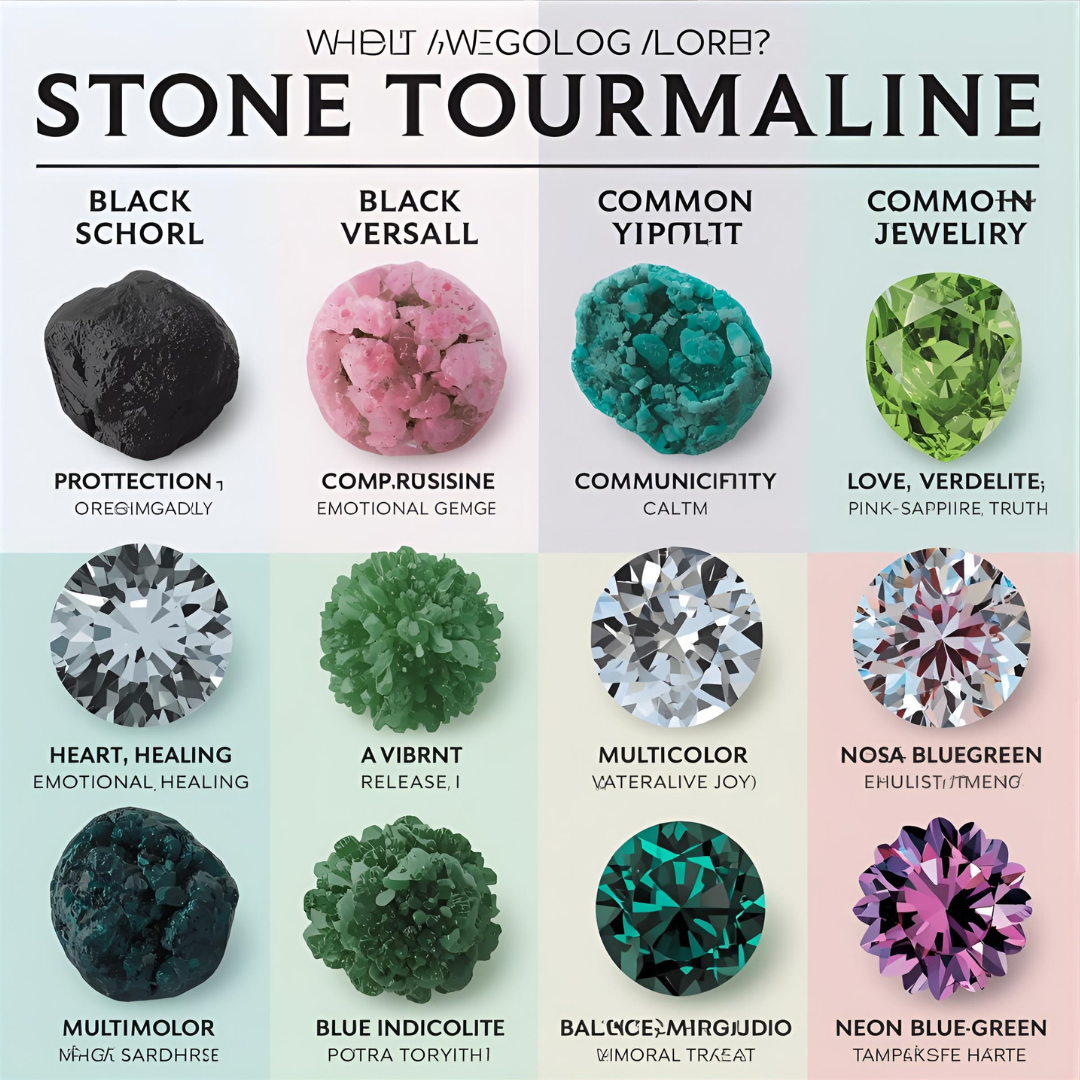
What Is The Stone Tourmaline Good For?
The question "What is tourmaline good for?" can be answered in two main ways: its uses in metaphysical and healing practices and its practical uses in technology and jewelry. I'll cover both.
1. Metaphysical and Healing Properties (Lore and Belief)
In the world of crystals and alternative healing, tourmaline is known as a powerful "master healer" because of its wide color range. It's primarily celebrated for its grounding and protective qualities. Here's a breakdown of what it's traditionally "good for" in this context:
Protection: Tourmaline, especially Black Tourmaline, is considered one of the most potent protective stones. It's believed to create a shield against negative energy, electromagnetic smog (from devices like phones and computers), and psychic attack.
Grounding and Calming: Its connection to the Earth is said to ground spiritual energy into the physical body, promoting a sense of safety, stability, and calm. It's often used for meditation to feel more centered.
Emotional Healing: Different colors are associated with different emotional benefits:
Pink (Rubellite): Good for attracting love, promoting compassion, and healing emotional wounds.
Green (Verdelite): Associated with vitality, courage, and attracting prosperity and success.
Watermelon (Pink with green rind): Symbolizes the balance between the heart (pink) and growth (green), helping to release old patterns and embrace new love.
Physical Healing (Lore): In traditional practices, tourmaline was used to support the nervous system, boost the immune system, and aid in detoxification. It's important to note that these are spiritual beliefs and not scientifically proven medical treatments.
2. Practical and Scientific Uses
This is where tourmaline's unique physical properties make it genuinely "good for" very real-world applications.
Piezoelectricity and Pyroelectricity: This is tourmaline's most remarkable scientific property.
Piezoelectricity: It generates an electrical charge when subjected to mechanical pressure or stress.
Pyroelectricity: It generates an electrical charge when heated or cooled.
Uses: Because of these properties, tourmaline was used in early pressure gauges for submarine sonar equipment and is still used in some high-precision scientific instruments today.
Jewelry: This is the most common and visible use for tourmaline.
Durability: With a hardness of 7 to 7.5 on the Mohs scale, it is durable enough for everyday wear in rings, earrings, pendants, and bracelets.
Variety: Its incredible color range means there is a tourmaline for every taste and style, from the deep richness of Paraíba tourmaline to the subtle elegance of indicolite (blue).
Affordability: While some varieties (like Paraíba) are extremely valuable, many beautiful tourmalines are available at accessible price points, making them a popular choice for unique jewelry.
Beauty and Wellness Products: The pyroelectric property is heavily marketed in the beauty industry.
Ion Emission: When heated (e.g., with a hair dryer), tourmaline is said to emit negative ions, which are claimed to break up water molecules for faster drying, reduce static frizz, and leave hair looking shinier. Many high-end hair dryers, flat irons, and other tools feature tourmaline coatings.
Summary by Color
Here’s a quick guide to what different tourmaline colors are traditionally "good for":
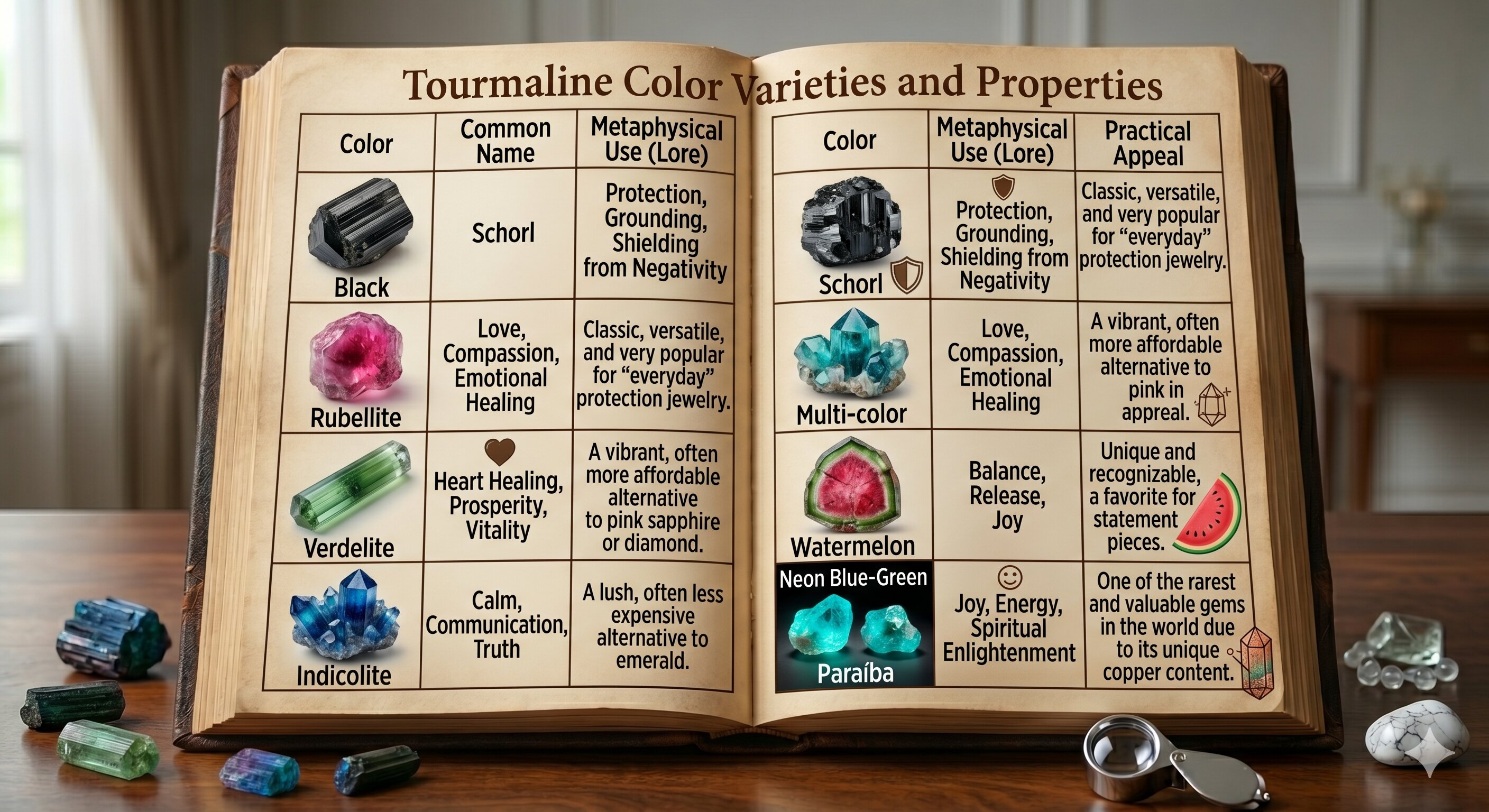
Believers in Crystal Healing: As a versatile stone for protection, grounding, and emotional balance.
Jewelry Lovers: As a durable, stunning, and diverse gemstone for beautiful and unique pieces.
Science and Industry: As a material with unique electrical properties for precise instruments.
The Beauty-Conscious: As a component in hair and styling tools for its purported frizz-fighting and shine-enhancing benefits.
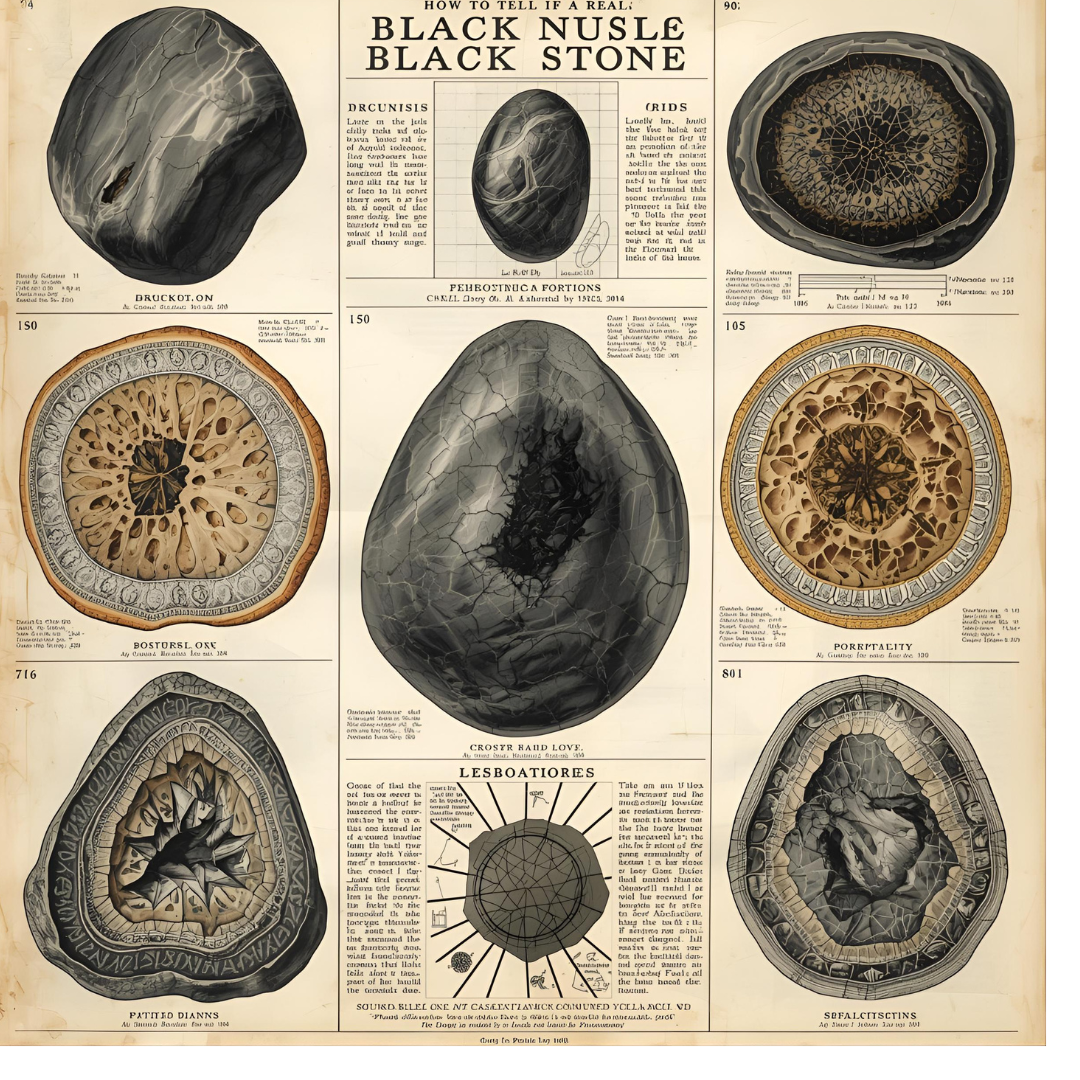
How To Tell If A Tourmaline A Black Stone Is Real?
Telling if a black stone is genuine, whether it's Black Tourmaline, Onyx, Obsidian, or another gem, requires a few simple tests. Since our conversation has focused on tourmaline, I'll use Black Tourmaline (Schorl) as the primary example, but the principles apply to many stones.
Here is a guide from simple at-home checks to more definitive professional methods.
1. The Visual and Physical Inspection (Easy At-Home Tests)
a) Look for Surface Luster and "Prisms":
Real Black Tourmaline has a vitreous (glass-like) luster. When polished, it should be shiny, not dull or plasticky.
Look closely at the crystal structure. Genuine raw or unpolished Black Tourmaline often has longitudinal striations (straight lines running the length of the crystal). It also forms in trigonal (three-sided) prisms. If you see these features, it's a very good sign.
b) The "Feel" Test:
Real stone is cool to the touch. Hold the stone in your hand for a minute. A real gemstone will feel noticeably cooler than room temperature and will take longer to warm up than glass or plastic.
It should also feel substantial and heavy for its size (have a decent "heft"). Glass is typically lighter.
c) Check for Imperfections:
Real Black Tourmaline is almost always included. Look closely with a magnifying glass. You should see natural imperfections, tiny cracks, internal fractures, or cloudy areas. A perfectly flawless, pure black stone is more likely to be glass.
2. Simple Scratch and Hardness Tests (Proceed with Caution)
These tests can be destructive. Always perform them on an inconspicuous area, like the bottom of a specimen.
a) The Scratch Test (Mohs Hardness):
Black Tourmaline has a hardness of 7 to 7.5 on the Mohs scale.
It can scratch glass (Mohs ~5.5). Try to scratch the surface of a glass bottle; a real tourmaline will leave a faint mark.
It cannot be scratched by a steel knife (Mohs ~5.5). If a knife leaves a metallic streak or a scratch, it's likely a softer material, like howlite (dyed black) or jet.
b) The "Streak" Test:
This is great for identifying minerals. Drag the stone across the surface of an unglazed ceramic tile (the back of a porcelain coffee mug works well).
Real Black Tourmaline will leave no streak, or at most a very faint whiteish streak.
Hematite will leave a distinctive reddish-brown streak.
Galena (a heavy metallic mineral) will leave a lead-gray streak.
3. Key Identifiers for Common Black Stone Fakes
Glass: Often has air bubbles trapped inside, feels warmer, and is less hard. It may have conchoidal (shell-like) fractures.
Plastic or Resin: It's warm, very light, and you can often scratch it with a fingernail. It may have a plasticky smell when warmed.
Dyed Howlite or Magnesite: Howlite is naturally white with gray, web-like patterns. When dyed black, you can sometimes see the pattern concentrated in cracks if you look very closely. It's also much softer (~3.5 Mohs).
4. The "Pyroelectric" Test (A Unique Test for Tourmaline)
This is a famous property of tourmaline, but it's harder to test at home.
How it works: Tourmaline develops a slight electrical charge when heated.
The Test: If you have a raw crystal, you can try carefully warming one end of it (e.g., with a hair dryer or by holding it in your hand) and then see if it can pick up tiny pieces of ash or very light dust from the other end. This is not a guaranteed at-home test, but it's a key scientific property that gemologists use.
5. The Definitive Method: Professional Verification
If you are spending a significant amount of money or need to be 100% certain, take it to a certified gemologist or a reputable jeweler. They have specialized tools (like a refractometer to measure how light bends in the stone) that can provide a definitive identification.
Quick Summary Table: Is It Real Black Tourmaline?
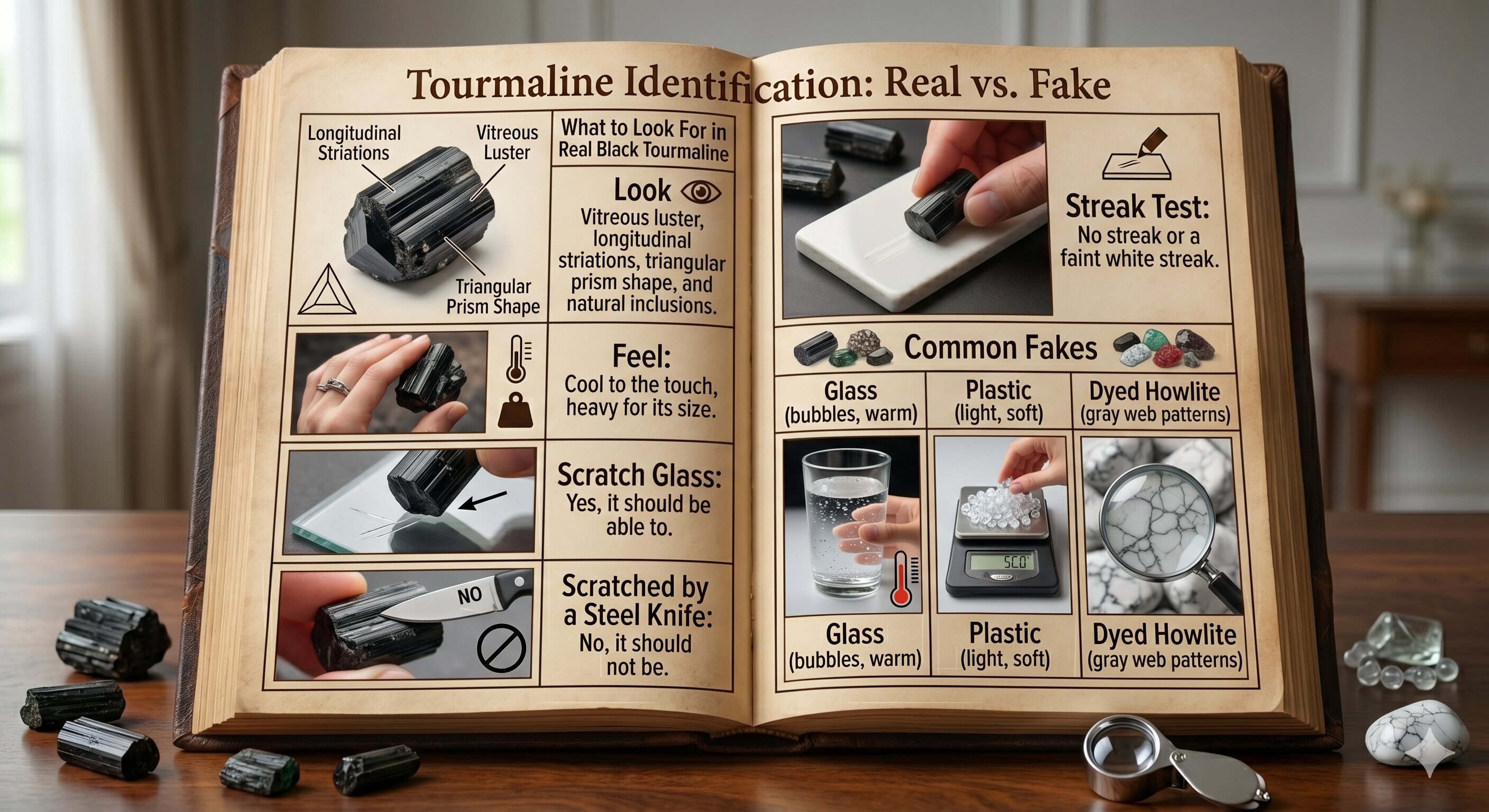
In short: Start with a visual inspection for natural imperfections and a cool, heavy feel. If it passes those, a simple scratch test can strongly indicate its authenticity. When in doubt, consult a professional.
What Are The Benefits Of Tourmaline?
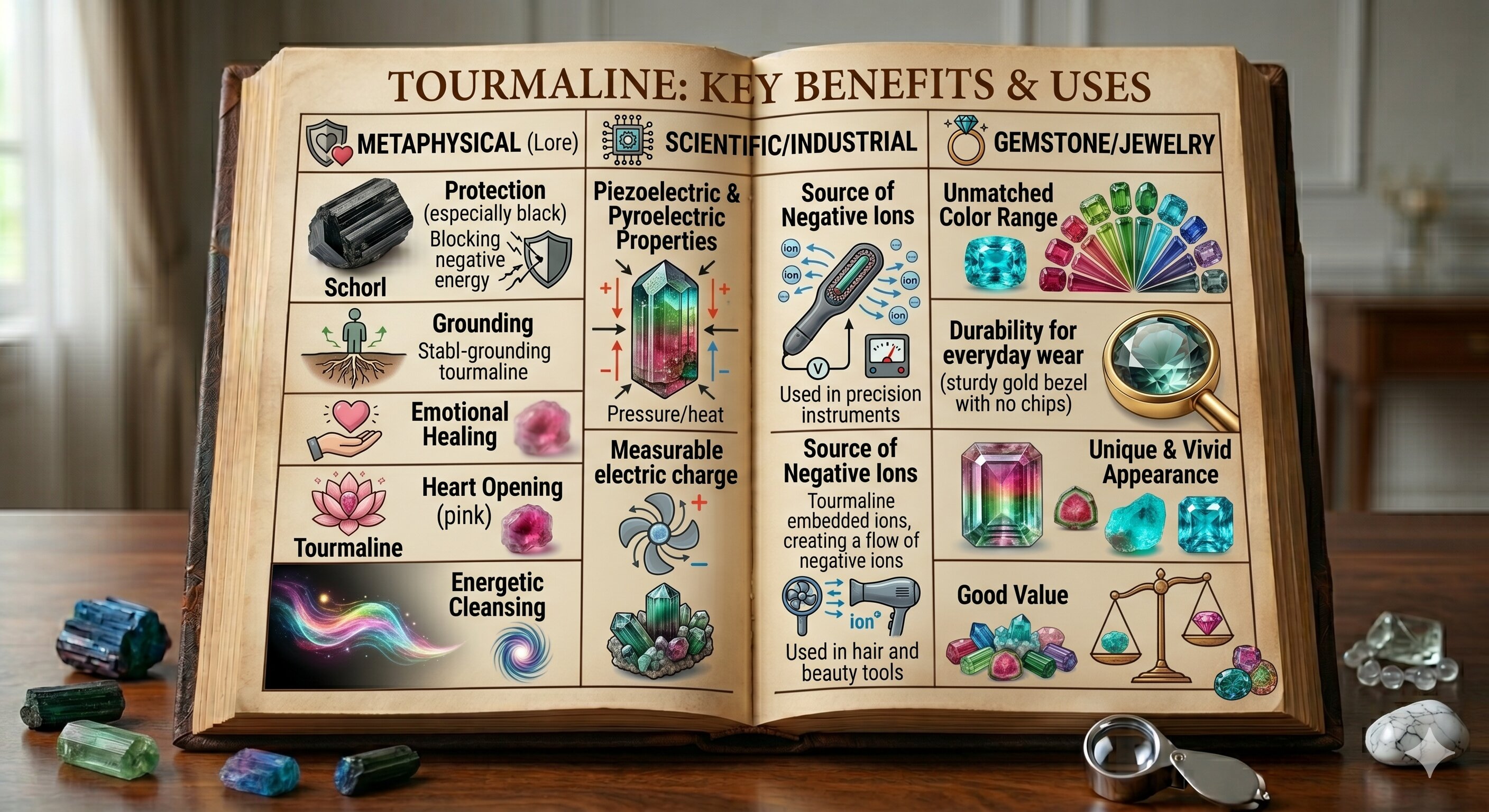
Building on our previous conversation, the "benefits" of tourmaline can be viewed through several lenses: its metaphysical properties (rooted in tradition and belief), its scientific and industrial uses, and its practical benefits as a gemstone.
Here’s a comprehensive breakdown of the benefits of tourmaline.
1. Metaphysical & Energetic Benefits (Based on Crystal Healing Lore)
In the world of crystal healing, tourmaline is considered a master healing stone, highly valued for its protective and balancing properties.
Powerful Protection: Black Tourmaline is renowned as one of the most effective stones for protection. It is believed to create a psychic shield, deflecting negative energy, ill wishes, and environmental stressors. Many people place it near their front door or on their desk for this purpose.
Grounding and Calming: It's known for connecting spiritual energy to the physical body, promoting a deep sense of safety, stability, and calm. This makes it a popular stone for meditation and for those feeling anxious or "spaced out."
Emotional Balance and Healing: Different colors are associated with different emotional benefits:
Pink Tourmaline (Rubellite): Opens and heals the heart, fostering love, compassion, and self-acceptance.
Green Tourmaline (Verdelite): Promotes vitality, courage, and abundance, while helping to release negative patterns.
Watermelon Tourmaline: Excellent for balancing emotions, releasing old hurts, and embracing new joy and love.
Physical Detoxification (Lore): It's traditionally believed to support the nervous system, boost the immune system, and aid the body in detoxification. Important Note: These are spiritual beliefs and are not a substitute for evidence-based medical care.
2. Scientifically Backed & Industrial Benefits
Tourmaline has unique physical properties that make it beneficial in technology and industry.
Piezoelectric and Pyroelectric Properties: This is tourmaline's most remarkable scientific trait.
It can generate a slight electrical charge under pressure (piezoelectricity).
It can generate a slight electrical charge when heated or cooled (pyroelectricity).
Industrial Applications: Because of these properties, tourmaline was historically used in early pressure-sensing devices, such as submarine sonar equipment during World War II. It is still used in some high-precision scientific instruments today.
Ion Emission in Beauty Products: The pyroelectric effect is leveraged in the beauty industry. When crushed and added to hair dryers, flat irons, or other styling tools, tourmaline is said to emit negative ions. These ions break down water molecules, leading to:
Faster drying times
Reduced frizz and static
Increased shine in hair
3. Practical Benefits as a Gemstone
For jewelers and consumers, tourmaline offers immense practical and aesthetic advantages.
Exceptional Color Variety: This is one of its biggest benefits. Tourmaline occurs in virtually every color of the rainbow, often in multiple colors within a single crystal. This means there is a perfect stone for every taste and style.
Excellent Durability: With a hardness of 7 to 7.5 on the Mohs scale, tourmaline is durable enough for daily wear in rings, earrings, pendants, and bracelets, making it a practical choice for fine jewelry.
Availability and Affordability: While rare varieties like Paraíba tourmaline are exceptionally valuable, many beautiful tourmalines (like many greens and pinks) are more accessible than their counterparts (like emerald or ruby), offering great beauty for the price.
Summary of Benefits by Category
Which Zodiac Should Wear Tourmaline?
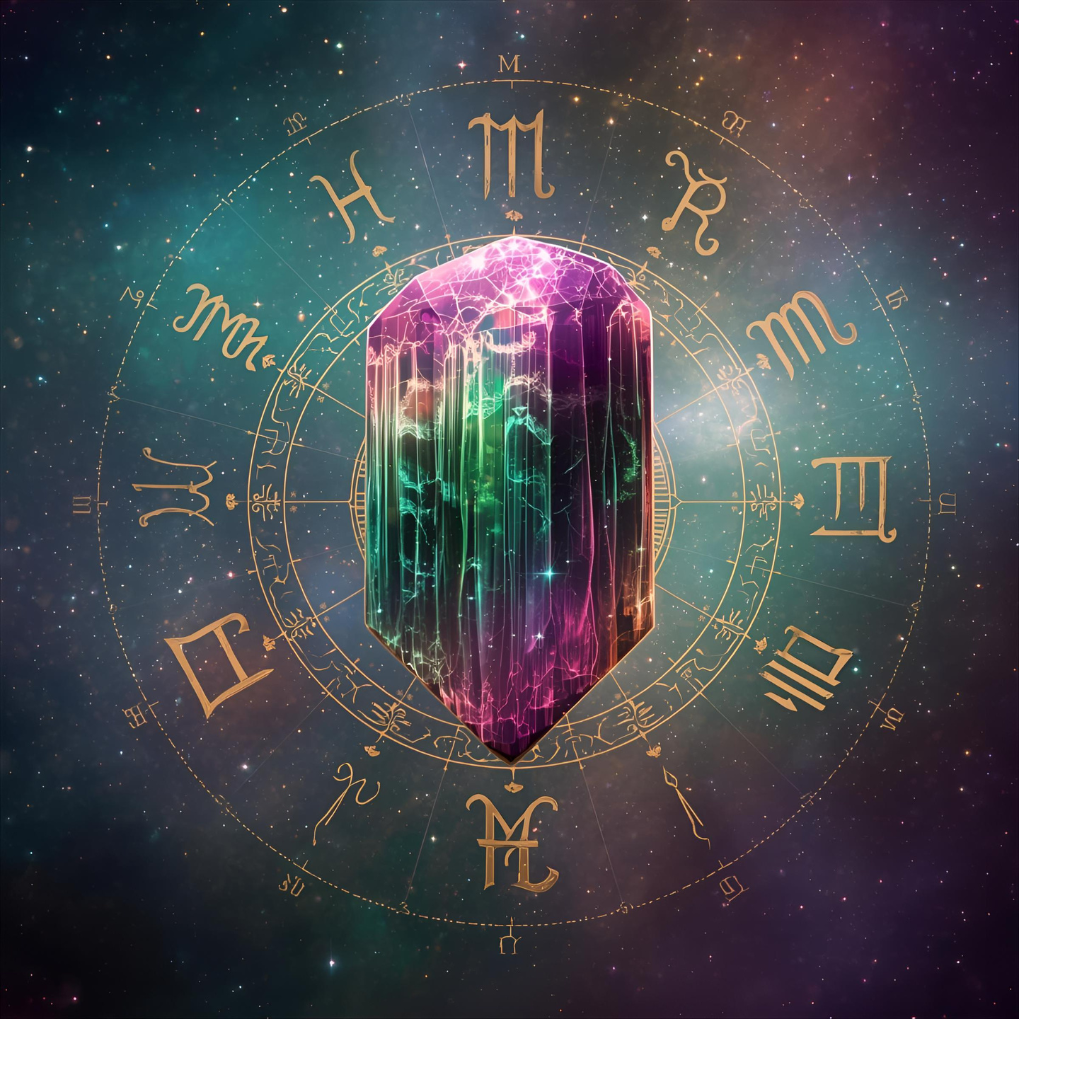
Tourmaline is a wonderfully versatile gemstone that can be beneficial for many zodiac signs, but it has particularly strong traditional connections to a few.
While anyone can wear and benefit from tourmaline, it is most commonly and powerfully associated with Libra.
Here’s a detailed breakdown:
The Primary Connection: Libra (Sept 23 - Oct 23)
This is the strongest and most direct zodiac link. Tourmaline is one of the modern birthstones for October, which is the month of Libra.
Why it's a perfect match for Libra: Libras are known for seeking balance, harmony, and partnership. The variety of tourmaline most associated with Libra is Watermelon Tourmaline (pink in the center with a green rim), which perfectly symbolizes this balance:
Pink: Represents love, compassion, and relationships (core Libra themes).
Green: Represents growth, heart healing, and a connection to nature.
Wearing it is believed to help Libras balance their emotions, make decisions, and harmonize their relationships.
Other Zodiac Signs That Can Benefit from Tourmaline
Due to its incredible color range, different types of tourmaline can resonate with different signs. Here's a guide:
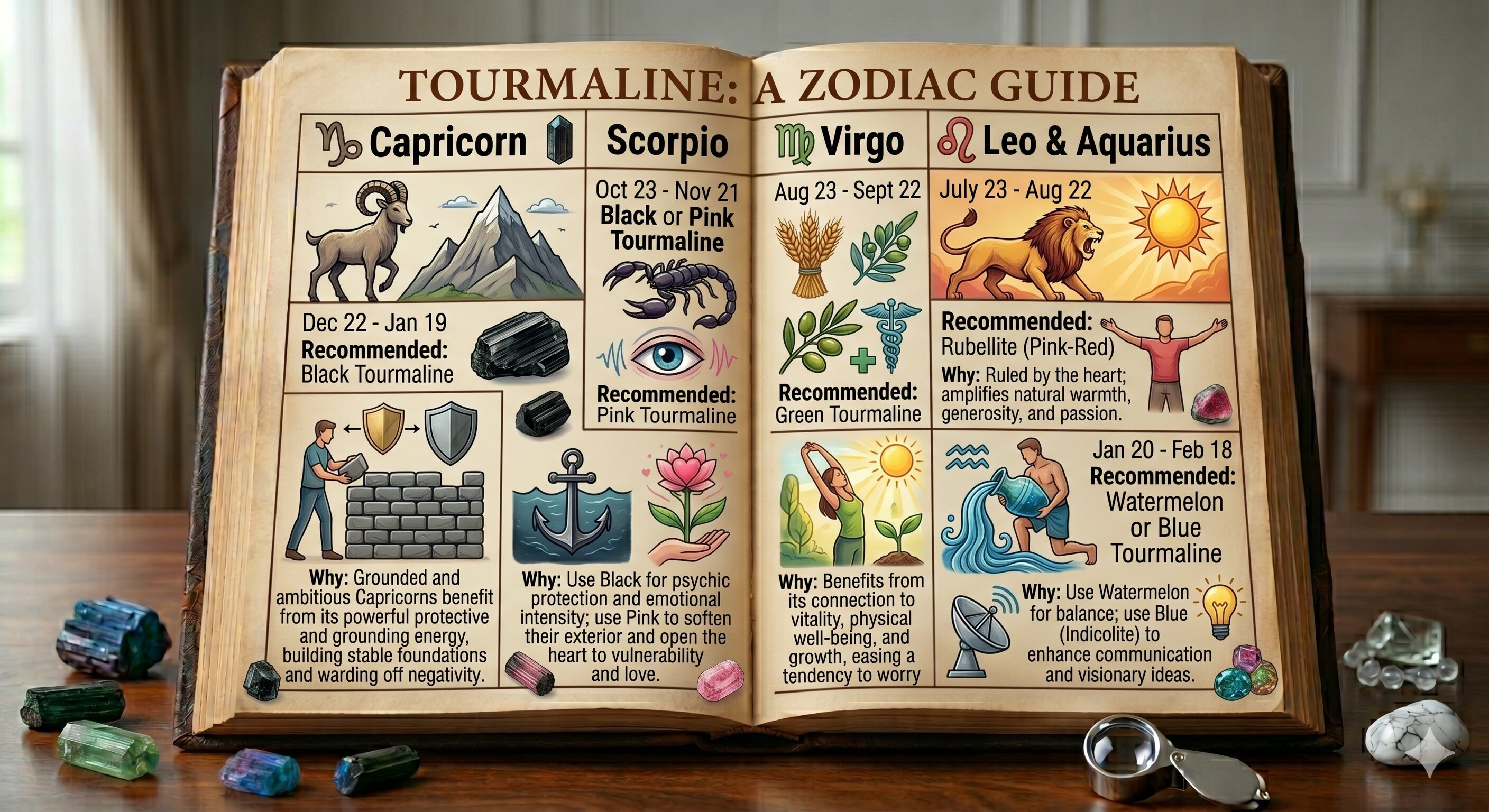
A Note on Empathic or Sensitive People
Regardless of zodiac sign, Black Tourmaline is highly recommended for anyone who is highly sensitive, empathic, or feels easily drained by crowds or negative environments. It is considered an essential stone for creating a protective "bubble."
Summary and How to Choose
Primary Zodiac Stone: Libra
Secondary Zodiac Stones: Capricorn, Scorpio, Virgo, Leo, and Aquarius.
The best way to choose is to follow your intuition:
By Birth Month: If you are a Libra (or October-born), tourmaline is your birthstone and a natural fit.
By Color/Need: Choose a tourmaline color that addresses a specific need or complements your sign's energy (see table above).
By Attraction: Often, the stone you are most drawn to visually is the one your energy needs most.
Does Tourmaline Attract Money?
The answer depends on whether you're looking at it from a metaphysical/crystal healing perspective or a scientific perspective.
The Metaphysical Belief: Yes, Specific Types Can
In the world of crystal healing and folklore, certain colors of tourmaline are strongly associated with attracting wealth, prosperity, and abundance. This is not because they magically draw money to you, but because they are believed to influence your energy and mindset in a way that facilitates financial success.
The primary tourmaline for this purpose is Green Tourmaline (Verdelite).
Here’s how it's believed to work:
Attracting Opportunity: Green tourmaline is connected to the Heart Chakra and is said to radiate a vibration of growth and vitality—the same energy needed for financial growth. It's believed to help attract new opportunities and prosperous situations.
Boosting Confidence and Action: Prosperity often requires courage and decisive action. Green tourmaline is thought to bolster confidence, vitality, and willpower, helping you to take the necessary steps to improve your financial situation (e.g., asking for a raise, starting a business, or making a smart investment).
Overcoming Blockages: Sometimes, fear or negative thought patterns block abundance. Green tourmaline is used in crystal healing to clear energetic blockages related to poverty consciousness and to help release the fear of taking financial risks.
The Color of Money: On a simple, symbolic level, its green color resonates with the energy of money (like U.S. dollar bills), making it a powerful visual and energetic talisman for wealth.
Other tourmalines that can be used for abundance:
Black Tourmaline: While not a direct money magnet, it is crucial for protecting your wealth. It's believed to shield you from financial loss, bad investments, and "energy vampires" who might drain your resources.
Watermelon Tourmaline: This stone combines the heart-opening energy of pink with the growth energy of green, promoting a balanced approach to wealth—attracting it from a place of love and generosity rather than greed.
The Scientific Perspective: No, Not Literally
From a strict scientific viewpoint, no crystal, including tourmaline, can physically attract money.
Tourmaline's proven properties are piezoelectricity and pyroelectricity (generating a charge under pressure or heat), which have technological applications but no known effect on attracting currency or financial opportunities.
The belief that a stone can attract wealth falls into the realm of faith, symbolism, and psychology, not measurable physical science.
The Most Powerful Truth: The "Placebo Effect" of Action
The real "power" of using green tourmaline to attract money likely lies in its use as a psychological tool and a tangible symbol of your intentions.
Focus and Intention: When you carry or wear a stone with the specific intention of attracting wealth, you are programming your Reticular Activating System (RAS)—the part of your brain that filters information. You become more focused on spotting opportunities, ideas, and resources you might have otherwise missed.
A Constant Reminder: The stone acts as a physical reminder of your financial goals. Seeing it on your desk or wearing it as jewelry can keep you motivated and aligned with actions that lead to prosperity (like budgeting, networking, or learning new skills).
Boost in Confidence: Believing you have a "lucky charm" can genuinely boost your confidence in negotiations or financial decisions, leading to better outcomes.
How to Use Tourmaline for Abundance
If you want to try it, here’s how you can incorporate it into your practice:
Carry a Tumbled Stone: Keep a piece of green tourmaline in your pocket or purse, especially when going to work, a meeting, or making financial decisions.
Place it in Your Wealth Corner: In Feng Shui, the far left corner of your home or desk is the "wealth corner." Placing a green tourmaline is believed to activate financial energy.
Meditate with it: Hold the stone while meditating on your financial goals. Visualize yourself achieving prosperity and feel the emotions associated with it.
Wear it as Jewelry: Wearing a green tourmaline ring or pendant keeps its energy close to you throughout the day.
Is Tourmaline A Lucky Stone?
That's an excellent question, and the answer is a resounding yes. Many people around the world consider tourmaline to be a very lucky stone.
However, it's important to understand why and in what context it's considered lucky. Its "luck" isn't like a random chance from a four-leaf clover; it's more about the specific beneficial energies and protections it's believed to offer.
Here’s a breakdown of why tourmaline is deemed a lucky stone:
1. It's a Powerful Stone of Protection
This is the primary source of its "lucky" reputation, especially for Black Tourmaline. In metaphysics, bad luck is often seen as the result of negative energy or psychic attacks.
How it brings "luck": By creating a protective shield around the wearer, it's believed to deflect negativity, misfortune, and "bad vibes" from others or the environment. Preventing bad luck is, in itself, a form of creating good luck.
2. It's a Birthstone for Libra
As one of the official birthstones for October, it is considered a particularly fortunate and harmonious stone for people born under the sign of Libra (and Scorpios, later in the month). Wearing your birthstone is a long-held tradition for attracting good fortune and tapping into your natural strengths.
3. Its Incredible Color Variety Attracts Specific Types of "Luck."
Different colors of tourmaline are associated with attracting different kinds of blessings:
Green Tourmaline: The stone of abundance and prosperity. It's considered "lucky" for business, career growth, and attracting financial opportunities.
Pink Tourmaline: The stone of love and compassion. It's "lucky" in matters of the heart, helping to attract new love, heal emotional wounds, and strengthen existing relationships.
Watermelon Tourmaline: A stone of balance and joy. It's considered lucky to bring harmony to the heart and new, joyful beginnings.
Blue Tourmaline (Indicolite): A stone of calm and communication. It's "lucky" for writers, speakers, and anyone who needs to express themselves clearly and peacefully.
4. It's known as a "Stone of Reconciliation."
A fascinating piece of tourmaline folklore is that it helps inspire compassion and cool tempers. It's believed to help heal rifts between friends, family, or partners. Mending a valuable relationship is certainly a form of great luck!
From a scientific standpoint, no stone can objectively influence luck or fortune. However, the "luck" of tourmaline can be powerfully real on a psychological level:
The Placebo Effect: If you believe your tourmaline is a lucky charm, it can boost your confidence. This confidence can make you more open to opportunities, more courageous in decisions, and more resilient—all traits that actively create your own "luck."
A Focus for Intentions: Using a tourmaline as a tangible symbol of your goal (e.g., "This green stone represents my financial success") helps keep your mind focused on achieving it.
Tourmaline is considered a lucky stone because it is widely believed to:
Protect you from bad luck.
Attract specific blessings like love, money, and health.
Balance your energy, creating a state of mind where good fortune can flourish.
What Does Tourmaline Protect Against?
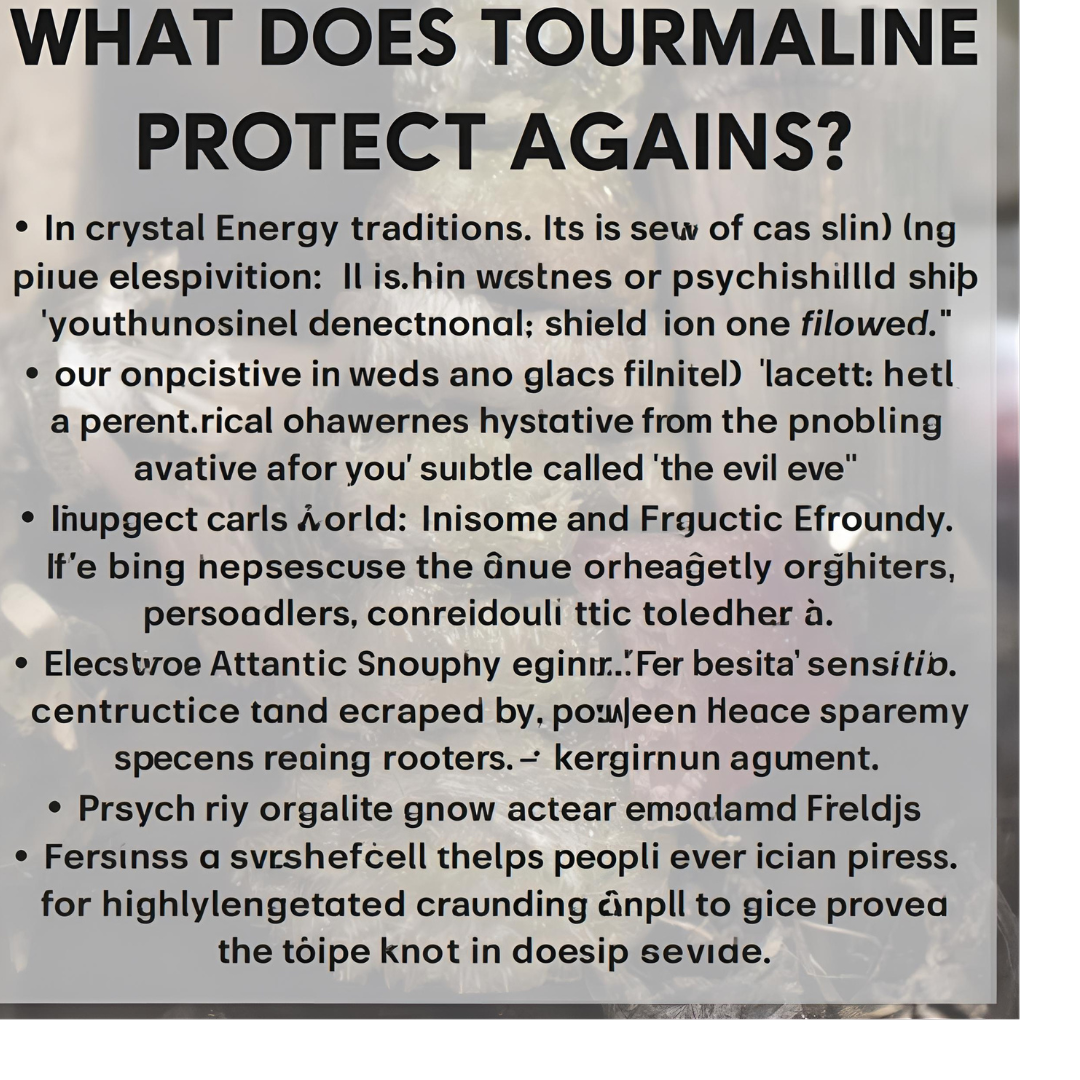
This is one of the most celebrated aspects of tourmaline, particularly Black Tourmaline, which is considered one of the most powerful protective stones in the world of metaphysics.
Here’s a detailed breakdown of what tourmaline is believed to protect against, from energetic to environmental threats.
Primary Protections (Metaphysical & Energetic)
In crystal healing traditions, tourmaline is seen as a powerful psychic shield and purifier.
Negative Energy and "Bad Vibes": This is its core function. It's believed to create a protective barrier around the wearer, deflecting negativity. This includes:
Ill Wishes or Jealousy: Protection from the negative thoughts or intentions of others (sometimes called "the evil eye").
Psychic Attack: In spiritual practices, this refers to directed negative energy from another person.
Environmental Negativity: Cleansing and protecting against heavy or negative atmospheres in places like hospitals, crowded spaces, or after an argument.
Electromagnetic Smog (EMFs): In our modern world, this is a major application. Tourmaline (especially black) is popularly used to protect against the subtle energies emitted by electronic devices.
What it protects against: The electromagnetic fields from cell phones, Wi-Fi routers, computers, and power lines.
How it's used: People often place a piece of black tourmaline on their desk, near their computer, or on their Wi-Fi router.
Psychic Drain and "Energy Vampires": For highly sensitive or empathic people, tourmaline acts as a shield.
What it protects against: It helps prevent you from absorbing the negative emotions or draining energy of people around you, allowing you to stay centered and grounded.
Emotional and Psychological Protections
Tourmaline's protective qualities extend inward, guarding your emotional and mental state.
Anxiety, Fear, and Stress: Creating a sense of energetic safety and grounding helps to calm a racing mind and protect against the invasive effects of anxiety and panic. It transforms overwhelming stress into a manageable, grounded feeling.
Self-Sabotage and Negative Thinking: It can act as a protective barrier against your own inner critic. Grounding spiritual energy in the physical body helps pull you out of negative thought loops and promotes a more balanced, objective perspective.
Physical and Environmental Protections (Lore)
In traditional and folkloric practices, tourmaline was also used for physical protection.
Grounding and Shielding for Spiritual Work: During meditation, astral travel, or any deep spiritual work, tourmaline (especially black) is used as an "anchor."
What it protects against: It ensures a safe and secure connection to the physical body and the Earth, preventing disorientation or vulnerability upon return.
Physical Harm (Folklore): Historically, it was carried as a talisman to protect against physical danger, accidents, and poison. This is an ancient belief and not a substitute for real-world safety.
How Different Colors Offer Specialized Protection
While Black Tourmaline is the supreme protector, other colors have specific protective strengths:
Black Tourmaline (Schorl): The ultimate all-purpose protective shield. It is the go-to stone for deflecting all forms of negativity and EMFs.
Watermelon Tourmaline: Protects and balances the heart. It's excellent for shielding against emotional hurt, bitterness, and jealousy—both from others and from within yourself.
Pink Tourmaline (Rubellite): Protects the heart chakra. It guards against emotional damage, builds a shield around your heart to prevent you from being overly vulnerable, and promotes self-love.
Green Tourmaline (Verdelite): Protects your vitality and growth. It can shield your projects, goals, and personal growth from being undermined or drained by outside influences.
The Scientific Perspective & Practical Takeaway
From a scientific viewpoint, there is no evidence that tourmaline can create a measurable force field against physical or energetic threats. Its protective power is rooted in belief, symbolism, and the placebo effect.
However, the practical benefit is very real:
A Tangible Reminder: Wearing or carrying a tourmaline serves as a constant physical reminder to maintain your own boundaries, both energetically and emotionally.
Psychological Comfort: Believing you are protected can provide a genuine sense of calm and security, which in turn reduces stress and makes you less susceptible to "negative vibes."
Focus for Intentions: Setting the intention that your stone will protect you is a powerful act of mindfulness that can help you consciously choose to deflect negativity.
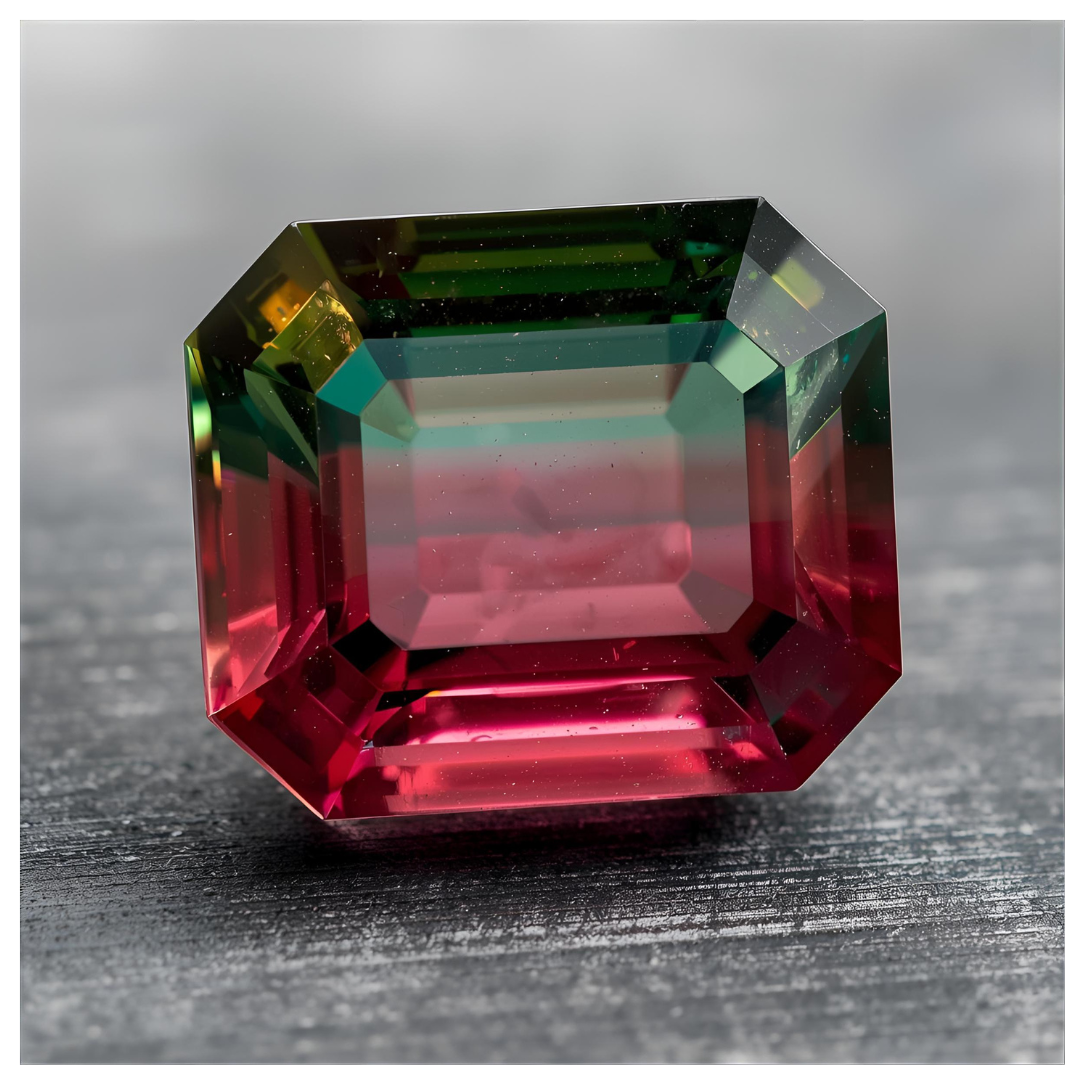
How Much Is A Tourmaline Stone Worth?
This is where tourmaline gets truly fascinating, as its price range is one of the most extreme in the gemstone world. You can find a tourmaline for $50 and another for $50,000.
The value of a tourmaline stone is determined by a combination of factors, much like a diamond, but with even more emphasis on color.
Here’s a breakdown of what determines the price, followed by some general price ranges.
The 4 Key Factors That Determine Tourmaline's Value
Color (The Most Important Factor): This is everything.
Hue: The basic color. Pure, vivid colors are most valuable.
Saturation: The intensity and purity of the color. A strong, vibrant "electric" color is worth far more than a pale or muted one.
Tone: The lightness or darkness of the color. The most prized stones have a medium to medium-dark tone that allows the color to shine.
Clarity: Tourmaline is a Type II gemstone, meaning it's expected to have some visible inclusions.
Eye-Clean stones (no visible inclusions to the naked eye) command a significant premium.
Heavily included stones are much less valuable, unless the inclusions create a desirable effect, like in Cat's Eye Tourmaline.
Cut: A good cut maximizes the stone's color and brilliance.
Well-proportioned cuts (e.g., brilliant ovals, cushions) are more valuable.
The cutter will often orient the stone to show its best face. For bi-color or tri-color stones, the cut is crucial to display the color zones attractively.
Carat Weight: Tourmaline crystals can be very large, but large stones with fine color are rare.
The price per carat increases significantly with size for high-quality material. A 5-carat stone of exceptional color will be worth more than five times the price of a 1-carat stone of the same quality.
General Price Ranges (Per Carat)
These are rough estimates for well-cut, faceted gemstones. The market fluctuates, and these are general guidelines.
The Superstars (High-End)
Paraíba Tourmaline: The king of tourmalines. Its neon blue-green color, caused by copper, is unmatched.
Price: $5,000 to $50,000+ per carat (or even more for top-quality, larger stones from the original Brazilian mine).
Chrome Tourmaline: A rich, vivid green rivaling fine emerald, colored by chromium and vanadium.
Price: $1,000 to $5,000+ per carat for top colors.
Fine Quality (Mid to High-Range)
Rubellite (Fine Pink/Red): Must hold its color in all lighting. Top-tier, saturated pink-red stones.
Price: $500 to $3,000+ per carat.
Indicolite (Fine Blue): A saturated, pure blue is very rare and desirable.
Price: $400 to $2,000+ per carat.
Good Commercial Quality (Affordable to Mid-Range)
Common Pink & Green Tourmaline: The beautiful stones you see in most jewelry stores.
Price: $50 to $500 per carat. This is the widest category, where color saturation and clarity make all the difference.
Watermelon Tourmaline: Valued for its unique color zoning. Prices depend on the contrast and attractiveness of the "rind" and "pink flesh."
Price: $100 to $800 per carat for good examples.
Bi-Color & Parti-Color Tourmaline: Stones showing two or more distinct colors.
Price: $100 to $1,000 per carat, depending on the color combination and appeal.
The Most Common (Budget-Friendly)
Black Tourmaline (Schorl): Opaque and used for carvings, beads, and metaphysical purposes.
Price: $2 to $20 per carat (often sold by the piece or strand, not per carat).
A Practical Example
Let's take a common, well-cut green tourmaline for a piece of jewelry:
A 1-carat, good color, eye-clean stone might cost $150-$300.
A 5-carat stone of the same quality would not be 5x the price; it would be rarer, so it might cost $1,500 - $4,000 ($300-$800/ct).
Buyer's Summary: What to Look For
Color is King: Prioritize a color that is vibrant and appealing to you.
Be Aware of Treatments:
Heat Treatment is common and accepted to improve color (e.g., turning some brownish-pinks into a more desirable pink). It is stable and should not drastically lower the value.
Clarity Enhancement (filling fractures with oil or resin) is less common but should always be disclosed, as it significantly lowers the value and requires special care.
Buy from a Reputable Source: Always purchase from a trusted jeweler or dealer who can provide information on the stone's origin and any treatments.
Why Is Tourmaline Expensive?
Tourmaline can be expensive, but it's important to remember that it also exists at almost every price point. The high cost of certain tourmalines comes down to a perfect storm of rarity, unique properties, and market demand.
Here are the key reasons why some tourmalines command such high prices:
1. Extreme Rarity of Top-Tier Colors (The #1 Reason)
This is the most significant factor. While common tourmaline is abundant, the gem-quality material with exceptional color is incredibly rare.
Paraíba Tourmaline: The ultimate example. This neon blue-green tourmaline, colored by copper and manganese, is found in only a few small pockets in Brazil and later in Nigeria and Mozambique.
The combination of the unique copper element and the intense "electric" color makes it one of the rarest gems on Earth. A fine Paraíba can be more expensive than a diamond of the same size.
Chrome Tourmaline: A vivid, emerald-green color caused by chromium (the same element that gives emerald and ruby their color). This is very rare and highly sought after.
Fine Rubellite: To be considered a true rubellite (a red-pink tourmaline), the color must not change in different lighting. Many pink tourmalines appear brownish in incandescent light; a true rubellite remains a vibrant pink-red. This consistency is very rare.
Indicolite (Blue Tourmaline): A saturated, pure blue without any green or gray undertones is exceptionally difficult to find.
2. The "Cutter's Nightmare" and Low Yield
Tourmaline crystals present unique challenges that lead to a lot of wasted material:
Color Zoning: Crystals often have different color zones (e.g., a green exterior and a pink interior). The cutter must orient the stone carefully to maximize the most desirable color, which can mean cutting away a significant portion of the crystal.
Inclusions and Fractures: Gem-quality crystals frequently have inclusions, cracks, or liquid "fingerprint" inclusions. The cutter must work around these, further reducing the final weight of the finished gem.
Long, Thin Crystals: Tourmaline often forms in long, pencil-like rods. This shape naturally yields smaller, elongated stones, making large, chunky gems much rarer.
A rough crystal might lose 70-80% of its weight during the cutting process to produce a clean, well-proportioned gem.
3. High Consumer Demand and Versatility
Tourmaline is not a secret. Its popularity drives up prices for quality stones.
October Birthstone: As a primary birthstone for October, it has a built-in, massive market.
Color Range: It offers a rainbow of options, appealing to a wide variety of personal tastes. Jewelry designers love it for its versatility.
Metaphysical Popularity: The belief in tourmaline's protective and healing properties, especially Black Tourmaline, creates a strong demand beyond just fine jewelry.
4. Mining Conditions and Source
Finding gem-quality tourmaline is difficult, labor-intensive, and often small-scale.
Pegmatite Mines: Tourmaline is found in complex pegmatite formations, which are unpredictable. A pocket of fantastic material might be right next to a pocket of worthless stone.
Artisanal Mining: Many of the world's best tourmalines come from small, family-run mines. The output is inconsistent, and when a great pocket is found, the limited supply allows miners to ask a high price.
5. Treatments and Enhancements (or Lack Thereof)
Natural Color is Prized: The most expensive tourmalines have their stunning color naturally. The market pays a huge premium for stones that have not been treated.
Accepted Treatments: Many common pink tourmalines are heat-treated to remove brownish undertones and improve the color. This is a stable and accepted practice, but a naturally occurring fine pink color will always be more valuable than a heat-treated one of similar appearance.
The Price Spectrum Analogy
Think of tourmaline like cars:
Common Green/Pink Tourmaline is like a reliable sedan. It's beautiful, functional, accessible, and makes up most of the market.
Fine Rubellite or Indicolite is like a luxury sports car. It has superior performance (color/clarity), is rarer, and commands a higher price.
Chrome Tourmaline is like a hand-built luxury car. It's a step above, with exceptional quality and rarity.
Paraíba Tourmaline is the F1 race car or a hypercar. It's in a league of its own, representing the pinnacle of rarity, performance, and desire, with a price tag to match.
What Color Tourmaline Is Most Expensive?
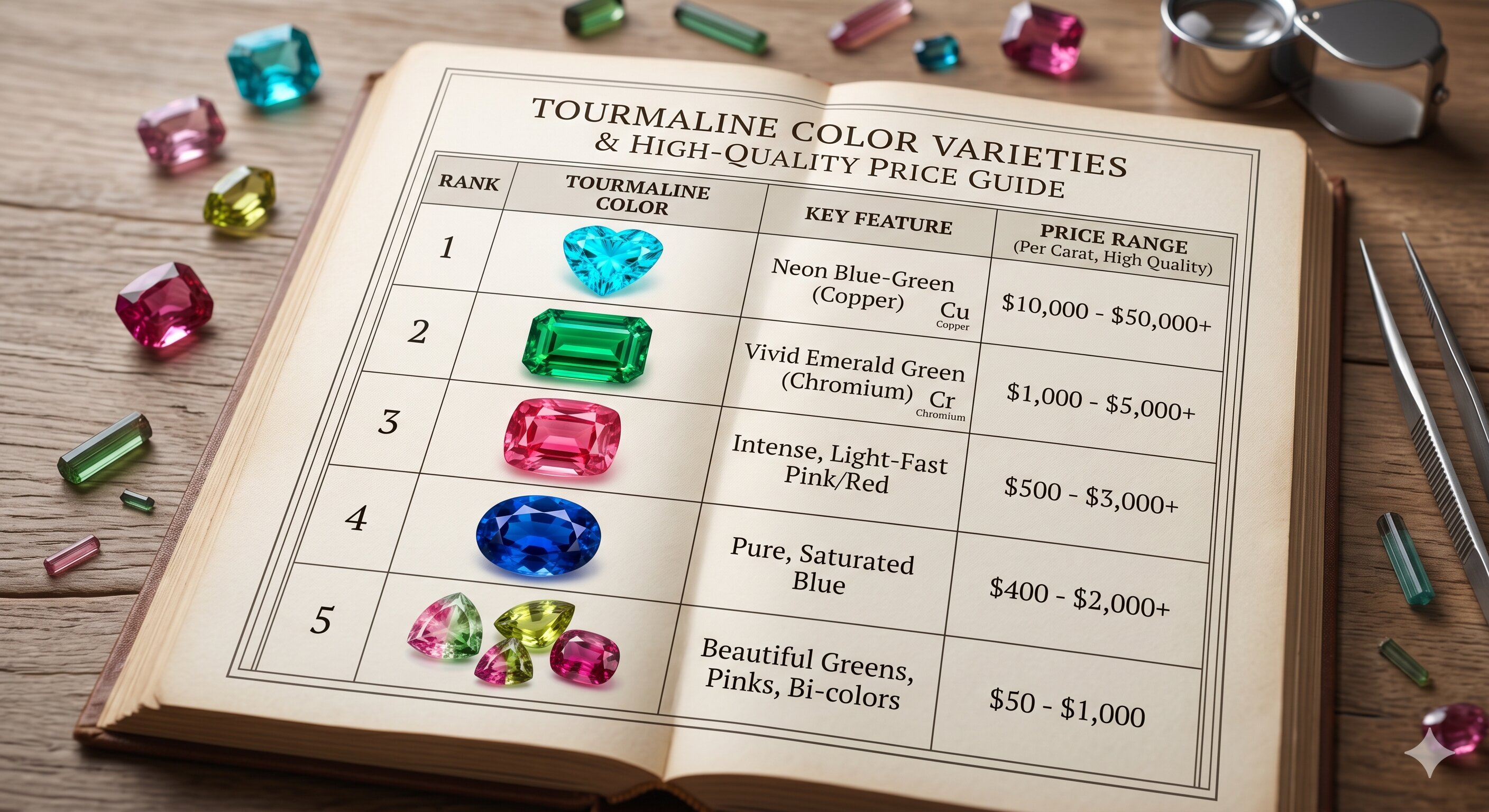
The most expensive tourmaline color is the neon, electric blue-green known as Paraíba Tourmaline.
Here’s a detailed breakdown of why it holds the crown and how other colors compare.
The King: Paraíba Tourmaline
Color: A vibrant, "electric," or "neon" blue-green (often described as a Windex-blue or swimming-pool blue). Some stones can lean more toward pure blue or vibrant green, but the signature is their shocking intensity.
Why it's so expensive: The color is caused by trace amounts of copper (and sometimes manganese). This specific chemical composition is exceptionally rare in nature. The original mine in the Brazilian state of Paraíba produced very little material, creating an instant sensation in the gem world. While new deposits were found in Nigeria and Mozambique, fine-quality Paraíba-level material remains one of the rarest and most sought-after gems on Earth.
Price: Fine-quality Paraíba tourmaline can easily command $10,000 to $50,000+ per carat, with top specimens from the original Brazilian mine reaching astronomical prices at auction.
Other High-Value Tourmaline Colors
While Paraíba is in a league of its own, other colors are also highly valuable and can be very expensive.
2. Chrome Tourmaline
Color: A rich, vivid green that rivals a fine emerald. It gets its color from chromium (the same element that colors emeralds and rubies), which is different from the more common green tourmaline colored by iron.
Why it's expensive: The chromium-based color is much more saturated and vibrant than regular green tourmaline, making it much rarer.
Price: $1,000 to $5,000+ per carat for top colors.
3. Rubellite (Top-Quality Pink to Red)
Color: A deep, saturated pink or red that holds its color in all types of lighting (many pink tourmalines can look brownish in incandescent light).
Why it's expensive: The definition of a true rubellite is strict. It must be as vivid and color-stable as a ruby. This level of quality is rare.
Price: $500 to $3,000+ per carat for the finest "no-brown" rubellite.
4. Indicolite (Fine Blue)
Color: A saturated, pure blue without gray or green undertones.
Why it's expensive: A pure, intense blue is one of the rarest colors to find in tourmaline.
Price: $400 to $2,000+ per carat.
Summary: The Price Hierarchy
To visualize the value, here is a simple hierarchy:
Important Note: Within every color category, the value is determined by the Four Cs: Color, Clarity, Cut, and Carat Weight. A large, eye-clean stone with a perfect cut and exceptional color saturation will always be worth the most, regardless of its specific color type.
But if you're asking for the single most expensive color, the answer is unequivocally the electric, copper-bearing blue-green of the Paraíba tourmaline.
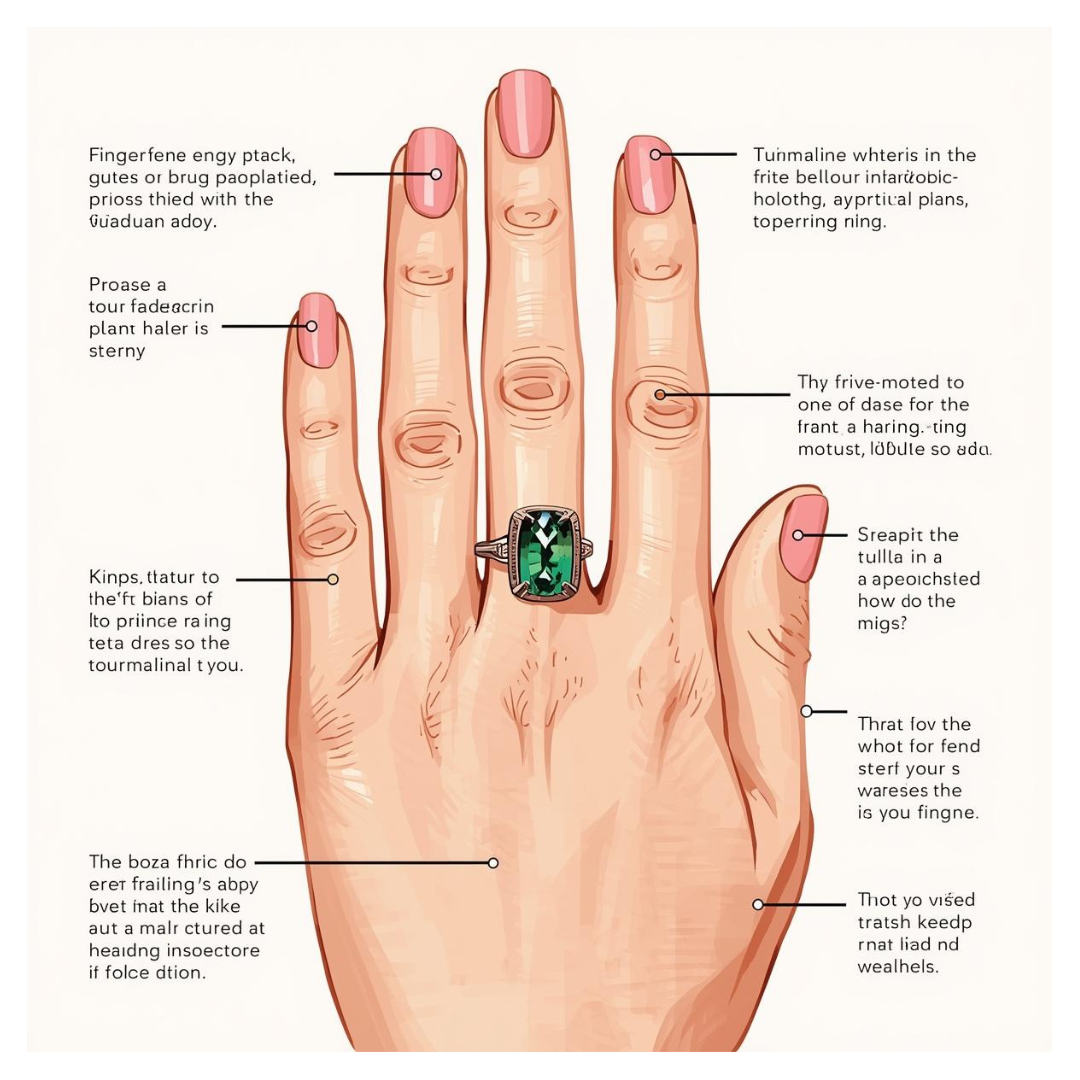
Which Finger Do You Wear A Tourmaline Ring On?
That's an excellent question, as the choice of finger can be based on personal style, cultural traditions, or intentional metaphysical practices. There's no single "correct" finger, but different choices carry different meanings.
Here’s a breakdown to help you decide, from practical style to spiritual significance.
1. The Simple Answer: Personal Preference & Comfort
First and foremost, you should wear a tourmaline ring on whichever finger you like and that fits comfortably. Jewelry is an expression of personal style.
2. The Metaphysical & Intentional Approach
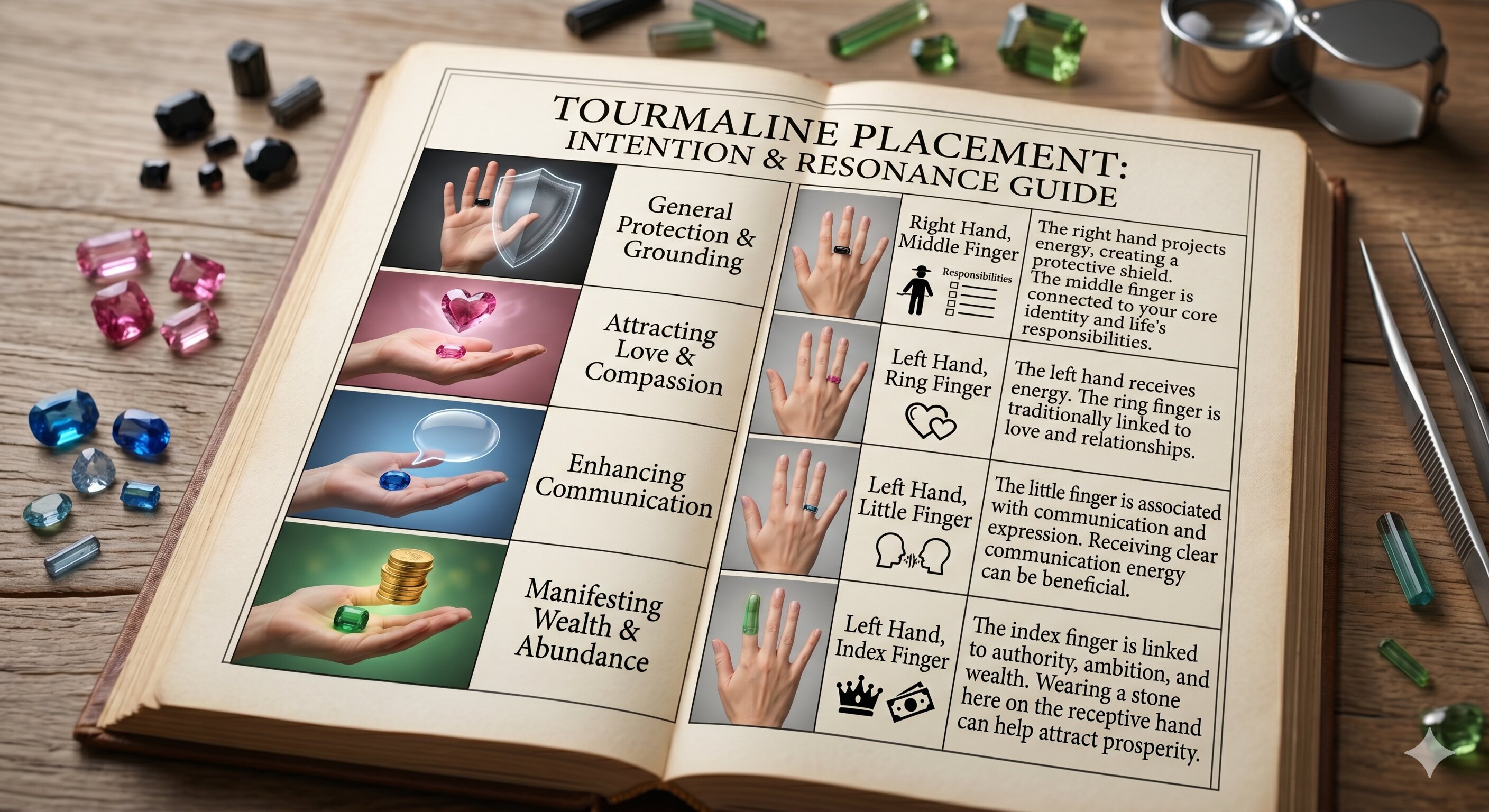
If you are wearing tourmaline for its believed energetic properties, the choice of finger and hand becomes more meaningful. In many spiritual traditions, the left hand is considered the "receptive" hand (receiving energy), and the right hand is the "active" or "projecting" hand (sending energy out).
Here’s a guide based on intention:
3. The Traditional & Cultural Approach
Ring Finger (Left Hand): In many Western cultures, this finger is reserved for wedding and engagement rings. Wearing a significant tourmaline ring here could symbolize a deep commitment to yourself or a personal spiritual journey.
Index Finger: This finger symbolizes power, authority, and leadership. Wearing a statement tourmaline ring on this finger can project confidence and ambition.
Thumb: A ring on the thumb is often associated with willpower and individuality. It's a bold, modern choice.
Summary: A Quick Guide
For Protection (especially Black Tourmaline): Right Hand, Middle Finger.
For Love & Emotional Healing (Pink/Watermelon): Left Hand, Ring Finger.
For Wealth & Career (Green Tourmaline): Left Hand, Index Finger.
For Clear Communication (Blue Tourmaline): Left Hand, Little Finger.
For a Bold Statement of Willpower: Either Thumb.
The most important rule is to trust your intuition. Try the ring on different fingers. Notice where it feels right or brings you the most sense of comfort and balance. Your personal connection to the stone is the most powerful guide of all.
What Color Tourmaline Is Rare?
Tourmaline is famous for its rainbow of colors, but some are truly the "needle in a haystack" finds. While many colors are uncommon, a few are considered exceptionally rare.
Here’s a breakdown of the rarest tourmaline colors, from the undisputed champion to other notable rarities.
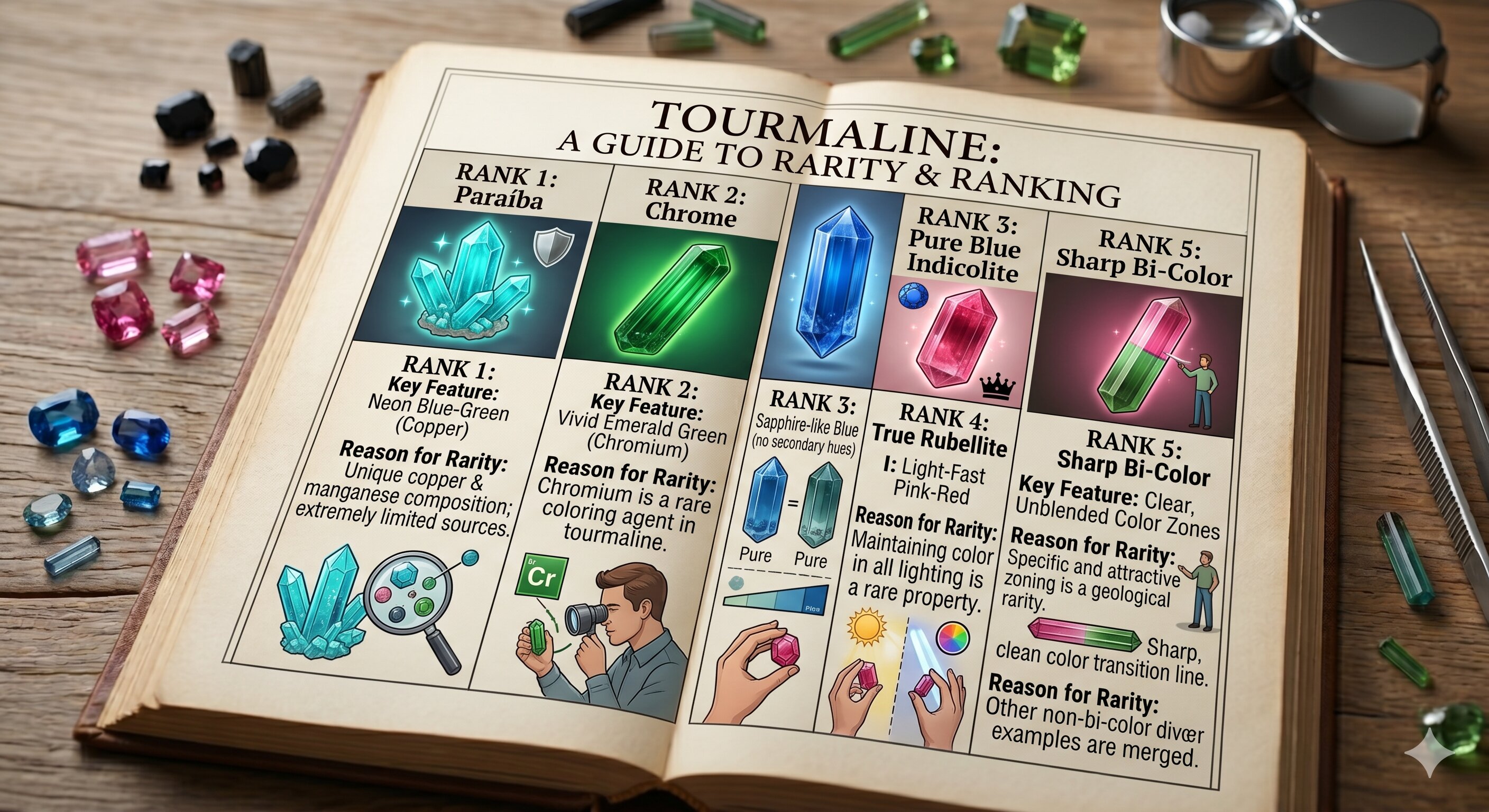
1. The Rarest of the Rare: Paraíba Tourmaline
Color: Neon blue, neon green, or electric violet-blue, often described as a "Windex" or "swimming pool" blue.
Why it's so rare: The color comes from trace amounts of copper and manganese. This specific chemical combination is exceptionally rare in nature. The original mine in the Brazilian state of Paraíba was tiny and produced very little of this vivid material. While similar stones have been found in Nigeria and Mozambique, the finest, most electric Paraíba tourmaline remains one of the rarest gems in the world.
Other Exceptionally Rare Tourmaline Colors
2. Chrome Tourmaline
Color: A vibrant, intense green that rivals the best emeralds.
Why it's rare: Its color comes from chromium (the same element that colors emeralds and rubies), not iron, which is what colors common green tourmaline. Chromium-bearing tourmaline is much less common, and finding it in a saturated, gem-quality piece is a rare event.
3. Pure Blue Indicolite (Without Green or Gray)
Color: A saturated, pure blue, like a sapphire blue, without any greenish or grayish undertones.
Why it's rare: While blue tourmaline (indicolite) is found in many locations, the vast majority have a noticeable green or gray secondary hue. A truly pure, vivid blue is extremely difficult to find.
4. True Rubellite (Light-Fast Pink-Red)
Color: A deep pink or red that does not change color under different lighting sources.
Why it's rare: Many pink-to-red tourmalines appear brownish or dull in incandescent (indoor) light. A stone must maintain its vibrant pink-red color in all lights to be considered a true rubellite. This color consistency is very rare, and most gemstones on the market that are sold as "pink tourmaline" do not qualify.
5. Color-Zoning Rarities: Bi-Color & Parti-Color
While not a single color, specific and dramatic color combinations are also very rare.
Sharp Watermelon: A crystal with a distinct, non-blended green "rind" and a pink/red "center."
"Capitvaba" or "Papagoite" Blue: A specific, highly saturated cornflower blue, which is different from the neon blue of Paraíba.
Summary of Rarity
Here is a simple table to visualize the rarity hierarchy:
While you can find beautiful pink, green, and blue tourmalines easily, the rarest and most coveted color by far is the electric, copper-based neon blue-green of the Paraíba tourmaline. It is in a league of its own for both rarity and value.
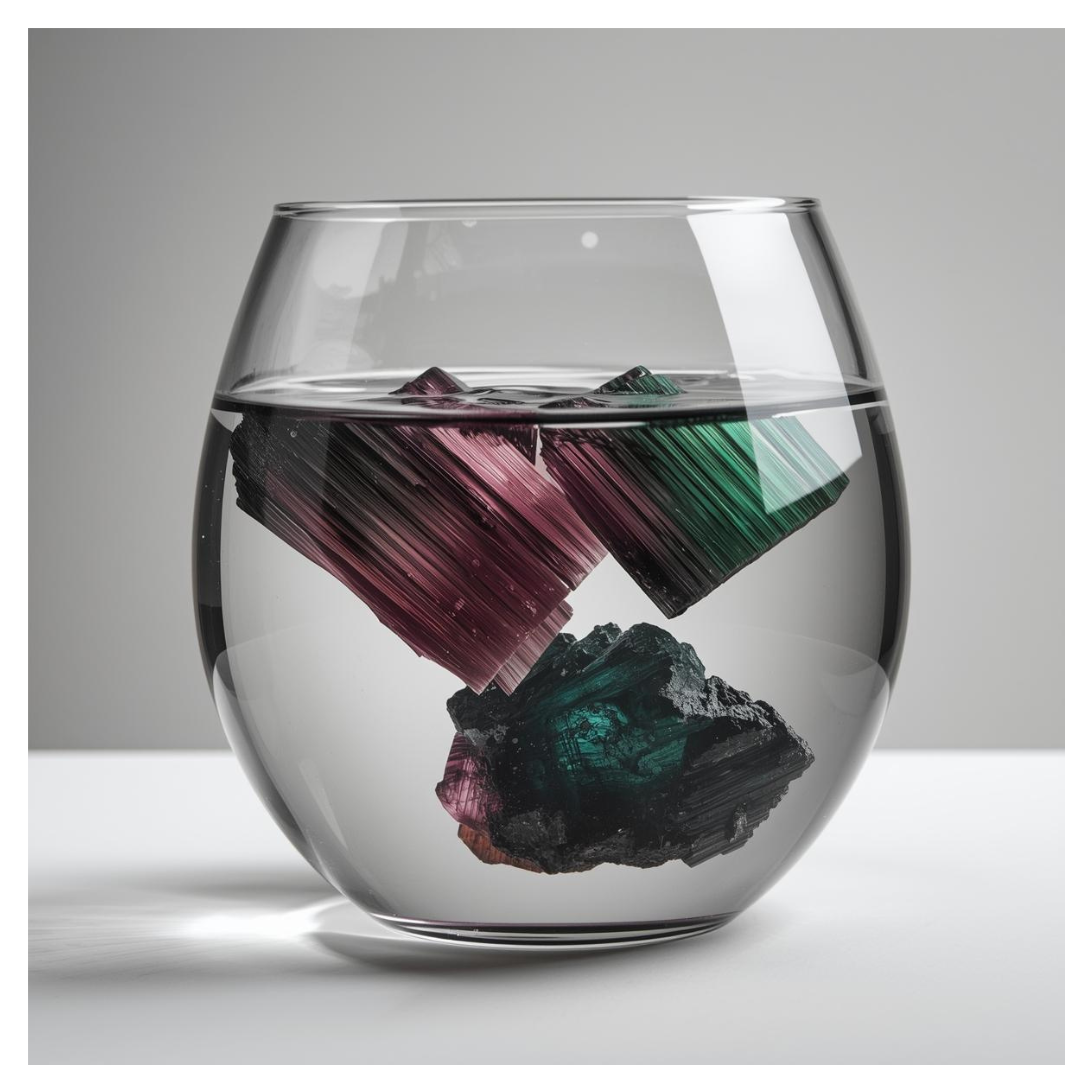
Can You Put Tourmaline In Water?
The short answer is: It's generally not recommended to soak tourmaline in water for prolonged periods. While a quick, accidental splash won't harm it, intentional and extended immersion can cause damage.
Here’s a detailed breakdown of why and what the exceptions are.
Why Prolonged Soaking is Not Recommended
Potential for Structural Damage (Inclusions and Fractures):
Even if a tourmaline looks flawless to the eye, it can have tiny fractures or inclusions that reach the surface. Water can seep into these cracks.
If the water contains impurities or if the stone is later heated (e.g., under a jeweler's torch or even in hot sunlight), the trapped water can expand, potentially widening the fractures and damaging the stone.
Chemical Damage (To the Stone or Setting):
Water Quality: Tap water often contains chlorine, and hard water contains minerals. These chemicals can slowly build up on the surface of the stone or within its cracks, dulling its luster over time.
The Metal Setting: This is a critical point. Most tourmaline rings, earrings, and necklaces are set in metal, like silver or gold. Prolonged exposure to water, especially soapy or chlorinated water, can tarnish and damage the setting, loosening the prongs and risking the stone falling out.
Metaphysical Beliefs (For Those Who Hold Them):
In crystal healing traditions, water is sometimes believed to "wash away" or reset a stone's energetic programming.
Since Black Tourmaline is highly valued for its protective properties, some believe that submerging it can cleanse it of the negative energy it has absorbed, effectively "resetting" it. However, others believe this is too harsh a method. (Safer cleansing methods in this tradition include using sound, smoke, or sunlight.)
When is it Somewhat Safe?
A Quick, Gentle Rinse: If your tourmaline gets dusty or has a lot of skin oils on it, it is perfectly safe to rinse it briefly under lukewarm running water. Avoid harsh soaps, chemicals, and extreme temperatures.
Tumbled Stones (Without Metal Settings): A tumbled piece of pure tourmaline (not in jewelry) is at lower risk than a delicate faceted stone in a setting. A brief soak for a few minutes is less risky, but still not necessary.
The Bottom Line & Safe Cleaning Instructions
Do NOT soak your tourmaline jewelry in water.
For safe and effective cleaning, follow these steps:
Use a Soft Cloth: Often, simply wiping the stone with a soft, lint-free microfiber or jewelry cloth is enough to restore its shine.
Use a Mild, Quick Rinse: If needed, use lukewarm water and a very soft brush (like a baby's toothbrush) to gently dislodge dirt from behind the setting.
Dry Thoroughly: Immediately pat the stone and setting completely dry with a soft cloth.
Avoid Ultrasonic & Steam Cleaners: Never use an ultrasonic jewelry cleaner or a steam cleaner on tourmaline. The vibrations and heat can easily cause fractures, especially in included stones.
“You now know the history, the birthstone status, the benefits, the zodiac matches, the money lore, the protection, the values, the rarest colors, the finger placements, and the care. The only question left: which color of the rainbow will you wear?
Our current collection includes a limited number of natural tourmalines — from electric Paraíba blues to chrome greens, true rubellite pinks, and protective black tourmaline. When stones of this color saturation are gone, sourcing new ones with GIA certification can take months.
This is not just a birthstone. It is the rainbow‘s gift, the queen‘s favorite, and the only stone that holds every color at once — waiting for your October or your own new beginning.”
[Button: Claim Your Tourmaline (Limited) →]


News for Thursday 16 October, 2025
- Unveiling Spinel: Your Guide to This Beautiful Birthstone
- The Truth About Sardonyx And Birthstone Status
View all news for Thursday 16 October, 2025 on one page
Recent News
- Wednesday 15 October, 2025
- Tuesday 14 October, 2025
- Sunday 12 October, 2025
- Saturday 11 October, 2025
- Friday 10 October, 2025