

How to Restore the Shine of Dull 18K Gold Jewelry
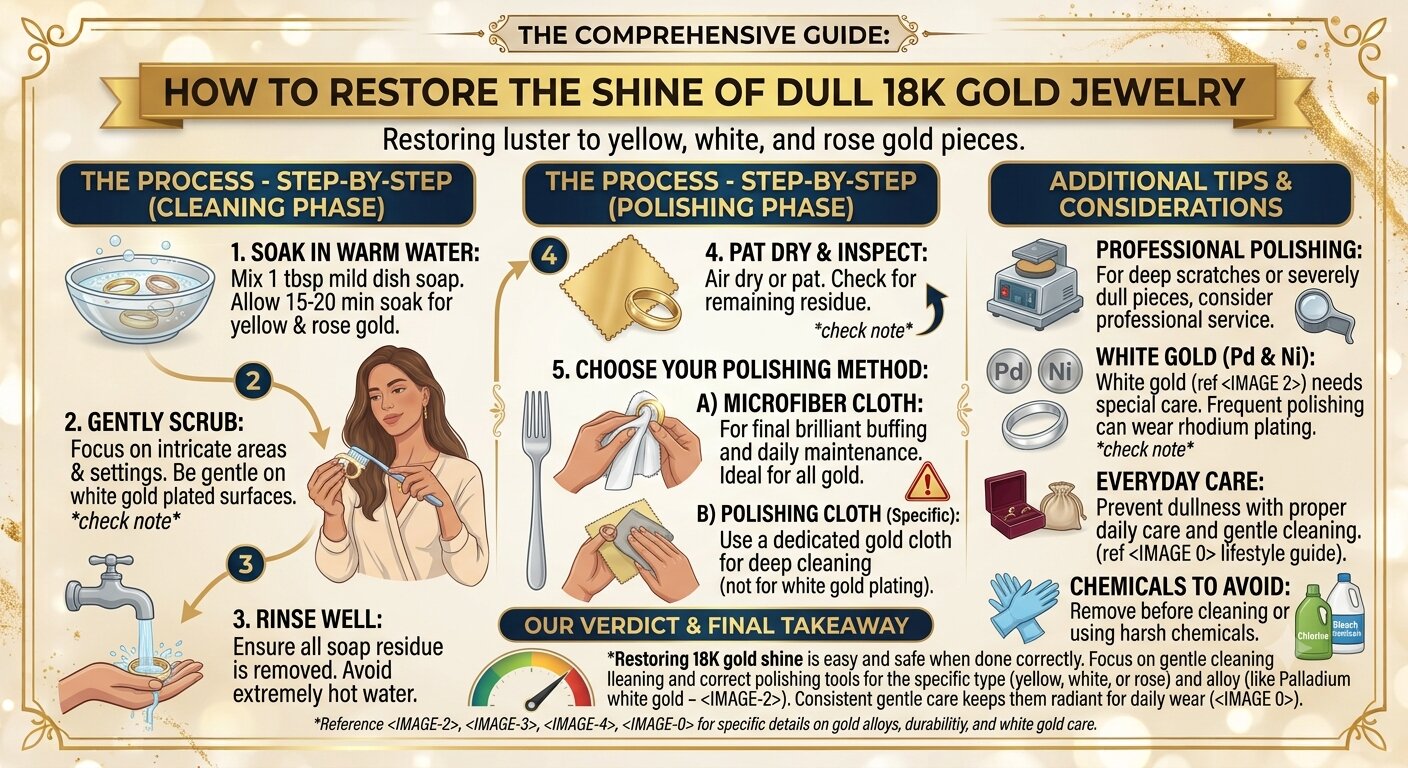
How to Restore the Shine of Dull 18K Gold Jewelry
Is your 18K gold jewelry looking dull? Learn how to restore its shine with safe at-home cleaning methods, find out when to seek professional help, and get tips for white gold and plated pieces.
Hook: "You pull out your favorite 18K gold necklace, but it no longer has that warm, radiant glow it once did. Instead, it looks dull, lifeless, and covered in a thin film. Don't worry—this doesn't mean your jewelry is ruined."
Problem: 18K gold jewelry naturally dulls over time due to skin oils, lotions, perfumes, dust, and tiny scratches from everyday wear. This is not a sign of poor quality, but simply a sign that it needs cleaning.
Promise: "In this guide, we'll walk you through exactly how to restore your 18K gold's brilliance—from simple at-home methods to professional services—and share tips to keep it shining longer."
Why Does 18K Gold Jewelry Become Dull?
Understanding the cause helps you choose the right solution.
Pure Gold vs. Gold Alloys
Pure (24K) gold does not tarnish. However, 18K gold is an alloy—75% pure gold mixed with 25% other metals like copper and silver.
These alloy metals can react with oxygen, moisture, and chemicals, leading to a dull film or discoloration over time.
Common Causes of Dullness
Everyday Residue: Skin oils, sweat, lotions, perfumes, and hairspray leave a film on the surface.
Chemical Exposure: Household cleaners, chlorine (from pools), and saltwater can damage the alloy metals and cause dullness or discoloration.
Micro-scratches: Regular wear creates tiny scratches that scatter light, making the surface appear less shiny.
Step 1: Quick Daily Care – Prevention Is Easier Than Restoration
These habits slow down dullness and reduce how often you need to deep-clean.
"Last On, First Off" Rule
Put your 18K gold jewelry on after applying lotions, perfumes, and hairspray, and take it off before washing hands, showering, or using cleaning products.
Remove rings before swimming—chlorine and saltwater can cause micro-etching.
Wipe After Each Wear
Gently wipe your pieces with a soft, lint-free microfiber cloth after removing them. This lifts oils and dust before they build up.
Proper Storage
Store each piece separately in a soft pouch or compartmentalized jewelry box to prevent scratches from rubbing against other pieces.
In humid environments, add a silica gel packet to your storage box to reduce moisture.
Step 2: The Safest At-Home Cleaning Method (For Most 18K Gold)
This is the method recommended by jewelers for solid 18K gold—gentle, effective, and low-risk.
What You'll Need:
Small bowl
Warm (not hot) water
A few drops of mild dish soap (fragrance-free, like Dawn original)
Soft-bristled baby toothbrush or jewelry brush
Lint-free microfiber cloth
Step-by-Step Instructions:
| Mix | Fill the bowl with warm water and add a few drops of mild dish soap. |
| Soak | Place your jewelry in the solution and let it soak for 10–15 minutes (up to 30 minutes for heavily soiled pieces). |
| Gently Brush | Using the soft brush, gently scrub the jewelry—pay special attention to crevices, settings, and chain links. Use light pressure to avoid scratches. |
| Rinse | Rinse thoroughly under lukewarm running water to remove all soap residue. |
| Dry & Polish | Pat dry immediately with a soft microfiber cloth—never air-dry, as minerals in water can leave spots. For added shine, buff with a jewelry polishing cloth. |
Step 3: When to Use Alternative Cleaning Methods
Some sources suggest these methods, but caution is advised.
Jewelry Polishing Cloth
Excellent for removing light tarnish and restoring shine quickly. Use a cloth specifically designed for gold.
Caution: Avoid using on gemstones like pearls or opals, as the polishing agent can be abrasive.
Baking Soda Paste (Use with Caution)
Some recommend mixing baking soda with water to form a paste.
Warning: Baking soda is mildly abrasive and can create tiny scratches on the gold surface. Use it only as a last resort and with very gentle pressure. Not recommended for plated jewelry.
What to AVOID at All Costs
Vinegar: Acidic and can damage the finish.
Toothpaste: Abrasive and will scratch the gold.
Abrasive Cloths or Materials: Paper towels, tissues, or rough cloths can cause micro-scratches.
Ultrasonic Cleaners: Only safe for solid gold without delicate stones. Can loosen settings or damage fragile gemstones.
Step 4: Special Cases – 18K White Gold and Gold-Plated Jewelry
Not all "18K gold" is the same. Different materials require different care.
18K White Gold – Restoring the Bright White Shine
18K white gold is naturally a warm, slightly greyish color. To achieve its bright white finish, it is almost always plated with rhodium.
Over time, the rhodium plating wears off, and the underlying metal shows through, making the piece look yellowish or dull.
Solution: Soap and water will not restore the bright white shine. The piece needs to be re-rhodium-plated by a professional jeweler. Chanel, for example, offers this service for $195–$260 CAD.
18K Gold-Plated or Vermeil Jewelry – Gentle Handling Required
If your piece is 18K gold-plated or vermeil (gold over sterling silver), the gold layer is thin and can be worn away by abrasive cleaning.
Cleaning Method: Dampen a soft cloth with plain warm water (no soap) and gently wipe the surface. Do not soak, brush vigorously, or use any abrasives.
Tip: Gold plating is not waterproof—remove before showering, swimming, or exercising.
Step 5: When to Seek Professional Help
Sometimes, professional services are the safest and most effective option.
Deep Polishing: A professional jeweler can polish away fine scratches and restore the original luster. Chanel notes this service can only be performed a limited number of times (about 3) as it removes a tiny amount of metal.
Re-Rhodium Plating: As mentioned above, this is necessary for 18K white gold to restore its bright white finish.
Gemstone Safety: If your jewelry has delicate stones (pearls, opals, emeralds), or if stones feel loose, take it to a professional to avoid damage.
Worn-Through Plating: If the gold layer on plated jewelry has worn off to reveal the base metal, cleaning will not fix it—re-plating is required.
Frequently Asked Questions (FAQ) Section
How often should I clean my 18K gold jewelry?
A light polish every few weeks and a deep clean (soap and water) every 3–6 months are usually sufficient.
Can I wear my 18K gold ring in the shower?
It's best not to. Soap and water can create a dull film, and over time, exposure can affect the alloy metals.
Will 18K gold tarnish?
Solid 18K gold does not tarnish like sterling silver, but the alloy metals can react with the environment, causing a dull film or slight discoloration—both of which are easily cleaned.
Is cleaning 18K gold the same ascleaning 14K gold?
Yes, the same mild soap and water method is safe for both 14K and 18K solid gold.
Can I use toothpaste to clean my gold ring?
No. Toothpaste is abrasive and will create tiny scratches that dull the surface over time.
Conclusion & Final Recommendations
Summary: Restoring the shine of dull 18K gold is simple with the right approach. For most solid 18K gold pieces, the mild soap and warm water soak is safe, effective, and recommended by jewelers. For white gold, professional rhodium re-plating is the only way to restore the bright white finish. And for plated pieces, the gentlest possible method is essential.
Final Thought: "Your 18K gold jewelry is an investment meant to last a lifetime. With simple, consistent care, it will retain its warmth and brilliance for decades to come."


Other news for Sunday 12 July, 2026
- 18K Gold Jewelry for Sensitive Skin: What You Need to Know
- 18K Gold vs 14K Gold vs Platinum: Which Metal Is Best for Your Ring
- 18K White Gold vs Yellow Gold vs Rose Gold: Key Differences Explained
- Is 18K Gold Jewelry Durable Enough for Everyday Wear?
- How to Choose the Right 18K Gold Chain Length and Thickness
- How to Choose an 18K Gold Gift for Your Mother That She’ll Treasure
- How to Spot Fake 18K Gold Jewelry Before You Buy: A 2026 Guide
View all news for Sunday 12 July, 2026 on one page
News for Wednesday 08 July, 2026
View all news for Wednesday 08 July, 2026 on one page
Recent News
- Wednesday 01 July, 2026
- Tuesday 16 June, 2026
- Monday 15 June, 2026
- Sunday 14 June, 2026
- Saturday 13 June, 2026