

A Complete Guide to the Symbolism of Zircon Stone
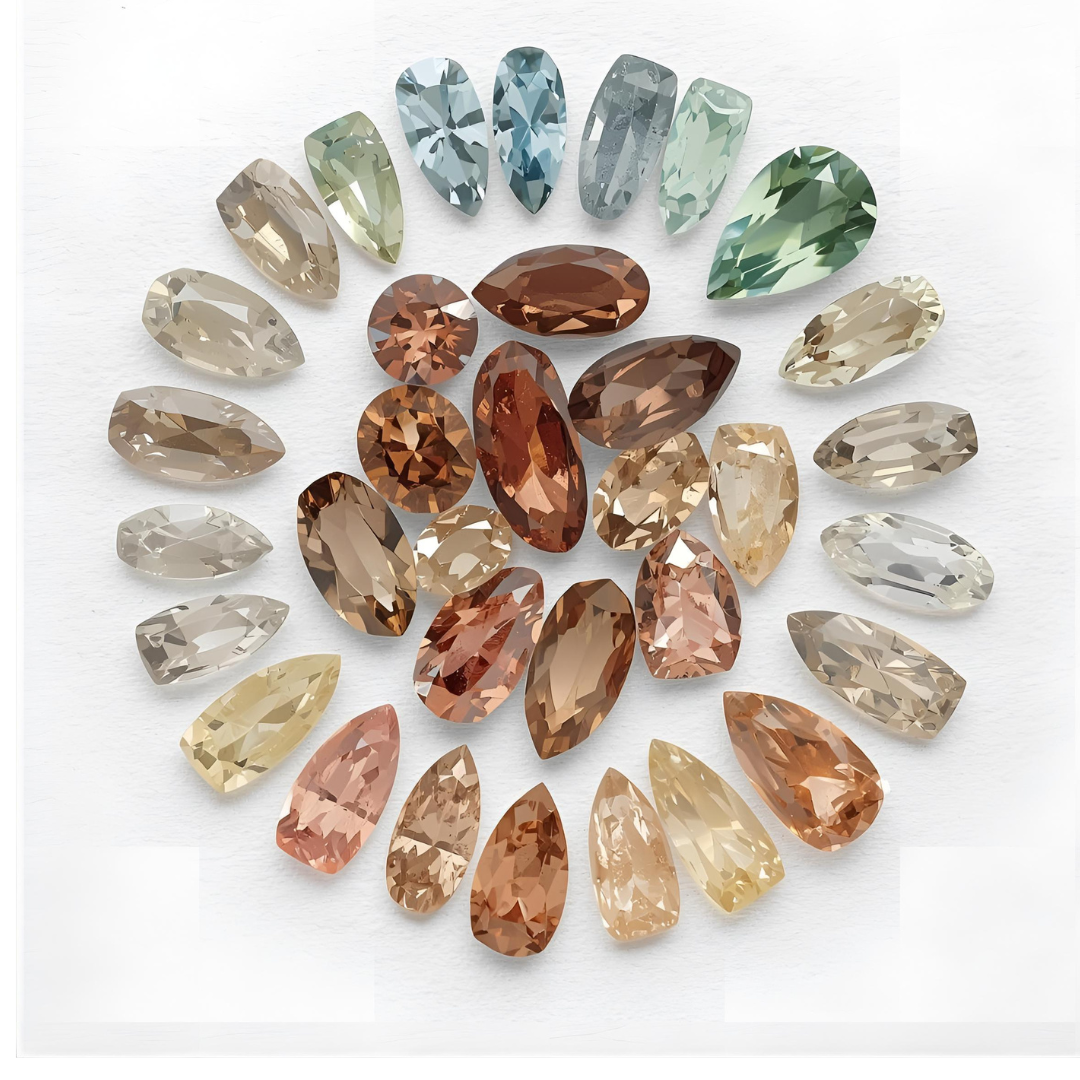
Zircon stone is a natural, colorful gemstone known for its exceptional brilliance and rainbow-like flashes of light, called "fire."
In Hindu mythology, zircon was believed to be the ‘stone of virtue‘ — a gem that could purify the mind and protect the soul from temptation. Kings wore it to ensure honest judgment. Travelers carried it to ward off injury and disease. And in medieval Europe, the ‘hyacinth‘ zircon was set into rings for bishops and nobles, who believed the stone‘s golden fire could cool the heat of anger and reveal hidden truths. Zircon has no royal mine, no Cleopatra legend. Its power is quieter: it has simply outlasted everything. Four billion years of survival, now on your finger.
The same stone that survived four billion years now awaits your December birthday — or your own timeless story. Every zircon in our collection is natural (never cubic zirconia), chosen for that signature fire, from vivid blue to rare green and red.”
[Button: Explore Natural Zircon Jewelry →]
Let's see the list of tables; contents.
What Color Is Zircon Stone?
What Is The Meaning Of Zircon Stone?
What Is The Best Color Zircon?
What Is The Rarest Color of con?
What Is The Zircon Stone Good For?
How To Identify A Real Zircon Stone?
Is Zircon An Expensive Stone?
Is Zircon A Fake Diamond?
What Are the Zircon Stone Benefits?
Is Zircon As Good As Diamond?
Is Zirconia Cheaper Than Diamond?
Is There A Difference Between Zircon And Zirconia?
Does Zircon Have Resale Value?
Does Zircon Rust In Water?
First topic;
What Is The Meaning Of Zircon Stone?
The meaning of the zircon stone is rich and multifaceted, spanning ancient history, metaphysical beliefs, and modern gemology. It's a gem often misunderstood but deeply significant.
Here’s a comprehensive breakdown of the meaning of zircon stone:
First, A Crucial Clarification
It's important to distinguish natural zircon from the synthetic diamond simulant, cubic zirconia (CZ). They are completely different materials.
Natural Zircon is a natural mineral (zirconium silicate), one of the oldest on Earth, prized for its brilliance and fire.
Cubic Zirconia (CZ) is a lab-created synthetic substance (zirconium dioxide).
When discussing its "meaning," we are always referring to the natural zircon.
1. Historical and Cultural Meanings
An Ancient Guardian: Zircon crystals have been found in Australia that are over 4.4 billion years old, making them the oldest known material on Earth. This ancient connection gives it a meaning of endurance, stability, and a link to the primordial past.
The "Hyacinth" Stone: In the Middle Ages, the orange-red variety of zircon was known as "hyacinth," a name derived from the flower. It was believed to aid sleep, bring prosperity, and ward off plague and evil spirits.
Victorian Popularity: Zircon was extremely popular in Victorian jewelry, often used as a diamond alternative. It symbolized purity, innocence, and constancy.
2. Metaphysical and Spiritual Meanings
In crystal healing and metaphysical traditions, zircon is considered a powerful and versatile stone. Its meaning is often tied to its color:
Overall Spiritual Meaning: Zircon is known as a stone of virtue.
Amplifying Energy: It is believed to amplify the energy of other stones and the user's own spiritual energy, helping to connect with higher states of consciousness.
Grounding and Balancing: Despite its ability to connect to spiritual realms, blue zircon, in particular, is considered a grounding stone that can help balance the emotions and bring a sense of inner peace and stability.
Promoting Wisdom and Honor: It is said to aid in facing the truth, promoting honesty, self-respect, and a strong sense of personal ethics.
3. Meanings by Color
Zircon comes in a stunning array of colors, each with its own nuance of meaning:
Blue Zircon (the most popular): Associated with wisdom, spiritual growth, and inner peace. It's believed to aid in dream recall, stimulate the throat chakra for clear communication, and attract prosperity. It is the birthstone for December.
White / Colorless Zircon: Known for its brilliance and "fire," it symbolizes purity, innocence, and clarity of mind. It's often used to amplify intentions and connect with one's higher self.
Red Zircon (Hyacinth): A stone of vitality, passion, and confidence. It's associated with the life force, stimulating the root chakra for grounding and survival instincts.
Yellow Zircon: Connected to creativity, self-expression, and manifestation. It's thought to attract what one needs and bring a sunny, optimistic outlook.
Green Zircon: Represents growth, renewal, and abundance. It's linked to the heart chakra, promoting emotional healing and attracting prosperity.
4. Modern Symbolism and Uses
December Birthstone: Zircon, especially in its blue variety, is one of the three modern birthstones for December (along with turquoise and tanzanite). For December babies, it symbolizes success, good fortune, and protection during travel.
A Symbol of Brilliance: Due to its high refractive index and strong dispersion (its ability to split light into spectral colors, known as "fire"), zircon is a symbol of brilliance, intelligence, and clarity.
A Gem of Renewal: Its resilience over billions of years makes it a powerful symbol of endurance and the ability to withstand pressure and emerge beautifully.
Summary: Key Takeaways
In essence, the meaning of zircon stone is a beautiful blend of:
Ancient Wisdom & Endurance
Spiritual Amplification & Grounding
Virtue, Honor & Truth
Brilliance & Clarity
It's a gem that encourages the wearer to be both grounded in reality and connected to higher wisdom, all while shining with their own unique, virtuous light.
What Is The Best Color Zircon?
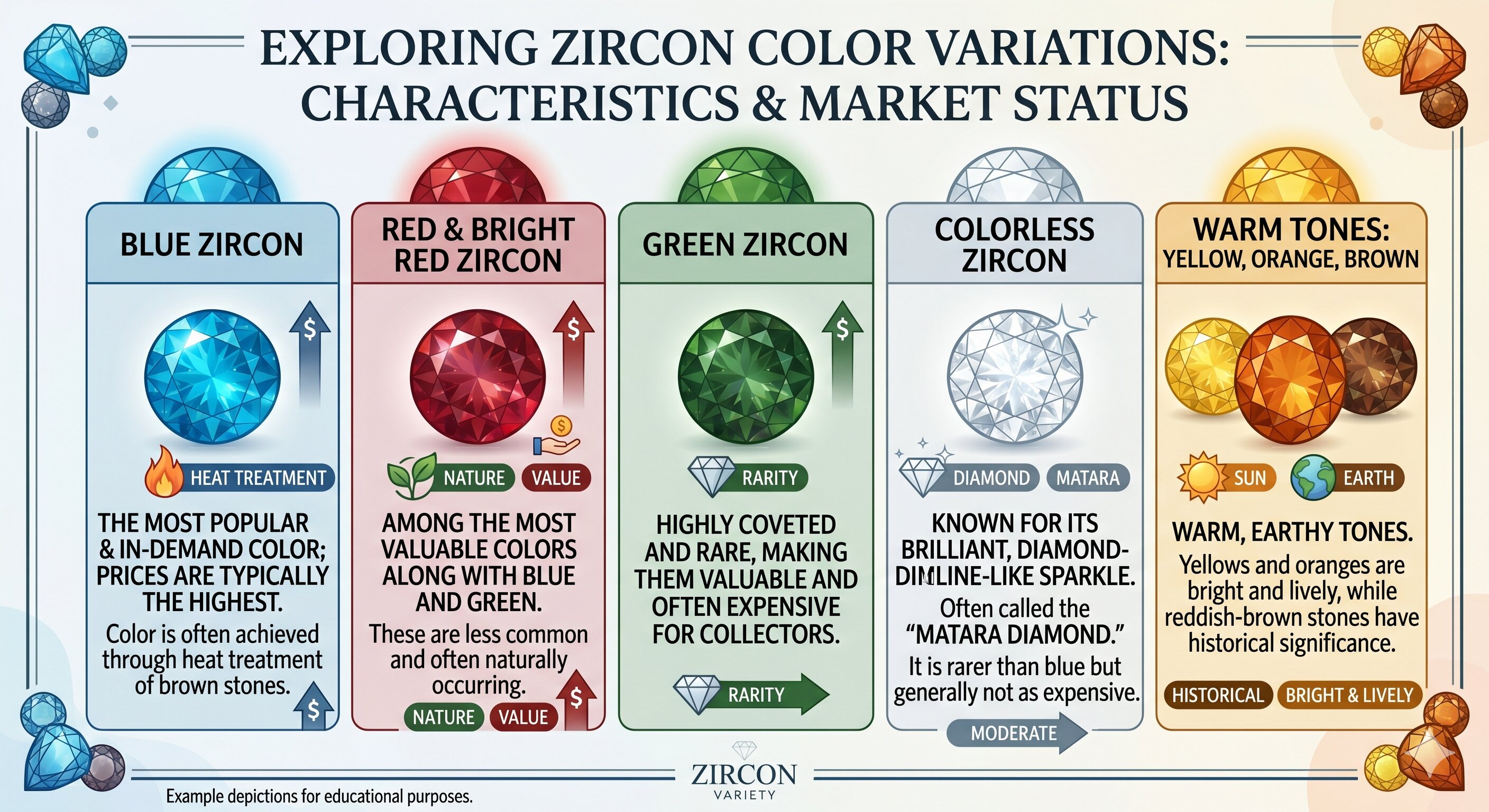
There isn't one single "best" color for Zircon, as the ideal choice often depends on personal taste and what you value most. However, in the gemstone market, Blue Zircon is widely considered the most popular and often commands the highest prices.
To help you understand the range, here is a quick overview of the most valued Zircon colors:
What Makes a Zircon Valuable?
The value of a Zircon is determined by several factors, with color being the most important:
Color is King: The vibrancy and saturation of the color are crucial. A medium-dark, pure blue is more desirable than a pale or grayish one. For all colors, stones with even color distribution are preferred over those with visible zoning.
The Impact of Treatments: It's very common for Zircons to be heat-treated to enhance or change their color. Most blue Zircons on the market started as brown stones. This treatment is permanent and accepted in the trade, but naturally vibrant colors (especially reds and greens) are rarer and can be more valuable.
Consider Clarity and Cut: Top-quality Zircons are typically "eye-clean," meaning they have no inclusions visible to the naked eye. A good cut is also essential to showcase Zircon's exceptional brilliance and fire.
Tips for Choosing and Wearing Zircon
For Jewelry: While stunning in rings, Zircon has a hardness of 6-7.5 and can be brittle, making it prone to chips and scratches. A protective setting is recommended for rings. It is safer in earrings, pendants, or brooches.
Care and Cleaning: Store Zircon separately from harder gems to prevent scratches. Clean with a soft brush, mild soap, and warm water. Avoid ultrasonic and steam cleaners. Some heat-treated stones may fade if exposed to strong sunlight for prolonged periods, so it's best to store them in the dark.
The "best" color ultimately comes down to your personal preference. Whether you're drawn to the popular blue, a rare green, or the brilliant colorless stone, Zircon offers a beautiful option for every taste.
If you have a particular color in mind or plan to use it in a specific type of jewelry, I can help you with more specific information.
What Is The Rarest Color Of Con?
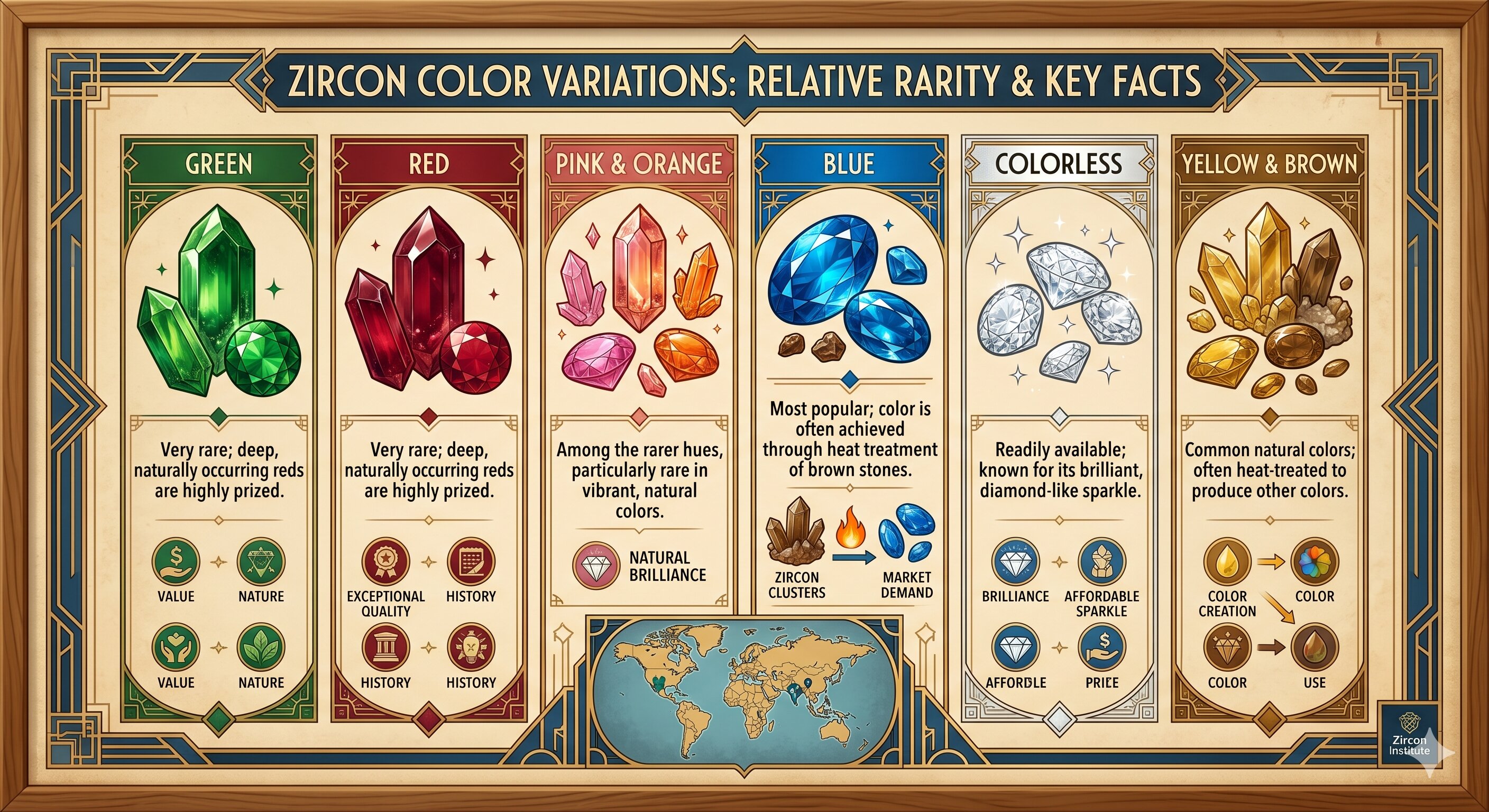
Based on expert sources, green is considered the rarest color for natural zircon. Other very rare colors include natural, untreated red and certain shades of pink and orange.
Here is a quick overview of the zircon color spectrum and its relative rarity:
Understanding Zircon Colors and Treatments
The availability of zircon colors is greatly influenced by a common and accepted practice in the gem trade: heat treatment.
How Treatment Affects Rarity: The vibrant blue zircon that is widely available today is almost always created by heat-treating common brown or reddish-brown stones. Similarly, colorless zircon is also often a result of this process. This means that while treated blue zircon is popular, a naturally occurring blue zircon is much rarer.
The Case of Green Zircon: While green zircon can also be created through treatment, natural green zircon is exceptionally rare. Jewelry designer Paula Crevoshay, who has pieces in the Smithsonian, notes that large natural green zircons are "almost impossible to find".
The "best" or most valuable color is often a matter of personal taste, but the rarest colors are undoubtedly natural green, red, and vibrant pinks and oranges.
I hope this helps you understand the fascinating world of zircon colors. Are you interested in the properties of any specific color in more detail?
What Is The Zircon Stone Good For?
The zircon stone is "good for" a surprising number of things, ranging from its historical and metaphysical uses to its very practical applications in modern jewelry and even science.
Here’s a comprehensive breakdown of what zircon is good for.
1. Metaphysical and Healing Properties (Crystal Healing Tradition)
In metaphysical beliefs, zircon is considered a powerful and versatile stone. It's important to note that these uses are based on tradition and belief, not scientific evidence.
Amplification and Grounding: Zircon is believed to amplify the energy of other stones and the wearer's own spiritual energy. At the same time, Blue Zircon is considered a grounding stone that can bring emotional balance and stability.
Spiritual Growth: It is known as a "stone of virtue," believed to aid in spiritual development, connect one with higher wisdom, and promote honesty and self-respect.
Prosperity and Abundance: Historically, zircon was carried as a talisman to attract wealth, honor, and wisdom.
Healing Energies by Color:
Blue Zircon: Promotes deep sleep, communication, and inner peace.
White Zircon: Aids in clarity of mind, amplifies intentions, and symbolizes purity.
Red Zircon: Boosts vitality, passion, and confidence.
Yellow Zircon: Stimulates creativity, manifestation, and a positive outlook.
2. Jewelry and adornment
This is one of zircon's most popular and practical uses.
A Brilliant Gemstone: Zircon has a high refractive index and strong dispersion (the ability to split light into spectral colors, known as "fire"). This makes it an exceptionally brilliant and fiery gem, perfect for adding sparkle to jewelry.
A Diamond Alternative: Colorless zircon is a fantastic, natural diamond alternative due to its brilliance and fire. It's often called "Matura Diamond" in the trade.
A Birthstone: Zircon (especially the blue variety) is one of the recognized birthstones for December, making it a meaningful and beautiful gift for those born in that month.
Variety of Colors: Its wide color range (blue, green, yellow, orange, red, brown, and colorless) offers many options for unique and personalized jewelry pieces.
3. Physical Properties and Industrial Uses
Beyond its beauty, zircon has significant practical applications due to its physical and chemical properties.
Geological Timekeeping: Zircon crystals are the oldest known materials on Earth. They contain trace amounts of uranium and thorium, which decay to lead at a known rate. By measuring this, geologists can date the rock formations in which the zircon is found, making it incredibly valuable for understanding Earth's early history.
Industrial Abrasive: Zirconium silicate (the mineral that makes up zircon) is very hard and resistant to heat. It is mined and used to create abrasives, refractory materials (for furnaces), and foundry casts.
Source of Zirconium Metal: Zircon is the primary ore for the metal zirconium, which is used in various high-tech applications due to its corrosion resistance.
Durability in Jewelry: With a hardness of 6.5 to 7.5 on the Mohs scale, zircon is durable enough for jewelry, but it requires some care as it can be brittle and prone to chips and scratches compared to harder gems like corundum (sapphire/ruby) or diamond.
4. Historical and Cultural Significance
Ancient Talisman: Zircon has been used in jewelry for centuries. In the Middle Ages, it was believed to ward off evil spirits, aid in sleep, and bring prosperity.
Victorian Elegance: It was a highly popular gem in Victorian-era jewelry.
Summary: What is Zircon Good For?
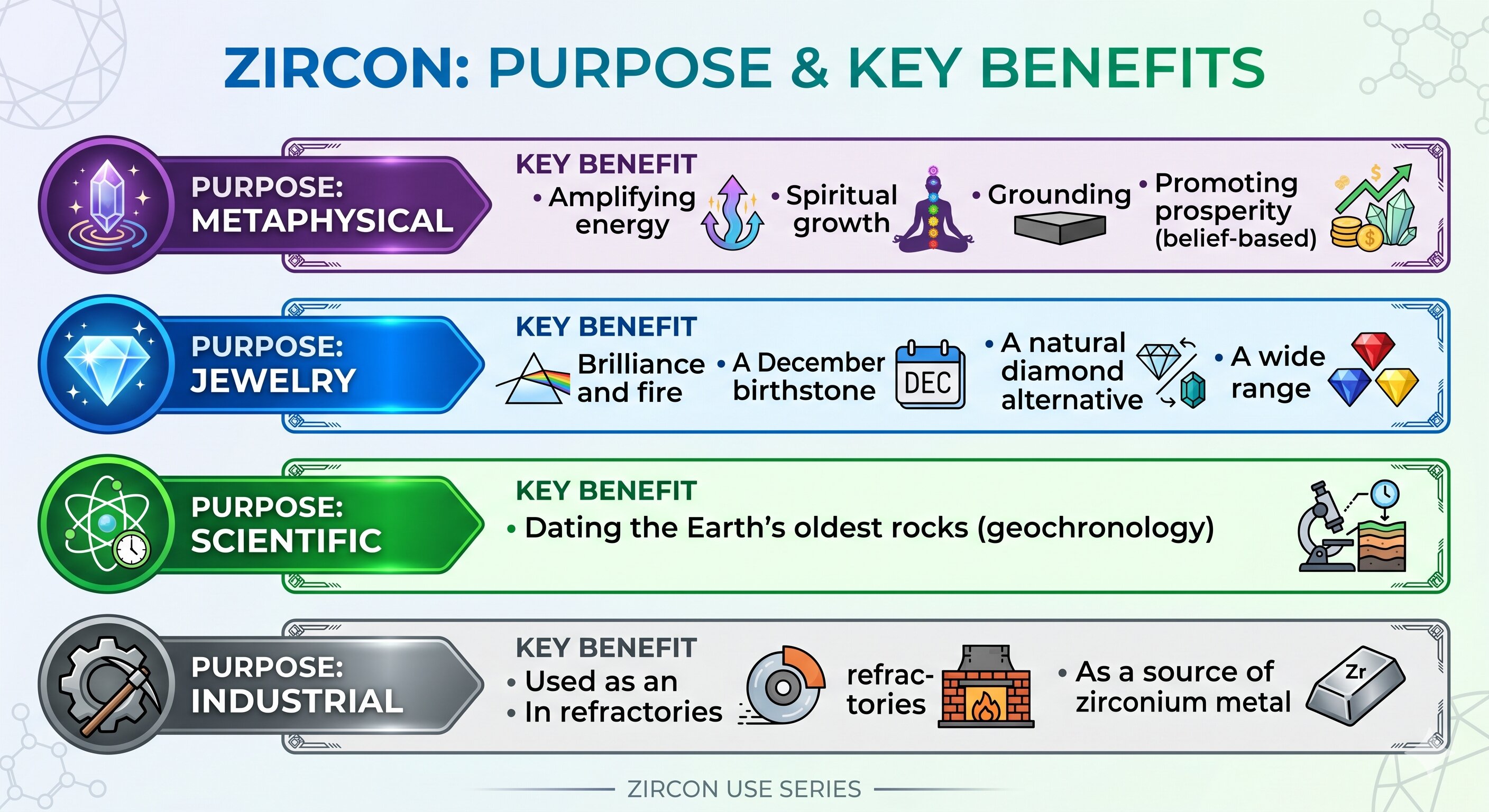
In short, zircon is a multifaceted gem. It's good for making beautiful, sparkling jewelry, for serving as a crucial tool for geologists, for use in various industrial applications, and for those who believe it's a stone rich with symbolic and healing meaning.
How To Identify A Real Zircon Stone?
Identifying a real zircon stone involves distinguishing it from both common imitations (like cubic zirconia and glass) and other natural gemstones. It requires a careful observation of its unique properties.
Here is a practical guide, from simple visual checks to professional methods, on how to identify a real zircon.
Key Characteristics of Real Zircon
Real natural zircon has a combination of properties that set it apart:
Double Refraction (The "Fuzziness" Test): This is one of the most telling signs.
What it is: Zircon has strong double refraction, meaning light splits into two rays as it passes through the stone. If you look through the stone at the facet junctions (the edges where two facets meet), you will see a doubled or fuzzy appearance.
How to check: Use a jeweler's loupe (10x magnification) and look down through the top of the stone at the facets on the bottom. You should see two lines instead of one.
Comparison: Cubic zirconia (CZ) and diamond are singly refractive, so their facet edges will appear as a single, sharp line.
Brilliance and Fire: Zircon is exceptionally brilliant and has high "fire" (flashes of spectral color).
Observation: It displays a rainbow-like sparkle that is more pronounced than in many other gemstones, even rivaling diamonds. However, its fire is often more "soft" or "oily" compared to the very "hard" and sharp brilliance of CZ.
Hardness and Wear:
The "Paper" Edges: Zircon is relatively hard (6.5-7.5 on the Mohs scale) but is also brittle. Due to this brittleness, the facet edges can become chipped or abraded over time. On older jewelry, you might see that the edges look slightly worn or rounded, unlike the sharp, perfect edges of a harder stone like diamond or CZ.
Color and Luster:
Zircon comes in a range of colors, with blue and colorless being the most popular in jewelry. The luster is described as vitreous to a brilliant adamantine (diamond-like).
How to Differentiate from Common Look-Alikes
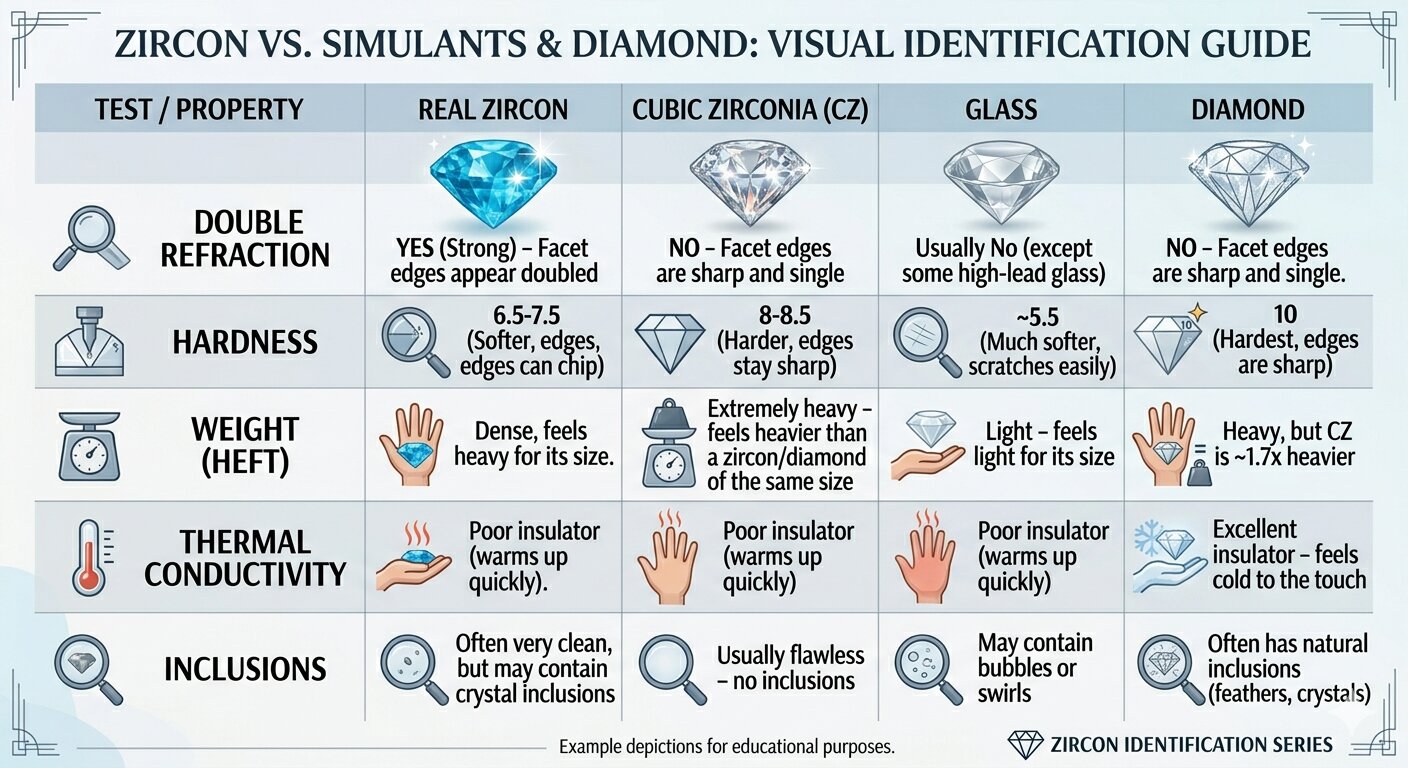
A Step-by-Step Identification Guide (For Beginners)
The Naked Eye Check: Look at the stone's sparkle. Does it have intense, colorful flashes of fire? If yes, it could be zircon or CZ.
The Loupe Test (Most Important): Use a 10x loupe. Look straight down through the top of the stone at the bottom facet edges. If they appear doubled or fuzzy, it is a strong indicator that you have a real zircon. If they are perfectly sharp and single, it is likely CZ, glass, or diamond.
The Weight Test: Compare the stone to a diamond or CZ of similar size. If it feels surprisingly heavy, it's likely CZ. If it feels heavy but not excessively so, it could be zircon.
The Edge Inspection: Carefully examine the facet edges under magnification. Slightly worn or chipped edges are a common clue for zircon, especially in vintage jewelry.
When in Doubt, Seek a Professional
The most reliable way to identify a zircon is to take it to a certified gemologist or a reputable jeweler. They have specialized tools that provide definitive proof:
Refractometer: Measures the gem's refractive index, which is unique for each species.
Spectroscope: Can detect a specific absorption spectrum that is characteristic of zircon.
Thermal Probe (Diamond Tester): Can easily distinguish diamond (will test positive) from zircon and CZ (will test negative).
In summary, the quickest at-home method to suspect a real zircon is to observe its strong double refraction with a loupe. If you see doubled facets, you are likely holding a genuine zircon and not its most common imitation, cubic zirconia.
How Much Is A Zircon Stone Worth?
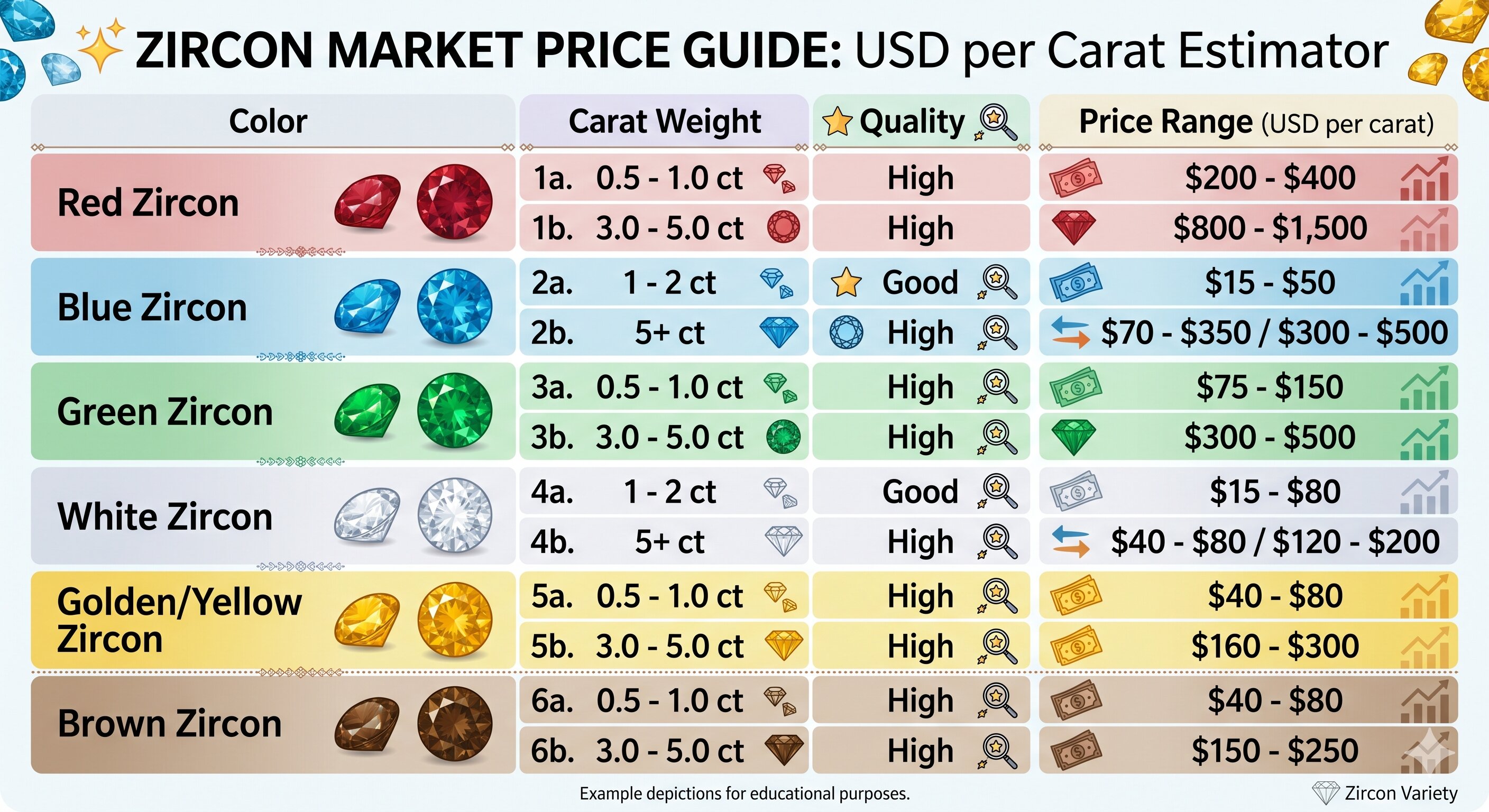
The value of a zircon stone depends heavily on its color, size, and quality, with prices ranging from around $15 to over $1,500 per carat for gem-quality stones. The most significant factor is its color, with rare red and vibrant blue zircons being among the most valuable.
Here is a summary of price ranges for different colors of zircon to give you a quick overview.
Zircon Price Ranges by Color
Key Factors That Determine Value
Beyond color, several other factors critically influence a zircon's final price.
Color and Rarity: As shown in the table, color is the primary driver of value. Vivid and saturated colors are most desirable. Red zircon is the rarest and most valuable, followed by intense blue zircon, which is the most popular color in the market. Green zircon is also very rare.
Carat Weight: The price per carat increases significantly with size, especially for high-quality material. A 5-carat high-quality blue zircon can be worth 5-10 times more per carat than a 1-carat stone of the same color and quality.
Clarity and Cut: Most fine zircons are "eye-clean," meaning no inclusions are visible without magnification. A well-executed cut is crucial as it maximizes the gem's brilliance and fire.
Treatments: Heat treatment is very common, especially for producing blue and colorless zircons from brown rough material. Untreated stones with desirable natural color are typically more valuable than their treated equivalents, provided the treatment is disclosed.
Origin: Zircons from certain locations, such as Cambodia (known for blues), Sri Lanka, and Myanmar, may carry a premium due to their reputation for quality.
Tips for Buying Zircon
Get a Certificate: For valuable stones, insist on a grading report from a reputable gemological laboratory (like GIA) that verifies the gem's qualities and discloses any treatments.
Understand the Names: Be aware that colorless zircon has been historically called "Matura Diamond." Always ensure you are buying natural zircon and not the lab-created cubic zirconia (CZ).
Consider Jewelry Use: Zircon has a hardness of 6.5 to 7.5, but it can be brittle. For rings, choose protective settings. It is safer in earrings or pendants.
I hope this detailed breakdown helps you assess the value of a zircon stone. If you have a specific stone in mind with a known color and size, I may be able to provide more tailored information.
Is Zircon A Fake Diamond?
No, zircon is not a "fake diamond." It is a genuine, natural gemstone in its own right. However, colorless zircon has been used historically as a diamond alternative because of its brilliance and fire.
Here’s a clear breakdown to eliminate the confusion:
Zircon vs. Diamond: A Natural Gem in Its Own Right
Think of it this way: A sapphire isn't a fake ruby, even though they are both corundum. Similarly, zircon is a distinct mineral with its own unique properties and value.
The following table compares their key characteristics:
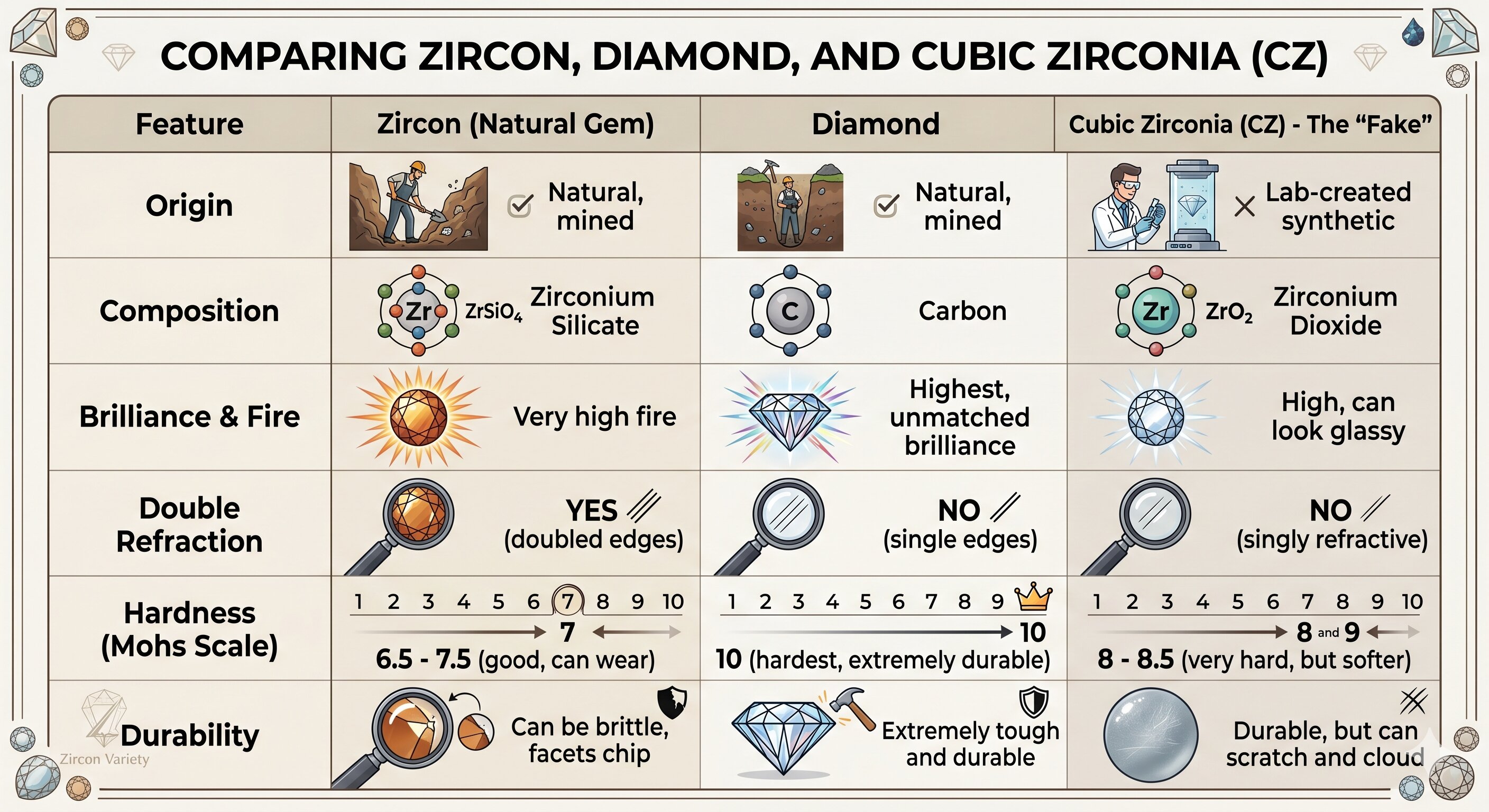
Why the Confusion Exists
The Name "Zircon": The name sounds very similar to the synthetic material "cubic zirconia." This is the primary source of confusion. They are completely different substances.
Historical Use as a Diamond Substitute: Before modern synthetics like CZ were invented, colorless zircon was one of the best available options to mimic a diamond's sparkle due to its high brilliance and dispersion. It was sometimes (and misleadingly) called "Matura Diamond." This legacy has stuck, causing some to wrongly label it as a "fake."
Key Takeaway
Zircon is a natural gemstone with its own beauty, history, and value. It is not a fake.
Cubic Zirconia (CZ) is a synthetic diamond simulant created in a lab to imitate a diamond. This is what people typically mean by a "fake diamond."
So, while a colorless zircon can function as a diamond alternative for budget-conscious buyers, it is absolutely not a "fake." It is a beautiful and respected gem in its own right, especially prized for its range of colors and exceptional fire.
If you are looking at a colorless, brilliant stone and are unsure if it's zircon or diamond, a jeweler can quickly tell them apart using the "doubling" test or a simple thermal conductivity probe (a diamond tester).
What Are the Zircon Stone Benefits?
The benefits of zircon are multifaceted, spanning from its tangible, physical properties in jewelry to its historical and metaphysical uses.
Here is a comprehensive overview of the benefits of the zircon stone:
1. Tangible & Practical Benefits
These are the concrete, measurable advantages of zircon.
Exceptional Brilliance and Fire: Zircon has a high refractive index and strong dispersion (the ability to split light into spectral colors). This means it sparkles with intense flashes of rainbow-colored light, often rivaling a diamond's visual appeal at a much lower cost.
Affordability: As a natural gemstone, zircon offers incredible beauty and brilliance for its price point. It provides a luxurious look without the high cost of diamonds, sapphires, or rubies.
Durability for Jewelry: With a hardness of 6.5 to 7.5 on the Mohs scale, zircon is durable enough for everyday jewelry like rings, but it should be worn with some care to prevent chips and scratches due to its brittleness. It is perfectly suited for earrings, pendants, and brooches.
Variety of Colors: Zircon comes in a wide spectrum of colors, including blue, colorless, yellow, orange, red, brown, and green. This allows for great versatility and personalization in jewelry design.
A December Birthstone: It is one of the recognized birthstones for December, making it a meaningful and personalized gift for those born in that month.
2. Historical & Cultural Benefits
Zircon has been valued for centuries for its perceived powers.
Promoter of Wisdom and Honor: Historically, zircon was believed to aid in wisdom, honor, and self-esteem. It was thought to help the wearer succeed and be respected.
Talisman for Protection and Prosperity: In the Middle Ages, zircon was worn to ward off evil spirits, bring prosperity, and ensure a good night's sleep. It was also considered a stone that could protect travelers from injury and disease.
Aid for Physical Ailments: Ancient healers believed zircon could alleviate pain, especially from cramps and respiratory issues, and was thought to stimulate the appetite.
3. Metaphysical & Spiritual Benefits (Belief-Based)
In modern crystal healing, zircon is valued for the following (based on tradition and belief, not scientific evidence):
Amplifying Energy: It is considered a powerful energy amplifier, both for other crystals and for the user's own spiritual energy and intentions.
Grounding and Balancing: Despite its high energy, zircon (especially blue) is also known as a grounding stone, helping to bring emotional balance, calm anxieties, and promote inner peace.
Spiritual Connection: It is said to aid in connecting with higher spiritual realms and one's inner wisdom, promoting truth, honesty, and virtue.
Benefits by Color:
Blue Zircon: Calms the mind, aids communication, and promotes deep, restful sleep.
Colorless Zircon: Enhances clarity, purity, and amplifies spiritual energy.
Red Zircon: Boosts vitality, passion, and life force energy.
Yellow Zircon: Stimulates creativity, joy, and manifestation.
Summary of Key Benefits
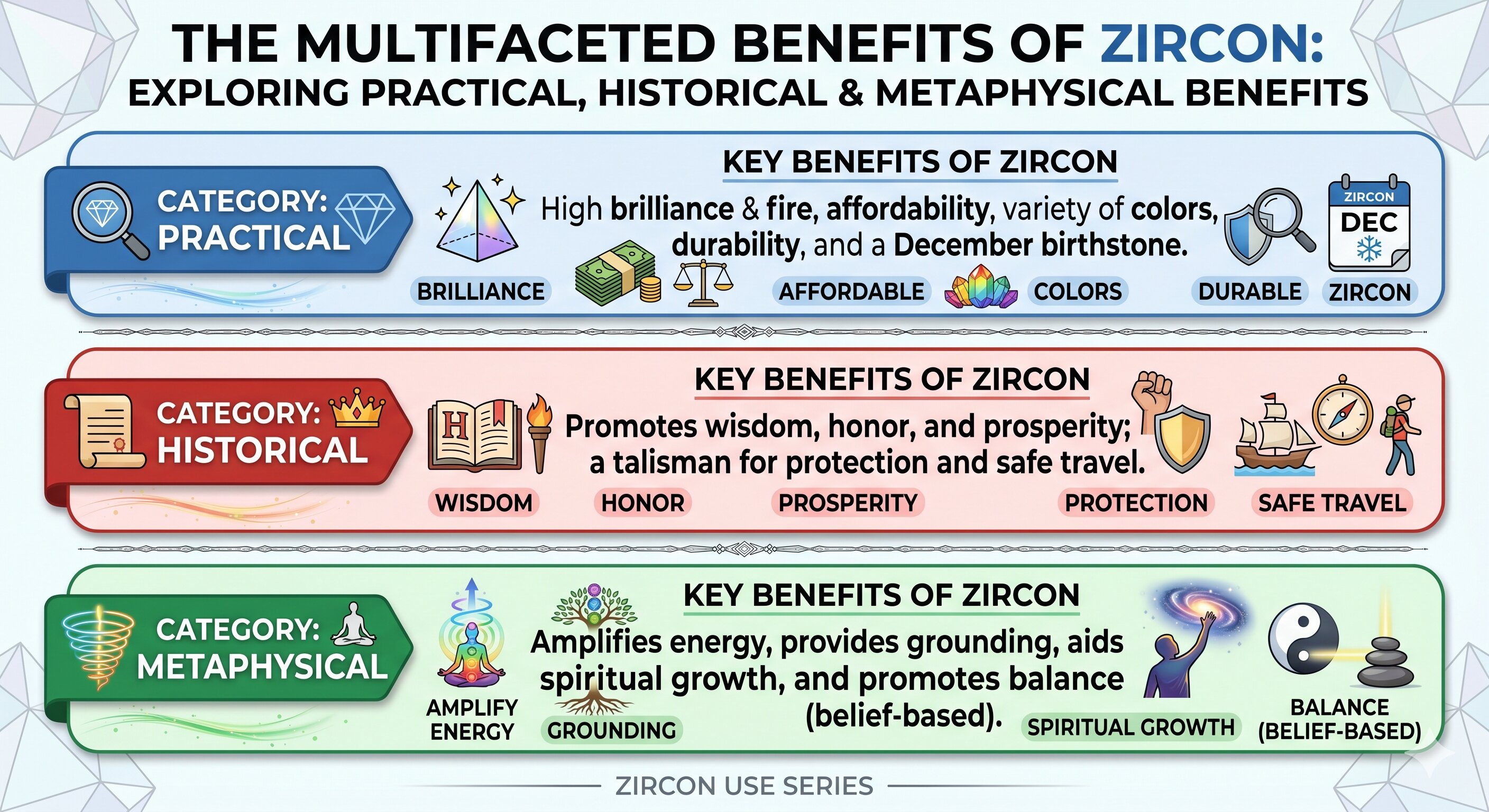
The benefits of zircon are what you make of them. For a skeptic, it is a beautiful, brilliant, and affordable gemstone. For a believer, it is all that plus a stone of spiritual power, protection, and healing.
Ultimately, whether you are drawn to its sparkle, its colors, or its ancient lore, zircon is a gemstone that offers a unique and valuable experience.
Is Zircon A Fake Diamond?
No, zircon is not a fake diamond. It is a natural gemstone in its own right, valued for its own unique properties. However, its name and appearance have led to a common mix-up.
Here’s the clear breakdown to resolve the confusion:
1. Zircon is a Natural Gemstone
Origin: Zircon is a natural mineral (Zirconium Silicate) that forms in the Earth's crust. In fact, it is one of the oldest minerals on Earth.
Value: It has been used in jewelry for centuries and is prized for its brilliance and range of colors.
2. The Real Culprit for Confusion: Cubic Zirconia (CZ)
The term "fake diamond" usually refers to Cubic Zirconia (CZ).
Cubic Zirconia (CZ) is a man-made, synthetic material created in a lab. It was designed to imitate a diamond's look at a very low cost.
Natural Zircon is a mined, natural gemstone with its own chemical composition and history.
They are completely different materials. The similarity in their names is the main source of the mix-up.
Key Differences: Zircon vs. Diamond
While colorless zircon can be used as a diamond alternative, it is not a fake. A jeweler can easily tell them apart based on these properties:
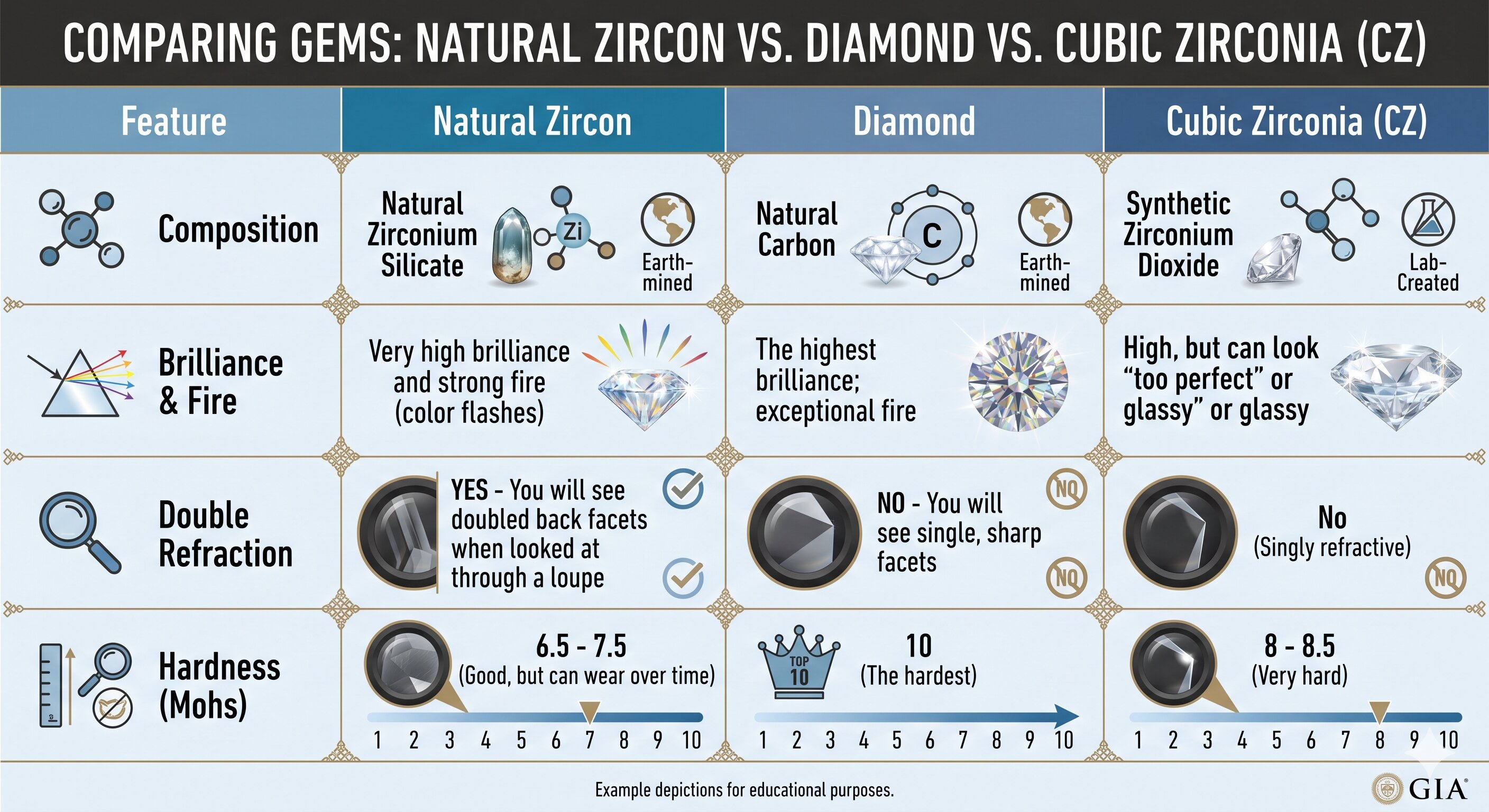
Zircon is a real, natural gemstone.
Cubic Zirconia (CZ) is a synthetic diamond simulant ("fake diamond").
While colorless zircon can be used as a diamond alternative due to its sparkle, it is a genuine and beautiful gem in its own right, especially celebrated for its vibrant blue and other colors.
So, when you buy natural zircon, you are purchasing a unique and authentic gem, not an imitation.
Is Zircon As Good As Diamond?
That's an excellent and fundamental question. The answer isn't a simple yes or no, but rather: Zircon is excellent in its own ways, but it is not equivalent to a diamond in terms of hardness and durability.
Whether it's "as good as" depends entirely on what you value most. Let's break down the comparison.
Zircon's Advantages (Where it can be "As Good" or Better)
Brilliance and Fire: This is zircon's superstar quality. Its high dispersion (0.038) is even higher than a diamond's (0.044). This means a well-cut zircon can show more intense flashes of rainbow-colored light ("fire") than a diamond, making it incredibly brilliant and eye-catching.
Affordability: This is a massive advantage. You can get a large, vibrant, and brilliant zircon for a fraction of the price of a comparable-sized diamond. It offers incredible beauty for your budget.
Color Variety: Zircon comes in a stunning array of natural colors—blue, green, yellow, red, and orange—offering variety that fancy-color diamonds provide at an astronomically lower cost. Colorless zircon provides a brilliant, diamond-like look.
Diamond's Advantages (Where it Outperforms)
Durability (The Critical Difference):
Hardness: Diamond is the hardest natural substance on Earth (10 on the Mohs scale). Zircon is significantly softer (6.5-7.5).
Toughness: Diamond is also very tough. Zircon, however, is brittle and can chip or abrade at the facet edges over time, especially if knocked against something hard.
Status and Value: Diamond is the cultural standard for engagement rings and high-value jewelry. It holds its value and is universally recognized as a symbol of luxury and permanence.
Long-Term Wear: For an engagement ring or a piece worn daily, a diamond is far more suitable. A zircon in the same setting will show signs of wear over the years, becoming less sharp and brilliant.
Side-by-Side Comparison
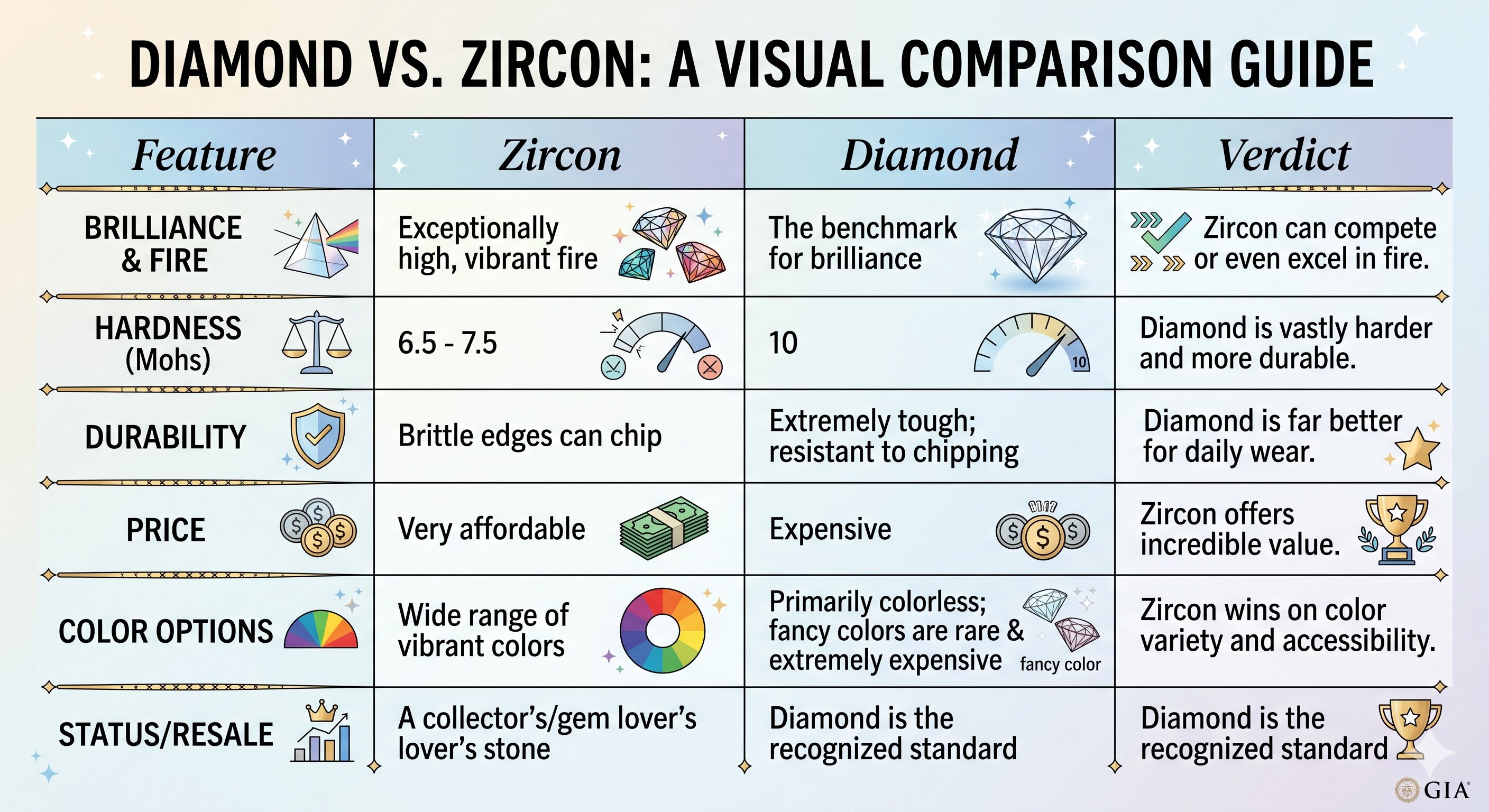
Which is "As Good As" the Other?
Choose Zircon if: You prioritize maximum sparkle and color for your budget, you love unique gemstones, and the piece won't be subject to daily rough wear (e.g., earrings, pendants, or occasional-wear rings).
Choose Diamond if: Your top priorities are ultimate durability for daily wear (like an engagement ring), status, and long-term value retention.
Final Thought: Think of it like comparing a sports car to a luxury SUV. The sports car (zircon) might be more flashy, fun, and exciting for the price, but the luxury SUV (diamond) is built to last forever and handle everything daily life throws at it. One isn't inherently "better"; they are just good for different things.
For a ring you'll wear every day for decades, a diamond is the more practical choice. For a stunning piece of jewelry where you want brilliant beauty without the diamond price tag, zircon is a fantastic and vastly underrated option.
Is Zirconia Cheaper Than Diamond?
Yes, cubic zirconia is significantly cheaper than diamond. The cost difference is substantial, with cubic zirconia often costing a tiny fraction of the price of a diamond.
To give you a clear picture, here is a quick comparison of the cost for a one-carat stone:
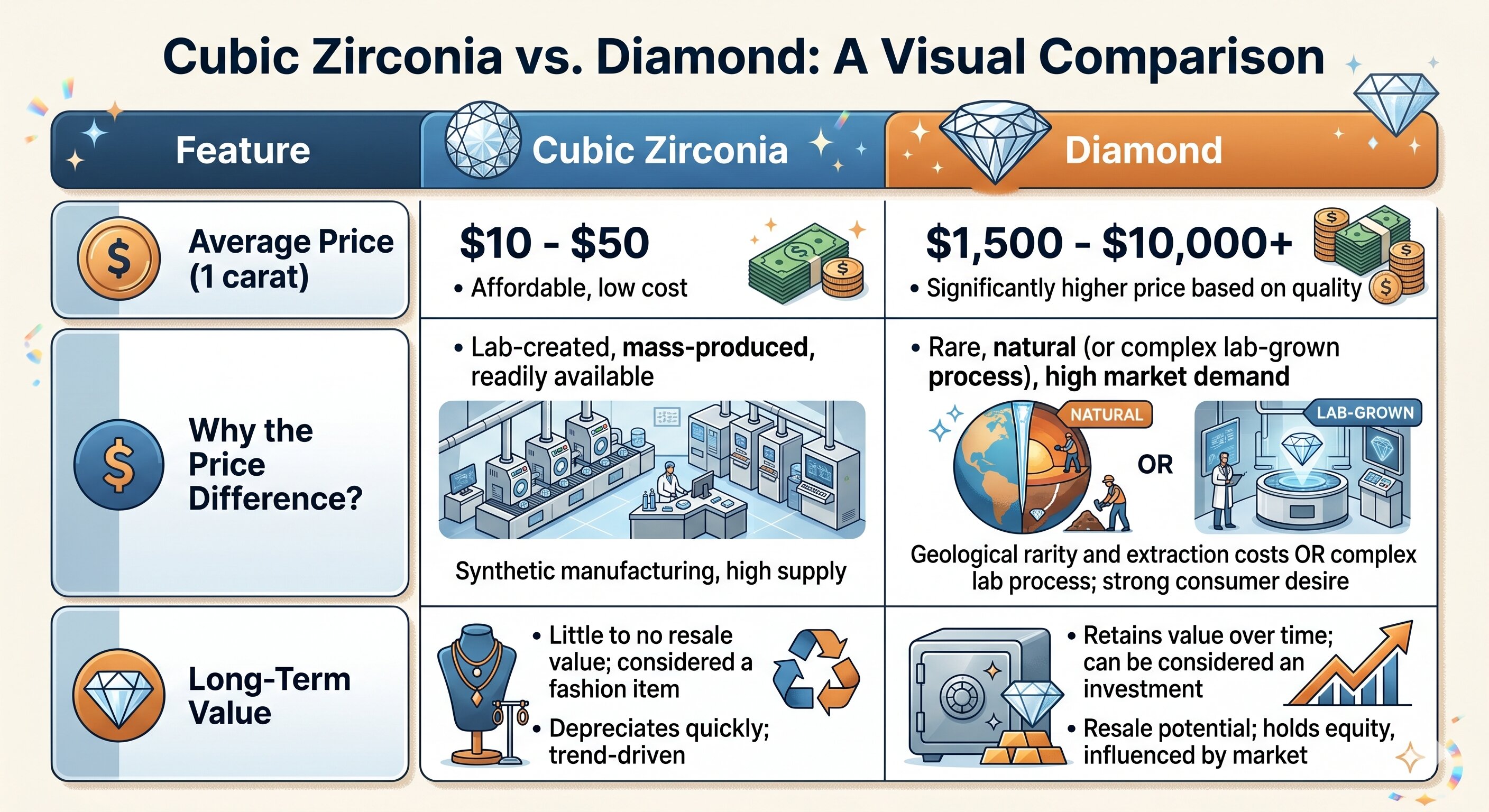
Why Is There Such a Huge Price Gap?
The extreme price difference comes down to a few key factors:
Origin and Rarity: Diamonds are a rare natural resource formed over billions of years deep within the Earth, which contributes to their high cost. While lab-grown diamonds are an alternative, their creation process is still complex. In contrast, cubic zirconia is synthetically mass-produced in laboratories, making it widely available and inexpensive.
Durability and Longevity: This is a critical difference. Diamond is the hardest natural substance on Earth (rated 10 on the Mohs scale) and is ideal for daily wear, capable of lasting a lifetime and becoming an heirloom. Cubic zirconia is softer (rated 8-8.5 on the Mohs scale), scratches more easily, and can become cloudy and dull within a few years of regular wear, often needing replacement.
Is There A Difference Between Zircon And Zirconia?
A Quick Note on "Zirconia" vs. "Zircon"
It's important to distinguish between the two, as they are often confused:
Cubic Zirconia (CZ): The subject of this answer is a man-made, synthetic diamond simulant.
Zircon: A natural gemstone in its own right, which is different from CZ and typically more expensive, though still far cheaper than a diamond.
In short, if your primary concern is budget and you are looking for an affordable, sparkling stone for occasional wear or fashion jewelry, cubic zirconia is an excellent low-cost choice. However, for a piece of jewelry you plan to wear every day for a lifetime, like an engagement ring, a diamond or other durable gemstone like moissanite is a more suitable long-term investment.
Does Zircon Have Resale Value?
Natural zircon gemstones do have resale value, but it is a niche and heavily dependent on the specific characteristics of your stone. The resale market for zircon is not as liquid or well-defined as for diamonds or sapphires, so expectations should be realistic.
Here is a breakdown of how different factors affect zircon's value in the resale market:
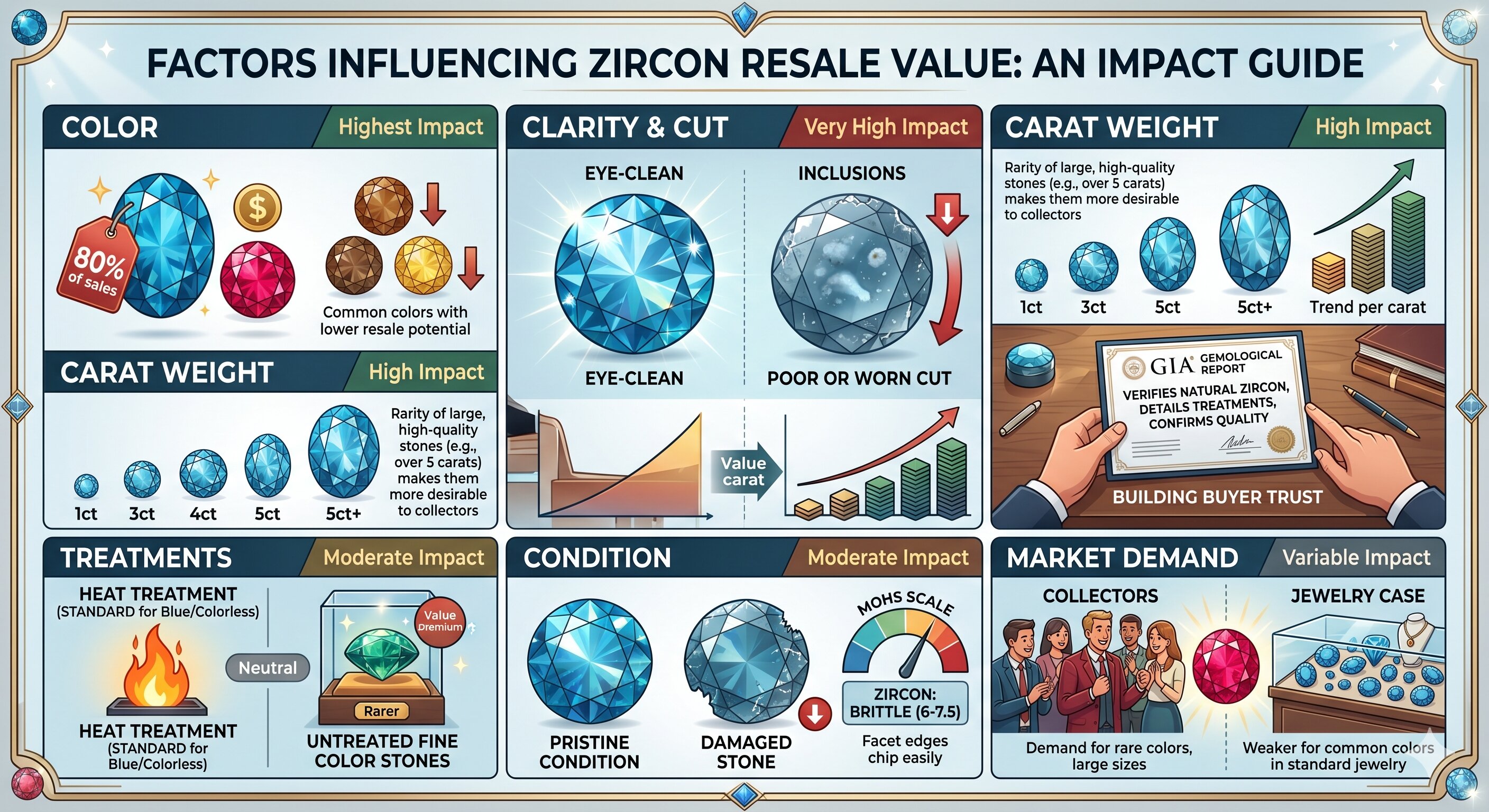
How to Assess and Sell Your Zircon
Get it professionally evaluated: An appraisal from a certified gemologist or a laboratory grading report is the single best step to establish its quality and market value. This is crucial for any stone you believe is valuable.
Market Demand Variable Impact. Demand is strongest among collectors for rare colors (red, green) and large sizes. It's weaker for common colors in standard jewelry.
How to Assess and Sell Your Zircon
Get it professionally evaluated: An appraisal from a certified gemologist or a laboratory grading report is the single best step to establish its quality and market value. This is crucial for any stone you believe is valuable.
Know where to sell:
Auction Sites: Specialized online gem auction platforms (like GemRockAuctions in the search results) can reach an international collector audience, which is ideal for rare or high-quality stones.
Local Jewelers/Pawn Shops: Convenient, but expect to receive a wholesale price (often 30-50% of retail), as they need to resell it for a profit.
Private Sale: Platforms like eBay may work, but selling an uncertified stone to an inexperienced buyer can be challenging.
Does Zircon Rust In Water?
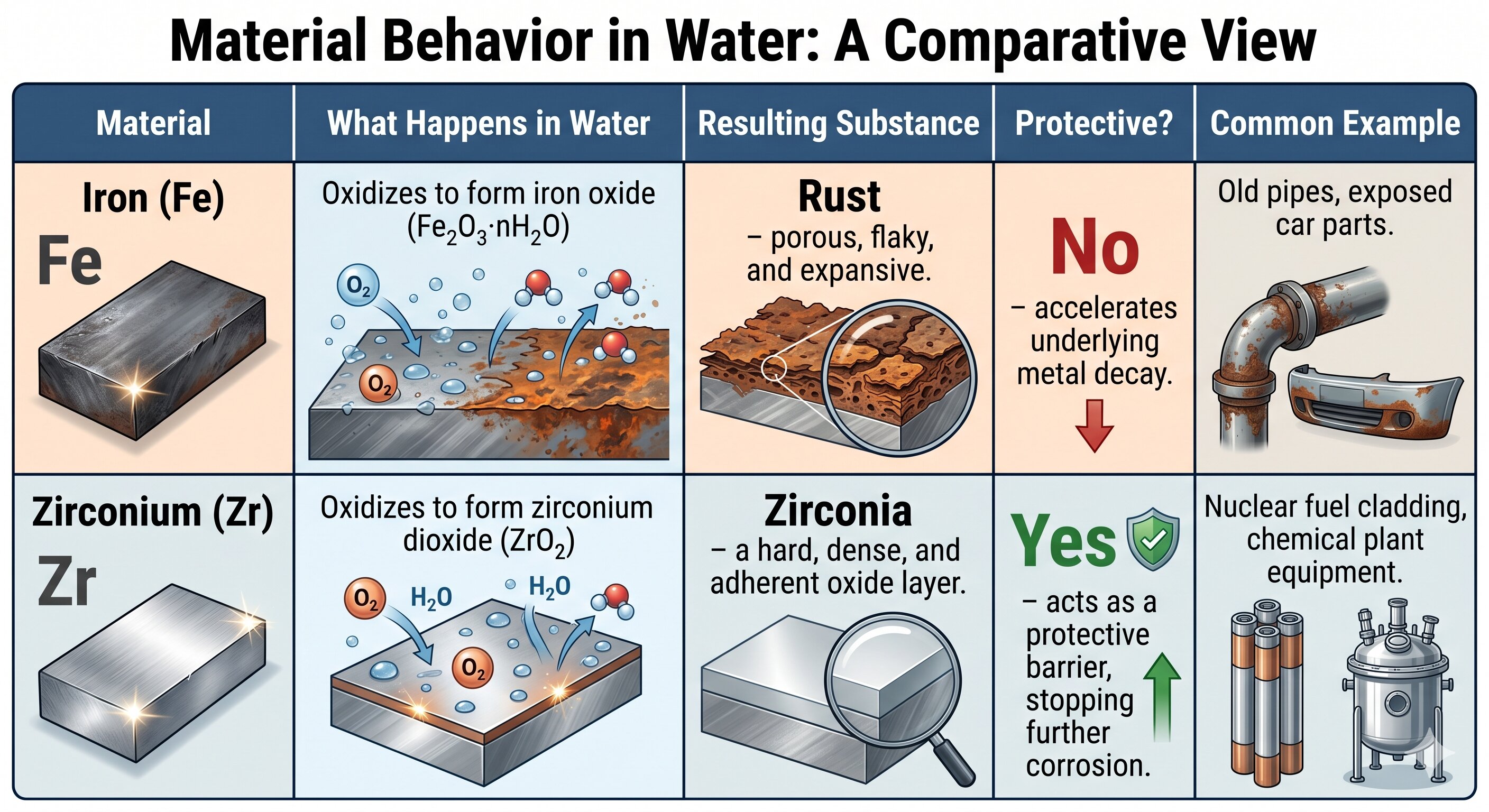
No, zirconium—the metal extracted from the mineral zircon—does not "rust" in the way iron does, and is instead exceptionally resistant to corrosion from water. This unique property makes it invaluable in high-stakes industries.
Here is a comparison of the corrosion processes:
The Science of Zirconium's Corrosion Resistance
The key is in the thin, stable layer of zirconia (ZrO₂) that forms on its surface. When exposed to water—even at very high temperatures—zirconium reacts to create this barrier.
In nuclear reactors, where conditions are extreme, the reaction between water coolant and zirconium alloy cladding is carefully studied. Here, the corrosion process follows specific kinetics at temperatures around 360°C, but even under these intense conditions, zirconium's oxide layer provides critical, long-term protection.
Broader Corrosion Resistance
This resistance isn't limited to water. Zirconium is also highly resistant to corrosion by many acids (like hydrochloric and sulfuric acid), alkalis, and even seawater. Its widespread use in nuclear power (for fuel rod cladding) and chemical processing plants relies on this stability in harsh environments.
A Note on Your Gemstone Question
It's important to distinguish between two very different things:
Zirconium (Zr) is a metal prized for its industrial properties.
Zircon is a natural mineral gemstone (zirconium silicate). It is not a metal and won't "rust." Its main care concern is brittleness, not corrosion.
Since you were previously interested in zircon gemstones' resale value, this resistance to environmental degradation is a positive trait for jewelry, as it helps the stone maintain its appearance over time.
If you're interested in how these industrial properties translate into the durability of zircon gemstones in jewelry, I can provide more information on that topic.
“You now know the history, the colors, the meanings, the identification, the values, the benefits, and the care. The only question left: will you wear a stone older than the stars?
Our current collection includes a limited number of natural zircons — from vivid Cambodian blues to rare green, red, and colorless ‘Matura diamond‘ varieties. When stones of this color saturation and fire are gone, the mines will not replace them quickly. Zircon is not rare in the ground. But gem-quality zircon with that signature brilliance is.
This is not just a gemstone. It is 4.4 billion years of Earth‘s memory — a stone that was ancient before the first flower bloomed, now waiting for your story.”
[Button: Claim Your Natural Zircon (Limited) →]


News for Tuesday 25 November, 2025
View all news for Tuesday 25 November, 2025 on one page
Recent News
- Saturday 22 November, 2025
- Friday 21 November, 2025
- Wednesday 19 November, 2025
- Tuesday 18 November, 2025
- Monday 17 November, 2025