

Discover the Truth About Sterling Silver: What You Need to Know
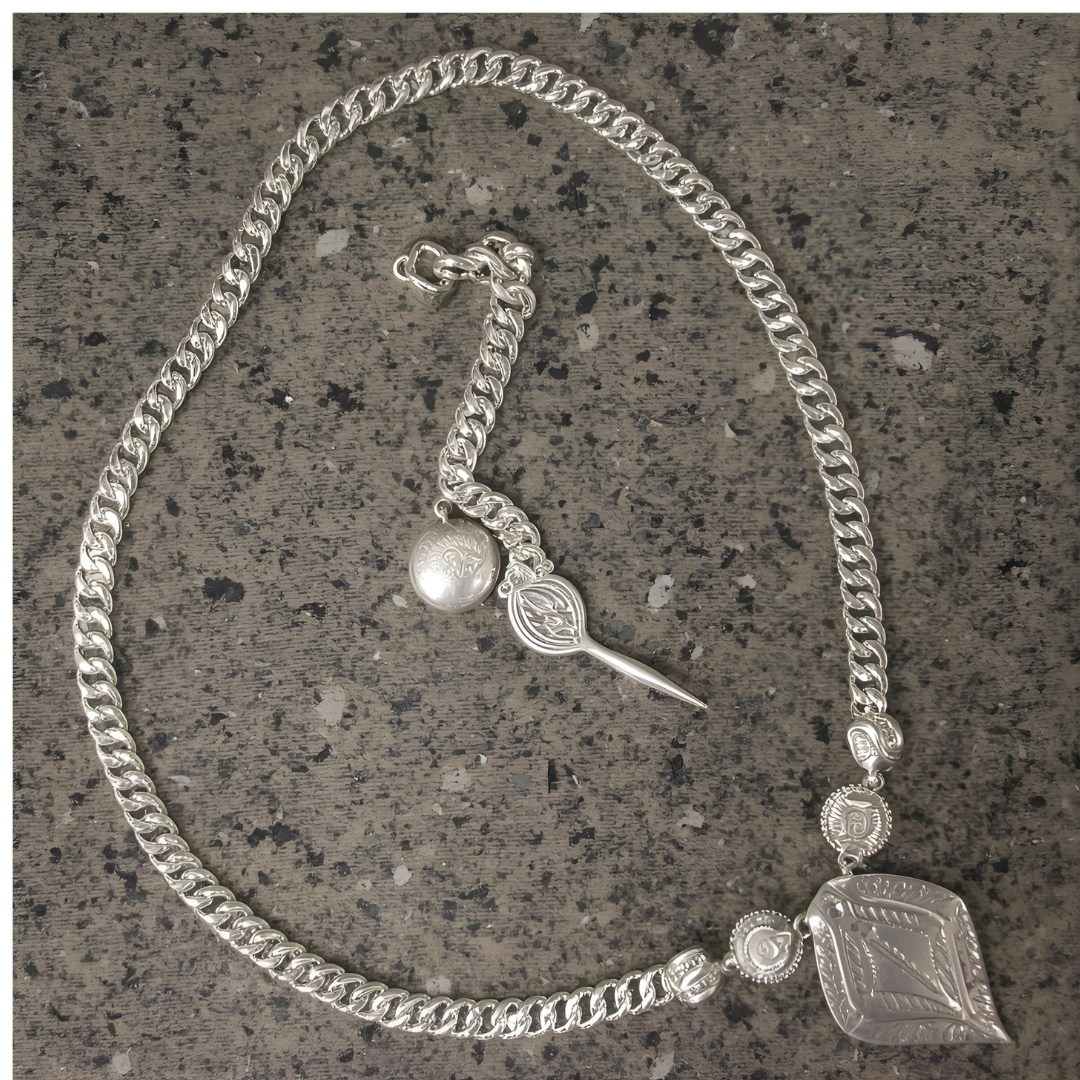
Sterling Silver
The Metal That Changed the World
In the 14th century, a German alchemist discovered something remarkable. By mixing pure silver with a small amount of copper, he created a metal that was strong enough for everyday use but still beautiful enough for royalty.
He called it "sterling silver."
The name may come from the Easterlings—German merchants who brought this new alloy to England—or from the Old English word for "little star." Either way, sterling silver quickly became the standard for coins, cutlery, and jewelry across Europe.
Today, that 92.5% silver / 7.5% copper formula is still used around the world. It's the reason your grandmother's silverware survived a century of use. It's the reason sterling silver rings can be worn every day without bending or breaking.
Affordable. Durable. Timeless. That's the power of sterling.
“In 1788, a silversmith named Paul Revere became a folk hero. But before his midnight ride, he was America’s finest silversmith. Revere worked almost exclusively in sterling silver — creating tea sets, bowls, and flatware that are still intact in museums today.
His secret was the 92.5% formula: pure enough to hold value, strong enough to last centuries. When Revere died in 1818, his workshop had produced over 5,000 pieces of sterling silver. Every one of them is still collectible today.
Sterling silver does not fade, does not break, and does not lose its worth. It simply waits — for the next hand, the next table, the next story.”
The same metal that Paul Revere trusted and the Titanic preserved now awaits your everyday elegance. Every sterling silver piece in our collection is stamped with the 925 hallmark — guaranteed 92.5% pure silver, crafted for daily wear.”
[Button: Explore Sterling Silver Jewelry →]
Here is a detailed explanation of what sterling silver is.
Ultimate Guide: What Is Sterling Silver?
Is Sterling Silver Real Or Fake Silver?
Is Sterling Silver Good Quality?
How Much Is Sterling Silver Worth Now?
Is Sterling Silver Costlier than Silver?
Is Sterling Silver Better Than 925?
Is Sterling Silver Good For A Ring?
Is Sterling Silver Good For Everyday Wear?
Can You Wear Sterling Silver In Water?
How Do You Clean Sterling Silver?
What Is The Best, Sterling Silver Or Plated Silver?
Does Sterling Silver Turn Green?
Let's begin the topic.
What Is Sterling Silver? A Simple Definition
Sterling silver is a precious metal alloy made of 92.5% pure silver and 7.5% other metals, usually copper.
This specific composition is key. Pure silver (known as fine silver) is too soft for most functional and decorative uses, like jewelry, cutlery, and hollowware. The addition of a stronger metal, like copper, creates an alloy that is much more durable and practical while retaining the beautiful luster and value of silver.
The Key Details
1. The "925" Stamp (The Hallmark of Authenticity)
Because sterling silver is a regulated standard, genuine pieces are almost always marked with a hallmark. The most common hallmark is "925". This number signifies the 92.5% purity of the silver content. You can usually find this stamp in an inconspicuous place, like the inside of a ring band, on the clasp of a necklace, or on the back of a piece of flatware.
Other common hallmarks include:
"Sterling"
"Ster"
If a piece of jewelry claiming to be sterling silver does not have one of these marks, you should be skeptical of its authenticity.
2. Why Not Use Pure Silver?
Pure Silver is Soft: Fine silver (99.9% pure) is very malleable and can be easily bent, scratched, or dented.
Durability for Wear: The 7.5% copper additive gives sterling silver the necessary strength and hardness to hold its shape, withstand daily wear, and support settings for gemstones.
3. The One "Downside": Tarnishing
The one characteristic that requires a bit of maintenance is tarnishing.
What is it? Tarnish is a dark discoloration or dulling of the surface.
What causes it? Sterling silver tarnishes when the copper in the alloy reacts with sulfur compounds in the air or on your skin. This reaction forms a layer of silver sulfide. It is not rust (which is iron oxide), and it is not harmful.
Prevention & Care: Tarnish is easily removable with a special polishing cloth, liquid silver polish, or even a mild DIY solution (like baking soda and aluminum foil). Storing sterling silver in airtight bags or tarnish-preventive cloths can significantly slow down the tarnishing process.
4. Common Uses of Sterling Silver
Jewelry: This is the most common use. Rings, necklaces, bracelets, earrings, and cufflinks are frequently made from sterling silver.
Flatware and Hollowware: High-quality cutlery, tea sets, trays, and decorative bowls.
Musical Instruments: Some flutes and piccolos are made from sterling silver for its specific tonal qualities.
Awards and Trophies: The Oscars (Academy Awards) statuettes are made from bronze plated with 24-karat gold, but for many years, they were cast from Britannia metal and plated in copper, silver, and gold.
Sterling Silver vs. Other Similar Metals
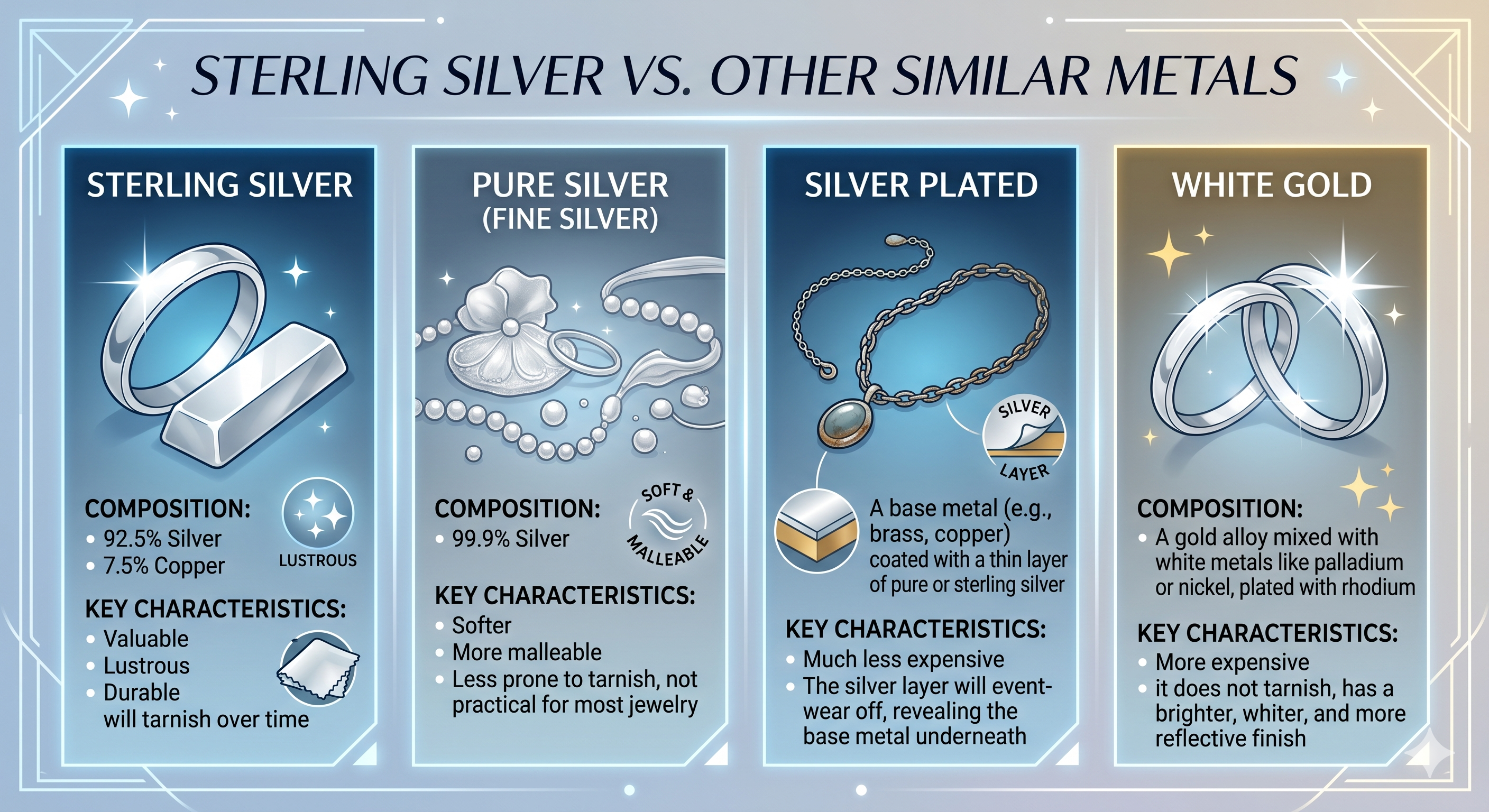
In short, sterling silver is the standard for high-quality, durable silver goods. Its 92.5% purity makes it a precious metal, its "925" stamp is your guarantee of authenticity, and its tendency to tarnish is a natural and manageable characteristic. It offers an excellent balance of beauty, value, and durability.
Is Sterling Silver Real Or Fake Silver?
Sterling silver is absolutely REAL silver.
It is not "fake." In fact, it is the standard grade of silver used for virtually all high-quality jewelry, flatware, and decorative items.
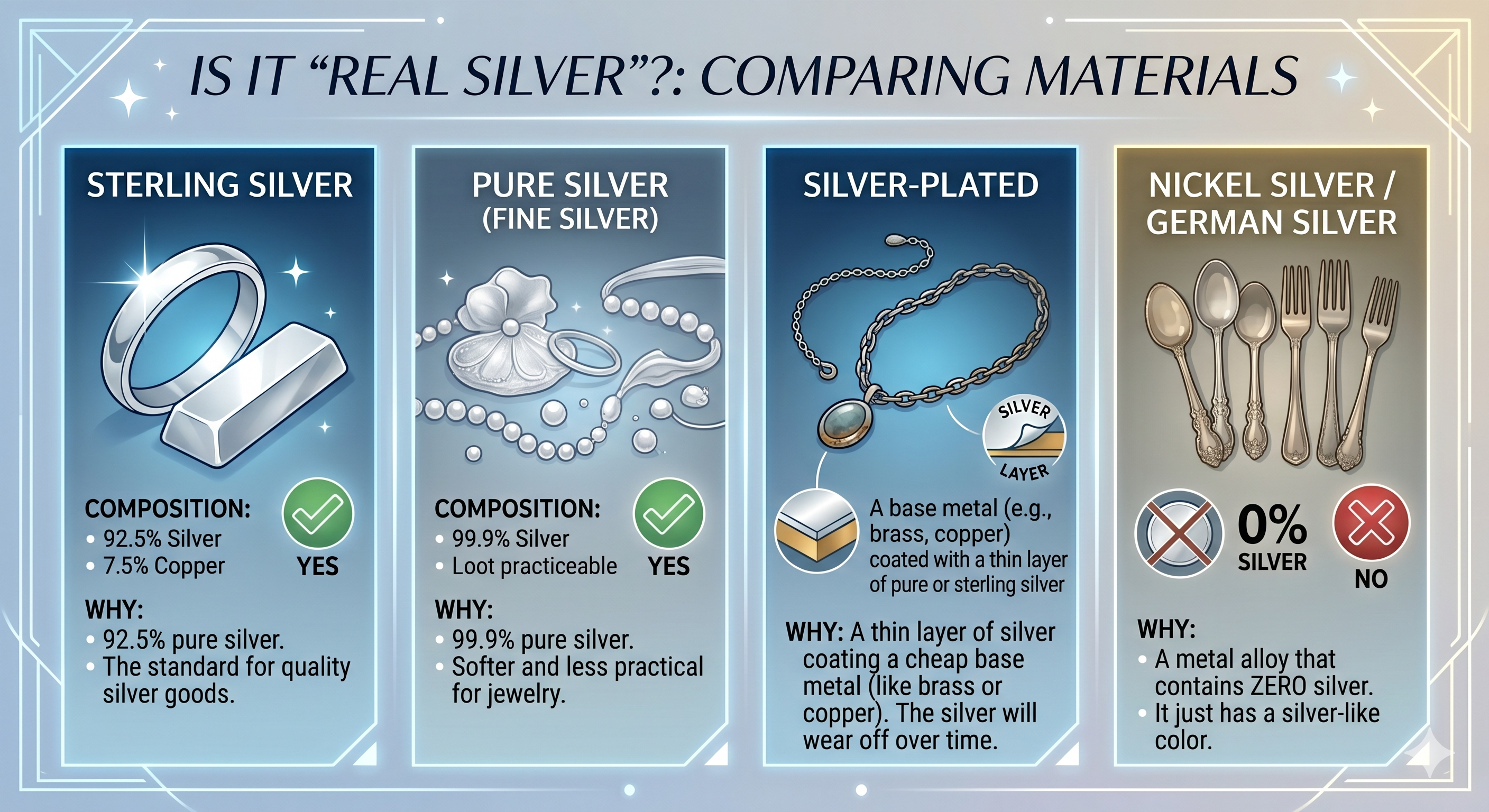
The confusion often comes from comparing it to other materials that are called "silver." Here’s the simple breakdown:
Why Sterling Silver is "Real Silver"
It's Mostly Pure Silver: Sterling silver is made of 92.5% pure silver. The majority of the material is the genuine, precious metal.
It's a Regulated Standard: The term "sterling silver" is a legally defined standard of quality, not a marketing gimmick. An item stamped with "925," "Sterling," or "Ster" certifies that it meets this 92.5% purity standard.
It Has Intrinsic Value: Because of its high silver content, sterling silver has significant intrinsic value based on the weight and current market price of silver. It is a precious metal investment, unlike "fake" alternatives.
What People Often Mistake for "Real Silver" (And Why It's Confusing)
When people ask if something is "real silver," they are often trying to distinguish it from these common alternatives:
The Simple Test for "Real" Sterling Silver
To know if you have real sterling silver, look for the hallmark. This is the manufacturer's guarantee of authenticity stamped directly onto the item.
Look for these stamps:
925 (the most common and universal)
Sterling
Ster
If you see one of these stamps, you are holding real sterling silver. If you don't see a stamp, or you see marks like "SP" (Silver Plated) or "NS" (Nickel Silver), then it is not solid sterling silver.
Sterling silver is not fake; it is the practical and standard form of real silver used for durable and beautiful goods. It is definitely "real silver," and its 92.5% purity is what makes it both valuable and usable.
Is Sterling Silver Good Quality?
Yes, sterling silver is considered good quality, especially when you balance its cost, durability, and appearance. However, like any material, its "goodness" depends on your expectations and what you're comparing it to.
Let's break down why it's a quality choice and in what contexts.
The "Yes" - Why Sterling Silver is Good Quality
It's a Precious Metal: Sterling silver is 92.5% pure silver, placing it in the category of precious metals alongside gold and Platinum. This gives it intrinsic value and distinguishes it from cheap costume jewelry or base metals.
Ideal Balance of Purity and Durability: As discussed before, pure silver is too soft. The 7.5% alloy (usually copper) makes sterling silver strong enough for everyday wear while retaining the beautiful luster and value of silver. This makes it durable yet malleable enough for intricate designs.
Hypoallergenic Properties: For most people, sterling silver is hypoallergenic and safe for sensitive skin. The high silver content is non-reactive. (Note: A very small number of people can be sensitive to the copper used in the alloy, but this is rare.)
Timeless Value and Appearance: It offers the classic, bright luster of silver that has been valued for centuries. It's a versatile metal that works for both casual and formal jewelry and maintains a status of elegance.
Accessible Price Point: This is a key factor in its quality proposition. It provides the look and feel of a precious metal at a fraction of the cost of white gold or platinum, making fine jewelry accessible to a wider audience.
The Nuances - Considerations and "Quality" Depends On Context
To give a complete picture, it's important to understand its relative position:
It Requires Maintenance (Tarnishing): The primary "downside" is that it tarnishes. A quality piece that requires occasional polishing is different from a low-quality item, but this maintenance factor is something to consider versus metals that don't tarnish, like platinum or stainless steel.
Compared to Other Metals:
vs. Pure Silver: Sterling silver is higher quality for functional use (like jewelry) because it's more durable.
vs. Silver-Plated: Sterling silver is dramatically higher quality. Silver plating is a thin layer over a cheap base metal that will wear off. Sterling silver is solid and lasts a lifetime.
vs. White Gold/Platinum: Here, sterling silver is the more affordable, entry-level precious metal. White gold and platinum are more durable, heavier, and much more expensive. They are often considered a step above in terms of luxury and longevity, especially for permanent items like engagement rings.
Craftsmanship Matters: The "quality" of a sterling silver item isn't just about the metal. A poorly made sterling silver ring with weak clasps and rough finishes is not a high-quality item. A well-made piece from a reputable artisan or brand, with excellent construction and finishing, is absolutely good quality.
Verdict: Is Sterling Silver Good Quality?
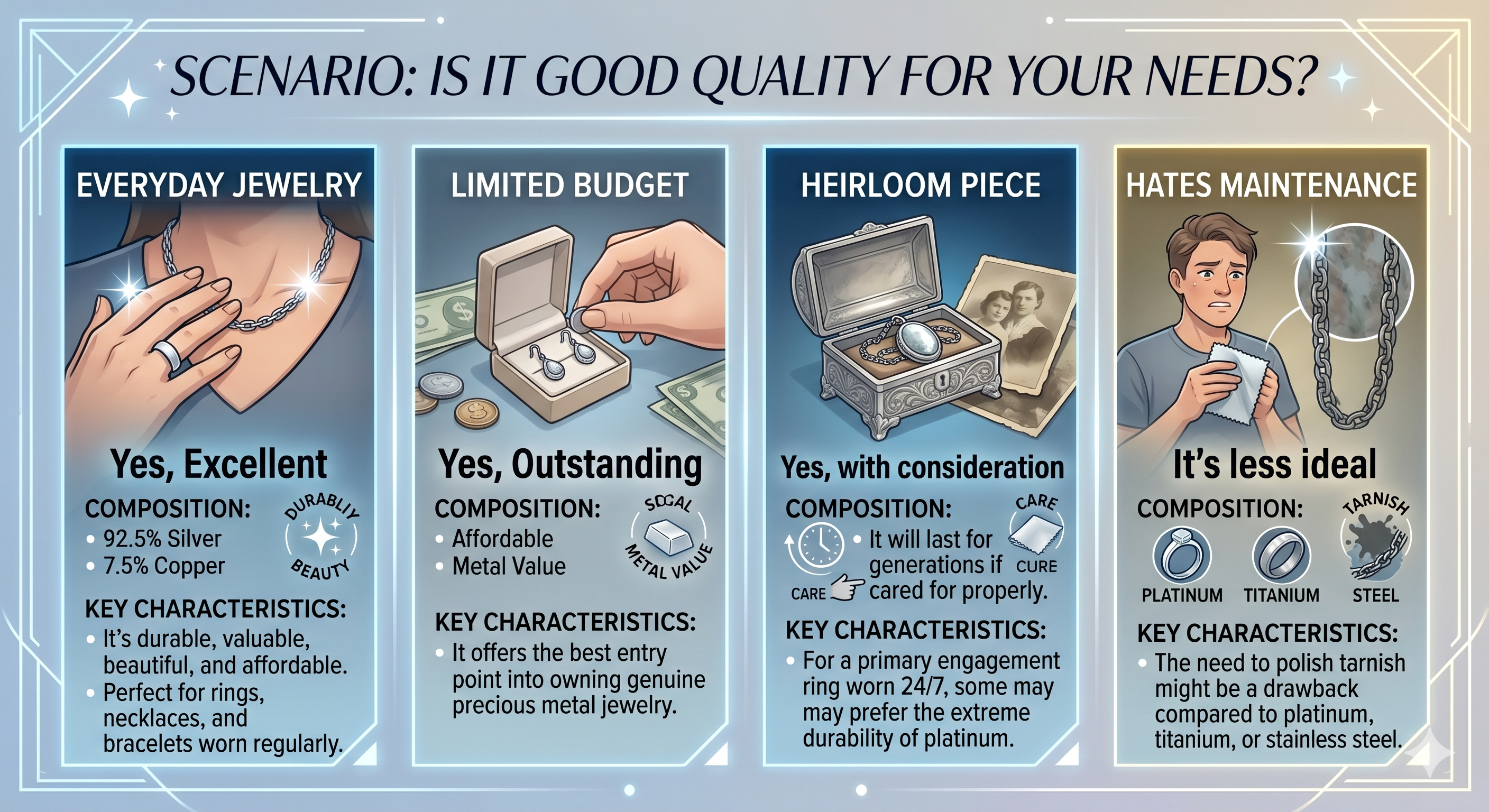
Think of sterling silver as the reliable, high-value choice in the world of precious metals. It is unambiguously good quality—a solid, valuable, and beautiful material that sits well above fashion jewelry but below the ultra-premium price point of platinum.
For the vast majority of people looking for beautiful, durable, and real jewelry, sterling silver is an excellent and smart choice.
How Much Is Sterling Silver Worth Now?
This is a common question, but the answer has two distinct parts: its value as a raw material (the "melt value") and its price as a finished product (like jewelry).
Here’s a breakdown of how sterling silver is valued.
1. The Base Value: "Melt Value" or Intrinsic Value
This is the value of the sterling silver itself based on the current market price of pure silver. It's what a refinery or scrap buyer would pay you for the metal.
How to Calculate the Melt Value:
Find the Current Spot Price of Silver: This changes constantly throughout the trading day. You can check it on financial websites like Kitco.com, JMBullion.com, or a simple web search for "silver spot price." The price is given per troy ounce of pure silver.
Example: Let's assume the spot price is $28.00 per troy ounce.
Account for Sterling Silver's Purity: Sterling silver is only 92.5% pure silver.
Calculation: Spot Price x 0.925
*Example: $28.00 x 0.925 = $25.90 per troy ounce.*
Weigh Your Item in Troy Ounces: Standard kitchen scales use avoirdupois ounces. Precious metals use troy ounces (1 troy ounce = 31.1 grams).
Weigh your item in grams and divide by 31.1 to get the weight in troy ounces.
*Example: A 20-gram ring. 20 / 31.1 = 0.643 troy ounces.*
Final Calculation:
(Spot Price) x 0.925 x (Weight in Troy Ounces) = Melt Value
*Example: $28.00 x 0.925 x 0.643 = $16.65*
So, the intrinsic meltdown value of that example ring is about $16.65.
Important Note: If you sell to a scrap buyer, they will pay you less than this calculated value (often 60-80% of it) to cover their refining costs and profit margin.
2. The Retail Price: What You Pay for Finished Goods
This is the price you pay when you buy a sterling silver item from a jeweler or retailer. It is much higher than the melt value and includes:
Cost of Materials: The melt value we calculated.
Manufacturing & Labor: The cost of designing, casting, soldering, polishing, and setting any stones.
Brand Markup: Well-known brands (like Tiffany & Co.) command a significant premium for their name and craftsmanship.
Retail Markup: The store's overhead (rent, staff, utilities) and profit.
Gemstones: If the piece has gemstones (even semi-precious ones), they add substantial value.
Antique or Artistic Value: Unique, antique, or handcrafted artisan pieces have value beyond their metal content.
Examples of Retail Price Ranges:
A simple sterling silver ring: $30 - $150
A sterling silver chain necklace: $50 - $300+
A pair of sterling silver earrings with gemstones: $75 - $400+
A designer sterling silver piece: $200 - $1,000+
Summary: What Determines the Price?
| If you are... | Then the value is based on... |
| Selling scrap silver | Melt Value (calculated from spot price, purity, and weight). |
| Buying a new piece | Retail Price (melt value + craftsmanship + brand + gemstones). |
| Selling a vintage/jewelry piece | A mix of its melt value and its resale value as a finished good (condition, brand, and style matter greatly). |
Is Sterling Silver Costlier than Silver?
That's an excellent and subtle question. The answer is a bit nuanced because it depends on what you mean by "silver."
In short:
Compared to Pure (Fine) Silver, Sterling silver is generally less expensive for a finished item of the same size, even though pure silver is purer.
Compared to Silver-Plated: Sterling silver is significantly more expensive.
Here’s a detailed breakdown of why.
1. Sterling Silver vs. Pure Silver (Fine Silver)
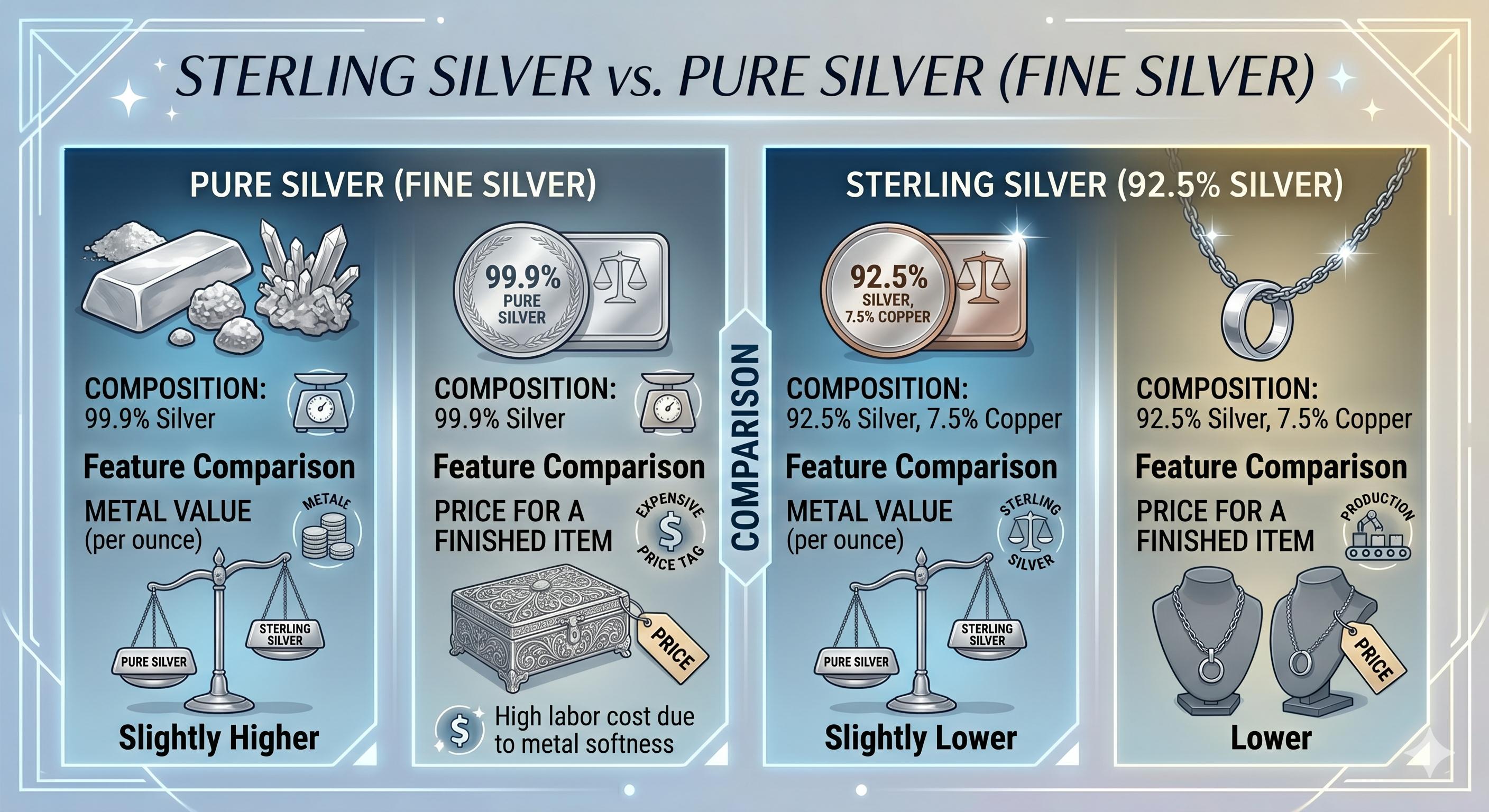
Why is this?
While pure silver has a slightly higher raw material value per ounce (because it's purer), it is rarely used for jewelry or functional items because it's too soft.
If an artisan were to make a ring from pure silver, it would be extremely difficult to work with, would not hold gemstones securely, and would be easily damaged.
Because of this, any finished item made from pure silver would be a specialty, artistic piece, and the high labor cost and rarity would make it more expensive than a similar item made from the much more practical sterling silver.
Analogy: Imagine a sculptor. A block of pure, soft clay might be slightly more expensive than a block of clay mixed with a hardener. But the statue made from the hardened clay is a usable, sellable product, while the pure clay block is mostly just a raw material.
2. Sterling Silver vs. Silver-Plated
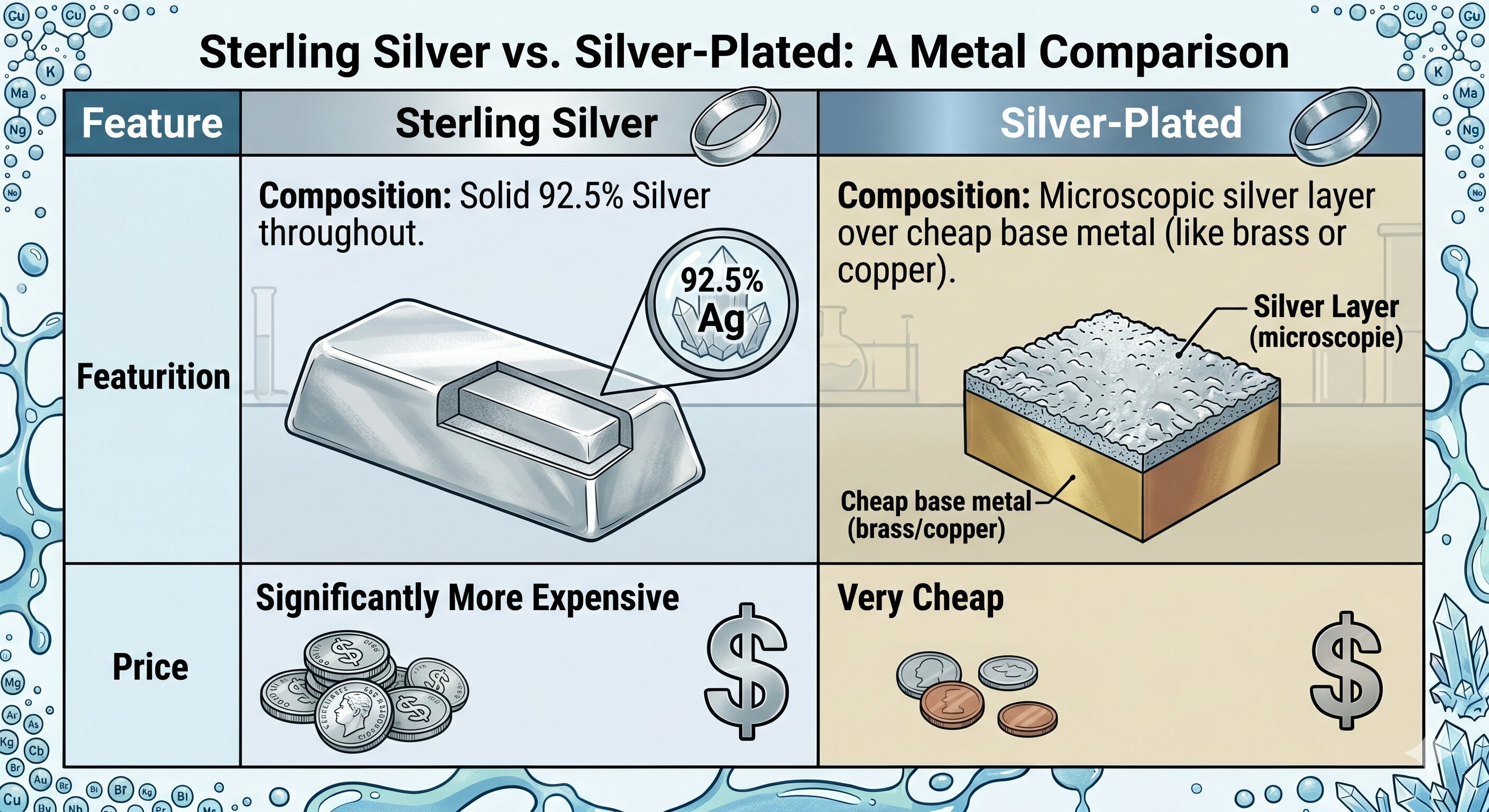
Why is this?
This is a clear case of "you get what you pay for." Sterling silver is a solid precious metal with intrinsic value. Silver-plated items have almost no intrinsic metal value, as the layer of silver is incredibly thin and will eventually wear off, revealing the cheap base metal underneath.
Summary: Which is More Costly?
To avoid confusion, let's be specific:
If you are buying a piece of JEWELRY: A piece made from pure (fine) silver would be the most costly and rare option. Sterling silver is the standard, high-quality, and more affordable precious metal option.
If you are comparing raw MATERIAL value, Pure silver has a slightly higher value per ounce than sterling silver.
If you see a "silver" item at a very low price, it is almost certainly silver-plated, which is the least costly option and not a precious metal.
In everyday terms, when people ask about jewelry, the cost hierarchy is:
Most Costly: Pure Silver (Fine Silver) Jewelry (rare) > Sterling Silver > Silver-Plated Least Costly
So, for the item you are most likely to buy and wear, sterling silver offers the perfect balance of cost, beauty, and durability, making it more costly than plated jewelry but generally less costly than items made from pure silver.
Is Sterling Silver Better Than 925?
No, sterling silver is not better than 925. They are the same thing.
The term "925" is simply the universal hallmark that certifies and proves an item is made of sterling silver.
Think of it this way:
"Sterling Silver" is the name of the material.
"925" is its official ID card.
The Relationship Explained
When you see "925" stamped on a piece of jewelry or silverware, it is a guarantee from the manufacturer that the item meets the legal standard for sterling silver: 92.5% pure silver.
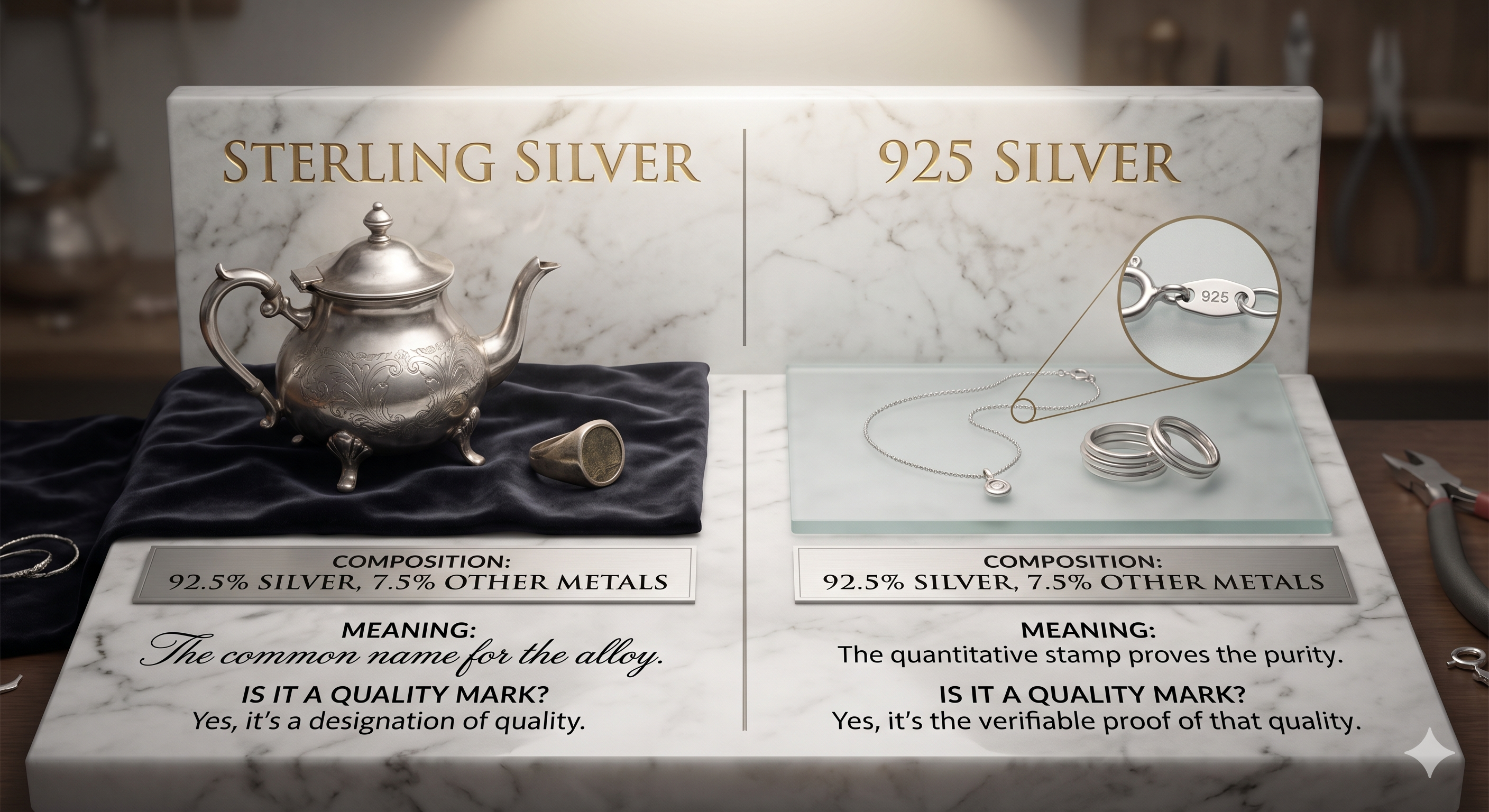
Why Two Terms?
The two terms are used in slightly different contexts:
"Sterling Silver" is used in descriptive language.
Example: "This necklace is made of beautiful sterling silver."
"925" is used as a mark of authentication on the physical product itself.
Example: When you look at the clasp of the necklace, you'll find a tiny stamp that says "925."
What You Should Look For
If you are buying a piece and want to ensure it's genuine sterling silver, you should actively look for the "925" stamp. A piece that is described as "sterling silver" but lacks this hallmark should be treated with suspicion.
There is no difference in quality, value, or material. "Sterling Silver" and "925 Silver" are two ways of saying the same thing. One is the common name, and the other is the technical certification. So, when you see "925," you can be confident you are holding a genuine piece of sterling silver.
Is Sterling Silver Good For A Ring?
Absolutely, sterling silver is an excellent choice for a ring, and it's one of the most popular materials used in jewelry for very good reasons. However, like any material, it has its pros and cons.
Here’s a detailed breakdown to help you decide if it's the right choice for your ring.
The "Pros" - Why Sterling Silver is Great for Rings
Durability & Strength: The 7.5% alloy (usually copper) makes sterling silver strong enough for daily wear. It's far more durable than pure silver, so it can withstand the bumps and knocks that a ring on your hand is likely to encounter.
Beautiful Appearance: It has a bright, brilliant white luster that is classic and timeless. It looks fantastic on its own and provides a stunning, neutral backdrop for gemstones.
Affordability: This is a major advantage. Sterling silver offers the look and feel of a precious metal at a fraction of the cost of white gold or platinum. This allows you to get a larger or more detailed design for your budget.
Hypoallergenic: For the vast majority of people, sterling silver is hypoallergenic and safe for sensitive skin. The high silver content is non-reactive.
Versatility in Design: It's a relatively soft metal (compared to platinum but harder than gold), which makes it ideal for intricate carvings, detailed designs, and artisan craftsmanship.
The "Cons" - Important Considerations
Tarnishing: This is the primary drawback. Sterling silver will tarnish over time when exposed to air and moisture, turning it a dull yellow, brown, or black. This is not a sign of poor quality; it's a natural chemical reaction.
Solution: Tarnish is easily removed with a polishing cloth. You can also slow it down by storing your ring in an airtight bag when not in wear and keeping it away from chemicals (like chlorine, lotions, and perfumes).
Softness (Relative to Other Metals): While durable, it is softer than platinum, titanium, or tungsten carbide. This means:
It can scratch over time, developing a "patina" that some people enjoy but others dislike.
For rings with very thin bands or delicate prongs holding expensive gemstones, it may not be as secure as platinum over many decades.
Potential for Allergic Reaction (Rare): A small number of people are sensitive to the copper used in the alloy. This can cause minor skin discoloration (a green or black mark) or, very rarely, irritation. This is more common if the ring is tight and traps moisture against the skin.
“In 1912, the RMS Titanic sank in the Atlantic. Among the wreckage, divers later recovered a sterling silver locket — still intact, still legible, still shining after decades in salt water. The copper in the alloy had protected it from complete corrosion.
Sterling silver is not indestructible. But it is stubborn. It survives shipwrecks, house fires, and grandmother‘s jewelry boxes. That is why we still choose it: not because it is perfect, but because it endures. A sterling silver ring will not last forever. But it will last long enough — for your lifetime, and maybe for someone else‘s too.”
Sterling Silver vs. Common Ring Metals
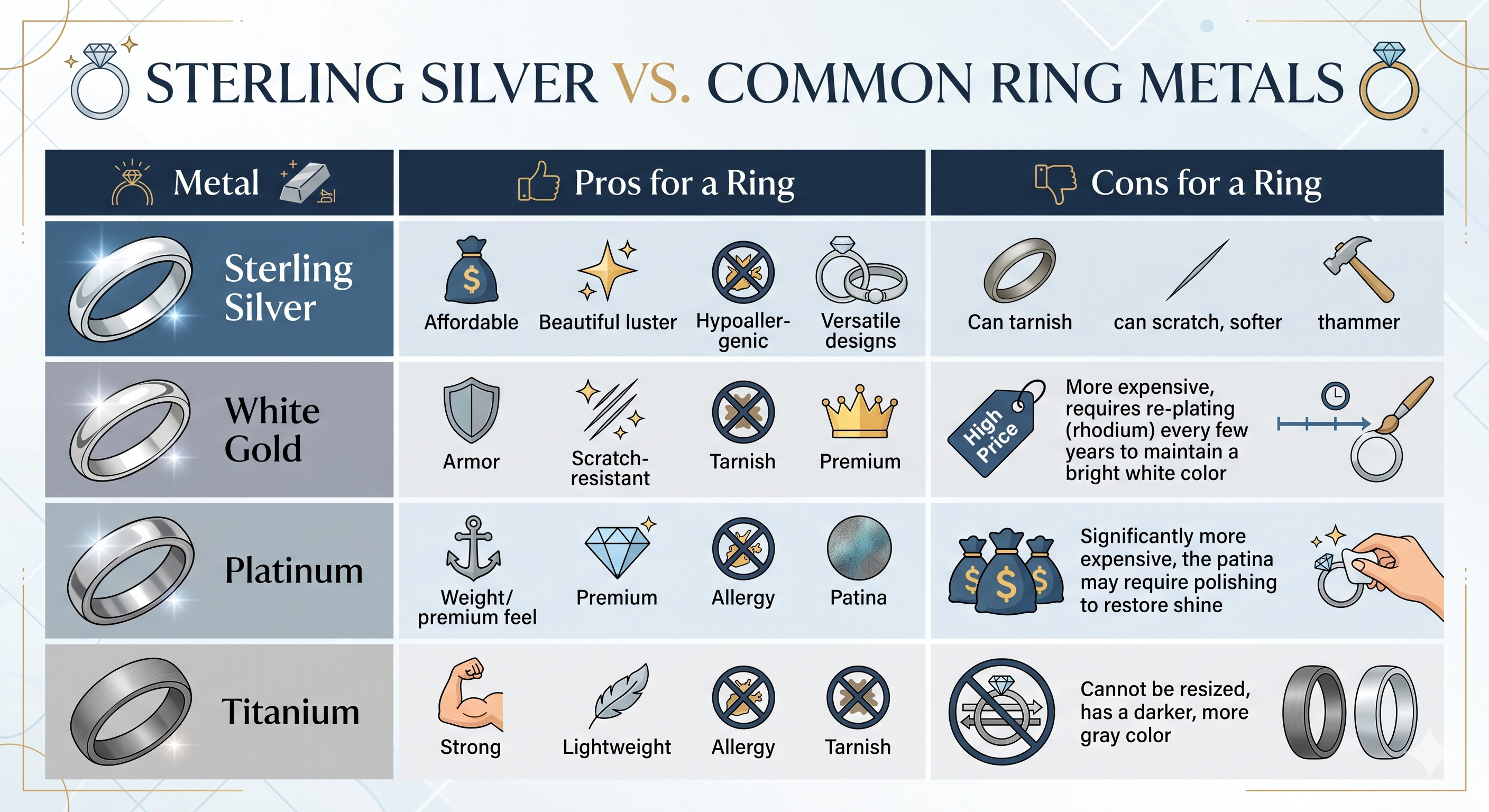
Verdict: Is a Sterling Silver Ring a Good Choice?
Yes, for the vast majority of people and situations, it is a fantastic choice.
It's particularly ideal for:
Everyday Fashion Rings: Perfect for stacking, statement rings, or daily wear.
Budget-Conscious Buyers: You get incredible style and quality for your money.
Trying New Styles: It allows you to experiment with bold designs without a major financial commitment.
People with Sensitive Skin: It's a safe and comfortable option for most.
You might want to consider a different metal:
You are looking for an engagement or wedding band you plan to wear 24/7 for decades without any maintenance or visible wear.
You strongly dislike the idea of polishing your jewelry to remove tarnish.
You have a known sensitivity to copper.
Sterling silver offers the best balance of beauty, affordability, and durability for a ring. As long as you understand and are comfortable with the minimal maintenance required, it is an outstanding and highly recommended choice.
Is Sterling Silver Good For Everyday Wear?
The short answer is: Yes, sterling silver is an excellent choice for everyday wear.
It strikes the perfect balance of durability, beauty, and affordability. However, "good for everyday wear" doesn't mean you can ignore it completely. Think of it like a nice pair of leather shoes—they're great for daily use, but you need to take basic care of them.
Here’s why sterling silver is a top choice for daily jewelry, along with the realistic downsides and how to manage them.
Why Sterling Silver Is Great for Everyday Wear (The Pros)
Durability: Because it's alloyed with copper, sterling silver is much harder and more resistant to scratching and bending than pure silver. A well-made sterling silver ring or chain can easily last a lifetime of daily wear.
Hypoallergenic (for most people): While a small percentage of people have a sensitivity to nickel (not in real sterling) or copper, sterling silver is generally considered safe for sensitive skin. It's a far better choice than cheap costume jewelry made of mystery metals.
Easy to Clean & Maintain: Bringing it back to life is simple. A quick polish with a soft cloth removes most everyday tarnish. For heavier tarnish, a few minutes in a baking soda and aluminum foil bath makes it look brand new.
Timeless & Versatile: Sterling silver matches everything—casual t-shirts, formal business wear, and elegant evening gowns. It never goes out of style.
Affordable to Replace/Repair: Unlike gold or platinum, losing a sterling silver earring or breaking a chain is not a financial disaster. This makes it less stressful to wear daily.
The Realities of Daily Wear (The Cons)
This is where your previous questions come into play. You will experience these things, but they are manageable.
It Will Tarnish: This is the biggest fact of life with sterling silver. Daily exposure to air, humidity, sweat, and skin oils will cause it to develop a dark, yellowish, or black film (tarnish). It's not damaged, just a chemical reaction.
Manage it b: Polishing it once a week or every other week with a jewelry cloth.
It Can Turn Your Skin Green (Occasionally): As we covered, the copper can react with your sweat to leave a faint green or black stain.
Manage it by applying clear nail polish to the inside of rings, keeping your jewelry dry, and taking it off before intense workouts.
It Can Scratch: Softer than gold or platinum, sterling silver will develop a "patina" of micro-scratches over time. Some people love this look; others don't.
Manage it by: Taking it off before heavy manual labor, gardening, or moving furniture. Store it in a soft pouch, not loose in a drawer.
The Most Important Rule for Daily Wear: Remove It During These 3 Activities
To get the longest life out of your daily-wear sterling silver, you must develop one simple habit: Take it off before:
Showering, Swimming, or Doing Dishes. (Water + chlorine + soap = rapid tarnish and potential damage).
Working Out or Heavy Sweating. (Salt in sweat accelerates tarnish and the green-skin reaction).
Applying Lotions, Sunscreens, or Perfumes. (Chemicals in these products can react with the metal). Put your jewelry on after your products have dried.
If you follow that one rule, your sterling silver will stay beautiful for years.
When is Sterling Silver Not Good for Everyday Wear?
There are a few specific situations where you might want to choose a different metal for your daily piece:
For Very Delicate Items: A super thin chain (like 0.5mm) or a ring with a very thin band (under 1mm) is more prone to bending or breaking with daily stress. Choose a sturdier chain (1.5mm+) or band.
For High-Impact Jobs/Activities: If you are a construction worker, mechanic, rock climber, or potter, your jewelry will take a beating. A tungsten or titanium ring might be more durable. Or, simply remove your sterling jewelry during work hours.
For Severe Metal Allergies: If you have a confirmed copper allergy (rare, but possible), you will react to sterling silver. In that case, look for hypoallergenic metals like titanium, niobium, or platinum.
How to Choose a Sterling Silver Piece for Daily Wear
Not all sterling silver is created equal. Look for these features for the best daily-wear piece:
Look for the .925 Stamp: Guarantees it's real sterling silver, not cheap plated metal.
Choose a Thicker Gauge: For chains, 1.5mm or thicker. For rings, a band width of at least 2mm.
Consider "Argentium" Silver: This is a modern sterling silver alloy that replaces some copper with germanium. It is much more tarnish-resistant (up to 10x more) and harder than traditional sterling. It's the best choice for everyday wear if you can find it.
Examine the Finish: A well-polished piece will resist tarnish slightly better than a matte or textured finish.
Can You Wear Sterling Silver In Water?
You asked this earlier, and the short answer remains: Technically yes, but you really shouldn't if you want to keep it looking good.
Since you're asking again, let me give you an even clearer, more direct summary of the risks and the one simple rule to remember.
The One Simple Rule
"Sterling silver is for wearing, not for getting wet."
Treat it like a nice pair of leather shoes or a silk shirt. It can survive an accidental splash, but you would never intentionally wear them in the shower or pool.
What Happens in Different Types of Water? (Quick Chart)
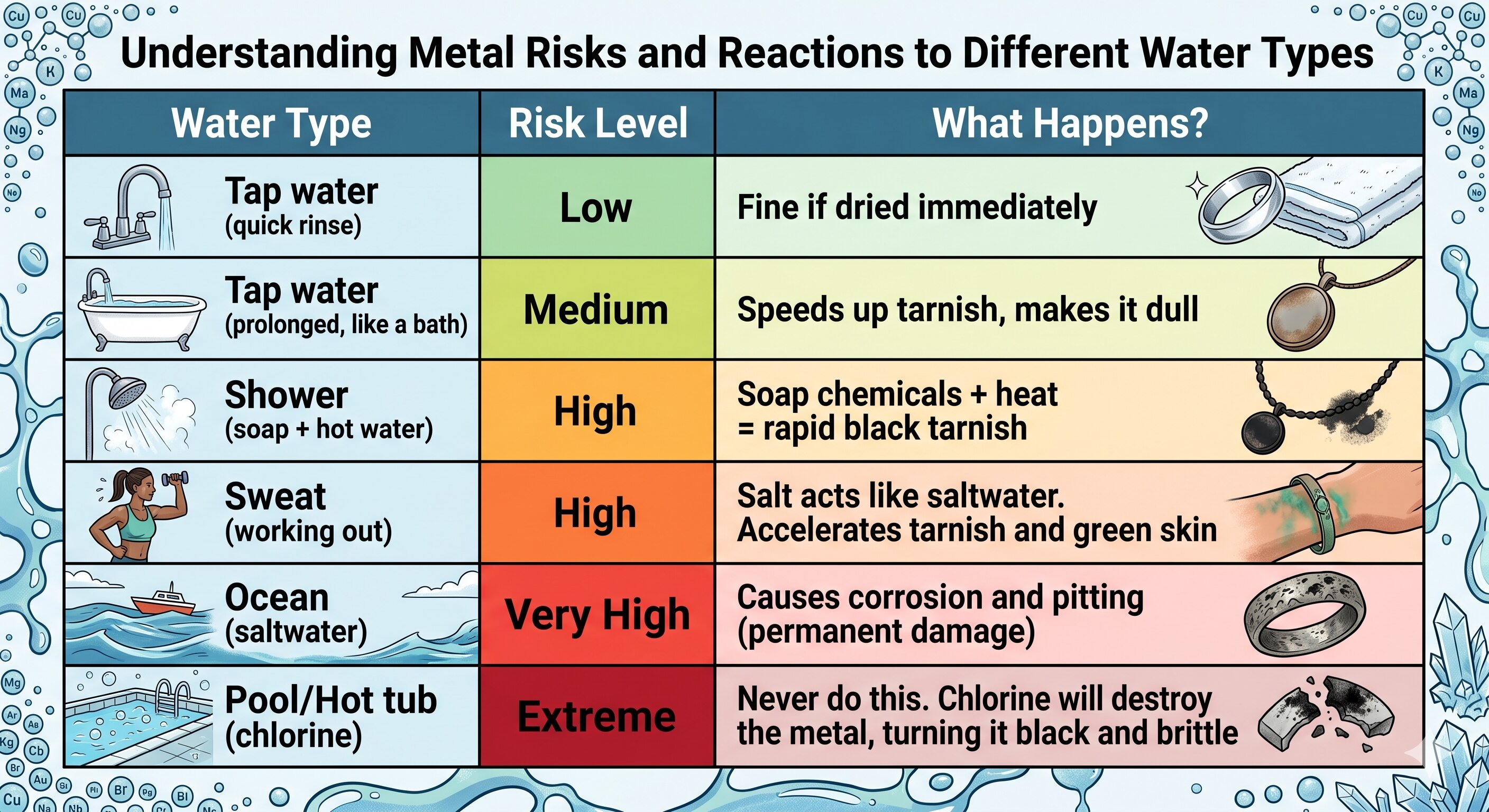
The Only Two Exceptions (Rare)
Pure silver (.999): No copper, so it resists water better. But it's very soft and uncommon for jewelry.
Sealed jewelry: Coated with clear resin or e-coating. But that coating wears off over time.
What If You Forget and Get It Wet?
Don't panic. Just do this immediately:
Rinse with clean tap water (to remove chlorine/salt/soap).
Pat completely dry with a soft cloth.
Let it air dry for 10-15 minutes before storing.
Accidental splash while washing hands? No problem. Dry it off.
Showering, swimming, doing dishes? Take it off first.
Sterling silver will not dissolve or instantly break in water. But regular water exposure will make it dull, black, and eventually damaged. A few seconds to remove a ring or necklace is well worth keeping it beautiful for years.
How Do You Clean Sterling Silver?
Cleaning sterling silver effectively involves understanding why it tarnishes and choosing the right method based on how dirty it is.
Tarnish is a layer of silver sulfide that forms when silver reacts with sulfur in the air or from substances like lotion, perfume, or even some foods. The copper in the sterling silver alloy makes this reaction more likely.
Here is a quick guide to the most recommended cleaning methods, from gentlest to strongest:
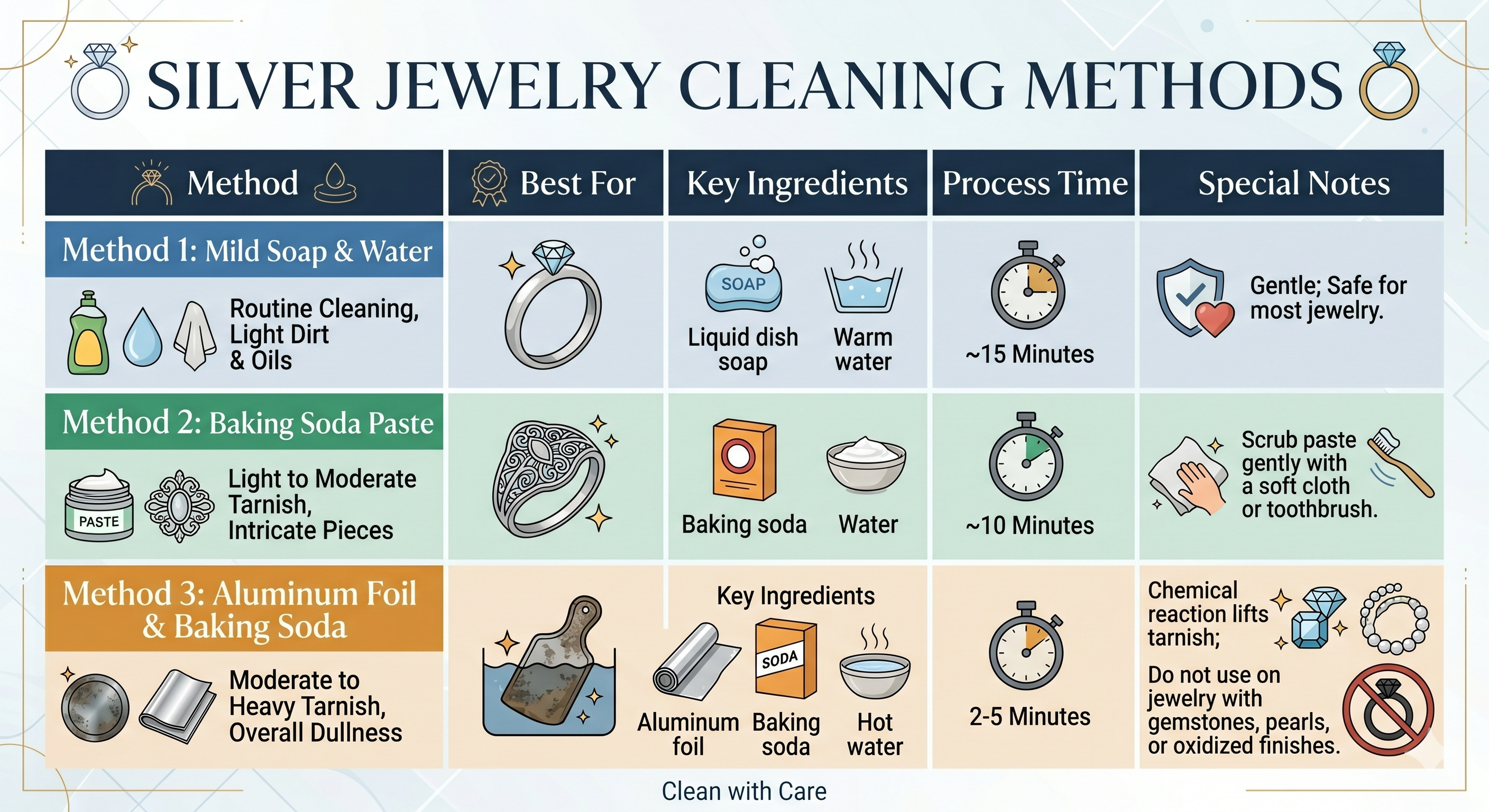
Step-by-Step Cleaning Methods
For Routine Cleaning: Mild Soap & Water
This is the safest method for maintaining your pieces after wear.
Mix a few drops of mild dish soap in a bowl of warm water.
Soak the jewelry for 5-10 minutes to loosen dirt.
Gently scrub with a soft-bristled toothbrush, especially in crevices.
Rinse thoroughly under cool water.
Dry completely with a soft, lint-free cloth before storing.
For Noticeable Tarnish: Baking Soda Paste
A slightly abrasive paste can help scrub away tarnish.
Mix baking soda with a little water to form a thick paste.
Apply the paste to the jewelry with your fingers, a soft cloth, or a toothbrush.
Gently rub the item, then let it sit for 2-3 minutes.
Rinse thoroughly with warm water and dry completely with a soft cloth.
For Heavy Tarnish: Aluminum Foil Soak
This method uses a safe chemical reaction (electrolysis) where the tarnish (silver sulfide) transfers from the silver to the aluminum foil.
Line a heat-safe bowl with aluminum foil (shiny side up).
Place the tarnished silver on the foil, ensuring contact.
Sprinkle 1-2 tablespoons of baking soda over the jewelry.
Carefully pour boiling water into the bowl to cover the items. You should see immediate fizzing.
Let it soak for 2-5 minutes, then remove with tongs.
Rinse with cool water, dry thoroughly, and buff with a clean cloth.
Important Warnings and Storage Tips
What to Avoid: Never use harsh chemicals like bleach, ammonia, or Windex. Avoid abrasive pads or rough brushing that can scratch the silver.
Special Cases:
Gemstones & Pearls: Do not use the aluminum foil method or submerge porous stones (like pearls, opals, or emeralds). Clean only with a damp cloth.
Oxidized Silver: This has a deliberate dark finish. Clean only with a dry soft cloth, as polishing will remove the intended antique look.
How to Store & Prevent Tarnish:
Store pieces individually in anti-tarnish pouches or a cloth-lined box to prevent scratches and reduce air exposure.
Keep silver in a cool, dry place. Adding a piece of chalk or a silica gel packet to your storage box can help absorb moisture.
Put jewelry on last when getting ready. Remove it before swimming, showering, cleaning, or applying lotions and perfumes.
When to Seek a Professional
Consider professional cleaning for valuable, antique, or complex pieces with delicate gemstones. Jewelers can also perform polishing, but note that polishing removes a tiny layer of metal each time and should only be done occasionally.
I hope this helps you restore your silver's shine. If you can tell me whether your piece is plain silver, has gemstones, or has a blackened (oxidized) design, I can give you more specific advice.
What Is The Best, Sterling Silver Or Plated Silver?
Choosing between sterling silver and silver-plated items depends on what you value more: long-term durability and intrinsic value, or a lower initial cost.
Here’s a quick comparison of their key differences:
.png)
How To Tell Them Apart
When evaluating an item, the easiest and safest method is to check for a hallmark. Sterling silver is always marked with terms like "Sterling," ".925," or "925". Silver-plated items may have marks like "EP," "EPNS," or "Silver Plate," but many have no marks at all.
Look for Wear: On plated items, you might see discoloration (like reddish copper showing through) or flaking where the thin silver layer has worn away.
Get a Professional Evaluation: For a definitive answer, visit a reputable jeweler or precious metal buyer who can use an XRF analyzer to test the metal content without damage. Avoid acid tests, as they can harm the item.
Which One is Right for You?
Choose Sterling Silver for: Heirloom-quality jewelry you'll wear daily, items with significant sentimental or investment value, or if you have sensitive skin.
Silver Plating is Suitable for: Fashion jewelry where you want the "look" for a season, decorative household items, or costume pieces where low cost is the priority.
Ultimately, there is no single "best" choice—it depends on your needs for quality, budget, and purpose.
I hope this helps you make a clear decision. If you'd like to know more about how to identify a hallmark on a specific piece you have, feel free to ask!
Beautiful. Affordable. Everyday elegant.
Does Sterling Silver Turn Green?
The short answer is: Yes, sterling silver can cause your skin to turn green or black, but it's not due to the silver itself.
Here’s the detailed breakdown of why it happens, what's actually causing the color, and how to prevent it.
The Real Culprit: Copper and Your Body Chemistry
Sterling silver is an alloy, meaning it's a mixture of metals. Pure silver (99.9%) is too soft for jewelry, so it's mixed with other metals to make it durable. By definition, sterling silver is 92.5% silver and 7.5% other metals, almost always copper.
The green or black discoloration comes from a reaction involving that copper.
Oxidation: Your skin’s sweat and natural oils contain salt, acids (like fatty acids), and sulfur compounds.
The Chemical Reaction: These compounds react with the copper in the sterling silver. This reaction forms copper chloride or copper sulfate.
The Green Stain: Copper chloride and copper sulfate are greenish-blue in color. This compound transfers onto your skin, leaving a greenish stain.
Key Point: This is not rust, and it's not harmful. It’s simply a chemical stain, similar to when a penny leaves a green mark on your skin.
What about the color black?
Sometimes, sterling silver leaves a black or dark grey mark instead of green. This is usually due to a different reaction with sulfur (found in the air, certain foods like eggs, and some body chemistries). This creates silver sulfide (the same black tarnish you see on old silverware), which can also rub off on your skin.
Why It Happens to Some People and Not Others
Not everyone's skin reacts to sterling silver. The green effect depends entirely on the individual's body chemistry. You're more likely to experience it if:
Your sweat is more acidic (often due to diet, medication, or stress).
You use certain lotions, perfumes, or soaps that contain chemicals that accelerate the reaction with copper.
You live in a humid climate (moisture speeds up the reaction).
You wear the jewelry while exercising or sleeping, exposing it to more sweat and friction.
How to Prevent Sterling Silver from Turning Your Skin Green
Apply a Barrier: The simplest solution. Paint a thin coat of clear nail polish on the inside of the ring (or the parts that touch your skin). This creates a physical barrier between the metal and your skin.
Keep it Dry: Remove your jewelry before showering, swimming, exercising, or doing dishes. Moisture and sweat are the main accelerants.
Remove Before Lotions: Put on your lotions, sunscreens, and perfumes first, let them dry completely, then put on your jewelry.
Clean it Regularly: Use a soft polishing cloth to remove the tarnish (silver sulfide) that can build up and rub off on your skin.
The Most Important Takeaway: Is it real sterling silver?
Real, high-quality sterling silver will not turn your skin green quickly or dramatically. A quick, faint green smudge after wearing a ring for 12 hours on a hot day is normal.
However, if your jewelry turns your skin green immediately or a very dark green/black within an hour, it's almost certainly NOT real sterling silver. It is likely a cheap base metal like nickel, brass, or copper, plated with a microscopic layer of silver. The underlying metal is reacting violently with your skin.
How to check: Look for the hallmark. Real sterling silver is almost always stamped with .925 or STER.
Summary
Does real sterling silver (.925) turn skin green? Yes, occasionally, due to the copper in the alloy reacting with your body chemistry. It's normal, harmless, and preventable.
Is my jewelry fake if it turns my skin green? Not necessarily. But if it's extremely bad or instant, it's very likely fake or a very low-quality silver plate.
How to stop it? Clear nail polish on the inside of the jewelry is the most effective fix.
Shop our sterling silver collection—the smart choice for real jewelry that doesn't break the bank. [Shop Sterling Silver Rings →]


News for Monday 27 October, 2025
- From Security to Style: Everything You Need to Know About Bezel Settings
- What Makes a Channel Setting Ring Unique?
- Diamond Prong Setting: Get the Most Sparkle and Security
- The Ultimate Question: What Ring Setting Is Right for You?
- Platinum Explained: Everything You Need to Know About This Rare Element
View all news for Monday 27 October, 2025 on one page
Recent News
- Tuesday 21 October, 2025
- Friday 17 October, 2025
- Thursday 16 October, 2025
- Wednesday 15 October, 2025
- Tuesday 14 October, 2025