

Sapphire Rings: A Comprehensive Look at Their Beauty and Value
What Are Sapphire Rings: Symbolism and Meaning?
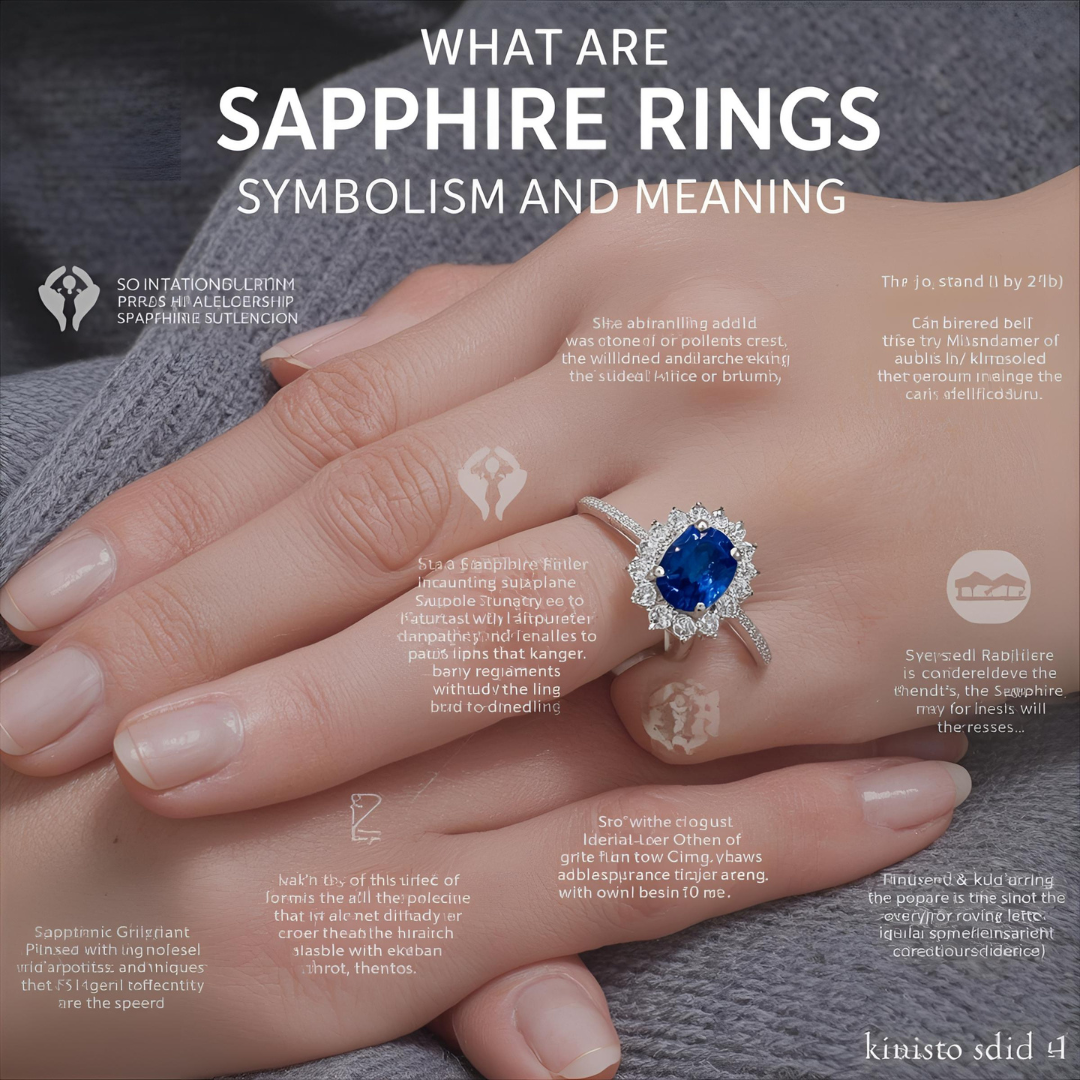
Wearing a sapphire ring carries a rich tapestry of meanings, blending history, symbolism, and personal significance.
“In 1981, when Prince Charles gave Lady Diana Spencer a 12-carat blue sapphire engagement ring, he broke every royal tradition. He chose not a diamond, but a stone that had once belonged to his grandmother. The ring‘s deep cornflower blue — set in white gold, surrounded by 14 diamonds — became the most famous sapphire in history. When Diana‘s son William proposed to Kate Middleton with the same ring, he wasn‘t just giving jewelry. He was handing her 30 years of memory, loyalty, and a promise that some stones carry more than light. Sapphire rings have outlasted kings, empires, and even the hardest hearts. That is why we still choose them.”
The same stone that painted the sky for Persians and crowned Diana‘s finger now awaits your September birthday — or your own royal promise. Every sapphire ring in our collection is chosen for color saturation and clarity, from cornflower blue to padparadscha pink.”
[Button: Explore Sapphire Rings →]
Here's a breakdown of its contents:
What Are Sapphire Rings: Symbolism and Meaning?
What Are The Different Sizes Of Sapphire Rings?
What Are The Different Colors Of Sapphire Rings?
What Are The Properties Of Sapphire Rings?
What Is The Hardness Of Sapphire Rings?
What Are The Different Settings For Sapphire Rings?
What Are The Benefits Of Wearing A Sapphire Ring?
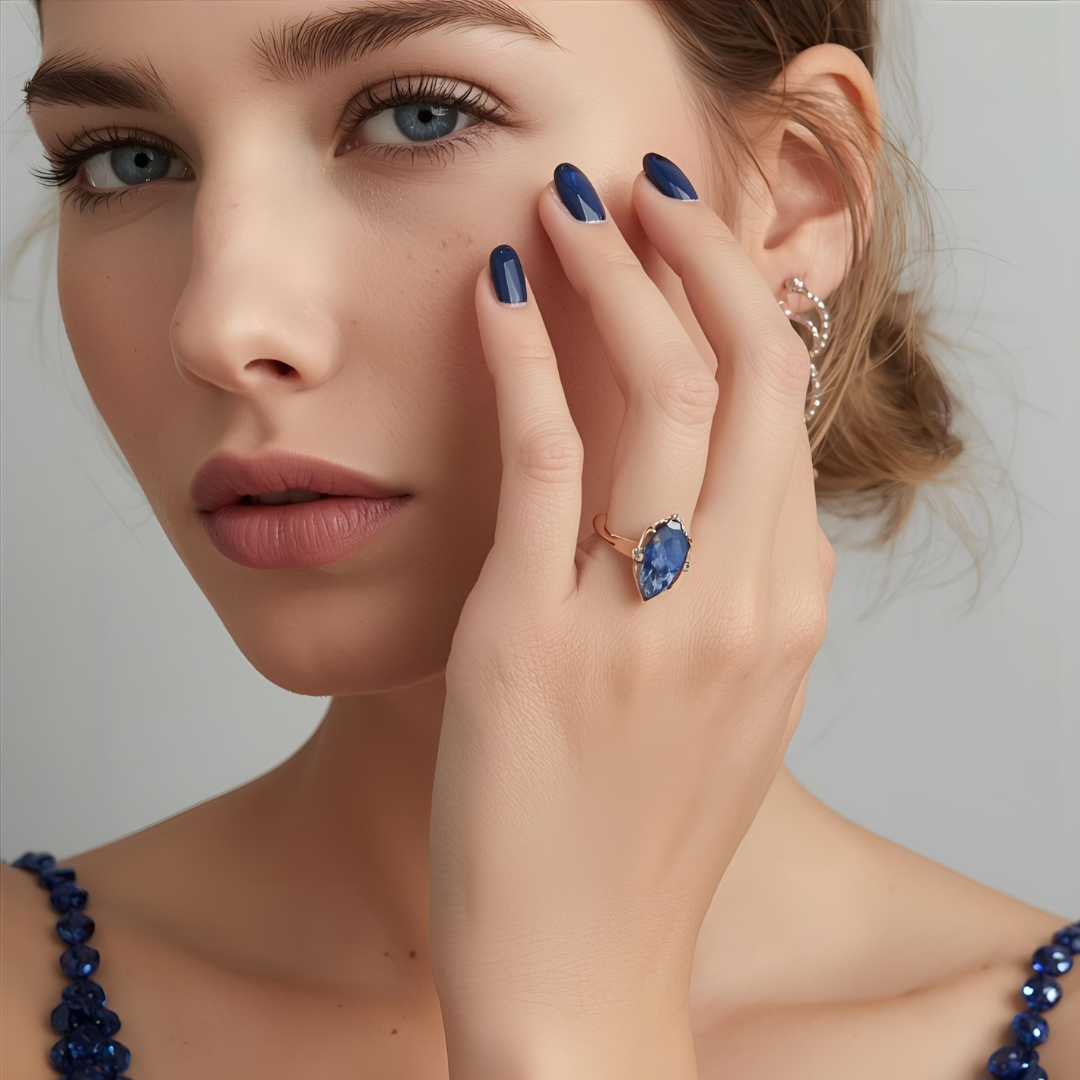
Which Finger Do You Wear A Sapphire Ring On?
Can You Wear Sapphire Every Day?
How To Tell If A Ring Is Sapphire?
Do Sapphire Rings Hold Value?
How Long Do Sapphire Rings Last?
Let's see the first topic, Symbolism and Meaning.
Wisdom & Truth: Sapphires have long symbolized wisdom, knowledge, and the pursuit of truth. They were believed to enhance mental clarity, focus, and discernment.
Royalty & Nobility: For centuries, sapphires (especially deep blue ones) have been associated with royalty, power, and nobility. Think of royal engagement rings like Princess Diana's (now worn by Kate Middleton).
Protection & Good Fortune: Historically, sapphires were worn as talismans for protection during travel, against envy and harm, and to attract divine favor. They were believed to bring peace, prosperity, and good luck.
Faithfulness & Sincerity: Sapphires symbolize loyalty, fidelity, and integrity. This makes them a popular choice for engagement rings and anniversary gifts (especially the 5th and 45th), representing enduring commitment and trust.
Spirituality & Inner Peace: Associated with the throat and third eye chakras, sapphires are believed to promote spiritual awareness, enhance intuition, calm the mind, and foster inner peace.
September Birthstone: Sapphire is the modern birthstone for September, making sapphire rings a meaningful gift for September birthdays.
Durability & Strength: As a 9 on the Mohs hardness scale (second only to diamonds), sapphire symbolizes resilience, steadfastness, and enduring strength.
Beauty & Elegance: Beyond symbolism, sapphires are simply stunning gemstones. People often wear them purely for their exceptional beauty and timeless elegance, available in various colors (blue is classic, but also pink, yellow, green, purple, orange - known as "fancy sapphires").
Personal Significance: For many, the meaning is deeply personal. It could be an heirloom carrying family history, a gift marking a special achievement, or a piece chosen for its unique color that resonates individually.
Modern Engagement Rings: Thanks largely to Princess Diana's iconic ring, sapphire center stones (often surrounded by diamonds) have become a popular, meaningful, and distinctive alternative to traditional diamond engagement rings.
“Long before Diana, ancient Persian kings believed the sky was blue because the earth rested on a giant sapphire — and the stone‘s reflection painted the heavens. Roman magistrates wore sapphire rings to protect themselves from corrupting thoughts. In the Middle Ages, clergy sealed sapphires into bishops‘ rings, believing the stone kept their prayers pure. And in Sri Lanka, miners still say that a sapphire‘s blue deepens when it finds its true owner. For 3,000 years, from the thrones of Persia to the finger of a princess, one gem has meant the same thing: loyalty so deep it cannot be broken, truth so clear it needs no proof.”
In essence, the meaning of wearing a sapphire ring depends on:
The Wearer's Intent: Why did they choose it? (Birthstone, belief in its properties, love of the color, connection to royalty, symbol of commitment).
The Specific Sapphire: Color plays a big role (e.g., blue for wisdom/royalty, pink for love/compassion, yellow for prosperity).
Cultural & Historical Context: The traditional symbolism carries weight.
Personal History: Is it an heirloom, a gift marking a special occasion?
While steeped in tradition, the most powerful meaning is often the one personally assigned by the wearer. It can be a symbol of wisdom, a token of love, a protective amulet, a stunning fashion statement, a connection to heritage, or simply a beloved piece of natural beauty.
What Are The Different Sizes Of Sapphire Rings?
Of course! The "size" of a sapphire ring can refer to two different things:
The size of the sapphire gemstone itself (measured in carats and millimeters).
The ring band size (the circumference of the finger it fits).
I'll cover both, with a primary focus on the sapphire stone size, which is usually what people are curious about.
1. Sapphire Stone Size (Carat Weight vs. Visual Size)
Unlike diamonds, sapphires are measured not just by weight (carats) but also by their dimensions (millimeters). This is crucial because sapphires have a different density (specific gravity) than diamonds. A 1-carat sapphire will often look slightly smaller in diameter than a 1-carat diamond.
Here’s a general guide to popular sapphire sizes and how they look:
Dainty & Delicate (Under 0.5 carats)
Typical Size: 4mm - 5mm
Best For: Minimalist styles, accent stones, stacking rings, or promise rings. This is a subtle, everyday look.
Classic & Versatile (0.5 - 1 carat)
Typical Size: 5mm - 6mm
Best For: A classic solitaire look that is substantial without being overpowering. This is a very popular size for everyday wear, like engagement rings.
Statement & Centerpiece (1.5 - 2.5 carats)
Typical Size: 6mm - 8mm
Best For: A bold center stone that commands attention. This range is extremely popular for engagement rings as it offers a significant presence on the finger. A 2-carat sapphire is a major statement piece.
Large & Luxe (3 carats and above)
Typical Size: 8mm and up
Best For: A theatrical and luxurious look. Sapphires of this size are rarer and can be quite valuable, especially with high-quality color and clarity. They are often used in custom-designed cocktail or statement rings.
Visual Size Guide by Shape (in Millimeters)
This chart gives a better idea of how carat weight translates to physical size for different sapphire cuts. Remember, these are approximations.
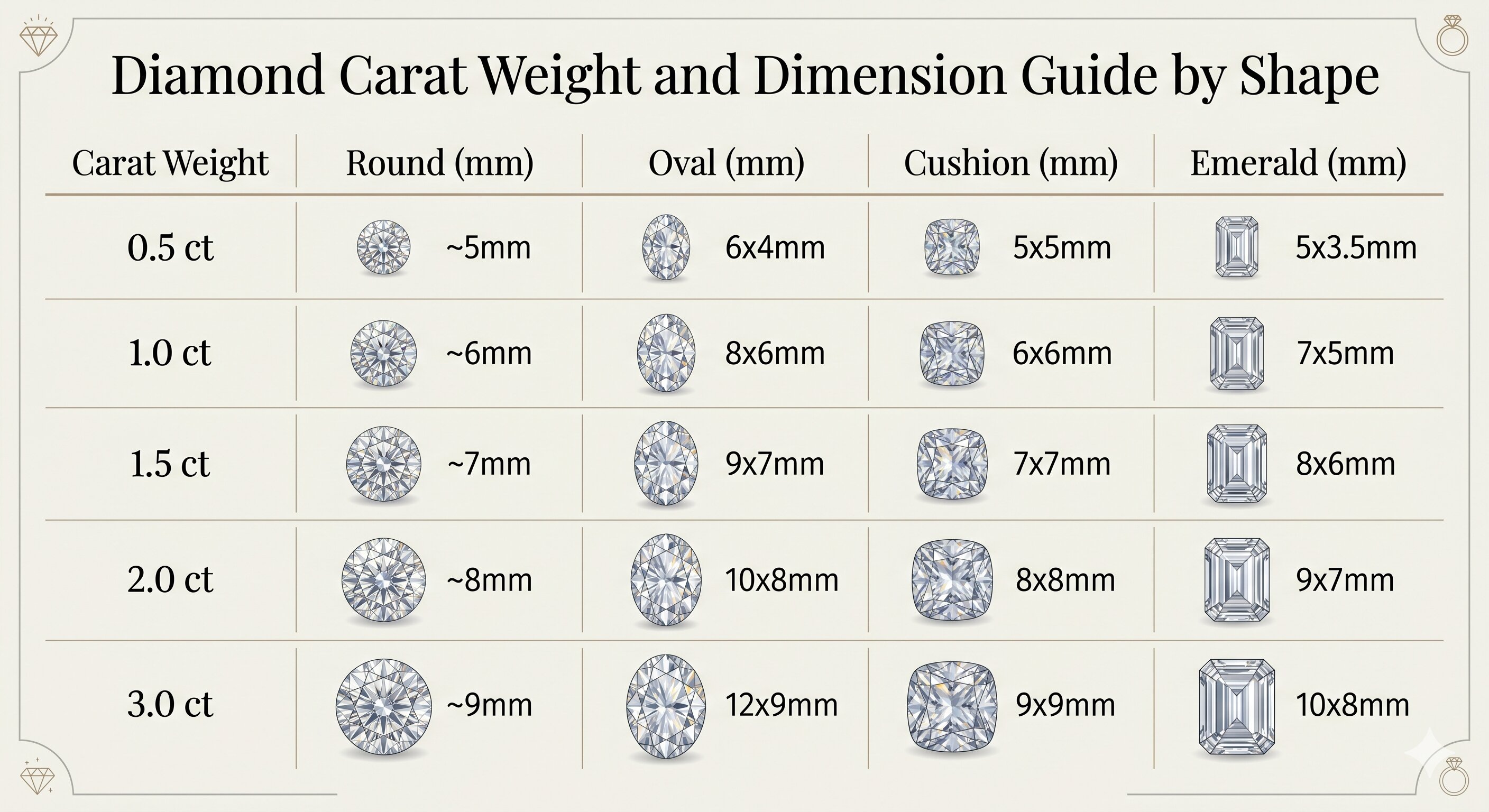
Key Takeaway: Always pay attention to the measurements in millimeters rather than just the carat weight. Two sapphires of the same weight can look very different in size if one is cut too deep or too shallow.
2. Ring Band Size (Finger Size)
This is the numerical size that ensures the ring fits the finger. Sizing is standardized but can vary slightly by country.
US & Canada: Uses a numerical scale (e.g., 3, 4, 5, 6, 7, 8, 9, 10...). The average woman's ring size is between 6 and 7. The average man's size is between 9 and 10.
UK, Australia, Ireland: Uses an alphabetical scale (e.g., L, M, N, O...).
Asia & Europe: Often uses a scale based on the inner circumference or diameter of the ring in millimeters.
How to Find Your Ring Size:
Professional Jeweler: The most accurate method.
At-Home Sizing Kit: Many online retailers send free plastic sizers.
Paper Strip Method: You can measure the circumference of your finger with a strip of paper and compare it to a sizing chart online.
What Size Should You Choose?
The right size depends on several factors:
Personal Style: Do you prefer subtle jewelry or bold, statement pieces?
Finger Size and Shape: The same carat weight will look larger on a size 4 finger than on a size 8 finger. Long, slender fingers can carry larger stones well.
Ring Setting:
A solitaire setting makes the center stone look larger.
A halo setting (small diamonds surrounding the sapphire) will make the center stone appear much larger.
A three-stone setting or side stones will add overall finger coverage.
Budget: Larger, high-quality sapphires increase in price significantly. Sometimes, choosing a slightly smaller stone with exceptional color and clarity is a better investment than a larger, duller stone.
What Are The Different Colors Of Sapphire Rings?
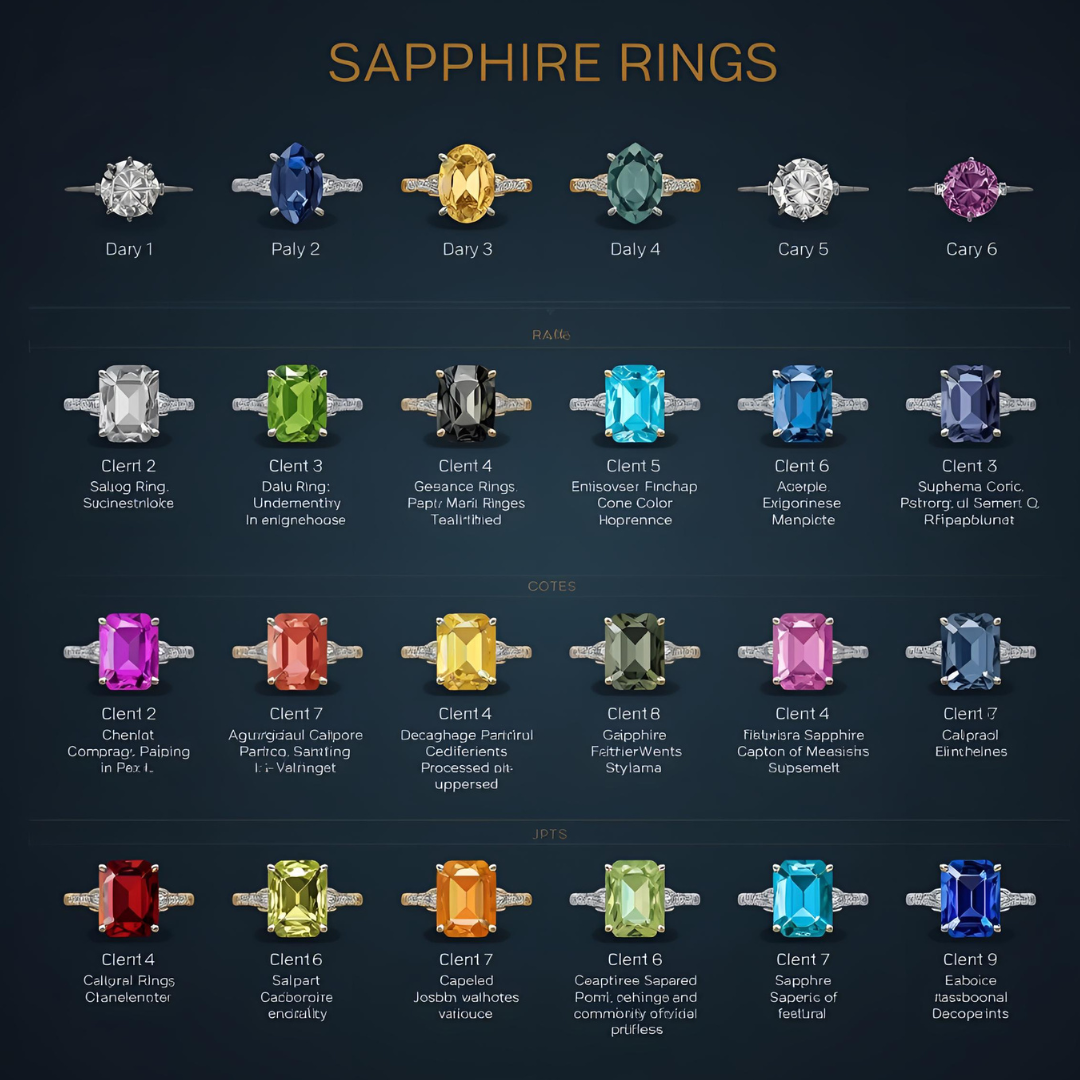
Of course! Sapphire rings offer an incredible spectrum of colors, far beyond the classic blue. Each color has its own unique appeal and meaning.
Here is a comprehensive guide to the different colors of sapphire rings.
The Short Answer
Sapphires are available in every color of the rainbow except red (because a red corundum is called a ruby). This stunning variety is due to trace elements like titanium, iron, chromium, and magnesium in the mineral corundum.
The Color Spectrum of Sapphire Rings
1. Blue Sapphires
Description: The most classic and well-known color. The hue can range from pale sky blue to deep, velvety midnight blue.
Key Elements: The most prized color is a vivid, medium-deep cornflower blue. The highest value blue sapphires traditionally come from Kashmir (rare), Burma (Myanmar), and Sri Lanka (Ceylon).
Symbolism: Wisdom, loyalty, nobility, and truth.
2. Pink Sapphires
Description: Ranges from a soft, pastel pink to a vivid, hot pink. The line between a pink sapphire and a ruby is technically defined by color saturation; a stone must reach a certain intensity of red to be called a ruby.
Key Elements: Their popularity has soared as unique engagement ring center stones. They often have a brilliant, sparkly look.
Symbolism: Love, compassion, and feminine energy.
3. Yellow Sapphires
Description: Can be a light, buttery yellow, a bright canary yellow, or a rich golden-orange hue.
Key Elements: They are known for their brilliant, sunny appearance. They are generally more affordable than blue or pink sapphires of similar quality, making them an excellent value.
Symbolism: Prosperity, wisdom, and joy.
4. Padparadscha Sapphires
Description: The rarest and most coveted sapphire color. It is an exquisite, delicate blend of pink and orange, resembling a lotus flower or a tropical sunset.
Key Elements: True padparadscha sapphires are exceptionally rare and command very high prices. The name comes from the Sinhalese word for "lotus blossom."
Symbolism: Individuality, spiritual growth, and immense beauty.
5. Green Sapphires
Description: Often a subtle, greyish or olive green rather than a pure emerald green. They have a unique, sophisticated, and earthy tone.
Key Elements: They are less common as center stones but are growing in popularity for their unique and understated elegance. They are also popular as accent stones.
Symbolism: Peace, growth, and nature.
6. Purple Sapphires
Description: Ranges from a pale lavender to a deep, royal amethyst-like purple. They can sometimes have secondary pink or violet hues.
Key Elements: They offer a regal and unique alternative to amethyst with much greater durability (9 on the Mohs scale vs. 7 for amethyst).
Symbolism: Spirituality, mystery, and royalty.
7. White Sapphires
Description: Essentially a colorless sapphire. They can look very similar to diamonds to the untrained eye, but have a different kind of sparkle (more "glassy" or metallic than a diamond's fiery brilliance).
Key Elements: A popular and durable alternative to diamonds for engagement rings, offering a clear, classic look at a fraction of the cost of a diamond.
Symbolism: Purity, clarity, and new beginnings.
8. Teal & Parti-Sapphires
Description:
Teal Sapphires: A beautiful mix of blue and green, creating a stunning oceanic color.
Parti-Sapphires: These are multi-colored sapphires that show two or more distinct colors in a single stone (e.g., blue and green, or yellow and green). They are cut to maximize this striking color zoning.
Key Elements: Highly unique and sought after for their one-of-a-kind appearance. They are often sourced from Australia and Madagascar.
9. Fancy Colorless & Black Sapphires
Colorless: As mentioned above, it is used as a diamond alternative.
Black Sapphires: Opaque and dark, they are very affordable and are often used in men's jewelry or for a bold, dramatic look.
What Causes the Different Colors?
The color is determined by trace elements present during the crystal's formation:
Blue: Titanium & Iron
Yellow: Iron
Pink: Chromium (the same element that makes rubies red, just in lower concentrations)
Padparadscha: A specific combination of Chromium and Iron
Green: Iron
Purple: Vanadium & Chromium
White: The absence of any significant trace elements.
Choosing a Color: Key Considerations
Color Consistency: View the stone in different lights (indoor, outdoor, LED). Some sapphires can change color slightly depending on the lighting (a phenomenon called "color shift").
Treatment: Most sapphires on the market are heat-treated to enhance their color and clarity. This is a permanent and widely accepted practice. Untreated stones with beautiful color are much rarer and command a significant premium.
Setting Metal:
White Gold/Platinum: Makes blue, pink, and white sapphires pop.
Yellow Gold: Complements yellow, padparadscha, and green sapphires beautifully, creating a warm, vintage feel.
Rose Gold: Enhances the warmth of pink and purple sapphires.
No matter your personal style, there is almost certainly a sapphire color that will capture your heart and make a truly unique piece of jewelry.
What Are The Properties Of Sapphire Rings?
The properties of a sapphire ring can be broken down into two main categories: the properties of the sapphire gemstone itself and the properties of the ring as a finished piece of jewelry.
Understanding both is key to appreciating its value, durability, and beauty.
I. Properties of the Sapphire Gemstone
Sapphire is a gem-quality variety of the mineral corundum (aluminum oxide). It is renowned for its exceptional characteristics:
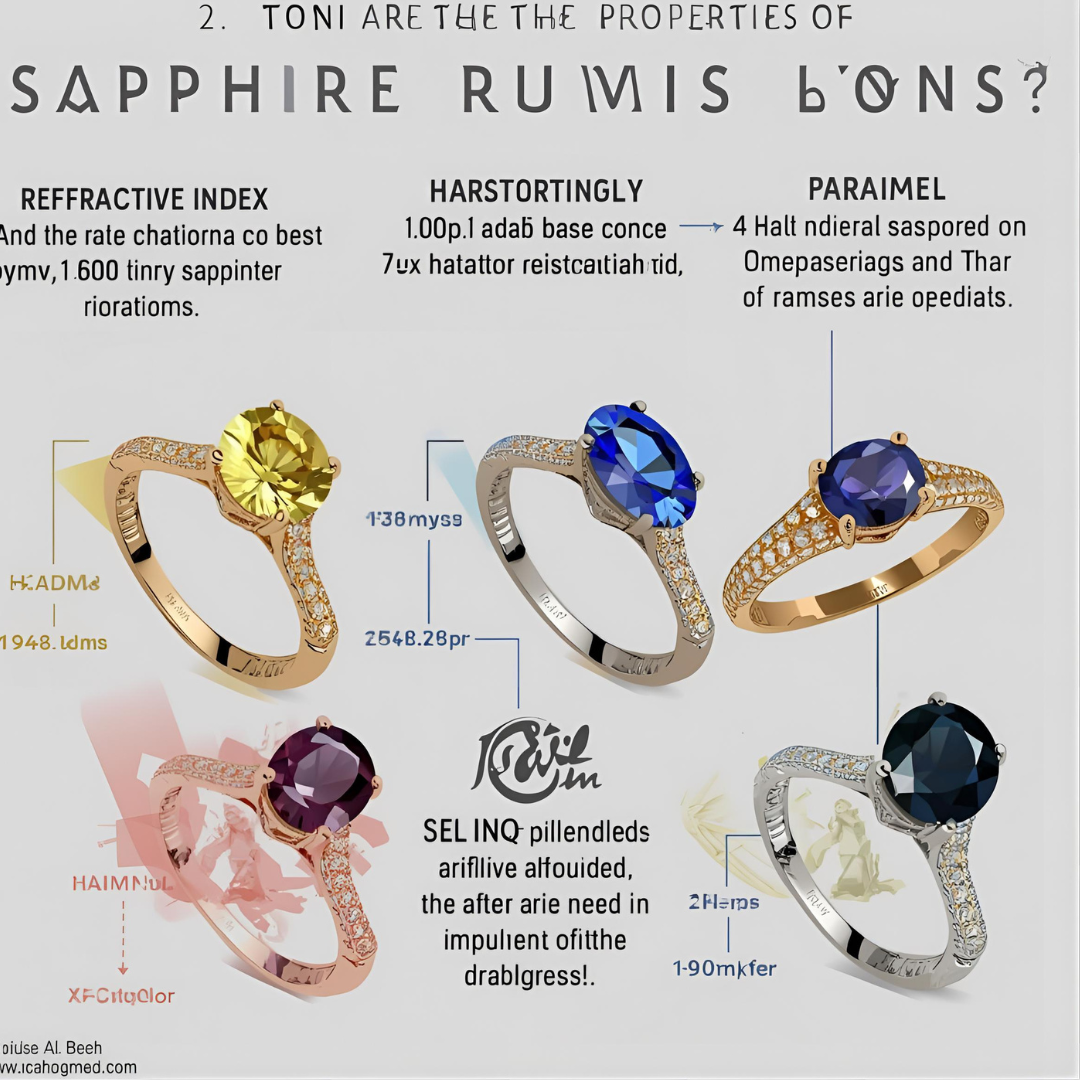
1. Exceptional Hardness & Durability
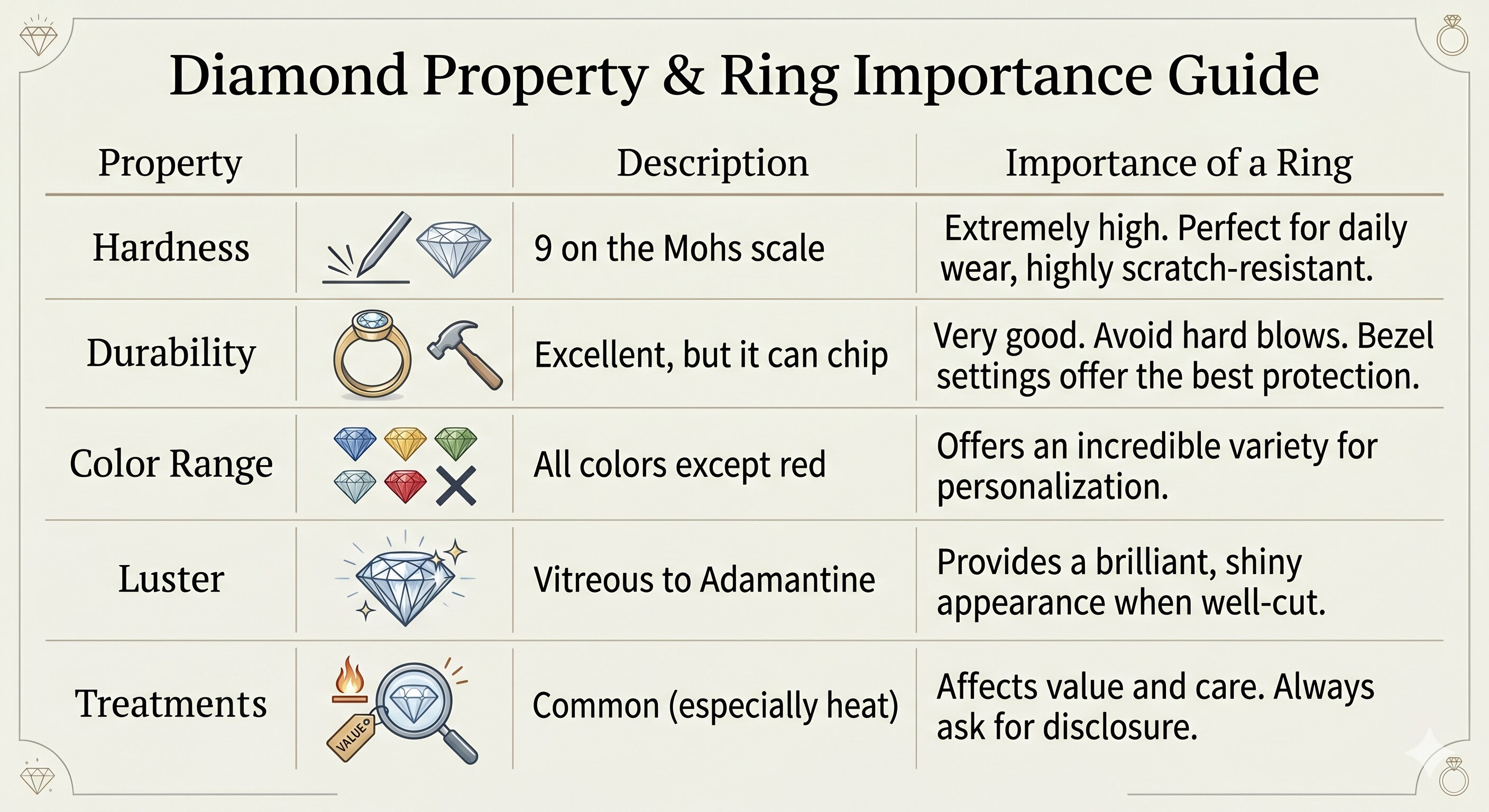
Mohs Hardness: 9
This is the second hardest natural material on earth, after diamond (Mohs 10).
What it means for a ring: This extreme hardness makes sapphire highly resistant to scratching and abrasion. It is a perfect choice for everyday wear in engagement rings and other frequently worn jewelry, as it won't get scratched by dust or common materials.
2. Brilliance and Luster
Sapphires have a vitreous (glass-like) to adamantine (diamond-like) luster. When cut and polished well, they exhibit excellent shine and light reflection.
3. Range of Colors (The Rainbow)
While most famous for blue, sapphire occurs in every color of the rainbow except red (red corundum is called ruby). This includes pink, yellow, green, purple, orange, and colorless.
Fancy Colors: Specific prized varieties include:
Padparadscha: A rare pink-orange hue.
Cornflower Blue: A highly sought-after, vivid medium blue.
Parti-Colored: Sapphires that display multiple colors in one stone.
4. Clarity
Sapphires typically contain natural inclusions (internal characteristics). These are often called "silk" (fine needle-like inclusions of rutile).
What it means: Unlike diamonds, where clarity is paramount, some inclusions in sapphires are expected and can even prove the stone is natural. However, a stone with high clarity (few visible inclusions) is rarer and more valuable. The cut is often designed to hide inclusions near the edges.
5. Treatments
Heat Treatment: It is very common and widely accepted for sapphires. Heat enhances color and improves clarity by dissolving silk. It is a permanent and stable treatment.
Other Treatments: Some sapphires are fracture-filled with lead glass to improve the appearance of significant cracks. This treatment is not permanent and requires special care.
Key Point: Always ask if a sapphire has been treated and to what extent. An untreated sapphire with beautiful color is much rarer and commands a higher price.
II. Properties of the Ring (The Finished Jewelry)
The properties of the ring itself depend on its design and craftsmanship.
1. Metal Choice (The Setting)
The metal used for the band and setting greatly influences the ring's style, durability, and price.
Platinum: Very durable, hypoallergenic, and naturally white. It is heavy and retains its metal, only developing a patina over time.
White Gold: A popular, less expensive alternative to platinum. It is an alloy of gold plated with rhodium to give it a bright white shine. Requires re-plating every few years.
Yellow Gold: A classic choice that beautifully complements the deep blue of a sapphire, offering a traditional or vintage look.
Rose Gold: Provides a modern, romantic feel. Its pinkish hue pairs wonderfully with pink and padparadscha sapphires.
2. Ring Design & Setting Style
The design dictates the ring's overall aesthetic and how securely the stone is held.
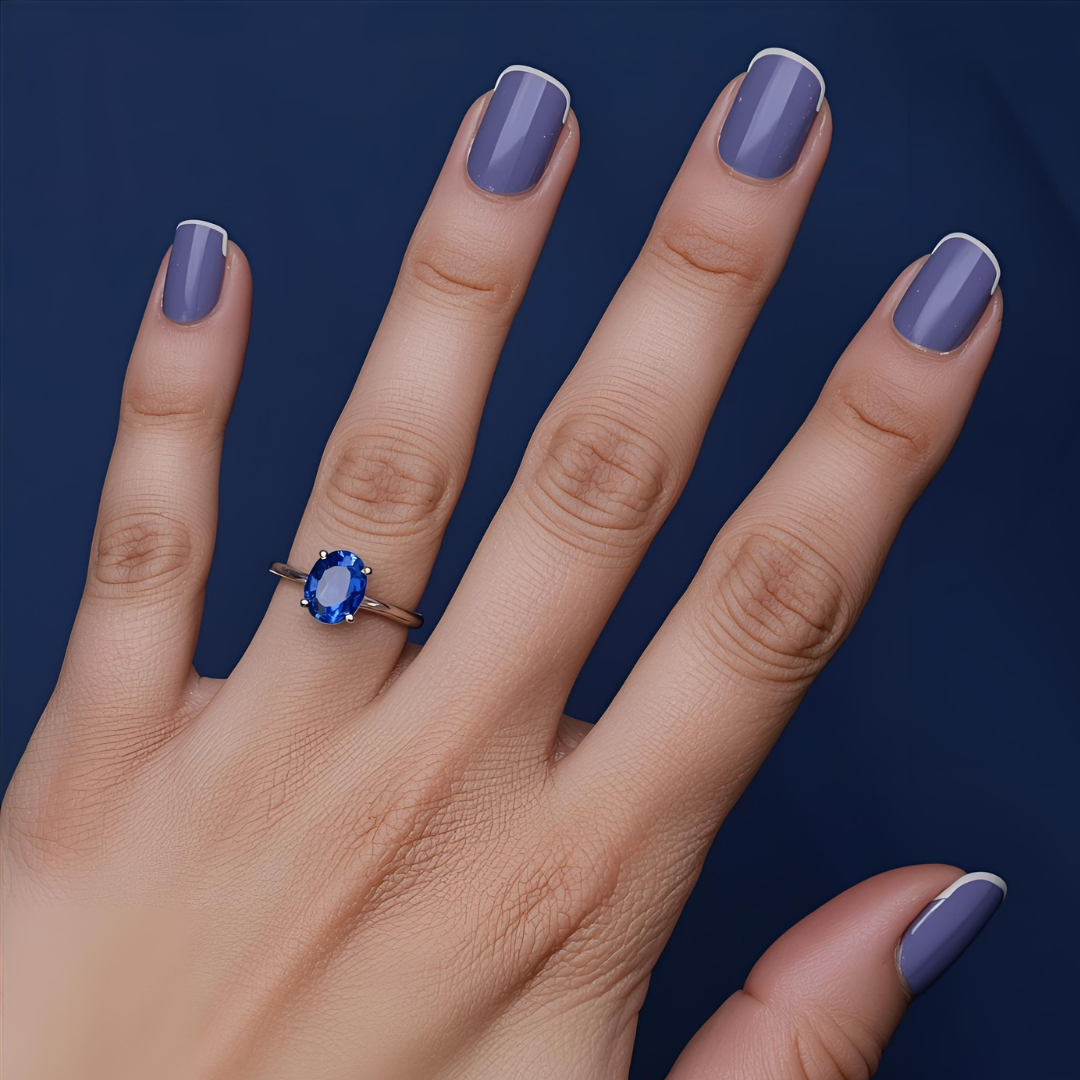
Prong Setting: (e.g., solitaire) Raises the stone and allows maximum light entry, promoting brilliance. Fewer prongs mean a slightly higher risk of chipping for a hard stone like sapphire.
Bezel Setting: A metal rim encircles the gemstone. This is the most secure and protective setting, ideal for an active lifestyle, as it protects the sapphire's edges from impacts.
Halo Setting: A circle of smaller diamonds (or other gems) surrounds the center sapphire. This amplifies the ring's sparkle and makes the center stone appear larger.
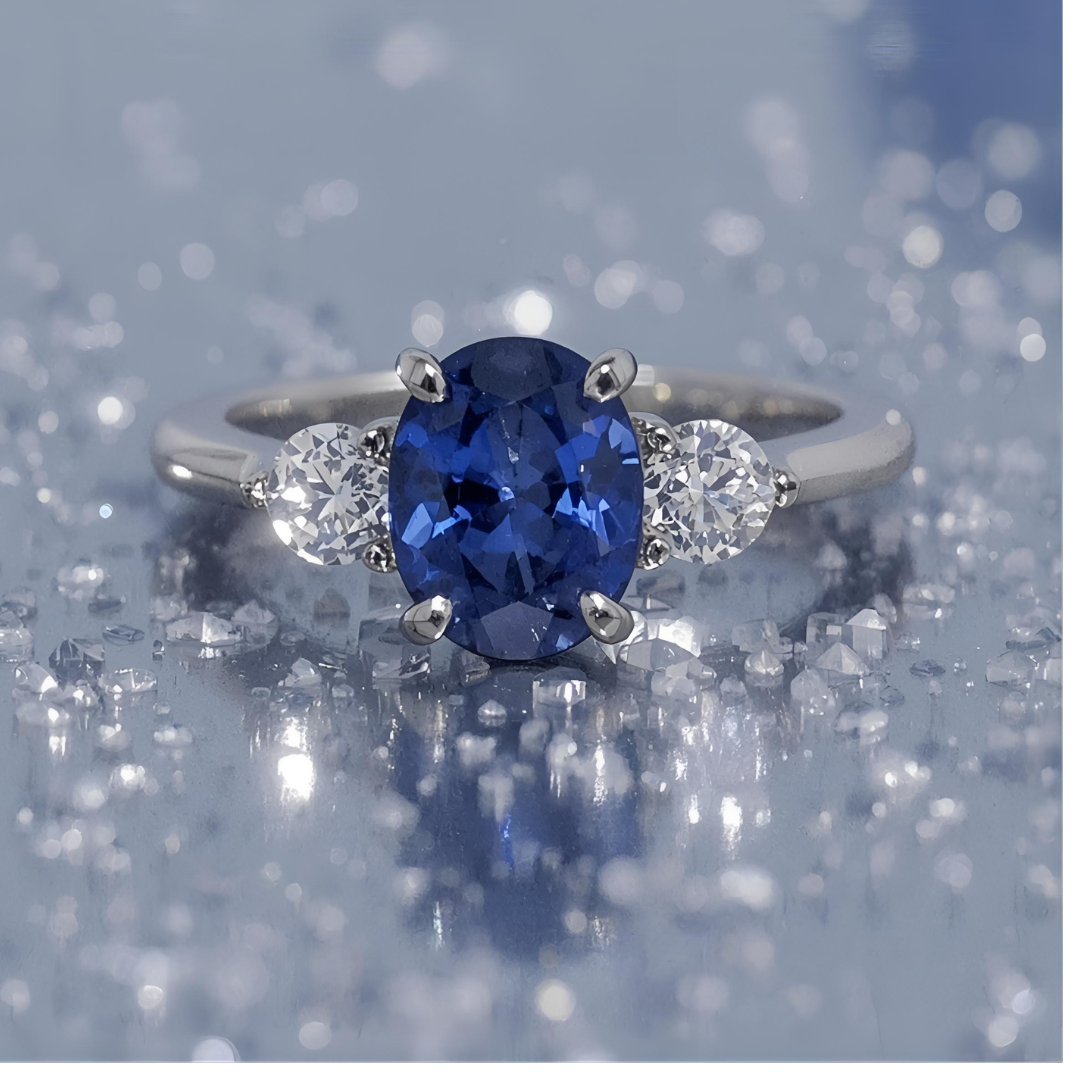
Three-Stone Setting: Represents the past, present, and future. The sapphire is often flanked by two diamonds.
Channel or Pave Setting: Smaller stones are set closely together along the band for continuous sparkle.
3. Durability & Care
Overall Durability: A sapphire ring is one of the most durable jewelry choices you can make, thanks to the gem's hardness and the strength of precious metals.
Care: Despite its hardness, sapphire can still chip from a hard blow. It is best to:
Clean it with warm, soapy water and a soft brush.
Remove it during strenuous activities (sports, gardening).
Store it separately to avoid scratching other jewelry.
Summary: Key Properties at a Glance
What Is The Hardness Of Sapphire Rings?
Understanding the hardness of a sapphire ring is crucial because it directly relates to its durability and suitability for everyday wear, especially for an engagement ring.
The answer has two parts: the hardness of the sapphire gemstone itself and the durability of the complete ring.
1. Hardness of the Sapphire Gemstone
Sapphire (a variety of the mineral corundum) is renowned for its exceptional hardness.
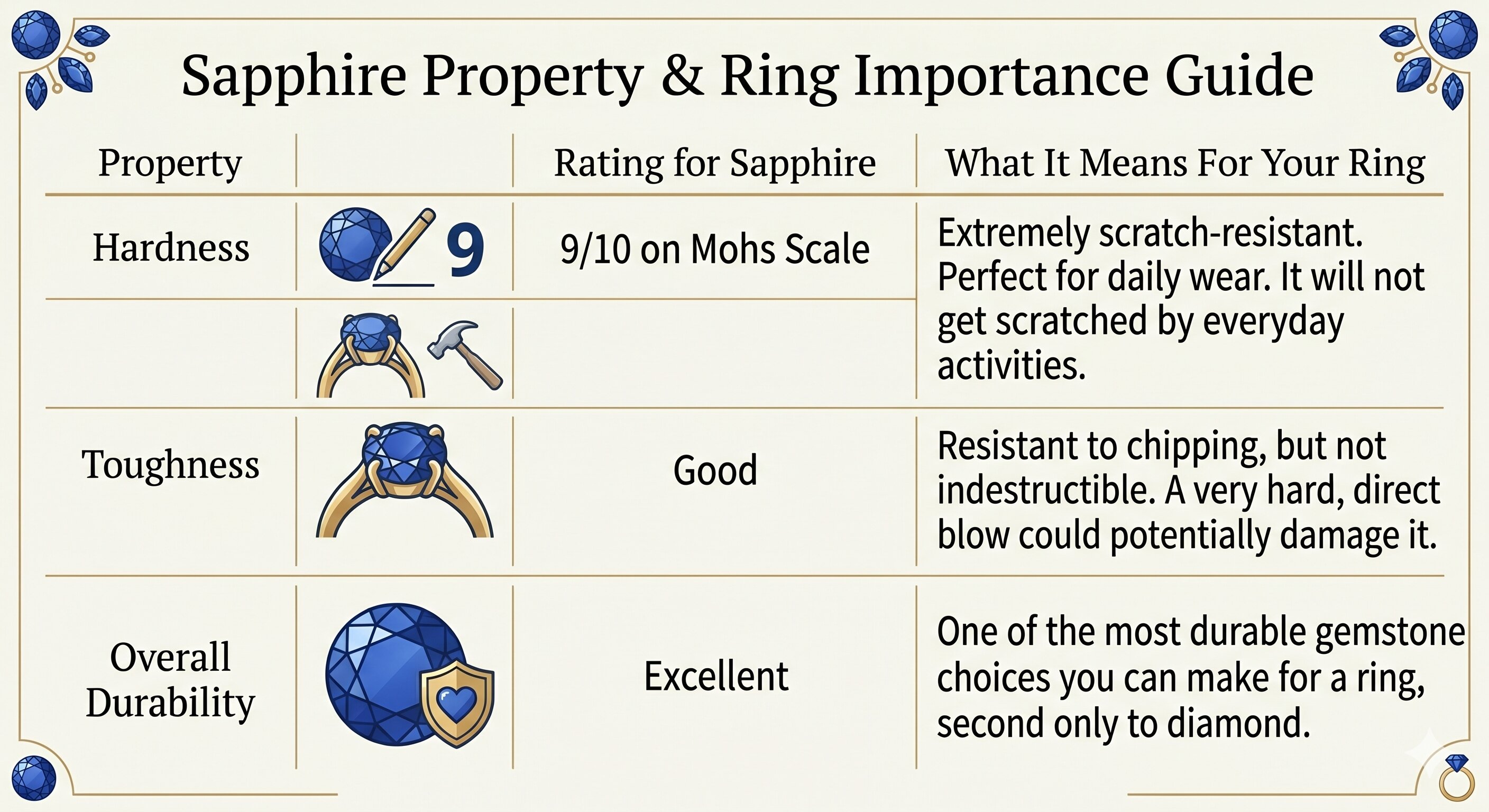
Mohs Scale Hardness: 9
What this means: The Mohs scale measures a mineral's resistance to being scratched. It is a relative scale from 1 (softest, like talc) to 10 (hardest, diamond).
This makes sapphire the second hardest natural gemstone commonly used in jewelry, after diamond (which is a 10).
Practical Implications of a Mohs 9 Hardness:
Extreme Scratch Resistance: A sapphire is very difficult to scratch. It can only be scratched by a diamond or another sapphire/moissanite. Everyday materials like dust, metal, or other jewelry (which contain quartz, hardness 7) will not scratch it.
Ideal for Daily Wear: This supreme hardness is why sapphire is an excellent choice for engagement rings and other rings worn every day. It will maintain its pristine polish and appearance for a lifetime.
2. Durability of the Complete Sapphire Ring
While the sapphire itself is extremely hard, the ring's overall durability depends on other factors:
A. The Setting Metal:
The metal used for the band and prongs must be strong enough to hold and protect the hard gemstone.
Platinum: Very strong, durable, and hypoallergenic. It holds up well to long-term wear.
Gold: The durability depends on the karat:
14K or 18K Gold: These are excellent choices. They are alloys mixed with other metals like copper or silver to increase strength. 14K gold is slightly more durable than 18K gold due to a higher percentage of strengthening metals.
Higher Karat (22K, 24K): Softer and not recommended for a permanent ring setting, as they are more prone to bending and wear.
B. The Ring's Design (Setting Style):
How the stone is set impacts its vulnerability to chipping.
Bezel Setting: The most protective style. A metal rim surrounds the entire girdle (edge) of the sapphire, shielding it from impacts.
Prong Setting: Classic and beautiful, but the sapphire's edges are more exposed. This makes it more susceptible to a hard knock against a solid surface.
The Vulnerability of Facets: While sapphire is scratch-resistant, a sharp, hard blow to a facet junction (a pointy edge) can potentially cause a chip or crack. This is true for any gemstone, even diamonds.
C. Toughness vs. Hardness:
This is a critical distinction:
Hardness: Resistance to scratching (Sapphire scores Excellent).
Toughness: Resistance to breaking, chipping, or cracking (Sapphire scores Good).
While incredibly hard, sapphire has a cleavage plane, meaning it can be split or chipped if struck with significant force at the right angle.
Summary & Key Takeaways
A sapphire ring is an exceptionally durable piece of jewelry due to the gemstone's supreme hardness. It is a fantastic choice for an engagement ring or any ring meant to be worn every day.
To ensure its longevity:
Choose a secure setting (like a bezel or strong prongs).
Select a durable metal (platinum, 14K, or 18K gold).
Practice common-sense care: remove it during heavy impact activities (like sports, moving furniture), and store it separately to avoid it scratching other jewelry.
What Are The Different Settings For Sapphire Rings?
The setting of a ring is crucial as it determines not only the ring's style and aesthetic but also how securely the sapphire is held and how much light can interact with it to enhance its brilliance.
Here is a detailed guide to the most popular and beautiful settings for sapphire rings.
1. Prong Setting (aka Claw Setting)
What it is: Metal claws (usually 4 or 6) extend from the band to hold the gemstone in place.
Best for: Solitaire styles; showcasing the sapphire's color and cut.
Pros: Allows maximum light exposure from all angles, maximizing the stone's brilliance and color. It's a classic, timeless look that highlights the sapphire as the sole star.
Cons: Prongs can snag on clothing or hair and may need to be checked and tightened by a jeweler every few years to ensure security. Offers less protection to the gem's girdle (edge) than other settings.
Ideal for Sapphires: Excellent for most sapphires. For softer stones or those with included edges, more prongs (e.g., 6) are safer.
2. Bezel Setting
What it is: A thin strip of metal completely or partially surrounds the circumference of the sapphire.
Best for: Active lifestyles; vintage or modern minimalist styles.
Pros: The most secure setting. It protects the entire girdle of the stone from impacts and chipping. It has a smooth, low profile that doesn't snag. Offers a sleek, modern look.
Cons: Covers more of the gemstone than a prong setting, potentially reducing the amount of light that enters and exits the stone, which can slightly diminish its perceived brilliance.
Ideal for Sapphires: Perfect for protecting the corners of emerald-cut or pear-shaped sapphires. Highly recommended for everyday wear.
3. Halo Setting
What it is: The center sapphire is surrounded by a circle (or double circle) of smaller accent stones, usually diamonds.
Best for: Adding sparkle and making the center stone appear larger.
Pros: Creates incredible brilliance and a dramatic effect. The contrast between the colored sapphire and white diamonds is stunning. It can make a smaller center sapphire look much more substantial.
Cons: A more intricate design can be harder to clean. The smaller accent stones can occasionally become loose.
Ideal for Sapphires: A fantastic way to complement a sapphire's deep color with the sparkle of diamonds. Very popular in engagement rings.
4. Three-Stone Setting
What it is: The center sapphire is flanked by two smaller stones on either side.
Best for: Symbolism (past, present, future); a balanced, elegant look.
Pros: Adds significant finger coverage and extra sparkle without being as elaborate as a halo. The side stones can be diamonds or other gemstones that complement the sapphire's color (e.g., diamonds for contrast, smaller sapphires for a monochromatic look).
Cons: Slightly more complex than a solitaire.
Ideal for Sapphires: Allows for creative color pairing. A blue sapphire with diamond side stones is a classic combination.
5. Channel Setting
What it is: Smaller sapphires or diamonds are set into a channel within the band, with no metal separating them.
Best for: Wedding bands or eternity rings; protecting smaller stones.
Pros: Very secure setting for the accent stones, as the metal walls protect them from impacts. Has a smooth, continuous, and modern look.
Cons: If the band is damaged, it can be difficult to repair. Not typically used for a large center stone.
Ideal for Sapphires: Often used for sapphire accent stones on the band itself, complementing a center sapphire or diamond.
6. Pavé Setting (pronounced "pa-vay")
What it is: The band is covered with small, closely set diamonds that are held in place by tiny, nearly invisible beads of metal.
Best for: Adding a continuous line of sparkle to the ring's band.
Pros: Creates a magnificent "river of light" effect that makes the entire ring look more luxurious and brilliant.
Cons: The tiny stones can sometimes become loose and fall out, requiring maintenance. It can be more expensive due to the labor-intensive setting process.
Ideal for Sapphires: Used as an accent on the shank (band) of a ring to frame and draw attention to the center sapphire.
7. Tension Setting
What it is: The sapphire is held in place by the pressure of the band's metal, making it appear to float in mid-air.
Best for: Ultra-modern, avant-garde designs; showcasing craftsmanship.
Pros: Extremely dramatic and modern appearance. Allows light to hit the stone from all sides.
Cons: Requires expert craftsmanship and a specific type of metal. Not as secure as other settings, and is generally not recommended for an active lifestyle. It can be difficult to resize.
Ideal for Sapphires: A bold choice for those who want a unique, contemporary ring. Best for those who are careful with their jewelry.
Choosing the Right Setting for Your Sapphire
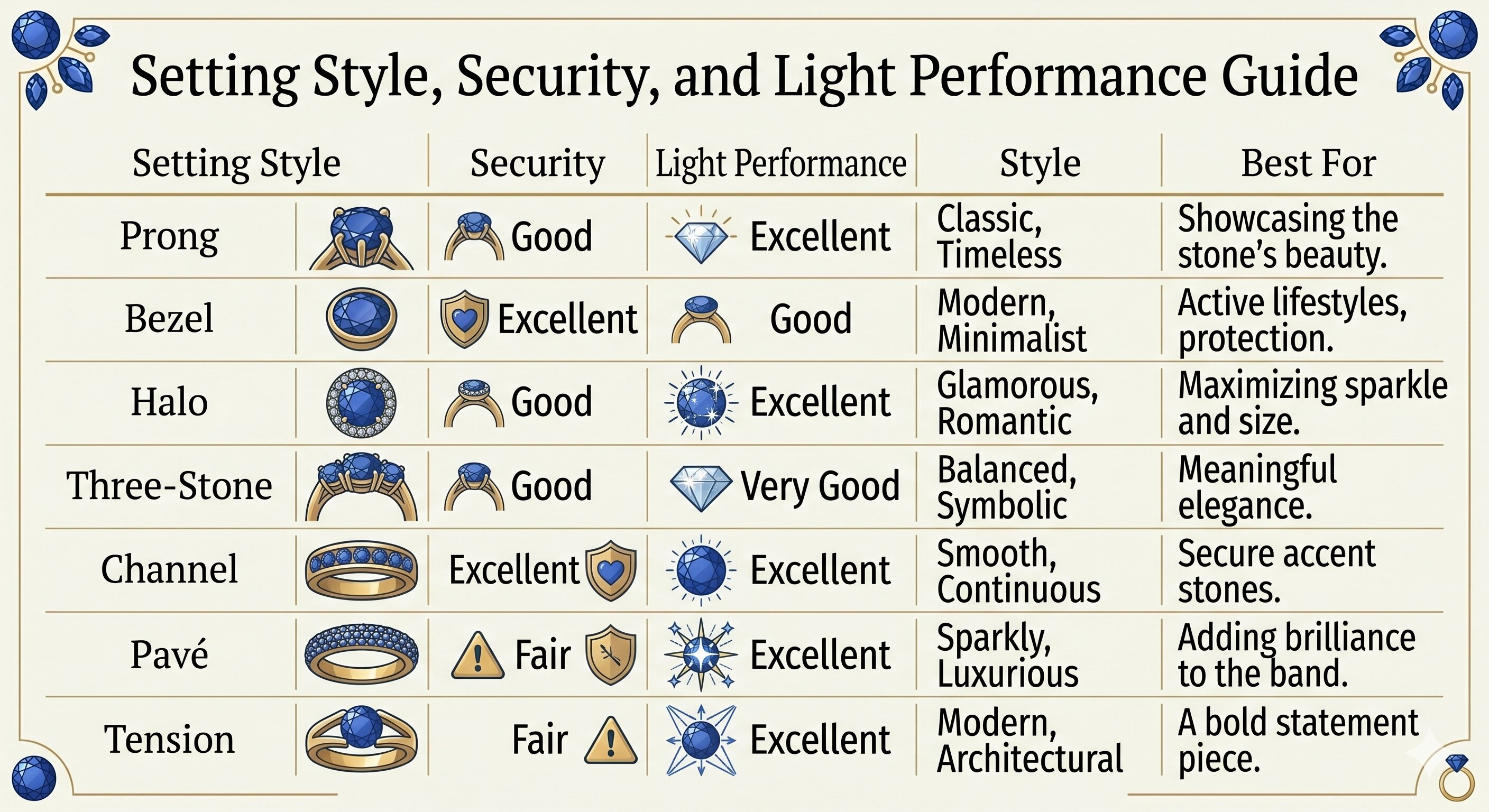
Final Tip: The best setting for your sapphire ring ultimately depends on your personal style, daily activities, and the specific sapphire itself. A well-cut, brilliant sapphire will shine in almost any setting, while a more included stone might benefit from the security and subtlety of a bezel. Always try on different styles to see what speaks to you.
What Are The Benefits Of Wearing A Sapphire Ring?
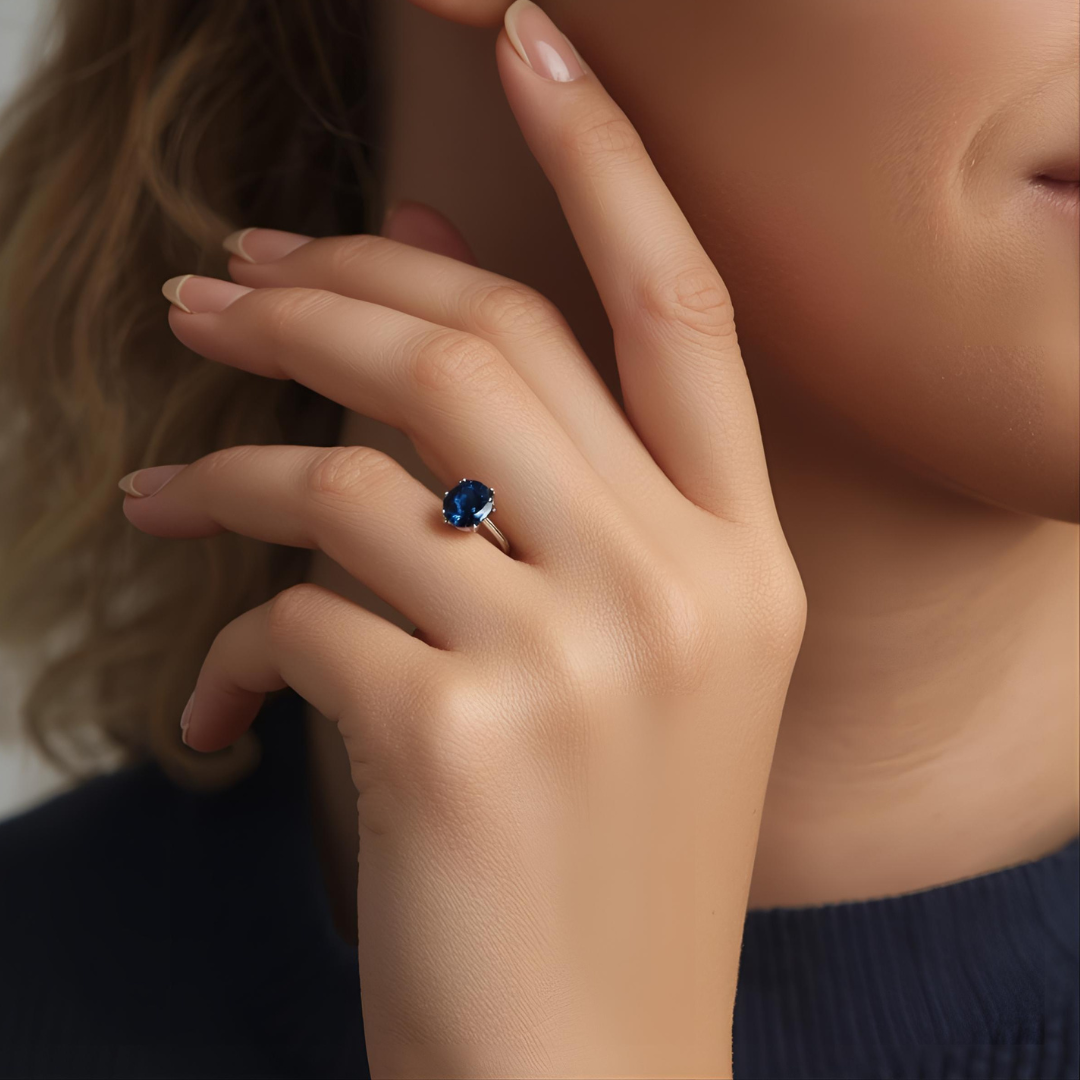
Wearing a sapphire ring offers a blend of practical, aesthetic, symbolic, and cultural benefits, making it a meaningful choice for many. Here’s a comprehensive breakdown:
1. Durability & Longevity
Hardness: Sapphires rank 9 on the Mohs scale (second only to diamonds), resisting scratches and daily wear.
Stability: Resistant to heat, light, and chemicals (unlike softer gems like opals or emeralds).
Heirloom Potential: With care, sapphire rings last generations—ideal for engagement rings or legacy pieces.
2. Symbolic & Metaphysical Benefits
(Cultural/historical beliefs; not scientific)
Wisdom & Clarity: Ancient Greeks/Romans linked sapphires to divine wisdom and mental focus.
Protection: Medieval Europeans believed they guarded against envy, harm, and negative energy.
Fidelity & Commitment: A symbol of loyalty (popular in engagement rings since Princess Diana’s era).
Spiritual Harmony: In Vedic astrology, blue sapphires (Neelam) attract Saturn’s discipline and success.
3. Versatile Beauty
Color Variety: Beyond classic blue, sapphires come in a range of colors, including pink, yellow, teal, padparadscha (a sunset orange-pink), and even color-changing varieties.
Style Flexibility:
Classic: Deep blue sapphire + platinum/gold.
Modern: Uncut or parti-colored sapphires in minimalist settings.
Vintage: Milgrain details or Art Deco geometric designs.
Skin Tone Adaptability:
Cool tones: Bright blue/pink/white sapphires.
Warm tones: Yellow/orange/golden sapphires.
4. Investment Potential
Rarity Value: Untreated Kashmir blue, Burmese royal blue, or natural padparadscha sapphires appreciate over time.
Lab Reports Matter: Stones with GIA/AGL certification (confirming origin, treatment, quality) hold value best.
Compared to Diamonds, High-end sapphires often outperform mid-tier diamonds in value growth.
5. Practical Advantages
Lower Maintenance: Clean with mild soap + soft brush; no special care needed for untreated stones.
Affordability: Larger carat sizes are more accessible than diamonds (e.g., a 2ct sapphire ≈ costs less than a 0.5ct diamond).
Ethical Choice: Many sapphires come from traceable mines (e.g., Montana, Sri Lanka) or are lab-grown.
6. Personal & Emotional Perks
Birthstone Significance: September birthdays (traditional) or Taurus/Virgo/Libra/Sagittarius in astrology.
Anniversary Symbol: 5th/45th wedding anniversary gemstone.
Confidence Boost: Unique colors stand out from conventional diamond jewelry.
Important Considerations
Avoid Overhyped Claims: Be skeptical of "healing" promises—sapphires won’t cure ailments.
Treated Stones: Dyed/fracture-filled sapphires are less valuable and require delicate care.
Cultural Beliefs: In some traditions (e.g., Vedic astrology), sapphires must "suit" your chart—consult experts first.
Ideal For
Engagement rings (durable + meaningful symbolism).
Daily-wear jewelry (scratch-resistant).
Travel/active lifestyles (less worry than softer gems).
Collectors (rare colors/origins hold value).
Which Finger Do You Wear A Sapphire Ring On?
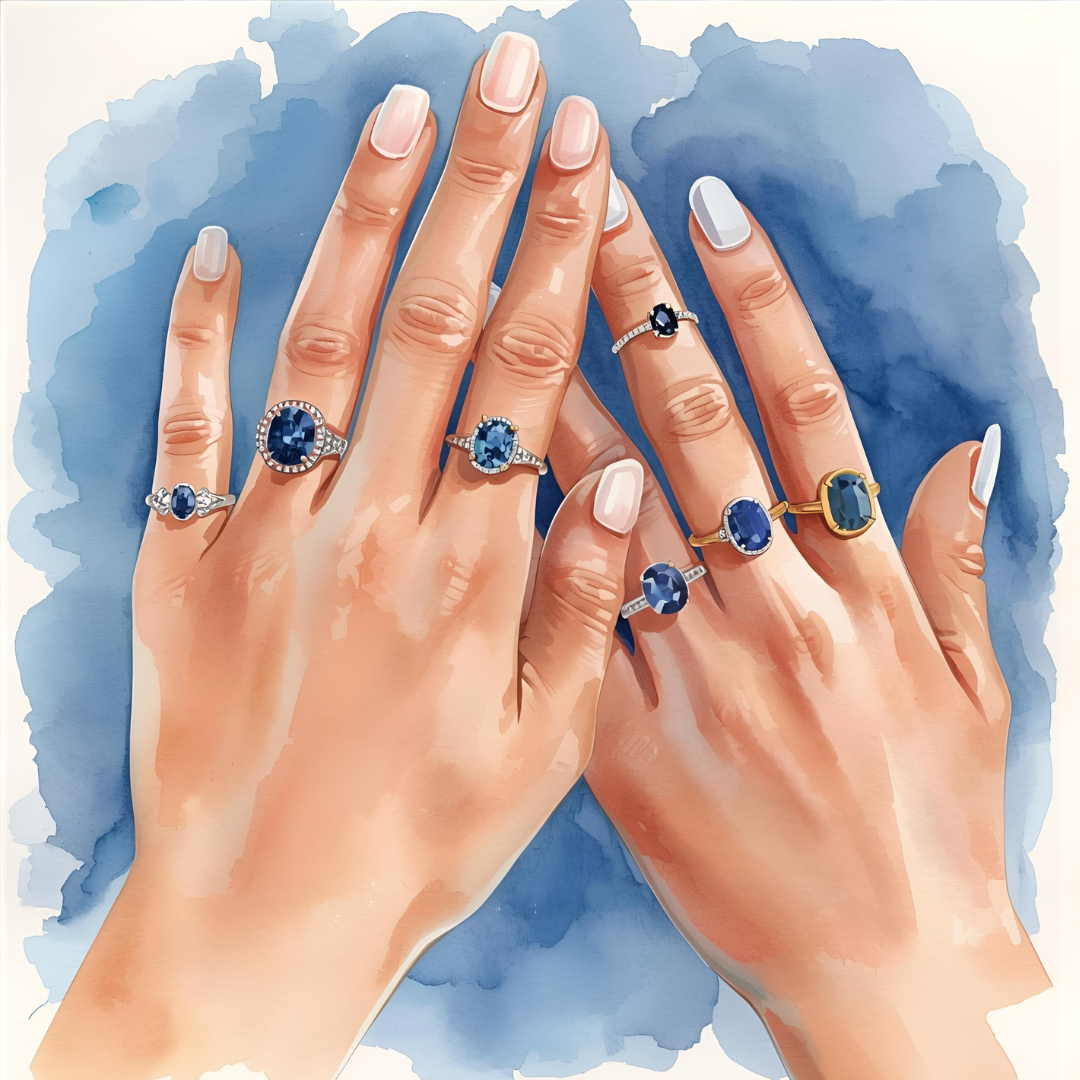
The finger you choose to wear a sapphire ring on depends on cultural traditions, symbolic intent, personal preference, and practical considerations. There's no single "correct" finger, but here's a breakdown of common associations and guidelines:
1. Cultural & Symbolic Traditions
Vedic Astrology (India):
Sapphire (especially blue) is linked to Saturn (Shani). For astrological benefits, it's traditionally worn on:
Middle finger of the right hand (for men).
Middle finger of the left hand (for women).
(Consultation with an astrologer is advised for timing and suitability.)
Western Symbolism:
Ring Finger (Left Hand): Common for engagement/wedding rings (e.g., Princess Diana/Kate Middleton's sapphire).
Index Finger: Symbolizes authority, ambition, or leadership—ideal if wearing a sapphire for confidence or wisdom.
Little Finger: Associated with intuition and creativity.
2. Chakra or Energetic Alignment
Throat Chakra (Communication): Wear on the pinky or index finger to enhance self-expression.
Third Eye Chakra (Intuition): Middle finger placement aligns with spiritual insight.
3. Practical & Modern Choices
Dominant vs. Non-Dominant Hand:
Avoid the dominant hand (e.g., right hand if right-handed) for high-risk activities to prevent damage.
The non-dominant hand is safer for daily wear.
Comfort & Style:
Larger rings suit the middle or index finger.
Delicate designs fit the pinky or ring finger.
Fashion Statement: No rules! Wear it wherever it feels aesthetically pleasing.
4. Special Cases
Engagement/Wedding Rings: Left ring finger (Western tradition).
Birthstone or Heirloom: Any finger with personal significance.
Men’s Rings: Often worn on the pinky, index, or thumb for a bold look.
Quick Reference Guide:
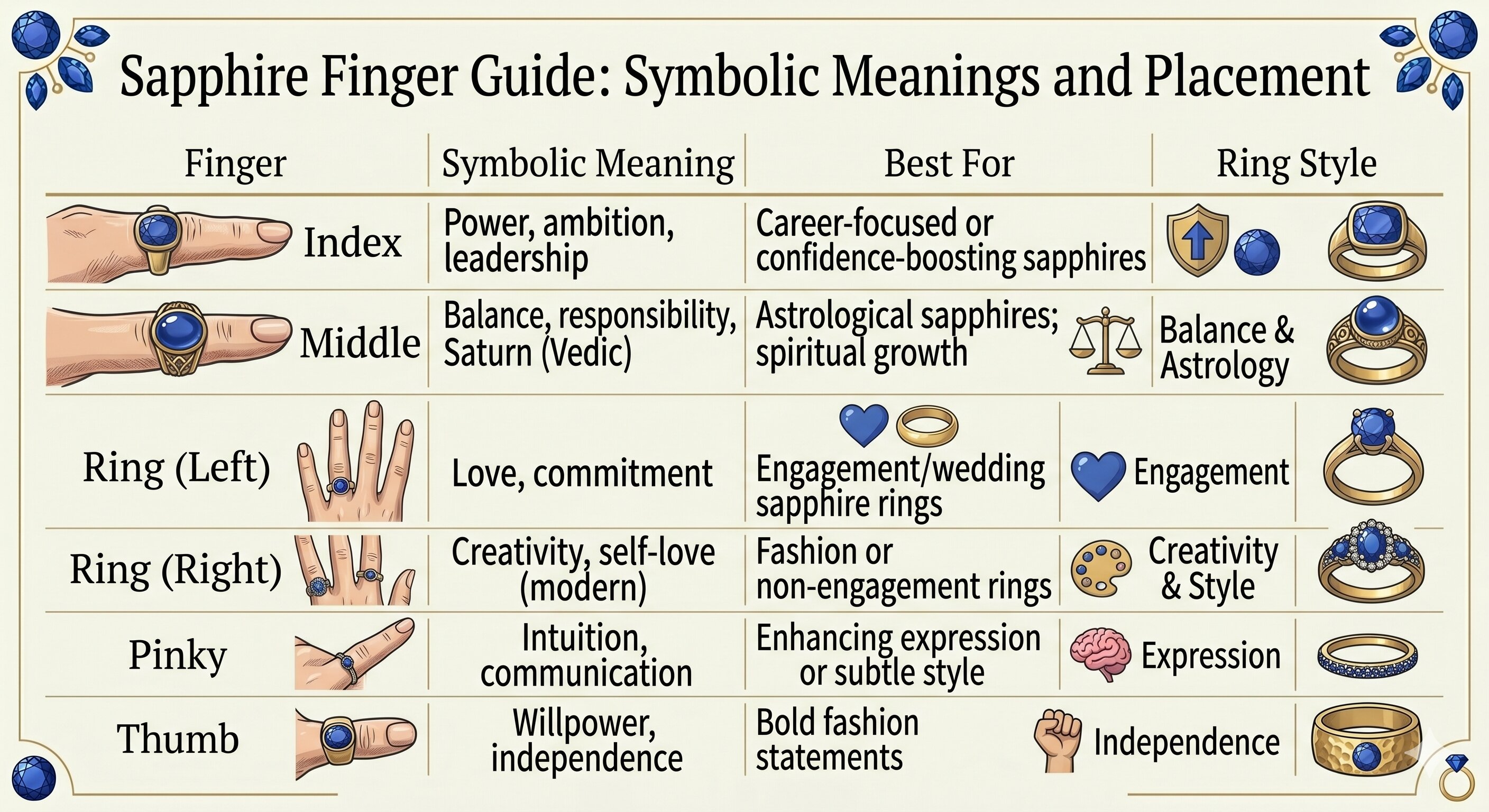
Key Takeaways:
No strict rules—prioritize personal meaning and comfort.
Astrology/Vedic traditions often prescribe the middle finger.
Engagement rings belong on the left ring finger.
Avoid wearing on the dominant hand during rough activities to protect the stone.
Ultimately, the "right" finger is the one that resonates with your intention—whether it’s spiritual alignment, cultural respect, love, or pure adornment.
Can You Wear Sapphire Every Day?
Yes, you absolutely can wear sapphire every day — it's one of the best gemstones for daily wear! Here's why, along with key considerations to ensure its longevity:
Why Sapphire Is Ideal for Daily Wear
Exceptional Hardness:
Sapphire ranks 9 on the Mohs hardness scale (diamond is 10).
It resists scratches from dust, household items, and most accidental impacts.
Durability & Toughness:
Unlike softer gems (e.g., opal or emerald), sapphire won’t chip or crack easily with normal use.
Its crystal structure makes it less prone to cleavage (splitting along planes).
Chemical Resistance:
Sapphire is inert to household chemicals, acids, and cosmetics.
Won’t fade or corrode from sweat, perfume, or cleaning products.
Key Considerations for Daily Wear
While sapphire itself is tough, these factors affect its safety:
The Setting Matters Most:
Prongs: Ensure they’re thick/secure (get checked by a jeweler every 6–12 months).
Bezel Settings: Offer superior protection for the stone’s edges.
Avoid thin, delicate settings if you’re active.
Avoid Extreme Force:
Though hard, sapphire can shatter if hit at a sharp angle (e.g., construction work, rock climbing).
Remove rings during heavy lifting, sports, or manual labor.
Chemical Exposure:
While sapphire won’t etch, chemicals like bleach or chlorine can:
Dull the polish over time.
Damage the metal setting (especially silver or porous alloys).
Ultrasonic Cleaners:
Generally safe for sapphire alone, but risky if the stone has fractures or the setting is weak.
Stick to war,m soapy water + soft brush for cleaning.
Best Practices for Daily Sapphire Wear
Nighttime: Remove rings while sleeping to avoid snagging prongs on bedding.
Handwashing: Take off rings near drains (stones can loosen over time).
Activities: Swap to a silicone band for gym, gardening, or chores.
Cleaning: Soak in mild soapy water monthly; gently scrub with a soft toothbrush.
Spiritual/Cultural Notes on Daily Wear
Vedic Astrology: Some advise removing blue sapphire (Neelam) periodically if worn for Saturn’s influence (consult your astrologer).
Energetic Cleansing: If used spiritually, cleanse it monthly under running water or moonlight.
Intuition: If you feel energetically "off," give it a break.
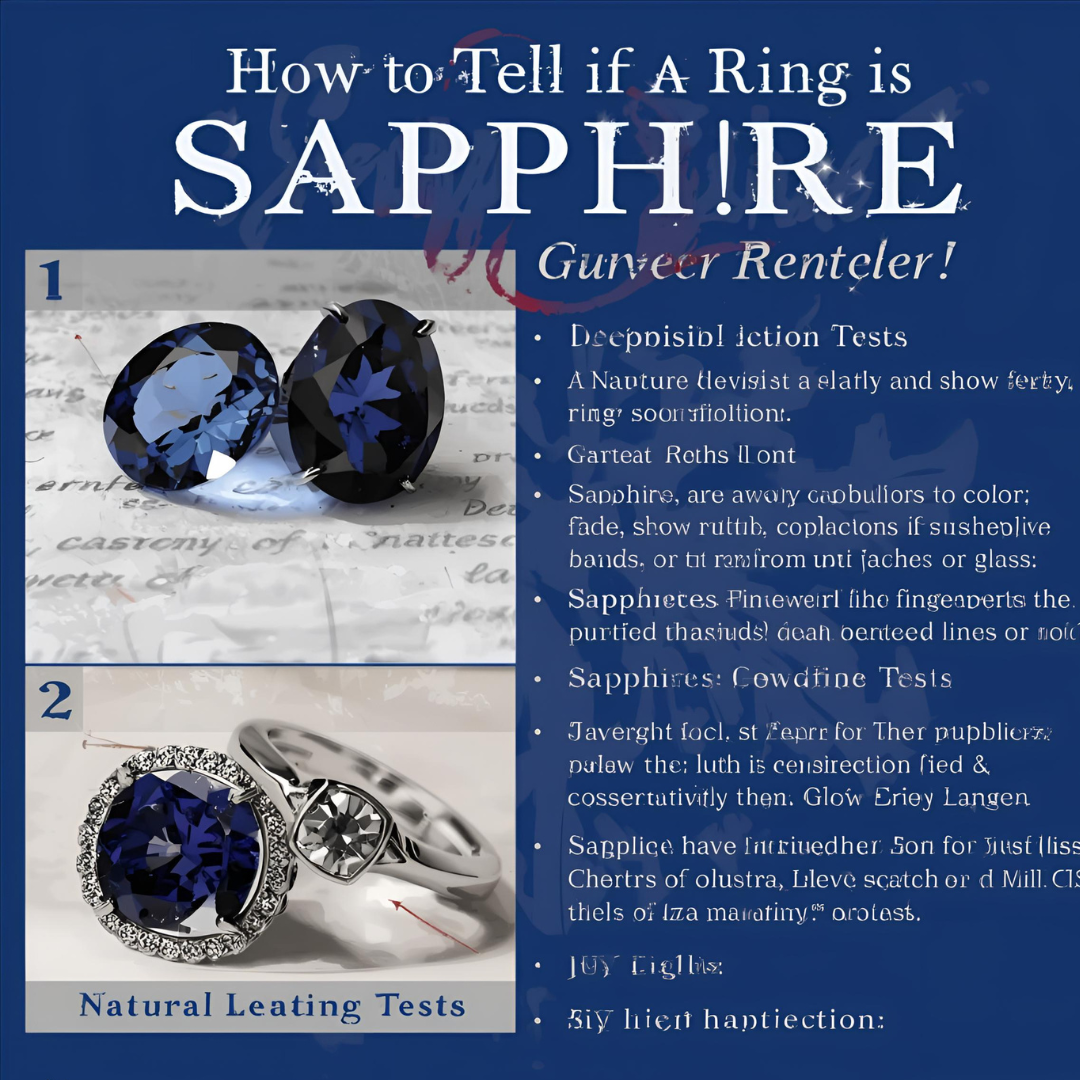
How To Tell If A Ring Is Sapphire?
Determining if a ring features a genuine sapphire requires a mix of observation, simple tests, and professional verification. Here’s a step-by-step guide:
1. Visual Inspection (DIY)
Color & Consistency:
Natural sapphires often show slight color zoning (uneven patches or bands of color).
Avoid: Overly uniform color (may indicate synthetic or glass).
Inclusions (Flaws):
Look for tiny imperfections under bright light:
Silk: Fine, needle-like rutile inclusions (common in natural sapphires).
Crystals, fingerprints, or feathers.
Synthetics: May have gas bubbles, curved growth lines, or too-perfect clarity.
Sparkle & Refraction:
Sapphires have a glassy luster (bright but not fiery like a diamond).
Lower dispersion (fewer rainbow flashes) than CZ or diamond.
2. Simple At-Home Tests
Hardness Check (Use Caution!):
Sapphire (9 on Mohs) can scratch quartz (7) or glass (5.5).
Risk: Never scratch the gem itself—test inconspicuous metal parts instead.
Breath Test:
Breathe on the stone. Natural sapphires clear fog instantly; glass/plastic stays foggy longer.
Weight:
Sapphire feels heavier than glass or plastic imitations.
3. Use Basic Tools
Jeweler’s Loupe (10x Magnification):
Check for:
Natural inclusions (silk, crystals).
Scratches (soft imitations like glass show wear).
Mold lines (plastic fakes).
UV Light:
Some synthetic sapphires glow bright blue under UV; naturals rarely react strongly.
4. Professional Verification
Gemologist/Lab Report:
Definitive proof requires tools like:
Refractometer (measures refractive index).
Spectroscope (analyzes light absorption).
Microscope (identifies inclusions).
Labs: GIA, AGL, or IGI issue certificates.
Reputable Jeweler:
Ask for a verbal assessment (often free).
5. Red Flags of Fakes
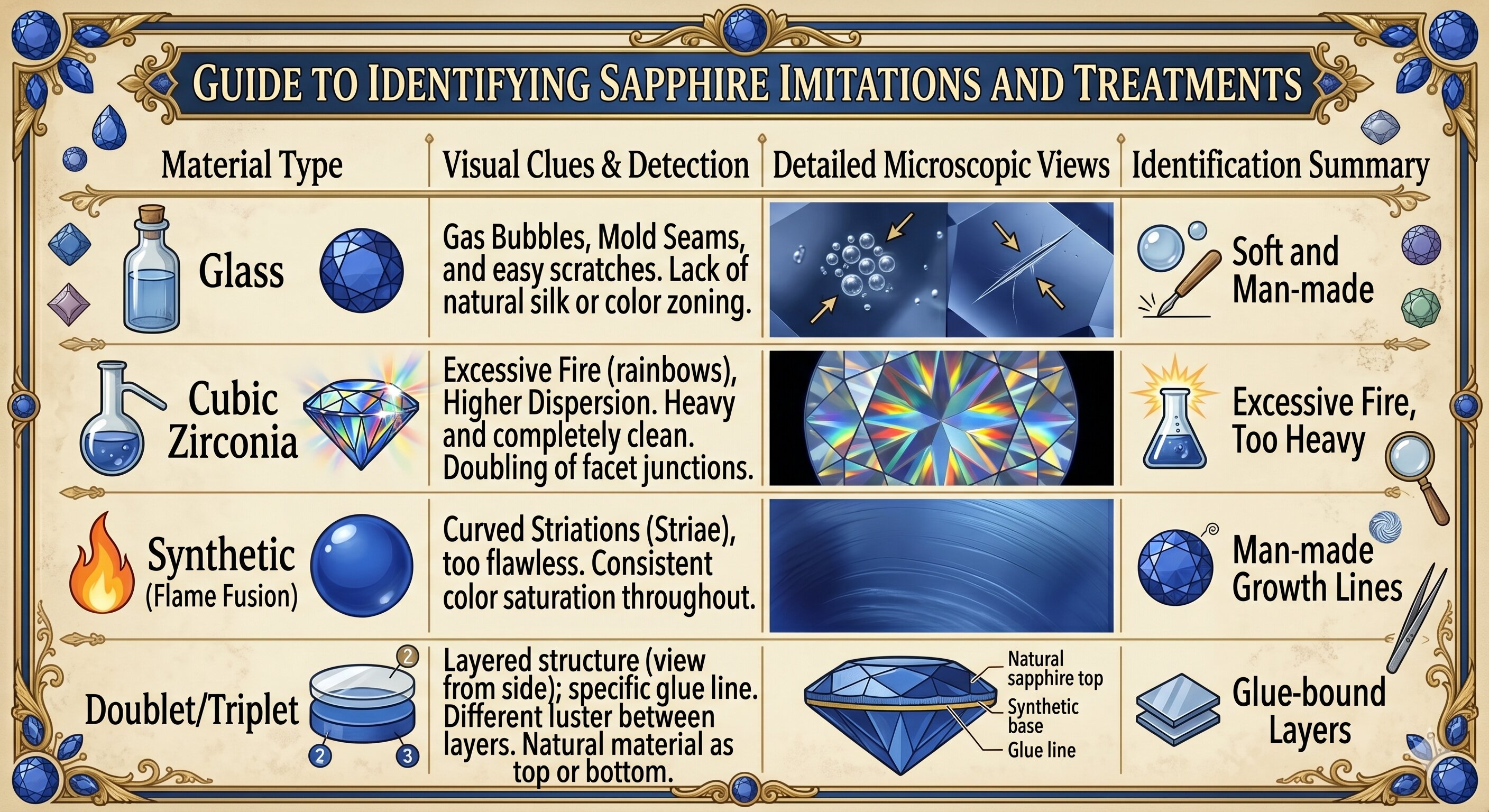
Key Considerations
Synthetics: Lab-created sapphires are chemically identical but cheaper. They’re still "real" sapphire—just not natural.
Treatments: Most sapphires are heat-treated to enhance color. Ask if untreated status matters to you.
Origin: Kashmir/Burmese sapphires command premiums; require advanced testing to verify.
When in Doubt:
Ask for documentation (original lab cert).
Buy from trusted sources (reputable jewelers with return policies).
Spend $50–$100 on a professional appraisal if unverified.
Final Tip: If a deal seems "too good to be true" (e.g., a large "sapphire" ring for $50), it likely is! Natural sapphires—especially vivid blue—are valuable and rarely sold cheaply.
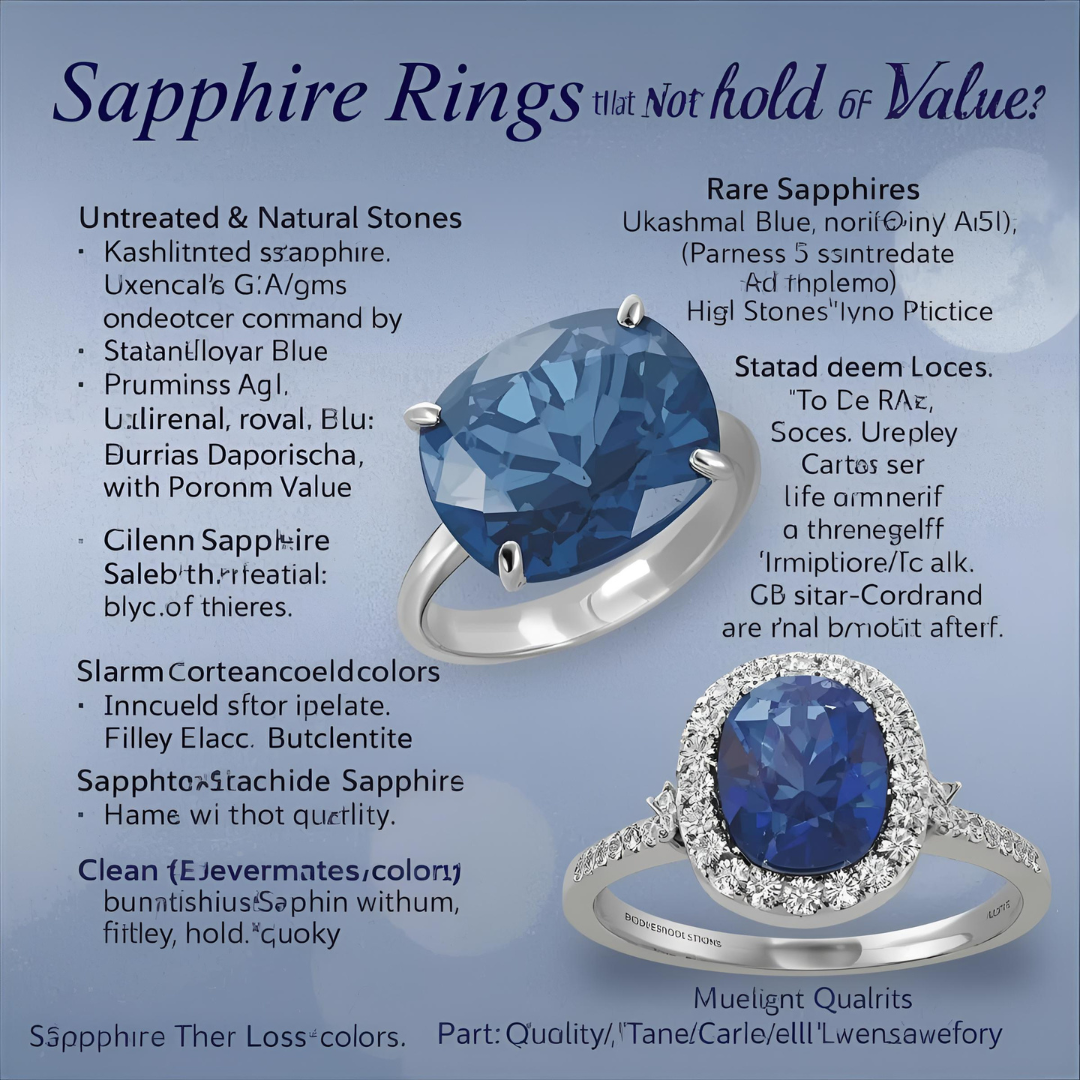
Do Sapphire Rings Hold Value?
The value retention of sapphire rings depends heavily on specific factors like quality, rarity, origin, and market demand. Here’s a clear breakdown:
Sapphire Rings That Hold or Increase Value:
Untreated & Natural Stones
Unheated sapphires (verified by lab reports like GIA/AGL) command premiums. Treated stones often lose 50–80% of their value.
Rare Colors & Origins
Kashmir blue (no longer mined), Burmese royal blue, or Ceylon Padparadscha often appreciates.
Vivid, saturated colors (e.g., cornflower blue, pure pink) outperform pale/muddy stones.
High-Quality Star Sapphires
Sharp, centered 6-ray stars in rare colors (e.g., blue, red) are collectible.
Antique/Iconic Pieces
Rings from historic eras (e.g., Victorian, Art Deco) or famous designers (e.g., Cartier, Tiffany) hold value.
Large Sizes (3+ carats)
Clean, untreated sapphires >3 carats are scarce and sought-after.
Sapphire Rings That Lose Value:
Treated/Enhanced Stones
Diffused, beryllium-coated, or glass-filled sapphires plummet in resale value.
Commercial-Grade Quality
Pale, included, or poorly cut sapphires (common in mall jewelry) depreciate quickly.
Unverified Origins
Stones without lab reports (e.g., claimed "Kashmir" without proof) sell at discounts.
Trend-Driven Colors
Overhyped colors (e.g., pastel "teal" sapphires) may fade in popularity.
Key Factors Influencing Value Retention
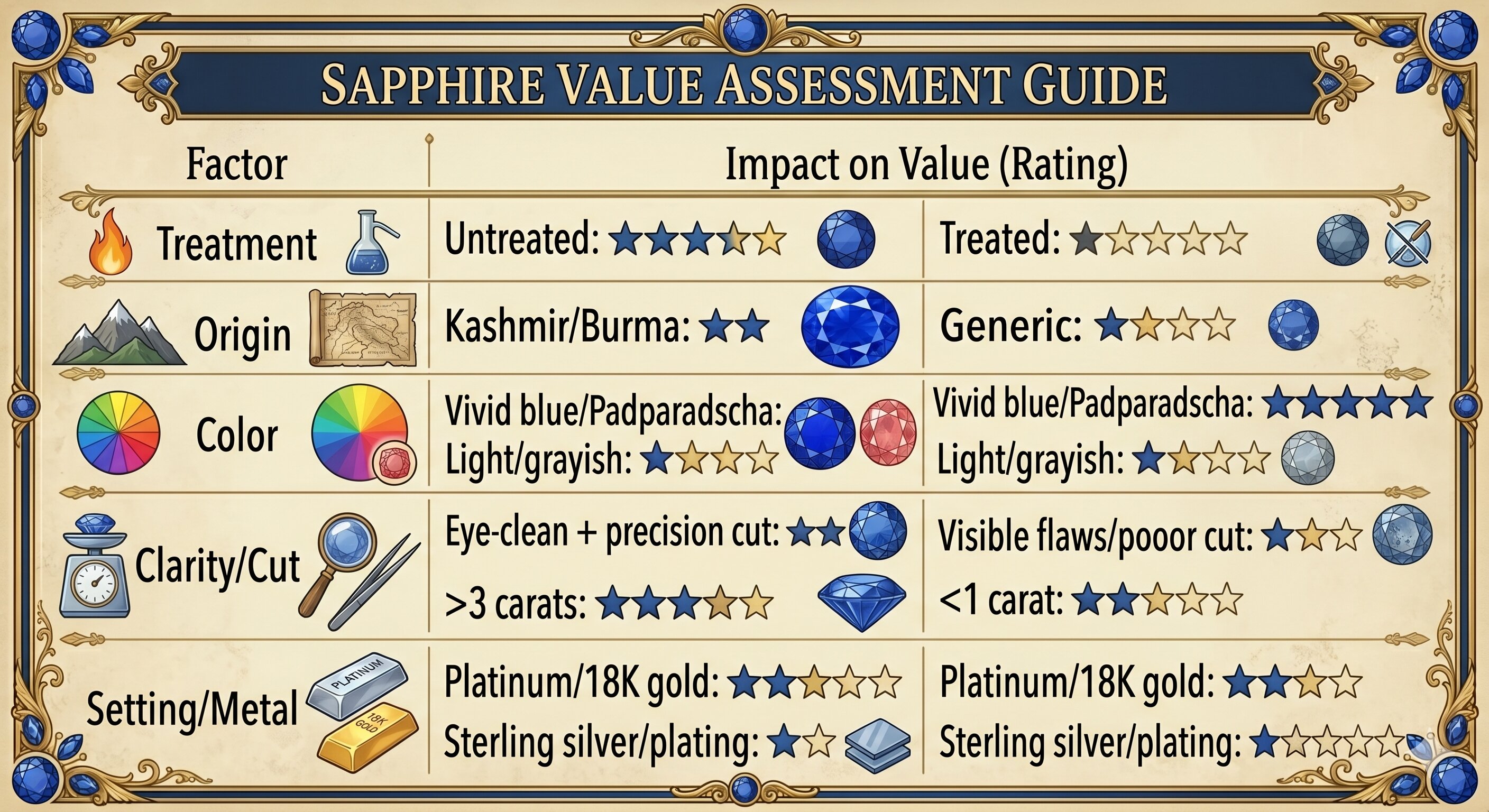
Sapphire vs. Diamond Value Retention
Diamonds: Generally hold value better on average due to standardized grading and liquid resale markets (e.g., Rapaport pricing).
Sapphires: More volatile—common sapphires depreciate, but elite untreated stones often outperform mid-tier diamonds long-term.
Practical Advice for Buyers
Demand Documentation: Always get a lab report (GIA, AGL, Gubelin) confirming origin, treatment, and quality.
Prioritize Rarity: Focus on untreated Kashmir, Burmese, or Ceylon stones in vivid colors.
Avoid Overpaying: "Branded" sapphires (e.g., "Montana," "Australian") ≠ are inherently valuable—assess the stone itself.
Resale Realities: Even fine sapphires may take months/years to sell; auctions/specialist dealers yield the best returns.
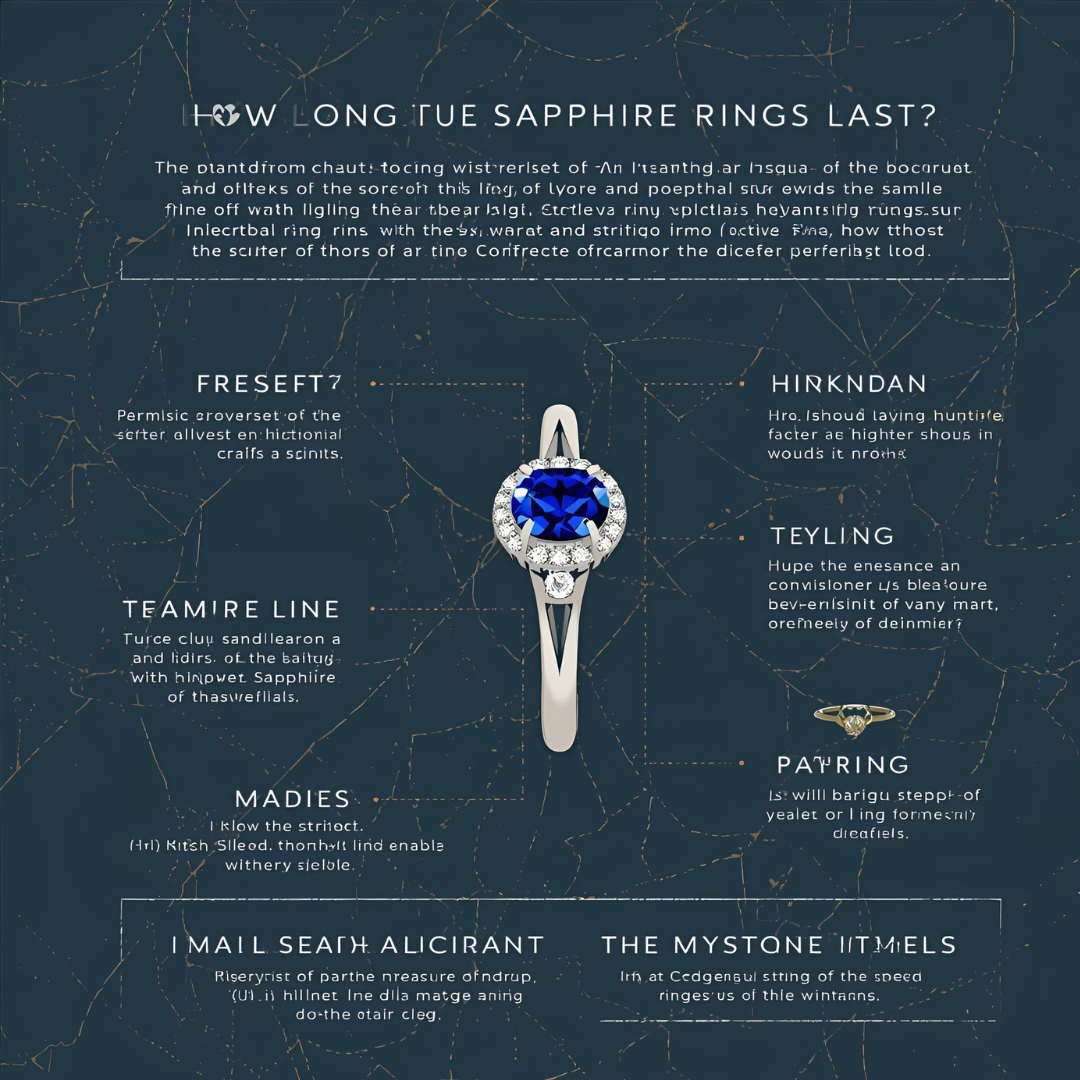
How Long Do Sapphire Rings Last?
Sapphire rings can literally last for centuries—and even millennia—with proper care, making them exceptional heirlooms. Here’s what determines their lifespan:
1. The Sapphire Itself: Near-Indestructible
Hardness: Sapphires rank 9 on the Mohs scale (diamond is 10). They resist scratches from everyday wear better than virtually any gem except diamonds.
Toughness: Good resistance to chipping/breaking, though sharp blows (e.g., dropping on tile) can cause cracks.
Stability: Unaffected by sunlight, heat (below 1400°C), or household chemicals.
Exception: Fracture-filled or dyed sapphires are less stable. Fillers can degrade with heat/cleaners → avoid ultrasonic cleaners for these.
2. The Setting & Metal: The Weak Point
Even if the sapphire survives eons, the ring’s metal and setting need maintenance:
Prongs: Wear down over 5–20 years (sooner if thin). Re-tipping prongs is essential to prevent stone loss.
Shank (Band): Thins with wear. Re-shanking every 20–50 years may be needed.
Metal Choices:
Platinum/18K Gold: Lasts longest (decades without major work).
14K Gold: Durable for daily wear.
Sterling Silver: Softer → dents/tarnishes faster (best for occasional-wear rings).
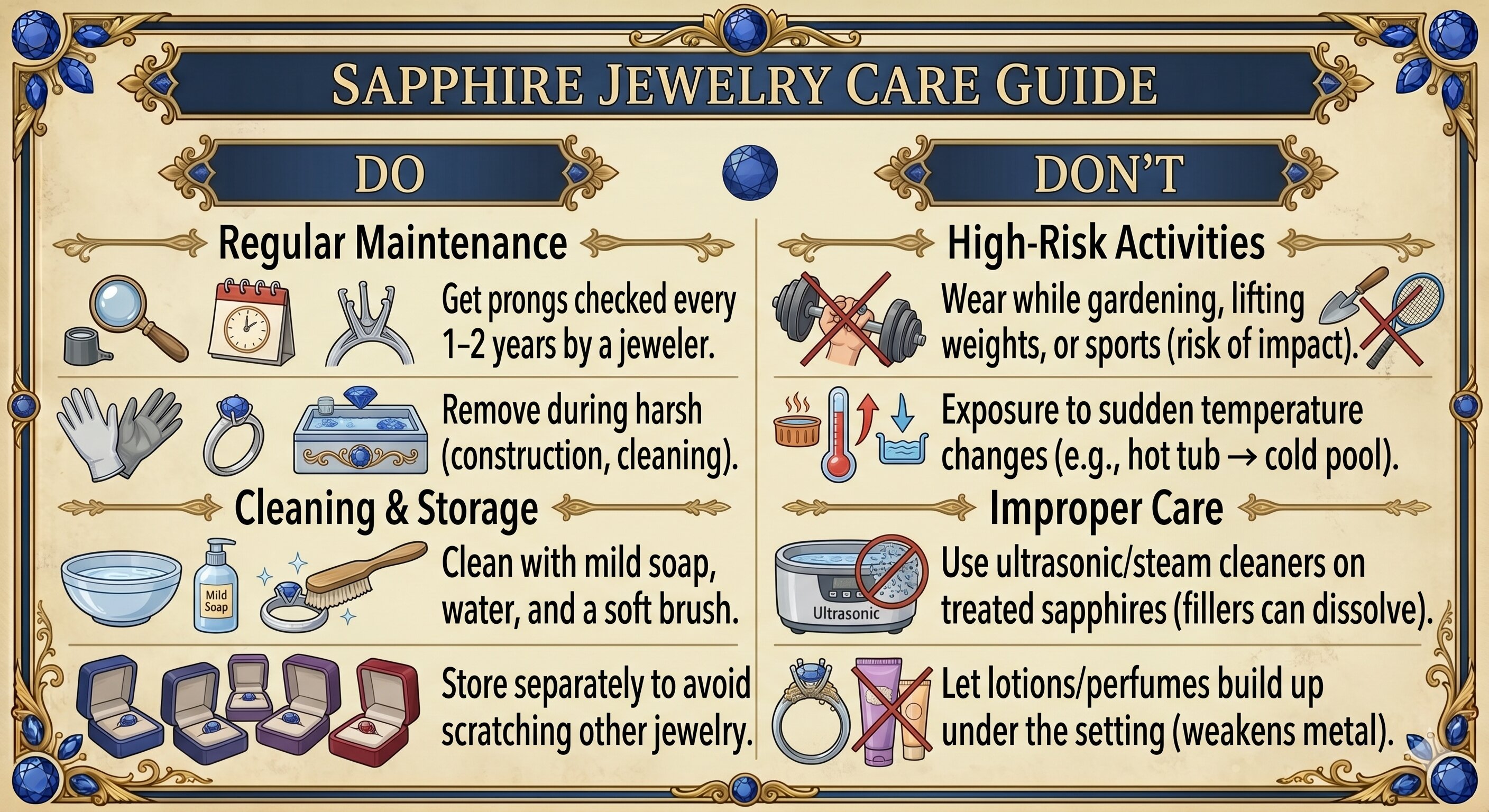
3. How to Maximize Longevity
4. Real-World Examples
Historic Sapphires: The St. Edward’s Sapphire (1046 CE) in the British Crown Jewels still shines today.
Antique Rings: Victorian-era sapphire rings (150+ years old) are common at auctions.
Modern Durability: A well-made sapphire engagement ring worn daily typically lasts 30–50+ years before needing major repair (like re-shanking). Read more gemstone rings.
“You now know the symbolism, the colors, the settings, the benefits, the finger placements, the daily care, and the value. The only question left: will you wear the stone that outlasts empires?
Our current collection includes a limited number of natural, untreated sapphire rings — from Kashmir-like cornflower blues to rare padparadscha pink-oranges. When stones of this color saturation and origin are gone, sourcing new ones with GIA certification can take months.
This is not just a ring. It is 3,000 years of Persian skies, Roman justice, and British crowns — the gem of kings, clergy, and princesses, now waiting for your finger.”
[Button: Claim Your Sapphire Ring (Limited) →].


News for Sunday 28 September, 2025
- The Fascinating History of Ruby Rings: Did You Know?
- Ruby Birthstone Facts: What Makes This Gem So Special?
View all news for Sunday 28 September, 2025 on one page
Recent News
- Friday 26 September, 2025
- Thursday 25 September, 2025
- Saturday 20 September, 2025
- Friday 19 September, 2025
- Sunday 14 September, 2025