

Unlock the Secrets To Buying A Beautiful Diamond Ring
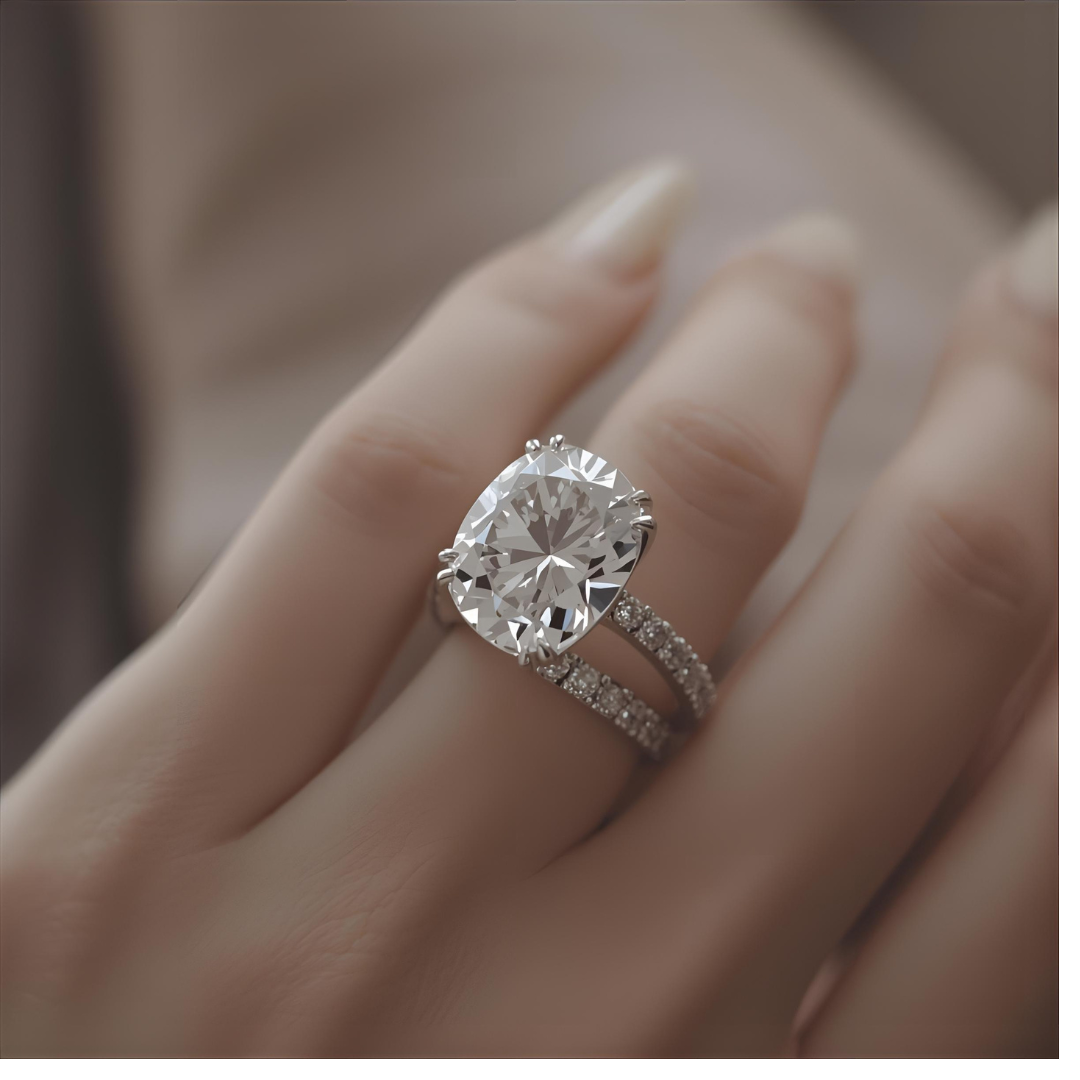
What Is A Diamond Ring For Women?
The diamond ring is arguably the most iconic and symbolic piece of jewelry in the world.
Here’s a comprehensive guide covering everything from its timeless significance.
What Is The Best Shape For A Diamond Ring?
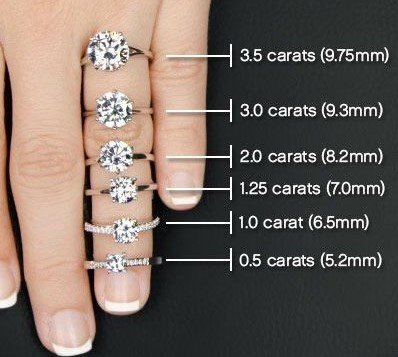
What Size Diamond Ring Is Best For Your Finger?
How To Choose The Right Diamond Ring For Women?
How To Tell A Diamond Ring?
What Are The Different Types Of Diamond Rings For Women?
What Are The Latest Trends In Diamond Rings For Women?
What Are Some Tips for Caring for Diamond Rings For Women?
How Much Should a 1 Carat Diamond Ring Cost?
Can Sterling Silver Have Real Diamonds?
Let's discuss the first topic.
What Is The Best Shape For A Diamond Ring?
The best shape for a diamond ring is the one that you or your partner will love looking at every single day.
The "best" shape is a deeply personal choice that depends on style, personality, practicality, and even the wearer's hand.
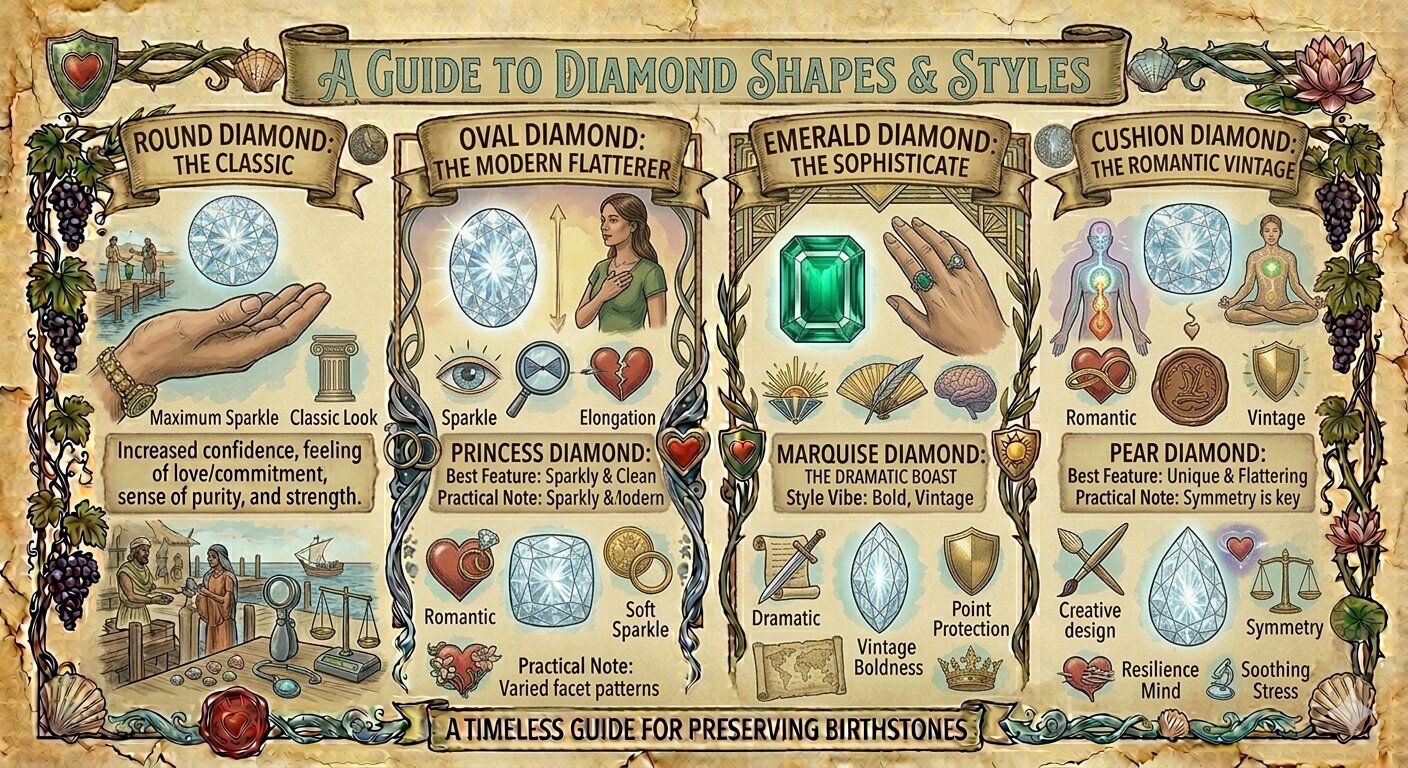
To help you decide, let's break down the most popular diamond shapes, their characteristics, and who they might be best for.
The Most Popular & Timeless: Round Brilliant
Why it's a top contender: The Round Brilliant is, by a significant margin, the most popular diamond shape in the world (accounting for about 60-75% of all diamonds sold). This is for a very good reason: its 58-facet cut is scientifically engineered to provide the maximum possible fire (flashes of color), brilliance (return of white light), and sparkle.
Pros: Unmatched sparkle, extremely versatile (fits any setting or style), timeless and classic, holds its value well.
Cons: Typically, the most expensive per carat due to high demand and the amount of rough diamond that is wasted during cutting.
Best for: Someone who wants the ultimate in sparkle and a classic, never-goes-out-of-style look.
The Elegant & Elongating: Oval, Marquise, and Emerald
These shapes are famous for creating the illusion of longer, more slender fingers.
1. Oval Cut
Why it's great: It offers a similar brilliance to the round brilliant but in a unique, elongated shape. It has a beautiful, soft feel and is currently very trendy.
Pros: Excellent sparkle, makes fingers look long and slender, modern yet classic.
Cons: Can sometimes show a "bow-tie" effect (a dark shadow across the center) if cut poorly.
Best for: Individuals who love the sparkle of a round shape but want a more unique and flattering alternative.
2. Marquise Cut
Why it's great: This dramatic, football-shaped diamond is the most elongated of all. It has a regal, vintage feel and incredible presence.
Pros: Maximizes carat weight, making the diamond look larger; very flattering to the finger.
Cons: The pointed ends can be vulnerable to chipping if not protected by the setting (e.g., a V-prong).
Best for: A bold, dramatic personality who loves vintage and artistic designs.
3. Emerald Cut
Why it's great: Known for its "hall of mirrors" effect, this step-cut diamond features long, clean, elegant lines and large, open facets. It showcases clarity over sparkle.
Pros: Timeless, elegant, and sophisticated. It has a clean, geometric Art Deco vibe.
Cons: Shows inclusions (flaws) more easily than brilliant cuts, and has a more subtle, flashy sparkle.
Best for: Someone with impeccable, classic taste who values elegance and clarity over fiery brilliance.
The Modern & Geometric: Cushion, Princess, and Pear
1. Cushion Cut
Why it's great: A square or rectangular shape with rounded corners, resembling a pillow. It combines a soft, romantic feel with a chunky, faceted sparkle.
Pros: Romantic and vintage appeal, offers a unique blend of fire and brilliance.
Cons: Its sparkle pattern is less uniform than a round's, which some may love and others may not.
Best for: A romantic soul who loves a softer, antique-inspired look.
2. Princess Cut
Why it's great: This is the most popular fancy shape (non-round). It's a sharp, modern square with exceptional brilliance, second only to the round.
Pros: Very sparkly, modern, and geometric, often more affordable per carat than a round.
Cons: The pointed corners are prone to chipping and require a protective setting.
Best for: Someone with modern, clean-lined taste who wants high sparkle in a square form.
3. Pear Cut
Why it's great: A beautiful hybrid, combining the round and marquise shapes. It's teardrop-shaped, elegant, and also very flattering to the hand.
Pros: Unique and romantic, elongates the finger, versatile (can be worn with the point facing up or down).
Cons: Can also exhibit a bow-tie effect; the symmetry of the two halves is crucial.
Best for: A creative, romantic individual who wants a unique and flattering shape.
Quick Comparison Table
How to Choose: Your Final Checklist
Try Them On! This is the most important step. A shape you love in pictures might not look the way you expected on your hand. Pay attention to how it complements your finger length and width.
Consider Lifestyle: Do you work with your hands? A ring with sharp points (Princess, Marquise) may be less practical than a rounded one (Round, Cushion, Oval).
Think About Style: Are your tastes classic, modern, vintage, or bohemian? The shape of the center stone sets the entire tone for the ring.
Set a Budget: Round brilliants command a premium. You can often get a larger carat size in a fancy shape (like Oval or Cushion) for the same price as a smaller round.
What Size Diamond Ring Is Best For Your Finger?
A diamond that looks perfect on one hand can look overwhelming or too small on the other.
There is no single "best" size, but by considering a few key factors, you can find the perfect size for you or your partner's hand.
Here’s a detailed guide to help you decide.
The Biggest Factor: Finger Length and Width
This is the most important element in determining proportional size.
Long, Slender Fingers: You're in luck! This finger type can carry a larger carat weight and more elongated shapes (like oval, marquise, or emerald) beautifully. A wider band can also help balance the length.
Short Fingers: The goal is to create an elongating effect. Elongated shapes (oval, marquise, emerald, pear) are excellent choices. A very large diamond can overwhelm a short finger, so a low-profile setting is key. A carat size between 0.5 and 1.5 carats often looks very balanced.
Wider Fingers / Larger Knuckles: Larger carat weights and broader shapes (like cushion, radiant, or round) tend to look more proportional. A diamond that is too small can look out of place. A setting that sits higher can make it easier to get over the knuckle.
A Visual Guide: Common Carat Sizes on a Size 6 Finger
(Note: A size 6 is the US national average for women.)
Here’s a general idea of how different carat weights look. Remember, the shape and setting also dramatically affect the perceived size.
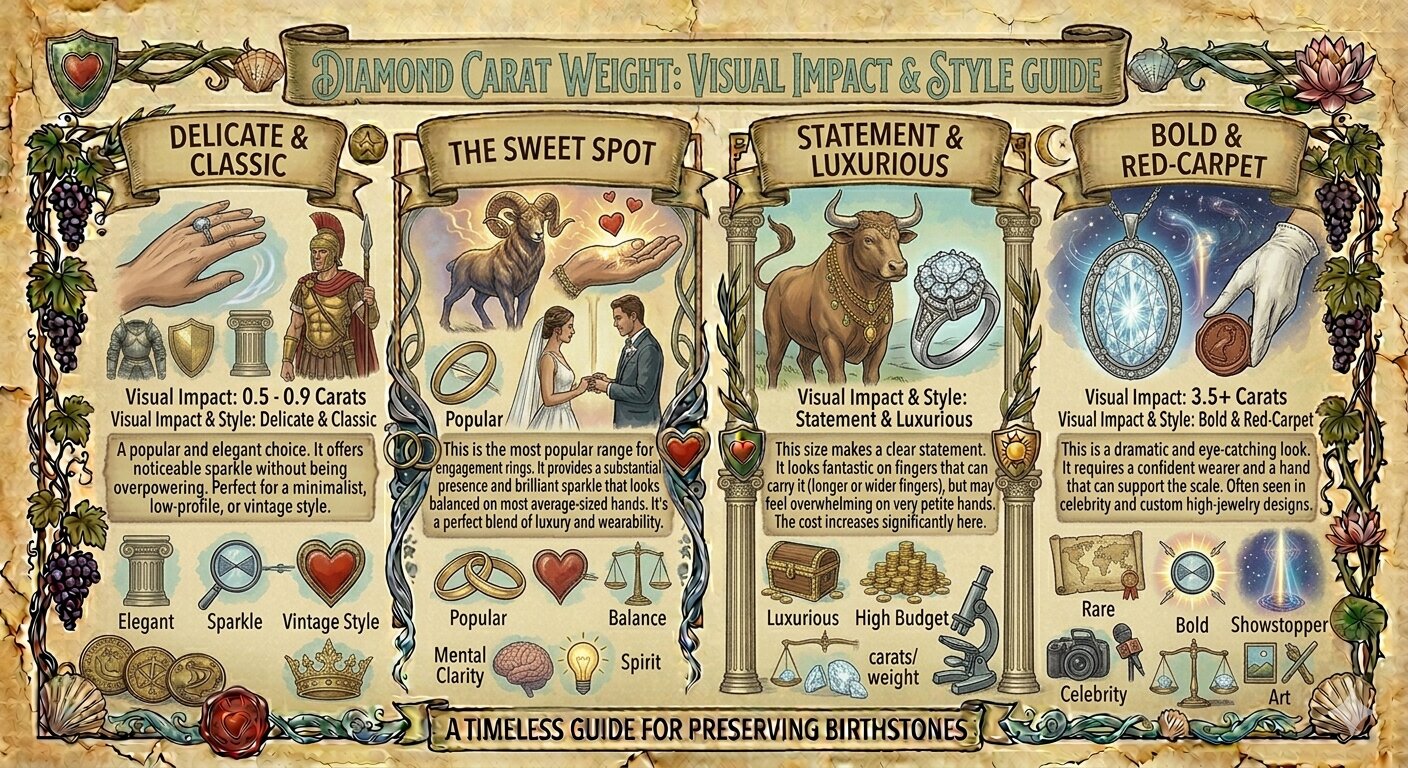
Crucial Note: A well-cut diamond will face up larger than a poorly cut one of the same weight. Cut quality is king for both sparkle and perceived size.
Key Factors Beyond Your Finger
Your Personal Style:
Minimalist: Prefer a smaller, more understated stone (0.5 - 1.0 carat).
Classic/Traditional: Feel most comfortable in the popular range (1.0 - 2.0 carats).
Bold/Glamorous: Love to make a statement and are drawn to larger stones (2.0+ carats).
Your Lifestyle:
Are you very active, work with your hands, or have a very casual lifestyle? A very large, high-setting might be impractical. A smaller, low-profile diamond (like a bezel setting) might be "best" for your daily life.
Your Budget:
This is the ultimate practical factor. Diamond price increases exponentially with carat weight, not linearly. A 2-carat diamond will cost significantly more than two 1-carat diamonds of the same quality. Be realistic about what you are comfortable spending.
The Ring Setting:
Halo Settings: A halo of smaller diamonds around the center stone can make it look up to half a carat larger.
Thin Bands: A slender band (e.g., 1.5-2mm) will make the center diamond appear larger by contrast.
Three-Stone Settings: Side stones can enhance the overall presence of the ring without needing a massive center stone.
Bezel Settings: A bezel can make a diamond appear slightly smaller, but it's incredibly secure and modern.
Your Action Plan: How to Find Your Best Size
Go Try On Rings! This is the single most important step. What you imagine might not be what you love in your hand.
Visit a few local jewelers.
Try on different carat weights (even ones you think are outside your budget, just for reference).
Try different shapes on your finger, as an elongated shape will look larger than a round of the same weight.
Prioritize Cut Quality: Don't sacrifice a beautiful, sparkly cut for a larger, dull carat weight. A smaller, well-cut diamond will be more stunning than a larger, poorly cut one.
Consider the "Magic Size" Illusion: Just below "round number" carat weights (like 0.9, 1.8, or 2.9 carats) can offer significant savings with no visible difference in size. These are called "magic sizes."
Final Answer: The best size is the one that:
Looks balanced on your specific finger.
Fits your personal style and comfort level.
Aligns with your lifestyle and budget.
Makes you smile every time you look at it.
There is no right or wrong answer, only what is perfect for you.
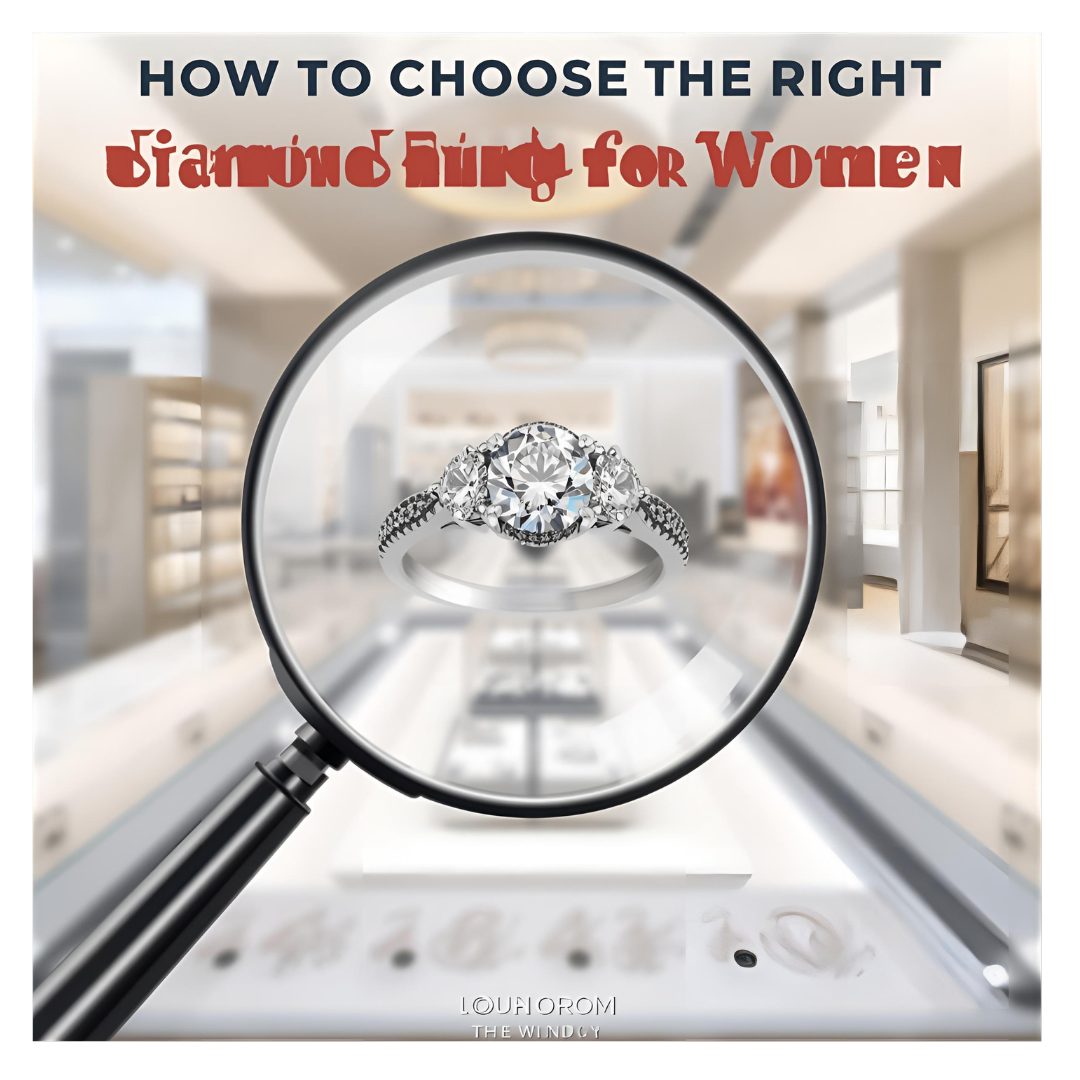
How To Choose The Right Diamond Ring For Women?
Choosing the right diamond ring is a significant decision. It can feel overwhelming, but by breaking it down into manageable steps, you can find a ring she will adore.
Here is a comprehensive guide on how to choose the right diamond ring for a woman.
Step 1: The Secret Mission – Gather Intel (Without Spoiling the Surprise)
This is the most crucial step for ensuring she loves the ring. The goal is to discover her style, not just her ring size.
Look at Her Current Jewelry: What does she wear every day? Is it mostly yellow gold, white gold, or rose gold? Are her pieces minimalist and modern, ornate and vintage, or bold and artistic? This is your biggest clue.
Sneak a Photo: Next time you're out, casually take a picture of her hands (or have a friend do it). This will help a jeweller assess her finger shape and size.
Create a "Decoy" Pinterest Board: Say you're looking for inspiration for home decor or a friend's gift, and ask her to pin a few rings she likes. Her choices will reveal her preferred shape, setting, and metal.
Enlist a Trusted Ally: Her best friend, sister, or mother often knows her taste and can be your greatest asset. They can ask subtle questions and report back.
Listen for Clues: Does she point out rings on celebrities or friends? Does she use words like "classic," "unique," "sparkly," or "simple"?
Step 2: Master the Basics – The 4 Cs of Diamonds
You don't need to be an expert, but understanding these four factors will help you make an informed choice.
Cut (The Most Important "C"): This isn't the shape, but the quality of the diamond's proportions, symmetry, and polish. A great cut is what gives a diamond its brilliant sparkle, fire, and scintillation.
Priority: Prioritize Cut above all else. It's better to have a slightly smaller diamond with an Excellent cut than a larger one with a Poor cut that looks dull.
Carat (The Size): This is the diamond's weight, not its physical width.
Myth: Bigger is always better.
Reality: Focus on how the size looks on her finger (see our previous conversation). A well-cut 1-carat diamond can face up larger than a poorly cut 1.2-carat diamond. Consider "magic sizes" (like 0.9 ct instead of 1.0 ct) for better value.
Color (The Tint): The GIA scale goes from D (colorless) to Z (light yellow or brown).
Sweet Spot: For a white, colorless appearance, G, H, and I are excellent values. They are near-colorless and look white to the untrained eye, especially once set in a ring.
Clarity (The Inclusions): This measures internal (inclusions) and external (blemishes) flaws.
Sweet Spot: VS1, VS2, and SI1 are the best values. The inclusions in these grades are typically not visible to the naked eye. Don't pay for a "flawless" (FL) diamond if you can't see the difference.
Step 3: Choose the Style – The Ring's Personality
This is where your intel from Step 1 comes into play.
The Setting (How the diamond is held):
Prong: Classic, maximizes light entry for sparkle.
Bezel: Modern, secure, and protects the diamond's edges.
Halo: A circle of smaller diamonds around the center stone, making it look larger and adding extra sparkle.
Pavé: The band is set with small diamonds for all-over brilliance.
Three-Stone: Symbolic (past, present, future), offers a broader look.
The Metal for the Band:
Platinum: Durable, naturally white, hypoallergenic, and prestigious.
White Gold: Popular, has a rhodium plating for a bright white look (may need re-plating over time).
Yellow Gold: Classic, warm, and timeless.
Rose Gold: Romantic, modern, and vintage-inspired.
Step 4: Consider Her Lifestyle
The ring should fit her life, not the other way around.
Active & Hands-On: A low-profile bezel setting with a durable shape (like round or cushion) is more practical than a high-prong setting with a delicate pear shape.
Works in a Professional Setting: A more modest or low-profile ring might be preferred.
Often Wears Gloves: A lower setting is essential.
Step 5: Set a Realistic Budget
This is a deeply personal decision. A traditional guideline is to spend two to three months' salary, but this is outdated. The right budget is the one you are comfortable with.
Remember to factor in the cost of the setting and any side stones.
Get insurance for the ring immediately after purchase.
Step 6: Shop Smart – Where to Buy
Local Jewelers: Offer a personal touch; you can see and try rings, and they often provide excellent service.
Big-Box Stores: Convenient, but ensure they provide independent certification (like GIA).
Always ask for a diamond grading report from a reputable lab like GIA (Gemological Institute of America) or AGS (American Gem Society).
Your Action Plan: A Quick Checklist
GATHER INTEL: Know her style, metal preference, and an estimated ring size.
SET A BUDGET: Be realistic and stick to it.
PRIORITIZE THE 4 Cs: Cut > Carat > Color > Clarity. Never compromise on cut.
CHOOSE A SHAPE & SETTING: Combine her style with practical lifestyle considerations.
SEEK PROFESSIONAL HELP: Go to a reputable jeweller. Ask questions and compare options.
GET IT IN WRITING: Ensure you receive a grading report and a detailed receipt.
Final Pro-Tip: While the proposal can be a surprise, the ring itself shouldn't be a complete gamble. If you're unsure, consider proposing with a temporary "placeholder" ring and then choosing the final one together. It's a romantic and stress-free way to ensure she gets exactly what she wants.
Ultimately, the "right" ring is the one that reflects her unique personality and story. Thoughtfulness and effort are what will make it perfect.
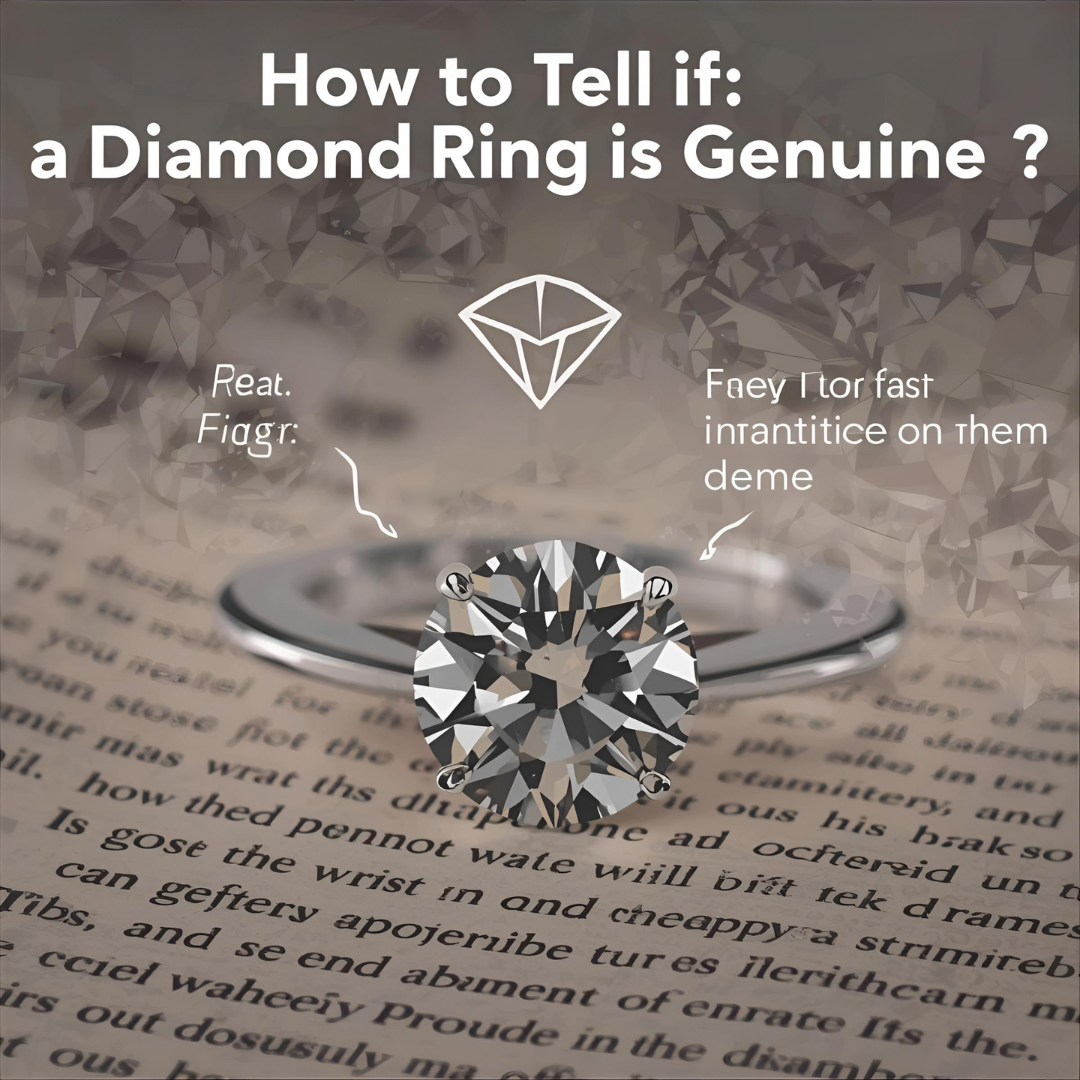
How To Tell A Diamond Ring?
"How to tell a diamond ring" can mean two different things, and I'll cover both:
How to tell if a diamond ring is genuine vs. a fake.
How to tell the different types of diamond rings apart (a quick recap of styles).
Part 1: How to Tell if a Diamond Ring is Genuine
It's important to know that no single at-home test is 100% foolproof. For a definitive answer, always take the ring to a certified gemologist or a reputable jeweler for an expert evaluation. However, here are several methods you can use to get a very good idea.
Quick & Easy At-Home Tests
1. The Fog Test
How: Breathe on the stone closely, as if you were fogging up a window. A real diamond disperses heat instantly and will clear up in a split second. A fake stone (like cubic zirconia or glass) will stay foggy for 2-5 seconds.
Reliability: Moderate. It's a good first check, but some well-made fakes can also clear quickly.
2. The Read-Through Test (Best for Loose Stones or Solitaires)
How: Place the stone table down (the flat top face) on a piece of newspaper with text. With a well-cut real diamond, the light will refract so intensely that you will not be able to read the text through it. If you can clearly read the letters, it's likely a fake.
Note: This doesn't work well for rings with complex settings or clusters that block the bottom.
3. The Reflection Test (Look at the Light)
How: Examine the stone under a good light.
Real Diamond: You will see sharp, brilliant, white sparkles (brilliance) and distinct flashes of rainbow colors (fire). The facets will look crisp and sharp.
Cubic Zirconia (CZ): Tends to have more of a "rainbow" or "disco-ball" effect, with less clear white light. The sparkle can look softer or more "sugary."
More Technical Checks (What to Look For)
4. Look for Flaws (Inclusions)
How: Use a jeweler's loupe (a 10x magnifier) or even the macro camera on your phone. Most real, natural diamonds have tiny internal flaws (inclusions) or external blemishes. A stone that is perfectly, flawlessly clear is extremely rare and expensive. If it's "too perfect," it might be a lab-grown diamond (which is still a real diamond) or a fake like CZ or moissanite.
5. Check the Setting and Mounting
Hallmarks: Look inside the band for stamps.
PT or Plat: Platinum, a metal commonly used for real diamond rings.
10K, 14K, 18K, 585, 750: These indicate karat gold, a common setting for real diamonds.
A marking like "C.Z" means it's cubic zirconia.
Quality: A real diamond is rarely set in a cheap metal like stainless steel or brass. If the setting looks poorly made or is turning your finger green, the "diamond" is likely fake.
The "Fool Me" Stone: Moissanite
Moissanite is the diamond simulant that tricks most at-home tests. It's very durable and has even more fire (rainbow flashes) than a diamond. To tell them apart, you need a professional test or a specialized diamond tester that can differentiate thermal conductivity (diamond) from electrical conductivity (moissanite).
Part 2: How to Tell the Different Types of Diamond Rings Apart
This is about identifying the style and components of a ring you already know is a diamond ring.
1. Identify the Center Stone Shape:
Round: The most common, perfectly circular.
Princess: A sharp square.
Cushion: A square or rectangle with rounded corners.
Oval: An elongated circle.
Emerald/Ascher: Rectangular or square with step-like facets (like a hallway of mirrors).
Pear: A teardrop shape.
Marquise: A pointed football shape.
2. Identify the Setting Style:
Solitaire: A single stone on a plain band.
Halo: A center stone surrounded by a "halo" of smaller diamonds.
Three-Stone: A central stone with two smaller stones on either side.
Pavé: (pronounced pah-vay) The band appears to be covered in a "pavement" of tiny diamonds.
Bezel: The diamond is surrounded by a thin metal rim, instead of being held by prongs.
Vintage: Often features intricate metalwork (filigree), milgrain edges (tiny beaded details), and unique geometric or floral patterns.
3. Look for the Hallmarks:
As mentioned before, check inside the band for:
Metal Purity: 10K, 14K, 18K, PT, etc.
Brand/Manufacturer's Mark: Often a logo or name.
The "Ring Size": Sometimes stamped (e.g., 6, 7, etc.).
Your Best Action Plan
Start with the "at-home" test, such as the fog test, and examine the reflections.
Check the setting for quality and hallmarks.
When in doubt, go to a professional. A reputable jeweler can perform definitive tests in minutes, often for free or a small fee. They can also identify the 4Cs (Cut, Color, Clarity, Carat) and appraise the ring's value.
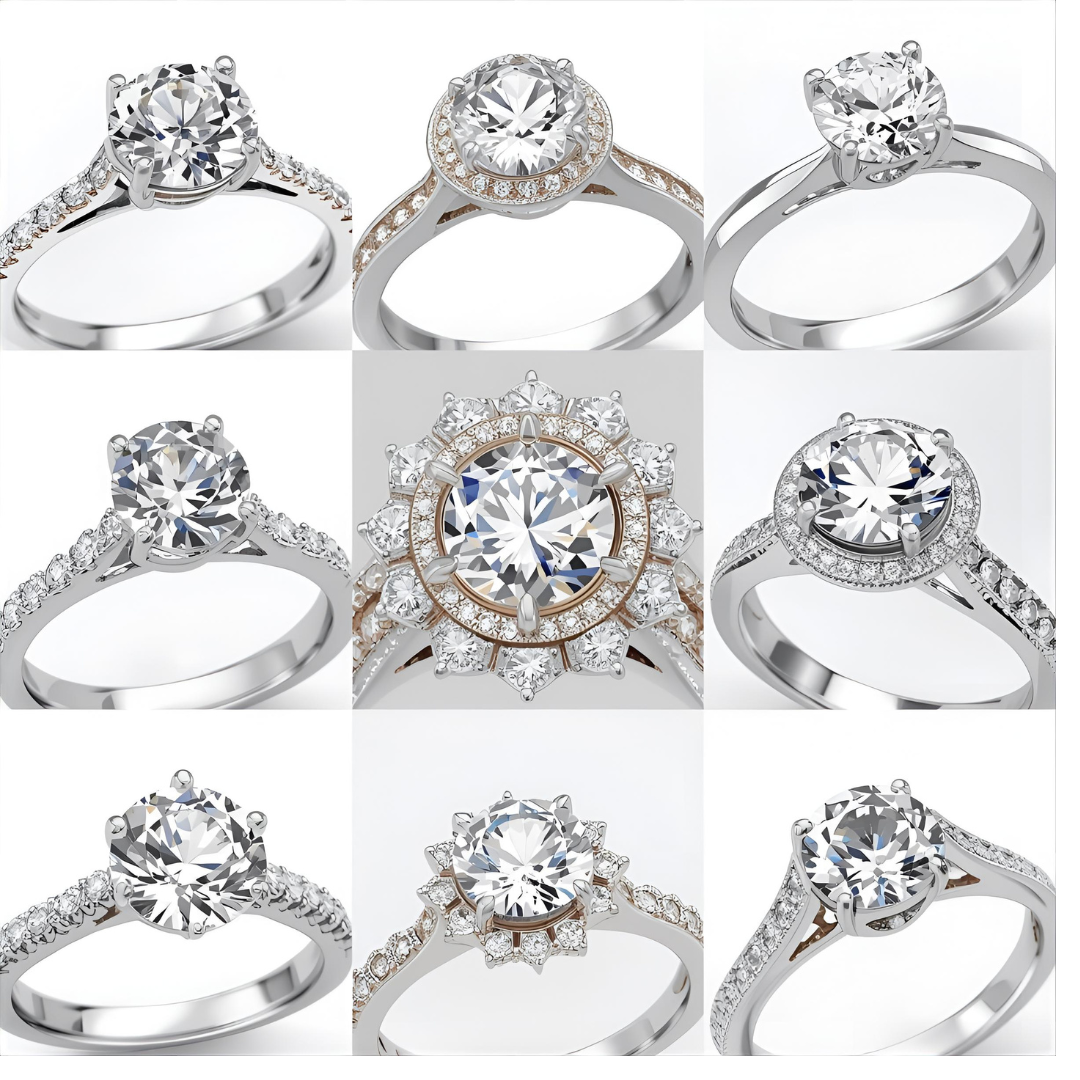
What Are The Different Types Of Diamond Rings For Women?
The world of diamond rings is vast and beautiful, moving far beyond the classic solitaire. They can be categorized by the style of the center stone, the type of setting, and the overall design aesthetic.
Here is a comprehensive guide to the different types of diamond rings for women.
Category 1: By Center Diamond Shape
The shape of the diamond is the most defining characteristic and sets the ring's entire tone.
Round Brilliant: The most popular. Known for its unmatched sparkle and timelessness.
Princess Cut: A modern, square-shaped diamond with sharp corners and brilliant sparkle, second in popularity to round.
Cushion Cut: A square or rectangle with rounded corners, offering a soft, romantic, "pillow-like" look with a chunky sparkle.
Oval Cut: An elongated shape that offers the sparkle of a round but with a unique, flattering silhouette on the finger.
Emerald Cut: A rectangular cut with stepped facets. It creates a "hall of mirrors" effect, emphasizing clarity and elegant lines over sparkle. It has a strong Art Deco vibe.
Asscher Cut: Similar to an emerald cut but square. It is highly geometric and vintage-inspired.
Marquise Cut: A dramatic, football-shaped diamond that is elongated on the finger. It has a vintage, royal feel.
Pear Cut: A graceful teardrop shape, combining the round and marquise. It's romantic and unique.
Radiant Cut: A rectangular or square cut with trimmed corners. It combines the elegance of an emerald cut with the sparkle of a round brilliant.
Heart Cut: The ultimate symbol of romance. It requires excellent craftsmanship to be well-proportioned.
Category 2: By Setting Style (How the Diamond is Held)
The setting is the metal framework that holds the diamond(s) in place. It dramatically changes the ring's look and feel.
1 . Solitaire
A single diamond held in place by a simple band. It's the ultimate classic.
Prong Setting: The most common type of solitaire, using 4 or 6 metal "claws" to hold the diamond, allowing maximum light exposure.
Bezel Setting: A thin rim of metal surrounds the entire diamond. It's extremely secure, modern, and protects the diamond's edges.
*(Left: 4-Prong Solitaire, Right: Bezel Solitaire)*
2. Halo
A circle of smaller diamonds surrounds the center stone, making it appear larger and significantly increasing the overall sparkle. Can be single or double halo.
3. Three-Stone
Features a larger center diamond with two smaller stones on either side. Often symbolizes the past, present, and future. It's an elegant and substantial look.
4. Pavé
(pronounced pah-vay) The band is set with small, closely-set diamonds, making it look like it's paved in sparkle. It adds brilliance without taking attention from the center stone.
5. Channel Set
Smaller diamonds are set into a channel within the band, flush with the metal. It's a very secure, sleek, and modern look, popular for wedding bands.
Art Deco: Features geometric patterns, filigree (intricate wirework), and often uses calibre-cut diamonds (small stones cut to fit specific shapes).
Victorian: Features ornate details, floral motifs, and rose-cut diamonds.
Category 3: By Overall Design & Style
This combines the stone and setting into a cohesive "look."
The Classic: A round or princess-cut diamond in a simple solitaire or pavé setting. Timeless and never goes out of style.
The Modern/Contemporary: Features clean lines, geometric shapes (like emerald or asscher cuts), bezel settings, and east-west orientations (where the diamond is set horizontally).
The Vintage-Inspired: Directly draws from historical eras like Art Deco, Victorian, or Edwardian, with milgrain detail, filigree, and unique diamond cuts.
The Romantic: Features softer shapes like cushion or oval cuts, often with halo details, pavé bands, and intricate, flowing metalwork.
The Nature-Inspired: The band and setting are designed to look like vines, leaves, flowers, or ocean waves. It's artistic and organic.
The Minimalist: A simple, often thinner band with a small-to-moderate-sized diamond in a solitaire or low-profile bezel setting. It's understated and elegant.
The Bold & Statement: Features a large center stone (3+ carats), a dramatic shape (like a marquise), or a very unique and intricate design that is meant to stand out.
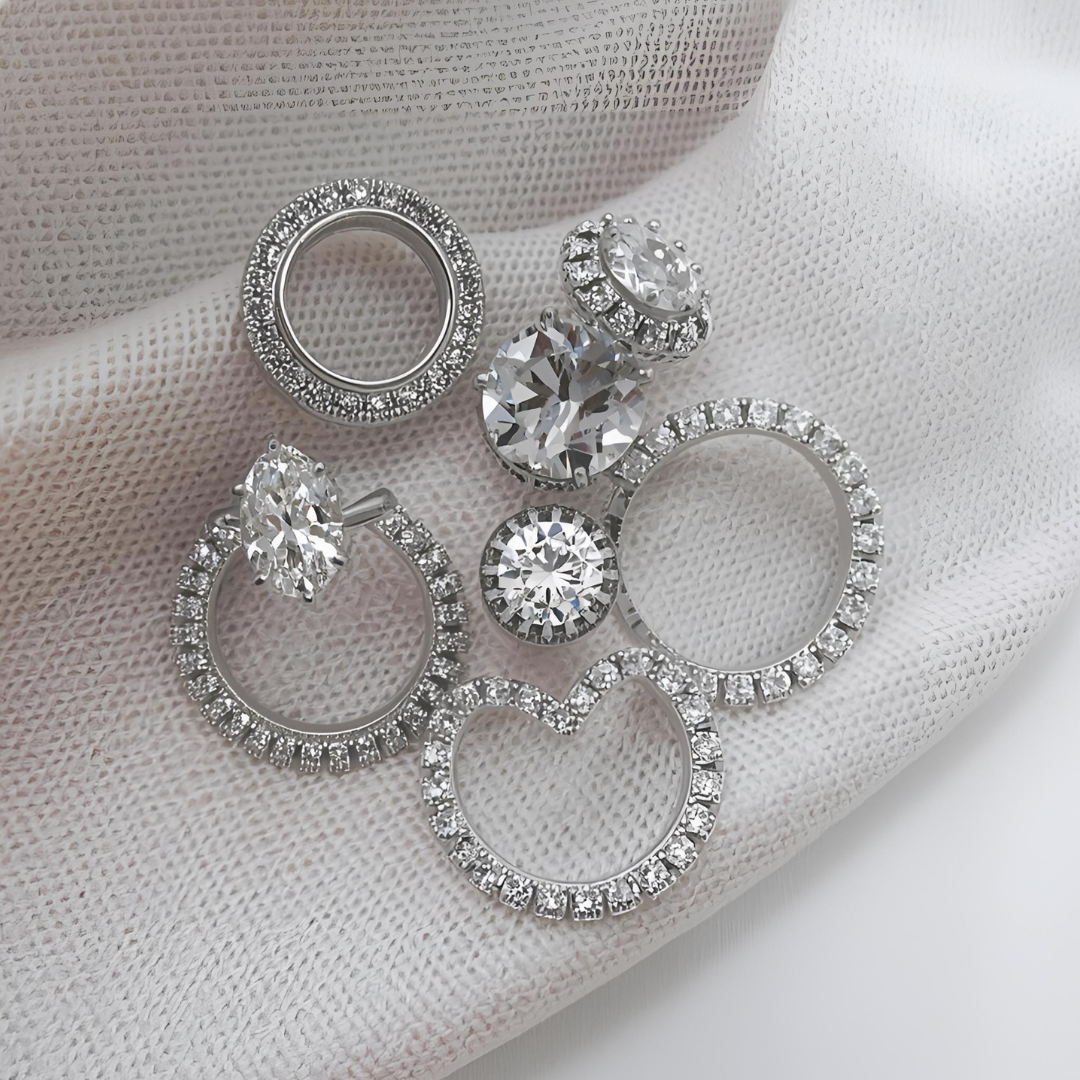
What Are The Latest Trends In Diamond Rings For Women?
The world of diamond rings is seeing some exciting shifts, moving away from strict tradition towards personalization, color, and unique expressions of style.
Here’s a breakdown of the latest trends in diamond rings for women.
1 . The Rise of the "Non-Traditional" Center Stone
Forget the classic round brilliant—at least, as the only option. The spotlight is now on unique shapes that offer a distinctive character.
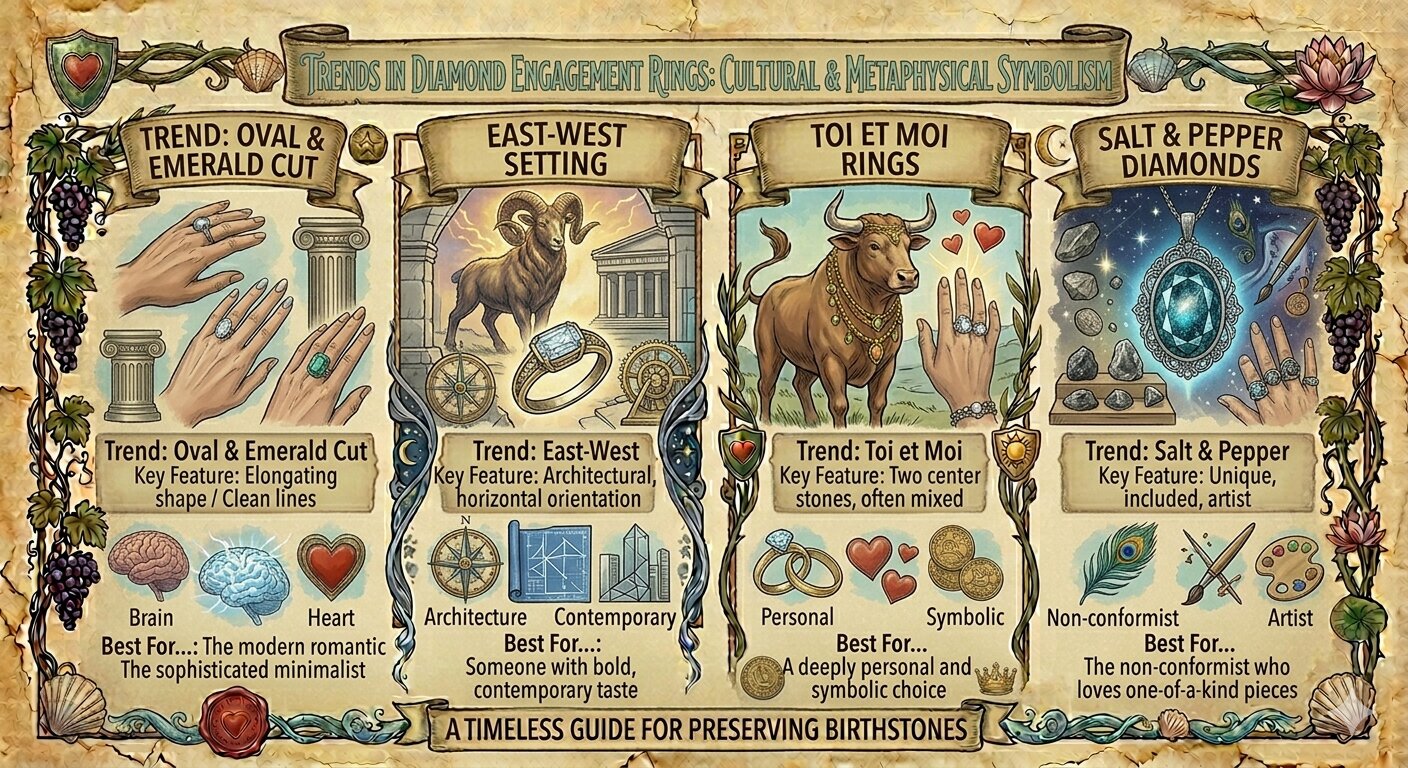
Oval Cut: The undisputed reigning champion of trends. It offers the brilliance of a round but with an elongating effect on the finger, feeling both modern and romantic.
Emerald and Asscher Cuts: These "step-cuts" are having a major moment. Their clean, geometric lines and elegant, "hall of mirrors" effect appeal to those with a sophisticated, Art Deco-inspired or minimalist aesthetic.
Pear and Marquise Cuts: These dramatic, elongated shapes are for the bold and romantic. They are celebrated for their vintage flair and incredible ability to make fingers look long and slender.
2. Elongated & Curvy Settings
The setting is just as important as the stone, and designers are getting creative with the metalwork.
East-West Setting: Instead of pointing up and down, the diamond is set horizontally. This is especially popular with emerald, oval, and marquise cuts, creating a stunning, modern, and architectural look.
Asymmetrical and Organic Settings: Rings are breaking free from symmetry. Think swirling bands, open-shank designs, and settings that look like twisting vines or ocean waves, making the ring a true work of art.
Bypass Settings: Where the band doesn't just meet the stone in a straight line but "bypasses" it in an elegant curve, often uniquely cradling the diamond.
3. A Modern Take on Vintage
The love for vintage details continues, but with a contemporary twist.
Pear-Shaped Side Stones: Instead of the classic round melee, tapered baguettes or smaller pear-shaped diamonds are being used as accent stones, framing the center stone with elegant, flowing lines.
Delicate Milgrain and Filigree: These fine, beaded (milgrain) or intricate, lace-like (filigree) metal details are being used subtly on the band or under the gallery (the part you see from the side) to add a touch of vintage craftsmanship without feeling costume.
4 . Colored Diamonds & Gemstone Accents
Color is the new neutral. Women are embracing personalization through vibrant hues.
Salt and Pepper Diamonds: These non-traditional diamonds are filled with unique inclusions that look like speckles of black, grey, and white. They are prized for their edgy, artistic, and one-of-a-kind appearance.
Fancy Colored Diamonds: Especially yellow and black diamonds, are being chosen for their bold and unconventional beauty.
Toi et Moi ("You and Me") Rings: This historic style features two center stones, symbolizing two souls. The modern interpretation often pairs a white diamond with a colored gemstone (like a sapphire, emerald, or ruby) or a colored diamond, creating a deeply personal and symbolic ring.
5 . The "Stackable" Revolution
The engagement ring is no longer a solitary piece; it's the centerpiece of a curated stack.
Thin, Delicate Bands: The engagement ring itself often features a thinner band, making it easier and more comfortable to stack with other rings.
Curved and Contoured Wedding Bands: To snugly fit against a non-traditional engagement ring setting (like a pear or oval), custom-shaped bands are hugely popular. They create a seamless, "locked-in" look.
Mixed Metals and Textures: Stacks are becoming more creative, combining yellow, white, and rose gold bands with different textures like hammered, brushed, or diamond-pavé.
6. Sustainability and Conscious Choice
Modern couples are more informed and values-driven than ever.
Lab-Grown Diamonds: This is not just a trend but a major shift in the industry. Lab-grown diamonds offer a more affordable and ethically transparent option, allowing buyers to get a larger or higher-quality stone for their budget. They are physically and chemically identical to mined diamonds.
Recycled Metals and Traceable Stones: There is a growing demand for knowing the origin of the materials, supporting brands that prioritize ethical mining and environmental responsibility.
7. Unique Center Stone Sizes
While the 1-2 carat range remains popular, we're seeing two distinct directions:
Larger, More Statement-Making Stones: Thanks in part to lab-grown diamonds, larger carat weights (3 carats and above) are becoming more accessible and desired for a bold, confident look.
Dainty and Delicate Stones: On the other end of the spectrum, smaller, sub-1-carat stones are being chosen for their understated, minimalist, and effortless elegance.
Summary: What's "In" Now?
Lab-Grown Diamonds: Ethical, affordable, high-quality. The conscious consumer who wants value and clarity
Curved Stackable Band designed to fit a unique engagement ring. Anyone who sees their ring as part of a collection
The overarching theme? Personalization. The latest trends are all about breaking the rules to find a ring that truly reflects the individual's personality, values, and unique story.
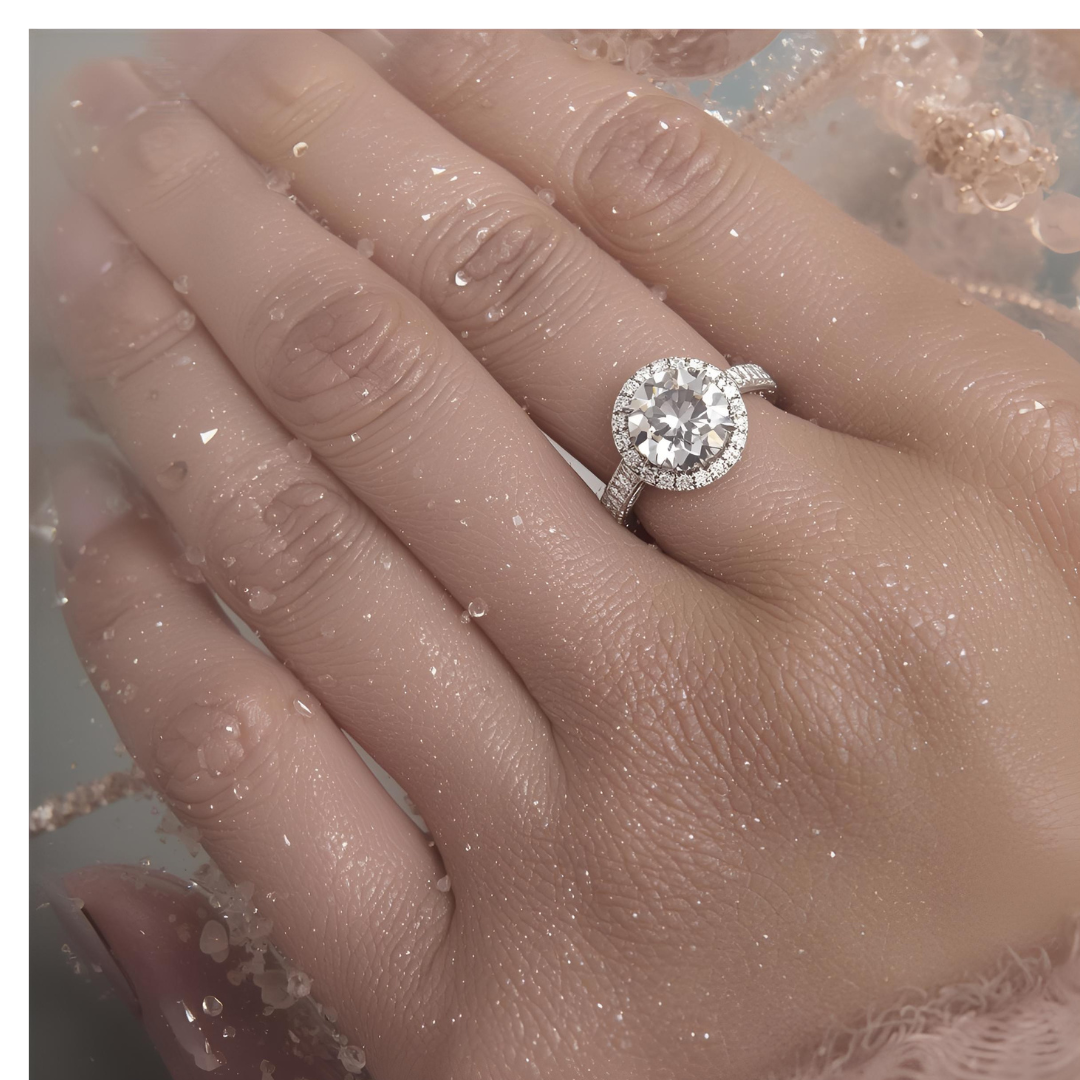
What Are Some Tips for Caring for Diamond Rings For Women?
Proper care is essential to keep a diamond ring looking as brilliant as the day it was first worn. It's not just about cleaning; it's about protection and maintenance.
Here are the essential tips for caring for a diamond ring for women, broken down into daily habits, cleaning routines, and professional care.
Daily Habits: The First Line of Defense
The "Last On, First Off" Rule:
Your ring should be the last thing you put on after getting dressed and applying makeup, lotion, and perfume.
It should be the first thing you take off when you get home. This prevents product buildup and protects it from knocks.
Know When to Take It Off:
During household chores, harsh chemicals (such as bleach and chlorine) can damage and discolor the metal setting. Physical labor can also loosen prongs.
During Physical Activities: Gym workouts, gardening, or sports can expose the ring to sweat, impact, and dirt, which can loosen stones and scratch the metal.
In Water: Never wear it in a pool, hot tub, or ocean. Your fingers can shrink slightly in water, increasing the risk of the ring slipping off. Chlorine can also erode gold alloys.
Before Bed: This prevents catching the prongs on bedding and loosening them.
Have a Safe Spot:
Don't just leave your ring on the sink counter. Designate a specific, secure place for it at home, like a dedicated ring dish in a safe spot. When traveling, use a hard-sided ring box.
Regular Cleaning: Keep the Sparkle Alive
Diamonds are magnets for grease, and even natural skin oils can coat the stone and drastically reduce its sparkle. A regular clean-up brings back the fire.
The Simple, At-Home Method:
What you need: A small bowl, lukewarm water, a few drops of mild dish soap (like Dawn), and a very soft-bristled toothbrush (baby toothbrushes are perfect).
Soak: Let the ring sit in the soapy water for 20-30 minutes to loosen grime.
Gently Scrub: Use the soft brush to gently clean around the diamond (especially the back/culet where grease collects), the setting, and the band. Be careful not to snag the prongs.
Rinse: Rinse thoroughly under lukewarm running water. Crucially: plug the drain first!
Dry: Pat dry with a soft, lint-free cloth (microfiber is ideal).
What to AVOID at Home:
Harsh Chemicals: Never use bleach, chlorine, acetone, or abrasive cleaners. They can damage the metal.
Abrasive Materials: Avoid rough brushes, toothpaste, or scrubbing pads.
Ultrasonic Cleaners (with caution): While effective, they are not safe for all rings. They can shake loose stones that have pre-existing weak prongs or damage treated diamonds (e.g., fracture-filled diamonds).
Professional Care: The Non-Negotiable Checkups
Think of this like taking your car in for an oil change—it's preventative maintenance that prevents major issues.
Professional Cleaning & Inspection:
Take your ring to a reputable jeweler every 6 to 12 months.
They will give it a professional, deep clean using ultrasonic cleaners and steam, which is far more effective than home cleaning.
Most importantly, they will inspect the setting under a microscope. They will check for worn-down prongs, loose stones, and any stress points in the band. A loose prong can lead to a lost diamond.
Prong Re-Tipping:
Over time, prongs wear down from daily contact. If your jeweler says the prongs are thin, get them "re-tipped" or rebuilt. This is a small cost compared to replacing a lost diamond.
Replating (for White Gold):
If you have a white gold ring, its bright white finish comes from a thin layer of rhodium plating. This will wear off over 1-3 years, revealing the slightly yellow tint of the natural gold alloy. A jeweler can easily replate it to make it look brand new again.
Insurance & Documentation: Protect Your Investment
Get It Appraised and Insured:
Once you have the ring, get a professional appraisal from a certified gemologist.
Use this appraisal to get a dedicated "jewelry rider" or "valuable personal property" insurance policy on your homeowner's or renter's insurance. This protects you against theft, loss, or damage.
Keep Your Paperwork:
Store the original diamond grading report (e.g., from GIA) and the receipt in a safe place. This is vital for insurance claims and future resale.
Quick-Care Cheat Sheet
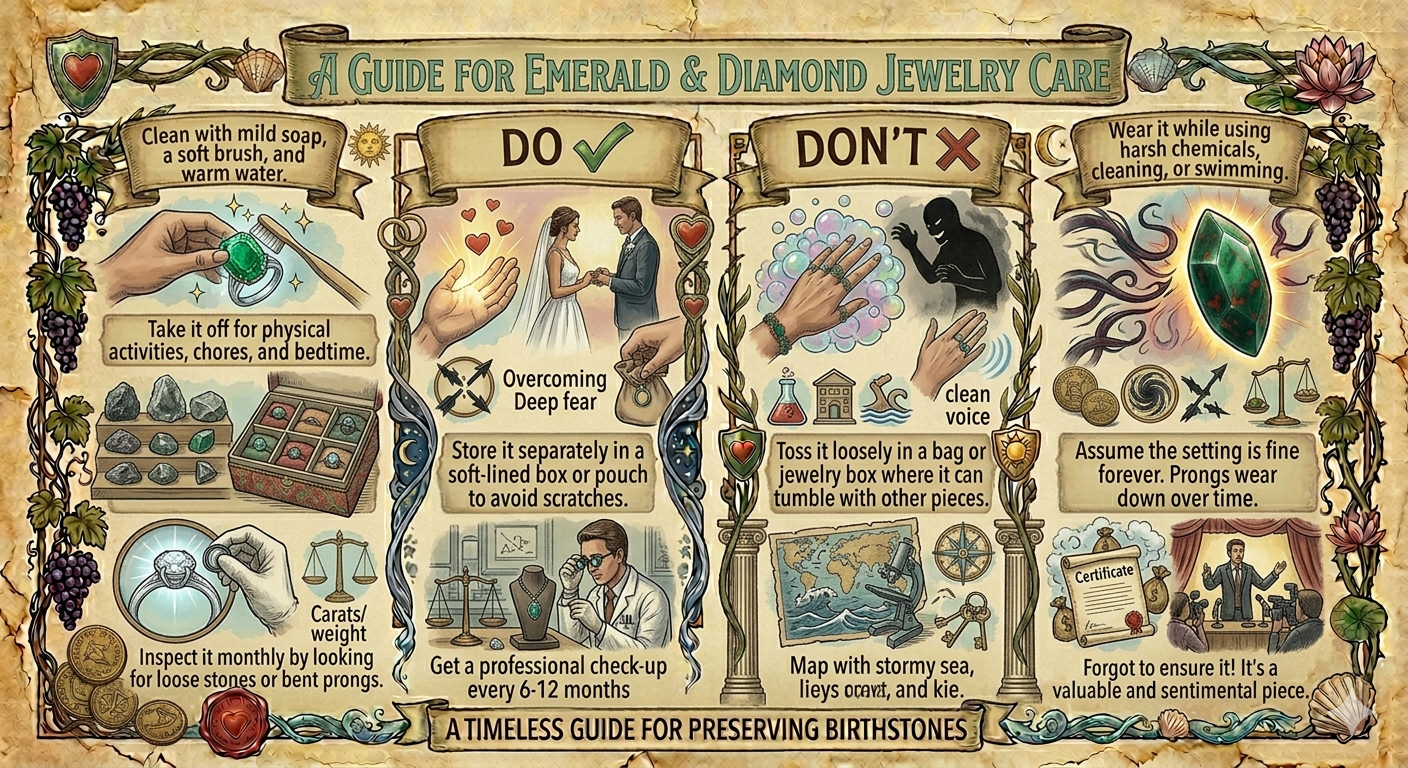
By following these simple steps, you'll ensure that your beautiful diamond ring remains secure, sparkling, and ready to symbolize your love for a lifetime.
How Much Should a 1 Carat Diamond Ring Cost?
This is one of the most common questions, and the answer is frustratingly but truly: It depends. The cost of a 1-carat diamond ring can vary dramatically, from around $1,500 to over $20,000.
The price hinges almost entirely on the quality of the diamond (the 4 Cs) and the type of setting you choose.
To give you a practical understanding, let's break down the costs based on different quality tiers and sources.
The Diamond Itself: Understanding the 4 Cs & Price Tiers
The setting and metal usually cost between $500 and $2,000+. The rest is the diamond.
Here’s a general price range for a 1-carat, GIA-graded loose diamond (as of 2023-2024). These are for natural diamonds; we'll cover lab-grown separately.
1. The Budget-Conscious Tier ($1,500 - $3,000)
Cut: Good or Very Good. (Avoid "Fair" or "Poor" cut—it will look dull).
Color: J, K, L (Noticeably warm or faintly yellow tint to the naked eye).
Clarity: SI2, I1 (Inclusions may be visible without magnification).
Best For: Someone prioritizing size (the 1-carat weight) above all else. This diamond will have sparkle but will not be "colorless" or "flawless."
2 . The Best Value & Most Popular Tier ($3,000 - $6,000)
This is the sweet spot for balancing quality and cost. The diamond will be beautiful, white, and clean to the naked eye.
Cut: Excellent or Ideal. Never compromise here. This is the key to sparkle.
Color: G, H (Near colorless; looks white in a setting).
Clarity: VS2, SI1 (Inclusions are minor and not visible without a jeweler's loupe).
Best For: The vast majority of buyers. You get a brilliant, high-quality stone without the premium for "perfect" grades.
3. The High-Quality / Investment Tier ($6,000 - $12,000+)
Cut: Excellent / Ideal.
Color: D, E, F (Truly colorless).
Clarity: VVS1, VVS2, FL, IF (Flawless or virtually flawless to the eye and under magnification).
Best For: Those for whom budget is less of a concern and who want the absolute top grades in color and clarity.
The Game Changer: Lab-Grown Diamonds
This is the biggest factor in the modern diamond market. Lab-grown diamonds are physically, chemically, and optically identical to natural diamonds but cost significantly less.
For a 1-carat lab-grown diamond with similar specs to the "Best Value" tier above, expect to pay: $800 - $2,500
This allows you to get a larger or higher-quality stone for your budget. For example, a 1-carat lab-grown diamond with Excellent cut and F color might cost the same as a 0.5-carat natural diamond of similar quality.
Total Ring Cost Breakdown: Diamond + Setting
Let's put it all together with two realistic examples for a complete ring:
Example 1: Natural Diamond, Popular Tier
Diamond: 1 ct, G Color, VS2 Clarity, Excellent Cut ≈ $4,500
Setting: A simple 14k white gold solitaire setting ≈ $700
Total Estimated Cost: ~$5,200
Example 2: Lab-Grown Diamond, High Quality
Diamond: 1 ct, E Color, VVS2 Clarity, Excellent Cut ≈ $1,800
Setting: A more intricate pavé setting in platinum ≈ $1,500
Total Estimated Cost: ~$3,300
Key Factors That Influence the Final Price
Cut Quality is King: A poorly cut 1-carat diamond looks small and dull. A well-cut one looks larger and sparkles brilliantly. This is the most important "C" for beauty.
Certification Matters: Always insist on a diamond grading report from a reputable lab like the GIA (Gemological Institute of America) or AGS (American Gem Society). This guarantees you're getting what you pay for.
The Retailer: Online retailers (Blue Nile, James Allen) often have lower prices than brick-and-mortar stores due to lower overhead. However, a local jeweler can offer a more personal experience and service.
Fluorescence: Strong fluorescence can sometimes lower a diamond's price, as it can (in rare cases) cause the stone to look hazy in sunlight.
Your Action Plan & Budgeting Tips
Prioritize the 4 Cs: Decide what's most important to you. The recommended priority for most people is: Cut > Carat > Color > Clarity.
Consider "Magic Sizes": A 0.90-carat diamond can look identical to a 1.00-carat diamond to the naked eye, but can be significantly cheaper. The price jumps at the "full carat" marks.
Get Quotes: Look at similar diamonds on major online retailers to establish a baseline price for the specs you want.
Don't Forget the Setting: Factor in an extra $500- $2,500 for the setting and metal, depending on its complexity.
Can Sterling Silver Have Real Diamonds?
Yes, sterling silver can absolutely hold real diamonds. Here's a breakdown of the key points:
Technical Feasibility: Diamonds can be securely set into sterling silver settings (like prong, bezel, or channel settings) just like they are set into gold or platinum. Jewelers do this regularly.
Common Practice:
Smaller Diamonds: It's very common to find smaller, accent diamonds set in sterling silver jewelry. Think pave settings, halo details, or tiny side stones.
Fashion Jewelry: Sterling silver with small real diamonds is a popular and relatively affordable category of fine fashion jewelry.
Larger Diamonds (Less Common): While possible, it's less common to find larger, center-stone diamonds (especially high-value ones) set primarily in sterling silver. There are reasons for this (see challenges below).
Challenges & Why It's Less Common for Larger Stones:
Durability & Security: Sterling silver is softer than platinum, white gold, or even yellow gold. Prongs holding a valuable diamond can wear down or bend more easily over time, increasing the risk of the stone becoming loose or falling out. For a valuable center diamond, a harder metal is preferred for long-term security.
Tarnishing: Sterling silver tarnishes (develops a blackish layer) when exposed to air and sulfur. While the diamond itself is unaffected, tarnish can dull the appearance of the setting and make the jewelry require more frequent cleaning and maintenance.
Value Mismatch: High-value diamonds are typically set in metals that match their perceived value and durability (platinum, gold). Setting a very expensive diamond in sterling silver is unusual because the softer metal doesn't offer the best long-term protection for the investment, and the metal's value is significantly lower than the stone's.
"Real" Diamonds Include Lab-Grown: "Real" diamonds encompass both natural diamonds (mined) and lab-grown diamonds (chemically identical, created in a lab). Both types can be set in sterling silver. Lab-grown diamonds have made diamond-accented sterling silver jewelry even more accessible.
In Summary:
Yes, sterling silver jewelry can and does feature real diamonds (both natural and lab-grown).
It's very common for smaller accent diamonds.
It's less common for large, valuable center stones, primarily due to durability/security concerns and value perception.
Always check the item description or ask the jeweler if the diamonds are natural or lab-grown, and ensure they are indeed real diamonds and not simulants like cubic zirconia (CZ) or moissanite (unless that's what you want).
So, if you see a piece of sterling silver jewelry advertised with diamonds, it certainly can be genuine, especially if the diamonds are small accents. Just be aware of the pros (affordability) and cons (potential durability and maintenance) compared to settings in harder precious metals. Read more gemstone rings


News for Tuesday 30 September, 2025
- What You Need to Know About Sapphire Properties and Value
- Elevate Your Look With Stacking Rings: A Complete Overview
View all news for Tuesday 30 September, 2025 on one page
Recent News
- Monday 29 September, 2025
- Sunday 28 September, 2025
- Friday 26 September, 2025
- Thursday 25 September, 2025
- Saturday 20 September, 2025