

Tanzanite Ring: A Detailed Look At This Stunning Gemstone
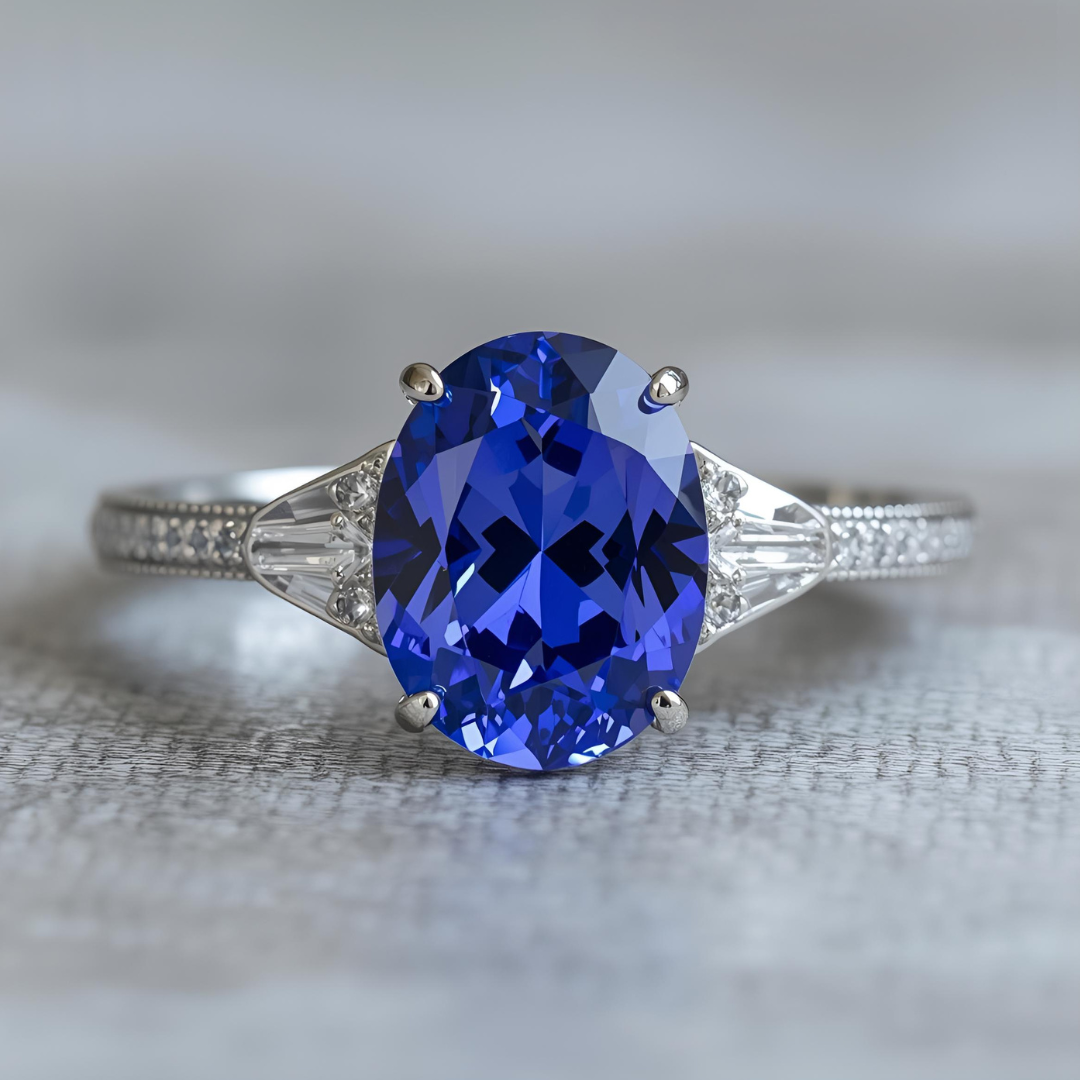
A Tanzanite Ring is a piece of jewelry that features tanzanite as its central gemstone. Tanzanite is a rare and precious gem known for its stunning blue-violet color, which can shift between sapphire-blue and amethyst-purple depending on the light and viewing angle.
“In 1967, a Masai tribesman in the foothills of Mount Kilimanjaro stumbled upon a cluster of brilliant blue-violet crystals — stones so vivid he thought they were sapphires. He had found the world‘s only source of tanzanite. Tiffany & Co. quickly realized the gem was unlike anything seen before: it shifted from sapphire blue to amethyst purple as you turned it. They named it after Tanzania, the country that birthed it. Geologists now estimate the mines will be empty in 20 to 30 years. When your granddaughter asks where her tanzanite ring came from, you will tell her: from a single hill near Kilimanjaro, discovered in your lifetime, and gone by hers. Some stones are rare. Tanzanite is a geological miracle with an expiration date.”
The same stone that the Masai gifted for transformation now awaits your December birthday — or your own new chapter. Every tanzanite in our collection is natural, heat-treated only (the standard), and chosen for that signature blue-violet flash.”
The same stone that the Masai gifted for transformation now awaits your December birthday — or your own new chapter. Every tanzanite in our collection is natural, heat-treated only (the standard), and chosen for that signature blue-violet flash.”
[Button: Explore Tanzanite Rings →]
Here is the table of contents;
What Does A Tanzanite Ring Mean?
What Are The Benefits Of Wearing Tanzanite?
Key Factors When Choosing A Tanzanite Ring
How Much Should I Pay For A Tanzanite Ring?
What Zodiac Should Wear Tanzanite?
Which Finger To Wear A Tanzanite Ring For A Woman?
Can A Tanzanite Ring Be Worn Every Day?
Are Tanzanite Rings Worth It?
Who Should Wear Tanzanite As A Female?
Begin the first topic.
Tanzanite Ring Meanings: What These Stunning Gemstones Represent in Culture and Emotion
A tanzanite ring carries rich symbolism, blending its geological rarity, unique color, and cultural significance into meaningful narratives.
Here’s what it commonly represents:
Core Symbolisms
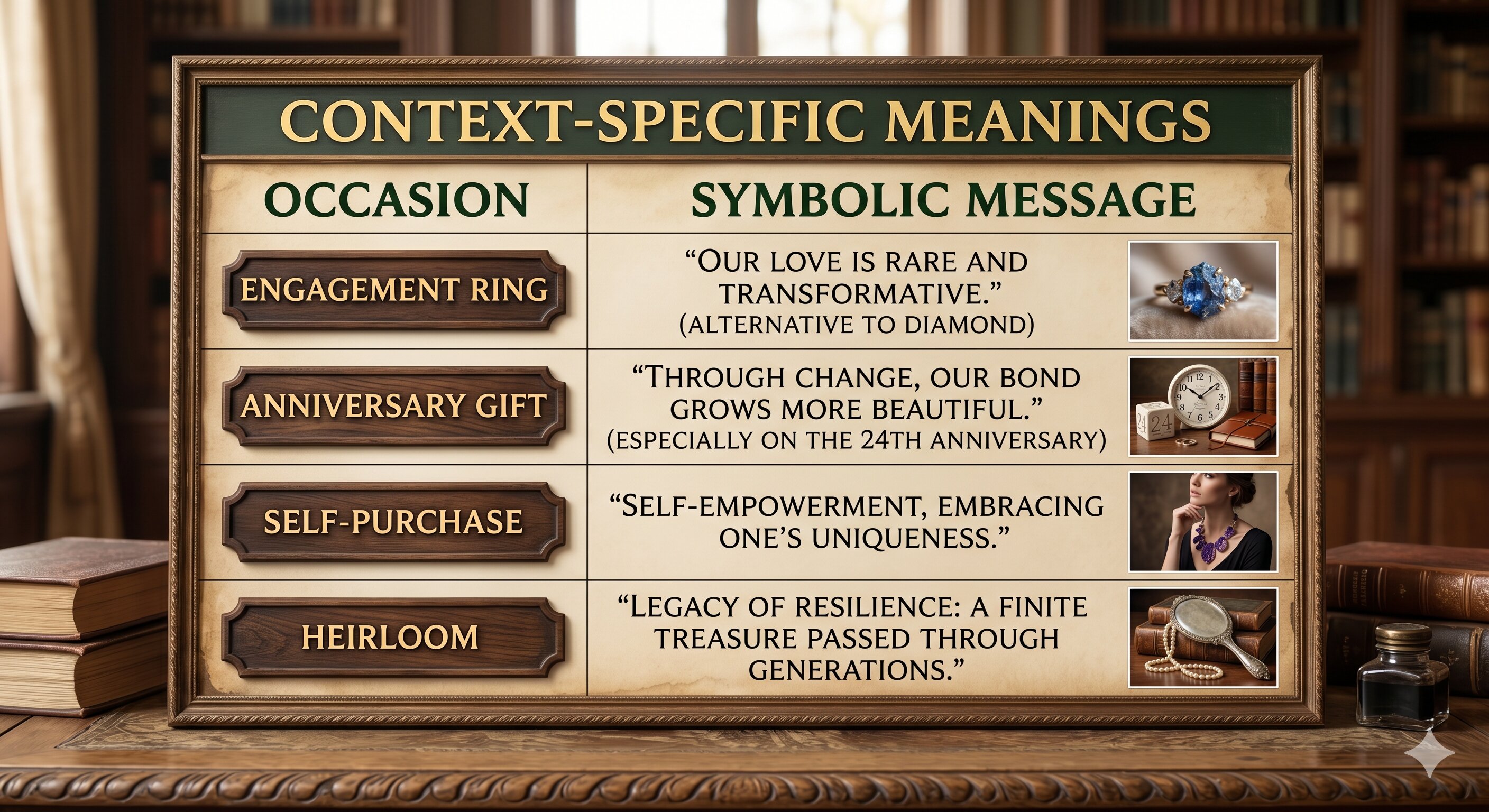
“The Maasai people of Tanzania have a tradition: when a woman transitions into a new phase of life — marriage, motherhood, elderhood — she is gifted a blue stone. When tanzanite was discovered on their lands, they recognized it immediately. Not as a jewel, but as a marker of transformation. The stone‘s journey mirrors this symbolism: it is born brown in the earth, then heated to reveal its violet-blue fire — a gem that must pass through fire to become its truest self. That is why tanzanite is the stone of new beginnings. It asks no perfection of you. Only the courage to change.”
Rarity & Exclusivity.
• Found only in one place on Earth (Tanzania), it symbolizes uniqueness, individuality, and cherished moments.
• Often gifted to mark once-in-a-lifetime events (e.g., milestone anniversaries, engagements).
Transformation & New Beginnings
• Tanzanite forms under unique geological pressure, and most stones are heat-treated to reveal their blue-violet beauty. This mirrors personal growth, resilience, and embracing change.
• Ideal for celebrating new chapters: graduations, career shifts, or spiritual journeys.
Wisdom & Spiritual Insight
• Linked to the third eye and crown chakras, it’s believed to enhance intuition, clarity, and connection to higher consciousness (metaphysical belief).
• Its shifting hues (blue ↔ purple) symbolize balancing logic and intuition.
Royalty & Luxury
• Its vivid color echoes historical associations of purple with nobility (e.g., Byzantine emperors).
December Birthstone Energy
• For December-born wearers, it embodies celebration, reflection, and renewal as the year closes.
Context-Specific Meanings
Cultural & Modern Connections
Maasai Tradition: Tanzanite was first gifted to Maasai tribeswomen as a symbol of life transitions (e.g., coming of age).
Tanzanian Pride: Wearing it honors the stone’s origin and supports ethical mining communities.
Spiritual Practices: Used in meditation for its purported ability to release blockages and calm anxiety.
A Note on Authenticity
While these symbolisms are widely embraced, remember:
Metaphysical claims (e.g., healing energy) are not scientifically proven.
The deepest meaning comes from your personal story—why you wear it or gift it.
Design Enhances Symbolism
Protective Bezels: Symbolize safeguarding cherished values.
Diamond Halos: Represent enduring commitment, framing transformation.
Violet vs. Blue Stones: Purple leans spiritual; blue evokes truth and stability.
What Are The Benefits Of Wearing Tanzanite?
While tanzanite is prized primarily for its exceptional beauty and rarity, wearing it is also associated with several symbolic, cultural, and perceived benefits. It’s important to note that many of these are non-scientific, metaphysical, or personal beliefs — not proven medical or spiritual facts. Here’s a balanced overview:
Tangible & Symbolic Benefits
Rarity & Exclusivity
Tanzanite is found only in Tanzania, making it 1,000x rarer than diamonds. Wearing it signifies uniqueness and connection to Earth’s geological wonders.
Its finite supply (estimated to last 10–30 years) adds investment allure.
Birthstone Significance
As the modern birthstone for December, it’s a meaningful gift for December-born individuals, symbolizing celebration, renewal, and personal identity.
Aesthetic Appeal
Its trichroism (shifting blue-violet-burgundy hues) makes it visually captivating, boosting confidence and attracting compliments.
Perceived Metaphysical Benefits
(Cultural/spiritual beliefs; not scientifically verified)
Spiritual Awakening
Believed to enhance intuition, meditation, and psychic awareness by aligning the throat, third eye, and crown chakras.
Transformation & Growth
Symbolizes change and adaptability (linked to its discovery story). Some wear it during life transitions.
Calming Energy
Thought to reduce stress, promote mental clarity, and soothe anxiety through its cool, calming colors.
Communication & Truth
Associated with honest communication and emotional expression (connected to the throat chakra).
Protection
In some traditions, it’s worn as a talisman against negative energy.
Important Realities to Consider
No Scientific Backing: Metaphysical claims lack empirical evidence. Benefits are subjective and cultural.
Durability Limits: Its softness (6.5–7 Mohs) and cleavage mean it’s not ideal for daily wear (especially rings). Reserve for pendants/earrings or occasional use.
Value ≠ Guaranteed Appreciation: While rare, investment returns depend on quality, size, and market demand.
Practical Benefits Summary
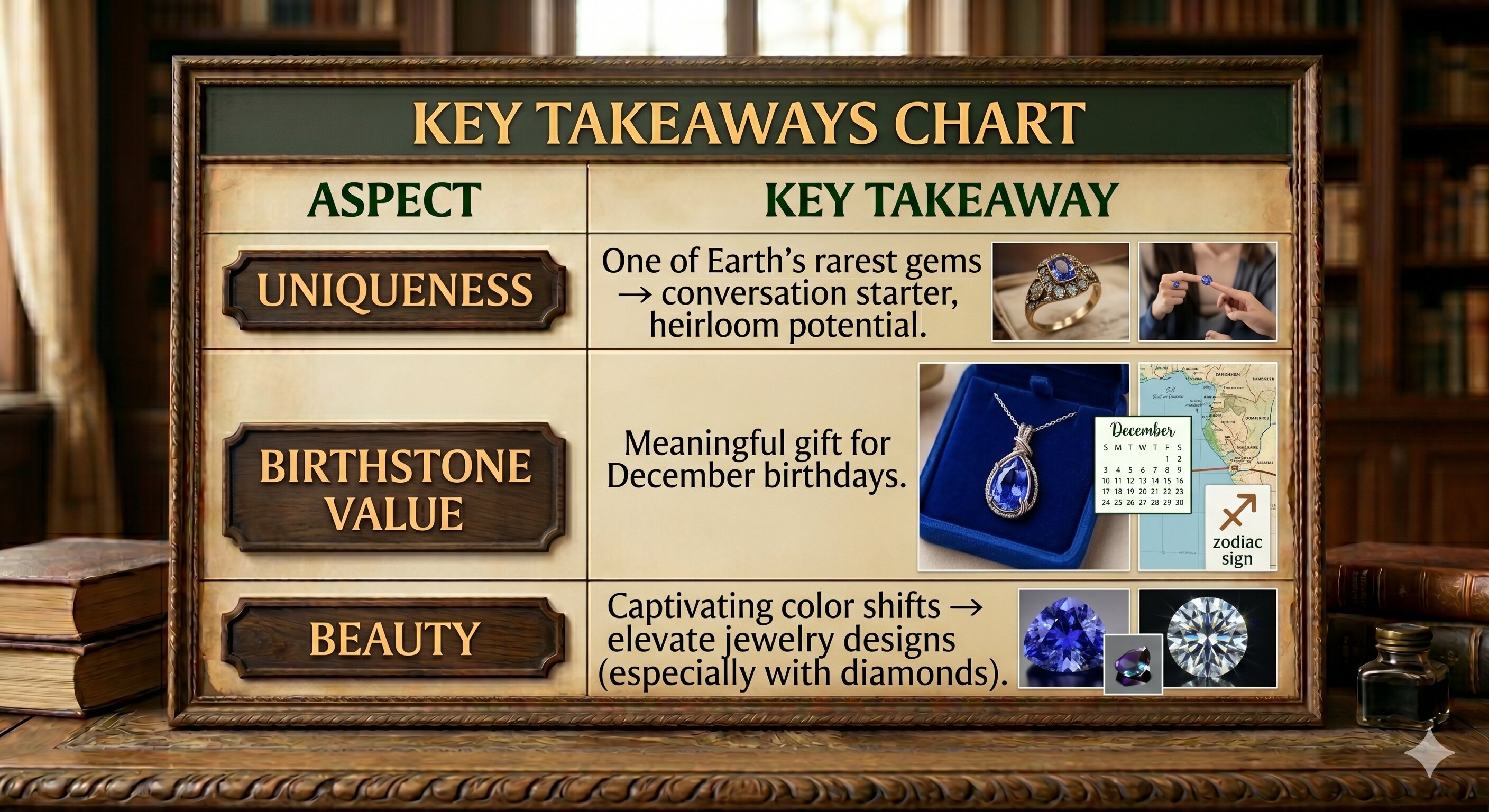
Symbolism represents transformation, wisdom, and rarity (personal significance).
Should You Wear It?
Yes,
You love its color and story.
You seek a rare, conversation-starting gem.
You’ll wear it mindfully (avoiding impacts/chemicals).
No,
You expect miraculous healing/spiritual effects.
You want a low-maintenance, everyday stone (opt for sapphire/spinel instead).
Tanzanite Rings: Luxury vs. Affordability – What You Need to Know
The price of a tanzanite ring can vary dramatically, ranging from affordable to extremely expensive, depending on these key factors:
1. Tanzanite Quality (Most Critical)
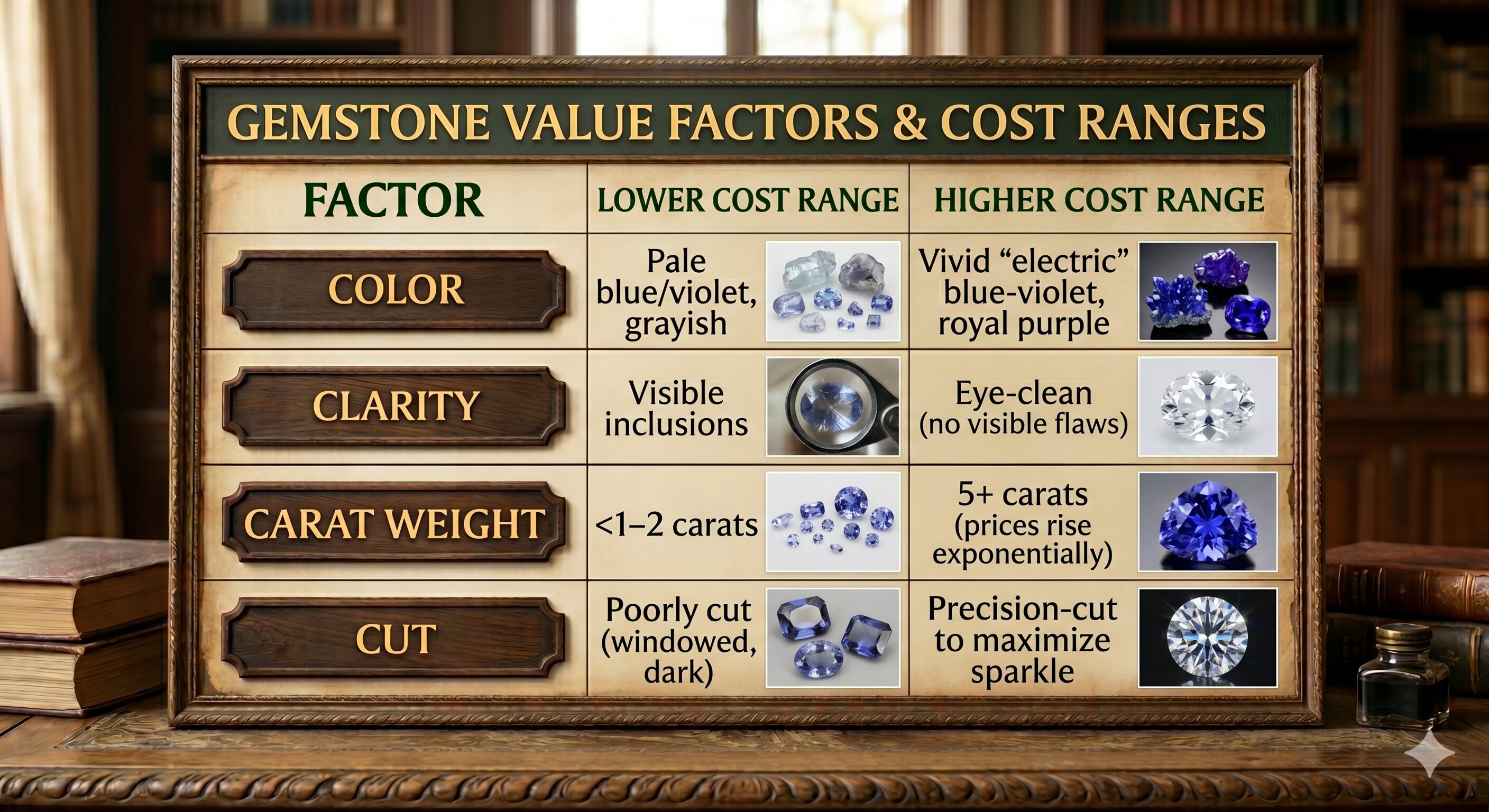
Example Stone Pricing:
Commercial grade (1–2ct, pale): $50–$200/ct
Top "AAA" vivid blue (5ct+): $800–$2,500+/ct
2. Ring Setting & Design
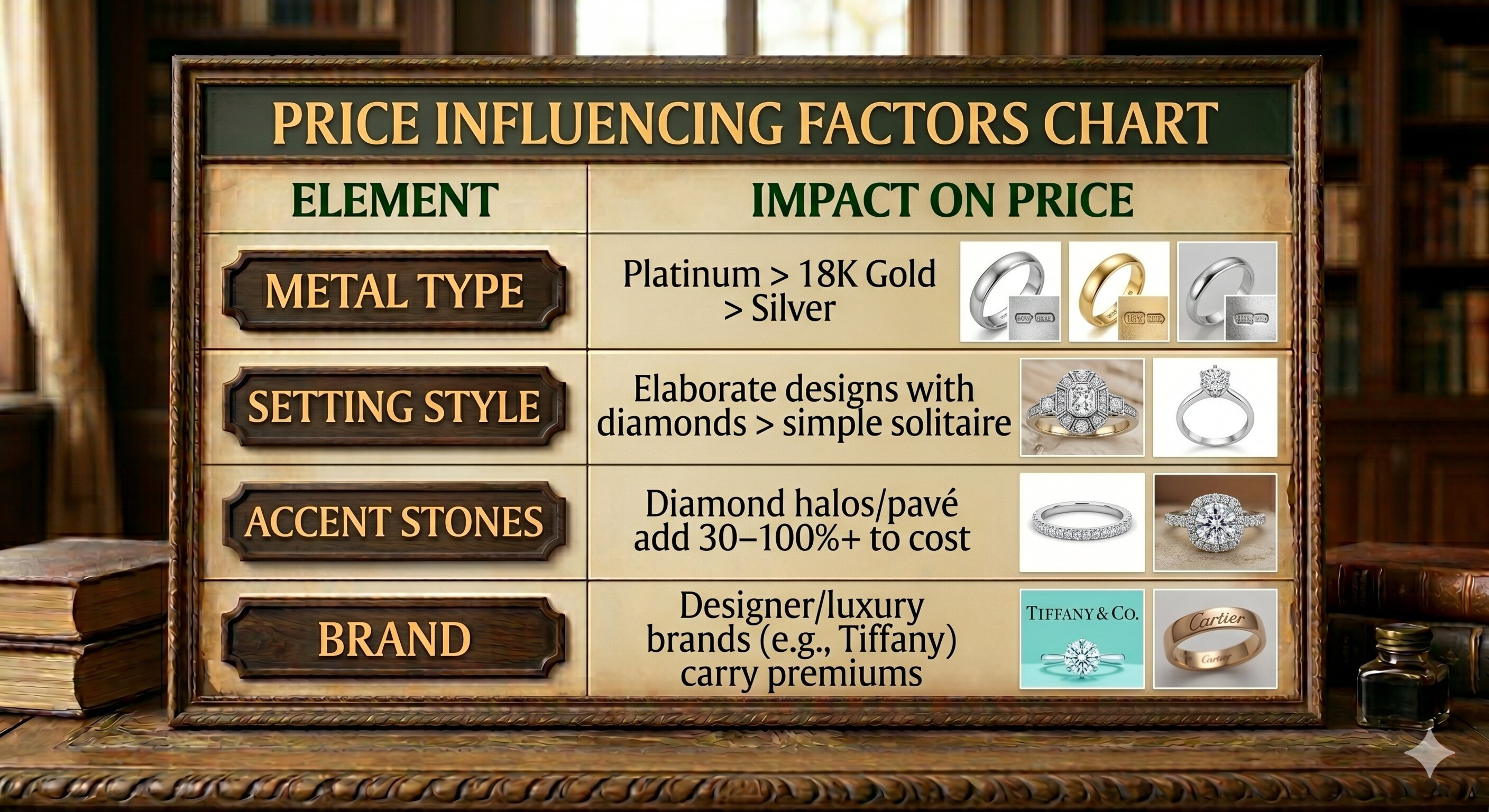
Example Setting Costs:
Simple 14K gold solitaire: $300–$800
Platinum halo with diamonds: $2,000–$10,000+
Total Ring Price Ranges
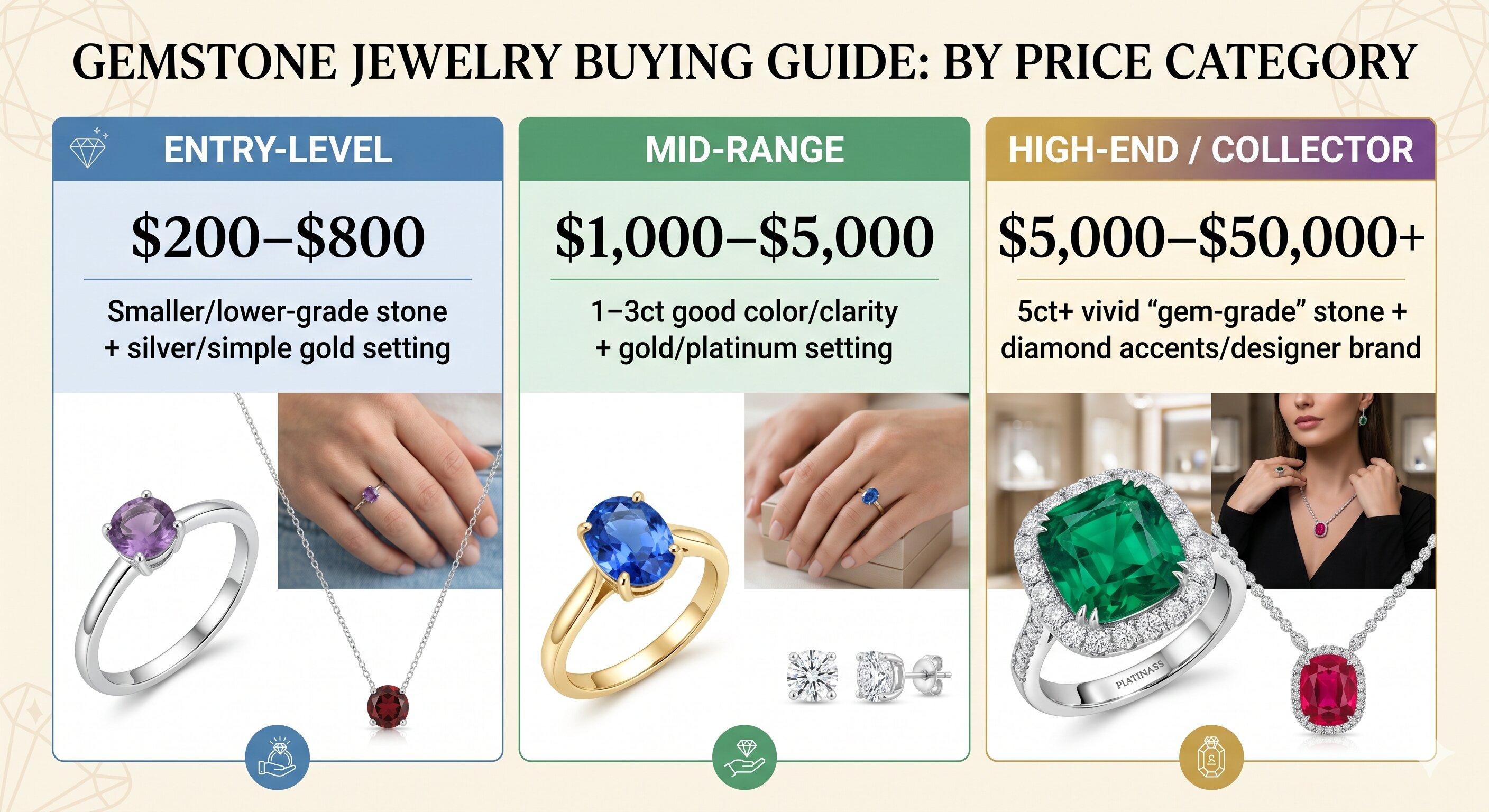
Key Considerations
Rarity ≠ High Resale Value
While top tanzanite is rarer than diamonds, its resale market is less established. Don’t buy purely as an investment.
Protective Settings Add Cost
Bezels/vault settings (recommended for fragile tanzanite) are more labor-intensive → higher price.
Lab Reports Are Essential
Always demand a certificate (GIA/AGL) for stones >1ct to verify quality. Uncertified "bargains" often hide poor quality.
Synthetics Exist
Lab-created tanzanite is cheaper (~$50/ct) – ensure your stone is natural if paying premium prices.
Is It "Expensive"?
Compared to birthstone alternatives (turquoise, zircon): Yes, high-quality tanzanite is pricier.
Compared to sapphire/ruby: Similar pricing for equivalent quality.
Compared to diamond: Top tanzanite is cheaper per carat than top diamonds, but large, vivid stones can rival diamond prices.
Key Factors When Choosing A Tanzanite Ring
When shopping for a tanzanite ring, gemologists use the "Four Cs," but with a special emphasis on color.
1. Color (The Most Important Factor)
This is the primary driver of a tanzanite's value.
Hue: The most desirable color is a strong, saturated bluish-violet or violetish-blue. The finest gems balance both the blue and violet tones beautifully.
Saturation: Look for a rich, intense color. Pale or grayish stones are less valuable.
Grading: You might hear terms like:
Exceptional (Vivid): Top-tier, highly saturated color.
Fine (Intense): Strong, desirable color.
Good / Commercial: Lighter or less saturated tones.
2. Clarity
Tanzanite is a Type I gemstone, meaning it's typically "eye-clean" (no visible inclusions to the naked eye). You should expect a clear, transparent stone. Heavily included or cloudy stones are less desirable.
3. Cut
A skilled cut is crucial as it enhances the stone's pleochroism and color. A well-proportioned cut will maximize the vibrant blue and violet flashes. Popular cuts for tanzanite include oval, cushion, and round brilliant, which help showcase its color.
4. Carat Weight
Tanzanite is available in a wide range of sizes. Larger stones with top-tier color are exceptionally rare and command a high price per carat.
Ring Settings and Styles
The setting you choose not only defines the ring's style but also protects the stone.
Best Settings for Protection:
Tanzanite is a relatively soft stone (6.5 on the Mohs scale), making it susceptible to scratches and hard knocks.
Bezel Setting: A metal rim encircles the girdle of the stone, offering the best protection. This is highly recommended for everyday wear.
Halo Setting: A circle of smaller diamonds or gemstones surrounds the center tanzanite, protecting its edges and adding brilliant sparkle.
Channel or V-Prong Setting: For side stones or three-stone rings, these settings securely hold the tanzanite in place.
Popular Metal Choices:
White Gold / Platinum: These cool-toned metals enhance the blue and violet hues of the stone, making the color appear more vibrant.
Yellow Gold / Rose Gold: These warm metals create a beautiful, classic, and contrasting look that makes the tanzanite's color stand out in a different, regal way.
Classic Ring Styles:
Solitaire: A timeless choice that lets the tanzanite's color be the absolute star.
Three-Stone Ring: Often symbolizes the past, present, and future. Tanzanite looks beautiful flanked by diamonds or white sapphires.
Halo Ring: Adds extra brilliance and makes the center stone appear larger.
Vintage/Art Deco: The violet hues of tanzanite work perfectly with intricate filigree and geometric patterns of vintage-style settings.
How to Care for Your Tanzanite Ring
Due to its softness and sensitivity, proper care is essential.
Avoid Harsh Chemicals: Remove your ring before using household cleaners, swimming in pools, or applying lotions and perfumes.
Avoid Sudden Temperature Changes: Tanzanite can fracture if exposed to thermal shock (e.g., moving from a hot tub to cold air).
Avoid Ultrasonic Cleaners: The vibrations can cause fractures. Never use a steam cleaner.
Safe Cleaning: Use warm, soapy water and a soft brush. Gently scrub and pat dry with a soft, lint-free cloth.
Storage: Store your tanzanite ring separately in a soft cloth pouch or a fabric-lined jewelry box to prevent scratches from harder gems.
Is A Tanzanite Ring Right For An Engagement Ring?
This is a common question.
Pros: The color is undeniably unique and breathtaking. Its rarity makes it a symbolic and personal choice.
Cons: Its relative softness (6.5) makes it less durable than sapphire (9), moissanite (9.25), or diamond (10). It is not ideal for someone hard on their jewelry.
Verdict: A tanzanite engagement ring can be a wonderful choice if the wearer understands its care requirements and is willing to be cautious. For a more durable option, consider it as a right-hand ring or a special occasion piece.
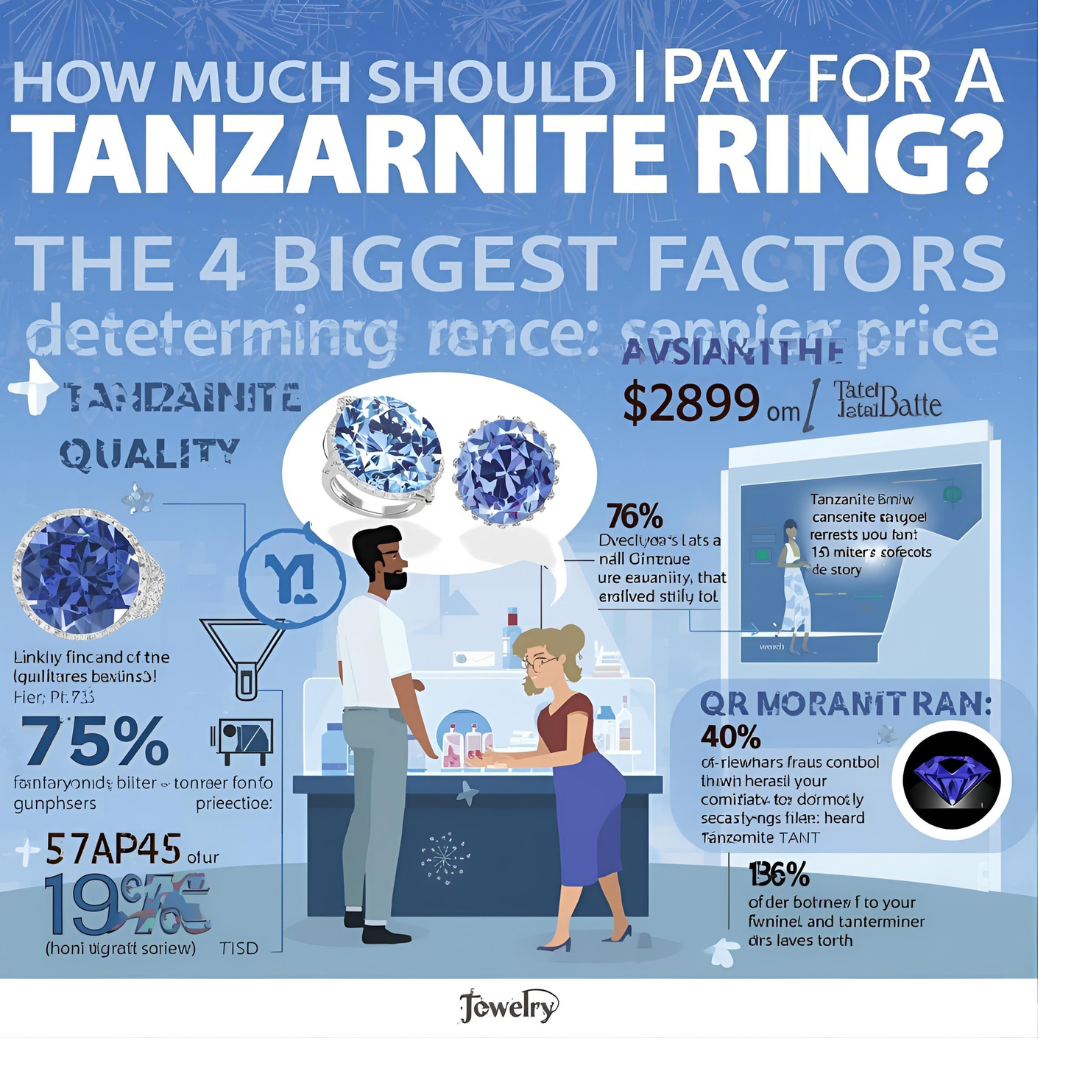
How Much Should I Pay For A Tanzanite Ring?
The price of a tanzanite ring can range from under $100 to well over $10,000.
To help you understand why, let's break down the key factors that determine the price.
The 4 Biggest Factors Determining Price
1. The Tanzanite Stone Itself (The Biggest Factor)
This is all about the Four Cs: Color, Clarity, Cut, and Carat Weight.
Color (Most Important): Tanzanite is valued for its vivid violet-blue to blue-violet color.
Top Tier (Vivid Violet-Blue): The most saturated, pure blue-violet hues with high brilliance are the most valuable and expensive. Look for terms like "Vivid," "Intense," or "Exceptional."
Middle Tier (Good Blue/Violet): Pleasant, slightly less saturated colors. Still very beautiful and more affordable.
Lower Tier (Pale or Grayish): Stones with a lighter color or a grayish/brownish undertone are the most affordable.
Natural vs. Heated: Nearly all tanzanite is heat-treated to achieve its signature blue color (it's found in the ground as a brownish crystal). This is a standard, accepted practice, and does not lower its value.
Clarity: How clear is the stone, free from internal flaws (inclusions)?
Eye-Clean: No visible inclusions to the naked eye. This is what you should aim for in a quality ring.
Slightly Included (SI): Minor inclusions visible upon close inspection. A good value option.
Included (I): Obvious inclusions that can affect brilliance and durability. Not recommended for jewelry.
Cut: A good cut brings out the stone's color and sparkle.
Excellent Cut: Precise angles and proportions that maximize brilliance and color. Commands a higher price.
Commercial Cut: Standard cuts that retain weight but may not be as brilliant. Common in mass-market jewelry.
Poor Cut: "Windows" (see-through dead spots) or dull appearance. Avoid these.
Carat Weight: Size matters, but it's not linear.
Tanzanite prices per carat jump significantly at certain milestone weights (e.g., 5ct, 10ct, 20ct) because larger, high-quality rough material is much rarer.
A 3-carat stone will cost significantly more than three separate 1-carat stones of the same quality.
2 . The Ring's Metal and Setting
Metal Type:
Sterling Silver: The most affordable option. Great for smaller or more casual tanzanite rings. (Price Range: $50 - $300 for the setting).
10k or 14k Gold: A great balance of durability, value, and luxury. The most common choice. (Price Range: $200 - $800+ for the setting).
18k Gold or Platinum: The premium, most expensive options. Used for high-end, designer, or heirloom pieces. (Price Range: $600 - $2,000+ for the setting).
Design Complexity:
A simple solitaire setting is less expensive.
A halo setting (with small diamonds surrounding the tanzanite) or elaborate custom designs will add significantly to the cost.
3. Origin and Brand
Independent/Local Jeweler: Can offer higher-quality stones and custom work. You can often select the exact tanzanite.
4. Certification
For a valuable tanzanite (over $1,000), a certificate from a reputable lab like the AGL (American Gemological Laboratories) or GIA (Gemological Institute of America) verifies the stone's quality and natural origin, which adds to its value and your peace of mind.
Real-World Price Ranges (For the Complete Ring)
Here is a general guide to what you can expect. Remember, these are estimates and can vary widely.
Budget Tier: $50 - $500
What you get: Smaller stones (under 1 carat), often in sterling silver or 10k gold. The tanzanite will likely be a lighter color and may have visible inclusions.
Mid-Range Tier: $500 - $2,500
What you get: This is the sweet spot for a beautiful, everyday-wear ring. You can get a well-cut, 1 to 3-carat stone with a nice, saturated color and good clarity, set in 14k white or yellow gold. This is where the stone truly starts to look like "gem-quality" tanzanite.
High-End Tier: $2,500 - $10,000+
What you get: Here, you are paying for exceptional quality and size. Expect stones that are 3 carats and above with a Vivid, top-color saturation, excellent clarity, and a superior cut. The setting will likely be 18k gold or platinum, possibly with diamond accents.
Luxury/Collector Tier: $10,000+
What you get: Very large stones (e.g., 5 carats and above) with the absolute finest color (often called "AAA" or "Exceptional"), flawless clarity, and precision cutting. Often set in platinum by a renowned designer.
Summary & Key Advice Before You Buy
Prioritize Color: Don't just go for the biggest stone. A smaller stone with a rich, saturated color will be more beautiful and valuable than a large, pale one.
See it in Person (or with a good video): Tanzanite's color can look very different under various lights. Online photos can be misleading.
Ask the Right Questions: Inquire about the color grade, if it's eye-clean, and what type of cut it has.
Consider the Setting's Durability: Tanzanite is relatively soft (6.5-7 on the Mohs scale). A protective setting (e.g., a bezel) is wise for an everyday ring, especially for larger stones.
Get a Certificate: For any significant investment, an independent lab certificate is worth it.
By understanding these factors, you can confidently find a beautiful tanzanite ring that fits both your style and your budget.
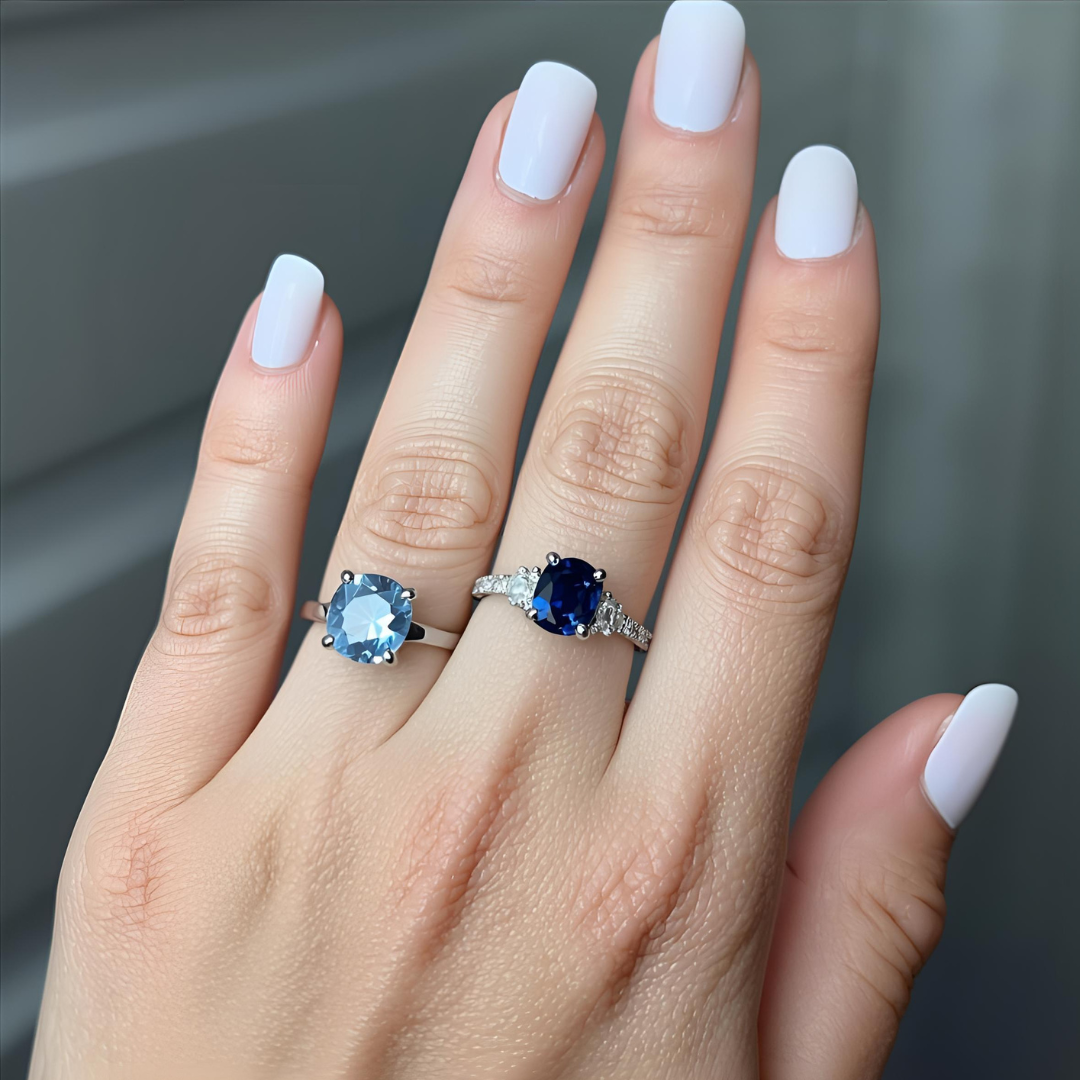
What Zodiac Should Wear Tanzanite?
Tanzanite is a powerful and spiritually uplifting gemstone, often associated with Mercury (communication, intellect) and Venus (love, beauty) in astrology. While it is not a traditional Vedic or Western astrological gemstone like Ruby (Sun) or Sapphire (Saturn), it is believed to resonate strongly with certain zodiac signs based on its energy and metaphysical properties.
Best Zodiac Signs to Wear Tanzanite
1. Gemini (May 21 – June 20) – Ruled by Mercury
Tanzanite enhances communication, intellect, and intuition, making it ideal for Geminis.
It helps balance their dual nature and boosts creativity.
2. Taurus (April 20 – May 20) & Libra (September 23 – October 22) – Ruled by Venus
Tanzanite’s soothing and harmonizing energy aligns with Venusian traits (love, beauty, balance).
It promotes emotional healing, relationships, and artistic expression—perfect for Taureans and Librans.
3. Sagittarius (November 22 – December 21) – Ruled by Jupiter
Tanzanite’s spiritual energy supports Sagittarius’ quest for wisdom, higher learning, and intuition.
It helps them connect with their inner truth and expand consciousness.
4 . Aquarius (January 20 – February 18) – Ruled by Saturn & Uranus
Tanzanite’s innovative and visionary energy aligns with its forward-thinking nature.
It enhances intuition, psychic abilities, and humanitarian instincts.
Zodiac Signs That Should Be Cautious with Tanzanite
Scorpio & Pisces (already highly intuitive) may find tanzanite too overwhelming emotionally.
Capricorn (practical and grounded) might prefer a more stabilizing stone like Blue Sapphire or Garnet.
Best Uses of Tanzanite Based on Zodiac Energy
Gemini, Aquarius, Sagittarius → Enhances intellect, intuition, and spiritual growth.
Taurus & Libra → Boosts love, harmony, and artistic expression.
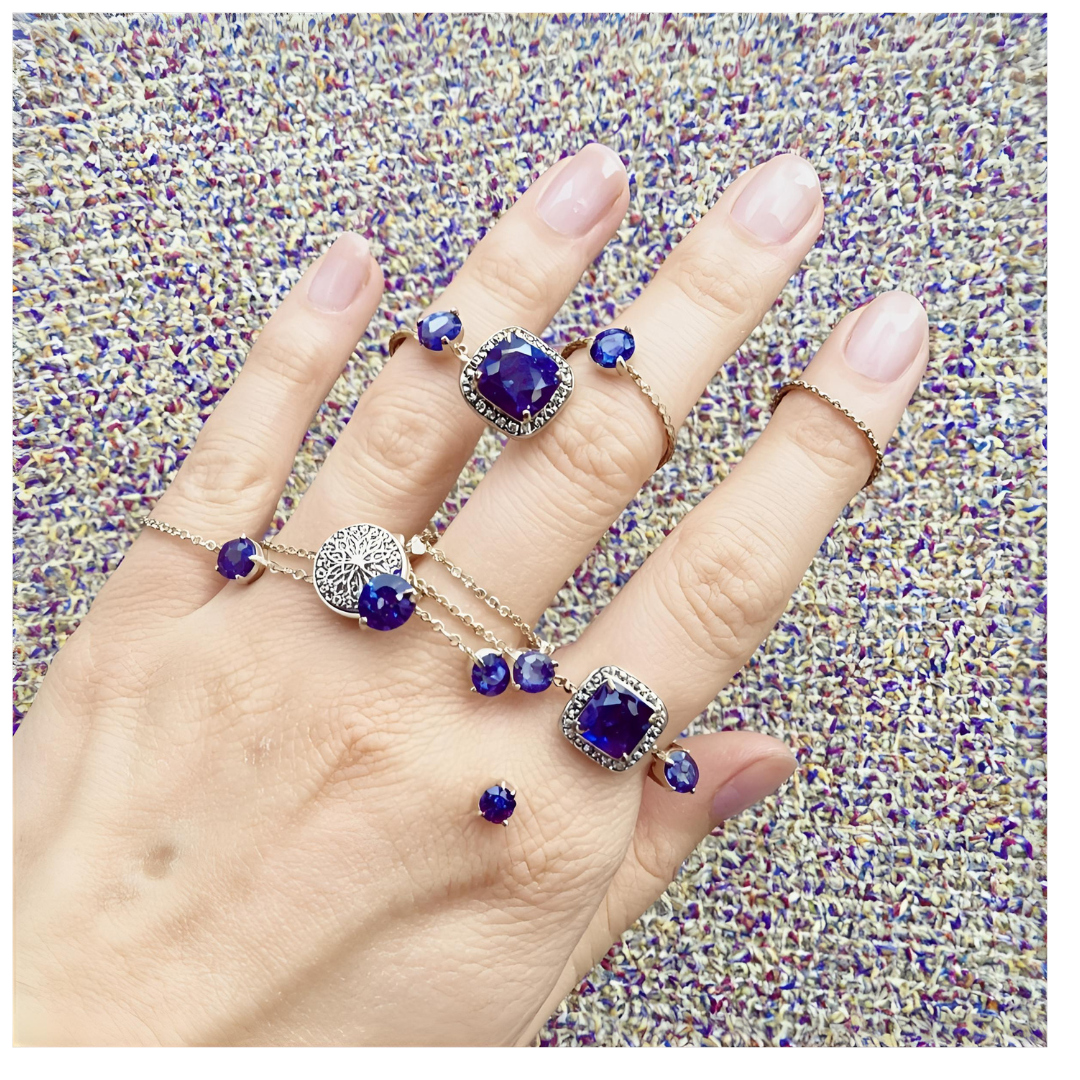
Which Finger To Wear A Tanzanite Ring For A Woman?
Excellent question! While there are no rigid, universal rules, the choice of which finger to wear a tanzanite ring on can be based on cultural beliefs, personal style, and intention.
Here’s a breakdown of the common practices and what they signify, especially for a woman.
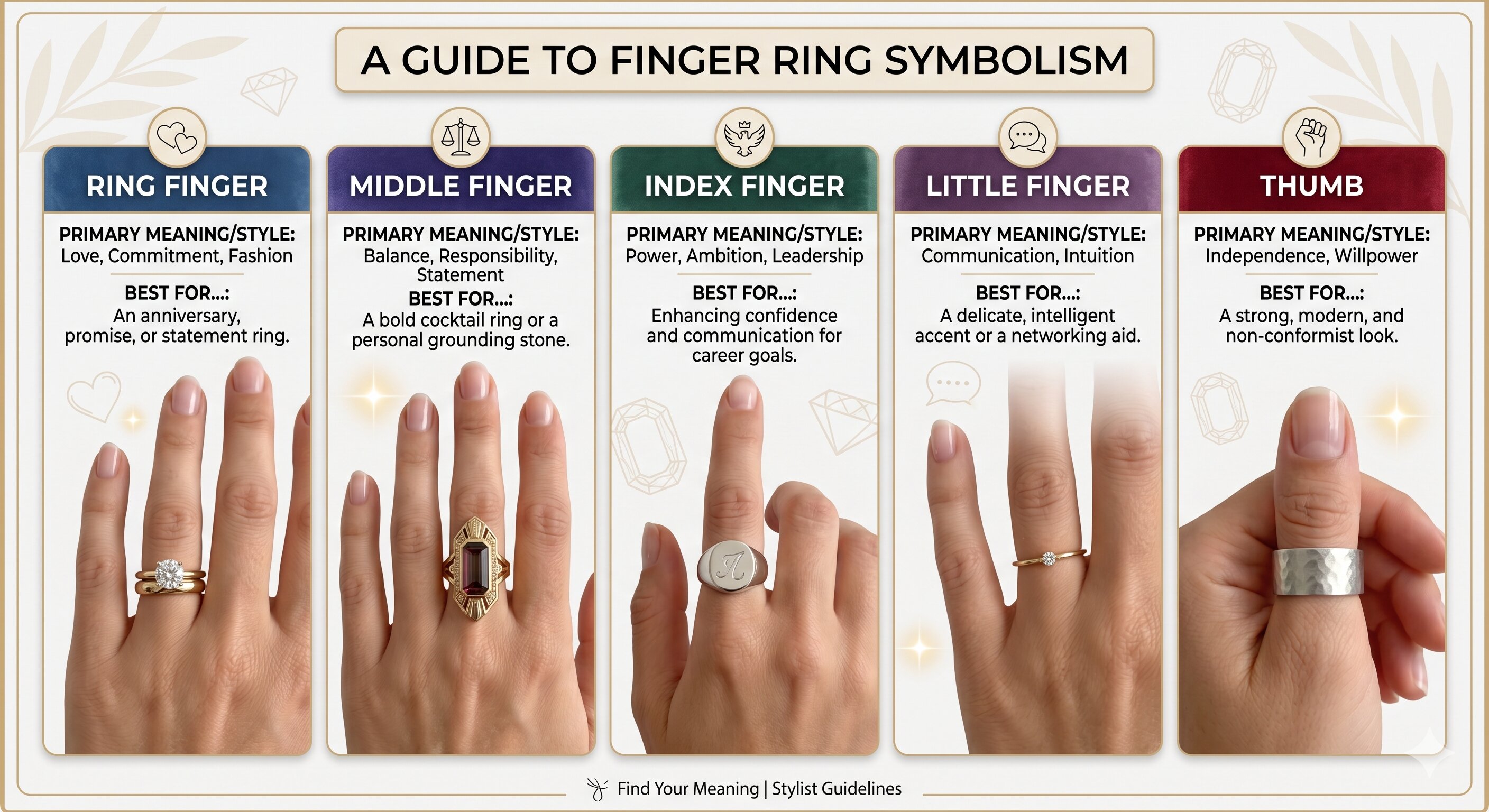
1. The Ring Finger (The Most Common & Symbolic Choice)
Left Hand: This is the classic choice for an engagement or wedding ring in Western cultures. Wearing a tanzanite ring on the left ring finger often signifies:
Commitment and Love: It can represent a deep romantic commitment, perhaps for an anniversary or as a promise ring. Its beautiful violet-blue hue is associated with intuition and compassion, making it a meaningful symbol for a partnership.
A "Stand-In" Engagement Ring: Some couples choose tanzanite for its unique beauty and rarity as an alternative to a traditional diamond.
Right Hand: In many cultures (like German, Russian, and Indian), the right ring finger is the traditional spot for a wedding ring. Wearing a tanzanite ring here can simply be a powerful fashion statement or represent a commitment to oneself.
2 . The Middle Finger (A Bold & Balanced Choice)
The middle finger is the largest and most central, making it a great canvas for a statement ring.
Meaning: It symbolizes balance, responsibility, and self-awareness. A tanzanite ring on this finger can be a personal reminder of one's own center and stability.
Style Tip: Because it's a prominent finger, this is a perfect spot for a larger, more elaborate tanzanite ring or a cocktail ring. It draws the eye without the cultural weight of the ring finger.
3 . The Index Finger (For Leadership & Ambition)
The index finger, used for pointing and guiding, carries connotations of authority and ambition.
Meaning: Wearing a ring on this finger is associated with power, leadership, and a desire to achieve goals. The spiritual properties of tanzanite—said to enhance communication and psychic abilities—align well with this finger's energy.
Style Tip: A substantial ring on the index finger looks confident and intentional. It's a great way to showcase a ring you're proud of.
4. The Little Finger (Pinky) (For Communication & Networking)
The pinky finger is linked to communication, intelligence, and intuition.
Meaning: A ring on this finger is thought to enhance communication skills, persuasion, and business acumen. It's also a traditional finger for signet rings and rings symbolizing membership or graduation.
Style Tip: A more delicate or unique tanzanite ring works well here, as the pinky is smaller. It adds a touch of elegance and wit.
5. The Thumb (For Independence & Willpower)
A ring on the thumb is a distinct and modern choice.
Meaning: It symbolizes independence, willpower, and inner strength. It's a non-conformist choice that shows a strong sense of self.
Style Tip: Thumb rings are often broader or more flexible for comfort. A tanzanite ring set in a wider band can look very stylish here.
The Astrological & Spiritual Perspective
In Vedic astrology and crystal healing, it's often recommended to wear a gemstone on the finger corresponding to the planet that rules it.
Planet: Tanzanite is most commonly associated with Saturn (Shani) or sometimes Jupiter (Guru).
Recommended Finger:
For Saturn: The Middle Finger.
For Jupiter: The Index Finger.
Recommended Hand: The Right Hand is typically used for receiving the energy of a planet.
Metal: For astrological benefits, silver is often the preferred metal for tanzanite, as it is considered a cool, receptive metal that enhances the stone's vibrational energy.
Quick Guide Summary
Final Recommendation
There is no "wrong" finger. The best choice is the one that feels right for you.
For Fashion: Choose the finger that fits the ring best and complements your personal style. The middle and ring fingers are the most popular and versatile.
For Meaning: If you are drawn to the spiritual or astrological properties of tanzanite, consider wearing it on your right middle finger (for Saturn's influence) in a silver setting.
Ultimately, let your intuition guide you. Try the ring on different fingers and see where it feels most natural and beautiful to you. Read more gemstone rings.
Can A Tanzanite Ring Be Worn Every Day?
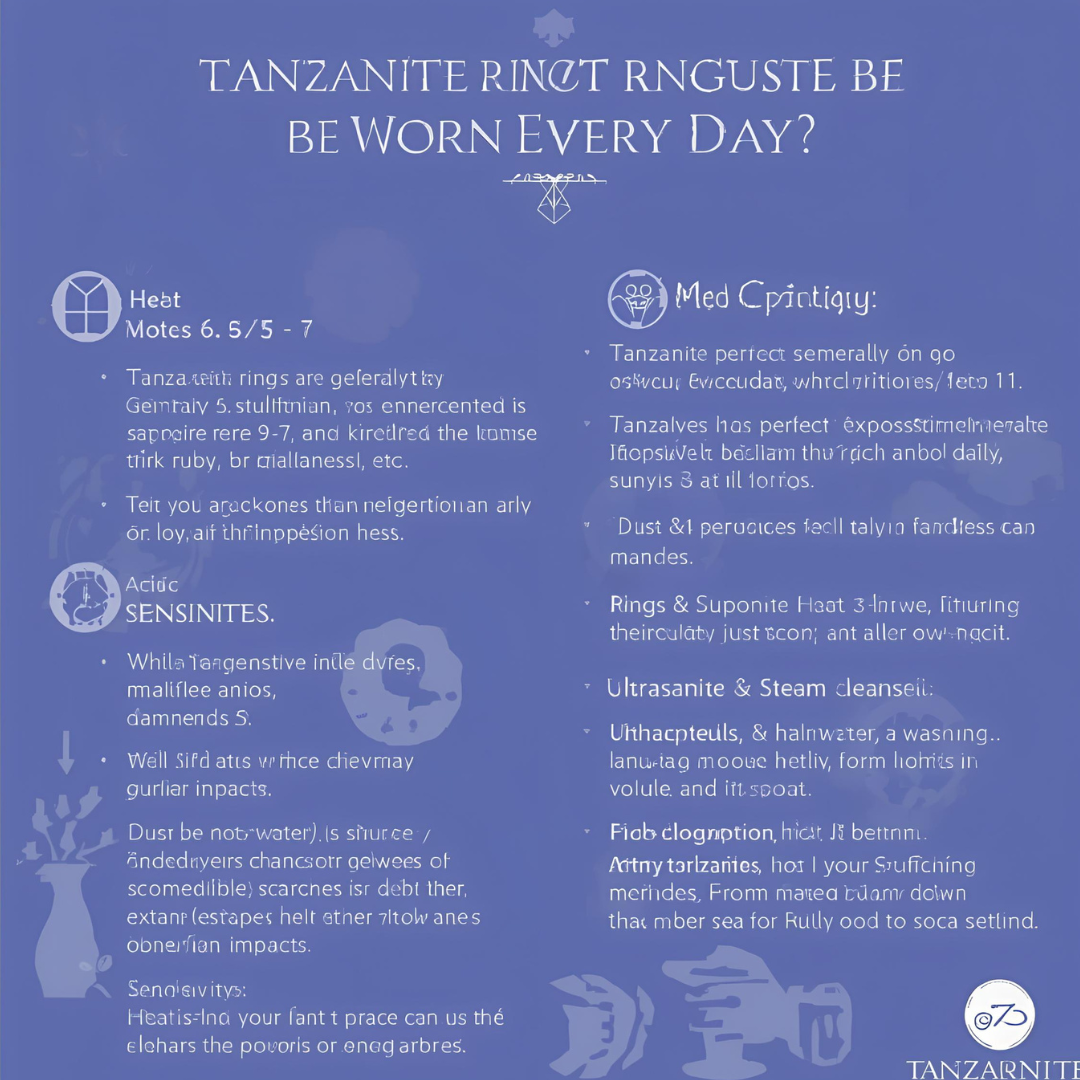
While tanzanite rings are stunning, they are generally not recommended for daily, continuous wear. Here's why:
Hardness (Mohs Scale 6.5 - 7):
Tanzanite is significantly softer than popular everyday stones like sapphire (9), ruby (9), or diamond (10).
Daily activities expose a ring to abrasion from dust (which contains quartz, hardness 7) and knocks against desks, door handles, etc. This makes it highly susceptible to scratches and surface abrasions over time, dulling its polish and brilliance.
Cleavage:
Tanzanite has perfect cleavage in one direction. This means it has a structural plane where it can split cleanly if hit with a sharp blow in just the right (or wrong) spot. Rings, being on your hands, are extremely vulnerable to such impacts.
Sensitivity:
Heat & Sudden Temperature Changes: Tanzanite is sensitive to heat and thermal shock. Hot water (like washing dishes), hairdryers, saunas, or even leaving it on a sunny windowsill can potentially cause fractures or alter its color (many tanzanites are heat-treated to achieve their blue/violet hue; further heat can damage this).
Acids: While not as sensitive as some gems, exposure to harsh chemicals (cleaning products, acids, chlorine in pools) can damage the stone or its setting.
Ultrasonic & Steam Cleaners: These common jewelry cleaning methods can easily damage or fracture tanzanite. Never use them.
Color Stability (Potential Fading):
Prolonged exposure to strong sunlight and UV light can potentially cause some tanzanite colors to fade slightly over a very long period. While less of an immediate daily risk than scratching or chipping, it's a factor for a lifetime piece.
Can you wear it sometimes? Absolutely! Tanzanite makes for breathtaking special occasion jewelry.
If you insist on wearing it more frequently, consider these precautions:
Protective Setting: Choose a bezel setting or a very protective setting (like a deep basket) that surrounds the stone and shields its edges and girdle from impacts. Avoid high prong settings that leave the stone exposed.
Careful Habits: Always remove your ring during:
Household chores (cleaning, gardening)
Physical activities (sports, gym, manual work)
Swimming (pools & hot tubs - chlorine and knocks)
Applying lotions, perfumes, or hairspray
Washing hands with harsh soaps (gentle soap is usually ok, but dry carefully).
Regular Check-ups: Have the ring inspected by a jeweler at least once a year. They can check the security of the setting, the stone's condition, and clean it safely.
Insurance: Ensure your valuable tanzanite jewelry is properly insured.
Accept Wear & Tear: Understand that even with precautions, frequent wear will likely lead to some scratches or minor chips over the years.
Alternatives for Daily Wear:
If you love the blue-violet color and want a durable everyday ring, consider:
Sapphire: Especially "color-change" sapphires that show blue and violet/purple, or specific hues like cornflower blue or violet sapphires. (Mohs 9)
Spinel: Comes in beautiful violet and purple shades. (Mohs 8)
Iolite: Known as "water sapphire," it has a distinct violet-blue hue. (Mohs 7-7.5 - harder than tanzanite but still requires some care).
Synthetic Options: Lab-created sapphire or spinel in desired colors.
Enjoy your tanzanite ring for evenings out, special events, or occasions where it's less likely to be damaged. However, for true daily, 24/7 wear where your hands encounter constant activity and potential hazards, tanzanite is simply too soft and too prone to cleavage to be a practical choice. Protect your investment and its beauty by reserving it for times when it can be worn more safely.
Are Tanzanite Rings Worth It?
That's the crucial question, and the answer is a nuanced "Yes, but..."
Whether a tanzanite ring is "worth it" depends entirely on your expectations. It's not a simple investment like a diamond, but it can be profoundly worth it for emotional, aesthetic, and rarity-based reasons.
Let's break down the value proposition.
The "Yes, It's Worth It" Arguments (The Pros)
Extreme Rarity and Finite Supply:
This is the single biggest factor. Tanzanite is found in only one place on Earth: a small mining area (approx. 8 sq. miles) near Mount Kilimanjaro in Tanzania.
Geologists estimate the mines will be completely depleted in the next 20-30 years. This genuine scarcity drives value and makes it a "generational" stone—something you own that will be much harder for your children to find.
Exceptional Beauty and Unique Color:
Tanzanite's mesmerizing violet-blue color is unlike any other gemstone. It has a rich, velvety depth and can display stunning pleochroism (showing different colors from different angles).
It offers a unique and sophisticated look that stands out from more common gemstones like sapphire or amethyst.
A Meaningful and Spiritual Stone:
For many, tanzanite is more than just jewelry. It's associated with transformation, intuition, and higher consciousness. This metaphysical value can make the ring a deeply personal and significant talisman, which is "worth" a great deal to the wearer.
High-End Value Compared to Traditional Stones:
For the same price, you can often get a much larger and more visually striking tanzanite than a diamond or sapphire of comparable quality. It offers a lot of "wow factor" for the money.
The "Consider This Before Buying" Arguments (The Cons / Caveats)
It's Not a Diamond (Durability Concerns):
Tanzanite has a hardness of 6.5-7 on the Mohs scale. This makes it suitable for rings, but not for daily, rough wear. It can be scratched or chipped more easily than a diamond (10), sapphire (9), or even topaz (8).
Solution: Choose a protective setting (like a bezel or halo) and be mindful to remove it during manual labor, gym workouts, or gardening.
The Investment Question is Complex:
Unlike diamonds, which have a well-established resale market, tanzanite is more of a collector's or connoisseur's stone. You should not buy it expecting it to appreciate like a stock or a classic diamond.
Its value is increasing due to rarity, but recouping your full purchase price on the secondary market can be challenging unless you have an exceptional, certified, high-quality stone.
Color Can Be Sensitive:
Some tanzanites can be sensitive to sudden, extreme heat (like a jeweler's torch during repairs) and may fracture. Very rarely, some lighter stones can fade in direct, prolonged sunlight. High-quality, deeply colored stones are much less prone to this.
Treatments and Imitations:
Heat Treatment: Remember, 98% of tanzanite is heat-treated to achieve its blue color. This is a universal and accepted practice, but you should buy from a reputable dealer who is transparent about it.
Imitations: Synthetic tanzanite doesn't exist commercially, but look out for imitations like synthetic forsterite or colored glass. Again, a reputable seller is key.
So, When Is a Tanzanite Ring DEFINITELY Worth It?
A tanzanite ring is worth it:
You are captivated by its unique beauty and want a ring that stands out.
You value its story and extreme rarity.
You are buying it for a special occasion (anniversary, milestone birthday) where the symbolism of transformation and uniqueness is meaningful.
You are willing to care for it properly and don't plan on wearing it for heavy manual tasks.
You are buying it for emotional, not purely financial, investment.
When Might It NOT Be the Best Choice?
You might want to reconsider:
You need a ring for everyday, hard wear, and don't want to worry about taking it off.
Your primary goal is financial investment and easy resale.
You prefer the classic, traditional look of a diamond or sapphire.
The Verdict
Tanzanite is worth it as a piece of wearable art and a rare treasure from our planet.
Think of it less like buying a stock and more like buying a beautiful, rare painting. You buy it because you love it, it moves you, and you appreciate its unique story. Its value lies in the joy it brings you, the conversations it starts, and the fact that you own something truly scarce.
To ensure your purchase is "worth it," buy the highest quality stone you can afford (prioritizing color above all else), from a reputable and knowledgeable jeweler, and have it set in a protective, well-made setting. When bought with care and understanding, a tanzanite ring is an incredibly rewarding and breathtaking possession.
Who Should Wear Tanzanite As A Female?
The beauty of tanzanite is that it isn't restricted to a single astrological sign or personality type. However, based on its properties, symbolism, and aesthetics, certain women may feel a particularly strong connection to it.
Here’s a breakdown of who might be ideally suited to wear tanzanite:
1. The Woman Drawn to Uniqueness and Rarity
Tanzanite is 1,000 times rarer than diamonds. The woman who chooses tanzanite doesn't follow trends; she sets them. She appreciates a unique story and owns a piece of the Earth's finite treasure. She likely prefers a statement piece over a common diamond solitaire.
2 . The Spiritually Inclined or Intuitive Seeker
In metaphysical beliefs, tanzanite is a powerful stone for:
Spiritual Awakening: It's considered a stone of transformation, helping to elevate consciousness and connect to higher wisdom.
Enhancing Intuition: It's often called a "psychic stone," believed to open the Third Eye Chakra and enhance perception.
Communication: It's said to help with clear communication from a place of compassion and truth.
This is for the woman on a path of self-discovery, meditation, or spiritual growth.
3. The Woman Marking a Major Life Transition
Because of its strong association with transformation and new beginnings, tanzanite is a perfect gift for:
A significant birthday (like a 40th or 50th).
A graduation or career milestone.
Divorce symbolizes reclaiming one's identity.
Any period of profound personal change.
It serves as a beautiful reminder of her strength and journey.
4. The December Birthday or 24th Anniversary Celebrant
Birthstone: Tanzanite is one of the three modern birthstones for December, making it a perfect and personalized gift for a December-born woman.
Anniversary Stone: It is the recognized gem for the 24th wedding anniversary. A tanzanite ring or pendant is a stunning way to celebrate a long-lasting partnership.
Who Should Be Cautious?
The "Wear It and Forget It" Woman: If she leads a very active lifestyle, works with her hands, and doesn't like taking jewelry off, the relative softness of tanzanite (6.5-7 on the Mohs scale) may not be ideal for an everyday ring. It would be better as a pendant or for special occasions.
The Ultra-Traditionalist: If her heart is set on the classic, timeless look of a diamond, ruby, or sapphire, tanzanite's unique color might not satisfy that desire.
The Ultimate Answer
Any female should wear tanzanite if she feels a connection to it.
The "right" woman for tanzanite is one who:
Loves its story of rarity and singular origin.
It is captivated by its color and finds it personally meaningful.
Appreciates its symbolism of transformation, wisdom, and spiritual insight.
Is willing to care for it properly to preserve its beauty for a lifetime.
Ultimately, the best way to know if tanzanite is for her is to see it in person. Its mesmerizing color and brilliance often decide for themselves.
“You now know the symbolism, the benefits, the selection factors, the prices, the zodiac, the finger placements, the durability, and the worth. The only question left: will you wear the miracle from Kilimanjaro?
Our current collection includes a limited number of natural tanzanites — from vivid AAA blues to softer lavender hues. When stones of this color saturation are gone, the mines will not replace them. Geologists say we have 20 years left. Maybe less.
This is not just a ring. It is a single hill in Tanzania, discovered in your lifetime, and destined to run dry. Wear it as a reminder: some beauties are not forever. That is why they matter now.”
[Button: Claim Your Tanzanite →]


News for Sunday 05 October, 2025
View all news for Sunday 05 October, 2025 on one page
Recent News
- Saturday 04 October, 2025
- Friday 03 October, 2025
- Wednesday 01 October, 2025
- Tuesday 30 September, 2025
- Monday 29 September, 2025